Matthew 17:4
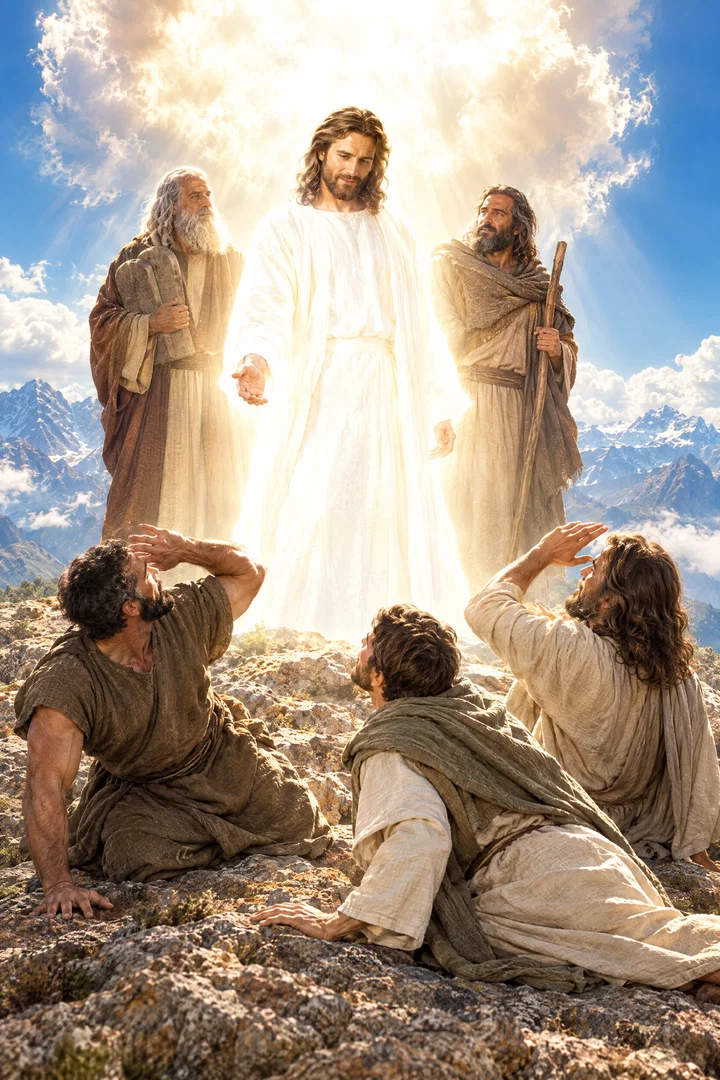
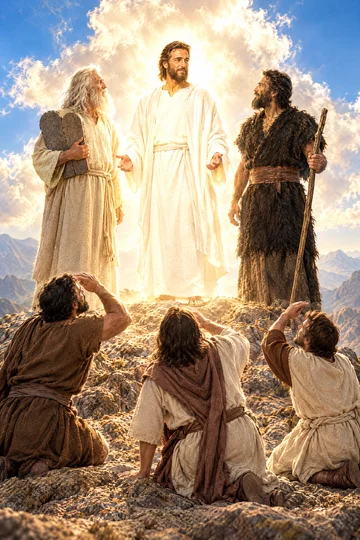
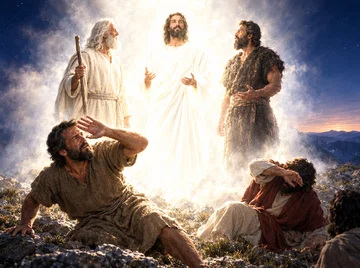
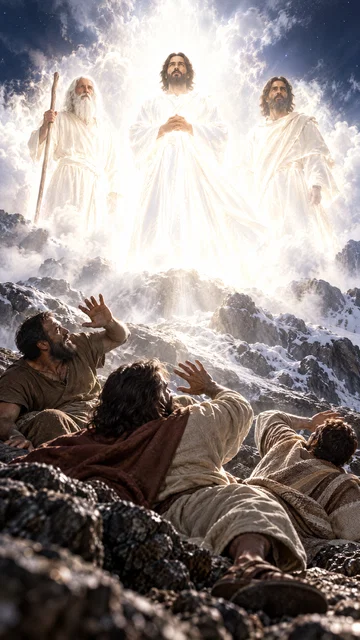
Then answered Peter, and said unto Jesus, Lord, it is good for us to be here: if thou wilt, let us make here three tabernacles; one for thee, and one for Moses, and one for Elias.
Translations
Then answered Peter, and said to Jesus, Lord, it is good for us to be here: if you will, let us make here three tabernacles; one for you, and one for Moses, and one for Elias.
Then answered Peter, and said unto Jesus, Lord, it is good for us to be here: if thou wilt, let us make here three tabernacles; one for thee, and one for Moses, and one for Elias.
Then answered Peter, and said unto Jesus, Lord, it is good for us to be here: if thou wilt, let us make here three tabernacles: one for thee, and one for Moses, and one for Elias.
Then answered Peter, and said to Jesus, Lord, it is good for us to be here: if thou wilt, let us make here three tabernacles; one for thee, and one for Moses, and one for Elijah.
Revised Version, American Standard Version
And Peter answered, and said unto Jesus, Lord, it is good for us to be here: if thou wilt, I will make here three tabernacles; one for thee, and one for Moses, and one for Elijah.
And Peter answering said to Jesus, 'Sir, it is good to us to be here; if thou wilt, we may make here three booths — for thee one, and for Moses one, and one for Elijah.'
And Peter answering said to Jesus, Lord, it is good we should be here. If thou wilt, let us make here three tabernacles: for thee one, and for Moses one, and one for Elias.
And Peter, answering, said unto Jesus—Lord! it is, delightful, for us, to be here,—If thou wilt, I will make here three tents, for thee, one, and, for Moses, one, and, for Elijah, one.
Peter said to Jesus, “ Lord, it is good for us to be here. If You wish, I will put up three shelters — one for You, one for Moses, and one for Elijah.”
Peter said to Jesus, “ Lord, it is good for us to be here. If You wish, we will put up three shelters— one for You, one for Moses, and one for Elijah.”
Peter answered and said to Jesus, “ Lord, it is good for us to be here. If you want, let’ s make three tents here: one for you, one for Moses, and one for Elijah.”
And Peter made answer and said to Jesus, Lord, it is good for us to be here: if you will let me, I will make here three tents, one for you, and one for Moses, and one for Elijah.
Then answered Peter, and saide to Iesus, Master, it is good for vs to be here: if thou wilt, let vs make here three tabernacles, one for thee, and one for Moses, and one for Elias.
Douay-Rheims (Challoner revision)
And Peter answering, said to Jesus: Lord, it is good for us to be here: if thou wilt, let us make here three tabernacles, one for thee, and one for Moses, and one for Elias.
Pictures
Cross-references 20 of 41
- 2 Peter 1:16-18
For we have not followed cunningly devised fables, when we made known unto you the power and coming of our Lord Jesus Christ, but were eyewitnesses of his majesty.
Peter recalls witnessing Christ’s majesty on the holy mount as a preview of his coming glory.
- Luke 9:28-36
And it came to pass about an eight days after these sayings, he took Peter and John and James, and went up into a mountain to pray.
Parallel account of the transfiguration, including Peter’s proposal to make three tabernacles.
- Mark 9:2-8
And after six days Jesus taketh with him Peter, and James, and John, and leadeth them up into an high mountain apart by themselves: and he was transfigured before them.
Parallel account of the transfiguration and Peter’s offer to make shelters.
- Matthew 16:28
Verily I say unto you, There be some standing here, which shall not taste of death, till they see the Son of man coming in his kingdom.
The transfiguration fulfills the promise that some would see the Son of man coming in his kingdom.
- 2 Kings 2:11
And it came to pass, as they still went on, and talked, that, behold, there appeared a chariot of fire, and horses of fire, and parted them both asunder; and Elijah went up by a whirlwind into heaven.
Elijah is taken to heaven without seeing death.
- Jude 1:9
Yet Michael the archangel, when contending with the devil he disputed about the body of Moses, durst not bring against him a railing accusation, but said, The Lord rebuke thee.
Michael’s dispute over Moses’ body supports his resurrection and appearance at the Transfiguration.
- Luke 9:27
But I tell you of a truth, there be some standing here, which shall not taste of death, till they see the kingdom of God.
The transfiguration fulfills the promise that some would see the kingdom of God.
- Luke 9:33
And it came to pass, as they departed from him, Peter said unto Jesus, Master, it is good for us to be here: and let us make three tabernacles; one for thee, and one for Moses, and one for Elias: not knowing what he said.
Peter offers to make three shelters during the transfiguration.
- Deuteronomy 34:5-6
So Moses the servant of the LORD died there in the land of Moab, according to the word of the LORD.
Moses died and was buried, yet appears talking at the transfiguration.
- Mark 9:1
And he said unto them, Verily I say unto you, That there be some of them that stand here, which shall not taste of death, till they have seen the kingdom of God come with power.
The promise of seeing the kingdom come with power is linked to the Transfiguration.
- 2 Peter 1:17-18
For he received from God the Father honour and glory, when there came such a voice to him from the excellent glory, This is my beloved Son, in whom I am well pleased.
Peter recalls the Father honoring his beloved Son with a voice on the holy mount.
- Matthew 17:8
And when they had lifted up their eyes, they saw no man, save Jesus only.
Moses and Elijah vanish, leaving the disciples seeing Jesus only.
- Malachi 4:5
Behold, I will send you Elijah the prophet before the coming of the great and dreadful day of the LORD:
Peter recognizes Elijah as the one whose coming was foretold.
- 1 Kings 18:36-39
And it came to pass at the time of the offering of the evening sacrifice, that Elijah the prophet came near, and said, LORD God of Abraham, Isaac, and of Israel, let it be known this day that thou art God in Israel, and that I am thy servant, and that I have done all these things at thy word.
Elijah prays on Carmel, and God’s glory is revealed before the people.
- Matthew 17:9
And as they came down from the mountain, Jesus charged them, saying, Tell the vision to no man, until the Son of man be risen again from the dead.
Jesus calls the mountain experience a vision.
- 2 Peter 1:18
And this voice which came from heaven we heard, when we were with him in the holy mount.
Both describe being with Christ on the holy mount.
- Luke 9:32
But Peter and they that were with him were heavy with sleep: and when they were awake, they saw his glory, and the two men that stood with him.
Luke says Peter and his companions were heavy with sleep during the transfiguration.
- Luke 9:35
And there came a voice out of the cloud, saying, This is my beloved Son: hear him.
The Father’s voice identifies Jesus as His Son and commands the disciples to hear Him.
- Matthew 17:10-13
And his disciples asked him, saying, Why then say the scribes that Elias must first come?
Jesus identifies John as the fulfillment of Elijah’s promised coming.
- Matthew 3:17
And lo a voice from heaven, saying, This is my beloved Son, in whom I am well pleased.
The Father's declaration of Jesus as his Son echoes at the transfiguration.
Commentary
Each commentary is drawn from primary sources: the writings of Ellen G. White and Adventist pioneers and periodicals. Each commentary is separate. Its own words are not a quotation; follow the references to read the source passages.
Ellen G. White
46 sources
Peter spoke on a high mountain where Jesus was transfigured before Peter, James and John, His face shining as the sun and His garments white as light while Moses and Elias appeared talking with Him.Ms 72, 1901, par. 1–3Lt 93, 1901, par. 7–8Ms 126, 1907, par. 3–8 Overpowered by the glorious manifestation and feeling as if heaven was on earth, he declared that being there was good and asked leave to build three shelters, one for Jesus and one each for Moses and Elias.Lt 354, 1907, par. 4–10Ms 117a, 1901, par. 38–39SG1 40.1 His proposal sprang from joy and amazement at seeing Jesus glorified with Moses and Elijah, and from belief that Elijah's coming as foretold meant Christ's kingdom was about to be established on earth.3RED 119.2–120.12SP 330.2–3 He mistakenly imagined that Moses and Elijah would protect Jesus from the death awaiting Him in Jerusalem and help establish His earthly kingly authority, forgetting that salvation could be completed only through Jesus' suffering and death.3RED 119.2–120.12SP 330.2–3 The scene fulfilled Jesus' promise that some present would see the kingdom of God come with power before dying, showing in miniature Christ's kingdom with Jesus clothed in heavenly glory, Moses representing those to be raised from the dead at Christ's second coming and Elijah representing those to be translated without dying.2SP 336.2SG1 43.2EW 134.1
Scene on the Mount
Peter's words were spoken on a high mountain where Jesus had taken Peter, James and John apart and was transfigured before them, His face shining as the sun and His garments white as light, while Moses and Elias appeared talking with Him.Ms 72, 1901, par. 1–3Lt 93, 1901, par. 7–8Ms 126, 1907, par. 3–87RED 68.1DA 686.1–2 The ascent followed a wearying day of travel and teaching and a toilsome climb apart when rest was needed, and it followed a night Jesus spent in prayer.Ms 126, 1907, par. 3–8ST Jul 27, 1915 Jesus stepped aside to pray with strong crying and tears for strength to bear His test for humanity and for the disciples to be given a manifestation of His glory with the Father, His kingdom and His divinity.Ms 126, 1907, par. 3–8
The disciples first joined Him in prayer and then from weariness fell asleep, so Peter spoke after waking to the sight of Christ in glory.Ms 126, 1907, par. 3–8ST Jun 7, 1877 He spoke with only partial hearing of what passed between Christ, Moses and Elijah.Ms 126, 1907, par. 3–8Ms 126, 1907, par. 9–10 On the mount Christ's humanity, which veiled His glory on earth, was hidden for a time while His divinity shone forth in glorious brightness.Ms 117a, 1901, par. 38–39Lt 64, 1900, par. 4 The disciples beheld as much of His glory as humanity could bear as God lifted Him above humanity to commune with Him.Lt 64, 1900, par. 4
Moses and Elijah were heavenly visitants sent to bring Heaven's glory to the Son and to comfort Him by talking with Him about the completion of His mission, especially His suffering and death at Jerusalem.Ms 117a, 1901, par. 38–39SG1 40.1ST Jun 7, 1877EW 131.33RED 115.1–116.1 Moses was the man who talked with God face to face amid Sinai's thunder and lightnings and stood as leader of Israel, and Elijah was the prophet who did not see death but was taken to Heaven in a chariot of fire and represented Christ's work as prophet to Israel.ST Jun 7, 1877 As men who had known human sorrow and suffering they could sympathize with Jesus, and as co-laborers they shared His longing for the salvation of souls.Lt 354, 1907, par. 4–10ST Jun 7, 1877 While Peter was yet speaking a bright cloud overshadowed them and a voice from the cloud declared Jesus to be God's beloved Son who must be heard, and the disciples fell on their faces sore afraid until Jesus touched them and raised them to see Jesus only.Lt 93, 1901, par. 7–8Ms 126, 1907, par. 3–8
Only Peter, James and John were permitted to witness the transfiguration as those in closest relationship with Christ, receiving special tokens of love and confidence.AA 539.1RH Apr 27, 1911ST Oct 16, 1884BS 45.1–3 Judas was not chosen and became jealous of his exclusion.ST Dec 17, 1912 The saying belongs to the record of Matthew 17:1-21 that opens future scenes before the disciples and stands in the sequence leading through the Last Supper, suffering, death and resurrection of Jesus.Ms 29, 1909, par. 2–4Ms 29, 1909, par. 1 Its proclamation of Christ as Son is one of two public testimonies by God, the other being Christ's baptism.Ms 101, 1897, par. 30–32
Peter's Overwhelmed Proposal
Overpowered by the glorious manifestation, Peter did not know where he was and felt as if heaven was on earth.Lt 354, 1907, par. 4–10Ms 117a, 1901, par. 38–39 He beheld Christ's humanity hidden for a time by His divinity, with wonderful light surrounding Him and His face shining as the sun while He talked with Moses and Elijah as heavenly visitants about His suffering and death at Jerusalem.Lt 354, 1907, par. 4–10Ms 117a, 1901, par. 38–39SG1 40.1 In that overwhelming sight of Jesus transfigured in shining glory and talking with Moses and Elijah, Peter answered Jesus by declaring that being there was good and asking leave to make three shelters, one for Christ and one each for Moses and Elijah.Lt 354, 1907, par. 4–10Ms 117a, 1901, par. 38–39SG1 40.13RED 119.2–120.12SP 330.2–3 He spoke before the bright cloud overshadowed them and the Father's voice spoke.Lt 354, 1907, par. 4–10
His proposal sprang from joy and amazement at seeing Jesus glorified with Moses and Elijah.3RED 119.2–120.12SP 330.2–3 He believed Elijah had come as prophecy foretold and thought Christ's kingdom was about to be established on earth.3RED 119.2–120.12SP 330.2–3
He mistakenly imagined that Moses and Elijah would protect Jesus from the death awaiting Him in Jerusalem and help establish His earthly kingly authority.3RED 119.2–120.12SP 330.2–3 In this he forgot that salvation could be completed only through Jesus' suffering and death and that His suffering and death were necessary to accomplish the plan of salvation.3RED 119.2–120.12SP 330.2–3
Strength for Coming Suffering
The transfiguration was a brief unveiling of heavenly glory just before the descent to meet human suffering, a glimpse of the Saviour's future glory granted to Peter, James and John to strengthen them to endure the test and trial of faith in His humiliation, rejection, crucifixion and hour of darkness.Lt 93, 1901, par. 7–8Lt 354, 1907, par. 4–102SP 336.12SP 327.1 It was given to fortify their faith for the trying scenes of His humiliation and crucifixion, that they might bear testimony to the other disciples so their faith also would be strengthened.Lt 93, 1901, par. 7–8Lt 354, 1907, par. 4–10 The manifestation was meant to remove their doubts and assure them that Jesus is the Son of God.2SP 336.12SP 327.1
The sight of His glory with the heavenly voice affirming His divine character gave clear evidence that He is the promised Messiah, so they would not lose confidence when His suffering and crucifixion brought sorrow and disappointment.EW 131.33RED 122.1 That glory and voice later strengthened their faith that Jesus was the Son of God, and Peter as an eyewitness of His majesty on the holy mount could speak with certainty of Christ's power and coming and not as following cunningly devised fables.EW 131.3EW 139.3AA 534.2 Moses and Elijah honored Jesus there, and God chose them rather than angels because they had lived on earth and experienced its trials.EW 131.33RED 122.1
Their presence and words confirmed that His death was part of God's plan of redemption, for they were sent to speak with Him about His coming sufferings and death at Jerusalem and to comfort Him.3RED 115.1–116.12SP 327.1 That death was necessary for His glory and the Father's glory, and so that humanity could share in that glory.2SP 327.1Ms 202, 1899, par. 12 The same glory that strengthened the disciples also strengthened Jesus Himself, for He was glorified by His Father before His betrayal and crucifixion to sustain Him for His final and dreadful sufferings ahead.SG4 268.4RH May 27, 18621T 353.3
Preview of the Kingdom
The scene fulfilled the promise that some standing by would not die before seeing the kingdom of God come with power.SG1 43.2EW 134.13RED 126.1 What they saw was Christ's kingdom shown in miniature.2SP 336.23RED 126.1 Jesus stood clothed in heavenly glory with His majesty unveiled, and the Father's voice proclaimed Him to be the Son of God to be heard.2SP 336.2EW 134.13RED 126.1 In that miniature Moses represented those who will be raised from the dead at Christ's second coming and second advent, and Elijah, or Elias, represented those who will be living then and be changed from mortal to immortal and translated to heaven and taken without dying.2SP 336.2SG1 43.2EW 134.13RED 126.1PK 227.2
The mount thus displayed in miniature the kingdom of the redeemed, with Jesus in heaven's light attended by the risen and the translated.PK 227.2 It revealed the power and coming of the Lord Jesus Christ, and with it the purposes of God concerning the human race and the kingdom of God.AA 534.2 There on the holy mount Jesus received honor and glory from God the Father when the voice came from the excellent glory from heaven declaring Him the beloved Son in whom God is well pleased.AA 534.2Lt 212, 1903, par. 20
Peter was present as an eyewitness of that majesty, seeing with his own eyes the honor and glory received from the Father and hearing with his own ears the voice from heaven.AA 534.2Lt 212, 1903, par. 20 That seen and heard experience proves that the power and coming of Christ are not cunningly devised fables, but qualifies the witness to speak with certainty.AA 534.2Lt 212, 1903, par. 20 It gives a more sure word of prophecy to be heeded as a light shining in a dark place until the day dawns and the day star arises in hearts.Lt 212, 1903, par. 20
Jesus was thus glorified by His Father at the transfiguration before His betrayal and crucifixion to strengthen Him for His last dreadful sufferings.1T 353.3 The same pattern holds for the members of the body of Christ as they approach their last conflict, the time of Jacob's trouble, for they will grow up into Christ and partake largely of His spirit.1T 353.3 As the third message swells to a loud cry, great power and glory will attend the closing work, and the faithful will partake of that glory.1T 353.3 That glory is the latter rain reviving and strengthening them to pass through the time of trouble, so that their faces will shine with the glory of the light attending the third angel.1T 353.3
Witness to Christ's Identity
On a high mountain apart Peter, James and John beheld Jesus transfigured before them, His face shining as the sun and His raiment white as light, while Moses and Elias appeared talking with Him.Lt 93, 1901, par. 7–8 There He stood revealed as the Majesty of heaven and King of glory, who had clothed His divinity with humanity on earth and now let that divinity shine forth in all its glorious brightness, flashing through His humanity.Lt 93, 1901, par. 7–8Lt 64, 1900, par. 4 The disciples beheld as much of His glory as humanity could bear, while God recognized Him as His Son and lifted Him above humanity to commune with Him as He conversed with heavenly visitants.Lt 93, 1901, par. 7–8Lt 64, 1900, par. 4 While Peter was yet speaking his proposal to make three tabernacles, a bright cloud overshadowed them and a voice from the cloud declared Jesus to be the beloved Son who must be heard, at which the disciples fell afraid until Jesus touched and raised them to see Jesus only.Lt 93, 1901, par. 7–8 This glimpse of the Saviour's future glory was given to strengthen the three to endure the test and trial of faith and to enable them to bear testimony to the other disciples so their faith also might be strengthened.Lt 93, 1901, par. 7–8
The disciples' sight of His majesty together with the Father's voice proclaiming Him the Son of God gave clear evidence that Jesus is the promised Messiah.EW 134.13RED 122.13RED 126.1 His changed, radiant appearance, clothed with heavenly glory, with Moses and Elias seen honoring Him, fulfilled His promise that some present would see the kingdom of God come with power before dying.EW 134.13RED 122.13RED 126.1 Moses represented those who will be raised from the dead at Christ's second coming, and Elias represented those who will then be living and be changed from mortal to immortal and taken to heaven without dying.EW 134.13RED 126.1 That honor from God and from Moses and Elijah affirmed His divine character and strengthened the three to endure His humiliation, rejection and crucifixion.EW 131.33RED 122.1
Moses and Elias were present as co-laborers with Christ who shared His longing for the salvation of souls, and their presence means they represented the law and the prophets.Lt 354, 1907, par. 4–10 Their standing with Christ shows that the teachings of the Old Testament are not done away by the preaching of the gospel of Christ but are fully in accord with the teachings of the New.Lt 354, 1907, par. 4–10 The new dispensation embraces the Old.Lt 354, 1907, par. 4–10 Overwhelmed by the vision of Jesus transfigured in shining glory and talking with Moses and Elias, Peter proposed the three tabernacles before the bright cloud overshadowed them and the Father's voice spoke, and that glimpse of future glory was given to Peter, James and John to strengthen their faith for the trying scenes of Christ's humiliation and crucifixion.Lt 354, 1907, par. 4–10
God chose Moses and the translated Elijah to speak with Jesus about His sufferings and death at Jerusalem rather than sending angels, because they had lived on earth and experienced its trials of earthly life.EW 131.3 As men who had known human sorrow and suffering they could sympathize with Him in a way angels could not.EW 131.3 The heavenly voice they heard affirmed His divine character and His identity as the promised Messiah, so that when His suffering and crucifixion brought sorrow and disappointment they would not lose confidence.EW 131.3
Warning and Calling
Sleep overcame the disciples on the mount so that the proposal to build shelters was spoken with only partial hearing of what passed between Christ and Moses and Elijah.Ms 126, 1907, par. 9–10 Failing to watch and pray left them without the light God desired to give them, the knowledge of the sufferings of Christ and the glory that should follow.Ms 126, 1907, par. 9–10 They lost the blessing of sharing His self-sacrifice and showed themselves slow of heart to believe and little appreciative of the treasure Heaven sought to give them.Ms 126, 1907, par. 9–10
Because they missed that lesson, when Christ's predictions came to pass they could not endure the proving.Ms 126, 1907, par. 9–10 Peter denied his Lord before His enemies, and their faith failed as they beheld the Son of God dying on the cross, where rays of hope from the mount would have lighted the darkness and sustained them.Ms 126, 1907, par. 9–10 The glory seen on the mount and the divine voice from the cloud were later remembered when heavenly glory appeared again with Jesus in Gethsemane.ST May 30, 18783SP 101.3–102.2DA 693.3–694.25RED 22.1–3 Seeing the bright vision of the angel ministering to Him, they concluded that God had taken Jesus in charge and that the angel was present to protect Him from His foes, so they had no further fear for their Master.ST May 30, 18783SP 101.3–102.2DA 693.3–694.25RED 22.1–3
The mountain scene in which the disciples saw Jesus in heavenly glory stands in contrast with His descent to save the suffering boy.DA 429.2–430.1 Standing with Christ on the mount is beholding His beauty as chiefest among ten thousand and altogether lovely until the soul becomes radiant with His glory.ST Jan 22, 1902 Those who have received this light are sent by the Master to arise and shine and to go down from the mount to the plain where souls enslaved by Satan wait for the word of faith and prayer to set them free.ST Jan 22, 1902 They are to live and labor and sacrifice even unto death for the saving of humanity in the spirit of Christ's self-sacrificing love.ST Jan 22, 1902
The declaration that being there was good expresses the joy believers may feel when Christ's presence and the Spirit of God are with them in their gatherings.ST Apr 15, 1913 The ascent with Jesus up the mountain, which followed a night He spent in prayer, came before the disciples went out on their mission.ST Jul 27, 1915 It shows the call to commune with God for moral power.ST Jul 27, 1915
Sources
Pioneers and periodicals
121 sources
Half-awake from sleep Peter saw Jesus glorified and talking with Moses and Elijah about his coming death at Jerusalem, and he blurted out without knowing what he said that it was good to be there and offered to build three shelters, one for each of them.ST Sep 2, 1880RH Apr 9, 1857ST Jul 4, 1899ST Jan 16, 1901RH Feb 1, 1870 His proposal wrongly put Moses and Elijah on a level with Christ, so the Father rebuked it with the overshadowing cloud and the voice commanding that the beloved Son alone be heard, after which they disappeared and Jesus only remained.ST Jun 10, 1889ST Nov 13, 1893RH Jul 13, 1911ST Apr 2, 1894ST Dec 10, 1885 The scene was a miniature preview of Christ coming in his kingdom and glory to encourage disciples dismayed by his approaching suffering, with Jesus as the glorified King, Moses representing the righteous dead to be raised, and Elijah representing the living to be changed at the second advent.RH Apr 9, 1857RH Sep 18, 1856ST Nov 7, 1900ST Oct 25, 1883RH Oct 31, 1854 Moses and Elijah were truly and bodily present as glorified men, Elijah having been translated without dying and Moses having been raised from the dead by Christ's power over Satan, while those who held a different view teach it was only a vision without their bodily presence.RH Jan 5, 1860RH Aug 6, 1872ST Aug 12, 1889ST Jul 23, 1885ST Apr 9, 1902 The vision did not permit lingering in ecstasy on the mount but prepared the disciples to come down to suffering people below and to take up the cross and serve in self-sacrificing love.ST Mar 28, 1906ST Dec 17, 1896RH Jan 4, 1912RH Jul 30, 1867RH Aug 14, 1860
Setting and Wording
The saying was spoken on a secluded mountain apart, where isolation was required for what took place.ST Oct 6, 1881ST May 19, 1898 Tradition identified that height as Mount Tabor, and three churches were later built on its summit in keeping with the proposal to make three tabernacles.RH Jul 30, 1867ST Dec 15, 1881ST May 19, 1898 Recent investigation points instead to a secluded spur of Hermon, the lofty mountain near Caesarea Philippi, because the fortified summit and city on Tabor could not give the isolation the event required.ST Oct 6, 1881ST May 19, 1898 The Mount of Transfiguration is thus one of the mountains connected with Jesus and marked by divine encounter.ST Sep 20, 1899
It occurred after Jesus announced as Messiah that He must enter His glory through suffering, shame and death, and promised that some standing with Him should see His kingdom come with power before death.ST Oct 6, 1881 It is reckoned as after six days, or about eight days counting first and last, Matthew and Mark saying after six days while Luke describes it as about eight days after.ST Oct 6, 1881RH Nov 24, 1868 It belonged to Christ's first advent and earthly humility, when He came to serve without the honor or comfort that might have seemed due, and was not His second coming itself.RH Jun 18, 1861RH Jan 30, 1866 Its date is concealed and cannot be identified, though it was one of the memorable days of His life when His glory and majesty shone forth as they will at His second advent, with Moses and Elias speaking with Him and the Father speaking from heaven.RH Feb 13, 1872
Only Peter, James and John were taken up with Him to witness it.ST Dec 17, 1912RH Feb 10, 1916RH May 7, 1914 James was one brought into closest relationship and John received special tokens of love, and Peter was admitted to a privileged glimpse of divine glory.RH Jul 18, 1854 Judas was not among those chosen and became jealous of his exclusion.ST Dec 17, 1912 While the three were on the mountain, the other nine below tried unsuccessfully to heal a boy, because jealousy over being left behind had led them to compete for the highest place.RH May 7, 1914
Tabernacles means dwelling places, shelters, tents or houses.ST Sep 2, 1880ST Dec 10, 1894 One was proposed for each of Jesus, Moses and Elias.ST Sep 2, 1880RH Apr 9, 1857ST Dec 10, 1894
Peter and those with him had been heavy with sleep, and waking saw Jesus with altered countenance and white glistering raiment in glory, with the two men standing with Him.ST Jan 16, 1901RH Oct 27, 1874 Moses and Elijah appeared in glory talking with Jesus of His decease to be accomplished at Jerusalem, then departing from Him.ST Jun 7, 1877ST Jan 16, 1901 Awakened by the sight, Peter blurted out that it was good to be there and offered to make three shelters, one for each, in an unstudied, involuntary response, not knowing what he said.ST Jul 4, 1899ST Jan 16, 1901 This came just before the cloud overshadowing them and the voice out of the cloud declaring Jesus to be the beloved Son to be heard, after which Jesus was found alone, the glory departing and fear falling upon the disciples.ST Jan 16, 1901RH Feb 1, 1870ST Jun 10, 1889
Peter's Proposal Explained
Peter said it was good to be there because he had witnessed the glory of the kingdom and felt awe, joy, delight and blessing in that heavenly atmosphere and blessed presence.RH Jan 4, 1912ST Jan 27, 1904ST Apr 2, 1894RH Jun 8, 1869 He wanted to remain on the mount and not come down, to build shelters and stay there with Jesus, Moses and Elijah and enjoy the marks of divine approval.RH Jan 4, 1912ST Jan 27, 1904ST Apr 2, 1894RH Jun 8, 1869ST Dec 15, 1881 That longing pictures the desire for uninterrupted transport, ceaseless rapture, ecstasies and extraordinary revelations, which belongs to angelic perfection rather than Christian perfection.RH Jul 30, 1867 Love for God, however, must be shown in zealous labor, for the vision did not release him from work in the world or end the suffering and need below among the sick and demon-oppressed where he still had work to do.RH Jan 4, 1912ST Jan 27, 1904ST Dec 15, 1881
His offer of a tabernacle for Elijah alongside Jesus and Moses showed he expected Elijah to come and live with the Messiah on earth forever.ST Jul 4, 1899 That preconceived idea of the Messianic kingdom kept him from understanding the plain teaching that Christ must die and rise again.ST Jul 4, 1899 He spoke when silence and stillness before God would have been best, feeling he must say something on the solemn occasion, speaking without much deliberation and perhaps without any prayer.ST Apr 17, 1901 His proposal meant it was good to be on the mountain, that they would stay there, and that buildings should be put up for their own comfort, forgetting all about the suffering world below waiting for help.ST Apr 17, 1901ST Aug 16, 1905
The proposal to make three shelters, one for each, was not to be followed, for it gave Moses and Elijah a share in the honor belonging to Christ alone.ST Nov 13, 1893 The Father answered by directing attention to His beloved Son alone, commanding that He be heard and His will be done rather than being drawn by the glory into building tabernacles.ST Nov 13, 1893RH Jul 13, 1911ST Sep 8, 1909 Moses and Elijah did not stand on His level but as the law and the prophets bearing witness to Him and pointing to Him, and after the voice they faded and disappeared.ST Nov 13, 1893ST Apr 2, 1894ST Dec 10, 1885 Then the glory departed, fear fell upon the disciples, and they saw Jesus only as the pattern shown on the mount.ST Jun 10, 1889ST Nov 13, 1893ST Dec 10, 1885
Kingdom Previewed in Miniature
The saying belongs to the vision on the mountain that fulfilled the promise that some standing with Jesus would not taste death till they see the Son of man coming in his kingdom.RH Sep 18, 1856ST Oct 25, 1883ST Jan 11, 1905ST Feb 5, 1880 It was a miniature representation, type, preview, foretaste and visible exhibition of the kingdom of glory and of Christ coming with power and in his personal advent.RH Sep 18, 1856ST Nov 7, 1900ST Jan 11, 1905ST Jun 9, 1898ST Feb 5, 1880 It was shown to Peter, James and John beforehand so that coming might be perfectly understood and made vivid to living hearers.RH Sep 18, 1856ST Oct 25, 1883ST Feb 5, 1880 It was given as cheering to disciples shocked, discouraged and unable to understand after Jesus announced as Messiah that he must enter glory through suffering shame and death.ST Oct 6, 1881 Peter's offer to build three shelters belongs to this scene.ST Feb 5, 1880
In that scene Jesus appears as the glorified King in his own personal glory with shining face and white glistering raiment.RH Apr 9, 1857RH Oct 31, 1854RH Feb 1, 1870RH Jun 13, 1854 The glory of the Father is present in the bright cloud with his voice honoring the Son.RH Apr 9, 1857RH Feb 1, 1870RH Jun 13, 1854 Moses represents the righteous dead who will be raised and clothed with glory at Christ's coming, and Elijah represents those who will be alive and changed and translated without dying.RH Oct 31, 1854RH Feb 1, 1870RH Feb 20, 1872RH Jun 13, 1854ST Dec 11, 1879 The three disciples still in unglorified flesh represent the saved nations, while glorified saints stand beside the center and the earth lies beneath.RH Jun 13, 1854RH Feb 14, 1854 His brief display of glory was an evidence of the glory to come, not the continuing establishment of his kingdom on earth.ST Dec 11, 1879
Peter as eyewitness later uses the seen glory and heard voice to teach that the power and coming of the Lord is not cunningly devised fables.STST Jul 17, 1884ST His response on the mountain helps show that the scene illustrated Christ's personal, glorious second coming and the future kingdom of glory.ST Sep 2, 1880RH Feb 10, 1874ST Jun 25, 1874 That testimony holds a prominent place in apostolic preaching.ST Jul 17, 1884 The more sure word of prophecy is even surer evidence than that eyesight and surpasses the visible experience as proof.STST Jul 17, 1884 The scene demonstrates that the immortal kingdom will be established at the second advent and the resurrection of the just, when the righteous are raised or changed to immortal life.RH Apr 9, 1857RH Feb 10, 1874RH Feb 1, 1870ST Jun 25, 1874
The vision was given from loving interest to prepare the disciples for coming trials and for the delay of the coming, to encourage them with a view of future triumph, and to weave the mystery of godliness into experience.ST Sep 7, 1904ST Mar 3, 1909 It led them gradually to accept his approaching humiliation and taught through daily intercourse that purest joy and noblest glory come from self-sacrificing love.ST Oct 6, 1881 It glorified Jesus by the Father before betrayal and crucifixion to strengthen him for his final sufferings.RH May 27, 1862 That memory of Jesus surrounded by glory with God's voice from the cloud was recalled in Gethsemane and in the garden when heavenly glory and an angel again appeared with him.RH May 27, 1862ST May 30, 1878
The preview took place on the mount during his first advent and not at the second advent itself.RH Jun 18, 1861ST Sep 2, 1880 Its light on Tabor is dim compared with the universal glory of his personal return, when every eye shall see him with all his own glory and the Father's glory and all holy angels.ST Sep 2, 1880ST Apr 15, 1875 It foreshadowed his ascension and exaltation in glory.ST Nov 12, 1912 The mount, hallowed by the presence of the Lord and the heavenly visitors and lighted up by the glory of God, shows the territory of that kingdom, this earth after the rejuvenating fires of the last day have destroyed sin and sinners, when the glory of God covers the earth and Christ establishes his righteous rule over it and all things are made new.ST Apr 24, 1901ST Aug 21, 1884
Moses and Elijah Present
Moses and Elijah were truly and bodily present on the mount as glorified men talking with Jesus about his coming death, and the disciples recognized them as those two men and not merely as their spirits.RH Aug 6, 1872ST Jul 23, 1885RH Oct 16, 1860RH Jan 23, 1866 Calling the scene a horama, a seeing or spectacle gazed at, does not make it unreal, for a vision as a seeing may be real; mountain, overshadowing glory, voice from heaven, the two men, and their conversation were actually there, so the whole transfiguration was both real and a vision and not merely a trance or an appearance of disembodied souls.ST Apr 9, 1902RH Oct 16, 1860 The question is whether Moses himself was literally there, not whether his soul was there, and he was present as a real resurrected being in a literal scene presenting in miniature the glorious kingdom soon to appear.RH Oct 16, 1860RH Jan 23, 1866
Elijah never died physically but was taken to heaven without dying in a chariot of flame in raptured flight, while Moses died near the close of the forty years wandering in the wilderness and was buried by God with unknown sepulchre.ST Jun 7, 1877RH Aug 6, 1872ST Apr 26, 1905RH Jan 8, 1875 Michael the Archangel, who is Christ, disputed with the devil when he claimed Moses' body as lawful prey by power over death, and prevailed.ST Apr 26, 1905ST Jan 16, 1901 The Father sent these two as men favored above all others who lived on earth, Moses the man who talked with God face to face amid the thunder and lightnings of Sinai and stood in the place of Christ as leader of Israel, and Elijah the prophet who represented Christ in his work as prophet to Israel.ST Jun 7, 1877RH Jul 13, 1911RH Jan 8, 1875 Because they had lived on earth as men and had known human sorrow and suffering they could sympathize with Jesus and comfort him concerning the completion of his mission and his coming sufferings at Jerusalem and Calvary, his burial and resurrection.ST Jun 7, 1877RH Jul 13, 1911RH Jan 8, 1875 Their identity was known, Moses last seen of old on Nebo's lone mountain viewing Canaan with eye not dim, and Elijah whose mighty prevailing prayer bowed Baal's hosts on Carmel.ST Jun 7, 1877ST Jan 16, 1901RH Jan 8, 1875
Moses appeared with Christ about fifteen hundred years after his death because he had been raised from the dead and had come from heaven to the mount, information supplied by Jude 1:9.ST Aug 12, 1889STST Aug 20, 1912ST May 9, 1906 His bodily presence displays Christ's power over death and authority over Satan's works, and stands as pledge and guarantee of the resurrection.ST Apr 26, 1905ST Aug 12, 1889RH Feb 20, 1872 It cannot be explained by a conscious disembodied spirit, since the dead know nothing and their thoughts perish, and a disembodied spirit would not fit the representation of the kingdom; nor is his appearance proof that the soul is immortal or that he had already entered the kingdom promised to Abraham to be established when the earth is restored.RH Aug 6, 1872STST Aug 20, 1912RH Feb 20, 1872
In a different view the scene was only a vision giving beforehand a view of the power, majesty, glory, and future glorified state of Christ's kingdom, in which Moses and Elias appeared and spoke without being physically present, so that Moses' appearance does not show the dead consciously alive before the resurrection and Peter's offer to make tabernacles took place within that vision.RH Jan 5, 1860RH Jun 26, 1866RH Dec 12, 1854 In another view their appearing proves the soul lives after death and the righteous live consciously after bodily death and know earthly affairs, revealing the destiny of the righteous spirit after death; on this showing Moses died and was buried yet appeared alive, and Elijah, though translated bodily to heaven, appeared with his mantle fallen back as his robe of flesh fallen back, thus as a disembodied spirit.RH Mar 4, 1862ST Oct 12, 1876RH Jun 26, 1866 That view raises whether restorations to mortal life should be called resurrections, since Christ had not yet risen and was to be the first to rise from the dead, so the scene was held to be neither deception nor a resurrection of their bodies.ST Oct 12, 1876RH Jun 26, 1866 Elijah's appearance is also connected with the question of Elijah's promised coming and Jesus' explanation that John the Baptist fulfilled that role.ST Aug 7, 1901
Moses stands for those who sleep and will be raised immortal from their graves at Christ's coming, and Elijah stands for those alive then to be changed in a moment and translated without seeing death, together showing the two classes glorified with Christ in the representation of the kingdom of glory with Christ as the glorified King.ST Apr 26, 1905ST Nov 7, 1900ST Aug 12, 1889ST Jun 9, 1898RH Feb 20, 1872 In that miniature Elias represents the living saints who will have his spirit and be translated at the second coming, while Moses represents the righteous dead who will be called forth.ST Jun 9, 1898RH Feb 20, 1872RH Dec 10, 1867
Christ Alone Exalted
Peter's proposal to build three shelters, one each for Jesus, Moses and Elijah, was rebuked because it gave Moses and Elijah a share in the honor belonging to Christ alone.ST Nov 13, 1893ST Dec 10, 1885ST Oct 8, 1902 Moses and Elijah were not on his level but were subordinate witnesses to him, and after the voice declared Jesus the beloved Son to be heard they faded away and Jesus alone remained as the center.ST Nov 13, 1893ST Dec 10, 1885ST Oct 8, 1902 Their disappearance left the disciples with Jesus only, for the Father directed attention to his beloved Son alone.ST Nov 13, 1893ST Dec 10, 1885 Seeing Jesus only does not separate Christ from God's law and word, for he is revealed through them and not by setting them aside.ST Apr 2, 1894
Moses represented the law and Elijah the prophets, and their presence near Jesus showed that the law and the prophets bore witness to him.RH Jan 28, 1862ST Dec 10, 1885RH Sep 25, 1900 Their appearing and then disappearing taught that prophecy finds its fulfillment in him as the substance of the shadows and the end of the law.RH Jan 28, 1862ST Dec 10, 1885 Their presence in glory with Christ showed how law and prophets march toward Calvary and the cross and grow radiant and luminous in his light and that of his apostles, until One alone was left in the midst of his representative apostles and law and gospel and prophets and apostles met as one in him.RH Sep 25, 1900 For the sinner in Christ the law's judgments, threats and condemnation no longer bring terror, while that person learns to keep the law more fully and steadfastly.RH Jan 28, 1862 Upon the mount the voice of God was heard from the cloud giving precept and promise, counsel and reproof, warning and encouragement to his chosen people, as from the cloud at Sinai and through the wilderness journey, holding comfort and hope until the opening heavens reveal the coming King, and the excellent glory there was revealed around Christ as Mediator of the new covenant whose ministry offers life to the transgressor.ST Mar 25, 1903AUST May 31, 1920
The scene did not make Christ a new lawgiver whose teachings replace God's law, for while the Father's voice identified Jesus as his Son to be heard, the Father remained the highest authority.RH Dec 12, 1854 Christ is a teacher of God's law and not its replacement, and the ten commandments remain Jehovah's law on their original unchanging basis.RH Dec 12, 1854 The transfiguration as a divine manifestation associated with Jesus did not establish a worldly sanctuary on earth after his death and resurrection. The cloud surrounding the scene with Moses and Elias is suggested as a possible identification of the two figures later seen at his ascension and enveloped with him in the cloud, but the account is not the pattern of a coming with only a few saints.ST Aug 17, 1882
Recognition and Future Glory
On the mount Peter knew Moses and Elias and called them by name, though there is no record that anyone had told him who they were.ST May 13, 1908RH Jul 28, 1863RH Jul 29, 1875RH May 7, 1872 Their identity was made known to him by revelation, even while he and James and John were still mortal.RH Jul 28, 1863RH Jul 29, 1875 That recognition shows that people will know one another in the life to come, including those who were close on earth and those never known personally.ST May 13, 1908RH Jul 28, 1863RH Jul 29, 1875RH May 7, 1872 Peter treated Moses and Elijah as distinct persons by proposing a separate shelter for each, which illustrates that they had not lost their identity.ST Jan 28, 1889
Their presence and talking with Jesus show that the redeemed will be able to converse intelligently with their associates in the kingdom.RH Jul 29, 1902 Christ's glorified condition on the mount, with shining glory revealed, illustrates the glory to which human bodies will be changed, giving an idea of the glorious body believers will receive when Christ appears.RH Jul 29, 1902RH Apr 18, 1854RH Dec 29, 1859 His glorious body seen there is the pattern of the glorious bodies of the redeemed, and being with Christ in His presence is the way to become like Him and show His likeness.RH Apr 18, 1854ST Oct 7, 1880 Looking to Jesus as the pattern whose life shows God's law, believers are changed into His image by beholding His glory.ST Mar 7, 1906 Standing with Christ on the mount is beholding His beauty as the chiefest among ten thousand and altogether lovely until the soul becomes radiant with His glory.ST Jan 22, 1902ST Mar 7, 1906ST Oct 7, 1880
The scene was a miniature representation of Christ's second coming in glory with His angels, which some standing with Him were promised they would see before they died.RH Apr 18, 1854 Those who have received this light are sent by the Master to arise and shine and to go down from the mount to the plain where souls enslaved by Satan wait for the word of faith and prayer to set them free, living and laboring and sacrificing even unto death for the saving of humanity in the spirit of Christ's self-sacrificing love.ST Jan 22, 1902 Moses in the scene represents those who will be raised from the dead, and for that reason those who would have a home in the everlasting kingdom of God should note what Scripture records about Moses and seek to emulate his faithfulness.ST Sep 13, 1905
Come Down to Serve
The vision did not release from work but prepared for service, and the desire to build and remain in the blessed presence had to be guided by wisdom and by the Master's direction to leave the mountain for the needy and ignorant and those in Satan's possession in its very shadow.ST Mar 28, 1906RH Jan 4, 1912ST Jan 27, 1904 The joy and blessing of listening to Jesus and hearing the accents of immortals above stood alongside suffering people waiting below on the plain, sick and demon-oppressed, so the disciples had to come down to serve among them.ST Dec 17, 1896RH Jan 4, 1912ST Jan 27, 1904 That coming down meant ministering Christ's life to bodies and souls even unto death in self-sacrificing love, for the divine glory is not confined to the mount but is also revealed in loving ministry among ordinary people.ST Dec 17, 1896RH Jan 4, 1912ST Jul 29, 1897 Closeness to Christ on the mount prepares followers for that work below, including casting out evil spirits.RH Jan 4, 1912ST Jul 29, 1897ST Jun 13, 1900
Wanting to build and stay pictures the desire for ecstasies and extraordinary revelations, for uninterrupted transport of praise and ceaseless raptures of joy in a blessed heavenly atmosphere apart from the world.RH Jul 30, 1867RH Aug 14, 1860RH Oct 26, 1869 That belongs to angelic perfection, not to Christian perfection, which does not consist in building a tabernacle and enjoying rare sights but in resolutely taking the cross and following through Caiaphas's palace and Pilate's judgment hall to the top of Calvary.RH Jul 30, 1867RH Aug 14, 1860RH Jun 9, 1868 Following includes such glimpses of glory, but also the path of self-denial and sacrifice that leads to suffering, and the believer cannot stay because other duties call down from the mount to be perfected through suffering even as the Master was and to mingle with the world a little longer to test sincerity by enduring temptation.RH Jun 9, 1868ST Dec 3, 1902RH Oct 26, 1869 The vision of the transfigured Saviour held by faith does not remove from earthly duty but brings holy devotion and renewed courage and strength to return to the conflict without being drawn away by unholy influences.ST Dec 3, 1902RH Dec 10, 1857RH Oct 26, 1869
The goodness and power of the exalted vision lingers in remembered light to strengthen the soul for daily duties carried out below after returning to ordinary life.RH Sep 24, 1908RH Jan 4, 1912ST Jun 23, 1909 Its blessing was meant to prepare for earthly service rather than to keep from it, and what was seen and heard is to be shared with others, keeping the blessing fresh.RH Sep 24, 1908RH Jan 4, 1912ST Jun 23, 1909 So kept, the lesson shapes life into loving and merciful deeds and makes divine love visible, holding the soul in the conflict in moments of glory as well as trial.RH Sep 24, 1908RH Dec 10, 1857ST Mar 14, 1906 Lifted to behold the Lord's glory, the soul finds in communion with Him comfort that outweighs suffering and sorrow.RH Jan 4, 1912ST Jun 23, 1909RH Mar 16, 1905
It is good to be here expresses the joy of close communion with Jesus, whose presence breathes love and purity with infinite nobility blended with tender condescension, so that those who welcome Him into home and heart feel His love to be more than all the universe.ST Apr 15, 1913RH Aug 26, 1862 The same goodness is felt in social worship where Christ's presence and heavenly influence make the gathering safe and profitable, in blessed fellowship meetings and in gatherings of different nationalities marked by unity and baptisms of new converts.ST Apr 15, 1913ST Oct 26, 1904RH Sep 7, 1869 It belongs also to camp-meetings after trials in open fields, to gatherings for the Lord's supper, to families in prayer, to secret prayer alone with God, to places free from bad morals where healing is learned, and to the Christian home whose influence shows religion by kind counsel and the gentle spirit of Jesus rather than mere forms and decorum.ST Apr 15, 1913ST Oct 26, 1904RH Sep 7, 1869ST Jan 23, 1879 That joy raises the question whether it is good only when the presence is felt or also amid difficulty, since abiding companionship with God can be known amid trouble and not only in a moment of glory.RH Aug 26, 1862
The same words warn against the temptation to linger in comfort and set aside the cross instead of continuing faithful cross-bearing discipleship through hardship.RH Jan 22, 1861ST May 29, 1884 Clinging to innocent delights and to learned and religious leisure expresses addiction to ease and complacency in leisure and books, and God answers by withdrawing the vision and compelling descent into daily interruptions, disappointments, and sacrifices of inclination to make time felt as valuable and to purify through conquest over impatience, ill temper, and self-will.RH Jan 22, 1861ST May 29, 1884 Tabernacles of peace and heavenly vision and spiritual abundance cannot be made a home; the only tabernacle that can be made a home on the mount is duty, made one's own by doing some great hard duty in the strength of the vision.RH Jan 22, 1861ST May 29, 1884 Dazzled satisfaction with present salvation is likewise warned against when it honors Moses yet neglects Elias and fails to discern Christ through promises, and the proposal to house the glorified living Christ pictures confining Him in man-made creed tabernacles, turning faith from personal relationship between the soul and God into a body of doctrine enforced by civil power, which loses spiritual power because Christ will not be so confined.ST May 29, 1884ST Nov 28, 1900ST Nov 23, 1904
God reigns both in triumph and in apparent defeat, and the mount stands among the settings where His rule remains true.ST Jul 29, 1897RH Jun 14, 1906 His glory there inspires worshipful admiration, yet it is revealed as well in loving ministry among ordinary people and in companionship known amid trouble.ST Jul 29, 1897RH Mar 9, 1905 That closeness above equips for service below, even to the casting out of evil spirits.ST Jul 29, 1897ST Jun 13, 1900RH Jun 14, 1906
Sources