Matthew 20:3
And he went out about the third hour, and saw others standing idle in the marketplace,
Translations
American King James Version, King James Version, KJV Cambridge Paragraph Bible
And he went out about the third hour, and saw others standing idle in the marketplace,
And he went out about the third hour, and saw others standing idle in the market-place,
Revised Version, American Standard Version
And he went out about the third hour, and saw others standing in the marketplace idle;
'And having gone forth about the third hour, he saw others standing in the market-place idle,
And having gone out about [ the] third hour, he saw others standing in the market-place idle;
And, going forth about the third hour, he saw others, standing in the market-place, unemployed;
Berean Standard Bible, Majority Standard Bible
About the third hour he went out and saw others standing in the marketplace doing nothing.
He went out about the third hour, and saw others standing idle in the marketplace.
And he went out about the third hour, and saw others in the market-place doing nothing;
And he went out about the third houre, and sawe other standing idle in the market place,
Douay-Rheims (Challoner revision)
And going about the third hour, he saw others standing in the market place idle.
Pictures
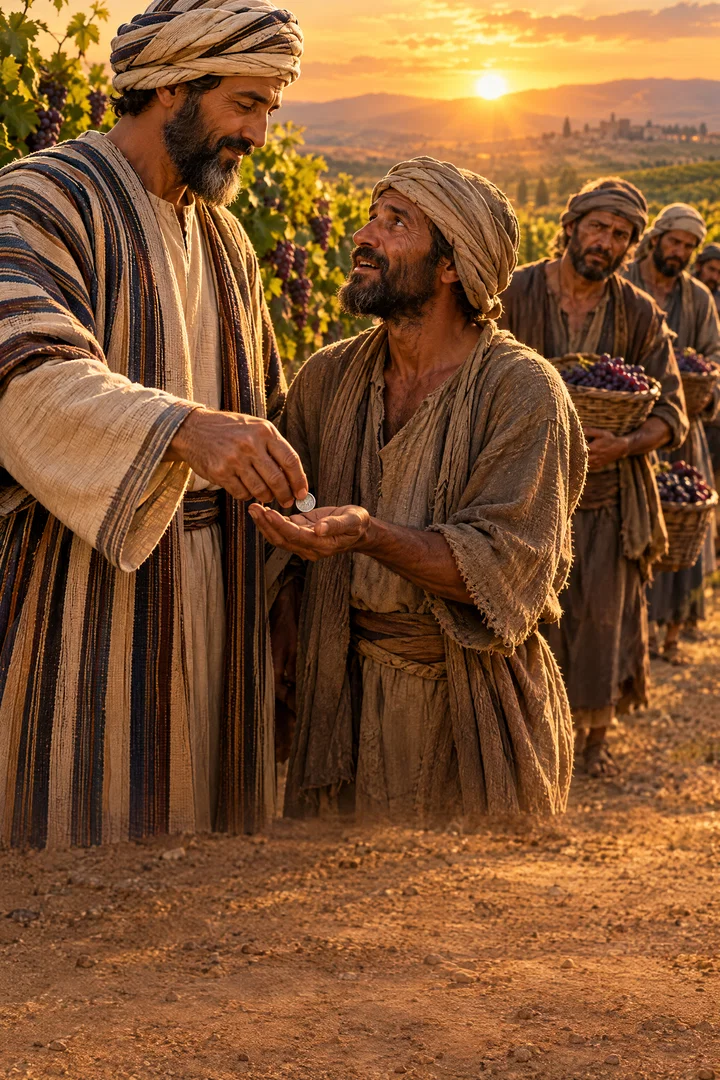
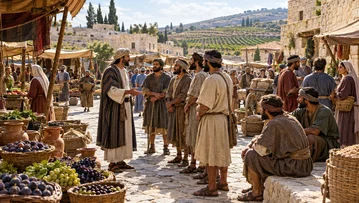
Cross-references
- Matthew 9:37-38
Then saith he unto his disciples, The harvest truly is plenteous, but the labourers are few;
The plentiful harvest needs laborers.
- Matthew 20:16
So the last shall be first, and the first last: for many be called, but few chosen.
The parable concludes that the first and last share the reward.
- Matthew 20:7
They say unto him, Because no man hath hired us. He saith unto them, Go ye also into the vineyard; and whatsoever is right, that shall ye receive.
The later workers trust the householder to give what is right.
- Matthew 21:28
But what think ye? A certain man had two sons; and he came to the first, and said, Son, go work to day in my vineyard.
Both describe a call to work in the vineyard.
- Matthew 20:12
Saying, These last have wrought but one hour, and thou hast made them equal unto us, which have borne the burden and heat of the day.
The first workers contrast their daylong burden with the latecomers’ shorter labor and equal pay.
- Matthew 20:8-9
So when even was come, the lord of the vineyard saith unto his steward, Call the labourers, and give them their hire, beginning from the last unto the first.
The vineyard workers receive their pay at day’s end.
- Matthew 20:9
And when they came that were hired about the eleventh hour, they received every man a penny.
The late-hired workers receive the penny as a reward illustrating acceptance by grace.
- Matthew 19:27-30
Then answered Peter and said unto him, Behold, we have forsaken all, and followed thee; what shall we have therefore?
Jesus’ answer to Peter about reward and the first becoming last leads into the parable.
- Matthew 20:13
But he answered one of them, and said, Friend, I do thee no wrong: didst not thou agree with me for a penny?
The master answers the first hired worker about their agreed wage.
- Luke 14:23
And the lord said unto the servant, Go out into the highways and hedges, and compel them to come in, that my house may be filled.
Workers are sent out to invite people to the supper.
- Luke 10:2
Therefore said he unto them, The harvest truly is great, but the labourers are few: pray ye therefore the Lord of the harvest, that he would send forth labourers into his harvest.
Both describe laborers being sent into the harvest.
- Matthew 9:38
Pray ye therefore the Lord of the harvest, that he will send forth labourers into his harvest.
The Lord of the harvest sends laborers into the field.
- Revelation 22:12
And, behold, I come quickly; and my reward is with me, to give every man according as his work shall be.
The righteous are rewarded according to their works.
Commentary
Each commentary is drawn from primary sources: the writings of Ellen G. White and Adventist pioneers and periodicals. Each commentary is separate. Its own words are not a quotation; follow the references to read the source passages.
Ellen G. White
99 sources
About the third hour the householder went out into the marketplace where those wanting work gathered to be hired, found others standing unemployed, and called them to labor in his vineyard with the promise to give what was right.9T 73.3–74.1Ms 23, 1908, par. 33–36Ms 19, 1897, par. 38–41ST Aug 9, 1899COL 396.3–397.1 Their idleness was not refusal of an earlier call, for they had not been there in the morning, and their hiring is one of successive calls through the day to the eleventh hour, showing that workers do not all begin together.RH Jul 31, 1900COL 399.1Ms 18, 1888, par. 3010MR 170.2–3Lt 123, 1897, par. 24–28 Those called later receive the same wage and eternal reward as those called first, for the reward is given by generous grace and not owed as debt for amount of labor.COL 396.3–397.1ST Jul 13, 1915ST Jul 13, 1915Ms 29, 1911, par. 66RH Jul 24, 1900 Its measure is the spirit brought to the work — faith, love, humility, fidelity and desire to glorify God — not length of time, amount accomplished, or visible results, while those who bargain for a fixed wage and trust in long service grumble at such generosity and are counted last.9T 73.3–74.1RH Aug 13, 1908RH Jul 24, 1900RH Jul 31, 1900Ms 87, 1899, par. 10 Christ therefore wants no idlers, but calls everyone, including those long inactive and those newly awakened near the close of probation, to enter active service at once for the salvation of souls.RH Mar 24, 19103T 202.14T 518.1–215MR 81.1RCOC 114.5
Words and Setting
About the third hour the householder went out again, found others standing idle in the marketplace, called them to work in his vineyard, and promised to give them what was right.9T 73.3–74.1Ms 23, 1908, par. 33–36Ms 19, 1897, par. 38–41RH Jul 24, 1900RH Aug 13, 1908 Those hired then accepted and went, and their later start belongs to a series of additions through the day in which the Master brings new laborers into His work at different times.Ms 23, 1908, par. 33–36Ms 19, 1897, par. 38–41SBAWP 13.2 The call to labor in God's vineyard applies to those who have received the truth, who are to work with Christ with reward to come in due time, and the light of God's message is for every soul and is to be made widely available.Ms 23, 1908, par. 33–36RH Aug 13, 1908SBAWP 13.2
The marketplace was where men wanting work gathered and stood hoping to be hired and where men needing workers came to find them.ST Aug 9, 1899COL 396.3–397.1COL 396.1–2 It was a familiar custom, still kept in Europe.ST Aug 9, 1899 The householder's repeated visits to hire workers there represent God's dealings with people.COL 396.3–397.1COL 396.1–2
Standing idle meant being without work because no one had hired them, not refusing an earlier call.RH Jul 31, 1900COL 399.1 They had not been at the marketplace in the morning.COL 399.1 When asked why they stood idle, their answer was that no one had hired them, which distinguishes those who had not yet received the call from those who heard it and refused.RH Jul 31, 1900COL 399.1
The verse is one of successive hirings through the day to the eleventh hour, showing workers called at different times.Ms 18, 1888, par. 3010MR 170.2–3Lt 123, 1897, par. 24–282MR 62.2 Not every worker begins together or follows the same path of service.2MR 62.2 Faithful laborers entering when the work has become harder take the places of those who leave and receive their reward, and when those who had abundant light reject Christ and duty, others take their place and receive their crown.10MR 170.2–3Lt 123, 1897, par. 24–28TCBMP 164.2–165.2
The parable belongs to Matthew 20:1-16 about the laborers, standing with Matthew 19:16-30, Mark 10:17-31, and Luke 18:18-30 about the rich young ruler and the reward of those who serve God and of followers.COL 390ST Aug 9, 1899 It continues the answer to Peter's question about what those who have forsaken all and followed Him will receive.ST Aug 9, 1899 It also belongs to Christ's answer to the disciples' disputing over who should be greatest.ST Aug 9, 1899 The vineyard represents the world as God's place of work and the Lord's work of service, with people as workers in it.FE 512.4Ms 99, 1907, par. 3
Grace Gives Equal Reward
Those called at the third hour and afterward share the same wage and the same eternal reward as those called first, for the reward is given by grace and generous purpose and is not earned as a debt for amount of labor performed.COL 396.3–397.1ST Jul 13, 1915ST Jul 13, 1915COL 401.2–402.1Ms 29, 1911, par. 65 The setting of workers found waiting in the marketplace belongs to a warning against jealousy and suspicion, that those called earlier should welcome those called later, remembering that they too are saved by grace.ST Jul 13, 1915Ms 29, 1911, par. 65 Murmuring over this generosity wins no sympathy, because grumbling comes from a heart that needs to be changed.Ms 29, 1911, par. 65 No laborer therefore has grounds to claim superiority over another or to begrudge another the same reward.COL 401.2–402.1
The value of service is measured by the spirit in which it is given — faith, love, humility, fidelity, willingness, purity of motive, and earnest desire to glorify God — and not by length of time, amount accomplished, advantages, learning, capacity, or visible results.9T 73.3–74.1RH Aug 13, 1908RH Jul 24, 19009T 74.2Ms 87, 1899, par. 8–9 Their later start did not lessen the grace of the equal reward, and God may reward the last as the first.9T 73.3–74.1RH Aug 13, 1908 Service belongs to God, and eternal life is His gift, not a reward to be claimed selfishly according to work done.RH Jul 31, 1900RH Jul 24, 1900 The first workers illustrate those who rely on long years of service and expect a greater reward for having done more, yet such expectation gives no cause for complaint against God's generosity.RH Jul 31, 1900
God's dealings with the workers represent His dealings with the human family, conducted by the principles of His kingdom and His higher ways and standards rather than by human standards of payment.COL 396.3–397.1Ms 29, 1911, par. 66RH Jul 24, 1900Ms 87, 1899, par. 8–9 He deals truly with those who serve Him, and rewards according to the generosity of His purpose rather than merely according to the amount of labor.COL 396.3–397.1Ms 29, 1911, par. 67 Selfishness keeps the first workers from recognizing the householder's generosity toward those hired later and paid the same wages.Ms 29, 1911, par. 66 Those called first agreed beforehand on a stated wage, while those called later left payment to the owner, trusting him to do what was right and just and to act fairly.RH Jul 24, 1900ST Jul 13, 1915RH Jul 24, 1900
The later-hired laborers represent sinners who enter God's service late, and their short and humble service does not make them unworthy of acceptance.ST Jul 13, 1915Ms 87, 1899, par. 11–12COL 397.2–398.1 Christ accepts penitent people who come to Him even at a late hour in humble faith, obey His commandments, work with humility and trust, and value the privilege of working with Christ.RH Jul 24, 1900ST Jul 13, 1915Ms 87, 1899, par. 11–12COL 397.2–398.1ST Jul 13, 1915 God honors grateful, thankful trust rather than merit, and even those who serve for a short time or do humble work may receive grace's reward when they follow Christ in simple faith, love, willingness, and faithfulness.ST Jul 13, 1915COL 397.2–398.1ST Jul 13, 1915 The penny is given to the laborer, not the loiterer, showing that reward is for faithful work rather than idleness.Ms 132, 1901, par. 17
Warning Against Hireling Spirit
The first workers had been hired for an agreed wage, and they display the hireling spirit that bargains for a fixed reward and will not work without the wages it stipulates for itself.RH Jul 24, 1900Ms 87, 1899, par. 10Ms 142, 1903, par. 90 That spirit treats its own work as worth more than the work of those hired later and seeks a stated reward from God for a stated amount of service.RH Jul 24, 1900Ms 87, 1899, par. 10 Service to Christ is to rest on faith in Him rather than on bargaining for a set payment, trusting the Master to do what is generous and right instead of complaining.Ms 87, 1899, par. 15Ms 87, 1899, par. 16 Long service and hardship do not earn a greater reward, and turning service into a claim to salvation or a fixed payment produces complaint rather than trust in God's generosity.RH Jul 31, 1900Ms 87, 1899, par. 16
Relying on long years of service and having done more leads to expecting greater reward and to grumbling at the householder's generosity toward later workers who receive the same wage.RH Jul 31, 1900Ms 29, 1911, par. 65Ms 29, 1911, par. 66 That murmuring and faultfinding complaint comes from a heart needing purification and change, and it wins no sympathy.Ms 29, 1911, par. 65Ms 87, 1899, par. 15 Service belongs to God, and eternal life is His gift rather than a reward to be claimed selfishly according to the amount of work done, while the Master still deals truly with His workers.RH Jul 31, 1900Ms 29, 1911, par. 65 Selfishness keeps such workers from recognizing the householder's generosity toward those hired later and paid the same wages.RH Jul 31, 1900Ms 29, 1911, par. 66
Those called later share the same eternal reward as those called first, since the reward is given by grace and not earned as a debt, so no laborer has grounds to claim superiority or to begrudge another.COL 401.2–402.1ST Jul 13, 1915 Service to God gives no ground to claim honor, preference, superiority, or greater privileges over others, nor to resent another's equal privileges.COL 401.2–402.1COL 399.5–401.1 Self-congratulation, jealousy, suspicion, and resentment toward others reveal a self-seeking, untrusting spirit rather than loving service.ST Jul 13, 1915COL 399.5–401.1 Work does not earn a place in heaven, and service accepted through grace is no reason to boast or claim superiority over others.COL 401.2–402.1ST Jul 13, 1915
The hiring warns first-called disciples against a self-righteous, envious spirit that thinks heaven can be earned by works, claims preference for being first in the field, takes credit for advancement, is lifted up with pride, seeks flattery and first place, feels superior, neglects the poor and needy, acts unjustly, and works eagerly for reward and compensation.ST Aug 9, 1899ST Jul 13, 1915 Those called earlier should welcome those called later and remember that they too are saved by grace, rather than giving way to jealousy and suspicion.ST Jul 13, 1915ST Jul 13, 1915 Man judges by appearances, but the Lord judges motives, sincerity, fidelity, and the humble, childlike spirit of love and tenderness, self-sacrifice and self-abasement that works in a lowly way, longs to do more for the Redeemer, and thinks little of its kind words and gifts to help others.ST Aug 9, 1899ST Jul 13, 1915 God values willingness, fidelity, love, humility, and self-forgetful service rather than length or amount of labor, so that even short and humble work done in simple faith and love may receive grace's reward, and He makes the reward proportionate so the humble last stand first.ST Aug 9, 1899ST Jul 13, 1915ST Jul 13, 1915
Those who insist on the wages they stipulate and estimate themselves highly are represented by the workers called first, and at the end of the day they are counted last.Ms 87, 1899, par. 10Lt 93, 1899, par. 14Ms 142, 1903, par. 90
Standing idle pictures spiritual idleness, which means spiritual unfaithfulness, and the penalty of such slothfulness is sure.Ms 9, 1898, par. 13 Even actions that are worthy receive no credit when all the work bears the mark of unfaithfulness.Ms 9, 1898, par. 13 If every idler understood that penalty, he would be up and doing with his Lord's entrusted talents instead of remaining slothful.
Late Call in Prophecy
About the third hour belongs to the closing work of the third angel's message, when those who have long remained inactive in God's service will heed the commission and enter active service as workers for the Master.RH Mar 24, 1910 The marketplace scene is Christ's call to His people at every time to labor in His vineyard, and that call is especially urgent near the close of earth's history.15MR 81.1 There must now be no idlers in the Master's vineyard, because the period of probation is fast closing and the opportunity to give the last message of mercy to the lost will soon be past forever, so the help of everyone that loves Jesus is needed in the Lord's work.
The successive hirings ending with the eleventh-hour call mean God calling new workers late in time, and the penny means full reward and standing in truth.Ms 30, 1889, par. 73–79 In the final crisis over the law of God and religious liberty many souls will come out of the ranks of the world and out of the churches, even the Catholic church, whose zeal will far exceed that of those who have long stood in rank and file to proclaim the truth, including Sabbathkeeping Adventists.Ms 30, 1889, par. 73–79 For this reason the eleventh-hour laborers will receive their penny.Ms 30, 1889, par. 73–79 They will see the battle coming and give the trumpet a certain sound, come to the front when calamity comes, gird themselves with the whole armor of God, exalt His law, adhere to the faith of Jesus, and maintain the cause of religious liberty.Ms 30, 1889, par. 73–79
The parable portrays workers being called at different times, including laborers brought in at the eleventh hour, and applies to faithful laborers who enter the work when it has become harder; they take the places of those who leave and receive their reward.10MR 170.2–3 Those who respond faithfully, whatever the length of their service, receive the promised reward; when people who have had abundant light reject Christ and their duty, others take their place and receive their crown.Lt 123, 1897, par. 24–28
Call to Active Service
Christ wants no idlers but requires everyone to work for time and eternity, and every true Christian must be a worker in the Lord's vineyard, wide awake and zealously laboring for the salvation of souls in unison with heavenly messengers while hearts are being moved.3T 202.14T 518.1–2CH 583.25T 386.1SBAWP 10.3–11.1 The duty is to take up one's own part, serve others, help sustain the entrusted work, and labor to the utmost of ability without seeking personal enjoyment or gain, following self-denial, sacrifice, and faithful earnest labor instead of sleeping or living for selfish interests.3T 202.14T 518.1–2RCOC 114.55T 386.1SBAWP 10.3–11.1 There is work for every accountable person wherever suffering people need help, to bring people out of darkness and error and establish them in truth through willing, devoted, unselfish service.CH 583.25T 386.1SBAWP 10.3–11.1
Those found standing idle are to be given a portion of the vineyard and put to work as missionaries where needed, including in cities and towns, highways and hedges, and dark parts of the earth to invite men to the supper.SPBC 220.3–221.1OEWP 36.1–37.1FE 365.1–366.1Ms 10a, 1895, par. 99–100Ms 10a, 1895, par. 101–102 When they blunder they are to be corrected and set to work again, because talents are learned by using them in service and heavenly intelligences cooperate with those so sent out.SPBC 220.3–221.1OEWP 36.1–37.1FE 365.1–366.1Ms 10a, 1895, par. 99–100Lt 47, 1895, par. 87–88 Detaining them idle for more schooling wastes time and money, leaves work undone, and loses souls, whereas exercising abilities in service teaches how to employ talents rather than waiting for further education or opportunity.FE 365.1–366.1Ms 10a, 1895, par. 99–100Lt 47, 1895, par. 87–88
No one is to wait for a regular process or formal channel before making any effort, but each is to take up self-sacrificing work right where he is, at home and among neighbors, becoming a laborer together with God.RCOC 114.5Ms 42, 1894, par. 4–5Lt 109, 1901, par. 12Lt 12a, 1893, par. 32 Many should work in what are called irregular lines, stepping out of the regular lines into self-sacrificing effort, and by such labor souls will be won and workers will learn by experience what it means to labor with God.RCOC 114.5Ms 42, 1894, par. 4–5Lt 109, 1901, par. 12 Everyone who knows the truth must go to work in some part of the vineyard instead of standing idle while workers are greatly needed, giving himself wholly to God, keeping step with God's people and work, placing himself decidedly where God is working, and going without the camp bearing reproach to labor for others rather than feeling no burden, sitting at home, and calling the church to himself.Ms 42, 1894, par. 4–5Lt 58, 1890, par. 5–6Lt 109, 1901, par. 12Lt 12a, 1893, par. 32
The summons reaches to the cities, where servants are to labor with God to win souls with courage, zeal, and sustained effort, and to foreign lands, neglected and destitute fields including the Southern Field and the colored work, new fields, and every part of the worldwide work.ST Oct 31, 19117T 255.2–3RH Apr 7, 1910CE 46.1RH Sep 28, 1905 Workers are needed to labor earnestly and persistently, opening new fields and working personally for people, rather than concentrating on churches that already have many advantages.ST Oct 31, 19117T 255.2–3RH Apr 7, 1910 Servants are constantly to enlarge efforts until the work encircles the world, taking an appointed place, leaving no one idle, sharing the message of mercy, tending neglected fields, and choosing need over profit near established institutions.ST Oct 31, 19117T 255.2–3Lt 76, 1899, par. 11
The call reaches young people, who are given opportunity to serve and to seek to save others, since indifference is not faithful service, and consecrated young men are called to be earnest, persevering, successful laborers using powers of mind for God instead of self and property.3T 159.2HCSSP 18.1MYP 206.2–207.1 It reaches young men for the ministry, who illustrate those found in the marketplace and called to labor, and children, for whom the church must become active in care and training at home, with parents not shifting that training to schools.HCSSP 18.1LSEGW 375.3–376.16T 411.2 All members must minister, enlighten the world, and make Christ known instead of leaving the work to ministers alone, with schools and training fitting people for usefulness by teaching common branches, the truths of God's word for this time, prophecy, practical godliness, warning sinners, winning souls, and pointing the unbelieving and desponding heavenward, so that those converted care for every part of the work and walk from light to strength until welcomed into joy.3T 159.23T 160.2CE 46.1
True toilers work for Christ, not for wages, praise, or self-exaltation, serving in dependence on God, as people of prayer, faith, and self-denial whose lives show the power of the truth they share.RH Jul 31, 1900GW 80.2AA 186.2–3 They labor whole-heartedly to the utmost without setting the highest estimate on their own services, swelling with pride, measuring every hour with exactness, or studying how little may reach the lowest standard, but compare their efforts with the Saviour's, account themselves unprofitable, and arouse to grasp the fullness of Christ to do much for Him.RH Jul 31, 1900GW 80.2SSP 13.1–2 They live out faith rather than merely talk, cooperate with God and one another, use the present probationary opportunity according to capacity to develop Christlike character and bring light to those in darkness, train new converts to labor earnestly and unselfishly at once, and carry truth to regions beyond.RH Jul 31, 1900AA 186.2–3Ms 62, 1894, par. 3
The vineyard is the Lord's large field with many laborers scattered throughout rather than centered in one place, servants in different parts with one shared cause without sectional rivalry.Ms 46, 1903, par. 2711MR 45.3–46.1 The Master knows and watches His workers wherever they labor, calls for laborers to be sent and supported with sympathy and opportunity to grow, gives each a place without requiring sacrifice of life and health, and would have new work receive help from experienced workers and faithful workers supported rather than hindered, bound to one center, or overwearying nature.Ms 46, 1903, par. 27Lt 92, 1899, par. 6–8Lt 168, 1907, par. 5–6 Means and workers should be distributed proportionately, and those employed in God's cause, whose influence brings means into the treasury, should be dealt with fairly on right principles with voice and open understanding as in a sacred transaction between man and fellow man, rather than having wages cut without consent, families brought into straits, oppression and want imposed, and workers tempted, discouraged, and driven from the field.Ms 142, 1903, par. 65–66Lt 168, 1907, par. 5–6Ms 109, 1907, par. 39–41
Labor in the vineyard is gospel work for the salvation of others — warning sinners, winning souls, bringing people from darkness and error into truth, sending earnest prayers in faith for fellow workers not fully in the truth, feeling the worth of souls, handling sacred things with a sense of sacredness, and using entrusted powers and means to advance God's cause and glorify Him rather than for selfish gain.GW92 47.33T 121.1–23T 159.23T 191.2SBAWP 10.3–11.1 It includes ministering to the sick and discouraged, not excusing oneself from unpleasant work when souls need help, not treating God's work as common labor, not grieving angels with trifling frivolities, and not remaining fruitless cumberers of the ground, but consecrating self to God and centering affections and hopes in Him.Ms 87, 1899, par. 26–273T 191.24T 75.4 The invitation of mercy to take an appointed place is to be spread throughout the world during probation as an employment to which all are called.GW92 47.3RH Apr 13, 1905Lt 76, 1899, par. 11
Christ welcomes those who seem unpromising or discouraging, sees in them abilities for His work, and as they keep learning and respond to His leading He fits them for service within their abilities and gives power through the Holy Spirit to speak.CH 26.17T 271.1 Those in the world longing for truth become intelligent helpers when called, and the work includes visiting families, caring for the sick and discouraged, sharing Bible truth, circulating publications and giving gifts to support soul-winning, and serving faithfully in the home and in whatever department is assigned.4T 75.4MC 40.3–4RH Jun 2, 1903 It includes establishing memorials where truth can be represented and providing many small sanitariums, treatment rooms in many cities, and hygienic restaurants in many places with equity and just judgment, rather than absorbing means in one place or binding the work in one mammoth institution, while refusing to use God-given powers for selfish interests in work that does not express faith.MC 40.3–4YGBCOEP 39.3–40.2Lt 92, 1899, par. 6–8
Sources
Pioneers and periodicals
155 sources
The third hour is nine o'clock in the morning, one hiring in a day reckoned from morning to evening with further hirings toward noon, mid-afternoon, and evening, picturing the familiar custom where men wanting work stood in the marketplace to be found and hired by those needing workers.ST Aug 9, 1899RH May 26, 1853RH Apr 21, 1851RH Jun 2, 1851RH Aug 29, 1871
Those standing there were idle because no one had yet hired them, not because they were unwilling or refusing to work, and their patient waiting showed a willing mind.RH Jul 31, 1900ST Feb 26, 1880ST Feb 26, 1880
All who enter and labor, even those called late, receive the same penny by grace, for service is valued by the spirit of love, faith, and faithfulness in which it is done rather than by length of time or amount accomplished.RH Jul 24, 1900ST Jul 13, 1915ST Dec 2, 1886ST Jan 24, 1911ST Dec 2, 1886
Those hired first for an agreed wage show the hireling spirit when they grumble at that generosity, claim more for longer service, and envy those called later, while the Lord judges motives and not outward appearances.ST Aug 9, 1899RH Jul 24, 1900ST Jul 13, 1915RH Sep 4, 1866RH Sep 4, 1866
Idleness is therefore out of place while work remains and the day is passing, and every servant is called to enter at once and labor faithfully in gathering souls before night comes when no one can work.RH Sep 25, 1856RH Nov 6, 1856ST Jul 28, 1881ST Jul 28, 1881
Hour and Daylight Reckoning
The third hour is nine o'clock in the morning, the second hiring after the early morning going out, when the householder found others standing idle in the marketplace.RH May 26, 1853RH Apr 21, 1851RH Jun 2, 1851 It belongs to four three-hour intervals dividing the twelve-hour daylight period reckoned from six in the morning to six in the evening.RH May 26, 1853RH Jun 2, 1851 The later hirings follow the same reckoning at noon, at three o'clock, and at five o'clock, with dismissal at evening.RH Apr 21, 1851RH Jun 2, 1851
The hours are twelve equal divisions of the time from sunrise to sunset, so their length varied with the season and they were not fixed modern clock times.RH Dec 4, 1855RH Dec 4, 1855 The verse therefore does not prove that the day began at six in the morning or that evening began at six.RH Dec 4, 1855 The day ended at evening, at the close of the twelfth hour, a timing applied to the beginning and end of the Sabbath.RH Aug 5, 1851 The word translated hour when qualified by third specifies a particular hour, in contrast to unqualified uses of the same word that can mean a time or season rather than one-twelfth of a day.RH Mar 24, 1863
The successive hours mark successive times of entering the closing work.ST Jan 4, 1883 The early hours belong to the pioneers who met with Brother and Sister White and were stirred by their counsel and admonitions, going forth from times of refreshing with cheerful courage, strength of purpose, and ardent zeal when the cause was young and the work was small.ST Jan 4, 1883 The sixth and ninth hours belong to those who came in afterward with less of that early courage and zeal, who can hardly realize what the early workers experienced.ST Jan 4, 1883
Marketplace Hiring Custom
The verse pictures a familiar hiring custom in which men wanting work gather and stand in the marketplace hoping to be hired and men needing workers come there to find them.ST Aug 9, 1899RH Aug 29, 1871 That custom was still kept in Europe and continued in the Holy Land.ST Aug 9, 1899RH Aug 29, 1871 There wages were paid at the end of the day, as Moses had instructed.RH Aug 29, 1871
The going out about the third hour is part of a continual seeking that begins early in the morning and lasts until the last hour. The householder returns at the third, sixth, ninth, and eleventh hours to find more workers.RH Nov 1, 1853ST Jan 22, 1885 He carefully searches out and hails every group of idle people gathered along the way. To every willing person he gives the same invitation to go also into the vineyard, asked not in mockery or to condemn but in love and sympathy to furnish work, and the call to labor continues during the day whenever a person asks what to do.RH Nov 1, 1853ST Sep 15, 1881
Jesus used familiar work and hiring to help listeners grasp spiritual truths, adapting his teaching to what people knew.ST May 4, 1876 The hiring belongs to Christ's answer to Peter's question about what those who have forsaken all and followed him will receive and to the disciples' disputing over who should be greatest.ST Aug 9, 1899 It illustrates that the first may be last and the last first, with labor valuable to God not for the time or strength it requires but for the love and faith that move the worker.ST Aug 9, 1899ST Dec 2, 1886 The vineyard is the place where the Lord's workers are called to labor, the promised penny belongs to those who work there, and its workers should labor in harmony under one rule.
Meaning of Standing Idle
The men were standing without work because no one had hired them and they had not yet been called, not because they were unwilling, neglectful, or refusing to work.RH Jul 31, 1900ST Feb 26, 1880ST Feb 26, 1880ST Feb 26, 1880 Their waiting anxiously and patiently for someone to employ them showed a willing mind, and the master knew they had waited and reckoned that willingness as service when he gave the penny.ST Feb 26, 1880ST Feb 26, 1880ST Feb 26, 1880 They sought employment and took the first work offered without haggling over wages.RH Jan 28, 1902 In the wider application this means that an honest person who longs for truth but has not yet received the gospel is not accountable for failing to act on a message never heard, and when the gospel finally reaches him he receives and proclaims it with the strength he has, so there is hope for one who answers at the eleventh hour when that is truly his first call and he can honestly say no one hired him earlier.ST Feb 26, 1880RH Sep 22, 1863
Their idleness meant dependence on an employer's permission to work and earn a living, having no capital or independent place to work.STST This illustrates the dependence of wage-earners who have lost the capital and means for independent occupation, as growing control over labor by possessors of capital leaves some without work and in poverty.STST Applied spiritually, they represent church members who remain idle because they have no promise of regular financial support, whom the Master calls into the vineyard to trust that he will provide what is right.RH Aug 17, 1911 The same standing idle means widespread unemployment when barns are filled with plenty and presses burst with new wine and warehouses groan with goods, with men by the millions in the marketplaces for lack of work and starving for lack of the very goods stored in abundance around them, while wealth is congested in the hands of comparatively few masters who control its sources and means of production, determine prices, regulate wages, and mold legislation.ST Nov 25, 1913 The laborer has only the employer's promise to depend on, which lets the employer hire him as cheaply as possible even for less than will buy bread, and this condemns grinding the vineyard worker down for gain and leaving his larder empty and his wife and children hungry, cold, lone, and comfortless in their hovel while their prayer and groan over sleepless need rises to Him on the throne.ST Sep 5, 1895
The world is pictured as a marketplace where people may be busy with ordinary work, wealth, pleasure, or fame yet remain idle in the things that lead to salvation and lasting peace, so that until they enter God's service their industry is idleness.RH May 17, 1864 That idleness in the marketplace pictures spiritual idleness, which means spiritual unfaithfulness, its penalty is sure, and if every idler understood it he would be up and doing with his Lord's entrusted talents instead of remaining slothful.RH May 17, 1864 Those who began later were not necessarily idle in their service to God, for American Sabbath-keepers though hindered by persecution and custom lived for Christ and were not idlers in the Lord's vineyard.ST Jun 25, 1874 In contrast to the idle in the marketplace stands Matthew as a busy tax collector called by Christ, from which is drawn the lesson that Christ does not call idle people to work in his vineyard.RH Sep 28, 1916
Grace and Reward
Service is valued according to the spirit in which it is done rather than the time, strength, length, amount, or visible results.RH Jul 24, 1900RH Aug 13, 1908ST Jul 13, 1915ST Dec 2, 1886ST Dec 2, 1886 Love, faith, trust, zeal, willingness, fidelity, humility, sincerity, and self-forgetful service are what God values, and reward is his favor and gift by grace rather than a claim of right earned by works.RH Jul 24, 1900RH Aug 13, 1908ST Jul 13, 1915ST Dec 2, 1886ST Dec 2, 1886 The last workers trusted the householder to give what was right and were placed first because they worked in faith, and penitent sinners who come in humble faith even at a late hour and obey are accepted.RH Jul 24, 1900RH Aug 13, 1908ST Jul 13, 1915ST Dec 2, 1886ST Dec 2, 1886 A person's standing depends not on how long ago he was called or on earning a future reward, but on unselfish trust and zeal, so that those who serve thus may be honored above earlier-called workers who labor with lesser motive.ST Jul 13, 1915ST Jul 13, 1915ST Dec 2, 1886 God's dealings are not governed by human standards of payment but rest on his generous purpose, for his ways are higher than human ones and his work proceeds according to the principles of his kingdom.ST Jul 13, 1915RH Jul 24, 1900
Those who serve for different lengths of time, even to the eleventh hour, share the same penny and eternal reward when they follow in simple faith and grateful humility.ST Jul 13, 1915ST Jul 13, 1915RH Jul 31, 1900ST Jan 24, 1911RH Feb 6, 1855 The decisive question is entering the right way and moving toward the right goal, not how long one has run, and the reward does not depend on doing the hardest or longest work.ST Jan 24, 1911RH Apr 2, 1901RH Feb 6, 1855 Short service with humility, trust, and gratitude for the opportunity is honored rather than measured by amount of labor performed.ST Jul 13, 1915ST Jul 13, 1915 The first workers hired for an agreed wage show the hireling spirit, treating their work as worth more than the later work and seeking a stated reward for a stated amount of service.RH Jul 24, 1900RH Jul 31, 1900RH Sep 4, 1866 They rely on long years of service, expect greater reward for having done more, grumble at generosity, and resent their brethren's prosperity.RH Jul 24, 1900RH Jul 31, 1900RH Sep 4, 1866RH Sep 4, 1866 Their murmuring concerns this life, for the saved in the world to come will not complain, and those who persist in selfish murmuring without sacrificing cannot be saved.RH Sep 4, 1866RH Sep 4, 1866
The parable warns against a self-righteous, envious spirit that thinks heaven can be earned, claims preference for being first, takes credit, seeks flattery and first place, feels superior, neglects the poor, acts unjustly, and works eagerly for compensation.ST Aug 9, 1899ST Jul 13, 1915ST Jul 13, 1915 Man judges by appearances but the Lord judges motives, sincerity, fidelity, and the humble, childlike spirit of love, tenderness, self-sacrifice and self-abasement that works lowly, longs to do more, and thinks little of its kind words and gifts, and he makes reward proportionate so the humble last stand first.ST Aug 9, 1899ST Jul 13, 1915ST Aug 20, 1885 Those called earlier should welcome those called later without boasting, claim of superiority, envy, self-seeking, jealousy or suspicion, and each should faithfully do the task assigned without envying another's place.ST Aug 9, 1899ST Jul 13, 1915ST Jul 13, 1915ST Jul 13, 1915ST Aug 20, 1885 God's call to salvation is offered freely while those not chosen are those who refuse its terms, so anyone who chooses to accept is among the chosen.ST Feb 20, 1901RH Sep 4, 1866 Some first called to sacrifice refuse while others called later heed the call, sacrifice, outstrip the earlier, are blessed and promoted, and make their calling and election sure, and the parable's main application is to this probationary life.ST Feb 20, 1901RH Sep 4, 1866RH Sep 4, 1866
The righteous are rewarded according to their works and each person is rewarded according to his works, so the parable does not teach that all receive equal rewards regardless of how much they have labored.RH Sep 4, 1866ST Mar 3, 1887 The reckoning day is when each faithful laborer receives his allotted reward.RH Sep 4, 1866ST Mar 3, 1887 The same reward for late workers does not excuse delaying service; it belongs to those whose late call was truly their first call and who respond when it comes, not to those who spend their lives rejecting mercy, grieving away the Spirit, and refusing an earlier call while waiting for a later opportunity.RH Apr 20, 1876RH Sep 22, 1863RH Dec 14, 1905 In Christian lands people are called when they first hear the truth, often in childhood or youth, so one who delays obeying cannot claim the promise given to faithful people who had no earlier opportunity, for the different hours distinguish people who hear the truth at different times.ST Feb 26, 1880RH Apr 20, 1876RH Dec 14, 1905 A later start does not prevent the householder from paying for the work done; God may reward willing labor even when shorter than a full day, and even small or late service such as a cup of cold water given in Christ's name is not overlooked.ST Feb 26, 1880ST Dec 18, 1901
The promise of the penny even to the eleventh hour gives hope to those called late and newly come to the truth, while the short time remaining calls them to work with double zeal.RH Oct 3, 1865ST Jun 7, 1877RH Apr 16, 1857RH Jul 17, 1860 Those who enter late should still labor earnestly, contribute time and means, help bear the burdens that earlier laborers have borne in making truth plain, and help bear the burdens of the cause including its institutions, lest by failing to work they miss the penny held out as reward.RH Oct 3, 1865ST Jun 7, 1877RH Jul 17, 1860ST Jun 7, 1877 Even when presenting truth serves generally only for a witness with little visible fruit, the worker is to labor on content, trusting to receive the penny at eventide as the final reward for faithful service.RH Apr 16, 1857RH Jul 17, 1860 The parable concludes that many are called but few are chosen, a call applied to spreading the light in books so as many as possible may receive it.RH Aug 13, 1908 God assigns each person's labor while the worker's duty is to do it faithfully and leave its duration, burden, and time of rest to God.RH Aug 13, 1908RH Apr 12, 1870
The Lord of the vineyard comes at the close of day to look at each person's task, before whom even the best human work causes shame, yet each person is part of God's great plan and must pray for strength and do the best that can be done.RH Nov 12, 1872 The laborers in the vineyard are church-trained religious people, whose training should keep them from condemning others when they themselves are at fault.ST Apr 15, 1897
Urgent Call to Labor
The marketplace scene shows workers standing idle while work remains and the day passes, teaching that idleness is out of place when there is work to do, especially as the harvest nears its end.RH Sep 25, 1856RH Nov 6, 1856 Those counted as servants in the Lord's vineyard carry a responsibility to be active in his service, and there are to be no idlers or loiterers in that vineyard, for God's work calls for continual effort and a widening circle of influence.RH Nov 6, 1856ST Sep 10, 1885 Each person has a place and a portion of work that no one else can do for them, so work left undone remains undone, and faithful continuing service in the assigned work is required.ST Sep 19, 1900 No one can follow Christ while remaining idle, since Christ's service requires diligent active labor, and such work is a blessing that earns wages, with Christ's help making even a hard task easier.ST Sep 10, 1885ST Sep 19, 1900
Those who stand idle saying no one has hired them or set them to work are called to stop waiting to be sent and to stop waiting for the work to come to them.RH May 21, 1914ST Apr 1, 1886 They are not to waste time pleading lack of hiring, but to enter the vineyard promptly and gather its ripe fruit while it is day, trusting the Master to settle with them rightly and to provide what is right.RH Aug 17, 1911RH May 21, 1914ST Apr 1, 1886 This answers church members who remain spiritually idle because they have no promise of definite wages or regular financial support, as well as those who excuse themselves, prefer to work for the world, for themselves, for others, or even for Satan, rather than for the Master.RH Aug 17, 1911RH Aug 5, 1873 It likewise answers those who truly want to work for the Lord yet think they do not know how, see no opening near them or nothing they can do around them, and wait until they are qualified, until education is completed, until faculties are developed, or until a more convenient sphere suited to their ability appears.RH Aug 5, 1873RH Aug 29, 1912 God's providence will bring opportunities to those ready to work, including through practical training for missionary service, and they should stop making excuses, hear the call, and do what they can to spread the message.RH Aug 29, 1912ST Apr 1, 1886 The Master sets each worker to congenial labor suited to strength and gives power to the faint.RH Aug 17, 1911RH May 21, 1914
God's call to enter the vineyard must be obeyed today, at once, the same day a person is hired, leaving all to follow without waiting to arrange temporal affairs.ST Feb 4, 1886RH Jun 6, 1871 Delay leaves today's duty and blessing lost forever, and many who put off going will still be expecting to go when probation closes and the work is done.RH Sep 18, 1900 The call is solemn because time is short and the night comes when no one can work, for there is no work nor device nor knowledge nor wisdom in the grave, so whatever the hand finds to do is to be done now with all might, whether at high noon or at the eleventh hour of life.ST Feb 4, 1886RH Sep 18, 1900RH Jun 6, 1871 Humanity stands on the threshold of eternity with the resurrection day at hand and the eternal kingdom of Christ and its realm of eternal bliss almost here, so the summons to labor to gather others into Christ's kingdom must be answered now before it is too late.ST Feb 4, 1886RH Sep 18, 1900 The assigned task is to be done well for as long as the Master sets it, for labor will end and reward will come at evening when he comes with his reward with him to give what is just.ST Feb 4, 1886RH Jun 6, 1871 The King's business demands haste because a mighty work must be finished before the Lord comes, and if one fails his part another will do it and receive the joy and crown he might have had.
Service for Jesus is still possible and required while time remains, since workers are found and called even as late as the eleventh hour and each person has some ability to use in the Master's work.ST Jul 28, 1881ST Nov 9, 1915RH Jan 28, 1902 The call to work continues even as the harvest nears its end, with faithful workers helping gather what is ready, and the later eleventh-hour call makes active service urgent because little time remains.ST Jul 28, 1881ST Nov 9, 1915RH Jan 28, 1902 The present time is that eleventh-hour call, when God calls all to go into active service or into preparation for such service, the day is far spent, and diligence must increase as the Master's coming draws near.ST Jul 28, 1881RH Jan 28, 1902RH Dec 2, 1915 Those willing but hesitant or unsure how to begin should be encouraged to work in their own communities, including as self-supporting missionaries and neighbors helping where help is most needed, seeking the Holy Spirit's strength to labor faithfully unto overcoming.ST Jul 28, 1881RH Sep 19, 1912 God has need of young men and young women, and answering the call with the promise that whatsoever is right will be given may require fathers and mothers like Abraham to sacrifice by giving their only child to God, for God's own cannot be withheld from him.RH Dec 2, 1915RH Sep 19, 1912
When Christ finds a person he hires him to work in his vineyard, and being hired means being forgiven, fed upon Christ, and blessed in order to spread salvation and do things for Christ and his people.RH Jul 22, 1858 Every Christian is thus a servant hired to be a doer of the word and not a hearer only.RH Jul 22, 1858 Standing idle is selfish Christianity that enjoys Christ alone, leaves the dearest friend unsaved without speaking to him, and spends time in idle talk and self-seeking instead of serving.RH Jul 22, 1858
There is work for everyone, even the humblest, and no one should conclude there is nothing to do.ST Aug 12, 1875ST Aug 12, 1875ST Jan 7, 1886 Feelings of limited ability or means should lead to prayer for grace and wisdom and to willing faithful performance of humble duties, rather than remaining inactive or waiting idly for some greater work or for work that seems great and important.ST Aug 12, 1875ST Jan 22, 1880RH Nov 13, 1866 Having but one talent gives no excuse for idleness, for each is expected to improve that talent and thereby add to usefulness and become an efficient worker, and all can serve according to ability with the honor of cooperating with Christ and angels in redeeming people.ST Aug 12, 1875ST Jan 7, 1886RH May 7, 1861 Time is short so there is no time to idle away, and with many going to ruin all around everyone must do what can be done to save them.ST Aug 12, 1875ST Jan 7, 1886
The heavenly voice asking why they stand idle all the day asks quietly yet with authority, as a friend full of love and sympathy. It does not condemn and punish the unemployed as human justice does, nor ask in mockery, but searches out and hails every group of idle people gathered along the highway to furnish work in the kingdom to everyone willing to labor. The going out about the third hour belongs to a continual seeking that begins early in the morning and lasts until the last hour, giving every idle person the same invitation to go into the vineyard of the kingdom of God.
Church members standing idle like marketplace laborers while daily opportunities pass by show slothfulness and sleep and neglect of personal responsibility in soul-winning work, and need entreaty to arouse them to go and work and to unearth their buried talent and put it out to the exchangers.RH Feb 24, 1916RH Feb 18, 1873 God's design is that his people make themselves useful in his vineyard instead of standing idle, and working to rescue fellow men from their lost condition is the appointed means to increase spiritual fervor and overcome apathy.RH Feb 24, 1916RH Feb 18, 1873 Disinterested efforts of sympathy, personal kindness, fitly spoken words, meek reproof, judiciously given tracts and books, and practical help by food, raiment, money, influence, and muscular strength both reclaim the straying and lost and raise the worker to fellowship with the benevolence of Christ.RH Feb 18, 1873RH Nov 5, 1872 Such spiritual idleness means spiritual unfaithfulness whose penalty is sure, and if every idler understood it he would be up and doing with his Lord's entrusted talents instead of remaining slothful.RH Feb 24, 1916 Entering the vineyard means personal labor with those needing help in circulating tracts, in religious conversation, and in prayer with the candid, bearing the cross, and this labor makes the weak strong in the Lord, lifting the discouraged worker up as he lifts those weaker than himself.RH Feb 18, 1873RH Nov 5, 1872 Strength for the closing struggle does not come by waiting idle for the invigorating influence of the latter rain, but only by cherishing a love of labor and becoming real workers in the Master's cause.RH Nov 5, 1872
Those long inactive in God's service are pictured standing idle in the marketplace, yet in the closing work of the third angel's message they will heed God's commission and enter active service as workers for the Master.RH Mar 24, 1910RH Oct 8, 1903 That closing work is the gospel work done by the generation witnessing the Lord's coming to prepare his way, with God continuing to bring in workers and a variety of talents brought in at the eleventh hour when the work grows harder.RH Mar 24, 1910RH Oct 8, 1903 Sacrificing workers will step into places made vacant by those unwilling to do what would fit them for a place in the heavenly temple, and will continue to come in as the Lord provides openings and facilities, proving faithful and receiving their penny.RH Mar 24, 1910RH Oct 8, 1903 The Lord will call upon youth to fill places made vacant by death and apostasy, giving young men and women as well as older workers the cooperation of heavenly intelligences, with converted minds and converted tongues and lips touched with a live coal from the divine altar, enabled to carry his work onward and upward if they walk humbly with God and do what he appointed.RH Oct 8, 1903
Fields and Forms of Service
The call of the vineyard is to gather souls from sin, seeking young and old from death on the broad highway and bringing them to safety with the Shepherd who waits to welcome them to mansions above.ST Aug 28, 1898ST Nov 27, 1893 Strength is promised to those who ask aright, the yoke is easy and the burden light, and the best pay is pledged to faithful work, which is rest hereafter, life eternal with pleasures and joys untold, bright mansions in glory, entrance through the pearly gates to eat of the healing tree of life, and a home among the just when the King descends with pure bright angels.ST Jul 8, 1875ST Jul 8, 1875 Those who turn many to righteousness receive a golden crown with a star for every soul saved, shining as bright as the stars forever and ever when the King comes in his beauty, after the pattern of faithful laborers who went before, labored, endured and suffered by faith loving not their lives unto death.ST Jul 8, 1875RH Feb 4, 1873 No delay is right because only a few fleeting years remain before the consummation spoken by the holy prophets, and the harvest of earth is ripening toward the gathering day.RH Feb 4, 1873
The same summons is to enter the cities and work with God to win souls there.ST Oct 31, 1911RH Apr 7, 1910RH Aug 18, 1910 That city work is to be done with courage, zeal, and sustained effort, rather than laboring only for those who have already accepted the truth.ST Oct 31, 1911RH Apr 7, 1910RH Aug 18, 1910
The South is a welcoming, needy but fruitful field to which those who recognize they have no work are directed, where their work also develops faith, courage, character, and blessing for themselves as well as those they serve.RH Aug 11, 1910RH May 18, 1916RH May 18, 1916 Those who think they lack talent or experience are to stop waiting and enter needed work in farming, mechanics, teaching, and other practical fields, learning as they go.RH May 21, 1914RH May 18, 1916RH May 25, 1916 Sabbath keepers who are spiritually idle or not engaged in useful work are urged into the neglected work of rural schools in the South, demonstrating Christian truth in daily life.RH May 18, 1916RH May 25, 1916RH May 18, 1916 The Lord's vineyard there includes the needy work for Black people, with mission schools, treatment rooms, tent efforts, and openings for labor, to be remembered with prayer for laborers and burden-bearers and with donations that send laborers, provide facilities, and hold institutes, including educating Black children for service.RH May 21, 1914RH May 18, 1916RH Sep 24, 1908
Canvassing, selling magazines, circulating the Signs of the Times and other special periodicals and literature, and preparing canvassers are openings and tools for service that those found unemployed in the marketplace are urged to take up with regular, persistent, earnest effort and not to neglect on the plea that no one has called them.RH Nov 28, 1907RH Sep 30, 1909RH Dec 12, 1907RH Jul 19, 1906 Sending laborers into the field and supporting their work of saving souls answers the owner's going out to seek workers for the vineyard.RH Jun 2, 1903RH Nov 28, 1907
The vineyard Master looks down on the urgent need for workers in Africa, calling people to give themselves and their means to mission work.RH Jul 8, 1909RH May 27, 1909 That appeal is for more missionaries and more financial support for the work there.RH Jul 8, 1909RH May 27, 1909
God has need of young men and young women, and the present eleventh-hour call leaves no room for the excuse that there is nothing to do or no hiring, because all are called into active service or into preparation for it with the promise that whatsoever is right will be given.RH Dec 2, 1915RH Dec 12, 1871 Young people are to leave idle indifference, prepare in schools, academies, and intermediate and industrial schools, and enter the vineyard in useful places, even as self-supporting missionaries and as neighbors helping where help is most needed.RH Sep 21, 1911RH Apr 26, 1906RH Sep 5, 1907RH Dec 12, 1871 Answering may require fathers and mothers to sacrifice as Abraham did by giving their child to God, for God's own cannot be withheld from Him.RH Dec 2, 1915
For a missionary wife this means accompanying her husband in his mission to save souls, entering heartily into his labors, uniting interest and labor with his, conversing and being social to help, and asking where God wants them to be and where united labor can best glorify Him and do the most good.RH Dec 30, 1909 Such unselfish labor in self-denial, sacrifice, and faithful earnest labor after Christ's example, to enlighten those in darkness, brings sweet satisfaction day by day and sure reward with stars in the crown according to souls led to Christ for the heavenly garner, and no Christian in every sense is to stand idle.RH Dec 30, 1909 At home, older family members are to cultivate children's learning and spiritual interests, training them so they are ready to serve in the Master's work when called.RH Jun 2, 1910
Being idle is living an idle Christian life while needy souls close by are left uncared for, overlooking ignorant, degraded, and lost people in one's own village, city, wharves, and taverns while dreaming of foreign fields and indulging vague visions of teaching the heathen in India or Africa.ST Jan 28, 1897ST Mar 12, 1896 God puts today's work under the eyes and touch, not on the other side of the globe, and neglecting nearby need is done at peril.ST Jan 28, 1897ST Mar 12, 1896 Every Christian has been hired by the Master at great price to do His work of practical teaching and lifting up, and should ask at the close of each day whether time has been left unused.ST Jan 28, 1897ST Mar 12, 1896
True vineyard labor is visiting people as a pastor, cultivating the social qualities necessary for a minister, acting as a colporter in urging publications upon people, circulating tracts, religious conversation, and prayer with the candid while bearing the cross.ST Jan 8, 1880RH Nov 5, 1872 Merely reading many volumes hastily and thinking, reasoning, and writing carelessly and loosely, without digesting truth and incorporating it into labor, without time for visiting and colporting, accomplishes little real good and is not faithful service.ST Jan 8, 1880 This personal labor with those needing help is needed for personal advancement and spiritual strength, for labor makes the weak strong, lifting others weaker than oneself and thereby lifting oneself, and strength for the closing struggle comes not by waiting idle for the latter rain but by cherishing love of labor and becoming real workers.ST Jan 8, 1880RH Nov 5, 1872
The vineyard embraces tent labor with many excellent openings in which God fits up men to be co-laborers with Him to raise up churches, medical missionary service as co-workers in helping others, health-reform enterprises giving Sabbath keepers employment joined with open-air preaching, and mission territories including Java, German East Africa, the Welsh Mission, Scotland, China, and Korea.RH Aug 26, 1915RH Apr 11, 1907RH Mar 18, 1873RH Oct 17, 1912RH May 6, 1909 There workers spread the message and seek others to join even amid difficulty, gather companies, baptize, and organize churches, as in Java where converts go out to find interested people.RH Apr 11, 1907RH Mar 18, 1873RH Oct 17, 1912 Financial support makes such missionary service possible for those called to go, and men are provided support while they study and prepare to share truth with their countrymen.RH Apr 11, 1907RH Sep 28, 1911
Entering the vineyard is giving up earthly employment as attorney, farmer, or merchant to consecrate oneself to the Lord's work of present truth, preaching from house to house and in tents and new fields for salvation, visiting churches and laboring for souls before camp meeting.RH May 16, 1907RH Sep 27, 1864RH Apr 29, 1873RH Dec 24, 1872RH Dec 24, 1872 The day is far spent, so the call for still-idle believers to enter is urgent, and servants admitted last near the close who now leave business show the latter rain falling, God's work rapidly completing, and the signs of the times fulfilling.RH May 16, 1907RH Sep 27, 1864 Temporal embarrassments and confining home cares, such as affliction and constant care for a sick wife, can hinder this going out until the Lord opens the way, while relief enables greater good; waiting patiently with prayer for sanctifying influence belongs to faithful service.RH Apr 29, 1873RH Dec 24, 1872 One long entangled in worldly farming and business who has neglected the work can redeem the time by devoting time and talents wholly to it, laboring faithfully alone or with others, and is welcomed and blessed with souls taking their stand upon truth.RH Dec 24, 1872RH Dec 24, 1872
The work claims those Christ bought with His blood when He left His kingdom and suffered pain, temptation, anguish, and shame on the tree, requiring time, talents, powers, affections, and sunniest hours, beginning in the morning and toiling all day while it is day because bright hours hasten away and night's shadows gather fast when labor ends.RH May 14, 1867RH May 17, 1864ST Jan 8, 1880 Plenty remains for all ages and ranks, including weeding, fencing, clearing roots, plowing, sowing, gathering fruit, taking foxes, destroying wolves, tending sheep, feeding lambs, gathering the lost, leading the weary, and toiling for others and for daily bread until the task is done.RH May 14, 1867RH May 17, 1864 The answer to Jesus' call is to go where He leads despite toil, care, sorrow, rejection, shunning friends, and even crucifixion, renouncing self-will to serve those for whom He died, in the life He wills which alone fills the aching heart, frees from sin's power and bitter strife, and ends in transcendent bliss and eternal life.ST Mar 6, 1901RH Jan 30, 1879ST Feb 17, 1898 Christ supplies strength and pays wages, the diligent few who finish are thrice blessed, and the faithful's reward will far more than compensate all effort.RH May 14, 1867ST Jan 8, 1880
There are to be no idlers in the vineyard, and ministers are constantly to enlarge their circle, constantly to do more never less, until the work widens to encircle the world.RH Aug 19, 1902 They are not to spend time only on those already in the truth but with Christ's love burning in their hearts to go forth to win sinners, sowing beside all waters, visiting place after place, raising up church after church.RH Aug 19, 1902 As soon as a church is organized its members are to be set to work and taught how to work, with more time given to educating than to preaching, so new converts are fitted for service, at once enter the work, impart what they received, and carry truth to regions beyond before passing on to other equally important fields.RH Aug 19, 1902
The Master's vineyard is any part of the field where service is needed, a place where everyone willing can do something for Jesus.ST Jul 19, 1905ST Feb 8, 1899ST May 22, 1884 People from fields, vineyards, and workshops are sent into the gospel, and Christ equips them even with little education if they give themselves and keep learning.ST Jul 19, 1905ST May 22, 1884 Even one sorely afflicted for years, standing alone with no fellow Sabbath keepers and feeling feeble and without good, still has a place there.ST Jul 19, 1905ST May 22, 1884 A college education under Christian influence also prepares even one without means to enter as a worker.ST Jul 19, 1905ST Feb 8, 1899
Entering the vineyard means taking part in its work, not idling while others serve and provide, and church members inactive through lack of confidence, interest, or burden for souls, who profess willingness yet neglect meetings for spiritual work and do nothing to help as in relieving the schools' debts, miss precious experiences of Christian service.RH Feb 6, 1866ST Sep 29, 1881RH Dec 11, 1913RH Nov 25, 1902RH Mar 25, 1902 They should be found suitable work and encouraged, instructed, and set to work, for each person can do something.RH Dec 11, 1913RH Nov 25, 1902RH Nov 3, 1863 All can help warn the world, and the work is urgent because time is short and probation will soon close.RH Dec 11, 1913RH Nov 25, 1902RH Nov 3, 1863
Those standing idle are later called into God's vineyard, where God provides work for all and calls everyone to work with all their might, inviting them at the third hour and promising what is right, even when the call comes later in life.RH Jul 24, 1900RH Apr 8, 1902ST Feb 26, 1880 They are not hired to remain in the marketplace, for entering to serve is necessary to receive recompense, and genuine love for God expresses itself in service not set by length of time.RH Jul 24, 1900ST Oct 31, 1911RH Apr 8, 1902 Those who assist the reapers though bringing no sheaves of their own still serve a needed purpose in varied harvest labor and will receive reward at the reckoning and in the approaching evening when fellow laborers are paid, so service is to continue even when hard or without visible reward, for service for Jesus brings eternal gain and joy.RH Jul 24, 1900RH Nov 28, 1907ST Oct 31, 1911RH Apr 8, 1902ST Nov 24, 1881
Sources