Matthew 20:9
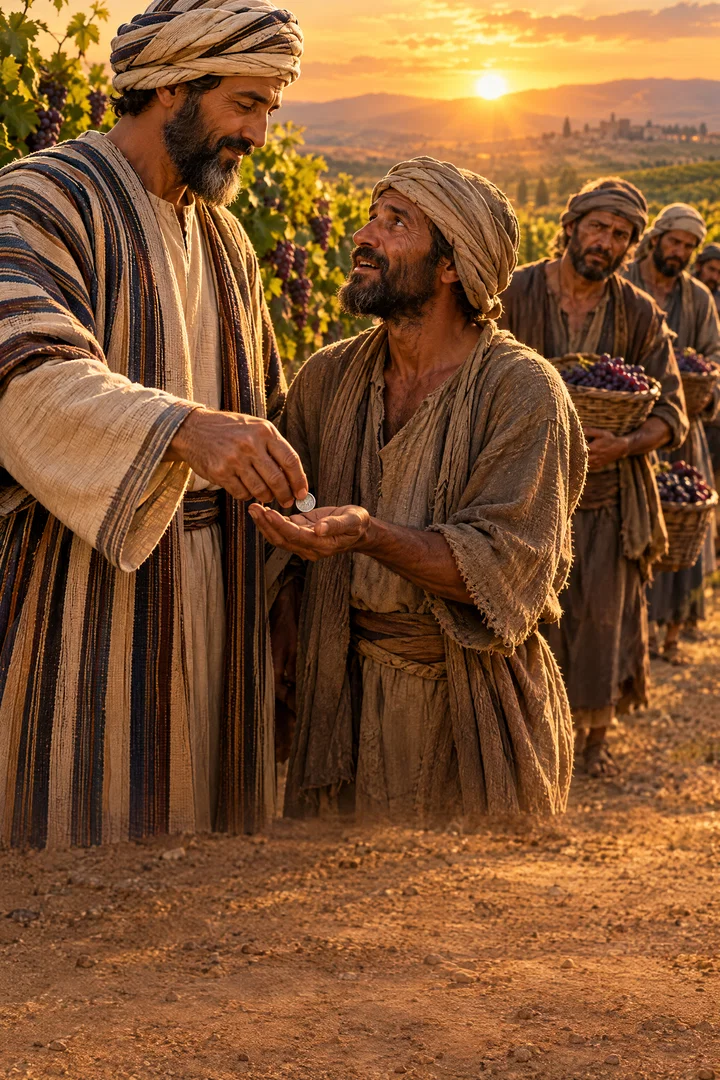
And when they came that were hired about the eleventh hour, they received every man a penny.
Translations
American King James Version, King James Version, KJV Cambridge Paragraph Bible, Webster Bible, Revised Version
And when they came that were hired about the eleventh hour, they received every man a penny.
And when they came that were hired about the eleventh hour, they received every man a shilling.
And they of about the eleventh hour having come, did receive each a denary.
And when they [ who came to work] about the eleventh hour came, they received each a denarius.
And they of the eleventh hour, coming, received severally a denary.
Berean Standard Bible, Majority Standard Bible
The workers who were hired about the eleventh hour came and each received a denarius.
“ When those who were hired at about the eleventh hour came, they each received a denarius.
And when those men came who had gone to work at the eleventh hour, they were given every man a penny.
And they which were hired about ye eleuenth houre, came and receiued euery man a penie.
Douay-Rheims (Challoner revision)
When therefore they were come, that came about the eleventh hour, they received every man a penny.
Pictures
Cross-references
- Matthew 20:16
So the last shall be first, and the first last: for many be called, but few chosen.
The equal payment illustrates the parable’s reversal of first and last.
- Matthew 19:30
But many that are first shall be last; and the last shall be first.
The saying that the first will be last and the last first frames the parable’s lesson.
- Revelation 22:12
And, behold, I come quickly; and my reward is with me, to give every man according as his work shall be.
Christ brings each person a reward according to their work.
- Matthew 20:1-2
For the kingdom of heaven is like unto a man that is an householder, which went out early in the morning to hire labourers into his vineyard.
The householder agrees to pay the workers a penny.
- Matthew 20:13-15
But he answered one of them, and said, Friend, I do thee no wrong: didst not thou agree with me for a penny?
The householder explains the equal payment and his right to be generous.
- Matthew 20:4
And said unto them; Go ye also into the vineyard, and whatsoever is right I will give you. And they went their way.
Trust in the promise led to a generous reward.
- 1 Corinthians 3:8
Now he that planteth and he that watereth are one: and every man shall receive his own reward according to his own labour.
Each worker receives a reward according to their labor.
- Luke 15:28-32
And he was angry, and would not go in: therefore came his father out, and intreated him.
The elder brother resents his father’s generous reward to his brother.
- Matthew 19:27-29
Then answered Peter and said unto him, Behold, we have forsaken all, and followed thee; what shall we have therefore?
The parable follows Peter’s question about the reward for leaving all to follow Jesus.
- Mark 10:31
But many that are first shall be last; and the last first.
The last become first, as the late-hired workers receive the same reward.
Commentary
Each commentary is drawn from primary sources: the writings of Ellen G. White and Adventist pioneers and periodicals. Each commentary is separate. Its own words are not a quotation; follow the references to read the source passages.
Ellen G. White
123 sources
At evening the laborers hired in the morning and at the third, sixth, ninth and eleventh hours are called to be paid beginning from the last to the first, so those hired about the eleventh hour come first and each receive a penny.Ms 87, 1899, par. 1–3 That penny is the same full day's wage given to those hired earlier, though the last worked only one hour in the cooler part of the day.9T 73.3–74.1Ms 23, 1908, par. 33–36Ms 19, 1897, par. 38–41 The equal payment is not injustice to the earlier workers, who receive what was agreed, but shows the owner's freedom, goodness and generosity, for eternal life is God's gift and not wages owed for length of time, burden borne or amount accomplished.9T 73.3–74.1Ms 23, 1908, par. 33–36COL 390.1RH Jul 31, 1900COL 399.2–4 It welcomes poor, unworthy sinners who come to Christ late after long neglect, and those who accept the full truth late in life or near the end, who trust Him to do what is right without bargaining and receive more than they expected with gratitude and joy.RH Jul 24, 1900RH Jul 24, 1900RH Jul 24, 1900Ms 87, 1899, par. 11–12Ms 17, 1901, par. 21 It warns those called first against a hireling, bargaining spirit, murmuring, jealous comparison and claiming greater reward for long service, for self-exaltation can make those expecting to be first last.Ms 19, 1897, par. 38–41RH Jul 31, 1900RH Jul 24, 1900Ms 87, 1899, par. 10Ms 87, 1899, par. 15
Parable Setting and Wording
The evening settlement comes after a householder, to whom the kingdom of heaven is likened, hires laborers into his vineyard for a penny a day in the early morning and again at the third, sixth, ninth, and eleventh hours.Ms 87, 1899, par. 1–3 At evening the lord of the vineyard directs his steward to call the laborers and pay them, beginning from the last to the first.Ms 87, 1899, par. 1–3 Those hired about the eleventh hour therefore come first, and each receives a penny.Ms 87, 1899, par. 1–3
Christ calls laborers into His vineyard at different hours, and the master watches over His workers and calls them to serve.15MR 81.1RH Jun 2, 1903 Each person has work appointed to him in the Lord's vineyard.Lt 12a, 1893, par. 32 The penny is given to those who labored, not to those who loitered, so receiving the reward calls for faithful work.Ms 132, 1901, par. 17 The workers hired at the eleventh hour receive the same penny as the other workers.Ms 132, 1901, par. 17RH Jun 2, 1903Lt 12a, 1893, par. 32 This parable is especially forceful near the close of earth's history.15MR 81.1
Generous Equal Reward
Those hired about the eleventh hour came first at pay time and each received a penny, the same full day's wage given to those hired earlier, though they had labored only one hour in the cooler part of the day.9T 73.3–74.1Ms 23, 1908, par. 33–36RH Jul 24, 1900COL 396.3–397.1COL 399.2–4 The reward is not measured by length of time spent working, and service is valued by the spirit of faith and love in which it is given.9T 73.3–74.1RH Aug 13, 1908 Even those added to the work shortly before its close receive what has been promised, and their equal reward is no wrong to those who served longer.Ms 19, 1897, par. 38–41
The equal payment displays the householder's freedom to be generous and to give the last as much as the first, his goodness, generosity, liberality and true dealing.Ms 23, 1908, par. 33–36COL 399.2–4Ms 29, 1911, par. 65Ms 29, 1911, par. 66Ms 87, 1899, par. 15 It is not an injustice and does not wrong the earlier workers, who received the agreed, proper hire they had stipulated.Ms 23, 1908, par. 33–36RH Jul 31, 1900COL 399.2–4 It represents God's dealing with the human family and reveals His liberality and the principles of His kingdom, which are higher than human standards of proportional reward.Ms 29, 1911, par. 66RH Jul 24, 1900Ms 87, 1899, par. 8–9 Hearts free from selfishness recognize that liberality rather than resent it.Ms 29, 1911, par. 66
The reward is not measured by length of time, burden, amount accomplished, or visible results, and it is not earned as wages owed, debt, or merit.COL 390.1RH Jul 24, 1900COL 396.3–397.1RH Jul 24, 1900Ms 87, 1899, par. 8–9 Eternal life is God's gift given according to His gracious purpose, while people's time and abilities already belong to Him and are entrusted in trust for His service.COL 396.3–397.1RH Jul 31, 1900 The mistaken expectation that longer service earns greater reward is thus exposed, and treating service as a claim to higher payment gives place to receiving grace on right principles.COL 390.1RH Jul 31, 1900
The late workers had made no fixed agreement, set no terms, and asked no questions about wages, but trusted the owner to do what was right and just and equitable, leaving their pay to his discretion.RH Jul 24, 1900Ms 29, 1911, par. 67Ms 87, 1899, par. 8–9COL 396.1–2 Knowing they had not earned a full day's pay, they were surprised by the householder's kindness and received more than they expected with gratitude and joy.COL 396.3–397.1RH Jul 24, 1900Ms 87, 1899, par. 11–12COL 397.2–398.1 This illustrates the humble, trusting, grateful spirit God values, which serves from love rather than eagerness for reward and is content simply to be accepted.COL 396.3–397.1RH Jul 24, 1900Ms 87, 1899, par. 11–12COL 397.2–398.1 God values the spirit brought to the work rather than hours worked, and Christ accepts penitent sinners who come in humble faith and obedience even at a late hour.RH Jul 24, 1900RH Jul 24, 1900
Their shorter time in the vineyard did not mean they had refused the earlier call, for they had not been hired in the morning.RH Jul 31, 1900 Their equal wage therefore does not excuse refusing a call to work or merely agreeing with truth without obeying it.RH Jul 31, 1900 Self-exaltation on the basis of long service can make those who expect to be first last.RH Jul 31, 1900
Late Workers Welcomed
The eleventh-hour workers are poor, unworthy sinners who come to Christ late after long neglecting His service.RH Jul 24, 1900Ms 87, 1899, par. 11–12Ms 87, 1899, par. 10 They expect little and are content if Christ will simply accept them, working thankfully without bargaining or setting terms.RH Jul 24, 1900Ms 87, 1899, par. 11–12Ms 87, 1899, par. 10 Though they have labored only briefly they receive a full day's pay, which they know they have not earned, and they receive it with surprise, gratitude and joy.RH Jul 24, 1900RH Jul 24, 1900Ms 87, 1899, par. 11–12COL 397.2–398.1 Their trust that the householder will do what is right illustrates humble faith and obedience, and their reward is by grace rather than merit, amount accomplished, or visible results.RH Jul 24, 1900COL 397.2–398.1Ms 87, 1899, par. 10 God values this humble, trusting, grateful spirit that serves from love rather than eagerness for reward, in contrast to the hireling spirit that makes terms with God and measures worth against others.COL 397.2–398.1Ms 87, 1899, par. 10
The dying thief shows what this late acceptance means.Ms 52, 1897, par. 26–27DA 750.3 In faith, patience, contrition and earnestness he fully realized that Jesus could save him, with hope mingled with anguish that without Him he would be eternally lost.Ms 52, 1897, par. 26–27 Casting his helpless dying soul and body on Christ, he proves that one who turns to Jesus at the very end can still be saved.Ms 52, 1897, par. 26–27DA 750.3
The same payment belongs to those who accept the full truth late in life or near its end, including people from other churches who have lived up to the light they had.Ms 17, 1901, par. 21RCOC 123.3Lt 36a, 1890, par. 7 If earnest they are accepted, put on Christ, grow in understanding, labor earnestly in the appointed work, value God's truths and bring them into daily practice.Ms 17, 1901, par. 21RCOC 123.3Lt 56, 1902, par. 11RH Jun 17, 1902Ms 48, 1902, par. 16–17 Those given greater light and opportunity but failing to live by it may instead fall away.RCOC 123.3Lt 36a, 1890, par. 7
These one-hour laborers come from all nations, tribes and peoples, from the world and the churches, even the Catholic church, and from grossest error and meager opportunity.Ms 30, 1889, par. 73–79Ms 183, 1897, par. 3–616MR 238.2 They open mind and heart to light from the Word, work out salvation with fear and trembling, consecrate ability and entrusted means, choose Christ's side, are true to principle, shun no duty, and declare the whole counsel of God.Ms 183, 1897, par. 3–6Lt 123, 1897, par. 24–28 Their zeal will exceed that of earlier workers.Ms 30, 1889, par. 73–7916MR 238.2 They fill places and take crowns left vacant by those who had great light, opportunities and privileges but turned away, departed from faith and made void God's law.Ms 183, 1897, par. 3–6Lt 123, 1897, par. 24–28 When crisis, calamity and the season of calamity come they come to the front, gird with the whole armor of God, exalt God's law, adhere to the faith of Jesus, see the coming battle over religious liberty and give the trumpet a certain sound, maintaining the cause Reformers defended with toil and lives.Ms 30, 1889, par. 73–7916MR 238.2
Coming to the Lord even at the eleventh hour, the final opportunity for grace, one may still be saved and receive forgiveness.Lt 317a, 1904, par. 11–13Ms 48, 1891, par. 55Lt 1d, 1890, par. 17 The call is to come now without waiting or reasoning, throwing oneself at Jesus' feet and crying for mercy with a broken repentant heart, as blind Bartimaeus did.Lt 1d, 1890, par. 17 Such coming bears fruit in practical godliness and in making wrongs right.Lt 317a, 1904, par. 11–13Ms 48, 1891, par. 55 Pardon then, when life's sands are nearly run out, remains open to the chief of sinners coming just as he is with no plea but that Christ died to save him, and to the hardened, hopeless man on the borders of the eternal world falling broken on the Rock Christ Jesus.Lt 1e, 1890, par. 4Lt 1d, 1890, par. 17 Yet the sinner must cooperate with God through repentance and confession, for Christ did not die to cover unrepented, unconfessed transgression, with some sins confessed to God alone and to injured parties, not all publicly.Lt 1e, 1890, par. 4 Jesus waits at the eleventh hour to reveal Himself to one whose life is nearing its end, and even then the person can hear His voice, open the heart through repentance and faith, and receive Him to abide within.Lt 4, 1885, par. 5–6
Warning to Earlier Workers
The first-hired workers embody a hireling spirit that treats service as a bargain, fixing its own wages, stipulating terms with God, and assuming labor entitles them to a stated and higher reward.RH Jul 24, 1900Ms 87, 1899, par. 10Ms 87, 1899, par. 15Lt 93, 1899, par. 14Ms 142, 1903, par. 90 In contrast to the late workers who labor thankfully without bargaining and trust the householder to do what is right, these self-seeking workers measure their worth against others and by making terms place themselves last in God's estimation.Ms 87, 1899, par. 10Ms 87, 1899, par. 15Lt 93, 1899, par. 14 Their attitude is exposed at the close of the day, when those who would not work without the wages they themselves stipulated find themselves last.Lt 93, 1899, par. 14Ms 142, 1903, par. 90
The equal payment to those who came last is liberality and true dealing, not injustice, and it wrongs no one who served longer, since the earlier workers received the agreed and promised hire.Ms 19, 1897, par. 38–41RH Jul 31, 1900COL 399.2–4Ms 87, 1899, par. 15 Long years of service and greater hardship, even work through the burden and heat or only one hour in the cooler part of the day, do not earn salvation nor entitle anyone to a greater reward.RH Jul 31, 1900COL 399.2–4Ms 87, 1899, par. 16 Reward is not measured by length of service, and eternal life remains God's gift while human time and abilities are already His in trust for His service.Ms 19, 1897, par. 38–41RH Jul 31, 1900
The parable therefore warns against murmuring at God's goodness and begrudging the Master's liberality toward those added shortly before the close.Ms 19, 1897, par. 38–41RH Jul 31, 1900Ms 29, 1911, par. 65 It forbids claiming greater reward on the ground of long service, measuring worth against others, judging service by its apparent amount, exalting self, disparaging others, and jealous comparisons.RH Jul 31, 1900RH Jul 31, 1900COL 399.5–401.1RH Jul 31, 1900 Self-exaltation can make those who expect to be first last, for God values the spirit in which work is done, and a grumbling heart over wages needs to be changed.RH Jul 31, 1900COL 399.5–401.1Ms 29, 1911, par. 65 The shorter time of the last workers did not mean they had refused the earlier call, since they had not been hired in the morning, and their acceptance does not excuse refusing a call to work or merely agreeing with truth without obeying it.RH Jul 31, 1900
Work for Christ is not to be done for wages or human praise, with exact measuring of every hour to do as little as possible to reach the lowest standard, swelling with pride and self-importance, setting the highest estimate on one's own services, or demanding to be esteemed and appreciated.RH Jul 31, 1900SSP 13.1–2Lt 24a, 1882, par. 14 God honors every worker, man or woman, according to fidelity, and gives each the due reward according to the spirit and principles governing the work rather than by how much is visibly accomplished.Ms 72, 1902, par. 34Lt 24a, 1882, par. 14 Purity of motive and an earnest desire to glorify God bring the same reward to one who accomplishes less as to one who accomplishes more, since the first and the last share the eternal reward by grace and not as wages owed or debt that can be claimed as a right or used for boasting over another.COL 399.5–401.1COL 401.2–402.1Ms 72, 1902, par. 34 Those who are first should therefore gladly welcome those who are last, laboring in love and dependence on God with a consecrated spirit that makes no compromise with self, accounts itself an unprofitable servant beside the Saviour's work, and seeks the fullness of Christ in order to do much for Him.COL 399.5–401.1COL 401.2–402.1RH Jul 31, 1900SSP 13.1–2Lt 24a, 1882, par. 14
Wages for laborers in the Lord's vineyard are a sacred transaction between man and his fellow man, to be handled on fair and true and right principles which God's cause can afford.Ms 142, 1903, par. 65–66 Workers are to follow Christ's self-denying example rather than seek ever-higher pay, even though those hired late also received a wage.Ms 142, 1903, par. 65–66Ms 109, 1907, par. 39–41 Cutting wages without the workers' consent and without understanding their situation, by selfish counsel, changes God's order, turns the back and not the face to God, and reveals a character unfit to handle sacred things.Ms 142, 1903, par. 65–66 Such dealing is neither justice nor righteousness and does not glorify God, for in many cases it brings families into strait places and want, gives occasion for the enemy to tempt and discourage workers, and drives them from the field.Ms 142, 1903, par. 65–66
Closing Work Fulfillment
The eleventh hour is now, the late remaining time to begin serving, the last time of the closing work.15MR 81.1Lt 71, 1901, par. 6 The parable of the laborers paid a penny each is especially forceful near the close of earth's history.15MR 81.1 At that hour divine agencies combine with human effort to accomplish the work, and the work is cut short in a most unexpected manner.Lt 43a, 1890, par. 17 Satan brings many temptations against such late service, but he is overcome by the blood of the Lamb and the word of testimony.Lt 71, 1901, par. 6 That victory is possible because Christ laid off His glorious crown, laid aside His kingly robe, stepped down from His throne of highest command and exaltation, clothed His divinity with humanity to stand at the head of the fallen race, encircling humanity with His human arm while grasping the throne of a merciful, sin-pardoning God with His divine arm, becoming poor so that sinners may become members of the royal family, children of the heavenly King, heirs of God and joint-heirs with Christ in an eternal inheritance, suffering and dying for salvation and imparting the fragrance of His character to work for souls ready to perish.Lt 71, 1901, par. 6
At that hour thousands will see and acknowledge the truth and the movements of the Spirit and be converted in a day, in a sudden wave of late recognition and acceptance with a rapidity that will surprise the church, and God's name alone will be glorified.12MR 155.21MR 179.1Lt 43a, 1890, par. 17Lt 43, 1890, par. 8 God's Spirit will move as the wind blows where it wishes, in a time and direction and through persons no one can predict, manifested through those no one expects.Lt 43a, 1890, par. 17Lt 43, 1890, par. 8 It will pass by those who have had their day of test and opportunity but did not distinguish the voice of God or appreciate the movings of His Spirit.Lt 43a, 1890, par. 17Lt 43, 1890, par. 8
This closing work is warfare by principalities and powers and spiritual wickedness in high places, with Satan's almost overpowering deception, requiring sharpened discernment and human effort combined with divine power.Lt 43, 1890, par. 8 The late workers fill places left vacant by death and by those who had great light, opportunities and privileges but turned away, departed from the faith and made void God's law.7MR 186.110MR 170.2–3Lt 103, 1903, par. 12Ms 43, 1912, par. 10Lt 98a, 1897, par. 45–47 When the work has become harder and people more hardened, God will raise up self-sacrificing men and women, young and old, with varied abilities, giving them power to serve faithfully and carry His work forward to completion and receive their reward.10MR 170.2–3Ms 43, 1912, par. 10Lt 98a, 1897, par. 45–47
The time of God's destructive judgments is also a time of mercy for large numbers who had no opportunity to learn the truth and now hear it for the first time; the Lord looks on them with compassion and admits those who hear and accept it.Lt 103, 1903, par. 12 Through Christ's grace those entering the work of presenting truth late may present it so effectively as to be accounted first.Lt 36, 1895, par. 30–32 Remaining true to principle they receive the reward and take the places and crowns left vacant by the unfaithful.Ms 183, 1897, par. 3–6Lt 123, 1897, par. 24–28 These one-hour laborers come from all nations, tribes and peoples, from the grossest error and from ways of error with very meager opportunities, yet they open mind and heart to the bright beams of light shining from the Word, work out salvation with fear and trembling, consecrate ability and all entrusted means to advance the work, choose Christ's side, are true to principle, shun no duty, and declare the whole counsel of God.Ms 183, 1897, par. 3–6
Many souls who will come out from the ranks of the world and from the churches, even the Catholic church, will join in proclaiming the truth, and their zeal will far exceed that of those who long stood in rank and file.Ms 30, 1889, par. 73–7916MR 238.2 They will see the coming battle over religious liberty and give the trumpet a certain sound.Ms 30, 1889, par. 73–79 When crisis and calamity and the season of calamity come they will come to the front, gird themselves with the whole armor of God, exalt God's law, adhere to the faith of Jesus, and maintain the cause of religious liberty which Reformers defended with toil and for which they sacrificed their lives.Ms 30, 1889, par. 73–7916MR 238.2 The Lord will gather at the eleventh hour a company from the world to serve Him, including a converted ministry.20MR 320.1–2Ms 64, 1898, par. 26–27 Those who accept the truth and become Christ's workers when the final crisis comes, though beginning late, receive the same reward as those who worked throughout the day.Ms 18, 1888, par. 30
Call to Vineyard Labor
The vineyard is the world, the work of presenting truth to those in darkness for the salvation of fellow men, and every Christian man and woman is called to be a worker in it, with no idlers allowed, for the work of communicating heaven's light is not for ministers alone but the personal responsibility of each church member.GW92 47.34T 454.1TCBMP 201.1Ms 42, 1890, par. 31–32ST May 24, 1883 The heaviest obligation rests on the one whose means and opportunity are greatest, and perseverance in the appointed task increases usefulness and bears fruit to God's glory.4T 454.1Lt 8, 1890, par. 35 Christians are to be wide awake and zealous in this labor, following Christ's example of self-denial, sacrifice, and faithful work for the salvation of others.3T 202.1GW92 47.3TCBMP 201.1
That labor is to be whole-hearted and earnest, faithful and untiring, sowing the seed of truth without consulting inclination or personal ease.TCBMP 201.1TBC1872 20.2AA 186.2–3 True workers serve with prayer and faith, restrain natural appetite and passion, and show through their lives the power of the truth they teach, so their labor has effect.GW 80.2 Those who labor feel the worth of the soul for whom Christ died and send up earnest prayers in faith for those not fully in the truth, giving themselves to God and centering affections and hopes in Him.3T 191.2 The work is sacred and must be handled with a sense of its sacredness, not with trifling frivolity as if it were common labor.3T 191.2TBC1872 20.2
Each laborer has work appointed to him and his own part to act, both the high and influential and the lowly, in one great field spread through many places rather than centered in one earthly place.Lt 12a, 1893, par. 32Lt 180, 1901, par. 5–611MR 45.3–46.15T 417.2 God's vineyard is in all places, with men in every part whom God Himself teaches and leads and guides, for God Himself is ruler and counselor and guardian over each part, and all can work together in perfect harmony without being bound with human cords to one center and without selfish rivalry, warning the careless and seeking the lost.Lt 180, 1901, par. 5–65T 417.2 No person should prescribe another's duty contrary to conviction, and people should take up work without waiting for a regular process, with those serving in irregular lines also winning souls and learning by experience what it means to work together with God.RCOC 114.52MR 62.2
The call presses urgently into destitute fields and unworked fields where memorials for truth should stand, into the cities to win souls and redeem lost time, into new fields to carry the burden of the message and raise up Sabbathkeepers, and into the work needed for youth and children and for suffering people through every opportunity to do good.ST Oct 31, 1911HCSSP 18.1CH 583.2Ms 49, 1910, par. 4Ms 1a, 1859, par. 7–8 When responsible leaders fail to prepare the way in destitute fields, workers may make their own way and seek help directly.Lt 219, 1899, par. 1–2 God has a place in His vineyard for everyone who believes, employing a variety of talents, and honors every worker, man or woman, according to fidelity, with advantages of self-culture and measure of capacity or learning mattering far less than the spirit prompting to action.Lt 24a, 1882, par. 14
God accepts young men who consecrate themselves to Him unreservedly as laborers to use powers of mind in His service, study the Scriptures, become intelligent in spiritual knowledge and the things of the kingdom, warn sinners and win souls to Christ, turn sinners to Christ and point the unbelieving and desponding heavenward, walking in the light from one degree of light and strength to another as earnest, persevering, successful workers.3T 159.2 Sisters who pray and then with humble heart write missionary letters and distribute tracts and papers become educated as acceptable workers.RH Dec 10, 1914 Labor in the vineyard is gospel work that sells books expressing faith and giving light to the purchaser, bears the burden of souls, and learns how to win people to truth, while those who use their powers for selfish financial interests to sell books and pictures that do not express faith refuse to labor there.MC 40.3–4
Those hired late are welcomed into the work and receive a place, for Christ sees potential where people seem discouraging or unqualified, and as they learn and depend on the Holy Spirit He can fit them for useful work and develop abilities He can use.CH 26.17T 271.1 Humble beginners can be fitted by God to serve, and even very late in the day it is not too late to prepare capable workers, develop abilities, educate for positions of trust, and train others by example and instruction.Lt 63, 1886, par. 1216MR 142.1–2GW 36.2–3 Workers beginning a new part of the work should receive help from those with experience.Ms 19, 1911, par. 4 Entering the ministry is being accepted by God to work in His vineyard, and God accepts laborers with good abilities, yet even those with acceptable abilities need schooling in the common branches of education, the truths of God's word for this time, and lectures upon the prophecies, to discipline the mind, develop and direct its powers understandingly, serve intelligently, best represent the religion of the Bible, and be useful in advancing His glory.3T 160.2FE 45.1–2
Those going out to mission work need experience in cultivating the soil and in manual labor, with training fitting them to take hold of any line of work where called, and the most effectual work is done by those who, having been educated in practical life, go out prepared to instruct as they have been instructed, with school land faithfully cultivated and buildings cared for by students so love of sports and amusements passes away.Ms 99, 1907, par. 3 Entrusted means lent by God are to be used to advance His work in the vineyard rather than treated as children's inheritance by right, and God-given abilities are to be put to service to do good rather than turned toward selfish gain.3T 121.1–23T 126.2–127.2TCBMP 164.2–165.2 All are required to be workers with no idlers, today is a day of trust and opportunity before the coming day of reckoning shows how accounts stand, the church is made up of vessels large and small with the smaller not expected to hold as much as the larger, and the Lord expects interest from entrusted talents in proportion to capital, ability, and opportunity, with each responsible for use or abuse thereof.Lt 8, 1890, par. 35
The Lord looking over the work to be done sees unworked and destitute fields and requires equity and just judgment, so that a large amount of means is not selfishly absorbed in one place or one line while other parts lack facilities, but every building is erected with reference to other places needing similar buildings, other parts of the vineyard are given a chance to have facilities, and the work spreads through many small sanitariums, treatment rooms in many cities, and hygienic restaurants rather than one mammoth institution.YGBCOEP 39.3–40.2 Workers are to serve wherever needed and not choose work for personal enjoyment or gain.5T 386.1 Perseverance increases usefulness and helps bear fruit to God's glory, and workers who persevere may be given many souls as their hire.4T 454.1RH Oct 29, 1914 Parents are to be active workers rather than idlers, missionaries are to be trained and sent to labor, and gospel workers laboring in the field are to be supported.LSEGW 375.3–376.1Lt 28, 1895, par. 2221MR 459.2–4
Those who respond to mercy's invitation can have service accepted and share the reward of rest, the commendation Well done, and eternal life, and even those who begin late are included, with faithful workers welcomed to the joy of the Lord when warfare ends and work is finished.SBAWP 10.3–11.16T 304.2STSE 27.1–28.1 Those entering late may labor earnestly in the work appointed, value God's truths, and put them into daily practice, and they are not excluded from the same wage because of short time worked.Lt 56, 1902, par. 11GW92 326.2 Even humble labor for right has its reward, devoted willing labor prepares people for Christ's coming, and Christ's servants, paid by the price of His blood and sufferings, are called to work willingly.SBAWP 10.3–11.13T 159.2Lt 31, 1879, par. 4 In some uses the vineyard workers serve only as an image of service without explaining the penny, applied to assigning work to those standing idle and correcting mistakes to set them working again, to doing Christ's work of saving souls with faithful labor, to students who unite with the Saviour growing spiritually and becoming valuable workers, and to the general call to enter and labor for souls.OEWP 36.1–37.1GW92 47.3MYP 206.2–207.17T 231.5Lt 58, 1890, par. 5–6
Sources
Pioneers and periodicals
124 sources
Those hired about the eleventh hour came into the work near the close of the day and labored only a brief time, yet each received the same penny as those hired earlier.ST Aug 9, 1899ST Mar 5, 1902RH May 26, 1853RH Apr 21, 1851RH Jun 24, 1902 The equal payment is given by grace and not earned by the amount or length of labor, for the householder gives far more than the work claims.RH Jul 24, 1900RH Aug 13, 1908RH Jul 24, 1900ST Feb 26, 1880ST Dec 2, 1886 Labor is accepted for the love, faith, willingness, fidelity and humility behind it, so that sincere service for one hour is pleasing to God as well as for ten.ST Aug 9, 1899RH Jul 31, 1900RH Jul 24, 1900ST Dec 2, 1886ST Nov 24, 1881 The eleventh hour is the final period just before the end of the world's history, when the last call goes out and young, old and children are called to earnest harvest labor even for a short time.RH Aug 17, 1911RH Jan 27, 1903ST Nov 9, 1915RH Dec 2, 1915RH Jan 28, 1902 The penny promised to all who labor in the vineyard is life eternal, entering the joy of the Lord and rejoicing with Him over souls saved.ST Jul 28, 1881ST Aug 28, 1898ST Aug 12, 1875RH Apr 28, 1874
Hours and Setting
The eleventh-hour workers were hired about five in the afternoon, worked one hour, and received their pay when evening came at six in the evening.RH May 26, 1853RH Apr 21, 1851RH Jun 2, 1851 This shows a twelve-hour daylight workday running from six in the morning to six in the evening, with evening marking both its close and the beginning of the next day.RH May 26, 1853RH Apr 21, 1851RH Aug 5, 1851 Applied to the weekly rest, this timing places the beginning of the Sabbath at six in the evening on Friday.RH Apr 21, 1851 Together with the other markers in the parable, the third hour falls at nine in the morning, the sixth at noon, and the ninth at three in the afternoon, reckoned from six as the fixed point for counting day and night.RH Jun 2, 1851
New Testament daylight hours were twelve equal portions of the time from sunrise to sunset, so their length varied with the season and evening came at sunset.RH Dec 4, 1855RH Dec 4, 1855 On that reckoning the verse gives no fixed five o'clock for the eleventh hour and no fixed six o'clock for evening.RH Dec 4, 1855RH Dec 4, 1855 It therefore supplies no basis for fixing when the Sabbath begins.RH Dec 4, 1855RH Dec 4, 1855
Workers waited in the marketplace to be hired, with those hired early agreeing to a stated wage while those hired later set no terms and trusted the householder to give what was right.ST Jul 13, 1915ST Jul 13, 1915RH Jul 24, 1900 They began the work without bargaining over wages, believing the promise to settle with them rightly when the work was done.ST Jul 13, 1915RH May 21, 1914 The late workers had stood idle because no one had hired them, illustrating dependent laborers without capital who can work only when an employer gives permission.STST The world is like that marketplace, busy with earning and seeking wealth, pleasure and fame yet idle toward salvation until called into service, so that entering God's service rather than merely being occupied with worldly pursuits is what makes life truly purposeful.RH May 17, 1864
The sixth, ninth and eleventh hours mark successive times when laborers enter the day's work, with those entering early when the cause was young and the work small going forth with a cheerful courage, strength of purpose and ardent zeal hardly realized by later entrants.ST Jan 4, 1883 The hired-laborer picture is an everyday example used to teach in ways hearers could understand.ST May 4, 1876
Equal Payment by Grace
Those hired about the eleventh hour each received every man a penny, the same full day's wage as those hired earlier, though they had worked only a short time.ST Aug 9, 1899ST Mar 5, 1902ST Feb 26, 1880 Late entry into the work does not prevent reward, and those called late to labor for the Lord still have opportunity to serve and expect the promised reward.RH Jun 24, 1902RH Jun 23, 1863RH Apr 16, 1857 Those who begin in God's closing work at the eleventh hour may still share in that work, and if they work faithfully during that hour they will soon share in the reward with those who labored longer.RH May 6, 1873 The same holds for late seed-sowers, for latecomers expecting the promise, and for helpers who bring in no sheaves themselves yet at the reckoning receive the same reward.ST Nov 24, 1881RH Jun 23, 1863RH May 6, 1873
The equal reward illustrates that the reward is given by grace, not earned by the amount of work done, and not measured by length of time spent working.RH Aug 13, 1908ST Mar 5, 1902ST Mar 5, 1902 The value of service to God is measured by the spirit in which it is given, and the equal payment displays the householder's generosity and liberality.RH Aug 13, 1908RH Jul 24, 1900RH Jul 31, 1900 The reward is worth far more than the labor that earns no claim to it, and God is free to give generously without acting unjustly.ST Feb 26, 1880 Those who follow Christ in simple faith, however brief their service or humble their work, receive heaven's reward by grace, not because they can earn it.ST Jul 13, 1915
Labor is valuable to God not because of how long or hard it lasts, but because of the love and faith that move the worker.ST Dec 2, 1886 Love for God could be shown in one hour as well as ten, for the amount of service did not determine the recompense; the important thing is that genuine love expresses itself through service, and entering the vineyard to serve was necessary.RH Apr 8, 1902 God values willingness, fidelity, humility, love, and self-forgetful service more than the amount of work done, and even a small duty done sincerely is pleasing to Him.ST Jul 13, 1915 He judges motives, not appearances, honoring those who humbly and selflessly serve without seeking credit or compensation, with reward reflecting the love and tenderness behind their acts.ST Aug 9, 1899 That rebukes jealousy and suspicion over another's reward, and warns against claiming greater reward on the basis of long service, since self-exaltation can make those who expect to be first last.RH Jul 31, 1900ST Jul 13, 1915 The narrow, self-caring, self-righteous spirit that tries to earn a place in the kingdom, that puts abundance of self and little of Jesus into the work, that is puffed up by a little progress and thinks itself superior, that is eager for flattery and jealous if not thought most important, is offensive to God and insensible to the working of His Spirit.ST Jul 13, 1915
The late workers had not refused the earlier call, for they had not been hired in the morning.RH Jul 31, 1900 Their waiting to be hired showed a willing mind, and they had not failed to work through neglect, since no one had called them, so the penny was given as a just reward for willingness to serve, not according to length of labor.ST Feb 26, 1880 They stood idle in the marketplace with anxious desire to be hired, with correct motives and a willing mind, remaining without work only because no one had called them, and the master knew their patient waiting and pitied them and judged that he who waited served, so each alike deserved the full pay.ST Feb 26, 1880 This pictures the honest-hearted heathen who waits in the same way.ST Feb 26, 1880 It also illustrates that an aged person who has sought God and lived faithfully according to available light may hear the gospel only near the end of life, yet respond eagerly and share the crown of faithful Christians who served throughout their lives.ST Feb 26, 1880
The sinner who enters Christ's service late expects little and is willing to serve simply because Christ accepts him, and Christ's generous reward exceeds what such a person expects or has earned.RH Jul 24, 1900 The eleventh-hour workers were grateful for the chance to work, knew they had not earned such payment, and were surprised and joyful at the householder's kindness, illustrating that God accepts the sinner who enters His service late and rewards him generously.ST Jul 13, 1915 God's grace toward latecomers who know they have done little in His service rewards them generously, and their small acts of service are not overlooked.ST Dec 18, 1901 Even one who has stood fruitless and empty-handed while others reap with bright sickles and bring sheaves at evening has a place in the field, and when called to lend willing aid, even faltering obedience that brings only willing hands is given tools and work among the ripened grain, with coming at eventide bringing full repayment for the toil.ST Feb 24, 1898
The late workers simply trusted the householder's promise, while the first had been working for hire under a stipulated sum and received exactly that.RH Jul 24, 1900ST Dec 2, 1886 Their trust illustrates faith in God's fairness, as Christ accepts penitent sinners who come to Him even at a late hour in humble faith and obedience to His commandments.RH Jul 24, 1900 Working in God's kingdom for the sake of a reward hereafter honors Him less than trusting Him without thinking of future gain, for the spirit in which work is done gives service its value.ST Dec 2, 1886 He who is called late in life and serves unselfishly, purely, devotedly and lovingly without thought of reward will stand higher at the great day and be chosen to honor though last to be called, while he who has served longer but with a less noble, less zealous motive will be made last and remain undistinguished.ST Dec 2, 1886 No one can claim reward as due in the kingdom of God; it is given of favor, first to those who serve most purely, and many are called to join the kingdom and work in it, but few show themselves by spirit and zeal especially worthy of honor.ST Dec 2, 1886 The equal payment exposes the hireling spirit that treats service as a bargain believing labor entitles to a stated reward, and warns against murmuring and treating service as a claim to higher payment, for eternal life is God's gift.RH Jul 24, 1900RH Jul 31, 1900 The vineyard owner's treatment represents God's dealings with humanity, whose ways are higher than human standards, acting according to principles of God's kingdom rather than human expectations or worldly business standards.RH Jul 24, 1900
The call and free choice are open to all, and whoever chooses salvation is among the elect, for those not chosen are those who refuse salvation's terms.ST Feb 20, 1901 The Christian race may be entered at any time and its reward is the same for those who begin late as for those who begin in youth; the question is whether a person enters the right way and presses toward the right goal.ST Jan 24, 1911
Limits and Warnings
The equal payment in the verse does not mean that all the righteous receive identical rewards regardless of how much they have labored, and it must not be used to contradict the teaching of Scripture that each person is rewarded according to works.RH Sep 4, 1866
The equal payment and the murmuring over it concern blessing, prosperity and advancement in this life during the probationary state, not proof about the world to come.RH Sep 4, 1866RH Sep 4, 1866RH Sep 4, 1866 Some called first refuse to sacrifice possessions and strength for the cause of truth, while others heed a later call, sacrifice, and are blessed and advanced by the Lord, and the first may become jealous and murmur when the later-called are prospered.RH Sep 4, 1866RH Sep 4, 1866 Those who heed the call later may be blessed and promoted and may outstrip those called earlier and be among the chosen and make their calling and election sure.RH Sep 4, 1866RH Sep 4, 1866 The first need not be last if all answer the call with zeal, faithfulness and unselfishness, and their reward in this life is in some respects according to deeds.RH Sep 4, 1866RH Sep 4, 1866
The complaint of the early workers exposes a hireling, envious, self-righteous spirit that treats service as a bargain entitling labor to a stated reward and earning heaven, and that claims preference.ST Aug 9, 1899RH Jul 24, 1900RH Jul 31, 1900 The equal payment displays the householder's liberality, not injustice, and exposes the mistaken expectation that longer service earns greater reward, for eternal life is God's gift and time and abilities already belong to Him and are entrusted for His service.ST Aug 9, 1899RH Jul 31, 1900 God judges motives, not appearances, and those who humbly and selflessly serve without seeking credit or compensation are honored, with reward reflecting the love and tenderness behind acts.ST Aug 9, 1899 Work for Christ is not to be done for wages or human praise or to exalt self, nor judged by its apparent amount, but in dependence on God.RH Jul 31, 1900RH Jul 31, 1900 Later joiners have no reason to question the judgment of those with longer experience, nor longer laborers to complain of newcomers.ST Aug 9, 1899RH May 27, 1858
The verse applies only to those serving at their truly first call and faithful to light received, including those who hear the gospel late in life or in lands where it has not previously been known, such as the honest-hearted heathen and those without prior invitation.ST Feb 26, 1880RH Apr 20, 1876RH Sep 22, 1863 It does not promise the same honor to people in Christian lands who hear truth early but delay obeying it, and it does not excuse safely delaying repentance after repeatedly resisting mercy and grieving away the Spirit.ST Feb 26, 1880ST Feb 26, 1880RH Apr 20, 1876 Those who begin late because no one had hired them can answer that they stood idle for that reason, but the verse gives no encouragement to delay after a call has come.ST Feb 26, 1880RH Sep 22, 1863 Those who hear the call should act without delay and even today, for even the smallest service for the Lord is not lost, and the latecomers' equal reward encourages faithful service even when little time remains before Christ returns.ST Apr 21, 1881RH Feb 6, 1855
Receiving the equal reward does not excuse late entrants from earnest work.RH Oct 3, 1865ST Jun 7, 1877ST Jun 7, 1877 Those called late, although little time remains to obtain the reward, are still promised it and should work with double zeal and steadfastness to the end, following the example of those who labored earlier and bore the heat of the day in making the truth plain.RH Oct 3, 1865ST Jun 7, 1877 New believers and recent converts entitled to their reward should give time and means to the cause and share fairly in its burdens and support alongside those who have labored and sacrificed longer.ST Jun 7, 1877ST Jun 7, 1877 Those who fail to work should not expect to receive the penny, while the harvest laborer who labors is not deprived of wages, and the joy of the harvest feast more than compensates for hard, wearing work.RH Feb 18, 1873
Eleventh Hour Today
The eleventh hour is the time just before the end, at the close of the world's history, the final period before the end when the last call goes out to the marriage supper and every nation must hear salvation through Christ.RH Aug 17, 1911RH Jan 27, 1903RH Aug 17, 1911 It is the present time for earnest, consecrated effort to reach souls and labor in the vineyard, with the harvest urgent because the work time will soon end.ST Nov 9, 1915ST Aug 7, 1884RH Apr 17, 1900 There is work for everyone in that short remaining time, including the young, the old, and children, even if labor lasts only a short time before the harvest is gathered.ST Nov 9, 1915ST Aug 7, 1884 Many remain idle because no definite wage has been promised, yet they are called to enter the Master's vineyard and trust him to give what is right, including simple food and clothing, receiving the same wage as the others.RH Aug 17, 1911RH Aug 17, 1911
The parable gives the chronology and duration of the tarrying time before Christ's coming.RH Apr 21, 1868 It provides a platform for understanding the delay and for renewed confidence in definite time, identified in 1844 with the seventh month.RH Apr 21, 1868
The eleventh-hour servants are believers admitted into God's vineyard at the close of earth's history to do the closing work of the gospel that prepares the way of the Lord in the generation that sees the Lord come.RH May 16, 1907RH Oct 8, 1903 They liberate themselves from earthly business and consecrate themselves to the Lord's work, giving up employment as attorneys, farmers, merchants and the like and selling properties to be ready for service.RH May 16, 1907 Their entering belongs to the time when the latter rain falls and God's work is rapidly completed in the earth, and their call is a sign of the times.RH May 16, 1907 They are sacrificing men, youth and older persons with converted minds and converted tongues, with lips touched with a live coal from the divine altar and with the cooperation of heavenly intelligences, stepping into places left vacant by death, apostasy, and unwillingness to be fitted for the heavenly temple.RH Oct 8, 1903 As they walk humbly with God they carry His work onward and upward, preaching the pure gospel of salvation through faith in Christ so every unsaved one is without excuse, bringing hidden truth to light, exposing perversion, restoring lost gifts, sweeping aside human traditions, and teaching the converting gospel with authority, proving faithful amid harder work with varied talents and receiving the penny.RH Oct 8, 1903
The eleventh-hour setting is an urgent, limited final opportunity, with the time for work short and no one able to claim there is nothing to do or that no one has called them.RH Dec 2, 1915RH Jan 28, 1902RH Jun 24, 1902 God calls everyone to active service or to prepare for it, promising to give what is right, and service must not be withheld even when it requires great sacrifice.RH Dec 2, 1915 That call includes helping circulate religious literature, colporteur work described as the last hour of opportunity, workers entering the mission field at the last hour as reserves for the final conflict and the speedy finishing of the work, schools training workers, and self-supporting missionaries in their own communities, including by being good neighbors when home duties prevent other forms of work, trusting the Master for food and clothing without definite human support.RH Aug 17, 1911RH Jan 28, 1902RH Sep 19, 1912RH Oct 26, 1911 People who have not yet begun working for God should be encouraged to enter His service and not remain idle but do their share.RH Sep 19, 1912RH Jun 24, 1902
Those who turn late to the Sabbath, the three messages, or the truth after long error still receive the same penny as the earlier workers, though they have not borne the burden and heat of the day.RH Apr 2, 1901RH Sep 2, 1852RH Jul 10, 1855 The eleventh hour can represent the closing part of a person's life: the call may come late, even at life's close, but the Master still bids the person work and promises just payment when evening comes, whether one comes late in life to devote remaining days wholly to the Lord's work, finds Sabbath truth only weeks before, is shown truth after long ministry and many Bible readings, or like the dying man finds Jesus and forgiveness at the eleventh hour.RH Sep 2, 1852RH Nov 25, 1852ST Feb 4, 1886RH Jul 10, 1855RH Jun 30, 1903 Christ, not the bringer of the message, does the saving.RH Jun 30, 1903 Patient waiting for the Master's appointed time does not forfeit the reward received with the rest, and those who have labored longer should not complain that newcomers are counted worthy but rejoice.RH Apr 2, 1901RH Sep 2, 1852
Call to Vineyard Labor
All believers are servants in the Lord's vineyard with no idlers allowed, for heaven has assigned some part of the work to every person and the present call is for every church member to take active part in gathering the harvest.RH May 23, 1912RH Nov 6, 1856ST Apr 14, 1914RH Oct 7, 1915 The vineyard is God's own work for the salvation of fellow men, in which Christians are to be wide-awake and zealously labor with self-denial, sacrifice and earnest effort after Christ's example, working in unison with God and angels who are impressing hearts rather than sleeping while they work.RH May 23, 1912ST Apr 14, 1914 Everyone has a place and part suited to ability, laboring according to strength amid trials with influence continually enlarged, and the Lord is not a hard or unjust master but a tender, good Father who blesses, supplies strength, and makes spiritual work for the Master a panacea for spiritual ills.RH May 23, 1912RH Apr 26, 1870RH Oct 7, 1915 Refusal from selfish interest or love of ease is done at peril, while taking part brings inspiration, blessing and power to each worker.RH May 23, 1912RH Oct 7, 1915
Unlike human justice that condemns and imprisons the workless, God searches out and hails every idle group gathered along the highway from early morning until the last hour, still hiring at the eleventh hour.RH Aug 5, 1873 With quiet authority and as a friend full of love and sympathy He asks why they stand idle all the day, where man questions in mockery and offers no work, and at the same time furnishes a place in the vineyard to everyone willing to labor. He wants to employ all who have a mind to work, having plenty for all to do and plenty to reward them with at the close of labor.RH Aug 5, 1873 The trouble is that many excuse themselves or prefer to work for others, for the world, for themselves or even for Satan rather than the Master, while others truly want to work for the Lord but think they do not know how, see no opening adequate to ability, and wait until qualified, educated, developed or placed in a more convenient sphere though work lies right around them.RH Aug 5, 1873RH Aug 5, 1873 Even those small in themselves whose surroundings are not encouraging are open to labor in the Master's vineyard, for God can do great things through them when love of labor is in them, and success turns not on lack of opportunity but on zeal, including mothers instructing children carefully in God's word and training them faithfully to live its principles.RH Aug 5, 1873RH Aug 5, 1873
Work must be begun in the morning and done all the day while it is day, because the bright hours hasten away and night comes when laboring time is past forever and no one can work.ST Jul 28, 1881ST Sep 15, 1881RH May 14, 1867 Christ claims as His own those He bought with His blood and calls them to work in His vineyard with time, talents, powers, affections and hours, with place for all ages and ranks in weeding and fencing and clearing roots, plowing and sowing and gathering fruits, taking foxes and destroying wolves, tending sheep and feeding lambs, gathering the lost and leading the weary, supplying strength and paying wages to the diligent few who finish their given work.ST Sep 15, 1881RH May 14, 1867 With little time left and judgment near, the remaining hour calls for greatly increased diligence in laboring with love and reverence, redeeming past errors by using time left to become better prepared and bear good fruit.ST Jul 28, 1881RH Nov 21, 1871RH Nov 26, 1861 Yesterday is gone and cannot be used and tomorrow holds only tomorrow's duties, so laborers hired go to work the same day they are hired without delay until temporal affairs are arranged, doing their best today, hearing His voice, leaving all and following at once, toiling wherever duty calls and resting afterward, lest what is failed in peace must be done under most difficult circumstances and another do the part, bear the cross, enjoy the blessing and wear the crown.ST Jul 28, 1881ST Sep 15, 1881 When the Master comes each worker's faithfulness will be revealed and faithful labor will end in rejoicing when the harvest is gathered, the workers enter the kingdom, and the reward is His approval, Well done.ST Jul 28, 1881ST Sep 15, 1881
The vineyard call is missionary work itself, giving a place to those waiting without work.RH Sep 28, 1911RH May 21, 1914RH Jun 6, 1912 It is the picture of accepting gospel ministry and bearing responsibility for laboring for souls, with urgent calls for God's servants to work in the cities to win souls and for more workers to enlighten the field.ST Oct 31, 1911RH Sep 28, 1911RH Jun 6, 1912 It embraces medical missionary work in which those relieving suffering are God's coworkers called by Him, and the southern field and New York City work where idle people are summoned from the marketplace into active service rather than continuing to wait.ST Oct 31, 1911RH May 21, 1914RH Aug 26, 1915 Young people are to become workers, ministry bears the burden for souls, and pastoral visiting is joined with publications.RH Sep 28, 1911RH Jun 6, 1912 Sisters who pray and then with humble heart write missionary letters and distribute tracts and papers become educated as acceptable workers in the vineyard.RH Dec 10, 1914RH Jun 6, 1912
No one is to wait for a greater opportunity, completed education, a convenient sphere or more talent, for even those beginning at the eleventh hour receive the penny and there is still an hour to labor for Jesus and gain the Master's approval.ST Jul 28, 1881RH Aug 5, 1873RH Aug 5, 1873 Recognizing weakness should lead to seeking God's help, not avoiding service, for each has a gift to use until the Master comes and his work is finished, and must improve the talent rather than grieve over lack.ST Jul 28, 1881ST Nov 24, 1881 The Lord of the harvest has a place even for one standing fruitless and empty-handed while others reap with bright sickles and bring sheaves at evening, and when called to lend willing aid even faltering obedience that brings only willing hands is given tools and work among the ripened grain, with coming at eventide bringing full repayment.ST Jul 28, 1881ST Nov 24, 1881ST Feb 24, 1898 Being given a place anywhere in God's wide vineyard is a miracle of saving grace, calling for willingness to abide and labor in any little corner where called and to spend the day for God, with any spot blessed when so spent.ST Feb 24, 1898 Every Christian hired at great price must not stand idle in the marketplace living an idle, useless life while ignorant and needy people at home are left untaught and uncared for even while dreaming of teaching the heathen in foreign fields, but must do daily practical work of teaching and elevating others, asking at each day's close whether he has been idle, with mothers training children, those small in themselves, and those in honest daily occupation introducing the gospel where they are.ST Jan 28, 1897RH Jan 22, 1867RH Aug 5, 1873
Labor and its duration are under the Master's authority, for He assigns the work, knows its burdens, and determines when labor ends and rest begins, while the servant's part is to work faithfully and leave that timing to Him.RH Apr 12, 1870RH Mar 27, 1856 The laborer's part is to do the work well without murmuring, for the Lord of the vineyard comes at the close of day to look at each task, and even the best work falls short before Him.RH Apr 12, 1870RH Nov 12, 1872 Strength from above must be sought in prayer and then the best that can be done cheerfully performed as part of God's great plan.RH Apr 12, 1870RH Nov 12, 1872 The time to receive the wage is placed at the close of the workday and for fellow laborers in the Lord's work that reward is fast approaching, an infinite reward that will not delay and requires best effort in dependence on strength from above.RH Apr 12, 1870RH Mar 27, 1856RH Nov 12, 1872
Reward Promised to Workers
The penny is the promised pay for laboring inside the Lord's vineyard, and those who work outside it have no such promise. It is life eternal and joy in the home of the just, joy and eternal life in His kingdom for those who labor for Jesus and gather souls.ST Aug 28, 1898ST Jul 8, 1875RH Jun 27, 1871ST Jul 8, 1875 The work is to be done in harmony and according to one rule, for the sake of the promised reward, with greatly increased diligence in love and reverence in the short hour left.ST Jul 28, 1881 When the Master comes each worker's faithfulness will be revealed, faithful labor will end in rejoicing at the harvest, in entering the joy of the Lord and beholding others saved, and the reward will be His approval, Well done.ST Jul 28, 1881
Entering the vineyard to serve is necessary, and the amount of service does not determine the recompense.RH Apr 8, 1902 Those who begin at the eleventh hour still have opportunity to serve, may still share in the closing work, and if they work faithfully during that hour will soon share in the reward with those who labored longer.RH Apr 16, 1857RH May 6, 1873 It is better to come late than not at all, and late joining does not prevent reward.RH Nov 6, 1900 Genuine love can express itself in one hour as well as ten, for the important thing is not how long a person serves but that love shows itself through diligent and active service, with Christ's help making hard work easier, equipped from God's word and following His self-denying example.RH Apr 8, 1902
Serving as a co-worker with Christ in redeeming people is an honor and privilege, valued for love of Christ and souls rather than earthly gain or honor.ST Aug 12, 1875 Fruitful service gives souls as hire, as the reward He gives. The reward the faithful will receive will far more than repay all the effort put forth, and what is done for Him is eternal gain even when the work is hard or brings no present reward.RH Apr 28, 1874ST Jan 8, 1880 Those who receive eternal life are therefore to do well as faithful servants, with youth seeking work that can save others rather than their own pleasure, and with present perseverers laboring, enduring and suffering by faith even unto death to share with those who went before when the King comes in His beauty and those who turned many to righteousness shine as the stars forever.RH Feb 4, 1873
The owner's promise to pay lays on him the duty to pay enough to buy bread.ST Sep 5, 1895 To get labor as cheap as possible and pay less than a living is grinding oppression.ST Sep 5, 1895 It leaves the larder empty and wife and children hungry, cold, sleepless and cheerless in a comfortless hovel while waiting for dawn.ST Sep 5, 1895 It despises the prayer and groan that rises in sadness to Him on the throne.ST Sep 5, 1895
The vineyard is God's church and God's work for the salvation of souls, where believers must walk daily and work as exercise for spiritual health by exercising all the graces of the Spirit.RH May 21, 1901RH Sep 30, 1858 Workers in different parts and places, in every department, serve the same Master together, and are to improve time and talents by being active and earnest.RH May 21, 1901ST Jan 8, 1880 Willing service in any little corner is open to believers and is blessed and accepted when done for God, including preparing children to work there and the united labor of missionary wives with their husbands to lead people to Christ in hope of the reward.ST Aug 25, 1887RH Dec 30, 1909RH Aug 3, 1916
Sources