Luke 15:28
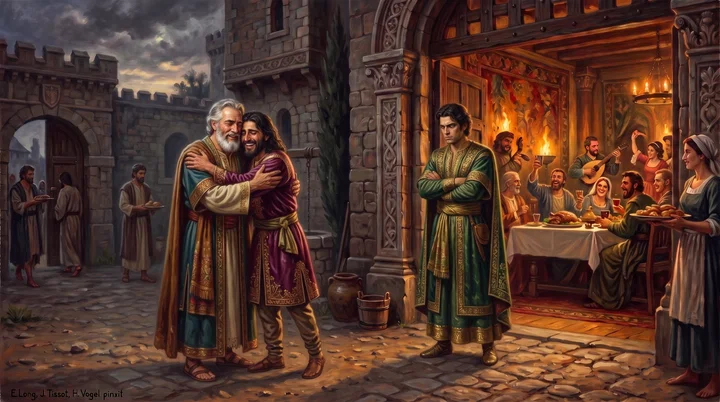
And he was angry, and would not go in: therefore came his father out, and intreated him.
Translations
And he was angry, and would not go in: therefore came his father out, and entreated him.
And he was angry, and would not go in: therefore came his father out, and intreated him.
And he was angry, and would not go in: therefore came his father out and intreated him.
And he was angry, and would not go in; therefore his father came out, and entreated him.
Revised Version, American Standard Version
But he was angry, and would not go in: and his father came out, and entreated him.
'And he was angry, and would not go in, therefore his father, having come forth, was entreating him;
But he became angry and would not go in. And his father went out and besought him.
But he was provoked to anger, and would not go in. And, his father, coming out, began to entreat him.
Berean Standard Bible, Majority Standard Bible
The older son became angry and refused to go in. So his father came out and pleaded with him.
But he was angry and would not go in. Therefore his father came out and begged him.
But he was angry and would not go in; and his father came out and made a request to him to come in.
Then he was angry, and would not goe in: therefore came his father out and entreated him.
Douay-Rheims (Challoner revision)
And he was angry, and would not go in. His father therefore coming out began to entreat him.
Pictures
Cross-references
- Luke 15:20
And he arose, and came to his father. But when he was yet a great way off, his father saw him, and had compassion, and ran, and fell on his neck, and kissed him.
The father meets and welcomes his returning son with compassion.
- Luke 15:4-7
What man of you, having an hundred sheep, if he lose one of them, doth not leave the ninety and nine in the wilderness, and go after that which is lost, until he find it?
The shepherd seeks the lost sheep and rejoices when it is found, unlike the elder brother’s resentment.
- Luke 15:24
For this my son was dead, and is alive again; he was lost, and is found. And they began to be merry.
The father rejoices because his lost son has returned and is alive again.
- Luke 15:17-18
And when he came to himself, he said, How many hired servants of my father’s have bread enough and to spare, and I perish with hunger!
The hungry son comes to himself and resolves to return to his father.
- Luke 15:8-10
Either what woman having ten pieces of silver, if she lose one piece, doth not light a candle, and sweep the house, and seek diligently till she find it?
The lost coin illustrates joy over a sinner’s repentance.
- Luke 15:2
And the Pharisees and scribes murmured, saying, This man receiveth sinners, and eateth with them.
The elder son’s resentment mirrors the Pharisees’ complaint about Jesus welcoming sinners.
- Luke 15:32
It was meet that we should make merry, and be glad: for this thy brother was dead, and is alive again; and was lost, and is found.
The father answers anger by saying rejoicing is right because the lost brother was found.
- Luke 15:18-19
I will arise and go to my father, and will say unto him, Father, I have sinned against heaven, and before thee,
Both show the son’s penitent return, confession, and plea to be received as a servant.
- Luke 15:7
I say unto you, that likewise joy shall be in heaven over one sinner that repenteth, more than over ninety and nine just persons, which need no repentance.
Heaven rejoices over the repentant sinner, while the elder son resents his return.
- Psalms 103:13
Like as a father pitieth his children, so the LORD pitieth them that fear him.
The father’s pity illustrates God’s compassion.
- Luke 15:22
But the father said to his servants, Bring forth the best robe, and put it on him; and put a ring on his hand, and shoes on his feet:
The best robe shows the father's full acceptance of his son.
- Luke 15:21
And the son said unto him, Father, I have sinned against heaven, and in thy sight, and am no more worthy to be called thy son.
The son confesses his sin after his father welcomes him.
- Luke 15:19
And am no more worthy to be called thy son: make me as one of thy hired servants.
He confesses he is no longer worthy to be called his father’s son.
- Matthew 18:12-13
How think ye? if a man have an hundred sheep, and one of them be gone astray, doth he not leave the ninety and nine, and goeth into the mountains, and seeketh that which is gone astray?
Both describe rejoicing when the lost one is recovered.
- Luke 15:16
And he would fain have filled his belly with the husks that the swine did eat: and no man gave unto him.
same hunger now literal in the South
- 2 Corinthians 5:20
Now then we are ambassadors for Christ, as though God did beseech you by us: we pray you in Christ’s stead, be ye reconciled to God.
God beseeches people to be reconciled.
Commentary
Each commentary is drawn from primary sources: the writings of Ellen G. White and Adventist pioneers and periodicals. Each commentary is separate. Its own words are not a quotation; follow the references to read the source passages.
Ellen G. White
95 sources
The elder son grew angry at his brother's return and would not join the feast, so his father came outside to plead with him.ST Jan 29, 1894COL 207.2–3TCBMP 123.1TCBMP 128.111MR 370.1 His anger exposed selfishness, pride, envy and resentment, for he felt righteous, faithful and deserving of honor and thought he needed no repentance.ST Jan 29, 1894COL 207.2–3Lt 71, 1895, par. 26Lt 8, 1898, par. 20–21 The father represents God, who meets sinners with tender, patient love and comes out to seek and restore both the one who returns and the one who resists mercy.ST Jan 29, 1894RH Jan 19, 1911GW 157.32T 295.1ST Jan 22, 1894 The elder son pictures unrepentant Israel and all self-righteous people who refuse to receive returning sinners as brothers and meet them with criticism, suspicion and coldness instead of joy.ST Jan 29, 1894ST Jan 29, 1894Lt 80, 1898, par. 9–13COL 210.1ST Feb 27, 1896 The verse therefore calls for receiving the erring and repenting with pity, sympathy, forgiveness and rejoicing, rather than with resentment, harsh condemnation or refusal.Ms 102, 1894, par. 12–143T 103.5–104.13T 103.1–4RH Nov 25, 1902Lt 16, 1887, par. 7–14
Parable Setting and Teaching
Luke 15:28 belongs to the parable of the prodigal son, which presents God's pitying love for those who have strayed from Him.COL 198.111MR 367.1 Even when people turn away and become exposed to temptation, He does not leave them in their misery but shows kindness and tender pity.COL 198.1 His loving concern is directed toward sinners.11MR 367.1
Christ used a familiar event of daily life to illustrate immortal truth.ED 102.3–4Lt 223, 1905, par. 8–10GW 408.2 By a familiar scene from ordinary experience He brought spiritual teaching into daily experience.ED 102.3–4Lt 223, 1905, par. 8–10 Such illustrations from familiar events teach spiritual truth and brighten daily work with reminders of the unseen.GW 408.2ST Nov 30, 1915
The verse shows His way of teaching truth by illustration rather than by proof or force.19MR 259.1–3 He illustrated truth in all its bearings and left hearers free to accept or reject it, commending truth to the conscience with clearness and earnestness.19MR 259.1–3 He read every heart, came right to the point without long farfetched complicated reasoning, drew things both new and old from His treasure-house to illustrate and enforce His teachings, and touched the heart and awakened the sympathies.19MR 259.1–3
The parable answers the charge that Jesus welcomed sinners.ST Jan 29, 1894 His mission is to seek and restore the lost, while those who consider themselves righteous and feel no need of repentance condemn that work.ST Jan 29, 1894 The elder son's anger and refusal to enter when his father celebrates his younger brother's return, and the father's going out to plead with him, show patient love toward the resentful son as well as compassion toward the returning one.ST Jan 29, 1894
The father's welcome of the returning son shows the tenderness and joy with which the one thought dead but now alive is received.Ms 24, 1891, par. 88 When a sinner returns to the Father in repentance, there is joy in heaven.Ms 19, 1890, par. 21STOM 11.25T 604.1 Heaven is marked by warmth, courtesy, and love, and the repentant sinner who returns is met with love.Ms 19, 1890, par. 21STOM 11.2
The parable portrays a son far from his father's house and perishing with hunger.9T 50.2 It points to people perishing in sin, who are to be treated as objects of compassion and brought to the saving knowledge of truth.9T 50.2 Those prodigals who have left the Father's house are to be encouraged to return to God, and the father's coming out to appeal to one who will not go in belongs to that setting.STB 620.1–2STB 147.5STB 119.1
Backsliders seeking the Lord are like the prodigal returning to his father's house.Ms 21, 1889, par. 96–97 The history describes one who once loved and served the Lord but left His house and blessing, picturing prodigals who have left their Father's house and blessing.Lt 27, 1890, par. 1Lt 52, 1899, par. 1 Their need is to turn back to God and confess backsliding, and He is ready to be their help in every time of need.Lt 27, 1890, par. 1 The return is to be without delay and with a humble heart when conscience is enlightened, as the prodigal's return to the father's house pictures coming back to God.Lt 27, 1890, par. 18–19Lt 18f, 1890, par. 2 Such a return leads step by step in submission to God's will and way into a rich experience, bringing praise to the Lord and moving those who hear of it to weep for joy.Ms 89, 1893, par. 1–2
Elder Son's Anger and Refusal
The verse shows the elder son becoming angry and refusing to go in to the feast for his returning brother, standing apart outside while his father comes out and pleads with him.TCBMP 123.1TCBMP 128.1Lt 76, 1898, par. 18–20Lt 200, 1902, par. 8–10Ms 45, 1901, par. 8 That coming out is a patient, compassionate and gracious appeal to restore the resentful son rather than leave him outside, reflecting pity and forgiveness toward the repentant who return and toward the one who resists the welcome.TCBMP 123.1TCBMP 128.111MR 370.1Lt 76, 1898, par. 18–20Ms 45, 1901, par. 8 It illustrates the father's appeal to one whose jealousy and unforgiving spirit keep him from sharing the joy of repentance and restoration, holding up the prodigal's decision to return to his Father as the pattern to follow.11MR 370.1Lt 200, 1902, par. 8–10
His anger and refusal reveal selfishness, pride, envy, contempt and resentment.ST Jan 29, 1894COL 207.2–3Lt 8, 1898, par. 20–21 He treats the favor shown to his brother as an insult and an injustice to himself, and will not join in rejoicing that the lost has been found, because he has not shared his father's concern for the lost son or joy at his return.ST Jan 29, 1894COL 207.2–3 The father meets that jealousy and pride with tenderness, coming out to remonstrate, to explain his welcome of the returned son, and to awaken tenderness in him.ST Jan 29, 1894COL 207.2–3 That refusal pictures unrepentant, unbelieving Israel, which would not recognize publicans and sinners as brothers to be forgiven and sought, and it illustrates envy and resentment instead of rejoicing when wanderers are brought back to God.ST Jan 29, 1894Lt 8, 1898, par. 20–21
Though he appears faithful and has stayed at home, he resents the welcome given to his repentant brother and is ready to watch for, criticize and accuse him.11MR 370.2–371.111MR 371.2–3 His critical, unforgiving spirit magnifies another's mistakes and fails to recognize his own need for humility and forgiveness as the Lord forgives.11MR 370.2–371.111MR 371.2–3 He felt his own course was righteous, supposed he had been faithful in home duties, thought he needed no repentance, and deserved to be commended and honored.Lt 71, 1895, par. 26 Contrasting his own conduct with the prodigal's, in selfishness he was unwilling to receive his repenting brother and could not sympathize with his father's joy in receiving back the wanderer nor rejoice at his return, and his anger manifests that he himself was in need of repentance.Lt 71, 1895, par. 26 Many who handle sacred things act his part, and the lesson is given for the benefit of those who claim to love God, that they may properly represent Him in service.Lt 71, 1895, par. 26
His spirit of fault-finding and complaint can be present even in those who endure hardships and bear burdens, and it spoils their service and makes it unlike Christ.Ms 29, 1911, par. 69Ms 87, 1899, par. 16 It is marked by believing that long service and hardship entitle a person to greater reward, as when service was treated as earning salvation.Ms 87, 1899, par. 16 That complaining attitude is one none should assume.Lt 71, 1895, par. 27 It is a practical lesson that means much and whose practice involves eternal interests, requiring careful study of the prodigal son together with the lost sheep and the lost piece of silver.Lt 71, 1895, par. 27 It rebukes wounding and driving away the lost sheep instead of seeking it, an offense against believing little ones that brings woe.Lt 71, 1895, par. 27
Father's Loving Entreaty
The father leaves the feast and goes outside to plead with his angry son who will not come in, meeting jealousy and pride with tenderness.ST Jan 29, 1894COL 207.2–3 That coming out shows patient, persistent love toward the one who resists mercy as well as compassion toward the one who returns, seeking to restore him rather than leaving him outside.ST Jan 29, 1894COL 207.2–3 The father represents God, and his going out to meet and plead pictures God meeting the sinner even now after long separation.RH Jan 19, 19112T 295.1 Though the prodigal has stayed away so long, God is ready to accept and pardon all transgressions if he will come by the humble way provided.2T 295.1
The entreaty is a message of mercy that all things are now ready, the invitation of the Majesty of Heaven to come to Him to have life.2T 295.1 He is ready to cleanse from sin when laid hold upon.2T 295.1 The verse shows God as a Father who comes out with yearning love to entreat sinners instead of hurling denunciations and accusations of wrath at them.GW 157.3 He waits to receive the returning prodigal and prepares a feast to welcome his return, having given His Son to die for the race.GW 157.3 Teachers of truth must make known what God really is in this way and win souls in the same way, keeping the love of the Father central rather than denouncing the sinner.GW 157.3
In the gift of His beloved Son the Father has shown wondrous love for the fallen race and made a channel for the outflow of His infinite love, so that all who believe may be restored again to His favor.Lt 85, 1886, par. 17–18 Believing brings obedience to all His commandments and life in Christ.Lt 85, 1886, par. 17–18 The father's welcome and appeal portray God in Christ reaching out in mercy not only to the returning sinner but also to the one who resists, assuring sinners of acceptance, peace, and love.Lt 15, 1899, par. 9–11Ms 82, 1894, par. 22–24Lt 15a, 1890, par. 9–11 He beseeches people to be reconciled to Him and shows He is ready to receive and welcome them, with a loving appeal and invitation to respond.Lt 15, 1899, par. 9–11Ms 82, 1894, par. 22–24Lt 15a, 1890, par. 9–11
The verse means God still invites and pleads with the refusing sinner to return, and will accept the prodigal who links himself with God and turns with full decision of soul.Lt 33, 1896, par. 12 If the sinner gives heart and soul to God, God will bless him and work with him to help other youth be converted.Lt 33, 1896, par. 12 The entreating is God's continuing invitation to wear Christ's yoke, lift His burden, and learn His meekness and lowliness of heart, with rest to the soul as reward.Lt 33, 1896, par. 12 It illustrates God's loving patience toward His wayward people, willing to bear their guilt and continuing to send warnings, appeals, and invitations even when they resisted His grace and rejected His messengers.ST Oct 31, 1916Ms 56, 1902, par. 5 It shows the amazing sacrifice and the labor and energy Heaven expends to reclaim the lost and bring them back to the Father's house.ST Oct 31, 1916Ms 56, 1902, par. 5
The Father comes out with outstretched arms to entreat and welcome, so that even when a person fails and is betrayed into sin he is still worthy to come in prayer, tell his mistakes and failures, and ask for strength for fresh endeavor.MYP 97.1 The Lord recognizes every effort to reach His ideal and will never disappoint that confidence or abuse it.MYP 97.1 God takes the first step toward sinners, seeking them while they are still in rebellion and bringing back every wanderer who will let Him.ST Jan 22, 1894 His love reaches the sinner while still far away, with the desire to return awakened by the Spirit's pleading and drawing, though even the parable falls short of expressing the fullness of that compassion.ST Jan 22, 1894
The father's coming out means Christ meets the selfishly indulgent prodigal with tender sympathy in words he needs and can understand rather than condemnation.Ms 22, 1898, par. 19 That one once stood in pride with ambitious hopes and won prizes by excelling, but praise and flattery filled him with self-sufficiency until wine-drinking became habit and he sank lower and lower, losing courage and God-given manhood until Satan controlled mind and judgment and he drifted with no power to leave the snare, a ruined temple of his own making, discouraged, sick, tempted, and fallen.Ms 22, 1898, par. 19 The verse also shows Jesus as the father coming out and entreating sons and daughters who act as the prodigal while claiming to be commandment keepers and Christians, yet transgress the law, are unthankful and unholy, use entrusted talents to counterwork God, have darkness instead of light, are conformed to worldly spirit and principles and exert influence on Satan's side while retaining the form of godliness and facing a final account.Ms 75, 1898, par. 13–14 He yearns and longs to do them the good He delights to do but cannot do because of perversity of character.Ms 75, 1898, par. 13–14
The verse illustrates the patient, loving appeal that can help prodigals return, revealing the tender, loving care of God toward His children and His joy when the strayed repent and return.18MR 113.5Ms 132, 1902, par. 9Lt 178, 1902, par. 28–30 People should earnestly cooperate with Him in seeking the lost sheep and winning back the prodigal, so that restored sinners can help bring other lost people to the Father.18MR 113.5Ms 132, 1902, par. 9MH 179.1–2 An erring youth who has become a thorough backslider through discouragement, temptation, and severity and misunderstanding from brethren over youthful indiscretion is to be sought out and entreated back by personal labor.3MR 64.5–65.3 That means talking plainly about the peril of his situation and entreating with tears for an immediate decision to leave the service of Satan and sin and return like the prodigal to the Father's house and service even at cost of position and trade.3MR 64.5–65.3
Who Figures Represent
The elder son stands for unrepentant, unbelieving Israel, which would not recognize publicans and sinners as brothers to be sought, forgiven, and led to everlasting life, and his anger and refusal to enter the feast exposes selfishness, pride, envy, and contempt that treats mercy to a brother as injustice to self and will not rejoice that the lost is found.ST Jan 29, 1894ST Jan 29, 1894 The father's patient coming out to remonstrate, explain his welcome, and awaken tenderness portrays God's loving appeal to Israel, for despite rejection of mercy the Father yearns for them and seeks to draw them back, showing tenderness both to the repentant and to the self-righteous who resist the welcome.ST Jan 29, 1894ST Jan 29, 1894ST Feb 27, 1896
His conduct is the pattern of self-righteous people who watch those struggling against temptation in order to criticize and accuse, expressing selfishness, jealousy, and an unforgiving spirit while appearing faithful at home and resenting the welcome given to the repentant brother.Lt 80, 1898, par. 9–13COL 210.1 That cold, unforgiving attitude reflects Satan's spirit and places them where they cannot receive the light of God's favor, and suspicion and faultfinding can keep a person from coming near a brother to make peace and place him where God cannot give him the light of His countenance, grieving the Spirit of the Lord.Lt 80, 1898, par. 9–13COL 210.1 The elder brother is those who meet the struggling and returning sinner with stubbornness, selfishness, indifference, complaint, and contempt instead of compassion, standing apart while the father goes out and urges him to come in.GW 140.2Ms 40, 1899, par. 10–12RH Apr 10, 1900 Such indifference and careless disregard for those ready to die refuses to rejoice when the lost is found and stands opposite the part of the true shepherd, for God Himself goes after the lost sheep, speaks to the distressed soul calling to return, heals backsliding, loves freely, and with all heaven rejoices in the finding, which warns against harsh judgment of a brother fallen under temptation.Lt 71, 1895, par. 2516MR 339.3
He pictures church members who should rejoice when wandering people are brought back to the fold but instead become angry, envious, and jealous when labor is directed toward them, begrudging effort spent seeking the lost and expecting ministers to serve them.21MR 32.4–33.221MR 296.5–6Lt 57, 1898, par. 4–5 They murmur because constant ministerial efforts are not made for the church and speak as though robbed of labor they should have had, instead of using strength and talents to help carry the burden and wearing the yoke of Christ, failing to love those for whom Christ died and to seek perishing souls around them.Ms 49, 1898, par. 26–28Ms 49, 1898, par. 24–25 Though neglecting those in danger, they resent Christ's joy when the lost are restored, and instead of rejoicing when sinners are saved they expect to be constantly fed with sermons while planting doubt, questioning, evil surmising, and jealousy and failing to do righteousness at home and in the church.Lt 23, 1894, par. 6–7Ms 49, 1898, par. 24–25 That selfish, jealous, murmuring spirit greatly displeases the Lord, who hears the words and sees the attitude, and it becomes a great hindrance that keeps souls from being added and can hinder God's work.Ms 49, 1898, par. 26–28Ms 49, 1898, par. 24–25Lt 57, 1898, par. 4–5 Those who truly know God and have Christ formed within as the hope of glory will not act this way but will seek to save the lost, carry the message of salvation, reflect light to all they meet, and be earnest working light-bearers who hunt for souls by precept, example, burden, and sincere prayer.Ms 49, 1898, par. 24–25
That same elder-brother spirit of anger and refusal will be shown by some called Seventh-day Adventists toward returning prodigals and other souls, meeting them with suspicion, distrust, and unkind, untender treatment without patience and forbearance, cherishing dislike and a spirit of retaliation toward those for whom Christ gave His life.19MR 202.3Lt 92, 1895, par. 1–4 Those who have learned by experience what it feels like to be so treated must not manifest any of that same spirit or practice it in labor for others, but are to keep the prayer of Christ ever before the mind and answer that prayer in daily attitude and practice by overcoming temptation to retaliate.19MR 202.3Lt 92, 1895, par. 1–4
The parable also illustrates how parental indulgence can contribute to children becoming prodigal, when parents let them follow their own will instead of teaching and restraining them.11MR 40.3–41.2Lt 117, 1898, par. 4–5 Yet the heavenly Father still loves the one who has left Him and calls him to return, ready to accept him as His child.Lt 52, 1899, par. 3 The lessons of the prodigal son and the lost sheep teach the necessity of having the Spirit of Christ in councils in dealing with those who stray, for those who stray are lost in darkness and confusion like sheep in the wilderness unable to find their way back without help, and must be searched for, found, and brought back to the fold.Ms 81, 1893, par. 61–63
The prodigal's robe represents Christ's righteousness and his place at the table represents welcome into fellowship with God, illustrating the Father's welcome and protection for those who come to Him.Lt 59, 1898, par. 12–14 Enjoying the privileges of sonship requires living by its conditions and obligations, meeting God on His ground with cordial assent and willing obedience, renouncing the favor and friendship of the world, receiving Christ as Saviour and King, and walking according to His Word and doing whatever He commands.Lt 164, 1900, par. 21–23Ms 98, 1901, par. 17–20ST May 8, 1901 The welcome remains an invitation even when the son resists, but to claim a son's privileges is to consent to remain under care in the fold without renewing wanderings and to repay love by staying and obeying, with friendship measured by His dominion over life.Ms 183, 1901, par. 12ST May 8, 190110MR 110.3–5
Welcoming Returning Sinners
The anger and refusal to enter, followed by the father's coming out in appeal, shows that sinners are to be met with tenderness and sympathy rather than resentment and rejection.Ms 102, 1894, par. 12–14Lt 16, 1887, par. 7–14Lt 16a, 1887, par. 4 The cold, rejecting attitude must not be shown to those who have gone astray; they need loving, unselfish concern that seeks to lead them to repentance, not harsh condemnation or repulse.RH Nov 25, 1902Lt 16, 1887, par. 7–14Ms 113, 1902, par. 30 The father's pleading reveals tender, persistent love toward one who resists mercy, and calls for compassion rather than harsh condemnation of the erring.Lt 16, 1887, par. 7–14Lt 16a, 1887, par. 4Ms 113, 1902, par. 30 Tenderness is due to those who have fallen, judgment of them harshly is warned against, and erring people need loving welcome and patient care instead of cold rejection and harshness.Lt 16a, 1887, par. 4Ms 113, 1902, par. 30
The complaint is natural but not right.3T 103.5–104.1TCBMP 128.2 The father's joy pictures the way the heavenly Father receives the erring and repenting with compassion, pity, and forgiveness, though He is the One sinned against.3T 103.5–104.1TCBMP 128.1 Those who have erred already suffer in their feelings and are often desponding and discouraged, and above everything else they need pity, help, sympathy, and free forgiveness.3T 103.5–104.1TCBMP 128.2 Their return is a source of greatest joy and is to be welcomed with rejoicing that the lost is found, because the one dead in sin is alive again.3T 103.1–4TCBMP 128.2 The wrong response is the course frequently pursued of brother toward brother, putting too much effort into making the one in error feel where he erred and keeping his mistakes before him instead of rejoicing that the lost is found.3T 103.5–104.1TCBMP 128.2
The elder brother's conduct represents a cold, self-righteous, jealous, unthankful, and unholy spirit toward a repentant person.Lt 45, 1894, par. 21–24Lt 45, 1894, par. 25–27 It meets repentance with censure and suspicion instead of compassion.Lt 45, 1894, par. 21–24Lt 45, 1894, par. 25–27 The father's coming out to entreat contrasts that hardness and calls for sympathy, forgiveness, and rejoicing when the lost return.Lt 45, 1894, par. 21–24Lt 45, 1894, par. 25–27 Sympathy and help are not to be withheld from those seeking to return to God.Lt 45, 1894, par. 25–27
The spirit of criticism, faultfinding, and censorious severity toward erring youth displeases God and drives souls away from God and truth when tenderness, love, and sympathy are withheld.Lt 59, 1886, par. 1–5 The erring are the purchase of Christ's blood and His property, to be met with tender, compassionate love reflected from the cross.Lt 59, 1886, par. 1–5 No mistake or unwise, unloving treatment by brethren excuses grieving Christ, leaving His service for the service of Satan and sin, breaking the Sabbath, and robbing God of time, talent, and influence, and the record in heaven will leave the backslider without excuse.Lt 59, 1886, par. 1–5 Returning to the Father's house means turning square about at once, leaving sin, deciding to be a Christian, keeping the Sabbath even at loss of position and wages, and receiving pardon, purified thoughts, changed purposes, and happy thankfulness through earnest prayer and entreating with tears not to delay.Lt 59, 1886, par. 1–5 Anger and harshness toward those who have gone astray can keep them from the kingdom rather than help restore them.Lt 50, 1893, par. 8–9
Sources
Pioneers and periodicals
142 sources
The elder son grows angry at his father's joyful welcome of his returned brother and refuses to go in to the feast, so his father comes out and tenderly pleads with him to enter.RH Jul 15, 1862ST Sep 26, 1911ST Aug 6, 1894 It belongs to the three parables of Luke 15, spoken when publicans and sinners gathered to hear Jesus and the scribes and Pharisees complained that he received sinners and ate with them.ST Nov 22, 1899ST Nov 21, 1900RH Apr 26, 1906 The elder son stands for the scribes and Pharisees, and for unbelieving Israel, resentful that lost sinners, publicans and Gentiles are received into God's favor as fellow heirs.ST Jan 29, 1894ST Jan 29, 1894ST Jan 29, 1894STST Aug 6, 1894 The father stands for God, whose patient, compassionate love takes the first step toward both the returning and the resentful, going out to seek and entreat but not forcing the unwilling to come in.ST Jan 29, 1894ST Jan 29, 1894STST Aug 11, 1914RH Sep 15, 1910 The verse therefore warns against a cold, self-righteous, unforgiving spirit and calls for joyful welcome, free forgiveness and tender effort to restore the wandering.ST Mar 25, 1880RH Apr 10, 1900RH Nov 26, 1901RH Jun 29, 1869RH Feb 18, 1902
Story Setting and Form
The verse shows the elder son becoming angry at his father's welcome of the returned prodigal and refusing to go in to the celebration, so his father comes out and pleads with him to come in.RH Jul 15, 1862ST Sep 26, 1911ST Aug 6, 1894ST Dec 18, 1901 His anger and refusal to enter stand in contrast to the father's complete and joyful welcome, pardon and reconciliation of the returning son and the rejoicing of the household, showing how unlike the father's compassion the complaining elder son is.RH Dec 13, 1906ST Jul 7, 1909
The celebration he refuses is a joyful feast inside the house with music and dancing and the fatted calf for a brother thought dead and received back as from the dead.ST Mar 25, 1880ST Aug 6, 1894 The elder brother had been out in the field and did not know his younger brother had returned until he heard the general demonstrations of joy and asked the servants what it meant.ST Mar 25, 1880 He learned that his brother had returned and that his father had killed the fatted calf because he had received him back, and upon learning of this joyful and honorable reception he would not go in.ST Mar 25, 1880ST Mar 25, 1880 Instead of heartily joining as a true unselfish brother would, he rehearsed his own faithfulness and obedience to his father's commands and complained that his profligate brother, who had left his father and thrown shared duties upon him and wasted his father's means in wicked profligacy until reduced to want, was given greater honor and more tokens of love and esteem than had ever been given him for faithfully performing the duties of a son.ST Mar 25, 1880ST Nov 22, 1899
The verse belongs to a figurative invented story and not a literal report or true history.RH Sep 3, 1872RH May 28, 1861ST Jun 18, 1885 It is part of the parable of the two sons in Luke 15:11-32, a told story given as an illustration like the parable of the rich man and Lazarus, in contrast to real persons and real facts and true history such as Noah and the flood, the tower of Babel, Abraham leaving Ur of the Chaldees, and the Genesis account of creation and the fall of man.RH May 28, 1861ST Jun 18, 1885 It is an example of a biblical parable not explicitly called a parable in the text, and one of Christ's illustrations drawn from familiar events of daily life, using ordinary experience to teach spiritual truth and brighten daily work with reminders of the unseen.ST Nov 30, 1915ST Aug 19, 1880
The verse stands in the three parables of Luke 15 that were given to show the interest and love God has for lost and wandering souls and to teach that the Son of man came to seek and to save that which was lost.ST Nov 22, 1899ST Nov 21, 1900 They were spoken when publicans and sinners had gathered to hear Jesus and the scribes and Pharisees complained because he received sinners and ate with them, regarding him as not good and holy like themselves, having low and incorrect views of God's character as without pity and compassion for the erring and fallen and looking upon them as fit subjects of divine wrath to be shunned, which Jesus spoke to sweep away in order to show how he regards poor, helpless and perishing souls defiled with sin.ST Nov 22, 1899ST Mar 28, 1906 In that setting the elder son's anger and refusal to enter reflects the resentment of those who reject God's joy over the lost being found and will not join in, and represents the Pharisees whose criticism of Jesus for receiving publicans and sinners was wrong since those sinners were their brothers to be sought, forgiven and led to life.ST Oct 17, 1900ST Mar 28, 1906 One reading identifies the verse as part of the parable of the lost sheep.RH Apr 26, 1906
Read as part of the whole story, the verse teaches the father's welcome of penitent returning sinners with affection and abundant provision and the sinner's return to the father and restoration to the privileges of a son.RH Jul 15, 1862ST Aug 26, 1875ST Oct 22, 1896 It presents a complete picture of fallen humanity turning back to God, showing the father coming out to meet and appeal to the lost, the son acknowledging wrong, arising and returning, and God forgiving those who come back without requiring prior penance or a long list of apologies.ST Aug 26, 1875ST Nov 7, 1900RH Jul 21, 1910
Elder Son's Angry Refusal
The anger and refusal to enter reveal selfishness, pride, envy, jealousy and contempt, treating the welcome given to the returned brother as an injustice to himself and refusing to rejoice that the lost has been found.ST Jan 29, 1894ST Dec 18, 1901RH Feb 16, 1869RH Jan 20, 1916RH Dec 27, 1855 He watches his brother, criticizes his actions and magnifies every fault to justify his own unforgiving spirit.ST Dec 18, 1901RH Jan 20, 1916 That cold-hearted, critical complaining against one struggling back makes his love doubtful and exposes jealousy at favor shown to humble repentance.ST Dec 18, 1901RH Feb 16, 1869RH Dec 27, 1855
His anger does not come from any wrong in his own treatment, for he had always shared the blessings and privileges of home and they remained his to enjoy, so he had no ground to complain.ST Nov 22, 1899 It comes from jealousy and envy that his profligate brother receives greater honor and more tokens of love and esteem than were ever given him.ST Mar 25, 1880RH Feb 16, 1869ST Nov 22, 1899 While the younger left and threw the heavy shared duties upon the elder and wasted in wicked profligacy what had been given him until reduced to want, the elder faithfully performed a son's duties, rehearsed his own faithfulness and obedience, learned the meaning of the music and dancing, and instead of joining as a true unselfish brother would, was indignant that the unfaithful one was received with respect and honor beyond anything he had ever received.ST Mar 25, 1880ST Nov 22, 1899
His hard, faultfinding, carping, cold-hearted and critical attitude is the spirit of the Pharisees toward publicans and Gentiles and the spirit of Satan rather than of Christ.ST Dec 18, 1901ST Aug 6, 1894RH Jan 20, 1916ST Aug 6, 1894RH Dec 10, 1901 Though claiming to be God's child, he is as spiritually needy and lost as the prodigal without recognizing it.ST Dec 18, 1901ST Aug 6, 1894 His case is worse because he is unconscious of it, and the same spirit still lives so that each person is either the prodigal returning or the carping brother refusing to enter, with aloofness itself wrong beside Christlike stooping to comfort and win the erring.ST Aug 6, 1894RH Dec 10, 1901
He remains outside by his own unwilling choice because he will not return to harmonious fellowship, though still a member of the family under the same fatherhood and care.RH Sep 15, 1910ST Feb 10, 1904ST Sep 28, 1904RH Sep 15, 1910 No force is needed to keep him out and he cannot be forced in, for the father does not force but comes out and pleads while the faithful continue to watch and pray for his return.RH Sep 15, 1910ST Sep 28, 1904ST Jul 1, 1880RH Sep 15, 1910 His hard heart looking for freedom away from the father's presence makes him supremely miserable just as the prodigal was up to repentance, and kindness and forbearance avail nothing to allay that misery while he persists.ST Jul 1, 1880 Persistence in disloyalty, hatred and indifference instead of loyalty, love and concern will finally disinherit him.RH Sep 15, 1910ST Feb 10, 1904
His anger, complaints and refusal to welcome his brother were natural but not right, and foolish.ST Mar 25, 1880ST Jun 24, 1897 Instead of rejoicing that his brother gave up wrongdoing and came back, he could not understand the father's love and criticized the welcome.RH Jan 12, 1911ST Jun 24, 1897 The right course is not much effort to make the erring feel where they erred and to keep error before them, since they already suffer, despond and need sympathy, help and above all free forgiveness.ST Mar 25, 1880
Father's Entreating Love
The father is God, and his stepping outside to plead with the angry son displays patient, tender, compassionate love toward the undeserving.ST Jan 29, 1894ST Jan 29, 1894ST Jan 29, 1894STST Dec 10, 1894 That love reaches both sons at once, the one returning in penitence and the one resentful at home, whether Jew or Gentile, sinner or backslider, for God is no respecter of persons.ST Jan 29, 1894ST Jan 29, 1894STST Dec 10, 1894RH Jan 19, 1911 He remonstrates, explains his welcome of the lost who is found, and labors to awaken tenderness in the hard heart, answering the complaint that he receives sinners by showing that his mission is to seek and restore the lost.ST Jan 29, 1894ST Jan 29, 1894ST Jan 29, 1894ST Dec 10, 1894RH Jan 19, 1911
The father takes the first step and the initiative toward the disobedient and resistant, going out to meet, seek, and plead rather than leaving him outside.ST Aug 11, 1914RH Jan 23, 1913ST Jul 4, 1900RH Jun 4, 1901ST Feb 18, 1886 He is not only ready but yearning to help, giving sinners in their helplessness the very desire to turn their thoughts toward home and return.ST Aug 11, 1914RH Jan 23, 1913ST Jul 4, 1900RH Jan 16, 1908RH Jun 4, 1901 He answers before they call and before confession is made, meeting even one movement toward him more abundantly than could be asked, and he does not keep the fearful penitent at a distance in distrust.RH Jan 23, 1913ST Jul 4, 1900RH Jan 16, 1908RH Jun 4, 1901ST Feb 18, 1886 His yearning brings anxious concern and deep distress over wandering, and his love will follow even into a wicked place, an abode of sin, to find his child, pray for him, embrace him on return, forgive him, and bow with him in thankful prayer until the Sun of Righteousness shines into a heart grimy and dark from sin.ST Aug 11, 1914RH Jan 23, 1913ST Jul 4, 1900RH Jan 16, 1908RH Jun 4, 1901
He urges, invites, and seeks reconciliation, earnestly desiring to draw the unwilling brother into the joy of restoration, yet he does not force him to rejoin the household.RH Sep 15, 1910ST Feb 10, 1904ST Sep 28, 1904RH Sep 15, 1910ST Sep 28, 1904 The elder brother remains outside by his own unwilling choice against harmonious fellowship, still a member of the family under the same fatherhood, but persistence in disloyalty, hatred, and indifference will finally disinherit him unless he acknowledges the family bond and replaces them with loyalty, love, and concern.RH Sep 15, 1910ST Feb 10, 1904ST Sep 28, 1904RH Sep 15, 1910ST Jan 29, 1902 The faithful continue meanwhile to watch and pray and desire his return.RH Sep 15, 1910ST Feb 10, 1904ST Sep 28, 1904RH Sep 15, 1910ST Sep 28, 1904
He is not a stern, forbidding man and his home is not repulsive, for tenderness that comes out to entreat proves it.RH Nov 17, 1868ST Oct 4, 1899 That tender entreating love illustrates the silent influence of a pious home that follows the prodigal far from home and far from God, abiding in the ear like the song of the sea in the shell, so that faithful keeping of family religion gives ground for courage and perseverance.RH Nov 17, 1868ST Oct 4, 1899 His love has already forgiven everything long ago, and the invitation is to enter at once with assurance that nothing remains to forgive except having stayed away so long.RH Nov 17, 1868ST Oct 4, 1899
His loving concern extends even to the son who never wandered, showing patient forgiving kindness toward those who have acted unlovingly and seeking the resentful rather than turning away.RH Jun 14, 1870ST Feb 18, 1913RH Jul 21, 1863ST Apr 17, 1907 When the faithful son is angry and will not enter the feast, the father comes out and pleads with him, picturing God meeting with forgiving welcome those who turn to him.RH Jun 14, 1870ST Feb 18, 1913RH Jul 21, 1863ST Apr 17, 1907
His appeal pictures God entreating sinners to return, receive forgiveness, and be restored, never giving them up in despair when they tire of living with him and serving him and spend time and means that belong to him on pleasures of sin for a season.ST Oct 31, 1916ST May 1, 1901RH Nov 14, 1865ST Mar 17, 1887 His care remains over them and his Spirit still pleads with them to return, inviting the sin-weary to come for rest, the wanderer from the fold and the lost on dark mountains and thorny paths to come home without delay, because he will never leave nor forsake them and is not willing that any should perish but that all should come to repentance.ST Oct 31, 1916ST May 1, 1901RH Nov 14, 1865ST Mar 17, 1887 Heaven is interested in the lost, with Jesus, the Holy Spirit, saints on earth, and angels joining the welcome with music and joy and the invitation to take the water of life freely, for God has done all that is needed to draw people back and will continue his work in them if they allow what is good.ST Oct 31, 1916ST May 1, 1901RH Nov 14, 1865ST Mar 17, 1887 The sacrifice made and the labor and energy heaven expends to reclaim the lost and bring them back to the Father's house is amazing.ST Oct 31, 1916ST May 1, 1901RH Nov 14, 1865ST Mar 17, 1887
Persons the Parable Represents
The elder son is the scribes and Pharisees who murmured because Jesus received publicans and sinners and ate with them.ST Jan 29, 1894ST Jan 29, 1894ST Nov 22, 1899ST Oct 17, 1900 His anger at the welcome given to the returned brother and his refusal to go in to the feast expose their resentment at God's joy over the lost being found.ST Jan 29, 1894ST Jan 29, 1894ST Aug 6, 1894ST Mar 28, 1906 Their faultfinding, hard-hearted criticism was wrong because those despised sinners were their brothers, who ought to have been recognized as brothers to be sought, forgiven, and led to everlasting life.ST Jan 29, 1894ST Jan 29, 1894ST Aug 6, 1894ST Nov 22, 1899ST Oct 17, 1900 To refuse to welcome a repentant sinner is to show their spirit rather than the Spirit of Christ, and to stand as spiritually needy as the prodigal without knowing it.ST Jan 29, 1894ST Aug 6, 1894ST Nov 22, 1899
The same elder son is unrepentant, unbelieving Israel, even the Jews as a people.ST Jan 29, 1894ST Jan 29, 1894ST Feb 27, 1896STRH Jul 6, 1868 His indignation is their indignation that Gentiles, publicans, and lost men are received into God's favor and made fellow heirs of the kingdom of heaven.ST Jan 29, 1894ST Jan 29, 1894STRH Jul 6, 1868ST Mar 28, 1906 The father coming out to entreat him portrays God's loving appeal to Israel despite rejection, yearning over them and seeking to draw them back, with great love to the undeserving whether Jew or Gentile, sinner or backslider, for God is no respecter of persons.ST Jan 29, 1894ST Jan 29, 1894ST Feb 27, 1896ST
The angry son who would not go in stands at one end of the range as the Pharisee type of sinner and the younger at the other as the prodigal type.ST Dec 18, 1901ST Feb 26, 1902ST Jan 15, 1902ST Sep 25, 1901ST Nov 13, 1901 The parable that contains them holds salvation from sin for every kind of sinner from Pharisee to prodigal.ST Dec 18, 1901ST Feb 26, 1902ST Jan 15, 1902ST Sep 25, 1901ST Dec 4, 1901 The returned prodigal himself is the Gentiles, the publicans, sinners, and lost men coming to Christ to be saved.STRH Jul 6, 1868ST Mar 28, 1906 His departure from his father's house also pictures a Christian backsliding and returning to former folly, and the Father pities the poor backslider and meets him when he returns.STST Oct 4, 1877ST Aug 5, 1875
Those who wander from God remain His children even while enslaved to sin, regarded as wandering sons whom He continues to draw with love and mercy in this probationary life that they may acknowledge Him as Father and become sons indeed.ST Mar 8, 1899ST Nov 14, 1900 They must return to the Father, or they will die as slaves.ST Nov 14, 1900 Set beside this, those who held a dissenting reading made Protestants the prodigal children and the Catholic Church the home and mother church, so that the return of the prodigals means the union of the Protestant churches with Rome as a coming home prayed for daily as near and certain. In the same dissenting vein the Church of England was pictured as the prodigal that seceded from the Roman Church in the sixteenth century under Henry VIII and, after its ordinations were refused recognition, had nothing left but to drop all church pretension and return home.ST Mar 24, 1898
Salvation Welcome and Forgiveness
The parable displays pitying love and willingness to receive all who have strayed and then repent, setting forth the worth the Son of God places on a soul and tender concern for the lost and outcast.ST May 4, 1904RH Nov 12, 1914RH Nov 9, 1916 God takes the first step toward sinners, seeking wanderers while they are still in rebellion in order to bring back to the Father's house every wanderer who will let Him.ST Jan 22, 1894 The Father's compassion reaches the sinner while still far away, and the desire to return is awakened by the Spirit's pleading and drawing, so that remembering that drawing love leads the sinner home.RH Jun 7, 1906
No sinner must first make himself worthy or presentable, perform penance, or bring apologies and claims of usefulness, for even one step toward the Father in repentance is met with love.ST May 4, 1904ST Nov 7, 1900RH Jan 27, 1916 Coming must be in humble repentance rather than in offered good works, with nothing to claim and hope only in mercy, and repentance must precede good works.RH Apr 14, 1863ST Oct 31, 1895 Whoever gives up cherished sin and returns wholeheartedly will find a loving Father, even after repeated falls.ST Oct 31, 1895
True repentance is arising and going to the Father with confession of sin and determination to return.ST Apr 25, 1878 It is readiness to receive saving grace when the sinner stops excusing himself and honestly admits guilt, coming as a prodigal who wandered far, spent gracious gifts and fed on husks, casting aside rags of own righteousness and standing in nakedness of soul to plead grace in Jesus' name to be covered by His blood and clothed in His spotless righteousness, with lips touched with sin-consuming fire and with new thought, new purpose, new desire, and daily grace and guidance in the narrow way.ST Dec 15, 1887ST Dec 24, 1902 Sincere contrition leads to confession and making wrongs right, after which there is rejoicing in forgiveness and peace, for had the son confessed guilt and then shifted ground to plead innocence he would not have won his father's heart nor shared robe and feast.RH Oct 29, 1872 Repentance is the revolt of conscience against wrongdoing because it is wrongdoing and not mere regret for consequences nor outward reformation for advantage, requiring abandonment of sin, acknowledgment without concealment, palliation or defense, bearing its penalty, and doing all conscience and duty require to repair the evil.ST Feb 18, 1886
God forgives as a father forgives, freely out of fatherly compassion when the rebel is sorry, repents and humbly asks, and that forgiveness is full and settled forever with nothing more to be said, so continual lamenting over pardoned sins and repeated asking for what is already pardoned is unnecessary.ST Aug 29, 1895ST May 27, 1897 He receives the returning son with joy and without reproach or taunting, meeting him while still a great way off with embrace and kiss of welcome and forgiveness even before confession is made, and answering the plea to be made a servant with full restoration as son and heir.ST Aug 29, 1895ST Aug 11, 1914ST Feb 24, 1887 The returner is given the best robe, the ring, cleansing of stained hands, healing of bleeding feet and blind eyes, and a glad feast in honor of the long-lost son, with mercy and kindness shining in the pardoning face.ST Mar 25, 1880ST Aug 11, 1914ST Mar 17, 1898 Sin is buried in the depths of the sea, remembered no more against him forever, and blotted out of the book of remembrance.ST Feb 18, 1886
That restoration is direct to fellowship and friendship with God and to former honor in the Father's house, without stopping to make confession to a priest and receive priestly absolution.ST May 4, 1876RH Jun 30, 1874 The welcome brings joy in heaven and in the presence of angels over one sinner who repents, for the Father's love endures toward those who wandered and squandered what was given.ST Dec 10, 1896 He actively invites the wanderer from the fold, the lost lamb and wayward prodigal on dark mountains and thorny paths, to come home without delay, with music and joy and with Jesus, the Holy Spirit, saints on earth and angels joining the invitation to come and take the water of life freely.RH Nov 14, 1865
Being welcomed does not remove conditions, for to enjoy a son's privileges one must meet God on His ground with cordial assent and willing obedience, renouncing the favor and friendship of the world, receiving Christ as Saviour and King, walking according to His Word and doing whatever He commands, with friendship measured by His dominion over life.ST May 8, 1901 Return to the Father's house brings the soul's satisfaction through the bread of life, where there is enough and to spare for all who ask, while continuing in sin is spiritual starvation.ST Nov 14, 1900RH Jul 21, 1910ST Nov 22, 1883 Considering what life in His presence might have been helps a person recognize the depth of sin, and the one who turns back is welcomed into the household, sustained by that bread, kept from falling, and brought to a place as near the great Father's heart as those more fortunate in earthly pilgrimage.RH Jul 21, 1910RH Mar 13, 1879
Heaven is interested in the salvation of the lost, and God has done all needed to draw people back and will continue His work in them if they allow what is good. Amazing sacrifice and labor and energy are expended to reclaim the lost and bring them to the Father's house, giving His Son in whom dwells all the fullness of the Godhead, in giving Jesus giving all heaven in one gift, with Christ tasting death for every man so every prodigal can be brought home and saved through grace.ST Oct 31, 1916ST Jan 1, 1894 If the divine will and way were carried out, humanity would be reached through humanity and every prodigal brought from darkness to light and sin would no longer exist, but more are not brought home not from neglect on God's part but because the human will does not cooperate with divine intelligences, humanity bars the way by rebellion and lack of partnership, and the revelation of truth and the work of seeking and saving come through human agents.ST Jan 1, 1894
Rejoicing over the return puts no premium on sin and does not mean love for straying for the joy of recovering, for wrongdoing is condemned and holiness approved.RH Mar 13, 1879ST Jul 2, 1885 He rejoices because He abhors sin and because the erring one returns to loyalty and obedience with full restoration for the repentant.RH Mar 13, 1879ST Jul 2, 1885 The story proclaims the leading characteristics of Christ's kingdom to be love to God, brotherhood of man, and the rights of all however poor, degraded or despised, teaching common brotherhood as children of God the Father, the dignity of labor and the laborer with consequent political and religious equality, and opposing chattelism and property in man in any form.RH Oct 8, 1861
Appeals to Receive Others
The elder brother's anger and refusal to go in and welcome his returned brother was natural but not right, picturing the wrong course brother often pursues toward brother by laboring to make the erring feel where they have erred and keeping their error before them.ST Mar 25, 1880 Those who have erred suffer in feeling and are desponding and discouraged, and they need sympathy, help, and above everything else free forgiveness, while the one sinned against, the heavenly Father, receives the erring and repenting with compassion, pity, forgiveness, and greatest joy when the sinner becomes sensible of sin, feels need, and comes back as to the only one who can supply it.ST Mar 25, 1880 The cold, rejecting attitude that answers a returning sinner with anger, stubbornness, complaint, and contempt instead of compassion must not be shown to those who have gone astray, for they need loving, unselfish concern that seeks to lead them to repentance, not harsh condemnation, censure, or repulse.RH Apr 10, 1900RH Nov 25, 1902 Every evidence that the Spirit of God is striving with a soul leaving the service of Satan for the service of Christ and every sign of true conversion must be met with every encouragement to enter the Lord's service and to work for others, rather than turning such a soul away.ST Sep 8, 1914 The duty toward the erring one who may yet return is patient forbearance and a ready forgiving welcome, keeping always a noble forgiving heart to welcome the returning wanderer who may cherish better sentiments than credited and whose heart may even now be struggling to free itself from Satan's influence, giving arguments and evidences time to do their work because the mind moves involuntarily and slowly on moral subjects, the understanding to be convinced before conscience can be reached and conscience often laboring long before the will is influenced, throwing no obstacles in his way even when there is little hope.RH Nov 20, 1860 The question pressed is whether to share the older brother's feelings or Christ's welcoming love for the backslider, and he who was tempted and tried and well-nigh hopeless but was saved by a message of love, sought by the Saviour and brought back to the fold, forgiven and accepted, understands the science of soul-saving, knows how to seek the lost and point sinners to the Lamb of God, and by the ministry of such restored ones many prodigals will be brought to the Father.ST Sep 8, 1914RH Nov 26, 1901
The father rejoices at his son's return, and the church should likewise welcome and rejoice with full gladness when one who wandered returns to take a strong stand again and reenters labor in the cause.RH Jun 29, 1869 Coming to oneself pictures members losing love for the truth returning in due time to mourn and pray and hope for, and those who had drawn back and ask to be received into confidence again are like the prodigal returning to his father and can be brought back to find a home among God's people.RH Feb 18, 1902RH May 29, 1866RH Jan 19, 1905 The hope held out is that those who have turned away may recognize their wrongs, confess and forsake them, and return to the Father's house like the prodigal.ST Feb 1, 1883
The father is not a stern, forbidding man and his home is not repulsive, for when his son was angry and would not go in he came out and entreated him, and that tender entreating love illustrates the silent influence of a pious home that follows the prodigal far from home and from God, staying in the ear of the child like the song of the sea in the shell, so parents faithful with God and family altars can take courage and persevere in family religion.RH Nov 17, 1868 A parent should not abandon a child because of disobedience or rebellion, for forgiveness and loving care should have no limit and even a stubborn child remains the father's responsibility.RH Jul 25, 1871 A parent's loving concern is seen in the father's appeal, and a straying child can repent and return to Jesus bringing joy to a praying parent, with the call to repent and come while a loving parent is still alive to see it.ST Jun 6, 1878ST Jun 6, 1878 Even when a boy is ruined by drink, battered and broken, friendless and poor, the semblance of what he might have been, despised by the world and despising himself in sober moments, he is still his mother's boy, for rum may shatter homes and break friendships and damn and poison everything a clean hand cares to touch, but it has not taken the citadel of a mother's heart, and while life lasts the prodigal finds there an asylum for penitence and misery, since the saloon has never dammed back the fountain of a mother's tears nor stifled the full and free affection of a mother's heart.RH Oct 1, 1908 Seeking a lost son or daughter and working, studying, worshiping, and laboring with children for their return to God belongs to this same charge.
God puts care for wanderers into the hearts of His people to seek their return, presenting those who have strayed as members of God's family and showing the importance of restoring them to fellowship by bringing them back to God.RH Sep 1, 1874ST Feb 10, 1904 The Father coming out to entreat means He does not give up His sons in despair when they grow tired of living with Him and serving Him and wander away, spending time and means that all belong to Him lavishly on the enjoyment of the pleasures of sin for a season, for His care is still over them and His Spirit still pleads with them to return, never leaving nor forsaking them, not willing that any should perish but that all should come to repentance, extending to the sin-weary soul the invitation to come for rest.ST May 1, 1901 He actively invites the wanderer from the fold, the lost lamb and wayward prodigal on dark mountains and thorny paths, to return home once more without delay, with welcome of music and joy and with Jesus, the Holy Spirit, saints on earth, and angels joining the invitation to come and take the water of life freely.RH Nov 14, 1865 The wanderer answers by arising to go to the Father's house where there is bread enough and to spare, coming back to the society of God's people, led by Christ as gentle Shepherd out of the mire of wandering, set on the Rock, brought into the fold again, and fed and sustained in every want with heavenly provision.RH Sep 1, 1874
The Father stands ready to receive those who have left His household and become prodigals, welcoming them tenderly, claiming them as His own, and keeping them from falling so they remain in His household, though Satan seeks to keep them away until the time for return has passed.RH Aug 12, 1915 Turning back to the Father leads to welcome into His household and a life sustained by the bread of life, for the Father is ready to receive those who come to Him and keep them from falling.RH Jul 21, 1910 His coming out to entreat His angry son shows God as loving Father who pleads with the wayward with patient, tender compassion, and no matter how far a person has wandered or how lowly the position, the sinner who returns may accept the Father's loving call and dedicate life anew to Him.RH Aug 17, 1911RH Nov 14, 1912 Christ stands with wide outstretched arms to save and fold the soul to His breast, with loving voice sounding over sin's raging sea to rescue perishing life from the grave and bring it to rest and joy, urging return today to rejoice the sad waiting hearts at home and to choose their love and forgiveness, to grasp the kind hand reaching to pull the soul to shore from captivity and to be guided and protected evermore, assuring even the far-wandering son a loving welcome and invitation to return.ST Jan 25, 1899RH Jul 3, 1913
The younger son selfishly demanded his portion though he could rightfully claim nothing, withdrew from his father to escape counsel and obligation and forget him, determined to have pleasure without restraint, wasted all his father gave him in sinful indulgence, then when famine came felt pinching want and destitution, sank from ease and luxury to feeding swine, and in friendlessness and humiliation remembered his father's kindness and love and the plenty even hired servants enjoyed while he perished with hunger, felt his need of a father, and resolved to return in humble confession as a ragged, wretched, emaciated beggar.ST Mar 25, 1880 Return home is associated with admitting sin, humbling self, and accepting even the lowest place in the father's house, with the father's welcome of robe and ring following that humble return and not promised to one who has not confessed wrong. Having spurned home's threshold in angry scorn to roam the unknown world, finding the world used him ill and no friend such as left behind, he turned back shamed and sorrowing but hopeful still, repentantly yearning for rest and fond forgiveness and to find forsaken love, while a mother spent many tears and weary nights in fear and prayer, and return brings a loving face, a humble room with dear homely features, a heart of joy, and thankful prayer to God for blessings grace has won. The young who abandon duty and purity are like prodigal children leaving the father's house, and only a small number return to the path of duty, called back by a mother's love and an early-trained conscience, after experiencing ruin by sin and learning sin's deadly wages and coming to appreciate the love and peace of reconciliation with God.RH Oct 22, 1914ST Feb 26, 1902 Being lost starts before being missed and remains after bodily return, as when a prodigal takes money purloined from his mother, wastes it on a spree with companions, then returns by himself to rejoicing parents who count him found, yet a boy over twelve can eat and sleep at home yet still be lost in innocence and character when left without correct parental control to roam streets, run to fires, smoke, loaf, and come and go as he pleases.RH Aug 29, 1865
The parable is a beautiful picture of God's relation to people whose meaning must not be ruined by turning it into slang or ridicule.RH Jan 14, 1915 Popular writing that portrays the transgressor as merely an appealing figure and the father as indulgent, offering another chance in the next life, is sentimental and lacking a sense of responsibility.ST Jul 22, 1908 Every prodigal who returns is at times filled with inexpressible joy and peace that moves him to go into a lone closet, shut the door, and in humble supplication plead for mercy for himself and for companion, child, brother, sister, or even enemy, becoming importunate until he prevails and comes out with face radiant with hope, yet after weeks or months the same one can forsake his beloved, leave the closet almost or quite deserted, say in pride of heart he can walk alone and has no need of God, go mourning all the day, and consequently be overcome by enemies for a time if not forever. Reclaiming one gone astray is the lesson, and preventing a person from becoming a prodigal is better because it prevents many sins.
The parable shows the father's goodness beyond measure, receiving the returning son with love and willingness to welcome and restore the humble, repentant sinner who turns back to Him.RH Jul 13, 1905RH Jan 10, 1907ST May 8, 1884 One who has left the Father may return and be welcomed and restored, and the story applied to a sinner returning to God finds forgiveness and peace through the gospel.ST Sep 13, 1910RH Oct 13, 1904 It reveals the Father's love for those wandered far from the right path who think God could never forgive one so wicked, assuring them God will forgive and receive them when they turn to Him and commit their spirit to their Creator, even at the approach of death.RH May 9, 1912 Christ receives sinners as in former days so today, a truth every worker for souls and every sinner should always remember, because He was manifested to take away sins, and with the parables of the lost sheep and lost coin this is good news for the lost world that He saves rather than destroys. Return to the Father is movement from wandering to the Father's house in which obedience to God is a willing response of the heart to divine love, not submission forced by human authority or fear. The wayward son's return requires a change of will and a decision to come back in this final and most intimate of the three stories of loss about a father with two sons, one of whom goes astray by choice, and the experience stands as warning to thoughtless, drifting boys to reconsider their course and turn from it, contrasting evil results of a wrong course with peace and future reward of right-doing.ST Oct 10, 1900ST
Sources