Matthew 20:10
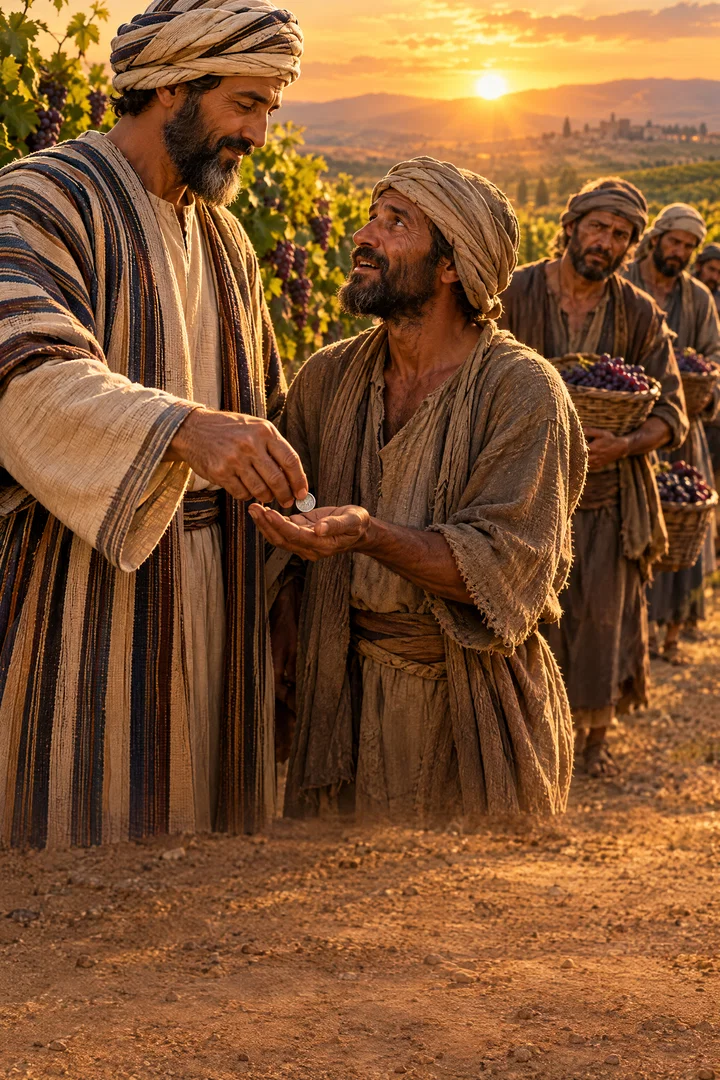
But when the first came, they supposed that they should have received more; and they likewise received every man a penny.
Translations
American King James Version, King James Version, KJV Cambridge Paragraph Bible
But when the first came, they supposed that they should have received more; and they likewise received every man a penny.
But when the first came, they supposed that they should receive more; and they likewise received every man a penny.
And when the first came, they supposed that they would receive more; and they likewise received every man a penny.
And when the first came, they supposed that they would receive more; and they likewise received every man a shilling.
'And the first having come, did suppose that they shall receive more, and they received, they also, each a denary,
And when the first came, they supposed that they would receive more, and they received also themselves each a denarius.
And, when the first came, they supposed that, more, they should receive,—and, they also, received severally a denary.
Berean Standard Bible, Majority Standard Bible
So when the original workers came, they assumed they would receive more. But each of them also received a denarius.
When the first came, they supposed that they would receive more; and they likewise each received a denarius.
Then those who came first had the idea that they would get more; and they, like the rest, were given a penny.
Nowe when the first came, they supposed that they should receiue more, but they likewise receiued euery man a penie.
Douay-Rheims (Challoner revision)
But when the first also came, they thought that they should receive more: and they also received every man a penny.
Pictures

Cross-references
- Matthew 19:27-30
Then answered Peter and said unto him, Behold, we have forsaken all, and followed thee; what shall we have therefore?
Peter asks what the disciples will receive, and Jesus says the first will be last and the last first.
- Matthew 20:16
So the last shall be first, and the first last: for many be called, but few chosen.
The closing saying declares that the first-hired are last.
- Matthew 20:2
And when he had agreed with the labourers for a penny a day, he sent them into his vineyard.
shares the bargain for a set wage
- Matthew 20:14-15
Take that thine is, and go thy way: I will give unto this last, even as unto thee.
The householder defends equal payment and his freedom to be generous.
- Matthew 20:1
For the kingdom of heaven is like unto a man that is an householder, which went out early in the morning to hire labourers into his vineyard.
Introduces the vineyard workers and their hiring.
- Matthew 19:30
But many that are first shall be last; and the last shall be first.
The saying that the first will be last and the last first introduces the parable.
- Matthew 20:4
And said unto them; Go ye also into the vineyard, and whatsoever is right I will give you. And they went their way.
Trust in what is right contrasts with expecting a bargained wage.
- Mark 10:31
But many that are first shall be last; and the last first.
Both say that the first will be last and the last first.
- Luke 17:7-10
But which of you, having a servant plowing or feeding cattle, will say unto him by and by, when he is come from the field, Go and sit down to meat?
The comparison teaches servants not to boast over work they were duty-bound to do.
- 1 Corinthians 3:6-9
I have planted, Apollos watered; but God gave the increase.
God gives the increase and rewards each laborer in his vineyard.
- Luke 15:28-32
And he was angry, and would not go in: therefore came his father out, and intreated him.
The elder brother resents his father’s generous welcome to his brother.
- Luke 18:18-30
And a certain ruler asked him, saying, Good Master, what shall I do to inherit eternal life?
Parallel Gospel account of Jesus’ teaching on riches and reward.
- Revelation 22:12
And, behold, I come quickly; and my reward is with me, to give every man according as his work shall be.
Each person receives reward according to their works.
Commentary
Each commentary is drawn from primary sources: the writings of Ellen G. White and Adventist pioneers and periodicals. Each commentary is separate. Its own words are not a quotation; follow the references to read the source passages.
Ellen G. White
72 sources
When the workers hired first saw those hired late receive a full day's wage, they expected extra pay for themselves but received the same agreed penny despite having borne the burden and heat through twelve hours while others worked only one.9T 73.3–74.1Ms 23, 1908, par. 33–36Ms 87, 1899, par. 1–3RH Jul 31, 1900RH Jul 24, 1900 They had bargained for a fixed, stipulated sum, while those hired later trusted the householder to do what was right and left their payment to his justice and generosity.RH Jul 24, 1900RH Jul 24, 1900Ms 29, 1911, par. 66 The equal payment shows that God's favor and reward are given by grace according to His generous purpose, not earned by works nor measured by length of labor, amount, visible results, or human standards, but by the spirit of willingness, faithfulness, humility, surrender, love and purity of motive in which service is given.9T 73.3–74.1COL 390.1RH Aug 13, 1908COL 396.3–397.1ST Jul 13, 1915 Their expectation exposes a grasping, mercenary, hireling spirit that serves for an agreed reward, measures work by the hour, claims preference for being first, and envies fellow believers, in contrast to humble workers who expect little, are grateful simply to be accepted, and are astonished at gracious compensation.Ms 19, 1897, par. 38–41ST Aug 9, 1899RH Jul 24, 1900RH Jul 24, 1900Ms 87, 1899, par. 10 The Lord so accepts penitent sinners who come late in life with humble faith and entire dependence on Christ, as seen in the dying thief, and near the close of earth's history many souls from the world and the churches will come to the front, exalt the law and maintain religious liberty with great zeal, and be accepted and paid as much as those who entered first.Ms 30, 1889, par. 73–79RH Jul 24, 1900Ms 87, 1899, par. 11–12Ms 18, 1888, par. 3015MR 81.1
Story Setting and Terms
When the first-hired saw the late-hired receive a penny, they supposed they would receive more, but they likewise received every man a penny, the agreed wage, despite the difference in hours worked.9T 73.3–74.1Ms 23, 1908, par. 33–36Ms 87, 1899, par. 1–3ST Aug 9, 1899RH Aug 13, 1908 Their longer service gave them no ground to resent the householder's equal payment to the later workers, for the first received only what was promised while the later received according to generous purpose.ST Aug 9, 1899RH Aug 13, 1908COL 396.3–397.1 The contrast exposes the error of measuring reward by comparative labor, personal merit, precedence, and comparison, and of expecting special reward on that basis.ST Aug 9, 1899COL 396.3–397.1 The value of service is measured by the spirit in which it is given, not by how long a person labors.9T 73.3–74.1RH Aug 13, 1908
Their expectation arose because they had worked longer, bearing burden and heat through twelve hours, while the others had worked only one hour in the cooler part of the day.RH Jul 31, 1900RH Jul 24, 1900ST Jul 13, 1915 They thought their longer labor made their work more valuable and entitled them to a larger wage, believing that long service earns greater reward.RH Jul 24, 1900RH Jul 31, 1900ST Jul 13, 1915 That claim reflects a faultfinding, self-exalting, hireling spirit that serves for an agreed reward and measures service by its amount, producing murmuring from a sense of entitlement.RH Jul 31, 1900RH Jul 24, 1900RH Jul 31, 1900 With pure hearts free from selfishness they would have recognized the householder's action as generous rather than as wrong, but such self-exaltation can make those who might have been first become last.RH Jul 31, 1900RH Jul 31, 1900 The Lord's reward is not measured by human expectations of comparative merit, but according to the spirit of the service rather than a worker's estimate of its worth or length.RH Jul 31, 1900GW 80.2
The first workers had bargained for a fixed, stipulated sum and treated service as a bargain, regarding their work as worth more and trying to make terms to do a stated amount for a certain sum, as the first-called did.RH Jul 24, 1900RH Jul 24, 1900Ms 87, 1899, par. 10 The later workers left their payment to the householder's justice and generosity, trusting the owner to act justly.RH Jul 24, 1900RH Jul 24, 1900 Like an unworthy sinner entering service near the end of life, they were grateful simply to be accepted and expected little, so the generous payment surprised them and showed the gracious reward given to humble, thankful service.RH Jul 24, 1900 Their complaint that the later workers were made equal to them did not make the payment unfair, for the Lord dealt with each worker justly and kept His agreement, displaying liberality that hearts free from selfishness would have recognized rather than resented.Ms 29, 1911, par. 66Ms 87, 1899, par. 15Ms 87, 1899, par. 8–9 His reward is not measured only by hours worked or visible results, but also by the spirit brought to the work, and in His estimation workers with the hireling spirit who continue only for remuneration are last and their hearts need cleansing.Ms 87, 1899, par. 10Ms 87, 1899, par. 15Ms 87, 1899, par. 8–9
The verse belongs to the parable of the laborers in the vineyard, connected with the rich young ruler story in Matthew 19:16-30 and its parallels in Mark 10:17-31 and Luke 18:18-30.COL 390 In that parable the vineyard represents the world.FE 512.4 It pictures solitary manual farm labor with a long-handled hand tool in a fenced rural field among crops and trees.COL 390 Its call to labor applies throughout history and with special force near the close of earth's history, and in its eleventh-hour setting shows it is not too late for sins to be forgiven and wrongs to be made right.15MR 81.1Ms 48, 1891, par. 55
Meaning of Equal Payment
The equal payment shows that divine favor and the righteous reward are not earned by works but are received by grace according to generous purpose, not measured by length of service, amount of labor, visible results, or human standards and expectations.COL 390.1COL 396.3–397.1ST Jul 13, 1915COL 401.2–402.1COL 397.2–398.1 When the first-hired saw the late-hired receive a full penny they supposed they would receive more, yet they likewise received only the sum agreed upon, which exposes the error of measuring God's reward by comparative labor or personal merit.COL 390.1COL 396.3–397.1ST Jul 13, 1915COL 401.2–402.1COL 397.2–398.1 The first receive exactly what was promised while the later receive according to liberality, so no one can claim a greater share as a right or boast over another, and the first and the last share the eternal reward.COL 396.3–397.1ST Jul 13, 1915ST Jul 13, 1915COL 401.2–402.1COL 397.2–398.1 Their expectation reflects a grasping, mercenary spirit, while the right principle is free grace honored in a humble, trusting, grateful spirit, with acceptance not earned by merit and service motivated by love to God and others rather than eagerness for compensation.COL 390.1COL 396.3–397.1ST Jul 13, 1915COL 401.2–402.1COL 397.2–398.1 The first should therefore gladly welcome the last rather than envy them.COL 401.2–402.1COL 397.2–398.1
The value of service is measured by the spirit in which it is given, not by how long a person labors.9T 73.3–74.1RH Aug 13, 1908RH Jul 24, 1900RH Jul 31, 1900ST Jul 13, 1915 Willingness, faithfulness, loving trusting faith, humility before God, surrender of self, love for others, and purity of motive bring the same reward, so that a small duty done sincerely and without self-seeking pleases God more than great work marred by self-interest.RH Aug 13, 1908RH Jul 24, 1900ST Jul 13, 1915RH Jul 31, 1900ST Jul 13, 1915 Christ's reward is not secured by demanding a stipulated wage, and the first workers could have remained first if they had served with that loving, trusting spirit instead of a faultfinding, self-exalting spirit that claims greater worth for longer hours.9T 73.3–74.1RH Aug 13, 1908RH Jul 24, 1900ST Jul 13, 1915RH Jul 31, 1900 Their claim to more because they bore longer labor reflects an estimate of worth by length rather than by spirit, and such self-exaltation can make those who might have been first become last.9T 73.3–74.1RH Jul 24, 1900ST Jul 13, 1915RH Jul 31, 1900ST Jul 13, 1915 God's generous acceptance and reward thus bring joy to the humble and grateful, including those who serve only briefly, and He accepts penitent sinners who come late with humble faith and obedience.RH Jul 24, 1900ST Jul 13, 1915ST Jul 13, 1915
The householder dealt justly and wronged no one, for He kept His agreement in paying the stipulated penny, and He has the right to be generous to the last without wronging the first.RH Jul 24, 1900RH Jul 31, 1900Ms 29, 1911, par. 66Ms 29, 1911, par. 65Ms 87, 1899, par. 15 The complaint of the first arose from selfishness and a spirit of comparing service and claiming greater worth, with murmuring rooted in entitlement because longer service was thought to earn larger reward.RH Jul 24, 1900RH Jul 31, 1900Ms 29, 1911, par. 65Ms 87, 1899, par. 15GW92 326.2 With hearts pure and free from selfishness they would have recognized His liberality as generous rather than resenting it or making it grounds for grievance.RH Jul 24, 1900RH Jul 31, 1900Ms 29, 1911, par. 66Ms 29, 1911, par. 65Ms 87, 1899, par. 15 This warns against bargaining for a fixed reward or treating God's dealings with the human family as unfair, and calls for cleansing of that heart, for humility rather than envy, and for no begrudging of the Master's generosity to others.RH Jul 31, 1900Ms 29, 1911, par. 66Ms 29, 1911, par. 65Ms 87, 1899, par. 15GW92 326.2
The thought of reward is not to be uppermost and is not to be the motive for service, which is to rest in God and do right irrespective of gain from love to God and fellow men.COL 397.2–398.1ST Jul 13, 1915RH Jul 31, 19005T 386.1SSP 13.1–2 Service is not to be done for wages, self-praise, personal enjoyment, greatest gain, or eagerness for compensation for every duty, nor by measuring every hour with exactness or studying how little may be done to reach the lowest standard.ST Jul 13, 1915RH Jul 31, 19005T 386.1SSP 13.1–2 Those who labor whole-heartedly to the utmost compare their efforts with the Saviour's work, account themselves unprofitable servants, set no high estimate on their own services, and do not swell with pride and self-importance, but grasp the fullness of Christ in order to do much for Him through self-sacrifice wherever they can serve.ST Jul 13, 1915RH Jul 31, 19005T 386.1SSP 13.1–2 The early laborers were offended because they supposed twelve hours of burden and heat entitled them to more than one hour in the cooler part of the day, yet the measure of reward is not to be questioned, though promised blessings may be appreciated in a subordinate sense.ST Jul 13, 1915RH Jul 31, 19005T 386.1 This does not excuse hearing the first call and neglecting to enter, for the later workers were not present in the morning and had not refused the call, and though those who refuse and afterward repent do well, it is not safe to trifle with the first call of mercy.ST Jul 13, 1915
Rebuke of Grasping Spirit
The supposing that more should have been received exposes a grasping, mercenary, hireling spirit that serves only for an agreed reward and measures its work by the hour and by its amount.Ms 19, 1897, par. 38–41RH Jul 24, 1900Ms 87, 1899, par. 10Ms 87, 1899, par. 16 Those who hold it continue in service for the remuneration they hope to receive, try to make terms with God to do a stated amount of work for a certain sum, and will not work without the wages they themselves stipulate, demanding their own stipulated pay at the close of the day.Ms 87, 1899, par. 10Lt 93, 1899, par. 14Ms 142, 1903, par. 90 When they saw the late-hired receive a full day's pay they were displeased at receiving only the penny promised them, thinking their longer labor made their work more valuable and entitled them to increased wages and higher rank.Ms 19, 1897, par. 38–41RH Jul 24, 1900Ms 87, 1899, par. 10 Applied to the Jews, this same expectation treated long service and greater labor as earning a larger reward and even earning salvation itself.Ms 87, 1899, par. 16
They represent those who claim preference and honor because they were first in the field and because of their service and sacrifice.ST Aug 9, 1899COL 399.5–401.1 They take credit to themselves whenever they advance, are lifted up with pride when helped, are eager for flattery and jealous if not placed first, feel superior to all others, fail to treat the poor and needy rightly, and act unjustly and unrighteously.ST Aug 9, 1899 They are eager for reward and think they should receive compensation for everything they do, valuing their reward above the privilege of serving Christ and becoming resentful when others receive equal generosity.ST Aug 9, 1899COL 399.5–401.1 Their complaints reveal pride, self-righteousness, distrust of God, and jealousy toward fellow believers.COL 399.5–401.1
This faultfinding, self-exalting, comparing spirit is unlike Christ and makes workers untrustworthy in His service.COL 399.5–401.1Ms 87, 1899, par. 16 Those who claim greater reward because they worked longer exalt themselves and devalue the work of others, and such self-exaltation can make those who might have been first become last.RH Jul 24, 1900RH Jul 31, 1900Ms 87, 1899, par. 26–27 In God's estimation such workers are last, and by this choice men and women fix their own destiny as candidates either for heaven or for hell.Ms 87, 1899, par. 10Lt 93, 1899, par. 14 The lesson was given as a warning to the first-called that expecting greater reward fosters self-righteousness, pride, jealousy, and the belief that service earns a place in heaven, whereas reward is by grace and not by works so that no one has grounds to boast.ST Jul 13, 1915 Workers in God's vineyard must therefore examine their hearts, give up their own ranking of their work and the work of others, be cleansed of envy, and learn contentment, self-denial, and humility, entering the design of the divine Planner only by denying self, taking up the cross daily, and following in obedience.Ms 87, 1899, par. 26–27Lt 93, 1899, par. 14
In contrast stand humble, lowly workers imbued with the Spirit of God who serve with self-sacrifice and self-abasement, expect little, are grateful simply to be accepted, and are astonished that gracious compensation notices even a kind word to the disheartened or a gift to relieve the distressed.ST Aug 9, 1899RH Jul 24, 1900Ms 87, 1899, par. 11–12 Like an unworthy sinner entering service near the end of life, they leave payment to the householder, know they have not earned a full day's pay, and receive His generous kindness with thankfulness and surprise.RH Jul 24, 1900Ms 87, 1899, par. 11–12 God sees not as man sees but judges motives, sincerity, and fidelity, measuring the humble, childlike spirit of love and tenderness in which acts are done and making the reward proportionate, so that the last stand first.ST Aug 9, 1899
Welcome of Late Workers
The verse shows that the Lord accepts penitent sinners who come late in life with humble faith and obedience to His commandments.RH Jul 24, 1900Ms 87, 1899, par. 11–12Ms 18, 1888, par. 30 Though their service has been short and little reward is expected, Christ's acceptance and gracious compensation surprise them and are received with thankfulness, for they know they have not earned a full day's pay and are filled with gratitude at the householder's generous kindness.RH Jul 24, 1900Ms 87, 1899, par. 11–12Ms 18, 1888, par. 30 Those who begin serving Christ at the eleventh hour and confess the truth to become His workers receive the same wages as those who have worked throughout the day and labored many hours.Ms 18, 1888, par. 30Ms 52, 1897, par. 26–27 The dying thief is such a laborer, whose faith, patience, contrition, earnestness, full realization that Jesus could save him, anguish that without Him he would be eternally lost, consciousness of his own sinfulness, entire dependence on the mercy of a dying Saviour, and casting of his helpless dying soul and body on Jesus Christ bring him the same reward as long service.Ms 52, 1897, par. 26–27
The eleventh-hour laborers will receive their penny near the close of earth's history, for the parable applies throughout history and with special force then.Ms 30, 1889, par. 73–7915MR 81.110MR 170.2–3 Many souls will come out from the ranks of the world and from the churches, even the Catholic church, when the crisis over religious liberty comes.Ms 30, 1889, par. 73–79 They will see the battle coming and give the trumpet a certain sound, come to the front in the season of calamity, gird themselves with the whole armor of God, exalt His law, adhere to the faith of Jesus, and maintain the cause of religious liberty, with a zeal far exceeding that of those who have stood in rank and file proclaiming the truth heretofore.Ms 30, 1889, par. 73–79 Although the work has grown harder and people are more hardened, these late workers remain faithful and receive their penny, and earnest workers brought into the fold at the eleventh hour are accepted by the Lord who works through them, so that as they share heavenly truth with others they are paid as much as those who first entered the field, and service offered today is still invited and rewarded.10MR 170.2–3Ms 17, 1901, par. 216T 304.2
The expectation of more because of longer work reflects the belief that long service and greater labor earn a larger reward, which applied to the Jews treated service as earning salvation.Ms 87, 1899, par. 16 Workers called at the eleventh hour may, through Christ's grace in presenting the truth, be accounted first.Lt 36, 1895, par. 30–32 People with few opportunities may take the place of those who had great light and rejected it, for the one-hour laborers brought in at the eleventh hour receive a reward for their faithfulness.Lt 123, 1897, par. 24–28
The penny went to those who worked in the vineyard, not to those who loitered in the marketplace, for reward is linked to faithfully doing the work given, not merely to waiting or claiming entitlement.Ms 132, 1901, par. 17 The later workers were not present in the morning and had not refused the call.ST Jul 13, 1915 Though those who refuse and afterward repent do well, it is not safe to trifle with the first call of mercy or to hear the call to labor and neglect to enter.ST Jul 13, 1915 Its eleventh-hour setting shows that it is not too late for sins to be forgiven and wrongs to be made right.Ms 48, 1891, par. 55
Call to Faithful Service
The vineyard setting is a call for every Christian to be a zealous, wide-awake laborer for the salvation of souls, with no idlers and work for all to do in following Christ's example of self-denial, sacrifice, and faithful work.3T 202.1GW92 47.34T 454.1TCBMP 201.1TBC1872 20.2 That labor includes opening new fields and personally seeking conversions instead of remaining among churches already rich in light and advantages, for weak, unproductive service deprives God of glory.GW92 47.37T 255.2–3 It includes entering the cities to labor for souls at the Master's call, giving work to those standing idle and correcting their mistakes rather than hindering them, and persevering in daily effort that increases ability to bear fruit to God's glory.OEWP 36.1–37.1ST Oct 31, 19114T 454.1 It embraces home duties and patient help for children, helping sufferers, bearing reproach in unity, and refusing to claim new light while leaving the load on others.3T 202.1TCBMP 201.1
Labor in the vineyard means willing sacrifice and faithful, earnest, persevering work, giving the powers of the mind to the service of God instead of serving self and acquiring property.3T 202.13T 159.2TCBMP 201.1TBC1872 20.2 It means studying the Scriptures to become intelligent in spiritual knowledge and the things of the kingdom, explaining prophecies, warning sinners, winning souls to Christ, and pointing the unbelieving and desponding heavenward while walking on from one degree of light and strength to another.3T 160.23T 159.2 Those employed are responsible to use all their abilities faithfully in His service rather than for selfish gain, and God accepts consecrated ability, including good abilities trained by schooling in common education and present truth for ministry.3T 160.2RH Apr 13, 19053T 159.2 Work for God is sacred, so those who have been fruitless are to consecrate themselves to Him with devotion and concern for souls.3T 202.1TBC1872 20.2
God requires equity and just judgment in His vineyard, and the first workers supposing they should receive more yet receiving the same penny shows that means must not be gathered from every source to enlarge one favored place while other fields remain unworked and destitute of facilities.YGBCOEP 39.3–40.28T 138.2–3HSFM 283.5–284.1 Every building is to be erected with reference to other places needing similar buildings, and other parts of the vineyard must be given a chance for facilities through many small sanitariums, treatment rooms in many cities, and hygienic restaurants, rather than blocking advance by selfishly using all available means in one place or one line of work.YGBCOEP 39.3–40.2 Wages in God's cause are sacred and must be dealt with on fair, true, and right principles, for His cause can afford to be fair.Ms 142, 1903, par. 65–66 All arrangements with those in His service must be a sacred transaction with open statement of lack of means and willing agreement, with workers having as much voice as those in other trades, without cutting wages without consent or understanding of their situation, since selfish cutting turns from God, brings families into strait places, want and oppression, and tempts, discourages, and drives workers from the field.Ms 142, 1903, par. 65–66Ms 109, 1907, par. 39–41 The longer workers expecting more but receiving the agreed wage teaches contentment and self-denial rather than setting a high price on one's labor or claiming higher wages as a right, and guards against jealousy and selfish ambition that demands advantage because of position or prosperity.8T 138.2–3HSFM 283.5–284.1Ms 109, 1907, par. 39–41
Christ welcomes workers into His vineyard and equips them for the work He gives, so that those who seem unlikely or unqualified and may discourage others can be called, enabled, and prepared through learning and the Spirit for work suited to their abilities.CH 26.17T 271.1 Earnest workers brought into the fold at the eleventh hour are accepted, and as they share heavenly truth they are paid as much as those who first entered, receiving their penny even though the work has grown harder and people more hardened.10MR 170.2–3Ms 17, 1901, par. 21 Those who labor faithfully will when the warfare ends be welcomed to the joy of their Lord, for He has paid for their service with His blood and suffering and they belong to Him to work willingly with sacrifice and self-denial.3T 159.2STSE 27.1–28.1Lt 1, 1883, par. 60–63 Their hire includes souls won to Christ, and reward is found even in the consciousness of doing right.Ms 17, 1901, par. 213T 159.2
Sources
Pioneers and periodicals
122 sources
When the first hired saw those hired last receive a penny, they supposed longer labor should bring more, but they likewise received every man the same penny they had agreed for.ST Aug 9, 1899ST Dec 2, 1886ST Jan 24, 1911 The payment was made at evening after the workday, at the close of its twelfth hour, which marks both the close of one day and the beginning of the next.RH May 26, 1853RH Apr 21, 1851RH Aug 5, 1851 God does not measure service by time, strength, amount, or visible results, but by love, faith, faithfulness, humility, sincerity, and the spirit and motive in which it is done.RH Aug 13, 1908ST Dec 2, 1886RH Apr 8, 1902 The same reward for early and late shows beginning late may share equally with beginning early, for God gives by grace and the generosity of his purpose rather than by human standards of labor earned.ST Jul 13, 1915ST Jul 13, 1915ST Jan 24, 1911 The first workers treated service as a bargain for a definite stipulated wage and measured its value by amount and length, while the later workers simply trusted the householder to give what was right.RH Jul 24, 1900RH Jul 24, 1900RH Aug 17, 1911 The equal penny does not mean all the righteous receive the same regardless of labor, for Scripture teaches reward according to works when works spring from faith and love.RH Sep 4, 1866ST Mar 3, 1887
Words and Day's Hours
The payment comes at evening, after the workday is finished, at the close of its twelfth hour.RH May 26, 1853RH Apr 21, 1851RH Aug 5, 1851 Those hired at the eleventh hour have then completed one hour of work, while those hired first have labored all day, yet both receive the same penny, and the first complain that they did not receive more.RH May 26, 1853RH Apr 21, 1851 The day ends at even, which is the termination of its twelfth hour.RH Aug 5, 1851 Evening in this reckoning marks both the close of one day and the beginning of the next.RH May 26, 1853RH Apr 21, 1851
The hours of the parable are the twelfth parts of the daylight period from sunrise to sunset, not fixed sixty-minute hours.RH Dec 4, 1855RH Dec 4, 1855 Their length therefore varied with the season, since daylight is longer and shorter at different times of year.RH Dec 4, 1855RH Dec 4, 1855 The expectation of more pay by the first workers and their receipt of the same penny do not establish that the eleventh hour was five o'clock or that evening began at six.RH Dec 4, 1855 The verse gives no basis for fixing evening at a clock time, and it is consistent with the day beginning at sunset.RH Dec 4, 1855RH Dec 4, 1855
The passage has been reckoned as a twelve-hour workday from 6 A.M. to 6 P.M.RH May 26, 1853RH Apr 21, 1851 In that reckoning the eleventh hour was about five o'clock, and those hired then labored one hour before dismissal at evening about six o'clock.RH May 26, 1853RH Apr 21, 1851RH Jun 2, 1851 This supports reckoning the day from six o'clock.RH Jun 2, 1851
The first workers, seeing the late-hired receive a penny, supposed they should receive more for longer labor.ST Aug 9, 1899RH Jul 24, 1900ST Dec 2, 1886ST Feb 26, 1880ST Feb 26, 1880 They likewise received every man the same penny.ST Aug 9, 1899RH Jul 24, 1900ST Dec 2, 1886ST Jan 24, 1911ST Feb 26, 1880 That penny was the agreed stipulated wage, and longer service gave no ground to resent equal payment to later workers or to claim special reward based on precedence and comparison.ST Aug 9, 1899RH Jul 24, 1900ST Feb 26, 1880ST Feb 26, 1880 What matters is entering the right way and moving toward the right goal, and those who answer the call receive the promised reward without envy toward another receiving the same.ST Jan 24, 1911ST Feb 26, 1880
How Reward Is Measured
God measures service not by time, strength, amount, or visible results, but by love, faith, willingness, faithfulness, humility, sincerity, surrender of self, and the spirit and motive in which it is done.RH Aug 13, 1908RH Jul 24, 1900ST Jul 13, 1915ST Dec 2, 1886RH Apr 8, 1902 Length of labor does not determine recompense, for entering the vineyard and serving are necessary and genuine love can show itself in one hour as truly as in ten.RH Aug 13, 1908RH Jul 31, 1900RH Apr 8, 1902 A small duty done sincerely and without self-seeking pleases Him more than great work marred by self-interest, and demanding a stipulated wage does not secure Christ's reward, which requires a loving, trusting faith.RH Jul 24, 1900ST Jul 13, 1915 The first workers' claim to greater reward for longer labor reflects a faultfinding, self-exalting spirit, and such self-exaltation can make those who might have been first last.RH Jul 24, 1900ST Jul 13, 1915RH Jul 31, 1900
The same penny for early and late shows the reward is the same for beginning late as for beginning early.ST Mar 5, 1902ST Jan 24, 1911ST Dec 18, 1901 What matters is not how long one has run but whether one entered the right way and is moving toward the right goal.ST Jan 24, 1911 God deals by the principles of His kingdom rather than by human standards or expectations of labor earned, giving by grace and the generosity of His purpose.ST Jul 13, 1915ST Jul 13, 1915RH Jul 24, 1900ST Mar 5, 1902 Expecting greater reward for longer work can foster self-righteousness, pride, jealousy, and the belief that service earns a place in heaven, leaving no ground for boasting because the reward is by grace, not works.ST Jul 13, 1915ST Jul 13, 1915ST Mar 5, 1902
The equal penny does not teach that all the righteous receive the same reward regardless of labor, for Scripture plainly teaches reward according to works.RH Sep 4, 1866ST Mar 3, 1887 Works have value when they spring from faith and love and are expressed in active service, while religious words and good intentions alone are not enough.ST Mar 3, 1887 The parable's equal payment therefore cannot prove away that doctrine.RH Sep 4, 1866ST Mar 3, 1887
The first workers received exactly what they had agreed to, and their reward was not increased because they worked longer.RH Jul 24, 1900ST Jul 13, 1915RH Jul 24, 1900ST Jul 9, 1874 Their expectation of more arose when they saw the later workers receive a full day's pay, revealing comparison of service and claiming of greater worth.RH Jul 24, 1900ST Jul 13, 1915RH Jul 24, 1900 The householder's equal payment to last and first shows his right and decision to give generously without wronging those paid as agreed, contrasting agreed terms with the later workers' trust that he would act justly.RH Jul 24, 1900ST Jul 13, 1915RH Jul 24, 1900ST Jul 9, 1874
The equal penny is just because he who waited served.ST Feb 26, 1880ST Feb 26, 1880ST Feb 26, 1880 The men stood idle in the marketplace not through their own neglect but because no one had hired them, waiting with anxious looks and willing minds and motives every way correct, and their truthful answer proved the willing mind.ST Feb 26, 1880ST Feb 26, 1880 The Master knew their patient waiting, pitied them, and counted waiting as service, giving to each the penny as each alike deserved, for work has value as evidence that a person answers the call.ST Feb 26, 1880ST Feb 26, 1880 That same rule applies to a heathen of honest heart and to one who sought God in moral darkness and accepted the gospel only near the end of life with no earlier opportunity, who may share the reward of lifelong Christians because he was faithful to the call available to him.ST Feb 26, 1880ST Feb 26, 1880
This does not promise the same reward to one in a Christian land who heard truth early and deliberately delayed obedience, refused earlier calls, spent a lifetime rejecting invitations, or tries to repent only when death is near.ST Jul 13, 1915ST Feb 26, 1880RH Apr 20, 1876RH Sep 22, 1863RH Dec 14, 1905 The late workers had not previously been called and had not refused the call, and the eleventh-hour workers may hope to be saved if that hour is their first call and they can truthfully say they stood idle because no one hired them.ST Jul 13, 1915RH Apr 20, 1876RH Sep 22, 1863 Those who enter at the eleventh hour do so because they respond when the call comes, not because they refused earlier, and though those who refuse and afterward repent do well, delaying surrender and service until a supposed final hour puts the soul in danger, and it is not safe to trifle with the first call of mercy.ST Jul 13, 1915RH Sep 22, 1863RH Dec 14, 1905
Those who wait patiently receive the same promised penny with the rest.RH Apr 2, 1901 Receiving it assures the waiting servant that God's love does not depend on doing the hardest work, for God gives the reward in His own time.RH Apr 2, 1901
The first workers' complaint cannot describe the saints in the world to come, who will not murmur against God there, nor does it prove the unrighteous will receive as much as the righteous.RH Sep 4, 1866 It illustrates people called earlier to sacrifice for God's cause who refuse because they love possessions, rely on old religious experience and outward commandment-keeping, yet become jealous and murmur when fellow workers prosper and are blessed and promoted, while people called later heed the call and sacrifice.RH Sep 4, 1866RH Sep 4, 1866RH Sep 4, 1866 Those who persist in murmuring and refuse sacrifice cannot be saved and do not make calling and election sure, for first and last are distinguished by response in the present probationary life, and the Lord rewards in some respects according to deeds.RH Sep 4, 1866RH Sep 4, 1866RH Sep 4, 1866
Grace Against Bargaining Spirit
The first-hired made service a bargain for a definite stipulated wage and measured its worth by amount and length of labor, which is the hireling spirit, while those hired later simply trusted the householder to give what was right.RH Jul 24, 1900RH Jul 24, 1900RH Jul 24, 1900RH Aug 17, 1911RH Aug 17, 1911 Like a grateful, unworthy sinner entering service near the end of life, the late workers expected little and were content merely to be accepted, and the householder's generosity surprised them with gracious reward.RH Jul 24, 1900RH Jul 24, 1900 The first could have remained first if they had served with that loving, trusting faith instead of demanding more than agreed when they saw the last receive a penny.RH Jul 24, 1900RH Jul 24, 1900 Those finishing the work must likewise enter without a definite promise of financial support from men, trusting the Master for simple food and clothing to give what is right rather than what was bargained for.RH Aug 17, 1911RH Aug 17, 1911
The first laborers who supposed they should receive more embody an envious, self-righteous spirit that thinks heaven can be earned by works.ST Aug 9, 1899ST Jul 13, 1915 They claim preference because they were first in the field, take credit to themselves when they advance, are lifted up with pride when helped, are eager for flattery and jealous if not placed first, feel superior to all others, fail to treat the poor and needy rightly, act unjustly and unrighteously, and are eager for compensation for everything done.ST Aug 9, 1899 Christ gave this lesson to reach down to the present time, and He does not desire such workers in His service.ST Aug 9, 1899 In contrast stand humble, lowly workers imbued with the Spirit of God who serve with self-sacrifice and self-abasement, long to do more, think little of what they do, and are astonished that the Lord noticed the kind word or gift, because He judges motives, sincerity, fidelity, and the humble childlike spirit of love and tenderness, making reward proportionate so the last stand first.ST Aug 9, 1899
Expecting more reveals comparing service and claiming greater worth, with faultfinding, self-exaltation, pride, and jealousy over twelve hours of burden and heat against one hour in the cooler part of the day.RH Jul 24, 1900RH Jul 31, 1900ST Jul 13, 1915ST Jul 13, 1915RH Jul 31, 1900 God's reward is according to the spirit of service rather than a worker's estimate of its worth or length, and such self-exaltation can make those who might have been first last.RH Jul 24, 1900RH Jul 31, 1900 With pure hearts the first workers would have seen the householder's equal payment to last and first as generous exercise of his right to give without wronging those who received what they agreed to, rather than murmuring from entitlement.RH Jul 24, 1900RH Jul 31, 1900 The reward is by grace and not by works, so expecting a greater reward as earned gives no ground for boasting but fosters self-righteousness.ST Jul 13, 1915
Those who try to bargain with God must not expect special favors, for giving or doing good does not purchase blessing, while unselfish good done spontaneously without expectation of reward is abundantly blessed.RH Jun 4, 1908 No one can claim reward as due in the kingdom, yet God of favor gives it first to those who serve most purely.ST Dec 2, 1886 Doing work well for the sake of future reward honors Him less than trusting Him without thinking of gain.ST Dec 2, 1886 One called late in life who serves unselfishly, devotedly, and purely will be made first and stand higher and be chosen to honor, while earlier-called workers who are less zealous and loving remain undistinguished, for many are called but few prove especially worthy of honor by spirit and zeal, and if the first are last it depends on themselves.ST Dec 2, 1886
The measure of reward is not to be questioned and the thought of reward is not to be uppermost or the motive; service is to rest in God and do right irrespective of gain from love to God and fellow men, appreciating promised blessings in a subordinate sense without eagerness for compensation for every duty.ST Jul 13, 1915 Service is to be done for Christ and not for wages or self-praise, without judging one's service as deserving greater reward or exalting oneself over others.ST Jul 13, 1915RH Jul 31, 1900 The equal payment does not prove the religion of the former dispensation was a burdensome monster of temple worship the masses could not understand and that did them no good while the gospel is easy and pleasant, nor does it cry away the law. That religion was the only true religion for its time, and the call is to faithful vineyard labor so each may receive his allotted reward at the reckoning day.
Who the First and Last Are
Those who are not chosen are those who themselves refuse the terms of salvation freely offered, each person choosing whether to accept the call.ST Feb 20, 1901 First and last are distinguished by response rather than by time, for some called first to sacrifice do not respond while others called later heed the call, sacrifice, and make their calling and election sure, and this lesson belongs to the present probationary life.ST Feb 20, 1901RH Sep 4, 1866
The first workers picture people called earlier to sacrifice for the cause who refuse because they love their possessions, relying on an old religious experience and outward commandment-keeping yet becoming jealous and murmuring against the Lord when fellow workers prosper.RH Sep 4, 1866 Their reward is not secured by demanding a stipulated wage, for what matters in service is the spirit of loving, trusting faith.RH Jul 24, 1900 The first need not be last, but may heed the call and labor with zeal, faithfulness, and unselfishness, and with that spirit the first could have remained first.RH Jul 24, 1900RH Sep 4, 1866RH Sep 4, 1866
The Lord accepts penitent sinners who come late with humble faith and obedience to His commandments, including a faithful heathen of honest heart who heard the truth late in life.RH Jul 24, 1900ST Feb 26, 1880 The equal payment is just because he who waited served, for those who stood idle waited with anxious, willing minds whose failure to labor was not their own neglect, and the Master who knew their patient waiting and pitied them counted waiting as service and gave to each the penny as each alike deserved.ST Feb 26, 1880 That same rule applies to the honest-hearted heathen, while it does not excuse one in a Christian land who heard the truth early and deliberately delayed obedience from claiming the same reward as those who faithfully answered when first called.ST Feb 26, 1880ST Feb 26, 1880
The equal penny also supplied chronology and duration for the tarrying time after the expected end of 1843 had passed, giving a platform on which to stand, a renewed test of faith, and a basis for the 1844 seventh-month cry, with the shared appointed time and outcome not determined by how early it was expected.RH Apr 21, 1868 In the same way believers who received the three messages at once may receive the same penny as those who bore the burden and heat of the day, so earlier or longer service does not entitle one to more than was promised.RH Jul 10, 1855 Early laborers are contrasted with those coming at the sixth or ninth hour after the cause was young and small, for the early knew yearly gatherings as times of refreshing where timely counsel sent them forth with cheerful courage, strength of purpose, and ardent zeal which later arrivals can hardly realize.ST Jan 4, 1883 Sabbath-keepers under persecution and hardship were likewise not idle in service but lived for Christ, and their names were written in the Lamb's book of life.ST Jun 25, 1874
Present Eleventh Hour Call
The present moment is the eleventh-hour call to work just before the end, when no idleness can be excused by saying there is nothing to do or no one has hired for service.RH Dec 2, 1915RH Sep 19, 1912RH Apr 16, 1857RH Apr 17, 1900 God is hiring all to go into active service or into preparation for such service with promise to give whatever is right, and there is special need of young men and young women.RH Dec 2, 1915 Fathers and mothers must give their children to this closing work even at great sacrifice, as Abraham gave his only child, and cannot withhold from God what is His own.RH Dec 2, 1915
Those called at the eleventh hour in the closing work of the gospel that prepares the way of the Lord will prove faithful and will receive their penny.RH Oct 8, 1903 At that hour when the work grows harder a variety of talents will be brought in, and sacrificing men with converted minds and converted tongues will step into places made vacant by those unwilling to do what would fit them for a place in the heavenly temple.RH Oct 8, 1903 The Lord will provide openings and facilities and will call upon youth to fill places made vacant by death and apostasy, and will give young men and women as well as older ones the cooperation of heavenly intelligences.RH Oct 8, 1903 With lips touched with a live coal from the divine altar, if they walk humbly with God and do what they are appointed to do they will carry His work onward and upward.RH Oct 8, 1903
The eleventh-hour servants picture people who leave ordinary employment to enter the Lord's work, with more such workers expected in the future.RH May 16, 1907 The first-hour workers entered with an understanding for a definite wage, while those finishing the work must enter without promise of definite financial support from men, trusting the Master for simple food and clothing.RH Aug 17, 1911RH Aug 17, 1911 The eleventh hour before the end finds many church members standing spiritually idle in the marketplace because no man has hired them for a definite wage.RH Aug 17, 1911 The Lord tests love for Him by this call, sifting out those joined to property and material affairs who make excuses and beg to be excused, and accepting humble workers from the byways and hedges who are ready to sacrifice, obey, stand in their place and lot, and trust that the one who called them will give what is right.RH Aug 17, 1911
The eleventh-hour hiring urges immediate action without delay, for the call must be obeyed today.RH Jan 28, 1902RH Jun 24, 1902RH Jun 24, 1902RH Jun 23, 1863 Those hired for the vineyard went to work the same day they were called, just as the disciples left their nets at once, and the Master's call to leave all and enter the vineyard must not be put off until temporal affairs are arranged. Delay is dangerous because time is short and a mighty work must be finished before the Lord comes, and many who keep expecting to begin will still be waiting when probation closes. What is left undone in peaceful and favorable times will have to be done later under the most difficult circumstances, and if one fails to do his part another will do it and that other will enjoy the blessing and wear the crown that could have been his.
Latecomers should share the reward but also give time and means wholeheartedly to the cause.ST Jun 7, 1877ST Jun 7, 1877RH Dec 9, 1873 Vineyard workers are to labor in harmony under one rule, and those who join are urged to cooperate with those who have borne the heat of the day. New members are likewise able and expected to share the financial burdens of supporting the cause and its institutions, for equal reward does not excuse them from contributing.ST Jun 7, 1877 None are slighted and labor is expected from everyone in the vineyard.RH Dec 9, 1873
All faithful workers receive the same reward with those who went before, who did their part well, laboring, enduring, and suffering by faith even unto death, and who are now waiting to share the reward of their labors with those who persevere now.RH Feb 4, 1873 That reward is given when the King in His beauty comes to earth again at the consummation of all things spoken by the holy prophets since the world began, when persevering workers are assigned a humble place with those who have turned many to righteousness and shine as the stars forever and ever.RH Feb 4, 1873 Because that end is only a few fleeting years away, the world never needed earnest laborers more than now, and the example of past witnesses and the nearness of the reward give the strongest motive for earnestness and zeal.RH Feb 4, 1873
Work in the Vineyard
The vineyard is the Lord's work and church and gospel ministry, and those counted among his servants and hired laborers have active service as their leading business, with each person having a place and portion no one else can do, and there must be no idlers but cheerful united faithful labor without growing weary.RH Jan 9, 1913RH Nov 6, 1856RH May 17, 1864ST Jan 28, 1897RH Feb 18, 1873 The world is like the marketplace where people may be busy with ordinary work, wealth, pleasure, or fame yet remain idle toward salvation and toward ignorant needy souls at home in villages, cities, wharves and taverns left untaught while dreaming of distant fields, and being hired means being bought with a great price to teach and elevate others by practical helpfulness, by reclaiming the straying through the sympathetic tear, the warm pressure of the hand, the word fitly spoken, meek reproof, tracts and books, and practical help with food, raiment, money, influence, and strength, each asking at the close of day whether the hired work was done.RH May 17, 1864ST Jan 28, 1897RH Feb 18, 1873 Idle professed disciples who have buried entrusted talents are called to work in Christ's service for the saving of souls, and workers should faithfully do the labor assigned without deciding how long it should last or when to rest, since the Master determines duration and burden.RH Jan 9, 1913RH Apr 12, 1870
Christ's call to go work in the vineyard claims those he bought with blood, yielding heavenly glory to suffer on the tree in pain and temptation and anguish and shame, paying the full price for time and talents and loftiest powers and warmest affections and sunniest hours.RH May 14, 1867 The harvest is great and the laborers few, with employment for all ages and ranks in weeding and fencing and clearing roots and plowing and sowing and gathering fruits, taking foxes and destroying wolves, tending sheep and feeding lambs and gathering the lost and leading the weary, including tent labor where doors are open and new churches can be raised, canvassing work and its preparation, rural-school work as a phase allotted by the Master bringing blessing in character, faith, and courage, the mission field where missionaries are sent, and the large vineyard everywhere where God watches his workers and calls for more.RH May 14, 1867RH May 18, 1916RH Apr 11, 1907RH Mar 18, 1873RH Jan 27, 1910 God watches over workers wherever they labor and calls for more workers in soul-saving work, for whose deeds account must be given.RH Jun 2, 1903
Vineyard labor is winning souls to Christ and proclaiming present truth until the message closes, with all Christians to work in unison with God and angels while God impresses hearts, wide awake and zealously laboring for fellow men after the Saviour's example of self-denial, sacrifice, and earnest labor.RH May 23, 1912ST Aug 7, 1884ST Apr 14, 1914RH Jul 14, 1903 Ministry there means pastoring, visiting, cultivating social qualities, and urging publications, not merely reading and hasty writing, and the call applies to earnest organized gospel work in cities for the salvation of souls.ST Oct 31, 1911RH Aug 18, 1910 The work is urgent because labor time will end, people of every age can take part, and the well done is spoken only to those who have worked there.ST Aug 7, 1884
The promised penny is good pay, even eternal life and joy that never ends, a home among the just, a crown, the Master's Well done and approval, and souls as reward, with those turning souls to the Lord shining like stars.ST Aug 28, 1898ST Jul 8, 1875RH Jun 27, 1871ST Jul 8, 1875ST Nov 27, 1893 Faithful duty may include toil for others and daily bread, and its reward far more than compensates effort, bringing eternal gain even when no immediate reward is seen.RH Dec 30, 1909 The first workers received the wage promised though they expected more, showing vineyard labor joined to receiving a reward.ST Aug 28, 1898
Unlike human justice that condemns and imprisons the unemployed, the loving Master with voice full of love and sympathy searches out every idle group from early morning until the last hour along the highways, hailing each gathering and sending the willing into the vineyard. He has a place for everyone willing to labor, sets each to just the kind congenial to the soul and adapted to strength, gives power to the faint, knows exactly how many talents each possesses and what they are, gives even any little corner to abide as saving grace, and there are no failures in work done by his directions. The parable thus illustrates laborers without capital who can work only when hired, otherwise having no place to work, applied to wage earners who have lost control of capital and occupation.STST
Service is to be done while day remains, beginning in the morning and toiling all day while it is day, because bright hours hasten away and night's shadows gather when laboring time is past, with the Master's return as accountability and evening as payment, the end of life or his coming.ST Jul 28, 1881ST Sep 15, 1881RH May 14, 1867 The call is to willing reaping with sickle in hand and prayer from dawn till sundown, with a sickle enough for each reaper and plain direction for what two willing hands can do, and even faltering obedience met with a place and evening payment bringing sheaves with evening light.ST Feb 24, 1898 Workers are to keep laboring in faith even when fruitless, trusting labor is not in vain, with Christ supplying strength and paying wages and blessing on the diligent few who finish the work given them.RH May 14, 1867
Workers should faithfully do assigned labor without deciding its duration or rest, since the Master assigns work and duration and reward is sure in due time rather than cause for murmuring.RH Apr 12, 1870RH Jun 6, 1871 The Lord is not hard or unjust and assigns vineyard work according to strength, and people should not envy others or assume their burdens easier since appearances deceive, but accept their lot, do its duties, endure its trials, and labor contentedly even when reward seems small, willing to continue if a penny is received at day's end.RH Apr 26, 1870ST Aug 20, 1885RH Jul 17, 1860ST Jan 21, 1886 People are to enter promptly rather than wait for detailed instructions or bargain over wages, trusting the Master to settle rightly when work is done.RH May 21, 1914RH May 21, 1914 They should not hold back for lack of opening suited to ability or wait to be qualified, educated, developed, or in a more convenient sphere when work lies around them, but take up available work rather than wait for greater tasks, including neglected places and self-supporting sacrificial service.RH Aug 5, 1873RH Aug 17, 1911RH Nov 13, 1866RH May 7, 1861
Even in the eleventh hour one hour remains to serve Jesus without selfish motives and receive the penny and approval, with lack of talent or sense of weakness no excuse since God gives help and wisdom, and short remaining time calls for greater zeal.ST Jul 28, 1881RH Oct 3, 1865 Those who labor without visible results yet help others are not forgotten but share the reward, since workers serving in different ways and lengths may receive the same reward.ST Nov 24, 1881 Parents who sacrifice to prepare children for God's work share the fruit when those children save souls.ST Aug 25, 1887 One who formerly labored faithfully and efficiently in present truth then fell into darkness, ceased profession, and became entangled in worldly and temporal embarrassments can return, redeem the time, devote time and talents anew with heart thrown into new fields and determination to be faithful, be gladly welcomed back, and have God bless efforts with souls standing for truth.RH Dec 24, 1872RH Dec 24, 1872
Home responsibilities including teaching and patiently helping younger children are work in the vineyard, and fruitful work by women shows timidity is no excuse for ceasing to serve.RH Jun 2, 1910RH Jul 30, 1861 The familiar hired-labor setting shows use of everyday comparisons to make teaching understandable.ST May 4, 1876 The poor toiler with only the promised penny's claim exposes the employer who claims right to get labor as cheaply as possible, paying less than will buy bread and leaving larder empty and wife and children hungry and cold and comfortless while counting the saving as shrewdness and duty.ST Sep 5, 1895 The first workers' expectation of more for longer labor does not lessen duty to work faithfully rather than indifferently toward neglected people, and the owner's knowledge of his workers applies to God's knowledge of mission difficulties even when believers at home do not understand, calling for offerings of self and means for Africa and for devoted priests and nuns in Mexico.RH Sep 28, 1905RH Oct 17, 1912RH May 27, 1909RH Sep 24, 1914
Sources