Matthew 22:35
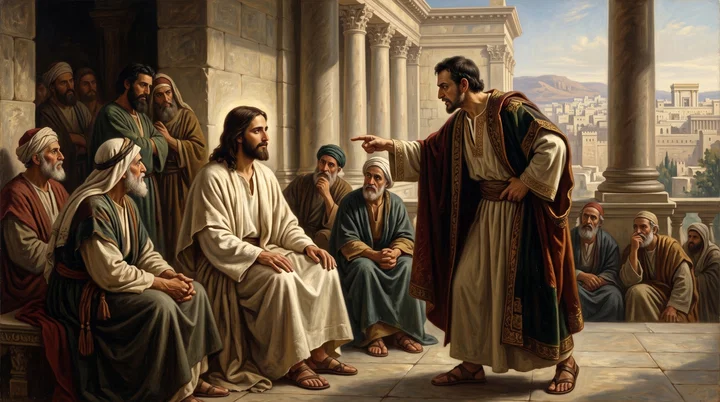
Then one of them, which was a lawyer, asked him a question, tempting him, and saying,
Translations
American King James Version, King James Version, KJV Cambridge Paragraph Bible
Then one of them, which was a lawyer, asked him a question, tempting him, and saying,
Then one of them who was a lawyer, asked him a question, tempting him, and saying,
And one of them, a lawyer, asked him a question, tempting him,
And one of them, a lawyer, asked him a question, trying him:
and one of them, a lawyer, did question, tempting him, and saying,
And one of them, a lawyer, demanded, tempting him, and saying,
and one from among them, a lawyer, proposed a question, putting him to the test:
Berean Standard Bible, Majority Standard Bible
One of them, an expert in the law, tested Him with a question:
One of them, a lawyer, asked him a question, testing him.
And one of them, a teacher of the law, put a question to him, testing him, and saying,
And one of them, which was an expounder of the Lawe, asked him a question, tempting him, and saying,
Douay-Rheims (Challoner revision)
And one of them, a doctor of the law, asking him, tempting him:
Pictures
Cross-references
- Deuteronomy 6:5
And thou shalt love the LORD thy God with all thine heart, and with all thy soul, and with all thy might.
Moses commands love for God that Jesus names as the first great commandment.
- Leviticus 19:18
Thou shalt not avenge, nor bear any grudge against the children of thy people, but thou shalt love thy neighbour as thyself: I am the LORD.
Gives the command to love one’s neighbor that Jesus names second.
- James 2:8
If ye fulfil the royal law according to the scripture, Thou shalt love thy neighbour as thyself, ye do well:
Calls the command to love one’s neighbor the royal law.
- Romans 13:10
Love worketh no ill to his neighbour: therefore love is the fulfilling of the law.
Love of neighbor fulfills the law.
- Luke 10:25-28
And, behold, a certain lawyer stood up, and tempted him, saying, Master, what shall I do to inherit eternal life?
A lawyer asks what brings eternal life, and Jesus affirms love of God and neighbor.
- Matthew 5:17-18
Think not that I am come to destroy the law, or the prophets: I am not come to destroy, but to fulfil.
Jesus says he came to fulfill, not abolish, the law, affirming its enduring authority.
- Mark 12:28-31
And one of the scribes came, and having heard them reasoning together, and perceiving that he had answered them well, asked him, Which is the first commandment of all?
Jesus answers a law expert’s question about the greatest commandments.
- Romans 13:9
For this, Thou shalt not commit adultery, Thou shalt not kill, Thou shalt not steal, Thou shalt not bear false witness, Thou shalt not covet; and if there be any other commandment, it is briefly comprehended in this saying, namely, Thou shalt love thy neighbour as thyself.
Love of neighbor summarizes the commandments and duties in the law.
- Matthew 7:12
Therefore all things whatsoever ye would that men should do to you, do ye even so to them: for this is the law and the prophets.
The Golden Rule sums up the law’s duty toward others.
- Exodus 20:1-17
And God spake all these words, saying,
The two commands of love summarize the commandments given at Sinai.
- Matthew 19:18-19
He saith unto him, Which? Jesus said, Thou shalt do no murder, Thou shalt not commit adultery, Thou shalt not steal, Thou shalt not bear false witness,
Jesus cites neighbor-focused commandments that the passage places under the second great commandment.
- Matthew 22:40
On these two commandments hang all the law and the prophets.
All the law and prophets hang on the two commandments.
- Matthew 22:15-22
Then went the Pharisees, and took counsel how they might entangle him in his talk.
Both accounts describe a trap set to test Jesus.
- Luke 20:20-47
And they watched him, and sent forth spies, which should feign themselves just men, that they might take hold of his words, that so they might deliver him unto the power and authority of the governor.
Cited as a parallel account for the same chapter section.
- Mark 12:32-33
And the scribe said unto him, Well, Master, thou hast said the truth: for there is one God; and there is none other but he:
A scribe recognizes the importance of loving God and one’s neighbor.
- Galatians 5:14
For all the law is fulfilled in one word, even in this; Thou shalt love thy neighbour as thyself.
Love fulfills the law.
- Matthew 22:42
Saying, What think ye of Christ? whose son is he? They say unto him, The Son of David.
given as central question of the encounter
- John 15:10-12
If ye keep my commandments, ye shall abide in my love; even as I have kept my Father’s commandments, and abide in his love.
Keeping Christ’s commandments shows love for God and one another.
Commentary
Each commentary is drawn from primary sources: the writings of Ellen G. White and Adventist pioneers and periodicals. Each commentary is separate. Its own words are not a quotation; follow the references to read the source passages.
Ellen G. White
5 sources
The question was put by a lawyer connected with the Pharisees, who asked in order to test and entrap Jesus as part of a series of hostile, deceptive questions pressed by the Pharisees, Herodians, and Sadducees.DA 601.1–602.5Ms 71, 1897, par. 27 Such hostile questions were met with plain and intelligent answers that gave precious light to the listening crowd and sowed seeds of truth among them.Ms 71, 1897, par. 27 The lawyer asked which is the great commandment in the law, and the answer given was that love to God with all heart, soul, and mind is the first and great commandment, that love to neighbor as self is the second like unto it, and that on these two commandments hang all the law and the prophets.Ms 39, 1886, par. 4Ms 79, 1896, par. 10–123MR 66.2–67.2
These two loves sum up obedience and carry the binding force of the whole Decalogue and of all the moral precepts in the prophets, with love to God covering duty to God and love to man covering duty to fellow man, so that they sum up and require the keeping of the Ten Commandments.Ms 39, 1886, par. 4Ms 79, 1896, par. 10–123MR 66.2–67.2 It is impossible to love God with all the heart while breaking the fourth commandment, which stands in the center of the decalogue.Ms 39, 1886, par. 43MR 66.2–67.2 The answer proves that the moral code of the Old Testament remains in full force in the New Testament, so that if these two commandments are brought into the gospel, all that hangs upon them is brought in as well.Ms 79, 1896, par. 10–12
The answer demands doing and not mere believing.Ms 79, 1896, par. 10–12 The obedience so required fits a person for eternal life.Ms 39, 1886, par. 4 The verse calls for being a family of obedient children with filial rather than slavish fear of God, with reward promised to the obedient and punishment to the disobedient.Ms 39, 1886, par. 43MR 66.2–67.2
To decree that God's law is unworthy to be kept makes a person an enemy of the Lord.Ms 39, 1886, par. 43MR 66.2–67.2 To claim to love God while not obeying Him shows that love to God is not perfected.Ms 39, 1886, par. 43MR 66.2–67.2 Probation is given to test obedience, and God will not compel obedience, but when duty is seen and pointed out it must be done by walking in the light in harmony with His requirements.Ms 39, 1886, par. 43MR 66.2–67.2
Sources
Pioneers and periodicals
73 sources
The verse records a lawyer versed in the Scriptures questioning Jesus to tempt and entangle Him after He had silenced the Sadducees.ST Mar 10, 1890ST Jun 6, 1900ST Oct 25, 1899ST Sep 3, 1912ST Apr 8, 1875 The question asks which is the great commandment in the moral law already given, the Ten Commandments written by God, not for a new law to replace them.ST Jun 7, 1877RH Jul 22, 1852ST Mar 10, 1890RH Mar 23, 1852RH Aug 15, 1854 Jesus answers that supreme love to God with all heart, soul and mind is the first and great commandment and love to neighbor as self is the second like it, quoting Deuteronomy 6:5 and Leviticus 19:18 already ancient in Moses' law.ST Dec 8, 1881ST Jun 6, 1900RH Oct 10, 1854RH Dec 1850RH Apr 1, 1875 On these two hang all the law and the prophets, summing up and founding all morality rather than displacing or repealing the law.ST Jun 7, 1877RH Jul 22, 1852ST Oct 17, 1900ST Aug 27, 1912RH Oct 26, 1911 All the law so affirmed includes the fourth commandment, so love to God keeps the Sabbath and the verse gives no proof that it is abolished.ST Jun 7, 1877ST Dec 8, 1881RH Oct 26, 1911RH Jan 1851RH May 6, 1852
Questioner and Setting
The questioner was a lawyer, that is an expounder of the law well versed in the Old Testament Scriptures and the books of Moses, a Pharisee among the Pharisees who spoke for them in putting the question to Jesus.ST Mar 10, 1890ST Jun 6, 1900ST Apr 8, 1875ST Oct 25, 1899RH Mar 10, 1868 He asked to tempt and test Him, to entangle and confound and ensnare Him, not to gain instruction.ST Oct 25, 1899ST Mar 27, 1901ST Oct 25, 1899RH Dec 23, 1873ST Apr 8, 1875 His hope was to trap Jesus in His words into something that could be used against Him as sedition or heresy.ST Sep 3, 1912ST Mar 27, 1901RH Dec 23, 1873ST Apr 8, 1875
The encounter came after Jesus had silenced the Sadducees, as one of the questions put when critics tried to make Him stumble.ST Oct 25, 1899ST Sep 3, 1912ST Apr 8, 1875ST Oct 25, 1899 It belonged to His final day of teaching in the temple, when He answered questions put to Him and denounced hypocrisy, and it illustrated His disputing every inch of ground He gained.ST Sep 3, 1912RH Jan 29, 1914 The surrounding dispute involved those who denied the resurrection, for the Sadducees taught that a person died and remained dead forever, while Christ taught that the dead would be raised.RH Dec 12, 1854RH Dec 12, 1854
Jesus answered despite the hostile motive, with patient forbearance, in His usual brief and comprehensive way.ST Jun 7, 1877RH Dec 23, 1873 He used the Old Testament to answer opponents, being always ready and able to answer those who tried to trap Him, and so He silenced the Pharisees.ST Mar 27, 1901ST Feb 15, 1883 When He spoke there was no dispute over which day is the Sabbath, for keeping the seventh day was accepted as part of duty to God.ST Jun 7, 1877
Meaning of the Question
The question concerns the law already given and then in force, asking which is the great commandment in it, not what new law Jesus gives or what new commandment might replace the Ten Commandments.ST Mar 10, 1890RH Mar 23, 1852RH Aug 15, 1854ST Aug 20, 1912RH Jul 20, 1916 It is framed as which commandment is greatest, as part of inquiry into God's law and commandments.ST Mar 10, 1890ST Aug 20, 1912RH Jul 20, 1916
The law in view is God's original moral law commonly called the Ten Commandments, written by God Himself and given to Moses.ST Jun 7, 1877RH Jul 22, 1852RH Jul 20, 1916 Commandments and law are synonymous here, and the moral law is meant, not ceremonial ordinances or civil rules such as retaliation.ST Jun 7, 1877RH Jul 22, 1852RH Dec 1850
The asking is not merely which commandment is greatest, but what kind, sort, or character the great commandment has, what its demands are, and how it bears on human responsibilities.ST Apr 8, 1875RH Dec 23, 1873ST Apr 8, 1875ST Apr 8, 1875RH Dec 23, 1873 That inquiry into character and demands leads to the summary of the law in love to God and love to neighbor.ST Apr 8, 1875RH Dec 23, 1873ST Apr 8, 1875
The hope behind it was that Jesus would declare belief in Himself the foremost and most binding religious requirement, into which charge of sedition or heresy He could then be trapped, but He did not fall into the trap.ST Mar 23, 1888 Nor does the exchange claim the fourth commandment as the greatest precept; Christ kept the commandments and taught their keeping without making the Sabbath the greatest commandment.RH Jun 24, 1852
Two Great Commandments
Jesus answered that supreme love for God with all the heart and soul and mind is the first and great and most comprehensive commandment, meaning love with all the affections and life and intellect and all the powers of being.ST Jun 6, 1900RH Dec 1850RH Apr 1, 1875RH Jul 8, 1852ST Jan 5, 1882 Love for one's neighbor as oneself is the second like unto it, joined with the first as the great commandments.RH Dec 1850RH Apr 1, 1875RH Jul 8, 1852ST Jan 5, 1882 He introduced no new moral principle in so answering, but quoted the first from Deuteronomy 6:5 and the second from Leviticus 19:18.ST Dec 8, 1881RH Oct 10, 1854ST Mar 18, 1875RH Oct 27, 1868RH Apr 1, 1875 Both came from the law of Moses and were already ancient when He repeated them, stated in the very words of the law.ST Dec 8, 1881RH Oct 10, 1854RH Oct 27, 1868ST Jan 5, 1882
The requirement of wholehearted love to God applies equally to all created beings, since God does not change and gives the same law throughout the universe.ST Jun 6, 1900 The two commands belong to all ages, given to guard two principles reaching back in the past and forward into the eternal future parallel with God's moral government of created intelligences.RH Apr 1, 1875 On these two hang all the law and the prophets, meaning all morality and the whole Old Testament religion are summed up and embraced and added up and founded on them.ST Oct 17, 1900ST Aug 27, 1912RH Jul 8, 1852ST Jan 5, 1882 They are the one governing principle and basis and foundation and sum total, in two phases, on which the law and the prophets rest and depend.ST Oct 17, 1900ST Aug 27, 1912RH Oct 26, 1911RH Sep 2, 1873
The law is the expression of God's love and reflects His nature and righteousness and life, with perfection and holiness embodied in His unchangeable and eternal law of love.ST Oct 17, 1900ST Oct 1, 1896 Love includes both justice and mercy and expresses every attribute of God, and is the same love enjoined through Moses.ST Apr 20, 1904ST Oct 1, 1896 Love for God sums up the commands defining duty to God, and love for neighbor sums up those defining duty to other people.ST Dec 8, 1881RH Mar 23, 1852ST Aug 27, 1885RH Aug 15, 1854 The first four commandments express love to God, with love for God as the heart of duties to God, and the remaining six express love to one's neighbor, with love for neighbor as the heart of the rest, so the neighbor-love command is not a law standing alone.ST Dec 8, 1881RH Mar 23, 1852ST Aug 27, 1885RH Jul 8, 1852
Love presents the moral law positively, while the commandments at Sinai state it negatively.ST Apr 8, 1875 Loving God wholly fulfills the first four and loving neighbor as self fulfills the latter six, so divine love leads to obedience.ST Apr 3, 1928ST Apr 8, 1875 Breaking God's law violates love, and he who keeps both fills the law full, with love-filled obedience not burdensome.ST Apr 3, 1928
Summary Not Abolition
The lawyer's question and Jesus' answer give no authority to set aside God's original law or to keep only such portions as suit a person, but form an impartial synopsis, endorsement, concentration and summary of the law commonly called the Ten Commandments.ST Jun 7, 1877RH Jul 22, 1852RH Oct 10, 1854ST Aug 27, 1885 The entire principles of the moral law are contained in the two commands to love God and to love one's neighbor, which encompass the whole law rather than displacing, repealing, replacing or changing it.ST Jun 7, 1877RH Jul 22, 1852RH Oct 10, 1854RH Aug 15, 1854 Both commands come from the law of Moses and were already ancient when repeated, love for God gathering the first four commandments and love for neighbor gathering the last six, so all the commandments remain important and the fourth remains part of the law.RH Oct 10, 1854ST Aug 27, 1885RH Aug 15, 1854 The law in view is God's moral law, not ceremonial ordinances or civil rules such as retaliation, and the question concerns the law then in force, not a request for a new commandment to replace the Ten Commandments.RH Jul 22, 1852ST Mar 10, 1890RH Aug 15, 1854
Jesus does not evade the question with a new law superseding the decalogue, does not reduce the ten to two by repealing the old law and enacting another in its place, and does not quote the commandments as newly introduced by Himself but on the authority of the original law.ST Mar 10, 1890ST Jun 7, 1877 His reply quotes Deuteronomy 6:5 as the first and great and most comprehensive commandment, meaning love to God with all the heart, soul and mind, with all affections, life and intellect and all powers of being, and quotes Leviticus 19:18 as the second like unto it.ST Mar 10, 1890 On these two hang all the law and the prophets, meaning all morality is summed up, embraced and founded on them, and the verse gives no proof that the Sabbath or the fourth commandment is no longer binding but emphasizes the law of God and the principle on which it is based.ST Mar 10, 1890ST Jun 7, 1877
The precepts of the law grow out of and hang on these two enduring principles, which have always been required and apply in every age, and the Ten Commandments summarize all the principles of God's law.RH Mar 23, 1852ST Mar 18, 1875RH Sep 2, 1873RH Feb 17, 1852 The two great principles and the ten duties remain inseparably connected, with love as the adding up and sum total of the ten, so that neither table can be kept without the other, he who keeps both fills the law full, and each commandment stands or all fall together.RH Feb 17, 1852RH Feb 17, 1852RH Dec 31, 1901 Love for God sums up the commands defining duty to God and love for neighbor sums up those defining duty to other people, the whole moral law and the prophets depend on these two, none has been abolished or changed, and these principles endure as long as God's moral government.RH Mar 23, 1852ST Mar 18, 1875RH Sep 2, 1873RH Feb 17, 1852 The two commandments and the precepts they summarize remain in force under the Christian dispensation through changes of dispensation, for they are neither Jewish nor Christian in particular but belong to all ages, guarding principles reaching back in the past and forward into the eternal future parallel with God's moral government.RH Jul 22, 1852RH Apr 1, 1875RH Apr 30, 1872ST Jun 7, 1877 On these two the ten precepts as well as the prophets have hung since the fall and ever will hang until the close of human probation, so not even one has fallen off, the principles are as changeless as the throne of heaven and endure parallel with the eternity of the divine existence, the ten precepts growing out of them cannot be abolished, changed or amended, and no part of the law can be abrogated while hinged to what all professed Christians admit is binding.RH Apr 1, 1875RH Apr 30, 1872ST Jun 7, 1877
The teaching cannot prove that the moral precepts were re-enacted into a new law after the cross, for it was given before the crucifixion, and if the law and prophets were abolished at the cross, Christ's words that the two great commandments support them would make the whole law, including the Sabbath, live again afterward.RH Dec 9, 1852 The great commandments are distinguished from the least commandments discussed in Matthew 5:17-19, they do not mean the whole law has ceased to be binding, and Jesus' teaching does not contradict His purpose not to destroy the law.ST Jun 7, 1877 The law remains in force and was honored at the cross, where Jesus gave His life to uphold it, and people are saved from its penalty and given another opportunity for eternal life through obedience to God's commandments and faith in Jesus.ST Jun 7, 1877 The teaching does not abolish God's law, the law remains binding under the gospel, and obedience is not the same as seeking justification by works of Moses' law.RH Aug 19, 1852RH Mar 26, 1872 Present obedience cannot atone for past transgression, since a man cannot do more than his whole duty comprehended in loving God with all the heart and loving neighbor as self, so fallen Jew and Gentile alike can be justified and saved only by faith in the Lord Jesus Christ.RH Aug 19, 1852RH Mar 26, 1872
Sabbath Remains Binding
Since all the law hangs on love for God and love for people, the fourth commandment hangs there with the other nine and should be kept, and all the law includes the fourth commandment so the Sabbath is not excluded from the commandments affirmed.RH Oct 26, 1911RH Jan 1851RH May 6, 1852 The whole Ten Commandments are included in this teaching as the foundation of the law and the prophets and as the way to eternal life, which is why the Sabbath remains binding.RH Jan 1851 Its authority does not depend on being quoted separately, since Jesus did not quote it separately here.RH Jan 1851
Complete love for God includes keeping His commandments and honoring His holy day, and anyone who loves God with all heart and soul and mind will not neglect the seventh day, which was accepted without dispute as part of duty to God.ST Jun 7, 1877ST Dec 8, 1881 Setting aside the Sabbath would break the connection between the law and love for God, for the first four commandments define duties to God including honoring His holy day while the last six define duties to other people.ST Dec 8, 1881 Desecrating the Sabbath dishonors God, while love for God includes keeping the Sabbath and love for neighbor rules out harming or stealing from that neighbor.ST Dec 8, 1881RH Feb 25, 1873 The answer gives the substance of the whole law in brief and comprehensive form in what are called two commandments.ST Jun 7, 1877
The exchange gives no proof that the Sabbath or the fourth commandment is no longer binding, but emphasizes the law of God and shows the principle on which it is based.ST Mar 10, 1890 That Christ did not mention the Sabbath in this answer does not show that the fourth commandment was abolished or excluded from the law, which was in force when He answered and continues to rest on supreme love to God and love to neighbor as self.ST Mar 10, 1890RH Oct 21, 1851 The words bear on the continued existence of the Ten Commandments, yet they say nothing directly about the Sabbath or the fourth commandment, so applying them to the Sabbath requires inference.RH Jul 22, 1852 The passage does not claim that Christ directly quotes the fourth commandment here, but treats His teaching as testimony to the perpetuity and immutability of the royal law.RH Jul 22, 1852RH Feb 17, 1852 Even so, the Sabbath is binding though Jesus does not quote it separately, and the fourth commandment as part of the royal law does not depend for its authority on being quoted or separately enforced by Christ or the apostles.RH Jan 1851RH Aug 5, 1852 The pronouns thy and thou in the love commands do not limit their duty to Israel, and the Sabbath commandment like the other precepts applies to all people.RH May 27, 1852
Permanence and Christian Life
The lawyer's question and Christ's answer testify to the perpetuity, immutability and enduring authority of God's royal, moral law.RH Feb 17, 1852RH Aug 5, 1852RH Feb 17, 1852 Christ upholds the law, ratifies it, restores its proper place as spiritual and glorious, and confirms it as still binding and upheld by His teaching rather than destroyed.ST Jan 13, 1881RH Mar 19, 1857 Its commandments are to be kept and taught, for He did not come to destroy it.RH Feb 17, 1852
God's law marks out the whole duty of humanity both toward God and toward other people, and is spiritual, holy, just, good and perfect.ST Aug 19, 1886RH Aug 4, 1910 It is founded on love to God and humanity, embodies that love, has love for its basis, and is fulfilled by love to God and other people.ST Aug 19, 1886ST Mar 3, 1887RH Jul 31, 1900 Obedience to that law is a condition of entering eternal life, with promised reward.RH Oct 27, 1868ST Feb 27, 1879
The Ten Commandments summarized by love are the epitome of moral law, God's standard of right and test by which sin is shown, and their character is unchangeable.RH Oct 27, 1868 Christ introduces no new precept but sums up the commandments in wholehearted love for God and love for neighbor as self, principles already stated in Moses' writings in Deuteronomy 6:5 and Leviticus 19:18.RH Oct 27, 1868RH Apr 1, 1875 These two commandments belong to all ages, guarding two principles reaching back in the past and forward into the eternal future parallel with God's moral government, on which the ten precepts as well as the prophets have hung since the fall and ever will hang until the close of human probation, so that not even one has fallen off.RH Apr 1, 1875 The principles are as changeless as the throne of heaven and endure parallel with the eternity of the divine existence, so the ten precepts growing out of them cannot be abolished, changed or amended, and ministers must teach all nations even unto the end of the Christian age that supreme love to God and love to man must be highly exalted.RH Apr 1, 1875
The commandments remain a guide to eternal life and cannot be abolished while heaven and earth remain.RH Dec 1850 They remain in force, and abolishing them would also remove the basis of the prophets and the rule by which sin is recognized.RH Dec 1850 People are judged by this moral law, including the duty to love one's neighbor, which shows it includes that duty as part of the royal law.RH Feb 1851
The passage proves the Old Testament did not teach narrow, bigoted, national or geographical morality allowing hatred of enemies, but genuine world-wide godliness, charity and benevolence, stated in the very words of the law as the sum and substance, basis and foundation of the whole Old Testament religion and the most sublime sanction of world-wide benevolence.ST Jan 5, 1882 Christ enjoins love as the sum of God's law, the same love enjoined through Moses, proving God's requirements are and always have been the same, nothing less than the perfection and holiness God Himself possesses, embodied in His unchangeable and eternal law of love.ST Oct 1, 1896 The moral law of the Old Testament is the moral law of the New Testament.ST Jan 5, 1882
Christ's explanation agrees with John's teaching that love for God is shown by keeping His commandments.RH Oct 27, 1868 The two great commandments are the principles from which the ten duties grow, and the duties remain inseparably connected to them, with the neighbor-love command not a law standing alone.RH Feb 17, 1852RH Jul 8, 1852 James cites the neighbor-love principle while discussing partiality, but this does not make the duty to God or love for God obsolete.RH Feb 17, 1852
Without love to God no form, however correct or sincere, can avail anything, for all law hangs on love.RH Oct 26, 1911 Divine love leads to obedience and breaking God's law violates love, so obedience is not separate from love and love-filled obedience is not burdensome.ST Apr 3, 1928 Honoring the law does not slight Christ, because He magnifies it.ST Jan 13, 1881 Christianity provides pardon through the atonement and sanctification by the Spirit, restoring love in the heart and enabling obedience to the moral law, with God's love awakening responsive love in people, and love presenting the moral law positively while the commandments at Sinai state it negatively.ST Apr 8, 1875
Love for God and love for neighbor set the duties that govern personal liberty, so freedom toward God must not violate the equal rights of others.ST Sep 21, 1915 Moses and Christ share the purpose of leading people out of bondage, Moses from Egyptian servitude and Christ from the bondage and opposition of the world into the rest that remains for God's people, while the law remains binding under the gospel and obedience is not seeking justification by works of Moses' law.RH Aug 19, 1852 His example in answering those who tried to trap Him teaches believers to be ready always to give an answer for their hope with meekness and fear, with the deciding question being what men think of Christ, and proves that disputing for truth and defending God's law is consistent with a courteous and Christian manner.ST Mar 27, 1901RH Dec 6, 1853 God's law is a law of love including love for God and love for one's neighbor, and love is the sum of God's law on which the commandments hang.ST Oct 1, 1896ST Sep 9, 1930
Sources