Matthew 25:16
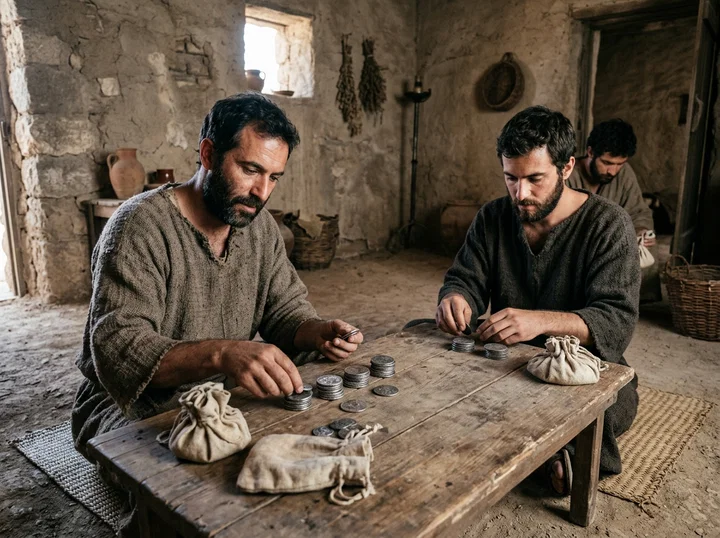
Then he that had received the five talents went and traded with the same, and made them other five talents.
Translations
American King James Version, King James Version, KJV Cambridge Paragraph Bible
Then he that had received the five talents went and traded with the same, and made them other five talents.
Then he that had received the five talents, went and traded with the same, and gained other five talents.
Revised Version, American Standard Version
Straightway he that received the five talents went and traded with them, and made other five talents.
'And he who did receive the five talents, having gone, wrought with them, and made other five talents;
And he that had received the five talents went and trafficked with them, and made five other talents.
Straightway, he who, the five talents, had received, went and traded with them, and gained other five:
The servant who had received the five talents went at once and put them to work and gained five more.
The servant who had received the five talents went at once and put them to work and made five more talents.
Immediately he who received the five talents went and traded with them, and made another five talents.
Straight away he who had been given the five talents went and did trade with them, and made five more.
Then he that had receiued the fiue talents, went and occupied with them, and gained other fiue talents.
Douay-Rheims (Challoner revision)
And he that had received the five talents, went his way, and traded with the same, and gained other five.
Pictures
Cross-references 20 of 36
- Matthew 25:21
His lord said unto him, Well done, thou good and faithful servant: thou hast been faithful over a few things, I will make thee ruler over many things: enter thou into the joy of thy lord.
The faithful servant is commended and welcomed into the Lord’s joy for using what was entrusted to him.
- Luke 19:12-17
He said therefore, A certain nobleman went into a far country to receive for himself a kingdom, and to return.
Both parables portray servants using entrusted resources and being commended for their gains.
- Matthew 25:26-30
His lord answered and said unto him, Thou wicked and slothful servant, thou knewest that I reap where I sowed not, and gather where I have not strawed:
The unfaithful servant is condemned for burying his entrusted talent instead of using it to gain an increase.
- Luke 12:48
But he that knew not, and did commit things worthy of stripes, shall be beaten with few stripes. For unto whomsoever much is given, of him shall be much required: and to whom men have committed much, of him they will ask the more.
More is required of those entrusted with more.
- 1 Peter 4:10
As every man hath received the gift, even so minister the same one to another, as good stewards of the manifold grace of God.
Both teach that entrusted gifts are to be used faithfully in service.
- Revelation 22:12
And, behold, I come quickly; and my reward is with me, to give every man according as his work shall be.
Christ rewards each person at his coming according to their work.
- Luke 16:10-12
He that is faithful in that which is least is faithful also in much: and he that is unjust in the least is unjust also in much.
Faithfulness in small trusts prepares a person for greater ones and true riches.
- Matthew 25:30
And cast ye the unprofitable servant into outer darkness: there shall be weeping and gnashing of teeth.
The unfaithful servant’s failure to use his talent leads to judgment.
- Matthew 25:23
His lord said unto him, Well done, good and faithful servant; thou hast been faithful over a few things, I will make thee ruler over many things: enter thou into the joy of thy lord.
The doubled talents lead to the Master’s commendation and the servant’s welcome into His joy.
- Romans 14:12
So then every one of us shall give account of himself to God.
Each person must give an account to God for their stewardship.
- Luke 19:20
And another came, saying, Lord, behold, here is thy pound, which I have kept laid up in a napkin:
The servant hides entrusted money in a napkin instead of trading it.
- Matthew 25:24-25
Then he which had received the one talent came and said, Lord, I knew thee that thou art an hard man, reaping where thou hast not sown, and gathering where thou hast not strawed:
The fearful servant hides his talent, contrasting with the faithful servant’s trading.
- 2 Corinthians 5:10
For we must all appear before the judgment seat of Christ; that every one may receive the things done in his body, according to that he hath done, whether it be good or bad.
The use of entrusted talents is answered for before Christ, who judges deeds done in the body.
- Matthew 25:28-29
Take therefore the talent from him, and give it unto him which hath ten talents.
The unused talent is taken from the unprofitable servant and given to the one who increased his.
- 1 Corinthians 4:2
Moreover it is required in stewards, that a man be found faithful.
Both texts require faithful stewardship of what is entrusted.
- Mark 13:34
For the Son of man is as a man taking a far journey, who left his house, and gave authority to his servants, and to every man his work, and commanded the porter to watch.
Each servant receives work from the master while he is away.
- Matthew 25:26
His lord answered and said unto him, Thou wicked and slothful servant, thou knewest that I reap where I sowed not, and gather where I have not strawed:
The servant who failed to use his entrusted talent is condemned as wicked and slothful.
- Matthew 25:29
For unto every one that hath shall be given, and he shall have abundance: but from him that hath not shall be taken away even that which he hath.
Faithful use of entrusted talents brings increase, while neglect leads to loss.
- Luke 16:5
So he called every one of his lord’s debtors unto him, and said unto the first, How much owest thou unto my lord?
Both depict a steward managing another’s goods and accounting for what is owed.
- Luke 19:16
Then came the first, saying, Lord, thy pound hath gained ten pounds.
Both servants increase what their master entrusted to them.
Commentary part 1 of 6
Each commentary is drawn from primary sources: the writings of Ellen G. White and Adventist pioneers and periodicals. Each commentary is separate. Its own words are not a quotation; follow the references to read the source passages.
Ellen G. White
381 sources
The servant entrusted with five talents went at once and put them to work in trading, and gained five more instead of leaving them idle.19MR 389.2–4Ms 184, 1907, par. 1–5Ms 25, 1908, par. 16
The talents are the Lord's own goods lent as a sacred trust and not owned outright, including money and property and every natural, acquired and spiritual gift, ability, opportunity, privilege and light to be invested for His glory.19MR 389.2–4RH Dec 17, 1901Ms 26, 1899, par. 4–8ST Nov 20, 1884ST Oct 22, 1894
God distributes to every person according to individual ability, and He expects returns only according to what each has received, honoring faithfulness in great or small trusts alike.ST Oct 23, 1901Ms 26, 1899, par. 4–8ST Jul 2, 1902Lt 55, 1895, par. 35–41
Trading means putting what is entrusted to active, unselfish, faithful use for His glory and the salvation of souls, and gifts improve and multiply by diligent use while leaving them unused weakens and loses them.ST Apr 22, 1875Ms 81, 1899, par. 1–7Ms 114, 1905, par. 6–13Ms 184, 1907, par. 17–18COL 329.1
After a long time the Master reckons with His servants expecting His own with increase, and faithful improvement brings His commendation as good and faithful, greater trust, entrance into His joy and eternal life.Lt 11, 1865, par. 2–3RH Dec 17, 1901STB 685.1–5ST Nov 20, 1884ST Oct 22, 1894
Setting and Context
The verse belongs to teaching given on the Mount of Olives to the disciples about the second advent to the world.COL 325.1–2 After specifying the signs showing when the coming is near, the disciples are bidden to watch and be ready because they know neither the day nor the hour wherein the Son of man cometh.COL 325.1–2 Watching for the coming is shown to mean spending the time not in idle waiting but in diligent working.COL 325.1–2
The verse belongs to the parable in Matthew 25:14-23, the last of the many parables in the public teachings to the disciples.19MR 385.2–386.1Lt 108, 1896, par. 2–9 It was spoken early in the morning after crossing the mount.19MR 385.2–386.1Lt 108, 1896, par. 2–9 It was given as a warning in regard to the second appearing in the clouds of heaven.19MR 385.2–386.1Lt 108, 1896, par. 2–9
The waiting and slumber followed by the bridegroom's coming are connected with the prophetic and ceremonial arguments that prompted the 1844 midnight cry.GC 400.1–401.2 The parable of the talents follows the parable of the ten virgins.Ms 28, 1888, par. 14 It teaches that Christians must keep working actively and make no relaxation of effort in seeking eternal life, while watching vigilantly and waiting in a sanctified way.Ms 28, 1888, par. 14
The instruction in Matthew 25:14-46 is to be studied and compared with the life record.Lt 214, 1906, par. 13RH Aug 2, 1906 Every man is required to put away boasting, for self-sufficiency is fearfully dangerous.Lt 214, 1906, par. 13 Self-sufficiency and boastfulness make the words of Christ of no effect instead of putting entrusted gifts to active use.Lt 214, 1906, par. 13RH Aug 2, 1906
The parable represents the kingdom of heaven and teaches that God-entrusted gifts and abilities must be used accurately.Ms 92a, 1898, par. 20 The lesson applies to each person individually.Ms 92a, 1898, par. 20 The Lord expects His followers to use their abilities to enlighten and bless those around them, and those who undertake this work can rely on divine aid.Ms 151, 1897, par. 24
God gives people talents according to their abilities and expects them to put those gifts to use and improve them.Ms 92, 1902, par. 19–31Ms 66, 1899, par. 13Lt 90, 1899, par. 11–13 Different amounts are given to different ones, according to inherited and cultivated abilities, and a corresponding return with wise use is expected.Ms 66, 1899, par. 13Ms 40a, 1904, par. 3Lt 90, 1899, par. 11–13 Trading means putting the talents to exercise so they are improved, and as they are improved more is given to trade.Ms 66, 1899, par. 13 The servant's trading and doubling of five talents shows that what God has entrusted can be increased through active, faithful effort, gaining an equal amount for faithful service in His service and for the good of others.Ms 92, 1902, par. 19–31Ms 40a, 1904, par. 3 Faithful service increases what a person can offer, so no gift however small is to be treated as unimportant, and this applies to spiritual service as well as to other work, including developing skill and wisdom in preparing healthful foods.Ms 92, 1902, par. 19–31Lt 90, 1899, par. 11–13 Each person should employ the abilities entrusted in the work suited to them, knowing that stewardship will be examined at the judgment.Lt 90, 1899, par. 11–13
The parable of the talents was discussed as a subject at the camp-meeting at Richland, Kansas.ST Nov 14, 1878 It shows the servant actively using what was entrusted to him and increasing it.ST Nov 14, 1878 Inaction in God's cause destroys confidence, underscoring the need for active service.ST Nov 14, 1878
Jesus has entrusted goods and responsibilities to His church through successive generations, and these responsibilities have grown with the light given.Lt 12, 1887, par. 20 Those entrusted with the Master's goods are to put them to work faithfully.Lt 12, 1887, par. 205MR 358.3 The gifts given to the apostles have passed to workers in later ages, who are to improve what they have been given.5MR 358.3 Even the humblest service is consecrated when it is done to carry out the Master's will and promote His glory.Lt 12, 1887, par. 20
Faithful Servant's Action
The one who received five talents went at once and traded with them and made five talents more, actively putting what was entrusted to work to double it instead of leaving it idle or hoarded.19MR 389.2–4Ms 184, 1907, par. 1–5Ms 25, 1908, par. 16Ms 81, 1899, par. 1–7Ms 19, 1899, par. 5–7 His faithful use brought a satisfying result and followed the plan of addition, adding grace to grace, for which the master later commended and rewarded him.Ms 184, 1907, par. 1–5Ms 81, 1899, par. 1–7Ms 19, 1899, par. 5–7 He diligently put them to use according to his ability and according to the Word rather than for selfish ends, and gifts improve and multiply when so used, with each person to do the utmost with what has been received.Ms 25, 1908, par. 16Ms 19, 1899, par. 5–7ST Oct 23, 1901 The trusts so employed are more than earthly goods and employment, including spiritual gifts, means, abilities and opportunities to be invested in service for glory rather than buried in worldly enterprises, and even humble service becomes sacred when employed in doing the bidding.19MR 389.2–4Ms 25, 1908, par. 16ST Oct 23, 1901 The present is the time to use them especially for the salvation of souls, for church membership alone does not secure entrance into heaven and each must examine faithfulness in using what has been entrusted.Ms 25, 1908, par. 16ST Oct 23, 1901
What is entrusted must be actively put to work, traded, improved, developed and increased and returned with increase rather than left idle, hidden, buried, neglected, wasted, tied up or spent in self-pleasing, with each steward accountable for faithful use and increase.Ms 9, 1891, par. 1–3Ms 19, 1899, par. 5–7Ms 34, 1901, par. 12–13Lt 59, 1892, par. 4–7Lt 55, 1895, par. 35–41 Every ability and power is to be put to work for the best possible use, productively and continually developed in usefulness to bless others and not misapplied or left without benefit.Ms 9, 1891, par. 1–3Ms 34, 1901, par. 12–13 Every ability is held in trust and will be required with increase, and the one who hides it is slothful and unprofitable, whose complaint that the master is hard does not excuse failure.Lt 59, 1892, par. 4–7Lt 55, 1895, par. 35–41 Trading means faithfully putting gifts and resources to work according to ability, which can increase what was entrusted and develop character, and faithful use of even a small gift is valued.Lt 55, 1895, par. 35–41Ms 94, 1902, par. 23–24 Gifts and resources are to be put to wise use rather than buried, for those who bury will be replaced by workers who put them into circulation.Ms 34, 1901, par. 12–13Ms 94, 1902, par. 23–24
The servant put what was placed in his hands to work and gained an equal amount, illustrating active service producing returns and that talents increase by faithful service.ST Feb 5, 1880Ms 25a, 1895, par. 1516MR 262.13MR 69.1–3Ms 40a, 1904, par. 3 This improving is to continue through life, guided by sound experience and directed toward the good of others rather than sacrificing what is lasting for cherished errors.ST Feb 5, 1880Ms 40a, 1904, par. 3 Entrusted property and money are to be used for good to advance the cause and to bring tithes and offerings into the treasury as property grows, requiring daily consecration and gratitude lest they become a harmful temptation to possessor and others.Ms 25a, 1895, par. 1516MR 262.1 The talents include sacred truths, light, differing abilities and opportunities to be actively shared and faithfully used for others rather than kept unused, and faithfulness will be assessed when reckoning comes.3MR 69.1–3Ms 40a, 1904, par. 3Ms 151, 1897, par. 30 Servants who put abilities to work bear fruit while those who hide them are slothful and unfaithful, and those who rely on preaching but do little to make truth known need instruction and care so they will serve others.Ms 25a, 1895, par. 15Ms 151, 1897, par. 30
Guarding every talent strictly and trading to gain still others is required of all, for every child and youth and every young man and young woman is entrusted with talents as a measure of power.Ms 69, 1897, par. 36 All are called to make the most of them by placing a proper estimate on individual responsibility.Ms 69, 1897, par. 36 This means gathering every ray of divine light and letting it shine on the pathway of others, because no one lives to himself.Ms 69, 1897, par. 36
The servant put ability to work rather than living idly or pleasing self, requiring human effort joined with the Spirit's power, with all glory to God and no excuse of faith for idleness.ST Feb 24, 1898Ms 3, 1888, par. 5–6 God gives each person work and ability, and each is responsible for his own work to be faithfully improved through personal effort.ST Feb 24, 1898Ms 3, 1888, par. 5–6 As powers are used conduct influences those around, for God works in them to will and to act.ST Feb 24, 1898Ms 3, 1888, par. 5–6
Meaning of Talents
The talents are the Lord's own goods, property, capital and money, lent on trial as a loan and sacred stewardship never owned outright, still His even with increase, bought by Christ's blood and suffering, to be treated as His and returned with usury.RH Dec 17, 1901ST Oct 22, 1894ST Oct 22, 18942T 667.3–668.2 The servant puts the money out to usury and gains the like amount, and on reckoning gives back principal and interest, for God lends wisdom for use according to His purposes and will require His own again, scrutinizing every talent returned and dealing personally with each borrower accountable for time, abilities and possessions.RH Dec 17, 1901ST Nov 20, 1884ST Oct 22, 18942T 667.3–668.2 Trading is investing that capital for the salvation of fellow men, using riches to advance His cause and relieve the widow and fatherless instead of hoarding or spending as pleased, abusing them for pride, position, extravagance, vain show, ambition and profligate selfishness.ST Nov 20, 1884ST Oct 22, 1894ST Oct 22, 18942T 667.3–668.2
The servants are followers professing accepted service, bought to live for Him and not for themselves, for all people belong to God by creation and by redemption through His Son's blood, called to serve, and each will answer at judgment for how the claim was met.COL 325.3–326.2Lt 7, 1896, par. 1–4Ms 33, 1907, par. 3ST Jan 21, 18975T 277.1 Christ, about to leave earth for heaven, entrusts flesh and blood, nerve and muscle, mind and intellect and reasoning powers, special ability, worldly possessions, time, strength, means and every capacity of usefulness, not capriciously but as One who knows each person and gives to every man his work.Lt 96, 1906, par. 5Lt 7, 1896, par. 1–4Ms 33, 1907, par. 3ST Jan 21, 18975T 277.1 Day by day He tests whether men acknowledge Him as giver and prove worthy of eternal riches, and use of endowments decides destiny, with greater endowment requiring greater return and no boasting permitted.COL 325.3–326.2Lt 96, 1906, par. 5Ms 33, 1907, par. 3ST Jan 21, 18975T 277.1
The talents mean more than temporal employments, worldly goods and money and more than preaching ability; they include every natural, acquired, original and spiritual gift, ability, capability, opportunity, privilege, light, influence and grace to be invested to advance His glory with eternity in reckoning.19MR 389.2–4Ms 26, 1899, par. 4–8Lt 108, 1896, par. 13–15SG4 196.1COL 328.2–3 They are a loan for a sacred higher trust, not to be buried in worldly enterprises nor used merely to accumulate worldly goods, and even humblest service becomes a consecrated gift when exercised in doing the Master's bidding.19MR 389.2–4Ms 26, 1899, par. 4–8Lt 108, 1896, par. 13–151T 197.1COL 328.2–3 Each must faithfully employ his own gifts rather than leave them unused or transfer responsibility, returning in proportion to what he has and not what he lacks.19MR 389.2–4Ms 26, 1899, par. 4–8Lt 108, 1896, par. 13–151T 197.1COL 328.2–3
They include means, money, temporal possessions, property, houses, lands, wealth and influence entrusted to rich and poor alike, including ability to acquire wealth and to write and its income and royalties, to be used for His cause in spreading the warning message and winning souls rather than selfishly kept, tied in risky ventures, spent on self-gratification or invested in farms and buildings that cannot be taken to heaven.ST Apr 22, 1875Ms 114, 1905, par. 6–13Lt 305, 1904, par. 10–11Ms 156, 1904, par. 47–51ST Jul 23, 1894 Where truth lives in the heart the receiver aids with substance, influence and effort so other souls embrace truth and begin also to work for God, and each person brought to truth is a gain who can in turn help others, continually increasing the gain to return both trust and increase.Ms 114, 1905, par. 6–13Ms 156, 1904, par. 47–511T 197.1ST Jul 23, 1894SG4 196.1 Faithful constant use brings crowns, with reward added for everyone helped to salvation.ST Apr 22, 1875Ms 114, 1905, par. 6–131T 197.1ST Jul 23, 1894SG4 196.1
They include life itself, time, moments, health, strength, reason, intellect, mind, thought, speech, writing, sympathy, affection, conscience, skill, judgment, wisdom, position and opportunities, including the golden privilege of a word in season especially for the sick, the vigor of youth, and knowledge of Bible truth and present truth about Christ's soon coming.CT 512.4–513.1ST Nov 20, 1884ST Jan 23, 18934T 619.1–2CEv 65.4 They include money, influence and wisdom as well as gifts often found among the poor such as simplicity, humility, tried virtue and confidence in God, given to point others to Jesus and serve the needy, with each accountable to make the most of opportunities and return increase proportionate to what was entrusted.GW 330.2–3CT 512.4–513.1ST Jan 23, 18934T 619.1–2CEv 65.4 Property, time, strength and ability belong to God and must be used in service rather than selfishly withheld or spent for worldly aims, recklessly spent on indulgence and vanities, or wasted, and faithful use includes giving to meet needs and support His cause.GW 330.2–3CT 512.4–513.1ST Nov 20, 18844T 619.1–2CEv 65.4
Life itself is a solemn sacred trust bought at great cost by creation and redemption, belonging to God as Creator and source of life, requiring every power and portion of living machinery to be preserved, studied and dedicated to honor Him.13MR 257.1Ms 183, 1901, par. 1–2Lt 164, 1900, par. 6–7Lt 52, 1899, par. 8Lt 103, 1897, par. 10 Life comes from God who keeps the heart beating and the machinery in motion independently of human will, watches over sleep and shields with His hand, and for His sake every organ, sinew, muscle, affection and physical, mental and moral power is to be appreciated, valued and preserved for His service because Christ gave His life to redeem.13MR 257.1Ms 183, 1901, par. 1–2Lt 52, 1899, par. 8Ms 85, 1910, par. 23Lt 103, 1897, par. 10 Every reasoning person must improve this talent by use and double it in God's service with no excuse for neglect, rendering thank offerings, pressing onward on the plan of addition, revealing a character in accordance with God's character, since each will individually give account in judgment.13MR 257.1Ms 183, 1901, par. 1–2Lt 164, 1900, par. 6–7Lt 52, 1899, par. 8Lt 103, 1897, par. 10
The distribution is to one ten talents, to another five and to another one according to ability, with whoever improves to the utmost given other talents continually added as faithfully improved, so talents continually increase.CT 512.4–513.1COL 328.2–3Ms 13, 1900, par. 6ST Jan 21, 18975T 277.1 Reward is measured by faithfulness in proportion to ability, so one with only one who gains one is as surely rewarded as one who gains a larger number when work has been in proportion to ability.CT 512.4–513.1COL 328.2–3Ms 13, 1900, par. 6ST Jan 21, 18975T 277.1 Faith is a talent of the verse to be actively used for others, exercised by helping others and refusing doubt, and God will increase the faith put to use.Ms 13, 1900, par. 6Lt 29a, 1892, par. 6Ms 156, 1898, par. 8Ms 76a, 1900, par. 6HSFM 180.5
Every human is entrusted with talents that only Christ's love enables to use rightly without abuse, to be appreciated and used and not abused, with grace through Christ making capable of bearing fruit unto partaking of the divine nature as return corresponding to His sacrifice.Ms 156, 1898, par. 8MH 341.1HSFM 180.5STE 11.1ST Oct 20, 1914 Entrusted gifts are a stewardship given to do their work and bless others, yet few use them to best advantage.Ms 76a, 1900, par. 6 Talents are powers given for service, not for selfish gain or neglect, to be faithfully used in small duties in preparation for greater trusts, not for selfish ends or human pride but for God's glory, His work and suffering people.Ms 156, 1898, par. 8Ms 76a, 1900, par. 6Lt 35, 1876, par. 18–19RH Jun 24, 1902HSFM 180.5
Talents are abilities entrusted to every person including the drunkard to honor God and bless the world, and God will require an account from one who helps speed the drunkard's ruin.Ms 156, 1898, par. 8MH 341.1HSFM 180.5STE 11.1ST Oct 20, 1914 Even the drunkard is capable of better things, formed in God's image and purchased with His blood, while fellow men lay snares, degrade and rob the poverty-bound while living in luxury, and God sees first cause and last effect and will not pass by cries nor pay no heed.Ms 156, 1898, par. 8MH 341.1HSFM 180.5STE 11.1ST Oct 20, 1914 Human skill and invention can serve God's purposes even when He is not recognized, and every person is responsible to use talents though others may exploit him.Ms 156, 1898, par. 8MH 341.1HSFM 180.5STE 11.1ST Oct 20, 1914
Talents are gifts to be developed in proper relation to one another contributing to a whole reflecting God's wisdom and character, actively used and cultivated not left idle.2MR 341.27MR 156.1Lt 108, 1898, par. 12Lt 36, 1899, par. 9Lt 8, 1899, par. 6–7 God entrusts His own goods to test allegiance, and gratitude for His Son requires gifts, offerings, possessions and compassionate service as His helping hand, imparting to receive to impart again and laying up heavenly treasure unto eternal glory.Ms 40, 1901, par. 15Lt 317a, 1904, par. 11–13Ms 167, 1901, par. 14Lt 66, 1901, par. 30–31Ms 170, 1899, par. 27 He permits men to handle His goods to test them, asks willing cheerful giving and loving service to bear blessings to needy perishing souls, wants each to make all possible of himself to have more to return, and those remembering daily what He is, speaking His perfection, asking what to do for Him and confessing Him forever, lay up treasure and at last possess eternal weight of glory.Ms 40, 1901, par. 15Lt 317a, 1904, par. 11–13Ms 167, 1901, par. 14Lt 66, 1901, par. 30–31Ms 170, 1899, par. 27
Abilities such as writing are gifts from God to be put to work and increased, for which possessors are accountable.Ms 15, 1895, par. 7Lt 83, 1898, par. 2–37MR 156.1Lt 36, 1899, par. 9Lt 8, 1899, par. 6–7 Entrusted talents including money and property are to be put to work and increased not hoarded, answered for to God, and advanced for His work rather than kept in unnecessary possessions.Ms 40, 1901, par. 156MR 137.1–3Ms 167, 1901, par. 14Lt 66, 1901, par. 30–31Lt 93, 1895, par. 4 The Lord's gifts of time and ability are trusts for this life and eternity to be faithfully used following Christ who gave His life to ransom people to obedience.Lt 18, 1912, par. 11Lt 317a, 1904, par. 11–13Ms 167, 1901, par. 14Ms 170, 1899, par. 27Ms 158, 1902, par. 41–42
Talents are heaven's choicest goods including saving grace and light of the divine Word, to be diligently used and increased through faithful service and practical godliness.Ms 40, 1901, par. 15Lt 18, 1912, par. 11Lt 317a, 1904, par. 11–13Ms 167, 1901, par. 14Lt 66, 1901, par. 30–31 Those receiving them must trade upon them, live out practical godliness and serve wholeheartedly.Lt 18, 1912, par. 11Lt 317a, 1904, par. 11–13Ms 167, 1901, par. 14Lt 66, 1901, par. 30–31Ms 170, 1899, par. 27 Entrusted gifts including means and abilities for compassionate labor are to be wisely used to save the needy, testing allegiance to Christ, and returned with increase.Ms 40, 1901, par. 15Lt 18, 1912, par. 11Lt 317a, 1904, par. 11–13Ms 167, 1901, par. 14Lt 66, 1901, par. 30–31
Talents include material means and accumulated knowledge and light to be wisely and economically used to advance missions near and far, bringing individual responsibility.Ms 40, 1901, par. 15Lt 317a, 1904, par. 11–13Ms 167, 1901, par. 14Lt 66, 1901, par. 30–31Ms 170, 1899, par. 27 What a person possesses or acquires is to be treated as a talent and employed faithfully for God.6MR 137.1–3Ms 167, 1901, par. 14Lt 66, 1901, par. 30–31Lt 93, 1895, par. 4Ms 170, 1899, par. 27 Influence and every capability are precious gifts lent by God to be improved for His glory not as personal worth, with success belonging to Him, the whole life belonging to God, and those recognizing this giving Him glory and growing in knowledge and wisdom.Ms 15, 1895, par. 7Lt 83, 1898, par. 2–37MR 156.1Lt 108, 1898, par. 12Lt 8, 1899, par. 6–7
Every ability, influence and power is a gift to be developed and used faithfully rather than claimed as grounds for pride or supremacy, producing increase to be returned to Him.Lt 83, 1898, par. 2–37MR 156.1Lt 199, 1901, par. 37Lt 108, 1898, par. 12Lt 36, 1899, par. 9 Gifts are a loan of no value unless rightly used, purposed to lead sinners to Christ and advance salvation not selfishness, greed, ambition or control of conscience.Lt 317a, 1904, par. 11–13Ms 167, 1901, par. 14Lt 83, 1898, par. 2–37MR 156.1Lt 199, 1901, par. 37 Even a great gift is of no value to Him unless used rightly and wisely in His service.Lt 317a, 1904, par. 11–13Ms 167, 1901, par. 14Lt 83, 1898, par. 2–37MR 156.1Lt 199, 1901, par. 37
All held including position, possessions, business and opportunities is held in trust to test character, and trading means using every talent to carry forward education and labor for perishing souls.Ms 40, 1901, par. 15Ms 167, 1901, par. 14Lt 66, 1901, par. 30–31Ms 170, 1899, par. 27Ms 158, 1902, par. 41–42 Everyone with knowledge of truth holds talents, income and opportunities lent to be accounted for to God as Creator and Redeemer, striving to obtain best knowledge of usefulness, and blessing attends such efforts.Ms 40, 1901, par. 15Ms 167, 1901, par. 14Lt 66, 1901, par. 30–31Ms 170, 1899, par. 27Ms 158, 1902, par. 41–42 Human life is under God's disposal and talents are time, influence, means and all gifts entrusted, with every person to answer since bought with a price owing life-service to God, so placing God secondary to men and binding the mind by promises to men shows a strange idea of God.Ms 40, 1901, par. 15Ms 167, 1901, par. 14Lt 66, 1901, par. 30–31Ms 170, 1899, par. 27Ms 158, 1902, par. 41–42
Talents are precious gifts to be cherished, purified and sanctified to the highest standard, beginning with reformation at home instead of accusing brethren.2MR 341.2Lt 83, 1898, par. 2–37MR 156.1Lt 108, 1898, par. 12Lt 36, 1899, par. 9 They are to be put to active use beginning with decided reformation over against one's own house unto purification, bringing other minds under power of truth, instead of spending disposition proving defects in brethren.2MR 341.2Lt 83, 1898, par. 2–37MR 156.1Lt 108, 1898, par. 12Lt 36, 1899, par. 9 Talents are lent to be improved to the best of ability, with Christ as perfect Model and all-sufficient help for character development.2MR 341.27MR 156.1Lt 108, 1898, par. 12Lt 36, 1899, par. 9Lt 8, 1899, par. 6–7
Men without faith are mere fragments falling short of what they might have been, while those looking to Jesus as author and finisher become model men, with Christ the one perfect Model for child, youth, young man and mature man and Example in all things in an age when history is rapidly made.2MR 341.27MR 156.1Lt 108, 1898, par. 12Lt 36, 1899, par. 9Lt 8, 1899, par. 6–7 God gives abilities such as inventive power and organizing judgment to be used with foresight and tact to establish His work securely and durably.2MR 341.2Lt 66, 1901, par. 30–31Ms 170, 1899, par. 27Lt 36, 1899, par. 9Lt 8, 1899, par. 6–7 Scientific skill and ingenuity are to be so employed for durable establishment.2MR 341.2Lt 66, 1901, par. 30–31Ms 170, 1899, par. 27Lt 36, 1899, par. 9Lt 8, 1899, par. 6–7
Distribution According to Ability
God apportions His gifts to every person from the lowliest to the mightiest according to individual ability, capability, capacity, and inherited and cultivated powers, so that trusts differ in kind, measure and value by His design and no one able to reason is excused as an idler.ST Oct 23, 1901ST Jul 2, 1902Lt 55, 1895, par. 35–412T 665.1–3 The five are given to one able to use five, the two and the one in like manner, not capriciously but in exact fitness to use.ST Oct 23, 1901ST Jul 2, 1902Lt 31a, 1893, par. 13–142T 665.1–3
Responsibility is measured by what each has received and not by what he lacks, for God expects returns only according to what a man has and not according to what he does not have.ST Oct 23, 1901ST Jul 2, 1902Lt 31a, 1893, par. 13–142T 665.1–3 He is equally honored by the faithful improvement of a great trust or a small trust, and diligence with two receives the same approval as diligence with five.ST Oct 23, 1901RH Dec 17, 1901ST Jul 2, 1902Lt 55, 1895, par. 35–412T 665.1–3 No one is therefore to reach beyond ability, to grieve over gifts not given, to transfer responsibility to another, or to surrender gifts to another mind, control or human judgment, but each must employ his own gifts and render his own improvement.Ms 26, 1899, par. 4–8ST Jul 2, 1902Lt 55, 1895, par. 35–41Lt 31a, 1893, par. 13–14
Even one with only one talent must put it out to the exchangers and by wise investment increase it, doing with all might what the hands find to do, for a small trust is no excuse.Ms 9, 1891, par. 45–46COL 360.1–2MYP 301.22T 666.1–2 One rightly used doubles to two, faithful use of pence is judged as faithful as pounds, and God values fidelity, motive and proportion over size rather than amount alone.Ms 9, 1891, par. 45–46COL 360.1–2MYP 301.22T 666.1–2 Those given fewer talents are not to repine over limited ability, capacity, opportunity and circumstance, but to prove loyalty by devoted service within those limits, trusting God with what they have to support His work.Ms 9, 1891, par. 45–46MYP 301.22T 666.1–2Lt 171, 1897, par. 12 The humblest gift or service has its appointed work and appointed mission, and when used wisely it accomplishes it, accumulates through little acts, reaches souls and influences that greater gifts cannot reach, and leads at last to Well done, which is spoken only to those who have done well.Ms 9, 1891, par. 45–46COL 360.1–2MYP 301.22T 666.1–2Lt 171, 1897, par. 12
Faithfulness in little daily duties works on the plan of addition while God works on the plan of multiplication, enlarging ability, opening ways and training for greater responsibilities and revealing character.Lt 11, 1865, par. 2–3COL 360.1–2ST Jan 23, 1893ST Oct 22, 18942T 667.3–668.2 Claiming readiness for five without climbing round after round is self-inflation that fails His standard, for fitness for greater trust is proved only by fidelity in the small.Lt 11, 1865, par. 2–3RH Dec 17, 1901STB 685.1–5ST Jan 23, 1893ST Oct 22, 1894 Those entrusted with larger talents of influence and of money, and some with both, bear weighty responsibilities and heavier judgment for improvement or abuse, since the talents and capital remain the Lord's and every talent returned is scrutinized personally.ST Oct 22, 18942T 667.3–668.2ST Jan 29, 1880ST Jan 27, 1876 Yet they must not despise, silence, control or force into one channel the less able or experienced workers, for God gives to every man his own work and sphere and armor, great and small alike are chosen vessels, and a man with one talent may reach a class that those with two or five cannot approach.RCOC 19.2ST Jan 29, 18805T 461.2
Faithfulness requires arousing from silence and being shut up with self, being moved by duty and the importance and need of truth, and putting the gift to work, including the gift to speak to hundreds, because it is needed.Ms 177, 1897, par. 29Lt 15, 1857, par. 16MYP 228.1–2 Inheritance of money does not itself qualify a person for responsibility, for God works through all who will be worked and helps those who help themselves.Lt 111, 1899, par. 7 A talent however small and a service however humble advance God's kingdom when devoted to Him, and thinking and speaking with desire to do one's best for the Master honors Him before people and angels.Lt 199, 1901, par. 38 Everyone joined to Christ, young or old, whether entrusted with one, two or five talents, has a duty to work for Jesus according to ability.Ms 82, 1896, par. 7 Human ability and wisdom are entrusted to prove whether people will make right use of His gifts, not to be trusted in or exalted as one's own, requiring the world with its selfish interests and perishing treasures to be subordinated to religion, all trust in self to be renounced as little children coming to Christ, with the eternal reckoning not far hence in view.Ms 16, 1890, par. 47–50
Trading Through Active Service
Trading means putting what the Master entrusts to active, unselfish, faithful use for His glory and the salvation of souls according to the Word.19MR 172.2–4ST Oct 22, 1894RH Jun 27, 1907ST Oct 22, 1894Lt 54, 1895, par. 31–33 It is witnessing for Christ, communicating truth and light and present truth to those in darkness, speaking timely words, reading and living by God's Word, relieving the widow and fatherless and suffering, and doing good works yoked with Christ in perfect obedience.Ms 114, 1905, par. 6–13Ms 184, 1907, par. 17–18Ms 9, 1891, par. 45–46Lt 35, 1898, par. 6–819MR 172.2–4 Money entrusted is to be invested in His cause to advance His work and save souls rather than buried in worldly possessions, tied in risky ventures, or spent on needless things and self-pleasing.ST Apr 22, 1875Ms 114, 1905, par. 6–13Ms 184, 1907, par. 17–18COL 352.3HSFM 292.2–5 Each soul gained can help others, so the work continually grows, and what is entrusted must be used and increased, with unused gifts required again with the improvement expected.Ms 114, 1905, par. 6–13Ms 9, 1891, par. 45–46Lt 35, 1898, par. 6–819MR 172.2–4
Gifts improve, multiply and increase through faithful diligent use, producing greater capability, efficiency and usefulness.COL 329.1RH Jun 27, 1907COL 353.1RH Oct 2, 1900 God works with the user to strengthen abilities and enlarge capacity rather than supernaturally supplying what is lacking, developing powers through earnest service, faith, discretion, perseverance and sacrifice, with the Holy Spirit helping overcome old inclinations and form new habits.RH Jun 27, 1907COL 353.1RH Oct 2, 1900 Faithful work follows the plan of addition, adding grace to grace, and is later commended and rewarded.Ms 81, 1899, par. 1–7 Hiding ability brings no increase, and leaving ability unused weakens, rusts and loses it.Lt 171, 1897, par. 10Ms 13, 1895, par. 8–9Ms 4, 1897, par. 12
Faithful trading requires daily consecration, dying to self, living unto God, doing humble duties cheerfully, seeking wisdom, and depending humbly on Christ and the Holy Spirit.RH Oct 2, 1900ST Nov 20, 188417MR 201.3–202.2Ms 74, 1900, par. 21–22Lt 64, 1886, par. 5–6 It is done with strict integrity, economy and self-denial, as a producer not only a consumer, training ideas to handle money so gifts increase to the Giver and return fruit in season while relieving suffering humanity bought with blood.Ms 150, 1899, par. 57–592T 656.2–657.2ST Nov 25, 1886Lt 38, 1901, par. 3–6 God is a rich giver not a harsh exacting creditor, bestowing according to ability to use and placing men where they can trade, while the one-talent man from selfish anxiety hid his talent thinking improvement would require giving it all back.Ms 150, 1899, par. 57–59 Readiness joins unselfish watchful labor with prayerful meditation and piety, since neither quiet devotion without service nor constant activity neglecting piety is enough.ST Nov 20, 1884 Such faithful use gives spiritual life and transforms selfish worshipers of mammon into earnest co-workers with Christ, barring out covetousness.ST Nov 25, 1886
Trading is to be done at once where one is rather than waiting for more schooling or greater opportunity.ST Nov 20, 1884ST Oct 22, 18942T 667.3–668.2RH Oct 2, 1900 It begins with the first endowment and nearest humble work, learning by use with correction, cultivating dormant gifts, arousing latent ability, overcoming timidity, and training for service.CH 573.1ST Feb 5, 1880ST Jun 1, 1882GW92 50.2–3GW92 101.1 Gracious opportunity is now while the Master is on His journey, because tomorrow probation may end and the account be fixed forever.ST Oct 22, 1894ST Oct 22, 18942T 667.3–668.2 Faithful use glorifies God, gathers blessings and gratitude, makes the soul like a watered garden, and gives joy at reaping in gathered sheaves, while abused talents bring a curse.ST Oct 22, 1894
Stewardship is individual and cannot be surrendered, sold, handed to another mind, conference, council or publishing house to control, nor judged by human judgment.Ms 26, 1899, par. 4–8SPBC 183.1–2Lt 54, 1895, par. 31–3317MR 201.3–202.2SPBC 184.3–4 Each must trade himself, manage his own business, exercise ability already possessed to gain more, cultivate intellect, and render his own account under divine direction.Ms 26, 1899, par. 4–8SPBC 183.1–2Lt 54, 1895, par. 31–33STMW9 38.1SPBC 184.3–4 No one is accountable for talents never had and none should complain of smallness, for pence faithfully used are judged as faithful as pounds, and one talent well used will gain others and still others.SPBC 183.1–2Lt 54, 1895, par. 31–3317MR 201.3–202.2 Placing mind or talent under human control separates the agent from God and brings confusion, distrust, jealousy and loss of faith.Lt 54, 1895, par. 31–33 Worth comes not from number but from appreciating, prizing as God's gifts, sanctifying varied mental and physical endowments to the Master's use, and putting them out to the exchangers to learn to acquire more.17MR 201.3–202.2
Using entrusted means and influence as intended makes a person a co-worker with Christ to win people by representing His character.7T 281.3DA 523.3RH May 13, 1909CE 202.3–203.2Ms 98, 1902, par. 31 Capabilities are entrusted under His supervision to contribute to the good of the whole and uplift humanity while remaining both learner and teacher.7T 281.3RH May 13, 1909CE 202.3–203.2Ms 98, 1902, par. 31 God's Spirit does not make human effort unnecessary but teaches use of faculties for God's glory, disciplining mind by education for intelligent service now and exercise in immortal life.CE 202.3–203.2
The increase is to be used to spread truth, save souls and advance soul-saving work.OFWP 5.2MYP 308.2–3HSFM 292.2–5TCBMP 150.2–152.1Ms 68, 1902, par. 5 This includes missions near and far and foreign countries, tract and periodical publishing and distribution, meetinghouses, sanitariums for physical and spiritual healing, schools to train youth, and specific needs such as Nashville and Washington.OFWP 5.2MYP 308.2–3HSFM 292.2–5Ms 68, 1902, par. 5Ms 188, 1907, par. 27–28 Money is not to remain idle in banks or property but to be put into circulation, used economically, with every unnecessary penny forfeited as opportunity withheld from feeding the hungry and clothing the naked.COL 352.3Ms 68, 1902, par. 5 Faithful self-sacrificing use with tithes, offerings and gratitude builds God's work and sends the living preacher to those in darkness.OFWP 5.2MYP 308.2–3TCBMP 150.2–152.1
Doubling talents means being working Christians who work as Christ worked, helping and blessing instead of criticizing, with unreserved surrender and consecration of time and talents.3T 53.3ST Jul 15, 1880RH Apr 11, 1912TCBMP 71.2–72.2Lt 354, 1907, par. 16 It means preaching to the poor, healing the brokenhearted and sick, doing medical missionary work with unselfish love, serving where help is needed, bearing responsibilities for others, and developing skill in preparing healthful foods.ST Jul 15, 1880RH Apr 11, 1912TCBMP 71.2–72.2 Love for Jesus is proved by desire to work, sympathy for followers, sacrifice, and zeal proportionate to eternal life, with the same earnestness and perseverance with which Christ worked.ST Jun 1, 1882 Religion is not confined to rest-day formal duties but joined to daily business, following Christ's self-denying example.ST Aug 22, 1878
The present is the period of stewardship in which followers trade on the Lord's goods and God requires full increase, not less than He entrusted.RH Dec 17, 1901ST Nov 20, 1884ST Oct 22, 1894ST Oct 22, 18942T 667.3–668.2 Every day and hour is recorded, the night comes when no man can work, and faithful trading keeps each lamp trimmed as preparation to meet Christ's near coming.ST Oct 22, 18942T 667.3–668.2RH Oct 2, 1900ST Jun 1, 1882 The opportunity is now but may end when probation closes, every talent returned is scrutinized personally, reward is proportionate to improvement and abuse brings punishment.ST Oct 22, 1894ST Oct 22, 18942T 667.3–668.2
Trading must stay in God-appointed work and humbly improve it daily until doubled.Lt 317, 1905, par. 4–6Lt 226, 1899, par. 3Lt 148, 1903, par. 6Lt 4, 1890, par. 6 Each has special work allotted with help for the single eye to God's glory, done in harmony without selfishness or human wisdom, keeping open the channel to receive and share grace.Lt 226, 1899, par. 3Lt 148, 1903, par. 6Lt 4, 1890, par. 6 Leaving proper place to assume unappointed responsibilities with ambition and buying and selling and getting gain loses experience.Lt 317, 1905, par. 4–6 Even one apparently humble consecrated individual has enlarged conception of duty by the Holy Spirit, inspired with burning zeal to communicate light and grace to the whole church.Ms 177, 1897, par. 29Lt 171, 1897, par. 10 The power of truth in and out of the church is what the members' zeal, purity and intelligence make it.Ms 177, 1897, par. 29
Becoming in every sense a man of opportunity gains respect, by repenting and making restitution, rising above hindrances with God-given purpose, taking up God-given special service, and redeeming the time, since inheritance of money does not qualify for responsibility.Lt 111, 1899, par. 7 It is a privilege to diligently trade to increase the store to impart to the distressed and become the Lord's right hand for benevolent purposes, working in faith as colaborers and vessels for honorable service.Ms 67, 1907, par. 9Ms 182, 1898, par. 62–64 No one lives to himself, but gathers every ray of divine light to shine on others, putting time, strength, influence, mind and every ability into active work as channels of light yoked with Christ and cooperating with heavenly agencies.Ms 13, 1895, par. 8–9Ms 69, 1897, par. 36 Guarding every talent strictly and trading to gain still others is required, for keeping talents in inaction loses all ability while improving mind enlightens others.Ms 13, 1895, par. 8–9Ms 69, 1897, par. 36
Their use gives no reason to grasp for status or keep to the front; the servant works humbly, and knowledge, ability and influence developed through faithfulness will be recognized in due time.Ms 175, 1903, par. 11–13 People are responsible for doing their own work; angels can cooperate but cannot take their place, and neglecting appointed work costs souls while affecting eternal welfare.Ms 152, 1897, par. 15 Faithful trading requires putting on the armor and fighting battles, carrying share of responsibility rather than abandoning it when difficulties arise.Lt 111, 1899, par. 7Lt 8, 1890, par. 31–34 Stewards are not to copy worldly habits but to receive Christ's grace with every gift purified, refined and elevated, using abilities to the highest degree rather than encouraging conformity to the world.Lt 89, 1897, par. 41–434T 582.3
Trading with talents means raising up every year a company of enlightened workers for home and foreign missionary work, with breadth of mind, wiser planning, and anointed eyes to see the trust.Lt 25a, 1890, par. 21Lt 53, 1894, par. 42–44Ms 116, 1894, par. 7–9 It belongs not only to ordained ministers but to humble consecrated people with quick understanding who follow on to know the Lord, denying self, lifting the cross, reflecting light and becoming living channels of blessing.Lt 53, 1894, par. 42–44Ms 116, 1894, par. 7–9 Believers must watch for opportunities and continue earnestly without complacency, taking initiative rather than waiting, staying watchful and laboring without relaxing vigilance or congratulating self for little.8T 27.3RH Nov 12, 1903RH May 17, 1906Ms 158, 1902, par. 65 When each uses and increases talents, light is set on a candlestick with clear steady rays, giving power and proclaiming the message with fervency so unbelievers see God as source of strength.RH May 17, 1906
Every church member has received a talent to be put to work, leaders must plan so each has a part and none live idly, and only by employing all talents can the church avoid fruitlessness.SBAWP 26.1–27.1 Members must be educated to become unselfish efficient workers, each a living stone emitting light, for talents unemployed are taken by the enemy for his own work.SBAWP 26.1–27.1 Those entrusted with gifts are responsible for using them, including studying the Bible.ST Jan 27, 1904 Using talents includes training others by giving them opportunities to lead, share Bible readings, and learn by doing even when they make mistakes, so more gain experience to carry responsibility.Ms 10, 1888, par. 14–16Ms 8, 1892, par. 13–14Lt 183, 1898, par. 5GW92 50.2–3GW92 101.1
Entrusted talents faithfully used under Christ's teaching and help can be increased, the servant trading and doubling what was received.Ms 8a, 1888, par. 39–41Ms 32, 1901, par. 16Ms 151, 1897, par. 26–27Ms 182, 1898, par. 15–1616MR 142.1–2 Faithful stewardship diligently uses entrusted gifts for the Master's service not leaving them unused, sharing burdens, training helpers, and recognizing limits while sharing responsibilities.Ms 8, 1892, par. 13–1416MR 142.1–2Lt 183, 1898, par. 5 God entrusts capabilities and means to be faithfully used for others' benefit, truth's advancement, and His kingdom's building.Ms 32, 1901, par. 16 Entrusted abilities and opportunities are to be actively used to save souls and make Christ known not buried or neglected, expected of each person regardless of education or status, with harmful habits that deprive the world of good making guilty before God.Ms 151, 1897, par. 26–27Ms 4, 1897, par. 12
Gifts and abilities are entrusted to be faithfully used for God's glory not self-glorification, shown in bringing others to Jesus and sharing truth's light, helping them learn His life and character.20MR 40.4–5Lt 31, 1891, par. 48–49Lt 9, 1905, par. 9Lt 25c, 1895, par. 14 Every truly converted member is given work with entrusted talents, and best use means working as Christ worked with love, travailing for sinners, preaching, visiting families, praying and hiding self.Ms 65a, 1898, par. 33–34 This includes opening oracles, talking and praying with families, exhorting the needy, meeting deficiency with Thus saith the Lord, wearing His yoke and learning meekness.Ms 65a, 1898, par. 33–34 Entrusted gifts are to be actively and unselfishly used rather than for personal advantage, showing the steward can be trusted with blessings.Lt 31, 1891, par. 48–49
God gives everyone talents and work in earth's last days, and all truly believing and united with Christ will improve them with whole being putting God's kingdom first, while slothful professors cannot meet Christ with joy.Lt 55, 1897, par. 26–29 An entrusted talent is a borrowed trust to be actively used, increased and returned with increase, with human effort doing good only in partnership with divine power, God supplying what is lacking.Ms 6, 1892, par. 47–49Ms 74, 1900, par. 21–22Lt 107, 1898, par. 22 Entrusted abilities are to be actively used since all have talents, and service takes different forms so not everyone preaches but all can minister.Ms 182, 1898, par. 15–16 Powers are to be employed wisely and under the Holy Spirit's control for God's glory.Lt 68, 1897, par. 13Lt 9, 1905, par. 9Lt 25c, 1895, par. 14 His goods are put to work to bring Him a return through saving souls and strengthening His kingdom.Ms 32, 1901, par. 16Ms 123, 1898, par. 4
Faithfulness is active, dependent work not slothfulness, succeeding only through dependence on Christ by doing one's best, seeking daily knowledge of God, and abiding in Christ, receiving from Him and giving to others.Ms 6, 1892, par. 47–49Ms 74, 1900, par. 21–22Lt 64, 1886, par. 5–6 Light and advantages received must be reflected to others through teaching and example, bearing fruit and developing Christlike character as lasting treasure carried into future life.20MR 40.4–5Lt 109, 1899, par. 33–346MR 202.1–203.1 Trading on large entrusted capital means considering human brotherhood in all outlay, investing means and privileges to turn men to righteousness and seeking first the kingdom, recognizing human value as fallen yet purchased by Christ's life.Ms 105, 1898, par. 18–21 Trading means going to work instead of nursing defects, losing sight of self in doing good and obeying the Word, which elevates above spoiled character unfit for heaven, with self dying a natural death.Lt 107, 1898, par. 22
Trading is ministering to those needing help and carrying work forward intelligently by helping and blessing one another, with connection to God giving power to blend unitedly and carry it better together than separately under the Holy Spirit.Ms 170, 1905, par. 11Lt 185, 1903, par. 5Ms 92, 1903, par. 20 Everyone who heard truth must trade by manifesting its principles in purified character and testimony leading others to truth, for to hear and not walk in light is to hide the talent.Ms 170, 1905, par. 116MR 202.1–203.1 Truth received as heavenly gift works from the heart outward in practicing and teaching, especially to poor souls in darkness and dead in trespasses, and those communicating keep it living and receive fresh light through angels' cooperation, while those hiding lose what they have.6MR 202.1–203.1 Using and developing abilities includes preparing for responsibility and helping others become capable workers.Ms 10, 1888, par. 14–16Ms 8, 1892, par. 13–1416MR 142.1–2
All talents are to be used with earnestness and zeal in proportion to the greatness of the truth to be shared.ST Jun 1, 18823MR 18.1Lt 183, 1898, par. 5 Talents must benefit others and increase or they will diminish, requiring pure inner principles with the Word regulating feelings and speech, the heart regulating promptings of speech and conduct, and speech not used to help no one.Lt 185, 1903, par. 5 Grace enables faithful use to bring a harvest of souls, requiring exercise of every power to save the perishing and give the last message of mercy, with means put into circulation not bound up, fully consecrated, alert to necessities and working with devoted interest.Ms 92, 1903, par. 20Lt 192, 1903, par. 28 Those consecrated must do the Father's will daily with wholehearted service, shaking off lethargy, giving honest labor for wages, advancing students, seeking salvation, standing on the rock, and working to recover what was lost.Ms 69, 1898, par. 10–11
Faithful use includes using every ability and setting others to work, training minds and members to lead meetings and give Bible readings so churches supply men to carry truth everywhere, bless themselves, gather sheep, and raise new churches in cities, villages, towns and unaroused nations.Ms 10, 1888, par. 14–16Lt 183, 1898, par. 5GW92 50.2–3GW92 101.1 Improving entrusted talents is a way to serve God and offer thanksgiving with earnest effort to honor Him, putting goods to diligent wise use.MYP 149.3–150.1RH Nov 20, 1900 God desires men to enjoy blessing by trading with talents, and in national apostasy legalizing sin His people must show colors with mutual love and ceasing strife, carrying love as best credentials with no drawing back.Lt 119, 1899, par. 8
The Lord gives stewards work to do rather than remain inactive, and faithful activity can produce more than one good result, requiring decisive earnest work not scattered aimless efforts, as sale of Object Lessons both relieved school debt and shared light.Lt 56, 1902, par. 4–5Ms 76, 1901, par. 4 Trading begins with first giving self to the Master and then working with Him in helpful service, using talent including money in missionary work not hoarding it, seeking families needing spiritual help and turning royalties to translation, distribution and new enterprises.Ms 8, 1904, par. 33–34 Talents are sacred gifts to be put to earnest careful use very soon for one's own and others' salvation, reasoning from cause to effect instead of criticizing brethren.Lt 354, 1907, par. 16 Abilities and opportunities entrusted by God are to be developed in useful service without waste or overuse, requiring humble dependent service since good comes through His blessing not self-credit.Ms 74, 1900, par. 21–22Lt 64, 1886, par. 5–6
The value of a needed work must not lead people to despise the person doing it.Ms 61, 1900, par. 9–11 Trading faithfully means exercising business tact with diligence and caretaking in daily work, with failure hindering God's work and placing a person as unfaithful, quick dispatch alone not enough.Lt 49, 1879, par. 18 God-given abilities are to be used for God's glory not selfish advantage by seeking faith that works through love in faithful service.Lt 31, 1891, par. 48–49Lt 9, 1905, par. 9Lt 25c, 1895, par. 14 Spiritual and temporal gifts are to be cultivated with skill and heavenly wisdom to honor God, keep the soul in His love, and labor for those Christ died for.Lt 25c, 1895, par. 14 Entrusted talents are God's resources for carrying truth to be used and circulated worldwide including foreign countries, not buried in worldly enterprises.HSFM 292.2–5Ms 68, 1902, par. 5Ms 188, 1907, par. 27–28 People should wisely improve God-given abilities and opportunities by faithfully doing duties before them rather than falling into mental laziness or shallow achievement.Lt 171, 1899, par. 9
Sources