Matthew 25:21
His lord said unto him, Well done, thou good and faithful servant: thou hast been faithful over a few things, I will make thee ruler over many things: enter thou into the joy of thy lord.
Translations
His lord said to him, Well done, you good and faithful servant: you have been faithful over a few things, I will make you ruler over many things: enter you into the joy of your lord.
King James Version, KJV Cambridge Paragraph Bible
His lord said unto him, Well done, thou good and faithful servant: thou hast been faithful over a few things, I will make thee ruler over many things: enter thou into the joy of thy lord.
His lord said to him, Well done thou good and faithful servant; thou hast been faithful over a few things, I will make thee ruler over many things: enter thou into the joy of thy lord.
His lord said unto him, Well done, good and faithful servant: thou hast been faithful over a few things, I will set thee over many things: enter thou into the joy of thy lord.
His lord said unto him, Well done, good and faithful servant: thou hast been faithful over a few things, I will set thee over many things; enter thou into the joy of thy lord.
'And his lord said to him, Well done, servant, good and faithful, over a few things thou wast faithful, over many things I will set thee; enter into the joy of thy lord.
His lord said to him, Well, good and faithful bondman, thou wast faithful over a few things, I will set thee over many things: enter into the joy of thy lord.
His lord said unto him—Well-done! good and faithful servant,—Over a few things wast thou faithful, over many things, will I appoint thee: Enter into the joy of thy lord.
Berean Standard Bible, Majority Standard Bible
His master replied, ‘ Well done, good and faithful servant! You have been faithful with a few things; I will put you in charge of many things. Enter into the joy of your master!’
“ His lord said to him, ‘ Well done, good and faithful servant. You have been faithful over a few things, I will set you over many things. Enter into the joy of your lord.’
His lord said to him, Well done, good and true servant: you have been true in a small thing, I will give you control over great things: take your part in the joy of your lord.
Then his master saide vnto him, It is well done good seruant and faithfull, Thou hast bene faithfull in litle, I will make thee ruler ouer much: enter into thy masters ioy.
Douay-Rheims (Challoner revision)
His lord said to him: Well done, good and faithful servant, because thou hast been faithful over a few things, I will place thee over many things: enter thou into the joy of thy lord.
Pictures

Cross-references 20 of 75
- Luke 19:13-17
And he called his ten servants, and delivered them ten pounds, and said unto them, Occupy till I come.
Both parables commend servants who faithfully use what their master entrusted to them and reward them.
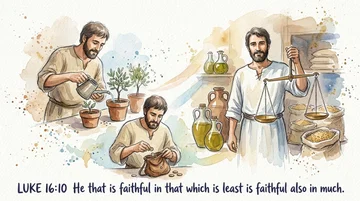
- Luke 16:10-12
He that is faithful in that which is least is faithful also in much: and he that is unjust in the least is unjust also in much.
Faithfulness in little things shows fitness for greater responsibility and trust.
- Revelation 22:12
And, behold, I come quickly; and my reward is with me, to give every man according as his work shall be.
Christ brings each person a reward according to their work.
- 1 Corinthians 4:2
Moreover it is required in stewards, that a man be found faithful.
Stewards entrusted with responsibilities are required to be faithful.
- Luke 12:48
But he that knew not, and did commit things worthy of stripes, shall be beaten with few stripes. For unto whomsoever much is given, of him shall be much required: and to whom men have committed much, of him they will ask the more.
Greater gifts bring greater responsibility and accountability.
- 2 Corinthians 5:10
For we must all appear before the judgment seat of Christ; that every one may receive the things done in his body, according to that he hath done, whether it be good or bad.
Each person answers to Christ for deeds done in life.
- Matthew 25:27
Thou oughtest therefore to have put my money to the exchangers, and then at my coming I should have received mine own with usury.
The servant is told to put the entrusted money to work and return it with increase.
- Luke 19:17
And he said unto him, Well, thou good servant: because thou hast been faithful in a very little, have thou authority over ten cities.
Faithfulness in a small trust is rewarded with greater responsibility.
- Matthew 25:30
And cast ye the unprofitable servant into outer darkness: there shall be weeping and gnashing of teeth.
Contrasts faithful service with the unprofitable servant cast into outer darkness.
- Matthew 25:34
Then shall the King say unto them on his right hand, Come, ye blessed of my Father, inherit the kingdom prepared for you from the foundation of the world:
The blessed are welcomed to inherit the kingdom prepared for them.
- Matthew 25:15
And unto one he gave five talents, to another two, and to another one; to every man according to his several ability; and straightway took his journey.
Talents are entrusted to servants according to their ability, setting up the commendation for faithfulness.
- Romans 14:12
So then every one of us shall give account of himself to God.
Both teach that each person gives an account to God.
- Revelation 2:10
Fear none of those things which thou shalt suffer: behold, the devil shall cast some of you into prison, that ye may be tried; and ye shall have tribulation ten days: be thou faithful unto death, and I will give thee a crown of life.
Faithfulness through suffering is joined to the promised crown of life.
- Mark 13:34
For the Son of man is as a man taking a far journey, who left his house, and gave authority to his servants, and to every man his work, and commanded the porter to watch.
Both describe servants entrusted with work while their lord is away.
- 1 Peter 4:10
As every man hath received the gift, even so minister the same one to another, as good stewards of the manifold grace of God.
servants entrusted with goods are stewards
- Matthew 25:1-13
Then shall the kingdom of heaven be likened unto ten virgins, which took their lamps, and went forth to meet the bridegroom.
Both parables call for faithful readiness while awaiting Christ’s return.
- Luke 16:2
And he called him, and said unto him, How is it that I hear this of thee? give an account of thy stewardship; for thou mayest be no longer steward.
Both call stewards to account for their management of entrusted goods.
- 2 Timothy 4:7-8
I have fought a good fight, I have finished my course, I have kept the faith:
Faithful service and perseverance culminate in the Lord’s promised reward.
- 1 Corinthians 3:13-14
Every man’s work shall be made manifest: for the day shall declare it, because it shall be revealed by fire; and the fire shall try every man’s work of what sort it is.
Work is tested by fire, and what endures receives a reward.
- Revelation 3:21
To him that overcometh will I grant to sit with me in my throne, even as I also overcame, and am set down with my Father in his throne.
Both promise the victorious faithful exaltation and a place with Christ on his throne.
Commentary part 1 of 7
Each commentary is drawn from primary sources: the writings of Ellen G. White and Adventist pioneers and periodicals. Each commentary is separate. Its own words are not a quotation; follow the references to read the source passages.
Ellen G. White
407 sources
In plain words it promises that servants who prove good and faithful with little will be praised, trusted with much, and welcomed into their master's happiness.GW 296.9Lt 11, 1865, par. 2–3ST Oct 23, 1901 The reward turns not on how much was entrusted but on faithfulness in using it, so those with five, two, or even one gift who put it to increase receive the same full approval.Ms 81, 1899, par. 1–7RH Dec 17, 1901RH Jun 27, 1907 What is entrusted is far more than money, embracing body, mind, time, influence, means, opportunity, and the light of truth, all held as the Lord's property by creation and redemption to be used for His glory and returned with increase.19MR 389.2–4RH Dec 17, 1901Ms 26, 1899, par. 4–8Lt 108, 1896, par. 13–15 Each person must give a personal account at Christ's coming for what was done and for what was left undone, with return expected in proportion to what was given and preparation made day by day with no second probation.Ms 25, 1908, par. 16ST Jul 2, 1902Lt 21a, 1871, par. 7–10Ms 13, 1895, par. 19ST Jul 2, 1902 The reward is given by grace and not as debt, yet the faithful are treated as though the merit were their own, entering even now by foretaste and at last in full into Christ's own joy in seeing sinners redeemed and made pure through His suffering.Lt 36, 1877, par. 8Lt 19b, 1892, par. 46–50Ms 1, 1891, par. 24–262T 284.3GW92 280.2
Parable Setting and Wording
The commendation belongs to the parable of the talents in Matthew 25:14-46, the last of the parables, spoken early in the morning after crossing the mount as a warning about the second appearing in the clouds of heaven.COL 325.1–219MR 385.2–386.1Lt 108, 1896, par. 2–9 It is instruction from Christ to be studied and compared with one's life record, calling every person to put away boasting, for self-sufficiency is fearfully dangerous and makes the words of Christ of no effect.Lt 214, 1906, par. 13RH Aug 2, 1906Ms 166, 1905, par. 9–10 It directs attention to faithful service rather than trusting in oneself.RH Aug 2, 1906Ms 166, 1905, par. 9–10
In the parable the traveling lord represents Christ and the servants represent His followers who belong to Him because He purchased them at great cost, with the servants specifically representing those who profess to serve Him.COL 325.3–326.2 The lesson is that all people are the Lord's property and must answer at the judgment for how they have met His claim.COL 325.3–326.2 The reward is shown at the reckoning after a long time when the lord who traveled into a far country and delivered his goods to his own servants according to their ability returns.STB 685.1–5
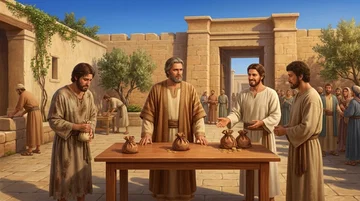
The setting is a man about to take a long journey who gives five talents to one servant, two to another, and one to another, bidding them trade upon them.Ms 86, 1901, par. 30–32 The servants who received five and two talents put them to use and each gained an equal amount more, doubling what was entrusted to them.COL 329.1RH Oct 26, 1911ST Nov 25, 1886 After a long time the Master comes and reckons with His servants, calling all to strictest account of what use they made of His trust, settling accounts for entrusted goods.Ms 86, 1901, par. 30–32STB 685.1–5Lt 1a, 1872, par. 17–19 The parable thus illustrates the final judgment, when each person is dealt with according to the use made of talents and character is revealed.ST Apr 21, 1898
Watching for Christ's second coming means spending the time in diligent work, not idle waiting.COL 325.1–2 Christians are to serve God through unselfish, vigilant labor as they prepare for His coming, remaining faithful and active as they await eternal life in vigilant watching and sanctified waiting, not relaxation of effort.ST Nov 20, 1884Ms 28, 1888, par. 14 Such service must be joined with personal piety, for quiet meditation alone does not perfect Christian character, but constant activity that neglects care of the soul does not either.ST Nov 20, 18848MR 293.1–2 Balanced diligence blending earnest work for the Master with personal piety forms the ideal of Christian character, the complete person in Christ, while the whole lifework of trading with the Lord's entrusted goods is solemnly bound up with the second coming, with day by day and hour by hour laying up material for searching judgment.8MR 293.1–2Lt 64, 1888, par. 19
In plain words the verse promises that servants who faithfully improve and faithfully use what their lord entrusts to them, whether much or little, are commended as good and faithful.Lt 11, 1865, par. 2–3ST Oct 23, 1901Ms 19, 1899, par. 5–7 Faithfulness over a few things leads to greater responsibility, for the lord entrusts the faithful servant with greater responsibility and makes him ruler over many things.GW 296.9Lt 11, 1865, par. 2–3GW92 168.3 He is welcomed to share and enter into his lord's joy when the lord returns and reckons with his servants, with urgency heightened because probation is soon to close and time for saving souls is passing.GW 296.9Ms 19, 1899, par. 5–7Ms 24, 1892, par. 21
The commendation stands opposite the later servant who hid his one talent in the earth and presented it with bitter complaint accusing God of being a hard Master.Ms 184, 1907, par. 1–5Lt 23a, 1893, par. 5–9 That claim that his lord is a hard man was false, for the servant did not know his lord as he claimed.Ms 184, 1907, par. 1–5 Treating the lord's requirements as too severe reflects a false picture of His character formed by avoiding responsibility to avoid mistakes, which is not a safe course.Ms 62, 1890, par. 36–38Ms 40a, 1890, par. 34–36 Faithfulness comes from truly knowing God and trusting Him fully in living, active, persevering faith rather than holding a false, selfish view of Him as severe and exacting, while those who waste or misuse God's gifts complain that the Lord has dealt unfairly with them.Ms 40, 1890, par. 25–30Ms 40a, 1890, par. 34–36Ms 25a, 1895, par. 15
Stewardship Accountability and Reckoning
Nothing a person has is his own, for all is the Lord's property by creation and redemption, purchased by Christ's blood and suffering to secure willing service and entire obedience, lent on trial as sacred trusts of soul, body and spirit to be used for His glory and returned to Him with increase in view of eternity.19MR 389.2–4RH Dec 17, 1901Lt 108, 1896, par. 13–15Ms 9, 1891, par. 1–3Lt 50, 1895, par. 10–12 The talents so entrusted are more than earthly wealth or temporal employments, and skill to accumulate worldly goods gives no ground for satisfaction unless turned to account for Him who bestowed them, with trusts given in proportion to ability to use and to be traded with the same religious obligation as prayer, not for selfish gratification or impulse.RH Dec 17, 1901Lt 108, 1896, par. 13–15Ms 34, 1901, par. 12–13Lt 50, 1895, par. 10–12 The humblest service becomes a consecrated gift when employed in doing the Master's bidding, and those who put even small gifts to active use for the good of others increase in usefulness and have their entrusted amount doubled.RH Dec 17, 1901Lt 108, 1896, par. 13–15Ms 34, 1901, par. 12–13
Each servant is individually accountable and must give a personal account at Christ's coming and judgment for how entrusted talents were used or abused, for church membership alone does not secure heaven and no one can transfer duty to another or make another man his steward.Ms 25, 1908, par. 16Lt 55, 1895, par. 35–41ST Jul 23, 18942T 667.3–668.2ST Oct 22, 1894 The required return is measured in relation to what was entrusted, so faithful improvement even of one talent or a few pence is accepted as fully as five talents, and no one is responsible for talents never given nor should complain of smallness of gifts.ST Jul 2, 1902Lt 21a, 1871, par. 7–10Lt 55, 1895, par. 35–412T 250.1CT 512.4–513.1 Present inability produced by past inactivity and devotion to worldly pursuits is no excuse, because responsibility is measured by powers originally bestowed and possibilities for improvement.Lt 21a, 1871, par. 7–10Lt 55, 1895, par. 35–41 Even one unused talent brings accountability, for the Lord requires His own returned with increase and rewards improvement while punishing abuse.ST Jul 23, 18942T 667.3–668.2ST Oct 22, 1894
God entrusts different amounts according to known ability and expects return in proportion to what was given, not equal results from unequal gifts, honoring faithful use of a small trust as well as a great one.ST Jul 2, 1902Lt 21a, 1871, par. 7–102T 250.1CT 512.4–513.1ST Oct 22, 1894 Faithfulness rather than size of work or gift receives approval and reward, qualifying the servant for greater trust and everlasting life, with one talent well used gaining other talents and these still others.Lt 55, 1895, par. 35–412T 250.1CT 512.4–513.1 The reckoning examines motives, fidelity and works as written in the books, with each person's work standing out clearly and reward given according to what was done, in proportion to work, effort, zeal and faithfulness.Lt 21a, 1871, par. 7–10GC 548.2–549.1Lt 7, 1896, par. 29–31GC88 548.2–549.2ST Apr 16, 1885 Preparation for it takes place day by day with a daily record and no second probation, for the Lord is now proving every man's fidelity in trading upon lent goods and God alone judges capabilities and discerns time and talents employed for Him.Ms 13, 1895, par. 19Lt 7, 1896, par. 29–31
That final accounting decides eternal destiny for unspeakable joy or unutterable woe, and the commendation is His loving recompense and blessing upon every faithfully performed duty after cases have been investigated and judged according to deeds, not at death.Ms 13, 1895, par. 19GC 548.2–549.1GC88 548.2–549.2ST Apr 16, 1885 Faithfulness is measured not only by what was done but by what could have been done and was left undone, including neglected opportunities, unimproved privileges, careless inaction and souls that might have been saved.ST Jul 2, 190218MR 140.2–4MC 60.1–3EDFCP 25.2MYP 309.2 Merely returning what was given is not enough when it could have been improved, for He calls for His own with usury and holds servants responsible for the evil of neglect; kindly affections, generous impulses, spiritual insight, time, influence, capabilities, health, reason, strength and social influence must be put to diligent service for others and for God's glory rather than saved for a supposedly better opportunity.ST Jul 2, 190218MR 140.2–4COL 352.4MC 60.1–3 Those who know the Master's will but fail to act on it increase responsibility by mere possession, and in the judgment are denounced not only for revolting sins but for neglect, disqualified from the usefulness they might have filled.ST Jul 2, 190218MR 140.2–4COL 352.4
This life is the day of trust and probation followed by the day of reckoning when the account is fixed, so talents must be traded at once and improved now while it is day to work, before probation ends.Lt 50, 1895, par. 10–122T 667.3–668.2ST Oct 22, 1894Lt 171, 1897, par. 12 The opportunity to serve lasts only until the final account, with urgency heightened because probation is soon to close and time for saving souls is passing.Ms 24, 1892, par. 212T 667.3–668.2ST Oct 22, 1894 The reward is given by grace and overflowing love, not as debt, because talents and increase belong to God and without His grace and deposit no gain could have been made, leaving every soul otherwise bankrupt for eternity.Lt 36, 1877, par. 8Lt 19b, 1892, par. 46–502T 284.3COL 361.1–2STA 87.1–88.1 Yet when stewards are faithful the Lord rewards them as though the merit were their own, giving glory to the Master while advancing the worker from small trust to great trust and entrance into His joy, witnessed by unseen beings.Lt 36, 1877, par. 8Lt 19b, 1892, par. 46–502T 284.3STA 87.1–88.1STM2 15.2–16.1
The commendation will be spoken by Christ at His return after His long absence to settle accounts for entrusted goods, and at the final judgment to the redeemed as welcome into rest, peace, everlasting life, the Holy City and the kingdom with crowns of glory.Ms 86, 1901, par. 30–32Lt 21a, 1871, par. 7–10Ms 13, 1895, par. 19GC 548.2–549.1Lt 7, 1896, par. 29–31 Abilities and opportunities are entrusted gifts not grounds for self-exaltation and affect eternal destiny.STMW9 40.2 Faithfulness or neglect affects God's cause and will be accounted for in the day of God, requiring diligent, thoughtful handling of God's property without wasting time or means and thorough performance of assigned work as fitness for greater responsibilities and eternal riches.STPW91 22.1–2CT 451.2 Neglecting or perverting entrusted gifts dishonors the Lord, while Christ's life purchased the privilege of serving as His co-workers.CT 451.2 People are judged not for lacking knowledge but for turning away from light and truth that reached their understanding, and the light refused will testify against them.ST Apr 8, 1913
Talents Entrusted and Distributed
The talents are more than earthly wealth or temporal employments, for they are sacred trusts of soul, body and spirit to be used for God's glory and in view of eternity.19MR 389.2–4RH Dec 17, 1901Lt 108, 1896, par. 13–15 They include time, abilities, reason, influence, means, possessions, intellect, affection, speech, education, skill, conscience, physical powers, health, strength, opportunities, and the light of God's Word and gifts of grace, whether natural or spiritual, original or acquired.Ms 26, 1899, par. 4–86MR 262.1RH Jun 27, 1907 They are a loan from the Master to be invested to advance His glory, not buried in worldly enterprises, and skill to accumulate worldly goods gives no ground for satisfaction unless turned to account for Him who bestowed them.Lt 108, 1896, par. 13–15RH Jun 27, 1907 Each person is responsible to employ his own gifts in Christ's service and cannot transfer that duty to another, and those given five talents and those given two who put them to active use and return principal with increase receive the same commendation, promotion to greater trust, and entrance into the Lord's joy.RH Dec 17, 1901Ms 26, 1899, par. 4–8 Faithfulness means using God-given powers for Christ and for useful ends according to His Word, not selfishly or for worldly ambition or wasting the mind on novel reading, and use in the Master's service makes them grow.6MR 262.1RH Jun 27, 1907
God has committed to everyone capable of reason some peculiar gift and appointed work, not to merely a chosen few, and every person whether serving God or pleasing himself is possessor of such a trust and under obligation for its use.ST Jan 23, 1893RH Oct 26, 1911 Rich or poor, great or humble, lowliest as well as mightiest, all are endowed with influence and ability and expected to use it faithfully in active service to enlighten and bless others in saving souls and rescuing souls by wise and skillful use of capital.6T 432.2STBk 87.15T 457.2–459.1RH Dec 14, 1916 Faithfulness requires doing duty as intelligent beings, bringing every trained mind, every disciplined intellect, and every jot of ability into the work, in close connection with the Source of light and power.6T 432.25T 457.2–459.1 Responsibility is proportionate to gifts received and measured not by present resources but by powers originally bestowed and possibilities for improvement, so pleading inability produced by inactivity and devotion to worldly pursuits is no excuse.5T 457.2–459.1RH Oct 26, 1911RH Dec 14, 1916 Proper use brings glory to God, increase of aptitude and skill, aroused energies, and light, peace, blessing and joy, while perverted use robs the Giver and neglect leaves responsibility for work negligently done or left undone.ST Jan 23, 1893STBk 87.15T 457.2–459.1
Money, property, houses, lands and means are the Lord's money lent as talents for wise improvement in His cause, to be put into circulation and returned with increase, not buried, hoarded, spent selfishly, or left until death.4T 479.13T 118.1–5Lt 90, 1895, par. 31–33Ms 11, 1892, par. 294T 480.1 Faithfulness is shown by using intellect to secure the Lord's own to His treasury and by making right disposition before stewardship ends rather than leaving it to relatives and others who have no love for God and truth.4T 479.1TCBMP 154.2 To place means in hands of wicked men, to shift stewardship upon children to avoid responsibility, to withhold from God's cause, or to will to unbelieving reckless children to squander, hoard and worship is to wrap the talent in a napkin and hide it in the earth, robbing God and bringing fearful loss to giver and cause.4T 479.13T 118.1–5 Everyone holding one, two or five talents of means is not owner but God's trustee, steward and almoner, with principal and increase the Lord's, stamped with His image, so not a farthing is to be squandered needlessly, and all must render account to an impartial, omnipresent, just God.Lt 90, 1895, par. 31–33Ms 11, 1892, par. 29 To defer liberality until death and shift stewardship upon others is folly, for heirs may not use means as well, surrendering to death rather than to God contrary to His plan, while seizing present golden moments to labor with all might is required.TCBMP 154.24T 480.1
The talents include the precious truths of God's Word, gems of truth, precious promises, justification by faith and Christ's righteousness, the Sabbath warning and the light of present truth meant to develop God's people and to be shared to help, enlighten and win souls, not kept to themselves.RH Apr 2, 1908Ms 9, 1891, par. 17–20Ms 66, 1894, par. 9–10Ms 9, 1891, par. 42 Being faithful over a few things means trading that talent instead of hiding it in the earth, bringing it into character and putting it out to the exchangers by meekness, wisdom, prayerful planning, and methods suited to every class including the intelligent, refined and wealthy often overlooked.Ms 9, 1891, par. 17–20Ms 66, 1894, par. 9–10 It is making the very best use of light, influence and ability on the Lord's side, glorifying God and not gathering glory to self, telling of danger of making everything of the world, keeping the created world subordinate, and standing ready daily to do the work given, with even the one-talent man not excused.Ms 9, 1891, par. 17–20Ms 184, 1907, par. 8–10 Faithfulness in a small trust includes applying truth to the heart, obeying God, carrying the Word to others, and giving hearts filled with love the Spirit prompts in response to truth to active work for the Master who requires all.Ms 184, 1907, par. 8–10Ms 9, 1891, par. 42 Burying all in business matters and planning only how to make money and lay up earthly treasure is unfaithfulness for which God will call to account, even to taking away what is had.3T 53.3Ms 9, 1891, par. 17–20
Intellect, mental powers, education, bodily strength and time are capital more valuable than gold or houses, entrusted to every professed follower to be cultivated, disciplined, governed by God's Spirit and put to highest use for God's honor and humanity's good rather than weakened by inaction or vice.ST Dec 9, 1897ST Feb 5, 1880MYP 39.1–2ED 57.5–58.1 Faithfulness means serving intelligently to best represent Bible religion and promote God's glory, for Christ is best glorified by intelligent service, truths of the divine Word are best appreciated by an intellectual Christian, and ignorance does not increase humility or spirituality.ST Dec 9, 1897CE 202.3–203.2 Education disciplines the mind, develops its powers and directs them understandingly so they become useful, while God's Spirit guides use but does not remove need to exercise them.ST Dec 9, 1897CE 202.3–203.2 Using a gift to serve vice and harm others is abuse not true greatness by God's standard, and leaving intellectual and moral abilities dormant prepares no one for greater responsibility.ST Feb 5, 1880MYP 39.1–2HSFM 285.3–4 Abilities, time and strength belong to God for His glory and good of others, and every person including every young person and child has work for God and salvation of others.ED 57.5–58.1HSFM 285.3–4
The poor have a talent that may be larger than any other, including simplicity of character, humility, tried virtue, confidence in God, patient toil, entire dependence upon God, sympathy for the poor, a home for the needy and oppressed, and a clear decided testimony pointing others to Jesus their Redeemer.GW 330.2–3GW92 314.1 Money, influence, wisdom and these gifts among the poor can all be faithfully used, with patient work pointing others to Jesus and care for the needy as service, and those who thus seek glory, honor and immortality receive eternal life.GW 330.2–3GW92 314.1 All classes of talents are needed to make a perfect whole, with the church composed of all ranks, all classes and varied talents, so no part of the work is to be depreciated whether agency higher or lowlier, and no ray of light undervalued or shut out.GW92 314.1Ms 199, 1898, par. 3 Varied gifts united and increased by use diffuse light in different degrees, with some talents shared by many and others giving particular servants special ability to present and make effective truths of God's Word.GW92 314.1Ms 199, 1898, par. 3 Even a small talent faithfully used fulfills the work God intends, and humble gifts used in house-to-house service may accomplish more than brilliant gifts, for God does not despise small amounts or small opportunities.RH Aug 7, 19139T 37.3RH Dec 10, 1901 Wise use of littles brings wonderful increase so one talent rightly used brings two, with interest expected in proportion to capital, accepted according to what a man has and not according to what he has not.Ms 40a, 1904, par. 3RH Dec 10, 1901
God has entrusted talents of mind, eyes, ears, knees, feet and means to be used in sincere wholehearted labor for the Master during probationary time and large opportunities, with His Word as counsellor and His Holy Spirit as free gift.Ms 110, 1898, par. 13–14 Faithfulness is using mind to understand how to work, eyes to discern God-given opportunities and do no shiftless work, ears to listen for God's commands, knees to bow three times a day in heartfelt prayer, feet to run in the way of God's commandments, and investing means by receiving from God and rendering back what He lent in trust for His name's glory.Ms 110, 1898, par. 13–14 The unfaithful steward does not enrich himself but wastes his Master's goods by letting idleness take the place of labor and by unfaithful appropriation, and will lose his soul if he does not cooperate with God, while blessing rests on him who receives and renders back.Ms 110, 1898, par. 13–14 Talents are entrusted for service not self-exaltation, and the Lord values devotion above special ability or status among fellow workers.7T 282.3GW92 109.2 They belong to God not the servant, to be used, improved and returned with increase, with all praise and glory to God and no reason for self-praise, and powers and privileges are to be developed responsibly for His glory not for self.ST Mar 8, 18995T 311.3 Approval and reward depend on faithfulness even in few things rather than size of work or results, with earnest unselfish patient effort rewarded and goodness and faithfulness mattering more than great accomplishments.ST Mar 8, 1899GW92 109.2
Seeking worldly wisdom and school attainments often makes servants self-sufficient and independent, cherishing exalted views of own abilities as though under no obligation to return them with usury, withdrawing affections from God so gifts become a curse.1RED 66.2LC1 66.2 Gifts, privileges, advantages and ability are lent as stewardship for a time to prove whether men will love and reverence the Giver in humility, obedience and wisdom unto salvation, rendering back principal with interest as those belonging to God.1RED 66.2LC1 66.2 Ability, talent, wisdom and success are not manufactured by ourselves but are the Lord's entrusted capital from the Source of wisdom to be wisely employed in His service to His glory, so being lifted up, calling attention to defective self, and all strife for supremacy are out of place and Jesus alone is to be exalted.RH Sep 4, 1900 Ability consecrated to God's work produces greater results through divine power and prepares for the life to come, while the same ability, skill and energy devoted to worldly gain is buried rather than used for its proper purpose.5T 275.1–276.1
Faithfulness in Use Defined
Faithfulness, not the amount entrusted, decides the reward, for servants given five, two or even one talent who trade wisely and diligently and gain an increase receive the same full commendation without favoritism.Ms 81, 1899, par. 1–7RH Dec 17, 1901RH Jun 27, 1907Ms 81, 1898, par. 27Ms 77, 1902, par. 52 The parable teaches faithfulness in using what has been entrusted, judged by how well it is used and by motive, so that being faithful over few things leads to greater responsibility and entrance into the lord's joy.Ms 81, 1899, par. 1–7Ms 77, 1902, par. 52Lt 97, 1892, par. 23–24 Those entrusted with soul, body and spirit, riches or opportunities must put them to active use and return principal with increase, presenting what was entrusted together with what was gained, and use every gift aright for God and for blessing others instead of living for self.RH Dec 17, 1901RH Jun 27, 1907 Their work follows a plan of addition, adding grace to grace, and each does his best to glorify God.Ms 81, 1899, par. 1–7Ms 81, 1898, par. 27
God's standard of faithfulness is being thorough, solid, careful, intelligent and honest in small duties, thinking deeply, mastering duties, doing one's best and advancing step by step from lesser to greater responsibility.CH 288.2CH 286.2Ms 13, 1893, par. 18–19ST Nov 5, 1885COL 360.1–2 Wise and judicious use of a smaller trust proves fitness for heavier burdens, and gifts given according to ability are meant to be used, not wasted, with faithful use bringing increase and everlasting life.CH 288.2ST Nov 5, 1885ST Jun 15, 1882 Approval is withheld from self-inflated, self-sufficient workers who overestimate ability, claim readiness for greater trusts while neglecting smaller ones, skim the surface, and produce defective, remiss, superficial work while seeking the highest place without climbing.CH 288.2CH 286.2 Faithfulness proven by unselfish work leads God to measure each talent to know what to lay upon each person, entrusting great responsibility and then still higher responsibility, growing through grace to full stature, and the Well done is spoken only to those who have done well and cheerfully.Ms 13, 1893, par. 18–19COL 360.1–2ST Jun 15, 1882 Even one talent wisely used can accomplish its appointed work and produce increasing influence, for faith in Jesus and love for Him can shape even smallest tasks, and such cheerful obedience is part of sanctification.COL 360.1–2ST Jun 15, 1882
Faithful trading means putting goods out to the exchangers at once, calling attention to their value, presenting truth by precept and example, seeking wisdom daily and working in co-partnership with God and the Holy Spirit who gives efficiency and increase.ST Nov 5, 1885ST Jan 23, 1893COL 353.1ST Aug 1, 1911 As people use talents faithfully, the Holy Spirit brings God's truths freshly to mind, and God's word works powerfully through human effort, so the power and praise belong to God.COL 353.18T 55.2 The parable applies to every position, for abilities, wealth, reason and gifts of grace belong to God and are to be used for the good of others and His glory, with refusal bringing loss and each person answering to Christ.8T 55.2 Trading instead of burying will not be in vain, for God blesses unselfish, unwearied diligence and makes even one talent and a small investment fruitful, with realization that intellect, affections and whole power belong to God.ST Jan 23, 1893ST Aug 1, 1911
Wise, diligent, unselfish use increases ability, efficiency and usefulness, so one talent well used will gain other talents and talents continually multiply as they are exercised.Lt 19b, 1892, par. 46–50ST Nov 5, 1885ST Jan 23, 1893COL 353.1 This increase is not chance, for God works with those who use what they have, strengthening abilities as they serve, and wholehearted effort, sacrifice and cooperation develop powers for greater work.COL 353.1STMW9 43.2 Every person has appointed work in the appointed place of duty, and influence, talent, knowledge and power purchased by Christ's blood are to be traded with and put out to usury, using knowledge and exercising powers in correspondence with light received.Lt 19b, 1892, par. 46–50STMW9 43.2 Such use increases knowledge and power for more and better work, and calls for learning God's will and diligently using gifts to gain more.Lt 19b, 1892, par. 46–50STMW9 43.2
Faithfulness means more than being good oneself; it includes serving others, seeking their salvation, reflecting Christ's light, showing compassion and love, and putting religion into practical service producing good works.Ms 98, 1893, par. 27–28Lt 11, 1871, par. 9–12ST Mar 11, 1889ST Nov 28, 1911SPBC 185.5 Mere profession of piety without practical service is valueless, and selfish, hard-hearted profession, indifference and neglect of opportunities to help others are failures that will never receive approval.Ms 98, 1893, par. 27–28Lt 11, 1871, par. 9–12 Faithfulness is shown in building His kingdom and sharing in His trials, sufferings and labors, with a place among the blessed, for saving souls for eternal life is a worthy ambition and even the humblest person has talents to put to use for God's glory as a consecrated offering.ST Mar 11, 1889SPBC 185.52T 234.2–235.1 Worldly labor and business cares alone will not bring commendation, for faithfulness means serving God and advancing salvation, not merely working hard at this life's cares.ST Nov 28, 19112T 234.2–235.1
The servant gives the Master the glory for the increase because the initial capital came from Him and no gain could have been made without it, yet when stewards are faithful the Lord rewards them as though the merit were their own.Lt 36, 1877, par. 8Lt 19b, 1892, par. 46–502T 284.3STA 87.1–88.1STM2 15.2–16.1 Without the grace of Christ every soul would be bankrupt for eternity, so the steward who returns gain claims nothing for himself, and gains come from the Master's resources credited by grace and mercy rather than claimed as merit.Lt 19b, 1892, par. 46–502T 284.3STM2 15.2–16.1 The promise of greater responsibility and entrance into joy is a reward for faithful service and sacrifice, not a debt owed, given because of overflowing love and tenderness, witnessed by unseen beings.COL 361.1–2STA 87.1–88.1STM2 15.2–16.1 Talents belong to God and produce no gain apart from what He supplies, since servants purchased by His blood depend on His grace, yet God graciously advances them from small trust to great trust and brings them into His joy.Lt 19b, 1892, par. 46–50STA 87.1–88.1
Faithfulness requires constantly improving through mind and speech, feeding other minds with rich intellectual food, living so young and old are benefited, and exercising every faculty even in little things with steady energy.STB 18.1ST Aug 1, 1911Ms 82, 1896, par. 6ST Jan 23, 189318MR 291.3–292.3 It means making the best possible use of natural powers of mind and body for elevation of holder and associates, carefully treasuring every talent, strengthening every faculty by exercise, and becoming a blessing to the world.ST Aug 1, 1911ST Jan 23, 1893 It means regularly examining physical, mental and spiritual powers to please God and develop usefulness, keeping the soul in love by earnest diligent daily use to utmost ability with self-denial and cross-bearing, keeping the vessel filled with oil trimmed and burning brighter instead of slumbering like the foolish virgins.STB 18.1Ms 82, 1896, par. 6 Growth comes by bearing individual responsibility with steady, uniform, unyielding energy and thoughtful zeal, overcoming cowardice, ignorance and inefficiency, thinking and acting for oneself, adding little by little day by day, treasuring moments, and thus acquiring breadth of thought, strength of intellect and firm balanced character, with angels ministering to increase ability to trade.Ms 82, 1896, par. 618MR 291.3–292.3 The desired final reward is the Master's Well done, for the approval of Jesus is enough apart from position, honor, ease and convenience.Lt 62, 1886, par. 5–6
Being good and faithful means realizing talents belong to the Master for Him alone, requiring self-denial, strict integrity, wise use and being producers as well as consumers.RH Apr 9, 1901STB 17.5Lt 192, 1903, par. 26Lt 38, 1901, par. 3–6Ms 33, 1907, par. 6 Talents are God's own, the wages of Christ's sufferings and price of His blood, placed in hands as loan and trust for time and eternity, including intellect to originate, heart for His throne, affection to flow in blessing, conscience to convict, physical powers and skills, genius, money and all opportunities to do good.RH Apr 9, 1901Lt 192, 1903, par. 26Lt 38, 1901, par. 3–6 It requires handling the Lord's goods in willing servitude, looking to the Giver wonderful in counsel for counsel to use gifts with unerring aptitude for others, putting means into circulation, consecrating gifts freely, unselfishly and cheerfully to work barren fields into fruitful righteousness, resisting praise and flattery, never acting on worldly customs, never benefiting unjustly at another's expense, but loving neighbor as self with purpose renewed daily.RH Apr 9, 1901STB 17.5Lt 192, 1903, par. 26Lt 22, 1890, par. 39–40 The steward acts in the master's stead as the master would do, with the master's interests his own, a dignity of trust, trading for the lord's advantage, for turning gain to self perverts the trust, while physical and mental powers improve by judicious use and money rightly trained increases.Lt 38, 1901, par. 3–6Ms 33, 1907, par. 6
Faithfulness over a few things means trading the given talent instead of hiding it, including the gems of truth and justification by faith to be brought into character and put out to others.RH Aug 21, 1900Ms 9, 1891, par. 17–20 It means being converted in body, soul and spirit, unfolding the napkin, making best use of light, influence and ability on the Lord's side, glorifying God not self, telling of danger in making everything of the world, keeping the created world subordinate, and standing ready daily for given work.RH Aug 21, 1900Ms 9, 1891, par. 17–20 Even the one-talent man has this work and is not excused, for burying all in business and planning only to make money and lay up earthly treasure is unfaithfulness for which God will call to account until even ability is taken away.RH Aug 21, 1900Ms 9, 1891, par. 17–20
Approval comes to those who stop requiring great and constant help and nursing and go to work to trade on goods, opportunities and privileges already entrusted, becoming channels of light to others.Lt 86, 1895, par. 9 Those who only keep receiving crowded privileges without working receive no lasting impression, remain ever learning without coming to knowledge of truth, and make no real advancement, whereas those who trade receive increased light as they diffuse it, and driven by opposition to the Word and earnest wrestling prayer have their prayers heard.Lt 86, 1895, par. 9 Those capable of greater responsibility should not shrink from it through fear of criticism or loss, for proper caution must not become cowardice or idleness. Faithfulness over entrusted talents must be whole and complete, for to do only one-third of what they require leaves the other two-thirds working against Christ, and it applies to every part of life since God sees and hears every act and word.6T 439.4ST Oct 6, 1881
Merely possessing talents without actively using them is unfaithful stewardship, for gifts must be actively used in service and leaving generous affections or other gifts unused brings no approval.2T 283.4–284.2STMW7 62.1STMW9 43.3 Neglecting gifts by doing nothing is sinful, and no one can safely remain idle, while integrity toward God and others in using gifts brings blessing and forms character fitted for eternal life, with faithfulness leading to greater responsibility and sharing the master's joy.STMW7 62.1STMW9 43.3 Servants learn to use talents by working, with work given to those able to serve and mistakes corrected so they can continue serving.OEWP 36.1–37.1 Delaying practical work in pursuit of further education can waste time and leave the work undone.OEWP 36.1–37.1
Unfaithfulness Exposed and Judged
The servant who hid his talent in the earth instead of putting it to work acted from selfish neglect, fear, indifference and idleness, neither serving faithfully nor bearing burdens, and his excuses showed he did not care to know God.Lt 31, 1894, par. 24–252T 665.1–3GW92 270.25T 282.2 The approval is spoken only to a good and faithful servant who keeps sacred obligations, uses all blood-bought abilities and influence wisely, and improves lent talents to the utmost, while one who proves false, perverts abilities, misuses talents, robs God by failing to put powers to best use, and wastes his Lord's substance cannot receive it.Ms 1a, 1890, par. 28–29Lt 31, 1894, par. 24–25 Having fewer gifts does not excuse hiding or neglecting what is entrusted, for faithfulness is required of every servant including the one given only one talent, and failing to use a small gift brings the same loss as failing to use a great one.2T 665.1–3GW92 270.2 Those who make right use of what is lent can be trusted with more, but the unfaithful forfeit their trust, lose the talent, are condemned as wicked, slothful and unprofitable, and are cast into outer darkness and face judgment.5T 282.2 The God who judges the world in righteousness with rigorous impartiality and demands His own with usury will pass condemnation on such a man, and he must not be placed in a position of sacred, holy trust.Ms 1a, 1890, par. 28–29
Enlarging farms and adding building to building or improving earthly property does not count as doubling talents, because improved farms and buildings cannot be taken into heaven and will be consumed by the fires of the last days.ST Feb 24, 1887ST Feb 8, 1892Lt 70, 1886, par. 5–6 Faithfulness over a few things means putting power, influence and means into the missionary channel to warn the world while probation lasts and gathering souls to Jesus Christ, for only souls saved through investment in God's work count as talents doubled and qualify for entrance into the joy of the Lord.ST Feb 24, 1887ST Feb 8, 1892 If farms and buildings represented souls saved they could be presented as fruit of faithful service, but possessions themselves yield no lasting spiritual fruit, and burying means in earthly treasures with persevering labor, tact, skill and anxiety proves unfaithfulness.ST Feb 24, 1887ST Feb 8, 1892Lt 70, 1886, par. 5–6 A heart set on earthly treasure cannot appreciate heavenly treasure, the eternal is eclipsed by the earthly, and burying means while neglecting missionary work leaves talents unused for their heavenly purpose and places the heart on what is temporary.ST Feb 24, 1887ST Feb 8, 1892
Hiding talents in the earth is professing to love Jesus while feeling no interest for sinners around and seeking merely to save one's own soul in indifference to the condition and destiny of fellow men.SBAWP 21.2 No one can long retain God's favor in that state, such unfaithfulness fails to put forth sufficient effort to secure even one's own salvation, and it throws away the opportunity to obtain the star-gemmed crown given to faithfulness and casts away the crown of life.SBAWP 21.2FE 83.2 Even without recorded grievous sins, a life lacking good and noble deeds stands under condemnation as that of a wicked and slothful servant, for failing to use entrusted abilities for good is unfaithfulness.ST Apr 15, 1886 The servant who hid his lord's money represents those who withhold possessions instead of using them in God's service, and burying entrusted means instead of putting it to use is disobedience.MYP 308.2–3OFWP 4.3 Talents are to be used for God's work, especially saving souls, rather than hidden or spent selfishly, and neglecting them brings spiritual decline, forfeits the reward, and shows by worldly pursuits that a person is not watching and waiting for Christ's return.ST Feb 8, 1892
Pleading inability to work for others is no excuse, because the inability was produced by inactivity and deliberate choice and devotion to worldly pursuits.5T 457.2–459.1ST Sep 30, 1886 Responsibility is measured not by present resources and capacities but by powers originally bestowed and possibilities for improvement, and God holds servants accountable even for abilities left unused, so what could have been gained through faithful use but was not gained is an eternal loss.5T 457.2–459.1ST Sep 30, 1886COL 362.5–6 Faithfulness over few things means exercising whatever ability is possessed for the Master in close connection with the Source of light and power, and then aptitude and skill increase, dormant energies are aroused, and light, peace, blessing and joy in His work are given.5T 457.2–459.1ST Sep 30, 1886 As people use the ability they have in God's work He works with them to strengthen faculties and awaken dormant powers, while unfaithfulness leaves a person responsible for work negligently done or left undone and for all spiritual vigor, strength, skill, light and power that might have been had but was lost through neglect.5T 457.2–459.1ST Sep 30, 1886
Burying all in business matters and planning only how to make money and lay up treasure on earth is unfaithfulness for which God will call to account, and even what is had, even the very ability, will be taken away.Ms 9, 1891, par. 17–20 The talent is the gems of truth, the precious promises, justification by faith and the righteousness of Christ, which are to be brought into the character and put out to the exchangers, and even the one-talent man has this work and is not excused from using it.Ms 9, 1891, par. 17–20 Faithfulness is making the very best use of light, influence and ability on the Lord's side, glorifying God and not gathering glory to self, telling others of the danger of making everything of the world, keeping the created world in its subordinate place, and standing ready every day to do the work given.Ms 9, 1891, par. 17–20 Money is a talent entrusted by the Master to be improved for His glory, the holder is His steward not the owner and must be very careful not to neglect duty, and gifts are not one's own to spend on impulse, display, self-indulgence or self-gratification.COL 352.3STB 17.62T 688.4 A world-loving heart claims entrusted means as its own, lets other influences hinder obedience to the divine will, keeps affections on earthly treasure so faith is not made perfect by works, and those who keep means selfishly and give only when death forces relinquishment have not multiplied talents and receive no commendation but face the unprofitable servant's doom.4T 480.22T 688.4 Those who spend God's means and time to gratify selfish wants while missionary work lacks workers and support are not faithful stewards and cannot rightly expect the commendation.SPBC 126.2–127.1
Those who bury their talents are replaced by workers who will use them, for loyalty matters more to God than extensive knowledge and those who wisely put God's gifts to use in humble, unselfish service are approved and given greater responsibility.Ms 94, 1902, par. 23–24RH Jun 16, 1903 Neglect makes a servant slothful and untrustworthy and accountable for good left undone, and the servant who lives for self and forgets God fails the Master's purpose.18MR 140.5–141.1Ms 151, 1897, par. 19–20 Houses, lands and money are talents entrusted according to ability to be used to His name's glory, and faithfulness means enquiring of God and watching for opportunities to do good with His money, advancing His cause and saving souls without asking how much effort will cost or whether it will pay.Lt 20, 1897, par. 20–23 Rescuing even one soul pays, since that soul is worth more than a world, and by such effort scores of souls may be brought to Christ and become workers for others, so no labor is failure if one soul has his name registered in the book of life.Lt 20, 1897, par. 20–23 No talent is bestowed without need, every talent including the single talent has a place and channels where benevolence may flow to meet needs, sustain handicapped missions, relieve fields and free meetinghouses from debt, while burying or selfishly withholding the Lord's money instead of putting it to use for good brings loss of eternal inheritance.Lt 20, 1897, par. 20–23Ms 62, 1894, par. 29–31 Means must be disposed while living and not left until death, and following Christ in this use leads to heaven while falling into Satan's snares through unfaithfulness loses heaven.Lt 20, 1897, par. 20–23
Intellect, affection, speech, influence and every faculty belong to God to benefit others, and even a small talent can produce fruitful results when used diligently and unselfishly.ST Jan 23, 1893 Careless words and harmful influence misuse and bury these entrusted talents, strengthening evil and lowering the minds of others.ST Jan 23, 1893 Reckless influence, cheap light words and trifling conversation that molds associates downward to what is low and ignoble wastes opportunity, for which there is accountability, and corrupts and buries entrusted talents while strengthening the confederacy of evil.ST Aug 1, 1911 Talents left unused rust through inaction, blessings are not continued to those who do not value them, and those who fail to appreciate and gather up every precious ray in temporal and spiritual things soon become indifferent, while careless use of God-given powers such as speech weakens ability to serve and faithful stewardship prepares for greater responsibility.STMW7 10.2Lt 5, 1884, par. 11 Words are talents to be used for God's glory and the good of others, joined to Christlike character and practical godliness.Ms 149, 1901, par. 11–13
Using any gift to turn others away from God is misuse for which the person must answer at judgment, for greater intellectual gifts bring greater responsibility and every talent used wrongly is counted as theft from God, with each receiving according to deeds.HSFM 285.5 Being a good and faithful servant means using entrusted talents in active work for Christ instead of hiding them in the earth, bearing fruit and watching for souls rather than remaining selfish, unfaithful, weak, dependent and inefficient.6T 434.2 Slothful servants hide their talents in the earth, complain of the Lord's dealing toward them, rely on preaching and depend on the preacher to keep weak faith alive, and expect to be tended like sick children, a condition that follows when overseers fail to exercise shepherd care and properly instruct members.6T 434.2 To neglect entrusted talents and fail to make the best use of them is to backslide from God, requiring weeping confession and a heart softened and subdued by the Spirit of God, for God has entrusted talents to every human being with obligation to improve them by use and thereby gain other talents to render back to the Giver.Lt 47, 1898, par. 7
Sources