Matthew 26:35
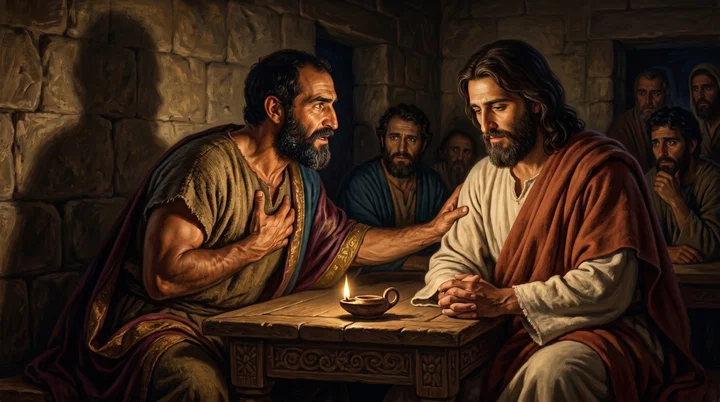
Peter said unto him, Though I should die with thee, yet will I not deny thee. Likewise also said all the disciples.
Translations
Peter said to him, Though I should die with you, yet will I not deny you. Likewise also said all the disciples.
King James Version, KJV Cambridge Paragraph Bible
Peter said unto him, Though I should die with thee, yet will I not deny thee. Likewise also said all the disciples.
Peter said to him, Though I should die with thee, yet will I not deny thee. Likewise also said all the disciples.
Revised Version, American Standard Version
Peter saith unto him, Even if I must die with thee, yet will I not deny thee. Likewise also said all the disciples.
Peter saith to him, 'Even if it may be necessary for me to die with thee, I will not deny thee;' in like manner also said all the disciples.
Peter says to him, If I should needs die with thee, I will in no wise deny thee. Likewise said all the disciples also.
Peter saith unto him: Even though it be needful for me, with thee to die, in nowise, will I deny thee. Likewise, all the disciples also, said.
Berean Standard Bible, Majority Standard Bible
Peter replied, “ Even if I have to die with You, I will never deny You.” And all the other disciples said the same thing.
Peter said to him, “ Even if I must die with you, I will not deny you.” All of the disciples also said likewise.
Peter says to him, Even if I am put to death with you, I will not be false to you. So said all the disciples.
Peter saide vnto him, Though I should die with thee, I will in no case denie thee. Likewise also sayd all the disciples.
Douay-Rheims (Challoner revision)
Peter saith to him: Yea, though I should die with thee, I will not deny thee. And in like manner said all the disciples.
Pictures
Cross-references
- Matthew 26:69-75
Now Peter sat without in the palace: and a damsel came unto him, saying, Thou also wast with Jesus of Galilee.
Peter’s denial fulfills his confident pledge of loyalty.
- Luke 22:31-34
And the Lord said, Simon, Simon, behold, Satan hath desired to have you, that he may sift you as wheat:
Jesus warns Peter of his coming failure after Peter pledges loyalty.
- Zechariah 13:7
Awake, O sword, against my shepherd, and against the man that is my fellow, saith the LORD of hosts: smite the shepherd, and the sheep shall be scattered: and I will turn mine hand upon the little ones.
The struck Shepherd and scattered sheep foretell the disciples’ coming failure.
- Mark 14:29-31
But Peter said unto him, Although all shall be offended, yet will not I.
Peter and the disciples pledge loyalty despite Jesus’ warning.
- Luke 22:33-34
And he said unto him, Lord, I am ready to go with thee, both into prison, and to death.
Peter promises prison and death with Jesus, who foretells Peter’s denial.
- Matthew 26:56
But all this was done, that the scriptures of the prophets might be fulfilled. Then all the disciples forsook him, and fled.
The disciples forsook Jesus and fled when he was arrested.
- John 21:15-17
So when they had dined, Jesus saith to Simon Peter, Simon, son of Jonas, lovest thou me more than these? He saith unto him, Yea, Lord; thou knowest that I love thee. He saith unto him, Feed my lambs.
Jesus questions Peter three times after his denials and entrusts him with caring for his followers.
- Matthew 26:40
And he cometh unto the disciples, and findeth them asleep, and saith unto Peter, What, could ye not watch with me one hour?
Peter’s sleep contrasts with his vow to die with Jesus.
- Luke 22:61-62
And the Lord turned, and looked upon Peter. And Peter remembered the word of the Lord, how he had said unto him, Before the cock crow, thou shalt deny me thrice.
Jesus’ look leads Peter to remember and weep bitterly.
- Matthew 26:31
Then saith Jesus unto them, All ye shall be offended because of me this night: for it is written, I will smite the shepherd, and the sheep of the flock shall be scattered abroad.
Jesus foretells the disciples’ scattering and stumbling that night.
- John 13:37-38
Peter said unto him, Lord, why cannot I follow thee now? I will lay down my life for thy sake.
Peter pledges his life, and Jesus foretells his denial.
- Mark 14:30
And Jesus saith unto him, Verily I say unto thee, That this day, even in this night, before the cock crow twice, thou shalt deny me thrice.
Jesus predicts Peter will deny him three times before the cock crows twice.
- Mark 14:50
And they all forsook him, and fled.
The disciples forsake Jesus and flee.
- 2 Timothy 2:12
If we suffer, we shall also reign with him: if we deny him, he also will deny us:
Both connect allegiance to Christ through suffering and denial.
- Mark 14:37
And he cometh, and findeth them sleeping, and saith unto Peter, Simon, sleepest thou? couldest not thou watch one hour?
Jesus rebukes Peter for sleeping instead of watching.
- Acts 3:14
But ye denied the Holy One and the Just, and desired a murderer to be granted unto you;
Peter accused his hearers of denying Jesus, whom he had vowed not to deny.
- Acts 3:12
And when Peter saw it, he answered unto the people, Ye men of Israel, why marvel ye at this? or why look ye so earnestly on us, as though by our own power or holiness we had made this man to walk?
Peter disclaimed personal holiness as the source of the healing.
- 1 Corinthians 10:12
Wherefore let him that thinketh he standeth take heed lest he fall.
The warning against feeling secure echoes Peter’s confidence.
- Matthew 26:45
Then cometh he to his disciples, and saith unto them, Sleep on now, and take your rest: behold, the hour is at hand, and the Son of man is betrayed into the hands of sinners.
hour come while vowing disciples sleep on
- Matthew 26:41
Watch and pray, that ye enter not into temptation: the spirit indeed is willing, but the flesh is weak.
The disciples’ bold vow contrasts with the weakness of the flesh and the need for prayer.
Commentary
Each commentary is drawn from primary sources: the writings of Ellen G. White and Adventist pioneers and periodicals. Each commentary is separate. Its own words are not a quotation; follow the references to read the source passages.
Ellen G. White
25 sources
Peter vehemently pledged that even if he had to die with Jesus he would never deny Him, and all the other disciples echoed the same pledge.ST May 5, 1898Ms 38, 1897, par. 3–7Ms 167, 1907, par. 8–10 It was spoken on the way to the garden after Jesus warned that all would stumble because of Him that night and be scattered, and after Peter insisted that though all others stumbled he would not, to which Jesus answered that Peter would deny Him three times that very night before the cock crew.ST May 5, 1898EW 135.2ST Aug 12, 1886 The pledge was sincere, yet it was self-confident boasting by one who knew himself little and did not know the weakness of his own heart as Jesus knew him, trusting his own strength and even believing his fidelity surpassed the others.Ms 38, 1897, par. 11–14Ms 38, 1897, par. 3–7ST May 5, 1898 Within hours the promise failed under test, for all forsook Christ and Peter repeatedly denied Him three times out of fear in the judgment hall, the third time with cursing and swearing, adding a disciple's dishonor to the humiliation Jesus endured from His enemies.Ms 167, 1907, par. 8–10Ms 39, 1891, par. 6–7EW 138.2 Remembering his promise brought Peter bitter grief and weeping, and he repented and was converted into a bold man prepared to strengthen his brethren, yet his denial dishonored Christ and injured his influence so that he needed to give public evidence of repentance.Ms 39, 1891, par. 6–7SG1 49.2EW 138.2 The pledge therefore warns that self-confidence and boasted loyalty cannot protect anyone without divine keeping, and teaches the need to distrust self, humble the heart, watch and pray, and rely on Christ the mighty Helper who knows the heart for grace to remain loyal.Ms 38, 1897, par. 11–14Ms 38, 1897, par. 3–7Ms 167, 1907, par. 8–10ST May 5, 1898Ms 29, 1909, par. 2–4
Setting and Profession
Matthew 26:35 records Peter's vehement pledge that even if he had to die with Jesus he would never deny Him, a pledge echoed by all the other disciples.ST May 5, 1898Ms 38, 1897, par. 3–7Ms 167, 1907, par. 8–10Ms 29, 1909, par. 2–4EW 135.2 Their declaration comes after Jesus warns that they will be scattered and that Peter will deny Him, revealing confidence that rejects warning and correction.ST May 5, 1898Ms 38, 1897, par. 3–7ST May 5, 1898 Without divine keeping such a promise cannot protect from failure, for those who claim faithfulness may fall when tested and need a deeper experience.Ms 167, 1907, par. 8–10Ms 29, 1909, par. 2–4
It was spoken after leaving the upper room and crossing the Kidron on the way to the garden, only a few hours before the trial.ST Aug 12, 1886ST Jun 6, 1878ST Dec 2, 1897 Jesus had told the disciples they would all stumble and be offended because of Him that night and be scattered, that Peter's faith would be sifted though He prayed it would not fail, and that after the resurrection He would go before them into Galilee.EW 135.2ST Aug 12, 1886ST Dec 2, 1897 Peter, anxious to assure Jesus of his loyalty and in grief at the warning, had already insisted that though all others stumbled he would not, even adding that he would go to prison and death and suffer with Him.ST Aug 12, 1886ST Jun 6, 1878ST Dec 2, 1897 Jesus answered that Peter would deny Him three times that very night before the cock crew, twice, and Peter answered still more vehemently with the pledge of the verse, which all the other disciples likewise said.ST Aug 12, 1886ST Jun 6, 1878
The pledge was sincere but was self-confident boasting by one who knew himself little.Ms 38, 1897, par. 11–14ST May 5, 1898Ms 39, 1891, par. 6–7ST Nov 4, 1897 He did not know the weakness and falseness of his own heart as Jesus knew him, for Jesus knew him better than he knew himself and read his heart accurately.Ms 38, 1897, par. 11–14Ms 38, 1897, par. 3–7ST May 5, 1898ST Jun 6, 1878 He did not receive Christ's declaration as verity and truth, but trusted in his own strength instead of looking to the mighty Helper and asking God for special grace and help to remain loyal.Ms 38, 1897, par. 11–14Ms 39, 1891, par. 6–7ST Nov 4, 1897ST Dec 2, 1897 He even believed his fidelity surpassed the others, and his claim should have led him to humility, self-examination and distrust of self rather than confidence in himself.Ms 38, 1897, par. 11–14ST May 5, 1898ST Dec 2, 1897
The verse belongs to the account of Christ's sufferings, betrayal and arrest leading to the crucifixion.Ms 43, 1909, par. 8Lt 14, 1889, par. 2–9 It belongs to His falling into the hands of Caiaphas and Pilate, in which even those who had professed loyalty were caught up in the surrounding events of trial and crucifixion.Lt 14, 1889, par. 2–9GC 198.2 That falling into the hands of hostile religious and civil powers recurs when Christians face indignation, alarm, violent opposition and a mob spirit for liberty of conscience.Lt 14, 1889, par. 2–9GC 198.2
Denial and Restoration
Within hours the confident pledge to die rather than deny failed when opposition tested it.Ms 167, 1907, par. 8–10Ms 39, 1891, par. 6–712MR 289.1–2Lt 33, 1879, par. 14–15 All forsook Christ when He stood condemned, and Peter repeatedly denied Him three times out of fear in the judgment hall.Ms 167, 1907, par. 8–10EW 138.212MR 289.1–2Lt 33, 1879, par. 14–15 That denial came in the very hour when he should have been watching with Jesus in fervent prayer, and the third denial he emphasized with cursing and swearing.Ms 167, 1907, par. 8–10Ms 39, 1891, par. 6–7EW 138.2 By forsaking and refusing to acknowledge Jesus in His trial he added a disciple's dishonor to the bitter humiliation Jesus was already enduring from His enemies.ST Jun 6, 1878 The promise had been spoken in grief only a few hours before, after the warning that he would deny his Master three times that same night.Ms 39, 1891, par. 6–7ST Jun 6, 1878
The boast was already exposed in Gethsemane.ST Dec 2, 18972T 204.2–35RED 16.2–18.1 At the most critical moment, when the Son of God needed sympathy and heartfelt prayer, the disciples were found asleep because they trusted in their own strength instead of watching and praying as counseled.ST Dec 2, 18972T 204.2–3 Even ardent Peter, who only a few hours before had declared he would die with his Lord and go to prison and death with Him, left Jesus alone in agony and temptation and sought repose in sleep.ST Dec 2, 18972T 204.2–35RED 16.2–18.1 His failure to watch even one hour proved the weakness of the disciples and raised doubt about their strength to endure witnessing His betrayal and death.5RED 16.2–18.1 That weakness moved Jesus to pity rather than stern rebuke.5RED 16.2–18.1
Jesus knew Peter better than Peter knew himself, read his heart accurately, and knew the severe test and weakness ahead.Ms 38, 1897, par. 11–14ST May 5, 1898ST Jun 6, 1878 He warned of the denial and prayed that Peter's sifted faith would not fail.Ms 38, 1897, par. 11–14EW 135.2 When Peter had just declared that he knew not Jesus, Jesus gave him a sorrowful and reproving look that was not hopeless.Ms 39, 1891, par. 6–7SG1 49.2EW 138.2 That look brought back Jesus' words and Peter's own promise, and it melted and broke his heart.Ms 39, 1891, par. 6–7SG1 49.2EW 138.2
Remembering the promise brought conscience pain with bitter grief, groaning in spirit, and weeping.SG1 49.2EW 138.2ST Jun 6, 1878 He repented, was converted, and became an entirely different man from the self-confident, boasting Peter, bold for Jesus before the rulers and prepared to strengthen his brethren.Ms 39, 1891, par. 6–7SG1 49.2EW 138.212MR 289.1–2 Yet his denial stood in shameful contrast to his profession and dishonored Christ.DA 811.1ST Jun 6, 1878 It injured his standing with the other disciples and his influence as a minister, so he needed to give public evidence of repentance and as far as possible remove the reproach his failure had brought on the gospel.DA 811.1
Warning Against Self-Trust
The pledge in which Peter insisted he would rather die than deny Jesus, joined by all the other disciples in the same claim, exposes confidence in one's own strength that does not recognize personal weakness and rejects warning and correction.Ms 38, 1897, par. 3–7Ms 167, 1907, par. 8–10Ms 29, 1909, par. 2–4 Peter's assertion that he would remain faithful even to death, and that his steadfastness surpassed the others even after being told he would fail, was self-confident boasting rooted in self-trust and self-righteousness.Ms 38, 1897, par. 3–7Ms 1, 1878, par. 51–52Lt 33, 1879, par. 14–15 Such zeal and professed loyalty cannot protect anyone, for without divine keeping and strength from above no one can safely rely on himself, and trusting in self leaves a person vulnerable to temptation, to Satan, and to defeat when tested.Ms 167, 1907, par. 8–10Ms 29, 1909, par. 2–4RH Dec 16, 1902Ms 1, 1878, par. 51–52 Their confidence was soon tested by opposition: all forsook Christ when He stood condemned, and Peter repeatedly denied Him three times, proving that his promise could not keep him faithful under trial and warning against boasting of faithfulness apart from a deeper experience with Christ.Ms 167, 1907, par. 8–10Ms 29, 1909, par. 2–4Lt 33, 1879, par. 14–15
Peter sincerely meant his vow yet did not know his own weakness as fully as Jesus knew him, and he should have accepted the warning that exposed what he would do under trial, humbled himself, examined his heart, and asked God for special grace and help to remain loyal instead of resting in self-confidence.Ms 38, 1897, par. 11–14ST May 5, 1898ST Nov 4, 1897 Safety lies in distrust of self and trust in God's wisdom, in looking to Christ the mighty Helper who knows the heart and alone can supply needed help, in relying on a power higher than self, and in heeding God's cautions and guidance.Ms 38, 1897, par. 11–14RH Dec 16, 1902Lt 33, 1879, par. 14–15 By trusting in their own strength instead of looking to the mighty Helper as counseled, the disciples at the most critical moment when the Son of God needed their sympathy and heartfelt prayers were found asleep in the garden, even the ardent Peter who only hours before had declared he would die with his Lord and go to prison and death with Him.ST Dec 2, 1897 The lesson is humility before God and dependence on Christ when facing temptation, watching and praying rather than boasting, and seeking a deeper experience that endures testing.Ms 29, 1909, par. 2–4ST Nov 4, 1897RH Dec 16, 1902
That failure especially warns even those who profess to look for Christ's return that without strength from above they too may fail in trial and should not boast of faithfulness.12MR 289.1–2Ms 29, 1909, par. 5–9 Peter made his self-confident pledge while believing his fidelity surpassed the others, repeatedly denied Jesus when opposition came despite warning, and afterward bitterly repented; his story warns against self-confidence and self-righteousness, teaches humility, and calls for tenderness, care, sympathy, and love toward those who err and need restoration.12MR 289.1–2Ms 29, 1909, par. 5–9
Sources
Pioneers and periodicals
34 sources
Peter vowed that even if he had to die alongside Jesus he would never disown him, and all the other disciples made the same confident promise in the face of Jesus' prediction that they would all fail him that night.ST May 5, 1898ST May 12, 1898ST Feb 3, 1909 They spoke after leaving the upper room and crossing the Kidron toward the garden, after Jesus said they would all stumble because of him that night and foretold that Peter would deny him three times before the cock crowed twice, to which Peter answered still more vehemently and the rest joined him.ST May 5, 1898ST Jan 17, 1900 The pledge was sincere yet boastful and self-reliant, for they did not know their own weakness as Jesus knew it, rejected his warning, and trusted their own resolve instead of seeking humility and help from the mighty Helper.ST May 5, 1898ST Nov 4, 1897ST Jan 10, 1911 Within hours their confidence collapsed, for they all forsook Jesus at his arrest and Peter denied him three times with cursing.ST Dec 2, 1897RH Nov 18, 1862ST Jun 24, 1889ST Jan 10, 1911ST Jul 26, 1883 The verse therefore warns that self-confidence leaves a person near to falling and calls for watchfulness, prayer and dependence on divine strength, while Peter's bitter grief, repentance and restoration show that the fallen can be forgiven and sustained by Christ's grace rather than their own strength.ST Jun 6, 1878RH Dec 16, 1902ST May 24, 1883RH Jul 15, 1862ST Mar 3, 1881
Words and Setting
Peter vowed that even if remaining with him cost his own life he would never deny Jesus, and the other disciples made the same confident promise of loyalty even at the cost of their lives.ST May 5, 1898ST May 12, 1898ST Feb 3, 1909RH Nov 18, 1862ST Jan 17, 1900 Their confident pledge to remain faithful rather than deny him came in direct contrast to Jesus' prediction that they would all fail him that night, be offended, be scattered, and forsake him in his time of need when arrested, yet they insisted they would rather die with him than deny him.ST May 5, 1898ST May 12, 1898ST Feb 3, 1909RH Nov 18, 1862ST Jan 17, 1900 The claim was sincere but misplaced, for they did not know their own weakness as fully as Jesus knew them, rejected the warning that exposed what they would do under trial, and by that confidence left themselves unprepared, when the claim should have led to humility and a request for special grace rather than confidence in self.ST May 5, 1898
The verse belongs to the account of the Lord's Supper at the Passover table, where Jesus instituted a memorial of his death.ST Jun 9, 1898 The Passover lamb's role as a type had ended with the coming of Christ the true Passover, and the memorial would remind frail humanity of Christ's sacrifice after his departure and would continue until his return.ST Jun 9, 1898
The words were spoken after leaving the upper room and crossing the brook Kidron on the way to the garden.ST Aug 12, 1886ST Jun 6, 1878ST Dec 2, 1897 Jesus had just told them they would all stumble because of him that night, and that after his resurrection he would go before them into Galilee.ST Aug 12, 1886ST Dec 2, 1897 Peter, anxious to assure Jesus of his loyalty, had already insisted that even if all stumbled he would not, and when Jesus reproved that self-confidence by foretelling that Peter would deny him three times that very night before the cock crowed twice, Peter answered still more vehemently in grief that even if he had to die with Jesus he would never deny him, adding prison and suffering to death, and all the other disciples said the same.ST May 5, 1898ST Aug 12, 1886ST Jun 6, 1878ST Dec 2, 1897ST Jan 17, 1900 They could not accept that they would fail him, showing failure to understand their own hearts, and their strongest assurances given just before he went to the garden trusted in their own strength instead of looking to the mighty Helper as Christ had counseled, following his prediction of his crucifixion and their desertion.ST Dec 2, 1897
Their words show that Jesus' bold testimony had strengthened their faith and their confidence that they would remain loyal to him.ST Mar 23, 1888
Failure and Restoration
The confident pledge did not hold when suffering and temptation came, for when Jesus was arrested all forsook Him in fulfillment of His prediction that they would fail Him in His time of need.ST Dec 2, 1897RH Nov 18, 1862RH Nov 28, 1871 Peter, who had believed he would remain loyal even at the cost of life, was the first to desert in the hour of trial.RH Nov 18, 1862RH Nov 28, 1871 At the most critical moment when the Son of God needed sympathy and heartfelt prayer, they were found asleep in the garden and could not watch one hour with Him.ST Dec 2, 1897ST Jul 26, 1883ST Sep 11, 1901ST Sep 11, 1901 While He trod the wine-press alone in exceeding sorrow they slept, leaving Him forsaken even by those who loved Him best, denied and alone.ST Dec 2, 1897ST Jul 26, 1883
Only a few hours after declaring strong devotion even unto death, Peter was sleeping while Christ prayed, showing that declaration of love did not keep him watchful.ST Sep 11, 1901ST Sep 11, 1901 Within hours that same night he denied Jesus three times, even with cursing, despite his boastful trust that he was stronger and more steadfast than the others.ST Jan 10, 1911 His confident promise to go to prison and to die rather than deny did not guarantee faithfulness, for strong feelings of love, joy, or assurance are not reliable proof of acceptance.RH Apr 23, 1867 There is a sharp contrast between readiness to die for Jesus in the chill of the night and denial near the warm fire, showing how comfort and company among His enemies can weaken fidelity while hardship in His service can help keep the heart faithful.ST Jun 24, 1889 Jesus afterward brought Peter to reflect on that failure through a test of his love.
Remembering the promise made only a few hours before in grief brought conscience-smitten pain and bitter grief and groaning in spirit when he had just declared that he knew not Jesus.ST Jun 6, 1878ST May 24, 1883ST Mar 3, 1881 He saw his denial, anger, and cursing as sin, as Jesus did, and Jesus' sorrowful, loving look brought him back to himself and brought his sin to mind.ST May 24, 1883ST Mar 3, 1881ST Jan 28, 1913 His grief was bitter but held hope because he saw God in it, so that despair of himself did not become despair of God.ST May 24, 1883ST Mar 3, 1881 He sought forgiveness and was restored to fellowship with Jesus, relying not on his own strength but on Christ's sustaining grace, and thus could strengthen others and serve through Christ rather than through any holiness of his own.ST May 24, 1883ST Jan 28, 1913
By forsaking and refusing to acknowledge Jesus in His trial, Peter as a disciple added dishonor to the bitter humiliation Jesus was already enduring from His enemies.ST Jun 6, 1878 Their coming denial and abandonment also became part of the temptation pressing on Jesus in Gethsemane, when Satan held up the failure of those He loved as evidence of their unworthiness and of the apparent hopelessness of His sacrifice, piercing His soul with grief.RH Jun 4, 1914 In the same way a denial still wounds a believer's witness and gives unbelievers occasion to reproach the Lord.ST Jan 28, 1913
Self-Confidence Exposed
Peter's vow to die rather than deny was sincere but misplaced, for he did not know his own heart and weakness as fully as Jesus knew him.ST May 5, 1898ST Nov 4, 1897ST Jun 6, 1878ST Jan 17, 1878 He and the others did not believe Jesus' warning about their condition and rejected the warning that exposed what they would do under trial, and so they were unprepared for the test of that night though Jesus knew the severe test ahead and their weakness in the coming crisis.ST May 5, 1898ST Nov 4, 1897ST Jan 17, 1878 That claim should have led him to humility, self-distrust, and a request for special grace and help to remain loyal rather than to confidence in himself.ST May 5, 1898ST Nov 4, 1897
The confidence was boastful and self-reliant, resting on his belief that he was stronger, more steadfast and more faithful than the other disciples.ST Jan 10, 1911ST Feb 17, 1888 It reflected spiritual vanity rather than recognition of need for continued help from God, like his earlier willingness to risk walking on the water.ST Feb 17, 1888 In trusting their own strength they failed to look to the mighty Helper as Christ had counseled, and trusting in oneself in that way leaves a person vulnerable to Satan and defeat.ST Dec 2, 1897RH Dec 16, 1902 Human weakness therefore requires dependence on divine strength and on a power higher than oneself rather than trust in one's own devotion, with heed to God's cautions and guidance.RH Dec 16, 1902
Peter's resolve failed because his faith was not strong, for he fell asleep in the garden and later denied Jesus despite his confident determination even to die.ST Sep 11, 1901 Strong feelings of love, joy or assurance and confident devotion do not guarantee faithfulness and are not reliable proof of acceptance by God.RH Apr 23, 1867ST Sep 11, 1901 The pledge was rash devotion, and faithful service is better pursued each day through God's help by seeking His will and watching and praying.RH Dec 24, 1914 His words illustrate running ahead of the Lord, for acting on one's own confidence rather than following God's leading leaves a person to face Satan's forces alone and fall in defeat.ST Jun 2, 1909
Watchfulness and Faithfulness
The vow shows reliance on personal strength and the belief of being more steadfast than others, even to the point of death, with all the disciples joining in the same claim, yet that confidence blinded them to danger and within hours collapsed into denial.RH Nov 28, 1871RH Oct 15, 1872 Such self-confidence cannot withstand temptation, for trusting one's own resolve fosters pride, weakens humility and dependent faith, and leaves a person vulnerable to Satan and defeat.RH Dec 16, 1902RH Nov 28, 1871 A Christian who assumes he has no need to fear a fall is near to falling, as Peter was the first to desert in the hour of trial, proving that one sure of faithfulness may still fall when tested.RH Jul 15, 1862RH Nov 28, 1871RH Oct 15, 1872 The safeguard is not confidence in oneself but watchfulness and prayer, reliance on divine strength and a power higher than oneself, and heeding cautions and guidance rather than trusting devotion or determination alone.RH Dec 16, 1902RH Jul 15, 1862 Human determination alone cannot sustain faithfulness under trial, since faith must be strengthened through watchfulness, and faithful service is better pursued each day through help from above by seeking the divine will and watching and praying.ST Sep 11, 1901RH Dec 24, 1914
It is easier to feel devoted in peace and spiritual comfort than to remain faithful under hardship, for confidence did not hold when suffering and temptation came.RH Jun 8, 1869 Readiness to die in the chill of the night contrasted with denial near the warm fire shows how comfort and company among enemies can weaken fidelity, while hardship in service can help keep the heart faithful.ST Jun 24, 1889 Like Peter, believers may deny their Lord not only in words but through lack of faith and courage, forgetting promises and shrinking from trials and crosses.RH Jun 8, 1869 Nor should believers assume they will not forsake the truth, for they did not know their own hearts or believe the warning about their condition and were left unprepared for that night's trial, and a similar test will come before the work closes when public sentiment changes, requiring preparation rather than presumption.
After being humbled Peter no longer boasted of greater love or claimed higher love but acknowledged only human love, recognizing his guilt, repenting, seeking forgiveness, and being restored to fellowship.ST May 24, 1883RH Apr 30, 1901RH Apr 30, 1901 Restored, he relied not on his own strength but on sustaining grace, and could strengthen others and serve through his Lord rather than through any holiness of his own.ST May 24, 1883 He was still entrusted with caring for the flock, and was later brought to reflect on that failure through a test of his love.RH Apr 30, 1901RH Apr 30, 1901 The rash pledge with all joining also illustrates that even among a group of believers there may be a betrayer and a rash, overconfident disciple.RH May 12, 1863
Sources