Acts 3:14
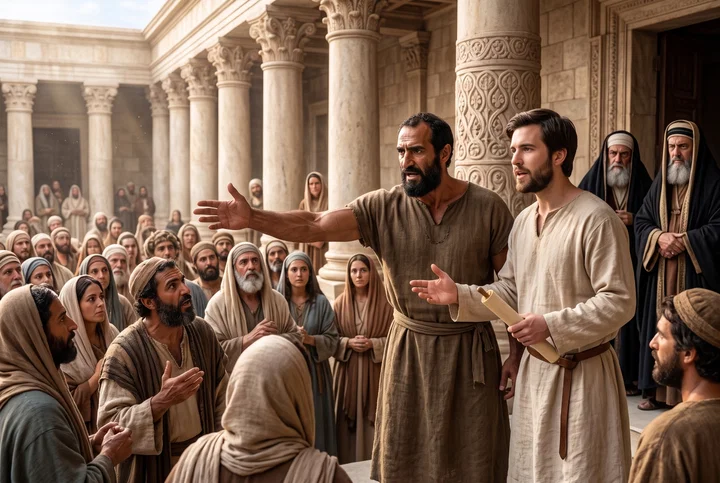
But ye denied the Holy One and the Just, and desired a murderer to be granted unto you;
Translations
But you denied the Holy One and the Just, and desired a murderer to be granted to you;
King James Version, KJV Cambridge Paragraph Bible
But ye denied the Holy One and the Just, and desired a murderer to be granted unto you;
But ye denied the Holy One, and the Just, and desired a murderer to be granted to you,
Revised Version, American Standard Version
But ye denied the Holy and Righteous One, and asked for a murderer to be granted unto you,
and ye the Holy and Righteous One did deny, and desired a man — a murderer — to be granted to you,
But ye denied the holy and righteous one, and asked that a man [ that was] a murderer should be granted to you;
But, ye, denied, the Holy and Righteous One, and claimed a man that was a murderer to be granted you;
Berean Standard Bible, Majority Standard Bible
You rejected the Holy and Righteous One and asked that a murderer be released to you.
But you denied the Holy and Righteous One and asked for a murderer to be granted to you,
But you would have nothing to do with the Holy and Upright One, and made request for a man of blood to be given to you,
But ye denied the Holy one and the Iust, and desired a murtherer to be giuen you,
Douay-Rheims (Challoner revision)
But you denied the Holy One and the Just, and desired a murderer to be granted unto you.
Pictures
Cross-references 20 of 33
- Luke 23:18-25
And they cried out all at once, saying, Away with this man, and release unto us Barabbas:
The crowd demands a murderer’s release and Jesus’ condemnation.
- Acts 2:23
Him, being delivered by the determinate counsel and foreknowledge of God, ye have taken, and by wicked hands have crucified and slain:
Peter also charges his hearers with handing Jesus over to be killed.
- Acts 4:11-12
This is the stone which was set at nought of you builders, which is become the head of the corner.
The rejected Jesus is the cornerstone and the only source of salvation.
- Acts 3:19
Repent ye therefore, and be converted, that your sins may be blotted out, when the times of refreshing shall come from the presence of the Lord;
After charging them with denying Christ, Peter calls them to repent so their sins may be blotted out.
- Matthew 27:20-21
But the chief priests and elders persuaded the multitude that they should ask Barabbas, and destroy Jesus.
The crowd chooses Barabbas and rejects Jesus.
- Acts 7:52
Which of the prophets have not your fathers persecuted? and they have slain them which shewed before of the coming of the Just One; of whom ye have been now the betrayers and murderers:
Both texts call Jesus the Just One whom the people rejected.
- Acts 5:31
Him hath God exalted with his right hand to be a Prince and a Saviour, for to give repentance to Israel, and forgiveness of sins.
Jesus, whom they rejected, is exalted as Prince and Saviour.
- Acts 3:18
But those things, which God before had shewed by the mouth of all his prophets, that Christ should suffer, he hath so fulfilled.
Christ’s suffering fulfilled what God foretold through the prophets.
- Acts 22:14
And he said, The God of our fathers hath chosen thee, that thou shouldest know his will, and see that Just One, and shouldest hear the voice of his mouth.
Both texts name Jesus the Just One.
- Isaiah 53:5
But he was wounded for our transgressions, he was bruised for our iniquities: the chastisement of our peace was upon him; and with his stripes we are healed.
The innocent one suffers for the guilt of others.
- Acts 2:37
Now when they heard this, they were pricked in their heart, and said unto Peter and to the rest of the apostles, Men and brethren, what shall we do?
The charge of crucifying Jesus pricked the hearers’ hearts.
- Acts 3:26
Unto you first God, having raised up his Son Jesus, sent him to bless you, in turning away every one of you from his iniquities.
God offered the promised blessing through Jesus even as he was denied.
- Mark 15:11-15
But the chief priests moved the people, that he should rather release Barabbas unto them.
The crowd asks for a murderer to be released and Jesus to be crucified.
- Acts 4:10
Be it known unto you all, and to all the people of Israel, that by the name of Jesus Christ of Nazareth, whom ye crucified, whom God raised from the dead, even by him doth this man stand here before you whole.
Peter again identifies those responsible for crucifying Jesus.
- Matthew 27:25
Then answered all the people, and said, His blood be on us, and on our children.
The crowd accepts responsibility for Jesus’ blood after rejecting him.
- John 19:6
When the chief priests therefore and officers saw him, they cried out, saying, Crucify him, crucify him. Pilate saith unto them, Take ye him, and crucify him: for I find no fault in him.
The crowd demands that Jesus be crucified.
- Luke 23:14
Said unto them, Ye have brought this man unto me, as one that perverteth the people: and, behold, I, having examined him before you, have found no fault in this man touching those things whereof ye accuse him:
Pilate found no fault in Jesus, whom the people rejected.
- John 19:15
But they cried out, Away with him, away with him, crucify him. Pilate saith unto them, Shall I crucify your King? The chief priests answered, We have no king but Cæsar.
same cry Away with Him
- Acts 13:27
For they that dwell at Jerusalem, and their rulers, because they knew him not, nor yet the voices of the prophets which are read every sabbath day, they have fulfilled them in condemning him.
The rulers’ failure to recognize Jesus fulfilled prophecy.
- 1 Peter 3:18
For Christ also hath once suffered for sins, the just for the unjust, that he might bring us to God, being put to death in the flesh, but quickened by the Spirit:
The righteous suffers for the unrighteous.
Commentary
Each commentary is drawn from primary sources: the writings of Ellen G. White and Adventist pioneers and periodicals. Each commentary is separate. Its own words are not a quotation; follow the references to read the source passages.
Ellen G. White
33 sources
Filled with the Holy Spirit after Pentecost, Peter boldly charged the amazed men of Israel in the temple right after the healing of the man lame from birth, declaring the cure was not by the apostles' own power or holiness but because the God of Abraham, Isaac, and Jacob glorified His Son Jesus, wrought through faith in His name and merits to give perfect soundness.SPBC 139.2EW 159.2RH Jun 8, 1911 Its titles proclaim Jesus as the Holy One and the Just, the Holy and Righteous One, and the Prince of life.Ms 22, 1900, par. 5–10Ms 91, 1910, par. 11AA 59.2–60.1 To deny Him was to deliver Him up and reject Him before Pilate when Pilate was determined to let Him go, to desire a murderer and robber to be granted instead, and to kill and crucify Him, but God raised Him from the dead on the third day triumphant over the tomb, of which the apostles were witnesses.EW 159.2Ms 160, 1898, par. 23–26SG1 80.2 That rejection was a great sin done in ignorance by the people and their rulers, yet ignorance did not excuse them because they had strong evidence they were responsible to accept, and they hated Him because His pure and holy character and teaching exposed their selfishness, corruption, and hypocrisy.AA 59.2–60.1RH Jun 8, 1911Ms 9, 1898, par. 25–264SP 47.1Ms 13, 1892, par. 23–25 Even those who denied Him were not left to despair but were called to repent and be converted for the blotting out of sins and times of refreshing before God sends Jesus again, and that same charge comes with striking force now, for to slight or reject heaven-sent light places one in the same position as those who denied Christ.Ms 91, 1910, par. 11AA 59.2–60.1RH Jun 8, 1911Lt 26, 1893, par. 4–9Ms 18, 1888, par. 34
Setting and Meaning
Peter's charge was spoken boldly under the power of the Holy Spirit to the amazed men of Israel crowded in the temple immediately after the healing of the man lame from birth at the temple gate.SPBC 139.2EW 159.2RH Jun 8, 1911Lt 26, 1893, par. 4–9 The deniers had expected to find the disciples discouraged, crestfallen, hopeless and ready to disown their Lord after the crucifixion, but with amazement they heard clear, fervant testimony given with power after the resurrection and the descent of the Holy Spirit on the day of Pentecost.SPBC 139.2Lt 26, 1893, par. 4–9 Peter declared that the man was not made to walk by his and John's own power or holiness, but because the God of Abraham, Isaac and Jacob glorified His Son Jesus of Nazareth.EW 159.2AA 58.3–59.17RED 13.3 The cure was wrought in Jesus' name and through His merits, and faith in His name made strong the man seen and known and gave him perfect soundness and complete wellness.RH Jun 8, 1911Lt 26, 1893, par. 4–9AA 58.3–59.17RED 13.3 With great power the apostles witnessed to the resurrection of the Lord Jesus, whom God had raised from the dead, and great grace was upon them all, so that their words and works represented the words and works of their Teacher and all who heard said they had learned of Jesus and talked as He talked.SPBC 139.2RH Jun 8, 1911Lt 26, 1893, par. 4–9
The titles name Jesus as the Holy One and the Just, the Holy and Righteous One, and the Prince of life.EW 159.2Ms 22, 1900, par. 5–10AA 59.2–60.1RH Jun 8, 1911SG1 80.2 To deny Him meant delivering Him up and rejecting Him before Pilate when Pilate was determined and ready to let Him go, and instead desiring that a murderer and robber be granted and released to them.EW 159.2Ms 22, 1900, par. 5–10Ms 91, 1910, par. 11Ms 160, 1898, par. 23–26Ms 1, 1869, par. 10–12 They killed and crucified the Prince of life by charging Him with blasphemy when, encased in unbelief and barricaded with prejudice, He claimed to be the only begotten of the Father, and by condemning Him to a cruel death.EW 159.2Ms 1, 1869, par. 10–12Lt 65a, 1894, par. 8 But He burst the fetters of the tomb and God raised Him from the dead on the third day triumphant over the tomb, of which the apostles were witnesses.EW 159.2SG1 80.27RED 13.3Lt 65a, 1894, par. 8 Peter holds the people responsible for this rejection of the One whom God glorified and raised, contrasting their choice of a murderer with their denial of the Holy and righteous One.Ms 160a, 1898, par. 26–28AA 57.1SG1 80.2
Its setting turns on the contrast between Jesus' cruel death and the healing later given in His name.EW 159.2AA 57.2–58.2 The crippled man had hoped to be healed by Jesus but learned that Jesus had been put to a cruel death, and the priests had expected miracles to stop when Jesus was crucified, while the people wondered where the disciples got power after His death.EW 159.2AA 57.2–58.2 That same bold witness shows Peter entirely a different man after his conversion from the self-confident, boasting disciple who a few hours after promising to go with Jesus to prison and to death denied Him thrice in the judgment-hall when accused of being His disciple, emphasizing the third denial with cursing and swearing in the very hour he should have watched in prayer.Ms 39, 1891, par. 8–9STMW6 5.1–6.1 The grieving, sad look Jesus gave him was not hopeless and broke his heart to conversion, so that Christ was in him as a well of water springing up unto everlasting life and his faithful witness rang out clear and distinct like a trumpet giving a certain sound.Lt 26, 1893, par. 4–9STMW6 5.1–6.1 This fulfills the promise that after the Holy Ghost came they would receive power to be witnesses, and shows that restoration reaches the soul through the Spirit's transforming power, though Peter himself had been guilty of the same sin of rejecting the Holy and Just One.Ms 109, 1898, par. 12–13STMW6 5.1–6.1
Guilt and Cause of Rejection
The denial was a great sin in rejecting the Holy and Righteous One and choosing a murderer instead, putting Him to death by crucifixion, yet it was done in ignorance by the people and their rulers.AA 59.2–60.1RH Jun 8, 19117RED 13.3 That ignorance did not excuse them, for they had been given strong evidence and were responsible to accept it, their ignorance resulting from choosing not to know and not seeking to study, and their unbelief made them guilty of the death of God's Son.RH Jun 8, 1911Ms 9, 1898, par. 25–26 In acting in ignorance they fulfilled what God had showed by all the prophets that Christ should suffer.RH Jun 8, 19117RED 13.3
They rejected and crucified Him because His pure and holy character exposed and rebuked their selfishness and corruption.4SP 47.1PK 710.2 His life among them exposed their selfishness and their refusal to honor God's claim over them as stewards of His vineyard, making them responsible for His crucifixion.PK 710.2 Though unable to convict Him of sin and seeing their own hypocrisy exposed by His teaching, the leaders hated the way He revealed their evil ways.Ms 13, 1892, par. 23–25
When He claimed to be the only begotten of the Father, men encased in unbelief and barricaded with prejudice denied Him as the holy and just One, charging Him with blasphemy and condemning Him to a cruel death.Lt 65a, 1894, par. 8 Satan worked with special skill to lead the nation to believe He was an impostor and to refuse to be taught by Him, though the prophecies gave sufficient evidence to unprejudiced minds that He was indeed the Son of God and the Saviour of the world.SG4 117.2LC1 59.2 They chose their own standard of virtue and purity of life instead of learning from Him, continued their now useless sacrifices and offerings, and kept looking forward to a Messiah who had already come.SG4 117.2LC1 59.2 This blindness came because they overlooked the word of Life and failed to search the Scriptures, neglecting the precious Word of God for things that excite the imagination, and the same cause brings the same result in the last days when many let their minds be engrossed with things of little importance while eternal truth that would sanctify and fit them for immortality is set aside.Ms 1, 1869, par. 10–12 While continually pleading the law and the Father and appealing to the law and to the Father, they rejected their Saviour, saying they would have nothing to do with Him and crying away with Him, denying and putting to death the One who came to give them life, the Angel who had led Israel through the wilderness from Egypt to Canaan.10MR 154.1–2
The priests bore responsibility for His death, for having crucified Him they were determined to suppress the evidence of His continuing work and the apostles' teaching, fearing that people would follow Him and recognize them as guilty of His murder.AA 65.2–66.2 Judas also denied Him as the Holy One of Israel and the spotless Son of God by betraying Him.DA 722.2 His casting himself at Jesus' feet and acknowledging Him as the Son of God and entreating Him to deliver Himself was not true repentance but a confession forced by guilt and a fearful sense of condemnation and judgment, without deep, heart-breaking grief for betraying innocent blood, which Jesus met with pity and no word of condemnation.DA 722.2 Their example warns that refusing truth, reproof, and mercy brings greater guilt when greater light and evidence have been given.Ms 13, 1892, par. 23–25
Repentance and Present Warning
Even those who denied the Holy One and the Just were not left to despair, for the Holy Spirit called them to repent and be converted that sins might be blotted out and times of refreshing might come from the presence of the Lord before God sends Jesus Christ, whom heaven must receive until the restitution of all things spoken by the prophets.AA 59.2–60.1RH Jun 8, 1911Lt 26, 1893, par. 4–9 Their sin was great in rejecting Jesus of Nazareth, the Holy and Righteous One and Prince of life, and putting Him to death by crucifixion while choosing a murderer instead, yet it was done in ignorance by the people and their rulers, fulfilling what God had shown by all the prophets that Christ should suffer.AA 59.2–60.1RH Jun 8, 1911Lt 26, 1893, par. 4–9 The charge was spoken plainly to the wondering people immediately after the healing of the lame man at the temple gate, with proof that God had raised Jesus from the dead and that the cure was wrought in His name and through His merits, faith in His name making strong the man seen and known and giving him perfect soundness.RH Jun 8, 1911Lt 26, 1893, par. 4–9 There is no hope of salvation except through the mercy of the One they rejected and crucified, and forgiveness of sins comes only through faith in Him.AA 59.2–60.1RH Jun 8, 1911
That faithful witness rang out clear and distinct like a trumpet giving a certain sound, as bold Spirit-filled preaching after the crucifixion, resurrection, and descent of the Holy Spirit at Pentecost, when disciples expected to be discouraged and hopeless preached with fervor and power because Christ was in them as a well of water springing up to everlasting life.Lt 26, 1893, par. 4–9 Peter stood to answer for his Lord in the midst of unbelieving priests and Pharisees, not hesitating to tell the truth though it would bring disfavor, charging his hearers with rejecting Christ and choosing a murderer in His place.Lt 26, 1893, par. 4–9Lt 35, 1891, par. 9–11 This testimony astonished the priests, the captain of the temple, and the Sadducees, who were grieved that the apostles taught the people and preached through Jesus the resurrection from the dead, and they laid hands on them and jailed them until the next day.Lt 26, 1893, par. 4–9 Yet many who heard believed, to about five thousand men, and the same plain testimony stands against those who falsely judge and threaten God’s messenger.Lt 26, 1893, par. 4–9Lt 35, 1891, par. 9–11
The charge comes with striking force to people now, pressing them to repent and be converted, and the whole chapter where it stands should be read attentively.Ms 91, 1910, par. 11 The light God gives must be appreciated and cherished, and to slight, refuse, or reject heaven-sent light is done at great peril and brings condemnation, placing those who do so in the same position as those who denied Christ.Ms 91, 1910, par. 11Ms 18, 1888, par. 34 This blindness came because they overlooked the word of Life and failed to search the Scriptures, neglecting the precious Word of God for things that excite the imagination.Ms 1, 1869, par. 10–12 The same cause brings the same result in the last days, when many are weighed in the balances and found wanting because minds are engrossed with things of little importance while the eternal truth that would elevate, sanctify, refine, and fit them for immortality is set aside.Ms 1, 1869, par. 10–12
Sacrificing principle to mammon by choosing selfish gain over loyalty to God dishonors the Holy One and the Just.Lt 137, 1898, par. 17 His title as the Just One identifies Him as the One whose coming is near, and the expectation of His return gives comfort and courage to endure trials and remain faithful.RH Feb 14, 1856 As the spotless and life-giving Son of God He was rejected and killed as though a threat to public order, entering the grave as the bearer of sin to open it for all who accept Him as personal Saviour, His death paying the redemption price for the fallen world and offering the sacrifice for sin.Ms 111, 1897, par. 35–36
Sources
Pioneers and periodicals
51 sources
Peter spoke these words to the wondering crowd in the temple just after the lame man was healed, turning their minds from the miracle to their need of salvation and declaring that the cure was wrought in the name of Jesus and through his merits, not by any holiness in himself.RH Jun 8, 1911ST May 24, 1883ST Jan 21, 1889ST Mar 11, 1897ST Jul 18, 1900
The One they denied is the Holy One and the Just, spotless and innocent with no unrighteousness in him, who kept his Father's holy law, and who is also the Prince and Author of Life and the leader of salvation.ST Aug 5, 1913ST Sep 5, 1900RH Dec 10, 1867ST
They rejected him and demanded that Barabbas, a murderer, be granted and released to them instead, pressing Pilate to condemn Jesus even though Pilate had found him innocent and was ready to let him go.ST May 24, 1883ST Jul 15, 1897ST Jan 7, 1897
That great crime was done in ignorance through deception, not recognizing him as the promised Messiah, yet ignorance did not excuse them, and the guilt of his death rests not only on that congregation but on every individual transgressor.RH Jun 8, 1911ST Nov 4, 1886ST Nov 14, 1892ST Jun 3, 1897
Even those who denied him were not left to despair, for the call was to repent and be converted that sins might be blotted out, since there is no hope of salvation except through the mercy of the very One they crucified, and forgiveness only through faith in him.RH Jun 8, 1911ST Feb 7, 1884ST Apr 3, 1893
His rejection, suffering, death and resurrection fulfilled what God had shown by all the prophets that Christ should suffer, and his raising from the dead beyond death's mastery confirmed his divine mission.RH Jun 8, 1911ST Aug 5, 1913ST Dec 8, 1898ST Jan 15, 1902
Setting and Witness
Peter spoke these words in the Jerusalem temple to the wondering crowd gathered right after the healing of the lame man at the temple gate, at the Beautiful Gate, turning their attention from the miracle itself to their need for salvation from sin and testifying that the cure was wrought in Jesus' name and through his merits.RH Jun 8, 1911ST Mar 11, 1897ST Jul 18, 1900ST Dec 12, 1895 The healing of the powerless man illustrates that God's word gives power to do what it commands when received in faith, so as Jesus' words enabled the man to rise and walk, his grace can make the sinner righteous and able to obey.ST Sep 10, 1896 Unlike a healer who leaves out his name, Peter carefully identified the source of the healing power and honored Jesus, directing the people away from himself and toward God, showing that a human agent of healing should not receive the worship or thanks due to God.ST Dec 12, 1895RH Jul 8, 1909
He attributed the miracle to Christ and not to any holiness in himself.ST May 24, 1883ST Jan 21, 1889ST Jan 28, 1913 The speaker was the same Peter who had denied Jesus thrice, even thrice in an hour, and though the charge was spoken to proud men who had never professed to love or follow Jesus, to proud Pharisees, it recoiled on Peter himself.ST May 24, 1883ST Jan 21, 1889ST Jan 28, 1913 He who had professed love for Jesus and willingness to die for him had denied his blessed Lord as a poor, lost, undone, guilty sinner, piercing him afresh and wounding him in the house of his friends.ST Jan 21, 1889ST Jan 28, 1913 Jesus looked on Peter with a loving face full of sorrow, and with that look came remembrance of his sins, so that he wept over his cruelty and ingratitude and ungratefulness, asked the Master to forgive him, and was confessed, forgiven and restored to fellowship and communion with him.ST May 24, 1883ST Jan 21, 1889ST Jan 28, 1913 He now trusts not in himself for sustaining grace but in Christ, who told him when turned from self to him to strengthen his brethren, and who once denied through fear when fear overcame him later through repentance, humility and trust in God rather than confidence in himself boldly stood before the crowd and declared their guilt.ST May 24, 1883ST Jan 21, 1889ST Jan 28, 1913RH Sep 28, 1869
The verse belongs to Peter's address concerning Christ's rejection and death, his crucifixion, resurrection, ascension and exaltation, preached to the Jews in Jerusalem, which became the keynote of the good news.ST Jun 1, 1882RH Feb 18, 1909RH Nov 21, 1871 This pointed accusation was made with the power given at Pentecost, and with Pentecostal power it helped bring the crowd to conviction so that thousands, about five thousand, believed in Jesus whom they had helped crucify.RH Feb 18, 1909RH Apr 7, 1868 His bold directness in telling his Jewish hearers they denied Jesus and killed the Prince of Life proves he was not afraid to offend them.RH Nov 21, 1871
Titles of Jesus
The verse names Jesus the Holy One and the Just, the Holy and Righteous One, the righteous Messiah repeatedly called by that name, and those who put trust in him are happy.ST Sep 5, 1900RH Dec 10, 1867ST Apr 1, 1875RH Nov 18, 1862 The same naming joins to it the Prince of Life, the Prince or Author of life whom men killed but God raised, and that raising with the rejection fulfills prophecy concerning Christ.RH Apr 29, 1902 He is also the prophet foretold by Moses and the Restorer, who is Jesus himself and not a separate prophet who must appear in the last days before Christ can come. He is Zion's King and the holy King.RH Apr 28, 1853
His holiness means he cannot impart sin or minister sin to anyone, for the life flowing from him is pure, and sin appears in those seeking righteousness through him only when they stop its life-giving flow.ST Sep 5, 1900 He kept his Father's commandments and holy law, with no unrighteousness in him, spotless and innocent and holy even under anguish and reproach.RH Apr 28, 1853RH Aug 9, 1906RH Dec 9, 1858 Yet as the Holy and Just One he was condemned while guilty people were acquitted, bearing the debt and punishment of sinners to redeem them from wrath and deliver them as the innocent Master paying for guilty servants.ST Jan 22, 1902STRH Dec 9, 1858 That choice set the innocent Jesus over against the criminal chosen in his place.ST Jan 22, 1902ST
His description as just links his character with the justice of God's law, showing Christ is just as the law is just.ST Feb 6, 1901 As the Holy One and the Just who became man he could really die and did die, denied and rejected for a murderer, and his real death exposes the false claim that man is naturally immortal and therefore Christ could not die.ST Dec 8, 1898 His death made an atonement for sin bringing remission to all who believe in him.ST Dec 8, 1898 God's raising him from the dead, beyond death's mastery, confirmed his divine mission after the professed people of God had slain the Just One.ST Jan 15, 1902
As Prince of Life he was killed in humiliation and obedience unto death, and the following verse joins his denial as the Holy One to his killing as the Prince of Life.ST Aug 5, 1913 Raised by God, he stands as leader of life and salvation and therefore leader and perfecter of faith.RH Apr 29, 1902 Living, saving faith cannot be separated from experiencing his life, and his title as Prince of Life connects him with the peace he gives.RH Apr 29, 1902 The apostolic proclamation of that resurrection became the keynote of the good news.
Rejection for a Murderer
The Holy One and the Just was denied and rejected by the people, by the Jews, by Israel, by Jerusalem, by the Jewish leaders and by the professed people of God, who desired a murderer, Barabbas, to be granted and released to them instead.ST May 24, 1883ST Jul 15, 1897ST Jan 7, 1897ST Jan 22, 1902ST In asking Pilate to release a murderer instead they joined in condemning Jesus, even though Pilate had been ready to release Him and had found Him innocent.ST Jul 15, 1897ST Jan 7, 1897STST Nov 4, 1886ST Mar 28, 1911
Their demand and pressure upon Pilate made them guilty of Christ's death, even though Roman authorities carried out the execution.STST Mar 28, 1911ST Jan 22, 1902 What the Roman soldiers did would to all intents have killed Him as guilty of sedition, yet He gave His own life and died sooner of a broken heart than crucifixion alone would have caused.ST Sep 4, 1907 He was put to death by cruel hands with anguish and reproach, bearing the debt and punishment of sinners to redeem them from wrath and deliver them from it.ST May 27, 1913ST His suffering was the innocent Master's payment for His guilty servants, while guilty people were acquitted and He was condemned.ST
They rejected God's final messenger of mercy without recognizing Him as the promised Messiah.ST Jun 3, 1897 They chose Barabbas for release and Jesus for crucifixion because they so loved their iniquities.RH Jun 15, 1911 They made that choice even while Jesus was gently yet earnestly trying to turn them away from their iniquities, which was the greatest blessing God could send by sending His own Son.RH Jun 15, 1911
Peter's bold directness in telling his Jewish hearers that they denied Jesus and killed the Prince of Life proves he was not afraid to offend them.RH Nov 21, 1871
Guilt, Ignorance and Mercy
The great denial was done in ignorance by the people and their rulers, who through deception did not recognize Jesus as the promised Messiah, God's final messenger of mercy, and so fulfilled what had been shown by all the prophets that Christ should suffer, yet that ignorance did not excuse them and they remained accountable.RH Jun 8, 1911ST Nov 4, 1886ST Jun 3, 1897ST Apr 3, 1893 The whole congregation was guilty of the death of the Son of God, who died through love for them, and the same guilt belongs to each individual transgressor, for each sinner is guilty of the blood of Christ and of the same deed charged upon that people.ST Nov 14, 1892RH Apr 7, 1868 This brings conviction because Christ died for each individual sinner, and had it not been for sin, with unbelief at the root, He need not have died, the sacrifice being essential to eternal happiness.ST Nov 14, 1892 The rich were not alone in condemning and killing the Just One, though where James speaks of condemning and killing the just he means just or righteous people in general among the oppressed, who suffer without resisting and without defending themselves, not always Christ, while here the title belongs to Christ. The pointed accusation, made with Pentecostal power, helped bring the crowd to conviction, so that thousands believed in Jesus whom they had helped crucify.RH Apr 7, 1868
Even those who denied Him were not left to despair, for the Holy Spirit called them to repent and be converted so that sins could be blotted out and canceled.RH Jun 8, 1911ST Jan 22, 1885ST Nov 4, 1886ST Apr 3, 1893 There is no hope of salvation except through the mercy of the One they crucified, and forgiveness and canceling of sins come only through faith in Him.RH Jun 8, 1911ST Feb 7, 1884ST Jan 22, 1885 The healing of the powerless man at the temple illustrates that God's word gives power to do what it commands when it is received in faith, so as Jesus' words enabled the man to rise and walk, His grace can make the sinner righteous and able to obey.ST Sep 10, 1896 Judas also betrayed and denied Jesus, the spotless Holy One of Israel, but his confession of guilt did not amount to deep repentance, because he felt condemnation without heartbroken grief for betraying the Son of God.RH Aug 9, 1906
Prophecy, Doctrine and Coming
The denial of the Holy One and the killing of the Prince of Life fulfilled what God had shown by all the prophets that Christ should suffer, though done in ignorance by the people and their rulers.RH Jun 8, 1911ST Aug 5, 1913 His first advent as the Seed of the woman to be bruised for iniquities was foretold in Eden, and from Enoch through all patriarchal and Levitical history the prophets spoke of His coming.ST May 19, 1909 That prophetic word revealed His lowly birth, humiliation, suffering and death in obedience unto death, ending in rejection and crucifixion followed by God's raising Him from the dead.RH Jun 8, 1911ST Aug 5, 1913ST May 19, 1909 The cure of the lame man was wrought in His name and through His merits, proving the resurrection and leaving even those who denied Him a call to repent and be converted for forgiveness through faith and mercy in the One they crucified.RH Jun 8, 1911 His title as Prince of Life also joins His rejection and resurrection to the peace He gives.
The promised prophet foretold by Moses is Jesus Himself as Restorer, not a separate prophet who must appear in the last days before Christ can come. Peter's bold telling of the Jews that they denied the Holy One and the Just and killed the Prince of Life, as part of preaching Christ's crucifixion, resurrection and exaltation, proves he was not afraid to offend them.RH Nov 21, 1871 His saying nothing about a new Sabbath in honor of the resurrection was therefore not from fear but because no change of the Sabbath had taken place.RH Nov 21, 1871 Christ is Zion's King, the Holy One in whom is no unrighteousness, who kept His Father's commandments and holy law, so to accuse Him of transgressing them over the Sabbath takes sides with the scribes and Pharisees who denied Him and requires repentance and conversion for blotting out of sins.RH Apr 28, 1853 Honoring the spurious Sabbath repeats the choice of Barabbas, choosing to honor Satan the leader of rebellion rather than Christ.ST Mar 12, 1894
When He became man He could really die and did die, and His real death exposes the false claim that man is naturally immortal and therefore Christ could not die.ST Dec 8, 1898 His death made an atonement for sin bringing remission to all who believe in Him.ST Dec 8, 1898 The title Just One there belongs to Christ whom men denied, condemned and killed, a deed in which the rich were not alone, yet the same wording does not always mean Christ. Where James speaks of condemning and killing the just it means just or righteous people in general among the oppressed who suffer without resisting and without defending themselves in a court of justice. The Jews' rejection of Christ and choice of a murderer cannot establish that God was merely a civil ruler, for the contrast exposes the error of judging God's moral and covenantal role by the civil ruler chosen in His place.RH Apr 15, 1873
The Holy and Just One is the One whose coming is longed for, near and soon.RH Feb 14, 1856RH Sep 26, 1854RH May 26, 1868 Signs that have taken place point to its nearness, and worldwide preparation for war and the health reform work point to it as well, while an era of war must precede the coming of the Just One.RH Sep 26, 1854RH Nov 16, 1916 He is the holy King of ancient days who promised to come back again, holy and peaceful and distinct from the evil spirit and its violence, so those truly waiting for Him do not mistake smoke, cannon and warships for His return.RH Nov 16, 1916 His coming is the hope of peace in a world where nations resort to war, and at His coming the long cruel reign of sin with its wars will end and His everlasting peaceful reign begin.ST Oct 25, 1899 Those who put their trust in the Just One are happy, and the expectation of His return gives believers comfort, courage and happiness to endure trials and remain faithful.RH Feb 14, 1856ST Apr 1, 1875
That coming will be joy to the righteous and calamity only to those clinging to evil, to redeem the finally faithful.RH May 26, 1868 Because probation will soon close, people must examine their hearts, overcome sin, be ready and lay hold of it by faith.RH May 26, 1868
Sources