Luke 22:61
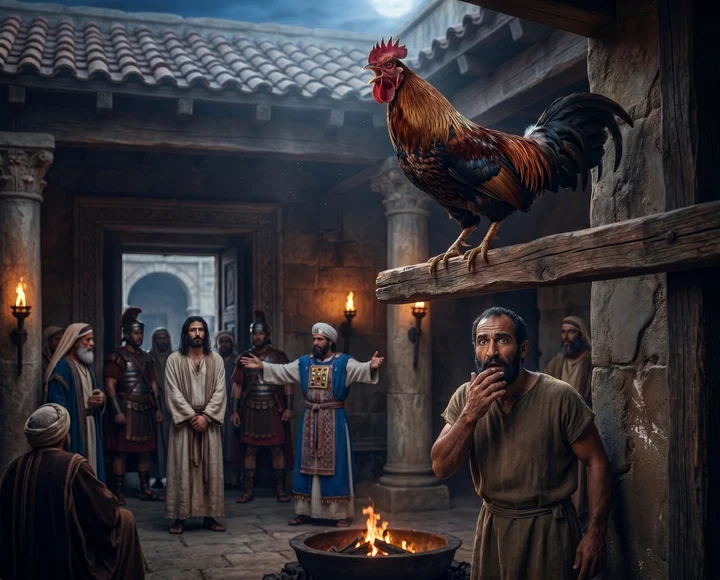
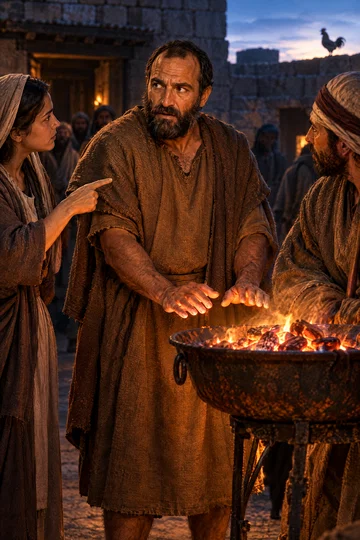
And the Lord turned, and looked upon Peter. And Peter remembered the word of the Lord, how he had said unto him, Before the cock crow, thou shalt deny me thrice.
Translations
And the Lord turned, and looked on Peter. And Peter remembered the word of the Lord, how he had said to him, Before the cock crow, you shall deny me thrice.
King James Version, KJV Cambridge Paragraph Bible
And the Lord turned, and looked upon Peter. And Peter remembered the word of the Lord, how he had said unto him, Before the cock crow, thou shalt deny me thrice.
And the Lord turned, and looked upon Peter. And Peter remembered the word of the Lord, how he had said to him, Before the cock shall crow, thou wilt deny me thrice.
And the Lord turned, and looked upon Peter. And Peter remembered the word of the Lord, how that he said unto him, Before the cock crow this day, thou shalt deny me thrice.
And the Lord turned, and looked upon Peter. And Peter remembered the word of the Lord, how that he said unto him, Before the cock crow this day thou shalt deny me thrice.
And the Lord having turned did look on Peter, and Peter remembered the word of the Lord, how he said to him — 'Before a cock shall crow, thou mayest disown me thrice;'
And the Lord, turning round, looked at Peter; and Peter remembered the word of the Lord, how he said to him, Before [ the] cock crow thou shalt deny me thrice.
And the Lord turned, and looked at Peter; and Peter was put in mind of the declaration of the Lord, how he had said to him—Before, a cock, crow this day, thou wilt deny me thrice!
And the Lord turned and looked at Peter.Then Peter remembered the word that the Lord had spoken to him: “ Before the rooster crows today, you will deny Me three times.”
And the Lord turned and looked at Peter. Then Peter remembered the word that the Lord had spoken to him: “ Before the rooster crows, you will deny Me three times.”
The Lord turned and looked at Peter. Then Peter remembered the Lord’ s word, how he said to him, “ Before the rooster crows you will deny me three times.”
And the Lord, turning, gave Peter a look. And the words of the Lord came to Peter's mind, how he had said, This night, before the hour of the cock's cry, you will be false to me three times.
Then the Lord turned backe, and looked vpon Peter: and Peter remembred the worde of the Lord, how he had said vnto him, Before the cocke crowe, thou shalt denie me thrise.
Douay-Rheims (Challoner revision)
And the Lord turning looked on Peter. And Peter remembered the word of the Lord, as he had said: Before the cock crow, thou shalt deny me thrice.
Pictures



Cross-references 20 of 41
- Luke 22:32
But I have prayed for thee, that thy faith fail not: and when thou art converted, strengthen thy brethren.
Jesus prayed that Peter’s faith would endure Satan’s testing.
- Matthew 26:69-75
Now Peter sat without in the palace: and a damsel came unto him, saying, Thou also wast with Jesus of Galilee.
Peter denies Jesus, remembers his prediction at the cockcrow, and weeps bitterly.
- Mark 14:66-72
And as Peter was beneath in the palace, there cometh one of the maids of the high priest:
Mark recounts Peter’s denials and his response afterward.
- John 18:25-27
And Simon Peter stood and warmed himself. They said therefore unto him, Art not thou also one of his disciples? He denied it, and said, I am not.
Peter denies being Jesus’ disciple again, and the cock immediately crows.
- Luke 22:34
And he said, I tell thee, Peter, the cock shall not crow this day, before that thou shalt thrice deny that thou knowest me.
Jesus foretells Peter’s three denials before the cock crows.
- John 21:15-17
So when they had dined, Jesus saith to Simon Peter, Simon, son of Jonas, lovest thou me more than these? He saith unto him, Yea, Lord; thou knowest that I love thee. He saith unto him, Feed my lambs.
Jesus questions Peter three times after his denial, then restores and commissions him to care for the flock.
- Matthew 26:34
Jesus said unto him, Verily I say unto thee, That this night, before the cock crow, thou shalt deny me thrice.
Parallel account of Jesus predicting Peter’s denial.
- Mark 14:30
And Jesus saith unto him, Verily I say unto thee, That this day, even in this night, before the cock crow twice, thou shalt deny me thrice.
Jesus foretells Peter’s three denials before the cock crows.
- Luke 22:33
And he said unto him, Lord, I am ready to go with thee, both into prison, and to death.
Peter's confident pledge to die with Jesus contrasts with his later denial.
- Mark 16:7
But go your way, tell his disciples and Peter that he goeth before you into Galilee: there shall ye see him, as he said unto you.
The risen Jesus specifically includes Peter in the message after his denial.
- Acts 4:8
Then Peter, filled with the Holy Ghost, said unto them, Ye rulers of the people, and elders of Israel,
Peter’s Spirit-filled testimony contrasts with his earlier denial of Jesus.
- Matthew 26:40
And he cometh unto the disciples, and findeth them asleep, and saith unto Peter, What, could ye not watch with me one hour?
Peter remembered Jesus asking whether he could watch with him for one hour.
- Matthew 26:33
Peter answered and said unto him, Though all men shall be offended because of thee, yet will I never be offended.
Peter confidently claimed he would never fall away before denying Jesus.
- John 13:38
Jesus answered him, Wilt thou lay down thy life for my sake? Verily, verily, I say unto thee, The cock shall not crow, till thou hast denied me thrice.
Jesus foretold Peter’s denial before the cock crowed.
- Luke 22:45-46
And when he rose up from prayer, and was come to his disciples, he found them sleeping for sorrow,
Peter slept while Jesus prayed and warned the disciples to pray against temptation.
- Mark 14:72
And the second time the cock crew. And Peter called to mind the word that Jesus said unto him, Before the cock crow twice, thou shalt deny me thrice. And when he thought thereon, he wept.
Peter remembers Jesus’ prediction after the cock crows and weeps.
- John 18:17
Then saith the damsel that kept the door unto Peter, Art not thou also one of this man’s disciples? He saith, I am not.
Peter’s first denial fulfills Jesus’ prediction remembered after the cock crowed.
- Mark 14:29
But Peter said unto him, Although all shall be offended, yet will not I.
Peter’s confident pledge contrasts with his later denial.
- Matthew 26:71
And when he was gone out into the porch, another maid saw him, and said unto them that were there, This fellow was also with Jesus of Nazareth.
Records the accusation that prompted Peter’s second denial.
- Acts 4:13
Now when they saw the boldness of Peter and John, and perceived that they were unlearned and ignorant men, they marvelled; and they took knowledge of them, that they had been with Jesus.
Peter’s earlier denial contrasts with his later bold witness for Jesus.
Commentary
Each commentary is drawn from primary sources: the writings of Ellen G. White and Adventist pioneers and periodicals. Each commentary is separate. Its own words are not a quotation; follow the references to read the source passages.
Ellen G. White
68 sources
In the judgment hall immediately after Peter's third denial with cursing and swearing, as the cock crew, Jesus turned His face away from His judges and looked directly and fully upon Peter.Ms 51, 1897, par. 15–17ST Jun 6, 18785RED 29.1–2 That look held deep pity, compassion, love, forgiveness and pardon with no anger, yet it was sorrowful and reproving for the denial.EW 138.2ST Oct 19, 1882ST Jun 6, 1878SG1 49.23SP 109.3–110.1 It pierced Peter's heart and awakened his conscience, and with the crowing he remembered the Lord's word that he would deny Him thrice together with his own boast of loyalty even to death.Ms 51, 1897, par. 15–17EW 138.2ST Oct 19, 1882Ms 109, 1898, par. 8–10 He left the palace and went out weeping bitterly in brokenhearted repentance, and the anguish in Christ's face stayed vivid in his memory throughout his life.Ms 51, 1897, par. 15–17RH Feb 6, 19134T 342.1 His repentance was genuine and converting, stripping away self-confidence and self-trust, and Jesus did not cast him off but forgave and restored him and entrusted him to feed the sheep and strengthen his brethren.Ms 109, 1898, par. 8–106RED 23.1SLP 329.1Lt 12, 1861, par. 12–14Ms 3, 1861, par. 19–21
Judgment Hall Setting
The turning and the look took place in the judgment hall at the very moment of the third denial with cursing and swearing, just as the cock crew the third time.Ms 51, 1897, par. 15–17ST Jun 6, 18785RED 29.1–23SP 109.219MR 167.3–168.2 The degrading oaths were still fresh on Peter's lips and its shrill crowing still ringing in his ears when Jesus turned His face away from the frowning judges and looked full and directly upon His poor disciple.Ms 51, 1897, par. 15–17ST Jun 6, 18785RED 29.1–23SP 109.219MR 167.1–2 Though at some distance, their eyes met, and Peter's eyes were involuntarily fixed upon his Master.ST Jun 6, 1878SG1 49.25RED 29.1–23SP 109.219MR 167.3–168.2
Christ Himself heard Peter deny and swear while Christ was being mocked and abused, and that denial added to His anguish.Ms 51, 1897, par. 15–173SP 107.1 It pierced Him more deeply than the insults and mockery of His examination.Ms 51, 1897, par. 15–173SP 107.1 Peter had followed after the betrayal to see what would be done with Jesus, while all the other disciples forsook Christ and fled.SG1 49.2Lt 33, 1879, par. 14–15 At that time Christ stood condemned and humiliated in the judgment hall, wearing the shameful crown of thorns, at the very time when Peter could have shown bravery and fidelity.SG1 49.219MR 59.3–60.2Lt 33, 1879, par. 14–15
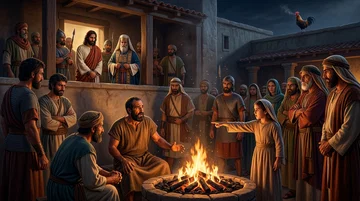
To conceal that he was Jesus' follower from fear for his life, Peter denied being a disciple and pretended indifference.SG1 49.23SP 109.2ST Jun 6, 1878 Inwardly he grieved over Jesus' abuse, and he was angry and surprised that Jesus submitted passively to humiliation.ST Jun 6, 1878 To hide his feelings he tried to join the persecutors' jokes, but his behavior appeared unnatural.ST Jun 6, 1878 He denied his Master with cursing and swearing and used impure speech to deceive his questioners and his accusers and to keep up his assumed character, because the disciples were known for purity of words.SG1 49.23SP 109.2Lt 12, 1861, par. 12–14Ms 3, 1861, par. 19–21
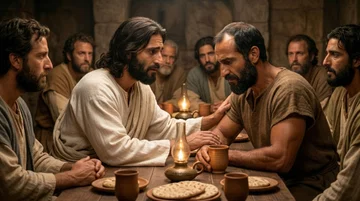
What Peter then remembered was the word spoken in the upper chamber, the upper room, that before the cock crowed, before the rooster crowed, he would deny Christ three times.SG1 49.2RH May 19, 1910Ms 39, 1891, par. 6–7
Christ's Piercing Look
That look was full of deep pity and sorrow, compassion and love, forgiveness and pardon, with no anger in it, gentle even as it confronted Peter with what he had done.ST Oct 19, 1882ST Jun 6, 18783SP 109.3–110.15RED 29.1–23SP 109.2 Peter's eyes met his Master's, and in that countenance he read pity and sorrow rather than condemnation.ST Oct 19, 1882ST Jun 6, 18785RED 29.1–23SP 109.25RED 29.3–30.1
It was sorrowful and reproving, a rebuke given in pity and sorrow for denying Christ, yet it was not hopeless and contained no act of oppression.EW 138.2SG1 49.2SG1 82.1EW 160.2–3ST Jul 16, 1896 It held sorrowful regret and pardoning love, dealing tenderly with one who had denied Him three times, and its grief and sadness broke Peter's heart without crushing hope.SG1 82.1ST Jul 16, 1896Ms 39, 1891, par. 6–7
That look pierced Peter's heart, melted him at once, broke his heart, awakened his conscience to his failure and falsehood, and saved him from further fall.Ms 51, 1897, par. 15–17Ms 109, 1898, par. 8–10DA 712.1–713.1COL 150.1–152.219MR 167.3–168.2 Under grief mingled with compassion and love he understood his own sin and betrayal, and was brought to bitter repentance.Ms 109, 1898, par. 8–10DA 712.1–713.1COL 150.1–152.219MR 167.3–168.219MR 167.1–2
The look spoke pardon and hope, as if to say pardon for the transgression, and assured Peter of pardon.Ms 109, 1898, par. 8–10COL 150.1–152.2Ms 29, 1897, par. 15–17Ms 186, 1897, par. 34–39 Jesus was watching Peter's painful and severe testing, having prayed that his faith would not fail, a testing Satan could bring only with God's permission, and Peter's fall exposed his natural character and traits under trial while his sincere repentance brought light out of failure and strength where he had been weak.Ms 29, 1897, par. 15–17Ms 186, 1897, par. 34–39
That tender look, holding sorrowful regret and pardoning love, reveals Christ living the law in spotless purity, copying no human model, and gives the pattern believers are to follow.ST Jul 16, 1896
Remembrance and Bitter Weeping
At the crowing of the cock and under the direct look of his Master, Peter remembered the Lord's word that before the cock crew he would deny Him three times, and with it his own boast and promise of loyalty even to prison and to death.Ms 51, 1897, par. 15–17EW 138.2RH Feb 6, 1913ST Jun 6, 1878DA 712.1–713.1 He saw that he had done exactly what he had vowed he would never do, he saw his sin plainly, and he was overwhelmed by the force of his betrayal.RH Feb 6, 19133SP 109.3–110.1RH Dec 16, 1902 His eyes had involuntarily met the eyes of Jesus, and the look held deep pity and sorrow with no anger, yet it melted him at once and brought the warning back to his mind.EW 138.2ST Oct 19, 1882ST Jun 6, 1878 In that moment the boasting, the warning, and the threefold denial stood together sharply before him, and he was broken by the plain recognition of his failure and falsehood.RH Feb 6, 19133SP 109.3–110.1DA 712.1–713.1
He recognized how fully Jesus had known his heart, more accurately than he knew it himself.3SP 109.3–110.15RED 29.3–30.1DA 712.1–713.1ST Oct 19, 1882 He remembered both Christ's kindness and patience and the warnings that Satan desired to test and sift him, that Christ had prayed that his faith would not fail, and that after turning again he would strengthen his brethren.RH Dec 16, 1902ST Nov 23, 1915 That prayer and that promise became a ray of hope and a stay to his soul, so that though foreseeing the fall Jesus did not abandon him to despair.ST Nov 23, 1915
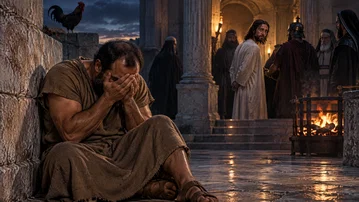
He left the palace and went out weeping bitterly, brokenhearted, repentant, remorseful, and in agony.Ms 51, 1897, par. 15–17RH Feb 6, 1913ST Nov 23, 1915Ms 104, 1897, par. 17–22 The anguish in Christ's face remained vivid in his memory and stayed with him throughout his life.Ms 51, 1897, par. 15–17RH Feb 6, 1913 He carried a deep sense of that sin ever after, marked thereafter by repentance and humility.4T 342.1
With blinding tears he went alone to the Garden of Gethsemane and prostrated himself where he had seen Jesus prostrated in bloody sweat from great agony, shedding penitential tears on the sod stained by the sweat of the Son of God.Lt 54, 1874, par. 15–16 He remembered that he had slept during Jesus' fearful hours of prayer, and his deep grief both over the denial and over sleeping while Jesus prayed humbled him.Lt 54, 1874, par. 15–163T 416.2GW92 401.1 There in Gethsemane his repentance deepened into true conversion, preparing him to pity the tempted, sympathize with the weak and erring, warn the presumptuous, and help and care for other tempted and tried disciples.Lt 54, 1874, par. 15–163T 416.2GW92 401.1Ms 16, 1894, par. 33–34
His repentance was genuine, lasting, and converting, not mere ardent zeal like his bold claim that he would suffer and die with Christ or his hasty act in cutting off the servant's ear.Ms 109, 1898, par. 8–10Lt 12, 1861, par. 12–14 He did not minimize his sin nor return to his former self-confident claims, for his boastful confidence was gone.Ms 109, 1898, par. 8–10Ms 3, 1861, par. 19–21 Having thought himself the most devoted and zealous follower and having been offended at the word that he needed conversion, he now realized his weakness and his ignorance of himself, ceased trusting in himself, and trusted in God for strength instead.Lt 12, 1861, par. 12–14Ms 3, 1861, par. 19–21
Conversion and Restoration
Peter was converted and reconverted, giving himself afresh to his Saviour, and he left the garden a converted man, humbled and ready to pity the tempted, to sympathize with the weak and erring, to caution and warn the presumptuous, and fully fitted to strengthen his brethren and to help and care for other tempted and tried disciples.Lt 54, 1874, par. 15–16EW 138.2SG1 49.23T 416.23SP 230.2–232.1 With blinding tears he went alone to Gethsemane and prostrated himself where he had seen Jesus prostrated in bloody sweat from great agony, remembering that he had slept during Jesus' fearful hours of prayer.Lt 54, 1874, par. 15–163T 416.2 His fall exposed his natural character under trial, yet his sincere repentance brought light and strength where he had been weak.3SP 230.2–232.1 Jesus' love for him did not falter during the denial.3SP 230.2–232.1RH May 19, 1910
Though the denial was great, Jesus did not cast him off but forgave and restored him, entrusting him with the high commission to feed the sheep and lambs and to care for the flock, drawing from him three assurances of love to show his repentance.SLP 329.13SP 230.2–232.1ST Jan 4, 1883RH May 19, 1910 Heaven knew his grief, and the angels' tender concern and solicitude in expressly naming him to receive the news of the resurrection confirmed that his repentance was accepted and his sin forgiven, giving comfort to him as wayward and sorrowing and most despondent of the followers.6RED 23.1ST Aug 22, 1878 His failure humbled him and prepared him to care for Christ's flock.3SP 230.2–232.1ST Jan 4, 1883
Though forgiven and later honored as a faithful minister, he never forgot his fall or claimed anything in himself to boast about, knowing only Christ's grace could overcome the weakness that had led him to sin.SLP 329.1COL 160.1ST Jan 4, 1883 He never forgave himself, and not even the agonies of his coming death lessened the bitterness of his sorrow and repentance over it.SLP 329.1 When condemned as a Jew and a foreigner to be scourged and crucified, his only thought was that he was unworthy of so great an honor as to die in the same manner as his Master, so as a last favor he asked his executioners to nail him to the cross with his head downward, a humility fitting for one who had denied his Saviour.SLP 329.1ST Jan 4, 1883
When he later stood trial before some of the same temple leaders and rulers in the room where he had shamefully denied his Lord, the memory came clearly to him and gave him opportunity to make amends for former cowardice and to honor the name he had disowned and exalt the dishonored name, removing the stain that had dishonored Jesus' name.7RED 15.3AA 62.2–63.17RED 16.1EW 160.2–3 Since his fall he was no longer proud, boastful, impulsive and self-confident, but modest, distrustful of self, firm as a rock, courageous yet modest in magnifying Christ, filled with the Holy Spirit, resolved to speak faithfully with the Spirit's help, and boldly acknowledging Christ as Lord.AA 62.2–63.1SG1 82.17RED 16.1 That bold acknowledgment brought Christ's approval and blessing with the Spirit's filling as its token.SG1 82.1EW 160.2–3 His betrayal had been so shameful and contrary to his former claims of loyalty that he needed to show sincere repentance before returning to apostolic work so that distrust would not hinder his usefulness, rebuilding his fellow disciples' confidence.6RED 47.1
Christ's grace regulated his zeal, making him teachable and able to care for the whole flock, and remembering his own weakness he became patient, sympathetic, forgiving and conciliatory toward others in his care who failed.GW92 365.6–366.13SP 230.2–232.1RH May 19, 1910 Even after his fall and restoration and his close acquaintance with Jesus with its instruction, knowledge, gifts and influence, he was not made safe from later dissembling and wavering under pressure from fear of people or desire for their esteem, which points to human helplessness and the need for God's help to remain faithful.AA 199.2
Causes of Peter's Fall
The denial laid bare the self-confidence, self-love, presumption and ignorance of himself that lay hidden beneath Peter's sincere promise to follow Christ even to prison and to death.GW92 365.6–366.1Lt 33, 1879, par. 14–15Ms 3, 1861, par. 19–21 He had affirmed a constancy superior to the other disciples and declared readiness to die for his Lord, although faithfully warned of his defection.19MR 59.3–60.2Lt 33, 1879, par. 14–15Ms 3, 1861, par. 19–21 When Christ gave the compassionate, friendly warning that Satan desired to sift him as wheat, Peter in self-sufficiency resented it and answered with confident protestations.Lt 33, 1879, par. 14–15Ms 115, 1902, par. 5–6 That self-confidence proved his ruin and tempted Satan to tempt him, so that when the storm of opposition came like a sweeping tempest and Christ stood condemned in humiliation wearing the shameful crown of thorns, at the very time Peter could have shown bravery and fidelity he repeatedly denied his Lord.Lt 33, 1879, par. 14–15Ms 115, 1902, par. 5–6 Self-trusting, self-confident religion is unreliable and fails under the test, for his earlier confidence did not withstand opposition and his boastful confidence was gone when he remembered the word of the Lord.19MR 59.3–60.2Lt 33, 1879, par. 14–15Ms 3, 1861, par. 19–21 Christ saw that those traits would overpower Peter's love unless he was brought to recognize his danger and to cease trusting in himself and trust in God for strength instead.GW92 365.6–366.1Ms 3, 1861, par. 19–21
The immediate pressure that overcame him was fear of scorn, ridicule, suffering and reproach.3SP 112.2ST Jun 13, 1878ST Jul 28, 1898 Though he would have fought boldly and bravely for Jesus, ridicule made him a coward.3SP 112.2ST Jun 13, 1878 By turning from Christ under pressure and denying Him he put Him to open shame.ST Jul 28, 1898 The example warns that scorn and ridicule can make people ashamed of Jesus and lead them to honor His persecutors.ST Jul 28, 1898
To conceal and disguise faith from fear of suffering or reproach is itself a real denial of the Lord, even when one would be courageous in other circumstances.5RED 32.2DA 711.2–33SP 112.2 Associating with people one should avoid, and with those who tempt, places a disciple in the way of temptation.5RED 32.2DA 711.2–33SP 112.2 It can lead believers to say or do what they would otherwise reject and would not do apart from such company.5RED 32.23SP 112.2ST Jun 13, 1878 Those who persuade the conscientious to yield their faith may then despise them for yielding.5RED 32.23SP 112.2ST Jun 13, 1878
He was overcome by the devil because he trusted in himself, and an evil spirit had taken possession of him so that he spoke the words Satan suggested.Lt 35, 1891, par. 5–8Lt 34a, 1886, par. 41Lt 107, 1903, par. 7–9 The same possession occurs when one links with worldlings, talks the language of worldlings, and denies before unbelievers the truth received, making statements that voice the sentiments of Satan.Lt 107, 1903, par. 7–9 The Lord hears that denial, and such a course is exchanging leaders from Christ to Satan.Lt 107, 1903, par. 7–9 One in this condition is forsaking God while feeling no need of grace, ignorant of Satan's devices and not knowing what spirit he is of.Lt 107, 1903, par. 7–9 He must break the spell, die to self, cleanse the soul from defilement, and be reconverted, becoming meek and lowly and free in Christ, as Peter after failing to witness was later converted and became a bold witness.Lt 35, 1891, par. 5–8Lt 107, 1903, par. 7–9
He failed because he had not learned Christ's lessons and had not stood right with God, and because he had not yet learned to be jealous over himself and distrustful of himself and his own strength.Lt 34a, 1886, par. 41Ms 14, 1894, par. 15Lt 34, 1886, par. 39–42 Had he learned and stood firm, he would not have denied his Lord, but being overcome by temptation brought home the lesson he had not learned beforehand.Ms 14, 1894, par. 15Lt 34, 1886, par. 39–42 The fall corrects wrong ideas of what constitutes Christian character.Lt 34a, 1886, par. 41 Those connected with Christ as co-laborers must constantly learn from the divine Teacher, never feel self-sufficient, self-important or fit in themselves, but realize they tread on holy ground and receive daily light and heavenly influence or be no more fit for the work than unbelievers.Lt 34a, 1886, par. 41 Peter was not perfect but improved every opportunity to learn, and his denial taught him self-distrust and the need to repress unfavorable traits and develop Christlike dispositions to the highest standard, while Judas had the same opportunities to learn yet remained a hearer only and not a doer and betrayed his Lord for failure to have his character molded after Christ's example.Lt 34a, 1886, par. 41 His failure did not prevent Christ from accepting imperfect disciples to learn from Him what a perfect Christian character is and to be shaped by His teaching.Lt 63, 1893, par. 18–21
Some lessons are learned only through failure, and Peter was a better man after his fall.Ms 115, 1902, par. 13 The Lord permits His children to fall, and when they repent of wrongdoing He helps them to stand on vantage ground, purifying them by temptation and trial as fire purifies gold.Ms 115, 1902, par. 13 If the heart has not been hardened by disregard of great light, temptation and fall bring repentance, and humble fervent prayer saves the soul from death while confession and restitution hide a multitude of sins.Ms 115, 1902, par. 13 Its faithful recording as a sin that overcame a man favored of God and entrusted with great responsibility lays bare the faults and follies of believers and lifts the veil from the human heart.ST May 31, 1910 It stands as a lesson and warning to all following generations to avoid the evil and to know the need of God's pardoning mercy, even as people of the present day strive, waver and fall into error.ST May 31, 1910 It encourages desponding hearts by showing that through God's grace Peter could gain fresh vigor to rise above his evil nature, take heart again and conquer, so that those who have fallen under temptation as he did may renew the conflict, recover ground, be blessed of God, press on and surmount the obstacles in the way.ST May 31, 1910
Warning for Believers Today
Peter's denial after confidently claiming he would remain faithful even to prison and death warns against trusting in oneself and shows the need to rely on God's wisdom and to learn distrust of self.19MR 59.3–60.2Lt 33, 1879, par. 14–15 Though faithfully warned of his coming defection of character, he affirmed a constancy superior to the other disciples and then denied his Lord when Christ stood condemned and humiliated wearing the shameful crown of thorns in the judgment hall.19MR 59.3–60.2Lt 33, 1879, par. 14–15 At the very time he could have shown bravery and fidelity, while all the disciples forsook Christ and fled, his earlier confidence did not withstand the test when the storm of opposition came like a sweeping tempest.19MR 59.3–60.2Lt 33, 1879, par. 14–15 Self-trusting, self-confident religion is unreliable and fails under test.Lt 33, 1879, par. 14–15
Denying Christ as Peter did is repeated when believers cling to old habits and practices, and those who so deny Him lose the blessing they would have at every step if they would follow on to know the Lord.Ms 91, 1909, par. 24–25 The same denial occurs when someone knows the truth but refuses to live by it.Lt 32, 1896, par. 3–6 It occurs when one links with worldlings and talks the language of worldlings and denies to unbelievers the truth received, making statements that voice the sentiments of Satan.Lt 107, 1903, par. 7–9 Peter denied his Lord because an evil spirit had taken possession of him, and the Lord hears that denial, and He cannot give grace to one who feels no need of it, for such a course is exchanging leaders from Christ to Satan.Lt 107, 1903, par. 7–9Lt 47, 1891, par. 10–13 One in this condition is forsaking God, ignorant of Satan's devices, and does not know what spirit he is of, and he must break the spell, die to self, cleanse the soul from defilement, and be reconverted, becoming meek and lowly and free in Christ.Lt 107, 1903, par. 7–9
Betrayal through confiding plans to unbelievers and discrediting God's cause repeats the failure, and acting like Peter means failing the Lord rather than helping build up and strengthen what remains.Lt 47, 1891, par. 10–13Ms 9, 1883, par. 2–3 Jesus had foreseen Peter's failure, yet did not abandon him to despair.ST Nov 23, 1915 He watches, pleads for him, takes his sin, offers His righteousness, and works to win him back despite Satan's attempt to sift him.Lt 47, 1891, par. 10–13 The promise that He had prayed for Peter and that Peter would later strengthen his brethren became a ray of hope and a stay to his soul.ST Nov 23, 1915 Peter's failure was great, but Jesus did not cast him off; He later forgave and restored him, and Peter's memory of his own weakness helped him become patient and conciliatory toward others who failed.RH May 19, 1910
Peter's failure did not prevent him from being among the disciples through whom learners could receive Christ's instruction and learn what a perfect Christian character is.Lt 34a, 1886, par. 41Lt 63a, 1893, par. 15–17Lt 63, 1893, par. 18–21 His example shows that Christ's disciples could be imperfect, yet be accepted to learn from Christ and be shaped by His teaching.Lt 63a, 1893, par. 15–17Lt 63, 1893, par. 18–21 He denied his Lord when overcome by the devil because he had not yet learned to be jealous over himself and distrustful of himself, but he was not perfect yet improved every opportunity to learn, and his denial taught him self-distrust.Lt 34a, 1886, par. 41 The fall corrects wrong ideas of what constitutes Christian character and teaches that those connected with Christ as co-laborers must constantly learn from the divine Teacher, never feel self-sufficient or self-important but realize they tread on holy ground, and receive daily light and heavenly influence or be no more fit for the work than unbelievers.Lt 34a, 1886, par. 41 They must repress unfavorable traits and develop Christlike dispositions to the highest standard, while Judas had the same opportunities to learn yet remained a hearer only and not a doer and betrayed his Lord for failure to have his character molded after Christ's example.Lt 34a, 1886, par. 41
Sources
Pioneers and periodicals
116 sources
The Lord turned and looked upon Peter just after the cock crew while Peter was still denying him, and at that look Peter remembered the warning that he would deny him three times and went out and wept bitterly.ST Jun 6, 1878ST Apr 28, 1909ST Nov 5, 1894ST Jan 10, 1911ST Mar 14, 1906 The look spoke without words, tender with love, pity and compassion rather than anger or condemnation, yet full of sorrow and sad reproach that broke Peter's heart with the sense of how deeply he had wounded a kind and faithful friend.ST Oct 19, 1882RH Dec 2, 1909RH Apr 4, 1912ST Aug 8, 1906RH Feb 9, 1911 In that same look Peter read forgiveness and pardoning grace, which melted him to true repentance and turned him from denial with shame to a changed and humbled devotion.ST Jan 17, 1900ST Jan 10, 1911RH Jan 7, 1904RH Jul 17, 1866ST Apr 23, 1902 Unlike Judas who sold his Lord for covetousness and despaired, Peter wept like David, faced his sin as God sees it, sought forgiveness, and was restored to fellowship and to feeding Christ's flock.RH Jun 18, 1867ST Mar 3, 1881ST May 24, 1883ST Sep 9, 1875RH Nov 4, 1873 His fall through following afar off, mingling with enemies, and yielding to fear and ridicule stands as warning to stay openly close to Christ in watchfulness and prayer, and as encouragement that even threefold denial does not place the truly penitent beyond mercy.ST Dec 30, 1889RH Sep 28, 1869ST Dec 30, 1889RH Apr 27, 1916ST Mar 7, 1878
Night Setting and Sequence
The verse belongs to the longer account in Luke 22:39-62 of Jesus betrayed and denied, together with his going as his custom was to the Mount of Olives with the disciples, his command to pray that they enter not into temptation, his parting about a stone's cast to kneel and pray that the Father's will be done, the appearing of an angel from heaven strengthening him, his agony and more earnest prayer with sweat as it were great drops of blood falling to the ground, and his finding the disciples sleeping for sorrow.ST Nov 5, 1894 It records Jesus turning to look at Peter after Peter denied him, and the look brought back Jesus' earlier words that Peter would deny him three times before the cock crowed.ST Apr 28, 1909 It is the turning point on the last night before the Saviour's death: after about an hour a third witness insisted Peter had been with Jesus because he was a Galilean, Peter denied knowing what was said, and the cock crew immediately while he was still speaking.ST Nov 5, 1894 Then Jesus turned and looked upon Peter, and Peter remembered Jesus' word that before the cock crew that day he would deny him three times, and he went out and wept bitterly.ST Nov 5, 1894 The look pierced Peter's heart and he went out to weep.RH Sep 19, 1912 It is the part called Peter's Denial of Christ, standing with the Temptation in the Garden and the Betrayal as the three divisions of that night's story.ST Nov 5, 1894
The look in the verse is a second look, the first being in verse 42, and the two belong together for profitable comparison.ST Jul 2, 1896 The denial happened by the fire in the high priest's courtyard with cursing and the loud crowing of the cock, and the sorrowful look proved Jesus had heard.ST Jan 10, 1911 After Peter's third denial and the cock's crow, Jesus turned and looked directly at him, and Peter's eyes met his Master's.ST Jun 6, 1878 The cock's first crow had not made Peter heed the warning; the completed denial and the look brought Jesus' words back to mind.ST Mar 14, 1906 Under that gaze Peter forgot everything else except that he had sinned against Jesus, and the look brought Peter's memory back to Jesus' prediction that he would deny him three times.ST Jun 6, 1878ST Jan 10, 1911
At the time Peter was trying to hide that he was Jesus' follower by pretending indifference while inwardly grieving over Jesus' abuse.ST Jun 6, 1878 He was also angry and surprised that Jesus submitted passively to humiliation.ST Jun 6, 1878 To conceal his feelings he tried to join the persecutors' jokes, but his behavior appeared unnatural.ST Jun 6, 1878 He stood warming himself at their fire among the high priest's servants before denying Jesus.ST Jan 17, 1884 Their friendly welcome should have warned him to be watchful, since kindness from sinful people could disarm him and lead him into danger.ST Jan 17, 1884 His denial was part of small acts of cowardice revealing lack of endurance under great trial, and the indifferent look on his face as he stood warming in the hall was itself a painful trial to Jesus, greater than the physical torments Jesus endured.ST Oct 21, 1897
Meaning of the Lord's Look
Jesus noticed the denial and turned to look at Peter without speaking any rebuke.RH Dec 2, 1909RH Mar 31, 1868ST May 11, 1915 Silence is the most expressive language, and the silent eye reproves more powerfully than noisy clamor.RH Mar 31, 1868 That one tender look softened and broke rebellious Peter and caused him to go out and weep bitterly.RH Dec 2, 1909RH Mar 31, 1868ST May 11, 1915RH Jul 15, 1858 One look from the compassionate Saviour brought Peter to his feelings, with a sorrowing look rather than angry words or even mild reproof.ST May 11, 1915RH Jul 15, 1858
The look conveyed love, pity, compassion, tenderness and kindness, not censure, anger, frowning, chiding, condemnation or oppression.ST Oct 19, 1882ST Jun 6, 1878RH Apr 4, 1912RH Feb 9, 1911RH May 9, 1871 Every look of Christ was love, and that loving look broke Peter's heart and led him to weep bitterly.RH Apr 4, 1912RH Feb 9, 1911RH May 9, 1871 It brought him remorse and grief for losing his peace with his Master.RH Feb 10, 1910 The compassionate response reveals one touched by human weakness, and begins a change shaping the rest of life, where condemnation might have driven to despair.RH Feb 9, 1911 The look accepted repentance, gave the only reproof needed, and left no later rebuke for the sin.RH May 9, 1871
The look also conveyed deep pity and sorrow with sad reproach, grief and sadness.ST Oct 19, 1882ST Jun 6, 1878ST Aug 8, 1906ST Aug 8, 1906ST Dec 30, 1889 It was grieved rather than angry, and it broke Peter's heart.ST Aug 8, 1906ST Aug 8, 1906ST Dec 30, 1889ST Mar 29, 1883 It made him realize how fully Christ knew him and had known beforehand what he would do.ST Aug 8, 1906ST Aug 8, 1906ST Dec 30, 1889 It brought home his disloyalty to him.ST Mar 29, 1883 It was a silent steady gaze full of sadness, sorrow, grace and holiness, saying that Peter's lying denial smites him, and that a friend's sin smites his heart more deeply than any brutal hand, scoffer's spite or enemy's blow.RH Mar 21, 1871
The look united rebuke with kindness, mercy and goodwill.RH Dec 2, 1909RH Jul 18, 1854RH Dec 2, 1909RH Jul 18, 1854 It was reproachful and saddened, piercing the heart and bringing shame to mind.RH Mar 30, 1916RH Apr 9, 1914RH Dec 2, 1909 It brought Peter face to face with the kindness of the friend he had deeply injured.RH Jul 18, 1854RH Jul 18, 1854 That friend had called him from his nets, favored him with close fellowship and a vision of heavenly glory, helped him in sorrow, and honored him in work for the kingdom.RH Jul 18, 1854 Though bound, abused and denied, Jesus remained the kind benefactor about to die for him.RH Jul 18, 1854 Faced with betrayal of such a friend, with past care rushing back to mind, Peter was overcome with remorse and misery, recognizing his selfishness, ingratitude, cowardice and the gravity of denying Jesus when Jesus needed sympathy and help.RH Dec 2, 1909RH Jul 18, 1854RH Dec 2, 1909
In the look Peter read forgiveness, pity and infinite deep love.ST Jan 10, 1911 It carried forgiveness, grace, holiness and pardoning love, with sorrow, compassion and sorrowful regret and no act of oppression.ST Jan 17, 1900ST Oct 19, 1882ST Jul 16, 1896RH Jul 17, 1866RH Mar 21, 1871 The kind forgiving look helped recover Peter and turn him back toward heaven.RH Jul 17, 1866 The same kind of loving look reaches sinners now and moves them to follow him.
There is power in the Saviour's look to melt the heart to repentance and bring salvation.ST Nov 5, 1894ST Nov 5, 1894RH Apr 14, 1903 That look held no condemnation but love and pity, and it melted Peter's heart to repentance so that he went out and wept bitterly, leading immediately to repentance and forgiveness.ST Nov 5, 1894RH Apr 14, 1903 His seeing is not a terrible thing to frighten into obedience but brings salvation.ST Nov 5, 1894 He looks to the one who is poor and of a contrite spirit and trembles at his word, and his face shining upon sinners saves them.ST Nov 5, 1894 Those who keep looking to Jesus in faith receive life and salvation from the saving light of his countenance.RH Apr 14, 1903
The look brought Christ's kindness, patience and past care back to Peter's mind.RH Dec 16, 1902 It recalled the warning that Satan would test him and that Christ had prayed for his faith.RH Dec 16, 1902RH Dec 16, 1902 The promise that Peter would later strengthen his brethren became a ray of hope and a stay to his soul, so that though failure was foreseen he was not abandoned to despair.ST Nov 23, 1915RH Nov 7, 1907 Seeing love and compassion in it, Peter recognized he had done exactly what he had vowed he would never do, and the force of the fall overwhelmed him.RH Dec 16, 1902RH Dec 16, 1902
Christ's response displays his meekness toward his friends and gives the pattern to follow.ST Jul 16, 1896RH Jul 17, 1866RH Apr 2, 1861 He did not frown upon Peter nor even chide him, but turned and looked upon him with mingled pity and love.RH Jul 17, 1866RH Apr 2, 1861 He lived the law in spotless purity, copying no human model.ST Jul 16, 1896 His example condemns resenting injury in word or in sour and sullen looks, and condemns injuring the cause by a hasty overbearing temper toward opposers, calling instead for forbearance and love that seeks to do them good.RH Apr 2, 1861
The look that filled Peter with shame and turned him from denial to repentance warns of greater terror when Christ looks on those who have denied him as Judge and condemns them.RH Sep 18, 1856 Denying Christ is more than speaking a few passing words.RH Sep 18, 1856 It brings a day when the sinner will hear condemnation from the very Advocate and Intercessor from whom mercy was hoped.RH Sep 18, 1856 Christ's coming in the clouds will be a different, fearful sight for those who have rejected him, when all will see him and the peoples of the earth will mourn.RH Jul 18, 1854
Remembrance Weeping and Repentance
The look together with the crowing brought back to mind the prediction that the denial would happen three times before the cock crowed, joining boast, warning and denial in one sharp remembrance that made the sin appear plainly as infinitely evil in God's sight, a memory that stayed for life.RH Feb 6, 1913ST Aug 12, 1880RH Jul 21, 1868ST Aug 13, 1912 The sorrowful gaze melted the heart, awakened grief and shame over denying a known and loved Lord, and at the same time left hope because love was seen in it.RH Jul 21, 1868ST Aug 13, 1912 The crowing itself recalled the foretold sequence and helped bring to self-recollection, with sadness and love read in the face turned toward the denier.RH Feb 6, 1913ST Aug 12, 1880ST Aug 13, 1912
Only hours before there had been vehement assurance of faithful following unto death though all others forsook, and then came vehement denial in the midst of impetuous rage with superfluous cursing and swearing until the look brought to self again.ST Mar 3, 1881 The grief that followed was as bitter as that of Judas, a bitterness of going out and weeping bitterly known only to those who have learned to view sin as God views it, entering into God's own feelings and views about sin.ST Mar 3, 1881 Yet despair of self did not become despair of God, because hope sprang from seeing God in it all, which is sorrowing according to God for guilt and offense against God rather than for consequences.ST Mar 3, 1881
Repentance here is like ice melted and not merely ice broken, a repentance unto life shown in the life by which love guided by Bible principle softens and reshapes.RH Jun 18, 1867 The contrast stands against Judas, who through covetousness sold his Lord for thirty pieces of silver and hanged himself, whereas Peter denied his Lord and repented by weeping as David did after sinning, unlike Achan who sinned through covetousness and perished.RH Nov 4, 1873 Covetousness is therefore a most dangerous rock with little hope for the one who runs upon it.RH Nov 4, 1873
From that moment there was change, for the tender loving look brought true repentance in which sin and Saviour were both seen more clearly.ST Jan 10, 1911RH Jan 7, 1904 Everything else was forgotten except having sinned against Jesus, and the broken heart that read forgiveness and pity and infinite deep love rushed out to the garden where sleep had overtaken watching during the bloody sweat, to fall down in bitter remorse with strong crying to beg forgiveness.ST Jan 10, 1911 The denial had gone so far as reverting to the old habit of cursing and swearing, and it was followed by bitter weeping and cruel remorse even on the Sabbath day after, yet with remembrance by Jesus and a call not to despair but to come back and walk near.RH Jan 7, 1904ST Apr 23, 1902
Warning may go unheeded until denial has been repeated, and such failure can expose self-conceit and lead to meekness.ST Mar 19, 1894 Though the soul may be healed, wounds and scars remain and lost innocence does not return.ST Mar 19, 1894 Sincere repentance does not remove the need for lifelong watchfulness, since temptation to repeat the sin may return.ST Mar 19, 1894ST Jul 10, 1893
Denying Christ is bad, but failing to repent is worse, and the quick repentance joined to the denial shows the difference.ST Nov 21, 1892ST Oct 25, 1877 Grievous sin must be faced with humiliation and confession, with the wrong thoroughly exposed and cleansed before forgiveness and favor bring healing.ST Jul 10, 1893 A true convert continues to repent even after hoping for pardon.ST Jul 10, 1893ST Oct 25, 1877
As the look brought the word to mind and exposed the sin, so a conscience awakened by the Holy Spirit can expose even a doubtful principle as sin, leading to a guilty look toward Christ and grief over it.RH Dec 8, 1863 The same turning of mind back to spoken words and recognition of failure is recalled in the home, when awareness of shortcomings and of harshness toward family brings that guilty remembrance.RH Dec 8, 1863ST Jan 30, 1896
Pardon Restoration and Encouragement
The look rebukes and at the same time awakens and pardons, recalling the warning, bringing denial and kindness to mind, awakening sorrow and then leading toward pardon and renewed strength.ST Oct 24, 1911RH Jul 7, 1903RH Jul 18, 1854 It heals the soul of one who professed Christ but dishonored that profession, awakening renewed devotion so that the forgiven disciple gives himself wholly to the Lord.RH Aug 14, 1913 It awakens love and loyalty and sends the fallen one out in remorse, for it is pity and love and not condemnation, and it brings the heart to brokenness and to saving personal knowledge beyond mere proclaimed loyalty.RH Nov 7, 1907RH Jul 13, 1911 Though foreseen failure is not excused, the erring are not abandoned to despair, and afterward the reclaimed may stand on firmer ground and oppose Satan's work.RH Jul 18, 1854RH Nov 7, 1907
Peter recognized his guilt when sorrowful loving pity brought denial and warning back with memory of his sins, and he wept, sought forgiveness, and was restored to fellowship and communion.ST May 24, 1883ST Jan 28, 1913ST Jan 21, 1889 He wept to think how cruel and ungrateful he had been in thrice denying his Lord within the hour, piercing Him afresh and wounding Him in the house of His friends as a poor lost undone guilty sinner.ST Jan 28, 1913ST Jan 21, 1889 He asked the Master to forgive him, and he learned no longer to trust in Peter for sustaining grace but to trust in Christ alone.ST May 24, 1883ST Jan 28, 1913ST Jan 21, 1889
Christ had warned of weakness while still offering hope, and the look of grief, compassion, love and pity broke the heart, brought bitter repentance, and assured of pardon.RH Jun 18, 1914 That tender pitying look was the only reproof given, melting the heart, accepting repentance, and never afterward turned into rebuke for the sin.RH May 9, 1871 Though failure was foreseen, the earlier promise of prayer and hope sustained in anguish, self-confidence was replaced by contrition, and the promise that the prayed-for one would later strengthen his brethren became a ray of hope and a stay to the soul.ST Nov 23, 1915RH Nov 7, 1907
Terrible failure did not have to crush, for true repentance and return brought humbling and change, and the response to failure was followed by power and fruitful preaching.RH Jan 9, 1908 Genuine sorrow was forgiven, and because he repented Peter later became a great preacher in the Christian church.ST May 11, 1915 After three years of instruction and example under Jesus, the impulsive unstable character was remade with rock firmness, and he became a preacher, a worker of miracles, and a Bible writer.RH Aug 7, 1913
Fear, doubt and cowardice had overcome him in the threefold denial, yet Christ knew the conflicting emotions of that night and the depths of contrition wrought since.ST Sep 9, 1875 The threefold question about love brought the threefold denial fresh to mind, ending confidence, boastfulness and comparing above others, leaving distrust of the deceitful heart and appeal to all-knowing knowledge of love.ST Sep 9, 1875 The answer was reinstatement in apostolic office with renewal of the commission to feed sheep and lambs, and the severe trial became blessing that left him humbled, converted and ready for his great work; repentance and pardon were thus followed by reinstatement to name and privilege.ST Sep 9, 1875ST Jul 16, 1902
Peter had denied as foretold, yet was forgiven and entrusted with caring for God's flock.ST Jan 4, 1883 He was not cast off despite great failure, and memory of his own weakness helped him become patient and conciliatory toward others who failed.RH May 19, 1910 His later humility in facing death was fitting for one who had denied his Saviour.ST Jan 4, 1883
The denial was a shameful crime leaving him most despondent of all the followers, with deep remorse understood in heaven and tender compassion from holy angels for the wayward sorrowing one.ST Aug 22, 1878 The resurrection message expressly naming him cheered bitter sorrow and discouragement, evidenced acceptance and forgiveness of repentance, and reminded him he was not forgotten.ST Aug 22, 1878ST Mar 12, 1894
In the very room where Annas and Caiaphas with other temple dignitaries later tried him after the healing of the cripple, before some of the very same men, memory of the shameful denial of cowardice came distinctly and gave opportunity to redeem cowardice and make amends by honoring the name once disowned.ST Feb 24, 1914ST Feb 7, 1884 Since the fall he had been converted from proud and boastful to modest and self-distrustful, no longer trusting in himself nor ruled by fear of people or their power.ST Feb 24, 1914ST Feb 7, 1884ST Jan 29, 1902 Filled with the Holy Spirit he resolved by that power to remove the stain of apostasy by bold testimony.ST Feb 24, 1914ST Jan 29, 1902
The denial at a definite time and place stands written in the heavenly books to be brought up when the name is called in the judgment in heaven.ST Feb 16, 1915 Because he repented, the name is retained in the book of life, the denial is blotted from the book of remembrance, and good deeds are retained.ST Feb 16, 1915 This stands in contrast to Judas who betrayed and, failing to repent, has his name blotted out of the book of life with sins retained and good deeds blotted out.ST Feb 16, 1915
Thrice denial yet reception again proves even such denial does not place a person beyond mercy, for Christ's blood cleanses from all sin.ST Mar 7, 1878 One who denies may still find forgiveness, but must cast himself naked and helpless upon that mercy, no longer resting partly on self and partly on Christ nor patching a robe from filthy rags of own righteousness.ST Mar 7, 1878ST Jun 25, 1894 Then the robe is washed clean in the Lamb's blood so as to stand complete in Christ.ST Mar 7, 1878
Though with Jesus for years, commissioned to work miracles and devoted, Peter was still in a sense unconverted and not yet thoroughly converted, with selfishness still in the heart shown in seeking the highest place.RH Apr 20, 1869ST Mar 24, 1914 He had not partaken of the meek lowly spirit and did not comprehend self-abnegation, for a heart wholly regenerated by love has none of self in it.ST Mar 24, 1914 True conversion came only after seeing the agonies and sufferings in Gethsemane, the judgment hall and Calvary, giving true view of suffering and death, revealing sin and the wickedness of self-exaltation and producing humble self-opinion, together with repentance, resurrection experience, forty days communion and Pentecost, proving conversion a deep thorough work of grace fitting to strengthen brethren.RH Apr 20, 1869ST Mar 24, 1914
Faithful recording of the fall of one so favored and entrusted lays bare faults and follies of believers and lifts the veil from the human heart as lesson and warning to all generations to avoid evil and know need of pardoning mercy.ST May 31, 1910 It encourages desponding hearts that through grace fresh vigor may be gained to rise above evil nature, renew conflict, recover ground, be blessed, press on, surmount obstacles and conquer.ST May 31, 1910 Peter is a vivid example making repentance impressive, a comfort that Jesus accepts the fallen and makes them powerful laborers, apostles and saints, giving hope to the troubled and a second opportunity with pardon to backsliders who return penitently with tears, keeping humble dependence when ardor and energy are controlled by grace for usefulness.RH Apr 27, 1916ST Mar 22, 1899ST Oct 10, 1878RH Jun 20, 1871
The changed course after denial, like Paul preaching the faith once destroyed, shows the Lord heals wanderers who return.RH Dec 13, 1864RH Apr 8, 1875 Turning aside to weep after remembering the words illustrates entering the fold through humble surrender with repentance and confession of sin.ST May 20, 1908 After defection Christ addressed him as Simon, gently reminding of need for humble discipleship without driving to despair.ST Mar 5, 1912
Causes Warnings and Christian Duty
Peter's denials followed his choice to follow at a distance, keeping Jesus in sight but as far away as possible to avoid being identified with an unpopular humbled cause, mingling with the hostile crowd and enemies by the fire and blending in with dissembling. ST Dec 30, 1889ST Dec 30, 1889ST Mar 14, 1906RH Jul 13, 1911 Separation made him vulnerable to temptation and denial, and a prior decision to compromise leads to denial when temptation comes. ST Dec 30, 1889ST Mar 14, 1906RH Jul 13, 1911 The lesson is to remain openly and faithfully close to Christ in every circumstance even at risk of reputation, loss, danger, suffering, life or death, for trusting in self and cherishing sin brings separation from God and believers no stronger than Peter need hearts renewed by grace and kept by divine power. ST Dec 30, 1889ST Mar 14, 1906 John's staying close kept him from temptation to deny, while Peter's attempt to remain near yet blend with the indifferent crowd brought further weakness and failure with genuine contrition afterward. RH Dec 2, 1909ST Apr 23, 1902
Christians may deny Christ today when they follow afar, become hardened by reproof, or let pride, ambition, greed, pleasure or cherished sin come between them and him, and such failure brings rebuke and humiliation. ST Aug 8, 1906ST Aug 8, 1906 One evil principle cherished in the heart perverts every principle of good and acts as a traitor admitting troops of evil into the heart's citadel. ST Jan 25, 1905 Peter failed because fear, scorn, ridicule and threats overcame the courage he had confidently claimed amid Jesus abused in the high priest's house, having misjudged his own strength and needing conversion. ST Jun 13, 1878RH Sep 28, 1869 He might have fought bravely for his Master, but ridicule made him a coward, even reverting to his old habit of cursing and swearing while still smarting under humiliation and yielding to mood and time instead of living by faith. ST Jun 13, 1878ST Apr 23, 1902 After weeping in true repentance, seeing his weakness and learning to trust God for strength, he could testify boldly before thousands, which warns that people may deny Christ under pressure even when they think they will stand firm. RH Sep 28, 1869
The verse applies to denying the Lord through fearful silence, avoiding difficult duties, failing to speak against scoffing, or failing to stand openly for what is right under fear and social pressure. ST Oct 24, 1911RH Jul 7, 1903RH Jul 28, 1910 Feeling in moments of deep religious feeling that it would be easy to die for Jesus means little unless shown by living for him, speaking of him highly by word and action, showing kindness and consideration, letting him speak through his Word, and seeking him out in love. ST Jan 31, 1911 Friendship with Jesus must be reciprocal with loyal loving service in return for his, not wounding and slighting him in the house of those who claim to be his friends while seeking the companionship of those who only amuse and causing those who never knew its blessedness to think his friendship scarcely worth having. ST Jan 31, 1911 Denial by cowardly silence and open rebuff to avoid danger of being classed with his inner circle is met by a look that rebukes, recalls warning, awakens sorrow and memory, and leads toward pardon, renewed strength and greater firmness. ST Oct 24, 1911RH Jul 7, 1903RH Jul 28, 1910ST Jan 31, 1911
Joining those hostile to Christ to improve them can lead not to their moral improvement but to one's own degradation, denial and even blasphemy, with restoration only along the path of penitence and tears. ST Oct 1, 1885 Associating with people who tempt them can lead believers to say or do what they otherwise would not, and those who persuade the conscientious to yield their faith for fear of suffering or reproach may then despise them. ST Jun 13, 1878 Peter had not practiced and taken to heart the lessons Christ presented during his ministry, and his denial in weakness and apostasy was forgivable with thorough repentance and forgiveness afterward. ST Jan 13, 1888 He denied his Lord in time of trial because he slept with the disciples when it was most important to watch, for the enemy benumbs and stupefies the mind to important truth and without constant watchfulness and prayer believers are left to themselves to deny Christ. RH Aug 3, 1869 The fallow ground of the heart must be broken up by repentance so warnings and admonitions are not lost, and failure to keep watch over the heart in temptation cost Peter many sad days and nights, showing the need for constant vigilance. RH Aug 3, 1869RH Oct 2, 1856
Jesus wanted Peter to learn his defect of pride and love of human approval without falling by taking reproof to heart, but because he did not fully do so Jesus let him stand alone against the powers of darkness and Peter fell. ST Dec 21, 1888 The fall gave only partial realization of weakness and its sinfulness, not the whole, so God permitted him to fall again because there was no other way to teach him, and then the lesson was fully learned, a dealing of mercy and not wrath. ST Dec 21, 1888 The Master will not keep his hand under followers when they go on forbidden ground, and Peter went there in presumption needing a sharp lesson which he received when the Lord turned and looked upon him, with bitter crying at the foot of the stairs revealing an awful fall like many such cries rising daily into God's ears. ST Nov 1, 1910 Even zealous Peter denied Jesus when Jesus faced trial and suffering, showing how human beings falter when tested by hardship, and turning from Christ under pressure by denying him puts him to open shame and honors his persecutors when scorn and ridicule make people ashamed of Jesus. ST Jul 28, 1898RH Jun 8, 1869
The Master's response is the example for treating backsliders, for instead of reporting their bad conduct one should go to the person directly in a loving spirit as the Master met failure with a look. ST Jan 6, 1881 Christ's tender look of pity and love, not condemnation, awakens love and loyalty and sends the erring out in remorse, reaching out to rescue them even when sin cannot be spared painful consequences, sustained by his foreseen prayer and hope rather than abandonment to despair. RH Nov 7, 1907 Awareness of the Saviour's sorrowful reproach can strengthen a person not to deny his name and make life's trials easier to bear. RH Apr 9, 1914 Peter-like friends may abandon someone falsely accused, while Jesus understands that person's situation and remains a faithful friend. ST Jun 6, 1878 The look is a call for a disciple who fails and denies under trial not to despair but to come back, walk near the Lord, return to faithful witness with power, and follow with him so as to keep from denying him. RH Apr 30, 1901ST May 15, 1901ST Apr 23, 1902
Sources