Matthew 4:2
And when he had fasted forty days and forty nights, he was afterward an hungred.
Translations
And when he had fasted forty days and forty nights, he was afterward an hungered.
And when he had fasted forty days and forty nights, he was afterward an hungred.
And when he had fasted forty days and forty nights, he was afterward a hungred.
And when he had fasted forty days and forty nights, he was afterward hungry.
Revised Version, American Standard Version
And when he had fasted forty days and forty nights, he afterward hungered.
and having fasted forty days and forty nights, afterwards he did hunger.
and having fasted forty days and forty nights, afterwards he hungered.
and, fasting forty days and forty nights,—afterwards, he hungered.
Berean Standard Bible, Majority Standard Bible
After fasting forty days and forty nights, He was hungry.
When he had fasted forty days and forty nights, he was hungry afterward.
And after going without food for forty days and forty nights, he was in need of it.
And when he had fasted fourtie dayes, and fourtie nights, he was afterward hungrie.
Douay-Rheims (Challoner revision)
And when he had fasted forty days and forty nights, afterwards he was hungry.
Pictures

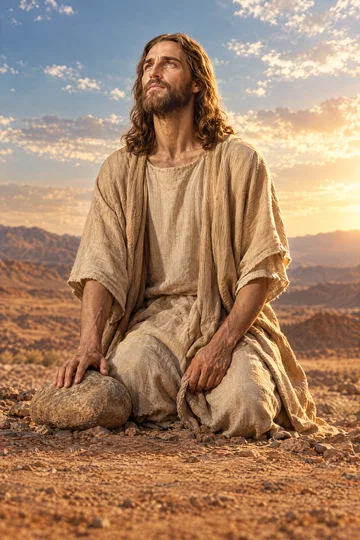
Cross-references 20 of 41
- Hebrews 4:15
For we have not an high priest which can not be touched with the feeling of our infirmities; but was in all points tempted like as we are, yet without sin.
Jesus faced human temptation yet remained without sin.
- Luke 4:2
Being forty days tempted of the devil. And in those days he did eat nothing: and when they were ended, he afterward hungered.
Luke recounts Jesus’ forty-day fast, hunger, and wilderness temptation.
- Hebrews 2:18
For in that he himself hath suffered being tempted, he is able to succour them that are tempted.
Christ suffered when tempted and can help those who are tempted.
- Deuteronomy 8:3
And he humbled thee, and suffered thee to hunger, and fed thee with manna, which thou knewest not, neither did thy fathers know; that he might make thee know that man doth not live by bread only, but by every word that proceedeth out of the mouth of the LORD doth man live.
Jesus answers the bread temptation by teaching that life depends on God’s word, not bread alone.
- Matthew 4:10
Then saith Jesus unto him, Get thee hence, Satan: for it is written, Thou shalt worship the Lord thy God, and him only shalt thou serve.
Jesus resists Satan’s final temptation by answering with Scripture.
- Mark 1:12-13
And immediately the Spirit driveth him into the wilderness.
Both recount Jesus’ forty days in the wilderness, where Satan tempted him.
- Genesis 3:6
And when the woman saw that the tree was good for food, and that it was pleasant to the eyes, and a tree to be desired to make one wise, she took of the fruit thereof, and did eat, and gave also unto her husband with her; and he did eat.
Adam fell to temptation; Christ faced and overcame the test.
- Matthew 4:11
Then the devil leaveth him, and, behold, angels came and ministered unto him.
After Jesus’ wilderness temptation, angels came and ministered to him.
- Matthew 4:7
Jesus said unto him, It is written again, Thou shalt not tempt the Lord thy God.
Jesus counters Satan’s temptation and misuse of Scripture with Scripture.
- Exodus 34:28
And he was there with the LORD forty days and forty nights; he did neither eat bread, nor drink water. And he wrote upon the tables the words of the covenant, the ten commandments.
Moses also went without food for forty days.
- Matthew 3:16-17
And Jesus, when he was baptized, went up straightway out of the water: and, lo, the heavens were opened unto him, and he saw the Spirit of God descending like a dove, and lighting upon him:
Christ’s baptism, anointing, and the Father’s declaration precede his wilderness temptation.
- 1 Kings 19:8
And he arose, and did eat and drink, and went in the strength of that meat forty days and forty nights unto Horeb the mount of God.
Elijah travels forty days and nights in the strength of food supplied by God.
- Matthew 4:8-9
Again, the devil taketh him up into an exceeding high mountain, and sheweth him all the kingdoms of the world, and the glory of them;
Satan offers Christ the world’s kingdoms and glory in exchange for worship.
- Luke 4:5-8
And the devil, taking him up into an high mountain, shewed unto him all the kingdoms of the world in a moment of time.
Satan offers Jesus the kingdoms in exchange for worship, and Jesus refuses.
- Exodus 16:4
Then said the LORD unto Moses, Behold, I will rain bread from heaven for you; and the people shall go out and gather a certain rate every day, that I may prove them, whether they will walk in my law, or no.
God supplied bread from heaven to Israel in the wilderness.
- Matthew 9:15
And Jesus said unto them, Can the children of the bridechamber mourn, as long as the bridegroom is with them? but the days will come, when the bridegroom shall be taken from them, and then shall they fast.
Jesus says his disciples will fast after the bridegroom is taken from them.
- Matthew 6:16-18
Moreover when ye fast, be not, as the hypocrites, of a sad countenance: for they disfigure their faces, that they may appear unto men to fast. Verily I say unto you, They have their reward.
Jesus teaches how to fast without ostentation.
- Psalms 91:11-12
For he shall give his angels charge over thee, to keep thee in all thy ways.
Satan invokes the promise of angelic protection while tempting Christ.
- Deuteronomy 9:9
When I was gone up into the mount to receive the tables of stone, even the tables of the covenant which the LORD made with you, then I abode in the mount forty days and forty nights, I neither did eat bread nor drink water:
Moses fasted forty days and nights on the mountain.
- Deuteronomy 8:2
And thou shalt remember all the way which the LORD thy God led thee these forty years in the wilderness, to humble thee, and to prove thee, to know what was in thine heart, whether thou wouldest keep his commandments, or no.
Israel’s forty years in the wilderness are set alongside Christ’s forty-day fast.
Commentary part 1 of 4
Each commentary is drawn from primary sources: the writings of Ellen G. White and Adventist pioneers and periodicals. Each commentary is separate. Its own words are not a quotation; follow the references to read the source passages.
Ellen G. White
408 sources
After fasting forty days and forty nights eating nothing, He afterward became really and intensely hungry with keen pangs.RH Jul 22, 1909ST Jul 14, 1887Ms 185, 1907, par. 1–3 Full of the Holy Ghost after baptism, He had been led and driven by the Spirit into the wilderness to be alone and brace Himself by fasting and prayer for His work.Lt 11, 1904, par. 34–37Ms 147, 1906, par. 23–2721MR 8.4–6 Satan chose that time of greatest weakness and failing strength to attack, coming not as a monster but as a beautiful angel of light to make distrust of the Father almost overpowering.Ms 185, 1907, par. 1–3Lt 86, 1908, par. 7–12Lt 11, 1904, par. 34–37Ms 99a, 1908, par. 3–5 He met every temptation only with It is written, that man shall not live by bread alone but by every word from God's mouth, refusing to parley or use miraculous power for Himself.Lt 11, 1904, par. 34–37Ms 93, 1907, par. 15–24Ms 147, 1906, par. 23–27Lt 25, 1903, par. 7–8ST Jul 9, 1874 As the second Adam and representative of humanity He took up the ground where Adam failed on appetite, enduring a greater test in weakened fallen nature to rescue the fallen race.ST Jul 14, 188721MR 8.4–6ST Oct 24, 1878RH Aug 4, 18743T 486.2 His victory decided the destiny of the race and broke appetite's and Satan's power on humanity's behalf, leaving an example that people can overcome by joining human effort to divine power through God's word.DA 114.1–115.1ST Aug 13, 187416MR 86.2–88.212MR 312.1–314.1Lt 158, 1909, par. 15
Fast Hunger and Condition
After fasting forty days and forty nights, nearly six weeks, He ate nothing and went without food and drink, and afterward He became really, intensely and painfully hungry with keen gnawing pangs.RH Jul 22, 1909ST Jul 14, 1887Ms 185, 1907, par. 1–3Lt 86, 1908, par. 7–12Lt 11, 1904, par. 34–37 His real bodily need came after the forty days and nights in the wilderness and set the scene for the temptation to turn stones into bread.RH Jul 22, 1909Ms 185, 1907, par. 1–3Lt 86, 1908, par. 7–12Ms 93, 1907, par. 15–24 In that weakened hungry state He would not use miraculous power to relieve Himself, but refused and answered only from Scripture rather than act for His own benefit.Lt 11, 1904, par. 34–37Ms 93, 1907, par. 15–24
The fast left Him weak, faint, pale, exhausted, emaciated, haggard and starving in appearance, marred beyond human likeness.ST Jul 14, 18871RED 45.1LC1 45.1 He was worn with mental agony, anguish and despondency, alone in a desolate untrodden wilderness with wild beasts.1RED 45.1LC1 45.1 His hunger belonged to His weak, suffering human condition, for He had taken human nature with its infirmities and faced temptation in real human need.ST Jul 14, 1887MYP 58.1ST Apr 4, 1900
During the fast He was absorbed in earnest prayer and communion, shut in by the Father's glory and fed by truth and strength from God.21MR 8.7Lt 159, 1903, par. 7 His soul was fed by the truth He would give to others, as He sought strength and grace for His work and foresaw His ministry of healing, comfort and preaching the gospel.Lt 159, 1903, par. 7 So He did not feel hunger until the fast was over, and the forty-day fast ended with real hunger.21MR 8.7Lt 159, 1903, par. 7
The forty days recall the forty years Israel wandered in the wilderness, during which nearly all who left Egypt died.LC1 47.1–2 They contrast with Moses who on special occasions went forty days without food but was specially sustained and enshrouded by God's glory, elevated above the human, and felt no pangs of hunger.LC1 136.32RED 32.3LC1 47.1–2RH Jul 28, 1874ST Feb 18, 1913 Moses was not tempted and harassed by so vile and powerful a foe as the Son of God was, while Christ in His human nature endured hunger and human weakness under Satan's temptations.LC1 136.32RED 32.3ST Feb 22, 1883RH Jul 28, 1874ST Feb 18, 1913
He was tempted by the devil all the time during the forty days with all his power upon Him, and the long fast involved fierce temptation and great suffering.ST Oct 31, 18782RED 79.2–3Ms 142, 1906, par. 42–43 The forty days and nights of fasting were a hardship that did not exhaust His endurance, and the hunger afterward came with temptation that could not allure Him from duty.Ms 142, 1906, par. 42–43Ms 60, 1902, par. 47 No threat there could intimidate Him and no peril could awaken His fears.Ms 60, 1902, par. 47
His fast was borne on behalf of others and for the human race, not for His own need as sinful or to subdue self.9MR 233.1–4Lt 206, 1908, par. 13 He did not fast for a need of His own, but as humanity's representative to meet the test where Adam had fallen and win victory for the fallen race, and His suffering under temptation was for humanity.9MR 233.1–4ST Jan 29, 18948T 209.1 Such a fast has no virtue in itself and is not called to be repeated, but virtue and purifying power come through His blood, sacrifice and grace.Lt 206, 1908, par. 13 His long ordeal left Him faint, hungry and almost dying, and angels came to minister to Him.Ms 17, 1911, par. 109MR 233.1–4
Spirit Leading Into Wilderness
Full of the Holy Ghost after baptism at Jordan when heaven opened, He was led and driven by the Spirit into the wilderness to be tempted by the devil.Lt 11, 1904, par. 34–37Ms 147, 1906, par. 23–2721MR 8.4–6DA 114.1–115.1RH Feb 24, 1874 He did not go to invite temptation but to be alone to contemplate His mission and work as deliverer, and by fasting and prayer to brace Himself for the blood-stained path He must travel to free captives held by the destroyer.DA 114.1–115.1RH Feb 24, 1874ST Aug 2, 1905COS 46.2–4 For forty days and forty nights He ate nothing and was with the wild beasts, and afterward He became hungry in real human need, and in that weakened hungry state the tempter came challenging Him as Son of God to command stones to be made bread.Lt 11, 1904, par. 34–37Ms 147, 1906, par. 23–27DA 114.1–115.1ST Apr 4, 1900 He had taken humanity under a covenant made in heaven not to work miracles in His own behalf but to stand as a man among men, so He would not use His power to relieve His own hunger but met temptation only with the words of God that man shall not live by bread alone but by every word proceeding from the mouth of God.Lt 11, 1904, par. 34–37Ms 147, 1906, par. 23–27 The Spirit led Him there not for His own sake but to overcome on humanity's behalf as representative of the fallen race, enduring the test of appetite where Adam had not been hungry, to qualify as Redeemer and leave an example.21MR 8.4–6ST Apr 4, 1900RH Feb 24, 1874
At first He was shut in by the Father's glory and absorbed in communion with God, lifted above human weakness while the whole plan of His work was laid out before Him.Lt 159, 1903, par. 16–17ST Aug 2, 1905COS 46.2–4 Then the glory departed and He was left to battle temptation pressing upon Him every moment, while His human nature shrank from the coming conflict amid mental agony and with face showing sorrow and anguish for sinners such as man had never felt under the sins of the world upon Him.ST Aug 2, 1905COS 46.2–4EW 125.3 The Holy Spirit had prepared Him for this trial in the desolate lonely place with wild beasts and the devil, yet He was left pale and emaciated from hunger, worn and haggard, and that weakened condition was Satan's supposed opportunity.ST Aug 2, 1905EW 125.3Ms 60, 1886, par. 10–11 His experience shows that even after rich blessings when heavens open and close communion is held, a severe trial may come immediately after, and through His strength people can overcome as prayer and fasting draw them near to God.Lt 159, 1903, par. 16–17ST Mar 12, 1912 His fasting and prayer thus prepared Him to face the temptations ahead and the suffering of His mission as humanity's surety and example, passing over the same ground where Adam fell on appetite and coming off conqueror by the Word of God.ST Mar 12, 1912Ms 60, 1886, par. 10–11
His human will would not have led Him to choose that trial, and His human nature shrank from hardship as ours does.ST Oct 29, 1894ST Nov 5, 1912 Yet He submitted His will to His Father and endured because His life was devoted to doing His Father's will.ST Oct 29, 1894ST Nov 5, 1912Ms 113, 1902, par. 3–5 After baptism He was led to be alone to contemplate His mission and by fasting and prayer to brace Himself for the bloodstained path before beginning public ministry, submitting to fierce assaults knowing without conflict there could be no victory and consenting to engage under any circumstances the foe might require.Ms 113, 1902, par. 3–5 Satan knew the Saviour had gone into the wilderness and thought this the best time to approach Him.Ms 113, 1902, par. 3–5
When God brings a person into trial He has a purpose to accomplish for good, so a trying situation gives no reason to doubt that leading or to lose courage.DA 126.3 He did not presume on promises by going unbidden into temptation, and when temptation came He did not give up to despondency.DA 126.3 Those who are tempted should do the same, trusting God's faithfulness to bear temptation and calling on Him for deliverance.DA 126.3
He endured the wilderness temptations alone in hunger, humiliation, loneliness and agony, with no human eye to behold it and no human sympathy to relieve it.3RED 3.2–4.22SP 99.2–100.1 The fierce conflict left Him emaciated and bearing marks of great physical and mental distress, with changed countenance showing the severity of what He had faced.3RED 3.2–4.2ST Apr 8, 18862SP 99.2–100.1 When the disciple John found Him in that condition He gently yet firmly dismissed him to remain alone, choosing to endure that agony without witnesses.2SP 99.2–100.1 The marks of that suffering remained visible on His changed countenance when He met His mother at Cana after about two months separation.2SP 99.2–100.1
After the season of temptation in which His will remained submitted and He did not yield, angels ministered to Him.Lt 1, 1858, par. 2–521MR 252.2–3Ms 57, 1890, par. 3 His long ordeal left Him faint, hungry, emaciated, exhausted and almost dying, and when the conflict ended angels brought Him food and strength, along with the Father's messages of love and comfort and Heaven's assurance that victory was complete.9MR 233.1–4Ms 57, 1890, par. 3ST Jul 23, 1874 Although He appeared to be alone, angels surrounded Him during the assault, and His trial is a pattern that resisted attack is followed by grace and strength from God through His angels.Lt 1, 1858, par. 2–521MR 252.2–3Ms 57, 1890, par. 3 Having completed the forty-day fast and won victory, He returned to the Jordan without outwardly announcing His special work or seeking notice, mingling again with John's disciples.2SP 61.2
The desert was one point in Satan's unbroken assault from Bethlehem to Calvary, in which Satan himself personally led the warfare because the stakes were conquer or be conquered and the work was too great to leave to confederate angels.Ms 197, 1903, par. 5–7Ms 140, 1903, par. 29Ms 24, 1898, par. 26 All energies of apostasy were rallied and every weapon of hell aimed at Him to keep Him from developing a perfect childhood, a faultless manhood, a holy ministry, and an unblemished sacrifice, with temptations running from the desert to the cross in numerous plans to discourage the Redeemer.Ms 197, 1903, par. 5–7Ms 140, 1903, par. 29Ms 24, 1898, par. 26 Satan could not lead Him into sin, could not discourage Him, and could not drive Him from the work He came to do.Ms 197, 1903, par. 5–7Ms 140, 1903, par. 29 From the desert to Calvary the storm of wrath beat more mercilessly, yet the more mercilessly it fell the more firmly He clung to His Father's hand and pressed on in the bloodstained path, so every effort to oppress Him only brought out His spotless character in purer light.Ms 197, 1903, par. 5–7Ms 140, 1903, par. 29
The verse belongs to the account of His life, conflict and temptation in the wilderness at the beginning of His ministry, recording His forty days and nights of fasting and afterward hunger.2RED 5.1–2Ms 3, 1873, par. 33–35Lt 148a, 1897, par. 3–45MR 64.3Ms 94, 1893, par. 1 It shows Him beginning redemption just where ruin began, on appetite, meeting the host of hell seeking to destroy by answering It is written, with victory answering Adam's failure and placing the family on vantage ground so they may overcome through the crucified and risen Saviour's merits.Lt 148a, 1897, par. 3–45MR 64.3ST May 5, 1898 It shows Him weakened by fasting with mental strain making the ordeal severe, teaching believers to have the treasure of the Word abiding in the soul to discern wiles, and when weakness is felt to depend on Christ so heavenly intelligences lift the standard and say Thus far and no farther even when unseen.Ms 94, 1893, par. 1ST May 5, 1898 In some references it is included without explaining the fasting or hunger, standing simply as part of the threefold testing after baptism on behalf of those He came to redeem.2RED 5.1–2Ms 3, 1873, par. 33–35
Satan Attacking Weakened Humanity
His hunger and weakened physical condition after forty days and forty nights without food set the moment for Satan's assault, for the tempter chose the time of greatest weakness, failing strength and weakened will to strike the weakest points, hoping to prevail and to undermine trust in God.Ms 185, 1907, par. 1–3Lt 86, 1908, par. 7–12Lt 11, 1904, par. 34–37Ms 93, 1907, par. 15–24Ms 99a, 1908, par. 3–5 Real bodily need came first and then the temptation to turn stones into bread, with Jesus under a covenant made in heaven not to work miracles for Himself but to stand as a man among men, so He would not use power to relieve His own hunger.Lt 86, 1908, par. 7–12Lt 11, 1904, par. 34–37Ms 93, 1907, par. 15–24Ms 147, 1906, par. 23–27 The verse marks that real physical weakness at the beginning of the temptation, when the devil came urging Him to make bread for Himself, but He refused and answered from Scripture rather than act for His own benefit.Ms 93, 1907, par. 15–24Ms 99a, 1908, par. 3–5Ms 147, 1906, par. 23–27
Satan did not come as a hideous monster with bat's wings and cloven feet but as a beautiful angel of light in robes of brightness from heaven, concealing his true character as a heavenly friend on an errand of mercy to sympathize and relieve suffering.Ms 99a, 1908, par. 3–5ST Aug 19, 1886ST Jun 25, 1874 Clothed with the livery of heaven he pressed manifold temptations upon Christ brought to great physical suffering, yet Christ resisted and refused to yield on a single point of integrity, rejecting flattering inducements of honor, riches and glory offered to bribe Him to acknowledge Satan's claims.ST Aug 13, 1874ST Jun 25, 1874 His firm victory left Satan a conquered foe and filled heaven with joy, and disguised as an angel of light offering an easier way than the path of trial and suffering, Satan was resisted and sent away defeated.ST Aug 13, 1874ST Aug 19, 1886
The tempter had once been an angel next to Christ in majesty and glory, exalted for beauty, who wanted Christ's place as one with the infinite God, became jealous, originated sin, wished to change God's government and fix his own seal to its rules, worked in secrecy telling falsehood for truth, drew a third of the angels, and was expelled after war in heaven.16MR 180.1–3Ms 57, 1890, par. 1 Christ appeared to be alone with him in the wilderness of temptation, but He was not alone, for angels were round Him, just as angels are commissioned to minister to those under fearful assaults of the enemy.16MR 180.1–3 It was in the wilderness with the one with whom there was war in heaven and whom He had overcome that Satan was defeated.16MR 180.1–3
Satan claimed to be the angel who stayed Abraham's hand from slaying Isaac and to have come to save His life and help bear part of the work in the plan of salvation.ST Jun 25, 1874 He tried to make Christ believe God did not require Him to pass through self-denial and anticipated suffering but only designed to prove willingness to endure, as with Abraham, so He need only set foot in the blood-stained path without traveling it.ST Jun 25, 1874LC1 141.1–32SP 89.2–90.1 Christ turned from these artful temptations and stood steadfast in purpose to carry out in every particular, in spirit and in letter, the plan devised for redemption of the fallen race, refusing to escape suffering and hunger.ST Jun 25, 1874LC1 141.1–3 Satan had manifold temptations ready and would try another if one failed, thinking he would succeed because Christ had humbled Himself as a man, flattering himself his assumed angelic character could not be discerned while feigning to doubt Christ's divinity because of His weakened condition.ST Jun 25, 1874
Satan adapted the temptation to hunger to make it almost overpowering, using Christ's condition of want and suffering in a desolate untrodden wilderness to press Him to distrust the Father who permitted such suffering, to step out of the Father's hands, to doubt the words spoken at baptism and the Father's love, and demanding evidence of exalted character as Son of God by commanding stones to be made bread.2SP 90.3–92.2SG4 150.1RH Jan 14, 1909ST Dec 20, 1899ST Jun 25, 1874 Bowed down with suffering yet having power to satisfy hunger by miracle, as proved when five thousand were fed at once with five loaves and two small fishes, He could have worked such a miracle but refused in steadfast purpose to carry out the divine plan, because no part of His mission was to exercise divine power for His own benefit, which He never did, His miracles being all for the good of others.2SP 90.3–92.2ST Dec 20, 1899ST Jun 25, 1874 He did not cherish the temptation for a moment, did not for a single moment doubt His heavenly Father's love, and His integrity and abiding confidence could not be shaken, for He recognized the distrust behind the temptation and stood by God's word.RH Jan 14, 1909ST Jun 25, 1874
Satan used Scripture quotations in temptation to make his deceptive appeal appear good and to overthrow Christ, misconstruing Scriptures to serve deceptive purposes, placing his own interpretation to cause stumbling and confuse judgment, which warns he can approach people quoting Scripture.5T 572.3FE 176.1CT 26.2–27.112MR 117.3–118.3 He stood beside Christ and tried to overcome Him with reasoning, speaking some truth woven together with falsehood to deceive.3T 550.212MR 117.3–118.3 He sought to bring Christ under his control and hinder the work God had given Him by offering advantages, earthly honor and worship for submission, to draw Him from allegiance.3T 550.2Lt 62, 1909, par. 10Ms 79, 1909, par. 10–11 Christ faced the temptations without giving the enemy an advantage: He did not repeat Satan's words or enter into argument with him, so Satan could not twist His words and misrepresent Him, but withstood by relying on God's word, and the same word and divine strength enable believers to overcome.Lt 62, 1909, par. 10Ms 79, 1909, par. 10–11
Satan met Him personally as Head of the kingdom He came to overthrow after four thousand years of planning his manner of attack ever since the declaration to Adam that the seed of the woman should bruise the serpent's head, knowing that if he failed he was lost, so the power of his temptations matched the greatness of what he would lose or gain.ST May 30, 1911ST Feb 25, 1875 His conflict was against the united forces of evil, and its temptations were more intense and subtle than those that assail fallen humanity, put forth with strongest efforts on the point of appetite.ST May 30, 1911ST Feb 25, 1875 He came in person at that time because it was necessary to dispute Satan face to face when Satan's authority had become almost supreme, to dispute sovereignty, remove false impressions of God, and come close to the fallen race.Ms 97, 1902, par. 4–5Ms 31, 1889, par. 70–73 Satan heard the heavenly messenger's announcement to the shepherds on the plains of Bethlehem and began plans to destroy the Prince of life, seeing in Christ a power that if not checked would supplant his authority, and went forth to meet Him in the wilderness.Ms 31, 1889, par. 70–73 There he brought against Him the three great temptations that are to beset man to the close of time, holding before His sight the kingdoms of the world in great external grandeur and promising they would be His if He would bow to Satan's authority, pointing to his success and the principalities and powers subject to him.Ms 31, 1889, par. 70–73 To Christ this was truly a temptation, for He saw those kingdoms as earthly dominions under a tyrant and saw humanity full of woe suffering under Satan's oppressive power, the earth defiled by hatred, revenge, malice, lust and murder with fiends possessing bodies and souls of men, and that sight had brought Him from heaven to fight the battle with the apostate, to dispute his right to rule over the human race and to wrench his spoil from him.Ms 31, 1889, par. 70–73
Satan had claimed for himself mercy, goodness and truth while attributing his own attributes to God and misrepresenting God's character in a disloyal world seared and marred by the curse of rebellion where men were corrupted by Satan's inventions, and those misrepresentations had to be met and demonstrated as false by Christ in human nature.Ms 20, 1898, par. 4–5 Christ was tempted in a hundredfold severer manner than Adam and under circumstances in every way more trying, with the deceiver presenting himself as an angel of light, but Christ withstood the temptations.Ms 20, 1898, par. 4–5 Satan as the first great rebel who had deceived thousands while claiming to be an angel of light thought to deceive the Son of God with pretentious claims and to overcome Him with temptations.Ms 55, 1886, par. 26–27 While claiming to be sanctified, a pure angel from the heavenly courts, continuing his self-exaltation above God in heaven by which he corrupted many angels and enlisted their sympathy in his selfish interest, he was not able to deceive Jesus, and those who live by every word that proceeds out of the mouth of God will not be deceived either, for God will not accept willful imperfect obedience.4MR 346.2Ms 55, 1886, par. 26–27
His hunger was used by the devil as an argument that He was not the Son of God, but hunger did not disprove sonship, and He would not use miraculous power to prove sonship or relieve Himself.Ms 199, 1899, par. 1–4 The same evil spirit that tempted Him there later confronted Him through the demoniac in Capernaum and in the synagogue, possessed the man in Capernaum and controlled the unbelieving Jews seeking to keep them from recognizing their need of the Saviour, and afterward opposed His ministry through strategy and human agents.ST Jan 20, 19143RED 43.12SP 179.2–180.2DA 205.2–3DA 256.5–257.1 Satan's failure to overcome Him in that trial led him to oppose Jesus' later ministry, yet that wilderness victory in which the destiny of the human race was at stake and Christ was conqueror preceded Satan's later final struggle against Him.ST Jan 20, 1914DA 205.2–3 When Jesus entered the wilderness He was shut in by the Father's glory and absorbed in communion lifted above human weakness, but the glory departed and He was left to battle with temptation pressing every moment while for forty days He fasted and prayed until weak and emaciated from hunger and worn and haggard with mental agony, and faint and craving food, now was Satan's chosen opportunity when he supposed he could overcome Christ.DA 117.4–120.1
Answering With Written Word
Hungry after forty days and nights without food, He faced the tempter's challenge to prove sonship by turning stones to bread, and gave no answer of His own but met every enticement with God's words that life depends not on bread alone but on every word from God's mouth.Ms 93, 1907, par. 15–24Ms 147, 1906, par. 23–27Ms 8, 1885, par. 3ST Sep 30, 1889RH Sep 13, 1906 The Word was His weapon, His solid ground, unfailing defense and sword of the Spirit, relied on solely to stop the enemy and bar further advance.Lt 25, 1903, par. 7–8Ms 97, 1902, par. 4–5Ms 40, 1895, par. 4ST Apr 10, 18937T 223.2 Victories came through power from above in answer to prayer, repeatedly answering It is written until the enemy had no power.ST Sep 30, 1889RH Sep 13, 1906Ms 97, 1902, par. 4–5Ms 40, 1895, par. 4ST Apr 10, 1893
That weapon lies within everyone's reach, holding disciples as true as steel to principle when trials come.Lt 25, 1903, par. 7–8Ms 8, 1885, par. 3ST Sep 30, 1889Lt 11, 1904, par. 44RH Oct 27, 1904 It exposes every doctrine and human opinion lacking It is written as mere supposition to be rejected, and proves power to fulfill the commission to preach to all nations.Lt 25, 1903, par. 7–8RH Dec 16, 1902RH May 3, 1906Ms 115, 1902, par. 12RH Oct 27, 1904 It carries more power than the working of miracles, for power is obtained from the Word.Lt 25, 1903, par. 7–8Ms 8, 1885, par. 3RH Sep 13, 1906Lt 11, 1904, par. 44RH Oct 27, 1904
Though divine and author of the Word with the Spirit without measure, He lived as human and would not use power to work miracles for Himself, showing safety and victory come through knowing and relying on Scripture with promised grace enabling overcoming.ST Sep 30, 1889Ms 97, 1902, par. 4–5Ms 40, 1895, par. 4ST Apr 10, 18937T 223.2 He used the Scriptures also to show the certainty of His sufferings, death and resurrection.ST Sep 30, 1889RH Sep 13, 1906Ms 97, 1902, par. 4–5Ms 40, 1895, par. 47T 223.2 He never trusted human words against temptation but always answered with Scripture.RH Sep 13, 1906Ms 97, 1902, par. 4–5Ms 40, 1895, par. 4ST Apr 10, 18937T 223.2
He held to the affirmative and would enter into no controversy, argument, parley, accusation, angry words or excitement.GW 358.2Ms 21, 1909, par. 9–11Ms 21, 1898, par. 34Lt 156, 1897, par. 7–10Lt 39, 1887, par. 23–24 Repeating an opponent's words strengthens his arguments and allows twisting, while keeping always to affirmative sensible truth puts it before the understanding so even the opposer may carry it home and be converted.GW 358.2RH May 3, 1906Ms 21, 1898, par. 34Lt 156, 1897, par. 7–10Ms 1, 1892, par. 2–3 If He had not held to the affirmative He would have lost all He desired to gain.GW 358.2Ms 21, 1909, par. 9–11Ms 21, 1898, par. 34Lt 156, 1897, par. 7–10Lt 39, 1887, par. 23–24
The only way He overcame was by presenting the Bible, answering three times with It is written, speaking only pure truth and righteousness without human wisdom or Satan's own weapons.RH May 3, 1906RH Oct 27, 19049T 243.1Ms 49, 1894, par. 39–42Ms 79, 1909, par. 10–11 Going out against Satan with Satan's own weapons in self-sufficiency is what the enemy knows how to turn back upon those who use it.RH Dec 16, 1902RH May 3, 1906Ms 115, 1902, par. 129T 243.1Ms 49, 1894, par. 39–42 By that same hold of divine power believers become partakers of divine nature until changed into Christ's likeness.RH May 3, 1906RH Oct 27, 19049T 243.1Ms 49, 1894, par. 39–42Ms 79, 1909, par. 10–11
In fasting and hunger He worked no miracle and gave no sign for self-service in response to insinuations, depending only on God and His Word.Ms 93, 1907, par. 15–24Ms 147, 1906, par. 23–27ST Sep 30, 1889Lt 11, 1904, par. 44DA 407.1 That record teaches how to meet Satan's future coming with great power by signs and wonders, even bringing fire from heaven to prove authority and deceive if possible the very elect.Lt 25, 1903, par. 7–8Ms 8, 1885, par. 3RH Dec 16, 1902Lt 11, 1904, par. 44RH Oct 27, 1904 Those standing firm upon the everlasting God's Word will meet him with It is written and conquer through the Holy Spirit's working, which is stronger than miracles or anything else.Lt 25, 1903, par. 7–8Ms 8, 1885, par. 3RH Dec 16, 1902Lt 11, 1904, par. 44RH Oct 27, 1904
He remained firm in the affirmative, loyal, exact in principle and upright, refusing to yield on a single point of integrity or cherish temptation for a moment or turn from allegiance, but clung to the Father.Ms 185, 1907, par. 1–3Lt 25, 1903, par. 7–8ST Aug 13, 1874Ms 8, 1885, par. 3RH Sep 8, 1874 Pressed with manifold temptations in great physical suffering and flattering bribes of honor, riches and glory, He rejected inducements to acknowledge Satan's claims and sent him away a conquered foe with no lodgment found.Lt 25, 1903, par. 7–8ST Aug 13, 1874Ms 8, 1885, par. 3RH Sep 8, 1874 Heaven was filled with joy at the firm victory.Lt 25, 1903, par. 7–8ST Aug 13, 1874Ms 8, 1885, par. 3RH Sep 8, 1874
Tempted in human nature on all points as human beings are, He saw the meaning of Satan's wiles, met every attack and stood firm to the end on the foundation of truth, refusing to swerve even for the whole world and its glory.RH May 3, 1906Ms 21, 1898, par. 34Lt 156, 1897, par. 7–10Ms 1, 1892, par. 2–33SP 37.2–38.1 He endured severe trials and the pressure of Adam's guilt without failing and overcame the powers of evil.RH May 3, 1906Ms 21, 1898, par. 34Lt 156, 1897, par. 7–10Ms 1, 1892, par. 2–33SP 37.2–38.1 His only weapon in the contest was It is written, and in His strength human beings can gain the same victory without being overcome by artifice.RH May 3, 1906Ms 21, 1898, par. 34Lt 156, 1897, par. 7–10Ms 1, 1892, par. 2–33SP 37.2–38.1
The temptation to earthly kingship and honor was real with real conflict in His mind, yet He promptly and decidedly refused the honor proffered.ST Aug 13, 1874RH May 3, 1906Lt 47, 1891, par. 17–22Ms 8c, 1891, par. 15 The same suggestion returned when the multitude fed from five loaves and two fishes wanted to take Him by force to make Him king, and He met it by constraining disciples to take the vessel, dismissing the multitude and going alone into the mountain to pray, virtually saying Get thee behind Me, Satan.ST Aug 13, 1874RH May 3, 1906Lt 47, 1891, par. 17–223SP 37.2–38.1Ms 8c, 1891, par. 15 Beholding worldly plans makes one favorable to worldly methods and willing to listen and take bribes, while anxiety to unite with the world blinds so truth's beauty cannot be seen; the lesson is to refuse union with the world and instantly reject offers.RH Dec 16, 1902RH May 3, 1906Ms 115, 1902, par. 12Lt 47, 1891, par. 17–22Ms 8c, 1891, par. 15
The tempted soul bears away victory by following that example, standing securely in the protection of Thus saith the Lord and barricaded by scriptural assurance given to those doing God's will.RH Dec 16, 1902RH May 3, 1906Ms 115, 1902, par. 12Ms 185, 1907, par. 8–9Lt 208, 1902, par. 45 Defense must leave no weak points, for the enemy takes advantage of the weakest and makes fiercest assaults there.RH Dec 16, 1902RH May 3, 1906Ms 115, 1902, par. 12Ms 185, 1907, par. 8–9Lt 208, 1902, par. 45 There must be as little as possible to do with arguments of those opposed to God, repeating Satan's sentiments as seldom as possible, keeping principles wholly from above and the tongue from all other speech, uttering not one word when feelings are stirred even to a provoking question.RH Dec 16, 1902RH May 3, 1906Ms 115, 1902, par. 12Ms 185, 1907, par. 8–9Lt 208, 1902, par. 45 He did not answer with angry or railing words but relied on the Lord's words, restraining natural impulse to speak harshly.RH Dec 16, 1902RH May 3, 1906Ms 115, 1902, par. 12Ms 185, 1907, par. 8–9Lt 208, 1902, par. 45
Those proclaiming the third angel's message on great and sacred truths must use that same weapon of what is written, meeting every device aimed at pre-eminence.Lt 25, 1903, par. 7–8RH May 3, 1906Lt 11, 1904, par. 44RH Oct 27, 1904Lt 102, 1903, par. 9 They are to put on the whole armor of God, stand bravely at post amid detraction and falsehood, and fight the good fight of faith.RH Dec 16, 1902RH May 3, 1906Ms 115, 1902, par. 12RH Oct 27, 1904Lt 102, 1903, par. 9
Second Adam Reversing Fall
As humanity's representative, surety, example and second Adam, He took up the ground where Adam failed and began redemption where ruin began, on appetite, enduring a greater test to rescue fallen people and redeem Adam's failure.ST Jul 14, 188721MR 8.4–6ST Oct 24, 1878ST Dec 16, 1880ST Oct 24, 1878 He entered the trial not for His own sake but to overcome on humanity's behalf, qualifying as Redeemer by enduring in real human need and weakness.21MR 8.4–6ST Apr 4, 1900ST Dec 16, 1880 Unlike Adam who was not hungry when tempted, He was tested in real need and hunger after forty days and nights, overcoming appetite where Adam fell through indulgence and showing a control stronger than hunger and death.ST Jul 14, 1887ST Oct 24, 1878ST Apr 4, 1900ST Dec 16, 1880ST Oct 24, 1878 His physical weakness and infirmities made the temptation especially painful and severe, yet He did not yield.ST Jul 14, 1887ST Oct 24, 1878ST Apr 4, 1900
He stood in Adam's place four thousand years after Adam turned from home, humbling Himself to take fallen nature with its sins, infirmities and degeneracy after the race had decreased in size, strength, wisdom and moral worth from Eden's purity and perfection.RH Jul 28, 1874 Unlike Adam, who was assailed without taint of sin in the strength of perfection in glorious Eden with all organs and faculties equally developed and harmoniously balanced, in the image of God a little lower than the angels, He bore the weaknesses of fallen man upon Him, He who knew no sin becoming sin for men, humiliating Himself to the lowest depths of human woe.RH Jul 28, 1874 Adam and Eve fell in beautiful Eden under most favorable circumstances with full vigor of mind and body, every want supplied, communion with God and angels and God as teacher, while He met the tempter in barren wilderness with wild beasts after four thousand years of Satan gaining strength and men losing power through indulged appetite.RH Aug 4, 1874DA 117.1–3COS 46.2–4RH Jul 28, 1874 He came to give an example of obedience and began the work of redemption by confronting the physical habits through which humanity had fallen, enduring self-denial and firmness on appetite to break Satan's power and reform obedience to God's law.RH Aug 4, 18743T 486.2COS 46.2–4Ms 26, 1887, par. 7Ms 153, 1899, par. 2–4
Only by meeting temptation in that weakened fallen condition, taking upon Him the infirmities of degenerate humanity to rescue man from the lowest depths of degradation, could He bring the world under control from Satan.DA 117.1–3ST Jun 25, 1874RH Jul 28, 1874 He faced temptations a hundredfold stronger and far more severe than any ever brought upon the race, with manifold forms ready and another tried if one failed, under circumstances in every way more trying in a world disloyal to God and marred by rebellion.ST Jun 25, 1874Ms 1, 1892, par. 2–36MR 334.1–3Ms 20, 1898, par. 4–5 By withstanding in human nature He redeemed Adam's disgraceful fall and saved the world, meeting misrepresentations of God's character and demonstrating them false.Ms 1, 1892, par. 2–36MR 334.1–3Ms 20, 1898, par. 4–5 He shared real human nature and infirmities including hunger, thirst and weakness, taking fallen but uncorrupted nature without sinful corrupt propensities, genuinely liable and capable of yielding.ST Jun 14, 1905ST Feb 18, 1913ST Jun 17, 1897Ms 94, 1893, par. 3–4Ms 57, 1890, par. 10–11 His human nature was genuinely like ours, without angelic powers, so He could be strongly tempted and could have yielded, and to deny He could yield turns the history into fable and destroys its force as instruction, example and help.1T 293.1–3Ms 94, 1893, par. 3–4Ms 94, 1893, par. 6–8Ms 57, 1890, par. 10–1116MR 182.2–183.1
As second Adam He was assailed as Adam was, held fast to God and His word, could have sinned but had no evil propensity and gave Satan no response or foothold, showing a person could keep God's law with abundant grace as the only hope.Ms 2, 1893, par. 1313MR 18.1–19.3 His first test came through appetite at the point where Adam failed, and His resistance assures people may also overcome when effort is joined with divine power, leaving them without excuse if they refuse to follow it.CTBH 16.1Ms 24, 1895, par. 10–11 His victory answered Adam's failure, re-instated in God-like purity those who accept help, placed the family on vantage ground with God, and made a second trial possible for humanity.Lt 148a, 1897, par. 3–4RH Jul 28, 1874LC1 158.2Lt 32, 1878, par. 6–72MR 120.4–121.2 He faced Satan under circumstances more trying than Adam's and resisted the deceiver appearing as an angel of light, and His victory redeemed Adam's fall and gives hope to those who receive Him as personal Saviour.Ms 1, 1892, par. 2–3Ms 20, 1898, par. 4–58MR 40.1–2
Suffering in Human Nature
He took human nature in its fallen form, with real bodily need, infirmity, weakness and suffering, in a body like ours that He might understand trials, His glory no longer visible and His path rough with difficulties.ST Jul 14, 18871RED 45.1LC1 45.1MYP 58.1 After forty days and nights without food He was left pale, emaciated, weak and suffering in a lonely desolate place among wild beasts, yet He continued the work He had come to do.1RED 45.1LC1 45.1ST Apr 4, 1900 His hunger was part of that weak suffering human condition, and in it Satan hoped to exploit Him and gain His worship, but He did not yield and sent the tempter away.MYP 58.1ST Apr 4, 1900
Though He had power to satisfy hunger by miracle, as afterward shown when five thousand were fed at once with five loaves and two small fishes, He refused to work a miracle for Himself.Lt 11, 1904, par. 34–37ST Jul 9, 18742RED 39.1–41.2ST Dec 16, 1913ST Jun 25, 1874 He stood under a covenant made in heaven not to work miracles in His own behalf but to stand as a man among men, leaving Himself in His heavenly Father's hands and trusting His Father's love.Lt 11, 1904, par. 34–372SP 90.3–92.2ST Jun 25, 1874 No part of His mission was self-service or exercise of divine power for His own benefit, for His miracles were all for the good of others, and to relieve Himself would have departed from the plan of salvation and the trial accepted as humanity's substitute.2RED 39.1–41.22SP 90.3–92.2ST Jun 25, 1874 By enduring, He showed that trust in God and obedience to His word matter more than satisfying hunger, and that God was His dependence.ST Jul 9, 18742RED 39.1–41.2
He bore temptation in human nature as a man, for if He had withstood by divine power He would have been tempted as God rather than as man.ST Sep 30, 1889Ms 29, 1887, par. 25Ms 153, 1899, par. 2–4 His obedience was the same obedience required of man in keeping God's law, fought in the real weakness of His human life where after fasting He was hungry.ST Sep 30, 1889Ms 29, 1887, par. 25 He stood forty days and forty nights in a place seared by the powers of darkness, not in beautiful Eden as Adam did, taking humanity upon Himself as divinity and humanity combined, without violating one precept and without stain of character, and He would not work a miracle to deliver Himself from hunger or any emergency.Ms 153, 1899, par. 2–4Ms 188, 1903, par. 32–38 He was tested to resist using His power to save Himself from danger, and He overcame temptation on humanity's behalf.Ms 188, 1903, par. 32–38LC1 191.3
He overcame as a true human being with complete humanity, not as God and not with unavailable power, but by reliance on God and laying hold of divine power, bridging the gulf sin made and showing what man can do through faith.ST Apr 10, 1893ST Aug 29, 1911ST Jun 18, 1894 His obedience and victory were not achieved through special power unavailable to humanity, and believers may overcome as divine power works through humanity.ST Apr 10, 1893ST Aug 29, 1911 His testing in human nature at the point of appetite demonstrates that through cooperation with divine help humanity can resist temptation and obey God.ST Jun 18, 1894DA 122.4–123.1 He endured the trial of appetite and passed over the ground human beings must travel, preparing the way for them to overcome through trust in God, and the only way He overcame was by presenting the Bible three times with It is written so the enemy could have no power.DA 122.4–123.1Ms 49, 1894, par. 39–42Ms 53, 1901, par. 3 He faced Satan's assaults as a human being and was tempted in ways as real as those people face, yet did not yield or fall in any particular.Ms 49, 1894, par. 39–42Ms 53, 1901, par. 3
He came to this world as a man and took the nature of man with all its possibilities to prove to angels and to men that man may overcome.Ms 113, 1902, par. 1–2 In every emergency the powers of heaven are ready to help, and there is nothing to endure that He has not endured.Ms 113, 1902, par. 1–2
His pangs of hunger were real and keenest, as certain as His death for sinners on Calvary's cross, beginning as soon as the suffering of hunger began and before Satan came with temptations adapted to the circumstance.ST Feb 11, 18752SP 89.1ST Feb 25, 1875 As He entered the wilderness the weight of the world's sins pressed upon Him, His countenance showed profound sorrow and unutterable sorrow with changed visage, and the guilt pressed His soul.2SP 89.12RED 39.1–41.22RED 37.1–3 His victory there was essential to salvation and was won not in scenes of gaiety and feasting but in desolate wilderness, teaching by His own example how to resist and overcome.ST Feb 11, 1875ST Feb 25, 1875
His anguish was not chiefly the pangs of hunger but His awareness that indulging appetite and passion would enslave people, turn appetite into an idol, lead them to forget God, and obstruct salvation.2RED 49.3–50.22SP 89.12RED 37.1–3 The fast's length demonstrates the great sinfulness of degraded appetite and its power over the human family, which He endured on behalf of the race, conquering appetite through self-control stronger than hunger or death.2RED 49.3–50.22SP 89.1 With guilt of the world's sins weighing heavily came sorrow such as man never felt.2SP 89.1ST Feb 25, 1875
By experiencing in Himself the strength of Satan's temptation and of human sufferings and infirmities He was qualified to succor those who put forth efforts to help themselves and to reach to the very depths of human woe.2RED 49.3–50.22RED 37.1–3ST Feb 25, 1875 He would not seek relief by abandoning His redeeming purpose or by departing from the plan, but volunteered to tread temptation alone as Satan's destroyer.2RED 39.1–41.22RED 37.1–3ST Feb 25, 1875
In assumed human nature He needed prayer and divine strength to meet trial with changing temptations while remaining without sin.ST Feb 10, 1887 He really took human nature and was actually tempted, and it was possible for Him to sin, being tempted in all points as humans are from childhood to manhood.17MR 336.2–3Ms 57, 1890, par. 7 He successfully resisted temptation under every form and gave humans the perfect example, showing that human nature united with the divine by faith can withstand Satan's temptations.17MR 336.2–3Ms 57, 1890, par. 7
In the wilderness He suffered the keenest pangs of hunger under the load of man's guilt as part of infinite sacrifice and inexpressible suffering that placed redemption within reach.Ms 107, 1894, par. 6 Though sinless and more than that the Prince of heaven, unhonored and unknown in this world, He endured this wonderful condescension and humiliation on man's behalf to exalt man to receive eternal honors and immortal joys in heavenly courts.Ms 107, 1894, par. 6 His endurance rebukes the proud doubting murmur that heaven should be obtained without conflict, self-abasement, toil, humiliation and penitence, and that the path should be less difficult and more pleasant and attractive.Ms 107, 1894, par. 6
The fast of nearly six weeks was a scene of unexampled suffering while assailed with fiercest temptations, revealing the love of God for the fallen race in not withholding His divine Son from taking the humiliation of humanity and giving His dearly beloved to shame and agony to bring many sons and daughters to glory, pointing to giving His Son to die on the cross.ST Feb 25, 1875RH Mar 18, 18752RED 79.2–3 Overcoming as He overcame is infinite and eternal gain, while gaining the whole world with all its pleasure and glory yet losing the soul is eternal loss, so heaven is cheap at any cost.ST Feb 25, 1875RH Mar 18, 18752RED 79.2–3
Victory Securing Human Salvation
The wilderness fasting and hunger stand at the center of a conflict in which mighty issues for the world and the destiny of the race and the salvation of humanity were decided, with all heaven watching and angels standing on guard ready to act if Satan passed his prescribed limit, and Christ's firm refusal to yield on a single point left Satan a conquered foe and filled Heaven with joy.DA 114.1–115.1ST Aug 13, 187416MR 86.2–88.2ST May 30, 1911ST Jan 20, 1914 The strain of that contest upon His humanity left Him as one dead afterward until angels encircled Him, let His head rest upon the breast of the highest angel, gave Him food and filled Him with divine consolation after the shock of Satan's tremendous effort.16MR 86.2–88.2LC1 174.2 His temptations there were more intense and subtle than those assailing fallen humanity, waged against united forces of evil, yet He resisted at every point and conquered the powers of darkness on humanity's behalf, and the greatness of that overcoming shows the greatness of the work of overcoming.LC1 174.2ST May 30, 1911ST Jan 20, 1914
His success or failure would decide whether Satan's power and rule and claimed dominion and kingdom was broken or established, for Satan's power over the world was at stake and Christ's victory would contest his rule and bring his power to an end.ST Jan 20, 1914ST Apr 5, 1883RH Mar 3, 1874ST Aug 1, 1878LC1 132.2 He chose suffering and death to redeem what Satan claimed and become the lawful everlasting ruler, while Satan is to be ultimately destroyed.ST Jan 20, 1914LC1 132.2 Satan himself regarded the outcome as decisive, believing if he succeeded he would win the whole human race and establish his kingdom, while failure would leave his case hopeless.ST Jan 21, 18892RED 28.2
Had He failed at any point the battle would have been lost, for Satan's power was challenged and the welfare of the human family was at stake and everything depended on overcoming Christ.Ms 141, 1904, par. 3ST Oct 29, 19022RED 28.2Lt 116, 1899, par. 7–9 Satan therefore rallied all the powers of apostasy with every weapon of hell from the desert to Calvary, yet his attacks only brought out Christ's spotless character in purer light.ST Oct 29, 1902 The fast left Christ weak and emaciated from hunger and worn and haggard with mental agony, His visage and form marred beyond human likeness under the sins of the whole world laid upon Him, proving in human strength it is impossible to conquer sin and victory cannot be gained without suffering or by feeble efforts.ST Oct 29, 1902Lt 116, 1899, par. 7–9
His wilderness victory is the foundation of the plan of salvation, meaning the plan could be carried out and the price paid, and it fulfills the enmity foretold between Christ and Satan in the warfare between light and darkness.LC1 167.2–168.2ST Oct 24, 1878ST Aug 13, 18742RED 62.2–63.1ST Sep 17, 1874 His divine power joined with His humanity won an infinite victory on humanity's behalf, raising humanity's moral standing and value before God as sinners' only hope of restoration.LC1 171.12RED 67.1–2ST Oct 24, 1878RH Oct 13, 1874ST Jan 21, 1889 His humanity alone could not have endured the test, but divinity united with humanity secured what humanity could not secure alone.ST Oct 24, 1878RH Oct 13, 1874LC1 166.2–167.1ST Sep 17, 1874
He conquered as a man in behalf of the whole world, breaking appetite's and Satan's power as substitute and surety, beginning the work of redemption where ruin began at appetite.12MR 312.1–314.1Lt 158, 1909, par. 15ST Oct 29, 1902Ms 16, 1886, par. 9Ms 65, 1894, par. 4 In that weakened, faint, pale and hungry state He faced the conflict Adam failed to endure, relying wholly on God's power at great cost and forming a righteous character He offers to sinners who accept Him so that those receiving Him stand justified by imputed righteousness.Lt 158, 1909, par. 15Ms 16, 1886, par. 9Ms 65, 1894, par. 43T 371.2–372.2 His victory testifies to unfallen worlds and to fallen humanity that man can keep God's commandments through divine power granted from heaven, binding His interests with humanity and giving assurance that none will be tempted above what they are able because with the temptation God will make a way of escape.Ms 1, 1892, par. 2–3
His fasting victory was part of the atonement and the infinite sacrifice with the agony of the cross to save man, enduring the fast and the cross in order to save.RH Oct 13, 18745MR 125.1–126.1 That saving endurance calls for response under the special influence and power of the Spirit and walking in light, with His self-denying life as the true standard for measuring Christian life and the only safe pattern to copy in order to overcome as He overcame.RH Oct 13, 18745MR 125.1–126.1 His victory benefits each person only when that person also personally gains victory in the Conqueror's name, fighting wholly for himself with self-denial though others can pray.LC1 167.2–168.2ST Oct 24, 1878ST Aug 13, 1874LC1 166.2–167.12RED 62.2–63.1 Man now has the advantage over Adam in having Adam's disobedience and fall to warn him and Christ's victorious life to copy, so if he stumbles under Satan's temptations he is without excuse.ST Aug 13, 1874ST Sep 17, 1874
His nearly six-week battle with long abstinence that emaciated Him was overcome not for His own sake but on account of every person, fought and conquered to gain vantage-ground for humanity and bring divine strength to conquer appetite and every unholy passion.5T 510.1ST Jul 23, 1874RH Aug 4, 1874RH Oct 13, 18742RED 45.4–46.1 Through that priceless victory, vanquishing the mighty foe upon every point, it became possible for every descendant of Adam to overcome through the merit of His sinlessness and through His grace, merits, strength and name, calling all to be like Him and put on the robe of His righteousness.5T 510.1RH Oct 13, 1874RH Jun 15, 1916 After the contest Satan's presence was withdrawn for a season, to return for the last fearful conflict in Gethsemane for which Satan spent the three years of ministry preparing with everything at stake for himself over the kingdoms of the earth.LC1 158.25RED 15.1–16.1 If he failed there his hope of mastery was lost, the kingdoms would finally become Christ's, and Christ would bind the strong man and cast him out.5RED 15.1–16.1
His bearing the test proves His veritable coming as the Son of God and the coming One foretold in the sure word of prophecy.Ms 13, 1873, par. 5–6 Soon after that temptation and those victories He presented Himself in His true character at Nazareth, where He was known as an unpretending mechanic.4RED 3.1 In that first victory were involved other issues entering into all conflicts with the powers of darkness, and the solitary struggle that began in the desert continued to the cross, but Satan's attempts to make Christ take on his own attributes failed.DA 256.5–257.1DA 117.4–120.1Ms 111, 1897, par. 14–15
Sources