Nehemiah 13:15
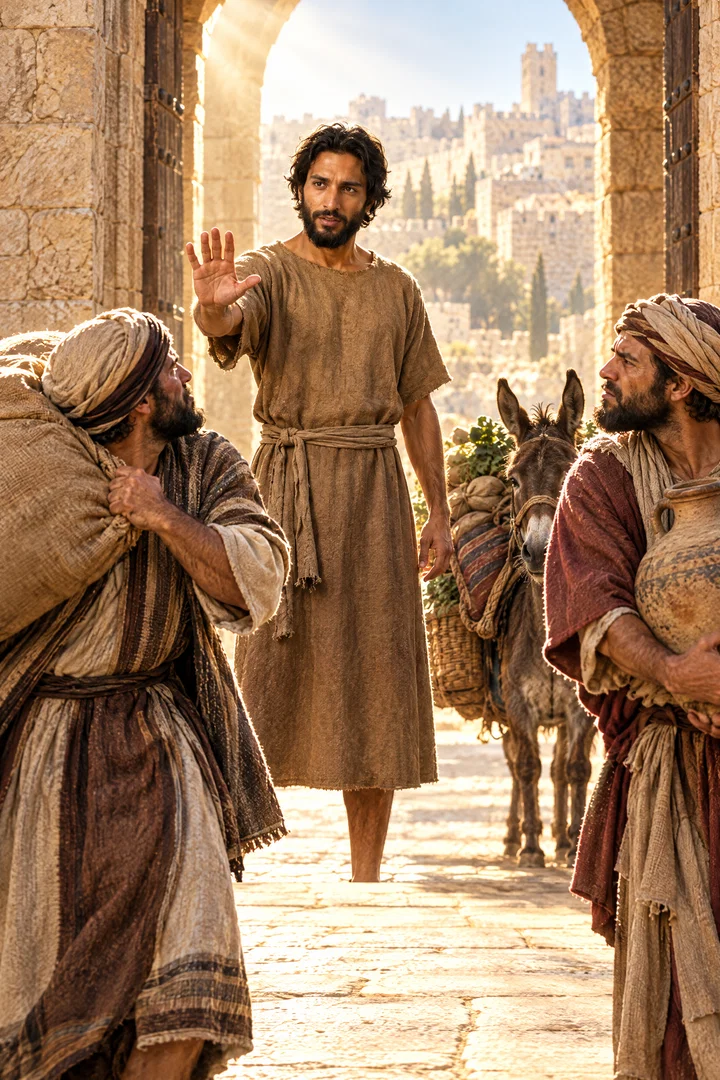
In those days saw I in Judah some treading wine presses on the sabbath, and bringing in sheaves, and lading asses; as also wine, grapes, and figs, and all manner of burdens, which they brought into Jerusalem on the sabbath day: and I testified against them in the day wherein they sold victuals.
Translations
American King James Version, King James Version, KJV Cambridge Paragraph Bible
In those days saw I in Judah some treading wine presses on the sabbath, and bringing in sheaves, and lading asses; as also wine, grapes, and figs, and all manner of burdens, which they brought into Jerusalem on the sabbath day: and I testified against them in the day wherein they sold victuals.
In those days I saw in Judah some treading wine presses on the sabbath, and bringing in sheaves, and lading asses; as also wine, grapes, and figs, and all manner of burdens, which they brought into Jerusalem on the sabbath day: and I testified against them in the day in which they sold provisions.
In those days saw I in Judah some treading winepresses on the sabbath, and bringing in sheaves, and lading asses therewith; as also wine, grapes, and figs, and all manner of burdens, which they brought into Jerusalem on the sabbath day: and I testified against them in the day wherein they sold victuals.
In those days saw I in Judah some men treading winepresses on the sabbath, and bringing in sheaves, and lading asses therewith; as also wine, grapes, and figs, and all manner of burdens, which they brought into Jerusalem on the sabbath day: and I testified against them in the day wherein they sold victuals.
In those days I have seen in Judah those treading wine-vats on sabbath, and bringing in the sheaves, and lading on the asses, and also, wine, grapes, and figs, and every burden, yea, they are bringing in to Jerusalem on the sabbath-day, and I testify in the day of their selling provision.
In those days I saw in Judah some treading winepresses on the sabbath, and bringing in sheaves, and lading them on asses; as also wine, grapes and figs, and all manner of burdens; and they brought them into Jerusalem on the sabbath day; and I protested in the day on which they sold the victuals.
In those days, saw I in Judah—some treading winepresses on the sabbath, and bringing in sheaves and lading asses, moreover also wine, grapes, and figs, and every kind of burden, which they were bringing into Jerusalem on the sabbath day,—so I protested against it, as a day for them to sell provisions.
Berean Standard Bible, Majority Standard Bible
In those days I saw people in Judah treading winepresses on the Sabbath and bringing in grain and loading it on donkeys, along with wine, grapes, and figs. All kinds of goods were being brought into Jerusalem on the Sabbath day. So I warned them against selling food on that day.
In those days I saw some men treading wine presses on the Sabbath in Judah, bringing in sheaves, and loading donkeys with wine, grapes, figs, and all kinds of burdens which they brought into Jerusalem on the Sabbath day; and I testified against them in the day in which they sold food.
In those days, I saw in Judah some who were crushing grapes on the Sabbath, and getting in grain and putting it on asses; as well as wine and grapes and figs and all sorts of goods which they took into Jerusalem on the Sabbath day: and I gave witness against them on the day when they were marketing food.
In those dayes saw I in Iudah them, that trode wine presses on ye Sabbath, and that brought in sheaues, and which laded asses also with wine, grapes, and figges, and all burdens, and brought them into Ierusalem vpon the Sabbath day: and I protested to them in the day that they sold vitailes.
Douay-Rheims (Challoner revision)
In those days I saw in Juda some treading the presses on the sabbath, and carrying sheaves, and lading asses with wine, and grapes, and figs, and all manner of burthens, and bringing them into Jerusalem on the sabbath day. And I charged them that they should sell on a day on which it was lawful to sell.
Pictures
Cross-references 20 of 36
- Jeremiah 17:21-22
Thus saith the LORD; Take heed to yourselves, and bear no burden on the sabbath day, nor bring it in by the gates of Jerusalem;
Both forbid carrying burdens through Jerusalem on the Sabbath.
- Exodus 20:8-10
Remember the sabbath day, to keep it holy.
Commands the people to keep the seventh day holy and do no work.
- Isaiah 58:13
If thou turn away thy foot from the sabbath, from doing thy pleasure on my holy day; and call the sabbath a delight, the holy of the LORD, honourable; and shalt honour him, not doing thine own ways, nor finding thine own pleasure, nor speaking thine own words:
Calls God’s people to honor the Sabbath by turning from their own pursuits.
- Nehemiah 10:31
And if the people of the land bring ware or any victuals on the sabbath day to sell, that we would not buy it of them on the sabbath, or on the holy day: and that we would leave the seventh year, and the exaction of every debt.
The people pledged not to buy goods on the Sabbath, a practice later found violated.
- Nehemiah 13:19
And it came to pass, that when the gates of Jerusalem began to be dark before the sabbath, I commanded that the gates should be shut, and charged that they should not be opened till after the sabbath: and some of my servants set I at the gates, that there should no burden be brought in on the sabbath day.
Nehemiah shuts Jerusalem’s gates before the Sabbath to stop burdens from being brought in.
- Jeremiah 17:24-27
And it shall come to pass, if ye diligently hearken unto me, saith the LORD, to bring in no burden through the gates of this city on the sabbath day, but hallow the sabbath day, to do no work therein;
Sabbath observance is tied to Jerusalem’s preservation, while profanation brings its destruction.
- Ezekiel 20:12
Moreover also I gave them my sabbaths, to be a sign between me and them, that they might know that I am the LORD that sanctify them.
God gives the Sabbath as a sign between him and his people, marking his sanctifying them.
- Isaiah 56:2
Blessed is the man that doeth this, and the son of man that layeth hold on it; that keepeth the sabbath from polluting it, and keepeth his hand from doing any evil.
Blesses those who keep the Sabbath from profaning it.
- Leviticus 23:32
It shall be unto you a sabbath of rest, and ye shall afflict your souls: in the ninth day of the month at even, from even unto even, shall ye celebrate your sabbath.
Sets Sabbath observance from evening to evening.
- Genesis 2:2-3
And on the seventh day God ended his work which he had made; and he rested on the seventh day from all his work which he had made.
The Sabbath is grounded in God’s rest after completing creation.
- Mark 2:27
And he said unto them, The sabbath was made for man, and not man for the sabbath:
Jesus declares the Sabbath was made for humanity, not for humanity to serve the Sabbath.
- Exodus 20:10
But the seventh day is the sabbath of the LORD thy God: in it thou shalt not do any work, thou, nor thy son, nor thy daughter, thy manservant, nor thy maidservant, nor thy cattle, nor thy stranger that is within thy gates:
The seventh day is the Sabbath, on which no work is permitted.
- Exodus 31:14-15
Ye shall keep the sabbath therefore; for it is holy unto you: every one that defileth it shall surely be put to death: for whosoever doeth any work therein, that soul shall be cut off from among his people.
The Sabbath is holy, and work on it is forbidden.
- Exodus 16:29
See, for that the LORD hath given you the sabbath, therefore he giveth you on the sixth day the bread of two days; abide ye every man in his place, let no man go out of his place on the seventh day.
The command to remain in place on the Sabbath contrasts with work and trading on that day.
- Nehemiah 13:21
Then I testified against them, and said unto them, Why lodge ye about the wall? if ye do so again, I will lay hands on you. From that time forth came they no more on the sabbath.
Nehemiah warns merchants against continuing to trade on the Sabbath.
- Ezekiel 20:20
And hallow my sabbaths; and they shall be a sign between me and you, that ye may know that I am the LORD your God.
Both condemn profaning the Sabbath, which God established as a sign between him and his people.
- Nehemiah 9:14
And madest known unto them thy holy sabbath, and commandedst them precepts, statutes, and laws, by the hand of Moses thy servant:
God’s law commanded Israel to keep the Sabbath.
- Deuteronomy 5:13-14
Six days thou shalt labour, and do all thy work:
Both describe Sabbath keeping as resting from ordinary labor.
- Jeremiah 17:27
But if ye will not hearken unto me to hallow the sabbath day, and not to bear a burden, even entering in at the gates of Jerusalem on the sabbath day; then will I kindle a fire in the gates thereof, and it shall devour the palaces of Jerusalem, and it shall not be quenched.
Sabbath desecration is linked to Jerusalem’s destruction.
- Amos 8:5
Saying, When will the new moon be gone, that we may sell corn? and the sabbath, that we may set forth wheat, making the ephah small, and the shekel great, and falsifying the balances by deceit?
Both condemn Sabbath-breaking for commercial gain.
Commentary
Each commentary is drawn from primary sources: the writings of Ellen G. White and Adventist pioneers and periodicals. Each commentary is separate. Its own words are not a quotation; follow the references to read the source passages.
Ellen G. White
5 sources
This scene belongs to the reform carried out when Nehemiah returned from Persia to Jerusalem, after the influence of Ezra and Nehemiah had for a time been withdrawn and many in Judah had departed from the Lord and evils had crept in that threatened to pervert the nation.PK 669.1–670.1 What was seen in Judah in those days was burdened donkeys with containers, bundles and sacks of goods being brought into Jerusalem on the Sabbath day.PK 669 More particularly it was treading wine presses on the Sabbath, bringing in sheaves, lading asses with wine, grapes, and figs, and all manner of burdens, and selling victuals.4RED 46.1–2PK 671.1–672.12SP 194.1–2
These were ordinary work for livelihood and profit, including labor and trade, that violated the Sabbath and showed open disregard of it and God's displeasure at its violation.4RED 46.1–2PK 671.1–672.12SP 194.1–2 The Sabbath was the sign distinguishing Israelites from all other nations as worshipers of the true God, whose observance Israel had grown careless of and unmindful of its ordinances as they separated from God and lost the true object of its institution.PK 671.1–672.12SP 194.1–2 The violation came from intercourse with idolaters, as heathen merchants and traders coming to Jerusalem induced many Israelites to engage in traffic on the Sabbath.PK 671.1–672.1 Some would not sacrifice principle, but others transgressed and joined with the heathen to overcome the scruples of the more conscientious, a condition the rulers allowed through neglect of duty from desire to advance their own interests.PK 671.1–672.1
Nehemiah testified against those selling victuals, showing such conduct violated the Sabbath.4RED 46.1–22SP 194.1–2 He directed the Levites to guard the gates and confronted and turned back the men carrying burdens at the entrance.PK 669 Unlike this ordinary labor, the increased work of the priests in holy service with sacrificial offerings on the Sabbath did not violate the fourth commandment.2SP 194.1–2
Sources
Pioneers and periodicals
74 sources
Nehemiah saw people in Judah treading wine presses on the Sabbath, bringing in sheaves, loading donkeys with wine, grapes, figs and all kinds of goods into Jerusalem, and selling food, and he testified against them in the day they sold it.ST Oct 6, 1914ST Dec 20, 1899 This made the day an ordinary workday and market day, profaning the weekly seventh-day Sabbath of the fourth commandment by harvesting, pressing, carrying commercial burdens, and buying and selling for gain.ST Nov 15, 1899ST Feb 2, 1915ST May 20, 1886RH Mar 19, 1857ST Mar 20, 1884 The Sabbath so violated runs a whole day from sunset, shut in when it grew dark before the Sabbath when the gates were closed and kept until it was over.ST May 16, 1911ST Dec 17, 1912ST Mar 4, 1889 As governor in a theocracy Nehemiah contended with the offenders and shut out worldly traffic, but that use of civil power belonged to Israel's theocracy and gives Christian rulers no right to compel observance today, nor does his labor for the seventh day support Sunday keeping.ST Nov 15, 1899RH Sep 2, 1851ST Aug 23, 1910ST Mar 28, 1911 The same principle still requires stopping ordinary buying, selling, travel and transport of goods, dismissing business plans and gain-seeking on the day, since Sabbath-breaking brought God's wrath and captivity and its faithful keeping remains a test of loyalty.ST Feb 7, 1911ST Oct 6, 1914ST Jun 11, 1894RH May 20, 1909
Historical Setting and Events
In those days in Judah some were treading wine presses on the Sabbath, bringing in sheaves and harvests, lading asses with wine, grapes, figs and all manner of burdens and produce, carrying goods into Jerusalem and selling victuals and food there, and he testified against them in the day wherein they sold.ST Oct 6, 1914ST Dec 20, 1899RH Jan 21, 1862ST Nov 15, 1899 The Sabbath was thus made an ordinary workday, desecrated by agricultural labor, transport of loads, and market trade.ST Dec 20, 1899ST Nov 15, 1899ST Jun 4, 1902 This is the account of the violations he sought to stop, to prevent their recurrence and consequences.ST Dec 20, 1899
This came in the restoration after the Babylonian captivity, about 450 years before Christ, as Jerusalem was being rebuilt.ST Feb 2, 1915 It followed his going back to Susa to the court and then returning to Jerusalem, twelve years after his first labors, hastening back over more than a thousand miles and pressing his work against opposition with unchanged vigor.ST Feb 20, 1893RH Oct 8, 1908 The surrounding scene falls in the latter part of the seventh month, after the vintage and during the feast of ingathering, including activity connected with the grape harvest.RH Jun 2, 1851
The conduct broke the people's solemn covenant pledge not to buy goods or to buy or sell on the Sabbath.ST Oct 6, 1914RH Jan 21, 1862RH Jul 9, 1908 Withholding the tithe, the Lord's money, prepared the way to steal the Lord's Sabbath for selfish interests by working on it and buying provisions from heathen sellers in the city.RH Jul 9, 1908 That covenant not to buy from Sabbath vendors was meant to keep Israel from breaking the Sabbath law and to discourage the vendors' trade.
Trade with the surrounding heathen drew some Israelites into open disobedience and imitation of idolatrous neighbors who disregarded the holy day, including the people of Tyre, while the rulers' pursuit of secular interests and neglect of duty helped the violation spread.ST Jan 17, 1884ST Feb 7, 1911ST Nov 15, 1899 Association with neighboring heathen led some to copy their trading and carrying on the Sabbath.ST May 20, 1886 Some not only broke the Sabbath themselves but tried to overcome the scruples of more conscientious countrymen and pressured them to break it, so its sacredness was widely lost and to a great extent destroyed.ST May 20, 1886ST Feb 7, 1911 Buyers in Jerusalem encouraged sellers by buying, and worldly pursuit of gain weakened spiritual life while encouraging disregard of the Sabbath.ST Nov 15, 1899
What Counted as Violation
Nehemiah 13:15 treats the Sabbath as profaned when it is made an ordinary workday and market day.ST Nov 15, 1899ST Feb 2, 1915ST Jun 11, 1894ST Nov 7, 1906RH Mar 23, 1905 The profanation consisted in treading wine presses, bringing in sheaves and harvest, lading asses, transporting produce and other loads, carrying burdens including wine, grapes, figs and all manner of burdens into Jerusalem, and buying and selling victuals and food for gain, against which Nehemiah testified.ST Nov 15, 1899ST Feb 2, 1915ST Jun 11, 1894ST Nov 7, 1906RH Sep 2, 1851 Those who did so kept the right day but violated it by ordinary work and commerce.ST Feb 2, 1915ST Jun 11, 1894 Nehemiah testified against, contended with and rebuked the offenders, yet did not inflict the death penalty, showing a difference between opposing Sabbath-breaking and carrying out its prescribed punishment.ST Nov 15, 1899RH Mar 23, 1905RH Sep 2, 1851
The burdens forbidden are commercial goods and produce carried for work and trade.RH May 19, 1851RH Feb 3, 1852RH May 2, 1854RH Nov 25, 1852RH Oct 21, 1851 They were sheaves, wine, grapes, figs and merchandise brought into Jerusalem to sell.RH May 19, 1851RH Feb 3, 1852RH May 2, 1854RH Nov 25, 1852RH Oct 21, 1851 What is condemned is labor for worldly gain and carrying merchandise for trade, not every act of carrying a load on the Sabbath.RH May 19, 1851RH Feb 3, 1852RH May 2, 1854RH Nov 25, 1852RH Oct 21, 1851
This commercial burden-bearing is different from the small burden of carrying a bed or mat.RH Feb 3, 1852RH May 2, 1854RH Oct 21, 1851RH Feb 11, 1862 The healed man taking up his bed praising God was an act of mercy manifesting God's power and done for God's glory, not the Sabbath-breaking condemned in Nehemiah.RH May 2, 1854RH Oct 21, 1851RH Feb 11, 1862 The prohibition concerns burdens connected with ordinary labor and trade, which violate the command to cease on the seventh day from the labor and work of the six days and engage in God's special service, while carrying done for the glory of God as evidence of a cure is of another kind.RH Feb 3, 1852RH May 2, 1854RH Feb 11, 1862
The Sabbath law therefore requires refraining from ordinary labor and commerce.ST Mar 13, 1879ST Aug 15, 1878RH Sep 9, 1858 The day must not be used for trade for gain or ordinary industry, and bringing and selling goods and produce and other burdens is profaning it.ST Mar 13, 1879ST Aug 15, 1878RH Sep 9, 1858 This illustrates the call to keep God's day holy and not buy or sell on it.ST Mar 13, 1879RH Sep 9, 1858
Day Identity and Timing
The day in view is the weekly seventh-day Sabbath of the Lord of the fourth commandment, Remember the Sabbath day to keep it holy, and not a festival Sabbath, a sabbath of the land, or Sunday.ST May 20, 1886RH Mar 19, 1857ST Mar 20, 1884ST Mar 28, 1911 What was seen in Judah was pressing grapes, bringing in grain, produce and other loads on animals, carrying burdens into Jerusalem, and selling food, and Nehemiah testified against the doers because they were violating that Sabbath by ordinary labor and commerce.ST May 20, 1886ST Mar 20, 1884 Nehemiah was laboring for proper observance of the seventh day of the week, not for Sunday, which was not observed by the church until after the resurrection of Christ some four hundred years later, so his example gives no support to first-day observance.ST Mar 20, 1884ST Mar 28, 1911 His work in this was proper and right, done only among the Jews, the Israel of God who had promised to keep the Sabbath, and only within territory and a city belonging to them.ST Mar 28, 1911
The returned people had not lost knowledge of the day but had failed to obey it faithfully, bringing and selling food and other goods and loads in Jerusalem on the Sabbath, including produce carried by donkeys.ST Jun 3, 1886ST May 1, 1884 They still kept the same weekly Sabbath without disagreement over which day it was before, during, and after the captivity, which proves the day was known in Nehemiah's time and was not lost there.ST May 1, 1884ST Jun 28, 1905 Nehemiah knew which day was the Lord's Sabbath, and his rebuke for profaning it shows that commercial work on it violated its sacred character, connecting such breaking with the sins that had brought the fathers into captivity and with the prophets' prior warnings.ST Jun 3, 1886ST Jun 28, 1905 On the return they had solemnly promised not to violate the Sabbath anymore, yet their conduct repeated the fathers' sin of not regarding it strictly enough, the sin that brought God's wrath and the seventy years of Babylonian bondage.
In its context the verse shows that the weekly Sabbath begins at sunset and covers a whole day, beginning when the day begins and ending with the day.ST May 16, 1911ST Sep 20, 1899ST Sep 15, 1898 The boundary is evening, when shadows began to fall and deep shadows were cast from the walls of Jerusalem, proving the day begins at evening at the setting of the sun and closes at evening.ST May 16, 1911ST Dec 17, 1912ST Sep 2, 1897 Nehemiah confronted the bringing and selling of goods on the Sabbath and then ordered the gates shut as it grew dark before the Sabbath and kept them closed until the Sabbath was over.ST Dec 17, 1912ST Sep 15, 1898ST Sep 2, 1897 This reformation concerned not only keeping the day itself but the time when the day begins, namely at the going down of the sun, as indicated by Leviticus 23:32.ST May 16, 1911ST Mar 4, 1889 The surrounding scene falls in the latter part of the seventh month, after the vintage and during the feast of ingathering, including activity connected with the grape harvest.RH Jun 2, 1851 This seasonal setting helps identify that shutting of the gates as darkness came, with the Sabbath beginning near sunset at that season, though not necessarily at the exact moment of sunset.RH Jun 2, 1851
Judgment for Sabbath Breaking
Sabbath transgression was a chief sin through which God's people departed from Him, observing the right day but violating it by ordinary work and commerce in pressing wine, bringing in harvest and goods, carrying burdens into Jerusalem, and selling food.ST Feb 2, 1915ST Jun 11, 1894ST Oct 17, 1900 This neglect recurred after the rebuilding of Jerusalem following the Babylonian captivity, and that recurring violation contributed to Israel's overthrow.ST Feb 2, 1915ST Oct 17, 1900RH Jan 14, 1862 In both early and later periods of their history the people failed to keep the Sabbath holy, though God repeatedly urged them to observe it, and Sabbath observance continued even after the Hebrews were dispersed from their land.ST Oct 17, 1900RH Jan 14, 1862ST Jun 13, 1906
Continued Sabbath-breaking, including bringing goods into Jerusalem and selling provisions on the Sabbath in breach of the covenant pledge not to buy on that day, brought God's wrath upon Israel.ST Oct 6, 1914ST Jun 17, 1886RH Apr 19, 1864ST Sep 16, 1880 That wrath included humiliation and distress by the withdrawal of His protection and defense, Jerusalem's destruction, and bondage and captivity in Babylon for seventy years.ST Feb 7, 1911ST Oct 6, 1914ST Jun 17, 1886 It was the sin of their fathers and is reckoned as one cause, at least in part, of the great wrath that had come upon Jerusalem.RH Apr 19, 1864ST Apr 1, 1875RH Feb 7, 1916ST Sep 16, 1880
This judgment fulfilled Jeremiah's warning that hallowing the Sabbath would preserve the city while persisting in its profanation would lead to its destruction by fire.RH Jan 21, 1862 The prophets had previously warned against such profanation, and Nehemiah's rebuke for the same sins that had brought their ancestors into captivity stands as testimony to that warning and its fulfillment.ST Jun 3, 1886RH Jan 21, 1862
God kept His eye upon the people in captivity to preserve the knowledge of His law until the promised Messiah should come.ST Feb 7, 1911 Nehemiah sought to stop the violations he saw, to prevent their recurrence and the consequences that had followed Israel's unfaithfulness.ST Feb 7, 1911ST Dec 20, 1899
Nehemiah's Sabbath Reform
Nehemiah saw wine-pressing, harvesting, load-carrying into Jerusalem, and selling of food on the Sabbath, and he testified against those doing it, contended with, rebuked and confronted the offenders, and strictly enforced the Sabbath law.ST Nov 15, 1899RH Sep 2, 1851RH Apr 7, 1851RH Jul 9, 1908RH Aug 21, 1855 His zeal after the return to the promised land stands in contrast to the claim that the Sabbath was not kept during the Babylonian captivity, for the seventh day is a rest day for all mankind.RH Aug 21, 1855 He taught by example how the Sabbath should be kept, by shutting out all worldly traffic when it begins to be dark before the Sabbath and not opening again until after it is over.RH Jul 9, 1908 In this he opposed Sabbath-breaking without inflicting the death penalty, distinguishing contending against transgression from carrying out its prescribed punishment.RH Sep 2, 1851
This enforcement belonged to his last reform for the better observance of the Sabbath, the closing account of the reformation under Zerubbabel, Ezra and Nehemiah after the return from Babylonian captivity, aimed especially at honoring the Sabbath in connection with the command to remember the Sabbath day to keep it holy.RH Mar 23, 1905RH Sep 21, 1916ST Jun 2, 1909ST May 28, 1912 It came after his recall to court and his hasty return to Jerusalem over more than a thousand miles, twelve years after his first labors, and was pressed with the same vigor and tenacity of purpose he showed at first, against opposition on every side, until priest, Levite, people and the high priest himself yielded to his energetic action.RH Oct 8, 1908 Together with clearing the temple chambers, fetching back the Levites from their fields, collecting the tithes, repudiating the heathen wives and banishing the stubborn offender, it restored proper Sabbath observance and tithe-paying and aroused and quickened the moral and spiritual life of the people.RH Mar 23, 1905RH Jan 26, 1905RH Oct 8, 1908 The Sabbath and the tithe were both made holy by the same power, neither more holy than the other, standing as two grand principles testing loyalty to God, so that an impenitent robber of holy time and a robber of holy money alike cannot meet God in peace and be saved.RH Jan 26, 1905
As governor appointed of the Lord with the burden of restoring Jerusalem, he was responsible for carrying out God's laws, for Jerusalem was set apart to God and its rulers were to require those within their care to observe the Sabbath outwardly in the city, as people should in their own homes.ST Jul 28, 1898ST Jun 2, 1909 The city and nation belonged to the Lord as His special people alone, and within Jerusalem he stopped the commerce that profaned the Sabbath without compelling foreign merchants to observe it elsewhere.ST Jul 28, 1898 His unwearied, zealous, stirring action continued unchanged to the end, and his upholding of the Sabbath when the Jews profaned it despite restoration to favor and blessing was a righteous act for which he could humbly ask God to remember him and show him mercy.RH Oct 8, 1908RH Aug 22, 1865 The work recorded in Nehemiah 13:15-22 was Heaven's last effort to restore allegiance, a Sabbath reformation giving God's chosen people another opportunity to redeem themselves, carried through ups and downs, battles and conflicts, defeats and victories to glorious success despite every effort of adversaries to hinder.ST Sep 8, 1909ST Jun 2, 1909
That reform was partial and often outward in form rather than inward in spirit.ST Sep 10, 1896 After Israel had given very little regard to the Sabbath in idolatry before the captivity, the restoration brought strong emphasis and decided reform upon it, yet it did not teach the true lesson of making the Sabbath a day of spiritual blessing.ST Aug 25, 1909 Instead the Jews made it a day of hard, burdensome observance, piling up traditions regarding it and copying out precepts of the rabbis as though those precepts were divine, until the day God gave as a blessing for man became an awful burden and really a curse instead of a blessing, which Jesus came to correct.ST Aug 25, 1909
Doctrinal and Prophetic Significance
In the reformation after the return from Babylonian captivity, keeping the Sabbath was a test of obedience and loyalty to God, when Judah violated it by pressing wine, bringing in produce and burdens into Jerusalem, and selling food, and Nehemiah confronted the breakers.ST Jun 11, 1894 That violation was one of the chief causes that had led the people into captivity.ST Jun 11, 1894RH Jan 14, 1862 At that same time Judah had left off paying the holy tithe while also failing to keep God's holy Sabbath by working and bringing burdens into Jerusalem, and obedience in bringing in the tithe restored Sabbath observance.RH Jan 26, 1905 The Sabbath and the tithe were both made holy by the same power, neither more holy than the other, standing as two grand principles by which loyalty to God is tested, so that an impenitent robber of holy time and a robber of holy money alike cannot meet God in peace and be saved.RH Jan 26, 1905
Sabbath observance continued after the Hebrews were dispersed from their land, with people working and bringing goods into Jerusalem to sell and Nehemiah testifying against them.ST Nov 25, 1908RH Jan 14, 1862 The Sabbath was enforced as Jerusalem was restored after the captivity, and that observance is God's seal upon that work of restoration.ST Nov 25, 1908
Nehemiah's work at Jerusalem as a governor appointed of the Lord with the burden of restoring the city, in the last reformation for better Sabbath observance, passed through ups and downs, battles and conflicts, defeats and victories carried to glorious success despite every effort of adversaries to hinder.ST Jun 2, 1909 That course is typical of God's work in other ages, especially in the last days.ST Jun 2, 1909 The only true Sabbath reform is the one clearly predicted in prophecy. The obligation to observe the Sabbath is perpetual because it is embedded in the Decalogue, taught by Nehemiah in unity with Isaiah and Jeremiah, so that to deny it rejects the Decalogue, ignores prophetic teaching, falsifies the declaration that the Sabbath was made for man, and makes Paul's custom of Sabbath worship in Acts 13, 16, 17 and 18 inconsistent.ST Dec 2, 1886
Civil Power and Sunday
Nehemiah stopped Sabbath work and trading by the civil power of a theocracy, a nation and city belonging to the Lord and guided by God and His prophets, and that method gives Christian rulers and all others today no right to enforce the Sabbath by law.ST Aug 23, 1910 That theocracy ended with Israel when Israel deliberately declared, We have no king but Caesar.ST Aug 23, 1910 God does not set up His kingdom on earth by might or by power, but in the hearts of His people by His Spirit, and the literal earthly kingdom will not be established until He Himself comes.ST Aug 23, 1910
Enforcing observance by civil law is not the gospel way, which knows no compelling power but love through the Spirit received by faith and demands only voluntary spiritual service in spirit and in truth, because the Sabbath like all the law is spiritual. For the church to turn from Christ to the world and to a worldly institution for power to enforce observance is spiritual fornication and the work of antichrist putting himself in the place of God.
He enforced the Sabbath only upon the Jews, the Israel of God who had promised to keep it, and only within their own territory and the city entrusted to God.ST Jul 28, 1898ST Apr 9, 1896ST Mar 28, 1911 Traders camping about the city to sell wares were driven off from Jewish land, but no effort was made to compel foreign merchants to observe the Sabbath elsewhere.ST Jul 28, 1898ST Mar 28, 1911 This took place under Israel's special modified theocracy, and its place, time, and circumstances have no parallel in ancient or modern Sunday laws.ST Apr 9, 1896
His action does not authorize church leaders to use the state to enforce religious observance, since to apply it that way would imply a theocracy and place civil power under religious control.ST Apr 20, 1888ST Apr 20, 1888 Applied as a principle to Sunday legislation, it would only authorize making professed Sunday-keepers who have promised to keep Sunday keep it, while those who do not choose to keep it could do as they please away from premises owned and controlled by Sunday-keepers.ST Mar 28, 1911
The episode gives no support to first-day observance, for Nehemiah labored for the seventh day of the week, the Sabbath of the fourth commandment, not for Sunday, which was not observed by the church until after the resurrection of Christ some four hundred years later.ST Mar 28, 1911ST Jan 19, 1882 It does not say that Sunday should be kept instead of Saturday.ST Jan 19, 1882 This raises the question whether Sunday is the Sabbath at all. The passage is presented as picturing a predicted future demand for compulsory Sunday observance, while identifying that demand with worship of the papal power rather than worship of God.ST Jul 3, 1884
Faithful Keeping Today
The principle in the verse requires stopping ordinary buying and selling and the transport of goods on the Sabbath.RH May 20, 1909ST Sep 1, 1881 Bringing goods into Jerusalem and selling food on that day violated its sacred observance and drew rebuke.RH May 20, 1909 Refraining from buying, selling, and traveling while worshiping on the Sabbath is the mark of a distinct people.ST Sep 1, 1881 That same principle applies to closing a store on that day.
Striving to gain riches cannot leave a person innocent, because where treasure is the heart will be.RH Jan 21, 1873 Such a heart neglects prayer and overreaches in dealing with a brother.RH Jan 21, 1873 It also breaks the Sabbath by planning for future business on the Lord's day, along with many other things contrary to the religion of Christ.RH Jan 21, 1873 Those who do not rob God and attend to the wants of the cause are promised plenty, but not anything to worship.RH Jan 21, 1873
Seeking to please self rather than to honor God on the Sabbath is sin.ST Feb 7, 1911 Dismissing business matters and laying plans on the Sabbath counts with God as the same guilt as actually transacting business.ST Feb 7, 1911 A keeper who for the sake of gain allows an unbelieving partner to carry on their joint business on the Sabbath is equally guilty with the unbeliever and must dissolve the relation even at great loss.ST Feb 7, 1911 A keeper must not allow hired workers paid with his money to work for him on the Sabbath.ST Feb 7, 1911 Financial need does not excuse disobedience in business affairs, carelessness in Sabbath observance will not go unpunished, and men cannot afford to disobey.ST Feb 7, 1911
Lack of consecration of this kind hindered the restoration work.RH Feb 21, 1907 A Sabbath reform is therefore needed among those who profess to observe God's holy rest day.ST Feb 7, 1911 The Sabbath must be kept holy in order to enjoy His blessing.ST Feb 7, 1911
Sources