Mark 2:27
And he said unto them, The sabbath was made for man, and not man for the sabbath:
Translations
American King James Version, Webster Bible
And he said to them, The sabbath was made for man, and not man for the sabbath:
King James Version, KJV Cambridge Paragraph Bible, Revised Version, American Standard Version
And he said unto them, The sabbath was made for man, and not man for the sabbath:
And he said to them, 'The sabbath for man was made, not man for the sabbath,
And he said to them, The sabbath was made on account of man, not man on account of the sabbath;
And he was saying unto them—The Sabbath, for man, was made, and not, man, for, the Sabbath:
Berean Standard Bible, Majority Standard Bible
Then Jesus declared, “ The Sabbath was made for man, not man for the Sabbath.
He said to them, “ The Sabbath was made for man, not man for the Sabbath.
And he said to them, The Sabbath was made for man, and not man for the Sabbath;
And hee sayde to them, The Sabbath was made for man, and not man for the Sabbath.
Douay-Rheims (Challoner revision)
And he said to them: The sabbath was made for man, and not man for the sabbath.
Pictures
Cross-references 20 of 96
- Genesis 2:2-3
And on the seventh day God ended his work which he had made; and he rested on the seventh day from all his work which he had made.
God rested on the seventh day, blessed it, and sanctified it.
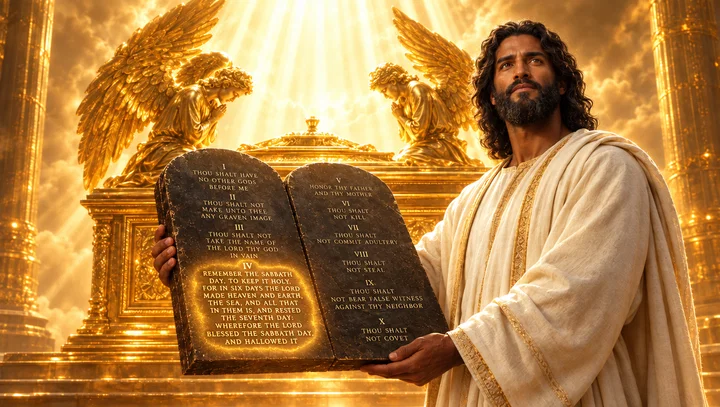
- Exodus 20:8-11
Remember the sabbath day, to keep it holy.
The commandment identifies the seventh day as the Sabbath and grounds it in creation and rest.
- Isaiah 58:13
If thou turn away thy foot from the sabbath, from doing thy pleasure on my holy day; and call the sabbath a delight, the holy of the LORD, honourable; and shalt honour him, not doing thine own ways, nor finding thine own pleasure, nor speaking thine own words:
Calls the Sabbath the Lord’s holy day and describes it as a delight.
- Exodus 16:22-30
And it came to pass, that on the sixth day they gathered twice as much bread, two omers for one man: and all the rulers of the congregation came and told Moses.
The manna instructions show the Sabbath was for Israel’s observance before Sinai.
- Matthew 12:8
For the Son of man is Lord even of the sabbath day.
Christ declares himself Lord of the Sabbath and defends relieving need on it.
- Exodus 20:11
For in six days the LORD made heaven and earth, the sea, and all that in them is, and rested the seventh day: wherefore the LORD blessed the sabbath day, and hallowed it.
The Sabbath is grounded in God’s creation and rest on the seventh day.
- Exodus 31:16-17
Wherefore the children of Israel shall keep the sabbath, to observe the sabbath throughout their generations, for a perpetual covenant.
The Sabbath is a perpetual covenant and sign commemorating God’s creation and rest.
- Colossians 2:16-17
Let no man therefore judge you in meat, or in drink, or in respect of an holyday, or of the new moon, or of the sabbath days:
Contrasts the Sabbath made for humanity with annual ceremonial sabbaths described as shadows.
- Matthew 12:12
How much then is a man better than a sheep? Wherefore it is lawful to do well on the sabbath days.
Jesus teaches that doing good on the Sabbath is lawful.
- Ezekiel 20:12
Moreover also I gave them my sabbaths, to be a sign between me and them, that they might know that I am the LORD that sanctify them.
The Sabbath is a sign that God sanctifies his people.
- Ezekiel 20:20
And hallow my sabbaths; and they shall be a sign between me and you, that ye may know that I am the LORD your God.
Both texts describe the Sabbath as given for people and as a sign between God and his people.
- Exodus 31:13
Speak thou also unto the children of Israel, saying, Verily my sabbaths ye shall keep: for it is a sign between me and you throughout your generations; that ye may know that I am the LORD that doth sanctify you.
The Sabbath is a sign between God and his people that he sanctifies them.
- Isaiah 66:23
And it shall come to pass, that from one new moon to another, and from one sabbath to another, shall all flesh come to worship before me, saith the LORD.
All flesh worships God from Sabbath to Sabbath in the new earth.
- Luke 4:16
And he came to Nazareth, where he had been brought up: and, as his custom was, he went into the synagogue on the sabbath day, and stood up for to read.
Jesus customarily attended synagogue on the Sabbath.
- Hebrews 4:9
There remaineth therefore a rest to the people of God.
The Sabbath is linked to the rest that remains for God’s people.
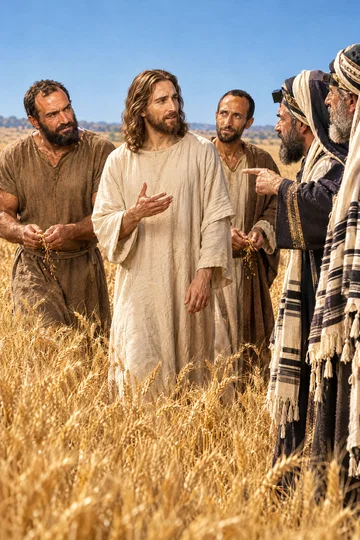
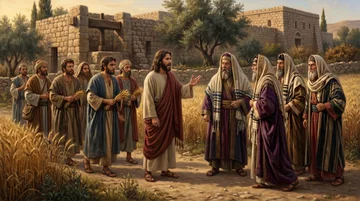
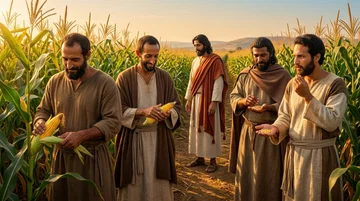
- Luke 6:1-5
And it came to pass on the second sabbath after the first, that he went through the corn fields; and his disciples plucked the ears of corn, and did eat, rubbing them in their hands.
Jesus defends the disciples’ Sabbath grain-picking by showing that necessity does not constitute sin.
- Deuteronomy 5:15
And remember that thou wast a servant in the land of Egypt, and that the LORD thy God brought thee out thence through a mighty hand and by a stretched out arm: therefore the LORD thy God commanded thee to keep the sabbath day.
Israel’s deliverance from Egypt is given as a reason to keep the Sabbath.
- Exodus 20:8
Remember the sabbath day, to keep it holy.
Both texts present the Sabbath as a command intended for humanity.
- Mark 3:1-5
And he entered again into the synagogue; and there was a man there which had a withered hand.
Jesus teaches that doing good and saving life is right on the Sabbath.
- Isaiah 56:2
Blessed is the man that doeth this, and the son of man that layeth hold on it; that keepeth the sabbath from polluting it, and keepeth his hand from doing any evil.
Calls the Sabbath keeper blessed, including foreigners who serve the Lord.
Commentary part 1 of 3
Each commentary is drawn from primary sources: the writings of Ellen G. White and Adventist pioneers and periodicals. Each commentary is separate. Its own words are not a quotation; follow the references to read the source passages.
Ellen G. White
63 sources
The Sabbath was made as a gift to do human beings good, giving rest and blessing rather than laying a grievous burden that blocks the meeting of human need.2SP 195.2–197.14RED 48.2–49.1ST May 13, 1886 It was instituted in Eden after the six days of creation, before the fall and before any Jew existed, for all mankind and not for the Jews alone.1SP 261.2ST Nov 19, 1912ST Nov 12, 1894SG3 295.1–296.1 Christ Himself made it when He made the world, set it apart as the memorial of creation, and remains its Lord and owner.STMW6 43.2DA 288.2–3Ms 43b, 1891, par. 1 For that reason what is necessary to sustain life and to carry on God's redeeming work is lawful on that day, as shown when hunger justified the disciples in plucking grain and as shown by the priests whose Sabbath labor in God's service left them blameless.2SP 195.2–197.1DA 284.2–285.3COS 71.4–73.44RED 48.2–49.1 Its humane purpose sweeps away the man-made exactions that turned blessing into bondage, while still calling for holy observance that ceases ordinary labor and pleasure-seeking and gives the day to mercy, relief of suffering, worship and holy deeds.2SP 162.2–163.23RED 25.2–26.2DA 206.3–207.3PK 183.1Ms 192, 1897, par. 6–7
Context and Immediate Defense
The words were spoken to defend the disciples when they were accused of doing what was not lawful because, being hungry on the Sabbath, they plucked grain to eat, rubbing it and eating the kernels.COS 71.4–73.4ST Sep 16, 1913 The Sabbath was made to do man good, to give peace and rest, not to be a burden, and the disciples who kept it with Christ were guiltless because their act was in harmony with the Sabbath commandment.COS 71.4–73.4ST Sep 16, 1913
The charge arose from impatient, critical spying for something to accuse, alleging Sabbath-breaking because in passing through grain the disciples plucked heads, rubbed them in their hands, and ate the kernels.Ms 43b, 1891, par. 9 Christ repelled the charge and established their innocence in the deed, casting over them with unique dignity the shield of His own prerogatives.Ms 43b, 1891, par. 9 He holds those prerogatives because His divine nature was not transformed into human nature but divinity and humanity were united in Him as God in the flesh, in whom dwells all the fullness of the Godhead bodily, with all things delivered to Him by His Father and with life in Himself and authority to execute judgment because He is the Son of man.Ms 43b, 1891, par. 9
As David when in need was right and guiltless to satisfy hunger by eating the showbread set apart to holy use, even violating the holiness of the sanctuary, and to give it to his hungry followers, so the disciples were right and much more excusable to supply need by plucking and eating grain on the Sabbath.2SP 195.2–197.1DA 284.2–285.3COS 71.4–73.4 The service of God comes first, and the object of God's work in this world is the redemption of man, so what is necessary on the Sabbath to accomplish that work and to sustain bodily strength for God's service is right and lawful and in accord with Sabbath law, not a grievous burden interfering with human need through pain and discomfort.2SP 195.2–197.1DA 284.2–285.34RED 48.2–49.1 As the priests performed greater labor on the Sabbath than on other days yet were blameless because their work was in God's service and pointed to Christ's redeeming power in harmony with the Sabbath's object, so the disciples doing Christ's work were engaged in God's service.DA 284.2–285.3 Christ, greater than the temple and Lord of the Sabbath above all question and above all law, acquits His disciples by appeal to the very statutes they were accused of violating, and such Sabbath work that serves God is distinct from ordinary business.DA 284.2–285.34RED 48.2–49.1
God's law allowed a hungry person to eat grain or fruit from a neighbor's field, and the disciples' eating grain as they passed through a field illustrates and accords with that humane permission.PP 531.1–2HSFM 165.2 The Sabbath law was not meant to overturn such provision or to prevent meeting human needs.PP 531.1–2HSFM 165.2
Created in Eden
The Sabbath was made for all mankind, not for the Jews or Israel alone, and it was instituted before there was a Jew.ST Nov 19, 1912ST Nov 12, 1894Ms 99, 1902, par. 61 It was instituted in Eden at the beginning of earth's history, before the fall and before the Jewish people existed.ST Nov 19, 1912ST Nov 12, 1894Ms 99, 1902, par. 61 Because it was made for humanity it is to endure as long as humanity exists.ST Nov 19, 1912 Set apart as holy, it was given as a memorial of creation.Ms 99, 1902, par. 61
It was instituted in Eden after God had made the world and created man upon the earth.1SP 261.2SG3 295.1–296.1 It belongs to God's law, whose principles existed before man was created and governed angels.1SP 261.2SG3 295.1–296.1 Those principles of the ten commandments existed before the fall, suited to holy beings, and were made known to Adam and Eve.SG3 295.1–296.1 After Adam's sin and fall nothing was taken from the law and its principles were not changed, though additional precepts to meet man in his fallen state were given.1SP 261.2SG3 295.1–296.1
After making the world in six days, including six literal days, God rested on the seventh day.RH May 30, 1871ST Mar 11, 18804T 247.2Ms 43b, 1891, par. 2ST Feb 14, 1911 He blessed and sanctified and hallowed it and set it apart as holy.4T 247.2Ms 43b, 1891, par. 2ST Feb 14, 1911ST May 11, 1876 His own rest after six days of work was given as the example for human rest from labor and worship.4T 247.2ST Feb 14, 1911ST May 11, 1876 It was established after the creation of man to meet human needs, for benefit and good as a blessing and not for people to serve it, a day to put aside ordinary labor, care and anxiety, to reflect on the created world, to remember that God made it in six days and rested on the seventh, and to grow in love and reverence for the Creator.RH May 30, 1871ST Mar 11, 18804T 247.2Ms 43b, 1891, par. 2ST May 11, 1876 It is not merely a form but a test and an everlasting memorial that God made the world and all things in it in six days and rested on the seventh, so that moving or transferring this memorial destroys its significance and sanctity.Ms 43b, 1891, par. 2 Its observance is also a divine command, and those who understand the fourth commandment are to obey it rather than set it aside for convenience.ST May 11, 1876
Its origin in creation and the Creator's rest and blessing make it a lasting gift and institution for humanity.ST Nov 12, 1894 It was kept by Adam and the patriarchs and later entrusted to Israel to preserve God's law.ST Nov 12, 1894 It is the seventh day named in the fourth commandment, a memorial of God's creation, whose sacred obligation remains unchanged. It is a sign between God and His people, identifying them as worshipers of the living God, Creator of heaven and earth, and it remains a sign for as long as God has a people on earth to serve Him.1SP 236.9–237.1 It is to be observed until the end of time and until Christ comes, and will still be kept in the new earth.Ms 192, 1905, par. 11–13Ms 61, 1909, par. 12 The fourth commandment remained binding forty years after Christ's death and continues to claim the human family as long as heaven and earth remain.ST Feb 20, 1901
It was made for a round world, and obedience is required in perfect consistency with the Lord's created world.3MR 253.1–2Lt 167, 1900, par. 3–610MR 9.3–10.1 Its observance as a holy day of rest for the whole round world follows the seventh day as marked by the sun that rules the day, with the time to observe it in all countries and lands when the seventh day comes in that sun-rising and sun-setting world.3MR 253.1–2Lt 167, 1900, par. 3–6 Where sunrise or sunset does not occur for months, the Sabbath period is determined and calculated from records kept.3MR 253.1–2Lt 167, 1900, par. 3–6 The Lord accepts all obedience according to the circumstances of time and the different conditions across the earth.Lt 167, 1900, par. 3–610MR 9.3–10.1 God has a world large enough and proper and right for the human beings He created to inhabit without finding homes in those objectionable lands.Lt 167, 1900, par. 3–6
Gift for Humanity
The Sabbath was made to do good to humanity and to bless people by giving rest and peace and reminding them of the work of the Creator, not to be a grievous burden that interferes with the needs of being with pain and discomfort or prevents meeting human needs.2SP 195.2–197.14RED 48.2–49.1ST May 13, 1886ST Jan 31, 1911 It was made after humanity's creation to meet human needs, and its original purpose is to keep the living Creator in remembrance as God's holy day of rest and worship.2SP 195.2–197.1ST May 13, 1886ST Jan 31, 1911 When fatigue and hunger attend the service of God, which comes first, it is right and lawful to satisfy human want even on the Sabbath by sustaining bodily strength to be used in God's service, and if excessive hunger made David guiltless in violating even the holiness of the sanctuary by eating the showbread set apart to holy use and giving it to hungry followers, the simple act of the disciples in plucking heads as they passed through grain, rubbing them in hands and eating kernels was much more excusable.2SP 195.2–197.14RED 48.2–49.1 Sabbath work that serves God, such as the greater labor priests performed on the Sabbath yet blameless because it pointed to redeeming power, is distinct from ordinary business, and Christ as Lord of the Sabbath above question confirms the judgment that the disciples doing His work were guiltless.2SP 195.2–197.14RED 48.2–49.1 Its humane purpose does not make it subject to human convenience or interchangeable, for people must arrange temporal affairs in obedience to God's righteous standard and divine requirements and preserve the sanctity of the day.ST May 13, 1886ST Jan 31, 1911
God gave six days for work and reserved the seventh day for rest from toil and care and anxiety, because people need this relief to protect health and life, and He set it apart for His glory and honor to His authority.DA 206.3–207.31T 532.1Ms 8, 1866, par. 3 Its purpose includes healthful rest, worship and holy deeds, while ordinary work for livelihood and worldly pleasure, profit and pleasure-seeking ceases.DA 206.3–207.31T 532.1 Caring for the sick, meeting life's necessities, supplying the needs of the poor, relieving suffering and pain, and saving souls are in harmony with the Sabbath and do not prevent its keeping, and neglecting one who needs such help is not guiltless.DA 206.3–207.3 The Sabbath is not a time of useless inactivity, because God continually sustains creation and grants blessings without ceasing and people should not stop doing good, and Christ's healing honored the Sabbath law and its intent rather than breaking it.DA 206.3–207.3
It was established after God created man to meet human needs, turning the mind from secular labor and the things of earth to contemplate God's goodness, glory and mighty power.2T 583.1RH May 30, 1871ST Mar 11, 1880RH May 30, 1871ST Mar 11, 1880 As people rest from labor, look on earth and heavens as tangible proofs of infinite wisdom, and remember that God made the world and all things in six days and rested on the seventh, their hearts are filled with love and reverence for the Maker.RH May 30, 1871ST Mar 11, 1880 Had the blessed and sanctified day always been kept there would never have been an infidel, for it keeps the evidence of wisdom before the mind.RH May 30, 1871ST Mar 11, 1880 Keeping it holy does not require staying indoors or withdrawing from nature, nor spending nearly the whole day confined in lengthy sermons and tedious prayers, for such misuse and confinement with business distracting the mind misses its purpose.2T 583.1RH May 30, 1871ST Mar 11, 1880ST Feb 7, 1911 Believers should set aside worldly business and thoughts and gather to discuss God and Scripture, speak about Him, consider truths of His Word and pray with interest, but these times should not become excessively long, tedious or uninteresting, and part of the day should be spent outdoors enjoying nature.2T 583.1RH May 30, 1871ST Mar 11, 1880ST Feb 7, 1911
It is a sign between God and His people identifying them as worshipers of the living God, Creator of heaven and earth, and it remains a sign for as long as God has a people on earth to serve Him.1SP 236.9–237.1 Because it was made for man it is the Lord's day belonging to Christ, since He made all things and set it apart as a memorial of creation instituted in Eden of the Creator's work and rest.DA 288.2–3ST Jul 9, 1912 It points to Him as both Creator and Sanctifier, declaring that He who created all things in heaven and earth and by whom all things hold together is head of the church and by His power reconciles humanity to God.DA 288.2–3 The Sabbath is a sign of Christ's power to make people holy and is given to all whom Christ makes holy, to all who through Christ become part of the Israel of God, showing to whom people give allegiance, so that obedience to this command is part of listening to Christ and keeping God's law.DA 288.2–3ST Jul 9, 1912
It is God's holy day given for joy, blessedness, spiritual strength and special blessing, to be called a delight and welcomed like the coming of a dear friend around the family altar in complete harmony of human will with the Creator's will, which is Christian perfection.ST May 25, 1882ST May 25, 1882 God claims one day in seven as His own and forbids unnecessary work in it, requiring turning away from doing own pleasure, own ways and speaking own words on His holy day, with strict regard for God's law and shunning even the smallest sin even at inconvenience, loss or privation.ST May 25, 1882ST May 25, 1882 Keeping it holy brings the blessing of the Lord, while willfully trampling it forfeits blessing.ST May 25, 1882ST May 25, 1882 Because it was made for man, works of necessity and mercy do not violate it, such as caring for the sick and suffering, providing hot water or hot gruel when mornings are cool, and warming food already cooked when needed in cold weather, while all other labor, especially cooking, must be finished on Friday.ST May 25, 1882ST May 25, 1882 This calls for all needful preparation on Friday of clothing, shoes, baths and food so the least work is done on the Sabbath, with plain wholesome food and only two meals eaten with relish, freeing all including those who prepare food to attend worship.ST May 25, 1882
It is an everlasting memorial and test that God made the world and all things therein in six days and rested on the seventh, and God blessed the seventh-day Sabbath and hallowed it, sanctifying the day of His rest not merely as a form but as a blessing for human good.Ms 43b, 1891, par. 2Ms 24, 1891, par. 22 Moving or transferring this memorial destroys its significance and sanctity.Ms 43b, 1891, par. 2 Ever since its institution Satan has made it his special work to misinterpret its purpose and object, to destroy this memorial and institute a spurious sabbath in its place, so that the memorial of God's great and wonderful works is lost from the mind and worldwide apostasy against God's law is brought about.Ms 43b, 1891, par. 2Ms 24, 1891, par. 22 Leading men and women to disregard the fourth commandment places them on Satan's side of the controversy, since whoever keeps the whole law yet offends in one point is guilty of all.Ms 24, 1891, par. 22
Christ as Lord Maker
Christ made the Sabbath when He made the world and made man, and gave it to man to keep holy.Ms 76, 1897, par. 17–18 Since He made all things He made the Sabbath and set it apart as a memorial of creation, so because it was made for man it is the Lord's day belonging to Christ and Jesus is its Lord.STMW6 43.2DA 288.2–3Ms 43b, 1891, par. 1Ms 76, 1897, par. 17–18 It points to Him as both Creator and Sanctifier, declaring that He who created all things in heaven and earth and by whom all things hold together is head of the church and by His power reconciles humanity to God.DA 288.2–3 It is a sign of His power to make people holy, given to all whom He makes holy, to all who through Him become part of the Israel of God.DA 288.2–3
He did not abolish the law and did not break the Sabbath by word or deed, nor did His followers break it, for He kept His Father's commandments as a living representative of the law with no violation of its holy precepts found in Him.DA 287.3–288.1 He did not abolish it by dying on the cross, but it remains a sacred gift and obligation.ST Feb 20, 1901 The law of ten commandments, of which the Sabbath forms a part, was given as a blessing for human good always and to preserve life, with all institutions God established for the benefit of mankind and not mankind to serve them.DA 287.3–288.1 All who keep the Sabbath from polluting it will be brought to God's holy mountain and made joyful in His house of prayer, keeping it with gladness, singing, thanksgiving and praise.DA 287.3–288.1 The fourth commandment remained binding forty years after His death and continues to claim the human family as long as heaven and earth remain.ST Feb 20, 1901
The Sabbath is a binding institution given by Him, but human rules had distorted its observance and misrepresented God.PK 183.1 He rejected the rabbis' requirements and kept it according to God's law.PK 183.1 He freed it from the human traditions and rubbish under which it had been buried and removed the rubbish piled on the fourth-commandment Sabbath to make its true holy keeping plain, placing it on its eternal basis.Ms 43b, 1891, par. 12Ms 76, 1897, par. 17–18 He put His divine sanction on the seventh day, and through His precepts and example constantly gave new discoveries of truth, presenting heaven and earth as united in harmonious action.Ms 43b, 1891, par. 12
For rulers to condemn as a Sabbath-breaker the One who made the Sabbath shows the folly of human judgment against Him.STMW6 43.2 Charging the Lord who made it with transgressing it was spiritual blindness, as if they had put out their own eyes.STMW6 43.2Ms 43b, 1891, par. 1
Tradition Versus True Keeping
The Sabbath of the fourth commandment was given in love and mercy as a blessing to secure rest, peace and joy for man, but its object was lost sight of when Jewish teachers covered its significance with man-made traditions.Ms 192, 1897, par. 6–7 They added their own commandments to God's law and pronounced them binding, and wrested Scripture with foolish interpretations.Ms 192, 1897, par. 6–7 What God made a blessing they made a curse and a yoke of bondage, turning a day of rest and joy into a day of rigorous exactions and oppressive and burdensome customs.Ms 192, 1897, par. 6–7 It was burdened with frivolous and senseless restrictions of Thou shalt and Thou shalt not, so that even a healed man's carrying his bed was treated as a crime.Ms 192, 1897, par. 6–7
Its obligations are known by its Maker and must be understood according to God's law, not human traditions and added demands.ST Oct 23, 1893 Healing the blind man on the Sabbath did not break the commandment.ST Oct 23, 1893 The Pharisees misapplied it to condemn Jesus, though they themselves planned murder that day.ST Oct 23, 1893 The Sabbath was not a burden to be enforced through human rules, but a day on which the blessing of healing could be given.ST Oct 23, 1893
All institutions God established are for the benefit of mankind, and the law of ten commandments, of which the Sabbath forms a part, was given as a blessing for human good always and to preserve life alive.DA 287.3–288.1 It is to be kept with gladness, singing, thanksgiving and praise, and all who keep the Sabbath from polluting it will be brought to God's holy mountain and made joyful in His house of prayer.DA 287.3–288.1 Christ did not abolish the law and did not break the Sabbath by word or deed, nor did His followers break it, for He kept His Father's commandments and lived as a living representative of the law with no violation of its holy precepts found in Him.DA 287.3–288.1 The Sabbath law was made to bless all who obey it, not to oppress them.Ms 31a, 1898, par. 20–22 Christ stated this plainly and showed no respect to strict priestly views about Sabbath observance.Ms 31a, 1898, par. 20–22
He proved He was from God by works of mercy, relieving suffering of every kind and degree at His word, but the priests refused to believe the evidence because it went against what they wished to be true.Ms 31a, 1898, par. 20–22 The Sabbath was made after humanity's creation to meet human needs and be a blessing, not to make people serve a burdensome institution.ST May 13, 1886ST Jan 31, 1911 It is God's holy day, and its original purpose is to keep the living Creator in remembrance as a day of rest and worship directing people to remember God as Creator.ST May 13, 1886ST Jan 31, 1911 Its humane purpose does not make it subject to human convenience, for people must arrange their temporal affairs in obedience to God's righteous standard and preserve its sanctity.ST May 13, 1886ST Jan 31, 1911ST May 11, 1876 God set apart the seventh day after creation and gave it as a day for people to stop ordinary work and worship Him, with His own rest after six days of creating as the example, so those who understand the fourth commandment are to obey it rather than set it aside.ST May 11, 1876 Christ's words cut through added requirements and restore the Sabbath from human inventions to its original basis as God's gift and the Lord's enduring commandment, and replacing it with Sunday does not make the days interchangeable.ST May 13, 1886Ms 12, 1893, par. 8–12
Mercy and Holy Observance
The Sabbath was made for human good, not to prevent meeting human needs, so caring for the sick, relieving suffering and pain, helping the needy, supplying the poor, saving souls, and attending to life's necessities are in harmony with the Sabbath and do not prevent its keeping.2SP 162.2–163.23RED 25.2–26.2DA 206.3–207.3Ms 192, 1897, par. 10 God does not require preventable suffering to be left unrelieved and does not want any creature to suffer an hour's pain that can be relieved on the Sabbath or any other day.2SP 162.2–163.23RED 25.2–26.2Ms 192, 1897, par. 10 As God continually sustains creation and grants blessings without ceasing, people should not stop doing good, for the Sabbath is a day for mercy, benevolence, healthful rest, worship and holy deeds, not useless inactivity, and neglecting one who needs such help is not guiltless.3RED 25.2–26.2DA 206.3–207.3Ms 192, 1897, par. 10 God's work never ceases but is even greater on the Sabbath, and in the same way man has work to do on that day, so acts of benevolence and mercy are always in order.Ms 192, 1897, par. 10
Work to relieve suffering is not a violation but fitting work for the day, as shown by a physician's care for the sick and by Christ's Sabbath miracles meeting the needs of suffering people, which were not done merely to display power.Ms 192, 1897, par. 104T 539.3–43MR 245.1 The day is also a time for public worship, and regularly spending it in ordinary writing or labor harms spiritual life and fails to honor God.4T 539.3–4 Ordinary work and pleasure-seeking activities such as ball playing and swimming are not necessary and amount to neglect of the day sanctified by God.3MR 245.1
Because the Sabbath was made for man, works of necessity and mercy do not violate it, such as caring for the sick and suffering, providing hot water or hot gruel when mornings are cool, and warming food already cooked when needed in cold weather.ST May 25, 1882 All other labor, especially cooking, must be finished on Friday.ST May 25, 1882 Ordinary work for livelihood and worldly pleasure, profit and pleasure-seeking are to cease on that day.2SP 162.2–163.2DA 206.3–207.3
Keeping the day holy does not require staying indoors or withdrawing from nature and fresh air, nor spending nearly the whole day confined in lengthy sermons and tedious prayers, for such a use misses its purpose as blessing and turning the mind from secular work to contemplate God's goodness and glory.2T 583.1RH May 30, 1871ST Mar 11, 1880ST May 20, 1886 Believers should gather to worship, discuss God and Scripture, consider the truths of Scripture, and pray with interest, but these times should not become excessively long, tedious, or uninteresting.2T 583.1RH May 30, 1871ST Mar 11, 1880ST Feb 7, 1911ST May 20, 1886 Part of the day should be spent outdoors enjoying nature, with time outdoors for everyone, and setting aside worldly business and thoughts.RH May 30, 1871ST Mar 11, 1880ST Feb 7, 1911ST May 20, 1886
God claims one day in seven as His own and forbids unnecessary work in it, requiring man to turn away from doing his own pleasure, his own ways, and speaking his own words on God's holy day, and to call the Sabbath a delight.ST May 25, 1882 Keeping it holy brings the blessing of the Lord, while willfully trampling it forfeits blessing.ST May 25, 1882 Keeping it requires strict regard for God's law and shunning even the smallest sin even at inconvenience, loss or privation, with all needful Friday preparation of clothing, shoes, baths and food so the least work is done on the Sabbath, with plain wholesome food and only two meals eaten with relish, freeing all including those who prepare food to attend worship.ST May 25, 1882 It is God's holy day given for people's joy, blessedness, spiritual strength and special blessing, to be welcomed like the coming of a dear friend around the family altar in complete harmony of human will with the Creator's will.ST May 25, 1882
Knowingly breaking the holy command against labor on the seventh day is a grave offense; under the Mosaic law it required the offender's death.1T 533.1Ms 8, 1866, par. 4 The full final penalty for violating God's law is the second death, and the unrepentant transgressor will not enter heaven.1T 533.1Ms 8, 1866, par. 4 Rejecting the Sabbath when its truth is understood is transgression of God's law, not a matter that can be dismissed because most people keep another day or because Sabbath observance seems to affect no one else.Lt 35, 1877, par. 4–13
The seventh-day Sabbath the Lord Jehovah blessed and sanctified is not to be displaced by a false spurious Sabbath exalted above it.ST Nov 14, 18951MR 302.2 Sunday is a human-instituted substitute, not God's Sabbath, and God's Sabbath is to be observed until Christ comes and will still be kept in the new earth, which matters in view of the judgment.Ms 192, 1905, par. 11–13 To exalt a false sabbath above that Sabbath is to be out of harmony with the law of righteousness that will try every work and thought, to trample the sign God gave between Him and His people that He is their sanctifier, and to stand answerable before the Lord who made heaven and earth, the sea, and all therein, who proclaims Himself a jealous God.ST Nov 14, 1895 Human beings are to obey God's Sabbath rather than be compelled to observe a humanly appointed day, for it is a gift for people, not a human rule that rulers may replace or set aside, and Christ's words cut through added requirements and restore the Sabbath from human inventions so that replacing it with Sunday does not make the days interchangeable.3MR 39.1–3Ms 12, 1893, par. 8–12 Sabbath observance therefore calls for reform, because work required on the Sabbath can put people at risk of treating unnecessary work as necessary, losing their sense of the day's sacredness and making the commandment ineffective.CH 452.2
Sources
Pioneers and periodicals
413 sources
The Sabbath was made in Eden at creation, before sin or Jews or Sinai, when God rested the seventh day and blessed and set it apart for holy human use.ST Mar 29, 1883RH Feb 28, 1871ST Feb 11, 1889RH Apr 28, 1853 It was made for mankind in the broadest sense, for Adam and through him for every nation, race, class, sex and age in every era, and it binds all people as long as humanity remains.ST Mar 29, 1883RH Feb 28, 1871ST Apr 25, 1906RH May 6, 1852 The day so made is the definite seventh day, Saturday from sunset to sunset, not Sunday or any indefinite one in seven, and it cannot be transferred to another day without changing the institution itself.ST Apr 27, 1904ST May 9, 1878RH Sep 28, 1905 It was made for humanity's good and blessing for body, mind and soul, for rest, worship and doing good, not as a burden or yoke, with Christ its Maker as its true Lord to protect, restore and guide its observance.RH Apr 28, 1853RH Mar 16, 1905ST Aug 4, 1914ST Jul 15, 1908 It remains a perpetual moral memorial of six-day creation and a sign of God's authority and sanctifying power, so doing good, relieving need and healing on it is lawful while needless work and selfish use violate it.ST Jan 7, 1889RH Feb 4, 1862RH Dec 30, 1862ST Jul 18, 1916
Wording Origin Setting
The words originated with the Father, were spoken by Jesus to His disciples, and were brought to Mark's remembrance by the Holy Spirit when he wrote his Gospel.ST Jun 18, 1902 They belong to the worldwide gospel to be preached in all the world to the uttermost part of the earth, a work the twelve could not finish in their lifetime but which extends to later generations who believe through their word and remains unfinished, so the Sabbath message must still be proclaimed.ST Jun 18, 1902 What was spoken remains true with divine authority regardless of the circumstances in which He spoke, so as the Son speaking with divine authority He is to be heard, and His Sabbath is to be recognized and worshipfully kept.ST Dec 19, 1916 The Sabbath commandment so given is God's word received from the Father, and like the other commandments it is binding, with obedience belonging to the obedience of faith on which eternal life depends.ST Mar 21, 1906 The term Sabbath means the seventh day of the week, beginning Friday evening and ending Saturday evening, and the Decalogue given on Sinai remains in force with not one tittle able to fail, so its precepts are to be preached to all nations until the end of the world.ST Jun 18, 1902
Jesus was present with the Father at creation when the Sabbath was made, and therefore is a competent and authoritative witness to explain its purpose and authority.RH Feb 4, 1862RH Feb 3, 1852RH Feb 4, 1862 The Bible alone is the authority for identifying the Sabbath, for determining for whom it was made, and for explaining how it should be observed, and the seventh day remains God's holy rest day.RH Feb 3, 1916 In the dispute over the hungry disciples eating grain, relieving hunger in that way did not violate the Sabbath, and labor required for God's appointed worship likewise does not violate its sacredness.RH Feb 4, 1862RH Feb 4, 1862 His appeal to David's hunger and to the priests' Sabbath service shows that meeting human need and performing the worship God appointed are lawful on the Sabbath.RH Feb 4, 1862
The saying belongs to the biblical witness about the Sabbath and stands against theories deriving the day from heathen tradition rather than accepting the Bible's account.ST May 7, 1902 It distinguishes the Sabbath's divine origin from the claim that it was made by man, for the Sabbath being observed is of divine origin and its value and authority rest on God's command in contrast to a day originating with people.ST Mar 5, 1894ST Feb 1, 1883 It was made for all humanity and not for the Jews alone, rebuking the view that it was a merely Jewish institution and the narrow tradition-bound treatment that accused Jesus and His followers of breaking it.RH Jun 5, 1860 The Sabbath day was given for man in the same way the gospel was given for man.ST Jun 18, 1902
The setting was hungry disciples passing through standing corn and eating as they went, the grain ripening and in its milky stage when sweet, juicy and easily digested, together with Jesus healing on the Sabbath.ST Oct 19, 1882RH Jun 26, 1900 Fanatical rabbis and Jewish leaders closely watched such Sabbath conduct and condemned Christ for both acts, making alleged desecration a prolific source of constant collision, debate, trial and even violence.ST Oct 19, 1882 After His death Mary Magdalene and the other women would not come to the tomb on the seventh day but waited until the dawn of the first day.ST Sep 15, 1887 That cornfield account is contrasted with rules attributed to the Mishna and with corruptions of Scripture, while Christ and His followers were guided by the Bible, though some use the incident as an argument against observing the Bible Sabbath.RH Feb 11, 1858
The saying contradicts a minister's reversal of the words claiming that people were made for the Sabbath and making humanity greater than the Sabbath.RH May 26, 1904 Christ's attitude went against the religious view of His day, and that old religious view is what modern Sabbatarians want to bring back and fasten upon the Christian Sunday.RH Jul 24, 1913 It concerns the Sabbath as a weekly observance of worship, in connection with which Jesus was charged with neglecting Sabbath observance.ST
Scope of Man
The Sabbath was made for mankind in the broadest unrestricted sense, for wherever there is a person it was made for that person, including Adam, the patriarchs, Gentiles and Jews, and Christians of every nation, race, language, class, sex, age, place and era.ST Mar 29, 1883RH Feb 28, 1871ST Feb 11, 1889RH Apr 28, 1853RH Oct 10, 1907 The word man is not restricted or qualified to mean only the Jews, so the day is not Jewish only nor for one race, church, denomination, locality or dispensation, but for male and female personally in family, civic and religious life from Adam until the close of probation.ST Mar 29, 1883RH Feb 28, 1871ST Feb 11, 1889RH Apr 28, 1853RH Oct 10, 1907 It obligates all people before and after Christ, having been established at the close of creation week like marriage, intended for all mankind since all nations descend from Adam, and instituted at creation rather than first given at Sinai or in the wilderness as a gift not a yoke of bondage.ST Mar 29, 1883RH Feb 28, 1871ST Feb 11, 1889RH Apr 28, 1853 Jesus' words take the day back to creation, when Adam the father of all mankind was made on the sixth day and the Sabbath on the seventh, so it comes from creation and is for all people.ST Feb 11, 1889RH Apr 28, 1853
The man points to Adam as the man formed from dust just before the Sabbath, the only man then living and the head, father and representative of the race.RH May 27, 1852ST Nov 16, 1876ST Aug 15, 1878RH Nov 12, 1872 The Greek definite article is read as the man, pointing to Adam and to Adam and Eve as then existing, created on the sixth day with God resting through the seventh and then blessing and sanctifying it to set it apart, so man came first and then the Sabbath.RH May 27, 1852ST Aug 15, 1878RH Nov 12, 1872 It was given to him and through him to all posterity, Jew and Gentile, including Noah, Abraham, Moses and people today, made at creation when only Adam and his wife existed and made for innocent man in Eden to remain when man and Eden are restored.ST Nov 16, 1876ST Aug 15, 1878RH Nov 12, 1872 The nearby title Son of man also relates to humanity and supports this universal scope, referring to Jesus as the second Adam and Adam's heir who claims the Sabbath as His own, since although Adam lost Eden he did not lose the Sabbath.ST Nov 16, 1876RH Nov 12, 1872RH Feb 13, 1872 Man in this saying is generic, and the seventh-day rest belongs to God because He rested from creating heaven and earth and set the day apart, not a Jewish institution but one in which all share an interest as the memorial of the Creator's work.ST Nov 16, 1876RH Nov 12, 1872
Because it was made for human beings its obligation continues as long as humanity remains, staying binding on those born afterward without being repeated personally to every man or re-enacted for each new generation, holding until repealed or expired by limitation.ST Apr 25, 1906RH Feb 23, 1860RH Sep 15, 1863 Since there is no record of repeal of the Sabbath law made for man, it continued in force from Eden to Sinai, made in the earliest period of human history so that observance was required from the date of its institution, and therefore not a later Jewish Sabbath but the Sabbath of the Lord for man.ST Apr 25, 1906RH Feb 23, 1860RH Sep 15, 1863 People needed its rest even in Eden's holiness and simplicity, and need it still more amid toil, weariness and sin, grounded in God's example at creation and the commandment that enjoins it.ST Apr 25, 1906RH May 6, 1852RH Feb 23, 1860 Unless human nature has changed, that need continues, and the seventh day is identified as the Sabbath to be kept.RH May 6, 1852RH Feb 23, 1860
Saying it was made for man does not make people its owners to set it aside at will, does not place people above it or make its observance optional or subject to selfish wishes and whatever they please.ST Sep 11, 1893RH Jul 22, 1902ST May 6, 1880RH Mar 13, 1856 It does not authorize disregarding God's arrangement or replacing God's appointment with human religious practice even when considered useful or long established, nor justifying Sunday, and Christ removed senseless burdensome restrictions added by the Jews to let it shine as given without removing any divine authority.ST Sep 11, 1893RH Jul 22, 1902RH Mar 13, 1856 Declaring it made for man did not blot it out of the week or abrogate observance, just as air made for breathing does not make breathing unnecessary, and God's law applies in every circumstance without injustice so that keeping brings the greatest blessing.ST Sep 11, 1893RH Jul 22, 1902ST May 6, 1880 Its good remains real even when people do not keep it and refuse to use it, just as the salvation of Christ remains good even when thousands refuse it, and he who refuses misses present blessing and drags himself farther downward.ST May 6, 1880ST Jul 22, 1889ST Jul 15, 1889
On the reading held by some, because people are its lords and Jesus as Son of man represents humanity, its requirements may be used or set aside when a higher law of mercy calls for feeding the hungry or healing the sick.RH Nov 12, 1872RH Nov 12, 1872 In that argument man is the generic Greek anthropos, not Adam, the article being required by Greek idiom without making it definite in English, and the verse concerns purpose not when made, describing an instituted made ordinance under human authority rather than an eternal moral principle.RH Nov 12, 1872RH Nov 12, 1872RH Oct 1, 1901 It is further argued that every Jew is lord of the Sabbath to the same extent as claimed for Jesus, rejecting that Jesus alone is its Lord, and that people being greater than the Sabbath may change it if there are stronger reasons for changing than for keeping.RH Nov 12, 1872RH Jul 29, 1873RH Oct 28, 1873 On the same line human life physical and spiritual takes priority over merely perfunctory observance, the person not being the Sabbath's servant but the Sabbath serving humanity, grounding the conclusion that the Son of Man the second Adam is Lord of the Sabbath.RH Nov 12, 1872RH Nov 12, 1872
On the opposing reading man means only the Jews not all mankind, because the known fact that the Gentiles did not have the Sabbath limits the general term, so the verse does not show it was made for every nation.RH Sep 10, 1872RH Jun 30, 1859RH Nov 12, 1872 In that view God's resting did not itself make a Sabbath and sacred rest began only when enjoined in the wilderness, while the words identify intended beneficiaries but leave when and by what act it was made open here.RH Sep 10, 1872RH Jun 30, 1859RH Oct 1, 1901 The verse by itself states purpose but not when made, and therefore does not by itself prove Adamic origin, pre-exodus obligation, or that Christians must keep the seventh day.RH Jun 30, 1859RH Nov 12, 1872RH Nov 12, 1872RH Oct 1, 1901RH Aug 4, 1853
Institution at Creation
The Sabbath was instituted at creation in Eden in innocence before the fall, before sin, Sinai, Exodus, manna, Jews or any nation, more than two thousand years before any Jew existed and about twenty-five hundred years before Sinai.ST Feb 11, 1889RH Apr 28, 1853ST Sep 9, 1880ST Aug 26, 1897 After finishing creation God worked six days preparing the earth for people, then rested the seventh day, was refreshed, blessed and sanctified that specific day for holy human use.ST Oct 28, 1880RH Jan 24, 1871RH Oct 31, 1854ST Mar 11, 1875 That making established every recurring seventh day and the week, taking the Sabbath back to when Adam the father of all mankind was made on the sixth day and the Sabbath on the seventh, so like marriage it was intended for all mankind since all nations descend from Adam.ST Feb 11, 1889RH Apr 28, 1853ST Oct 28, 1880 It was appointed by God from the beginning for all His children and not for any one creed or age or race, a universal heavenly day on earth meaning rest from earthly toil and refreshment for the weary, rich and poor, bond and free, kept by man before sin so it supposes holiness not sin and was saved from the curse because reserved before sin.RH Jan 24, 1871
Making involved six days of work as its foundation, then God resting on the seventh so it became His rest day, God blessing it so it became His blessed rest day, and God sanctifying it so it became holy, separated from the other six days for sacred and holy use.ST Feb 18, 1886ST Sep 2, 1897RH Jan 9, 1872RH Nov 12, 1872 Blessing was a real gift and sanctifying was setting apart to sacred use, for sanctify means to separate, consecrate and appoint to holy use.ST Sep 2, 1897RH Jan 9, 1872RH Nov 12, 1872 Sanctifying the seventh day meant a definite command for worship separate from six working days, as sanctifying Sinai or a fast meant giving command.RH Oct 31, 1854 Those acts of resting, blessing and setting apart are the basis of the fourth commandment, so the verse expressly recognizes that commandment.RH Jan 9, 1872
Its creation setting alongside Genesis 2:2-3 grounds it as a primary institution before sin, with Genesis 2:3 giving ground of institution and duty.ST Sep 14, 1882RH Dec 25, 1860RH Mar 19, 1857 The sacredness of the Sabbath does not come from the Decalogue; the fourth commandment guards the sacredness the Sabbath already had from creation, just as the seventh commandment guards the sacredness marriage already had from creation.RH Feb 3, 1852RH Nov 8, 1853 Creation and commandment together span creation to Sinai, proving binding from Adam to Moses, the Sabbath law applying to the human family from its institution when God rested, blessed the seventh day and set it apart, later stated explicitly at Sinai.ST Sep 14, 1882ST Dec 17, 1894ST Mar 11, 1875 Made then it still exists because God never took the blessing from the seventh day, never gave that sanctified day to secular purposes, and never sanctified another day as a weekly Sabbath.RH Oct 31, 1854
Setting it apart as holy required God to tell people how to regard and use it, so sanctification included instructions to Adam and constituted a command to observe it.RH May 12, 1859 Its purpose and proper use were made known to Adam before the fall, as a sacred memorial of creative love and light for the earthly journey.RH Dec 15, 1868RH Jan 1851 Adam knew the work of creation and talked with God and had wisdom to give names to works, so he knew the day was the seventh day of creation and did not mistake it for his own first day.ST Jun 3, 1880 It must have been known and kept from the beginning and not first made known after deliverance from Egypt in the wilderness, or part of Adam's posterity would be deprived of its benefits, and it was set apart as holy time for the human family and made known by Adam to his posterity through long-lived ancestors.ST Sep 9, 1880RH May 16, 1854
It was known and observed as the Sabbath at least two centuries before Sinai, with its origin at creation, witnessed even by the ancient Babylonian and Accadian seventh-day rest on which work was unlawful and called a day of rest for the heart.ST Dec 11, 1884 It was kept by Adam, Enoch, Methuselah, Noah, Abraham, Isaac, Jacob and patriarchs who obeyed commandments, statutes and laws.ST Aug 11, 1914RH Jan 21, 1875 Enoch's harmony with God and obedience imply he kept it, Noah's righteousness and faithfulness are taken to mean he kept it though not expressly said, and Abraham's obedience included the seventh-day Sabbath made prominent at creation.ST Apr 22, 1897ST Aug 11, 1914 Unfaithfulness led to idolatry, and the brief record's silence no more disproves it than centuries after Sinai without naming it.RH Jan 21, 1875
The word remember in the commandment proves it already existed when given on Sinai, as proved by the double manna on the sixth day to test obedience thirty days before Sinai.ST Dec 17, 1902ST Apr 6, 1882 Withholding manna on the seventh day and its preservation that day prove it already existed, was binding and acknowledged though perhaps neglected, not first ordained in the wilderness.RH May 27, 1852RH Dec 25, 1860RH Mar 19, 1857 The blessing belongs at creation not beginning in the wilderness, and the seventh day had been sanctified as the Lord's holy rest day since creation.RH May 27, 1852 Its connection with Genesis 2:1-4 places it at creation before Sinai as evidence the commandment already existed and was binding in the patriarchal age.RH Dec 25, 1860
The fourth commandment gives creation as the general reason for the Sabbath, while the reference to Israel's deliverance in Deuteronomy gives a specific reason for Israel to observe it.RH Mar 1, 1864 The Sabbath was made for people formed from dust and its institution dates from creation before Israel's deliverance from Egypt, so God's later making it known to Israel after delivering them from bondage does not mark its origin.RH Mar 1, 1864RH Mar 2, 1852 The exodus reminded Israel that, now delivered from bondage, they had no excuse for failing to keep it and would remember the Creator and trust His power to create clean hearts; it was not the reason the institution was made, for God did not create an institution that would serve no purpose for more than two thousand years.RH Aug 4, 1903 Its creation basis is distinct from the additional Passover memorial of Exodus and the additional reason of deliverance from Egyptian bondage.ST Apr 6, 1882
God did not rest from tiredness, for He neither faints nor is weary, nor for His own need or heaven but for earth, to lay a foundation man would need and set an example with joy viewing completed creation.ST Dec 17, 1902 His rest was a divine spiritual rest given as example, so man's keeping must be spiritual refreshment.ST Dec 17, 1902 People can keep the day holy but cannot make it holy, and its blessing applies to recurring sevenths for man's benefit.ST Sep 2, 1897 The Sabbath and the account of creation gave Adam knowledge of how the world and humanity came into being and of humanity's place in God's purpose, and this knowledge also enabled people to keep a record of time as days, weeks, months and years passed.
Sources