Nehemiah 13:17
Then I contended with the nobles of Judah, and said unto them, What evil thing is this that ye do, and profane the sabbath day?
Translations
Then I contended with the nobles of Judah, and said to them, What evil thing is this that you do, and profane the sabbath day?
King James Version, KJV Cambridge Paragraph Bible, Revised Version, American Standard Version
Then I contended with the nobles of Judah, and said unto them, What evil thing is this that ye do, and profane the sabbath day?
Then I contended with the nobles of Judah, and said to them, What evil thing is this that ye do, and profane the sabbath day?
And I strive with the freemen of Judah, and say to them, 'What [is] this evil thing that ye are doing, and polluting the sabbath-day?
And I contended with the nobles of Judah, and said to them, What evil thing is this which ye do, profaning the sabbath day?
so I contended with the nobles of Judah,—and said unto them, What is this wicked thing which, ye, are doing, and profaning the sabbath day?
Berean Standard Bible, Majority Standard Bible
Then I rebuked the nobles of Judah and asked, “ What is this evil you are doing— profaning the Sabbath day?
Then I contended with the nobles of Judah, and said to them, “ What evil thing is this that you do, and profane the Sabbath day?
Then I made protests to the chiefs of Judah, and said to them, What is this evil which you are doing, not keeping the Sabbath day holy?
Then reprooued I the rulers of Iudah, and sayd vnto them, What euil thing is this that yee doe, and breake the Sabbath day?
Douay-Rheims (Challoner revision)
And I rebuked the chief men of Juda, and said to them: What is this evil thing that you are doing, profaning the sabbath day?
Pictures
Cross-references 20 of 41
- Exodus 20:8-11
Remember the sabbath day, to keep it holy.
The Sabbath commandment Nehemiah rebukes is given here.
- Jeremiah 17:21-27
Thus saith the LORD; Take heed to yourselves, and bear no burden on the sabbath day, nor bring it in by the gates of Jerusalem;
Warns against profaning the Sabbath.
- Isaiah 58:13
If thou turn away thy foot from the sabbath, from doing thy pleasure on my holy day; and call the sabbath a delight, the holy of the LORD, honourable; and shalt honour him, not doing thine own ways, nor finding thine own pleasure, nor speaking thine own words:
Calls for honoring the Sabbath as holy and turning from personal pursuits.
- Isaiah 56:2
Blessed is the man that doeth this, and the son of man that layeth hold on it; that keepeth the sabbath from polluting it, and keepeth his hand from doing any evil.
Isaiah warns against profaning the Sabbath.
- Leviticus 23:32
It shall be unto you a sabbath of rest, and ye shall afflict your souls: in the ninth day of the month at even, from even unto even, shall ye celebrate your sabbath.
Both describe Sabbath observance from evening to evening.
- Exodus 31:14-17
Ye shall keep the sabbath therefore; for it is holy unto you: every one that defileth it shall surely be put to death: for whosoever doeth any work therein, that soul shall be cut off from among his people.
God commands Israel to keep the Sabbath as a sign and covenant.
- Nehemiah 10:31
And if the people of the land bring ware or any victuals on the sabbath day to sell, that we would not buy it of them on the sabbath, or on the holy day: and that we would leave the seventh year, and the exaction of every debt.
The people covenant not to buy or sell on the Sabbath.
- Exodus 16:28-30
And the LORD said unto Moses, How long refuse ye to keep my commandments and my laws?
Sabbath instructions forbid going out to gather and call the people to rest.
- Ezekiel 20:12
Moreover also I gave them my sabbaths, to be a sign between me and them, that they might know that I am the LORD that sanctify them.
The Sabbath is given as a sign that God sanctifies his people.
- Jeremiah 17:21-22
Thus saith the LORD; Take heed to yourselves, and bear no burden on the sabbath day, nor bring it in by the gates of Jerusalem;
Both condemn carrying burdens and profaning the Sabbath.
- Genesis 2:2-3
And on the seventh day God ended his work which he had made; and he rested on the seventh day from all his work which he had made.
The Sabbath’s origin at creation is linked to its continuing observance.
- Mark 2:27
And he said unto them, The sabbath was made for man, and not man for the sabbath:
Both texts concern the Sabbath and affirm its significance for humanity.
- 2 Chronicles 36:21
To fulfil the word of the LORD by the mouth of Jeremiah, until the land had enjoyed her sabbaths: for as long as she lay desolate she kept sabbath, to fulfil threescore and ten years.
The land’s desolation fulfilled its neglected Sabbath rest.
- Exodus 20:10
But the seventh day is the sabbath of the LORD thy God: in it thou shalt not do any work, thou, nor thy son, nor thy daughter, thy manservant, nor thy maidservant, nor thy cattle, nor thy stranger that is within thy gates:
Defines the Sabbath day Nehemiah defended.
- Deuteronomy 5:12-14
Keep the sabbath day to sanctify it, as the LORD thy God hath commanded thee.
The command to keep the Sabbath sanctified forbids ordinary labor.
- Jeremiah 17:27
But if ye will not hearken unto me to hallow the sabbath day, and not to bear a burden, even entering in at the gates of Jerusalem on the sabbath day; then will I kindle a fire in the gates thereof, and it shall devour the palaces of Jerusalem, and it shall not be quenched.
Jerusalem’s destruction is threatened for profaning the Sabbath.
- Ezekiel 20:20
And hallow my sabbaths; and they shall be a sign between me and you, that ye may know that I am the LORD your God.
The Sabbath is a sign between God and his people.
- Ezekiel 20:16
Because they despised my judgments, and walked not in my statutes, but polluted my sabbaths: for their heart went after their idols.
Polluting the Sabbaths is given as a reason Israel was barred from the promised land.
- Nehemiah 9:14
And madest known unto them thy holy sabbath, and commandedst them precepts, statutes, and laws, by the hand of Moses thy servant:
God made the Sabbath known and commanded its observance.
- Matthew 12:12
How much then is a man better than a sheep? Wherefore it is lawful to do well on the sabbath days.
states doing good is lawful, correcting burdensome traditions
Commentary
Each commentary is drawn from primary sources: the writings of Ellen G. White and Adventist pioneers and periodicals. Each commentary is separate. Its own words are not a quotation; follow the references to read the source passages.
Ellen G. White
3 sources
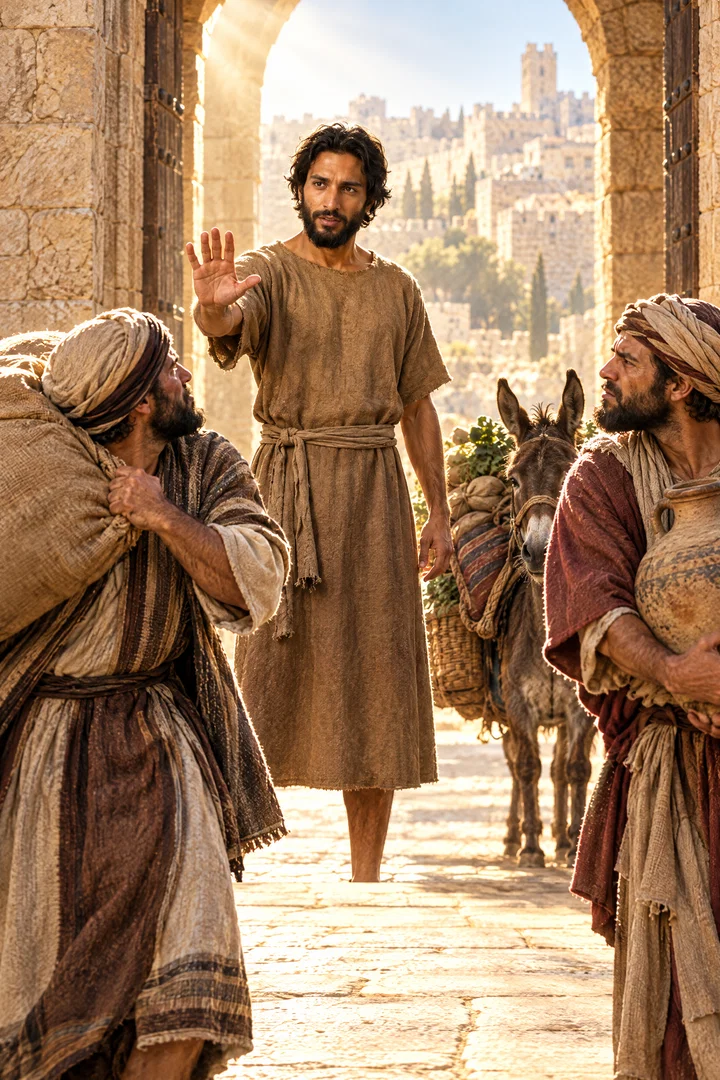
The verse belongs to the reform after the return from Persia to Jerusalem.PK 669.1–670.1 The people of Judah had solemnly and publicly pledged to obey God's law, but when that guiding influence was withdrawn many departed from the Lord.PK 669.1–670.1 During an absence evils crept in that threatened to pervert the nation.PK 669.1–670.1 The wrong confronted was open profanation of the Sabbath day by trade, including treading winepresses and bringing in sheaves and burdens.PK 669PK 671.1–672.1 Those burdens were carried on donkeys and in sacks, bundles, containers and vessels, and included fish and other goods bought from men of Tyre.PK 669PK 671.1–672.1
The rebuke was aimed at the nobles and rulers of Judah.PK 671.1–672.1 They could have prevented the traffic but neglected their duty from desire to advance their own interests and favor the ungodly.PK 671.1–672.1 Others sided with outsiders to overcome the scruples of the conscientious.PK 671.1–672.1 This disregard grew out of intercourse with idolaters, as heathen merchants and traders induced Israelites to engage in Sabbath traffic.PK 671.1–672.1 The Sabbath is the sign distinguishing Israel from all other nations as worshipers of the true God.PK 671.1–672.1
To call it an evil thing means that profaning the Sabbath brings more wrath upon Israel.PK 671.1–672.1 Their fathers did the same, and God brought all this calamity upon them and upon Jerusalem.PK 671.1–672.1 On learning of this bold profanation done in contempt of God, Nehemiah was grieved.PK 669.1–670.1PK 671.1–672.1 He fearlessly contended against the wrong and took prompt measures to cleanse what had been defiled.PK 669.1–670.1PK 671.1–672.1 He directed the Levites to guard the gates of the temple courtyard against Sabbath burdens in order to restore God's house to its right use.PK 669.1–670.1PK 669
Sources
Pioneers and periodicals
83 sources
Nehemiah as governor contended with the nobles of Judah for profaning the Sabbath by Sabbath commerce and labor in Jerusalem, treading winepresses, carrying burdens and selling victuals, wine, fish and all manner of ware.ST Jan 17, 1884ST Feb 20, 1893ST Jun 4, 1902ST Feb 20, 1893 To profane the day is to treat God's holy day as common by doing ordinary work and worldly business instead of keeping it holy, which is an evil thing and a serious offense against God.RH Jan 21, 1862ST Dec 20, 1899ST Nov 15, 1899ST Jun 17, 1886RH Apr 19, 1864 The Sabbath so profaned is the seventh day of the week, Saturday, the weekly Sabbath of the fourth commandment, not Sunday or a temporary festival.RH Jan 14, 1862ST Apr 11, 1900RH Mar 19, 1857ST Mar 20, 1884ST Mar 28, 1911 Their fathers' Sabbath-breaking had brought wrath, destruction of Jerusalem and the Babylonian captivity, and by profaning it again the nobles were bringing more wrath upon Israel.RH Jan 21, 1862ST Dec 20, 1899ST Oct 6, 1914ST Feb 20, 1893ST Mar 18, 1875 He enforced reform by rebuking, warning of past judgments, shutting the gates when dark before the Sabbath until after it, and driving off traders, restraining desecration within Jerusalem without compelling heathen merchants elsewhere.ST Dec 20, 1899ST Feb 20, 1893ST Jul 28, 1898 His contending was by theocratic authority proper to Israel under God's direct rule and gives no authority for churches or rulers now to enforce Sunday observance by law, though those who held for Sunday legislation taught it as a model for compelling rest-day observance.ST Apr 9, 1896ST Aug 23, 1910ST Mar 28, 1911ST Apr 20, 1888
Setting of the Rebuke
Nehemiah acted as governor of Jerusalem under Israel's theocratic government, and on his return to the city from Susa he contended with the nobles of Judah for profaning the Sabbath day.ST Feb 20, 1893ST Jul 28, 1898 Jerusalem was set apart to God and held in trust for Him, so its rulers were responsible for carrying out His laws, and Nehemiah required those within his care to observe the Sabbath outwardly as in households.ST Jul 28, 1898 His work of uprousing and quickening the moral and spiritual natures of the people was perhaps the most difficult of all his tasks, taken up again with vigor and tenacity after a recall to court involving more than a thousand miles of travel going and returning.RH Oct 8, 1908 He carried it through against opposition everywhere, with priest and Levite and people and even the high priest himself yielding to his energetic initiative.RH Oct 8, 1908 His rebuke and enforcement belonged to the authority given him in that setting, restraining desecration within Jerusalem on ground belonging to God's people rather than compelling observance elsewhere.ST Jul 28, 1898
The profanation he confronted was Sabbath commerce and labor in Judah and Jerusalem.ST Jan 17, 1884ST Feb 20, 1893ST Jun 4, 1902 Some trod winepresses on the Sabbath and brought in sheaves and laded asses with wine, grapes, figs and all manner of burdens into Jerusalem, bringing victuals to sell, while men of Tyre brought in fish and all manner of ware and sold on the Sabbath to the children of Judah in Jerusalem.ST Feb 20, 1893RH Jul 30, 1867 Nehemiah first testified against those selling and then contended with the nobles as responsible for allowing it, calling it an evil thing and profaning the Sabbath.ST Jan 17, 1884ST Feb 20, 1893ST Jun 4, 1902 Rulers favored these practices to advance their own interests, and some tried to persuade more conscientious Jews to break the Sabbath too, so that its sacredness was greatly undermined.ST Jan 17, 1884ST May 20, 1886 He joined the rebuke with warning that their fathers had done the same and God had brought evil upon Israel and Jerusalem for it, followed by shutting the gates before the Sabbath and guarding them so no burden would be brought in.ST Feb 20, 1893ST Jun 4, 1902RH Jul 30, 1867
The rebuke belongs to the post-captivity restoration when Jerusalem was being rebuilt, about 450 years before Christ, dated to 445 B.C.ST Feb 2, 1915ST Oct 17, 1900 It was the last reform wrought in Israel before Christ came, a Sabbath reform enforced by commanding the gates to be shut when dark before the Sabbath and not opened till after it, with servants set at the gates so no burden would be brought in. It came after the people heard the law and confessed sins, pledged covenant obedience, and restored faithful payment of tithes and proper Sabbath observance.RH Mar 23, 1905 It is part of the history of Babylonian life in the days of Ezra and Nehemiah, when Israel's poor religious and social condition included forgotten law and corrupted priesthood.ST Jun 13, 1906 In that period he also confronted joining with heathen peoples and bringing them into the temple.ST Aug 23, 1910
Meaning of Profaning Sabbath
To profane the Sabbath is to treat God's holy day as common by doing ordinary work upon it, using it for worldly business, and failing to keep it holy.ST Nov 15, 1899ST Jun 17, 1886ST Apr 1, 1875RH Sep 19, 1854ST Aug 15, 1878 This conduct is called an evil thing, a serious offense against God and a disregard of His law, not an indifferent choice.ST Nov 15, 1899ST Jun 17, 1886RH Apr 19, 1864ST Apr 1, 1875RH Sep 19, 1854
Buying and selling on the Sabbath, trading with heathen merchants, carrying burdens of merchandise such as sheaves, wine, grapes and figs into Jerusalem to sell, treading winepresses, traveling, and other profit-seeking work profane the day.RH Jan 21, 1862ST Dec 20, 1899ST Oct 6, 1914ST Nov 7, 1906ST Jun 28, 1877 Such commerce and carrying of goods violate God's law and do servile work that is sinful.RH Jan 21, 1862ST Dec 20, 1899ST Oct 6, 1914ST Nov 7, 1906RH Sep 2, 1851 The rebuke was given because the nobles allowed this trade after the people had pledged in covenant not to do it.ST Dec 20, 1899ST Oct 6, 1914ST Jun 28, 1877
Carrying burdens for ordinary purposes and for worldly gain is the forbidden burden-bearing that profanes the Sabbath.RH Feb 3, 1852RH May 2, 1854RH Feb 11, 1862 That carrying is labor and thy work done for gain, as with sheaves, wine, grapes and figs brought in to sell.RH Feb 3, 1852RH May 2, 1854RH Feb 11, 1862 It is to be distinguished, with Jeremiah 17, from the healed man's carrying his small bed at Jesus' direction, which was not a forbidden burden but a lawful act of mercy manifesting God's power and glory and proving that Jesus had truly healed him.RH Feb 3, 1852RH May 2, 1854RH Feb 11, 1862
Dismissing business matters and laying plans for future business on the Sabbath also profanes the day, counted by God the same as engaging in the actual transaction of business.ST Feb 7, 1911RH Jan 21, 1873 That planning comes from striving to gain riches, for where a man's treasure is there his heart will be.ST Feb 7, 1911RH Jan 21, 1873 The love of riches leads to neglecting prayer, overreaching in dealing, breaking the Sabbath by business planning, and many other things contrary to the religion of Christ, and men cannot afford to disobey God in business for advantage.ST Feb 7, 1911RH Jan 21, 1873
Day Identity and Timing
The Sabbath profaned in the rebuke is the seventh day of the week, Saturday, the Sabbath of the fourth commandment, not Sunday or the first day.ST Apr 11, 1900ST Mar 28, 1911ST Jan 19, 1882RH Jul 30, 1867 The protest concerned labor and trading on the Sabbath, and Nehemiah himself worked on Sunday.ST Mar 20, 1884ST Jan 19, 1882 The verse gives no basis for keeping Sunday instead and no support for a law to enforce Sunday observance.ST Apr 11, 1900ST Mar 28, 1911ST Jan 19, 1882 His zeal belongs to the return to the promised land and presents the seventh day as a rest day for all mankind, with suspending business on that definite day part of honoring it in response to the neglect associated with Jerusalem's past calamities.RH Aug 21, 1855RH Jul 30, 1867
The verse refers to the weekly Sabbath of the Lord, not to a temporary festival or land Sabbath.RH Jan 14, 1862RH Mar 19, 1857 Profaning that Sabbath was treated as a serious evil and one chief cause of the Babylonian captivity, yet the Sabbath remained binding even while the Hebrews were dispersed from their land because it was not a local institution like the annual sabbaths.RH Jan 14, 1862RH Mar 19, 1857 Israel retained knowledge of which day was the Sabbath through the captivity without disagreement; their fault was disobedience in not keeping it sacred, not loss of the day.ST Jun 3, 1886ST May 1, 1884 After the 70-year Babylonish captivity the whole nation on return was still keeping the same Sabbath, which proves the weekly Sabbath was known through those 70 years and was not lost, even though how it was observed could be perverted.ST Jun 3, 1886ST Jun 28, 1905
The Sabbath begins at sunset and is observed from evening to evening, from even unto even.ST May 16, 1911RH Dec 9, 1852ST Sep 20, 1899 The day is made up of evening and morning with the evening coming first, so the Sabbath opened at even and closed at even when the sun did set.ST Sep 20, 1899ST Sep 15, 1898 As Jerusalem's gates began to be dark before the Sabbath, with the deep shadows of the wall cast at sunset, Nehemiah ordered them shut and kept closed until after the Sabbath, with servants set at the gates so no burden would be brought in.ST May 16, 1911RH Dec 9, 1852ST Mar 4, 1889ST Sep 2, 1897 That reformation concerned not only the day itself but the time for beginning the day, namely at the going down of the sun, illustrating that days were reckoned from evening.ST Mar 4, 1889ST Sep 2, 1897ST Sep 15, 1898 Treating the Sabbath as an ordinary day of work profanes it, and those responsible for the community are to be rebuked for doing so by remembering to keep holy the full day, rather than delaying its beginning until darkness or ending it as soon as the sun disappears behind a hill.ST Aug 15, 1878
Wrath and National Judgment
The fathers' Sabbath-breaking brought calamity and evil and wrath upon them and upon Jerusalem and Israel, leading to the city's destruction and desolation and to humiliation, distress, and feebleness before enemies and the Babylonian captivity, in fulfillment of Jeremiah's warning.ST Feb 7, 1911ST Apr 8, 1886ST Dec 20, 1899ST Feb 20, 1893ST Mar 18, 1875 Had Israel kept the Sabbath, Jerusalem would have stood forever.ST Dec 20, 1899 The offense was Sabbath labor and buying and selling in Judah and Jerusalem, and Nehemiah joined his rebuke of the nobles to the warning that their fathers had done the same and God had brought evil upon Israel and Jerusalem for it.ST Feb 20, 1893ST Nov 15, 1899 Sabbath desecration was a serious evil, and Nehemiah acted to stop it and prevent a recurrence of that judgment.ST Dec 20, 1899ST Apr 1, 1875
By profaning the Sabbath again the nobles were bringing more and further wrath upon Israel.RH Jan 21, 1862ST Oct 6, 1914ST Nov 15, 1899ST Feb 2, 1915ST Nov 7, 1906 They were adding to guilt while restored to God's favor, renewing transgression of commerce and carrying of goods on the Sabbath which the people had pledged not to do.ST Oct 6, 1914ST Jun 28, 1877 Their renewed disregard recalled the judgment and destruction that had followed their ancestors' disobedience.ST Oct 6, 1914ST Feb 2, 1915ST Jun 28, 1877
Sabbath violation was one of the chief things and chief sins and chief causes of the captivity, apostasy, overthrow and destruction.ST Jun 11, 1894RH Apr 8, 1875RH Jan 14, 1862RH Dec 20, 1853ST May 21, 1896 It was the evil for which God sent Judah into the 70-year Babylonish bondage, because they did not regard the Sabbath strictly enough.RH Apr 8, 1875 On the return from Babylon the people solemnly promised not to violate it anymore, and the Sabbath became a test of obedience in the reformation after their return.ST Jun 11, 1894 A Sabbath reformation could have saved them even at the last moment.ST May 21, 1896
Desecration of the Sabbath was one of the principal ways Israel departed from God and forfeited prosperity and divine protection.ST Feb 7, 1911RH Jan 12, 1905 God withdrew favor and allowed His people to be overcome by enemies and scattered, bringing humiliation, distress, feebleness before enemies, and captivity.ST Feb 7, 1911ST Apr 8, 1886 Ancient Israel went down as a nation for trampling upon God's Sabbath.RH Jan 12, 1905 Trampling God's Sabbath brings national ruin, while honoring His holy day in life and home and business and government keeps the blessing of heaven upon the nation.RH Jan 12, 1905
Sabbath Truth and Importance
The rebuke shows how important the Sabbath is in God's estimation, for violation is treated as a serious evil with national consequences and not as an indifferent choice.ST Mar 18, 1875ST Feb 20, 1893RH Apr 8, 1875 It enforces the still-binding command to remember the Sabbath day to keep it holy, the seventh day as a memorial of creative power and a sign of the sanctifying God.ST Feb 20, 1893RH Apr 7, 1851 The Sabbath is protected by the fourth commandment, which Christ did not break.RH Apr 11, 1854 Its prophetic teaching, in harmony with Isaiah and Jeremiah, requires turning from one's own ways and pleasures and words to honor God and find delight in His holy day, rather than keeping it in idleness, joviality, surfeiting, or wantonness.ST Dec 2, 1886 That teaching proves perpetual obligation imbedded in the Decalogue, concerning the same Sabbath Jesus declared was made for man and Paul honored by his custom of Sabbath worship and instruction in Acts 13, 16, 17, and 18.ST Dec 2, 1886
The Sabbath is God's seal applied to the restoration of Jerusalem to make the work complete, binding the restored people to God in obedience as a sign to the world.ST Nov 25, 1908 It became a test of obedience and faithfulness in the reformation after the return from Babylon, by which man's loyalty is tested.ST Jun 11, 1894RH Jan 26, 1905ST Oct 29, 1902 Sabbath transgression was a chief cause of the people's overthrow, captivity, and destruction.ST Jun 11, 1894RH Dec 20, 1853ST May 21, 1896 A Sabbath reformation could have saved them even at the last moment.ST May 21, 1896
Disregard for the Sabbath showed contempt for the sign of loyalty and was one of the principal ways and chief sins through which God's people departed from Him, contributing to Jerusalem's overthrow, humiliation, distress, feebleness before enemies, forfeiture of prosperity and divine protection, and captivity as the city was being rebuilt about 450 years before Christ.ST Feb 7, 1911ST Feb 2, 1915RH Dec 20, 1853ST Dec 11, 1928 The sin grew through association with idolatrous neighbors who disregarded God's holy day, leading many to imitate their example by trading with heathen merchants on the Sabbath.ST Feb 7, 1911ST May 20, 1886 Some worked to overcome the scruples of more conscientious countrymen and draw them into Sabbath-breaking, until the sacredness of the Sabbath was to a great extent destroyed.ST Feb 7, 1911ST May 20, 1886 Even in captivity God kept His eye upon them to preserve knowledge of His law until the promised Messiah should come.ST Feb 7, 1911
When the people left off paying the holy tithe they did not keep God's holy Sabbath, and when they obeyed to bring in the tithe the Sabbath was restored.RH Jan 26, 1905 Both are made holy by the same God by the same power, so one is not more holy than the other, and both are grand principles by which loyalty is tested.RH Jan 26, 1905 Withholding the Lord's money prepared the way to steal the Lord's Sabbath for selfish use, after breaking solemn covenant by working and buying victuals from heathen vendors frequenting the city.RH Jul 9, 1908 An impenitent robber of holy time or of holy money cannot meet God in peace, and a robber of holy money cannot be saved while a robber of holy time is lost.RH Jan 26, 1905
Before the captivity the nation in idolatry gave very little regard to the Sabbath.ST Aug 25, 1909 Nehemiah's decided reform helped restore observance, but it was often outward in form rather than inward in spirit.ST Aug 25, 1909ST Sep 10, 1896 Sabbath desecration had brought captivity and left Jerusalem desolate, so fear of a repeat of calamity and judgment led rabbis and Pharisees to enforce strict outward rules and pile up traditions and copied precepts as though divine.ST Aug 25, 1909ST Sep 27, 1899RH Apr 10, 1913 Thus the day God gave as a blessing for man became a hard, burdensome observance, which Jesus came to correct.ST Aug 25, 1909 True Sabbath-keeping involves inward service to God and resting from sin as well as outward observance.RH Apr 10, 1913
Reform and Enforcement Methods
Nehemiah confronted the nobles of Judah because as rulers of Jerusalem, a city set apart to God, they were responsible for carrying out God's laws and for living up to the calling to represent Him.ST Nov 15, 1899ST Mar 13, 1879 He required those within his care to observe the Sabbath outwardly, as is right within one's own household, and he challenged the nobles for allowing trading and other profit-seeking work that profaned the day.ST Mar 13, 1879 His rebuke of the nobles came after he had testified against the sellers themselves.ST Feb 20, 1893
His reform enforced strict observance by contending, rebuking, testifying, and warning of past judgments, commanding that when the gates of Jerusalem began to be dark before the Sabbath they should be shut and not opened till after the Sabbath.ST Dec 20, 1899ST Feb 20, 1893 He set servants at the gates so that no burden would be brought in on the Sabbath day, giving an object-lesson by shutting out all worldly traffic.ST Feb 20, 1893RH Jul 9, 1908 The evil he stopped was Sabbath labor and buying and selling in Judah and Jerusalem, with men treading winepresses, bringing in sheaves, lading asses with wine, grapes, figs and all manner of burdens, selling victuals, and men of Tyre bringing in fish and all manner of ware and selling to the children of Judah.ST Feb 20, 1893 He warned that their fathers had done the same and God had brought all this evil upon them and upon Jerusalem, so that by profaning the Sabbath they were bringing more wrath upon Israel.ST Dec 20, 1899 This work of uprousing and quickening the moral and spiritual natures of the people and restoring strict observance of law and Sabbath was perhaps the most difficult of all his tasks, taken up again with vigor and tenacity of purpose after a recall to court involving more than a thousand miles of travel going and returning, and carried through against opposition from priest and Levite and people and even the high priest himself.RH Sep 21, 1916RH Oct 8, 1908ST May 28, 1912 It was the last reform wrought in Israel before Christ came.
Although the people were treading winepresses, carrying loads and selling provisions, he contended with them rather than personally carrying out the death penalty, showing that Sabbath-breakers are to be rebuked without inflicting the penalty himself.RH Sep 2, 1851 His action restrained desecration within Jerusalem on ground belonging to God's people and held in trust for God, reaching only the Jews who had promised to keep it.ST Jul 28, 1898ST Mar 28, 1911 It did not compel Tyrian merchants to keep the Sabbath elsewhere, but forbade them to profane it there and drove off the traders who camped about the city to sell wares.ST Jul 28, 1898ST Mar 28, 1911
The people had pledged in solemn covenant not to buy from heathen vendors on the Sabbath, hoping to discourage the trade and stop the desecration.RH Jul 9, 1908 When they broke that covenant for selfish interests by working and buying victuals from heathen vendors who frequented the city, Nehemiah showed them that such desecration had caused the captivity and the destruction of Jerusalem.RH Jul 9, 1908
Civil Power and Sunday Laws
Nehemiah contended with the nobles by theocratic authority and compelling power proper to Israel's special setting under God's direct providence during the restoration, and that setting has no parallel with modern Sunday laws.ST Apr 9, 1896 Christian rulers and churches have no right to adopt his methods to enforce Sabbath or Sunday observance by law, for God demands voluntary spiritual service in spirit and in truth. The gospel knows no compelling power except love, no means of creating love except by the Spirit of God, no means of obtaining that Spirit except by faith, and no weapons except the sword of the Spirit and the armor of righteousness. To enforce religion by the state puts man in the place of God and is the work of antichrist, and when the church leaves Christ, in whom is all her power, and turns to the world and to a worldly institution for power she commits spiritual fornication. The only true Sabbath reform is not state compulsion but the reform clearly predicted in Isaiah of keeping God's true Sabbath.
The rebuke gives no authority for demanding Sunday laws, for it was done under a theocracy guided by God and His prophets in a nation and city belonging to the Lord and to the Lord's special people alone.ST Aug 23, 1910ST Mar 28, 1911ST Jan 19, 1882 That theocracy ended with Israel when Israel deliberately declared, We have no king but Caesar, and those who now demand Sunday laws have no such credentials.ST Aug 23, 1910 God does not set up His kingdom on earth by might or by power, but in the hearts of His people by His Spirit, and the literal earthly kingdom will not be established until He Himself comes.ST Aug 23, 1910 What Nehemiah contended for was proper observance of the seventh day of the week, the Sabbath of the fourth commandment, not Sunday or first-day observance, and it gives no basis for keeping Sunday instead.ST Mar 28, 1911ST Jan 19, 1882 His work was proper and right, but it has no application to Sunday enforcement now, and if its principle were applied it would require rest on the seventh day.ST Mar 28, 1911
His enforcement reached only the Jews, the Israel of God who had promised to keep the Sabbath, and only within territory belonging to them on ground belonging to God's people.ST Mar 28, 1911 The traders who camped about the city to sell wares were driven off from Jewish land, but no effort was made to compel outsiders to keep the Sabbath elsewhere.ST Mar 28, 1911 Applied to Sunday, the principle would therefore allow a law only to make professed Sunday-keepers keep Sunday on premises owned and controlled by Sunday-keepers, while those who did not choose to keep Sunday could do as they pleased elsewhere.ST Mar 28, 1911 To apply the example to justify religious groups compelling the state would establish a theocracy and lead to religious control of civil power.ST Apr 20, 1888
On the other side the example is taken as a model for using civil officers to stop Sabbath trading and for compelling people and corporations to observe a day of rest.ST Apr 20, 1888ST Jul 3, 1893ST Jul 3, 1884 In that use it is made part of a Mosaic theocratic system joining church and state to support Sunday legislation and a predicted national demand for Sabbath observance.ST Jul 3, 1893ST Jul 3, 1884 Profaning the day is then applied to Sunday labor and Sunday sales as rebellion against God that no state or national government has a right to desecrate, condemning such work as breaking the Lord's day.RH May 12, 1904RH Dec 7, 1905 The remedy urged from it is to preserve the day by demanding enforcement of law, educating, and agitating and keeping up agitation until the demand is granted.RH Dec 7, 1905 The closing of Jerusalem's gates on the Sabbath in the chapter is taken as evidence that Jewish law and custom required the gates to be shut, which could obstruct flight from the city, yet that custom does not explain the warning about fleeing on the Sabbath, since the Jews openly disregarded the Sabbath during the events surrounding Cestius's attack.RH Jul 12, 1864
Prophecy Pattern and Application
Nehemiah's final reform calling for better Sabbath observance in restoring Jerusalem is a pattern of God's work in other ages, especially in the last days.ST Jun 11, 1894ST Jun 2, 1909ST May 21, 1896 Sabbath violation was a chief cause of the captivity and overthrow, and after the return from Babylon the Sabbath became a test of obedience in the reformation that gave special attention to restoring its observance.ST Jun 11, 1894ST May 21, 1896 The Sabbath was Israel's sign that Jehovah who sanctified them and created all things was the living God, and a Sabbath reformation could have saved them even at the last moment.ST May 21, 1896 The Sabbath will be a test in the last great reformation, and the only true Sabbath reform is not state compulsion but the reform clearly predicted in Isaiah of keeping God's true Sabbath.ST Jun 11, 1894
The rebuke calls for a Sabbath reform among those professing to observe God's holy rest day, reproving seeking to please self rather than to honor God.ST Feb 7, 1911 Carelessness in Sabbath observance will not pass unpunished, men cannot afford to disobey God in business for advantage, and the Sabbath must be kept holy to enjoy His blessing.ST Feb 7, 1911 A Sabbath-keeper who for gain enters partnership with men having no respect for the Sabbath and allows an unbelieving partner to carry on their joint business on that day is equally guilty with the unbeliever and must dissolve the partnership however much is lost by it.ST Feb 7, 1911 He must not allow men in his employ, paid by his money, to work on the Sabbath, for those who enter business partnerships with Sabbath workers share in the desecration even if they stop their own labor and worship, and they are not guiltless before God.ST Feb 7, 1911ST Apr 8, 1886
Buying and selling on the Sabbath profanes God's day, for the Sabbath belongs to God and is a blessing to humanity and must be given to Him and kept holy rather than used for commerce or idleness.RH Sep 9, 1858RH Jun 12, 1855 The same rebuke applies to Rome, where shops and markets are busy and people buy and sell on the Sabbath while business stops there on feast days.RH Sep 9, 1858RH Jun 12, 1855
Sources