Nehemiah 13:18
Did not your fathers thus, and did not our God bring all this evil upon us, and upon this city? yet ye bring more wrath upon Israel by profaning the sabbath.
Translations
Did not your fathers thus, and did not our God bring all this evil on us, and on this city? yet you bring more wrath on Israel by profaning the sabbath.
King James Version, KJV Cambridge Paragraph Bible, Webster Bible, Revised Version, American Standard Version
Did not your fathers thus, and did not our God bring all this evil upon us, and upon this city? yet ye bring more wrath upon Israel by profaning the sabbath.
Thus did not your fathers do? and our God bringeth in on us all this evil, and on this city, and ye are adding fierceness on Israel, to pollute the sabbath.'
Did not your fathers thus, and did not our God bring all this evil upon us and upon this city? And ye will bring more wrath against Israel by profaning the sabbath.
Was it not, thus, your fathers did, and our God brought upon us all this calamity, and upon this city?—and, ye, would add indignation against Israel, by profaning the sabbath!
Berean Standard Bible, Majority Standard Bible
Did not your forefathers do the same things, so that our God brought all this disaster on us and on this city? And now you are rekindling His wrath against Israel by profaning the Sabbath!”
Didn’t your fathers do this, and didn’t our God bring all this evil on us and on this city? Yet you bring more wrath on Israel by profaning the Sabbath.”
Did not your fathers do the same, and did not our God send all this evil on us and on this town? but you are causing more wrath to come on Israel by not keeping the Sabbath holy.
Did not your fathers thus, and our God brought all this plague vpon vs, and vpon this citie? yet yee increase the wrath vpon Israel, in breaking the Sabbath.
Douay-Rheims (Challoner revision)
Did not our fathers do these things, and our God brought all this evil upon us, and upon this city? And you bring more wrath upon Israel by violating the sabbath.
Pictures
Cross-references 20 of 39
- Jeremiah 17:27
But if ye will not hearken unto me to hallow the sabbath day, and not to bear a burden, even entering in at the gates of Jerusalem on the sabbath day; then will I kindle a fire in the gates thereof, and it shall devour the palaces of Jerusalem, and it shall not be quenched.
Sabbath profanation brings judgment and destruction upon Jerusalem.
- Exodus 20:8-10
Remember the sabbath day, to keep it holy.
Commands keeping the Sabbath holy and resting from work, which Nehemiah’s people violated.
- Isaiah 58:13-14
If thou turn away thy foot from the sabbath, from doing thy pleasure on my holy day; and call the sabbath a delight, the holy of the LORD, honourable; and shalt honour him, not doing thine own ways, nor finding thine own pleasure, nor speaking thine own words:
Both teach proper Sabbath observance, with delight in God and blessing for honoring the Sabbath.
- Ezekiel 20:12-13
Moreover also I gave them my sabbaths, to be a sign between me and them, that they might know that I am the LORD that sanctify them.
Israel’s Sabbath profanation is linked to God’s anger and judgment.
- Ezekiel 20:20-21
And hallow my sabbaths; and they shall be a sign between me and you, that ye may know that I am the LORD your God.
Sabbath profanation brings God’s judgment, despite the Sabbath being a sign between God and Israel.
- Jeremiah 17:24-25
And it shall come to pass, if ye diligently hearken unto me, saith the LORD, to bring in no burden through the gates of this city on the sabbath day, but hallow the sabbath day, to do no work therein;
Keeping the Sabbath is tied to Jerusalem’s continued security.
- Genesis 2:2-3
And on the seventh day God ended his work which he had made; and he rested on the seventh day from all his work which he had made.
God rested and set apart the seventh day as the Sabbath.
- 2 Chronicles 36:20-21
And them that had escaped from the sword carried he away to Babylon; where they were servants to him and his sons until the reign of the kingdom of Persia:
Sabbath neglect brought judgment, captivity, and the land’s rest.
- Leviticus 23:32
It shall be unto you a sabbath of rest, and ye shall afflict your souls: in the ninth day of the month at even, from even unto even, shall ye celebrate your sabbath.
The Sabbath is observed from evening to evening.
- Exodus 16:27-30
And it came to pass, that there went out some of the people on the seventh day for to gather, and they found none.
Israel is rebuked for refusing God’s Sabbath command and gathering manna on the seventh day.
- Isaiah 56:2
Blessed is the man that doeth this, and the son of man that layeth hold on it; that keepeth the sabbath from polluting it, and keepeth his hand from doing any evil.
Blessing is promised to those who keep the Sabbath.
- Exodus 31:13
Speak thou also unto the children of Israel, saying, Verily my sabbaths ye shall keep: for it is a sign between me and you throughout your generations; that ye may know that I am the LORD that doth sanctify you.
The Sabbath is described as a sign between God and his people.
- Ezekiel 22:8
Thou hast despised mine holy things, and hast profaned my sabbaths.
Both identify profaning the Sabbath among Israel’s sins that brought judgment.
- Nehemiah 10:31
And if the people of the land bring ware or any victuals on the sabbath day to sell, that we would not buy it of them on the sabbath, or on the holy day: and that we would leave the seventh year, and the exaction of every debt.
The covenant pledge to keep the Sabbath was later broken.
- Jeremiah 17:21-22
Thus saith the LORD; Take heed to yourselves, and bear no burden on the sabbath day, nor bring it in by the gates of Jerusalem;
Both forbid Sabbath burdens and warn against profaning the Sabbath.
- Ezekiel 20:16
Because they despised my judgments, and walked not in my statutes, but polluted my sabbaths: for their heart went after their idols.
Israel’s profaning God’s Sabbaths is given as a reason for judgment.
- Ezekiel 22:26
Her priests have violated my law, and have profaned mine holy things: they have put no difference between the holy and profane, neither have they shewed difference between the unclean and the clean, and have hid their eyes from my sabbaths, and I am profaned among them.
Sabbath profanation among Israel’s sins brought divine judgment.
- Nehemiah 9:14
And madest known unto them thy holy sabbath, and commandedst them precepts, statutes, and laws, by the hand of Moses thy servant:
God made the Sabbath known to Israel and commanded them to observe it.
- Mark 2:27
And he said unto them, The sabbath was made for man, and not man for the sabbath:
The Sabbath was made for humanity’s welfare, yet profaning it brings wrath.
- John 5:9-10
And immediately the man was made whole, and took up his bed, and walked: and on the same day was the sabbath.
Carrying the bed on the Sabbath is treated as Sabbath-breaking.
Commentary
Each commentary is drawn from primary sources: the writings of Ellen G. White and Adventist pioneers and periodicals. Each commentary is separate. Its own words are not a quotation; follow the references to read the source passages.
Ellen G. White
5 sources
The verse belongs to Nehemiah's reformation after his return from Persia, when the restraining influence of Ezra and Nehemiah had for a time been withdrawn and many had departed from the Lord, evils had crept in that threatened to pervert the nation, and idolaters had not only gained a foothold in the city but by their presence had contaminated even the precincts of the temple.PK 669.1–670.1 The Sabbath at issue is the sign distinguishing Israelites from all other nations as worshipers of the true God.PK 671.1–672.1 Disregard of that Sabbath came through intercourse with idolaters, when heathen merchants and traders induced Israelites to engage in traffic on the Sabbath.PK 671.1–672.1
The rulers could have prevented the Sabbath traffic but neglected their duty from desire to advance their own interests and to favor the ungodly, so Nehemiah fearlessly rebuked them.PK 671.1–672.1 The Sabbath-breaking of the fathers, repeated by the present generation, had caused God to bring evil, calamity and disaster upon Israel, upon the people, and upon Jerusalem.PK 669RH Nov 6, 1913PK 182.2PK 671.1–672.1 Continuing to profane the Sabbath brings more and further wrath upon Israel.PK 669RH Nov 6, 1913PK 182.2PK 671.1–672.1
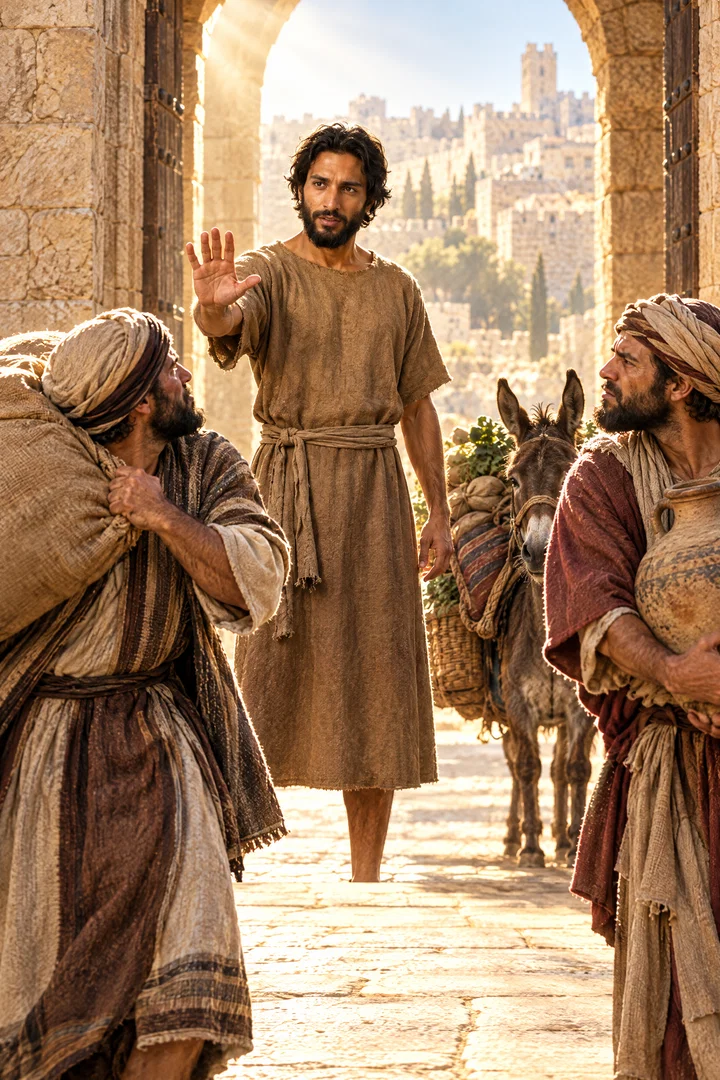
That warning stands behind Nehemiah's action in the temple courtyard in Jerusalem, where he directed the Levites to guard the arched gates and turn away traders coming with burdened donkeys, sacks, bundles, containers and vessels so the Sabbath would not be profaned.PK 669
Sources
Pioneers and periodicals
78 sources
Nehemiah rebuked the nobles of Judah after the return from Babylonian captivity for profaning the Sabbath in the rebuilding of Jerusalem about 445 B.C., in the last Sabbath reform of the Old Testament before Christ came.ST Feb 2, 1915ST Oct 17, 1900RH Apr 28, 1874ST Jun 2, 1909 Profaning the Sabbath meant treating it as an ordinary business day by bearing burdens into the city and by buying, selling, trading and traveling on the seventh day.ST May 20, 1886ST Feb 7, 1911ST Oct 6, 1914ST Jun 4, 1902ST Feb 2, 1915 The fathers' Sabbath-breaking was a chief cause of the evil God brought upon the people in the Babylonian captivity and the destruction and desolation of Jerusalem, and continuing in it would bring more wrath upon Israel.ST Oct 6, 1914ST Nov 15, 1899ST Mar 18, 1875RH Apr 8, 1875ST Jul 18, 1878 The Sabbath at issue is the binding seventh day of the fourth commandment, Saturday and not Sunday, kept from sunset to sunset as shown when the gates were shut when it grew dark before the Sabbath.ST Sep 20, 1899ST Mar 4, 1889RH Apr 8, 1875ST Apr 11, 1900ST Mar 20, 1884 Nehemiah enforced it as ruler of a theocracy over a covenant people who had promised to keep it, which gives no warrant for modern Sunday laws, since that theocracy ended and God's kingdom is now in the heart until He comes.ST Jul 28, 1898ST Apr 9, 1896ST Aug 23, 1910ST Mar 28, 1911
Historical Setting in Nehemiah
The verse belongs to Nehemiah's reform after the return from Babylonian captivity, when Jerusalem was being rebuilt in the days of Ezra and Nehemiah, dated about 450 years before Christ and to 445 B.C.ST Feb 2, 1915ST Oct 17, 1900ST Mar 10, 1909 It warns that profaning the Sabbath brought further wrath upon Israel, recalling that God had already brought disaster and evil upon the people and upon Jerusalem because of the sins and neglect of their fathers.ST Feb 2, 1915ST Oct 17, 1900 It stands as part of the record of Israel's repeated failure to keep the Sabbath holy, for which God punished them and urged them to obey.ST Oct 17, 1900
The events lie in the latter part of the seventh month, when the Feast of Ingathering followed the vintage, and form part of the account of preventing Sabbath violations in Jerusalem.RH Jun 2, 1851 The reform came after Nehemiah hastened back from the court at Susa, plunging with unwearied energy and tenacity of purpose into fierce struggle until priest, Levite, people and high priest yielded to his initiative.RH Oct 8, 1908 After the law was read the people confessed their sins and began observing the Sabbath properly and paying tithes.RH Mar 23, 1905
They had made a solemn covenant to keep the Sabbath and then broke it, returning after Nehemiah's return from Babylon to working on the Sabbath and buying food from heathen sellers in the city for their own selfish interests.RH Jul 9, 1908 They had pledged to stop desecrating the Sabbath by buying from traders on that day, in the hope that refusing to buy would discourage the trade. Withholding tithe had prepared the way for repeating Sabbath-breaking for selfish interests.RH Jul 9, 1908
It was the last reform wrought in Israel before Christ came, the closing record of the Sabbath in the Old Testament, and a final reform focused on better observance of the Sabbath.RH Apr 28, 1874ST Jun 2, 1909 In the return from captivity Sabbath observance was again a test of obedience in the needed reformation.ST Jun 11, 1894 Before the captivity the nation had given very little regard to the Sabbath when it went into idolatry, though after the return the people were zealous for the Sabbath law.ST Aug 25, 1909RH Aug 21, 1855
Actions Against Sabbath Breaking
Nehemiah contended with the nobles of Judah over the evil of profaning the Sabbath day, rebuking the people and rulers for allowing Sabbath-breaking to spread after the return from captivity.ST Jan 17, 1884RH Apr 8, 1875 He enforced strict observance of the Sabbath as part of the most difficult of all his tasks, the reformation of religion to arouse and quicken the moral and spiritual life of the people.RH Oct 8, 1908 He pressed that work with unwearied energy and tenacity of purpose after hastening back from the court at Susa, until priest, Levite, people and high priest yielded to his initiative.RH Oct 8, 1908
He shut the gates of Jerusalem when they began to be dark before the Sabbath and kept them shut till after the Sabbath.RH Dec 9, 1852ST Sep 2, 1897 He set servants at the gates so that no burden would be brought in on the Sabbath day, keeping merchants and burden-bearers from entering.RH Dec 9, 1852 In this way he taught right observance by shutting the city to all worldly traffic from dark before the Sabbath until after the Sabbath.RH Jul 9, 1908 The closing of the gates on the Sabbath also made escape difficult.RH Jul 12, 1864
He barred Tyrian and heathen merchants who sold goods and food on the Sabbath from profaning the Sabbath within the city, protecting Jerusalem as restored to God's people for His service.ST Jul 28, 1898 He drove off the traders who camped about the city to sell wares, rather than compelling them to keep the Sabbath elsewhere.ST Jul 28, 1898ST Mar 28, 1911 His response to merchants selling goods on the Sabbath was to compel the officers to stop them.ST Apr 20, 1888ST Apr 20, 1888 Understood as a model for enforcing the Sabbath through civil power, this amounts to a theocratic claim to use government authority for a religious requirement.ST Apr 20, 1888
He required the people within his care to observe the Sabbath outwardly, and acted within the authority given to him in Israel's theocratic government. Jerusalem was a city set apart to God whose rulers were responsible for carrying out God's laws. His work was limited to Jews who had promised to keep the Sabbath and to territory belonging to them.ST Mar 28, 1911
Meaning of Profaning Sabbath
Profaning the Sabbath is carrying and selling goods on that day and bearing burdens of merchandise for worldly gain.ST Oct 6, 1914ST Jun 4, 1902ST Feb 2, 1915 That included bringing sheaves, wine, grapes and figs into Jerusalem to sell, leading asses laden with sheaves and other burdens, and all ordinary work and commerce on the seventh day.ST Feb 2, 1915ST Jun 3, 1886RH May 2, 1854 Buying and selling, traveling, and treating the day as an ordinary day for business are profanation, and God's day is not to be used for personal business even in the busy season, when worldly errands or market talk draw the mind away from God.ST Oct 6, 1914ST Apr 19, 1877ST Apr 1, 1875 Such Sabbath transgression is what brought calamity on the people and Jerusalem and captivity upon Israel, and its continuance brings further wrath.ST Oct 6, 1914ST Jun 4, 1902ST Feb 2, 1915
It also includes trading with heathen merchants on the Sabbath, imitating heathen and idolatrous neighbors who disregarded God's holy day, and thereby destroying the sacredness of the day.ST May 20, 1886ST Feb 7, 1911 It includes trying to overcome the scruples of more conscientious countrymen and drawing them into Sabbath-breaking, and the pledged remedy was to stop buying from traders on that day in hope of discouraging the trade.ST May 20, 1886ST Feb 7, 1911 Profaning further includes planning future business on the Lord's day from striving to gain riches, where treasure is followed by the heart into neglected prayer and overreaching, contrary to the religion of Christ.ST Feb 7, 1911RH Jan 21, 1873 Planning business and dismissing business matters on the Sabbath bears guilt equal to actually transacting business, and so does entering partnership with men who have no respect for the Sabbath and letting the business be carried on by an unbelieving partner for gain, which requires dissolving the relation even at loss, as does allowing paid employees to work on the Sabbath.ST Feb 7, 1911 Thinking obedience cannot be afforded in business is reversed, since disobedience cannot be afforded and carelessness will not pass unpunished, while faithfulness means not robbing God and attending to the wants of the cause.ST Feb 7, 1911RH Jan 21, 1873
The burden-bearing forbidden is to be distinguished from the healed man's carrying his bed at Jesus' direction.RH Feb 3, 1852RH May 2, 1854RH Feb 11, 1862 That trading work of bearing burdens of merchandise for worldly gain is the labor and work forbidden by the Sabbath law.RH May 2, 1854 The bed carried at Jesus' direction was a mere trifle rather than a burden God had forbidden, an act of mercy for the glory of God and praising God, not a violation of the Sabbath.RH Feb 3, 1852RH May 2, 1854RH Feb 11, 1862
Nehemiah's reform of Sabbath observance was in many cases partial and outward in form rather than a change of heart.ST Sep 10, 1896 After the restoration the nation that had given very little regard to the Sabbath when it went into idolatry failed to learn Sabbath-keeping as a day of spiritual blessing.ST Aug 25, 1909 By piling up traditions respecting the Decalogue and copying out precepts of the rabbis as though divine, the day God gave as a blessing became a hard, burdensome observance and really a curse instead of a blessing, which Jesus came to correct by showing it is lawful to do well on the Sabbath day.ST Aug 25, 1909 The Pharisees' strict rules came from fear of even the slightest outward disregard lest judgment return, rather than true heart-service and resting from sin.RH Apr 10, 1913
Judgment for Sabbath Breaking
The verse warns that the fathers acted in this same way by profaning the Sabbath, and that God on that account brought all this evil upon the people and upon Jerusalem, while to go on profaning the Sabbath brings more and further wrath upon Israel.ST Oct 6, 1914ST Nov 15, 1899ST Mar 18, 1875RH Jan 21, 1862ST Feb 20, 1893 The earlier profanation included carrying and selling goods on the Sabbath, and the warning joins that Sabbath breaking to Jerusalem's destruction and Israel's captivity.ST Oct 6, 1914ST Nov 15, 1899ST Jul 28, 1898 Neglect of the Sabbath in this way could bring Jerusalem to destruction again.ST Dec 20, 1899ST Nov 15, 1899
Profaning the Sabbath was a chief cause and among the chief reasons God sent Judah into captivity for not regarding His Sabbath strictly enough.ST Mar 18, 1875RH Apr 8, 1875ST Jul 18, 1878RH Jan 14, 1862RH Jun 16, 1874 That captivity is identified as the Babylonian captivity, even the seventy-year Babylonian captivity.ST Jan 6, 1881RH Jan 14, 1862RH Jan 21, 1862 Sabbath violation caused the destruction of Jerusalem, left Jerusalem desolate, and ruined the nation, so that Israel went down as a nation while trampling God's Sabbath.ST Nov 15, 1899ST Jul 28, 1898RH Apr 19, 1864RH Apr 28, 1874RH Jan 21, 1862 Nehemiah confronted the remnant returned from Babylon for again violating the Sabbath and entreated them to desist from this great transgression, confirming the prediction that honoring the Sabbath would preserve the city while continuing to profane it would destroy it.RH Apr 28, 1874RH Jan 21, 1862
Continuing in Sabbath breaking after restoration repeats the ancestors' wrongdoing and aggravates it, adding to guilt and to wrath.ST Aug 15, 1878ST Sep 8, 1909RH Aug 22, 1865ST Jul 24, 1879 Even while being restored to favor and enjoying blessing, to keep profaning the Sabbath brings further judgment and harm.RH Aug 22, 1865ST Jul 24, 1879 This is not excused by apparent prosperity or by good intentions.ST Jul 24, 1879
Israel was prosperous as long as they obeyed God, but departing from Him by disobeying His law brought humiliation, distress, defeat by enemies, dispersion and captivity when His protection was withdrawn and their defense was removed.ST Feb 7, 1911ST Dec 11, 1928ST Jun 28, 1877 Yet even in captivity His eye was upon them to preserve the knowledge of His law until the promised Messiah should come.ST Feb 7, 1911 Sabbath observance is the sign of loyalty to God and acknowledgment of Him as Creator, contempt for it is a prominent form of apostasy, and God promised the city and nation would not be destroyed if they kept this sign in its full meaning from Moses to Christ.ST Feb 7, 1911ST Dec 11, 1928ST Jun 28, 1877 Nehemiah therefore regarded Sabbath observance as important to the city's welfare and acted to stop Sabbath trading, making Sabbath reform a matter of averting further judgment.ST May 21, 1896RH Jul 30, 1867
Sabbath Doctrine and Timing
Nehemiah 13:18 shows how important the Sabbath is in God's estimation, for God treats observance of His seventh-day Sabbath as important and its profaning as bringing further wrath upon Israel after the evil already brought upon the people and upon Jerusalem.ST Mar 18, 1875ST Jun 17, 1886RH Apr 8, 1875 Sabbath violation was one of the chief causes and chief reasons for the captivity of Judah, and breaking it violates the fourth commandment.RH Apr 8, 1875ST Oct 29, 1902RH Apr 11, 1854 With Isaiah and Jeremiah the warning stands to prove the perpetual obligation to observe the Sabbath, which cannot be denied without rejecting the Decalogue in which the Sabbath is imbedded, since the Sabbath is binding and its profaning brings God's judgment.ST Oct 29, 1902RH Apr 11, 1854ST Dec 2, 1886 The Sabbath concerned here is the seventh day of the week, Saturday, the Sabbath of the fourth commandment, not Sunday, and its teaching does not apply to Sunday.ST Apr 11, 1900ST Mar 20, 1884ST Mar 28, 1911ST Jan 19, 1882 Nehemiah's protest concerned work on the seventh-day Sabbath at Jerusalem, rebuking the Jews for trading on the Sabbath rather than for failing to keep Sunday, and the Bible gives no command to keep Sunday instead.ST Apr 11, 1900ST Mar 20, 1884ST Jan 19, 1882 Sunday observance did not arise until some four hundred years later after the resurrection of Christ.ST Mar 28, 1911
Israel had not forgotten which day was the Sabbath after the captivity, for the seventh day was still certainly known with no loss of reckoning.ST Jun 3, 1886ST May 1, 1884 The failure was loss of obedience, not knowledge of the day, since God did not allow knowledge of the day to be lost in Babylon though He sent Judah into the seventy-year Babylonian captivity to teach Sabbath observance because they did not regard His Sabbath strictly enough.ST May 1, 1884 After the return the Jews grounded a solemn promise not to violate the Sabbath any more, remembering that Sabbath-breaking was the very sin for which they had been sent into bondage and brought evil upon them and upon Jerusalem. After the Babylonian captivity the Sabbath's identity was known, though its observance could be perverted.ST Jun 3, 1886ST Jun 28, 1905 Nehemiah's rebuke, given when he saw irreligious people leading asses laden with sheaves and other burdens on the Sabbath, repeats the warnings given before by Isaiah, Jeremiah and the other prophets.ST Jun 3, 1886
The verse belongs to Nehemiah's reformation over the Sabbath that restored keeping of the day itself and fixed the beginning of the day at the going down of the sun.ST Mar 4, 1889 The Sabbath begins and ends at sunset, celebrated from evening to evening, as shown when Nehemiah shut Jerusalem's gates as it grew dark before the Sabbath and kept them closed until the Sabbath was over.ST Sep 20, 1899ST Sep 15, 1898ST Sep 2, 1897ST Jul 1, 1908 Its close comes at evening when the sun sets, after which things not done on the Sabbath, such as bringing the sick to be healed, may be done, and darkness falling beneath Jerusalem's walls marks that timing.ST Sep 20, 1899ST Jul 1, 1908 The Sabbath served as the day by which the other days were numbered.ST Sep 2, 1897 The Sabbath and the tithe stand together as two grand principles by which the loyalty of man to God is tested, both made holy by the same power with neither more holy than the other.RH Jan 26, 1905 Robbing holy time by profaning the Sabbath and robbing holy money by withholding the tithe alike make a man an impenitent robber who cannot meet God in peace, and a robber of tithe is in the same danger of being lost as a robber of the Sabbath.RH Jan 26, 1905 When the people left off paying the holy tithe they kept not God's holy Sabbath, and when they obeyed the command to bring in the tithe the Sabbath was restored, while withholding tithe prepared the way for repeating Sabbath-breaking by working on the Sabbath and buying food from heathen sellers in the city for selfish interests after breaking the solemn covenant to keep it.RH Jan 26, 1905RH Jul 9, 1908
Nehemiah's warning confirms Jeremiah's prediction that honoring the Sabbath would preserve the city, while continuing to profane it would lead to its destruction, pointing to the destruction of Jerusalem and the Jews' captivity in Babylon as consequences of Sabbath profanation.ST Jun 3, 1886RH Jan 21, 1862 The verse is one place where the Sabbath appears like a thread of gold running through the Book, to be known from the Bible rather than from what men say.RH Sep 3, 1908 It is to be read with what Jesus Christ said and did as Lord of the Sabbath and Head of the church whose authority settles questions for those who follow Him.RH Sep 3, 1908 In the restoration of Jerusalem after the captivity, keeping the Sabbath marked the restored work with God's seal.ST Nov 25, 1908 After returning from Babylonian captivity Nehemiah and the people were zealous for the Sabbath law, and the seventh day is presented as a day of rest for all mankind.RH Aug 21, 1855
Enforcement Then and Now
Nehemiah acted as God's agent to protect the Lord's Sabbath while the people were under God's special providence and direct prophetic guidance during the restoration of the city.ST Apr 9, 1896 That work belonged to Israel as a nation and city then governed as God's own theocracy, a setting that has no parallel in modern or ancient Sunday laws.ST Apr 9, 1896ST Aug 23, 1910 His action was limited to Jews who had promised to keep the Sabbath and to territory belonging to them.ST Mar 28, 1911 He barred Tyrian merchants from profaning the Sabbath within Jerusalem, which had been restored to God's people for His service, rather than compelling them to keep it elsewhere, driving off traders who camped about the city to sell wares from Jewish land.ST Jul 28, 1898ST Mar 28, 1911
That theocratic setting does not authorize national Sunday laws, because that theocracy ended with Israel.ST Aug 23, 1910 God's kingdom is now established in people's hearts by His Spirit, and the literal earthly kingdom will be established only when He comes.ST Aug 23, 1910 To reject the Sabbath as Jewish while appealing to Nehemiah and the Mosaic system to support Sunday laws is inconsistent.ST Jul 3, 1893 The question whether rulers may use Nehemiah's theocratic methods to enforce observance is raised by the warning that profaning the Sabbath brings further wrath upon Israel in remembrance of the evil brought upon the people and Jerusalem by their fathers' conduct.
If the principle applied at all, it would only bind those who profess Sunday observance and have promised to keep it when on premises owned and controlled by observers, and it would require rest on the seventh day, since Nehemiah labored for the seventh day of the week, the Sabbath of the fourth commandment, not Sunday, which was not observed until some four hundred years later after the resurrection.ST Mar 28, 1911 Using his rebuke of Sabbath desecration at Jerusalem, which was proper and right in its place, as a model for enforcing first-day observance now has no application.ST Mar 28, 1911 To invoke his compelling of civil officers to stop trade as an example for enforcing the Sabbath through civil power amounts to a theocratic claim to use government authority for a religious requirement.ST Apr 20, 1888 That example of a leader intervening to compel observance is applied to a future demand for Sunday observance enforced by law.ST Jul 3, 1884
There is need of a Sabbath reform among those who profess to observe God's holy rest day, to honor God rather than please self and to keep God's Sabbath holy rather than treat it as one's own.ST Feb 7, 1911RH Sep 9, 1858 Strict observance by refraining from buying, selling and traveling and by worshiping marks God's people as distinct from surrounding society.ST Sep 1, 1881 Planning business and dismissing business matters on the Sabbath is guilt equal to actually transacting business, and entering partnership with men who have no respect for the Sabbath and letting the business be carried on by an unbelieving partner for gain shares equal guilt and requires dissolving the relation even at loss, while allowing paid employees to work on the Sabbath is forbidden.ST Feb 7, 1911 Thinking obedience cannot be afforded in business is reversed, since disobedience cannot be afforded, and carelessness in Sabbath observance will not pass unpunished, for enjoying God's blessing requires keeping the Sabbath holy.ST Feb 7, 1911
Rome's brisk Sabbath trade in buying and selling shows having no Sabbath, profaning the day by treating it as an ordinary day for business.RH Jun 12, 1855 Profaning also includes planning future business on the Lord's day from striving to gain riches, for where treasure is the heart follows into neglected prayer, overreaching in dealing with a brother, and other things contrary to the religion of Christ, so the seeker after riches cannot be innocent.RH Jan 21, 1873 Faithfulness instead means not robbing God and attending to the wants of the cause, which is promised plenty without wealth to worship, and actions show who is a faithful steward.RH Jan 21, 1873 The verse comes from the days of Ezra and Nehemiah when Israel had dealings with the ancient lands adjoining it, and Babylonian records give light on daily life at that time.ST Mar 10, 1909
Sources