1 Corinthians 8:11
And through thy knowledge shall the weak brother perish, for whom Christ died?
Translations
And through your knowledge shall the weak brother perish, for whom Christ died?
King James Version, Webster Bible
And through thy knowledge shall the weak brother perish, for whom Christ died?
and through thy knowledge shall the weak brother perish, for whom Christ died?
Revised Version, American Standard Version
For through thy knowledge he that is weak perisheth, the brother for whose sake Christ died.
and the brother who is infirm shall perish by thy knowledge, because of whom Christ died?
and the weak [ one], the brother for whose sake Christ died, will perish through thy knowledge.
In fact, he that is weak, is being destroyed, by thy knowledge—the brother for whose sake Christ died.
So this weak brother, for whom Christ died, is destroyed by your knowledge.
Should this weak brother, for whom Christ died, be destroyed by your knowledge?
And through your knowledge, he who is weak perishes, the brother for whose sake Christ died.
And so, through your knowledge, you are the cause of destruction to your brother, for whom Christ underwent death.
And through thy knowledge shall the weake brother perish, for whome Christ died.
Douay-Rheims (Challoner revision)
And through thy knowledge shall the weak brother perish, for whom Christ hath died?
Pictures
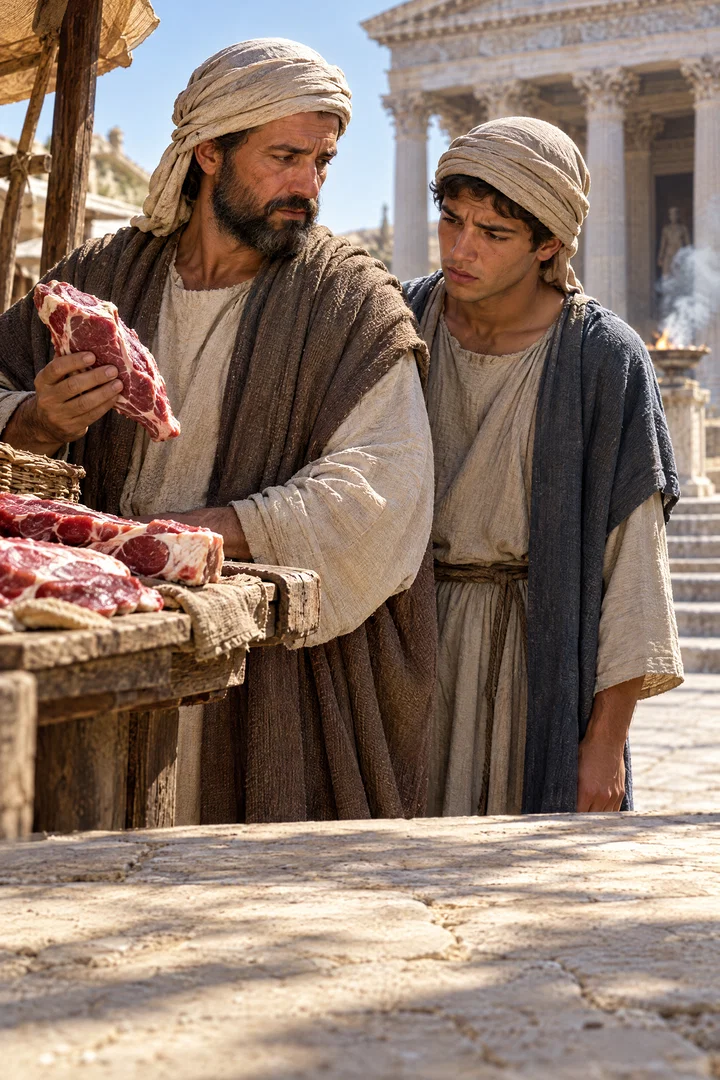
Cross-references 20 of 26
- Romans 14:15
But if thy brother be grieved with thy meat, now walkest thou not charitably. Destroy not him with thy meat, for whom Christ died.
Warns against destroying with food a brother for whom Christ died.
- Romans 14:21
It is good neither to eat flesh, nor to drink wine, nor any thing whereby thy brother stumbleth, or is offended, or is made weak.
Urges believers to forgo food or drink rather than cause a brother to stumble.
- Romans 14:13
Let us not therefore judge one another any more: but judge this rather, that no man put a stumblingblock or an occasion to fall in his brother’s way.
Urges believers not to put an obstacle in another believer’s way.
- John 3:16
For God so loved the world, that he gave his only begotten Son, that whosoever believeth in him should not perish, but have everlasting life.
Both connect Christ’s death with people not perishing and receiving everlasting life.
- Acts 15:29
That ye abstain from meats offered to idols, and from blood, and from things strangled, and from fornication: from which if ye keep yourselves, ye shall do well. Fare ye well.
Both address food offered to idols and abstaining from it.
- Romans 5:8
But God commendeth his love toward us, in that, while we were yet sinners, Christ died for us.
Christ died for sinners, connecting his death with their salvation.
- 1 Corinthians 10:23-24
All things are lawful for me, but all things are not expedient: all things are lawful for me, but all things edify not.
Says not everything permissible is helpful and urges believers to seek others’ good.
- Matthew 18:6
But whoso shall offend one of these little ones which believe in me, it were better for him that a millstone were hanged about his neck, and that he were drowned in the depth of the sea.
Warns against causing a believing little one to stumble.
- Romans 15:1
We then that are strong ought to bear the infirmities of the weak, and not to please ourselves.
The strong should bear the weaknesses of others.
- Romans 14:7
For none of us liveth to himself, and no man dieth to himself.
Believers’ lives and actions affect others, so they must consider one another.
- 1 Corinthians 8:4
As concerning therefore the eating of those things that are offered in sacrifice unto idols, we know that an idol is nothing in the world, and that there is none other God but one.
Though idols are nothing, knowledge must not harm a fellow believer.
- Romans 14:19
Let us therefore follow after the things which make for peace, and things wherewith one may edify another.
Both call believers to pursue peace rather than harm a fellow Christian.
- 1 Corinthians 8:1
Now as touching things offered unto idols, we know that we all have knowledge. Knowledge puffeth up, but charity edifieth.
Knowledge puffs up, while love protects the weak brother.
- Romans 14:2-3
For one believeth that he may eat all things: another, who is weak, eateth herbs.
Discusses differing convictions about eating and not judging one another.
- Romans 14:20
For meat destroy not the work of God. All things indeed are pure; but it is evil for that man who eateth with offence.
Both warn against harming a believer over food.
- Romans 14:14
I know, and am persuaded by the Lord Jesus, that there is nothing unclean of itself: but to him that esteemeth any thing to be unclean, to him it is unclean.
Food is not unclean in itself, but conscience matters to the one who regards it as unclean.
- Luke 17:1-2
Then said he unto the disciples, It is impossible but that offences will come: but woe unto him, through whom they come!
same woe for causing ruin
- 1 Corinthians 10:28-29
But if any man say unto you, This is offered in sacrifice unto idols, eat not for his sake that shewed it, and for conscience sake: for the earth is the Lord’s, and the fulness thereof:
Abstain from food for another person’s conscience.
- Isaiah 53:5
But he was wounded for our transgressions, he was bruised for our iniquities: the chastisement of our peace was upon him; and with his stripes we are healed.
both cited for Christ dying for sinners
- 2 Corinthians 5:15
And that he died for all, that they which live should not henceforth live unto themselves, but unto him which died for them, and rose again.
Christ died for believers, so they should live for him rather than themselves.
Commentary
Each commentary is drawn from primary sources: the writings of Ellen G. White and Adventist pioneers and periodicals. Each commentary is separate. Its own words are not a quotation; follow the references to read the source passages.
Ellen G. White
78 sources
A believer's free use of knowledge can ruin a vulnerable fellow believer weak in faith, even in what seems an innocent act, so that one is lost for eternal life though Christ paid His own life to save him from death.GW92 323.2AA 316.2–317.1Lt 106a, 1896, par. 5Ms 3, 1877, par. 4Ms 74, 1910, par. 5 Every soul for whom He died has precious and infinite worth without caste or class, so no hardship, youth or degradation lessens its value.FE 52.3–53.2TBC1872 20.2RCOC 98.3ST Mar 19, 1894 That soul can be destroyed by neglect and selfish plans, by harsh censorious words and an un-Christlike spirit, and by contempt, superiority and human control that wounds and misjudges.COL 383.1ST Mar 1, 1905GW92 317.321MR 48.3–5Ms 40, 1896, par. 11 Instead such ones must not be left to perish as lost causes but be saved by earnest persevering self-sacrificing labor while probation remains, with deep sympathy, mercy and patient care that restores the erring and gives hope to the suffering.ST Oct 17, 18785T 86.4MYP 227.32MR 110.1Ms 69, 1902, par. 10 This calls for a pure heart and heavenward example that reveals Christ's love, for prayer that improves every gift for salvation, and for physicians, ministers, teachers, parents and canvassers to labor in tender love for body and spirit, especially for children and youth.CH 372.3–373.16T 247.3Lt 5a, 1890, par. 12STA 91.1CE 86.2
Words and Setting
The weak brother is the vulnerable believer and learner for whom the warning is given.AA 316.2–317.1Ms 4, 1902, par. 23Ms 34, 1893, par. 39–41 He is the less gifted, undeveloped, timid, thoughtless and even indolent pupil, whose claims are no less sacred than those of the bright and ambitious pupil, and in school work he is the children and youth who have everything to learn, especially the dull scholar who needs much encouragement.Ms 24, 1887, par. 72–75Ms 34, 1893, par. 39–41 He is also the one weak in faith with scruples about idolatry, who must not be offended by what seems to support idolatry, the one who has moved unwisely and must be stood by and helped to recover, and the weak, erring brother who has done wrong and in an impassioned fit may even take his own life.AA 316.2–317.1Lt 16, 1883, par. 1–4Lt 134, 1897, par. 3 Love toward God makes a person a friend to such weak and vulnerable ones, recognizing their souls as precious as any other soul.Lt 16, 1883, par. 1–4Lt 134, 1897, par. 3Ms 4, 1902, par. 23
Those who may perish though Christ died for them also include the poor, distressed, and sin-entrapped, whose hardship does not lessen their worth and who are to be met with sympathy and practical, spiritual help.ST Mar 19, 1894 They include drunkards in degradation over whom angels weep, weak unconverted souls in darkness who are ready to perish and whose souls are precious and worth caring for, and weak brothers in both soul and body who are perishing through indulged appetite and animal passion.MH 330.4Ms 32, 1893, par. 15Ms 14, 1888, par. 4–6 This last ruin shows itself in worn and diseased organs, unsafe childbearing, abused privileges, corruption of the body, and painful loathsome diseases from wrong eating and drinking, and it lays a day-and-night burden on those who know these evils not to leave victims unwarned, especially youth and those brought into health institutions.Ms 14, 1888, par. 4–6 Such souls are not to be met with censure and condemnation but with proper assistance in time of need, earnest decided efforts, instruction in self-denial and self-control, and plain teaching of salvation and of sin and redemption from its bondage, defilement and fearful woes.Ms 32, 1893, par. 15Ms 14, 1888, par. 4–6
To perish means to be ruined for eternal life.Ms 24, 1887, par. 72–75FE 186.2 In the teacher's work it means to be blamed, scolded, misjudged, neglected, and treated with impatience and scorn until discouraged to give up hope of learning and success, with mind and character marred and ruined for eternal life.Ms 24, 1887, par. 72–75 It also means to be kept away and lost through a fellow believer's single unconfessed wrong, even when the wandering one has many wrongs of his own, and to perish by a selfish, self-sufficient course in another that puts personal interest before appointed work and sets a wrong influence in motion so that some never find their standing again.Lt 27, 1896, par. 32–35Ms 3, 1877, par. 4 One may still be destroyed even though Christ died for him, which underscores the grave importance of protecting people from influences that lead them away from saving wisdom.Ms 24, 1887, par. 72–75FE 186.2
Through thy knowledge means a believer's use of knowledge and freedom can bring a weak believer to ruin.AA 316.2–317.1CE 86.2Ms 3, 1862, par. 16–21 Therefore even an otherwise innocent act should be avoided if it could seem to support idolatry or offend the scruples of someone weak in faith, and knowledge or profession of religion never justifies conduct that harms another soul.AA 316.2–317.1BS 55.1 A believer's influence may lead souls for whom Christ died to life or to death, and a wavering or wrong influence becomes a stumbling block, so those who accept Christ are to love Him and everyone for whom He died and let settled, righteous principles influence others for good.MYP 28.2–29.13T 60.1 This harm comes when the heart is not humble and right, when self is exalted and unsubdued, when one thinks he understands and can manage better than others and aspires to a place he cannot fill, when impulse and the nervous system rule instead of sound judgment and reason, when one dwells on fragments of no vital importance and talks truth anywhere and everywhere in an unacceptable manner, when faith is misrepresented before unbelievers until it becomes disgusting to them, and when brethren censure and wound with unjust words, laying obstacles before brethren and outsiders.Ms 3, 1862, par. 16–21 The same warning forbids making dietary rules a test of faith, carrying health reform to extremes, and joining rebellion while claiming charity, for true love labors for salvation without compromising with sin or soul-destroying error.BS 55.1
For whom Christ died means Christ paid the price of His own life to save the person from death.GW92 323.2 Each person is bought at the cost of His life and is the Lord's property, precious and His own, and this truth is to be taught so that He has not died in vain.Lt 106a, 1896, par. 5Ms 74, 1910, par. 5 He gave His life for precious souls so they should not perish in their sins but have everlasting life.Lt 106a, 1896, par. 5
Worth of Each Soul
Christ's death gives weight and measure to the worth of every soul, marking each one as of great, precious, infinite and inexpressible value.FE 52.3–53.2TBC1872 20.25T 86.43T 191.26T 247.3 Even one soul is the object of heaven's provision, precious to God, and chosen to receive eternal life, and therefore must not be led to perish.5T 86.46T 247.3HPMMW 44.2 This worth calls for earnest effort to correct the wrongs and neglects that harm such souls, and for unselfish devotion in sacred work, including labor for coworkers who do not fully know the truth.FE 52.3–53.2TBC1872 20.23T 191.2 The gospel was carried to the world through toil, sacrifice, danger and loss, so those called to serve are to accept self-denial and suffering in order to help save the souls for whom He died.5T 86.4 Treating sacred work lightly neglects that value, while faithful labor, earnest prayer, a sense of responsibility for soul and body, and care for spiritual good together with healing of bodily illness honor it.3T 191.26T 247.3HPMMW 44.2
Even one soul for whom Christ died is of greater value than property or any other interest, making it a grave responsibility to neglect a person's salvation for material interests.ST Jun 25, 1894 Money and influence are to be used to help save such souls, not spent on selfish display and extravagance that lead people away from what is essential.6T 450.4–451.1 To be extravagant in anything is to pay for it at the price of those souls, so love for souls requires living very plainly and using means to save them.Lt 100, 1892, par. 4–7 Wealth used in wrong ways becomes a temptation that harms others for whom Christ died and leads souls away from good.16MR 262.1 Misusing God-given talents abuses God Himself and harms souls Christ gave His life to save, a guilt that must be seen, repented of and converted from so sins may be blotted out, for without power to see it there is no decided change, no transformation of character, no restoration and no healing from Christ.Lt 86, 1897, par. 18–22
Christ died for each soul and for all without caste, so the lesson applies across differences of skin color, nationality and class, and it is wrong to turn away from or cease laboring for anyone for whom He died.RCOC 98.3Ms 73, 1903, par. 18–20 The gospel leaves no room for caste, social superiority, unkind judgment, contempt, or exalting one person over another, and the religion of Jesus does not make its receiver unkind in thought or feeling.21MR 48.3–5GW 333.3 Remembering God's care for every person humbles and softens the heart.RCOC 98.3 Letting Christ be enshrined in the heart produces love for all for whom Christ died and leads to doing all that can be done to save them.Lt 30, 1874, par. 7 That sacrifice gives each person a duty to treat fellow believers and those who suffer with love, pity, courtesy, hope and courage, opening the way to gain their confidence and to bring reconciliation and unity among brethren.21MR 48.3–52MR 110.1
This worth embraces coworkers who do not fully know the truth, who need earnest prayer, faithful and unselfish labor, and a sacred regard for the work of saving souls.TBC1872 20.23T 191.2STPW 15.1 It embraces those who are poor, distressed or trapped in sin, whose hardship does not lessen their worth and who are to be met with sympathy and practical, spiritual help.ST Mar 19, 1894 It embraces children, whose care is a sacred charge because they belong to God and are loved by Him, so they are not to lavish affection on worldly things nor waste time and effort on what has no worth, but are to be patiently trained for a place in heaven's family.ST Aug 23, 1899 It embraces orphaned children, who must not be left to suffer or be led into wrong paths through shallow piety and worldly ambition, but are to be cared for and given a home in honor of the lives Christ gave Himself to save.6T 284.2–3 Neither degradation, nor hardship, nor youth lessens the value Christ's death confers.ST Mar 19, 1894ST Aug 23, 18996T 284.2–3
Causing Another to Perish
A soul for whom Christ died can perish through neglect, when professed believers fail to cooperate with Christ and withhold the love that should reach others, thereby misrepresenting Him, keeping praise from rising to God, robbing Him of glory, and hindering souls He longs to bring into His kingdom.COL 383.1MWCP 3.2–4.1RH Dec 26, 1912 Those who teach, heal, lead, or assist bear loving responsibility to act and teach so as to guide precious souls toward truth, and following selfish plans instead makes one a false guide.HPMMW 44.3Lt 100, 1900, par. 13 Neglect of personal effort to warn and draw people to Christ can leave them unwarned and lost, for working to save and bless them is Christian responsibility in light of His death for them.MWCP 3.2–4.1RH Dec 26, 1912 When His people put self first, self-love shuts the love of Jesus out of the soul, leaving no zeal and fervent love for Him who first loved them, so that thoughts, time, and money go to self-gratification while souls perish.Ms 32, 1890, par. 4–5 In business dealings as well, knowledge or self-interest must not lead to disregard of those souls, but to unselfish action and deep care for them in faithful partnership with God, lest by selfish example the church misrepresent Christ's character and give the world a false conception of Him whose self-sacrificing love is to be manifest through the church.Ms 32, 1890, par. 4–5Lt 100, 1900, par. 13
Careless or harsh words can harm and ruin those for whom Christ died, dishonoring God and leading souls astray.ST Mar 1, 1905Ms 40, 1896, par. 11 Words and the spirit behind them can make a weak brother stumble and turn from the way of life by sowing bitterness and suspicion, and those who cause such harm will face its consequences when every case is revealed, with the lost reproaching those whose words helped lead them astray.ST Mar 1, 1905Ms 40, 1896, par. 11 Tender concern is therefore required not to wound or bruise Christ's people nor damage reputation because one's own ideas have not been honored as wished.11MR 50.3 Harsh criticism wounds and spiritually endangers a fellow believer, misrepresenting the gentle, courteous spirit of the gospel, and the lack of forbearance and love that makes a small fault seem immense is a greater sin than the fault condemned, because it adds conceit and condemnation.11MR 50.3 Ruin also comes when the heart is not humble and right with God, when self is exalted and unsubdued, when one thinks he understands and can manage better than others and aspires to a place he cannot fill, when impulse and the nervous system rule instead of sound judgment and reason, when fragments of no vital importance are dwelt upon and truth is talked anywhere and everywhere in an unacceptable manner, when faith is misrepresented before unbelievers until it becomes disgusting to them, and when brethren are censured, wounded, and unjustly spoken against so that obstacles are laid before believers and outsiders are injured.Ms 3, 1862, par. 16–21 An overbearing, impatient, fitful spirit that misjudges individuals, lays upon them burdens that do not belong to them, and wounds them deeply harms weak brethren, and when such wrongs are not healed by full confession and free acknowledgment without qualification or self-justification, darkness, weakness, and a low state come upon the church; the remedy is close heart-searching work, humility, thinking less of self, increased love for brethren, confession of faults, taking back unjust words, beginning anew, and exerting a holy influence.Ms 3, 1862, par. 16–21Ms 6, 1854, par. 1–2
Contempt and superiority destroy the weak brother, for Christ died for those who may be weak and the gospel rejects social superiority and judgment that exalts self, so true religion is never harsh in thought or feeling toward anyone for whom He died.GW92 317.321MR 48.3–5 Treating fellow believers with contempt or superiority disregards the value Christ places on them, since He died to save each brother just as surely as He died to save us, and His sacrifice calls for love, pity, courtesy, reconciliation, and unity rather than feeling superior and criticizing.21MR 48.3–5Lt 40, 1899, par. 36–38 No one must manipulate the weak brother according to personal will, for his life and conscience are not to be controlled by human judges assuming authority over him; all are accountable to God, and those bearing sacred responsibilities must not exercise power over others without spiritual consecration and love.STMW9 4.3–5.2Lt 40, 1899, par. 36–38 Giving human beings the confidence and honor due to God lets human influence take His place and can bring serious harm, making those entrusted with influence responsible if they become agents through whom the weak are lost.16MR 217.3–218.1
A selfish, self-sufficient course that puts personal interest before God's appointed work sets a wrong influence in motion that harms weak souls, causing them to perish so that some never find standing again.Lt 5a, 1890, par. 12Lt 27, 1896, par. 32–35 Because all stand related in the web of humanity, believers are accountable for every soul Christ died to save and must not study and plan for self-interest, but keep the soul pure in God's love by personal soul culture and training of principles, sanctify self after Christ's example so others may be sanctified, leave youth and all associates a bright track heavenward and an example to follow, block the path to debasing sins, faithfully rebuke and expel dishonesty and licentiousness so evil does not spread or become contagious, connive at no deception, put away selfishness that eats pure principles of righteousness out of the character, and be resolutely honest without fear to raise the moral tone.Lt 5a, 1890, par. 12Lt 5, 1890, par. 11 Selfish, burdensome conduct by those who teach the truth harms souls, becomes a stumbling block, brings reproach on the truth, and leads people to distrust it, for selfish interests must never be placed above the good of souls of such great value.Ms 32, 1890, par. 4–52T 542.1–543.1 No one who loves Jesus can serve world and Christ together or save sinners by conforming to the world, meeting its standard and following its fashions, for that makes a professed Christian an idolater and a stumbling block; souls are saved by revealing the transforming power of grace to mold character after Christ's likeness, living above the world with an eye single to God's glory, wearing Christ's yoke, letting heavenly light shine in Christlike actions, and giving self as Christ gave Himself.Ms 52, 1896, par. 52–53
Souls Christ died to save are endangered when those in important positions work with defects of character uncorrected, for too much is at stake in eternal interests to let the work be marred by lack of self-overcoming; those who fill such places must be truly sanctified, have the Master's spirit, and positively overcome self, lest by sternness, severity, and personal peculiarities they wound the cause of God.Ms 6, 1874, par. 12 Even a single unconfessed wrong in a fellow believer can keep away and lose one Christ died to save, though the wandering one has many wrongs of his own, and taking that one wrong out of the way by humble confession opens the way for the other to return and weepingly confess and remove his many wrongs, so that one who would perish is saved.Ms 3, 1877, par. 4 Victims of appetite and impurity left unwarned, human discoveries and theories crowding out God's wisdom, and thoughtless un-Christlike conduct that ruins others all serve the destructive purpose by which Satan seeks to destroy those for whom Christ died.CE 83.321MR 179.4 That danger is heightened because Satan works on the right hand and on the left to deceive, ensnare, destroy, and oppose God's work, so the cause of present truth demands workers energized by God's Spirit and power with earnest perseverance and untiring energy, or he will out-general them.Lt 11, 1870, par. 11 To corrupt those who are the Lord's property, bought to have everlasting life and not perish in sins, by defiling sexual practice is a terrible insult to Christ, and a minister who leads those in his care into such wicked work destroys his own soul and may ruin souls for whom Christ died, with an effect upon the mind that cannot be measured.Lt 106a, 1896, par. 5
Saving Rather Than Destroying
Those for whom Christ died must not be left to perish or treated as lost causes, but must be saved through earnest, persevering, self-denying and self-sacrificing labor.5T 86.4MYP 227.38T 147.4Ms 43c, 1901, par. 25 This work is to engage the energies of life at home and in distant places and in new fields, in cooperation with Christ, reaching people in darkness rather than drawing workers away from churches that need their help.MYP 227.38T 147.4 The gospel was carried to the world through toil, sacrifice, danger and loss, and those called to serve are to accept self-denial and suffering so they can help save souls.5T 86.4 Ministers must keep laboring for a soul in peril with persevering faith and hope because salvation matters, and workers should pray for souls in danger of being lost, for God can hear and win them to Christ.GW92 139.113MR 111.2–112.4Ms 43c, 1901, par. 25 Watching for opportunities in season and out of season while probation remains open belongs to this saving work.MYP 227.3GW92 139.1
They must be met with deep charity, sympathy, mercy, compassion, courtesy, kindness and tender patient care rather than harshness, censure or condemnation.ST Oct 17, 18782MR 110.1Ms 69, 1902, par. 10Lt 134, 1897, par. 3Ms 32, 1893, par. 15 Concern for tempted souls calls for separation from the customs and evils of the age, and tobacco use among clergy damages temperance by corrupting appetite and fostering desire for stronger stimulants.ST Oct 17, 1878 The weak brother's life and welfare are precious, and compassion and courtesy toward those burdened by hardship, deprivation, pain or sickness means wholehearted efforts to help them, gain their confidence and give them hope and courage.2MR 110.1Ms 69, 1902, par. 10 One who has moved unwisely must be treated with mercy, stood by and helped to recover and get on his feet again and meet obligations, and must not be ruined by tying his hands and closing every avenue of recovery when help could be granted.Lt 16, 1883, par. 1–4 Even a weak, erring brother who has done wrong and in an impassioned fit may take his own life has infinite worth and must be saved from death, so others must not stand afar off with condemnatory words or harsh, imprudent acts, but must come close with prayer and tenderest love, work carefully for his soul, and as spiritual ones act as true physicians to restore in meekness while wrongs can still be righted.Lt 134, 1897, par. 3 Weak, unconverted souls in darkness ready to perish are precious and worth caring for with a true burden, appointed prayer that makes God's strength one's strength, and earnest, decided assistance in time of need without failing or discouragement, so that those who might become bright and shining lights are saved, with heavenly intelligences working with such efforts.Ms 32, 1893, par. 15
Saving them requires personal soul culture, a pure heart enshrining Christ, and accountability for every soul because all stand related in the web of humanity.Lt 5a, 1890, par. 12Lt 5, 1890, par. 11 No one is to study and plan for self-interest, but to keep the soul pure in the love of God by culturing the soul and training principles, sanctifying self after Christ's example so others also may be sanctified.Lt 5a, 1890, par. 12Lt 5, 1890, par. 11 A bright track heavenward is to be left for youth and all associates by example, blocking the path to debasing and degrading sins, faithfully rebuking and expelling dishonesty and licentiousness so evil does not spread or become contagious, conniving at no deception, putting away selfishness that eats pure principles of righteousness out of character, and being resolutely honest without fear in order to raise the moral tone.Lt 5a, 1890, par. 12Lt 5, 1890, par. 11 When His people put self first, self-love shuts the love of Jesus out of the soul, leaving no zeal and fervent love for Him who first loved them, so thoughts, time and money go to self-gratification instead of saving perishing souls, and by this selfish example the church misrepresents Christ and gives the world a false conception of Him, when His self-sacrificing love is to be made manifest through the church.Ms 32, 1890, par. 4–5 Because each soul has great worth, speech must be careful, reserved and kept in Christlike dignity, with wisdom toward those without and watchfulness unto prayer, and free criticism must be avoided because it will be used against the speaker and hedge up the way from doing good, and the burden to save remains even when some in trust are not vitalized by the Spirit and show no consecration, whose influence must not affect faithfulness.Lt 93a, 1895, par. 3 A believer with knowledge can cause souls to stumble to destruction when the heart is not humble and right with God, when self is exalted and unsubdued, when one thinks he understands and can manage better and aspires to a place he cannot fill, when impulse rules instead of sound judgment and reason, when one dwells on fragments not of vital importance and talks truth anywhere in an unacceptable manner, when faith is misrepresented before unbelievers until it becomes disgusting to them, and when censure wounds and lays obstacles before brethren and outsiders, so the lesson is close heart-searching work, humility, thinking less of self with increased love for brethren, confessing faults, taking back unjust words and commencing anew, and exerting a holy influence rather than letting souls stumble over inconsistent, unwise moves.Ms 3, 1862, par. 16–21 No one who loves Jesus can serve world and Christ together or save sinners by conforming to the world, meeting its standard and following its fashions, for that makes a professed Christian an idolater and stumbling block, while souls are saved by revealing transforming grace to mold character after Christ's likeness, living above the world with an eye single to God's glory, wearing Christ's yoke, letting heavenly light shine in Christlike actions, and giving self as Christ gave Himself.Ms 52, 1896, par. 52–53
The work calls for burdened carefulness to improve every heaven-imparted gift wisely and to the very best account for salvation, for few realize how valuable precious souls are, and those who realize it go heavily burdened and walk with great carefulness before the Lord in fear lest they fail.Lt 63, 1894, par. 13–15 It calls for appointing prayer and making God's strength one's strength, with heavenly intelligences cooperating, and for willing workers ministering in the fear of God, doing their best according to ability with deep, earnest love, whom God will help to carry the message forward.13MR 111.2–112.4Lt 88, 1896, par. 6–7Ms 32, 1893, par. 15 Souls for whom Christ died are the object of heaven's provision and the church's work, which requires human cooperation with God, since a weak believer may otherwise be brought to ruin through another's knowledge.CE 86.2 Those for whom Christ died must also care for themselves and set a right example, and applied to diet this warns against making dietary rules a test of faith or carrying health reform to extremes, because strained teachings harm others and weaken confidence, and a meager diet that damages health misrepresents health reform.Lt 37, 1901, par. 28–29
In particular callings this means physicians and medical missionaries imbued with deep love caring for body and spirit, since suffering and trust create opportunities to offer comfort, Christian counsel, the hope of Jesus and the truth about Him, seeking spiritual good as well as healing bodily illness.CH 372.3–373.16T 247.3HPMMW 39.1–2 Workers dealing with souls must come with hearts warmed by love for Jesus and for those for whom He died, and ministry should use every means to do them good.STA 91.1SLP 325.1 Ministers are to labor with faith and hope for souls in peril, using every means to do good.SLP 325.1GW92 139.1 Applied to children, the seriousness of caring for those for whom Christ died means not lavishing affections on worldly things nor wasting time and effort on what has no worth, but patiently training them for a place in heaven's family as a sacred charge because they belong to God and are loved by Him, never with impatience, partiality or domineering, for placing youth under teachers without deep love for God and souls results in the loss of many, while parents are to train children and youth for heaven and canvassers are to learn consecrated practice to reach souls with the gospel.CH 372.3–373.16T 247.3ST Aug 23, 1899
Sources
Pioneers and periodicals
110 sources
Through knowledge the verse means a believer who knows an idol is nothing using that liberty to eat food known to have been offered to idols, even sitting at meat in an idol's temple.ST Feb 4, 1903ST Feb 22, 1883RH Jul 21, 1868 The weak brother is one with a poorly instructed, tender conscience still troubled by former idolatry who regards such food as sacrificed to an idol and fears becoming an idolater by eating it.ST Feb 4, 1903RH Jul 16, 1901 When he sees the knowledgeable eat, he is emboldened to eat also against his conscience, and by breaking over conscience he is defiled and wounded unto spiritual ruin, not mere bodily death, by being turned out of the path of life until entrance into the city is lost.ST Jul 29, 1897ST Oct 16, 1893RH Feb 14, 1865RH Jan 26, 1869 Because Christ died even for that weak brother, he is precious and of grave worth, worth more than a world, and his death makes salvation available to all while its benefits are received only by those who meet the gospel's conditions.ST Jun 25, 1894RH Dec 5, 1854RH Nov 5, 1901ST Jan 11, 1899RH Nov 23, 1905 Therefore love must limit liberty and put another's spiritual good ahead of exercising one's own rights, giving up even lawful pleasure forevermore if it would cause a brother to stumble, for wounding the weak conscience makes the indulging Christian answerable for that ruin as sinning against the brethren and against Christ.ST Oct 16, 1893ST Feb 4, 1903ST Mar 27, 1884ST Feb 4, 1903
Words and Original Setting
The setting is a believer with knowledge that an idol is nothing using liberty to eat meat known to have been offered to idols, even sitting at meat in an idol's temple.ST Feb 4, 1903ST Feb 22, 1883RH Jul 21, 1868RH Feb 6, 1913 That use of freedom was specially dangerous because eating such meat was generally practiced among the Gentiles, so Gentile converts were in special danger of being drawn back into idolatry and hindered from being won fully from it.ST Feb 22, 1883 Paul refrained from such eating not because it harmed him personally, but because the act could associate him with idolatry and weaken his influence for good.RH Feb 6, 1913 The weak brother is one with a poorly instructed, tender conscience still troubled by former heathen idolatry and beset by shadows of former superstition, or trained to punctilious observance, who still regards such food as sacrificed to an idol and fears becoming an idolater by eating it.ST Feb 4, 1903RH Jul 16, 1901ST Feb 4, 1903 Having only recently come out of heathenism, he is emboldened by seeing the knowledgeable eat to eat also although his conscience is against it.ST Feb 4, 1903ST Feb 4, 1903
Eating itself is not sinful in itself, because an idol is nothing in the world, and the meat itself is not affected by the idol.RH Jul 16, 1901ST Mar 19, 1894 Eating does not make a person better nor abstaining make a person worse.RH Jul 16, 1901 The harm comes not from the food itself, but from example and influence that may lead the brother into conduct he believes honors an idol and then into other sinful acts.ST Oct 16, 1893ST Mar 19, 1894 For his sake, the believer who understands that an idol is nothing should refrain in disregard of scruples that still trouble the weaker conscience, even when the action itself would be proper for the one who understands.ST Mar 19, 1894 Perish and destroy here do not mean being killed in the ordinary sense, so destroy is not always a synonym for kill, but mean spiritual ruin.RH Feb 14, 1865 Causing stumbling destroys by turning the brother out of the path of life and hindering him in the race so that final failure becomes inevitable and entrance into the city of God is lost.RH Jan 26, 1869
Idol means the representation of a false god made by shaping a human conception of the Deity, from eidolon meaning an image, and idol-worship means the worship of sense — what is seen and felt and heard.ST Dec 11, 1901 1 Corinthians 8 runs parallel with Romans 14 and makes its meaning plain. Mere knowledge without love for others only increases self-importance and considers only what is harmless to oneself, while love gives greater consideration to influence and its results than to satisfying desire.ST Dec 18, 1893ST Feb 4, 1903 Liberty to pursue knowledge and judge matters for oneself, when exercised without charity, becomes a stumbling block and leads to division among believers.ST Feb 4, 1903RH Feb 7, 1907 The liberty to eat all things covers only everything fit to be eaten that God has provided for man, not filth or beasts and reptiles God never provided for eating, since the gospel purifies men, not unclean creatures. The abstinence taught is a local and temporary rule of expediency over right grounded in accommodation to scruples rather than permanent law, where a practice lawful in itself is set aside by love to avoid becoming a bone of contention and destroying a weak conscience.RH Jul 16, 1901
Eating food dedicated to an idol can express sympathy with idolatry, especially when the meal is used to entrap someone into that expression, so the principle is to abstain rather than take part.RH Jun 11, 1908 Daniel applied it by choosing pulse and water instead of the king's food and wine, preferring God's favor to the king's patronage.RH Jun 11, 1908
How Knowledge Causes Ruin
Through knowledgeable use of liberty the weak brother is emboldened to eat also although his own troubled conscience is against it, and through that knowledge he perishes.ST Jul 29, 1897ST Oct 16, 1893ST Mar 27, 1884ST Dec 22, 1887 Seeing the one who knows eat meat known to have been offered to idols encourages the weaker one to violate his tender convictions, and Christians should refrain from what would make him stumble because Christ died for him.ST Jul 29, 1897ST Mar 27, 1884ST Feb 4, 1903 The danger is not kept at a distance by good intention, for using freedom without regard for the weaker believer leads him into conduct that violates conscience and brings spiritual ruin.ST Oct 16, 1893ST Mar 27, 1884ST Dec 22, 1887ST Feb 4, 1903 Even eating meat, which might be claimed as a right, must be given up if it would cause a brother to stumble, putting another's spiritual good ahead of exercising one's own rights.ST Dec 22, 1887
By breaking over conscience he is defiled, for the conscience that still regards the food as sacrificed to an idol is wounded by the act it condemns.ST Feb 4, 1903ST Jul 29, 1897ST Feb 4, 1903ST Oct 16, 1893 That wound weakens and hardens conscience and weakens Christian character, leaving the person in danger of ultimate fall.ST Jul 29, 1897ST Jul 29, 1897ST Feb 4, 1903 What begins as eating under the shadow of former superstition becomes conduct he believes honors an idol, and then leads on into other sinful acts.ST Jul 29, 1897ST Jul 29, 1897ST Oct 16, 1893 The harm comes not from the food itself, which is unchanged, but from example and influence, so actions must be weighed by their effect on others even when the action itself is proper for the one who understands that an idol is nothing.ST Feb 4, 1903ST Oct 16, 1893
The indulging Christian becomes largely responsible and answerable for that ruin.ST Feb 4, 1903ST Feb 4, 1903ST Feb 4, 1903 Wounding the weak conscience in this way is sinning against the brethren and against Christ, because the brother harmed is precious to Christ and one for whom Christ died.ST Oct 16, 1893ST Feb 4, 1903ST Oct 16, 1893 No knowing overt act should place a stumbling block that offends the conscience of the weak, since no one knows who may be weak, and demanding that he live according to another's conscience is forbidden.ST Oct 16, 1893ST Sep 3, 1896 Such unfaithfulness brings terrible woe and blood-guiltiness under the awful threat of Christ as Judge.ST Oct 16, 1893ST Feb 4, 1903
The same responsibility applies when one who believes he can resist temptation faces it openly and gives a wrong signal that there is no danger.ST Oct 21, 1880RH Feb 13, 1866RH Nov 2, 1911 Even a single drink, taken because a trusted pastor drank, can awaken an appetite that becomes an enslaving habit, destroys the home, and brings ruin, so people are responsible not only for their own safety but for avoiding examples that lead others astray.ST Oct 21, 1880RH Feb 7, 1907RH Jul 8, 1875 Joining doubtful worldly amusements such as dancing, theater-going, and less objectionable sports may be imagined safe for oneself, yet the example draws the weaker follower into snares and on to final destruction.RH Nov 2, 1911RH Sep 7, 1911RH Feb 7, 1907 One who so encourages another to follow is swept with him toward greater evil and becomes a cause of that brother's undoing, lowering standards instead of building character through self-denial.RH Nov 2, 1911RH Sep 7, 1911RH Feb 7, 1907RH Jul 8, 1875
Harm is also done by contempt for the inexperienced, which wounds Christ and discourages the one who looks to others as examples from following Him.ST Jul 24, 1893 Spreading unsubstantiated or slanderous reports can wound the innocent and contribute to spiritual ruin, and holding malice or hatred against another is incompatible with having the Spirit of Christ.RH Jun 26, 1860RH Feb 1, 1870 An error may poison a vulnerable mind and cause serious spiritual injury, so wrong should not be silently encouraged but gently checked. Careless or harsh words, and even a careless word or look, can harm and ruin people for whom Christ died, dishonoring God and leading souls astray, so the whole life and not merely selected parts must be brought into obedience.ST Mar 1, 1905ST Jan 13, 1881 Annoying and discouraging conduct likewise endangers one for whom Christ died.ST Mar 1, 1905ST Jul 24, 1893ST Jan 13, 1881
Stumbling that endangers one for whom Christ died also includes following human traditions and trampling God's commandments.RH Sep 2, 1851
Christ's Death and Soul's Worth
Christ as Saviour died for sinners, and that death reaches even to the weak brother who may yet perish through another's knowledge.RH Dec 5, 1854RH Nov 5, 1901 His dying makes salvation available to all, while its benefits are received only by those who meet the conditions of the gospel.RH Dec 5, 1854 Because Christ died for him, the weak brother is precious and of grave worth.ST Mar 29, 1883RH May 19, 1904 Even one soul is of greater value than property or any other interest, worth more than a world, so that loss of souls through strife between people is a grave loss.ST Jun 25, 1894ST Jan 11, 1899RH Nov 23, 1905
Every soul, whatever nation, kindred, tongue, or people, is one for whom Christ died.RH Nov 23, 1905 This includes those who are spiritually weak and those dwelling in spiritual darkness who need the light even when they do not ask for it, who are to be treated with earnest love and not left to perish through another's knowledge or conduct.ST Nov 5, 1885RH Aug 11, 1910 It includes the tempted, who call for deep charity and sympathy and separation from the customs and evils of the age, and the poor, distressed, and sin-entrapped, whose hardship does not lessen their worth and who are to be approached with sympathy and practical, spiritual help.ST Oct 17, 1878ST Mar 19, 1894 It includes those ruined by intoxicants, whose destruction is grievous and over whom angels weep, and men of every nationality engaged in war, whose souls are in danger of eternal destruction and must be viewed from God's standpoint in neutrality and non-partisanship as friends to be rescued.RH Oct 1, 1914
Christ gave Himself and sacrificed all for souls in danger of ruin, so planning to kill those for whom He died stands in direct contrast to imitating Him.ST Mar 14, 1906ST Apr 8, 1886 Those who may be harmed by another's conduct or influence are to be loved and won by His disciples. Love for souls for whom Christ died is part of the evidence of a Christlike character, and when the heart is given to God in sincere affection that love reflects glory back to God.ST Mar 10, 1881ST Jul 14, 1887 His death makes believers responsible not only to Him but also to those for whom He died, and they are not to live for themselves alone but to use the influence of their example for others' good.RH Aug 12, 1873
That responsibility requires self-forgetting, self-denying labor in which personal interest is lost in working to save souls, following Christ who humbled Himself unto death and Paul who counted all things loss and became all things to all men that he might save some.ST Mar 29, 1883 Believers who know the judgment is at hand must cherish Christ's self-giving Spirit and improve the little time remaining in earnest, self-denying, self-sacrificing striving before the time for working is past.ST Apr 8, 1886 Devotion to God is shown by earnestly working to bring those souls to salvation, with no worldly interest allowed to keep that work from being the chief aim.RH Dec 2, 1873RH Dec 2, 1873
Love Limits Christian Liberty
Love must set the boundary of liberty, so the spiritual good of another comes before the exercise of one's own rights, and even eating meat or enjoying a lawful pleasure is to be given up forever rather than cause a brother to stumble, because food is temporary and far less important than protecting and building up the one for whom Christ died.ST Feb 4, 1903ST Mar 27, 1884ST Dec 22, 1887ST Apr 22, 1889 The same rule forbids using freedom in betting and moderate drinking when others may imitate the example to their spiritual or moral harm, since an act harmless to oneself should still be surrendered when it would lead the weak to ruin.ST Apr 22, 1889ST Jan 17, 1906 Knowledge that idols are nothing does not justify sitting at meat in an idol's temple when a brother only recently out of heathen idolatry still regards that food as sacrificed to an idol, for emboldening him to eat against conscience defiles him and makes the indulging believer responsible for his perishing, which is sin against the brethren and against Christ.ST Feb 4, 1903ST Mar 27, 1884
Knowledge without love only increases self-importance and considers what is harmless to oneself, while love weighs influence and its results more than satisfying desire.ST Feb 4, 1903RH Feb 6, 1913RH Feb 6, 1908 Safety therefore lies in looking beyond one's own life to influence on others, refusing the first steps in a downward course however slight the deviation, and shunning the appearance of evil, because conduct that tempts others toward what harms them helps destroy their souls and makes the one lending influence answerable instead of a saviour.ST Feb 4, 1903RH Sep 7, 1911RH Feb 6, 1908 Even when the stronger imagines he could join doubtful worldly amusements such as dancing and theater-going safely and escape continued snares, his example draws the weaker follower into snares and on to final destruction, so no wrong course can be tolerated in the slightest degree.RH Sep 7, 1911RH Feb 6, 1913 Weaker Christians still beset by shadows of former superstition, seeing the better-instructed eat, eat also although conscience is against it, and by breaking over conscience weaken conscience and character toward ultimate fall.ST Feb 4, 1903RH Sep 7, 1911
No knowing overt act should place a stumbling block that offends the conscience of the weak, since no one knows who may be weak, and one conscience must not be made the rule for another's conscience.ST Sep 3, 1896ST Jun 10, 1913 An otherwise permissible but risky action must be abstained from when it could cause a younger or weaker disciple to stumble and fall.ST Sep 3, 1896ST Jun 10, 1913 The same care binds mission work, where customs affecting hearers' consciences must be respected because disregarding them destroys trust and undoes good work.ST Apr 10, 1893ST May 28, 1902 Those with knowledge must set a good example by abstaining from prominent Gentile customs lest weak converts incline back and be overcome and perish, an abstinence that does not itself work salvation yet is necessary to harmony with God's will, to spirituality in the church, and to religious and social harmony because those customs are repugnant to righteousness and a constant hindrance.ST Apr 10, 1893ST May 28, 1902
The food in question is food offered to idols, not pork, and the right course is to let a new believer abstain rather than make the matter a dispute.RH May 22, 1879ST Sep 30, 1886 In the same way, those who know they may use the Christmas tree should refrain from its use if it hurts a weak believer, lest strong knowledge and conduct cause one for whom Christ died to perish.RH May 22, 1879ST Sep 30, 1886 Superior knowledge about diet is under the same restraint and must not be urged without care, for food wholesome and palatable to one may be hurtful to another, and no one unvarying rule of diet can be made for all.RH Jan 19, 1905 Advance must go no faster than convinced consciences and intellects can be taken along, meeting people where they are, making changes with great care, moving cautiously and wisely, shunning extremes, living most consistently while advocating unpopular truth, and coming as near as possible to those to be reformed in order to help them up to the higher position and recommend the course to intelligent men and women.RH Jan 19, 1905
Faithful Conduct Toward Others
Faithful conduct toward others requires rejecting even moderate drinking and tobacco use when example may reassure others, awaken appetite, encourage those at risk, or tempt recovering drinkers to return.ST Nov 4, 1880ST Oct 21, 1880ST Apr 7, 1881ST Dec 2, 1913ST Jun 24, 1880 A strong person's example can lead a weaker brother to do what harms him and perish even when the act is not harmful to the strong, so what may embolden him to follow must be given up.ST Nov 4, 1880ST Oct 21, 1880RH Jul 8, 1875 Even a single drink taken because a trusted pastor drank can awaken an appetite that brings ruin, making people responsible not only for their own safety but for avoiding conduct that causes stumbling.ST Oct 21, 1880RH Jul 8, 1875 A pastor's public drinking encouraged a man who had never tasted alcohol to try it, and that first drink awakened an enslaving habit that helped destroy his home.RH Jul 8, 1875 Tobacco use among clergy corrupts appetite and fosters desire for stronger stimulants, and abstinence from intoxicants is urged because moderate use may encourage those at risk to continue and tempt the recovering to return.ST Apr 7, 1881
In amusements, joining doubtful worldly pleasures such as dancing, theater-going, kindred pleasures, and less objectionable sports, even if imagined safe for oneself, draws the weaker follower into snares and on to final destruction.ST Sep 4, 1879RH Nov 2, 1911RH Sep 7, 1911 Even if attending the theatre would do the knowledgeable Christian no harm, the example may reassure someone troubled in conscience that it is right to go, so liberty must not be used without regard for influence on another for whom Christ died.ST Sep 4, 1879RH Feb 6, 1913 One who believes he can take part without harm may encourage another to follow and be swept into greater evil, thereby becoming a cause of that brother's undoing.RH Nov 2, 1911 Paul refrained from meat offered to idols not because it harmed him personally but because the act could associate him with idolatry and weaken his influence for good.RH Feb 6, 1913 Therefore no wrong course can be safely tolerated in the slightest degree, and safety requires looking beyond one's own life to influence, refusing first steps in a downward course however slight the deviation, and shunning the appearance of evil.RH Sep 7, 1911
In family and church each member is to be regarded as one for whom Christ died and treated with daily regard and care.ST Mar 30, 1876ST Nov 21, 1892RH Jan 20, 1853ST Jul 23, 1896 All brought together in church relationship are people Christ died for, with many different dispositions and readiness to accuse one another, so the one chosen to deal with them must be vigilant, attentive to discover and avoid danger and provide for safety, examining things on every side before deciding or acting.ST Aug 31, 1888 Students rightly leave teachings that undermine confidence in the Bible to protect others whose faith may be weakened.RH Apr 6, 1916 Cooperation should not scandalize the weak, and harmony requires such watchful regard in the home and the church.ST Aug 31, 1888ST Mar 30, 1876
In speech and daily life the whole life must be brought into obedience, since even seemingly small actions can affect another person.ST Jan 13, 1881 Spreading unsubstantiated or slanderous reports can wound the innocent and contribute to their spiritual ruin.RH Jun 26, 1860 Careless or harsh words can harm and ruin people for whom Christ died, dishonoring God and leading souls astray.ST Mar 1, 1905 A careless word or look can lead a fellow believer astray and endanger one for whom Christ died.ST Jan 13, 1881 Holding malice or hatred against another is incompatible with having the Spirit of Christ.RH Feb 1, 1870
In care for the needy and young, costly apparel must not withhold clothing from a perishing brother, for spending on costly apparel instead of helping him withholds resources that could meet his need and diminishes good works.RH Jul 10, 1855 Even a poor despised person has a soul for whom Christ died, and a small act of kindness may help save that soul, calling for respect and compassion toward every person and not only family or friends.ST Dec 7, 1904 Tramps, though responsible for choices and needing correction rather than support that encourages idleness, remain souls for whom Christ died and are not beyond Christian help.ST Jan 11, 1905 People who are poor, distressed, or trapped in sin are souls for whom Christ died whose hardship does not lessen worth, and Christians should go to them with sympathy and practical, spiritual help.ST Mar 19, 1894 Children must not lavish affections on worldly things or waste time and effort on what has no worth but be patiently trained for a place in heaven's family as a sacred charge because they belong to God and are loved by Him, since one sin or evil habit kept up can ruin a child Christ died to save.ST Aug 23, 1899RH Oct 18, 1906
Neglecting personal efforts to draw people to Christ can leave them unwarned and lost, showing the grave danger of allowing a soul for whom Christ died to perish.RH Dec 26, 1912 A harmful influence that causes a weak brother to stumble or be discouraged can hinder preparing people for Christ's coming and endanger one Christ died to save.RH Jun 28, 1906 Elevating things or principles above people for whom Christ died can lead the weak to ruin when knowledge is used without regard for others.ST Jul 4, 1911 Love of money and the world leaves a person without motive for a useful life, so one who serves Mammon cannot serve Christ or labor successfully to win souls for whom Christ died.RH Apr 9, 1901
Call to Rescue Souls
Souls for whom Christ died are dying without the everlasting gospel and must not be left to perish in darkness without effort to save them.ST Oct 31, 1911RH Aug 11, 1910RH Aug 1, 1912ST Jan 14, 1875RH Jun 4, 1908 Their salvation is the great object of Christian labor and the first and highest aim, calling for full surrender and earnest rescue from ruin.ST Oct 31, 1911RH Aug 1, 1912ST Jan 14, 1875RH Jun 4, 1908 Those dwelling in spiritual darkness need the light of the gospel even when they do not ask for it, and they must not be left to perish through another's knowledge or conduct.ST Oct 31, 1911RH Aug 11, 1910 Relatives, friends and neighbors for whom Christ died need to hear the gospel, their salvation makes reaching them a personal responsibility, and plans should be made to share the message while opportunity remains.RH Jun 4, 1908RH Jun 22, 1916
Their worth calls for love, humble approach, and winning to Christ through faithful application of right principles, while trusting God to provide what is needed and putting their good ahead of personal prosperity, pleasure or comfort.RH Mar 26, 1908ST Mar 22, 1899 Those who may be harmed are to be loved and won by disciples, and that love gives rise to a missionary spirit.ST Jun 6, 1900ST Mar 22, 1899 Following Christ's example means earnest working with sacrifice and toil for the good of those perishing without the light of truth, giving time and means to labor for them rather than using missionary work for personal advantage.RH Mar 26, 1908RH Mar 10, 1874 The poor, distressed and those trapped in sin remain souls for whom Christ died whose hardship does not lessen their worth, and they should be met with sympathy and practical and spiritual help and cared for as precious, including by supporting the sharing of messages of truth with them.ST Mar 19, 1894ST Jun 6, 1900
They include the poor, distressed and despairing, benighted people, those outside the truth, neighbors, friends and relatives, and those met by personal ministry as contact with Christ.RH May 22, 1913ST Jan 20, 1881RH Jun 22, 1916ST Nov 28, 1900 Benighted people are souls for whom Christ died whose value makes helping them urgent rather than allowing them to perish, and those being reached are souls who may be brought into the fold of salvation.ST Jan 20, 1881ST Nov 28, 1900 The Korean people who have not heard, the Kafirs of South Africa, and the millions of Black men and women in the Southern States are among those for whom he died, whose circumstances create obligation and motivate continued work despite hardship in hope they will come to know Christ. Souls in foreign lands need warning rather than spending on fashion, and people of every nation in war are to be treated as friends in neutrality and non-partisanship.RH May 22, 1913ST Jan 20, 1881RH Jun 22, 1916ST Nov 28, 1900
Believers are debtors owing them the gospel in missionary labor and money to meet the great demand, and in time, means, talents, prayer, labor and provision.ST Sep 20, 1910ST Feb 3, 1898ST Feb 10, 1904ST May 1, 1879 Failure to realize this debt is little belief in the gospel, seen when professed Christians give little while spending many times more on ruinous self-indulgence like tobacco, for which there will be an accounting in the last great day.ST Feb 3, 1898 Christ's love for them is reason to care about their salvation and to use means and abilities wisely to reach as many perishing souls as possible.ST Sep 20, 1910ST Feb 10, 1904 Putting all the tithe into the storehouse, redeeming pledges, sustaining conference and tract and missionary and tent work, and determined labor to spread the message bring those outside the truth into it, and united effort by all, whether connected with an organized church or alone, in giving donations to receive periodicals and tracts and placing them judiciously in all willing hands, with publishing and canvassing as gospel evangelism, is blessed to the salvation of some without delay.ST Sep 20, 1910ST Aug 19, 1880
Knowing passage from death to life through love should move believers to fight the good fight of faith for salvation, since Christ's death makes all souls worth seeking to win to the truth.RH Dec 13, 1853RH Nov 1, 1906 Christ gave himself and sacrificed all for souls in danger of ruin, so those who know the judgment is right before them must cherish his self-giving Spirit and improve the little time remaining in earnest, self-denying, self-sacrificing striving and work before the time for working is past.ST Apr 8, 1886RH Feb 7, 1871 The grave danger of a soul being lost and the worth of those for whom Christ died give urgency to laboring to bring people to Christ before it is too late, with devotion to God shown by earnest labor as the chief aim that no worldly interest should hinder.RH Feb 7, 1871RH Dec 2, 1873 Christian gifts ministered in love to those precious souls can through grace open hearts to religion, and those affected by a wrong course need prayer that they may be brought toward final salvation.RH Dec 13, 1853ST Jul 8, 1889
Women share in bringing them to salvation, and their precious worth calls for prayerful, thoughtful missionary work to help prepare them to meet Christ in peace.RH May 7, 1901ST May 23, 1878 People without Christ need prayer for God to save them, and their salvation is a burden Christians should take up.ST Jul 2, 1894 Their good should be sought with care through encouraging testimonies and lives that draw them toward God.RH Oct 8, 1872 Conduct that annoys and discourages may lead the spiritually weak to perish in the second death, while faithful, gracious labor can instead help save them and hide a multitude of sins.RH Jul 21, 1904
Further points
The verse teaches Christian self-control in the use of liberty toward others.ST Mar 18, 1903 It requires giving up what would injure a weak conscience in order to follow after the things that make for peace.ST Mar 18, 1903 Peace is therefore kept by restraint that protects a brother rather than by insisting on personal right.ST Mar 18, 1903
Sources