Ruth 4:6
And the kinsman said, I cannot redeem it for myself, lest I mar mine own inheritance: redeem thou my right to thyself; for I cannot redeem it.
Translations
And the kinsman said, I cannot redeem it for myself, lest I mar my own inheritance: redeem you my right to yourself; for I cannot redeem it.
King James Version, KJV Cambridge Paragraph Bible
And the kinsman said, I cannot redeem it for myself, lest I mar mine own inheritance: redeem thou my right to thyself; for I cannot redeem it.
And the kinsman said, I cannot redeem it for myself, lest I mar my own inheritance: redeem thou my right to thyself; for I cannot redeem it.
Revised Version, American Standard Version
And the near kinsman said, I cannot redeem it for myself, lest I mar mine own inheritance: take thou my right of redemption on thee; for I cannot redeem it.
And the redeemer saith, 'I am not able to redeem [it] for myself, lest I destroy mine inheritance; redeem for thyself — thou — my right of redemption, for I am not able to redeem.'
And he that had the right of redemption said, I cannot redeem [ it] for myself, lest I mar mine own inheritance. Redeem thou for thyself what I should redeem, for I cannot redeem [ it].
Then said the kinsman—I cannot act as kinsman for myself, lest I mar my own inheritance,—do, thou, for thyself act as kinsman in my right, for I cannot so redeem.
Berean Standard Bible, Majority Standard Bible
The kinsman-redeemer replied, “ I cannot redeem it myself, or I would jeopardize my own inheritance. Take my right of redemption, because I cannot redeem it.”
The near kinsman said, “ I can’t redeem it for myself, lest I endanger my own inheritance. Take my right of redemption for yourself; for I can’t redeem it.”
And the near relation said, I am not able to do the relation's part, for fear of damaging the heritage I have: you may do it in my place, for I am not able to do it myself.
And the kinsman answered, I can not redeeme it, lest I destroy mine owne inheritance: redeeme my right to thee, for I can not redeeme it.
Douay-Rheims (Challoner revision)
He answered: I yield up my right of next akin: for I must not cut off the posterity of my own family. Do thou make use of my privilege, which I profess I do willingly forego.
Pictures
Cross-references
- Ruth 3:12-13
And now it is true that I am thy near kinsman: howbeit there is a kinsman nearer than I.
A nearer kinsman has priority, with the next redeemer acting if he declines.
- Ruth 2:20
And Naomi said unto her daughter in law, Blessed be he of the LORD, who hath not left off his kindness to the living and to the dead. And Naomi said unto her, The man is near of kin unto us, one of our next kinsmen.
Identifies Boaz as a relative with the right to redeem.
- Leviticus 25:24-28
And in all the land of your possession ye shall grant a redemption for the land.
Sets out redemption of lost land and inheritance by a relative.
- Leviticus 25:48-49
After that he is sold he may be redeemed again; one of his brethren may redeem him:
A near relative may redeem someone sold into bondage.
- Deuteronomy 25:5-6
If brethren dwell together, and one of them die, and have no child, the wife of the dead shall not marry without unto a stranger: her husband’s brother shall go in unto her, and take her to him to wife, and perform the duty of an husband’s brother unto her.
Gives the law of preserving a deceased brother’s name and inheritance.
- Deuteronomy 25:7-10
And if the man like not to take his brother’s wife, then let his brother’s wife go up to the gate unto the elders, and say, My husband’s brother refuseth to raise up unto his brother a name in Israel, he will not perform the duty of my husband’s brother.
Describes the ceremony for refusing the duty of a kinsman-redeemer.
- Isaiah 59:16
And he saw that there was no man, and wondered that there was no intercessor: therefore his arm brought salvation unto him; and his righteousness, it sustained him.
Christ is the Redeemer who rescues the lost when no other helper is available.
- Genesis 38:8-10
And Judah said unto Onan, Go in unto thy brother’s wife, and marry her, and raise up seed to thy brother.
Onan shirks his duty to raise up seed for his deceased brother and is punished.
Commentary
Each commentary is drawn from primary sources: the writings of Ellen G. White and Adventist pioneers and periodicals. Each commentary is separate. Its own words are not a quotation; follow the references to read the source passages.
Pioneers and periodicals
10 sources
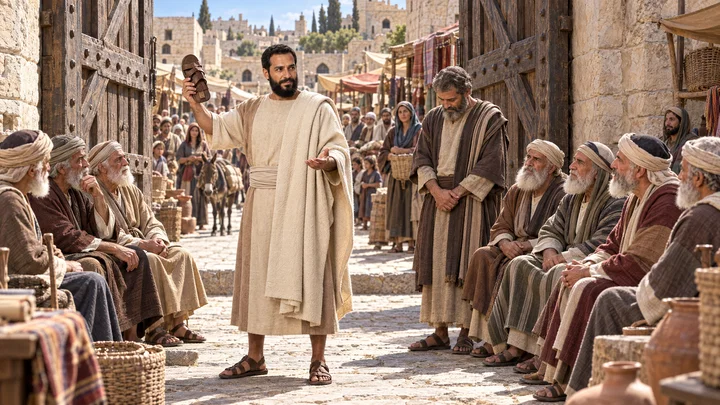
The nearer kinsman refused to redeem the inheritance because he feared it would mar his own, and he yielded his right of redemption to Boaz.RH Mar 12, 1908ST Nov 5, 1896 Having first agreed to buy the parcel of land, he drew back when told before the elders that redeeming it meant also taking Ruth the Moabitess to raise up the name of the dead upon his inheritance, confirming the transfer to Boaz by drawing off his shoe.RH Mar 12, 1908 He declined because the first son of such a union would be counted the dead man's son and heir, so that if only one son were born he himself would be left without an heir to preserve his own name and family, and for refusing to build up his brother's house he bore the appointed tokens of contempt.RH Mar 12, 1908 The account sets forth the law of redemption, that when a man had lost his inheritance and fallen into bondage and could not redeem himself, redemption belonged to the nearest kinsman who was able.ST Nov 5, 1896RH Dec 25, 1900 So humanity has lost its inheritance and lies in bondage unable to redeem itself, but Jesus by taking flesh and blood became its nearest able Kin and willingly accepted the cost to restore what was lost, redeeming at the price of His own life and giving those united to Him His life, name, and inheritance.ST Nov 5, 1896RH Dec 25, 1900ST May 6, 1897ST Jun 15, 1904
The Refusal at the Gate
The nearer kinsman refused to redeem the property because he feared it would mar his own inheritance, and he yielded his right of redemption to Boaz.RH Mar 12, 1908ST Nov 5, 1896ST Mar 31, 1909RH Dec 25, 1900 After first agreeing to redeem Elimelech's parcel of land, he declined when it was explained before the elders at the gate that buying Naomi's field meant also buying it of Ruth the Moabitess, the wife of the dead, to raise up the name of the dead upon his inheritance.RH Mar 12, 1908 He confirmed the transfer of his right to Boaz by drawing off his shoe.RH Mar 12, 1908
The redemption of the land could not be separated from taking the widow and perpetuating the dead man's family, name, and inheritance, which belonged by right to the nearest kinsman.RH Mar 12, 1908 His refusal cleared the way for Boaz to redeem the property and marry Ruth according to Israelite custom.RH Mar 12, 1908ST Nov 10, 1898 He refused to redeem the land and marry Ruth because the first son of such a marriage was counted as the dead man's son and inherited the dead man's land, while only subsequent sons belonged to the Goel himself.RH Mar 12, 1908 Thus if but one son was born the Goel would be reckoned childless without an heir to preserve his own name and family.RH Mar 12, 1908
For this refusal he received the legal tokens of contempt appointed for the man that will not build up his brother's house.RH Mar 12, 1908 The arrangement kept a man's inheritance in the land of Canaan from passing out of his family: if a man died without an heir his brother or near kinsman was to marry his widow and redeem his land, with the firstborn counted as the heir of the dead man so the homestead would be retained.ST Jul 7, 1887
Redemption Through Christ
The story sets forth the law of redemption, that when a person had lost an inheritance or fallen into bondage and could not redeem himself, redemption belonged to the nearest relative who was able to redeem.ST Nov 5, 1896RH Dec 25, 1900 In that light it shows that humanity has lost its inheritance and is in bondage, unable to redeem itself or its lost inheritance, and stands in need of an able redeemer who is its nearest blood-relative.ST Nov 5, 1896RH Dec 25, 1900 Jesus became humanity's nearest kin by taking human flesh and blood, and being able to redeem became the Redeemer of the lost when no one else could rescue them.ST Nov 5, 1896RH Dec 25, 1900ST Jun 15, 1904
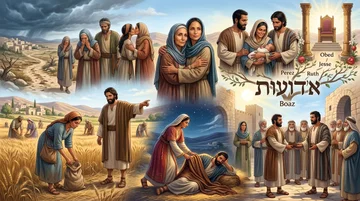
In contrast to the nearer kinsman who refused lest he mar his own inheritance, Christ the rightful heir who alone could restore what humanity lost willingly joined Himself to the lost race, accepting a cost to His own inheritance, and gives to those united to Him His life and name and inheritance.ST May 6, 1897 The redemption of Naomi's inheritance points to Him, who had the right to redeem and did so at the cost of His own life through the sacrifice of Himself. The near kinsman is a type of Christ showing God's care for the Seed, in that the Moabitess Ruth became one of the progenitors of Christ according to the flesh.ST Apr 8, 1913 The passage also shows the sweet, simple home life among the children of Israel.ST Apr 8, 1913
The arrangement for keeping a man's inheritance from passing out of his family will be unnecessary for those counted worthy to obtain the resurrection from the dead, because they cannot die anymore and each one's inheritance in the new earth will remain unimpaired throughout eternity.ST Jul 7, 1887 The verse shows the believer's right to approach the Redeemer confidently and claim his kinsman's help.ST May 6, 1897 Redemption means deliverance from sin and its results through union with Christ, not a payment to Satan nor a sum paid to God to cancel a debt, for God is satisfied only with righteousness, which is found in Christ.ST May 6, 1897
Sources