Ruth 4:7
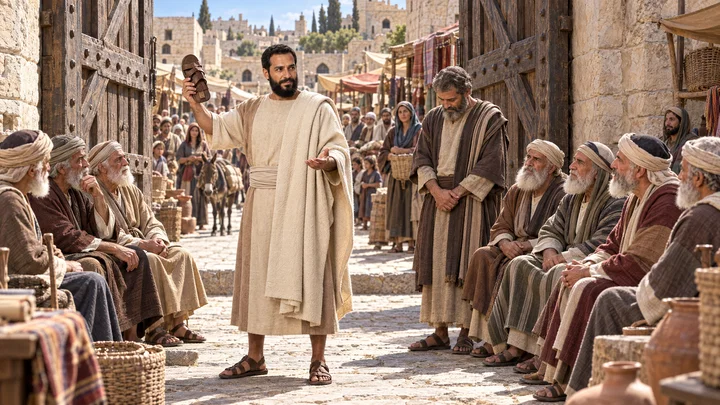
Now this was the manner in former time in Israel concerning redeeming and concerning changing, for to confirm all things; a man plucked off his shoe, and gave it to his neighbour: and this was a testimony in Israel.
Translations
Now this was the manner in former time in Israel concerning redeeming and concerning changing, for to confirm all things; a man plucked off his shoe, and gave it to his neighbor: and this was a testimony in Israel.
King James Version, KJV Cambridge Paragraph Bible
Now this was the manner in former time in Israel concerning redeeming and concerning changing, for to confirm all things; a man plucked off his shoe, and gave it to his neighbour: and this was a testimony in Israel.
Now this was the manner in former time in Israel concerning redeeming and concerning changing, for confirming all things; a man plucked off his shoe, and gave it to his neighbor: and this was a testimony in Israel.
Now this was the custom in former time in Israel concerning redeeming and concerning exchanging, for to confirm all things; a man drew off his shoe, and gave it to his neighbour: and this was the manner of attestation in Israel.
Now this was the custom in former time in Israel concerning redeeming and concerning exchanging, to confirm all things: a man drew off his shoe, and gave it to his neighbor; and this was the manner of attestation in Israel.
And this [is] formerly in Israel for redemption and for changing, to establish anything: a man hath drawn off his sandal, and given [it] to his neighbour, and this [is] the testimony in Israel.
Now this [ was the custom] in former time in Israel concerning redemption and concerning exchange, to confirm the whole matter: a man drew off his sandal, and gave it to his neighbour, and this was the [mode of] attestation in Israel.
Now, this aforetime, [was the way] in Israel, at a redeeming, and at an exchanging, to confirm every word: A man drew off his shoe, and gave it to his neighbour,—yea, this, was the way of taking to witness, in Israel.
Berean Standard Bible, Majority Standard Bible
Now in former times in Israel, concerning the redemption or exchange of property, to make any matter legally binding a man would remove his sandal and give it to the other party, and this was a confirmation in Israel.
Now this was the custom in former time in Israel concerning redeeming and concerning exchanging, to confirm all things: a man took off his sandal, and gave it to his neighbor; and this was the way of formalizing transactions in Israel.
Now, in earlier times this was the way in Israel when property was taken over by a near relation, or when there was a change of owner. To make the exchange certain one man took off his shoe and gave it to the other; and this was a witness in Israel.
Now this was the maner beforetime in Israel, concerning redeeming and changing, for to stablish all things: a man did plucke off his shooe, and gaue it his neighbour, and this was a sure witnes in Israel.
Douay-Rheims (Challoner revision)
Now this in former times was the manner in Israel between kinsmen, that if at any time one yielded his right to another: that the grant might be sure, the man put off his shoe, and gave it to his neighhour; this was a testimony of cession of right in Israel.
Pictures
Cross-references
- Leviticus 25:24-28
And in all the land of your possession ye shall grant a redemption for the land.
Sets out the redemption law applied in Ruth.
- Leviticus 25:48-49
After that he is sold he may be redeemed again; one of his brethren may redeem him:
Near relatives may redeem an Israelite in bondage, a law applied in Ruth.
- Ruth 3:12-13
And now it is true that I am thy near kinsman: howbeit there is a kinsman nearer than I.
Explains the nearer relative’s prior claim and Boaz’s role.
- Ruth 2:20
And Naomi said unto her daughter in law, Blessed be he of the LORD, who hath not left off his kindness to the living and to the dead. And Naomi said unto her, The man is near of kin unto us, one of our next kinsmen.
Identifies Boaz as a relative with redemption rights.
- Deuteronomy 25:9
Then shall his brother’s wife come unto him in the presence of the elders, and loose his shoe from off his foot, and spit in his face, and shall answer and say, So shall it be done unto that man that will not build up his brother’s house.
The shoe is removed publicly when a man refuses his family duty.
- Hebrews 2:17
Wherefore in all things it behoved him to be made like unto his brethren, that he might be a merciful and faithful high priest in things pertaining to God, to make reconciliation for the sins of the people.
Christ was made like his brethren to redeem them.
Commentary
Each commentary is drawn from primary sources: the writings of Ellen G. White and Adventist pioneers and periodicals. Each commentary is separate. Its own words are not a quotation; follow the references to read the source passages.
Pioneers and periodicals
7 sources
Ruth 4:7 preserves an old Israelite legal custom for confirming every matter of redeeming and of changing or exchanging a right, in which a man drew off his shoe or sandal and handed it to his neighbor as a public testimony.RH Mar 12, 1908ST Nov 5, 1896ST Mar 31, 1909 The removal and giving of the shoe was the recognized public witness that a redemption or transfer of property had been confirmed in Israel.RH Mar 12, 1908ST Mar 31, 1909ST Nov 10, 1898 By the time the book was written that practice of confirming a bargain by drawing off the shoe had fallen into disuse, so the verse pauses to explain a manner of former time no longer familiar.
In this narrative the nearer kinsman's shoe was the legal token that he gave up his right to redeem the family property and to perform the kinsman's duty.RH Mar 12, 1908ST Nov 10, 1898 His refusal cleared the way for Boaz to step into his place, redeem the family inheritance, and take Ruth in marriage.RH Mar 12, 1908ST Nov 10, 1898
The surrounding passage in Ruth 4:1-12 displays the law of redemption of men and their inheritances in action.ST Nov 5, 1896RH Dec 25, 1900 When an Israelite had lost his inheritance or had himself been brought into bondage and was not able to redeem himself or his inheritance, redemption was provided through the right falling not merely to one near of kin but to the one nearest of kin by blood-relationship who was able.ST Nov 5, 1896RH Dec 25, 1900 The verse stands in a beautiful pastoral book that shows the sweet, simple home life among the children of Israel and God's care for the Seed, for the Moabitess Ruth became one of the progenitors of the Lord according to the flesh.ST Apr 8, 1913 The lesson of the near kinsman in the chapter is a type of the Lord.ST Apr 8, 1913
That redemption story illustrates the pattern fulfilled in Jesus as humanity's nearest kin and Redeemer.ST Nov 5, 1896 It proves that man has lost his inheritance and is himself in bondage and cannot redeem himself or his inheritance, so the right falls to Jesus Christ as the only one in all the universe who is able.RH Dec 25, 1900 To be Redeemer He had to become a blood-relative and the nearest of kin by taking part of the same flesh and blood in very substance like ours.RH Dec 25, 1900 The account of redeeming Naomi's inheritance points to the Lord as Redeemer, who had the right to redeem and did so through the sacrifice of His own life. The act of redemption points to Christ, who came to redeem the lost when no one else could rescue them.ST Jun 15, 1904
Sources