Zechariah 11:10
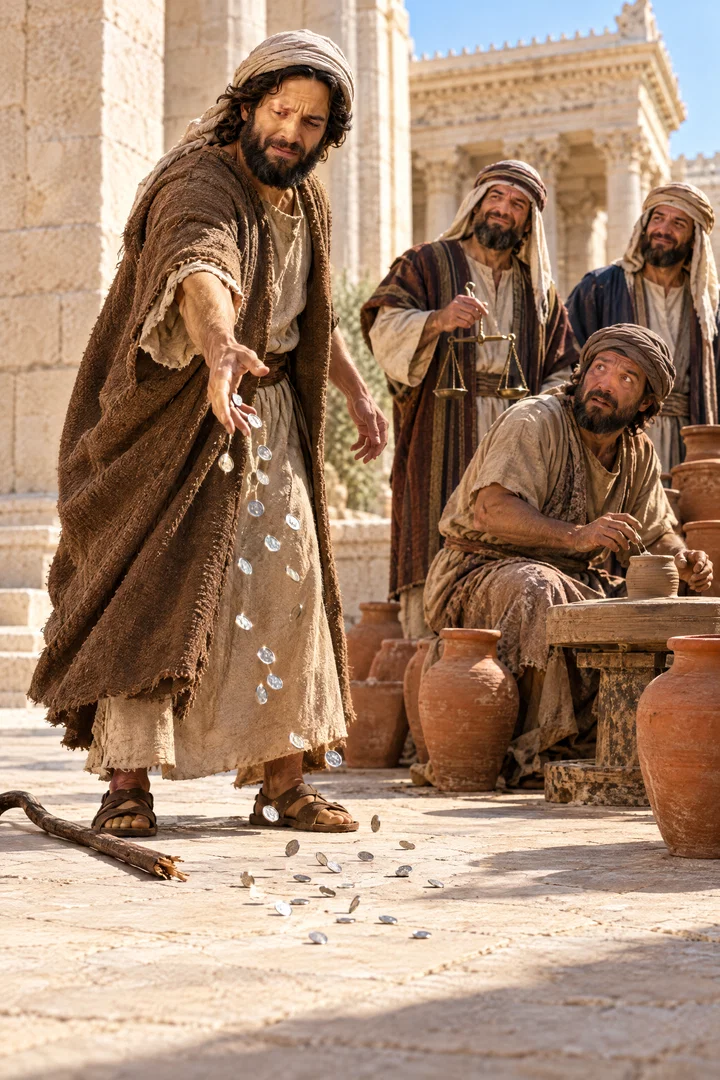
And I took my staff, even Beauty, and cut it asunder, that I might break my covenant which I had made with all the people.
Translations
American King James Version, King James Version, KJV Cambridge Paragraph Bible, Webster Bible
And I took my staff, even Beauty, and cut it asunder, that I might break my covenant which I had made with all the people.
Revised Version, American Standard Version
And I took my staff Beauty, and cut it asunder, that I might break my covenant which I had made with all the peoples.
And I take My staff Pleasantness, and cut it asunder, to make void My covenant that I had made with all the peoples:
And I took my staff, Beauty, and cut it asunder, that I might break my covenant which I had made with all the peoples.
So I took my staff Grace, and cut it in two,—that I might set aside my covenant which I had solemnised with all the peoples.
Berean Standard Bible, Majority Standard Bible
Next I took my staff called Favor and cut it in two, revoking the covenant I had made with all the nations.
I took my staff Favor and cut it apart, that I might break my covenant that I had made with all the peoples.
And I took my rod Beautiful, cutting it in two, so that the Lord's agreement, which he had made with all the peoples, might be broken.
And I tooke my staffe, euen Beautie, and brake it, that I might disanull my couenant, which I had made with all people.
Douay-Rheims (Challoner revision)
And I took my rod that was called Beauty, and I cut it asunder to make void my covenant, which I had made with all people.
Pictures
Cross-references
- Matthew 27:9-10
Then was fulfilled that which was spoken by Jeremy the prophet, saying, And they took the thirty pieces of silver, the price of him that was valued, whom they of the children of Israel did value;
Matthew’s quotation of the thirty pieces of silver fulfills Zechariah’s prophecy.
- Zechariah 11:14
Then I cut asunder mine other staff, even Bands, that I might break the brotherhood between Judah and Israel.
Breaking the staff Bands represents the loss of brotherhood between Judah and Israel.
- Jeremiah 48:17
All ye that are about him, bemoan him; and all ye that know his name, say, How is the strong staff broken, and the beautiful rod!
A staff symbolizes a nation’s support or strength.
- Isaiah 14:4-5
That thou shalt take up this proverb against the king of Babylon, and say, How hath the oppressor ceased! the golden city ceased!
The staff is linked with a nation’s rule and support.
- Luke 19:41-44
And when he was come near, he beheld the city, and wept over it,
Christ’s rejection at Jerusalem marks the withdrawal of protection.
- Matthew 27:1-2
When the morning was come, all the chief priests and elders of the people took counsel against Jesus to put him to death:
The leaders’ rejection of Jesus culminates in his death.
Commentary
Each commentary is drawn from primary sources: the writings of Ellen G. White and Adventist pioneers and periodicals. Each commentary is separate. Its own words are not a quotation; follow the references to read the source passages.
Ellen G. White
1 source
Cutting apart the staff named Beauty is the breaking of the covenant made with all the people.Ms 23, 1898, par. 5–9 The shepherd imagery belongs to a prophecy concerning God's flock and the failure of those entrusted with shepherding it.Ms 23, 1898, par. 5–9 That failure was the work of the Jewish rulers, who neglected the needy and helpless rather than giving them care and comfort.Ms 23, 1898, par. 5–9
Sources
Pioneers and periodicals
11 sources
The Targum renders the leaders in such passages as shepherds, that is, the spiritual leaders charged with leading and feeding God's flock.ST Jul 1, 1886 The staff called Beauty is God's grace, graciousness, and favor toward Israel, shown in restoring, gathering, and forgiving them.ST Feb 11, 1897ST Apr 1, 1913 It is the beauty of holiness resting upon the people, which is Christ himself, for Christ and the holiness of his character are its source.ST Sep 20, 1910ST Sep 20, 1910
The staff also stands for Israel as the first means by which God intended to feed His flock with His Word.ST Dec 10, 1902 Israel was meant to share God's blessings and message with the world and thereby become a glory among the nations, but the people kept those blessings to themselves and refused that purpose.ST Dec 10, 1902 Cutting the staff asunder therefore breaks God's conditional covenant with Israel as a nation, ending the covenant relationship by which He had accepted the Jews as His chosen people.ST Sep 20, 1910ST Feb 11, 1897ST Dec 10, 1902ST Apr 1, 1913ST Sep 20, 1910 The promises remained in force while they trusted God, received Christ as their king, and walked in His way, but were terminated because they failed those conditions, rejected Him, chose their own way, and would not follow Him.ST Nov 8, 1883ST Sep 20, 1910ST Feb 11, 1897ST May 12, 1909
The covenant broken is not the Ten Commandments, which remain forever and will meet all people in the judgment, but the conditional promises to Israel.ST Apr 1, 1913ST May 12, 1909 God would have restored Israel to its land and made them a people of power and praise, but when they chose their own way He had to let them do so, making it impossible for Him to fulfill those promises.ST May 12, 1909 More particularly, the covenant broken was Christ's promise of protection to Jerusalem and the Jewish nation.ST Nov 8, 1883ST Nov 8, 1883 He had promised, on condition that the Jews receive Him as their king, to miraculously defend Ephraim and Jerusalem by cutting off the chariots, horses, and battle bows of the Romans under whose power the Jews then were, and then to establish peace among all nations by His judgments as king.ST Nov 8, 1883ST Nov 8, 1883 When He came to His own city, temple, and throne of David at His entrance into Jerusalem, His disciples received Him with shouts of joy, but the unconverted nation did not love His lowly character and openly and willfully rejected Jesus through whom that mercy was offered, so the promised protection was withdrawn and annulled.ST Nov 8, 1883ST Dec 10, 1902ST Nov 8, 1883
The breaking foretold Christ's crucifixion and signifies the withdrawal of God's favor, support, prosperity, and mercy from the nation as a nation, cutting them off from their special standing.ST Sep 20, 1910ST Feb 11, 1897ST Dec 10, 1902ST Apr 1, 1913ST Sep 20, 1910 That favor had marvelously preserved them with their records, usages, and institutions until the Son of David came, but after Christ had come and been rejected it was taken away.ST Sep 20, 1910 The faithful poor of the flock nevertheless remained with God, and some of the faithful understood the change as fulfilled prophecy and rejoiced in the new covenant through which God's purpose continued in a greater form in Jesus Christ.ST Sep 20, 1910ST Apr 1, 1913 With favor withdrawn, not even Titus could prevent the destruction of the temple, and despite his order to spare it its ruin was complete in fulfillment of Christ's foretelling that one stone should not be left upon another.ST Sep 20, 1910 The destruction of Jerusalem and rejection of the Jewish people serve as a type of the rejection and destruction of the world after it rejects Christ.ST Dec 10, 1902 The covenant ended is the covenant of grace in Christ Jesus, offered through Jesus, and God cut off the Jewish nation when they rejected that mercy, for otherwise He could not set anyone aside impartially, and their rejection warns that God will also cut off all who finally reject Christ.ST Dec 10, 1902
Sources