“NEVER BEFORE HAD THERE BEEN DAYS LIKE THESE FOR THE WORLD. HEAVEN WAS BROUGHT DOWN TO MEN.”
IN the fisherman’s home at Capernaum, the mother of Peter’s wife is lying sick of “a great fever,” and “they tell Him of her.” Jesus “touched her hand, and the fever left her,” and she arose and ministered to the Saviour and His disciples.
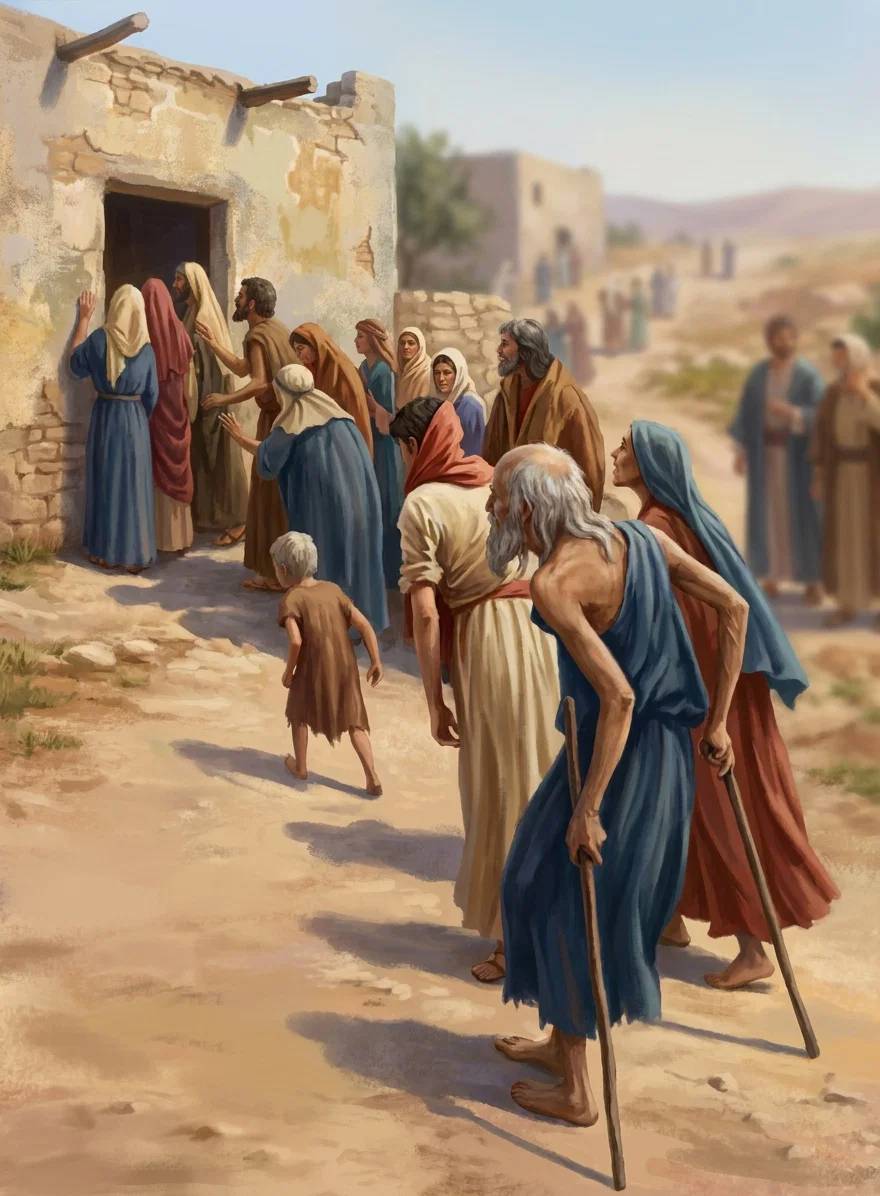
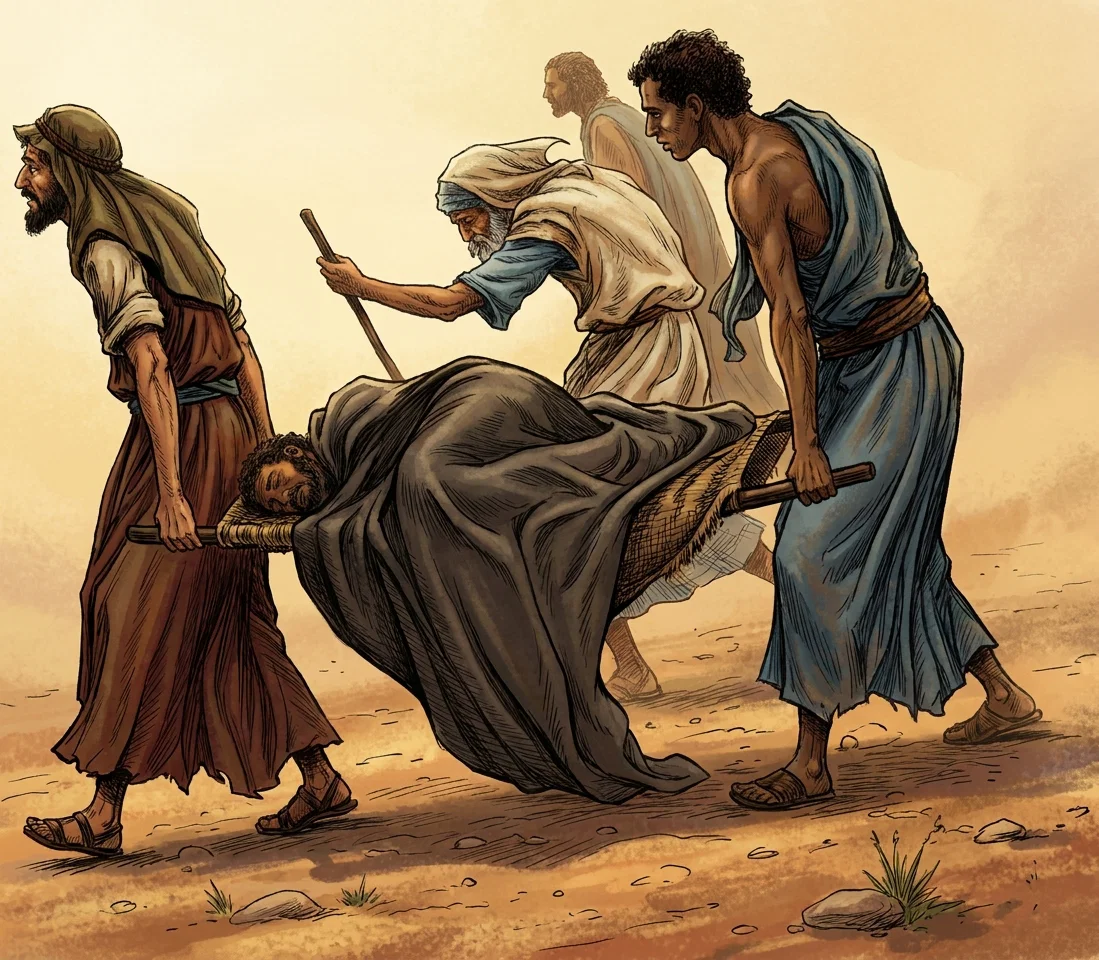
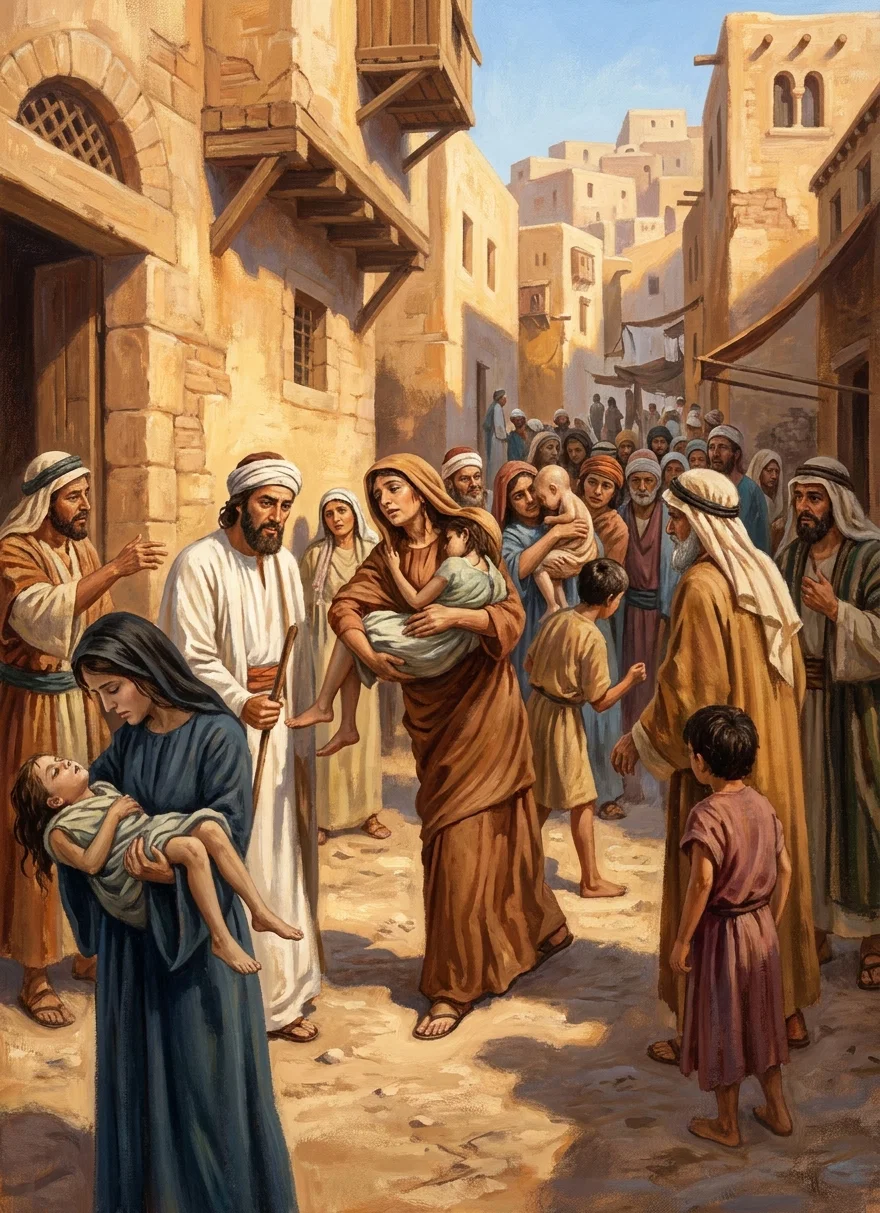
Rapidly the tidings spread. The miracle had been wrought upon the Sabbath, and for fear of the rabbis the people dared not come for healing until the sun was set. Then from the homes, the shops, the market-places, the inhabitants of the city pressed toward the humble dwelling that sheltered Jesus. The sick were brought upon litters, they came leaning upon staffs, or, supported by friends, they tottered feebly into the Saviour’s presence.
Hour after hour they came and went; for none could know whether to-morrow would find the Healer still among them. Never before had Capernaum witnessed a day like this. The air was filled with the voice of triumph and shouts of deliverance.
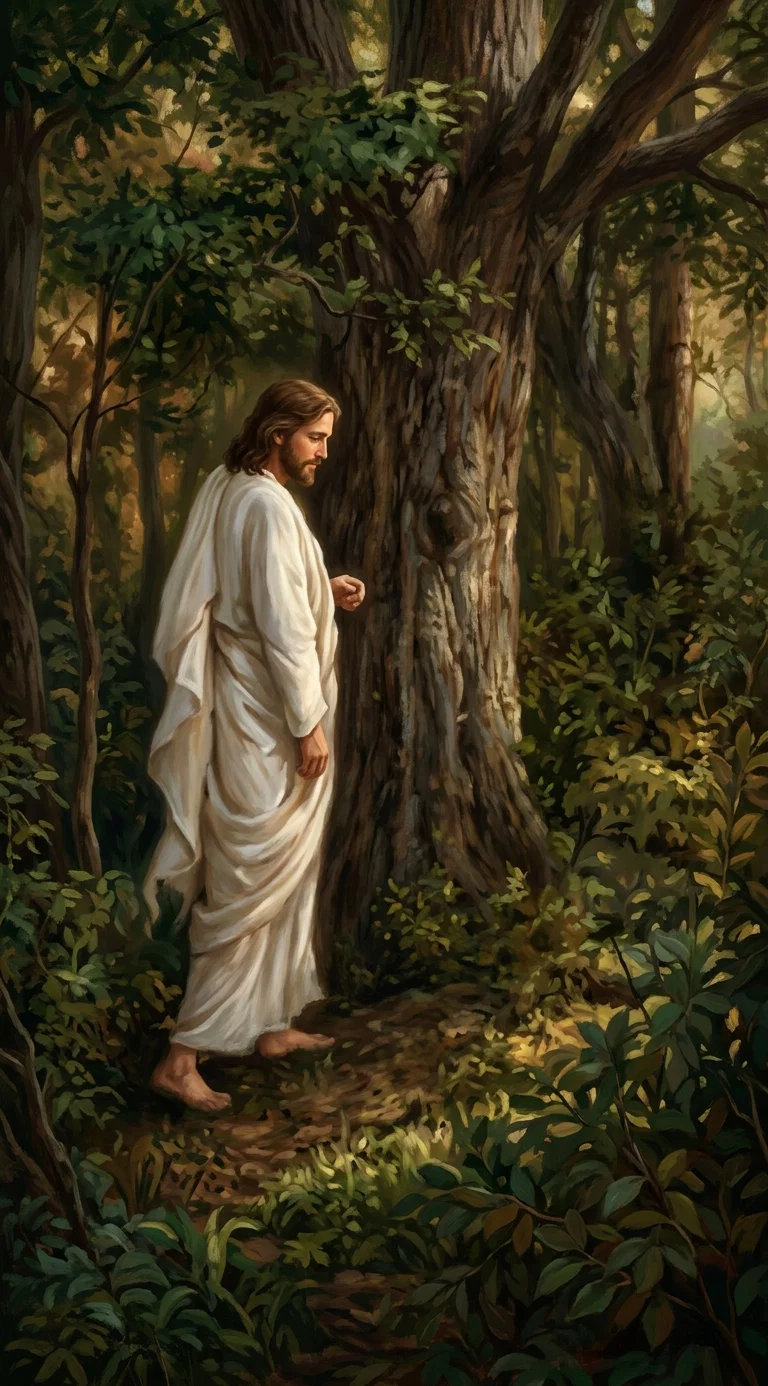
Not until the last sufferer had been relieved, did Jesus cease His work. It was far into the night when the30multitude departed, and silence settled down upon the home of Simon. The long, exciting day was past, and Jesus sought rest. But while the city was wrapped in slumber, the Saviour, “rising up a great while before day,” “went out, and departed into a solitary place, and there prayed.”
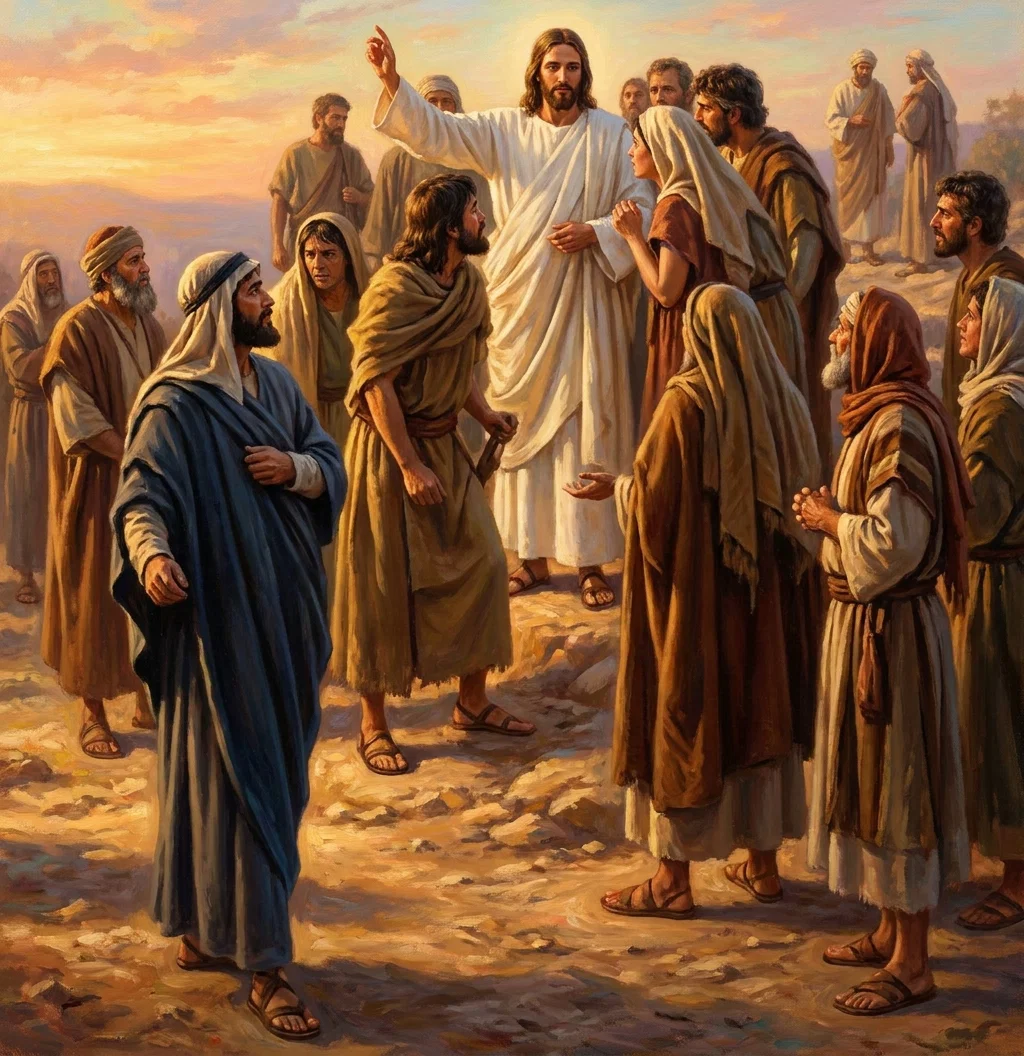
They “pressed toward the humble dwelling that sheltered Jesus.”
Early in the morning Peter and his companions came to Jesus, saying that already the people of Capernaum31were seeking Him. With surprise they heard Christ’s words, “I must preach the kingdom of God to other cities also; for therefore am I sent.”
“They came . . . supported by friends.”
In the excitement which then pervaded Capernaum there was danger that the object of His mission would be lost sight of. Jesus was not satisfied to attract attention to Himself merely as a wonder-worker or as a healer of physical disease. He was seeking to draw men to Him as their Saviour. While the people were eager to believe that He had come as a king to establish an earthly reign, He desired to turn their minds from the earthly to the spiritual. Mere worldly success would interfere with His work.
And the wonder of the careless crowd jarred upon His spirits. No self-assertion mingled with His life. The homage which the world gives to position, wealth, or talent, was foreign to the Son of man. None of the means that men employ to win allegiance or command homage did Jesus use. “Brought upon litters.” Centuries before His birth it had been prophesied of Him, “He shall not cry, nor lift up, nor cause His voice to be heard in the street. A bruised reed shall He not break, and the dimly-burning flax32shall He not quench: He shall bring forth judgment unto truth.”
“Brought upon litters.”
The Pharisees sought distinction by their scrupulous ceremonialism, and the ostentation of their worship and their charities. They proved their zeal for religion by making it the theme of discussion. Disputes between opposing sects were loud and long, and it was not unusual to hear on the streets the voice of angry controversy from learned doctors of the law.
He “went out . . . into a solitary place, and there prayed.”
In marked contrast to all this was the life of Jesus. In that life no noisy disputation, no ostentatious worship, no act to gain applause, was ever witnessed. Christ was hid in God, and God was revealed in the character of His Son. To this revelation Jesus desired the minds of the people to be directed.
The Sun of Righteousness did not burst upon the world in splendor, to dazzle the senses with His glory. It is written of Christ, “His going forth is prepared as the morning.” Quietly and gently the daylight breaks upon the earth, dispelling the darkness and waking the world to life. So did the Sun of Righteousness arise, “with healing in His wings.”
“Behold, My Servant, whom I uphold; Mine Elect in whom My soul delighteth.”
“Thou hast been a strength to the poor,
A strength to the needy in his distress,
A refuge from the storm, a shadow from the heat.”
“Thus saith God the Lord,
He that created the heavens, and stretched them out;
He that spread forth the earth, and that which cometh out of it;
He that giveth breath unto the people upon it,
And spirit to them that walk therein.
I the Lord have called Thee in righteousness,
And will hold Thine hand,
And will keep Thee, and give Thee for a covenant of the people,
For a light of the Gentiles;
To open the blind eyes,
To bring out the prisoners from the prison,
And them that sit in darkness out of the prison-house.”⁹
“I will bring the blind by a way that they knew not; I will lead them in paths that they have not known; I will make darkness light before them, And crooked things straight. These things will I do unto them, and not forsake them.”
“Sing unto the Lord a new song,
And His praise from the end of the earth,
Ye that go down to the sea, and all that is therein;
The isles, and the inhabitants thereof.
Let the wilderness and the cities thereof lift up their voice,
The villages that Kedar doth inhabit:
Let the inhabitants of the rock sing,
Let them shout from the top of the mountains.
Let them give glory unto the Lord,
And declare His praise in the islands.”
“Sing, O ye heavens, for the Lord hath done it;
Shout, ye lower parts of the earth!
Break forth into singing, ye mountains!
O forest, and every tree therein!
For the Lord hath redeemed Jacob,
And glorified Himself in Israel.”
He “manifested forth His glory; and His disciples believed on Him.”
From Herod’s dungeon, where in disappointment and perplexity concerning the Saviour’s work, John the Baptist watched and waited, he sent two of his disciples to Jesus with the message:
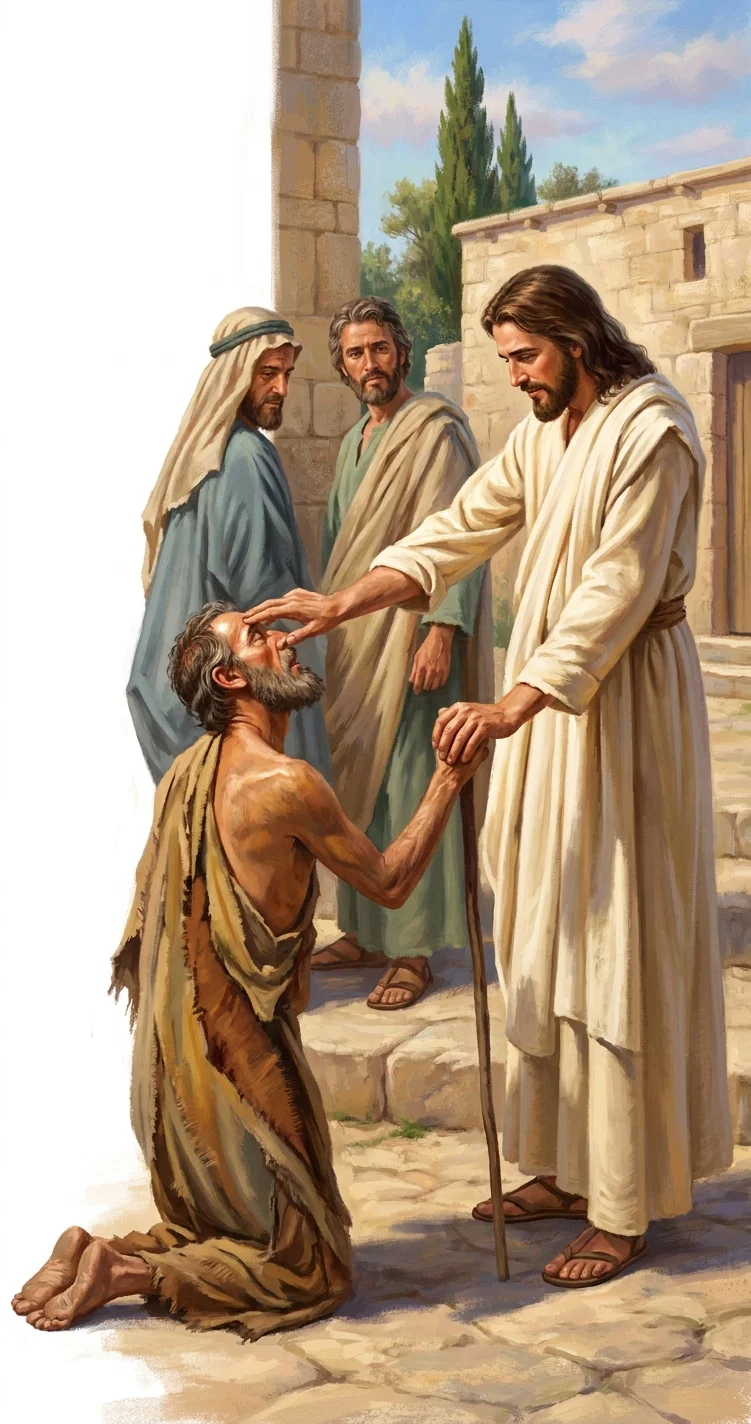
“A word, a touch of His hand, opened the blind eyes to behold the light of day.”
“Art Thou He that should come, or do we look for another?”
The Saviour did not at once answer the disciples’ question. As they stood wondering at His silence, the afflicted were coming to Him. The voice of the mighty Healer penetrated the deaf ear. A word, a touch of His hand, opened the blind eyes to behold the light of day, the scenes of nature, the faces of friends, and the face of the Deliverer. His voice reached the ears of the dying, and they arose in health and vigor. Paralyzed demoniacs obeyed His word, their madness left them, and they worshiped Him. The poor peasants and laborers, who were shunned by the rabbis as unclean, gathered about Him,35and He spoke to them the words of eternal life.
Thus the day wore away, the disciples of John seeing and hearing all. At last Jesus called them to Him, and bade them go and tell John what they had seen and heard, adding, “Blessed is he, whosoever shall not be offended in Me.” The disciples bore the message, and it was enough.
"The poor peasants and laborers who were shunned by the rabbis as unclean, gathered about Him."
John recalled the prophecy concerning the Messiah, “Jehovah hath anointed Me to preach good tidings unto the meek; He hath sent Me to bind up the broken-hearted, to proclaim liberty to the captives, and the opening of the prison to them that are bound; to proclaim the year of Jehovah’s favor, and . . . to comfort all that mourn.” Jesus of Nazareth was the promised one. The evidence of His divinity was seen in His ministry to the needs of suffering humanity. His glory was shown in His condescension to our low estate.
The works of Christ not only declared Him to be the Messiah, but showed in what manner His kingdom was to be established. To John was opened the same truth that had come to Elijah in the desert, when “a great and strong wind rent the mountains, and brake in pieces the rocks before the Lord; but the Lord was not in the wind: and after the wind an earthquake; but the Lord was not in the earthquake: and after the earthquake a fire; but the Lord was not in the fire:” and after the fire, God spoke to the prophet by a still small voice. So Jesus was to do His work, not by the overturning of thrones and kingdoms, not with pomp and outward display, but through speaking to the hearts of men by a life of mercy and self-sacrifice.
The kingdom of God comes not with outward show. It comes through the gentleness of the inspiration of His word, through the inward working of His Spirit, the fellowship of the soul with Him who is its life. The greatest manifestation of its power is seen in human nature brought to the perfection of the character of Christ.
The followers of Christ are to be the light of the world; but God does not bid them make an effort to shine. He does not approve of any self-satisfied endeavor to display superior goodness. He desires that their souls shall be imbued with the principles of heaven; then, as they come in contact with the world, they will reveal the light that is in them. Their steadfast fidelity in every act of life will be a means of illumination.
Wealth or high position, costly equipment, architecture or furnishings, are not essential to the advancement of the work of God; neither are achievements that win applause from men and administer to vanity. Worldly display, however imposing, is of no value in God’s sight. Above37the seen and temporal, He values the unseen and eternal. The former is of worth only as it expresses the latter. The choicest productions of art possess no beauty that can compare with the beauty of character, which is the fruit of the Holy Spirit’s working in the soul.
When God gave His Son to our world, He endowed human beings with imperishable riches—riches compared with which the treasured wealth of men since the world began, is nothingness. Christ came to the earth and stood before the children of men with the hoarded love of eternity, and this is the treasure that, through our connection with Him, we are to receive, to reveal, and to impart.
Human effort will be efficient in the work of God just according to the consecrated devotion of the worker,—by revealing the power of the grace of Christ to transform the life. We are to be distinguished from the world because God has placed His seal upon us, because He manifests in us His own character of love. Our Redeemer covers us with His righteousness.
In choosing men and women for His service, God does not ask whether they possess worldly wealth, learning, or eloquence. He asks, “Do they walk in such humility that I can teach them My way? Can I put My words into their lips? Will they represent Me?”
God can use every person just in proportion as He can put His Spirit into the soul-temple. The work that He will accept is the work that reflects His image. His followers are to bear, as their credentials to the world, the ineffaceable characteristics of His immortal principles.
“He Shall Gather the Lambs with His Arm, and Carry Them in His Bosom.”
As Jesus ministers in the streets of the cities, mothers with their sick and dying little ones in their arms press through the throng, seeking to come within reach of His notice.
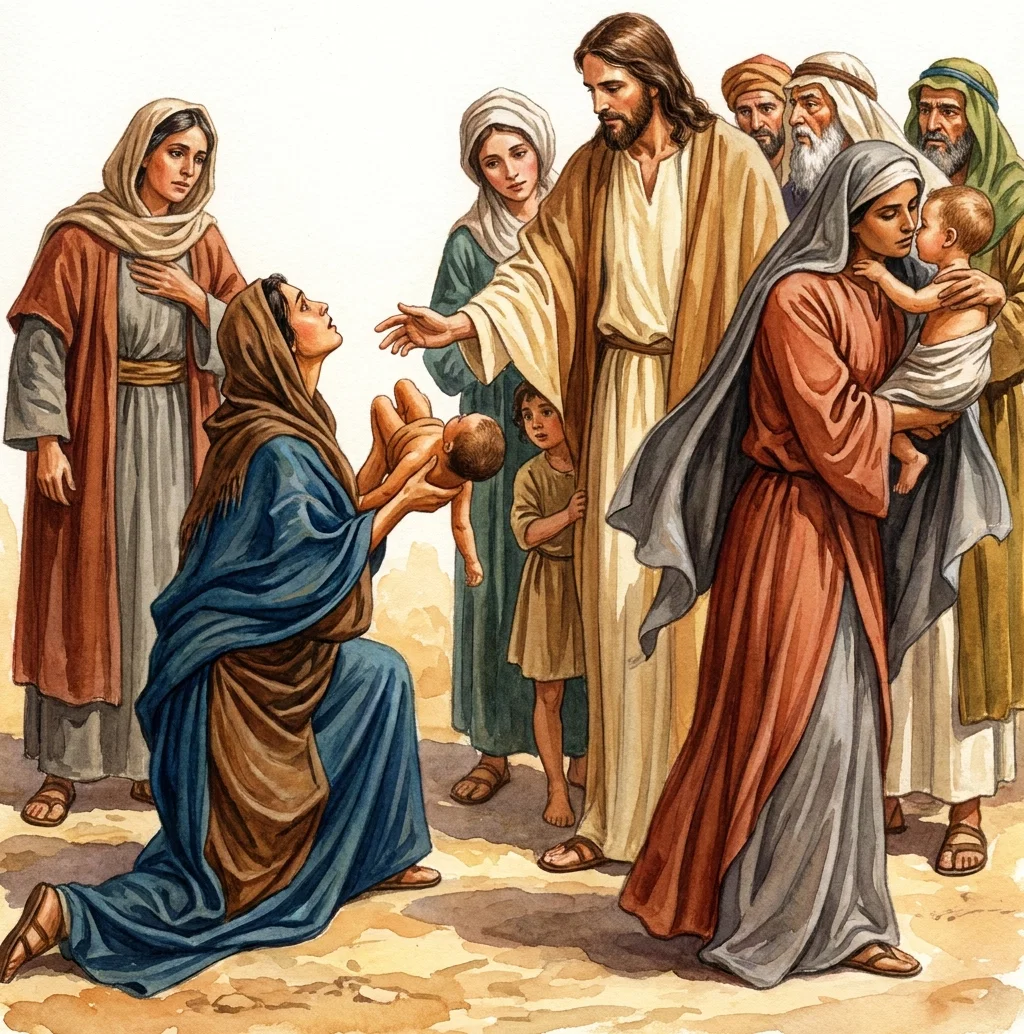
Mothers with their sick and dying little ones in their arms press through the throng.
Behold these mothers, pale, weary, almost despairing, yet determined and persevering. Bearing their burden of suffering, they seek the Saviour. As they are crowded back by the surging throng, Christ makes His way to them step by step, until He is close by their side. Hope springs up in their hearts. Their tears of gladness fall as they catch His attention, and look into the eyes expressing such pity and love.
Singling out one of the group, the Saviour invites her confidence, saying, “What shall I do for thee?” She sobs out her great want, “Master, that Thou wouldst heal my child.” Christ takes the little one from her arms, and disease flees at His touch. The pallor of death is gone; the life-giving current flows through the39veins; the muscles receive strength. Words of comfort and peace are spoken to the mother; and then another case, just as urgent, is presented. Again Christ exercises
"What shall I do for thee? . . . Master, that Thou wouldst heal my child."
His life-giving power, and all give praise and honor to Him who doeth wonderful things.
We dwell much on the greatness of Christ’s life. We speak of the wonderful things that He accomplished, of40the miracles that He wrought. But His attention to things accounted small is even higher proof of His greatness.
Among the Jews it was customary for children to be brought to some rabbi, that he might lay his hands upon them in blessing; but the disciples thought the Saviour’s work too important to be interrupted in this way. When the mothers came desiring Him to bless their little ones, the disciples looked on them with disfavor. They thought these children too young to be benefited by a visit to Jesus, and concluded that He would be displeased at their presence. But the Saviour understood41the care and burden of the mothers who were seeking to train their children according to the word of God. He had heard their prayers. He Himself had drawn them into His presence.
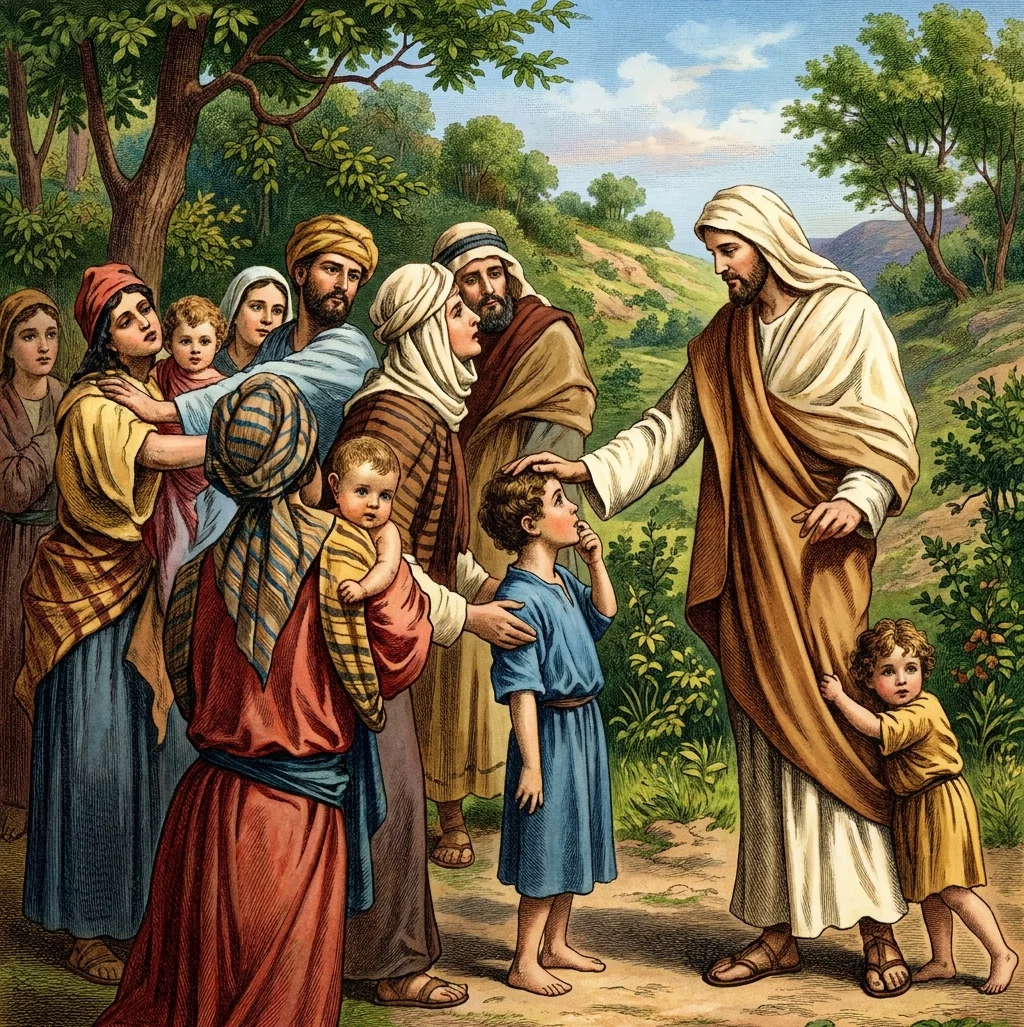
“Suffer the little children to come unto Me.”
One mother with her child had left her home to find Jesus. On the way she told a neighbor her errand, and the neighbor wished to have Jesus bless her children. Thus several mothers came here together, with their little ones. Some of the children had passed beyond the years of infancy to childhood and youth. When the mothers made known their desire, Jesus heard with sympathy the timid, tearful request. But He waited to see how the disciples would treat them. When He saw the disciples reproving the mothers and sending them away, thinking to do Him a favor, He showed them their error, saying, “Suffer the little children to come unto Me, and forbid them not; for of such is the kingdom of God.” He took the children in His arms, He laid His hands upon them, and gave them the blessings for which they came.
The mothers were comforted. They returned to their homes strengthened and blessed by the words of Christ. They were encouraged to take up their burden with new cheerfulness, and to work hopefully for their children.
Could the after-life of that little group be opened before us, we should see the mothers recalling to the minds of their children the scene of that day, and repeating to them the loving words of the Saviour. We should see, too, how often, in after-years, the memory of these words kept the children from straying from the path cast up for the ransomed of the Lord.
Christ is to-day the same compassionate Saviour as when He walked among men. He is as verily the helper of mothers now as when He gathered the little ones to42His arms in Judea. The children of our hearths are as much the purchase of His blood as were the children of long ago.
Jesus knows the burden of every mother’s heart. He who had a mother that struggled with poverty and privation, sympathizes with every mother in her labors. He who made a long journey in order to relieve the anxious heart of a Canaanite woman will do as much for the mothers of to-day. He who gave back to the widow of Nain her only son, and in His agony upon the cross remembered His own mother, is touched to-day by the mother’s sorrow. In every grief and every need, He will comfort and help.
Let mothers come to Jesus with their perplexities. They will find grace sufficient to aid them in the care of their children. The gates are open for every mother who would lay her burdens at the Saviour’s feet. He who said, “Suffer the little children to come unto Me, and forbid them not,” still invites mothers to bring their little ones to be blessed by Him.
In the children who were brought in contact with Him, Jesus saw the men and women who should be heirs of His grace and subjects of His kingdom, and some of whom would become martyrs for His sake. He knew that these children would listen to Him and accept Him as their Redeemer far more readily than would grown-up people, many of whom were the wordly-wise and hard-hearted. In teaching, He came down to their level. He, the Majesty of heaven, answered their questions and simplified His important lessons to meet their childish understanding. He planted in their minds the seeds of truth, which in after-years would spring up and bear fruit unto eternal life.
When Jesus told the disciples not to forbid the children43to come to Him, He was speaking to His followers in all ages,—to officers of the church, ministers, helpers, and all Christians. Jesus is drawing the children, and He bids us, “Suffer them to come;” as if He would say, They will come, if you do not hinder them.
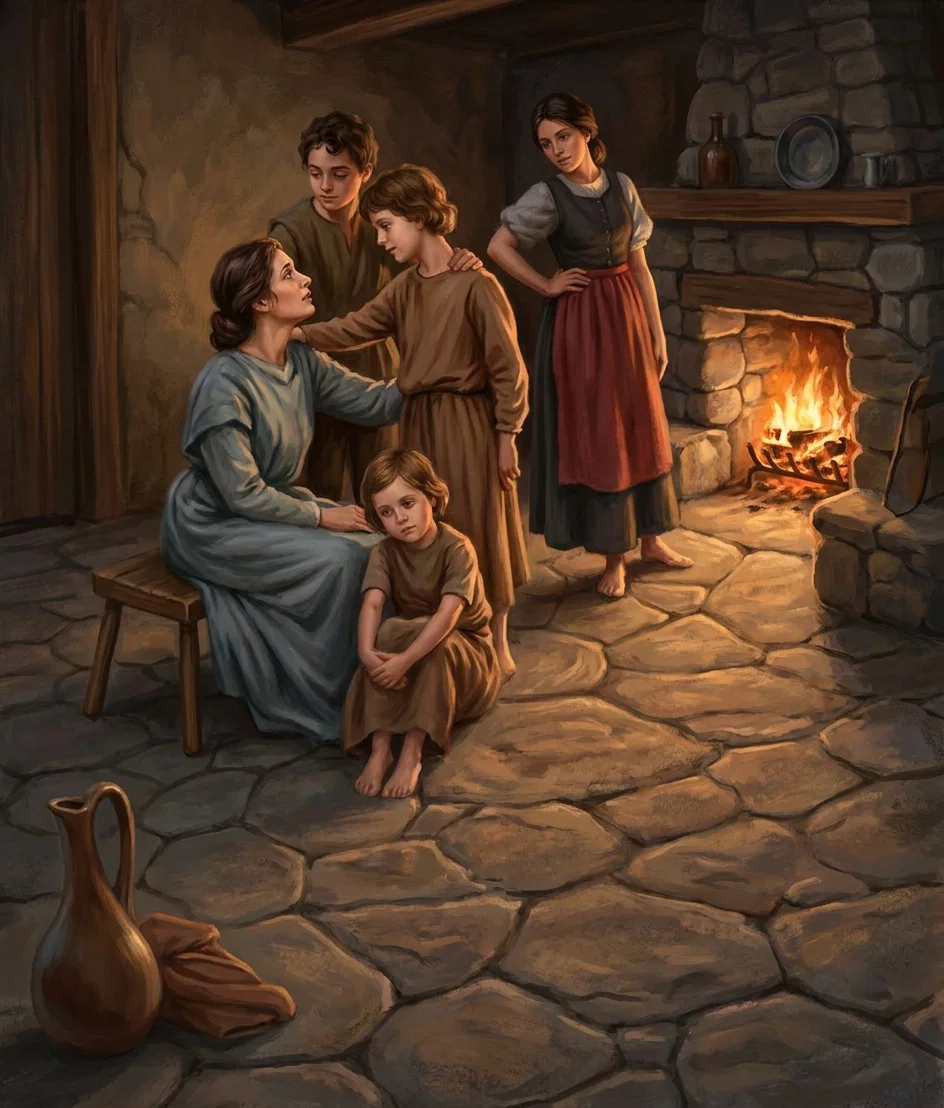
The mothers in after life, " recalling . . . the scene of that day, and repeating . . . the loving words of the Saviour."
Let not your unchristlike character misrepresent Jesus. Do not keep the little ones away from Him by your coldness and harshness. Never give them cause to feel that heaven would not be a pleasant place to them if you were there. Do not speak of religion as something that children can not understand, or act as44if they were not expected to accept Christ in their childhood. Do not give them the false impression that the religion of Christ is a religion of gloom, and that in coming to the Saviour they must give up all that makes life joyful.
As the Holy Spirit moves upon the hearts of the children, co-operate with His work. Teach them that the Saviour is calling them, that nothing can afford Him greater joy than for them to give themselves to Him in the bloom and freshness of their years.
The Saviour regards with infinite tenderness the souls whom He has purchased with His blood. They are the claim of His love. He looks upon them with unutterable longing. His heart is drawn out, not only to the best-trained and most attractive children, but to those who by inheritance and through neglect have objectionable traits of character. Many parents do not understand how much they are responsible for these traits in their children. They have not the tenderness and wisdom to deal with the erring ones whom they have made what they are. But Jesus looks upon these children with pity. He traces from cause to effect.
The Christian worker may be Christ’s agent in drawing these faulty and erring ones to the Saviour. By wisdom and tact he may bind them to his heart, he may give courage and hope, and through the grace of Christ may see them transformed in character, so that of them it may be said, “Of such is the kingdom of God.”