Tea acts as a stimulant, and, to a certain extent, produces intoxication. The action of coffee and many other popular drinks is similar. The first effect is exhilarating. The nerves of the stomach are excited; these convey irritation to the brain, and this in turn is aroused to impart increased action to the heart, and short-lived energy to the entire system. Fatigue is forgotten; the strength seems to be increased. The intellect is aroused, the imagination becomes more vivid.
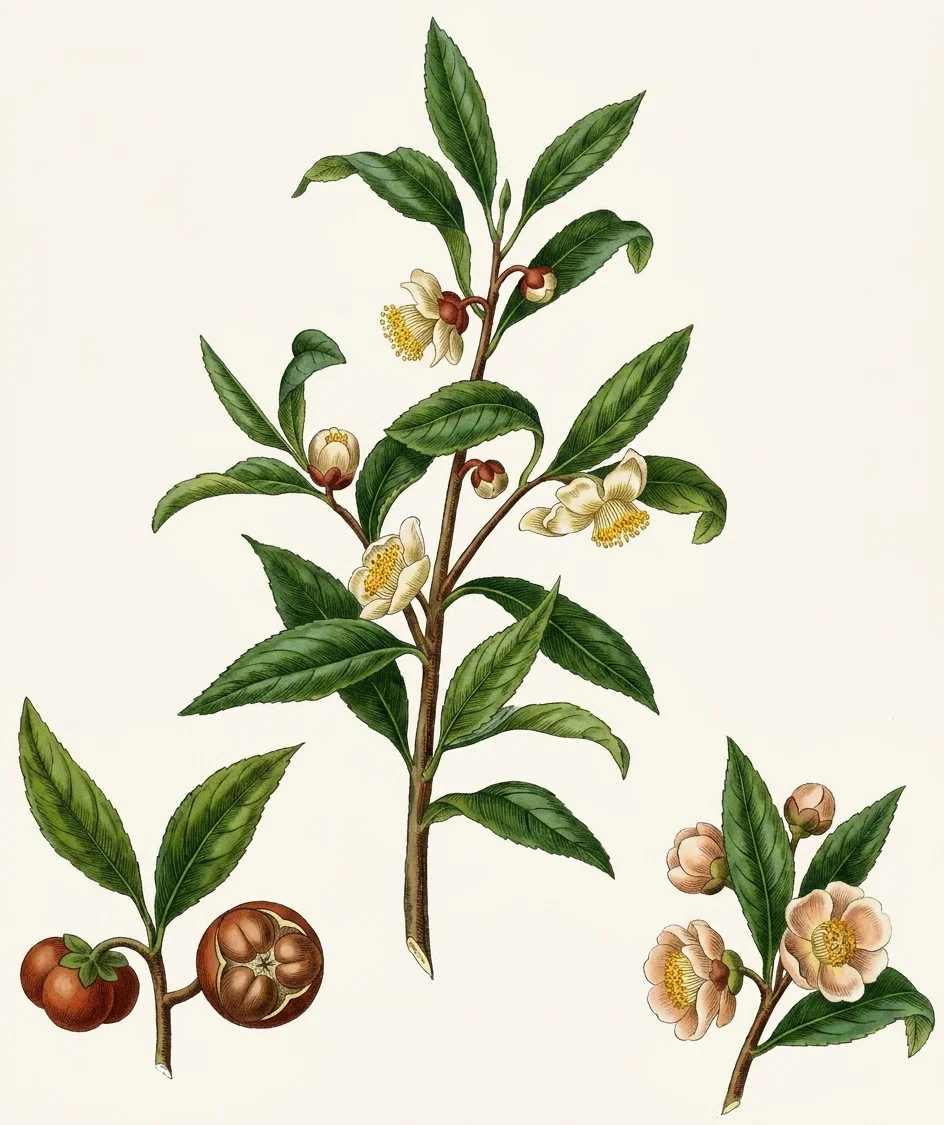
A tea plant
Because of these results, many suppose that their tea or coffee is doing them great good. But this is a mistake. Tea and coffee do not nourish the system. Their effect is produced before there has been time for digestion and assimilation, and what seems to be strength is only nervous excitement. When the influence of the stimulant is gone, the unnatural force abates, and the result is a corresponding degree of languor and debility.
The continued use of these nerve irritants is followed by headache, wakefulness, palpitation of the heart, indigestion, trembling, and many other evils; for they wear away the life forces. Tired nerves need rest and quiet instead of327stimulation and overwork. Nature needs time to recuperate her exhausted energies. When her forces are goaded on by the use of stimulants, more will be accomplished for a time; but, as the system becomes debilitated by their constant use, it gradually becomes more difficult to rouse the energies to the desired point. The demand for stimulants becomes more difficult to control, until the will is overborne, and there seems to be no power to deny the unnatural craving. Stronger and still stronger stimulants are called for, until exhausted nature can no longer respond.
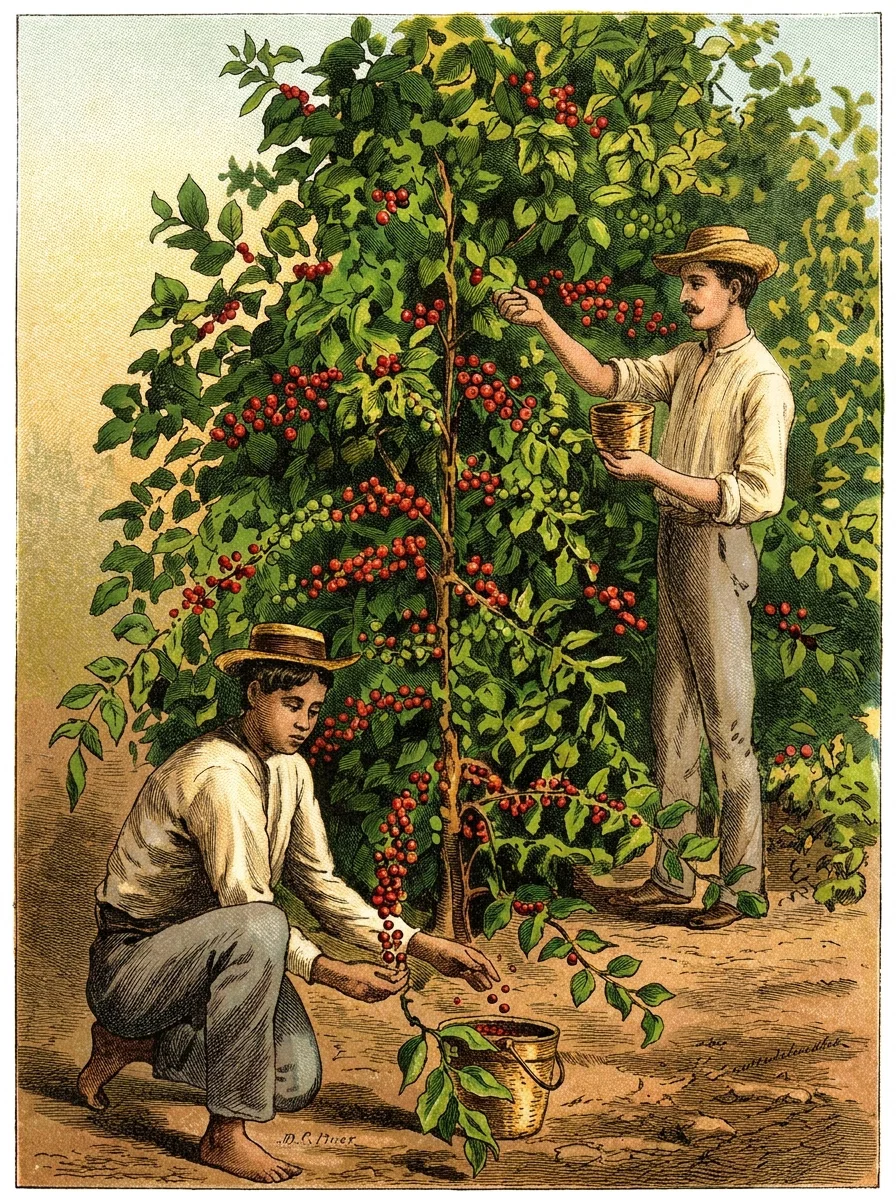
Picking coffee
The Tobacco Habit
Tobacco is a slow, insidious, but most malignant poison. In whatever form it is used, it tells upon the constitution; it is all the more dangerous because its effects are slow,328and at first hardly perceptible. It excites and then paralyzes the nerves. It weakens and clouds the brain. Often it affects the nerves in a more powerful manner than does intoxicating drink. It is more subtle, and its effects are difficult to eradicate from the system. Its use excites a thirst for strong drink, and in many cases lays the foundation for the liquor habit.
The use of tobacco is inconvenient, expensive, uncleanly, defiling to the user, and offensive to others. Its devotees are encountered everywhere. You rarely pass through a crowd but some smoker puffs his poisoned breath in your face. It is unpleasant and unhealthful to remain in a railway car or in a room where the atmosphere is laden with the fumes of liquor and tobacco. Though men persist in using these poisons themselves, what right have they to defile the air that others must breathe?
Ye are not your own, for ye are bought with a price; therefore glorify God in your body and in your spirit, which are God’s
Among children and youth the use of tobacco is working untold harm. The unhealthful practises of past generations affect the children and youth of to-day. Mental inability, physical weakness, disordered nerves, and unnatural cravings are transmitted as a legacy from parents to children. And the same practises, continued by the children, are increasing and perpetuating the evil results. To this cause329in no small degree is owing the physical, mental, and moral deterioration, which is becoming such a cause of alarm.
Boys begin the use of tobacco at a very early age. The habit thus formed, when body and mind are especially susceptible to its effects, undermines the physical strength, dwarfs the body, stupefies the mind, and corrupts the morals.
But what can be done to teach children and youth the evils of a practise of which parents, teachers, and ministers set them the example? Little boys, hardly emerged from babyhood, may be seen smoking their cigarettes. If one speaks to them about it, they say, “My father uses tobacco.” They point to the minister or the Sunday-school superintendent, and say, “Such a man smokes; what harm for me to do as he does?”
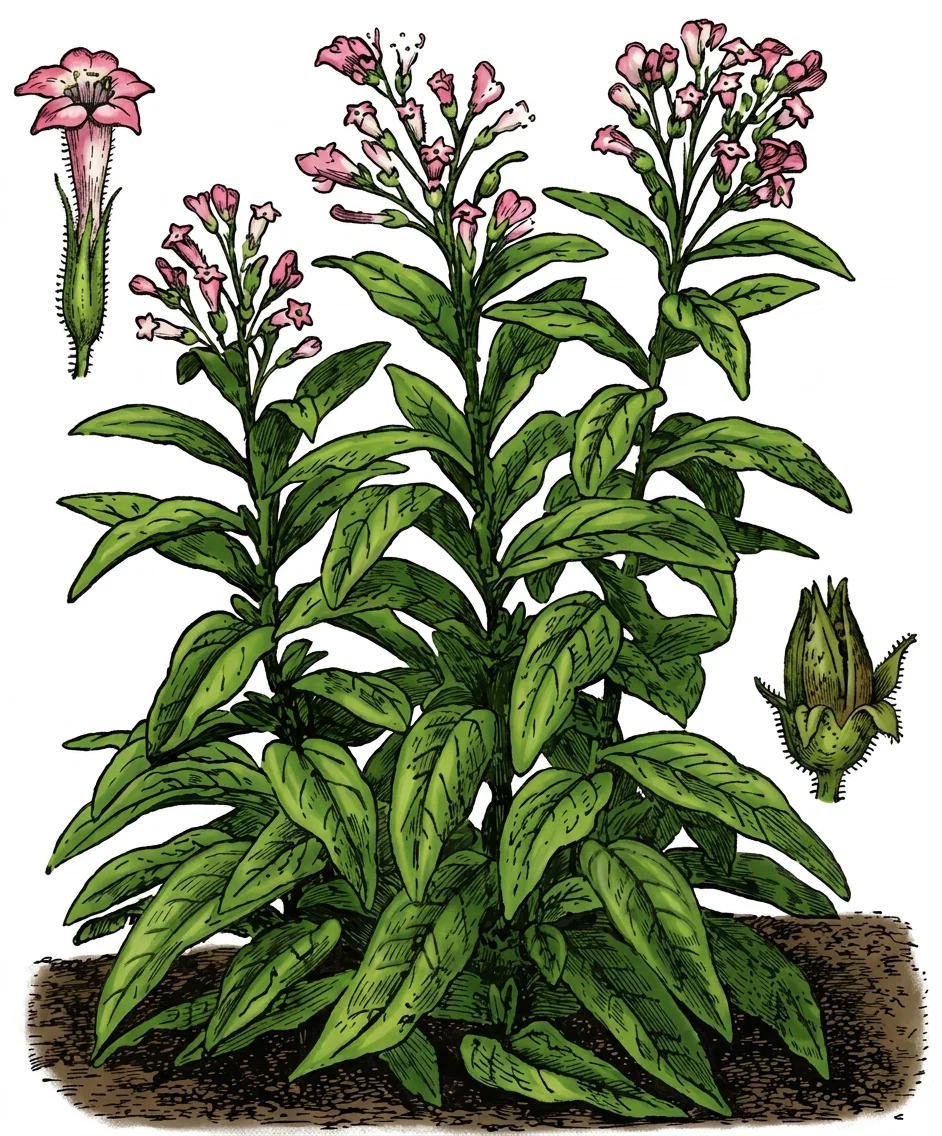
The Tobacco Plant
Many workers in the temperance cause are addicted to the use of tobacco. What power can such persons have to stay the progress of intemperance?
I appeal to those who profess to believe and obey the word of God: Can you as Christians indulge a habit that is paralyzing your intellect, and robbing you of power rightly to estimate eternal realities? Can you consent daily to rob God of service which is his due, and to rob your fellow men, both of service you might render and of the power of example?
Have you considered your responsibility as God’s stewards, for the means in your hands? How much of the Lord’s money do you spend for tobacco? Reckon up what you have thus spent during your lifetime. How does the amount consumed by this defiling lust compare with what you have given for the relief of the poor and the spread of the gospel?
No human being needs tobacco, but multitudes are perishing for want of the means that by its use is worse than wasted. Have you not been misappropriating the Lord’s goods? Have you not been guilty of robbery toward God and your fellow men? Know ye not that “ye are not your own? For ye are bought with a price; therefore glorify God in your body, and in your spirit, which are God’s.”
Intoxicating Drinks
“Wine is a mocker, strong drink is raging;
And whosoever is deceived thereby is not wise.”
“Who hath woe? who hath sorrow? who hath contentions? who hath babbling? who hath wounds without cause?
Who hath redness of eyes?
They that tarry long at the wine;
They that go to seek mixed wine;
Look not thou upon the wine when it is red,
When it giveth his color in the cup,
When it moveth itself aright.
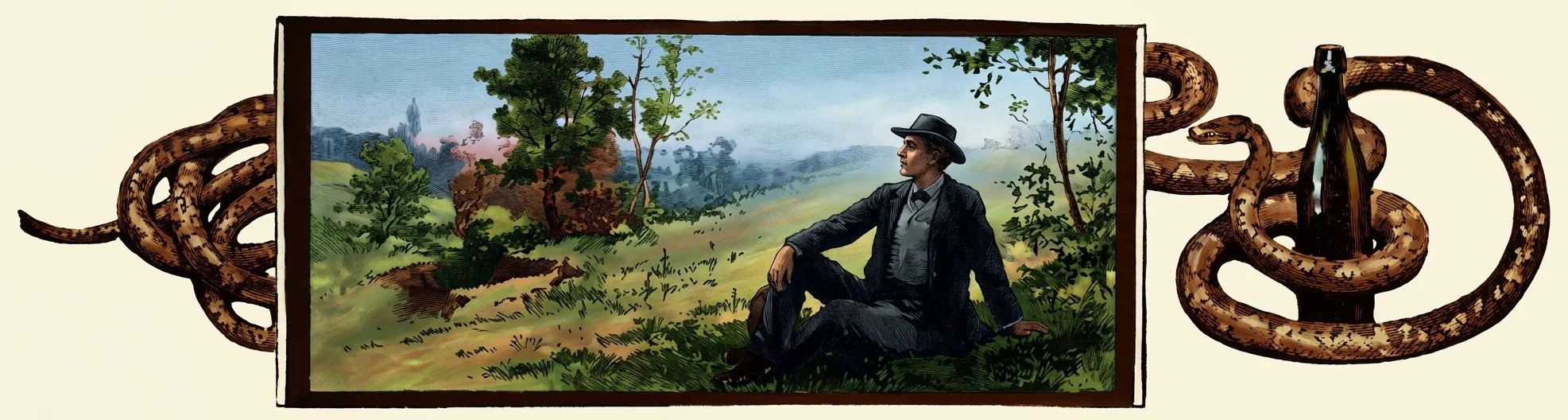
At the last it biteth like a serpent,
And stingeth like an adder.”
Never was traced by human hand a more vivid picture of the debasement and the slavery of the victim of intoxicating drink. Enthralled, degraded, even when awakened to a sense of his misery, he has no power to break from the snare; he “will seek it yet again.”
No argument is needed to show the evil effects of intoxicants on the drunkard. The bleared, besotted wrecks of humanity—souls for whom Christ died, and over whom angels weep—are everywhere. They are a blot on our boasted civilization. They are the shame and curse and peril of every land.
And who can picture the wretchedness, the agony, the despair, that are hidden in the drunkard’s home? Think of the wife, often delicately reared, sensitive, cultured, and refined, linked to one whom drink transforms into a sot or a demon. Think of the children, robbed of home comforts, education, and training, living in terror of him who should be their pride and protection, thrust into the world, bearing the brand of shame, often with the hereditary curse of the drunkard’s thirst.
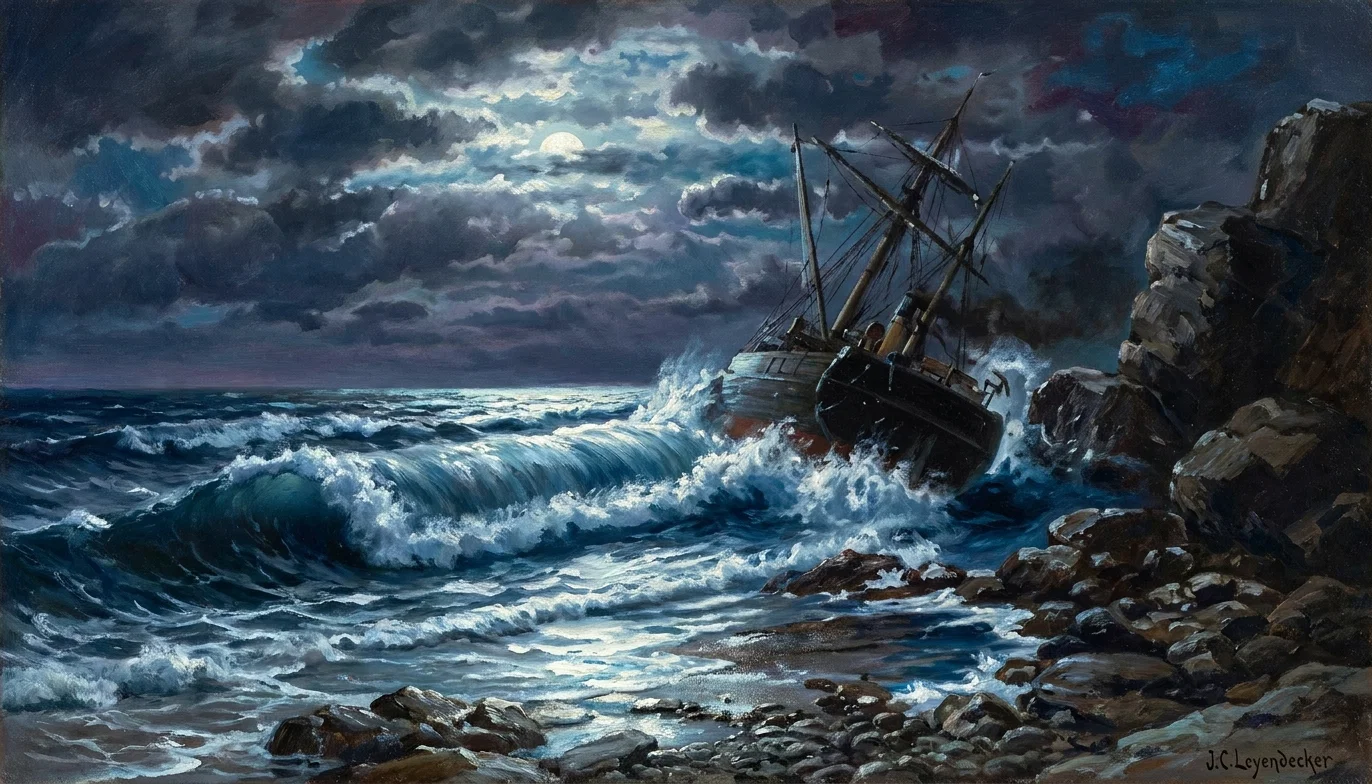
Wrecked
In 1902 and 1903 the total number of lives lost in marine disasters throughout the world was reported as 6,135; in railway accidents in the United States, 18,428.
Think of the frightful accidents that are every day occurring through the influence of drink. Some official on a railway train neglects to heed a signal, or misinterprets an order. On goes the train; there is a collision, and many lives are lost. Or a steamer is run aground, and passengers and crew find a watery grave. When the matter is investigated, it is found that some one at an important post was under the influence of drink. To what extent can one indulge the liquor habit and be safely trusted with the lives of human beings? He can be trusted only as he totally abstains.
The Milder Intoxicants
Persons who have inherited an appetite for unnatural stimulants should by no means have wine, beer, or cider in their sight, or within their reach; for this keeps the temptation constantly before them. Regarding sweet cider as harmless, many have no scruples in purchasing it freely. But it remains sweet for a short time only; then fermentation begins. The sharp taste which it then acquires makes it all the more acceptable to many palates, and the user is loath to admit that it has become hard, or fermented.
Dearly beloved, I beseech you as strangers and pilgrims, abstain from fleshly lusts, which war against the soul.
There is danger to health in the use of even sweet cider as ordinarily produced. If people could see what the microscope reveals in regard to the cider they buy, few would be willing to drink it. Often those who manufacture cider for the market are not careful as to the condition of the fruit used, and the juice of wormy and decayed apples is expressed. Those who would not think of using the poisonous, rotten apples in any other way, will drink the cider made from them, and call it a luxury; but the microscope shows that even when fresh from the press, this pleasant beverage is wholly unfit for use.
Intoxication is just as really produced by wine, beer, and cider, as by stronger drinks. The use of these drinks awakens the taste for those that are stronger, and thus the liquor habit is established. Moderate drinking is the school333in which men are educated for the drunkard’s career. Yet so insidious is the work of these milder stimulants that the highway to drunkenness is entered before the victim suspects his danger.
Some who are never considered really drunk, are always under the influence of mild intoxicants. They are feverish, unstable in mind, unbalanced. Imagining themselves secure, they go on and on, until every barrier is broken down, every principle sacrificed. The strongest resolutions are undermined, the highest considerations are not sufficient to keep the debased appetite under the control of reason.
The Bible nowhere sanctions the use of intoxicating wine. The wine that Christ made from water at the marriage feast of Cana was the pure juice of the grape. This is the “new wine found in the cluster,” of which the Scripture says, “Destroy it not; for a blessing is in it.”
It was Christ who, in the Old Testament, gave the warning to Israel, “Wine is a mocker, strong drink is raging; and whosoever is deceived thereby is not wise.” He Himself provided no such beverage. Satan tempts men to indulgence that will becloud reason and benumb the spiritual perceptions, but Christ teaches us to bring the lower nature into subjection. He never places before men that which would be a temptation. His whole life was an example of self-denial. It was to break the power of appetite that in the forty days’ fast in the wilderness He suffered in our behalf the severest test that humanity could endure. It was Christ who directed that John the Baptist should drink neither wine nor strong drink. It was He who enjoined similar abstinence upon the wife of Manoah. Christ did not contradict His own teaching. The unfermented wine that He provided for the wedding guests was a wholesome and refreshing drink. This is the wine that was used by our Saviour and His disciples in the first communion. It is the wine that should always be used on the communion table as a334symbol of the Saviour’s blood. The sacramental service is designed to be soul-refreshing and life-giving. There is to be connected with it nothing that could minister to evil.
In the light of what the Scriptures, nature, and reason teach concerning the use of intoxicants, how can Christians engage in the raising of hops for beer-making, or in the manufacture of wine or cider for the market? If they love their neighbor as themselves, how can they help to place in his way that which will be a snare to him?
Responsibility of Parents
Often intemperance begins in the home. By the use of rich, unhealthful food the digestive organs are weakened, and a desire is created for food that is still more stimulating. Thus the appetite is educated to crave continually something stronger. The demand for stimulants becomes more frequent and more difficult to resist. The system becomes more or less filled with poison, and the more debilitated it becomes, the greater is the desire for these things. One step in the wrong direction prepares the way for another. Many who would not be guilty of placing on their table wine or liquor of any kind will load their table with food which creates such a thirst for strong drink that to resist the temptation is almost impossible. Wrong habits of eating and drinking destroy the health and prepare the way for drunkenness.
There would soon be little necessity for temperance crusades, if in the youth who form and fashion society, right principles in regard to temperance could be implanted. Let parents begin a crusade against intemperance at their own firesides, in the principles they teach their children to follow from infancy, and they may hope for success.
There is work for mothers in helping their children to form correct habits and pure tastes. Educate the appetite; teach the children to abhor stimulants. Bring your children up to have moral stamina to resist the evil that surrounds them. Teach them that they are not to be swayed by others,335that they are not to yield to strong influences, but to influence others for good.
Personal Responsibility
Great efforts are made to put down intemperance; but there is much effort that is not directed to the right point. The advocates of temperance reform should be awake to the evils resulting from the use of unwholesome food, condiments, tea, and coffee. We bid all temperance workers Godspeed; but we invite them to look more deeply into the cause of the evil they war against, and to be sure that they are consistent in reform.
It must be kept before the people that the right balance of the mental and moral powers depends in a great degree on the right condition of the physical system. All narcotics and unnatural stimulants that enfeeble and degrade the physical nature tend to lower the tone of the intellect and morals. Intemperance lies at the foundation of the moral depravity of the world. By the indulgence of perverted appetite, man loses his power to resist temptation.
Temperance reformers have a work to do in educating the people in these lines. Teach them that health, character, and even life, are endangered by the use of stimulants, which excite the exhausted energies to unnatural, spasmodic action.
In relation to tea, coffee, tobacco, and alcoholic drinks, the only safe course is to touch not, taste not, handle not. The tendency of tea, coffee, and similar drinks is in the same direction as that of alcoholic liquor and tobacco, and in some cases the habit is as difficult to break as it is for the drunkard to give up intoxicants. Those who attempt to leave off these stimulants will for a time feel a loss, and will suffer without them. But by persistence they will overcome the craving, and cease to feel the lack. Nature may require a little time to recover from the abuse she has suffered; but give her a chance, and she will again rally, and perform her work nobly and well.
"Proclaim liberty to the captives, and the opening of the prison to them that are bound." "Let the oppressed go free.... Break every yoke."
The Liquor Traffic and Prohibition
“WOE UNTO HIM THAT GIVETH HIS NEIGHBOR DRINK, AND MAKEST HIM DRUNKEN.”
Woe unto him that buildeth his house by unrighteousness, and his chambers by wrong; . . . that saith, I will build me a wide house and large chambers, and cutteth him out windows; and it is ceiled with cedar, and painted with vermilion. Shalt thou reign, because thou closest thyself in cedar? . . . Thine eyes and thine heart are not but for thy covetousness, and for to shed innocent blood, and for oppression, and for violence, to do it.”
The Work of the Liquor-Seller
This scripture pictures the work of those who manufacture and who sell intoxicating liquor. Their business means robbery. For the money they receive, no equivalent is returned. Every dollar they add to their gains has brought a curse to the spender.
With a liberal hand, God has bestowed His blessings upon men. If His gifts were wisely used, how little the world would know of poverty or distress! It is the wickedness of men that turns His blessings into a curse. It is through the greed of gain and the lust of appetite that the grains and fruits given for our sustenance are converted into poisons that bring misery and ruin.
Every year millions upon millions of gallons of intoxicating liquors are consumed. Millions upon millions of dollars are spent in buying wretchedness, poverty, disease, degradation, lust, crime, and death. For the sake of gain, the liquor-seller deals out to his victims that which corrupts and destroys mind and body. He entails on the drunkard’s family poverty and wretchedness.
When his victim is dead, the rum-seller’s exactions do not cease. He robs the widow, and brings children to beggary. He does not hesitate to take the very necessaries of life from the destitute family, to pay the drink bill of the husband and father. The cries of the suffering children, the tears of the agonized mother, serve only to exasperate him. What is it to him if these suffering ones starve? What is it to him if they too are driven to degradation and ruin? He grows rich on the pittances of those whom he is leading to perdition.
Houses of prostitution, dens of vice, criminal courts, prisons, almshouses, insane asylums, hospitals, all are, to a great degree, filled as a result of the liquor-seller’s work. Like the mystic Babylon of the Apocalypse, he is dealing in “slaves and souls of men.” Behind the liquor-seller stands the mighty destroyer of souls, and every art which earth or hell can devise is employed to draw human beings under his power. In the city and the country, on the railway trains, on the great steamers, in places of business, in the halls of pleasure, in the medical dispensary, even in the church, on the sacred communion table, his traps are set. Nothing is left undone to create and to foster the desire for intoxicants. On almost every corner stands the public house, with its brilliant lights, its welcome and good cheer, inviting the working man, the wealthy idler, and the unsuspecting youth.
In private lunch-rooms and fashionable resorts, ladies are supplied with popular drinks, under some pleasing name, that are really intoxicants. For the sick and the exhausted, there339are the widely advertised “bitters,” consisting largely of alcohol.
To create the liquor appetite in little children, alcohol is introduced into confectionery. Such confectionery is sold in the shops. And by the gift of these candies the liquor-seller entices children into his resorts.
Day by day, month by month, year by year, the work goes on. Fathers and husbands and brothers, the stay and hope and pride of the nation, are steadily passing into the liquor-dealer’s haunts, to be sent back wrecked and ruined.
More terrible still, the curse is striking the very heart of the home. More and more, women are forming the liquor habit. In many a household, little children, even in the innocence and helplessness of babyhood, are in daily peril through the neglect, the abuse, the vileness of drunken mothers. Sons and daughters are growing up under the shadow of this terrible evil. What outlook for their future but that they will sink even lower than their parents?
From so-called Christian lands the curse is carried to the regions of idolatry. The poor, ignorant savages are taught the use of liquor. Even among the heathen, men of intelligence recognize and protest against it as a deadly poison; but in vain have they sought to protect their lands from its ravages. By civilized peoples, tobacco, liquor, and opium are forced upon the heathen nations. The ungoverned passions of the savage, stimulated by drink, drag him down to degradation before unknown, and it becomes an almost hopeless undertaking to send missionaries to these lands.
Through their contact with peoples who should have given them a knowledge of God, the heathen are led into vices which are proving the destruction of whole tribes and races. And in the dark places of the earth the men of civilized nations are hated because of this.
The Responsibility of the Church
The liquor interest is a power in the world. It has on its side the combined strength of money, habit, appetite. Its power is felt even in the church. Men whose money has been made, directly or indirectly, in the liquor traffic, are members of churches, “in good and regular standing.” Many of them give liberally to popular charities. Their contributions help to support the enterprises of the church and to sustain its ministers. They command the consideration shown to the money power. Churches that accept such members are virtually sustaining the liquor traffic. Too often the minister has not the courage to stand for the right. He does not declare to his people what God has said concerning the work of the liquorseller. To speak plainly would mean the offending of his congregation, the sacrifice of his popularity, the loss of his salary.
Every church should be a temperance hall
Every church should be a temperance hall
But above the tribunal of the church is the tribunal of God. He who declared to the first murderer, “The voice of thy brother’s blood crieth unto Me from the ground,” will not accept for His altar the gifts of the liquor-dealer. His anger is kindled against those who attempt to cover their guilt with a cloak of liberality. Their money is stained with blood. A curse is upon it.
I hate robbery for burnt offering.
“To what purpose is the multitude of your sacrifices unto Me? saith the Lord:
When ye come to appear before Me,
Who hath required this at your hand, to tread My courts?
Bring no more vain oblations. . . .
When ye spread forth your hands,
I will hide Mine eyes from you:
Yea, when ye make many prayers, I will not hear:
Your hands are full of blood!”
The drunkard is capable of better things. He has been entrusted with talents with which to honor God and bless the world; but his fellow men have laid a snare for his soul, and built themselves up by his degradation. They have lived in luxury, while the poor victims whom they have robbed, lived in poverty and wretchedness. But God will require for this at the hand of him who has helped to speed the drunkard on to ruin. He who rules in the heavens has not lost sight of the first cause or the last effect of drunkenness. He who has a care for the sparrow and clothes the grass of the field, will not pass by those who have been formed in His own image, purchased with His own blood, and pay no heed to their cries. God marks all this wickedness that perpetuates crime and misery.
The world and the church may have approval for the man who has gained wealth by degrading the human soul. They may smile upon him by whom men are led down step by step in the path of shame and degradation. But God notes it all, and renders a just judgment. The liquor-seller may be termed by the world a good business man; but the Lord says, “Woe unto him.” He will be charged with the hopelessness, the misery, the suffering, brought into the world342by the liquor traffic. He will have to answer for the want and woe of the mothers and children who have suffered for food and clothing and shelter, and who have buried all hope and joy. He will have to answer for the souls he has sent unprepared into eternity. And those who sustain the liquor-seller in his work are sharers in his guilt. To them God says, “Your hands are full of blood.”