“Not by works of righteousness which we have done, but according to His mercy He saved us”
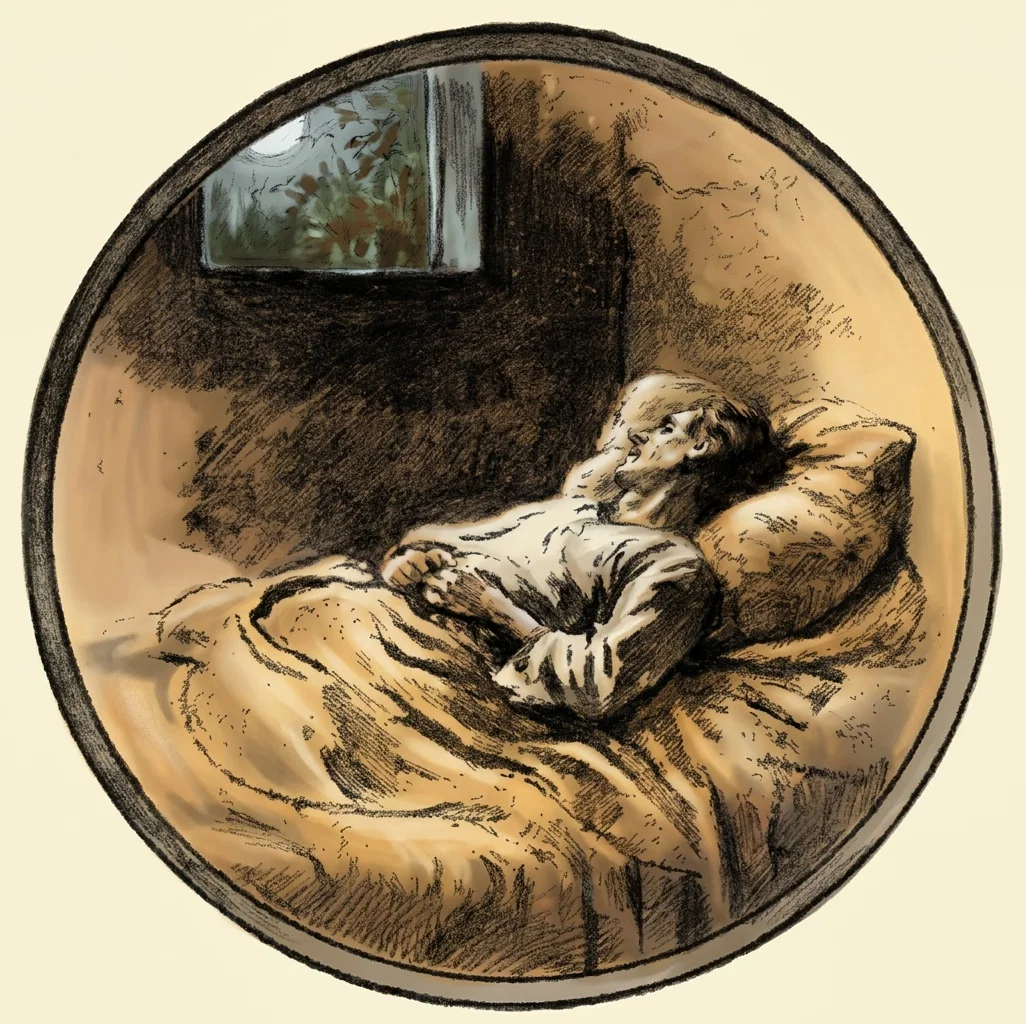
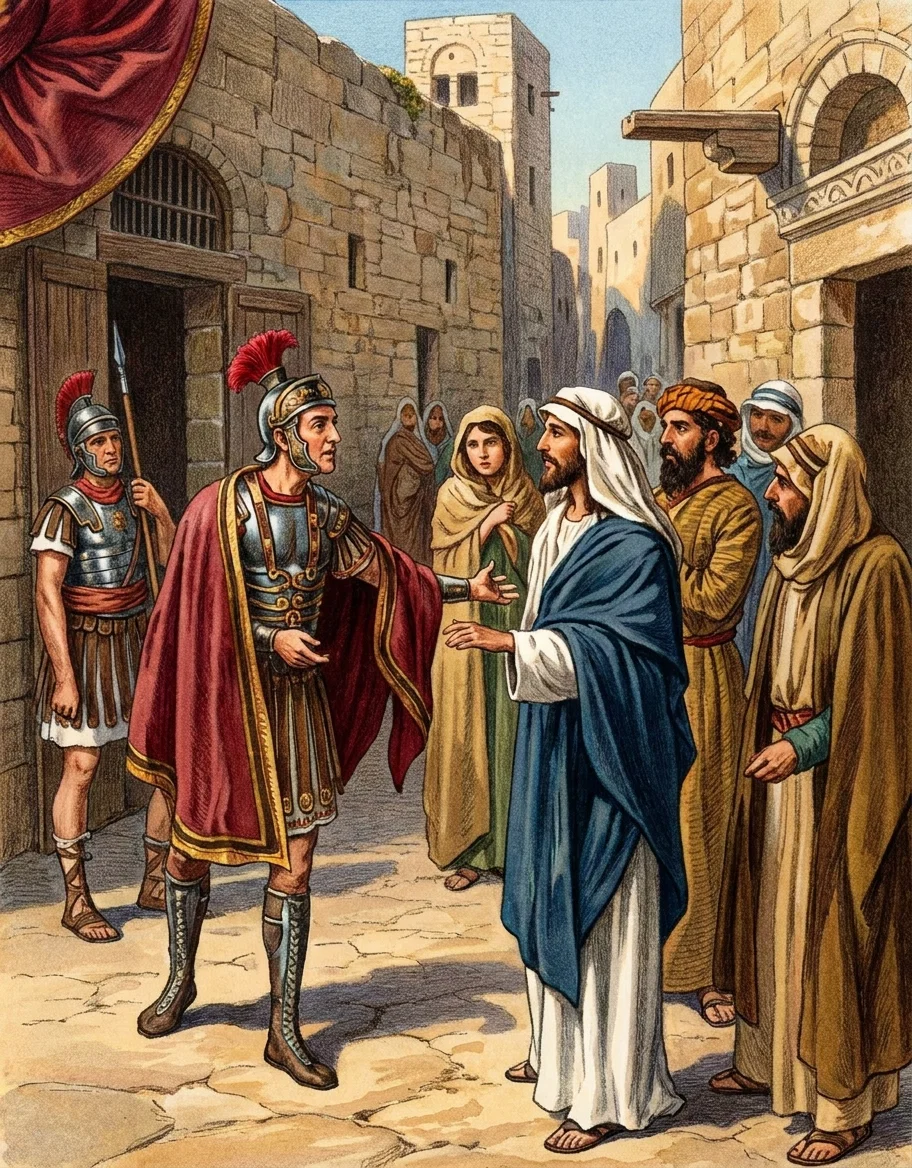
A centurion’s servant was lying sick of the palsy. Among the Romans the servants were slaves, bought and sold in the market-places, and often treated with abuse and cruelty; but the centurion was tenderly attached to his servant, and greatly desired his recovery. He believed that Jesus could heal him. He had not seen the Saviour, but the reports he had heard inspired him with faith. Notwithstanding the formalism of the Jews, this Roman was convinced that their religion was superior to his own. Already he had broken through the barriers of national prejudice and hatred that separated the conquerors from the conquered people. He had manifested respect for the service of God, and had shown kindness to the Jews as His worshipers. In the teaching of Christ, as it had been reported to him, he found that which met the need of the soul. All that was spiritual within him responded to the Saviour’s words. But he thought himself unworthy to approach Jesus, and he appealed to the Jewish elders to make request for his servant’s healing.
The elders present the case to Jesus, urging that “he was worthy for whom He should do this; for he loveth our nation, and he hath built us a synagogue.”
But on the way to the centurion’s home, Jesus receives a message from the officer himself, “Lord, trouble not Thyself; for I am not worthy that Thou shouldst enter under my roof.”
Still the Saviour keeps on His way, and the centurion comes in person to complete the message, saying, “Neither thought I myself worthy to come unto Thee” “but speak64the word only, and my servant shall be healed. For I am a man under authority, having soldiers under me: and I say to this man, Go, and he goeth; and to another, Come, and he cometh; and to my servant, Do this, and he doeth it.”
“A centurion’s servant was lying sick with the palsy.”
“I represent the power of Rome, and my soldiers recognize my authority as supreme. So dost Thou represent the power of the infinite God, and all created things obey Thy word. Thou canst command the disease to depart, and it shall obey Thee. Speak but the word, and my servant shall be healed.”
“Speak the word only, and my servant shall be healed.”
“As thou hast believed,” Christ said, “so be it done unto thee. And his servant was healed in the selfsame hour.”
The Jewish elders had commended the centurion to Christ because of the favor he had shown to “our nation.” “He is worthy,” they said, “for he hath built us a synagogue.” But the centurion said of himself, “I am not worthy.” Yet he did not fear to ask help from Jesus. Not to his own goodness did he trust, but to the Saviour’s mercy. His only argument was his great need.
If thou
canst believe
all things are
possible to
him that
believeth
In the same way every human being can come to Christ. “Not by works of righteousness which we have done, but according to His mercy He saved us.” Do you feel that because you are a sinner, you can not hope to receive blessing from God? Remember that Christ came into the world to save sinners. We have nothing to recommend us to God; the plea that we may urge now and ever is our utterly helpless condition, which makes His redeeming power a necessity. Renouncing all self-dependence, we may look to the cross of Calvary and say,—
“In my hand no price I bring;
Simply to Thy cross I cling.”
“If thou canst believe, all things are possible to him that believeth.” It is faith that connects us with heaven, and brings us strength for coping with the powers of darkness. In Christ, God has provided means for subduing every evil66trait, and resisting every temptation, however strong. But many feel that they lack faith, and therefore they remain away from Christ. Let these souls, in their helpless unworthiness, cast themselves upon the mercy of their compassionate Saviour. Look not to self, but to Christ. He who healed the sick and cast out demons when He walked among men, is still the same mighty Redeemer. Then grasp His promises as leaves from the tree of life: “Him that cometh to Me I will in nowise cast out.” As you come to Him, believe that He accepts you, because He has promised. You can never perish while you do this—never.
“God commendeth His love toward us, in that, while we were yet sinners, Christ died for us.”
And “if God be for us, who can be against us? He that spared not His own Son, but delivered Him up for us all, how shall He not with Him also freely give us all things?”
“I am persuaded, that neither death, nor life, nor angels, nor principalities, nor things present, nor things to come, nor powers, nor height, nor depth, nor any other creation, shall be able to separate us from the love of God, which is in Christ Jesus our Lord.”
“Lord, if Thou wilt, Thou canst make me clean”
Of all the diseases known in the East the leprosy was most dreaded. Its incurable and contagious character, and its horrible effect upon its victims, filled the bravest with fear. Among the Jews it was regarded as a judgment on account of sin, and hence was called “the stroke,” “the finger of God.” Deep-rooted, ineradicable, deadly, it was looked upon as a symbol of sin.
By the ritual law the leper was pronounced unclean. Whatever he touched was unclean. The air was polluted by his breath. Like one already dead, he was shut out from the habitations of men. One who was suspected of having the disease must present himself to the priests, who were to examine and decide his case. If pronounced a leper, he was isolated from his family, cut off from the congregation of Israel, and doomed to associate with those only who were similarly afflicted. Even kings and rulers were not exempt. A monarch attacked by this terrible disease must yield up the scepter, and flee from society.
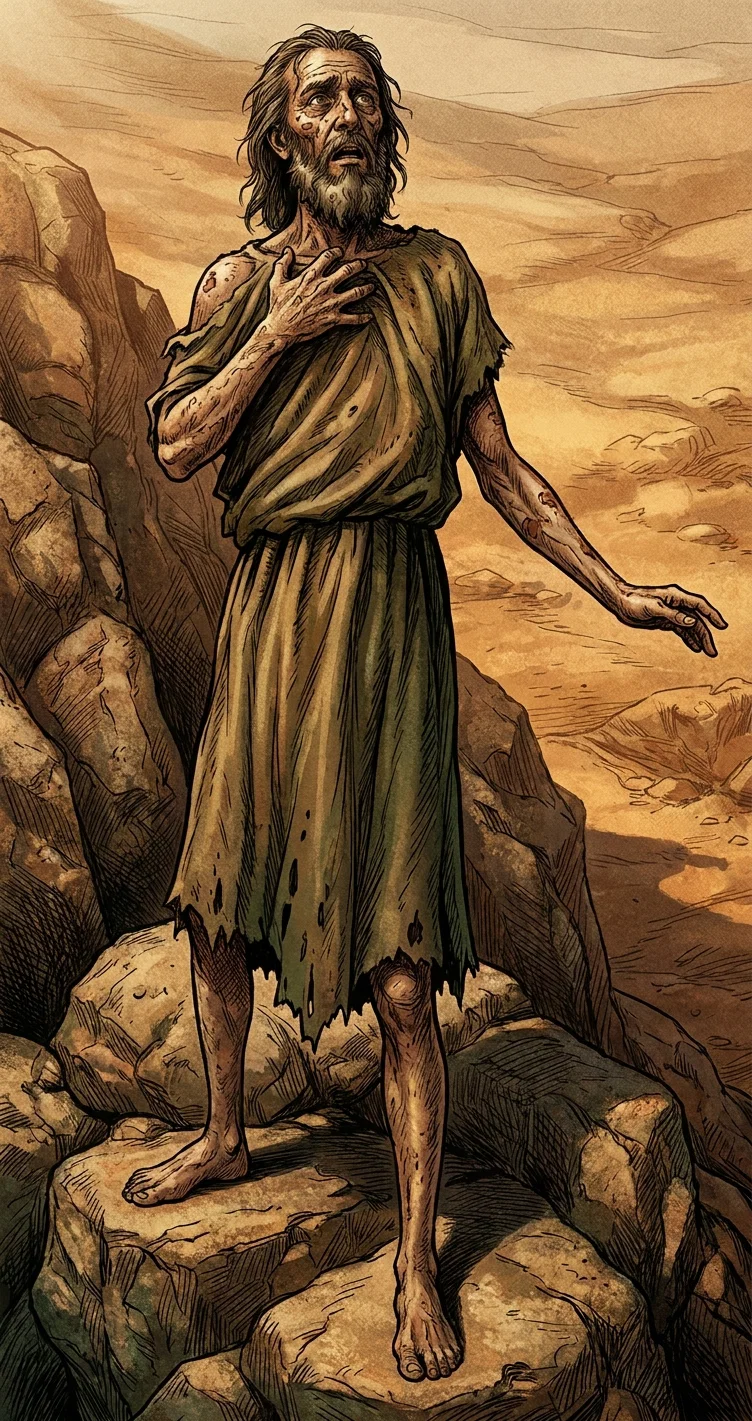
“The cry, ‘Unclean! unclean!’ . . . was a signal heard with fear and abhorrence.”
Away from his friends and his kindred, the leper must bear the curse of his malady. He was obliged to publish his own calamity, to rend his garments, and sound the alarm, warning all to flee from his contaminating presence. The cry, “Unclean! unclean!” coming in mournful tones from the lonely exile, was a signal heard with fear and abhorrence.
In the region of Christ’s ministry were many of these sufferers, and as the news of His work reached them, there is one in whose heart faith begins to spring up. If he could go to Jesus, he might be healed. But how can he find Jesus?
Doomed as he is to perpetual isolation, how can he present himself to the Healer? And will Christ heal him? Will He not, like the Pharisees, and even the physicians, pronounce a curse upon him, and warn him to flee from the haunts of men?
“At sight of him the people fall back.”
He thinks of all that has been told him of Jesus. Not one who has sought His help has been turned away. The wretched man determines to find the Saviour. Though shut out from the cities, it may be that he can cross His path in some byway along the mountain roads, or find Him as He is teaching outside the towns. The difficulties are great, but this is his only hope.
Standing afar off, the leper catches a few words from the Saviour’s lips. He sees Him laying His hands upon the sick. He sees the lame, the blind, the paralytic, and those dying of various maladies, rise up in health, praising God for deliverance. His faith strengthens. Nearer and yet nearer he approaches to the listening throng. The restrictions laid upon him, the safety of the people, the fear with which all69men regard him, are alike forgotten. He thinks only of the blessed hope of healing.
He is a loathsome spectacle. The disease has made frightful inroads, and his decaying body is horrible to look upon. At sight of him the people fall back. In their terror they crowd upon one another to escape from contact with him. Some try to prevent him from approaching Jesus, but in vain. He neither sees nor hears them. Their expressions of loathing are lost upon him. He sees only the Son of God, he hears only the voice that speaks life to the dying.
Pressing to Jesus, he casts himself at His feet with the cry, “Lord, if Thou wilt, Thou canst make me clean.”
Jesus replies, “I will; be thou clean,” and lays His hand upon him.
Immediately a change passes over the leper. His blood becomes healthy, the nerves sensitive, the muscles firm. The unnaturally white, scaly surface peculiar to leprosy disappears; and his flesh becomes as the flesh of a little child.
Should the priests learn the facts concerning the healing of the leper, their hatred of Christ might lead them to render a dishonest sentence. Jesus desired that an impartial decision be secured. He therefore bids the man tell no one of the cure, but without delay present himself at the temple with an offering before any rumors concerning the miracle should be spread abroad.
Before the priests could accept such an offering, they were required to examine the offerer and certify his complete recovery.
This examination was made. The priests who had condemned the leper to banishment testified to his cure. The healed man was restored to his home and society. He felt that the boon of health was very precious. He rejoiced in the vigor of manhood, and in his restoration to his family.70Notwithstanding the caution of Jesus, he could no longer conceal the fact of his cure, and joyfully he went about proclaiming the power of the One who had made him whole.
When this man came to Jesus, he was “full of leprosy.” Its deadly poison permeated his whole body. The disciples sought to prevent their Master from touching him; for he who touched a leper became himself unclean. But in laying His hand upon the leper, Jesus received no defilement. The leprosy was cleansed. Thus it is with the leprosy of sin,—deep-rooted, deadly, impossible to be cleansed by human power. “The whole head is sick, and the whole heart faint. From the sole of the foot even unto the head there is no soundness in it; but wounds, and bruises, and putrefying sores.” But Jesus, coming to dwell in humanity, receives no pollution. His presence was healing virtue for the sinner. Whoever will fall at His feet, saying in faith, “Lord, if Thou wilt, Thou canst make me clean,” shall hear the answer, “I will; be thou clean.”
In some instances of healing, Jesus did not at once grant the blessing sought. But in the case of leprosy, no sooner was the appeal made than it was granted. When we pray for earthly blessings, the answer to our prayer may be delayed, or God may give us something other than we ask; but not so when we ask for deliverance from sin. It is His will to cleanse us from sin, to make us His children, and to enable us to live a holy life. Christ “gave Himself for our sins, that He might deliver us from this present evil world, according to the will of God and our Father.” And “this is the confidence that we have in Him, that, if we ask anything according to His will, He heareth us: and if we know that He hear us, whatsoever we ask, we know that we have the petitions that we desired of Him.”
“Ye shall find rest”
Jesus looked upon the distressed and heart-burdened, those whose hopes were blighted, and who with earthly joys were seeking to quiet the longing of the soul and He invited all to find rest in Him.
Tenderly He bade the toiling people, “Take My yoke upon you, and learn of Me; for I am meek and lowly in heart: and ye shall find rest unto your souls.”
In these words, Christ was speaking to every human being. Whether they know it or not, all are weary and heavy laden. All are weighed down with burdens that only Christ can remove. The heaviest burden that we bear is the burden of sin. If we were left to bear this burden, it would crush us. But the sinless One has taken our place. “The Lord hath laid on Him the iniquity of us all.”
He has borne the burden of our guilt. He will take the load from our weary shoulders. He will give us rest. The burden of care and sorrow also He will bear. He invites us to cast all our care upon Him; for He carries us upon His heart.
The Elder Brother of our race is by the eternal throne. He looks upon every soul who is turning his face toward Him as the Saviour. He knows by experience what are the weaknesses of humanity, what are our wants, and where lies the strength of our temptations; for He was “in all points tempted like as we are, yet without sin.” He is watching over you, trembling child of God. Are you tempted? He will deliver. Are you weak? He will strengthen. Are you ignorant? He will enlighten. Are you wounded? He will heal. The Lord “telleth the number of the stars;” and yet “He healeth the broken in heart, and bindeth up their wounds.”
Whatever your anxieties and trials, spread out your case before the Lord. Your spirit will be braced for endurance. The way will be open for you to disentangle yourself from embarrassment and difficulty. The weaker and more helpless you know yourself to be, the stronger will you become in His strength. The heavier your burdens, the more blessed the rest in casting them upon your Burden-bearer.
Circumstances may separate friends; the restless waters of the wide sea may roll between us and them. But no circumstances, no distance, can separate us from the Saviour. Wherever we may be, He is at our right hand, to support, maintain, uphold, and cheer. Greater than the love of a mother for her child, is Christ’s love for His redeemed. It is our privilege to rest in His love; to say, “I will trust Him; for He gave His life for me.”
Human love may change; but Christ’s love knows no change. When we cry to Him for help, His hand is stretched out to save.
“The mountains may depart,
And the hills be removed;
But My loving-kindness shall not depart from thee,
Neither shall My covenant of peace be removed,
Saith Jehovah that hath mercy on thee.”
Healing of the Soul
“THAT YE MAY KNOW THAT THE SON OF MAN HATH POWER ON EARTH TO FORGIVE SINS.”
Many of those who came to Christ for help had brought disease upon themselves; yet He did not refuse to heal them. And when virtue from Him entered into these souls, they were convicted of sin, and many were healed of their spiritual disease as well as of their physical maladies.
Among these was the paralytic at Capernaum. Like the leper, this paralytic had lost all hope of recovery. His disease was the result of a sinful life, and his sufferings were embittered by remorse. In vain he had appealed to the Pharisees and doctors for relief; they pronounced him incurable, they denounced him as a sinner, and declared that he would die under the wrath of God.
The palsied man had sunk into despair. Then he heard of the works of Jesus. Others, as sinful and helpless as he, had been healed, and he was encouraged to believe that he too might be cured if he could be carried to the Saviour. But hope fell as he remembered the cause of his malady, yet he could not cast away the possibility of healing.74His great desire was relief from the burden of sin. He longed to see Jesus, and receive the assurance of forgiveness and peace with heaven. Then he would be content to live or to die, according to God’s will.
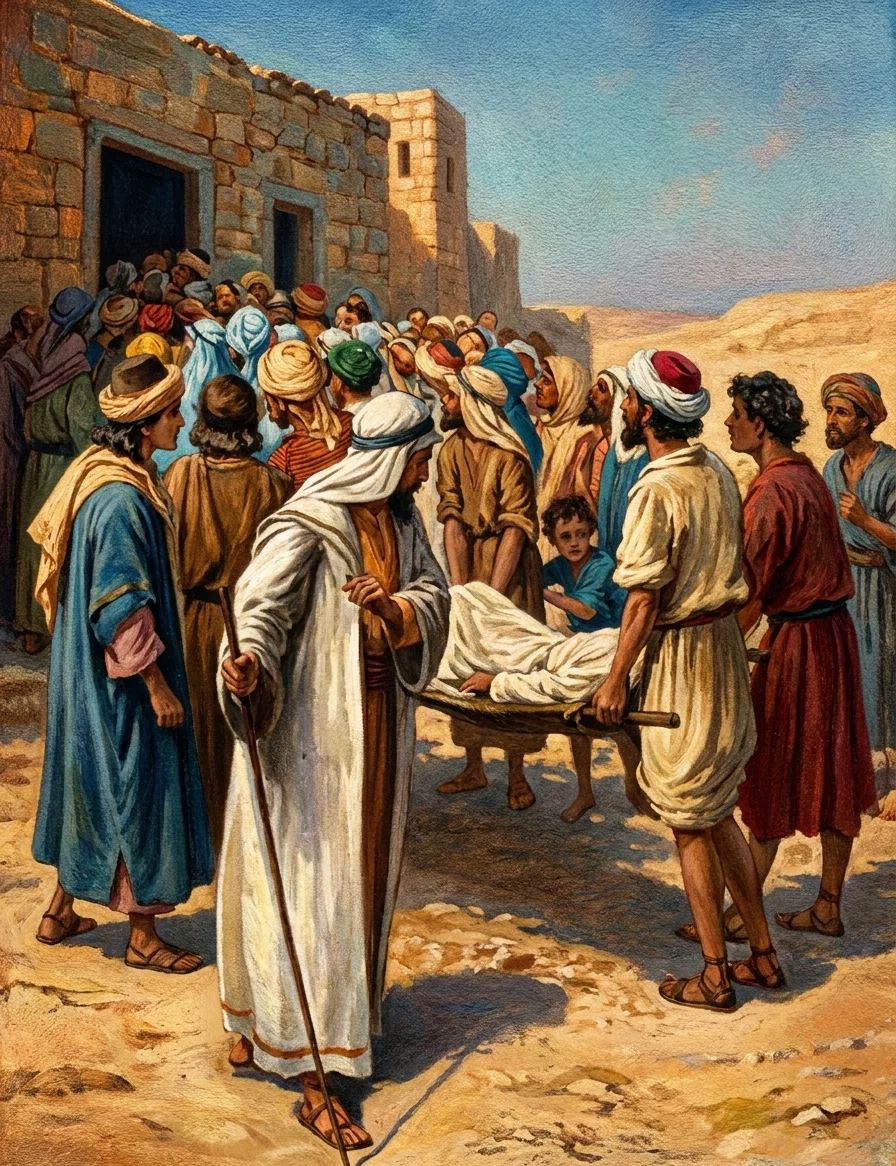
“Again and again the bearers of the paralytic tried to push their way through the crowd.”
There was no time to lose; already his wasted flesh bore signs of death. He besought his friends to carry him on his bed to Jesus, and this they gladly undertook to do. But so dense was the crowd that had assembled in and about the house where the Saviour was,75that it was impossible for the sick man and his friends to reach Him, or even to come within hearing of His voice. Jesus was teaching in the home of Peter. According to their custom, His disciples sat close about Him, and “there were Pharisees and doctors of the law sitting by, who were come out of every village of Galilee and Judea and Jerusalem.” Many of these had come as spies, seeking an accusation against Jesus. Beyond these thronged the promiscuous multitude, the eager, the reverent, the curious, and the unbelieving. Different nationalities, and all grades of society were represented. “And the power of the Lord was present to heal.” The Spirit of life brooded over the assembly, but Pharisees and doctors did not discern His presence. They felt no sense of need, and the healing was not for them. “He hath filled the hungry with good things; and the rich He hath sent empty away.”
Again and again the bearers of the paralytic tried to push their way through the crowd, but in vain. The sick man looked about him in unutterable anguish. How could he relinquish hope, when the longed-for help was so near? At his suggestion his friends bore him to the top of the house, and breaking up the roof, let him down at the feet of Jesus.
The discourse was interrupted. The Saviour looked upon the mournful countenance, and saw the pleading eyes fixed upon Him. Well He knew the longing of that burdened soul. It was Christ who had brought conviction to his conscience when he was yet at home. When he repented of his sins, and believed in the power of Jesus to make him whole, the mercy of the Saviour had blessed his heart. Jesus had watched the first glimmer of faith grow into a conviction that He was the sinner’s only helper, and had seen it grow stronger with every effort to come into His presence. It was Christ who had drawn the sufferer to Himself. Now, in76words that fell like music on the listener’s ear, the Saviour said, “Son, be of good cheer; thy sins be forgiven thee.”
The burden of guilt rolls from the sick man’s soul. He can not doubt. Christ’s words reveal His power to read the heart. Who can deny His power to forgive sins? Hope takes the place of despair, and joy of oppressive gloom. The man’s physical pain is gone, and his whole being is transformed. Making no further request, he lay in peaceful silence, too happy for words.
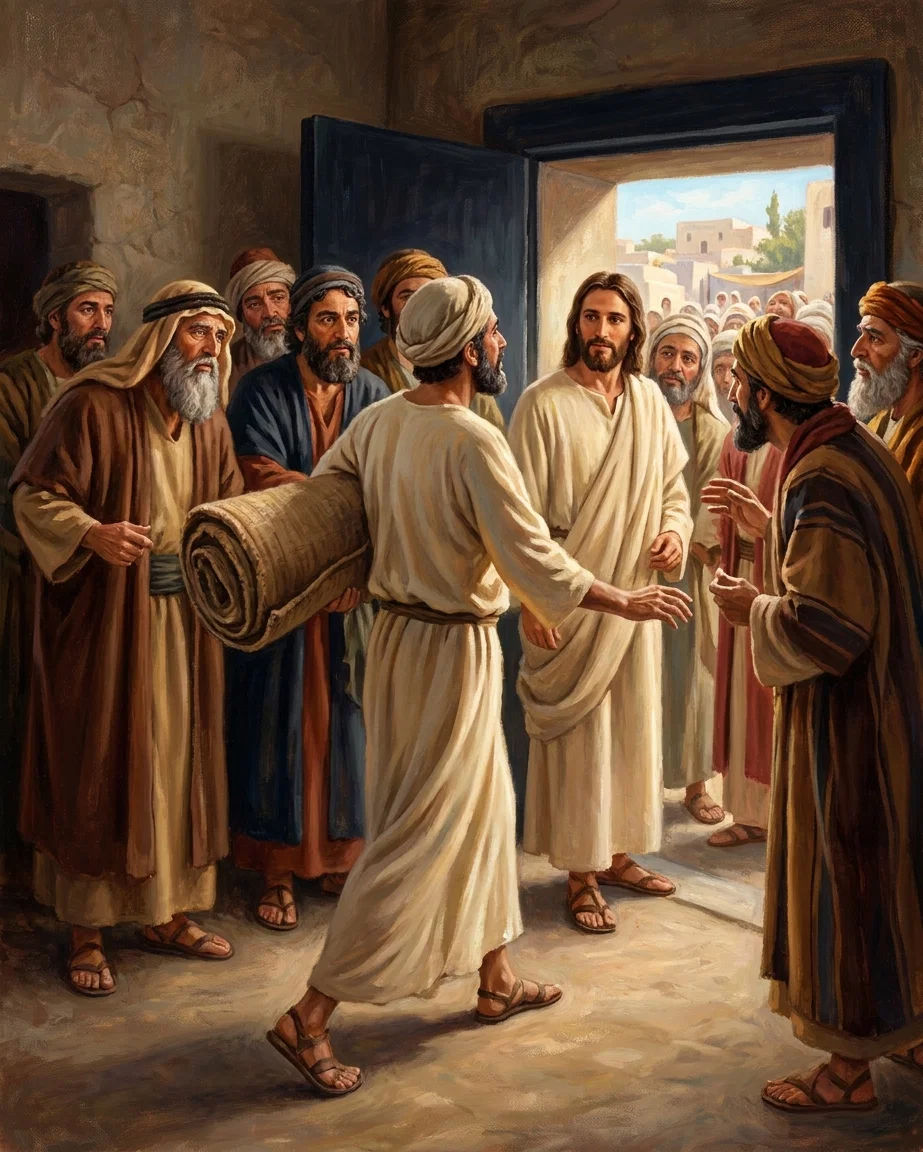
“And immediately he ‘took up the bed, and went forth before them all.’”
Many were watching with breathless interest every movement in this strange transaction. Many felt that Christ’s words were an invitation to them. Were they not soul-sick because of sin? Were they not anxious to be freed from this burden?
But the Pharisees, fearful of losing their influence with the multitude, said in their hearts, “He blasphemeth; who can forgive sins but One, even God?”
Fixing His glance upon them, beneath which they cowered, and drew back, Jesus said, “Wherefore think ye evil in77your hearts? For whether is it easier to say, Thy sins be forgiven thee; or to say, Arise, and walk? But that ye may know that the Son of man hath power on earth to forgive sins,” He said, turning to the paralytic, “Arise, take up thy bed, and go unto thine house.”
Then he who had been borne on a litter to Jesus rose to his feet with the elasticity and strength of youth. And immediately he “took up the bed, and went forth before them all; insomuch that they were all amazed, and glorified God, saying, We never saw it on this fashion.”
It required nothing less than creative power to restore health to that decaying body. The same voice that spoke life to man created from the dust of the earth, had spoken life to the dying paralytic. And the same power that gave life to the body, had renewed the heart: He who at creation “spake, and it was,” who “commanded, and it stood fast,” had spoken life to the soul dead in trespasses and sins. The healing of the body was an evidence of the power that had renewed the heart. Christ bade the paralytic arise and walk, “that ye may know,” He said, “that the Son of man hath power on earth to forgive sins.”
The paralytic found in Christ healing for both the soul and the body. He needed health of soul before he could appreciate health of body. Before the physical malady could be healed, Christ must bring relief to the mind, and cleanse the soul from sin. This lesson should not be overlooked. There are to-day thousands suffering from physical disease, who, like the paralytic, are longing for the message, “Thy sins are forgiven.” The burden of sin, with its unrest and unsatisfied desires, is the foundation of their maladies. They can find no relief until they come to the Healer of the soul. The peace which He alone can impart, would restore vigor to the mind, and health to the body.
The effect produced upon the people by the healing of the paralytic was as if heaven had opened, and revealed the glories of the better world. As the man who had been cured, passed through the throng, blessing God at every step, and79bearing his burden as if it were a feather’s weight, the people fell back to give him room, and with awestricken faces gazed upon him, whispering softly among themselves, “We have seen strange things to-day.”
“In the home of the paralytic there was a great rejoicing
In the home of the paralytic there was great rejoicing when he returned to his family, carrying with ease the couch upon which he had been slowly borne from their presence but a short time before. They gathered round with tears of joy, hardly daring to believe their eyes. He stood before them in the full vigor of manhood. Those arms that they had seen lifeless were quick to obey his will. The flesh that had been shrunken and leaden-hued was now fresh and ruddy. He walked with a firm, free step. Joy and hope were written in every lineament of his countenance; and an expression of purity and peace had taken the place of the marks of sin and suffering. Glad thanksgiving went up from that home, and God was glorified through His Son, who had restored hope to the hopeless, and strength to the stricken one. This man and his family were ready to lay down their lives for Jesus. No doubt dimmed their faith, no unbelief marred their fealty to Him who had brought light into their darkened home.
“Bless the Lord, O my soul:
And all that is within me, bless His holy name.
Bless the Lord, O my soul,
And forget not all His benefits:
Who forgiveth all thine iniquities;
Who healeth all thy diseases;
Who redeemeth thy life from destruction; . . .
So that thy youth is renewed like the eagle’s.
The Lord executeth righteousness
And judgment for all that are oppressed. . . .
He hath not dealt with us after our sins;
Nor rewarded us according to our iniquities. . . .
Like as a father pitieth his children,
So the Lord pitieth them that fear Him.
For He knoweth our frame;
He remembereth that we are dust.”
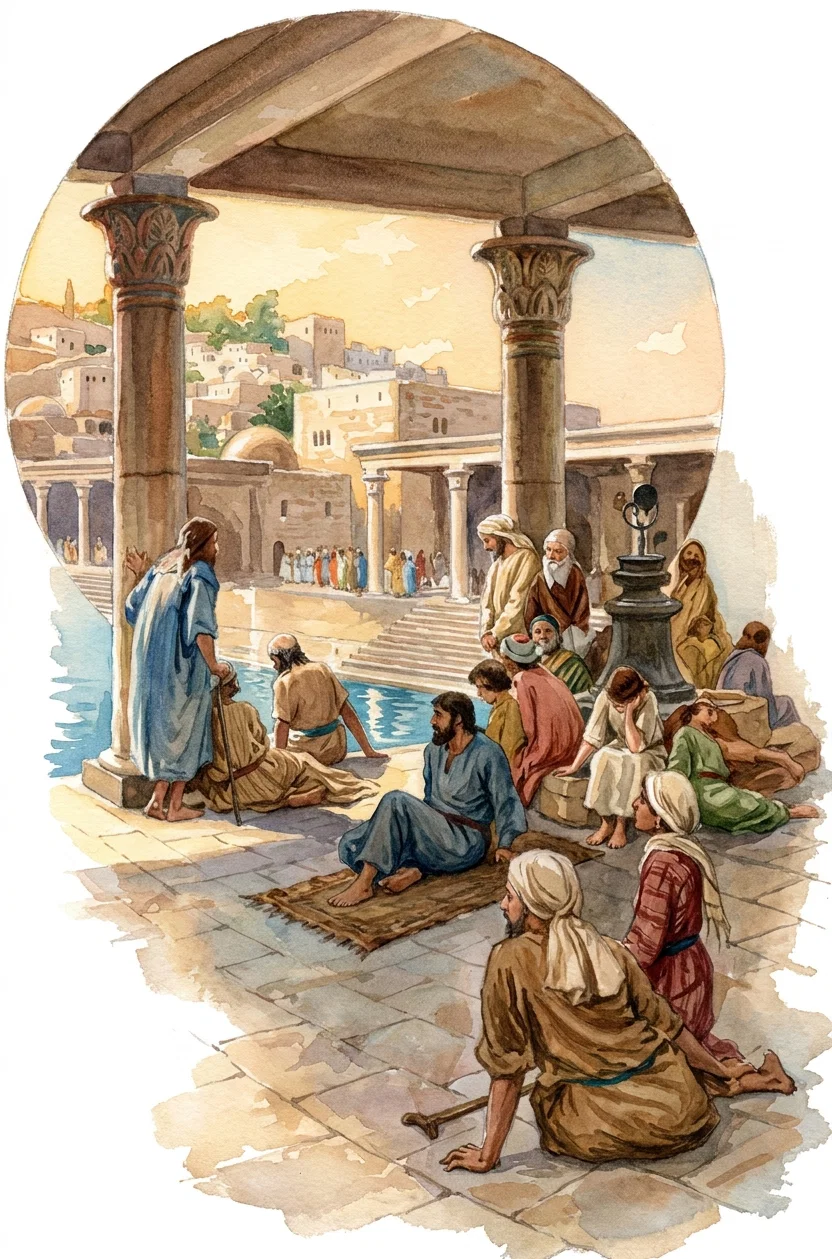
“In these lay a multitude of impotent folk; . . . waiting for the moving of the water.”