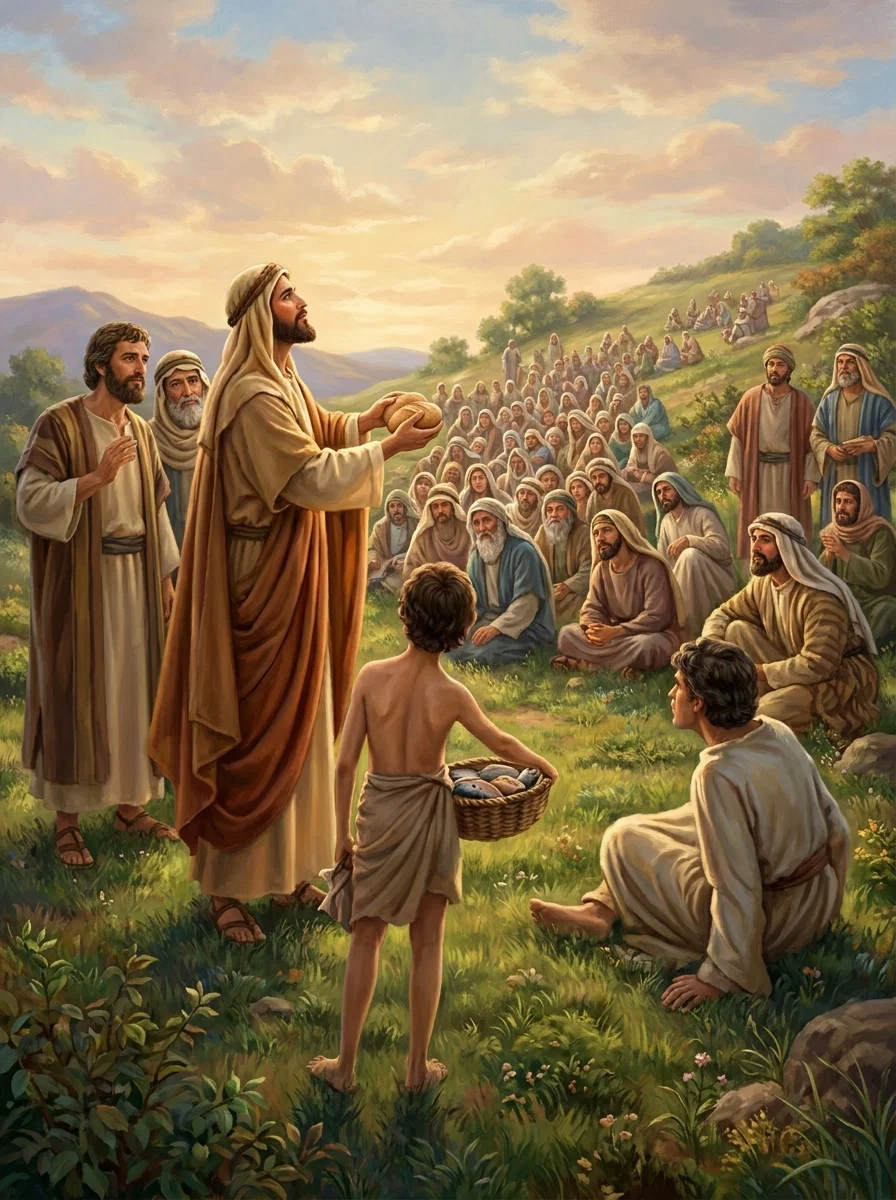
Placed in the hands of Christ, the five small barley loaves sufficed to feed the multitude.
All day the people had thronged the steps of Christ and His disciples as He taught beside the sea. They had listened to His gracious words, so simple and so plain that they were as the balm of Gilead to their souls. The healing of His divine hand had brought health to the sick, and life to the dying. The day had seemed to them like heaven on earth, and they were unconscious of how long it had been since they had eaten anything.
The sun was sinking in the west, and yet the people lingered. Finally the disciples came to Christ, urging that for their own sake the multitude should be sent away. Many had come from far, and had eaten nothing since morning. In the surrounding towns and villages they might be able to obtain food. But Jesus said, “Give ye them to eat.” Then, turning to Philip, He questioned, “Whence shall we buy bread, that these may eat?”
Philip looked over the sea of heads, and thought how impossible it would be to provide food for so great a company. He answered that two hundred pennyworth of bread would not be enough to divide among them, so that each might have a little.
Jesus inquired how much food could be found among the company. “There is a lad here,” said Andrew; “which hath five barley loaves and two small fishes; but what are they among so many?” Jesus directed that these be brought to Him. Then He bade the disciples seat the people on the grass. When this was accomplished, He46took the food, “and looking up to heaven, He blessed, and brake, and gave the loaves to His disciples, and the disciples to the multitude. And they did all eat, and47were filled: and they took up of the fragments that remained twelve baskets full.”
He blessed, and brake, and gave the loaves . . . to the multitude.
It was by a miracle of divine power that Christ fed the multitude; yet how humble was the fare provided,—only the fishes and barley loaves that were the daily fare of the fisherfolk of Galilee.
Christ could have spread for the people a rich repast, but food prepared merely for the gratification of appetite would have conveyed no lesson for their good. Through this miracle Christ desired to teach a lesson of simplicity. If men to-day were simple in their habits, living in harmony with nature’s laws, as did Adam and Eve in the beginning, there would be an abundant supply for the needs of the human family. But selfishness and the indulgence of appetite have brought sin and misery, from excess on the one hand, and from want on the other.
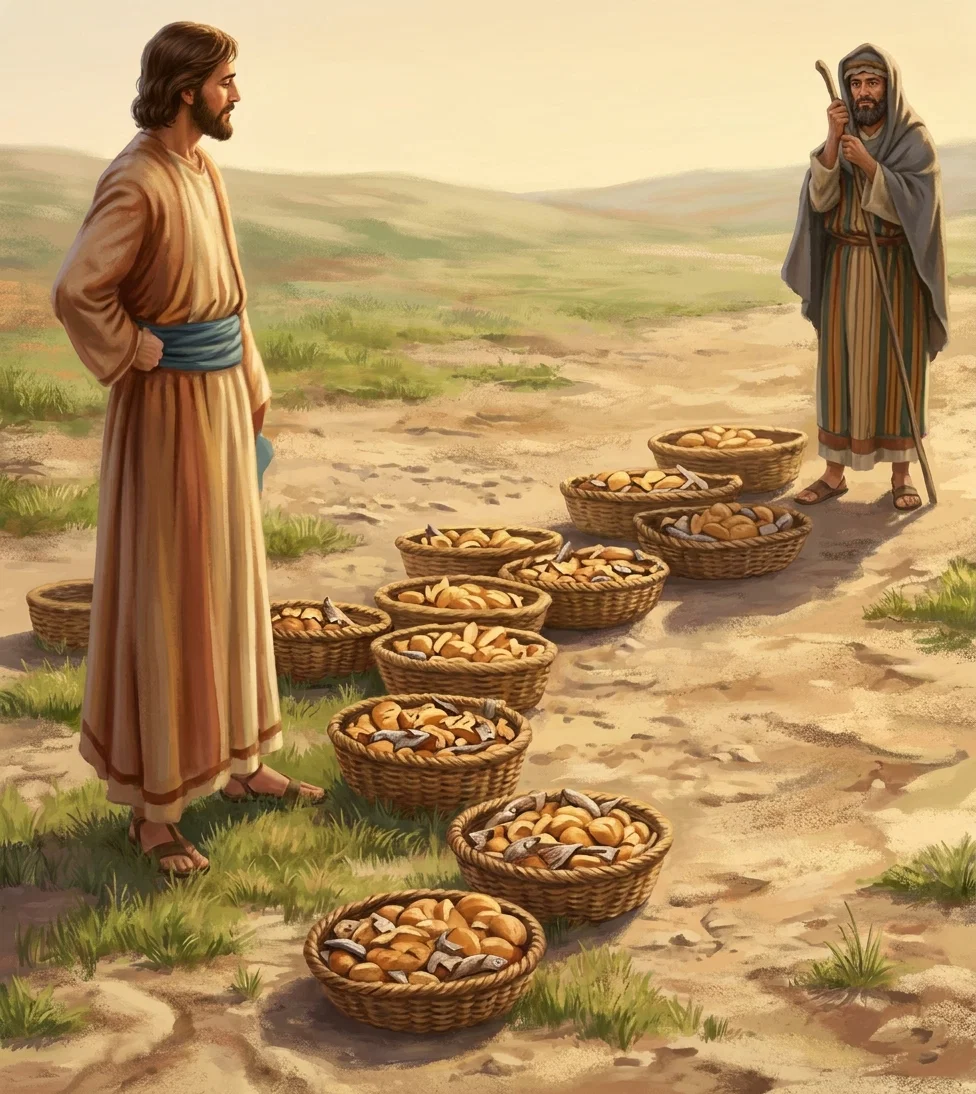
“They took up of the fragments that remained twelve baskets full.”
“They took up of the fragments that remained twelve baskets full.”
Jesus did not seek to attract the people to Him by gratifying the desire for luxury. To that great throng, weary and hungry after the long, exciting day, the simple fare was an assurance both of His power and of His tender care for them in the common needs of life. The Saviour has not promised His followers the luxuries of the world; their48lot may be shut in by poverty; but His word is pledged that their need shall be supplied, and He has promised that which is better than earthly good,—the abiding comfort of His own presence.
After the multitude had been fed, there was an abundance of food left. Jesus bade His disciples, “Gather up the fragments that remain, that nothing be lost.” These words meant more than putting the food into baskets. The lesson was twofold. Nothing is to be wasted. We are to let slip no temporal advantage. We should neglect nothing that would serve to benefit a human being. Let everything be gathered up that will relieve the necessities of earth’s hungry ones. With the same carefulness are we to treasure the bread from heaven to satisfy the needs of the soul. By every word of God we are to live. Nothing that God has spoken is to be lost. Not one word that concerns our eternal salvation are we to neglect. Not one word is to fall useless to the ground.
The miracle of the loaves teaches dependence upon God. When Christ fed the five thousand, the food was not nigh at hand. Apparently He had no means at His command. There He was, with five thousand men, besides women and children, in the wilderness. He had not invited the multitude to follow Him thither. Eager to be in His presence, they had come without invitation or command; but He knew that after listening all day to His instruction they were hungry and faint. They were far from home, and the night was at hand. Many of them were without means to purchase food. He who for their sake had fasted forty days in the wilderness, would not suffer them to return fasting to their homes.
The providence of God had placed Jesus where He was; and He depended on His heavenly Father for means49to relieve the necessity. When we are brought into strait places, we are to depend on God. In every emergency we are to seek help from Him who has infinite resources at His command.
In this miracle, Christ received from the Father; He imparted to the disciples, the disciples to the people, and the people to one another. So all who are united to Christ will receive from Him the bread of life, and impart it to others. His disciples are the appointed means of communication between Christ and the people.
When the disciples heard the Saviour’s direction, “Give ye them to eat,” all the difficulties arose in their minds. They questioned, “Shall we go into the villages to buy food?” But what said Christ?—“Give ye them to eat.” The disciples brought to Jesus all they had; but He did not invite them to eat. He bade them serve the people. The food multiplied in His hands, and the hands of the disciples, reaching out to Christ, were never unfilled. The little store was sufficient for all. When the multitude had been fed, the disciples ate with Jesus of the precious, heaven-supplied food.
As we see the necessities of the poor, the ignorant, the afflicted, how often our hearts sink. We question, “What avail our feeble strength and slender resources to supply this terrible necessity? Shall we not wait for some one of greater ability to direct the work, or for some organization to undertake it?” Christ says, “Give ye them to eat.” Use the means, the time, the ability, you have. Bring your barley loaves to Jesus.
Though your resources may not be sufficient to feed thousands, they may suffice to feed one. In the hand of Christ they may feed many. Like the disciples, give what you have. Christ will multiply the gift. He will reward50honest, simple reliance upon Him. That which seemed but a meager supply will prove to be a rich feast.
“He that soweth sparingly shall reap also sparingly; and he that soweth with blessings shall reap also with blessings. . . . God is able to make all grace abound unto you; that ye, having always all sufficiency in everything, may abound unto every good work: as it is written,—
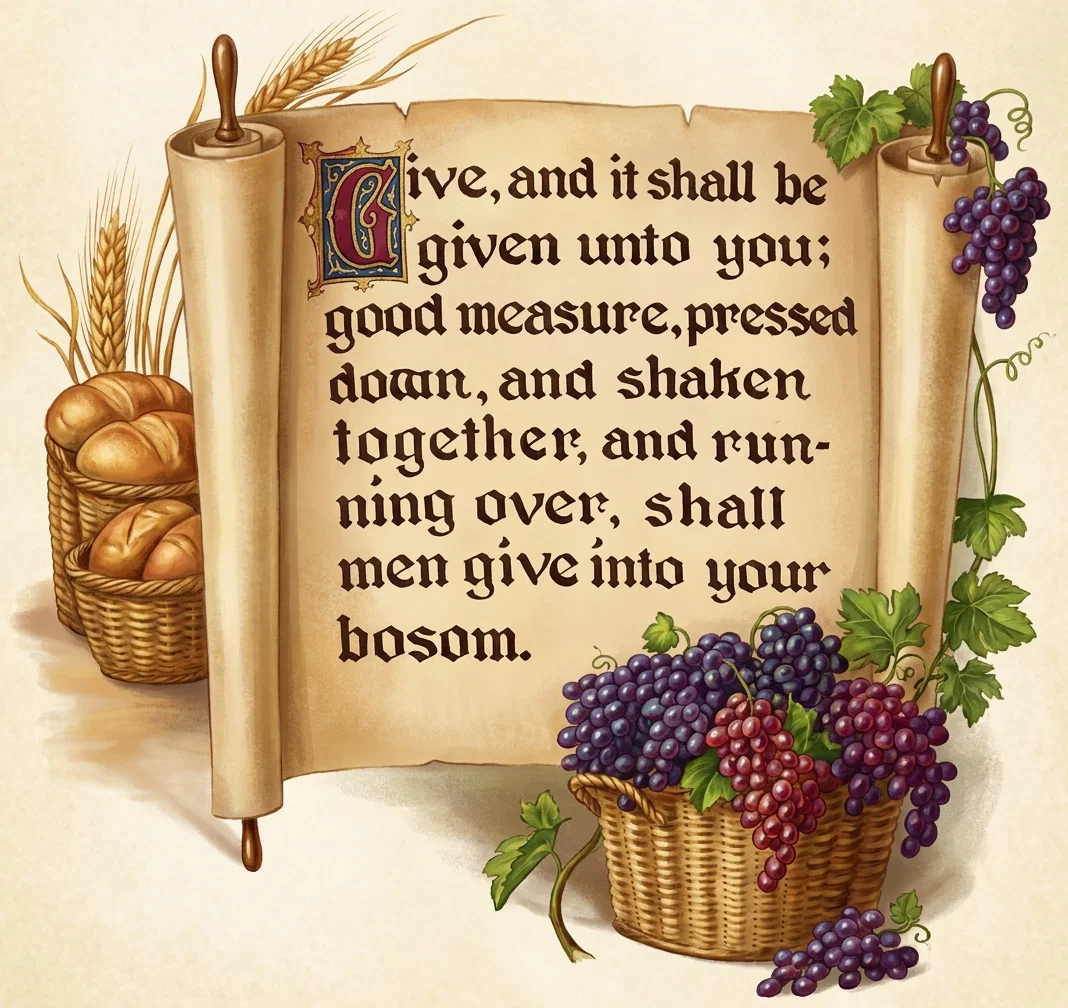
Give, and it shall be given unto you; good measure, pressed down, and shaken together, and running over, shall men give into your bosom.
“He hath scattered abroad, He hath given to the poor; His righteousness abideth forever.”
“And He that supplieth seed to the sower and bread for food, shall supply and multiply your seed for sowing, and increase the fruits of your righteousness; ye being enriched in everything unto all liberality.”
With Nature and with God
In the green valleys, in the forest, on the mountainside, Jesus held communion with His Father in heaven.
With Nature and with God
The Saviour’s life on earth was a life of communion with nature and with God. In this communion He revealed for us the secret of a life of power.
Jesus was an earnest, constant worker. Never lived there among men another so weighted with responsibilities. Never another carried so heavy a burden of the world’s sorrow and sin. Never another toiled with such self-consuming zeal for the good of men. Yet His was a life of health. Physically as well as spiritually He was represented by the sacrificial lamb, “without blemish and without spot.” In body as in soul He was an example of what God designed all humanity to be through obedience to His laws.
As the people looked upon Jesus, they saw a face in which divine compassion was blended with conscious power. He seemed to be surrounded with an atmosphere of spiritual life. While His manners were gentle and unassuming, He impressed men with a sense of power that was hidden, yet could not be wholly concealed.
During His ministry He was continually pursued by crafty and hypocritical men who were seeking His life.52Spies were on His track, watching His words, to find some occasion against Him. The keenest and most highly cultured minds of the nation sought to defeat Him in controversy. But never could they gain an advantage. They had to retire from the field, confounded and put to shame by the lowly Teacher from Galilee. Christ’s teaching had a freshness and a power such as men had never before known. Even His enemies were forced to confess, “Never man spake like this man.”
The childhood of Jesus, spent in poverty, had been uncorrupted by the artificial habits of a corrupt age. Working at the carpenter’s bench, bearing the burdens of home life, learning the lessons of obedience and toil, He found recreation amidst the scenes of nature, gathering knowledge as He sought to understand nature’s mysteries. He studied the word of God, and His hours of greatest happiness were found when He could turn aside from the scene of His labors to go into the fields, to meditate in the quiet valleys, to hold communion with God on the mountainside, or amid the trees of the forest. The early morning often found Him in some secluded place, meditating, searching the Scriptures, or in prayer. With the voice of singing He welcomed the morning light. With songs of thanksgiving He cheered His hours of labor, and brought heaven’s gladness to the toil-worn and disheartened.
During His ministry Jesus lived to a great degree an outdoor life. His journeys from place to place were made on foot, and much of His teaching was given in the open air. In training His disciples He often withdrew from the confusion of the city to the quiet of the fields, as more in harmony with the lessons of simplicity, faith, and self-abnegation He desired to teach them. It was beneath the sheltering trees of the mountainside, but a little distance from53the sea of Galilee, that the twelve were called to the apostolate, and the sermon on the mount was given.
“With the voice of singing He welcomed the morning light.”
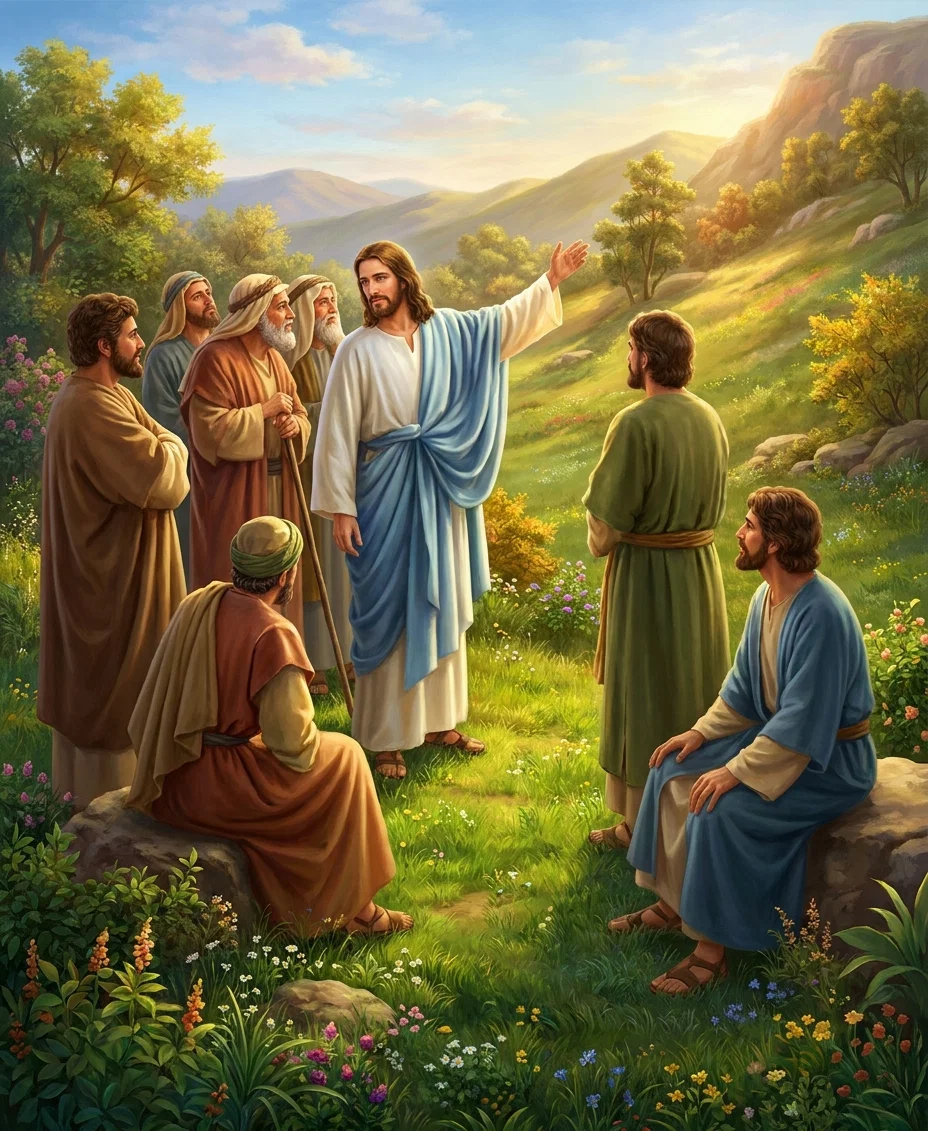
Christ loved to gather the people about Him under the blue heavens, on some grassy hillside, or on the beach beside the lake. Here, surrounded by the works of His own creation, He could turn their thoughts from the artificial to the natural. In the growth and development of nature were revealed the principles of His kingdom. As men should lift their eyes to the hills of God, and behold the wonderful works of His hand, they could learn precious lessons of divine truth. In future days the lessons of the divine Teacher would thus be repeated to them by the things of nature. The mind would be uplifted and the heart would find rest.
" The lessons of the divine Teacher would be repeated to them by the things of nature."
The disciples who were associated with Him in His work, Jesus often released for a season, that they might visit their homes and rest; but in vain were their efforts to draw Him away from His labors. All day He ministered to the throngs that came to Him, and at eventide, or in the early morning, He went away to the sanctuary of the mountains for communion with His Father.
Often His incessant labor and the conflict with the enmity and false teaching of the rabbis, left Him so utterly wearied that His mother and brothers, and even His disciples, feared that His life would be sacrificed. But as He returned from the hours of prayer that closed the toilsome day, they56marked the look of peace upon His face, the freshness and life and power that seemed to pervade His whole being. From hours spent alone with God He came forth, morning by morning, to bring the light of heaven to men.
“As He returned from the hours of prayer, . . . they marked the look of peace upon His face.”
A Season of Rest
It was just after the return from their first missionary tour that Jesus bade His disciples, Come apart, and rest a while. The disciples had returned, filled with the joy of their success as heralds of the gospel, when the tidings reached them of the death of John the Baptist at the hand of Herod. It was a bitter sorrow and disappointment. Jesus knew that in leaving the Baptist to die in prison He had severely tested the disciples’ faith. With pitying tenderness He looked upon their sorrowful, tear-stained faces. Tears were in His own eyes and voice as He said, “Come ye yourselves apart into a desert place, and rest awhile.”
Near Bethsaida, at the northern end of the sea of Galilee, was a lonely region, beautiful with the fresh green of spring, that offered a welcome retreat to Jesus and His disciples. For this place they set out, going in their boat across the lake. Here they could rest, apart from the confusion of the multitude. Here the disciples could listen to the words of Christ, undisturbed by the retorts and accusations of the Pharisees. Here they hoped to enjoy a short season of fellowship in the society of their Lord.
Only a short time did Jesus have alone with His beloved ones, but how precious to them were those few moments. They talked together regarding the work of the gospel and the possibility of making their labor more effective in reaching the people. As Jesus opened to them the treasures of truth, they were vitalized by divine power, and inspired with hope and courage.
But soon He was again sought for by the multitude. Supposing that He had gone to His usual place of retirement, the people followed Him thither. His hope to gain even one hour of rest was frustrated. But in the depths of His pure, compassionate heart, the good Shepherd of the sheep had only love and pity for these restless, thirsting souls. All day He ministered to their needs, and at evening dismissed them to go to their homes and rest.
“Going in their boat across the lake.”
In a life wholly devoted to the good of others, the Saviour found it necessary to turn aside from ceaseless activity and contact with human needs, to seek retirement and unbroken communion with His Father. As the throng that had followed Him depart, He goes into the mountains, and there, alone with God, pours out His soul in prayer for these suffering, sinful, needy ones.
When Jesus said to His disciples that the harvest was great, and the laborers were few, He did not urge upon them the necessity of ceaseless toil, but bade them, “Pray ye therefore the Lord of the harvest, that He would send forth laborers into His harvest.” To His toil-worn workers to-day as really as to His first disciples He speaks these words of compassion, “Come ye yourselves apart . . . and rest awhile.”
All who are under the training of God need the quiet hour for communion with their own hearts, with nature, and with God. In them is to be revealed a life that is not in harmony with the world, its customs, or its practises; and they need to have a personal experience in obtaining a knowledge of the will of God. We must individually hear Him speaking to the heart. When every other voice is hushed, and in quietness we wait before Him, the silence of the soul makes more distinct the voice of God. He bids us, “Be still, and know that I am God.” This is the effectual preparation for all labor for God. Amidst the hurrying throng, and the strain of life’s intense activities, he who is thus refreshed, will be surrounded with an atmosphere of light and peace. He will receive a new endowment of both physical and mental strength. His life will breathe out a fragrance, and will reveal a divine power that will reach men’s hearts.
The Touch of Faith
FAITH IS THE HAND THAT TOUCHES INFINITY
IF I may but touch His garment, I shall be whole.” It was a poor woman who spoke these words,—a woman who for twelve years had suffered from a disease that made her life a burden. She had spent all her means upon physicians and remedies, only to be pronounced incurable. But as she heard of the great Healer, her hopes revived. She thought, “If only I could get near enough to speak to Him, I might be healed.”
Christ was on His way to the home of Jairus, the Jewish rabbi who had entreated Him to come and heal his daughter. The heart-broken petition, “My little daughter lieth at the point of death: I pray Thee, come and lay Thy hands on her, that she may be healed,” had touched the tender, sympathetic heart of Christ, and He at once set out with the ruler for his home.
They advanced but slowly; for the crowd pressed Christ on every side. In making His way through the multitude, the Saviour came near to where the afflicted woman was standing. Again and again she had tried in vain to get near Him. Now her opportunity had come. She could60see no way of speaking to Him. She would not seek to hinder His slow advance. But she had heard that healing came from a touch of His garments; and fearful of losing her one chance for relief, she pressed forward, saying to herself, “If I may but touch His garment, I shall be whole.”
Christ knew every thought of her mind, and He was making His way to where she stood. He realized her great need, and He was helping her to exercise faith.
As He was passing, she reached forward, and succeeded in barely touching the border of His garment. That moment she knew that she was healed. In that one touch was concentrated the faith of her life, and instantly her pain and feebleness disappeared. Instantly she felt the thrill as of an electric current passing through every fibre of her being. There came over her a sensation of perfect health. “She felt in her body that she was healed of that plague.”
The grateful woman desired to express her thanks to the mighty Healer, who had done more for her in one touch than the physicians had done in twelve long years; but she dared not. With a grateful heart she tried to withdraw from the crowd. Suddenly Jesus stopped, and looking round He asked, “Who touched Me?”
Looking at Him in amazement, Peter answered, “Master, the multitude throng Thee and press Thee, and sayest Thou, Who touched Me?”
“Somebody hath touched Me,” Jesus said; “for I perceive that virtue is gone out of Me.” He could distinguish the touch of faith from the casual touch of the careless throng. Some one had touched Him with a deep purpose, and had received answer.
Christ did not ask the question for His own information. He had a lesson for the people, for His disciples, and for the woman. He wished to inspire the afflicted with hope. He61wished to show that it was faith which had brought the healing power. The woman’s trust must not be passed by without comment. God must be glorified by her grateful confession. Christ desired her to understand that He approved her act of faith. He would not have her depart with a half blessing only. She was not to remain in ignorance of His knowledge of her suffering, or of His compassionate love and of His approval of her faith in His power to save to the uttermost all who come to Him.
“Finding concealment vain, she came forward trembling, and cast herself at His feet.”
Looking toward the woman, Christ insisted on knowing who had touched Him. Finding concealment vain, she came forward trembling, and cast herself at His feet. With grateful tears she told Him, before all the people, why she had touched His garment, and how she had been immediately healed. She feared that her act in touching His garment had been one of presumption; but no word of censure came from Christ’s lips. He spoke only words of approval. They came from a heart of love, filled with sympathy for human woe. “Daughter,”62He said gently, “be of good comfort; thy faith hath made thee whole; go in peace.” How cheering were these words to her. Now no fear that she had given offense embittered her joy.
To the curious crowd pressing about Jesus there was imparted no vital power. But the suffering woman who touched Him in faith received healing. So in spiritual things does the casual contact differ from the touch of faith. To believe in Christ merely as the Saviour of the world can never bring healing to the soul. The faith that is unto salvation is not a mere assent to the truth of the gospel. True faith is that which receives Christ as a personal Saviour. God gave His only-begotten Son, that I, by believing in Him, “should not perish, but have everlasting life.” When I come to Christ, according to His word, I am to believe that I receive His saving grace. The life that I now live, I am to “live by the faith of the Son of God, who loved me, and gave Himself for me.”
Many hold faith as an opinion. Saving faith is a transaction, by which those who receive Christ join themselves in covenant relation with God. A living faith means an increase of vigor, a confiding trust, by which, through the grace of Christ, the soul becomes a conquering power.
Faith is a mightier conqueror than death. If the sick can be led to fix their eyes in faith upon the mighty Healer, we shall see wonderful results. It will bring life to the body and to the soul.
In working for the victims of evil habits, instead of pointing them to the despair and ruin toward which they are hastening, turn their eyes away to Jesus. Fix them upon the glories of the heavenly. This will do more for the saving of body and soul than will all the terrors of the grave when kept before the helpless and apparently hopeless.