The physician who desires to be an acceptable coworker with Christ will strive to become efficient in every feature of his work. He will study diligently, that he may be well qualified for the responsibilities of his profession, and will constantly endeavor to reach a higher standard, seeking for increased knowledge, greater skill, and deeper discernment. Every physician should realize that he who does weak, inefficient work is not only doing injury to the sick, but is also doing injustice to his fellow physicians. The physician who is satisfied with a low standard of skill and knowledge not only belittles the medical profession, but does dishonor to Christ, the chief Physician.
Those who find that they are unfitted for medical work should choose some other employment. Those who are well adapted to care for the sick, but whose education and medical qualifications are limited, would do well to take up the humbler parts of the work, ministering faithfully as nurses. By patient service under skilful physicians, they may be constantly learning, and by improving every opportunity to acquire knowledge, they may in time become fully qualified for the work of a physician. Let the younger physicians, “as workers together with Him [the chief Physician], . . . receive not the grace of God in vain, . . . giving no offense in anything, that the ministry [of the sick] be not blamed: but in all things approving ourselves as the ministers of God.”
God’s purpose for us is that we shall ever move upward. The true medical missionary physician will be an increasingly skilful practitioner. Talented Christian physicians, having superior professional ability, should be sought out and encouraged to engage in the service of God in places where they can educate and train others to become medical missionaries.
The physician should gather to his soul the light of the word of God. He should make continual growth in grace. With him, religion is not to be merely one influence among others. It is to be an influence dominating all others. He is to act from high, holy motives,—motives that are powerful because they proceed from the One who gave His life to furnish us with power to overcome evil.
If the physician faithfully and diligently strives to make himself efficient in his profession, if he consecrates himself to the service of Christ, and takes time to search his own heart, he will understand how to grasp the mysteries of his sacred calling. He may so discipline and educate himself that all within the sphere of his influence will see the excellence of the education and wisdom gained by the One who is connected with the God of wisdom and power.
A Divine Helper in the Sick-Room
In no place is a closer fellowship with Christ needed than in the work of the physician. He who would rightly perform the physician’s duties must daily and hourly live a Christian life. The life of the patient is in the hands of the physician. One careless diagnosis, one wrong prescription, in a critical case, or one unskilful movement of the hand in an operation, even by so much as a hair’s breadth, and a life may be sacrificed, a soul launched into eternity. How solemn the thought! How important that the physician shall be ever under the control of the divine Physician!
The Saviour is willing to help all who call upon Him for wisdom and clearness of thought. And who needs wisdom and clearness of thought more than does the physician, upon whose decisions so much depends? Let the one who is trying to prolong life look in faith to Christ to direct his every movement. The Saviour will give him tact and skill in dealing with difficult cases.
Wonderful are the opportunities given to the guardians of the sick. In all that is done for the restoration of the sick, let them understand that the physician is seeking to help them co-operate with God in combating disease. Lead them to feel that at every step taken in harmony with the laws of God, they may expect the aid of divine power.
The sick and suffering will have much more confidence in the physician who they are confident loves and fears God. They rely upon his words. They feel a sense of safety in the presence and administration of that physician.
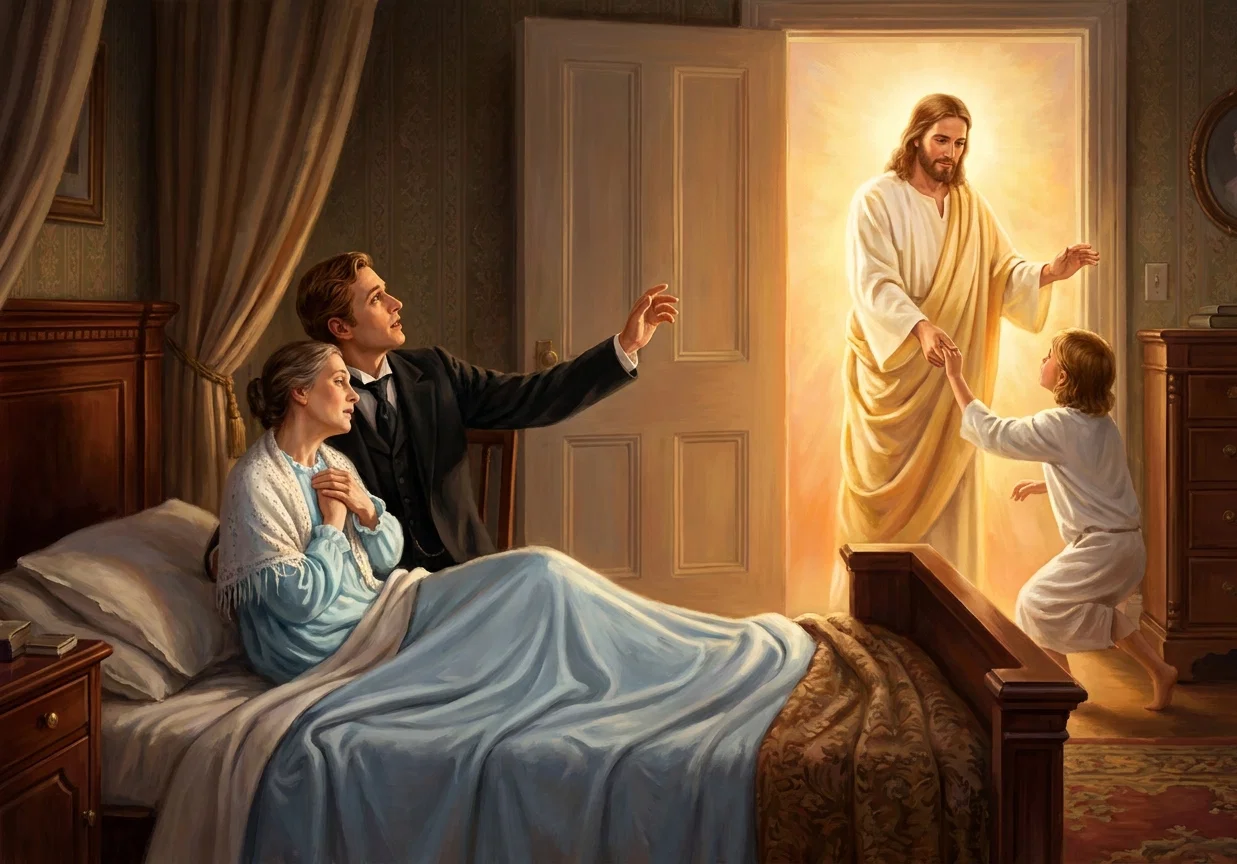
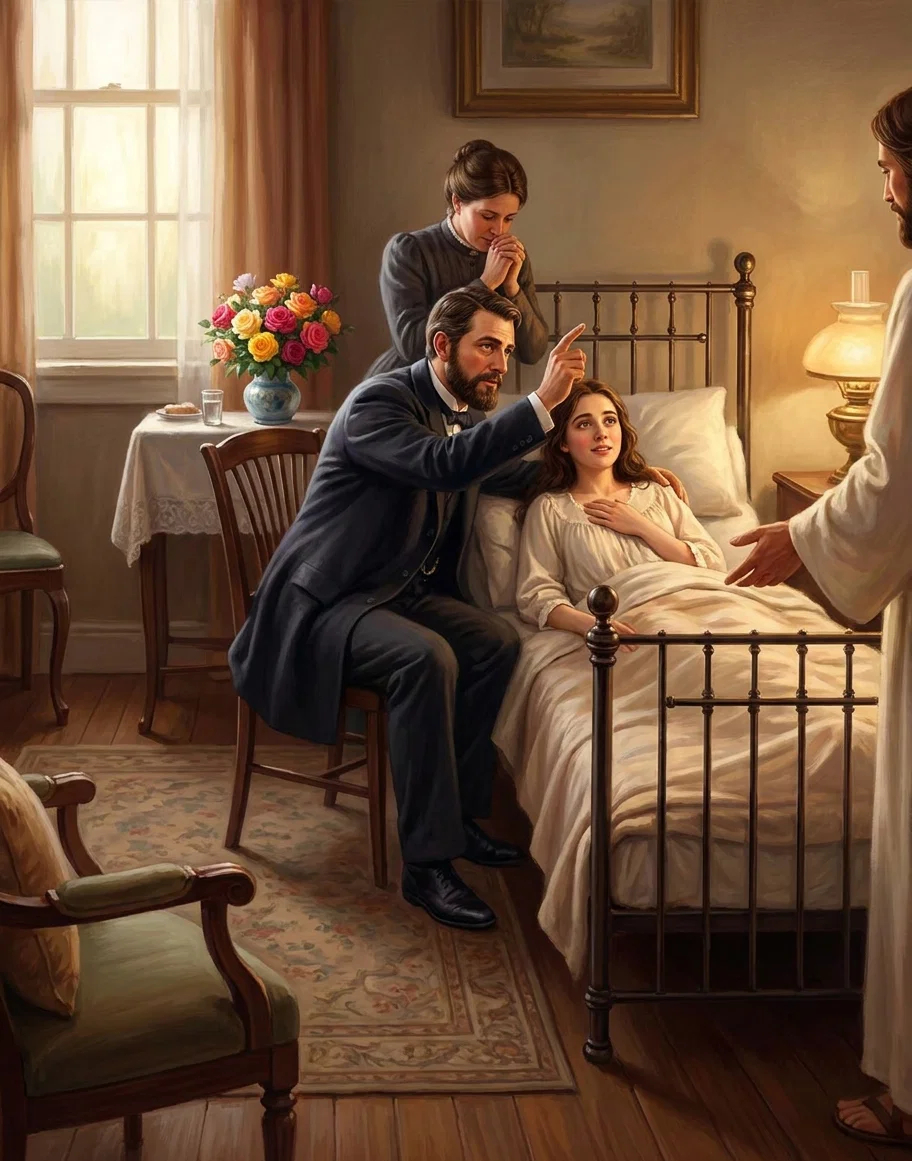
Knowing the Lord Jesus, it is the privilege of the Christian practitioner by prayer to invite His presence in the sick-room. Before performing a critical operation, let the physician ask for the aid of the great Physician. Let him assure the suffering one that God can bring him safely through the ordeal, that in all times of distress He is a sure refuge for those who trust in Him. The physician who can not do this loses case after case that otherwise might have been saved. If he could speak words that would inspire faith in the sympathizing Saviour, who feels every throb of anguish, and could present the needs of the soul to Him in prayer, the crisis would oftener be safely passed.
Only He who reads the heart can know with what trembling and terror many patients consent to an operation under the surgeon’s hand. They realize their peril. While they may have confidence in the physician’s skill, they know that it is not infallible. But as they see the physician bowed in prayer, asking help from God, they are inspired with confidence.119Gratitude and trust open the heart to the healing power of God, the energies of the whole being are vitalized, and the life forces triumph.
To the physician also the Saviour’s presence is an element of strength. Often the responsibilities and possibilities of his work bring dread upon the spirit. The feverishness of uncertainty and fear would make the hand unskilful. But the assurance that the divine Counselor is beside him, to guide and to sustain, imparts quietness and courage. The touch of Christ upon the physician’s hand brings vitality, restfulness, confidence, and power.
When the crisis is safely passed, and success is apparent, let a few moments be spent with the patient in prayer. Give expression to your thankfulness for the life that has been spared. As words of gratitude flow from the patient to the physician, let the praise and thanksgiving be directed to God. Tell the patient his life has been spared because he was under the heavenly Physician’s protection.
The physician who follows such a course is leading his patient to the One upon whom he is dependent for life, the One who can save to the uttermost all who come to Him.
Ministry to the Soul
Into the medical missionary work should be brought a deep yearning for souls. To the physician equally with the gospel minister is committed the highest trust ever committed to man. Whether he realizes it or not, every physician is entrusted with the cure of souls.
In their work of dealing with disease and death, physicians too often lose sight of the solemn realities of the future life. In their earnest effort to avert the peril of the body, they forget the peril of the soul. The one to whom they are ministering may be losing his hold on life. Its last opportunities are slipping from his grasp. This soul the physician must meet again at the judgment seat of Christ.
Often we miss the most precious blessings by neglecting to speak a word in season. If the golden opportunity is not watched for, it will be lost. At the bedside of the sick no word of creed or controversy should be spoken. Let the sufferer be pointed to the One who is willing to save all that come to Him in faith. Earnestly, tenderly strive to help the soul that is hovering between life and death.
“Let the sufferer be pointed to the One Who is willing to save all that come to Him in faith.”
The physician who knows that Christ is his personal Saviour, because he himself has been led to the Refuge, knows how to deal with the trembling, guilty, sin-sick souls who turn to him for help. He can respond to the inquiry, “What must I do to be saved?” He can tell the story of the Redeemer’s love. He can speak from experience of the121power of repentance and faith. In simple, earnest words, he can present the soul’s need to God in prayer, and can encourage the sick one also to ask for and accept the mercy of the compassionate Saviour. As he thus ministers at the bedside of the sick, striving to speak words that will bring help and comfort, the Lord works with him and through him. As the mind of the sufferer is directed to the Saviour, the peace of Christ fills his heart, and the spiritual health that comes to him is used as the helping hand of God in restoring the health of the body.
In attending the sick, the physician will often find opportunity for ministering to the friends of the afflicted one. As they watch by the bed of suffering, feeling powerless to prevent one pang of anguish, their hearts are softened. Often grief concealed from others is expressed to the physician. Then is the opportunity to point these sorrowing ones to Him who has invited the weary and heavy-laden to come unto Him. Often prayer can be offered for and with them, presenting their needs to the Healer of all woes, the Soother of all sorrows.
God’s Promises
The physician has precious opportunities for directing his patients to the promises of God’s word. He is to bring from the treasure-house things new and old, speaking here and there the words of comfort and instruction that are longed for. Let the physician make his mind a storehouse of fresh thoughts. Let him study the word of God diligently, that he may be familiar with its promises. Let him learn to repeat the comforting words that Christ spoke during His earthly ministry, when giving His lessons and healing the sick. He should talk of the works of healing wrought by Christ, of His tenderness and love. Never should he neglect to direct the minds of his patients to Christ, the chief Physician.
The same power that Christ exercised when He walked visibly among men is in His word. It was by His word that Jesus healed disease and cast out demons; by His word He stilled the sea, and raised the dead; and the people bore witness that His word was with power. He spoke the word of God, as He had spoken to all the prophets and teachers of the Old Testament. The whole Bible is a manifestation of Christ.
The Scriptures are to be received as God’s word to us, not written merely, but spoken. When the afflicted ones came to Christ, He beheld not only those who asked for help, but all who throughout the ages should come to Him in like need and with like faith. When He said to the paralytic, “Son, be of good cheer; thy sins be forgiven thee;” when He said to the woman of Capernaum, “Daughter, be of good comfort; thy faith hath made thee whole; go in peace,” He spoke to other afflicted, sin-burdened ones who should seek His help.
So with all the promises of God’s word. In them He is speaking to us individually, speaking as directly as if we could listen to His voice. It is in these promises that Christ communicates to us His grace and power. They are leaves from that tree which is “for the healing of the nations.” Received, assimilated, they are to be the strength of the character, the inspiration and sustenance of the life. Nothing else can have such healing power. Nothing besides can impart the courage and faith, which give vital energy to the whole being.
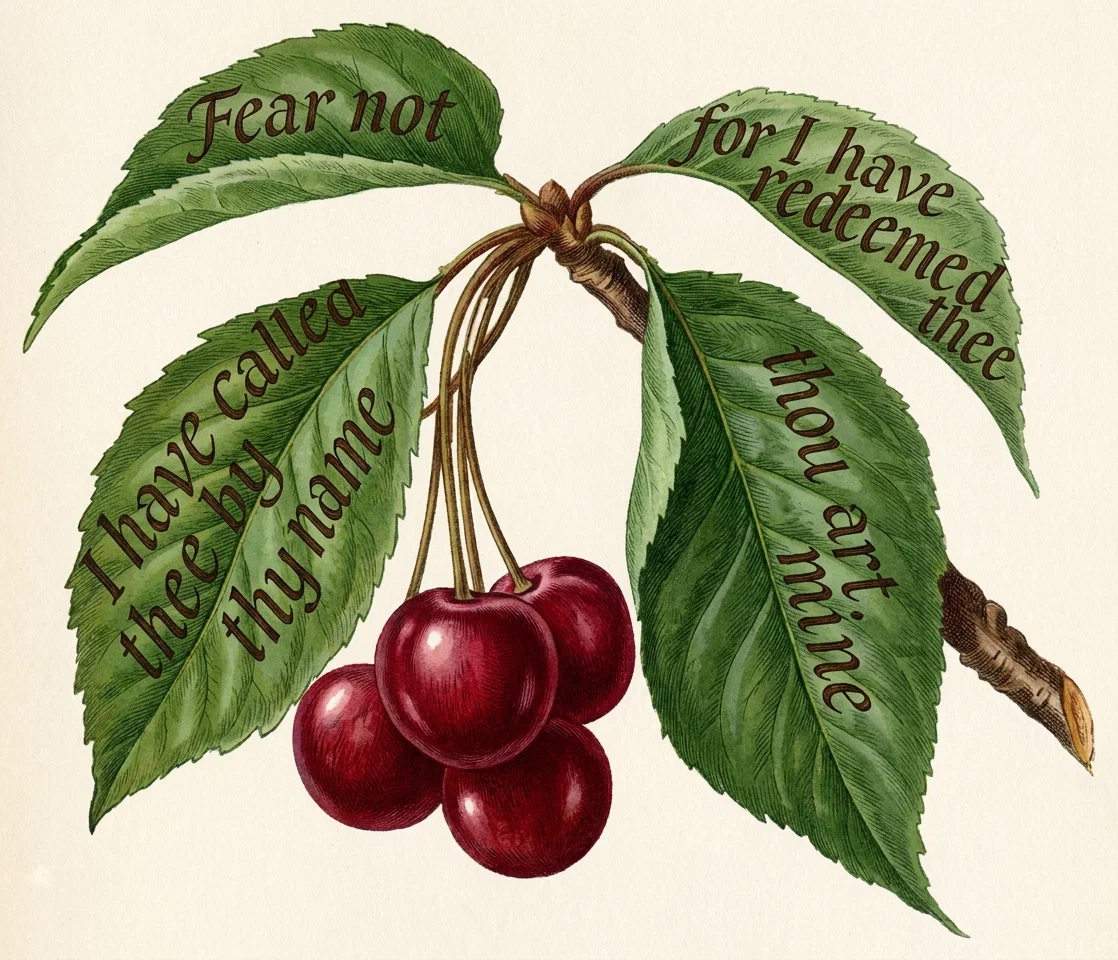
To one who stands trembling with fear on the brink of the grave, to the soul weary of the burden of suffering and sin, let the physician as he has opportunity repeat the words of the Saviour—for all the words of Holy Writ are His: “Fear not; for I have redeemed thee, I have called thee by thy name; thou art Mine. When thou passest through the waters, I will be with thee; and through the rivers, they123shall not overflow thee; when thou walkest through the fire, thou shalt not be burned; neither shall the flame kindle upon thee. For I am the Lord thy God, the Holy One of Israel, thy Saviour. . . . Since thou wast precious in My sight, thou hast been honorable, and I have loved thee.” “I, even I, am He that blotteth out thy transgressions for Mine own sake, and will not remember thy sins.” “Fear not; for I am with thee.”
“Like as a father pitieth his children, so the Lord pitieth them that fear Him. For He knoweth our frame; He remembereth that we are dust.”
“Fear not”
for I have experienced life.
I have all that is dear in this world.
When all ...
“Only acknowledge thine iniquity that thou hast transgressed against the Lord thy God.” “If we confess our sins, He is faithful and just to forgive us our sins, and to cleanse us from all unrighteousness.”
“I have blotted out, as a thick cloud, thy transgressions, and, as a cloud, thy sins; return unto Me; for I have redeemed thee.”
“Come now, and let us reason together, saith the Lord: Though your sins be as scarlet, they shall be as white as snow; though they be red like crimson, they shall be as wool. If ye be willing and obedient, ye shall eat the good of the land.”
“I have loved thee with an everlasting love: therefore with loving-kindness have I drawn thee.” “I hid My face from thee for a moment; but with everlasting kindness will I have mercy on thee.”
“Let not your heart be troubled.” “Peace I leave with you, My peace I give unto you; not as the world giveth, give124I unto you. Let not your heart be troubled, neither let it be afraid.”
“A Man shall be as an hiding-place from the wind, and a covert from the tempest; as rivers of water in a dry place, as the shadow of a great rock in a weary land.”
“When the poor and needy seek water, and there is none, and their tongue faileth for thirst, I the Lord will hear them, I the God of Israel will not forsake them.”
Look into me and pity me. Save. I am the ends of the earth.
“Thus saith the Lord that made thee:” “I will pour water upon him that is thirsty, and floods upon the dry ground: I will pour My Spirit upon thy seed, and My blessing upon thine offspring.”
“Look unto Me, and be ye saved, all the ends of the earth.”
“Himself took our infirmities, and bare our sicknesses.” “He was wounded for our transgressions, He was bruised for our iniquities; the chastisement of our peace was upon Him; and with His stripes we are healed.”
The Physician an Educator
“THE LIPS OF THE WISE\nDISPERSE KNOWLEDGE.”
The true physician is an educator. He recognizes his responsibility, not only to the sick who are under his direct care, but also to the community in which he lives. He stands as a guardian of both physical and moral health. It is his endeavor not only to teach right methods for the treatment of the sick, but to encourage right habits of living, and to spread a knowledge of right principles.
Need of Education in Health Principles
Education in health principles was never more needed than now. Notwithstanding the wonderful progress in so many lines relating to the comforts and conveniences of life, even to sanitary matters and to the treatment of disease, the decline in physical vigor and power of endurance is alarming. It demands the attention of all who have at heart the well-being of their fellow men.
Our artificial civilization is encouraging evils destructive of sound principles. Custom and fashion are at war with nature. The practises they enjoin, and the indulgences they foster, are steadily lessening both physical and mental strength,126and bringing upon the race an intolerable burden. Intemperance and crime, disease and wretchedness, are everywhere.
Many transgress the laws of health through ignorance, and they need instruction. But the greater number know better than they do. They need to be impressed with the importance of making their knowledge a guide of life. The physician has many opportunities both of imparting a knowledge of health principles, and of showing the importance of putting them in practise. By right instruction he can do much to correct evils that are working untold harm.
The Use of Drugs
A practise that is laying the foundation of a vast amount of disease and of even more serious evils, is the free use of poisonous drugs. When attacked by disease, many will not take the trouble to search out the cause of their illness. Their chief anxiety is to rid themselves of pain and inconvenience. So they resort to patent nostrums, of whose real properties they know little, or they apply to a physician for some remedy to counteract the result of their misdoing, but with no thought of making a change in their unhealthful habits. If immediate benefit is not realized, another medicine is tried, and then another. Thus the evil continues.
People need to be taught that drugs do not cure disease. It is true that they sometimes afford present relief, and the patient appears to recover as the result of their use; this is because nature has sufficient vital force to expel the poison and to correct the conditions that caused the disease. Health is recovered in spite of the drug. But in most cases the drug only changes the form and location of the disease. Often the effect of the poison seems to be overcome for a time, but the results remain in the system, and work great harm at some later period.
By the use of poisonous drugs, many bring upon themselves lifelong illness, and many lives are lost that might be127saved by the use of natural methods of healing. The poisons contained in many so-called remedies create habits and appetites that mean ruin to both soul and body. Many of the popular nostrums called patent medicines, and even some of the drugs dispensed by physicians, act a part in laying the foundation of the liquor habit, the opium habit, the morphine habit, that are so terrible a curse to society.
Restorative Power of Nature
The only hope of better things is in the education of the people in right principles. Let physicians teach the people that restorative power is not in drugs, but in nature. Disease is an effort of nature to free the system from conditions that result from a violation of the laws of health. In case of sickness, the cause should be ascertained. Unhealthful conditions should be changed, wrong habits corrected. Then nature is to be assisted in her effort to expel impurities and to reestablish right conditions in the system.
Natural Remedies
Pure air, sunlight, abstemiousness, rest, exercise, proper diet, the use of water, trust in divine power,—these are the true remedies. Every person should have a knowledge of nature’s remedial agencies and how to apply them. It is essential both to understand the principles involved in the treatment of the sick and to have a practical training that will enable one rightly to use this knowledge.
The use of natural remedies requires an amount of care and effort that many are not willing to give. Nature’s process of healing and upbuilding is gradual, and to the impatient it seems slow. The surrender of hurtful indulgences requires sacrifice. But in the end it will be found that nature, untrammeled, does her work wisely and well. Those who persevere in obedience to her laws will reap the reward in health of body and health of mind.
Preservation of Health
Too little attention is generally given to the preservation of health. It is far better to prevent disease than to know how to treat it when contracted.
It is the duty of every person, for his own sake, and for the sake of humanity, to inform himself in regard to the laws of life, and conscientiously to obey them. All need to become acquainted with that most wonderful of all organisms, the human body. They should understand the functions of the various organs and the dependence of one upon another for the healthy action of all. They should study the influence of the mind upon the body, and of the body upon the mind, and the laws by which they are governed.
Training for Life’s Conflict
We can not be too often reminded that health does not depend on chance. It is a result of obedience to law. This is recognized by the contestants in athletic games and trials of strength. These men make the most careful preparation. They submit to thorough training and strict discipline. Every physical habit is carefully regulated. They know that neglect, excess, or carelessness, which weakens or cripples any organ or function of the body, would insure defeat.
How much more important is such carefulness to insure success in the conflict of life. It is not mimic battles in which we are engaged. We are waging a warfare upon which hang eternal results. We have unseen enemies to meet. Evil angels are striving for the dominion of every human being. Whatever injures the health, not only lessens physical vigor, but tends to weaken the mental and moral powers. Indulgence in any unhealthful practise makes it more difficult for one to discriminate between right and wrong, and hence more difficult to resist evil. It increases the danger of failure and defeat.
“They which run in a race run all, but one receiveth the prize.” In the warfare in which we are engaged, all may win who will discipline themselves by obedience to right principles. The practise of these principles in the details of life is too often looked upon as unimportant,—a matter too trivial to demand attention. But in view of the issues at stake, nothing with which we have to do is small. Every act casts its weight into the scale that determines life’s victory or defeat. The scripture bids us, “So run, that ye may obtain.”
With our first parents, intemperate desire resulted in the loss of Eden. Temperance in all things has more to do with our restoration to Eden than men realize.
Pointing to the self-denial practised by the contestants in the ancient Greek games, the apostle Paul writes: “Every man that striveth for the mastery is temperate in all things. Now they do it to obtain a corruptible crown; but we an incorruptible. I therefore so run, not as uncertainly; so fight I, not as one that beateth the air; but I keep under my body, and bring it into subjection: lest that by any means, when I have preached to others, I myself should be a castaway.”
Basis of Reform
The progress of reform depends upon a clear recognition of fundamental truth. While, on the one hand, danger lurks in a narrow philosophy and a hard, cold orthodoxy, on the other hand there is great danger in a careless liberalism. The foundation of all enduring reform is the law of God. We are to present in clear, distinct lines the need of obeying this law. Its principles must be kept before the people. They are as everlasting and inexorable as God Himself.
One of the most deplorable effects of the original apostasy was the loss of man’s power of self-control. Only as this power is regained, can there be real progress.
The body is the only medium through which the mind and the soul are developed for the upbuilding of character. Hence it is that the adversary of souls directs his temptations to the enfeebling and degrading of the physical powers. His success here means the surrender to evil of the whole being. The tendencies of our physical nature, unless under the dominion of a higher power, will surely work ruin and death.
The body is to be brought into subjection. The higher powers of the being are to rule. The passions are to be controlled by the will, which is itself to be under the control of God. The kingly power of reason, sanctified by divine grace, is to bear sway in our lives.
The requirements of God must be brought home to the conscience. Men and women must be awakened to the duty of self-mastery, the need of purity, freedom from every depraving appetite and defiling habit. They need to be impressed with the fact that all their powers of mind and body are the gift of God, and are to be preserved in the best possible condition for His service.
In that ancient ritual which was the gospel in symbol, no blemished offering could be brought to God’s altar. The sacrifice that was to represent Christ must be spotless. The word of God points to this as an illustration of what His children are to be,—“a living sacrifice,” “holy and without blemish,” “well pleasing to God.”
Need of Divine Power
Apart from divine power, no genuine reform can be effected. Human barriers against natural and cultivated tendencies are but as the sand-bank against the torrent. Not until the life of Christ becomes a vitalizing power in our lives can we resist the temptations that assail us from within and from without.
Christ came to this world and lived the law of God, that man might have perfect mastery over the natural inclinations131which corrupt the soul. The Physician of soul and body, He gives victory over warring lusts. He has provided every facility, that man may possess completeness of character.
When one surrenders to Christ, the mind is brought under the control of the law; but it is the royal law, which proclaims liberty to every captive. By becoming one with Christ, man is made free. Subjection to the will of Christ means restoration to perfect manhood.
Obedience to God is liberty from the thraldom of sin, deliverance from human passion and impulse. Man may stand conqueror of himself, conqueror of his own inclinations, conqueror of principalities and powers, and of “the rulers of the darkness of this world,” and of “spiritual wickedness in high places.”
Teaching in the Home
In no place is such instruction as this more needed, and nowhere will it be productive of greater good, than in the home. Parents have to do with the very foundation of habit and character. The reformatory movement must begin in presenting to them the principles of the law of God as bearing upon both physical and moral health. Show that obedience to God’s word is our only safeguard against the evils that are sweeping the world to destruction. Make plain the responsibility of parents, not only for themselves, but for their children. They are giving to their children an example either of obedience or of transgression. By their example and teaching, the destiny of their households is decided. The children will be what their parents make them.
If parents could be led to trace the result of their action, and could see how, by their example and teaching, they perpetuate and increase the power of sin or the power of righteousness, a change would certainly be made. Many would turn away from tradition and custom, and accept the divine principles of life.
Power of Example
The physician who ministers in the homes of the people, watching at the bedside of the sick, relieving their distress, bringing them back from the borders of the grave, speaking hope to the dying, wins a place in their confidence and affection, such as is granted to few others. Not even to the minister of the gospel are committed possibilities so great or an influence so far-reaching.
“The physician who ministers in the homes of the people wins a place in their confidence.”
The physician’s example, no less than his teaching, should be a positive power on the right side. The cause of reform calls for men and women whose life practise is an illustration of self-control. It is our practise of the principles we inculcate that gives them weight. The world needs a practical demonstration of what the grace of God can do in restoring to human beings their lost kingship, giving them mastery of themselves. There is133nothing that the world needs so much as a knowledge of the gospel’s saving power revealed in Christlike lives.
The physician is continually brought into contact with those who need the strength and encouragement of a right example. Many are weak in moral power. They lack self-control, and are easily overcome by temptation. The physician can help these souls only as he reveals in his own life a strength of principle that enables him to triumph over every injurious habit and defiling lust. In his life must be seen the working of a power that is divine. If he fails here, however forcible or persuasive his words may be, his influence will tell for evil.
Many seek medical advice and treatment who have become moral wrecks through their own wrong habits. They are bruised, and weak, and wounded, feeling their folly and their inability to overcome. Such ones should have nothing in their surroundings to encourage a continuance of the thoughts and feelings that have made them what they are. They need to breathe an atmosphere of purity, of high and noble thought. How terrible the responsibility when those who should give them a right example are themselves enthralled by hurtful habits, their influence affording to temptation an added strength!
The Physician and the Temperance Work
Many come under the physician’s care who are ruining soul and body by the use of tobacco or intoxicating drink. The physician who is true to his responsibility must point out to these patients the cause of their suffering. But if he himself is a user of tobacco or intoxicants, what weight will be given to his words? With the consciousness of his own indulgence before him, will he not hesitate to point out the plague spot in the life of his patient? While using these things himself, how can he convince the youth of their injurious effects?
How can a physician stand in the community as an example of purity and self-control, how can he be an effectual worker in the temperance cause, while he himself is indulging a vile habit? How can he minister acceptably at the bedside of the sick and the dying, when his very breath is offensive, laden with the odor of liquor or tobacco?
While disordering his nerves and clouding his brain by the use of narcotic poisons, how can one be true to the trust reposed in him as a skilful physician? How impossible for him to discern quickly or to execute with precision!
If he does not observe the laws that govern his own being, if he chooses selfish gratification above soundness of mind and body, does he not thereby declare himself unfit to be entrusted with the responsibility of human lives?
Discouragements in His Work
However skilled and faithful a physician may be, there is in his experience much of apparent discouragement and defeat. Often his work fails of accomplishing that which he longs to see accomplished. Though health is restored to his patients, it may be no real benefit to them or to the world. Many recover health, only to repeat the indulgences that invited disease. With the same eagerness as before, they plunge again into the round of self-indulgence and folly. The physician’s work for them seems like effort thrown away.
Christ had the same experience, yet He did not cease His efforts for one suffering soul. Of the ten lepers who were cleansed, only one appreciated the gift, and he was a stranger and a Samaritan. For the sake of that one, Christ healed the ten. If the physician meets with no better success than the Saviour had, let him learn a lesson from the chief Physician. Of Christ it is written, “He shall not fail nor be discouraged.” “He shall see of the travail of His soul, and shall be satisfied.”
If but one soul would have accepted the gospel of His grace, Christ would, to save that one, have chosen His life of toil and humiliation and His death of shame. If through our efforts one human being shall be uplifted and ennobled, fitted to shine in the courts of the Lord, have we not cause for rejoicing?
Personal Needs and Perils
The duties of the physician are arduous and trying. In order to perform them most successfully he needs to have a strong constitution and vigorous health. A man that is feeble or diseased can not endure the wearing labor incident to the physician’s calling. One who lacks perfect self-control can not become qualified to deal with all classes of disease.
Often deprived of sleep, neglecting even to take food, cut off in great degree from social enjoyment and religious privileges, the physician’s life seems to lie under a continual shadow. The affliction he beholds, the dependent mortals longing for help, his contact with the depraved, make the heart sick, and well-nigh destroy confidence in humanity.
In the battle with disease and death, every energy is taxed to the limit of endurance. The reaction from this terrible strain tests the character to the utmost. Then it is that temptation has greatest power. More than men in any other calling, is the physician in need of self-control, purity of spirit, and that faith which takes hold on heaven. For the sake of others and for his own sake, he can not afford to disregard physical law. Recklessness in physical habits tends to recklessness in morals.