The diet appointed man in the beginning did not include animal food. Not till after the flood, when every green thing on the earth had been destroyed, did man receive permission to eat flesh.
In choosing man’s food in Eden, the Lord showed what was the best diet; in the choice made for Israel He taught the same lesson. He brought the Israelites out of Egypt, and undertook their training, that they might be a people for His own possession. Through them He desired to bless and teach the world. He provided them with the food best adapted for this purpose, not flesh, but manna, “the bread of heaven.” It was only because of their discontent and their murmuring for the flesh-pots of Egypt that animal food was granted them, and this only for a short time. Its use brought disease and death to thousands. Yet the restriction to a non-flesh diet was never heartily accepted. It continued to be the cause of discontent and murmuring, open or secret, and it was not made permanent.
Upon their settlement in Canaan, the Israelites were permitted the use of animal food, but under careful restrictions,312which tended to lessen the evil results. The use of swine’s flesh was prohibited, as also of other animals and of birds and fish whose flesh was pronounced unclean. Of the meats permitted, the eating of the fat and the blood was strictly forbidden.
Only such animals could be used for food as were in good condition. No creature that was torn, that had died of itself, or from which the blood had not been carefully drained, could be used as food.
Their mission is to provide wool for clothing, not flesh for food
By departing from the plan divinely appointed for their diet, the Israelites suffered great loss. They desired a flesh diet, and they reaped its results. They did not reach God’s ideal of character or fulfil His purpose. The Lord “gave them their request, but sent leanness into their soul.” They valued the earthly above the spiritual, and the sacred pre-eminence which was His purpose for them they did not attain.
Reasons for Discarding Flesh Foods
Those who eat flesh are but eating grains and vegetables at second hand; for the animal receives from these things the nutrition that produces growth. The life that was in the grains and vegetables passes into the eater. We receive it by eating the flesh of the animal. How much better to get it direct, by eating the food that God provided for our use!
Let them live
Flesh was never the best food; but its use is now doubly objectionable, since disease in animals is so rapidly increasing. Those who use flesh foods little know what they are eating. Often if they could see the animals when living, and know the quality of the meat they eat, they would turn from it with loathing. People are continually eating flesh that is filled with tuberculous and cancerous germs. Tuberculosis, cancer, and other fatal diseases are thus communicated.
The tissues of the swine swarm with parasites. Of the swine God said, “It is unclean unto you; ye shall not eat of their flesh, nor touch their dead carcass.” This command314was given because swine’s flesh is unfit for food. Swine are scavengers, and this is the only use they were intended to serve. Never, under any circumstances, was their flesh to be eaten by human beings. It is impossible for the flesh of any living creature to be wholesome when filth is its natural element, and when it feeds upon every detestable thing.
Often animals are taken to market, and sold for food, when they are so diseased that their owners fear to keep them longer. And some of the processes of fattening them for market produce disease. Shut away from the light and pure air, breathing the atmosphere of filthy stables, perhaps fattening on decaying food, the entire body soon becomes contaminated with foul matter.
How bananas grow
Animals are often transported long distances and subjected to great suffering in reaching a market. Taken from the green pastures, and traveling for weary miles over the hot, dusty roads, or crowded into filthy cars, feverish and exhausted, often for many hours deprived of food and water, the poor creatures are driven to their death, that human beings may feast on the carcasses.
In many places fish become so contaminated by the filth on which they feed as to be a cause of disease. This is especially the case where the fish come in contact with the315sewage of large cities. The fish that are fed on the contents of the drains may pass into distant waters, and may be caught where the water is pure and fresh. Thus when used as food they bring disease and death on those who do not suspect the danger.
The effects of a flesh diet may not be immediately realized; but this is no evidence that it is not harmful. Few can be made to believe that it is the meat they have eaten which has poisoned their blood and caused their suffering. Many die of diseases wholly due to meat-eating, while the real cause is not suspected by themselves or by others.
A bunch of cocoanuts
The moral evils of a flesh diet are not less marked than are the physical ills. Flesh food is injurious to health, and whatever affects the body has a corresponding effect on the mind and the soul. Think of the cruelty to animals that meat-eating involves, and its effect on those who inflict and those who behold it. How it destroys the tenderness with which we should regard these creatures of God!
The intelligence displayed by many dumb animals approaches so closely to human intelligence that it is a mystery. The animals see and hear and love and fear and suffer. They use their organs far more faithfully than many human beings use theirs. They manifest sympathy and tenderness toward316their companions in suffering. Many animals show an affection for those who have charge of them, far superior to the affection shown by some of the human race. They form attachments for man which are not broken without great suffering to them.
What man with a human heart, who has ever cared for domestic animals, could look into their eyes, so full of confidence and affection, and willingly give them over to the butcher’s knife? How could he devour their flesh as a sweet morsel?
Changing the Diet
It is a mistake to suppose that muscular strength depends on the use of animal food. The needs of the system can be better supplied, and more vigorous health can be enjoyed, without its use. The grains, with fruits, nuts, and vegetables, contain all the nutritive properties necessary to make good blood. These elements are not so well or so fully supplied by a flesh diet. Had the use of flesh been essential to health and strength, animal food would have been included in the diet appointed man in the beginning.
When the use of flesh food is discontinued, there is often a sense of weakness, a lack of vigor. Many urge this as evidence that flesh food is essential; but it is because foods of this class are stimulating, because they fever the blood and excite the nerves, that they are so missed. Some will find it as difficult to leave off flesh-eating as it is for the drunkard to give up his dram; but they will be the better for the change.
When flesh food is discarded, its place should be supplied with a variety of grains, nuts, vegetables, and fruits, that will be both nourishing and appetizing. This is especially necessary in the case of those who are weak, or who are taxed with continuous labor. In some countries, where poverty abounds, flesh is the cheapest food. Under these circumstances the change will be made with greater difficulty; but it can317be effected. We should, however, consider the situation of the people and the power of lifelong habit, and should be careful not to urge even right ideas unduly. None should be urged to make the change abruptly. The place of meat should be supplied with wholesome foods that are inexpensive. In this matter very much depends on the cook. With care and skill, dishes may be prepared that will be both nutritious and appetizing, and will, to a great degree, take the place of flesh food.
In all cases, educate the conscience, enlist the will, supply good, wholesome food, and the change will be readily made, and the demand for flesh will soon cease.
Let them return to the delicious food given to man in the beginning.
Is it not time that all should aim to dispense with flesh foods? How can those who are seeking to become pure, refined, and holy, that they may have the companionship of heavenly angels, continue to use as food anything that has so harmful an effect on soul and body? How can they take the life of God’s creatures that they may consume the flesh as a luxury? Let them, rather, return to the wholesome and delicious food given to man in the beginning, and themselves practise, and teach their children to practise, mercy toward the dumb creatures that God has made and has placed under our dominion.
Extremes in Diet
“LET YOUR MODERATION BE KNOWN UNTO ALL MEN.”
Not all who profess to believe in dietetic reform are really reformers. With many persons the reform consists merely in discarding certain unwholesome foods. They do not understand clearly the principles of health, and their tables, still loaded with harmful dainties, are far from being an example of Christian temperance and moderation.
Another class, in their desire to set a right example, go to the opposite extreme. Some are unable to obtain the most desirable foods, and instead of using such things as would best supply the lack, they adopt an impoverished diet. Their food does not supply the elements needed to make good blood. Their health suffers, their usefulness is impaired, and their example tells against rather than in favor of reform in diet.
Others think that since health requires a simple diet, there need be little care in the selection or the preparation of food. Some restrict themselves to a very meager diet, not having sufficient variety to supply the needs of the system, and they suffer in consequence.
Those who have but a partial understanding of the principles of reform are often the most rigid, not only in carrying out their views themselves, but in urging them on their319families and their neighbors. The effect of their mistaken reforms, as seen in their own ill-health, and their efforts to force their views upon others, give many a false idea of dietetic reform, and lead them to reject it altogether.
Those who understand the laws of health and who are governed by principle, will shun the extremes, both of indulgence and of restriction. Their diet is chosen, not for the mere gratification of appetite, but for the upbuilding of the body. They seek to preserve every power in the best condition for highest service to God and man. The appetite is under the control of reason and conscience, and they are rewarded with health of body and mind. While they do not urge their views offensively upon others, their example is a testimony in favor of right principles. These persons have a wide influence for good.
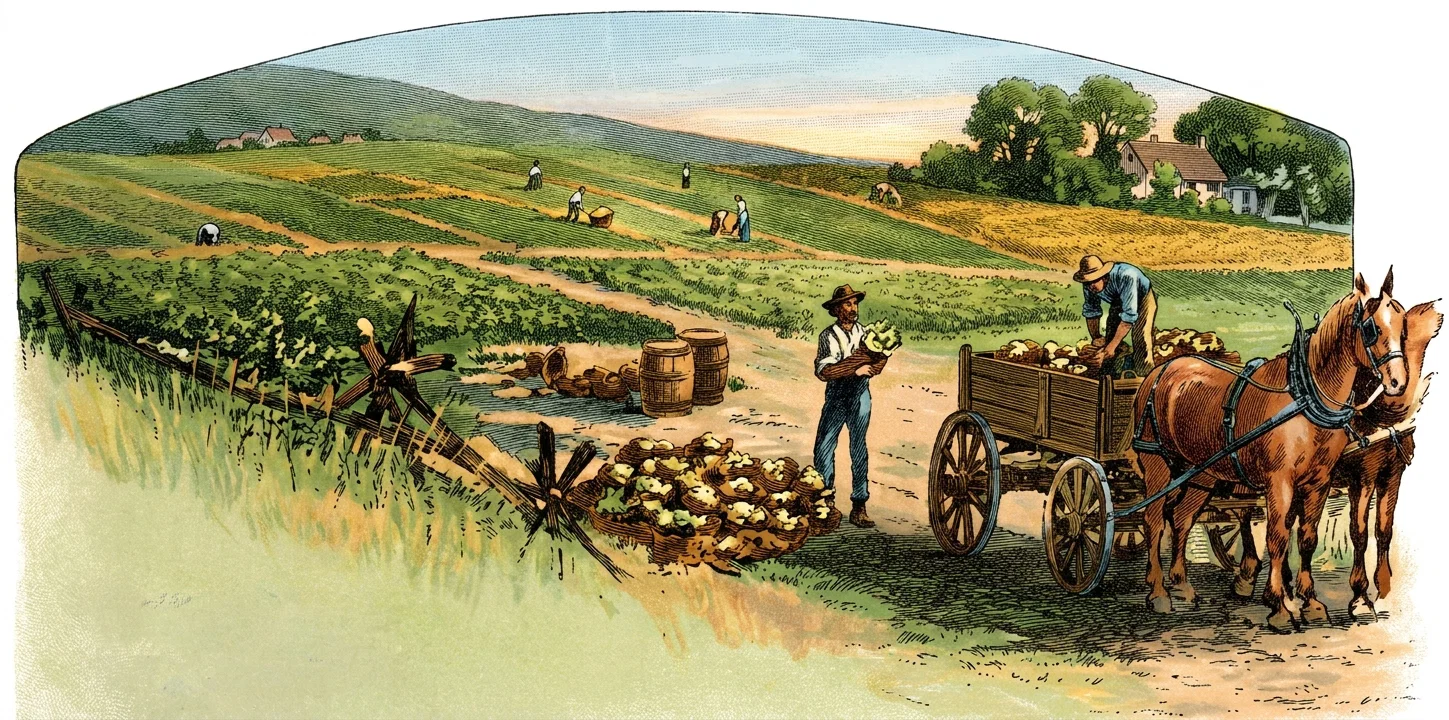
Nature's abundant store in field and garden
There is real common sense in dietetic reform. The subject should be studied broadly and deeply, and no one should criticize others because their practise is not, in all things, in harmony with his own. It is impossible to make an unvarying rule to regulate every one’s habits, and no one should think himself a criterion for all. Not all can eat the same320things. Foods that are palatable and wholesome to one person may be distasteful, and even harmful, to another. Some can not use milk, while others thrive on it. Some persons can not digest peas and beans; others find them wholesome. For some the coarser grain preparations are good food, while others can not use them.
Those who live in new countries or in poverty-stricken districts, where fruits and nuts are scarce, should not be urged to exclude milk and eggs from their dietary. It is true that persons in full flesh and in whom the animal passions are strong need to avoid the use of stimulating foods. Especially in families of children who are given to sensual habits, eggs should not be used. But in the case of persons whose blood-making organs are feeble,—especially if other foods to supply the needed elements can not be obtained,—milk and eggs should not be wholly discarded. Great care should be taken, however, to obtain milk from healthy cows, and eggs from healthy fowls, that are well fed and well cared for; and the eggs should be so cooked as to be most easily digested.
Delicious and wholesome
The diet reform should be progressive. As disease in animals increases, the use of milk and eggs will become more and more unsafe. An effort should be made to supply their place with other things that are healthful and inexpensive.321The people everywhere should be taught how to cook without milk and eggs, so far as possible, and yet have their food wholesome and palatable.
The practice of eating but two meals a day is generally found a benefit to health; yet under some circumstances persons may require a third meal. This should, however, if taken at all, be very light, and of food most easily digested. “Crackers”—the English biscuit—or zwieback, and fruit, or cereal coffee, are the foods best suited for the evening meal.
Healthful food for mind and body
Some are continually anxious lest their food, however simple and healthful, may hurt them. To these let me say, Do not think that your food will injure you; do not think about it at all. Eat according to your best judgment; and when you have asked the Lord to bless the food for the strengthening of your body, believe that He hears your prayer, and be at rest.
Because principle requires us to discard those things that irritate the stomach and impair health, we should remember that an impoverished diet produces poverty of the blood. Cases of disease most difficult to cure result from this cause. The system is not sufficiently nourished, and dyspepsia and general debility are the result. Those who use such a diet322are not always compelled by poverty to do so, but they choose it through ignorance or negligence, or to carry out their erroneous ideas of reform.
God is not honored when the body is neglected or abused, and is thus unfitted for His service. To care for the body by providing for it food that is relishable and strengthening is one of the first duties of the householder. It is far better to have less expensive clothing and furniture than to stint the supply of food.
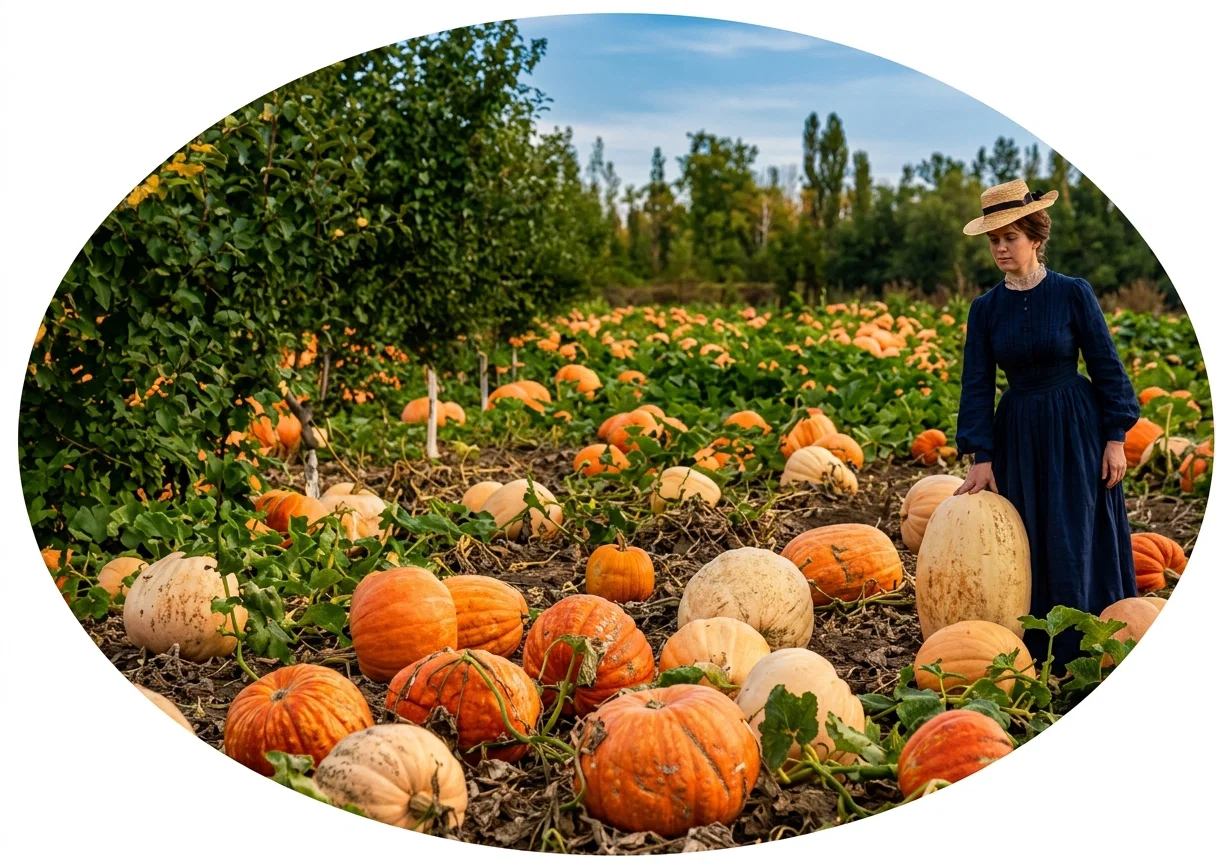
Plenty of pumpkins
Some householders stint the family table in order to provide expensive entertainment for visitors. This is unwise. In the entertainment of guests there should be greater simplicity. Let the needs of the family have first attention.
Unwise economy and artificial customs often prevent the exercise of hospitality where it is needed and would be a blessing. The regular supply of food for our tables should be such that the unexpected guest can be made welcome without burdening the housewife to make extra preparation.
All should learn what to eat and how to cook it. Men, as well as women, need to understand the simple, healthful preparation of food. Their business often calls them where they can not obtain wholesome food; then, if they have a knowledge of cookery, they can use it to good purpose.
Carefully consider your diet. Study from cause to effect. Cultivate self-control. Keep appetite under the control of reason. Never abuse the stomach by overeating, but do not deprive yourself of the wholesome, palatable food that health demands.
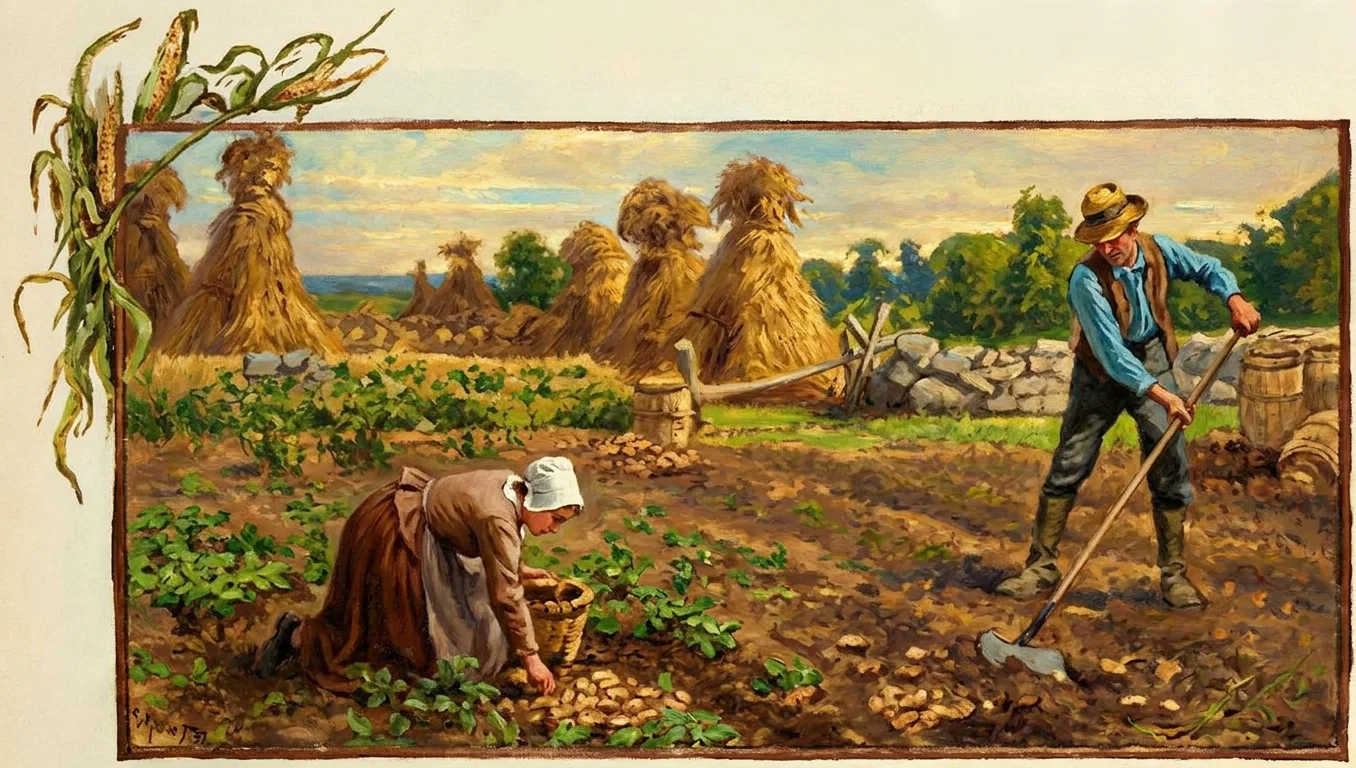
The treasures of the field
The narrow ideas of some would-be health reformers have been a great injury to the cause of hygiene. Hygienists should remember that dietetic reform will be judged, to a great degree, by the provision they make for their tables; and instead of taking a course that will bring discredit upon it, they should so exemplify its principles as to commend them to candid minds. There is a large class who will oppose any reform movement, however reasonable, if it places a restriction on the appetite. They consult taste instead of reason or the laws of health. By this class, all who leave the beaten track of custom, and advocate reform, will be accounted radical, no matter how consistent their course. That these persons324may have no ground for criticism, hygienists should not try to see how different they can be from others, but should come as near to them as possible without the sacrifice of principle.
When those who advocate hygienic reform go to extremes, it is no wonder that many who regard these persons as representing health principles, reject the reform altogether. These extremes frequently do more harm in a short time than could be undone by a lifetime of consistent living.
“The fruit of goodly trees.”
Hygienic reform is based upon principles that are broad and far-reaching, and we should not belittle it by narrow views and practises. But no one should permit opposition or ridicule, or a desire to please or influence others, to turn him from true principles, or cause him lightly to regard them. Those who are governed by principle will be firm and decided in standing for the right; yet in all their associations they will manifest a generous, Christlike spirit and true moderation.
Stimulants and Narcotics
“TOUCH NOT, TASTE NOT,
HANDLE NOT.”
Under the head of stimulants and narcotics is classed a great variety of articles that, altogether used as food or drink, irritate the stomach, poison the blood, and excite the nerves. Their use is a positive evil. Men seek the excitement of stimulants, because, for the time, the results are agreeable. But there is always a reaction. The use of unnatural stimulants always tends to excess, and it is an active agent in promoting physical degeneration and decay.
Condiments
In this fast age, the less exciting the food, the better. Condiments are injurious in their nature. Mustard, pepper, spices, pickles, and other things of a like character, irritate the stomach and make the blood feverish and impure. The inflamed condition of the drunkard’s stomach is often pictured as illustrating the effect of alcoholic liquors. A similarly inflamed condition is produced by the use of irritating condiments. Soon ordinary food does not satisfy the appetite. The system feels a want, a craving, for something more stimulating.