The licensing of the liquor traffic is advocated by many as tending to restrict the drink evil. But the licensing of the traffic places it under the protection of law. The government sanctions its existence, and thus fosters the evil which it professes to restrict. Under the protection of license laws, breweries, distilleries, and wineries are planted all over the land, and the liquor-seller plies his work beside our very doors.
Often he is forbidden to sell intoxicants to one who is drunk or who is known to be a confirmed drunkard; but the work of making drunkards of the youth goes steadily forward. Upon the creating of the liquor appetite in the youth the very life of the traffic depends. The youth are led on, step by step, until the liquor habit is established, and the thirst is created that at any cost demands satisfaction. Less harmful would it be to grant liquor to the confirmed drunkard, whose ruin, in most cases, is already determined, than to permit the flower of our youth to be lured to destruction through this terrible habit.
By the licensing of the liquor traffic, temptation is kept constantly before those who are trying to reform. Institutions have been established where the victims of intemperance may be helped to overcome their appetite. This is a noble work; but so long as the sale of liquor is sanctioned by law, the intemperate receive little benefit from inebriate asylums. They can not remain there always. They must again take343their place in society. The appetite for intoxicating drink, though subdued, is not wholly destroyed; and when temptation assails them, as it does on every hand, they too often fall an easy prey.
Let it be written that they may be destroyed, and I will pay ten thousand talents of silver into the king’s treasury.
The man who has a vicious beast, and who, knowing its disposition, allows it liberty, is by the laws of the land held accountable for the evil the beast may do. In the laws given to Israel the Lord directed that when a beast known to be vicious caused the death of a human being, the life of the owner should pay the price of his carelessness or malignity. On the same principle the government that licenses the liquor-seller, should be held responsible for the results of his traffic. And if it is a crime worthy of death to give liberty to a vicious beast, how much greater is the crime of sanctioning the work of the liquor-seller!
Licenses are granted on the plea that they bring a revenue to the public treasury. But what is this revenue when compared with the enormous expense incurred for the criminals, the insane, the paupers, that are the fruit of the liquor traffic!344A man under the influence of liquor commits a crime; he is brought into court; and those who legalized the traffic are forced to deal with the result of their own work. They authorized the sale of a draught that would make a sane man mad; and now it is necessary for them to send the man to prison or to the gallows, while often his wife and children are left destitute, to become the charge of the community in which they live.
Considering only the financial aspect of the question, what folly it is to tolerate such a business! But what revenue can compensate for the loss of human reason, for the defacing and deforming of the image of God in man, for the ruin of children, reduced to pauperism and degradation, to perpetuate in their children the evil tendencies of their drunken fathers?
Prohibition
The man who has formed the habit of using intoxicants is in a desperate situation. His brain is diseased, his will-power is weakened. So far as any power in himself is concerned, his appetite is uncontrollable. He can not be reasoned with or persuaded to deny himself. Drawn into the dens of vice, one who has resolved to quit drink is led to seize the glass again, and with the first taste of the intoxicant every good resolution is overpowered, every vestige of will destroyed. One taste of the maddening draught, and all thought of its results has vanished. The heartbroken wife is forgotten. The debauched father no longer cares that his children are hungry and naked. By legalizing the traffic, the law gives its sanction to this downfall of the soul, and refuses to stop the trade that fills the world with evil.
Must this always continue? Will souls always have to struggle for victory, with the door of temptation wide open before them? Must the curse of intemperance forever rest like a blight upon the civilized world? Must it continue to sweep, every year, like a devouring fire over thousands of happy homes? When a ship is wrecked in sight of shore,345people do not idly look on. They risk their lives in the effort to rescue men and women from a watery grave. How much greater the demand for effort in rescuing them from the drunkard’s fate!
It is not the drunkard and his family alone who are imperiled by the work of the liquor-seller, nor is the burden of taxation the chief evil which his traffic brings on the community. We are all woven together in the web of humanity. The evil that befalls any part of the great human brotherhood brings peril to all.
Many a man who through love of gain or ease would have nothing to do with restricting the liquor traffic, has found, too late, that the traffic had to do with him. He has seen his own children besotted and ruined. Lawlessness runs riot. Property is in danger. Life is unsafe. Accidents by sea and by land multiply. Diseases that breed in the haunts of filth and wretchedness make their way to lordly and luxurious homes. Vices fostered by the children of debauchery and crime infect the sons and daughters of refined and cultured households.
There is no man whose interests the liquor traffic does not imperil. There is no man who for his own safeguard should not set himself to destroy it.
Above all other places having to do with secular interests only, legislative halls and courts of justice should be free from the curse of intemperance. Governors, senators, representatives, judges, men who enact and administer a nation’s laws, men who hold in their hands the lives, the fair fame, the possessions of their fellows, should be men of strict temperance. Only thus can their minds be clear to discriminate between right and wrong. Only thus can they possess firmness of principle, and wisdom to administer justice and to show mercy. But how does the record stand? How many of these men have their minds beclouded, their sense of right and wrong confused, by strong drink! How many are the346oppressive laws enacted, how many the innocent persons condemned to death, through the injustice of drinking lawmakers, witnesses, jurors, lawyers, and even judges! Many there are, “mighty to drink wine,” and “men of strength to mingle strong drink,” “that call evil good, and good evil;” that “justify the wicked for reward, and take away the righteousness of the righteous from him!” Of such God says:
“Woe unto them.”
As the fire devoureth the stubble,
And the flame consumeth the chaff,
So their root shall be as rottenness,
And their blossom shall go up as dust;
Because they have cast away the law of the Lord of hosts,
And despised the word of the Holy One of Israel.”
The honor of God, the stability of the nation, the well-being of the community, of the home, and of the individual, demand that every possible effort be made in arousing the people to the evil of intemperance. Soon we shall see the result of this terrible evil as we do not see it now. Who will put forth a determined effort to stay the work of destruction? As yet the contest has hardly begun. Let an army be formed to stop the sale of the drugged liquors that are making men mad. Let the danger from the liquor traffic be made plain, and a public sentiment be created that shall demand its prohibition. Let the drink-maddened men be given an opportunity to escape from their thraldom. Let the voice of the nation demand of its lawmakers that a stop be put to this infamous traffic.
“If thou forbear to deliver them that are drawn unto death, And those that are ready to be slain; If thou sayest, Behold, we knew it not; Doth not He that pondereth the heart consider it? And He that keepeth thy soul, doth He not know it?” And “what wilt thou say when He shall punish thee?”
The Home
Life is a training-school, from which parents and children are to be graduated to the higher school in the mansions of God.
Ministry of the Home
THERE IS NO MORE IMPORTANT MISSIONARY FIELD THAN THAT COMMITTED TO FATHERS AND MOTHERS.
The restoration and uplifting of humanity begins in the home. The work of parents underlies every other. Society is composed of families, and is what the heads of families make it. Out of the heart are “the issues of life,” and the heart of the community, of the church, and of the nation, is the household. The well-being of society, the success of the church, the prosperity of the nation, depend upon home influences.
The importance and the opportunities of the home life are illustrated in the life of Jesus. He who came from heaven to be our example and teacher spent thirty years as a member of the household at Nazareth. Concerning these years the Bible record is very brief. No mighty miracles attracted the attention of the multitude. No eager throngs followed His steps or listened to His words. Yet during all these years He was fulfilling His divine mission. He lived as one of us, sharing the home life, submitting to its discipline, performing its duties, bearing its burdens. In the sheltering care of a humble home, participating in the experiences of our common lot, He “increased in wisdom and stature, and in favor with God and man.”
During all these secluded years His life flowed out in currents of sympathy and helpfulness. His unselfishness and patient endurance, His courage and faithfulness, His resistance of temptation, His unfailing peace and quiet joyfulness, were a constant inspiration. He brought a pure, sweet atmosphere into the home, and His life was as leaven working amidst the elements of society. None said that He had wrought a miracle; yet virtue—the healing, life-giving power of love—went out from Him to the tempted, the sick, and the disheartened. In an unobtrusive way, from His very childhood, He ministered to others, and because of this, when He began His public ministry, many heard Him gladly.
“Thou shalt teach” the commandments of the Lord “diligently unto thy children.”
The Saviour’s early years are more than an example to the youth. They are a lesson, and should be an encouragement, to every parent. The circle of family and neighborhood duties is the very first field of effort for those who would work for the uplifting of their fellow men. There is no more important field of effort than that committed to the founders and guardians of the home. No work entrusted to human beings involves greater or more far-reaching results than does the work of fathers and mothers.
It is by the youth and children of to-day that the future of society is to be determined, and what these youth and children shall be depends upon the home. To the lack of right home training may be traced the larger share of the disease and misery and crime that curse humanity. If the home life were pure and true, if the children who went forth from its care were prepared to meet life’s responsibilities and dangers, what a change would be seen in the world!
Great efforts are put forth, time and money and labor almost without limit are expended, in enterprises and institutions for reforming the victims of evil habits. And even these efforts are inadequate to meet the great necessity. Yet how small is the result! How few are permanently reclaimed!
Multitudes long for a better life, but they lack courage and resolution to break away from the power of habit. They shrink from the effort and struggle and sacrifice demanded, and their lives are wrecked and ruined. Thus even men of the brightest minds, men of high aspirations and noble powers, otherwise fitted by nature and education to fill positions of trust and responsibility, are degraded and lost for this life and for the life to come.
For those who do reform, how bitter the struggle to regain their manhood! And all their life long, in a shattered constitution, a wavering will, impaired intellect, and352weakened soul-power, many reap the harvest of their evil sowing. How much more might be accomplished if the evil were dealt with at the beginning!
This work rests, in a great degree, with parents. In the efforts put forth to stay the progress of intemperance and of other evils that are eating like a cancer in the social body, if more attention were given to teaching parents how to form the habits and character of their children, a hundredfold more good would result. Habit, which is so terrible a force for evil, it is in their power to make a force for good. They have to do with the stream at its source, and it rests with them to direct it rightly.
Parents may lay for their children the foundation for a healthy, happy life. They may send them forth from their homes with moral stamina to resist temptation, and courage and strength to wrestle successfully with life’s problems. They may inspire in them the purpose and develop the power to make their lives an honor to God and a blessing to the world. They may make straight paths for their feet, through sunshine and shadow, to the glorious heights above.
An Object-Lesson
The mission of the home extends beyond its own members. The Christian home is to be an object-lesson, illustrating the excellence of the true principles of life. Such an illustration will be a power for good in the world. Far more powerful than any sermon that can be preached is the influence of a true home upon human hearts and lives. As the youth go out from such a home, the lessons they have learned are imparted. Nobler principles of life are introduced into other households, and an uplifting influence works in the community.
Hospitality
There are many others to whom we might make our homes a blessing. Our social entertainments should not be governed by the dictates of worldly custom, but by the Spirit353of Christ and the teaching of His word. The Israelites, in all their festivities, included the poor, the stranger, and the Levite, who was both the assistant of the priest in the sanctuary, and a religious teacher and missionary. These were regarded as the guests of the people, to share their hospitality on all occasions of social and religious rejoicing, and to be tenderly cared for in sickness or in need. It is such as these whom we should make welcome to our homes. How much such a welcome might do to cheer and encourage the missionary nurse or the teacher, the care-burdened, hard-working mother, or the feeble and aged, so often without a home, and struggling with poverty and many discouragements.
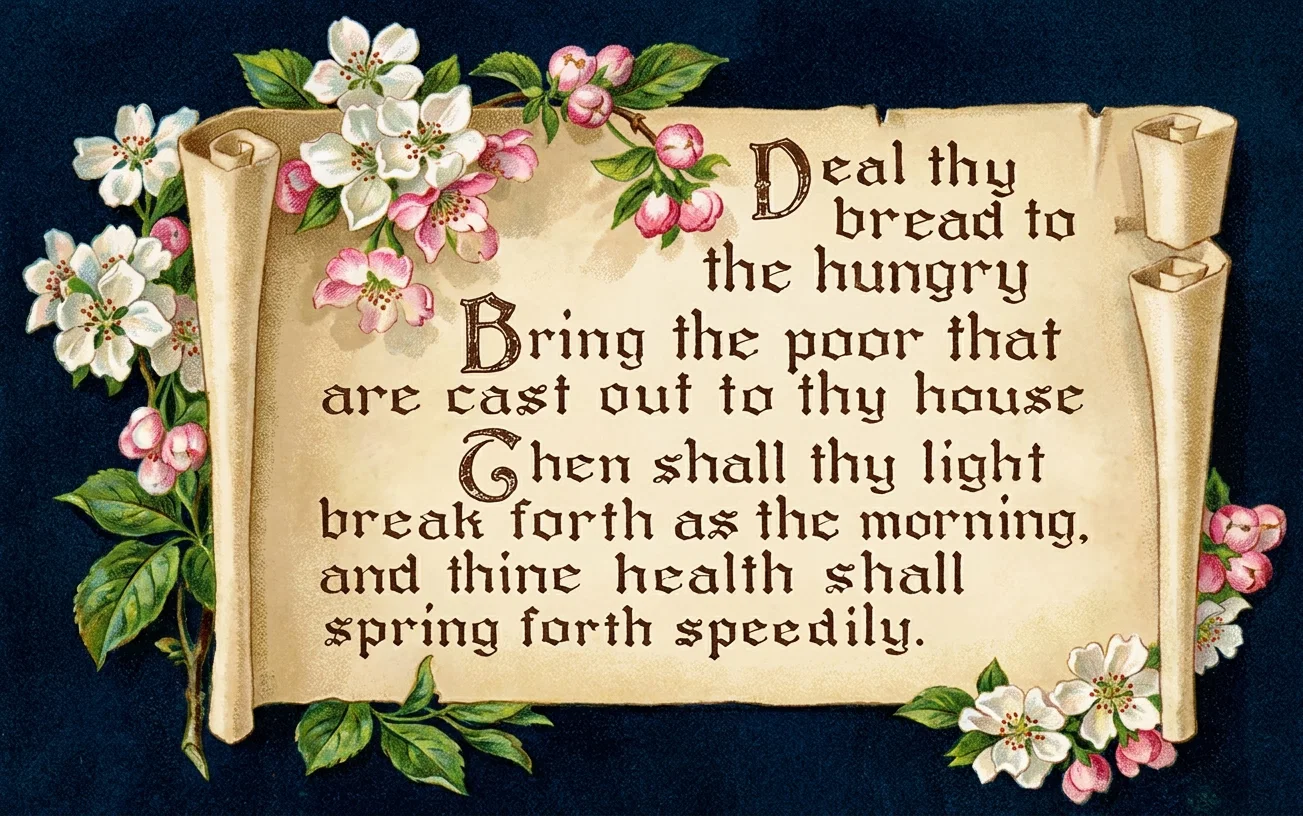
Deal thy bread to the hungry
Bring the poor that are cast out to thy house.
Then shall thy light break forth as the morning, and thine health shall spring forth speedily.
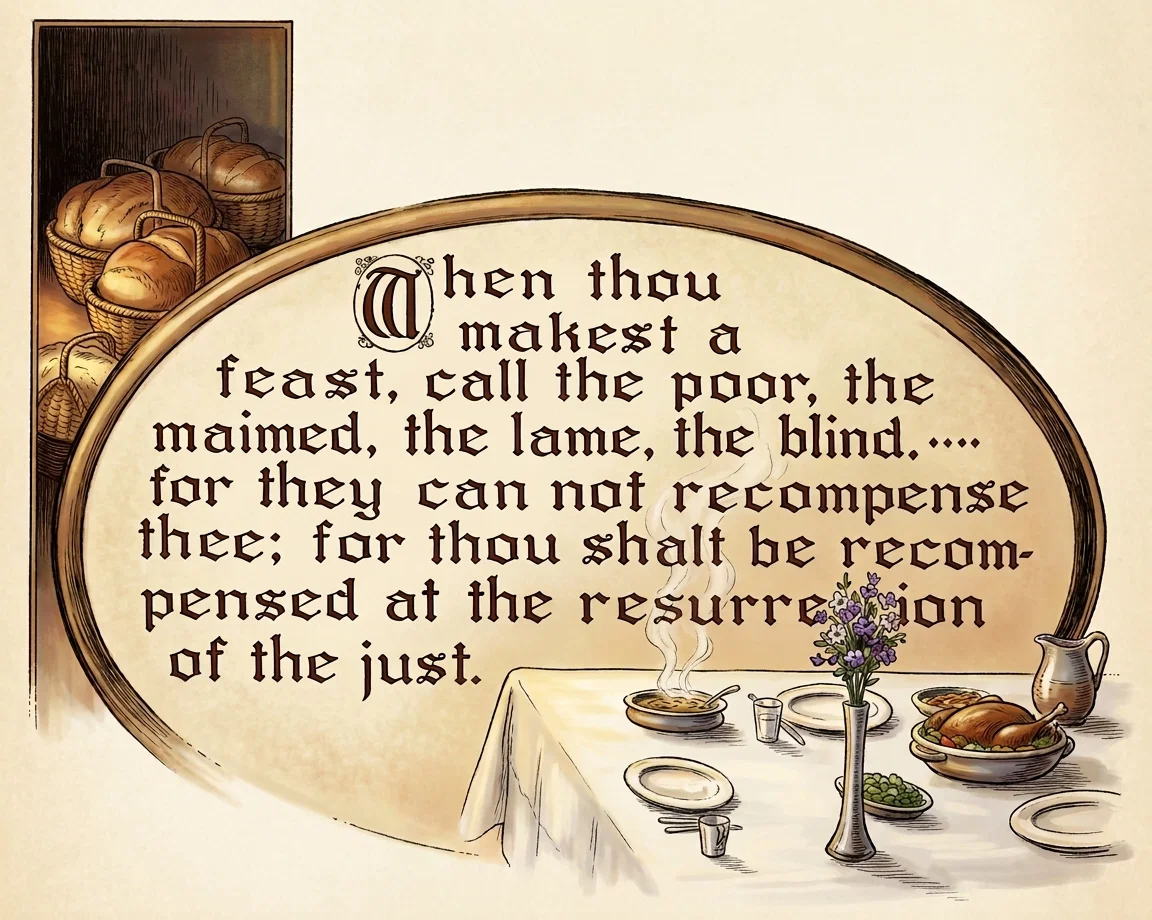
“When thou makest a dinner or a supper,” Christ says, “call not thy friends, nor thy brethren, neither thy kinsmen, nor thy rich neighbors; lest they also bid thee again, and a recompense be made thee. But when thou makest a feast, call the poor, the maimed, the lame, the blind; and thou shalt be blessed; for they can not recompense thee; for thou shalt be recompensed at the resurrection of the just.”
These are guests whom it will lay on you no great burden to receive. You will not need to provide for them elaborate or expensive entertainment. You will need to make no effort at display. The warmth of a genial welcome, a place at your fireside, a seat at your home table, the privilege of sharing the blessing of the hour of prayer, would to many of these be like a glimpse of heaven.
Our sympathies are to overflow the boundaries of self and the enclosure of family walls. There are precious opportunities for those who will make their homes a blessing to others. Social influence is a wonderful power. We can use it if we will as a means of helping those about us.
When thou makest a feast, call the poor, the maimed, the lame, the blind … for they can not recompense thee; for thou shalt be recompensed at the resurrection of the just.
Our homes should be a place of refuge for the tempted youth. Many there are who stand at the parting of the ways. Every influence, every impression, is determining the choice that shapes their destiny both here and hereafter. Evil invites them. Its resorts are made bright and attractive. They have a welcome for every comer. All about us are youth who have no home, and many whose homes have no355helpful, uplifting power, and the youth drift into evil. They are going down to ruin within the very shadow of our own doors.
These youth need a hand stretched out to them in sympathy. Kind words simply spoken, little attentions simply bestowed, will sweep away the clouds of temptation which gather over the soul. The true expression of heaven-born sympathy has power to open the door of hearts that need the fragrance of Christlike words, and the simple, delicate touch of the spirit of Christ’s love. If we would show an interest in the youth, invite them to our homes, and surround them with cheering, helpful influences, there are many who would gladly turn their steps into the upward path.
Life’s Opportunities
Our time here is short. We can pass through this world but once; as we pass along, let us make the most of life. The work to which we are called does not require wealth or social position or great ability. It requires a kindly, self-sacrificing spirit and a steadfast purpose. A lamp, however small, if kept steadily burning, may be the means of lighting many other lamps. Our sphere of influence may seem narrow, our ability small, our opportunities few, our acquirements limited; yet wonderful possibilities are ours through a faithful use of the opportunities of our own homes. If we will open our hearts and homes to the divine principles of life, we shall become channels for currents of life-giving power. From our homes will flow streams of healing, bringing life, and beauty, and fruitfulness where now are barrenness and dearth.
The Builders of the Home
“Through wisdom is an house builded; and by understanding it is established.”
He who gave Eve to Adam as a helpmeet, performed His first miracle at a marriage festival. In the festal hall where friends and kindred rejoiced together, Christ began His public ministry. Thus He sanctioned marriage, recognizing it as an institution that He Himself had established. He ordained that men and women should be united in holy wedlock, to rear families whose members, crowned with honor, should be recognized as members of the family above.
Christ honored the marriage relation by making it also a symbol of the union between Him and His redeemed ones. He Himself is the Bridegroom; the bride is the church, of which, as His chosen one, He says, “Thou art all fair, My love; there is no spot in thee.”
Christ “loved the church, and gave Himself for it, that He might sanctify and cleanse it, . . . that it should be holy and without blemish.” “So ought men to love their wives.”
The family tie is the closest, the most tender and sacred, of any on earth. It was designed to be a blessing to mankind. And it is a blessing wherever the marriage covenant357is entered into intelligently, in the fear of God, and with due consideration for its responsibilities.
Those who are contemplating marriage should consider what will be the character and influence of the home they are founding. As they become parents, a sacred trust is committed to them. Upon them depends in a great measure the well-being of their children in this world, and their happiness in the world to come. To a great extent they determine both the physical and the moral stamp that the little ones receive. And upon the character of the home depends the condition of society; the weight of each family’s influence will tell in the upward or the downward scale.
“The parties may not have worldly wealth, but they should have the far greater blessing of health.”
The choice of a life companion should be such as best to secure physical, mental, and spiritual well-being for parents358and for their children,—such as will enable both parents and children to bless their fellow men and to honor their Creator.
Before assuming the responsibilities involved in marriage, young men and young women should have such an experience in practical life as will prepare them for its duties and its burdens. Early marriages are not to be encouraged. A relation so important as marriage and so far-reaching in its results should not be entered upon hastily, without sufficient preparation, and before the mental and physical powers are well developed.
The parties may not have worldly wealth, but they should have the far greater blessing of health. And in most cases there should not be a great disparity in age. A neglect of this rule may result in seriously impairing the health of the younger. And often the children are robbed of physical and mental strength. They can not receive from an aged parent the care and companionship which their young lives demand, and they may be deprived by death of the father or the mother at the very time when love and guidance are most needed.
Human love should draw its closest bonds from divine love.
It is only in Christ that a marriage alliance can be safely formed. Human love should draw its closest bonds from divine love. Only where Christ reigns can there be deep, true, unselfish affection.
Love is a precious gift, which we receive from Jesus. Pure and holy affection is not a feeling, but a principle. Those who are actuated by true love, are neither unreasonable nor359blind. Taught by the Holy Spirit, they love God supremely, and their neighbor as themselves.
Let those who are contemplating marriage weigh every sentiment and watch every development of character in the one with whom they think to unite their life destiny. Let every step toward a marriage alliance be characterized by modesty, simplicity, sincerity, and an earnest purpose to please and honor God. Marriage affects the after life both in this world and in the world to come. A sincere Christian will make no plans that God can not approve.
If you are blessed with God-fearing parents, seek counsel of them. Open to them your hopes and plans, learn the lessons which their life experiences have taught, and you will be saved many a heartache. Above all, make Christ your counselor. Study His word with prayer.
Under such guidance let a young woman accept as a life companion only one who possesses pure, manly traits of character, one who is diligent, aspiring, and honest, one who loves and fears God. Let a young man seek one to stand by his side who is fitted to bear her share of life’s burdens, one whose influence will ennoble and refine him, and who will make him happy in her love.
“A prudent wife is from the Lord.” “The heart of her husband doth safely trust in her. . . . She will do him good and not evil all the days of her life.” “She openeth her mouth with wisdom, and in her tongue is the law of kindness. She looketh well to the ways of her household, and eateth not the bread of idleness. Her children arise up and call her blessed; her husband also, and he praiseth her,” saying, “Many daughters have done virtuously, but thou excellest them all.” He who gains such a wife “findeth a good thing, and obtaineth favor of the Lord.”
The After Experience
However carefully and wisely marriage may have been entered into, few couples are completely united when the360marriage ceremony is performed. The real union of the two in wedlock is the work of the after years.
As life with its burden of perplexity and care meets the newly-wedded pair, the romance with which imagination so often invests marriage disappears. Husband and wife learn each other’s character as it was impossible to learn it in their previous association. This is a most critical period in their experience. The happiness and usefulness of their whole future life depend upon their taking a right course now. Often they discern in each other unsuspected weaknesses and defects; but the hearts that love has united will discern excellencies also heretofore unknown. Let all seek to discover the excellencies rather than the defects. Often it is our own attitude, the atmosphere that surrounds ourselves, which determines what will be revealed to us in another. There are many who regard the expression of love as a weakness, and they maintain a reserve that repels others. This spirit checks the current of sympathy. As the social and generous impulses are repressed, they wither, and the heart becomes desolate and cold. We should beware of this error. Love can not long exist without expression. Let not the heart of one connected with you starve for the want of kindness and sympathy.
“Forbearing One Another in Love”
Though difficulties, perplexities, and discouragements may arise, let neither husband nor wife harbor the thought that their union is a mistake or a disappointment. Determine to be all that it is possible to be to each other. Continue the early attentions. In every way encourage each other in fighting the battles of life. Study to advance the happiness of each other. Let there be mutual love, mutual forbearance. Then marriage, instead of being the end of love, will be as it were the very beginning of love. The warmth of true friendship, the love that binds heart to heart, is a foretaste of the joys of heaven.
Around every family there is a sacred circle that should be kept unbroken. Within this circle no other person has a right to come. Let not the husband or the wife permit another to share the confidences that belong solely to themselves.
Let each give love rather than exact it. Cultivate that which is noblest in yourselves, and be quick to recognize the good qualities in each other. The consciousness of being appreciated is a wonderful stimulus and satisfaction. Sympathy and respect encourage the striving after excellence, and love itself increases as it stimulates to nobler aims.
Neither the husband nor the wife should merge his or her individuality in that of the other. Each has a personal relation to God. Of Him each is to ask, “What is right?” “What is wrong?” “How may I best fulfil life’s purpose?” Let the wealth of your affection flow forth to Him who gave His life for you. Make Christ first and last and best in everything. As your love for Him becomes deeper and stronger, your love for each other will be purified and strengthened.
The spirit that Christ manifests toward us is the spirit that husband and wife are to manifest toward each other. “As Christ also hath loved us,” “walk in love.” “As the church is subject unto Christ, so let the wives be to their own husbands in everything. Husbands, love your wives, even as Christ also loved the church, and gave Himself for it.”
Neither the husband nor the wife should attempt to exercise over the other an arbitrary control. Do not try to compel each other to yield to your wishes. You can not do this and retain each other’s love. Be kind, patient, and forbearing, considerate, and courteous. By the grace of God you can succeed in making each other happy, as in your marriage vow you promised to do.