Your ShelfYour Projects

Review and Herald, Vol. 90, No. 41.

The Gospel to All the World in This Generation

Review and Herald

Oct 9, 1913

Review and Herald Publishing Association · Takoma Park Station, Washington, D. C. · Oct 9, 1913

The Gospel to All the World in This Generation

There is a deep conviction in the hearts of many devout missionary workers, in both home and foreign fields, that it is the duty of the Christian church to proclaim the gospel of Christ to all the world in this generation.
This conviction is based upon the teaching of the Scriptures and the marvelous providences of God during the last century. “God so loved the world,”—the whole world,—“that he gave his only begotten Son, that whosoever believeth in him should not perish, but have everlasting life.”
After Jesus had died for the world, he said to his disciples, “Go ye into all the world, and preach the gospel to every creature. . . . And they went forth, and preached everywhere, the Lord working with them, and confirming the word with signs following.” Mark 16: 15-20.
The gospel is God’s message of salvation to a lost world, which Christ died to save. The church is God’s chosen agency to tell his gospel of love to the world. Therefore it is the duty of the church to proclaim the gospel to all the world. This is an obligation that the greatest and truest Christians of all ages have recognized.
St. Paul, the great apostle to the Gentiles, declared: “I am debtor both to the Greeks, and to the barbarians; both to the wise, and to the unwise.” And John Wesley, one of the greatest of modern evangelists, often remarked, “The world is my parish.”
But today there is more than a recognition of this general truth. A deep conviction has fastened upon the hearts of many earnest, intelligent Christian workers that the gospel should be preached to the whole world before the generation now living shall have passed away.
For one, I believe that this conviction is born from above, for both the Scriptures and the providences of God call for it. This makes it not only a possibility but a certainty.
When Jesus had finished his work on earth, and was about to ascend to heaven, he gave his followers the most solemn promise that he would come again. The disciples believed this promise, and asked, “What shall be the sign of thy coming, and of the end of the world?” In his reply the Master pointed to a number of sure evidences of his speedy return. One was this: “This gospel of the kingdom shall be preached in all the world for a witness unto all nations; and then shall the end come.” Matt. 24: 14.
From this it is plain that the generation that will see the return of Christ to the world will witness the proclamation of the gospel to all the nations of the world then living.
In the revelation given to John on the isle of Patmos, he was shown this work in process of fulfilment. He says: “And I saw another angel fly in the midst of heaven, having the everlasting gospel to preach unto them that dwell on the earth, and to every nation, and kindred, and tongue, and people. . . . And I looked, and behold a white cloud, and upon the cloud one sat like unto the Son of man, having on his head a golden crown, and in his hand a sharp sickle.”
Today every sign recorded in the Scriptures concerning the approaching end of the world either has been fulfilled or is in process of fulfilment. One of the latter is the proclamation of the gospel to all the world. And now that the time has come for this to be accomplished, the conviction is laying hold of thousands of earnest Christians that it can and should be done.
For a full century the providences of God have been shaping affairs and preparing the way for this work to be done at this time.
One hundred years ago, men began to explore every “nook and corner” of the globe as never before in the history of the world. One hundred years ago men began to discover nature’s forces and invent facilities for effective, universal transmission of thought and for such rapid world-wide travel as had never been known before.
One hundred years ago the Christian church began a world-wide missionary campaign such as had not been carried on since apostolic times.
Today every country and every inhabited island of the globe is well known to the ordinary reader. All parts of the world are brought into close touch by the ocean cables, the printing-press, and therailway and steamship lines. The present is an era of financial prosperity unknown in any past generation.
It certainly seems as if the providence of God had marshaled all the interests and facilities in the world that are necessary to proclaim the gospel to every nation, kindred, tongue, and people in this generation. Surely what the Scriptures demand and God’s providences prepare for will be done. It cannot fail.
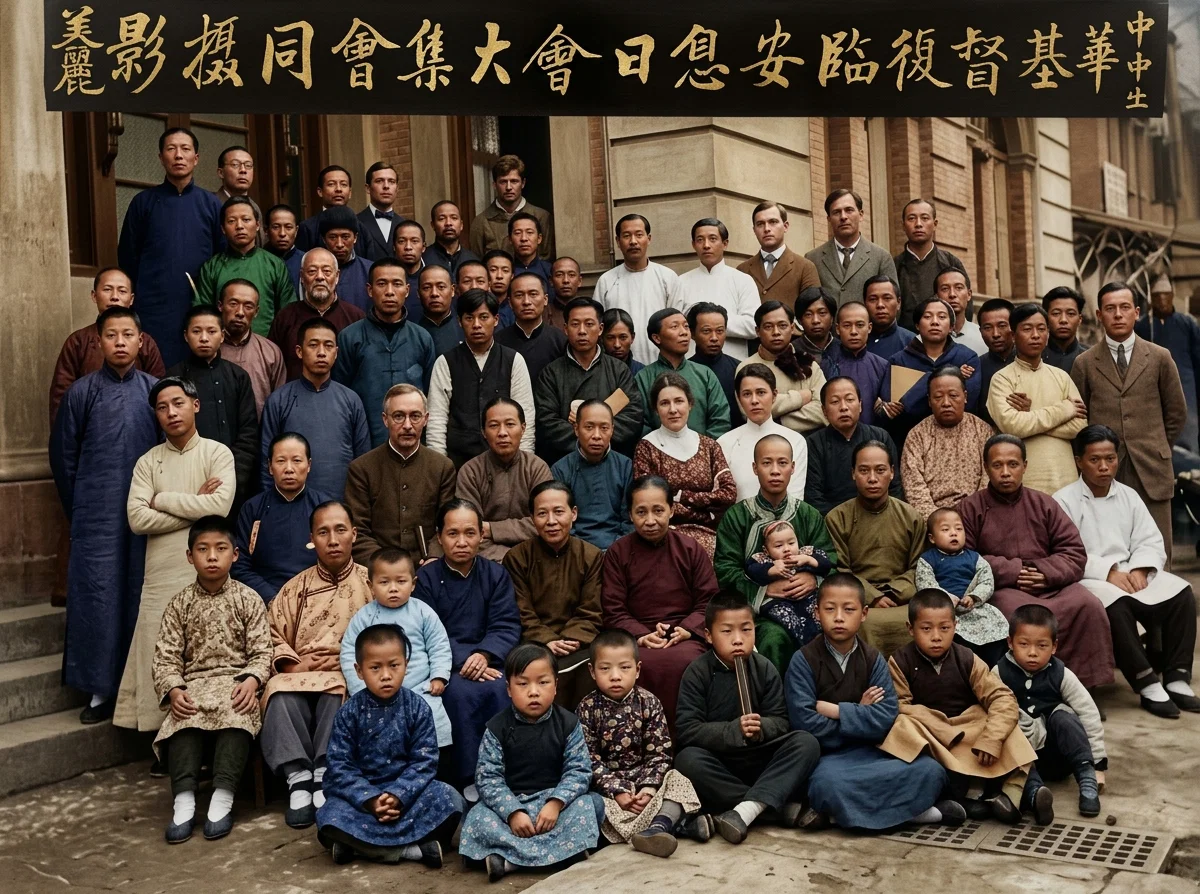
GENERAL MEETING OF BELIEVERS IN HUPEH PROVINCE, CHINA
What is now needed is a seeing, believing, acting church. The fatal malady that afflicted the church at the first advent was their blindness. Their eyes were closed so that they failed to see the fulfilment of the Old Testament Scriptures. This led to unbelief, which caused them to reject the work God called them to do. But to some Jesus said: “Blessed are your eyes, for they see.” To them he revealed his purposes and committed his work.
Thank God, today some of his followers see the marvelous opportunities for world-wide evangelization. Their hearts burn with the desire to do the work now required to prepare all men to meet their God. They are putting forth the best efforts of self-sacrificing service of which they are capable, and God is blessing their labors.
The gospel is going to all the world. It will be heard by every kindred and tribe during this generation. And then the end will come.
A. G. DANIELLS.

The Heart of the Problem

WHAT is the real heart of the missionary problem? Is it a problem of men? or one of money? or of method? or of prayer? It includes each of these phases, but it is deeper than any or all of them. If we press past all secondary considerations right home to the real heart of the missionary problem, we shall find that it is a problem of love,—personal love for the Lord Jesus Christ. Why?—Because the very soul of missions is sacrifice, and nothing less and nothing else than divine love can call forth the sacrifice that is needed.
The spirit of missions is the spirit of Jesus Christ, and the spirit of Jesus Christ was essentially a spirit of supreme self-sacrifice. Those words, “He saved others; himself he cannot save,” flung derisively at Jesus as he hung upon the cross, were, nevertheless, the expression of a profound truth. Had the Lamb of God, in retaliation to that mocking cry, come down from the cross, our salvation would not have been an accomplished fact. He has saved us, but it cost him his own life-blood to do it.
“He saved others; himself he cannot save.” No more can we. God never intended we should. It would be to leave out of the missionary enterprise that which is its very essence and glory. God laid the foundation of this work of world redemption in sacrifice when it cost him his only begotten Son, and he will finish it in no less worthy a spirit or costly means.—R. H. Glover.

“A New Fulness of Time”

ALONG with the opening up of all countries and the multiplication of facilities for rapidly carrying the gospel message to all, the Spirit of God is manifestly preparing the hearts of the people for this time. All missionaries bear witness to changing conditions. Secretary Paton, of the American Board of Foreign Missions, said a few years ago:—
“Within five years the missionary situation of the world has been so transformed as to be hardly recognizable by those who studied the problem in the previous period. There has been nothing like this in history since the preparation of the Roman Empire for the advent of Christ. We are in a new fulness of time.”
And the great World’s Missionary Congress, held in Edinburgh in 1910, declared its united conviction in a message addressed to all Christendom:—
“The next ten years will, in all probability, constitute the turning-point in human history, and may be of more critical importance in determining the spiritual evolution of mankind than many centuries of ordinary experience.”
We have entered the time of crisis in the history of the world and of the work of God in the earth.
W. A. S.

A Word From the Mission Treasury

We are pleased to be able to report that the Harvest Ingathering Campaign of 1912 was a very satisfactory effort in every respect. Letters received from those participating in this campaign indicate an increased interest in mission operations. Financially, it was by far the most successful effort of this character thus far conducted by the Mission Board, the amount realized from donations for the year being $50,164.45.
While this amount was largely made up of small contributions, and the amounts contributed probably caused no serious inconvenience to those who so kindly donated to the fund, yet the results will be far-reaching, as the grand total of the many small gifts is sufficient to enable the Mission Board to place thirty-five additional American or European gospel workers in such heathen fields as India, China, or Africa, and to maintain them for one year; or it would be ample to support five hundred native workers in these heathen lands for a like period. The results accruing from such an enterprise in our evangelical work, cannot be estimated. In view of this, the writer, in behalf of the Mission Board, desires to express to the many friends of mission effort who by their contributions have made such a work possible, its most hearty appreciation of their liberalities.
The year 1912 has been, in many ways, a most gratifying one in mission endeavor. Funds from all sources have been received in the treasury in a more liberal volume than in any previous year during the history of the Mission Board, the Sabbath-schools of the denomination being the most fruitful source of income, $228,029.24 being the actual amount contributed for foreign missions from all the schools. Their aim for the next four years is to place in the mission treasury $1,000,000. The same liberality has been noticeable in the gifts of the churches, and in the special donations received.
From almost every field come most encouraging reports of conversions. This is especially true in China, Korea, the Philippines, the Malaysian field, and some of the difficult countries of Europe. In Mexico, notwithstanding the protracted unsettled political condition, 1912 was, without doubt, our most successful year.
The plan outlined for our work the current year calls for an expenditure for missions of between $500,000 and $600,000. A liberal appropriation has been made to open the work in Chinese Manchuria. The Asiatic Division is also planning on entering Siam. There are now at the Foreign Mission Seminary in Washington a goodly number of men and women under appointment to mission work, taking their final course of preparation. And from many others engaged in the evangelical and school work in our conferences in Canada and the United States, the Mission Board is continually calling workers to be sent out to distant lands as rapidly as possible.
The energies of the General Conference in mission work are not, however, confined to heathen lands. In the borders of our own enlightened countries of Canada and the United States, there is great need of the services of the true missionary. Conditions in the large cities, with their constant influx of tens and hundreds of thousands from all countries of the world, create a situation that invites and demands the attention of every mission board,—a situation that in many ways is more difficult to meet than that existing in some of the foreign fields.
There are also, in the Southern States, millions of men and women with dark skins, but souls for whom Christ died, whose condition and environment place an obligation upon us that cannot be ignored.
These conditions, therefore, that are within our own borders, demand and receive, to the extent of our ability, our attention and our means. Properly to care for this phase of the work, there has been organized a North American Foreign Department, whose principal field of operation is the large cities of America; and a North American Negro Department, with the Southern States as its field.
In sending out this another special missions number of our denominational paper gifts to the friends of foreign missions, we wish again to express our gratitude for the past evidences of their appreciation of our efforts to obey the Saviour's injunction to carry his gospel to all nations, and for the substantial assistance they have afforded us in doing this, and again to extend to all so inclined the opportunity to assist us in this great work, by such donations as may to them seem proper.
May the day soon come, foretold of old, when “they shall teach no more every man his neighbor, and every man his brother, saying, Know the Lord: for they shall all know me, from the least of them unto the greatest of them, saith the Lord: for I will forgive their iniquity, and I will remember their sin no more.”
W. T. KNOX, Treasurer Mission Board.
PREACHER GUARDED BY RUSSIAN SOLDIER

Christ at the Treasury

“Over against the treasury” He sits, To see what gift thou bringst to him. He knows The riches of thy store, and truly weighs The portion thou dost spare, to tell thy love. Thy Lord with patience sits, and waits for thee To drop the gold which on thy lagging soul So heavy hangs. He waits to tell thee how Thou shalt bestow thy better wealth of prayer And willing love. He asks not if thy gift Is gold or strength. He will accept the “mites” Dropped from thy widowed hands, or tenderly Receive the tears which thou hast shed for those Who mourn. Thou canst not here too lavish be Of love or wealth. If thou shouldst give thine all, It could not pay the debt thou owest to him! Ah, well it is for thee he does not look Upon the value of thy gift, nor count Thy life's fair acts; the spirit which shall prompt Thy offering he searches well, and thou Mayest look into his face to meet his smile If on the altar of his bleeding heart Thy will hath laid a consecrated life. — Grace Webster Hinsdale.

An Instructive Column

OURS has been called the richest nation in the world. It is not the possession of vast wealth but the use we make of it that is of the highest importance. Wealth is a trust, and the larger our means the greater our responsibilities. How some of our national wealth is spent may be gathered from these figures, which are compiled from recent statistics:—
Foreign missions........... $ 12,000,000 Chewing-gum............... 13,000,000 Patent medicines.......... 80,000,000 Millinery.................. 90,000,000 Tea and coffee............ 100,000,000 Confectionery............. 200,000,000 Jewelry and ornaments..... 800,000,000 Intoxicating liquors...... 2,500,000,000
These are mainly outside of ordinary expenditures in home or business, which, of course, cannot even be approximated. There are countless forms of pleasure, too, — some innocent and others the reverse, — which cannot be computed in figures.
— Christian Herald.
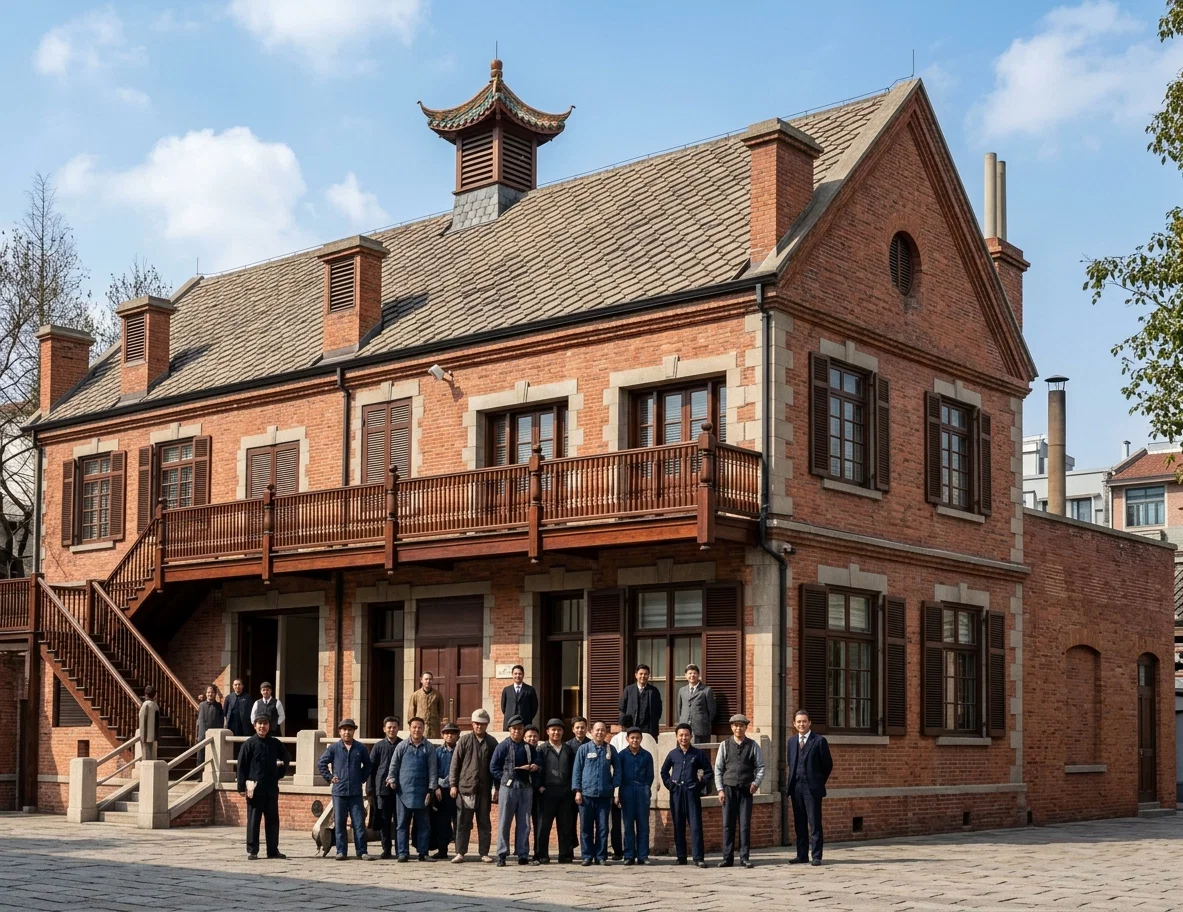
PRINTING-OFFICE AND CHAPEL, SHANGHAI
Headquarters of the Eastern Asiatic Field.
PRINTING-OFFICE AND CHAPEL, SHANGHAI Headquarters of the Eastern Asiatic Field.
REAR VIEW OF SHANGHAI MISSION COMPOUND
Chapel and offices at left, Chinese quarters at right.
REAR VIEW OF SHANGHAI MISSION COMPOUND Chapel and offices at left, Chinese quarters at right.

THE NEW REPUBLIC OF CHINA

Progressive China's Appeal
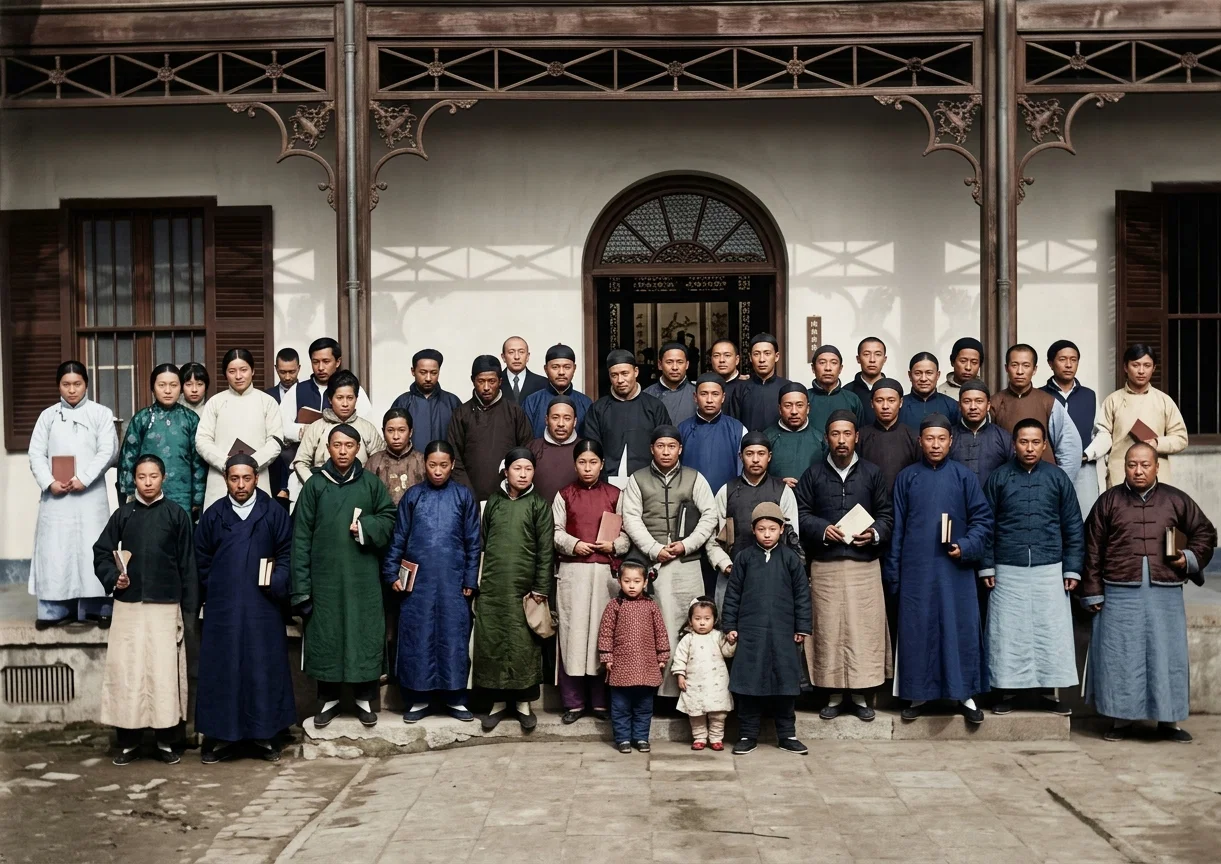
While China under the republic is still a land of idolatry and superstition, it is nevertheless true that heathen worship is in many places losing its grasp upon large numbers of the population. A short time ago while itinerating, I had some conversation with an intelligent Chinese man who said to me, “Idolatry is going; the people don’t really believe in it any longer.” In Changsha, many temples are now closed, while others are being used as carpenter shops, rope factories, or for other like purpose. At the present time, temple property may be purchased here more cheaply than any other kind of real estate. Throughout the province there has been considerable agitation on the part of the younger educationalists to transform many of the old temples into government schools; and in some instances this has been carried out.
The meaning of all this is obvious; and unless great efforts are put forth, especially blessed of heaven, China will go over the same road Japan has been traveling,—leave idolatry and reach naught but atheism and infidelity.
Just now we face a day of larger opportunity and greater Christian privilege than there has ever before been presented in China. Never before has Christian literature and Christian teaching been so highly regarded or so eagerly sought.
Within the last month, word has come, or letters have been received by me, from various parts of this province, telling of eight new companies that are studying the Scriptures and laying hold on the message of Christ’s soon return to this earth. We should send help in response, but we lack men and means.
Brethren, sisters, and friends, where can you find a better, surer investment? Now is the time to act. If this call touches your heart, come and share in the labors and victories or if you cannot come yourselves, send that which will provide a substitute worker, and send it now.
R. F. COTTRELL.
Changsha, Hunan.
AT THE NANKING TRAINING-SCHOOL

Shepherding the Flock

Yesterday I returned from Hsiatingchi [Honan]. I walked fifteen miles going, and twenty miles returning, putting my bedding, folding bed, and lunch basket on a wheelbarrow. How thankful I am that I have health and strength to walk—a very healthful exercise, from want of which many are losing their health.
In the evening at Hsiatingchi the believers and I sat down for two hours and had a heart-to-heart talk. They told me about the great trials they were passing through. They had helped to repair the city wall, and also paid out money toward this repair, and the mandarin was now compelling them to pay out money for crude heathen theatrical performances and for building heathen temples, a very unusual proceeding. Of course, if I should write to the mandarin, it would be stopped; but that would incur his hatred, and his runners would be bound to take vengeance in some way. Hence I counseled the brethren to patiently endure. “In the world ye shall have tribulation: but be of good cheer; I have overcome the world.” I told them how others had to endure hardships. I showed them that I was with them in self-sacrifice, and that only those who are willing to make a covenant with God through sacrifice are able to get ready to meet the Lord in glory. Our heart-to-heart talk made a deep impression upon them. They all assented, and took up their cross again with renewed courage. JOHN J. WESTRUP.

A Sorcerer Converted

FATSHAN has about 500,000 people, and our hearts, like that of Paul at Athens, is stirred as we see “the city wholly given to idolatry.” Acts 17:16. We have already seen good results of our medical work started here by Dr. Law Keem. We now have three chapels in the town, with dispensary work connected with each. Among those who accepted the gospel at Fatshan was an idolatrous priest. In the following letter he gives his experience:—
“Greeting. I, your younger brother, Chan Chan, was born in Fatshan, China, where I now reside with my family. My profession has been that of a nom mo [an idolatrous priest, a sorcerer]. This was the profession of my fathers for nine generations. We have worshiped idols, and in the name of these idols have promised blessings to the people. When I was thirty years of age, I had the good fortune to enter a chapel on one occasion and listen to a gospel sermon. I was glad for what I heard, and frequently spoke to others about it. But I continued to follow sorcery. Twelve years later, while out in the street, I bought from a colporteur three Gospel portions and two tracts, whichbrought new light and joy to me. Two years and a half later, in the summer of 1912, I entered the Seventh-day Adventist chapel on Shek-lo-tow Street, Fatshan, and listened to the preaching of the gospel. I bought a copy of ‘Gospel Hymns,’ and a Bible, which are very precious to me. I am now rejoicing in the new-found light, and hope the brethren and sisters will pray for me, and help me to walk in the way of salvation.”
E. H. WILBUR.
Canton.

Changes Ten Years Have Wrought

The changes of ten years in China are remarkable. We have seen the country roused from its sleep of ages. As the prophet Joel predicts of the last days, the long-slumbering nations are waking up. “Let the heathen be wakened.” Joel 3: 12.
Ten years ago newspapers, except the Peking Gazette (a paper which contained only the imperial edicts and official appointments), were found in only the large cities along the seacoast. To-day, go where you will, you will see the newsboy with his bundle of papers.
Ten years ago it took great effort to lead the people to see the importance of education for the masses. Now the people are setting themselves earnestly to the task of establishing public schools for the fifty or more millions of Chinese boys and girls.
The difference between eight days’ travel on a wheelbarrow or in a sedan, putting up at the roadside inns for the night, ten years ago, and a few hours in a comfortable railway passenger-coach covering the same ground now, is too great to be appreciated by any except those who have been through the experience.
Ten years ago it would have been considered beyond belief that a city could be found where the people were anxious for the help of a missionary. To-day in more than one locality they are calling for the medical missionary to come and treat their sick.
Surely in these things we cannot fail to see that here in this land is an opportunity that is unique in the history of missions. The way is now fully open quickly to make known the everlasting gospel throughout the length and breadth of China.
A. C. SELMON, M. D.
Shanghai.

At a General Meeting, Hankow

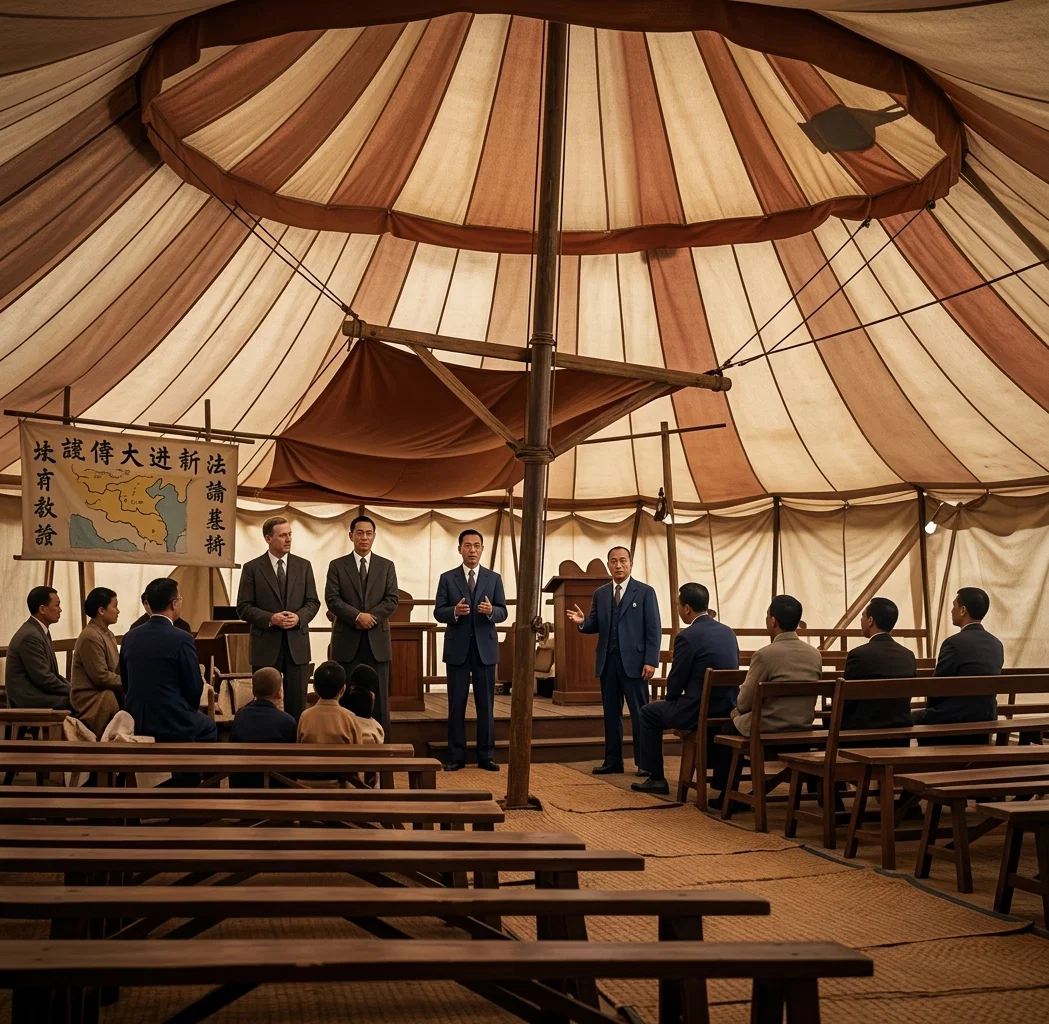
THERE were seventy-six believers in attendance at our general meeting recently held in Hankow. They all plan and look forward to these meetings just as we do to general meetings at home. Some of these people begin several months ahead to plan for their board during the meeting, by giving a few coppers every week to our evangelist, who keeps the money for them, so they might be sure to have the right amount at the right time. As for their traveling expenses, they walk, some a distance of four hundred li [a li is a third of a mile] each way. This they did in order that they might be able to testify to what the Lord had done for them, and also that they might gain a spiritual blessing. Indeed, these seasons are times of great refreshing to us all. The brethren get right with brethren; sins are confessed; heathen are converted; and many times scoffers are turned to praisers.
At this meeting twenty-one were baptized. We have now a membership of sixty at this place.
Sang Ta Ta, baptized at the age of eighty-one.
Our first evangelistic tent in China.
Before separating, we enjoyed a blessed season about the Lord’s table in a communion service. Heart seemed to meet heart. As confessions were made, these seventy souls, most of whom had sometime bowed down to wood and stone and naturally would be hard to make of one purpose and one heart, united as one, and God’s quiet Spirit rested on all. As we sang to close our meeting, all hearts, now filled with the love of Jesus and for one another, seemed to echo the words of the song:—
“Blest be the tie that binds Our hearts in Christian love; The fellowship of kindred minds Is like to that above.”
FREDERICK LEE.
Hankow, Hupeh, China.

A Modern “Devil-Possessed”

ONE of our workers, writing of an experience on a recent tour, says:—
“From Siao Gan I went to Chang Djang Pu. There we opened a little street chapel, in the home of the “devil-possessed” who was healed at the time of our general meeting at this place. This is a good place for preaching the truth, as every one in the city knows this man, who went about cursing everybody, and broke up all his household goods until he had nothing left. Now he goes about at peace with every one, and, like the demon-possessed man in the time of Christ, cannot keep from telling what God has done for him. He was not content until we consented to use his home as a place for preaching to others of the One who has done so much for him. The room is small, yet thirty or more come and stay an hour or so to listen to the gospel.”
A converted sorcerer.

On the Slopes of Nanshan

“IN the thick of the terrible battle of Nanshan, just north of Port Arthur, two Japanese soldiers were wounded at the same moment. One of them, a corporal, crept to his comrade, and tried to bind up his wound. The man said to him, ‘Don’t trouble about me, look out for your own wound; I have believed in Jesus Christ.’ Then the corporal recited to the desperately wounded man, ‘Though I walk through the valley of the shadow of death, I will fear no evil: for thou art with me.’ ‘Yes,’ responded the other, ‘I have been laid hold of by Jesus Christ.’ At that moment a second bullet struck the speaker, and he died. The corporal lived to reach the hospital, and to tell the Christian nurse of this strange communion of souls on the battle-field. Some of the money given by Christians in the West, in self-denial and with prayer, carried the gospel to those two pagan Japanese, and so yielded forth a hundredfold on the bloody slopes of Nanshan.”

A Korean “Sermon in a Hospital”

Reported by Mrs. R. Russell.
While giving treatment to a woman who had been cruelly treated by the barbarous native doctor, my dispensary assistant, Cong Pong Ho, preached to the household as follows: “We Korean people have for many years worshiped Satan and served him. Satan does not love us; therefore he wishes us to die. So he teaches our people to believe the devil-doctor who knows nothing about sickness or the body, and who does not help us when we are sick, but only makes us worse. The missionary lady loves and serves the great God of heaven, and he has taught her about the body and about diseases. This great God of heaven loves every one and does not want any to suffer, but be well and happy. Do not believe Satan any more, but believe on Jesus, who can help us and save us from sin.”
Soonan.
Continue reading: MISSION DISPENSARY WORK