SERVIA.— In Servia, with its three millions, only the Greek Church is recognized. We have a church in Belgrade, the capital. As there is no freedom of public worship for unrecognized congregations, services are frequently interrupted by the police.
BULGARIA.— Here are four and one-half millions, and the Greek Church is the state church. The headquarters of our mission work is in Sofia, the capital. Some of the members reported opportunities to bear witness to the truth while in the army during the recent campaigns.
ROUMANIA.— Again the Greek Church is the state religion. One worker tells how a priest of the church interrupted a meeting to denounce the Adventists. “I answered him from the Gospels,” says the worker. “How dare you read to me out of the Gospels?” the interrupter said; “only stupids preach sermons with quotations from the Gospels. A reasonable minister speaks from his head, not with the Bible in his hand.” The listeners were amazed, and gave the man to understand that they wanted to hear the Word of God.
H. F. SCHUBERTH.
IN CENTRAL ASIA
By F. F. Oster
In Old Persia
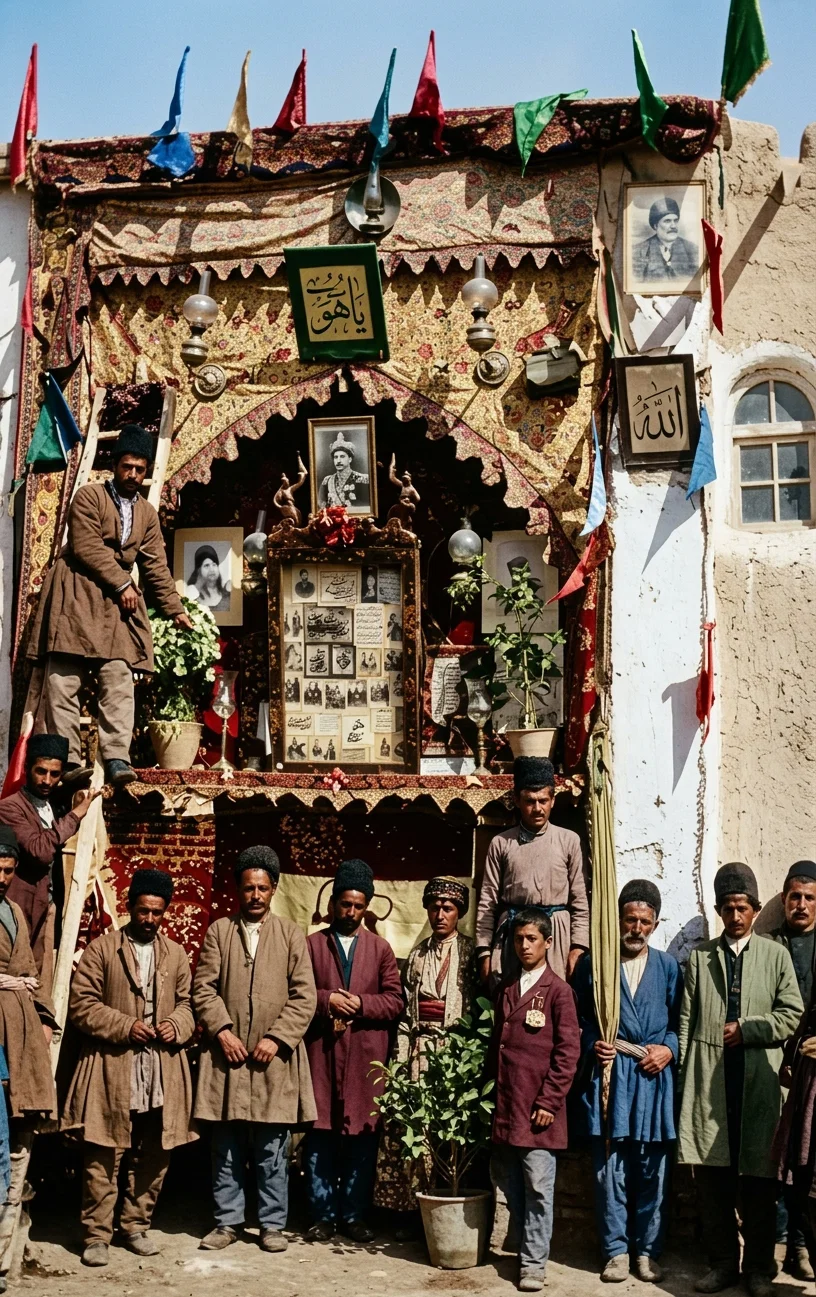
THE other day my eyes met with a sight that would make one think he were living in the eighteenth rather than in the twentieth century. It was a Persian prison. The walls and ceiling were of mud. A small hole covered with oiled paper at one end of the room cast a faint gleam of light into the gloomy prison. In one corner lay a heap of rubbish,—old pieces of broken wagons, scrap-iron, and the like,—which served as a roost for the fowls that frequent the place. In the center sat the prisoners on a few old rugs utterly insufficient to protect them from the cold, damp, mud floor beneath, and affording an excellent breeding-place for the small but numerous “inhabitants” of the place during the hot summer season. The prisoners were fastened together by their necks with heavy iron chains. Some whose necks were sore by reason of long confinement had the chain supported by forked sticks to relieve the pain. At night they were made more secure by fastening their feet in the stocks. It was freezing cold, and all that they had with which to warm themselves was a pan of coals. The prison keeper, as he told me, receives no salary, only such money as he gets from the prisoners, which is usually obtained by extortion.
All this would not be so bad if the prisoners were guilty. But only too often persons perfectly innocent are, upon the least pretext, incarcerated, and even bastinadoed, until they pay the sum asked for. Among the prisoners was a Jew who had been there for three months. The Kurds had raided his village and carried away all his property, thus rendering him unable to pay a debt of one hundred fifty dollars which was due. He must now languish in prison until he pays it, while his family must suffer and beg. The bastinado is very frequently resorted to in order to extort money. A certain number of sticks or rods are broken over the soles of the feet. But there is a far greater bondage that these poor souls are in, the bondage of sin and deception. They are held down by the shackles of a false religion. While wishing to free them from the cruel hands of injustice, one longs to point them to Him who is able to free from the bondage of sin. It is just in this condition, when oppressed by the ruthless hand of injustice, that the Moslem will listen with great interest to the sweet story of the gospel of Christ.
WAITING TO SEE THE SHAH PASS, URUMIAH, PERSIA
F. F. OSTER.
Urumiah.
In Siberia and Turkestan
By G. Perk
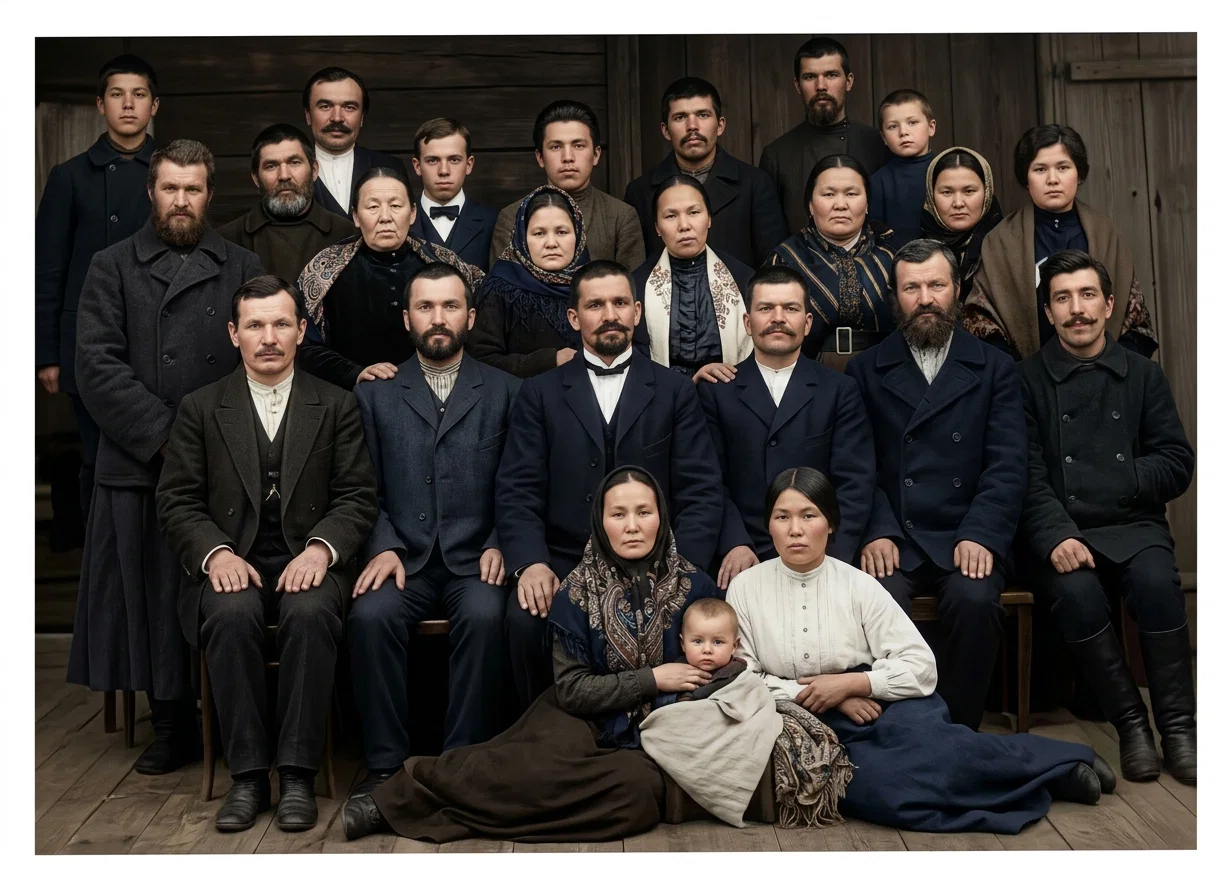
GROUP IN IRKUTSK, SIBERIA
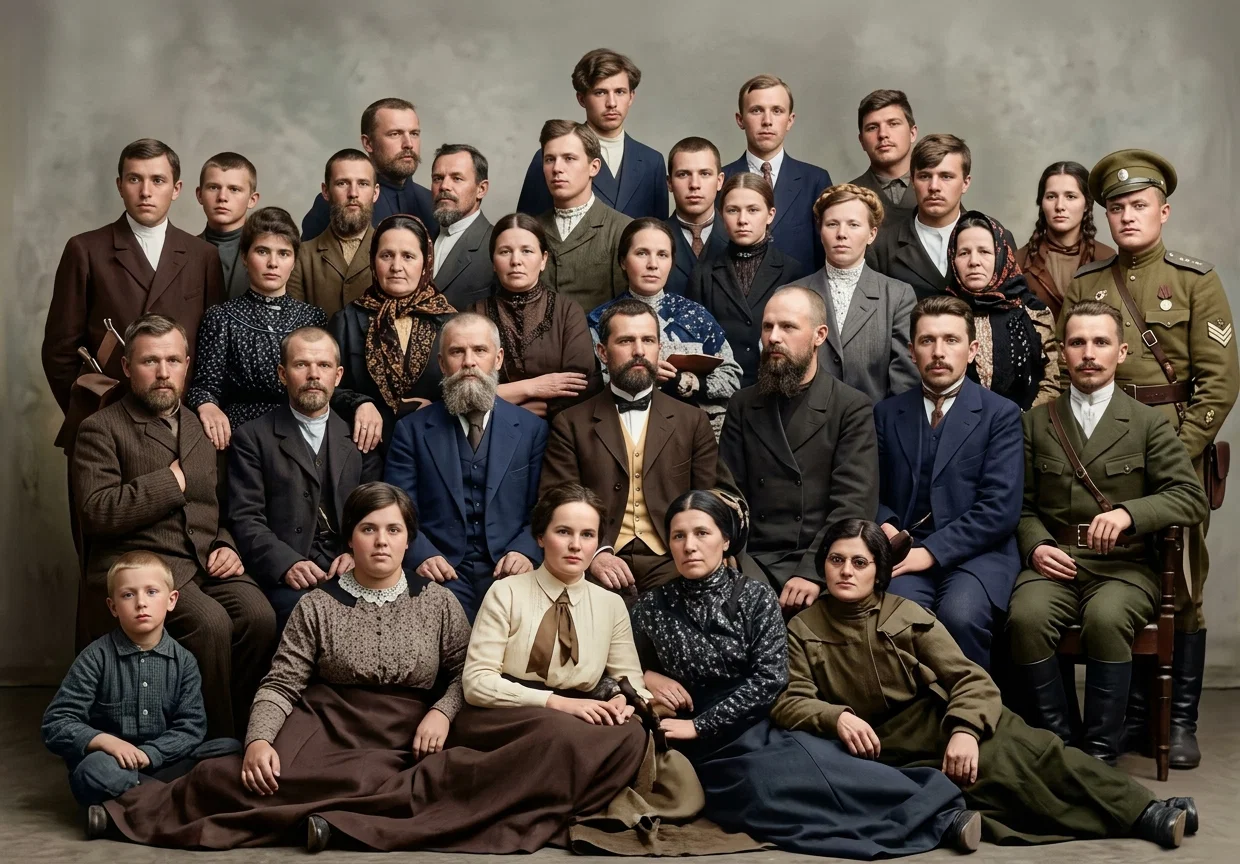
BELIEVERS IN HARBIN, RUSSIAN MANCHURIA
After a visit to churches in Simbirsk and Samara, in Siberia, I went on to Tashkend, in Turkestan. The journey is made comfortably by railway. After a few days we were in the wilderness indeed. The land looks like the rolling surface of the sea for hundreds of miles, nearly as far as Tashkend itself. I met with our workers and believers in the city and regions round about, and then went on to Orlof, toward the Mongolian border.
It was a week's journey to Orlof—by team. The rain had laid the dust, we were thankful to find. In the dry times, one can scarcely see the horses' heads before one's wagon. At night we usually stopped in some settlement of the Kirghis or Tartar people, though we preferred to sleep in our own wagon, feeling safer.
Arrived in Orlof, we found the believers of good courage, representing the “blessed hope” of the Lord's soon coming in that far interior of Asia. We had good, well-attended meetings, holding services every night in a schoolhouse. Some were baptized, and all were revived. We find the message spreading in Siberia, east and west, and in Turkestan and the south. Especially just now in eastern Siberia there is a longing for the advent message. One of our evangelists in Russian Manchuria reports that he is receiving letters from all sections to come and preach the message. At one place a company of fifteen has begun to keep God's Sabbath, and at another twenty, none of these ever having seen a minister. He pleads for more workers.
Russian Turkestan is also a land of romance, where years of war, strife, and massacre paved the way for the downfall of the Mohammedan civilization and the advent of Russian dominion. Here we meet with the famous cities of Tashkend, many of whose earth-covered roofs are laid out in flower beds; Samarkand, full of old architectural ruins, and containing the tomb of the renowned Oriental conqueror Timur Bey, of fourteenth-century fame. In the former city there are twenty-seven members in our church, and two persons are representing the message in the latter city.
G. Perk.
Saratof.
Missionary Sacrifice and Child Widows in Bengal
SOMETIMES people get an impression that missionaries have an easy time, are paid liberal salaries, and so are not sacrificing very much after all. We do not know what some missionaries may get, but we can assure our friends that no large salaries are paid missionaries who receive funds raised by the circulation of this paper. When we state that the average salary paid them is considerably less than the average wage of a common laboring man at his trade in this country, and this, too, where more must be paid for food and clothes, some estimate may be formed as to whether or not they are influenced very much by the money they receive when volunteering to go into unhealthful climes for the gospel's sake. In this service they can say with the great apostle of the early Christian church, “The love of Christ constraineth me.” Their work is truly a service of love.
The following table showing the number of widows in Bengal from one year old and upward, was recently published in the Prabsi of Allahabad:—
AGE
NO. OF WIDOWS
0–1
433
1–2
576
2–3
651
3–4
1,756
4–5
3,681
5–10
34,705
10–15
75,900
15–20
142,871
The fact that babies in their first year are already widows implies that a far larger number of marriages at that age have taken place, and it might be possible to estimate the number of wives under one, two, three, four years, and upward by multiplying the number of widows by thirty or forty. This applies only to Bengal, and would need to be further multiplied, according to local conditions, to find the total, for all India, of child-widows, and of child-wives, any of whom may become lifelong widows before they know what marriage means.
Sabbath Schools and Missions
A LIVELY interest in missions was manifested by the 2,614 Sabbath-schools in the United States and Canada, as shown in the splendid offerings to missions during 1912, which amounted altogether to $188,421.82. This was the result of keeping constantly before old and young alike the need of supplying money to send missionaries to heathen lands to live and proclaim among these many nationalities the saving principles found alone in the gospel of Jesus Christ. This sum was not made up by penny gifts alone, but nickels, dimes, quarters, dollars, and even larger sums also found their way into the Sabbath-school envelopes, to be passed on entire to the mission treasury.
At ten years of age a certain boy began to work in a cotton factory. His hours were from six in the morning to six at night. Out of the first week’s wages he bought the “Rudiments of Latin.” At sixteen he could read Vergil and Horace. Then he went to the university. Then he became a missionary and a blessing to hundreds of degraded heathen. He died in Africa, but was buried in Westminster Abbey. His name was David Livingstone.
TO THE PUBLIC
By W. T. Knox
All the proceeds derived from the distribution of this issue are dedicated to foreign missions. The distributors who carry them with official solicitors' cards are authorized to solicit donations in behalf of the Seventh-day Adventist Mission Board; and we assure the donors that the funds contributed to such persons will be transmitted through the regular denominational agencies to the treasurer of the Mission Board.
W. T. KNOX, Treasurer.
Takoma Park, Washington, D. C.
The World’s Tragedies
Some one thus summarizes “the world’s tragedies:” 207,000,000 bound by caste, from Hinduism: 147,000,000 permeated with atheism, from Buddhism; 256,000,000 chained to a dead past, from Confucianism; 175,000,000 under the spell of fatalism, from Mohammedanism; 200,000,000 more sitting in spiritual darkness, from paganism.
Harvest Ingathering Contributions
THE report of the Mission Board treasurer shows that as the result of placing in the hands of friends and neighbors the Harvest Ingathering Signs of the Times Magazine last autumn, the splendid sum of $50,164.45 was contributed to missions.
Those who may chance to read these lines and who contributed toward this worthy enterprise will please accept the hearty thanks of the Mission Board for their assistance.
A Faithful Business Partnership
WILLIS R. HOTCHKISS mentions a friend who has a business amounting to a quarter of a million dollars. He devotes two hours a day to business, and the rest of his time to the interests of the kingdom of God. Some one asked him how it was that he could spend so much time away from business, and he said, “It is like this: I have a Partner in my business, and we have an understanding that when I am away on his business, he takes care of mine.”
Offerings for Foreign Missions
ANY one into whose hands this paper falls, and whose heart may be stirred to give of his means to rescue perishing souls, may forward such offerings to the treasurer of our Mission Board, whose address appears on this page. Such gifts will be gratefully received, and promptly acknowledged; and the offering will be sacredly applied in extending the gospel in foreign lands.
The Indian Girl and the Cross
A missionary among the Indians tells of a poor little Indian girl who attended the mission school. She saw a picture of the crucifixion, and wished to know what it meant. The teacher told her as simply as she could the old but ever-new story of the cross. As she went on with the story, tears streamed down the face of the little girl, who did not speak for a while. Then her first words were, 'Me never want to do bad any more.' Her heart was so touched with the love of the Saviour who died for our sins that she resolved never to grieve him, but desired to please him perfectly. For the first time in her life she realized that her sin was against the loving Saviour. All real conviction of sin must have for its essence a clear conception that we are wronging God, grieving the divine heart.
American Bible Society Circulation
THE American Bible Society was organized in 1816. It issued last year, at home and in other lands, 4,049,610 volumes of Scripture. It circulates the Bible in more than 100 languages. Its issues last year from the Bible House, New York, were 2,107,859 volumes, in seventy languages. It issued last year from its agencies abroad 1,941,751 volumes of Scripture, largely in the great Asiatic languages. Its twelve foreign and nine home agencies cover nearly the entire home and much of the foreign missionary field, and it has correspondents in more than thirty countries outside of those included in the agency fields.
Support for Mission Fields
During the World's Conference held in Washington, D. C., May 15 to June 8, by the people issuing this missions number, about one hundred fifty appointees (with a few returning from furlough) were voted when on to the fields afar calling so urgently for help. This large list added to those already upon the frontiers will call for many additional dollars to keep them supplied with the necessities of life. Liberal gifts from those who have means will at any time be very thankfully received.
Literature on Various Topics
The Seventh-day Adventist denomination now owns and operates twenty-six publishing houses,—six in North America and twenty in foreign lands. This does not include numerous college and private printing plants, nor the sixty-five affiliated tract societies handling our literature in as many local conferences.
Literature on Various Topics
Selected From Our List of 336
Books marked * are illustrated.
Christ Our Saviour, a graphic account of the life of Christ, profusely illustrated. 182 pages; board, 50 cents; cloth, 75 cents.
The Desire of Ages, one of the most exhaustive studies on the life of Christ in print. 900 pages; cloth binding, $3.
His Glorious Appearing, an interesting study of Christ's own statements regarding his second advent. 128 pages; board, 25 cents; cloth, 50 cents.
Heralds of the Morning refers the reader to every-day signs which indicate the soon coming of Christ. 384 pages; cloth binding, $2.
Here and Hereafter, the Bible teaching in regard to the future of mankind. 357 pages; cloth, $1.
History of the Sabbath, an exhaustive treatise on the Sabbath question from a historical and Biblical standpoint. 800 pages; cloth, $1.50.
Steps to Christ, a book giving counsel to the inquirer, encouragement to the young convert, and cheer to the growing Christian. Paper binding, 30 cents; cloth, 60 cents; gilt, $1.
Thoughts From the Mount of Blessing, an inspiring exposition of the sermon on the mount, artistically printed and bound. 218 pages; cloth, 75 cents.
The Ministry of Healing draws practical lessons from the work of Christ in relieving suffering humanity of physical ills, and points the way to spiritual health and happiness. 540 pages; cloth binding, $3.
The Hand of God in History. In this book, history is shown to have fulfilled the predictions of the prophet, and the testimony of astronomy is given on the side of history and prophecy. 250 pages; paper, 25 cents; cloth, 50 cents.
The Bible Text-Book, a tersely written compendium on 49 Bible Topics. 208 pages; pocket size; cloth, 30 cents; leather, 50 cents.
Bible Footlights, a book of Bible readings on 13 topics designed to encourage the study of the Bible in the home. 320 pages; cloth, $1.50.
Great Controversy Between Christ and Satan, one of the most interesting and complete histories of the conflict between Christianity and the powers of darkness ever written. 700 pages; cloth, $3.
Daniel and the Revelation, a verse-by-verse study of these important books of the Bible. 900 pages; cloth binding, $3.
Home and Health, a household manual of recipes and helpful suggestions. 600 pages; cloth binding, $2.50.
Practical Guide to Health, the most modern medical book for the home, giving the description of diseases, with their symptoms, cause, and treatment. 668 pages; cloth, $3.
Best Stories From the Best Book, a book of Bible stories adapted to the needs of children. 200 pages; board, 50 cents.
Bible Child Life, a biography of the famous children of the Bible. 114 pages; cloth, 50 cents.
Easy Steps in the Bible Story, a charming book of Bible stories from creation to the crucifixion. 600 pages; cloth, $3.
Good Form and Social Ethics, a fascinating, up-to-date study on etiquette. 300 pages; cloth, 75 cents.
God's Two Books, plain facts about evolution, geology, and the Bible. 200 pages; cloth, $1.
Periodicals
Selected From Our List of 123
Signs of the Times. A 16-page illustrated religious weekly. Expositor of prophetic, educational, and temperance truth. One year (50 numbers), $1.75. Address, Mountain View, Cal.
Signs of the Times Monthly. An illustrated monthly magazine, interpreting current history in the light of Bible prophecies. Yearly subscription, $1. Single copy, 10 cents. Address, Mountain View, Cal.
Life and Health. An illustrated monthly magazine of health and temperance. Yearly subscription, $1. Single copy, 10 cents. Address, Washington, D. C.
Liberty. An illustrated magazine of religious freedom. Issued quarterly. Advocates complete separation of church and state. Yearly subscription, 35 cents. Single copy, 10 cents. Address, Washington, D. C.
The Protestant Magazine. An illustrated monthly advocating primitive Christianity and protesting against apostasy. Yearly subscription, $1. Single copy, 10 cents. Address, Washington, D. C.
Christian Education. An illustrated bimonthly magazine for home and school. Yearly subscription, $1. Single copy, 10 cents. Address, Washington, D. C.
The Watchman. An illustrated monthly magazine. Throws the search-light of Bible prophecy on past, present, and future. Yearly subscription, $1. Single copy, 10 cents. Address, Nashville, Tenn.
The Youth's Instructor. An illustrated, 16-page weekly. Clean, educational, inspiring. Yearly subscription, $1.25. Address, Washington, D. C.
Our Little Friend. A Christian weekly for the children. Eight pages, illustrated. Yearly subscription, 70 cents. Address, Mountain View, Cal.
Printing-Press and the Gospel, a history of the art of printing, and its relation to the spread of the gospel. 224 pages; leather binding, 60 cents.
American State Papers, one of the most complete collections of facts on the subject of religious liberty ever printed. 800 pages; cloth, $1.25.
The Conflict Between Capital and Labor, a book of valuable facts and figures on an important subject. 208 pages; 75 cents.
Bible Tracts
Selected From Our List of 1,383
Tracts marked * are envelope size.
On Bible Study
Benefits of Bible Study ........................................ .00½
Limits of Civil Authority ....................................... .00¼
Civil Government and the Church ................................ .00¾
Church Federation ................................................ .00¾
Logic of Sabbath Legislation .................................... .00½
William Lloyd Garrison on Sunday Laws ........................... .00½
Sunday Mail Reports ............................................. .00¾
What Are Works of Charity and Necessity? ........................ .00¼
Send for price-list of over 500 tracts and pamphlets in 30 foreign languages, from the Arabic to the Yiddish and Zulu.
The books, periodicals, and tracts listed above are only a very few of the large variety of publications, in sixty-three languages, issued under the auspices of the denomination. For complete catalogue of our English and foreign publications, address any of the four publishing houses or their eight branch offices mentioned on this page.