Twenty Thousand Patients in a Twenty-Dollar Building
[The money has been raised by our Sabbath-schools to put up a hospital building in this place.—ED.]
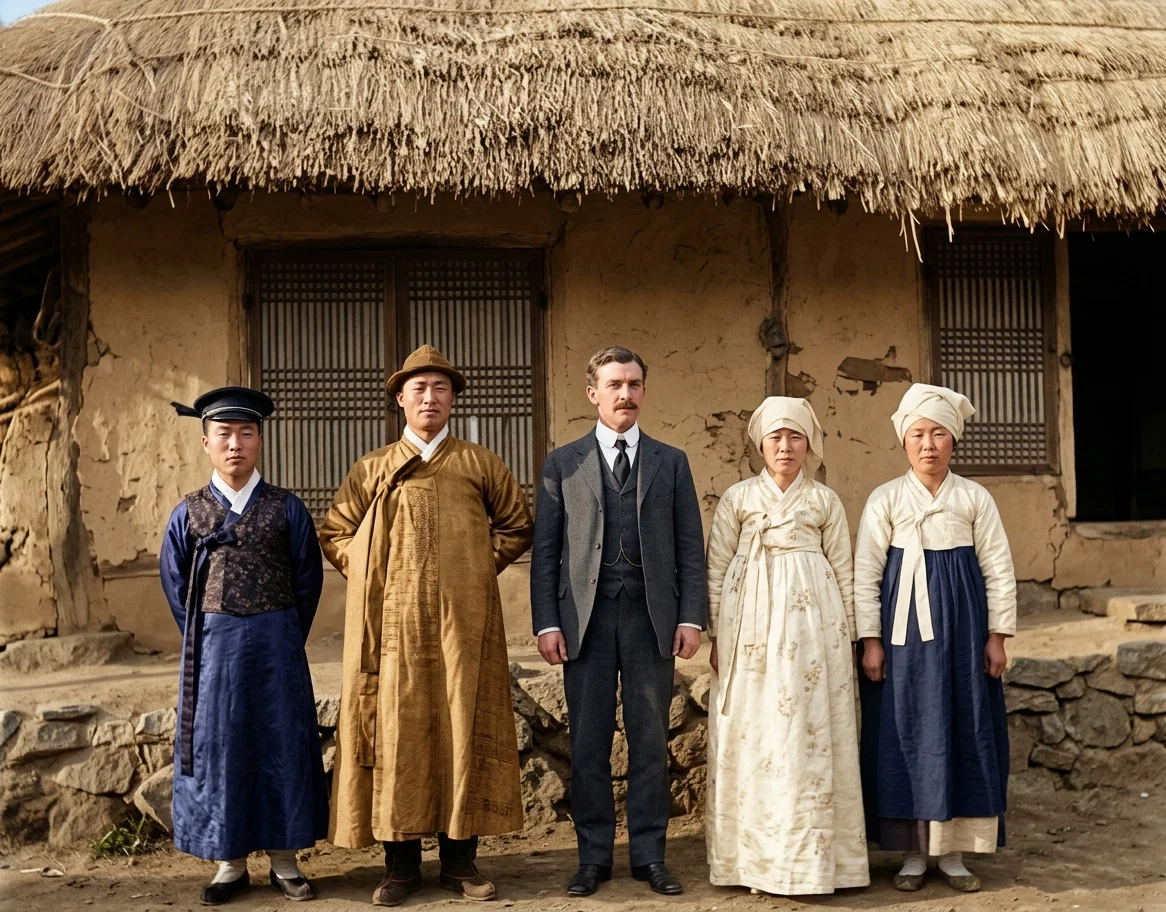
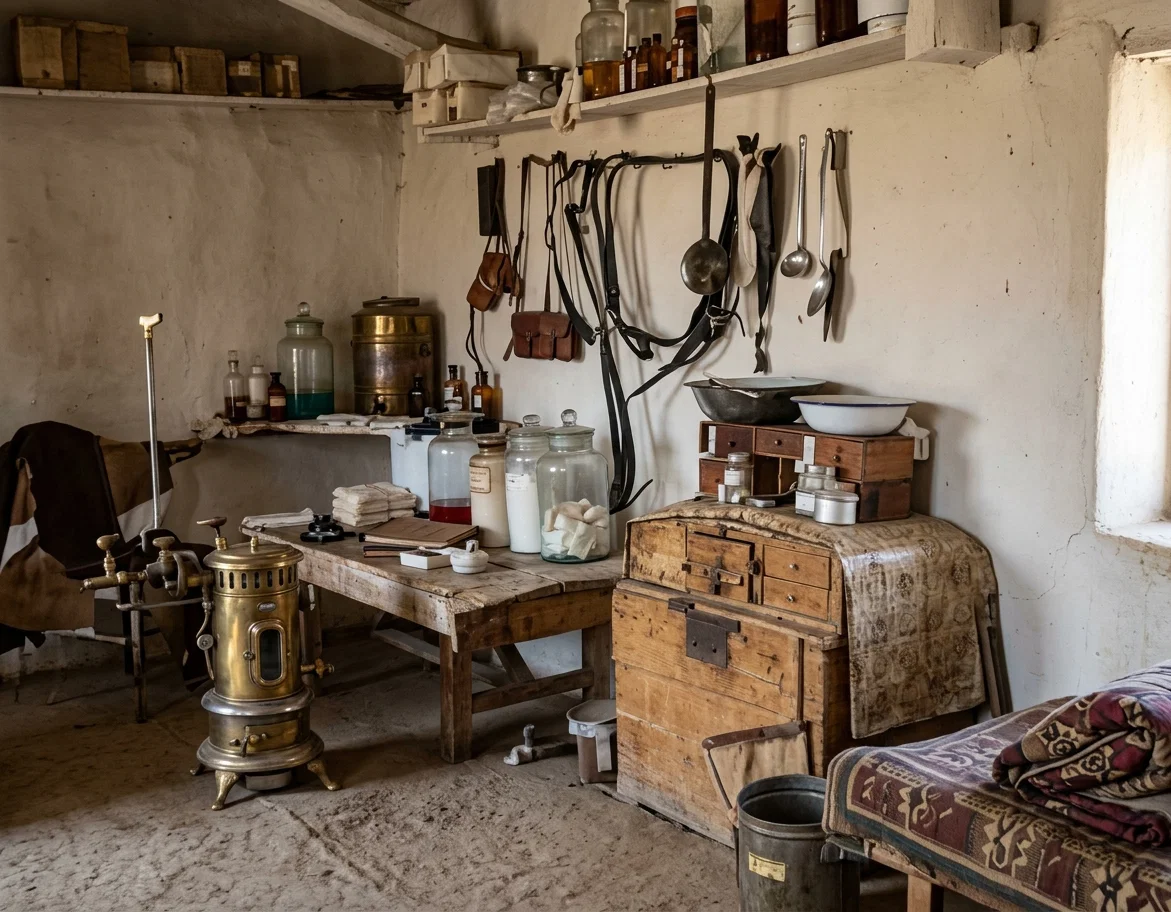
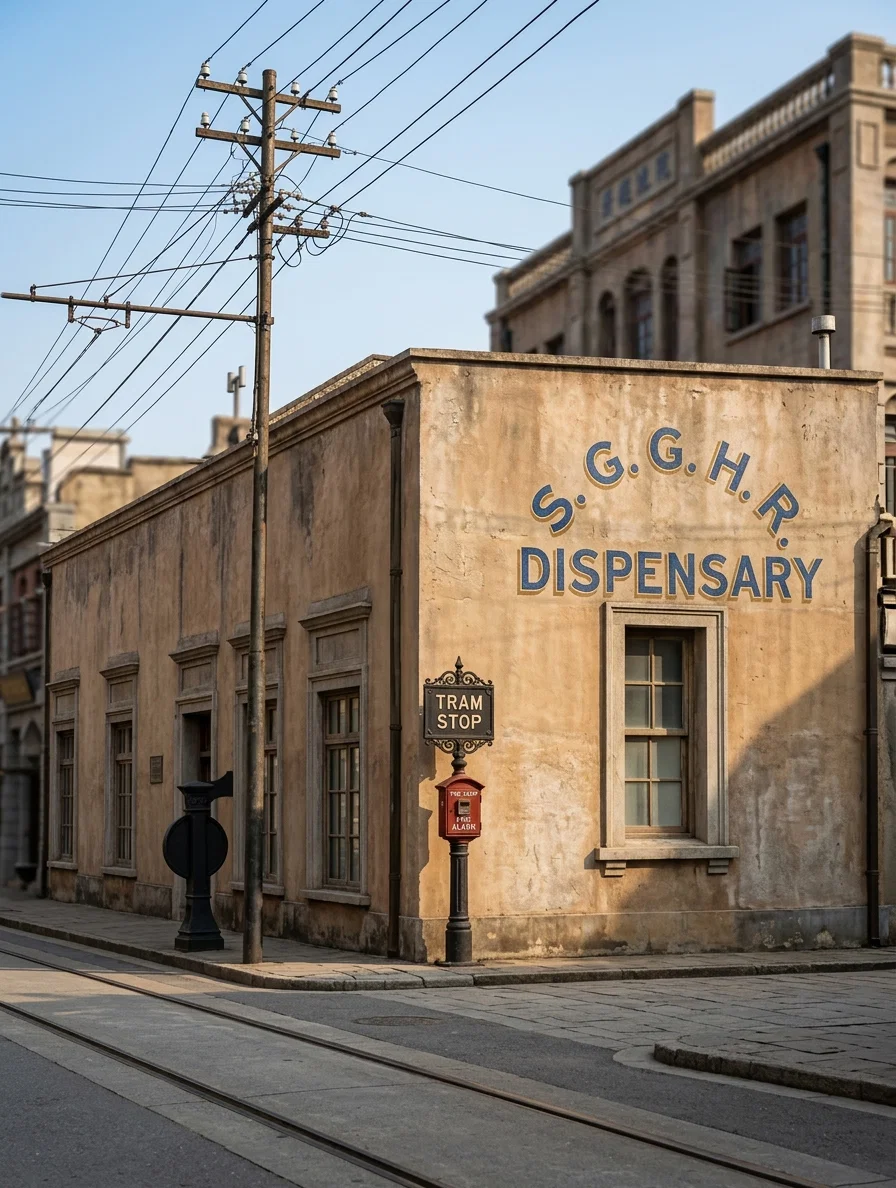
WE have in Soonan a small Korean house that cost twenty dollars gold, or forty yen; also one small house, where women and children may wait. This has been our dispensary. In the four years we have been here, we have seen over twenty thousand patients. The people know nothing of infection, but in the old heathen mind all disease is wind in the bones or some other part of the anatomy, and it must be let out. This is generally accomplished by means of needles of various sizes and all possible degrees of uncleanliness.
One woman we found to have been stuck nearly three hundred times in the face. It was only by diligent effort that her life was saved, so severe was the infection.
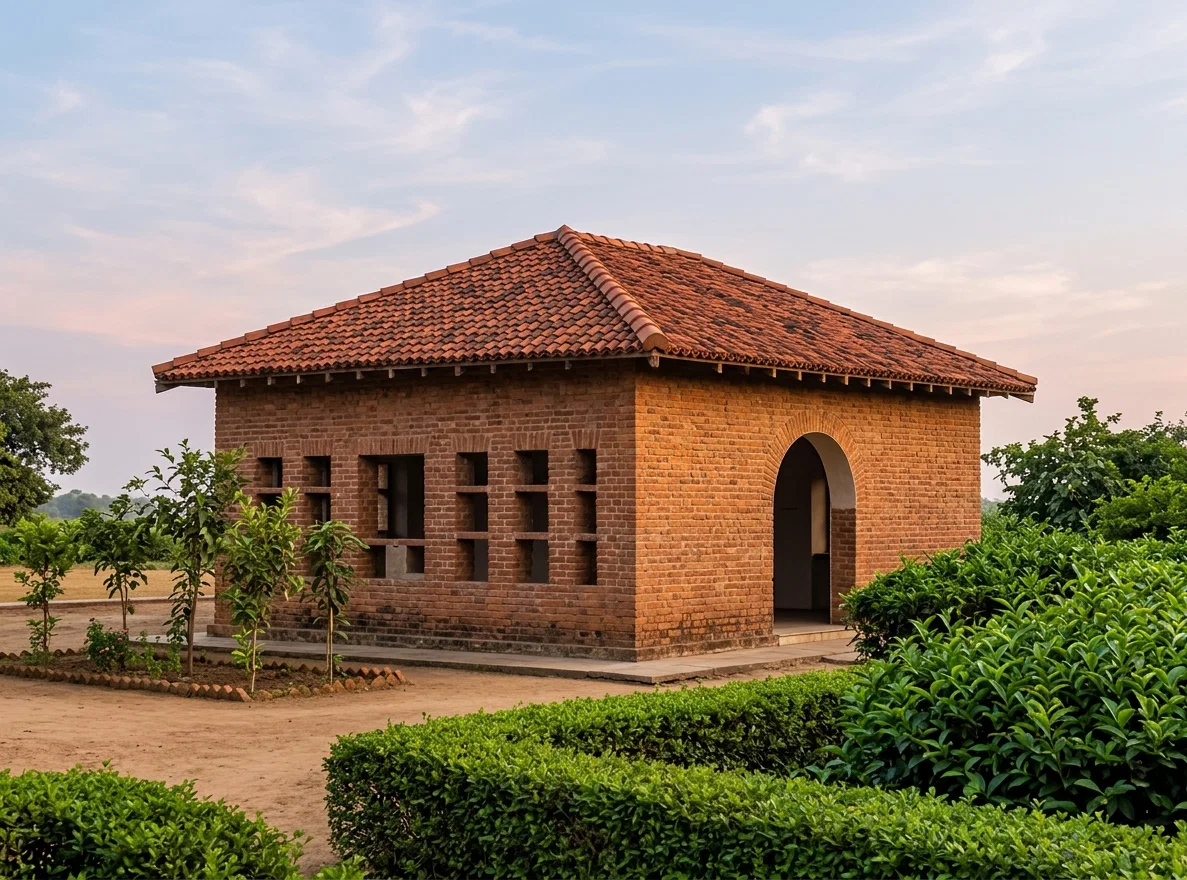
Karmatar (India) dispensary, cost of which was $60.
Two Chinese evangelists washing out the stomach of a woman who had taken a poisonous dose of raw opium.
The medical work makes openings for the gospel; for the rankest devil-worshiper, who hates Christianity and all that goes with it, will call the Christian physician when the grim monster Death faces him or his family. Only two weeks ago, while returning home from a one-hundred-mile horseback ride, I was called to see a woman about nineteen years old who could not possibly have lived more than a few hours, but the diagnosis was easy and the treatment simple, and from my saddle-bags I was able to give her almost instant relief. She and her mother walked twenty miles to see me last week, and the old woman said no one but a missionary could have known what to do, and “thus our daughter, who was the same as dead, is alive and with us well.” There are things in such work as this that shake heathenism to its foundations.
The schools are now changing these sorrowful conditions. The Union Medical School in Seoul and the Japanese medical schools are training young men in better methods. The change in government has also brought in many much-needed hygienic reforms, but Korea’s great need is yet only touched on the extreme edges.
RILEY RUSSELL, M. D.
Soonan, Korea.
An Experience in East Bengal
By Carolyn M. Brunson
It had been an unusually hot day, and we had had a number of cases in the dispensary. I was just beginning to think the day’s work finished when a young Mohammedan came, pleading that I go to see his sick baby. When the child was taken ill, the father was working in a large city some distance from us, and had there obtained medical advice and treatment for his child; but when it continued to grow worse, the superstitious fears of his people overcame the father and mother, and they felt they must return to their own village.
A Bengali (India) dispensary worker; but her plea is: "I want to preach the gospel to my own people in some new place."
We used our simple rational treatments,7and immediately the child began to improve, and in a few days was entirely well. I felt especially thankful for God’s help and guidance in this case, as in helping his child we touched a responsive chord in that Mohammedan’s heart.
CAROLYN M. BRUNSON.
Gopalgang.
At the Foot of the Himalayas
By V. L. MANN, M. D.
NAJIBABAD is a town of 20,000 inhabitants. It is not a meanly built little town, for northern India, and the streets are kept quite clean. It lies about fifteen or twenty miles from the base of the Himalaya Mountains. The tahsil, or township, has 422 villages, and a total population of 155,000, this being an average of 300 persons to the square mile. Our dispensary workers are the only Europeans there. Medical missionary work opens the way to the hearts of these people. If you could see the quarters in which our workers treat from sixty to two hundred patients a day, I am sure it would open up a liberal spot in your heart. Small, dark, pinched quarters, with mud floors, situated in the center of a crowded bazaar, — all this goes to make it a very uninviting place.
We are sadly in need of money to erect a hospital to which we can bring poor, suffering people who need special care. Such a hospital could be built and equipped for a few thousand dollars.
V. L. MANN, M. D.
To See the Missionary’s Face
By G. A. Ellingworth
SHORTLY after midnight, on Sabbath morning, the watchman called me up, saying a man had been bitten by a snake and needed attention. I quickly made incisions around the wound, put in potassium permanganate, and bound it up. Next morning at six o’clock the watchman reported the man to be all right; but on going down just before breakfast, I found the patient suffering considerably and in a critical condition. Brother Robinson and I quickly treated him with hot and cold applications, keeping this up for about two hours before we deemed it safe to leave him to the care of native boys, while we had our belated Sabbath breakfast. After breakfast the treatments were kept up at intervals till afternoon, when the patient had a good sleep, and in two days was all right. A few days later came the now-well man with another native. I asked them what they wanted, and the cured man said: “This is my brother; he came from our home to take my things, as he thought I should be dead. Now he wishes to see your face, as you have cured me.”
G. A. ELLINGWORTH.
Malamulo Mission, Nyasaland.
A Shanghai Dispensary Incident
By Bertha L. Selmon
There were three members of the Li family,—father, mother, and a little boy of eight years. Poverty had compelled the father to leave home in search of work. The family had seen better days, for the mother had a fair education for a Chinese woman. She has been attending the Bible class in the Shanghai chapel for some time, and reads her Bible readily. She and the child were living in a little, dark, dingy room, and eating what even the poorest Chinese look upon as very coarse food. The little boy became very sick, and it seemed he would surely die. He was so sick that the mother could not take him to the dispensary, and as she had no money, how could she ask the doctor to come to see him? But our Bible woman visited them, learned their pitiful plight, and at once told the missionary doctor. The doctor called, and the child was treated and soon showed marked improvement. As soon as he could sit up in the bed, he would say to his mother every afternoon: “Mother, you go and worship God. I am better now and can stay alone.” Young as he was, he realized that it must be a good thing to worship God, for he knew that as soon as the “worship-God-people” learned that he was sick, they came to help him.
This was the kind of work done by our Saviour when here on earth. The record says that he “went about doing good, and healing all that were oppressed of the devil; for God was with him.” By ministry to the physical needs he found entrance to the hearts of the sufferers. He is the same merciful, compassionate Saviour today.
BERTHA L. SELMON, M. D.
Fell Down to Worship the Nurse
By Della Burroway
A NURSE and I were called to attend one of those helpless shut-in women of India, who, unless the lady doctor or nurse takes pity upon them, are left to die, no man being permitted to see them. The apparently dead child was cast aside with such exclamations as, “How sad! it’s a boy.” Our nurse began to work vigorously over the babe, which, after several minutes, showed signs of life. With its first cry, the women who had been busy over the mother, fell at the feet of the one who they supposed had given life, and had to be restrained from giving her the praise due our Creator.
DELLA BURROWAY.
Karmatar, Bengal.
Pure Religion and Undefiled
“PURE religion and undefiled before God and the Father is this, To visit the fatherless and widows in their affliction, and to keep himself unspotted from the world.” James 1:27.
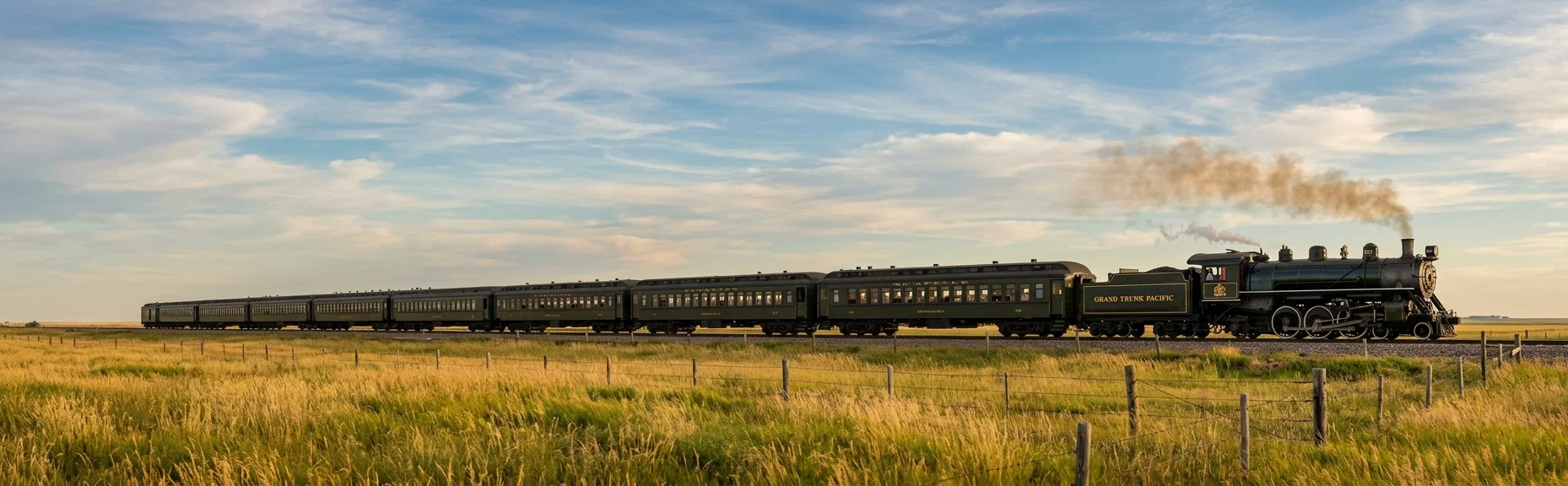
“WEST OF EDMONTON”—GRAND TRUNK PACIFIC TRAIN ON THE PLAINS OF THE FAR CANADIAN NORTHWEST
CENTURY OF QUICK TRANSIT
Facilities for a Quick Work
FOR thousands of years men traveled up and down the world and over the lesser seas in the same old way—as fast as horse or sailboat could carry them. Suddenly a change came. When? Dr. Alfred Russell Wallace, the scientist, speaking of land locomotion, wrote in his book, “The Wonderful Century:” —
“From the earliest historic, and even in prehistoric times, till the construction of our great railways in the second quarter of the present century [the nineteenth], there had been absolutely no change in the methods of human locomotion.”
As for steamship development, while Fulton’s “Clermont” sailed the Hudson in 1807, it was not till 1838 that the first steamship crossed the Atlantic under steam alone. With reference to world-transforming events of the Victorian era,—Queen Victoria’s reign opened in 1837,—McCarthy’s “History of Our Own Times” says:—
“A reign which saw in its earliest years the application of the electric current to the task of transmitting messages, the first successful attempts to make use of steam for the business of transatlantic navigation, the general development of the railway system all over these countries, and the introduction of the penny post, must be considered to have obtained for itself, had it secured no other memorials, an abiding place in history. The history of the past forty or fifty years is almost absolutely distinct from that of any preceding period.”
The express-locomotive, the express-steamer, the telegraph, the telephone, the wireless, the extension of the universal postal system, all these things making for the opening of all lands and the rapid spread of knowledge, have come within a century, and their successful development has been part of the history of our own generation.
Why have these changes waited for our time?—Assuredly because the “sure word of prophecy” declared that when the last days came, the message of the “everlasting gospel” was to be carried to “every nation, and kindred, and tongue, and people.” Rev. 14:6. In vision, the prophet saw this work of evangelizing the world being done quickly, speeding on as by an angel flying “in the midst of heaven.”
The hour has come for the work to be done, and the hand of Providence has provided this generation with means for a quick work which no generation before us ever possessed. This, then, is the generation in which the gospel witness is to be borne to all nations. “And then shall the end come,” said the Lord Jesus, speaking of the signs of his second coming in power and glory. Matt. 24:14.
Reserved for the Last Century
By T. E. Bowen
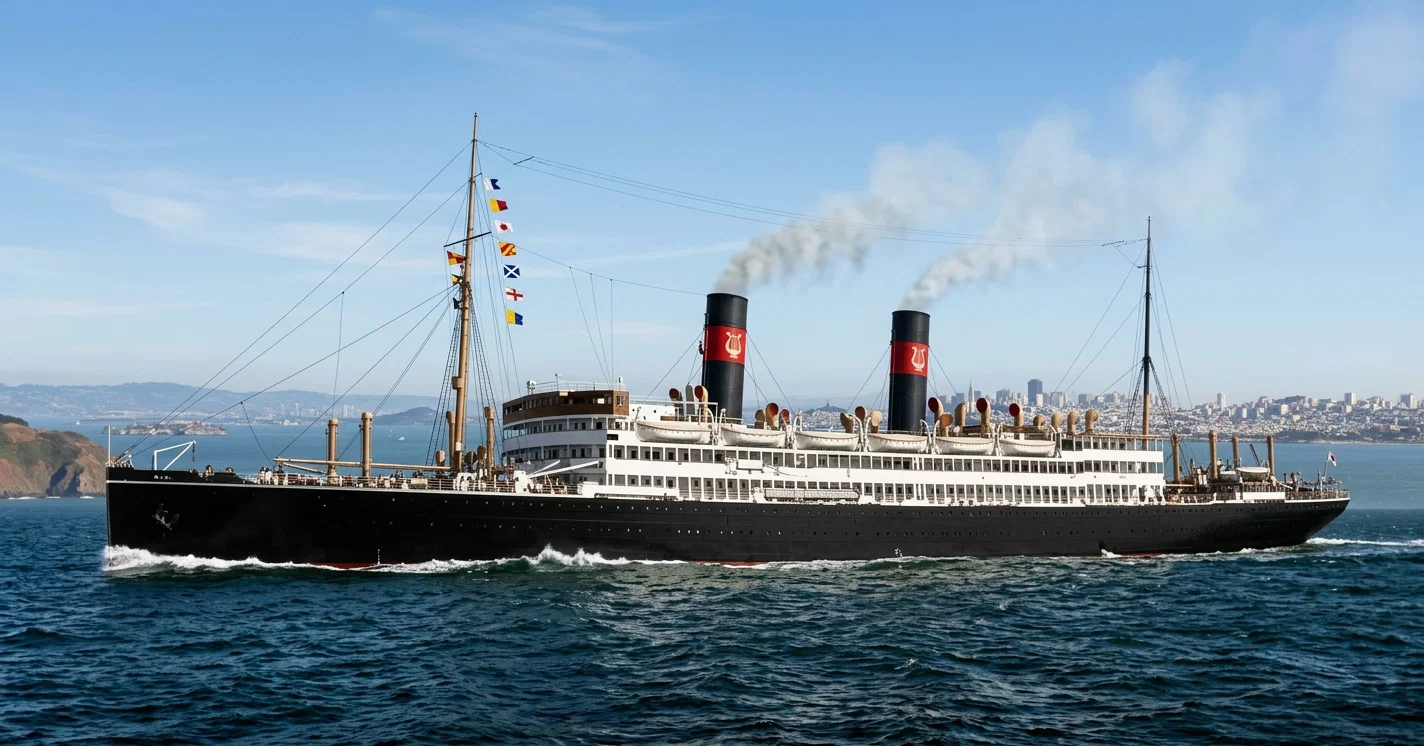
S. S. OF THE JAPANESE TOYO KISEN KAISHA LINE, LEAVING SAN FRANCISCO
As the prophet Daniel beheld the scenes of the end in holy vision, he saw in astonishment what our natural eyes may now look upon. A few brief words from his pen describe the wonders of the century in which we now live: “But thou, O Daniel, shut up the words, and seal the book, even to the time of the end: many shall run to and fro, and knowledge shall be increased.”
We have become so accustomed to these many, O, so many new developments that we are likely to think of them as commonplace. But any forefather who has spanned fourscore or more years, can remember when these things, so common, were not to be found in the land. Let us run over the list to refresh our own minds.
A writer introducing a book entitled “Progress of Invention in the Nineteenth Century,” says in part:—
“To appreciate them [the wonders of this age], let us briefly contrast the conditions of today with those of a hundred years ago. As we make the backward run of one hundred years, we have passed by many mile-stones of progress. Let us see if we can count some of them as they disappear behind us. We quickly lose the telephone, phonograph, and graphophone. We no longer see the cable-cars or electric railways. The electric lights have gone out. The telegraph disappears. The sewing-machine, reaper, and thresher have passed away, and also have all india-rubber goods. We no longer see any photographs, photoengravings, photolithographs, or snap-shot cameras. The wonderful octuple web perfecting printing-press, printing, pasting, cutting, folding, and counting newspapers at the rate of 96,000 an hour, or 1,600 a minute, shrinks at the beginning of the century into an insignificant prototype. There are no gas-engines, no elevators, no asphalt pavement, no steam fire-engine, no triple-expansion steam-engine, no self-binding harvesters. We lose air-engines, stem-winding watches, the great suspension-bridges and tunnels, iron-frame buildings, revolvers, torpedoes, magazine guns, linotype machines, typewriters, all Pasteurizing, knowledge of microbes or disease germs, and sanitary plumbing, air-brakes, electric locomotives,—enough! the reader exclaims, and indeed it is not pleasant to contemplate the loss.”
And what does it all mean?—That the God of heaven, who has a great work to accomplish in the last generation, has prepared for it and is accomplishing it before the eyes of this very people who are alive today. Blessed are the eyes that see his providence, and the ears that hear his voice, in all these things, inviting them to come unto One who is abundantly able to save.
T. E. BOWEN.
Mosquito Indians
By H. C. Goodrich
I HAVE a letter from one of our Indian brethren on the Mosquito Coast of Nicaragua. He reports that he is going from house to house to sing and pray and read the Bible with his countrymen. Five of these Indians are engaged in this good work. At first, the leader says, the people often ran away when they came to read with them, but now they have more calls than they can fill.
The Mosquito Indians are the real natives of Nicaragua. Among these people the work has opened up in a remarkable way. As the result of the good work mentioned above, a company of Indians has been raised up at Pearl Lagoon. Five have been baptized, and five or six others are now awaiting baptism.
The Moravian missionaries have done a good work among these Indians. Many have been changed from a wild, superstitious, drunken condition to good, steady citizens.
H. C. GOODRICH.
Panama.
Still Calling for the “God-Man”
By E. C. Boger
CONSTANTLY the call for help to learn the way of life has come from Indians in the far interior of British Guiana. Two years ago Elder O. E. Davis responded. Twenty-nine days he journeyed by boat up the river, and then on foot for ten days through dense forest, to reach the region from which the calls had come. These Indians had learned of our work by contact with the Indians of our mission on Tapagruma Creek, about fifty miles from Georgetown. Elder Davis visited among the Indians of the forest, teaching them the Word of God, and reported the establishing of three mission bases among them. One hundred eighty-seven definitely took their stand to keep the commandments of God and the faith of Jesus. Then our brother laid down his life among them, at Mt. Roraima.
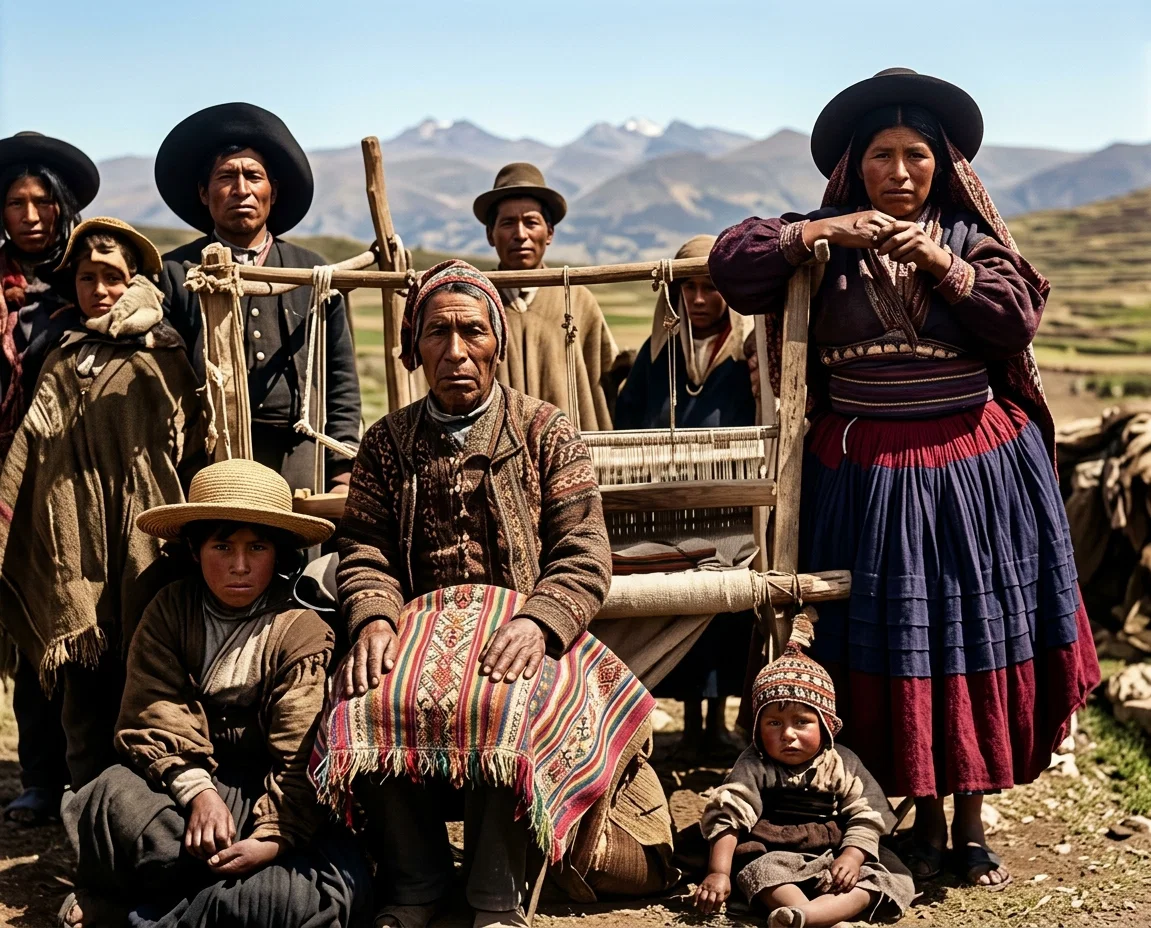
THE “DEACON” AND HIS LOOM
Since then repeated calls have come. So far we have seemed unable to secure the man and the means. Still they look to us to send a teacher to take up the work begun.
E. C. BOGER.
Georgetown, British Guiana.
AMONG INDIAN TRIBES
By F. A. Stahl
Lake Titicaca Indians
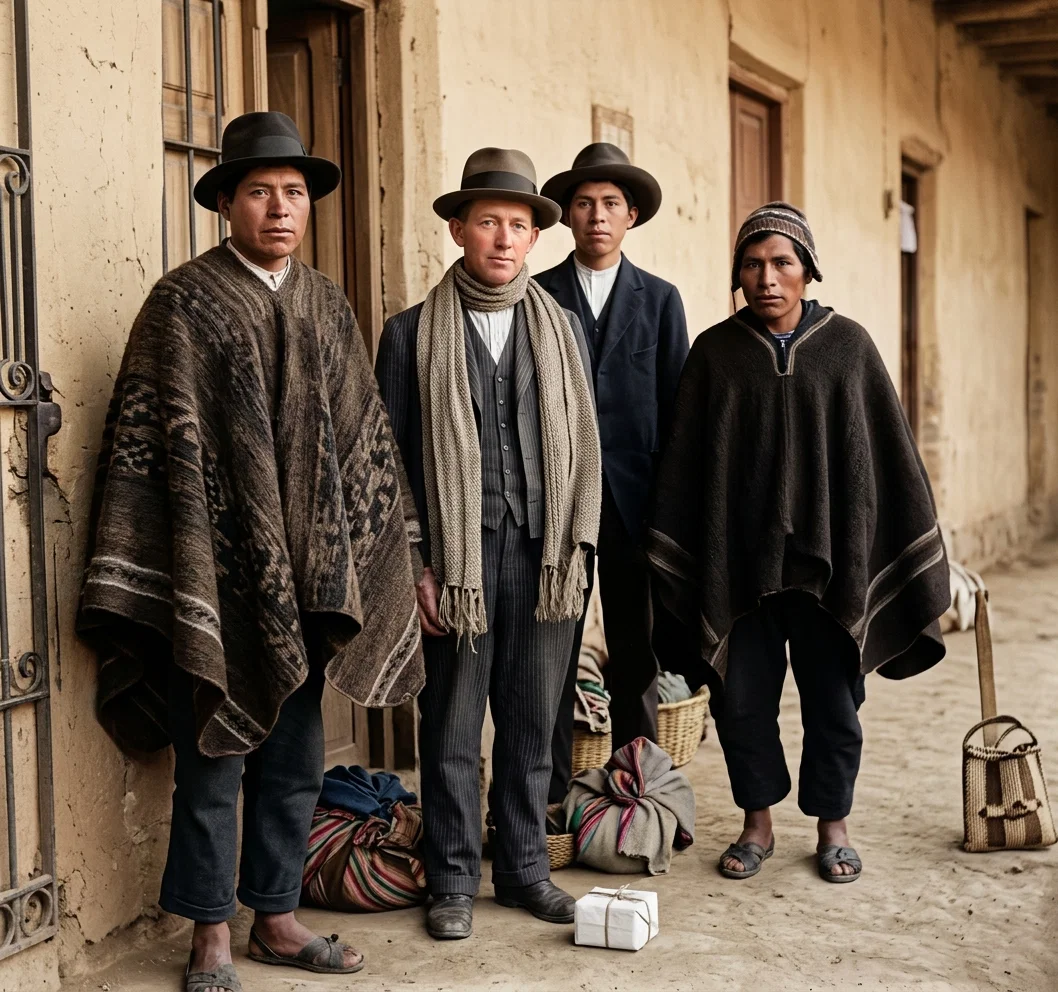
A FEW weeks ago I baptized eighteen Indians, among whom were young people who have counted well the cost. I feared that the great feasts that have taken place right around us would have an influence upon some of our people, as special invitations were sent to a number of our young men by the governors of the provinces, urging them to come to the feasts and promising them a leading part. But no, not one yielded. Several who have not yet taken their stand on the side of truth attended the feasts, and then came to our meetings shame-faced, expecting that we would scold them. But we treated them with the utmost kindness, saying nothing about their having attended the feasts. This wins them. As a result of exposure, one young man became very ill. In his pain he sent for me. I treated him for his illness, and did not refer to the cause. When he recovered, he came at once to our prayer-meeting, and before all present confessed that he had done wrong, and that he was through with the feasts, intending now to follow Jesus. And his voice had the true ring in it, a ring which meant determination never again to be unfaithful to his blessed Lord and Master.
F. A. STAHL.
Titicaca Indian Mission, Peru.
The Zapotecans of Mexico
By G. W. Caviness
IN the state of Oaxaca, Mexico, there still exists a remnant of the Zapotecan Indian tribe, said to number about 100,000. They are civilized, and use Spanish in business, but they retain the primitive language in the home. In their own tongue they have scarcely any books, and the prediction is made that the language will die out in the near future. They live in villages, the surrounding land being held in common.
As a rule, the people are tall and well-built. They are generally honest and serious, and are religiously inclined. I have never seen an audience sit and listen to the preaching of the gospel with greater interest and attention. They seem to drink in every word. We have four companies of believers among this tribe, and they are paying the salary of the evangelist among them. G. W. CAVINESS.