INDUSTRIAL work is not, as some have thought, against the spiritual interests of mission work. It is the best background for a spiritual life among all classes of people.
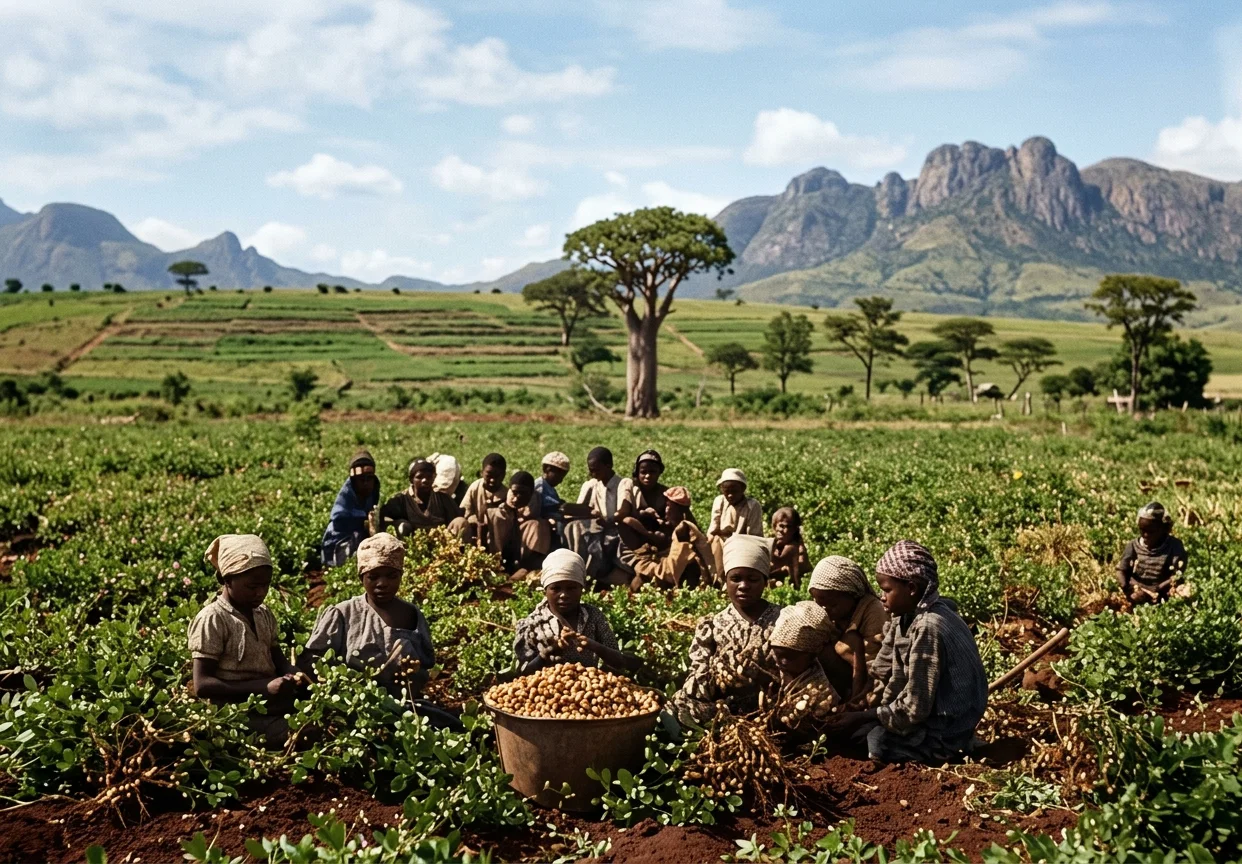
In Rhodesia last year two of our missions set out to reach the self-supporting mark. God set his seal to their endeavors by giving them abundant harvests, while drought conditions prevailed throughout the sections where they were located. The missions were repeatedly visited by rains in answer to special prayer.
To educate the African native without training him in industrial work, generally results in lifting him above common labor and thus unfitting him for practical life.
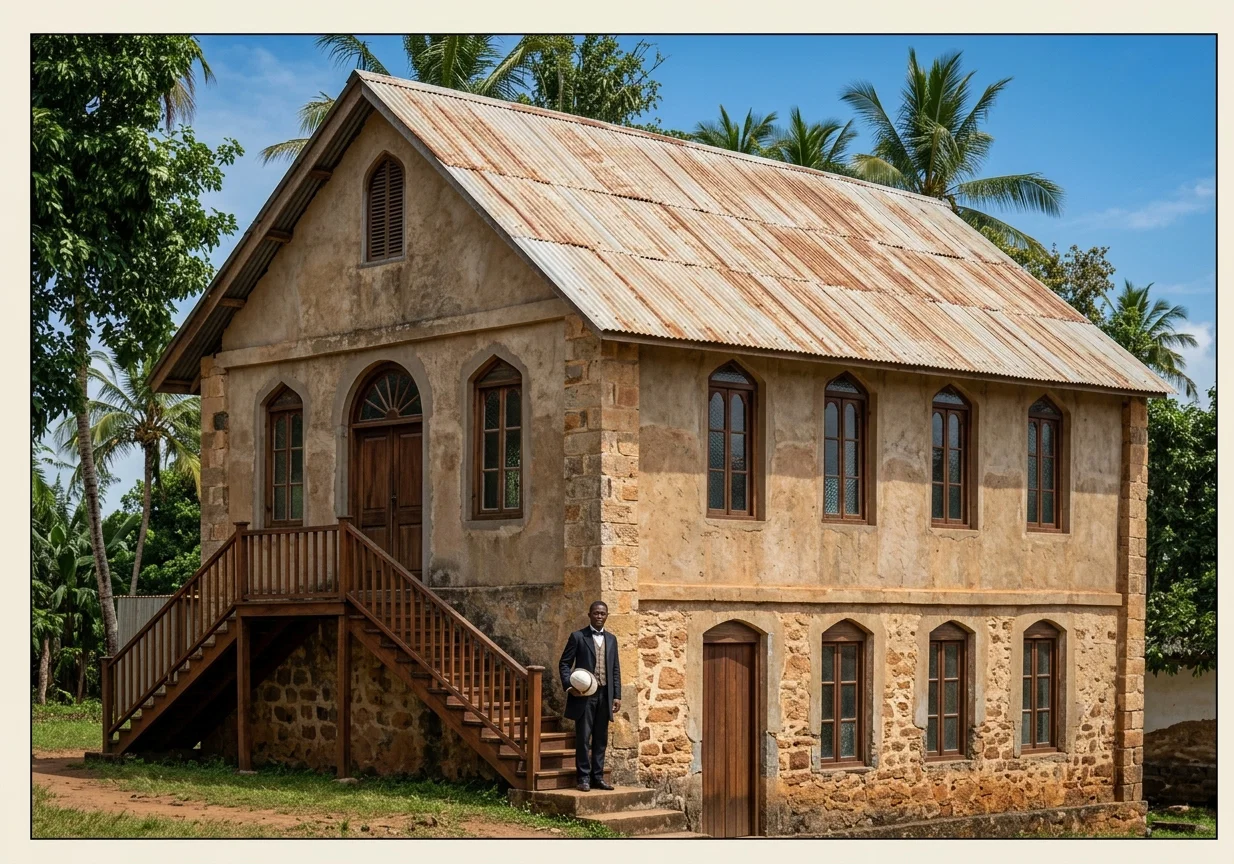
WATERLOO CHURCH, SIERRA LEONE
A Christian education embracing industrial training fits him for the best possible service as a laborer, besides giving him a clearer view of the humble Christian life of the Man of Calvary. It thus increases his stability as a Christian and lays the foundation for a more deeply spiritual life.
Our Barotseland Mission (beyond the Zambesi), which is now self-supporting, shows a present valuation equal to every dollar that has been sent to it for operating, from its beginning to the present time.
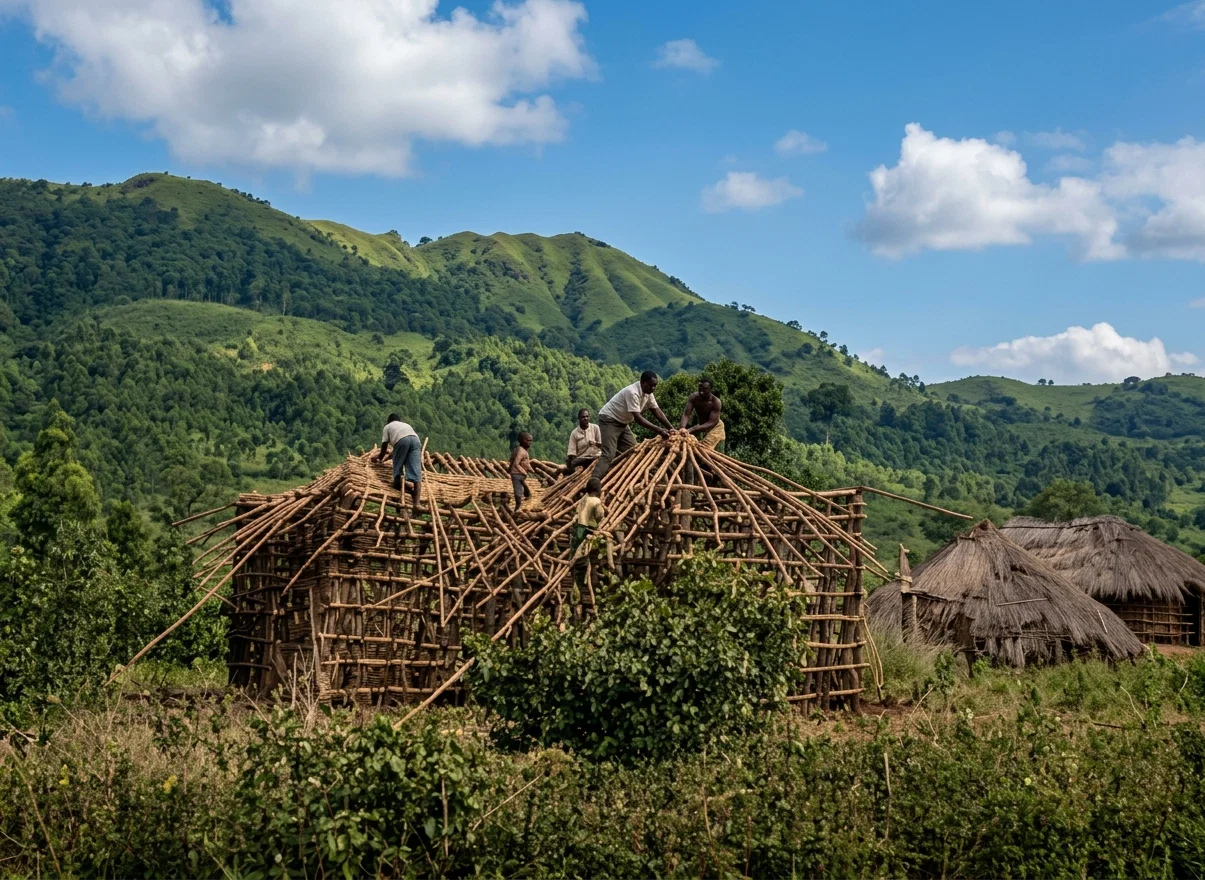
A NYASALAND SCHOOL-TEACHER BUILDING HIMSELF A HOUSE
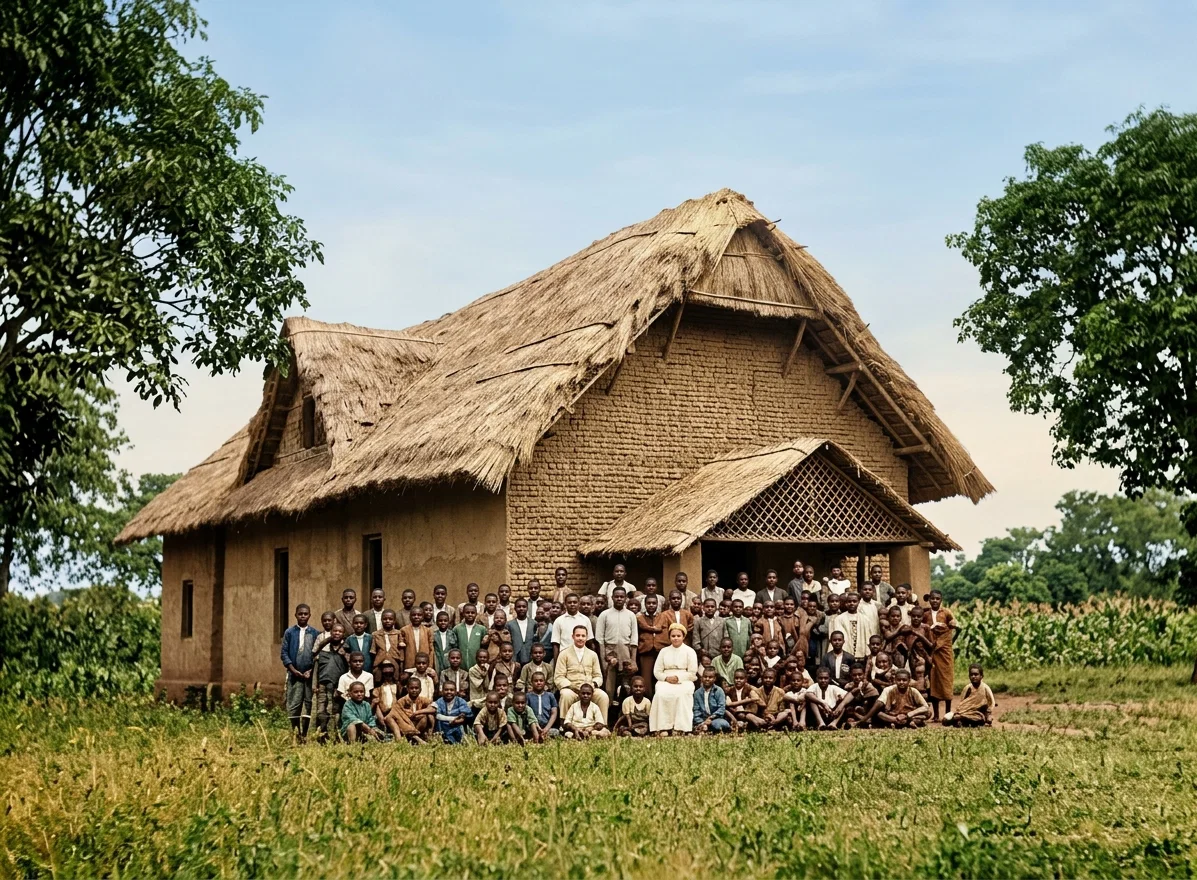
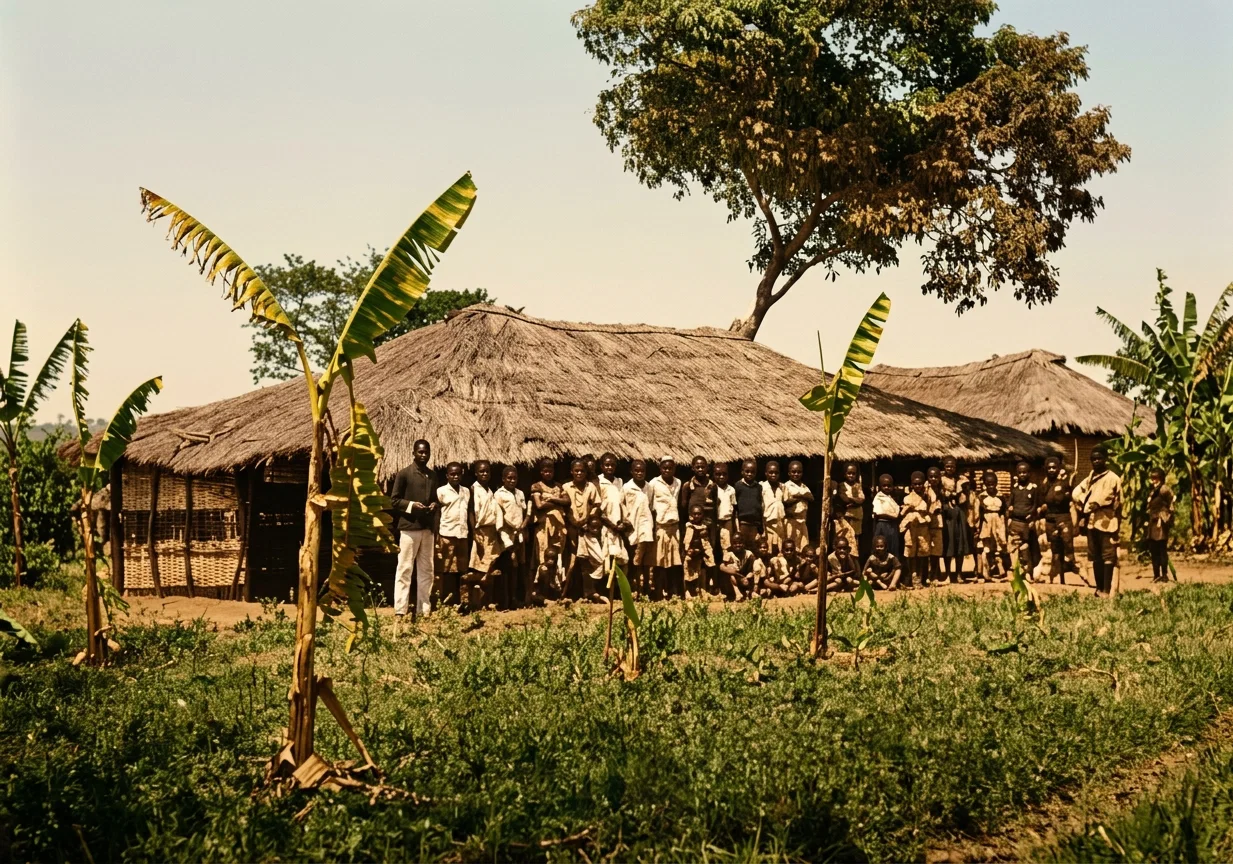
SCHOOL AT MALAMULO MISSION, NYASALAND
The industrial plan makes possible a much more rapid extension of the work, and calls for a spirit of unselfish devotion which is always a sure forerunner of a deeply spiritual life. It takes money to provide supplies in the shape of farm, farm implements, teams, and a herd of dairy cows to make self-support possible, but contributions to such missions in the end yield the largest possible returns. The initial expense once met, the mission becomes a self-supporting base, from which the light of the gospel keeps shining out, lighting the poor darkened natives all about into the pathway of peace and rest through Christ. R. C. PORTER.
On the Abyssinian Border
By H. STEINER
OUR Abyssinian Mission, in Asmara, is just without the limits of Abyssinia, yet nevertheless is among the pure Abyssinian people. The Abyssinian in general is independent, self-ruling, and self-content. Although these people have been in touch with civilization for some time, yet they do not adopt European customs. Their manner of living is very simple. Their food is peppered so strong that a white person can hardly endure it. They think, in general, that they have the best religion in existence. This makes it hard to reach them with the gospel. They distrust the white man's efforts. We have about twenty-five boys in our school, in ages from eight and nine up to eighteen years. We believe the Lord will give us some truly converted lads among them, and through these we hope to be able to reach the people. Native workers can accomplish in many ways what foreign missionaries can never do. We hope much from our school. H. STEINER.
Asmara, Eritrea.
In Kafirland
By R. G. Ryan
ONE of our natives, coming to meeting one Sabbath, met another native. The stranger asked him where he was going. “I am going to meeting,” was the reply.
“What!” asked the stranger, “going to meeting on Saturday? Tomorrow is meeting day.”
“No,” replied our brother, “to-day is the true meeting day. It is God’s holy Sabbath. ‘The seventh day is the Sabbath of the Lord thy God.’”
He then proceeded to give the stranger a Bible reading on the Sabbath question, after which the stranger went on his way to a place one hundred twenty-five miles away. That was four years ago. Just a few weeks ago that same stranger came to the mission and told me of this meeting with our native brother above referred to. He said: “For three years I fought those words, but now I have been keeping God’s holy Sabbath for a year. There is no mistake the seventh day is God’s holy day.”
R. G. RYAN.
Maranatha Mission, Cape Colony.
ZULU PREACHER, JEREMIAH, SOUTH AFRICA
Group of missionaries in the Victoria Nyanza Missions.
Changes in Equatorial Africa
By L. R. Conradi
Notes on a Recent Tour of Our Missions in East Africa
The equator, Africa's highest mountain, Kilimanjaro, and her largest lake, the Victoria Nyanza, furnish the great waymarks in locating our missions in German and British East Africa. The entire east coast of the great lake, as well as the Wasekuma country from the equator to about four degrees south, composes the two Victoria Nyanza mission fields,—the British and the German. From the very outset we endeavored to select territories unoccupied by other missionary societies. This territory in Victoria Nyanza had never before been entered. The dialects had to be acquired from the natives, portions of the Bible translated, and grammars, dictionaries, and primers had to be composed.
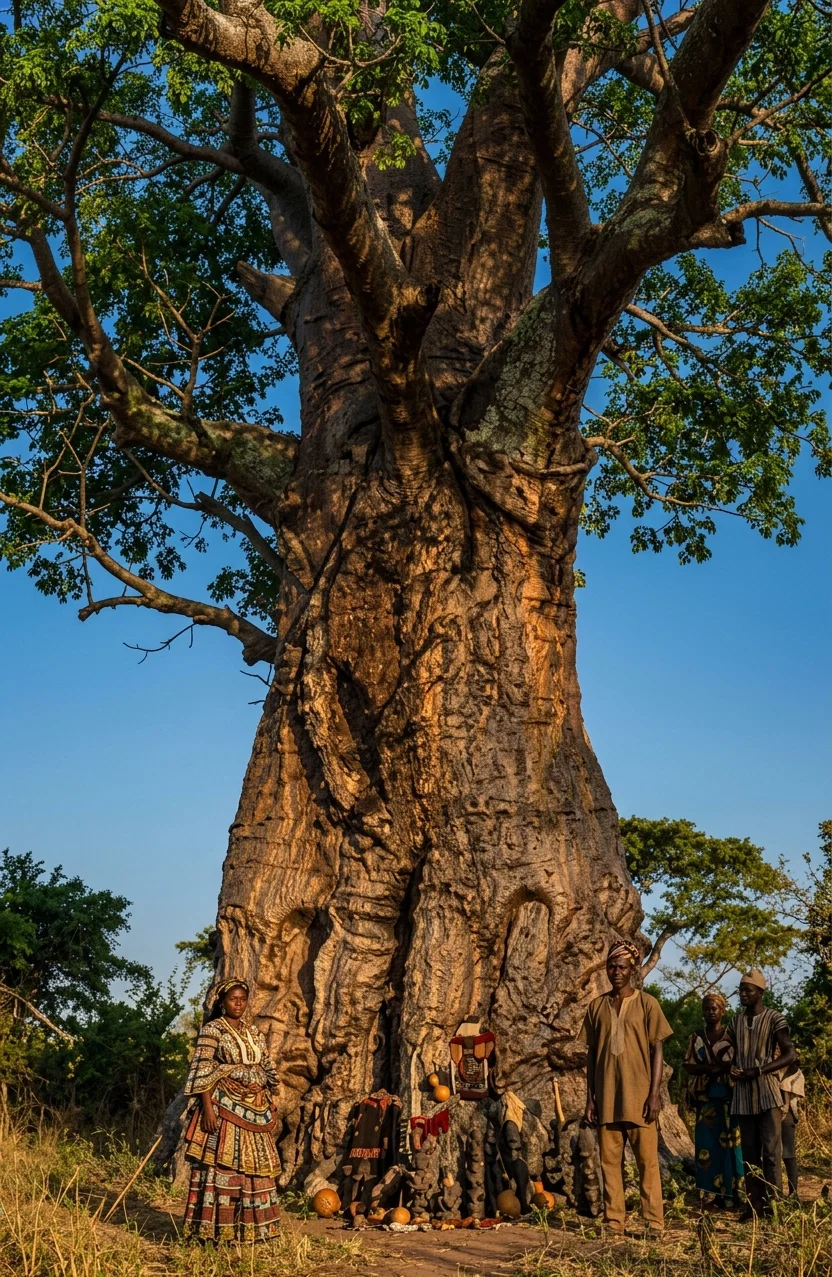
THE FORSAKEN IDOL
A tree formerly worshiped as sacred, the ground about being beaten bare by the feet of the worshipers. Now abandoned, with grass growing about it. The natives have learned better. (Near our Shangani Mission, Rhodesia).
What a change a few years have wrought in our mission work in equatorial Africa! Eight years ago we had no mission stations, no schools, no experience, no knowledge of the languages, and but small means at our command. When our missionaries first entered, German East Africa had only forty miles of railway, and it took us five days over miserable native paths to reach our station at Friedenstal. All goods had to be transported on the heads of native porters. Now the German Central African Railway will soon reach the Tanganyika and the Victoria Nyanza, and the Northern Railway passes at the foot of the Pare Mountains on to Kilimanjaro. A fine pike road, with solid iron bridges, takes us to our very door at Kihuiro. Then the natives hid themselves away in the mountain forests, fearing the inroads of the Masai, and they were also very shy of us, and but a few poor paths led to their scattered huts. Now there are good paths all over the Pare Mountains; our out-schools are seen here and there, and every hour on the road hundreds of boys and girls with their teachers were awaiting us, and chiefs and their elders came to welcome us, some bringing chickens, some lambs, and some other presents. Hundreds came to our public meetings, which, because of the great crowds, had to be held out of doors. Good interpreters were everywhere ready to translate the glad tidings. We could not only point the natives to victories in other lands or in our personal experience, but scores of their own brightest young people would stand up fearlessly before the multitudes, testifying to the power of the everlasting gospel. Where at first the heathen banished the children from their villages for embracing Christianity, we now see neater Christian villages springing up.
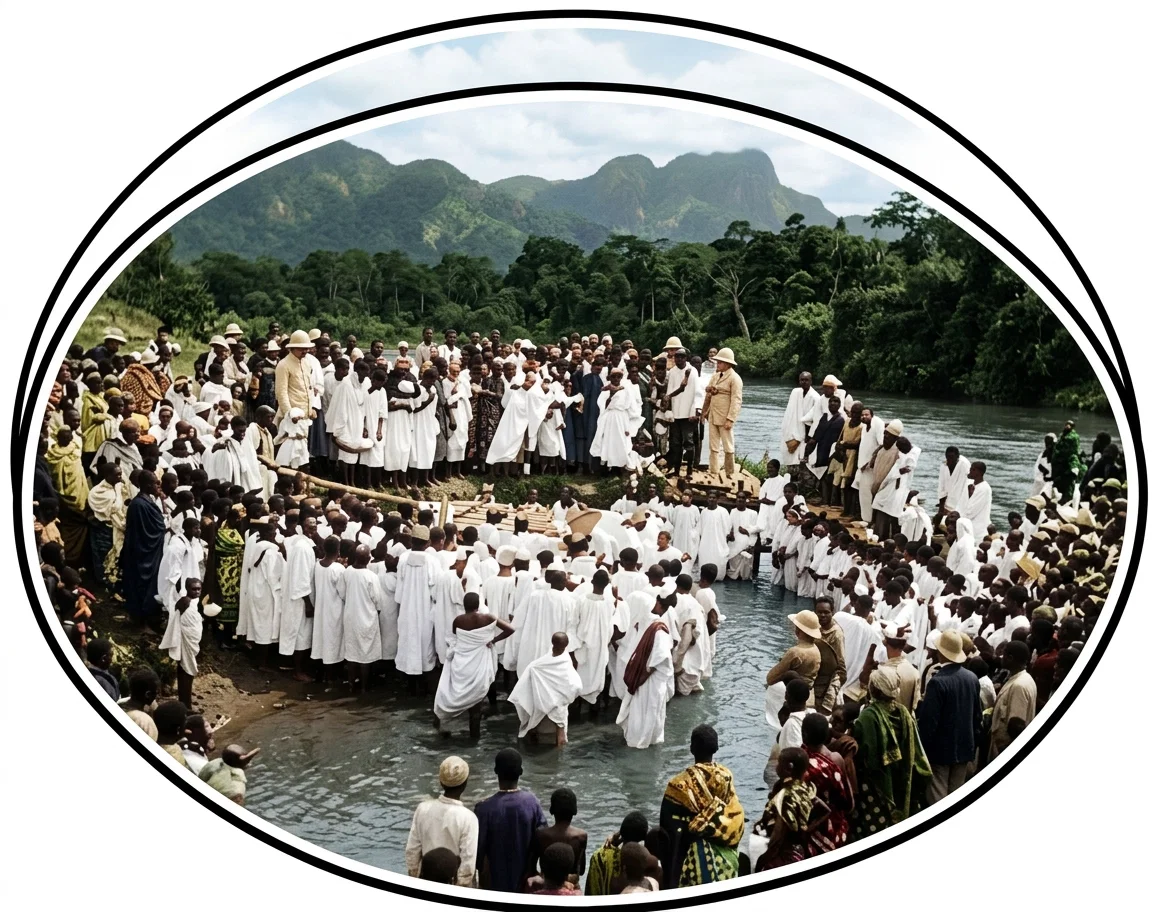
Baptism of 51 Wapare converts at Friedenstal Mission, German East Africa.
In the three fields of equatorial Africa we have now over twenty mission stations, all manned with experienced helpers. We have about twenty-five out-schools, altogether some 3,500 young people enrolled and entrusted wholly to our care. Already there are over 200 who have been converted from heathenism and baptized, and as many more have openly declared for Christ. Literature is being prepared in the different languages, and the little we have been able to get out has found a ready sale among the natives. Scores of native helpers are already holding up the hands of our European missionaries, and they not only do effective work in the schools, but some of them have given excellent evidence of being good soul-winners.
When we asked a score of the Pare teachers how many would be willing to go to the interior, every hand went up. It is true seven young missionaries have fallen on the field of honor, and several16have had to retire on account of ill health. But like the kernel of wheat, though apparently perishing in the ground, the life laid down brings forth ten, twenty, fifty, yea, a hundredfold.
We are only beginning among the million people in this virgin territory, and what a good foundation has already been laid, in spite of heathenism and Mohammedanism! Hundreds of earnest young people gained from heathenism send thanks to our brethren and sisters in the home land for the help sent them. They daily pray for the cheerful givers to missions, and bless their money. Yea, inspired by the same love, they join us in the grand effort to enlighten the Dark Continent.
One must witness these wonderful changes with his own eyes, fully to appreciate what is being accomplished. One must sense these great opportunities on the very spot, himself hear the many intelligent testimonies of bright young converts, and then he will better understand why our blessed Saviour left even the glories of heaven to save us poor heathen; and as he sees the same love constraining the missionaries to face these trials, to become colaborers with God, even to lay down their lives, he will realize the power of the Holy Spirit to save even in the darkest of lands. L. R. CONRADI.
A RHODESIAN government inspector of schools visited the Solusi Mission school, near Buluwayo. Solusi was our first mission station in Africa, planted nineteen years ago among the Matabele. The mission superintendent, W. C. Walston, sent us a copy of the inspector’s report to the government. We quote a paragraph or two. In filling out the blank calling for information as to the use of the land during the year, the answer is given:—
“The crops reaped were 1,550 bags mealies [corn], 220 bags monkey-nuts [peanuts], 10 tons (about) sweet potatoes, half-ton beans, with a small quantity of lemons and guavas. The stock carried was 225 cattle, 6 mules, and 1 horse. There were sold during the year 1,258 pounds butter and 188 dozen eggs. The total income from the farm was £1,073 ($5,155); the total expenditure, including grants from the trustees of the mission, £1,466 ($7,139).”
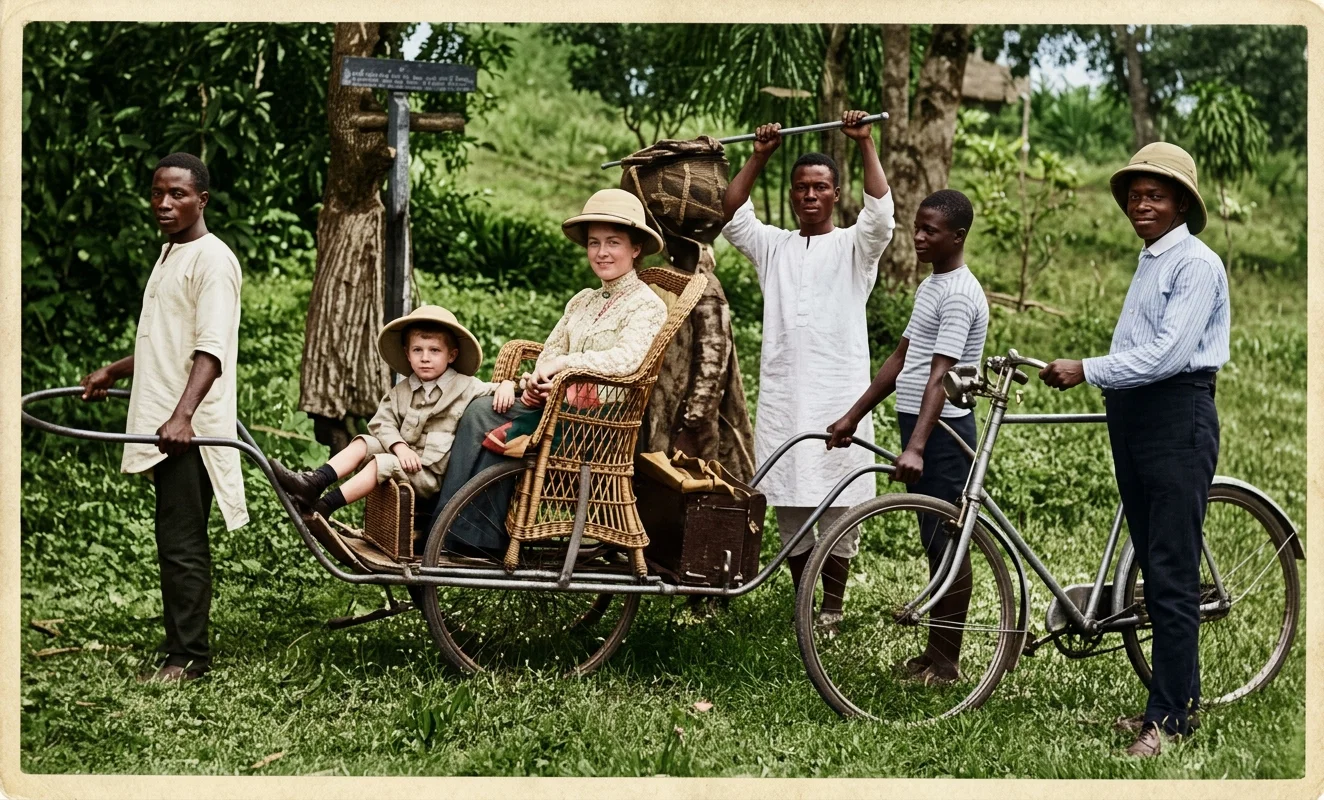
Drawing loads through the tsetse-fly area, where horses cannot live.
Again, the question is asked on the government blank: “Has it established a system of useful industry for its natives?” The report answers:—
“The fifty-seven natives housed on the farm have been the instrument by which this result has been produced. They are made to work steadily, and they plow, harrow, and cultivate with modern instruments and on modern methods. The great fields of mealies I saw were in excellent condition, notwithstanding the drought, largely owing to the methods of dry-farming introduced by the mission. The natives have the care of all the stock, and do all the dairy work, except the working and packing of the butter for the market. They have also borne their share in putting up all the buildings. The aim of the mission, as explained to me by the missionary in charge, is to improve the condition of the natives by teaching them the gospel and training them in habits of intelligent industry.”
In closing his official report, the inspector says:—
“I have dealt with this mission in some detail partly to place on record the good work it is doing, and partly because it seems to me the type of mission that should be encouraged in this country.”
This only serves to illustrate the value of industrial education in native work. The native believers are not only given a knowledge of the gospel in the abstract, but are taught its practical application in the formation of habits of order, industry, honesty, and Christian helpfulness.
In the Sierra Leone Interior
By D. C. Babcock
In the regions about Matotoka, a town of the Timni tribe, I have witnessed more real heathen devil-worship than I have seen in any other part of West Africa. But I have heard there also the thankful prayers of some of these same darkened heathen when released from the power of the enemy and giving glory to their Creator.
We planted our first school among the Timnies at Matotoka, then sixty miles from the railway, but now only fifteen; for the railway is pushing on in Sierra Leone and West Africa. The paramount chief of the Timnies, Bai Kaffri, lives here and is our friend. At Maparka, near the railway, is another school. About a day's walk beyond is the Limba country, from which pressing appeals come for teachers.
Among the Mendi people, another tribe, we have a school at Gbamgbama. Two good mission houses have been built, and a plat of land donated to the mission. The chief also agrees to erect a new school building, or barrá, as they call it. Such buildings cost us but fifteen dollars, aside from doors and windows. The people are pleading to have teachers. The Mendies are less inclined to worship wood and stone than are the tribes about them. There are three or four of these villages where the people generally lay aside their work when the Sabbath comes. D. C. BABCOCK.
In French Africa
As an illustration of changes in hitherto little-known regions of Africa take the following statements by E. O. Powell, a geographical writer, speaking of the French territory:—
“Nothing, indeed, shows more graphically the civilizing work done by the French in these almost unknown lands than the means of communication, there being in operation to-day in French Africa 6,000 miles of railway, 25,000 miles of telegraph, and 10,000 miles of telephone. Think of being able to buy a round-trip ticket from Paris to Timbuktu; of sending Christmas or New-year greetings to your family by telegraph from the middle of the Sahara; or of sitting in the American consulate at Tamatave [Madagascar] and chatting with a friend at Antananarivo, three hundred miles away! And, as the final touch, they have erected a wireless installation at Fez [Morocco], by means of which his Shereefian Majesty dash-dotted his respects to the president of the republic at Paris.”
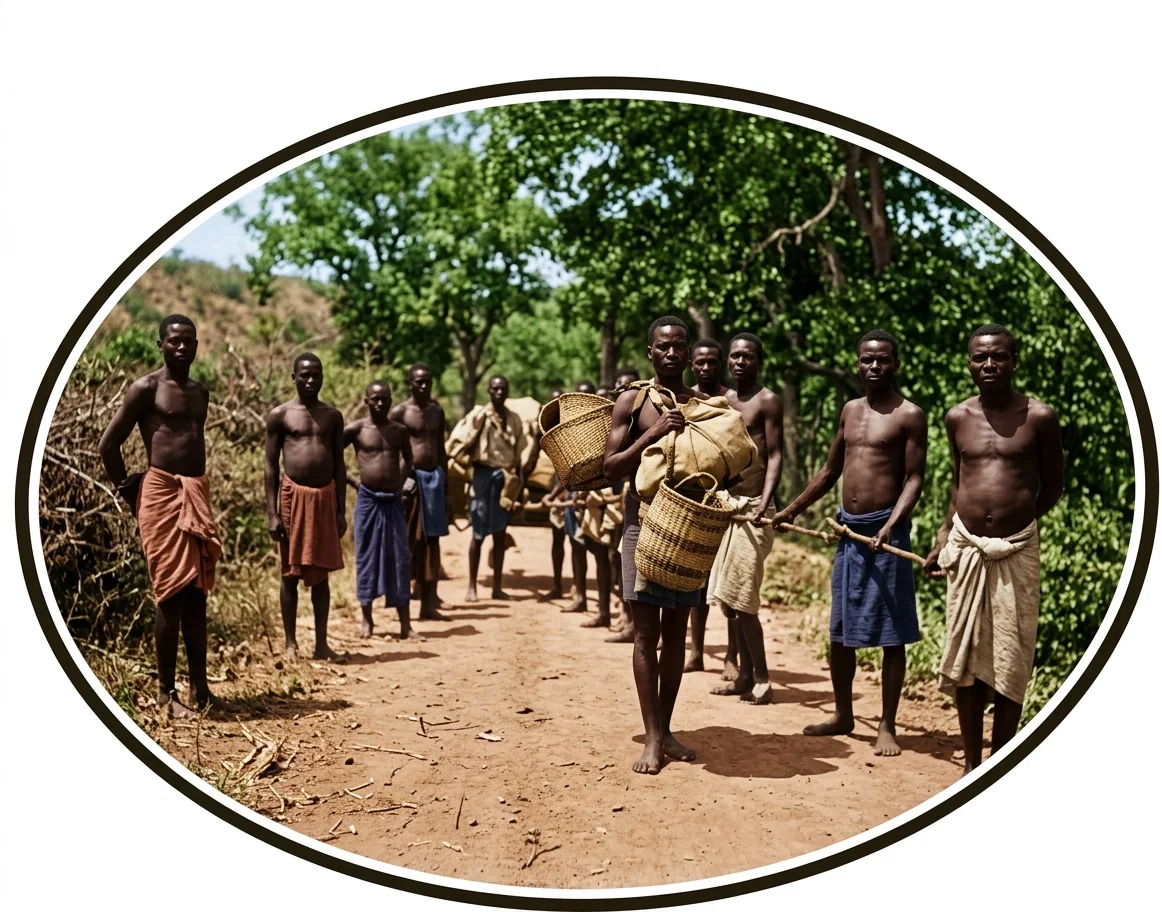
TRAVELING IN THE WEST AFRICAN “BUSH”
From a Missionary’s Letter
FROM what proved to be the last letter Brother Lynn C. Bowen wrote from the Tsungwesi Mission, Rhodesia, South Africa (a cable announced his death on June 2, of smallpox), bearing date of April 23, we take the following:—
“The Lord has greatly blessed us, for which we praise his name. We have all the land cleared and plowed inside our fence, so if nothing happens next year we expect to have over 225 acres in crops. We now have about fifty-five boys and girls at the mission, and this makes us so full that we must put up more huts just as soon as harvest is over.”
“It has been a year now since we left the States, and we have had as good health as at home. We are of good courage, and are not sorry that we came, although we are very much isolated from friends and neighbors.”
He has now laid down his work, and his wife and two small children must return, letting another go on with his work. Such is the sacrifice necessary to press the truth of God out into earth’s dark corners.
CHISOMBEZE OUT-SCHOOL, NYASALAND
Simeon, in charge, is only a young teacher, but is doing good work.
THE SPILLWAY, GATUN DAM
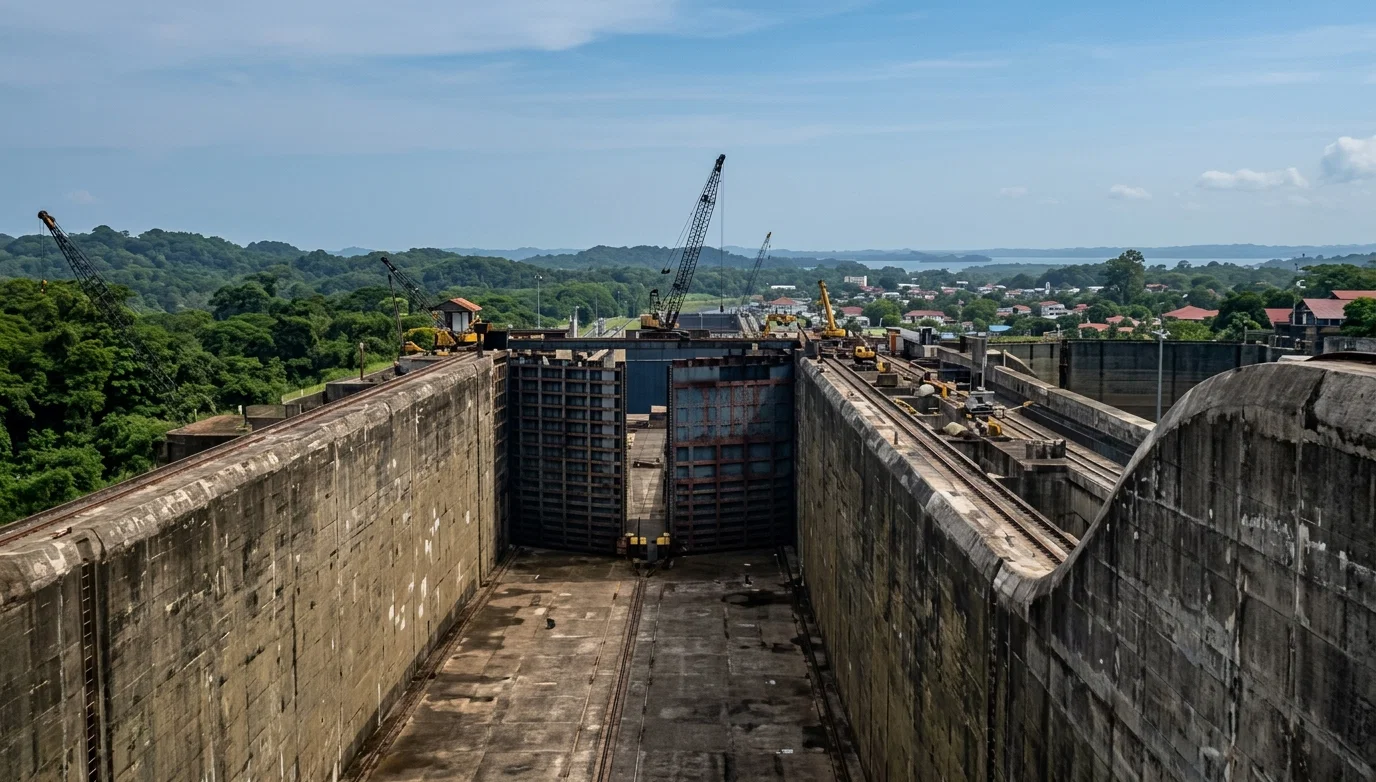
ONE CHAMBER OF GATUN LOCKS
ALONG THE GREAT CANAL
By H. C. Goodrich
In the Canal Zone
Stretching across the Isthmus of Panama is the strip of land called the Canal Zone, ten miles wide and forty-seven miles long. The republic of Panama sold it to the United States for $10,000,000 and a yearly payment, beginning this year, of $250,000. We who live along the Zone have been watching the progress of the canal toward completion—the greatest feat of engineering ever undertaken by man.
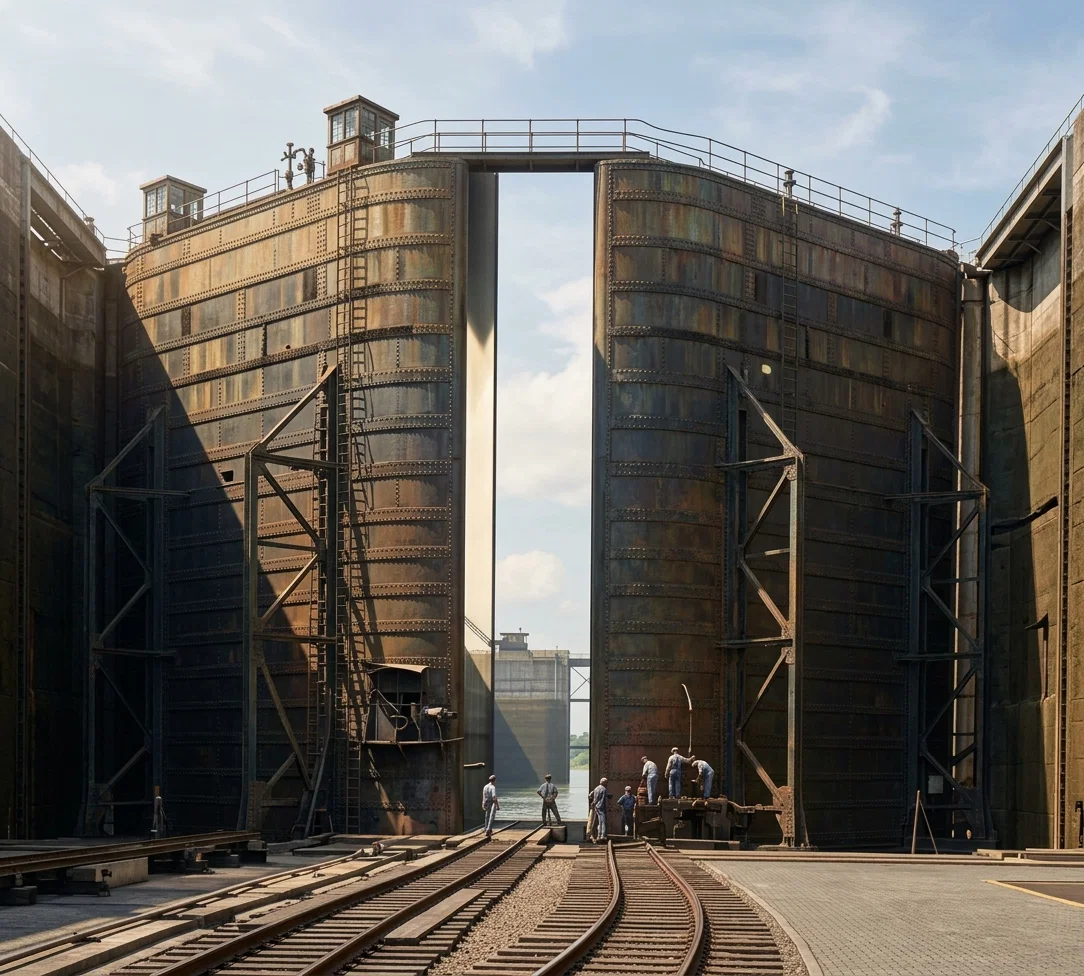
The depth of water maintained will be from forty-one to forty-five feet, and the width at the bottom of the canal is from three hundred to five hundred feet. The French plan was a seventy-foot canal, with thirty feet of water, cut to sea-level. The plan now is a sea-level canal on the Caribbean side for seven miles inland, where the Gatun locks—three pairs of giant locks—lift the ships eighty-five feet, to the level of Gatun Lake. The lake is raised beyond its natural level by a dam across the outlet. The spillway of this dam runs the power plant that supplies the electricity for the operating of the locks. Ships pass across the greatly enlarged lake and along the canal for thirty-two miles, at an elevation of eighty-five feet above the sea, when the locks at the Pacific side let them down again to the sea-level canal, eight miles from the western ocean.
Chief among difficulties to be encountered was the prevalence of malaria, yellow fever, and smallpox. The canal builders gave their first attention to sanitation. The streets of the cities were paved. A complete system of waterworks was installed for the cities, by which filtered water is brought to every dwelling. Gangs of men in every little town are constantly at work cutting the grass and tropical bush, keeping the ground clean around every town. To clean up the two cities of Colon and Panama cost the commission $3,000,000, which will be returned in water-rates. As the result of this scientific attack upon germs and germ carriers the death-rate has been brought below that of many of the cities of the States.
About forty thousand men, from nearly every part of the world, have been employed on the canal the last nine years. The commission provides free public schools for the children, and if in one town along the canal there are not enough children to warrant a school, the children there are given free transportation over the railway to the next town where there is a school.
ONE OF THE DOUBLE GATES OF GATUN LOCKS
We have found this a fruitful field for evangelistic work. Among the thousands of employees are many who listen eagerly to the word of life. Our colporteurs have sold $12,000 worth of books and periodicals during the last year. We are sowing the seed in faith, and God is giving increase in rejoicing souls.
I wish to relate one or two incidents that have been an encouragement to us. A young man who lost his arm in an accident was recently converted. After being rejected by his former employer, he decided to go out among the people with books. He was very successful in this work, but he did more than to sell books. He improved every opportunity to tell his friends of the new-found truths from the Bible he had learned to love. Ten or twelve have lately taken hold of the message in Colon; and when we ask them where they learned about these truths, they say, “We learned them from Brother Lee.” This young man is faithful both in his work as a canvasser and also in his efforts to lead others to Christ.
The Lord has blessed our work here so that our people have found favor in the eyes of their employers. Some of the farm managers have told me, “The men after they become Seventh-day Adventists are better workmen than they were before.” Not only have they encouraged us to work among them, but the company has given us two buildings in which to hold meetings, and has given Elder Reid, our native minister, a house in which to live, free. Besides this, Brother Reid has a free pass for himself and wife and their folding organ over their railroad lines. The Lord has given us two organized churches and three companies, besides interests in other places.