How the Printed Page Heralds the Message of Christ’s Soon Coming
MAY 6, 1852, the one paper that was then being published by Seventh-day Adventists was printed for the first time on our own press, an old Washington hand-press.
It is interesting to follow the growth of the work during the sixty years since that time. At the end of 1912, instead of having but one press and printing only one paper, this denomination was operating 37 printing plants and branches, in over 20 different countries of the world. Ten of these are being operated in mission fields. These 37 publishing houses are issuing literature in 75 languages, in the form of approximately 350 bound books, 300 pamphlets, 1,100 tracts, and 125 periodicals. Over 2,000 colporteurs are engaged in the distribution of these publications, more than half of whom are working outside of the United States.
The following figures show the growth of this branch of the work since its beginning:—
SALES FROM 1845 TO 1902
1845–62
$ 13,500
1863–72
56,000
1873–82
278,000
1883–92
3,350,000
1893–1902
2,950,000
Total for 58 years
$6,647,500
YEARLY SALES 1903–12
1903
$ 477,700
1904
436,600
1905
548,000
1906
824,000
1907
1,035,000
1908
1,290,000
1909
1,402,000
1910
1,560,000
1911
1,627,000
1912
1,836,500
Total for 10 years
$11,036,800
COLPORTEURS IN CHILE, SOUTH AMERICA
The first line in this total of figures shows the total value of literature sales during the 18 years from 1845, when the first Seventh-day Adventist literature was published, to 1863, when our General Conference was organized. Beginning with 1863, the figures are given by decades, as will be seen, until we reach the last period, where we give the yearly sales. These figures show that during the decade ending 1912 there was a gain of $4,389,300 over the previous 58 years; or in other words, during the last 10 years, 60% more literature was circulated by the denomination than during the previous 58 years. About 40% of this literature has been sold in countries outside of the United States.
Our colporteur work is well organized, and is being carried forward successfully in all the countries of Europe, as well as in South Africa, Australia, South America, India, China, etc. We fully expect that the total sales for 1913 will reach the two-million mark. We thank God for the efficient ministry of the press in spreading the good news of salvation.
N. Z. TOWN,
Secretary Publishing Dept.Takoma Park, Washington, D. C.
OFF WITH A LOAD OF PUBLICATIONS (CHINA)
TAMIL COLPORTEURS, SOUTH INDIA
His “Method”
“What method do you use in selling the paper?” asked B. L. Anderson, of Amoy, of a young Chinese colporteur.
“Before starting out,” he replied, “I11first ask the Lord to help me, and give me wisdom to do his work. I select the chief street and try very hard to secure a subscription in the first shop. I know that the truth in the paper is the most important thing under the sun, and pray God to help me make the shopkeeper believe this.”
“In a city where others could not sell a paper,” says the missionary, “this young man secured more than one hundred subscribers for the Chinese Signs of the Times in less than four days.”
To and Fro in India
By C. E. Weaks
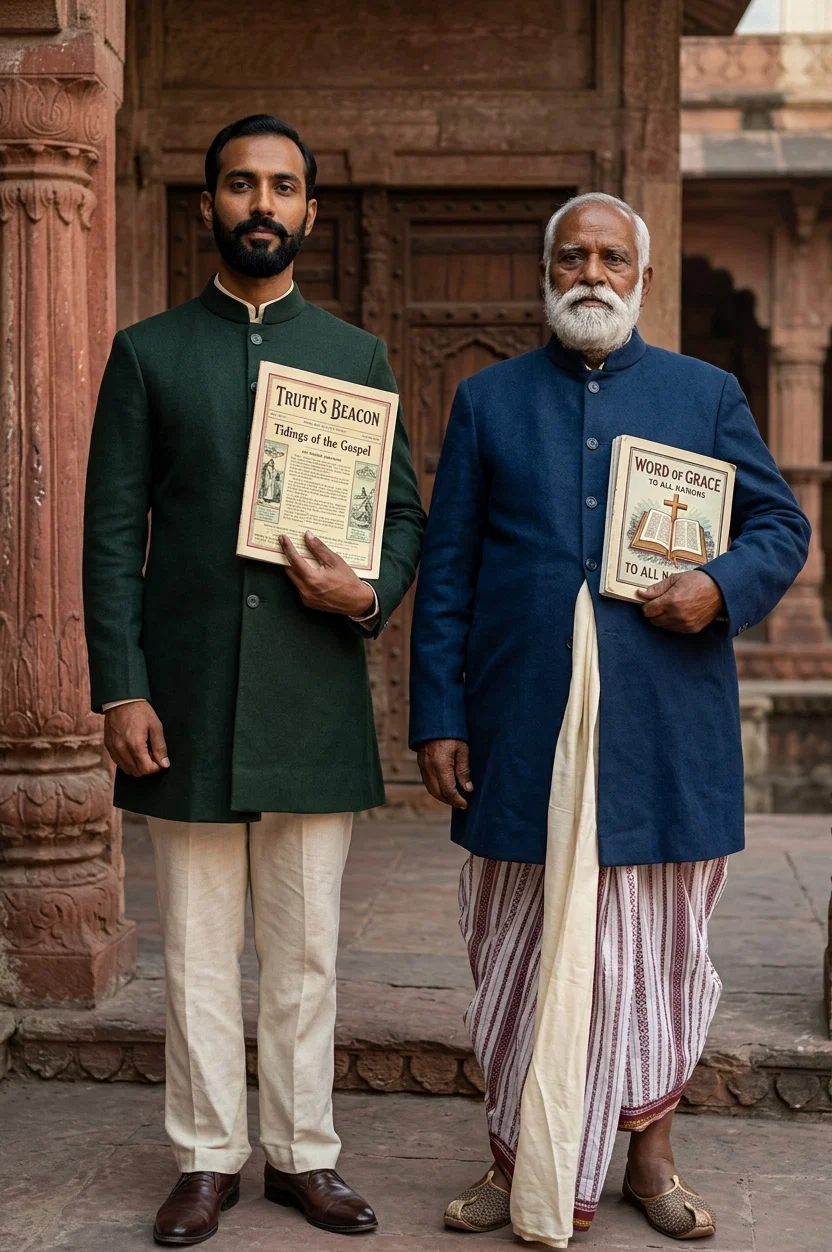
OUR colporteurs have gone to the farthest corners of India and Burma, extending their labors into Assam, Upper Burma, near the Chinese frontier, Kashmir, and even into Baluchistan. A short time ago a worker wrote: “I have just sold a ‘Heralds of the Morning’ to the son of a priest who carries the book with him into Persia next month.” Another letter contains the sentence: “I am now in the heart of the Nambor forest close beside the head-hunting Nagas. When you read this, I shall doubtless be at Dibrugarh, Assam, the terminus of the railway and head of steamer navigation of the Brahmaputra.” While this work is accomplished by hardships and risks, the colporteur pushes on, happy in his service.
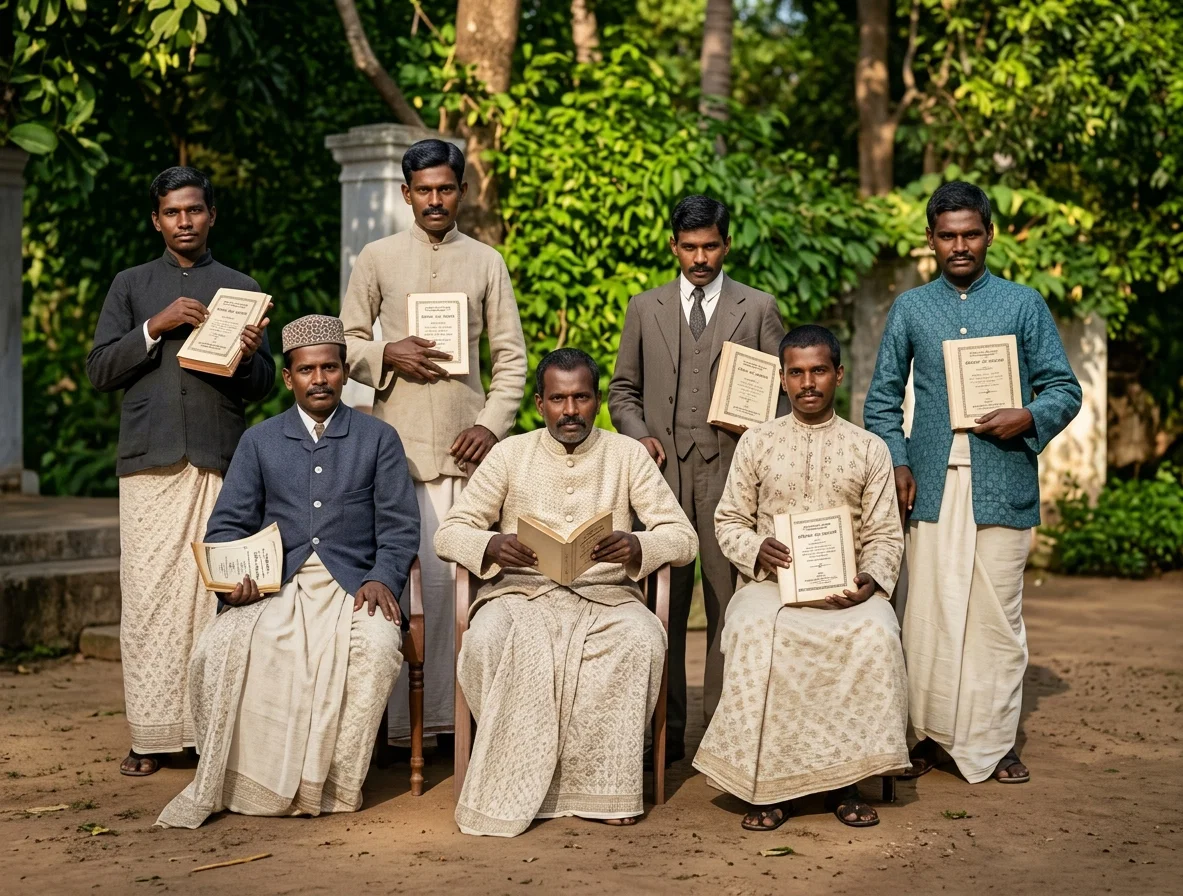
We are now publishing seven regular journals in India, two in English and five in the vernaculars, which are sounding out the message of Christ’s soon return. Our Indian colporteur work is being organized, and the workers are meeting with encouraging success. A little more than a year ago we held our first colporteurs’ institute for our Indian brethren. Since that time, four more have been held. Men with very limited education, some of whom have never been more than a few miles from their native villages, are being trained and are becoming effective agents for God. The accompanying illustration shows a group of these workers, recently together in an institute, who are carrying the truth to the Tamil people of south India.
C. E. WEAKS.
Lucknow.
The Colporteur
GROUP OF HUNAN, CHINA, COLPORTEURS
FILIPINO BOOK AGENT
AMONG the workers in God's vineyard wide
That tell the tidings that the gospel saith,
Not least important, though less known than most,
The colporteur goes forth in simple faith.
Midst mighty cities' busy, bustling din,
He hurries on to wage his war with sin;
And in the humble hamlets of the West,
To many a home he bears the message blest.
Now, where the wintry sun doth disappear
For full three months of every passing year, In ice-bound lands he joyful wends his way
To sell his books that tell of endless day.
In far Australia, newest land of earth,
He goes to tell them of another birth.
This world shall know when God shall cause to cease
The curse of sin, and rule in sinless peace.
In Eastern lands, where pagan temples rise,
And shrill muezzins startle morning skies,
He bears, to those who sit in error's night,
Truth's beacon, pointing to the Source of light.
Where the proud Briton in his "castle" dwells,
In town and village joyfully he tells
Of that great day when earthly kingdoms fall,
And Christ shall rule eternal over all.
Where Western genius marks its wondrous power,
And cities rise as moments in the hour,
And through the Spanish main that Southern ire
Has cursed with revolutions, sword, and fire,—
On goes our colporteur, nor slacks his zeal
Through hard or prosperous times, through woe or weal;
NORTH INDIA COLPORTEUR-EVANGELISTS
A SINGAPORE COLPORTEUR
COLPORTEURS IN ASIA MINOR, TURKEY
Placing, in countless homes books full of grace,
That point earth's weary to a resting-place.
Speed on thy holy work. Let not despair
Press down thy spirit; God for thee doth care.
By every water sow thy seed, and he
Who increase gives shall bless thee mightily.
—Selected.
In China
By W. E. GILLIS
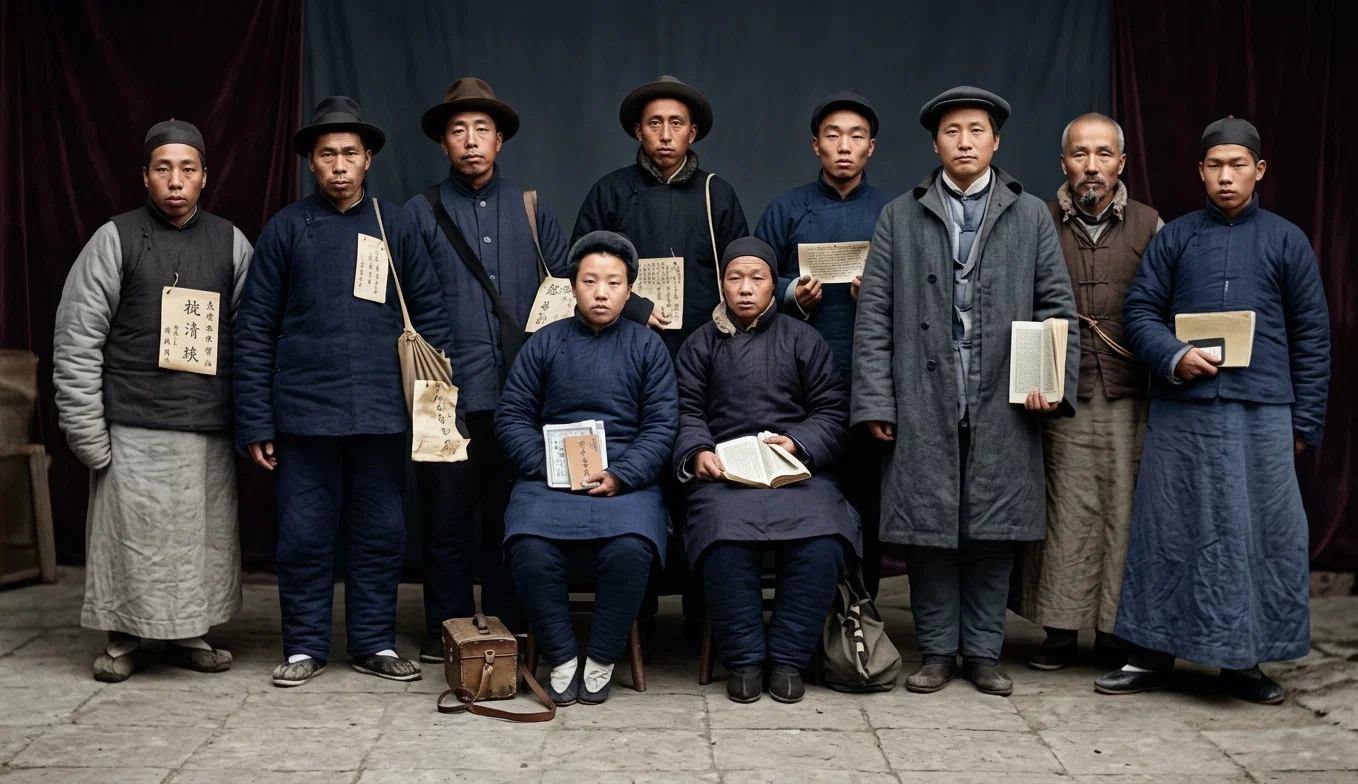
THE picture of one of our bookmen in Hunan will no doubt impress upon your mind that it takes heroism to be a colporteur in China — to carry day after day in the hot sun two boxes of publications such as you see, across his shoulder. [See page 10.]
The monthly edition of our Chinese magazine now averages 61,000 copies. Our colporteurs sell 55,000 of these. They have but little training, but they go forth trusting Heaven for success, and they are blessed in a remarkable manner.
W. E. GILLIS.
The Drunkard’s Prayer
By S. Miyake
I WAS on a tour of our churches north of Tokio, with Elder DeVinney, our superintendent. While we were walking from Mito to hold a service with the little country church at Kuji, some of the brethren came out about two miles to meet us. When we reached the river, we found a poor fellow who had fallen very low from drink. He had heard that we were on the way, and had come to see us. He welcomed us with evident delight, and said that his wife’s mother had been studying the Bible with one of our workers and was a Christian. She had told them also the story of Jesus,—how he had died to save such poor folks as they were; that he had gone to heaven, but was coming again and would give to his children a home with him. He said his wife believed and wanted to be a Christian, but had been sick and could not attend the meetings with her mother, so she knew but little, but she wanted him to attend.
After the services he begged us to go back by the way of his house, so his wife could see us. We went into a wretched hut, and found the sick woman upon the floor with a ragged mat under her, so ill that there was little hope of her recovery. Her husband rushed in ahead of us, and dropping upon his knees beside her, said, pointing to Elder DeVinney: “Here is a Christ-man. He has come to see you, and he will pray for you, and you will get well.” With voice broken with sobs, and the tears running down his face, he continued: “If you die, you will be all right, for you are good, and God will let you go into his kingdom; but what will become of a poor drunkard like me? I want you to get well13and help me so that I can go with you.”
This incident stirred our hearts, and we wished that Jesus might say to the man, “Thy sins are forgiven thee,” and to the woman, “Take up thy bed, and walk.” We prayed with them, and spoke words of courage and comfort. Surely the Spirit of the Lord was working upon the heart of that poor drunkard that day. Who knows how many hearts will respond in this great heathen land to the seed sown in love and humility, and watered with tears?
S. MIYAKE.
Whistling the Tune: the Bond of Fellowship
[Not long ago a young American landed on the shores of Korea to take charge of our mission printing-house in Seoul. Below is an extract from his letter.—Ed.]
On the last day of my trip, en route from Fusan to Seoul, I felt somewhat alone, as none of my fellow-passengers could speak much English. We had not been riding long when some one in the rear of the car began to sing, “I Love to Tell the Story.” I could not understand the words, but knew from the tune what the person was singing. It seemed so good to know that there was some one in this strange land who loved to tell the story of Jesus that I wanted to look him in the face. It turned out to be a young man from Japan; and as he had no objection, I sat down in the seat with him. We could not converse much because of the language, but we could both whistle, and so a happy hour was spent in whistling some of our good old hymns. We took turns starting the tune, and if the other was acquainted with it, he would join in and we would whistle it through. If not, we would try another. It seemed good. One hardly appreciates those good songs when he hears them every day in the home land, but when alone in a strange place like this, he longs for just one strain even of the music.
FRANK MILLS.
FISHING-BOATS ON THE INLAND SEA OF JAPAN
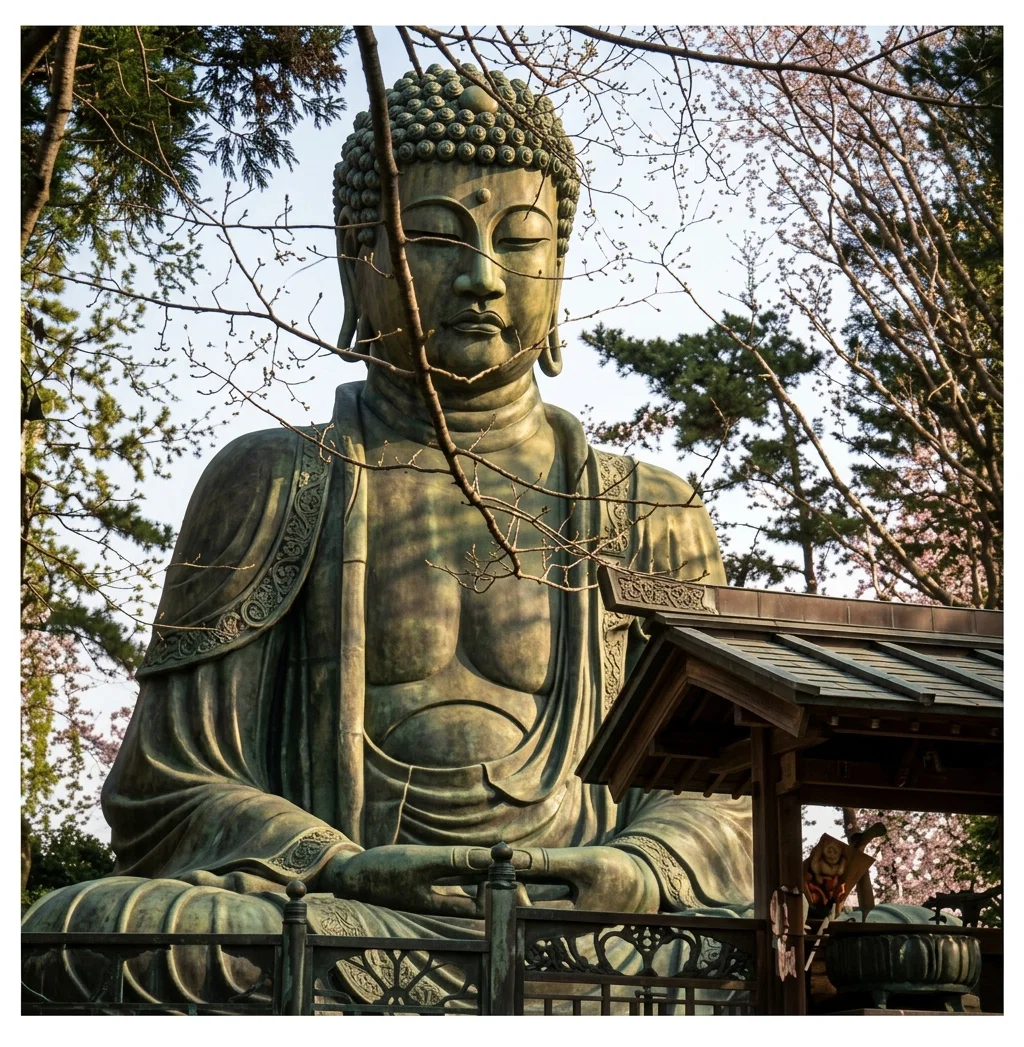
COLOSSAL IMAGE OF BUDDHA, TOKIO, JAPAN
LAND OF THE RISING SUN
By Tong Dong Pil
Believe and Understand
A Korean’s Experience
“Rejoice and be glad”
I THOUGHT that heaven, earth, rivers, and mountains came forth of themselves, and that there was no lord over them. For twenty years in my mountain village I lived and believed that the trees and stones were the only gods. My only desire was to have plenty to eat. While searching into the world’s knowledge, I did not find a line telling about eternal life.
Like a sheep without a shepherd I was when the year 1909 came. Having got some pages of the Gospel of the Kingdom [the Bible], I read them many times, since therein it tells of eternal life. Through sin we shall die; but “God so loved the world, that he gave his only begotten Son, that whosoever believeth in him should not perish, but have everlasting life.” “Rejoice and be glad!” yea, rejoice! Through this word we now have hope of the kingdom of heaven. The times of our ignorance God winked at; “but now commandeth all men everywhere to repent.”
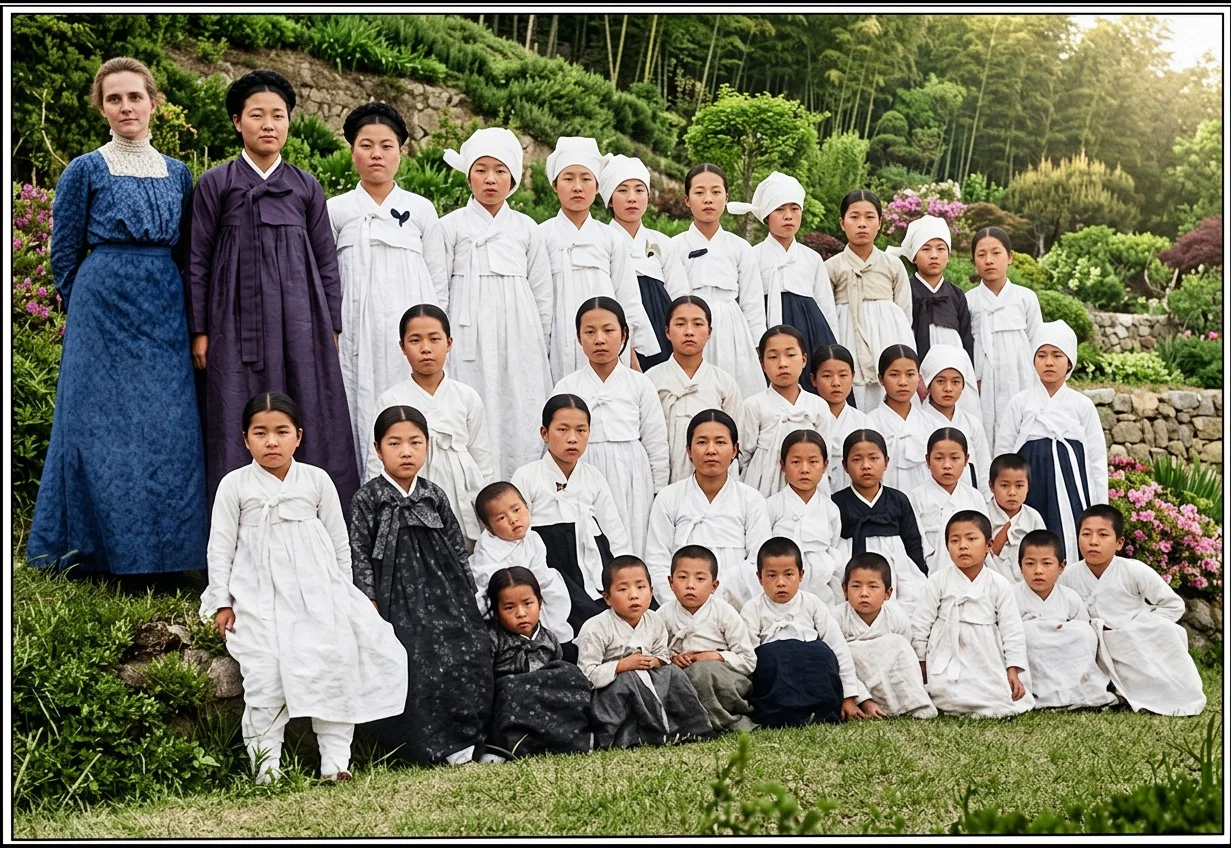
A GIRLS' SCHOOL, SOONAN, KOREA
I went to a place some twenty li [seven miles] from my home. During the meeting which we held, twenty persons — parents, sons, and daughters — repenting of sin rejected the shadowy things of this world, and will seek to become men and women of God. All hope to receive the blessings of eternity. TONG DONG PIL.
A Note on Mission Finance
By F. H. Devinney
THE distance between the outposts of our mission work in Japan is now nearly 1,300 miles. This makes it both difficult and expensive to administer our affairs; but we are trying to administer them in the most economical manner possible. While nearly all other religious literature is given away, ours is all sold. We believe that to give away the publication makes it of less value in the minds of the people. Though the price paid is very small, yet it entails some sacrifice upon the purchaser, and is a much better training, besides helping to carry the truth to somebody else by producing more literature. The people of the great middle class are poor,— by American standards very poor,— and they have very little money left from month to month after the most common, meager essentials of life are procured.
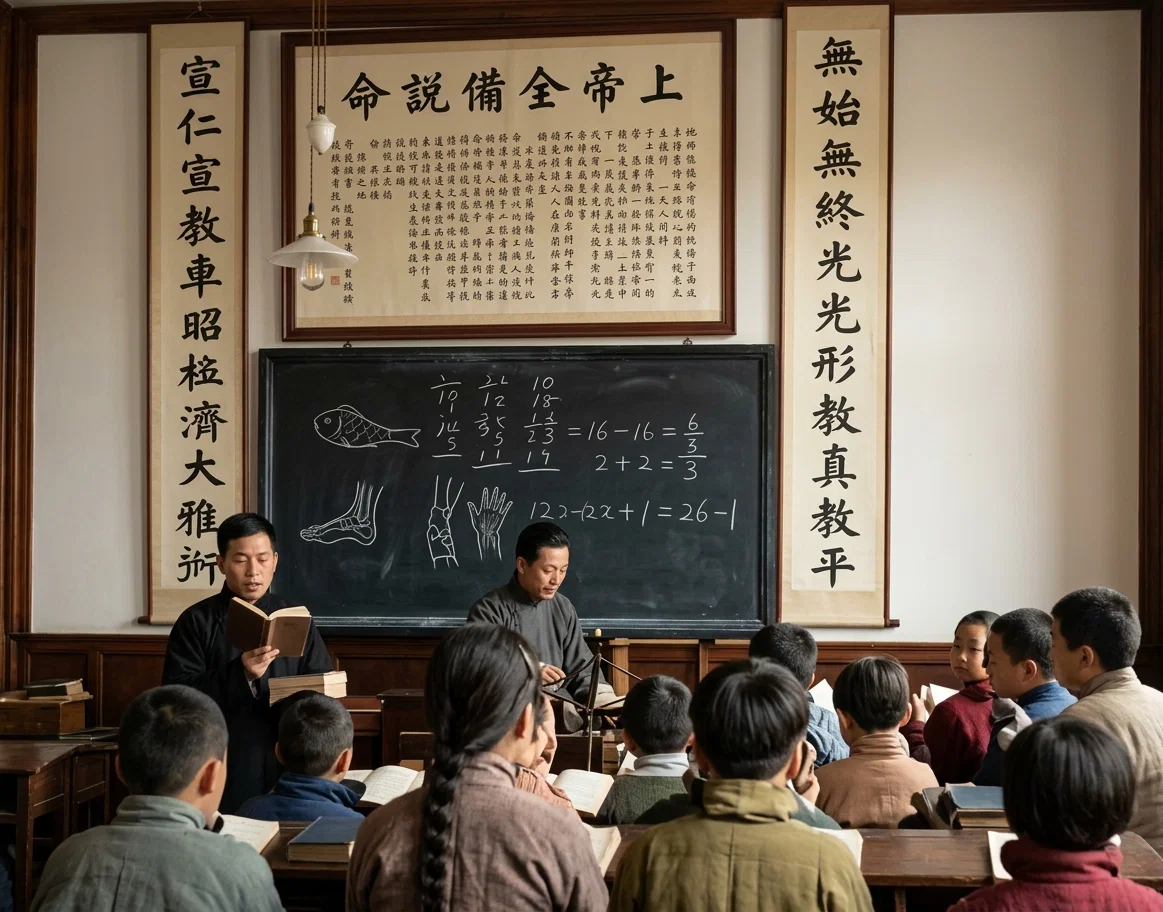
A SHANGHAI CHURCH-SCHOOL
JAPANESE FARMER GATHERING BAMBOO SPROUTS FOR EATING
But we are everywhere teaching the believers the privilege and the obligation of bearing a part in sending on the good news they have received to their fellow men by their tithes and offerings. These as yet are small, but are increasing each year.
F. H. DEVINNEY.
Tokio, Japan.
Won by a Godly Life
By H. F. Benson
ONE of the students in our Japanese training-school related the following experience: His wife's family had been bitterly opposed to Christianity, and this opposition was strengthened when she accepted this advent message and hope. Some time later the mother was taken ill, and the daughter was called to nurse her. Our sister knew that argument would do no good. So without especially talking Christianity, she lived it before her parents. The mother soon became interested in the religion that could make such a change in her daughter, and gladly listened to the story of God's love. A few days later the mother died; but before her death she called for her pocketbook, and made an offering that the story of the cross might be carried to others. The father also became interested and is studying God's Word.
H. F. BENSON.
Tokio, Japan.
What One Korean Tract Did
By Hong Shin Hoo
THE place where I live has from the beginning been a village which has not known the true God and has been given to sinful, unprofitable ways. While in this condition, some four or five years ago, a woman passing by this village dropped a small tract. This was found by a crippled man. While reading it many times, he learned the first principles of life. He decided to worship the true God, and believe in Jesus Christ. He bought a songbook, and from the first to the last song memorized it. Then a Bible was purchased. As he studied it day and night, he clearly understood that these are the last days of earth’s history. With zeal he preached to all his neighbors and friends, and a company of believers was formed. Ten and more were the result of this cripple’s teaching what he had learned from that tract.
HONG SHIN HOO.
Christianity in Japan
“WHEN the revolution in Japan which restored political power to the emperor took place in 1868, only four Japanese had been baptized by Protestant missionaries. The profession of Christianity was strictly prohibited. Today there are 83,638 Christians connected with the Protestant bodies, 66,689 Roman Catholics, and 32,246 belonging to the Orthodox Church (Russian ecclesiastical mission).”