1 Kings 11:4
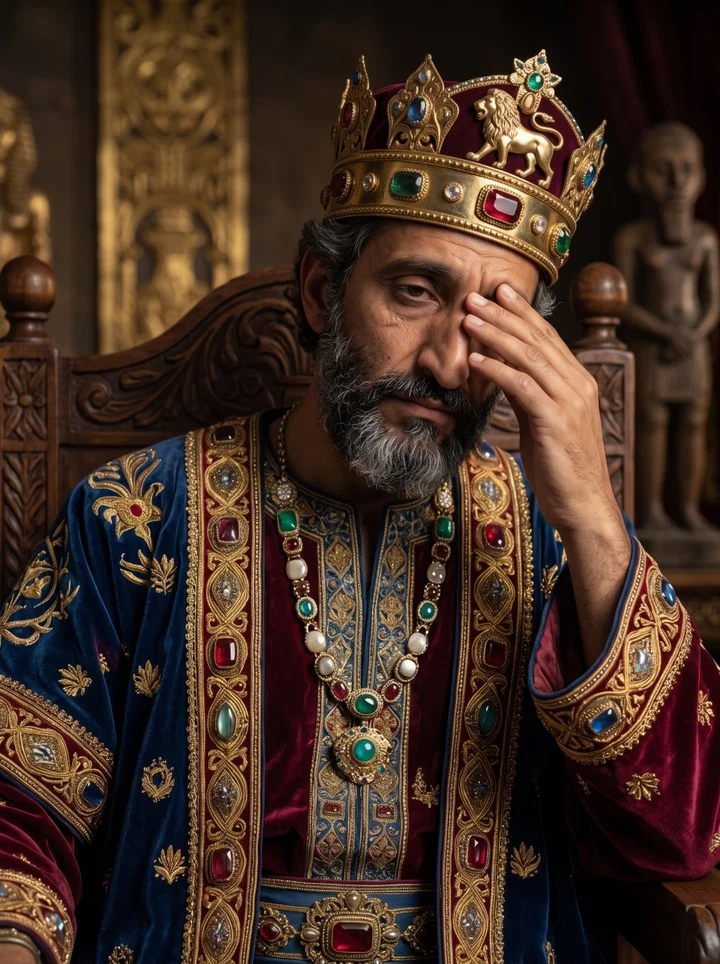
For it came to pass, when Solomon was old, that his wives turned away his heart after other gods: and his heart was not perfect with the LORD his God, as was the heart of David his father.
Translations
American King James Version, King James Version, Webster Bible, Revised Version
For it came to pass, when Solomon was old, that his wives turned away his heart after other gods: and his heart was not perfect with the LORD his God, as was the heart of David his father.
For it came to pass, when Solomon was old, that his wives turned away his heart after other gods: and his heart was not perfect with the Lord his God, as was the heart of David his father.
For it came to pass, when Solomon was old, that his wives turned away his heart after other gods; and his heart was not perfect with Jehovah his God, as was the heart of David his father.
And it cometh to pass, at the time of the old age of Solomon, his wives have turned aside his heart after other gods, and his heart hath not been perfect with Jehovah his God, like the heart of David his father.
And it came to pass when Solomon was old, [ that] his wives turned away his heart after other gods; and his heart was not perfect with Jehovah his God, as the heart of David his father.
Yea it came to pass, in the old age of Solomon, that, his wives, turned aside his heart after other gods,—his heart therefore was not sound with Yahweh his God, as was the heart of David his father.
Berean Standard Bible, Majority Standard Bible
For when Solomon grew old, his wives turned his heart after other gods, and he was not wholeheartedly devoted to the LORD his God, as his father David had been.
When Solomon was old, his wives turned away his heart after other gods; and his heart was not perfect with the LORD his God, as the heart of David his father was.
For it came about that when Solomon was old, his heart was turned away to other gods by his wives; and his heart was no longer true to the Lord his God as the heart of his father David had been.
For when Salomon was olde, his wiues turned his heart after other gods, so that his heart was not perfect with the Lord his God, as was the heart of Dauid his father.
Douay-Rheims (Challoner revision)
And when he was now old, his heart was turned away by women to follow strange gods: and his heart was not perfect with the Lord his God, as was the heart of David his father.
Pictures

Cross-references 20 of 37
- Deuteronomy 7:3-4
Neither shalt thou make marriages with them; thy daughter thou shalt not give unto his son, nor his daughter shalt thou take unto thy son.
Forbids intermarriage because it can turn people to other gods.
- Deuteronomy 17:17
Neither shall he multiply wives to himself, that his heart turn not away: neither shall he greatly multiply to himself silver and gold.
The king is warned not to multiply wives, lest they turn his heart from God.
- 1 Kings 11:9-11
And the LORD was angry with Solomon, because his heart was turned from the LORD God of Israel, which had appeared unto him twice,
God rebukes Solomon for turning from him and announces judgment for his disobedience.
- 2 Samuel 11:2-5
And it came to pass in an eveningtide, that David arose from off his bed, and walked upon the roof of the king’s house: and from the roof he saw a woman washing herself; and the woman was very beautiful to look upon.
David yields to passion and commits a recorded sin.
- Nehemiah 13:26
Did not Solomon king of Israel sin by these things? yet among many nations was there no king like him, who was beloved of his God, and God made him king over all Israel: nevertheless even him did outlandish women cause to sin.
Foreign women caused Solomon to sin against God.
- 2 Kings 23:13
And the high places that were before Jerusalem, which were on the right hand of the mount of corruption, which Solomon the king of Israel had builded for Ashtoreth the abomination of the Zidonians, and for Chemosh the abomination of the Moabites, and for Milcom the abomination of the children of Ammon, did the king defile.
Josiah destroyed the high places Solomon built for foreign gods.
- 1 Kings 11:33
Because that they have forsaken me, and have worshipped Ashtoreth the goddess of the Zidonians, Chemosh the god of the Moabites, and Milcom the god of the children of Ammon, and have not walked in my ways, to do that which is right in mine eyes, and to keep my statutes and my judgments, as did David his father.
Solomon’s worship of other gods leads to the kingdom’s division.
- 1 Kings 3:5-12
In Gibeon the LORD appeared to Solomon in a dream by night: and God said, Ask what I shall give thee.
Solomon humbly asks God for wisdom, contrasting with his later unfaithfulness.
- Matthew 6:24
No man can serve two masters: for either he will hate the one, and love the other; or else he will hold to the one, and despise the other. Ye cannot serve God and mammon.
Solomon’s divided heart illustrates that no one can serve two masters.
- Exodus 34:16
And thou take of their daughters unto thy sons, and their daughters go a whoring after their gods, and make thy sons go a whoring after their gods.
Foreign marriages can turn Israel’s sons to other gods.
- 2 Samuel 12:24-25
And David comforted Bath-sheba his wife, and went in unto her, and lay with her: and she bare a son, and he called his name Solomon: and the LORD loved him.
Solomon is named Jedidiah, meaning beloved of the Lord.
- 2 Samuel 12:7-12
And Nathan said to David, Thou art the man. Thus saith the LORD God of Israel, I anointed thee king over Israel, and I delivered thee out of the hand of Saul;
Nathan reproves David’s sin and foretells consequences for his household.
- 1 Kings 8:61
Let your heart therefore be perfect with the LORD our God, to walk in his statutes, and to keep his commandments, as at this day.
Solomon’s later divided heart contrasts with his earlier call to wholehearted service.
- Deuteronomy 17:20
That his heart be not lifted up above his brethren, and that he turn not aside from the commandment, to the right hand, or to the left: to the end that he may prolong his days in his kingdom, he, and his children, in the midst of Israel.
The king is warned not to turn aside from God’s commandment, as Solomon’s heart turned away.
- Joshua 23:12
Else if ye do in any wise go back, and cleave unto the remnant of these nations, even these that remain among you, and shall make marriages with them, and go in unto them, and they to you:
Joining in marriage with other nations could turn Israel from the LORD and become a snare.
- Exodus 32:8
They have turned aside quickly out of the way which I commanded them: they have made them a molten calf, and have worshipped it, and have sacrificed thereunto, and said, These be thy gods, O Israel, which have brought thee up out of the land of Egypt.
Both accounts describe turning from God to worship idols.
- Jeremiah 7:18
The children gather wood, and the fathers kindle the fire, and the women knead their dough, to make cakes to the queen of heaven, and to pour out drink offerings unto other gods, that they may provoke me to anger.
Both condemn worship of other gods, including the queen of heaven.
- 1 Kings 11:11-13
Wherefore the LORD said unto Solomon, Forasmuch as this is done of thee, and thou hast not kept my covenant and my statutes, which I have commanded thee, I will surely rend the kingdom from thee, and will give it to thy servant.
Solomon’s unfaithfulness brings judgment and the loss of most of the kingdom to his descendants.
- 1 Kings 3:14
And if thou wilt walk in my ways, to keep my statutes and my commandments, as thy father David did walk, then I will lengthen thy days.
Long life was conditional on Solomon walking in God’s ways and keeping his commandments.
- Deuteronomy 17:3
And hath gone and served other gods, and worshipped them, either the sun, or moon, or any of the host of heaven, which I have not commanded;
Condemns worship of the sun, moon, and stars.
Commentary
Each commentary is drawn from primary sources: the writings of Ellen G. White and Adventist pioneers and periodicals. Each commentary is separate. Its own words are not a quotation; follow the references to read the source passages.
Ellen G. White
74 sources
When Solomon was old his many foreign wives turned his heart to follow their gods, so he was no longer wholly faithful and fully devoted to the Lord as David his father had been.PK 56.3–4SG4 100.3–4Ms 40, 1898, par. 18 Perfect in the verse means clean, pure and wholly given to God and truth.21MR 381.6–382.4 Though God had appeared to him twice and warned him not to follow other gods, and though he was greatly favored, renowned for wisdom and entrusted with building the temple, he indulged unlawful affection for what God had forbidden and went gradually into apostasy by alliances, intermarriage and mingling sacred worship with the profane.PK 56.3–421MR 381.6–382.41SP 397.1RH Aug 17, 19057MR 74.1–3 He built altars and idol shrines for his wives, joined light with darkness, became divided in heart and oppressive in rule, and brought God's displeasure, the breaking of the covenant promise and the dividing of the kingdom with national apostasy following.Ms 1, 1912, par. 5–61SP 397.1RH Dec 21, 1905RH Mar 10, 1910 His fall warns that even the wise, powerful and greatly favored can be overcome, that wisdom and position can never take the place of moral character, and that safety lies in implicit obedience to Scripture, constant dependence on God and remaining a distinct, separate people.21MR 381.6–382.41SP 397.1RH Aug 17, 1905CH 294.21SP 396.2
Words and Historical Setting
When Solomon was old his wives turned his heart after other gods, so that his heart was no longer wholly faithful, fully devoted and perfect with the Lord his God as the heart of David his father had been.PK 56.3–4SG4 100.3–4Ms 1, 1912, par. 5–61SP 397.1CTBH 128.2 Their influence drew him into their idol worship after he disregarded instruction meant to guard him against apostasy, and he neglected his duties to God and his kingdom.PK 56.3–4Ms 40, 1898, par. 18 Perfect in the verse means clean, pure, and wholly devoted to God and truth.21MR 381.6–382.4
The wives were many and foreign, from idolatrous nations, and in taking them he practiced polygamy and multiplied wives.SG4 100.3–41SP 397.11SP 395.3 They included women of Phoenicia, Egypt, Edom, Moab, and Ammon, nations that bowed at idolatrous shrines with licentious and cruel rites.7MR 74.1–3 Taking them was directly opposed to the law of Jehovah and violated God's express commands against intermarriage with idolaters and against being turned away from following Him.SG4 100.3–41SP 397.14T 508.17MR 74.1–3
He turned though instruction had been given to guard against apostasy, though God had appeared to him twice and warned him not to follow other gods, and though he neglected that warning.PK 56.3–41SP 397.1 He was the greatest king ever to wield a scepter, the beloved of God, greatly favored by God and renowned for wisdom and uprightness.21MR 381.6–382.41SP 397.1PK 51.2 He was beloved of God and entrusted with building the temple, yet he made alliances with idolatrous nations and married heathen women.Ms 169, 1899, par. 25Lt 209, 1899, par. 19
His turning was unlawful affection and coveting what God had forbidden.21MR 381.6–382.4 It was of the same character as the indulgence Satan promised Eve, though every want is supplied in Christ.21MR 381.6–382.4
Path Into Apostasy
Solomon's turning was not sudden but gradual, coming in his old age after earlier wisdom and uprightness, when prosperity and honored position led him to forget God and the conditions of success and to lose sight of the need for implicit obedience to Scripture.RH Dec 21, 19051SP 395.3Ms 40, 1898, par. 20 Step by step he conformed to surrounding nations, and one false step prepared the way for a second and a third, each taken more easily than the last.RH Dec 21, 1905RH Aug 17, 1905 What had been a pure and elevated character given to God became marred and degraded, and the mind once inspired to write the wisdom of Proverbs became weak in moral power through constant indulgence and evil associations.RH Aug 17, 1905
That early compromise was worship in high places dedicated to idolatry, which mingled the sacred with the profane and took away the repulsion that should have been felt toward idolatrous practices.Ms 5, 1912, par. 8–9 It taught him to suppose the Lord was not particular about worship, and by that education he prepared himself for greater departures until little by little his heathen wives led him to make altars for them to sacrifice to their gods.Ms 5, 1912, par. 8–9 One wrong step led to step after step of political alliance, until going backward from weakness to weakness instead of forward from strength to strength his history became one of deterioration.7MR 74.1–321MR 380.7–381.1 Attempting to harmonize light with darkness and purity with impurity in this way brings moral ruin and leaves a man on the very brink of the precipice.21MR 380.7–381.1
Uncontrolled love of women became sin and a snare when not ruled, drawing him away from God the source of his strength.2T 305.3CTBH 128.2CH 628.11SP 396.1 Indulgence of lustful passion, appetite, and passion incurred God's displeasure through Satan's leading, corrupted one greatly favored by God, and separated him from God's presence.2T 306.2LC1 136.2 Yielding principle, he fell into idolatry, lost the wisdom and firmness of character God had given him, and wavered between right and wrong.2T 305.3CTBH 128.2CH 628.11SP 396.1 For love of a woman he trampled the law of God and became an idolater, turning from wholehearted faithfulness despite great intelligence, promise, and spiritual advantage.Lt 51, 1886, par. 4–1021MR 380.2–6 Even after having suffered for the truth and stood in its defense until old and gray-headed, he acted as if he did no sin and was all right, and without repentance and conversion such a course is ruin.21MR 380.2–6
Pride, self-sufficiency, self-exaltation, and human praise fostered self-esteem, dishonored God, and led him to trust his own wisdom, reject counsel, walk his own way, and rely on himself instead of God.RH Aug 17, 1905GC 509.3GC88 509.2–3Ms 81, 1900, par. 28–29 When he turned from the Source of his strength and went forward relying on himself he fell a prey to temptation, and the wisdom and remarkable abilities God had given him then made him a more effective agent and instrument of the adversary.GC 509.3GC88 509.2–34SP 329.1ST Mar 19, 1885 Injudicious friends helped the tempter ensnare him and reveal human weakness, in sharp contrast to when he was exalted to be king and humbled himself before God, acknowledging before all the people that he was but a little child in management.Ms 81, 1900, par. 28–29Ms 109, 1907, par. 7–8
Ambition and desire for political power, wealth, and self-aggrandizement led him to alliances, marriages, and friendships with heathen and idolatrous nations, conforming to worldly customs and the surrounding standards of right and breaking down the protective barriers God had erected for His people's safety.7T 217.4–218.2RH Aug 17, 1905Ms 47, 1898, par. 33–37ED 48.3–4Ms 44, 1894, par. 21–24 Rather than draw the nations to Israel's faith he allowed pagan beliefs to corrupt his own, weakening religious principle, dulling sympathy and love for God, and looking to other nations even to secure workmen and facilities for building the temple when it could have been built with what the Lord provided.RH Mar 10, 1910Ms 47, 1898, par. 33–37Ms 44, 1894, par. 21–24 The silver of Tarshish and the gold of Ophir were procured at terrible expense, by sacrifice of integrity and betrayal of sacred trust.RH Aug 17, 1905 At the same time greed, covetousness, and extravagance displaced self-denial and devotion, while high wages demanded and received throughout the kingdom gave opportunity for luxury and extravagance, oppression of the poor by the rich, and near loss of the spirit of self-sacrifice in God's service, permeating all branches of the Lord's service and helping turn his heart away.SSP 7.2–3PK 64.3STB 782.2–3
Idols and Transformed Character
He gave himself to idolatry, leaving the temple of God to worship idols in groves he had prepared for them.RH Dec 21, 1905RH Mar 10, 19106T 249.4–250.2ED 48.3–4 For his wives he built altars and shrines and idol shrines near the temple, on the southern rise of the Mount of Olives opposite Mount Moriah where the temple stood.RH Dec 21, 1905RH Mar 10, 1910Ms 47, 1898, par. 33–37ED 48.3–4 Those shrines were surrounded by idols and used for degrading heathen rites.RH Dec 21, 1905 His ambition to marry into pagan nations and his alliances pursued for political power and self-exaltation corrupted his faith, and rather than drawing the nations to Israel's faith he allowed pagan beliefs to corrupt his own until his once noble character became apostate.Ms 47, 1898, par. 33–37ED 48.3–4
Those shrines outlived his reign and remained as lasting evidence of his apostasy and a testimony against him, even after his repentance.RH Mar 10, 1910RH Mar 10, 19107MR 74.1–3 His repentance could not efface the high places and stones that remained as evidence of his crimes.21MR 381.6–382.4Lt 51, 1886, par. 12–13 Their ruins, named the Mount of Offense by the true-hearted in Israel, could still be seen when Shiloh came and Christ looked upon the melancholy sight, even into Christ's day.RH Mar 10, 19107MR 74.1–3 The idols on the Mount of Olives thus later stood as evidence of his decline and a lasting witness to his fall.RH Mar 10, 1910RH Mar 10, 1910
He mingled error with truth and idolatry with Israel's faith, as the insidious evils of paganism corrupted his religion and betrayed sacred trust.RH Mar 10, 19107MR 74.1–3RH Mar 10, 1910Ms 47, 1898, par. 39–40 He became an apostate, no longer recognizing God as the only true and living God and ruling Providence.RH Mar 10, 1910 He tried to join light with darkness and serve both God and wealth, attempting to harmonize Christ with Belial, purity with impurity, and good with evil, but purity and evil could not be combined.Ms 40, 1898, par. 1821MR 380.7–381.1 Attractive worldly teachings in this way can weaken faith, obscure truth, damage the landmarks of truth, and lead to spiritual weakness and apostasy.RH Mar 10, 1910Ms 47, 1898, par. 39–40
His divided heart marked a change from a kind, just, God-fearing king into a tyrant whose moral strength was gone.Ms 40, 1898, par. 18 Association with idolaters corrupted his faith and led him to worship false gods, and in turning from God he lost self-control and the integrity and compassion of his earlier rule, becoming proud, indulgent, tyrannical, and oppressive.ST Nov 26, 1896ED 48.3–4 His once noble character deteriorated into profligacy and intemperance, and his rule became despotic and tyrannical, sustained by oppressive taxes.ST Nov 26, 1896 Yielding his principles drew him away from God, the source of his strength; he lost the wisdom and firmness of character God had given him, became weak in moral power and wavering between right and wrong, and separated himself from God.2T 305.3CTBH 128.2CH 628.11SP 396.1 His course separated him from God, and he lost the knowledge of God, with uncontrolled love of women and passion becoming a snare when not ruled.Ms 40, 1898, par. 18CTBH 128.2CH 628.1
Though he had urged Israel to be wholehearted toward the Lord, Solomon chose his own way and separated his heart from God, as alliances, self-indulgence, and repeated wrong choices weakened the once firm and pure character he had received through God's wisdom.Lt 21, 1894, par. 6–9 Despite having received remarkable manifestations of God's power and having built God's temple, he forsook its worship and turned to idols, for divine light and privilege did not by themselves keep him faithful.Ms 16, 1889, par. 17–18 His God-given wisdom was perverted when he turned from God to seek wisdom from other sources.FE 414.2
Divine Judgment and National Ruin
When old age came his wives drew his heart after other gods until it was no longer wholehearted toward the Lord as his father David's had been, and that turning was apostasy, disloyalty and failure to do God's will.Ms 1, 1912, par. 5–61SP 397.1 By it he lost his connection with heaven and set before Israel a misleading example that God could not vindicate.Ms 1, 1912, par. 5–6 His departure violated express commands, despite God having appeared to him twice and warned him not to follow other gods, and it incurred God's anger and displeasure.Ms 1, 1912, par. 5–61SP 397.1 It broke God's conditional promise and covenant, bringing chastisement in the dividing of the kingdom and the announced loss of the kingdom, for wisdom and greatness cannot preserve one who does not trust and obey God.Ms 1, 1912, par. 5–61SP 397.1 Had he heeded the instruction given him, God would have worked through him to reveal His power and majesty to the world.Ms 1, 1912, par. 5–6
Blessing and God's signature upon past steps taken in light do not secure His continued presence.Ms 58, 1904, par. 610MR 357.1–358.1 That presence continues only while looking steadfastly to Him as Teacher and Example.Ms 58, 1904, par. 610MR 357.1–358.1 By turning aside to work contrary to God's designs, following a course God had forbidden and refusing the testimonies sent him, Solomon caused the Lord to be unable to cooperate with him, and those who so turn likewise prevent Him from cooperating with them.Ms 168, 1905, par. 33–34Ms 58, 1904, par. 610MR 357.1–358.1RCOC 61.4–5 While he kept separate from the world he was blessed, but his idolatrous connection by marrying idolatrous women and going to other nations for workmen and facilities to build the temple, when it could have been built with what the Lord had provided, greatly displeased God and broke the conditional promise to bless him if he followed right ways.19MR 53.4–5Ms 169, 1902, par. 8–9Ms 169, 1902, par. 61–6319MR 39.3–40.1 God desires to encircle His people with His protecting arm, blessing them above all others and preserving them in all purity while they remain closely connected with Him as a distinct, separate people, but if they depart they will share Solomon's sorrows.19MR 53.4–5Ms 169, 1902, par. 8–9Ms 169, 1902, par. 61–6319MR 39.3–40.1
His alliances and intermarriage helped turn Israel from God and brought national apostasy.RH Dec 28, 1905FE 499.1PK 673.1–3 Intermarriage and close contact with idolaters made idolatry common, introduced heathen rites into family life, confused true worship with false, and weakened love and reverence for God and obedience to Him.RH Dec 28, 1905FE 499.1PK 58.2 Idolatrous mothers raised children in heathen rites, the people's allegiance shifted to Satan, and a ruler's disloyalty thus influenced a whole nation into backsliding and sin and ruin, as seen in idol shrines built on the Mount of Olives opposite the temple that remained as lasting evidence and testimony against him even after repentance.FE 499.1PK 58.2PK 673.1–3 Pure religious service instituted by God was replaced by idolatry of the darkest hue.RH Dec 28, 1905 That included human sacrifices offered to idols and licentious, cruel rites greatly dishonoring to God, yet countenanced and sustained, with groves and idol shrines built for his wives of Phoenicia, Egypt, Edom, Moab and Ammon who bowed at such shrines.RH Dec 28, 19057MR 74.1–3 Polygamy was introduced into Palestine, multitudes were contaminated with heathen principles and practices, and this rejection of God's ways for men's ways began the downfall of Israel until the people became a prey to the very nations whose practices they had chosen.RH Dec 28, 1905
His union with idolatrous women also harmed his son Rehoboam, whose early training was neglected and whose unstable character and eventual apostasy were shaped by the evil influences surrounding him from infancy.PK 88.2 Though he may have been saved as by fire, his repentance could not efface the high places and stones that remained as evidence of his crimes.21MR 381.6–382.4Lt 51, 1886, par. 12–13
Warnings and Present Applications
Solomon's fall warns that even the wise, powerful, greatly favored, and spiritually advantaged can be overcome by inward corruption and outward temptation, and that no departure from integrity is safe.1SP 397.11SP 396.2Lt 51, 1886, par. 4–10 His misplaced affection and coveting what God had forbidden was unlawful affection of the same character as the indulgence promised to Eve, though every want is supplied in Christ, and though the greatest king that ever wielded a scepter and the beloved of God, he failed to rule his own passions, became contaminated and miserably forsaken, and dishonored God by choosing to be controlled by lust rather than partaking of the divine nature.21MR 381.6–382.4 His marriages violated the express command against intermarriage with idolaters and turned him away after God had appeared to him twice and warned him not to follow other gods, bringing God's anger and the announced loss of the kingdom, which shows wisdom and greatness cannot preserve one who does not trust and obey God.1SP 397.1 His love for a woman made him an idolater and turned him from wholehearted faithfulness, so that a life of great intelligence, promise, and spiritual advantage went backward from weakness to weakness and ended in deterioration, proving intellect, position, and wealth can never take the place of moral qualities.21MR 381.6–382.41SP 396.2Lt 51, 1886, par. 4–10
The wisdom and remarkable abilities given to him made him, when he relied on himself instead of God and fell into temptation, a more effective agent and instrument of the adversary.GC 509.3GC88 509.2–34SP 329.1ST Mar 19, 1885 He had obtained wisdom that excited the wonder of the world by earnest prayer and dependence on God, but when he turned from the Source of his strength and went forward relying on himself he fell a prey to temptation, and the marvelous powers given to him as the wisest of kings only made him a more efficient agent of the adversary of souls.4SP 329.1ST Mar 19, 1885 His life therefore warns to guard against temptation, resist forbidden desire, and remain dependent on God for strength throughout life, for earlier closeness to God does not grant immunity.2T 305.3CTBH 128.2CH 628.11SP 396.16T 249.4–250.2 His uncontrolled love of women became sin and a snare when not ruled, and as he grew old yielding principle drew him from God the source of strength into idolatry, so that he lost the wisdom and firmness of character God had given him, wavered between right and wrong, separated himself from God, and at last left the temple to worship idols in groves he had prepared.2T 305.3CTBH 128.2CH 628.11SP 396.16T 249.4–250.2
Close ties, unsanctified connections, and unions with those opposed to God can undermine religious principle, trap the soul in bondage that cannot be broken, and end in sacrificing principle and separation from God rather than winning them.Lt 43, 1898, par. 19–21ST Nov 26, 1896FE 500.1 Good intentions to influence them for good may instead end in being overcome by their influence, and one false step can lead to such bondage.ST Nov 26, 1896FE 500.1 People today are no less vulnerable to the influences that drew him away, so safety lies in obeying God's word, remaining separate from the world and its influences, refusing conformity to its standard of right, holding Scripture as the only standard, studying and obeying Christ's teachings, and guarding constantly against every worldly influence that weakens moral power.RH Aug 17, 1905CH 294.2RH Feb 1, 1906FE 501.2 His later years were marred by pride, self-sufficiency, self-exaltation, and desire for political power and self-aggrandizement that led him to alliances with heathen nations, and the silver of Tarshish and gold of Ophir were procured at terrible expense by sacrifice of integrity and betrayal of sacred trust.RH Aug 17, 1905 Association with idolaters corrupted his faith, and uniting in marriage with worshipers of false gods he at last gave himself to idolatry, until gradually yet surely his life was corrupted by conformity to worldly customs, looking to the standards of right followed by heathen nations and losing sight of the standard of God's law, breaking down the barriers erected for safety, so that a character once pure and elevated and a mind once given to God and inspired to write the wisdom of Proverbs became marred, degraded, and weak in moral power through evil associations and constant indulgence, dishonoring himself, Israel, and God, where one false step prepares the way for a second and a third, each taken more easily than the last.RH Aug 17, 1905
Beginning to depart from the Lord in order to gain something, linking with unbelievers and declaring sanitarium and institutional work undenominational by hiding distinct truth, repeats his departure instead of remaining forever a peculiar people holding the beginning of confidence steadfast to the end.Ms 169, 1902, par. 15–1619MR 41.3–42.2 Following a course God had forbidden and refusing testimonies God sent, as Solomon did though called and favored by God, is repeated when leaders reject God's testimonies and pursue a forbidden course, as in the course of Dr. Kellogg.Ms 168, 1905, par. 33–34Ms 135, 1906, par. 27–30 An evil influence has perpetuating power from generation to generation, leaving a legacy of good or evil that blesses or curses others and must not be used to cover base actions.21MR 381.6–382.4 He may have been saved as by fire, yet his repentance could not efface the high places and stones that remained as evidence of his crimes, and after suffering for the truth and standing in its defense until old and gray-headed he became an idolater who for love of a woman trampled the law, acted as if he did no sin and was all right, and without repentance and conversion such a course is ruin.21MR 381.6–382.421MR 380.2–6
The faithful record of his failure, with the sins that overcame Noah, Lot, Moses, Abraham, David, Elijah and others, warns to avoid the evils that brought him down.ST May 31, 19104T 12.1–3 Divine truth does not gloss faults or suppress sins, and the stern facts prove Scripture true, show God's retributive justice never fails, and warn that the wages of sin is death.ST May 31, 1910 The record is given to encourage desponding hearts, showing that as men of the present day strive, waver, and frequently fall into error, so through grace they can gain fresh vigor to rise above evil nature, take heart again and conquer, renew the conflict, press on, surmount obstacles, and be overcomers without despairing of reaching excellence.ST May 31, 19104T 12.1–3
Sources
Pioneers and periodicals
73 sources
When he was old his wives turned his heart after other gods, so that it was no longer perfect or wholly devoted to the Lord as the heart of David his father had been.ST Oct 30, 1884 He had taken seven hundred wives who were princesses and three hundred concubines from the nations God had forbidden, and in disobedience to the command not to multiply wives and not to intermarry he fulfilled the foreseen warning that such wives would surely turn his heart aside.ST Dec 9, 1889ST Oct 30, 1884RH Jan 12, 1869RH Jul 14, 1868 His fall came gradually through prosperity, pride, self-sufficiency, luxury and love of worldly honor and power, proving that great wisdom, riches, honor and a glorious beginning cannot keep one who departs from obedience.RH Dec 21, 1905RH Aug 17, 1905ST Sep 24, 1902RH Jan 12, 1869 His course proves there is no once-in-grace-always-in-grace security, for present wisdom and former uprightness do not protect one who turns aside, and old age does not excuse sin from God's displeasure and just punishment.RH May 27, 1873RH May 13, 1875RH Jan 12, 1869RH Mar 14, 1871 Marriage between believers and unbelievers tends to lead God's people into idolatry and disobedience, so believers must marry only in the Lord and remain separate from worldly conformity, while his repentance in penning Ecclesiastes shows that even the fallen can rise through grace.RH Jan 22, 1867RH Jul 14, 1868ST May 20, 1913RH Aug 3, 1911ST Jul 1, 1908
Words and Historical Context
When Solomon was old his wives turned his heart after other gods, so that his heart was not perfect, wholly devoted and faithful to the Lord, as the heart of David his father had been.ST Oct 30, 1884ST Nov 19, 1896RH Mar 31, 1910 That divided loyalty was relapse into idolatry and disobedience, a turning away from the Lord toward other gods.ST Oct 30, 1884ST Nov 19, 1896ST Sep 24, 1902RH Mar 31, 1910 His departure followed disobedience to the command not to multiply horses or wives, for trade with surrounding nations brought connection with heathen royal families whose influence led him into idolatry.ST Oct 30, 1884 Even wisdom given directly by God could not by itself keep him from falling, since wisdom alone cannot save a sinner or keep a professed Christian, because justification and continued life with God are by faith.ST Sep 24, 1902
His heart was divided among a thousand women, seven hundred wives who were princesses and three hundred concubines, so that little was left for God.ST Dec 9, 1889RH Jul 14, 1868ST May 20, 1913ST Nov 19, 1896 They included Pharaoh's daughter and women of the Moabites, Ammonites, Edomites, Zidonians and Hittites, from nations forbidden to Israel and not separated from idolatry.ST Dec 9, 1889RH Jul 14, 1868 This was exactly as God had foreseen and forewarned through Moses that the king should not multiply wives lest his heart turn away, for surely they would turn his heart after their gods, and the verse strikingly fulfills and illustrates that word.ST Dec 9, 1889ST Nov 19, 1896 God demands undivided affection and worship and will not accept a divided heart.RH Jul 14, 1868 The number does not necessarily mean he had them all at once, and royal polygamy with the status attached to supporting many wives may have helped alienate him from God.ST Nov 19, 1896
Though called old he was only about forty-nine, aged early by dissipation.ST Oct 30, 1884 The gods his wives worshiped were devils worshiped impurely, and in cleaving to them he forsook the Lord, who is worshiped in purity alone.ST Oct 30, 1884 A heart called perfect means continuing to acknowledge the Lord as supreme without turning to other gods.ST Nov 19, 1896ST Nov 19, 1896 David made serious mistakes and sins, but he did not turn to worship other gods and his repentance was sincere, while Solomon did not wholly deny the Lord but built altars and recognized other worship to please his wives, which was abhorrent to God even if he did not personally worship them.ST Nov 19, 1896ST Nov 19, 1896
The verse belongs to 1 Kings 1 to 11, which gives the history of the undivided kingdom under Solomon and covers the same events as 2 Chronicles 1 to 9, where special attention is given to the building and furniture of the temple, the dedication prayer and sacrifices, and the divine answer to prayer.RH May 11, 1916 It stands in the sad downward moral drift after David, broken only by times of reviving.ST Apr 26, 1910 It sets the context for the division of the kingdom, with ten tribes taken from Solomon's son and given to Jeroboam to rule over, and for a reign that ended under a cloud of transgression.ST Apr 26, 1910ST Sep 8, 1881RH Aug 1, 1871ST Apr 23, 1912
His apostasy included building shrines for foreign deities for his wives' worship on the southern rise of the Mount of Olives opposite Mount Moriah where the temple stood.RH Dec 21, 1905RH Mar 10, 1910RH Mar 10, 1910ST Dec 10, 1896 Those shrines were surrounded by idols and used for degrading heathen rites, favoring the worship of his idolatrous wives.RH Dec 21, 1905ST Dec 10, 1896 They remained as lasting evidence and testimony against him even after repentance, standing as evidence of decline and leading Israel into backsliding, and in ruins into Christ's day as a lasting witness to his fall.RH Mar 10, 1910RH Mar 10, 1910
Causes of Solomon's Fall
Solomon directly disobeyed the commands given through Moses that the king should not multiply horses or wives to himself and should not intermarry with the surrounding nations, and his old-age turning after other gods strikingly fulfills God's foreseen warning that such wives would surely turn his heart after their gods.ST Dec 9, 1889ST Oct 30, 1884RH Jan 12, 1869ST Oct 2, 1884 His departure began with trade with surrounding nations that brought him into connection with heathen royal families, and his disregard of the warning against intermarriage led him to be led astray despite earlier uprightness, wealth and position.ST Oct 30, 1884ST Oct 2, 1884RH Mar 10, 1874 Even his great wisdom and strength did not remove the danger or excuse him, for wisdom and skill in speaking and writing cannot replace a true spirit of obedience, and small departures from God's word grew into apostasy, including acquiring horses from Egypt against the command.RH Jan 12, 1869ST Dec 9, 1889RH Mar 10, 1874
His desire for greater wealth, political advantage, worldly honor and power led him to unwarranted political alliances and marriages with idolatrous nations that crossed the boundary God had set between Israel and other peoples.RH Mar 10, 1910RH Aug 17, 1905ST Dec 30, 1880ST Jul 1, 1903 Trade brought connection with heathen royal families, and marriages to women from nations forbidden to Israel estranged him from God and from the worship for which the temple had been built.RH Mar 10, 1910ST Oct 30, 1884RH Mar 31, 1910 The silver of Tarshish and the gold of Ophir were procured at terrible expense by sacrifice of integrity and betrayal of sacred trust, and inflated with prosperity he courted worldly power and at last gave himself up to idolatry.RH Aug 17, 1905ST Dec 30, 1880ST Jul 1, 1903
His apostasy came gradually, for prosperity and honored position, royal honor, wealth, pride, self-sufficiency, self-exaltation and desire for political power and self-aggrandizement led him to lose sight of implicit obedience to Scripture and the conditions of success.RH Dec 21, 1905RH Aug 17, 1905RH Jun 9, 1868ST Dec 16, 1880 He conformed to surrounding nations and worldly customs, looked to heathen standards of right, forgot God, broke down the barriers God had erected for the safety of His people, and sacrificed integrity.RH Dec 21, 1905RH Aug 17, 1905ST Mar 19, 1885 One false step prepared the way for a second and a third, and every additional step was taken more easily than the last, until a character once pure and elevated became marred and degraded.RH Aug 17, 1905 When he turned from the Source of his strength and went forward relying on himself he fell a prey to temptation, unable to bear honor without prior training through humility, poverty and sorrow.ST Mar 19, 1885RH Jun 9, 1868ST Dec 16, 1880
Luxury and lust drained the wisdom and power God had given him, and indulgence of appetite and passion, wine and the idolatrous women of his court, love of outward display in apparel, ivory, gold and pearls, and enslavement to passion tarnished his character.ST Dec 30, 1880RH Jan 21, 1909ST Dec 5, 1911RH Jan 21, 1909 Pagan influence drew him away from God and led him from wisdom to profligacy, intemperance, despotism and tyranny sustained by oppressive taxes, so that the king once called beloved by God became a slave of passion.ST Nov 26, 1896ST Dec 30, 1880ST Jul 1, 1903 The marvelous powers given to him as the wisest of kings only made him a more efficient agent of the adversary of souls when he relied on himself instead of God.ST Mar 19, 1885 His fall through pride in glorious apparel warns that riches and honor are blessings only when used for God's glory, and that the true riches of character are precious in God's sight.RH Jan 21, 1909RH Jan 21, 1909
Great wisdom, knowledge, ability, skill in speaking and writing, riches and honor, temple-building and enlarged dominion could not by themselves keep him from falling when he slighted wisdom and lacked devotion, obedience and faith.ST Sep 24, 1902RH Jan 12, 1869ST Dec 9, 1889RH Aug 31, 1869RH May 2, 1865 His life that began in glory ended under a cloud and in gloom, his wisdom became folly as passion overcame the promise of his youth, and pride built on those gifts led him astray.RH Aug 31, 1869RH Feb 6, 1879RH May 2, 1865 Despite his knowledge of God's greatness and the folly of false worship and vice, he underwent a disastrous change from wisdom and devotion to idolatry and apostasy, leaving him without prophetic counsel to avert ruin.RH Jan 12, 1869 Wisdom alone cannot save a sinner or keep a professed Christian from falling, because justification and continued life with God are by faith, and present wisdom and earlier obedience do not protect one who turns aside.ST Sep 24, 1902RH Feb 6, 1879
Idolatry and National Ruin
Solomon had once been wholly dedicated to God, but in his later years his wives drew him toward pagan worship and he mixed idolatrous beliefs with his religion.RH Mar 10, 1910 He became an apostate, no longer recognizing God as the only true and living God and ruling Providence.RH Mar 10, 1910 His history shows how error can be mingled with truth so as to obscure truth and bring spiritual weakness and apostasy.RH Mar 10, 1910RH Mar 10, 1910 The idol shrines he built for his wives remained as ruins into Christ's day, a lasting witness to his fall.RH Mar 10, 1910
His departure from God's wisdom and righteousness to heathen ways and idolatry brought adversaries against him and ended Israel's peaceful empire.ST Jan 27, 1904 His lust led him away from God, and luxury and lust drained the wisdom and power God had given him, so that had he used his wisdom for God throughout his reign he would not have left Israel a weak, vacillating son and the kingdom would not have divided. He divided his heart among a thousand women so that little was left for God, and his wives turned away his heart after other gods so that his heart was not perfect with the Lord as David's had been.ST May 20, 1913 Because of this the kingdom was divided, with ten tribes taken from Solomon's son and given to Jeroboam to rule over, and two and a half tribes left in Judah, followed from that time on by war and strife between the two divisions.ST Sep 8, 1881ST May 20, 1913RH Aug 1, 1871 His fall into sin was followed by the people's relapse from faithfulness, ending the prosperity of his reign's early years and bringing religious decline, anarchy and rebellion, with loss of the kingdom from his descendants that would otherwise have been theirs.
His alliances with heathen peoples led Israel and Judah into idolatry, a course that began in Solomon's time.ST Jul 19, 1905 His turning after other gods brought national apostasy upon Israel, led many of the children of Israel to violate the law of God, and left multitudes contaminated with heathen principles and practices.RH Dec 28, 1905 Polygamy was introduced into Palestine, and the pure religious service instituted by God was replaced by idolatry of the darkest hue, including human sacrifices offered to idols and licentious heathen rites that were countenanced.RH Dec 28, 1905 This rejection of the ways of God for the ways of men began the downfall of Israel, which continued until the Jewish people became a prey to the very nations whose practices they had chosen to follow.RH Dec 28, 1905 His alliances led him from faith in the living God into unbelief and idolatry, his once noble character deteriorated into profligacy and intemperance, and his rule became despotic and tyrannical, sustained by oppressive taxes.ST Nov 26, 1896 He built idol shrines on the Mount of Olives opposite the temple, and these remained as lasting evidence of his apostasy and a testimony against him even after his repentance, while his marriages to idolaters introduced idolatry and contributed to Israel's spiritual ruin.
His story belongs to the sad, downward moral drift after David, broken only by times of reviving.ST Apr 26, 1910 A king's unfaithfulness carries heavy responsibility because leaders mold the people immensely, so when king and priest are faithful and strong for God the people are lifted, but when leaders fail to lead rightly the people fail with them.ST Apr 26, 1910 His example led Israel into backsliding, showing that a ruler's disloyalty can influence a whole nation.ST Apr 26, 1910 Whenever the people seek God He works for them and through them abundantly.ST Apr 26, 1910
Scripture Truth and Doctrine
Despite former wisdom, uprightness and standing with God, Solomon fell into a fallen condition when his wives turned his heart to other gods, proving that present wisdom and earlier obedience do not protect one who turns aside and that there is no once-in-grace-always-in-grace security.RH May 13, 1875RH Jan 12, 1869RH Feb 6, 1879 Even great knowledge of God's greatness and of the folly of false worship and vice, with wisdom, devotion and prosperity, could not by itself keep him from disastrous change to idolatry and apostasy, and his later life makes that departure more condemnable.RH Jan 12, 1869RH Feb 6, 1879 Old age did not excuse his sin, for his heart was not wholly faithful to the Lord as David's had been, and the claims of God's law still rested upon him.RH May 27, 1873 Though wise and greatly favored and entrusted with great responsibility, his wrongdoing in turning from the path of obedience brought God's displeasure, disapproval and punishment, showing that retributive justice never fails and that the wages of sin is death.ST May 31, 1910RH May 27, 1873RH Mar 14, 1871RH Mar 17, 1904RH Mar 17, 1904
The plain record of his adultery, faltering weakness and grave failure stands with the faithfully recorded sins that overcame Noah, Lot, Moses, Abraham, David, Elijah and others, without concealing, excusing, glossing over faults or suppressing sins.ST May 31, 1910ST May 1, 1907STST Dec 21, 1915ST Jan 29, 1885 That full and impartial record is fully inspired and therefore correct, and stern facts of this kind prove the Scriptures true and give evidence of the Bible's truthfulness.ST May 31, 1910RH Jul 9, 1908STST Dec 21, 1915 Inspiration does not mean God moved him to do it or approves it, for his conduct contradicts the fundamental principles of righteousness set forth in Scripture and belongs among the words and acts on the evil side of the great controversy between good and evil, which are truly recorded but must agree with the divine standard of righteousness to meet the approval of Heaven.RH Jul 9, 1908ST Jan 29, 1885 It is recorded as a father tells younger children of an older child's sin and the punishment it necessarily brought, that younger children may be warned, and though the stain gave enemies occasion to reproach truth, God's cause in its native purity continued.ST Jan 29, 1885 The record is not given as an example to imitate or an excuse for repeating faults, but to teach readers to avoid departures from the right way, to heed the sad consequences of sin, and to encourage desponding hearts that through God's grace they can gain fresh vigor to rise above evil nature, take heart again, renew the conflict, press on, surmount obstacles and conquer rather than despair.ST May 31, 1910ST Mar 23, 1904ST Dec 21, 1915
Plural marriage brings trouble and can lead a person away from God, as his many wives turned his heart toward other gods so that it was not wholly devoted to the Lord.ST May 27, 1908RH Apr 28, 1868ST Jul 21, 1898 Ignoring the instruction not to multiply wives led him into idolatry and brought God's wrath upon him, showing polygamy to be a sin that causes suffering and incurs divine displeasure rather than conduct God sanctions, contrary to God's design of one man and one woman.RH Apr 28, 1868ST Jul 21, 1898 The execution of that wrath was suspended because of sincere repentance.RH Apr 28, 1868
In his last days he repented of dividing his heart among a thousand women so that little was left for God, and when he penned Ecclesiastes he learned from experience that worldly pleasure, wealth, power and wisdom could not bring rest to the soul.ST May 20, 1913ST Jul 15, 1913 His standing among the saints, though his turning after other gods was a great sin deserving lifelong imprisonment and even hell forever, shows not how good men are but how the grace of God brings salvation to the very worst of men and makes saints out of the vilest sinners.ST Nov 1, 1910
Marriage With Unbelievers
The verse fulfills God's special warning to ancient Israel against intermarrying with the surrounding nations, that such marriages would be a snare seducing them from allegiance to Himself.RH Jan 22, 1867RH Jul 14, 1868 Solomon took many strange women, including Pharaoh's daughter and women of the Moabites, Ammonites, Edomites, Zidonians and Hittites, and in his old age his wives turned his heart after other gods so that his heart was no longer fully loyal or wholly devoted to the Lord as David's had been.RH Jan 22, 1867RH Jul 14, 1868RH Jul 2, 1914 God demands undivided affection and worship and will not accept a divided heart, and the result proves that marriage unions between believers and unbelievers inevitably tend to lead God's people astray into idolatry and disobedience.RH Jul 14, 1868RH Jun 4, 1867 His experience illustrates the danger of marrying unbelievers and the consequences of disregarding God's instruction, for marriage to women of the world overthrew Solomon, the greatest king Israel ever had, and even his wisdom could not shield him when he disobeyed the command not to marry unbelievers.RH Jul 2, 1914ST Jul 1, 1908RH Jun 4, 1867 The same evil corrupted the sons of God and led God's people astray before the Flood and in every age of Israel's history, and it still brings destruction and impoverishment of souls in the Christian church.ST Jul 1, 1908ST Aug 27, 1912
It is no better to marry idolaters who would lead to worship of false gods than to marry infidels who profess no faith in any God.RH Jan 22, 1867 To marry one who makes no profession of religion is no more objectionable than to choose one bound up in a religious profession at variance with the truth.RH Jan 22, 1867 One that has no God and no Sabbath is no more powerful opponent of God and His Sabbath than one that has a false god and false Sabbath to oppose to the true, with the former the more hopeful case because false religion is ever the most violent opponent of the true.RH Jan 22, 1867
Believers are free to marry if they desire, but must marry only in the Lord and must not choose a companion who loves the sinful pleasures of the world instead of following God, because there can be no harmony between righteousness and unrighteousness or light and darkness.RH Aug 3, 1911 Those who obey receive God's promise to receive them and be a Father to them as sons and daughters.RH Aug 3, 1911 Anyone who loves the Lord Jesus Christ with all the heart must not enter marriage with an unbeliever, since the same evil that turned Solomon's heart still brings destruction and impoverishment of souls.RH Aug 3, 1911ST Jul 1, 1908
Close ties with those opposed to God can lead a person to abandon sacred faith, sacrifice principle, and become separated from God.ST Nov 26, 1896 Good intentions to influence them may instead end in being overcome by their influence, as Solomon's heathen wives turned his heart away from God as he grew old until it was no longer wholly faithful to the Lord as David's had been.ST Nov 26, 1896
Present Warning and Application
The later years of the reign were marred by pride, self-sufficiency, self-exaltation, and desire for political power and self-aggrandizement that led to alliances with heathen nations, with the silver of Tarshish and the gold of Ophir procured at terrible expense by sacrifice of integrity and betrayal of sacred trust.RH Aug 17, 1905 Association with idolaters corrupted faith, and uniting in marriage with worshipers of false gods gave himself up at last to idolatry, gradually yet surely corrupted by conformity to worldly customs, looking to the standards of right followed by heathen nations and losing sight of the standard of God's law, breaking down the barriers erected for safety.RH Aug 17, 1905ST Mar 19, 1885 A character that had been pure and elevated became marred and degraded, and the mind once given to God and inspired to write the wisdom found in Proverbs became weak in moral power through evil associations and constant indulgence, dishonoring self and Israel and God.RH Aug 17, 1905 One false step prepares the way for a second and a third, and every additional step is taken more easily than the last, which portrays the result of separation from God.RH Aug 17, 1905 Satan overcomes by breaking down the barrier separating from the world through forbidden association with unbelievers, as ancient Israel was enticed into sin by association with the heathen and so is modern Israel led astray in the same way.ST Mar 19, 1885
Wisdom obtained by earnest prayer and dependence on God was lost when turning from the Source of strength and going forward relying on self, falling a prey to temptation, so that the marvelous powers given as the wisest of kings only made a more efficient agent of the adversary of souls.ST Mar 19, 1885 Although those alliances brought wealth, they led to ruin, and people today are no less vulnerable to the influences that caused that downfall and must remain separate from the world and its influences.RH Feb 1, 1906 Pride and desire for greater wealth and power led to political alliances with idolatrous nations and to successive steps away from God, tarnishing character until the king once called beloved by God became a slave of passion and sacrificed integrity.ST Jul 1, 1903 That fall warns in every age, especially the young amid last-day dangers, that compromising the separation established between God's people and idolatrous influences can lead away from hope, happiness, and heaven.ST Jul 1, 1903 The warning is to honor the Master by studying and obeying teachings, to manifest love and fear of God by refusing to conform to the world's standard of right, to beware of departing from simplicity of faith, to hold the standard given in Holy Writ as the only standard of right, and to guard constantly against every worldly influence that would weaken moral power.RH Aug 17, 1905
Great wisdom, knowledge, and abilities did not keep from sin, for pride built on those gifts led astray.RH Aug 31, 1869 Royal honor and prosperity did not keep faithful to God, illustrating how a person may be unable to bear honor without prior training through humility, poverty, and sorrow.ST Dec 16, 1880 Coming to the throne without first being trained by poverty and sorrow was like the sun mounting at once to its meridian, and turning after other gods in old age was like the sun hidden by a disastrous eclipse that perhaps obscured its setting.ST Jul 28, 1881ST Dec 8, 1881 No one should seek honor before being prepared by humility, for incapacity to bear honor without having been raised in poverty and affliction ends in a disastrous eclipse.ST Jul 28, 1881ST Dec 8, 1881 Even one who had been a child of God and possessed great ability and riches could come to a miserable end, for great talents bring serious responsibility and must be used in God's service, not selfishly for personal gratification, with faithfulness in what has been given rather than ambition for greater ability or riches.RH Aug 31, 1869
Sinking into idolatry while giving outwardly magnificent expression to worship in elaborate buildings shows that architectural beauty does not prove nearness to God, for God desires beauty of character and a true heart.ST Jun 12, 1907 Enjoyment of music was greatest after the heart had turned from God, and music and its appreciation do not prove that a person or nation is pleasing to God or spiritually better.ST Nov 20, 1884 The fall came through pride in glorious apparel, ivory, gold, and pearls, and through love of outward display and adornment leading to gratification of sensual desires and finally to abandonment of the true God for false gods.RH Jan 21, 1909RH Jan 21, 1909 Riches and honor were blessings when used for God's glory, but the true riches of character precious in God's sight were neglected.RH Jan 21, 1909 Against similar temptation there must be a sense of fallen state and great need and dependence, clothed with humility, simplicity, and sobriety as becometh the children of God.RH Jan 21, 1909
Despite God-given wisdom, riches, honor, and former glory there was a turning from God, and studying that fall teaches avoidance of following the same course of departing from God's law.ST Jun 29, 1904
Sources