1 Kings 16:33
And Ahab made a grove; and Ahab did more to provoke the LORD God of Israel to anger than all the kings of Israel that were before him.
Translations
American King James Version, King James Version, Webster Bible
And Ahab made a grove; and Ahab did more to provoke the LORD God of Israel to anger than all the kings of Israel that were before him.
And Ahab made a grove; and Ahab did more to provoke the Lord God of Israel to anger than all the kings of Israel that were before him.
And Ahab made the Asherah; and Ahab did yet more to provoke the LORD, the God of Israel, to anger than all the kings of Israel that were before him.
And Ahab made the Asherah; and Ahab did yet more to provoke Jehovah, the God of Israel, to anger than all the kings of Israel that were before him.
and Ahab maketh the shrine, and Ahab addeth to do so as to provoke Jehovah, God of Israel, above all the kings of Israel who have been before him.
And Ahab made the Asherah; and Ahab did more to provoke Jehovah the God of Israel to anger than all the kings of Israel that were before him.
And Ahab made the Sacred Stem,—and Ahab did yet more to provoke to anger Yahweh God of Israel than all the kings of Israel who were before him.
Berean Standard Bible, Majority Standard Bible
Then he set up an Asherah pole. Thus Ahab did more to provoke the LORD, the God of Israel, to anger than all the kings of Israel before him.
Ahab made the Asherah; and Ahab did more yet to provoke the LORD, the God of Israel, to anger than all the kings of Israel who were before him.
And Ahab made an image of Asherah and did more than all the kings of Israel before him to make the Lord, the God of Israel, angry.
And Ahab made a groue, and Ahab proceeded, and did prouoke the Lord God of Israel more then all the kings of Israel that were before him.
Douay-Rheims (Challoner revision)
And he planted a grove: and Achab did more to provoke the Lord the God of Israel, than all the kings of Israel that were before him.
Pictures
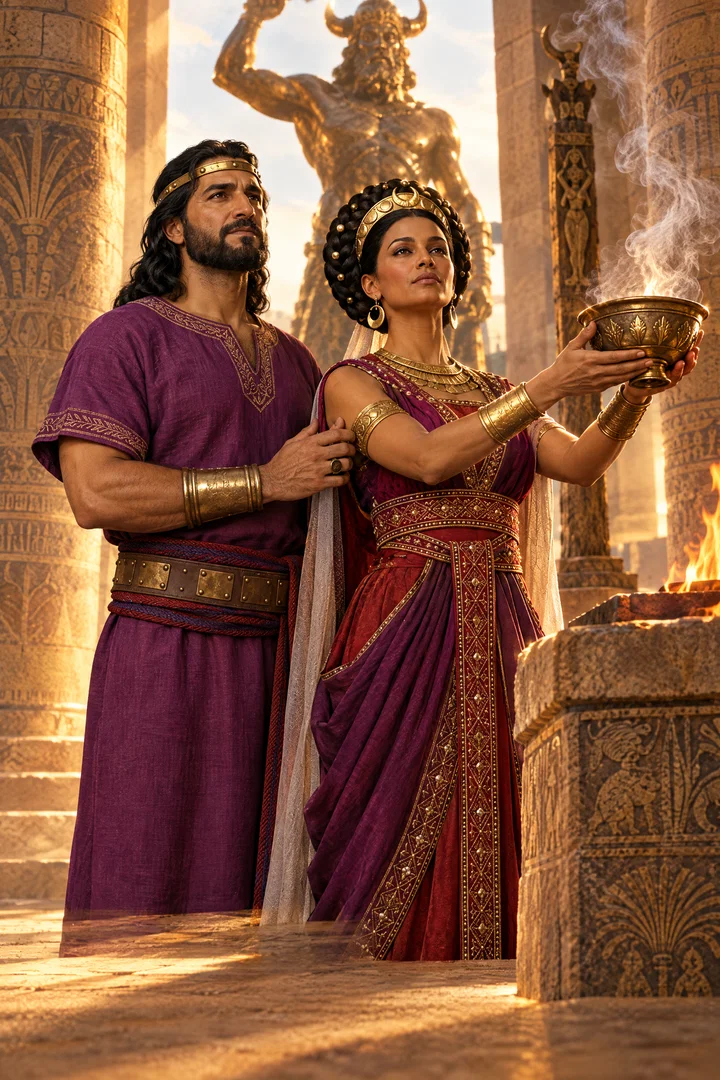
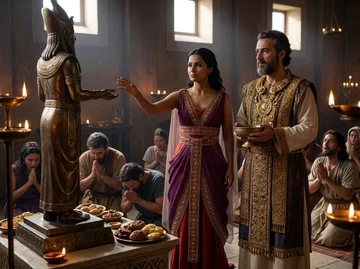
Cross-references 20 of 27
- 1 Kings 18:17-18
And it came to pass, when Ahab saw Elijah, that Ahab said unto him, Art thou he that troubleth Israel?
Elijah identifies Ahab’s forsaking God’s commandments and following Baal as Israel’s trouble.
- 1 Kings 17:1
And Elijah the Tishbite, who was of the inhabitants of Gilead, said unto Ahab, As the LORD God of Israel liveth, before whom I stand, there shall not be dew nor rain these years, but according to my word.
Elijah announces drought as judgment for Israel’s Baal worship under Ahab.
- 1 Kings 18:19
Now therefore send, and gather to me all Israel unto mount Carmel, and the prophets of Baal four hundred and fifty, and the prophets of the groves four hundred, which eat at Jezebel’s table.
Names the prophets of Baal and Asherah supported by Jezebel.
- 1 Kings 12:28-33
Whereupon the king took counsel, and made two calves of gold, and said unto them, It is too much for you to go up to Jerusalem: behold thy gods, O Israel, which brought thee up out of the land of Egypt.
Jeroboam’s calf worship began the departure from Jehovah that Ahab intensified.
- 1 Kings 21:25-26
But there was none like unto Ahab, which did sell himself to work wickedness in the sight of the LORD, whom Jezebel his wife stirred up.
They further describe Ahab’s wickedness and his pursuit of idols.
- 2 Kings 9:22-30
And it came to pass, when Joram saw Jehu, that he said, Is it peace, Jehu? And he answered, What peace, so long as the whoredoms of thy mother Jezebel and her witchcrafts are so many?
Jehu’s judgment on Ahab’s house answers its idolatry and Jezebel’s wickedness.
- 1 Kings 16:25
But Omri wrought evil in the eyes of the LORD, and did worse than all that were before him.
Omri’s evil provides the comparison that Ahab surpassed.
- Exodus 20:3-4
Thou shalt have no other gods before me.
Ahab’s idolatrous worship violated the commands against other gods and graven images.
- 2 Kings 10:21
And Jehu sent through all Israel: and all the worshippers of Baal came, so that there was not a man left that came not. And they came into the house of Baal; and the house of Baal was full from one end to another.
The verse describes the Baal sanctuary where Jehu gathered Baal worshippers before destroying their worship.
- 2 Chronicles 33:3-6
For he built again the high places which Hezekiah his father had broken down, and he reared up altars for Baalim, and made groves, and worshipped all the host of heaven, and served them.
Manasseh’s idolatrous acts likewise provoked the LORD to anger.
- Jeremiah 7:18-20
The children gather wood, and the fathers kindle the fire, and the women knead their dough, to make cakes to the queen of heaven, and to pour out drink offerings unto other gods, that they may provoke me to anger.
Idolatrous worship provokes the Lord’s anger and brings judgment.
- 1 Kings 18:1-2
And it came to pass after many days, that the word of the LORD came to Elijah in the third year, saying, Go, shew thyself unto Ahab; and I will send rain upon the earth.
The drought was judgment on Ahab’s wickedness and part of the contest against Baal worship.
- 1 Kings 19:18
Yet I have left me seven thousand in Israel, all the knees which have not bowed unto Baal, and every mouth which hath not kissed him.
Despite Israel’s Baal worship, God preserved seven thousand who had not bowed to Baal.
- Deuteronomy 11:16-17
Take heed to yourselves, that your heart be not deceived, and ye turn aside, and serve other gods, and worship them;
Worshiping other gods kindles the LORD’s wrath and brings drought.
- 1 Kings 18:21
And Elijah came unto all the people, and said, How long halt ye between two opinions? if the LORD be God, follow him: but if Baal, then follow him. And the people answered him not a word.
Elijah challenges Israel to choose between following the Lord and following Baal.
- 1 Kings 18:4
For it was so, when Jezebel cut off the prophets of the LORD, that Obadiah took an hundred prophets, and hid them by fifty in a cave, and fed them with bread and water.)
Jezebel had the Lord’s prophets killed.
- Micah 6:16
For the statutes of Omri are kept, and all the works of the house of Ahab, and ye walk in their counsels; that I should make thee a desolation, and the inhabitants thereof an hissing: therefore ye shall bear the reproach of my people.
Micah condemns Omri’s statutes and Ahab’s idolatrous works.
- 1 Kings 21:20
And Ahab said to Elijah, Hast thou found me, O mine enemy? And he answered, I have found thee: because thou hast sold thyself to work evil in the sight of the LORD.
Ahab knowingly and willfully sold himself to do evil.
- 1 Kings 18:20
So Ahab sent unto all the children of Israel, and gathered the prophets together unto mount Carmel.
Ahab gathered the prophets of Baal at Mount Carmel.
- 1 Kings 21:1-16
And it came to pass after these things, that Naboth the Jezreelite had a vineyard, which was in Jezreel, hard by the palace of Ahab king of Samaria.
Ahab’s desire for Naboth’s vineyard led to Jezebel’s murderous scheme.
Commentary
Each commentary is drawn from primary sources: the writings of Ellen G. White and Adventist pioneers and periodicals. Each commentary is separate. Its own words are not a quotation; follow the references to read the source passages.
Ellen G. White
11 sources
Ahab's reign in Israel began two years before Asa's death and was marked from the start by strange and terrible apostasy surpassing his father Omri and all the kings of Israel before him.PK 114.1 To walk in the sins of Jeroboam the son of Nebat was to him a light thing, for he was not content with tolerating the forms of religious service at Bethel and Dan but boldly led the people into the grossest heathenism.RH Aug 7, 1913PK 114.1 He made a grove for idolatrous worship, adding consecrated groves and temples to Israel's idolatry, and by setting aside the worship of Jehovah for Baal worship he provoked the LORD God of Israel to anger more than all who had gone before him.3T 262.2RH Aug 7, 1913PK 114.13T 262.3RH Sep 16, 1873 His course did not merely continue the worship begun under Jeroboam but promoted heathen worship and turned the people from Jehovah to Baal.RH Aug 7, 1913PK 114.1
This surpassing provocation reflected weak moral character and disregard for God's mercies and his duty as Israel's leader, so that his marriage to the idolatrous Jezebel left him readily shaped by her and giving her more power over him than God had.3T 262.3PK 115.1Ms 29, 1911, par. 37 His was a blighting rule that, after many years of losing reverence and godly fear, led Israel far from the living God and corrupted their ways before Him into widespread, open worship of Baal and Ashtoreth.3T 262.2RH Aug 7, 19133T 262.3PK 115.2 That apostasy dishonored God and drove the people from His protection.RH Aug 14, 1913 Its extent was seen in images of Baalim and Ashtoreth everywhere, in multiplied idolatrous temples and consecrated groves for the worship of the works of men's hands, in air polluted by the smoke of sacrifices offered to false gods, in hill and vale resounding with the drunken cries of a heathen priesthood sacrificing to the sun, moon, and stars, and in crediting false gods rather than God for the blessings of rain and harvest.3T 262.3PK 115.2
The apostasy spread a dark shadow over the whole land, until none dared expose their lives by openly standing against the prevailing blasphemy.PK 115.2 Prophets and faithful servants were killed, and only severe judgments could fulfill God's purposes for Israel.PK 115.2RH Aug 14, 1913 God would have been with Ahab if he had walked in the counsel of heaven, but when Jezebel led him into idolatry he with her led the people into idolatry.Ms 29, 1911, par. 37 God sent Elijah to Israel with messages of warning, but neither king nor people heeded him and they looked on him as a messenger of evil, and at last God sent drought upon the land as judgment, but the people did not discern its object or humble their hearts.Ms 29, 1911, par. 37
Jezebel charged that the prophets of Jehovah had brought the calamity and that there would be no rest or prosperity until they were put to death, and anger was aroused against the men God sent to call the people to repentance.Ms 29, 1911, par. 37 Many holy men died for their testimony, while Elijah was preserved by a miracle of divine power to proclaim God's warnings and threatenings before the king and queen.Ms 29, 1911, par. 37 This belongs to the dark and troublous time in which Elijah and Elisha did their work, when wickedness had reached a fearful pass in the idolatry of Ahab and Jezebel.Ms 31, 1889, par. 77 Even then God sent His prophets to the nation with messages of warning, keeping men whom He used in fighting the battles of Zion, and He chose Elijah as a preacher of righteousness ruled and guided by the Holy Spirit to accomplish a grand and noble work under God's direction.Ms 31, 1889, par. 77 The age had visible worship of Baal, while the same kind of idolatry can also take the form of serving wealth, fame, pleasure, or human ideas in place of God.PK 177.1
Sources
Pioneers and periodicals
50 sources
Ahab set up a wooden pillar for Asherah, the Phoenician goddess of fortune and prosperity worshiped as Astarte, placing it in a secluded grove with its licentious nature rites.RH Jul 26, 1906ST Jul 20, 1904ST Jul 16, 1885 He did this to please his wife Jezebel, daughter of Ethbaal king of Sidon, for whom he also built a temple, altar and house for Baal in Samaria and maintained hundreds of priests of Baal and of the groves.RH Jul 26, 1906ST Oct 22, 1894RH Apr 7, 1910ST Jun 23, 1898 In this he provoked the Lord more than all the kings before him, counting the calf-worship of Jeroboam a light thing and going beyond a breach of the second commandment to open rejection of Jehovah for Baal in breach of the first.RH Aug 14, 1868ST Sep 8, 1881STST Jan 17, 1884RH May 9, 1871 His course led nearly the whole nation into Baal and sun worship, bringing heaven's displeasure in drought and famine until Elijah confronted the apostasy and God preserved seven thousand who had not bowed to Baal.ST Apr 26, 1910ST Feb 2, 1882ST Aug 7, 1901ST Sep 8, 1898 The union of Ahab with Jezebel stands as a pattern of the union of an apostate church with the state in spiritual fornication, showing how leaders who join themselves to enemies of God corrupt the people and how a small departure widens from bad to worse.ST Aug 22, 1900ST Dec 10, 1902STSTST Mar 20, 1901
Grove and Historical Setting
The “grove” in the verse is not a stand of trees but a wooden pillar representing Asherah, the Phoenician goddess Astarte or Ashtoreth, whose name means fortune, happiness or prosperity.RH Jul 26, 1906ST Jul 20, 1904ST Jul 16, 1885 Ahab’s making of the Asherah in this way further exalted Baal before the people in Samaria, and his whole course in adding Ashtoreth worship to Baal worship provoked Jehovah to anger yet more than all the kings of Israel before him.RH Jul 26, 1906ST Jul 20, 1904 The grove had four hundred priests, whom Jezebel supported.RH Jul 26, 1906ST Jul 16, 1885
That Asherah worship was heathen nature-worship and sun-worship, centered on sacred groves and Asheras established in groves.ST Apr 17, 1901ST Sep 10, 1896ST Sep 8, 1898 It involved cruel and indecent rites and licentiousness disguised as religion, and the pillar was likely placed in a grove to provide seclusion for that false worship.ST Jul 16, 1885 Israel’s worship of Baal under Ahab, including his making of a sacred grove, was its greatest and worst idolatry, marking a height of idolatry in which he provoked the Lord more than the kings before him.ST Apr 17, 1901ST Sep 10, 1896ST Sep 8, 1898
What Ahab made was a sanctuary for Ashtaroth set up for his Phoenician wife Jezebel, with its accustomed grove and four hundred attending priests called prophets of the groves.RH Jul 26, 1906RH Apr 7, 1910ST Jul 16, 1885 That establishment was supported by Jezebel and stood apparently near Jezreel, where the four hundred served.ST Jul 16, 1885ST Apr 17, 1907 It stood as one of two sanctuaries, the other dedicated to Baal with four hundred fifty priests, at a time when the wild license accompanying idolatrous worship had become a byword and when Jezebel’s establishment of Phoenician idolatry at court, killing of the Lord’s prophets and servants, and leading of Israel into corruption made Ahab a tool of wickedness.RH Apr 7, 1910ST Apr 17, 1907
Ahab was the son of Omri and seventh king of Israel after the kingdom divided, second ruler of the third Israelite dynasty.RH Nov 7, 1912ST Jun 23, 1898 He reigned twenty-two years early in the ninth century before Christ as contemporary of Jehoshaphat of Judah and Elijah the Tishbite.RH Nov 7, 1912 He sealed an alliance with Ethbaal, the sun-worshiping king of Zidon or Sidon, by marrying his daughter Jezebel, and that marriage preceded and led to his departure into Baal worship.ST Oct 22, 1894ST Jun 23, 1898 He then served and worshiped Baal, built a house, altar and temple for him in Samaria, set up idols for other gods, and helped establish Baal worship in Israel, making his rebellion worse than that of any earlier king.ST Oct 22, 1894ST Jun 23, 1898RH Oct 15, 1901
The verse belongs to the history of Israel’s kings after the kingdom was divided, a history that continues through the remainder of 1 Kings and all of 2 Kings.ST Jul 30, 1885 Ahab’s reign in that history provides the setting for the Moabite Stone’s report that Moab regained its independence after his death.RH Aug 4, 1910
Worse Than Former Kings
Ahab provoked the Lord God of Israel to anger more than all the kings of Israel before him, and his reign marked a deeper stage of rebellion and apostasy than Jeroboam's.STST Jan 17, 1884RH May 9, 1871 His marriage to Jezebel unleashed a flood of Baal worship in Israel, and his exceptional wickedness was matched by the raising up of Elijah as an eminent witness and instrument of divine power.STRH May 9, 1871 Both Omri and his son Ahab followed the idolatrous way of Jeroboam but in greater degree, each acting more wickedly than any predecessor.ST Apr 17, 1901ST Sep 7, 1904 Ahab counted the sins of Jeroboam a light thing and went beyond the calf worship promoted by Jeroboam and the golden-calf worship spread by Omri by establishing the worship of Asheras in groves and promoting Baal worship and sun-worship.ST Apr 17, 1901ST Sep 7, 1904ST Jul 20, 1904
Ahab did not merely tolerate the worship begun under Jeroboam but promoted heathen worship and turned the people from the worship of Jehovah to Baal.RH Aug 7, 1913ST Jul 20, 1904 By making the Asherah he further exalted Baal before the people in Samaria, and his whole course provoked Jehovah yet more than all who were before him.RH Aug 7, 1913ST Jul 20, 1904 He sold himself to the worship of a plurality of heathen deities and afterward enforced their worship upon his people, whose ruling character was devotion to one God and to a semitheocratic government.RH Nov 7, 1912 Jeroboam's worship of God through golden-calf representations violated the second commandment, but Ahab went beyond images to openly set aside Jehovah, reject Him, and give His place to Baal, choosing another god in defiance of the first commandment and bringing Israel's rebellion to its height.RH Aug 14, 1868ST Sep 8, 1881RH Aug 1, 1871
Unlike the worship under Jeroboam's calves, which still acknowledged Jehovah and His law, Ahab's Baal and Ashtoreth worship marked an utter separation from God. Jeroboam's symbolic alteration of Jehovah's worship led, within less than fifty years, to a temple to the Sidonian Baal in Samaria and the spread of Baal worship with its sensual corruption, showing how even a small departure from God and His law can widen until it leads far from Him, especially when worship is altered with material and sensuous forms that can become hindrances.ST His wickedness was presumptuous because he knew Jehovah as God and His worship as the true religion yet stubbornly chose idolatry, forsaking completely the service of Jehovah for idolatry or religious indifference.RH Nov 7, 1912
Though Judah and Israel stood at the height of power and prosperity, and Ahab was a clever statesman, skilled general and patriotic ruler, seventh king of Israel and second ruler of the third Israelite dynasty reigning twenty-two years early in the ninth century before Christ as contemporary of Jehoshaphat of Judah and Elijah the Tishbite, he was a moral coward where he should have been strongest, and civil success and more than average opportunity as man and prince did not save him.RH Nov 7, 1912 He was a weak and wicked king dominated by his idolatrous wife Jezebel, daughter of Ethbaal, who had complete control over him, and at times he wanted to serve God but also sought popularity, pleased people and desired royal display.ST Aug 7, 1901ST Apr 17, 1907ST Jul 20, 1904 He became a mere puppet in Jezebel's hands while she established Phoenician idolatry at the royal court, supported 450 prophets of Baal and 400 prophets of Astarte, persecuted and slew the prophets and servants of the Lord, and led Israel into corruption until all Israel was deceived and captivated by sun-worship and Elijah lamented that he alone was left who had not bowed the knee to Baal.ST Apr 17, 1907RH Nov 7, 1912 More is written of him than of any other ancient monarch for the learning and profit of later men and kings, as evidence of divine solicitude for him.RH Nov 7, 1912
National Apostasy and Judgment
The verse stands in the record of Israel's moral decline, marking a great apostasy in the days of Elijah when nearly the whole nation had become corrupted and was transgressing God's commandments.ST Apr 26, 1910ST Aug 7, 1901 It shows a king who provoked the Lord more than those before him, and in that failure lies the responsibility of leaders, for when they fail to lead in right ways the people also fail.ST Apr 26, 1910
Under Ahab's influence and Jezebel's the Lord's words were little regarded, as his building of a temple to Baal makes plain.ST Apr 15, 1897 Idolatry swept through Israel from the throne and court, and Elijah fought against it.RH Sep 9, 1862 Baal and Asherah worship spread through the nation and spread openly among the people, part of Israel's backsliding into sun-worship.RH Sep 16, 1873ST Jun 6, 1900ST Dec 24, 1896 That worship involved transgression of God's commandments, especially those against idolatry, Sabbath-breaking, and adultery, as well as licentious rites of nature-worship.ST Jun 6, 1900 It dishonored God and drove the people from His protection, until prophets and faithful servants were killed and only severe judgments could fulfill God's purposes for Israel.RH Aug 14, 1913
Israel's worship of Baal under Ahab, including his making of a sacred grove, was its greatest and worst idolatry.ST Sep 10, 1896 The true God had been set aside and Baal established.RH Oct 12, 1916 Ahab's rule and his worship of Baal, including the grove he made, brought Israel under heaven's interdiction.RH Dec 4, 1913 Together with Joshua's curse on whoever rebuilt Jericho, this showed Elijah that national apostasy would bring national calamity and that famine was imminent.RH Dec 4, 1913
Ahab's wickedness, with his evil conduct and his altar to Baal in Samaria, brought the drought and suffering that followed in Israel.ST Feb 2, 1882ST Dec 9, 1889 Though Ahab blamed Elijah, Elijah's stand for true worship rebuked him.ST Feb 2, 1882 His reign marked a deeper stage of rebellion and apostasy, matched by God's raising up Elijah as an eminent witness and instrument of divine power.RH May 9, 1871 Elijah fought the idolatry and was called to proclaim reform and call the people back to obedience, for Israel had turned from the true God to worship Baal.RH Sep 9, 1862RH May 30, 1871 Elijah's drought and contest with Baal's worshipers exposed the impotence of the sun-god, though the people's acknowledgment that Jehovah was God did not make their hearts faithful.ST Sep 8, 1898 Even amid this apostasy God preserved a remnant of seven thousand who had not bowed to Baal.ST Sep 8, 1898
Israel reaped the consequences of evil and idolatry, for Ahab's wickedness and worship provoked God and the nation's captivity and exile followed its rebellion.ST Dec 5, 1911ST His idolatry, including making a grove, illustrates the destructive results of departing from God's law and adopting heathen worship.ST Sep 18, 1901
Prophetic Type and Moral Lessons
Ahab stands as the representative of the people of God espoused to Him, while Jezebel, daughter of Ethbaal king of the Sidonians, a sun-worshiper, stands as the representative, teacher and prophetess of the world in its most abominable religious phase, so that their marriage union was fornication.ST Dec 10, 1902 Jezebel is therefore a fitting type of heathen philosophy brought into the Christian church, developing into the great apostasy of the Dark Ages and resulting in the Papacy.ST Dec 10, 1902 That union of Ahab, king of Israel, with Jezebel is presented as a pattern for the later union of an apostate church with the state, the spiritual fornication called Babylon.ST Dec 10, 1902ST Mar 20, 1901 His making a grove and provoking the Lord more than any king of Israel before him, with his worship of Baal and support for false religion, formed part of a union of religion and state that threatened God's people, in a setting that includes Jezebel's influence and Israel's worship of Baal associated with sun worship.ST Aug 22, 1900ST Mar 20, 1901
Those not seduced by Jezebel's witchcrafts were hunted and slain by her and her paramours, just as God's children of old were hunted and slain by the literal Jezebel.ST Dec 10, 1902 Idolatry under Ahab became so widespread, with worship of Baal and Ashtoreth spreading through the nation, dishonoring God and driving the people from His protection, that prophets and faithful servants were killed and only severe judgments could fulfill God's purposes for Israel.RH Aug 14, 1913ST Dec 10, 1902 The record of Israel's moral decline in Ahab, who provoked the Lord more than the kings before him, illustrates the responsibility of leaders: when they fail to lead in right ways, the people also fail.ST Apr 26, 1910 Ahab was false to the trust placed in him, and his important kingship did not make him holy, showing that holding a divinely appointed position without Christ does not cleanse or save.ST Jun 4, 1912
His example as an exceptionally wicked king of Israel who practiced idolatry and provoked the Lord more than the kings before him shows that descent from Israel did not ensure righteousness or salvation.RH Jan 16, 1872 Joining oneself to those opposed to God can lead to adopting their gods and turning further from God, for his marriage to Jezebel, a foreign princess who worshiped the sun, brought Baal's cruel and lustful worship into Israel, and their unlawful union led God's people away from Him and ultimately ruined Ahab and his house.ST Even a small departure from God and His law can widen until it leads far from Him, especially when worship is altered with material and sensuous forms that can become hindrances, as Jeroboam's symbolic alteration of Jehovah's worship led within less than fifty years to a temple to the Sidonian Baal in Samaria and the spread of Baal worship with its sensual corruption.ST Sin naturally goes from bad to worse like weeds growing without cultivation in barren soil, for Ahab counted the sins of Jeroboam a light thing, married a heathen woman, the daughter of Ethbaal, who had complete control over him, and went to even greater lengths in the evil course Jeroboam started, doing still worse than Omri and all the kings of Israel before him.ST Jul 20, 1904
Ahab's rule, promoting Baal worship and provoking the Lord more than Israel's earlier kings, illustrates how readily people can abandon truth and how difficult it is to bring them back through reform.ST Apr 15, 1880 After marrying Jezebel he let her influence lead him into more iniquity than the kings of Israel before him, later allowing Baal worship to resume after the contest on Mount Carmel and yielding to Jezebel's scheme against Naboth, failing to take a firm stand for the Lord.ST Apr 15, 1880ST Aug 20, 1885 Sin is the transgression of the law, and the only remedy is to have it thoroughly uprooted and washed away by the blood of Christ, by being justified by faith, living by faith with God's law written in the heart so sin does not have dominion, since the carnal mind cannot keep the law and keeping afterward is only through faith in Christ by the power of God through faith that comes by hearing the Word of God.ST Jul 20, 1904 The gradual downfall of Israel in the reigns of Omri and his son Ahab, both following the idolatrous way of Jeroboam but in greater degree, each acting more wickedly than any predecessor until Ahab angered the God of Israel beyond all the kings before him, shows that righteousness exalts a nation, but such sin is a reproach to any people.ST Sep 7, 1904
Sources