1 Kings 21:20
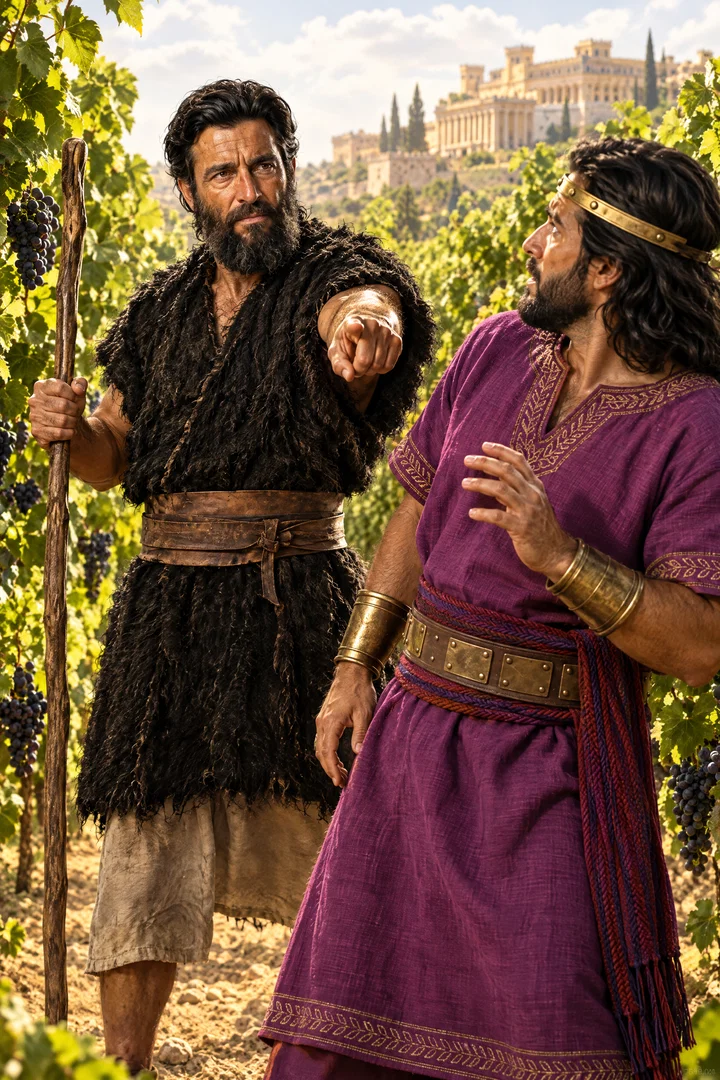
And Ahab said to Elijah, Hast thou found me, O mine enemy? And he answered, I have found thee: because thou hast sold thyself to work evil in the sight of the LORD.
Translations
And Ahab said to Elijah, Have you found me, O my enemy? And he answered, I have found you: because you have sold yourself to work evil in the sight of the LORD.
And Ahab said to Elijah, Hast thou found me, O mine enemy? And he answered, I have found thee: because thou hast sold thyself to work evil in the sight of the LORD.
And Ahab said to Elijah, Hast thou found me, O mine enemy? And he answered, I have found thee: because thou hast sold thyself to work evil in the sight of the Lord,
And Ahab said to Elijah, Hast thou found me, O my enemy? And he answered, I have found thee: because thou hast sold thyself to work evil in the sight of the LORD.
And Ahab said to Elijah, Hast thou found me, O mine enemy? And he answered, I have found thee: because thou hast sold thyself to do that which is evil in the sight of the LORD.
And Ahab said to Elijah, Hast thou found me, O mine enemy? And he answered, I have found thee, because thou hast sold thyself to do that which is evil in the sight of Jehovah.
And Ahab saith unto Elijah, 'Hast thou found me, O mine enemy?' and he saith, 'I have found — because of thy selling thyself to do the evil thing in the eyes of Jehovah;
And Ahab said to Elijah, Hast thou found me, mine enemy? And he said, I have found [thee]; because thou hast sold thyself to do evil in the sight of Jehovah.
Then said Ahab unto Elijah, Hast thou found me, O mine enemy? And he said: I have found [thee]! Because thou hast sold thyself to do the thing that is wicked in the eyes of Yahweh,
Berean Standard Bible, Majority Standard Bible
When Elijah arrived, Ahab said to him, “ So you have found me out, my enemy.”He replied, “ I have found you out because you have sold yourself to do evil in the sight of the LORD.
Ahab said to Elijah, “ Have you found me, my enemy?”He answered, “ I have found you, because you have sold yourself to do that which is evil in the LORD’s sight.
And Ahab said to Elijah, Have you come face to face with me, O my hater? And he said, I have come to you because you have given yourself up to do evil in the eyes of the Lord.
And Ahab sayd to Eliiah, Hast thou found mee, O mine enemie? And he answered, I haue found thee: for thou hast solde thy selfe to worke wickednes in the sight of the Lord.
Douay-Rheims (Challoner revision)
And Achab said to Elias: Hast thou found me thy enemy? He said: I have found thee, because thou art sold, to do evil in the sight of the Lord.
Pictures
Cross-references
- 1 Kings 18:17-18
And it came to pass, when Ahab saw Elijah, that Ahab said unto him, Art thou he that troubleth Israel?
Ahab calls Elijah a troublemaker, while Elijah identifies Ahab’s wrongdoing and forsaking of God.
- 1 Kings 21:29
Seest thou how Ahab humbleth himself before me? because he humbleth himself before me, I will not bring the evil in his days: but in his son’s days will I bring the evil upon his house.
Ahab humbles himself, and judgment on his house is delayed.
- 1 Kings 19:1-2
And Ahab told Jezebel all that Elijah had done, and withal how he had slain all the prophets with the sword.
Jezebel threatens Elijah after he slays the prophets of Baal.
- 1 Kings 21:25
But there was none like unto Ahab, which did sell himself to work wickedness in the sight of the LORD, whom Jezebel his wife stirred up.
Both describe Ahab selling himself to evil, incited by Jezebel.
- 2 Kings 9:25-26
Then said Jehu to Bidkar his captain, Take up, and cast him in the portion of the field of Naboth the Jezreelite: for remember how that, when I and thou rode together after Ahab his father, the LORD laid this burden upon him;
Jehu fulfills the Lord’s judgment for Ahab’s evil and Naboth’s blood.
- 1 Kings 21:2-3
And Ahab spake unto Naboth, saying, Give me thy vineyard, that I may have it for a garden of herbs, because it is near unto my house: and I will give thee for it a better vineyard than it; or, if it seem good to thee, I will give thee the worth of it in money.
Naboth refuses Ahab’s offer for his ancestral inheritance.
- 1 Kings 16:30-33
And Ahab the son of Omri did evil in the sight of the LORD above all that were before him.
Describes Ahab’s wickedness and worship of Baal.
- 1 Kings 22:34-38
And a certain man drew a bow at a venture, and smote the king of Israel between the joints of the harness: wherefore he said unto the driver of his chariot, Turn thine hand, and carry me out of the host; for I am wounded.
Ahab dies in battle, fulfilling the announced judgment.
- 2 Kings 9:36-37
Wherefore they came again, and told him. And he said, This is the word of the LORD, which he spake by his servant Elijah the Tishbite, saying, In the portion of Jezreel shall dogs eat the flesh of Jezebel:
Jezebel’s fate fulfills the doom Elijah pronounced on Ahab’s house.
- Isaiah 52:3
For thus saith the LORD, Ye have sold yourselves for nought; and ye shall be redeemed without money.
Isaiah says people sold themselves for nothing.
- 1 Kings 17:1
And Elijah the Tishbite, who was of the inhabitants of Gilead, said unto Ahab, As the LORD God of Israel liveth, before whom I stand, there shall not be dew nor rain these years, but according to my word.
Elijah pronounces both judgments on Ahab with confidence in God.
- 1 Kings 21:7
And Jezebel his wife said unto him, Dost thou now govern the kingdom of Israel? arise, and eat bread, and let thine heart be merry: I will give thee the vineyard of Naboth the Jezreelite.
Jezebel promises Ahab Naboth’s vineyard.
- 2 Kings 1:3
But the angel of the LORD said to Elijah the Tishbite, Arise, go up to meet the messengers of the king of Samaria, and say unto them, Is it not because there is not a God in Israel, that ye go to enquire of Baal-zebub the god of Ekron?
Elijah rebukes a king for turning from the LORD to idolatry.
- 2 Samuel 12:7-13
And Nathan said to David, Thou art the man. Thus saith the LORD God of Israel, I anointed thee king over Israel, and I delivered thee out of the hand of Saul;
David receives Nathan’s rebuke without responding as Ahab did.
- 2 Kings 9:22
And it came to pass, when Joram saw Jehu, that he said, Is it peace, Jehu? And he answered, What peace, so long as the whoredoms of thy mother Jezebel and her witchcrafts are so many?
Jehu condemns Joram for Jezebel’s wickedness as he carries out judgment.
- 2 Kings 1:9-12
Then the king sent unto him a captain of fifty with his fifty. And he went up to him: and, behold, he sat on the top of an hill. And he spake unto him, Thou man of God, the king hath said, Come down.
Elijah confidently invokes God’s judgment against those sent by the king.
- Revelation 2:20
Notwithstanding I have a few things against thee, because thou sufferest that woman Jezebel, which calleth herself a prophetess, to teach and to seduce my servants to commit fornication, and to eat things sacrificed unto idols.
Jezebel is used figuratively, recalling Ahab’s wife.
Commentary
Each commentary is drawn from primary sources: the writings of Ellen G. White and Adventist pioneers and periodicals. Each commentary is separate. Its own words are not a quotation; follow the references to read the source passages.
Ellen G. White
15 sources
Elijah confronted Ahab face to face in Naboth's vineyard when Ahab came down to take possession of it after it had been gained by fraud and bloodshed.Ms 29, 1911, par. 42–45PK 204.3PK 206.3–207.1 Ahab's greeting of Elijah as his enemy expresses startled fear, treating God's stern messenger as an adversary because the prophet faithfully brought his hidden sins to light.Ms 29, 1911, par. 42–45PK 206.3–207.13SP 12.2 Elijah's answer turns the charge back upon the king, declaring that he has found him because he has given himself over to work evil in the sight of the Lord.Lt 46, 1891, par. 9–11PK 204.2PK 206.3–207.1 To have sold himself to work evil means to have committed himself to wickedness against God and His principles, following a naturally covetous heart until, strengthened and sustained in wrong by Jezebel, he was fully controlled by selfishness and could brook no refusal of his desires.PK 204.2PK 204.1RH Jan 8, 1914 The rebuke exposed that his seizure of the vineyard was found out and announced doom upon him and upon his house.RH Jan 8, 1914PK 224.1–2 Those who faithfully reprove sin and bring wrongdoing to light may likewise meet scorn and rejection, and those who have sold themselves to do evil will not have God's favor until they repent with sincere purpose and receive pardon.DA 587.4–5ST Jan 10, 1878Lt 7, 1897, par. 4Lt 253a, 1903, par. 1–2
Setting and Meaning
Elijah met Ahab face to face in Naboth the Jezreelite's vineyard as Ahab went to take possession of it, while Elijah was still a prophet in Israel.PK 204.3PK 206.3–207.1RH Jan 8, 1914 The vineyard had been gained through fraud and bloodshed, through Jezebel's fraud and Naboth's death.Ms 29, 1911, par. 42–45PK 206.3–207.1RH Jan 8, 1914 Ahab had set his heart on possessing Naboth's vineyard near his palace for a garden of herbs.PK 204.3 He had proposed to buy it for money or to give a better vineyard in exchange.PK 204.3 That desire revealed a dominant covetous trait that disastrously influenced the fortunes of the kingdom under his successors.PK 204.3
The confrontation belongs to the years Elijah and Elisha labored together after the call of Elisha.PK 224.1–2 At that time Elijah served for the overthrow of great evils.PK 224.1–2 The idolatry supported by Ahab and Jezebel had received a decided check.PK 224.1–2 The prophets of Baal had been slain, and Israel had been deeply stirred with many returning to the worship of God.PK 224.1–2
To have sold himself to work evil in the sight of the Lord means to have given himself over to doing what is wicked.PK 204.2PK 204.1RH Jan 8, 1914 It means committing himself to work against God's principles and against the Lord.Lt 7, 1897, par. 4Lt 253a, 1903, par. 1–2 Ahab was naturally covetous, and was strengthened and sustained in wrongdoing by Jezebel until fully controlled by the spirit of selfishness.PK 204.3PK 204.2PK 204.1 He followed his evil heart until he could brook no refusal of his wishes and felt whatever he desired should by right be his.PK 204.3PK 204.2 His life was marked by unusually shameful and violent deeds.PK 204.1
Ahab's address to Elijah as his enemy expressed startled fear.PK 206.3–207.1 It treated God's stern messenger as an adversary when confronted with wrongdoing.Ms 29, 1911, par. 42–45PK 206.3–207.1 It revealed that he regarded the prophet as an enemy because the prophet faithfully brought his hidden sins to light.Ms 29, 1911, par. 42–453SP 12.2DA 587.4–5ST Jan 10, 1878
Rebuke, Judgment and Application
Elijah met Ahab face to face in Naboth's vineyard to deliver God's command after the vineyard had been gained by fraud and bloodshed, and Ahab's question expressed startled fear that treated God's stern messenger as his enemy.PK 206.3–207.1 Elijah's answer was without hesitation that he had found him because he had sold himself to work evil in the sight of the Lord, a divine reproof that identified the king's own guilt and exposed wrongdoing rather than accepting blame for the one who delivered it.Lt 46, 1891, par. 9–11PK 206.3–207.1 The rebuke announced that Ahab's wrongdoing in seizing the vineyard by flagrant evil had been found out and would bring divine judgment on him and his house.RH Jan 8, 1914PK 224.1–2
It prophesied doom upon Ahab and doom upon all his house for wickedly seizing Naboth's vineyard.PK 224.1–2 This stern rebuke belonged to the years Elijah and Elisha labored together after the call of Elisha, when Elijah served as God's instrument for the overthrow of gigantic evils after the idolatry supported by Ahab and the heathen Jezebel that had seduced the nation had received a decided check, the prophets of Baal had been slain, and the whole people of Israel had been deeply stirred with many returning to the worship of God.PK 224.1–2 Even great position, responsibility and authority such as Ahab's does not place anyone above God, whose sovereignty over all such rulers is supreme.STA 108.2 Those who without spiritual discernment and experience in the things of God take control of the large interests of God's publishing work into finite hands and place their own mold upon it will learn this truth to their own peril.STA 108.2
To sell oneself to do evil means to commit oneself to work against God's principles and against the Lord, giving oneself over to doing what is wicked.Lt 7, 1897, par. 4Lt 253a, 1903, par. 1–2 Those who do so will not have God's favor until they repent, come to Him with sincere purpose, and receive pardon.Lt 7, 1897, par. 4 The same charge applies to a person whose speech and spirit have been given over to the world.Lt 253a, 1903, par. 1–2 The same image also describes the people of the world before the Flood, who turned from God's wisdom, came under Satan's influence, and worked wickedness, with disregard for God leading to oppression including physical suffering and control of conscience through human laws.Ms 29, 1911, par. 58–59 Ahab regarded Elijah as his enemy because the prophet faithfully exposed and rebuked the king's hidden sins and brought wrongdoing to light, and those who faithfully reprove sin may likewise meet scorn, rejection and rebuffs.DA 587.4–5ST Jan 10, 1878
Sources
Pioneers and periodicals
25 sources
Elijah met Ahab in Naboth's vineyard after Ahab took it through covetous desire, fraud and bloodshed, with Naboth and his sons killed to seize his estate.RH Jan 8, 1914ST Aug 20, 1885RH Jun 15, 1911 When Ahab called the prophet his enemy, he treated the one who confronted him as a foe rather than facing his own wrong, and Elijah's answer that he had found him exposed him as discovered in his guilt by God.ST Aug 20, 1885PGGC 81.1–2RH Jun 15, 1911 To have sold himself to work evil means he had deliberately given himself over to wickedness and made himself a servant of evil, knowingly abandoning true worship for idolatry and imposing it on Israel.ST Aug 20, 1885RH Nov 7, 1912ST May 13, 1908 Elijah's rebuke pronounced divine judgment on Ahab and his house and on Jezebel for that specific wrong, and it was dreadfully fulfilled when Ahab died in battle with dogs licking his blood where Naboth had been killed.ST May 13, 1908ST May 13, 1908RH Jun 15, 1911ST Oct 15, 1885ST Sep 4, 1901 Ahab's rending his clothes, fasting in sackcloth and going softly won only a respite with judgment delayed until after his death without transforming his character, warning against exchanging loyalty to God for wealth, pleasure or fame and against hating faithful reproof as enmity.ST May 13, 1908ST May 13, 1908RH Apr 29, 1875RH Nov 7, 1912ST Dec 20, 1910
Confrontation in Naboth's Vineyard
The meeting belongs in Naboth's vineyard, where Elijah confronts Ahab just as the king takes possession of the murdered man's property after seizing it through covetous desire, fraud and bloodshed.RH Jan 8, 1914ST Aug 20, 1885RH Jun 15, 1911 Naboth and his sons had been killed under Jezebel's scheme to take his estate, so that the very field Ahab claimed stood as a lasting witness to the wrongdoing of Ahab and Jezebel.ST Oct 15, 1885ST Sep 4, 1901 The guilt laid bare there is both murder and seizure, for yielding to that scheme made Ahab one who had given himself over to doing evil before the Lord.RH Jan 8, 1914ST Aug 20, 1885ST Sep 4, 1901
When Ahab asks if his enemy has found him, he treats the prophet who exposes him as an enemy rather than facing his own wrong.ST Aug 20, 1885PGGC 81.1–2RH Jun 15, 1911 Elijah's answer that he has found him exposes Ahab as discovered in his guilt.ST Aug 20, 1885RH Jun 15, 1911 That cry is the bitter wail of a guilty man discovered by God, who is not limited as man is but knows the way men go and meets those who try to get away from Him.ST Nov 4, 1930
Elijah's answer names the reason he has found Ahab, that Ahab has given himself over to doing evil in the sight of the Lord, and with it pronounces divine judgment on Ahab and his house and on Jezebel.RH Jan 8, 1914ST May 13, 1908ST May 13, 1908 The encounter is an unbidden prophetic rebuke directed to a specific wrongdoing.RH Jun 15, 1911 It was delivered with vast confidence before the haughty monarch who had forsaken the commandment of his Lord and, forgetting the dreadful lesson of the drought, had become as sinful as before.RH Jan 13, 1859
The doom pronounced there was dreadfully fulfilled.RH Jan 13, 1859 Ahab died in battle and dogs licked his blood where Naboth had been killed.ST Sep 4, 1901 Jehu later carried out the judgment on Ahab's house in that same field where the sentence had been spoken.ST Oct 15, 1885
Ahab appeared to repent and met the denunciation with reverence by rending his clothes, putting sackcloth on his loins, fasting, lying in sackcloth, and going softly.ST May 13, 1908RH Apr 29, 1875 God was moved by this to give him a respite and delay the threatened judgments on his house until after his death.ST May 13, 1908ST May 13, 1908RH Apr 29, 1875 This favor shows that God highly esteems reverence for Himself and for His word and His people, though that repentance won only a life-long reprieve and did not transform Ahab's character to fit him for heaven.RH Apr 29, 1875
Sold to Work Evil
To have sold himself to work evil in the sight of the Lord means Ahab had given himself over to doing what was wicked and had made himself a servant of evil.RH Jan 8, 1914ST Aug 20, 1885RH Nov 7, 1912ST May 13, 1908ST Sep 4, 1901 The phrase describes deliberate moral surrender and giving oneself over to wrongdoing.ST Aug 20, 1885RH Nov 7, 1912ST Dec 20, 1910 Elijah spoke it as he confronted Ahab taking possession of Naboth's vineyard after Naboth's murder, exposing his guilt when Ahab treated the prophet who met him as an enemy and answering that he had found him in his wrongdoing.RH Jan 8, 1914ST Aug 20, 1885 The confrontation came after Ahab took the vineyard through fraud and bloodshed by yielding to Jezebel's scheme to kill Naboth and take his estate, and Elijah identified the selling to evil as the reason he had found him, declaring the coming doom of Ahab and his house for both murder and seizure.RH Jan 8, 1914ST May 13, 1908ST Sep 4, 1901 That judgment was fulfilled when Ahab died in battle and dogs licked his blood where Naboth had been killed, and Ahab's apparent repentance brought only a respite.ST May 13, 1908ST Sep 4, 1901 The same history shows Ahab's wife leading him into idolatry and slaying the Lord's prophets.RH Oct 16, 1856
Ahab knowingly and stubbornly chose evil before the Lord and Israel, abandoning the worship he knew was true for the worship of heathen deities.RH Nov 7, 1912RH Nov 7, 1912 That deliberate choice is described as turning to idolatry or to religious indifference, embracing the idolatry and evil of the age against which Elijah stood.ST Apr 28, 1909RH Nov 7, 1912 He imposed that false worship on Israel, and his idolatry provoked God more than the idolatry of Israel's earlier kings.RH Nov 7, 1912RH Nov 7, 1912
Sold thyself means exchanging loyalty to God and truth for wealth, worldly pleasure, or social fame, yet gaining nothing of lasting worth, so that Ahab's life and death warn against that exchange.RH Nov 7, 1912 In the same way Jazer and Demas sold themselves to serve Annas and Caiaphas for payment, with Jazer's greed making him eager to do the high priest's bidding.ST Dec 20, 1910 His time also represents the thousand years of papal supremacy in Europe, warning kings and nations against turning from truth and enforcing religious beliefs through civil laws.RH Nov 7, 1912
Prophecy Rebuke and Warning
The history in the chapter supplies the background for the figurative name Jezebel, for Jezebel was Ahab's wife who led him into idolatry.RH Jun 17, 1862RH Feb 12, 1857RH Aug 7, 1860 She supported the prophets of Baal and set herself against the Lord's prophets, even to slaying them.RH Oct 16, 1856ST Jan 15, 1880 Her leading of Ahab into idolatry provides the picture of the corrupting influence rebuked in the message to Thyatira.RH Jun 17, 1862RH Aug 7, 1860 That same history makes her a fitting figure for papal abominations.ST Jan 15, 1880
Ahab's time represents the thousand years of papal supremacy in Europe.RH Nov 7, 1912 In that representation the verse warns kings and nations against turning from truth.RH Nov 7, 1912 It warns them likewise against enforcing religious beliefs through civil laws.RH Nov 7, 1912
Ahab called Elijah his enemy because the prophet faithfully confronted him over Naboth's murder and the seizure of the vineyard and exposed his hidden and secret sins.ST Jan 10, 1878PGGC 81.1–2RH Nov 22, 1906 His anger illustrates how recipients of stern correction may turn with hostility against the exposer rather than face their own wrongdoing, in contrast to David's response to Nathan.PGGC 81.1–2RH Dec 14, 1869 Elijah's reproof, though unwelcome and dangerous to deliver, sought the king's good and made the prophet a true friend rather than an enemy.PGGC 81.1–2 God's prophets were hated by apostate Israel because through them hidden sins were brought to light, and the same hatred continues when Christ's servant who reproves sin meets scorn and rebuffs.ST Jan 10, 1878RH Nov 22, 1906
The cry, Hast thou found me, O mine enemy, also gives words to use against delay in duty.RH Mar 20, 1856 When the thought comes to intermit or defer duty from present indisposition and unaptness, saying it is better not to set hand to God's work than to spoil it and better to omit the offering than to give the lame and blind, intending to make amends when fitter, that plea is to be exposed as the enemy.RH Mar 20, 1856 At the next time the task grows more irksome and the plea of unfitness gains strength, until what was only deferred becomes willing neglect.RH Mar 20, 1856 There the serpent's head appears, and the least reluctance toward assigned work is to be checked by rejecting that plea without hearing.RH Mar 20, 1856
Sources