1 Kings 17:15
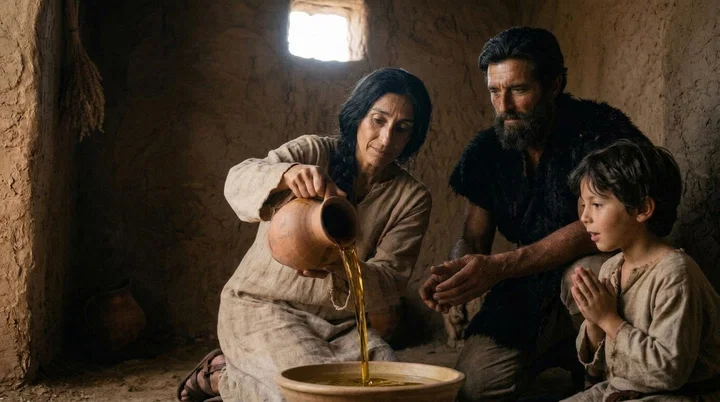
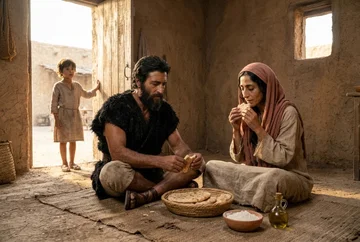
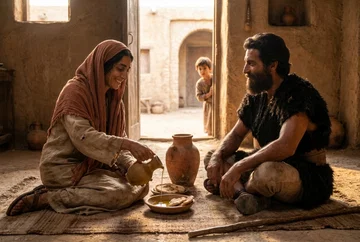
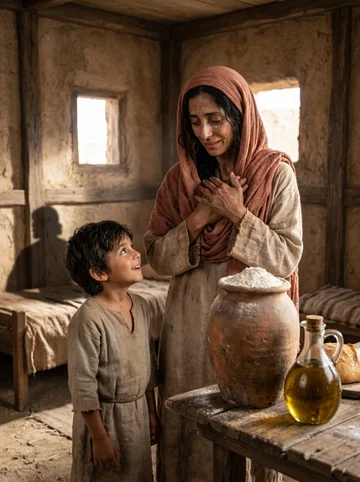
And she went and did according to the saying of Elijah: and she, and he, and her house, did eat many days.
Translations
American King James Version, King James Version, KJV Cambridge Paragraph Bible, Webster Bible, Revised Version, American Standard Version
And she went and did according to the saying of Elijah: and she, and he, and her house, did eat many days.
And she goeth, and doth according to the word of Elijah, and she eateth, she and he, and her household — days;
And she went and did according to the word of Elijah; and she, and he, and her house, ate a whole year.
So she went and made ready, according to the word of Elijah,—and did eat, she, and he, and her house, [certain] days:
Berean Standard Bible, Majority Standard Bible
So she went and did according to the word of Elijah, and there was food every day for Elijah and the woman and her household.
She went and did according to the saying of Elijah; and she, he, and her household ate many days.
So she went and did as Elijah said; and she and he and her family had food for a long time.
So she went, and did as Eliiah sayd, and she did eate: so did he and her house for a certaine time.
Douay-Rheims (Challoner revision)
She went and did according to the word of Elias: and he ate, and she, and her house: and from that day
Pictures
Cross-references 20 of 22
- Luke 4:25-26
But I tell you of a truth, many widows were in Israel in the days of Elias, when the heaven was shut up three years and six months, when great famine was throughout all the land;
Jesus recalls Elijah being sent to the widow of Sarepta during the famine.
- 1 Kings 17:4-6
And it shall be, that thou shalt drink of the brook; and I have commanded the ravens to feed thee there.
God sustained Elijah with food brought by ravens during the famine.
- Matthew 14:19-21
And he commanded the multitude to sit down on the grass, and took the five loaves, and the two fishes, and looking up to heaven, he blessed, and brake, and gave the loaves to his disciples, and the disciples to the multitude.
A small amount of food feeds a multitude through divine power.
- James 5:17-18
Elias was a man subject to like passions as we are, and he prayed earnestly that it might not rain: and it rained not on the earth by the space of three years and six months.
Elijah’s prayers bring drought and rain, while he remains subject to human weakness.
- Exodus 16:35
And the children of Israel did eat manna forty years, until they came to a land inhabited; they did eat manna, until they came unto the borders of the land of Canaan.
Manna supplied Israel’s food throughout its wilderness journey, as the widow received ongoing provision.
- 1 Kings 17:9
Arise, get thee to Zarephath, which belongeth to Zidon, and dwell there: behold, I have commanded a widow woman there to sustain thee.
God sends Elijah to the widow for sustenance.
- 1 Kings 18:1-2
And it came to pass after many days, that the word of the LORD came to Elijah in the third year, saying, Go, shew thyself unto Ahab; and I will send rain upon the earth.
The drought that frames the food miracle ends as rain is promised.
- Exodus 16:15
And when the children of Israel saw it, they said one to another, It is manna: for they wist not what it was. And Moses said unto them, This is the bread which the LORD hath given you to eat.
Both show God providing food amid hunger.
- 1 Kings 17:10-11
So he arose and went to Zarephath. And when he came to the gate of the city, behold, the widow woman was there gathering of sticks: and he called to her, and said, Fetch me, I pray thee, a little water in a vessel, that I may drink.
Elijah meets the widow and asks her for water and bread.
- 1 Kings 17:1
And Elijah the Tishbite, who was of the inhabitants of Gilead, said unto Ahab, As the LORD God of Israel liveth, before whom I stand, there shall not be dew nor rain these years, but according to my word.
Elijah announces the drought that creates the widow’s need.
- 1 Kings 17:22-24
And the LORD heard the voice of Elijah; and the soul of the child came into him again, and he revived.
Elijah raises the widow’s son, confirming the truth of God’s word through him.
- 2 Kings 4:42-44
And there came a man from Baal-shalisha, and brought the man of God bread of the firstfruits, twenty loaves of barley, and full ears of corn in the husk thereof. And he said, Give unto the people, that they may eat.
Elisha multiplied food to feed one hundred men.
- Malachi 4:4-6
Remember ye the law of Moses my servant, which I commanded unto him in Horeb for all Israel, with the statutes and judgments.
Elijah’s story is connected with a people who will stand in his spirit and power.
- John 6:5-14
When Jesus then lifted up his eyes, and saw a great company come unto him, he saith unto Philip, Whence shall we buy bread, that these may eat?
Jesus fed the multitude with multiplied food.
- Exodus 16:4
Then said the LORD unto Moses, Behold, I will rain bread from heaven for you; and the people shall go out and gather a certain rate every day, that I may prove them, whether they will walk in my law, or no.
God provided daily bread for Israel in the wilderness.
- 1 Kings 19:5-8
And as he lay and slept under a juniper tree, behold, then an angel touched him, and said unto him, Arise and eat.
God sustains Elijah with food for a journey, as he sustained the widow’s household.
- Matthew 10:41
He that receiveth a prophet in the name of a prophet shall receive a prophet’s reward; and he that receiveth a righteous man in the name of a righteous man shall receive a righteous man’s reward.
A widow’s hospitality to Elijah brings the promised reward of a prophet.
- Matthew 15:36-37
And he took the seven loaves and the fishes, and gave thanks, and brake them, and gave to his disciples, and the disciples to the multitude.
Jesus miraculously provided food, and everyone ate their fill.
- Luke 4:27
And many lepers were in Israel in the time of Eliseus the prophet; and none of them was cleansed, saving Naaman the Syrian.
Naaman and the widow of Sarepta illustrate God’s blessing beyond Israel.
- 2 Kings 2:11
And it came to pass, as they still went on, and talked, that, behold, there appeared a chariot of fire, and horses of fire, and parted them both asunder; and Elijah went up by a whirlwind into heaven.
Like Elijah, the saints will be taken to heaven.
Commentary
Each commentary is drawn from primary sources: the writings of Ellen G. White and Adventist pioneers and periodicals. Each commentary is separate. Its own words are not a quotation; follow the references to read the source passages.
Ellen G. White
29 sources
She went and did as Elijah asked, taking him into her care and sharing her last food with him, and she and he and her household ate for many days because God kept His promise that the meal and oil would not fail.6T 345.4–346.1RH Aug 28, 19132T 28.2 In doing so she met the greatest test of faith, risking suffering and want for herself and her son by showing supreme hospitality to God's prophet in trust that the God of Israel would supply her need.RH Aug 28, 1913PK 130.3–131.1 Though a heathen woman outside Israel's privileges, she was a believer in the true God who had walked faithfully in all the light shining on her pathway, and God favored her with the care of His prophet and greater light through him.PK 129.1–3DA 238.2–239.1ST Feb 17, 1881ST Feb 17, 1881 God sent Elijah to her rather than to the many widows in Israel, to bless hearts open to faith and to show that His mercy reaches beyond Israel to Gentiles while unbelief turns Him away from His professed people.SLP 229.1–230.22SP 112.2–113.1LC1 56.1LC1 53.2–54.1 Her sharing her morsel was met with the preservation of her life and her son's life, showing that God will sustain His faithful people in famine and distress and give a prophet's reward to those who in trial and want give sympathy and help to others more needy.PK 131.52T 28.2RH Aug 28, 1913GC88 629.2–4RH Nov 26, 1857
Setting and Outcome
The verse places Elijah in a heathen land at Zarephath, which belongs to Zidon and was known in New Testament times as Sarepta, a city of Sidon.PK 129.1–3SLP 229.1–230.2ST May 22, 1884RH Nov 9, 1911AA 430.4–431.2 There was no safety for him in Israel because of unbelief, rebellion and hatred, so God sent him there to find asylum in the home of a widow He had commanded to sustain him.PK 129.1–3SLP 229.1–230.2ST May 22, 1884RH Nov 9, 1911AA 430.4–431.2 She gave him refuge and support and took him into her care when hatred forced him to flee.SLP 229.1–230.2ST May 22, 1884RH Nov 9, 1911AA 430.4–431.2ST May 22, 1884 She was not an Israelite and had never had the privileges and blessings of the chosen people, but she was a believer in the true God who had walked in all the light shining on her pathway.PK 129.1–3
Elijah met her at the gate of the city gathering sticks, and asked her first to fetch a little water to drink and then to bring a morsel of bread.PK 129.1–3 She went and did according to his saying, welcoming him, receiving him into her care, and sharing her last food and morsel with him.6T 345.4–346.1RH Aug 28, 19132T 28.2RH Aug 28, 1913Ms 40, 1887, par. 8–11 She and he and her house then ate for many days through the famine, as God's promised supply of meal and oil did not fail.6T 345.4–346.1RH Aug 28, 19132T 28.2RH Aug 28, 1913Ms 40, 1887, par. 8–11 Her hospitality and sharing of her food were followed by God sustaining her household and preserving their lives, and her kindness and faithfulness to the light she had received made her a refuge for God's servant.2T 28.2RH Aug 28, 1913Ms 40, 1887, par. 8–11SG2 243.1–245.1ST May 22, 1884
God worked a daily miracle to keep Elijah and the widow's family supplied with food after the brook Cherith became dry.3T 288.1–2RH Oct 7, 1873 This continued care followed the morning and evening food at Cherith and was evidence of God's love and care for Elijah.RH Oct 7, 1873
Faithfulness and Divine Favor
The widow met the greatest test of faith that could be required, in a supreme act of hospitality to God's prophet.PK 130.3–131.1 She had hitherto treated all strangers with kindness and liberality, but to obey Elijah's word now meant risking suffering and want for herself and her son.RH Aug 28, 1913PK 130.3–131.1 She did it trusting the God of Israel to supply her every need, and her obedience was wonderful hospitality springing from faith and generosity.RH Aug 28, 1913PK 130.3–131.1 In return she and Elijah and her household ate for many days, as God had promised.RH Aug 28, 1913
She was a heathen woman who had lived faithfully according to all the light she had received.ST Feb 17, 18814RED 5.3–7.12SP 113.2–32SP 112.2–113.1 God favored her by providing an asylum for Elijah in her care and by giving her special favor through His prophet.ST Feb 17, 18812SP 113.2–32SP 112.2–113.1 Her response to the light she had made her open to further blessing and greater light from God through the prophet.DA 238.2–239.1ST Feb 17, 18814RED 5.3–7.1 God favors those who follow the light they have, even when they are heathen, rather than people with greater religious light whose lives contradict their profession.ST Feb 17, 1881
Her faithfulness made her an example of one who lived up to the light given her and was accounted more righteous than backslidden Israel.SLP 229.1–230.2AA 416.2–417.1 This stands in contrast to Israel's unbelief and rebellion, rejection of the light from heaven and of God's warnings, and failure to live by great light and privileges, with some sacrificing principle to convenience and worldly honor.SLP 229.1–230.2Ms 40, 1887, par. 8–11Ms 8, 1888, par. 9–14 Elijah was sheltered and fed in the land of the heathen widow who obeyed him, while Israel had hardened their hearts against the truth, so that he was safer among the heathen than among those who had rejected heaven's light.SLP 229.1–230.2ST May 22, 1884 Those who live up to the light they have are more open to God than those who receive much light but do not live by it.Ms 8, 1888, par. 9–14
God sent Elijah to her rather than to the many widows in Israel.2SP 112.2–113.1LC1 53.2–54.1 He displayed His power through Elijah among people whose hearts were open to faith, for the prophets' work was not centered on unbelieving, hard-hearted people, but on those willing to receive the evidence God gave.2SP 112.2–113.1LC1 56.1 Jesus used the event to show that God's mercy and blessing reached beyond Israel to Gentiles.LC1 53.2–54.1DA 239.2–240.1 The story of the Gentile widow of Zarephath receiving blessing through Elijah provoked the national pride of His hearers at Nazareth.DA 239.2–240.1
Her receiving Elijah gives with Paul another case of a servant of God finding among the heathen an asylum from the malice of the professed people of Jehovah.SLP 229.1–230.2 It proves the truth Christ declared at Nazareth that pride and unbelief turn God away from His chosen people to bless and save those outside who honor the light.SLP 229.1–230.2
Hospitality Reward and Provision
The widow obeyed Elijah's word and shared her food, her last morsel, with him, and she and he and her household then ate for many days through the famine.PK 131.52T 28.2RH Aug 28, 1913 Her hospitality was met in return with the preservation of her own life and her son's life, and her whole household was sustained.PK 131.52T 28.2RH Aug 28, 1913 This means God has promised great blessing to all who in time of trial and want give sympathy and assistance to others more needy.PK 131.5 His power is no less now than in the days of Elijah, and Christ's promise that he who receives a prophet in the name of a prophet shall receive a prophet's reward is still sure.PK 131.5
The verse illustrates that God will provide for His faithful people in times of famine and distress so that they will not be left to perish.GC88 629.2–4RH Nov 26, 1857SG2 243.1–245.1 It assures those who trust God and sacrifice for Him that He will provide for them and their bread and water will be sure, even when the wicked around them perish for lack of bread.GC88 629.2–4RH Nov 26, 1857SG2 243.1–245.1
Sources
Pioneers and periodicals
78 sources
She went and did according to Elijah's word, and she and he and her household ate for many days.RH Jun 24, 1902ST Jul 27, 1904CO 73.5 She obeyed though she had only a handful of meal and a little oil left for a last meal for herself and her son, when she was told to make a little cake for Elijah first.ST Jun 23, 1898RH Mar 17, 1903RH Jan 16, 1872 God by his creative power daily replenished the food so the barrel did not waste and the cruse did not fail, making a little sufficient through his blessing.ST Apr 6, 1888ST Sep 7, 1904ST Jan 20, 1898ST Jun 6, 1900RH Dec 17, 1914 She acted in faith and hospitality at risk to herself and her son, trusting the promise that her supply would not run out, and putting God's cause first brought continued provision while giving what little she had brought increase rather than loss.ST Jul 27, 1904ST Jul 27, 1904RH Mar 17, 1903RH Jan 16, 1872ST Nov 27, 1884 The same care assures that God will sustain his remnant in isolation and in the time of trouble when the wicked suffer hunger, giving daily bread and water sure.RH Nov 26, 1857RH Feb 25, 1915RH Oct 1, 1861
Narrative and Historical Setting
The verse means the widow went and did according to Elijah's word, and she and he and her house ate for many days.RH Jun 24, 1902ST Jul 27, 1904CO 73.5RH Jun 12, 1900ST Mar 17, 1898 She obeyed his instruction and trusted the promise, sharing her scarce food with him, and her hospitality was accompanied by God's provision in temporal things, with her son later restored to life.RH Jun 24, 1902ST Jul 27, 1904CO 73.5RH Jun 12, 1900ST Mar 17, 1898 That obedience included prayer answered when rain ceased and later returned.RH Nov 21, 1912 The food they ate was what God had provided during the famine, and the provision was part of Elijah's miraculous work.ST Jul 27, 1904RH Jun 12, 1900ST Mar 17, 1898
She obeyed even though she had only a handful of meal and a little oil left for a last meal for herself and her son.ST Jun 23, 1898RH Mar 17, 1903RH Jan 16, 1872ST Mar 26, 1885ST Oct 22, 1902 She was told to make a little cake for Elijah first, and because she did as he said she and Elijah and her household had food for many days in fulfillment of the Lord's promise that the meal and oil would not fail until rain came.ST Jun 23, 1898RH Mar 17, 1903RH Jan 16, 1872ST Oct 22, 1902RH Feb 25, 1873 She had been gathering sticks to bake her last cake that she and her son might eat and die, and had planned to eat her final meal and die, being driven to her last extremity when all relief seemed stopped.ST Jun 23, 1898ST Mar 26, 1885RH Feb 25, 1873 Yet when she obeyed the command to bake for him first in trust that the barrel of meal would not waste nor the cruse of oil fail, God sustained Elijah, the woman, and her house through a most severe famine.ST Jun 23, 1898ST Oct 22, 1902RH Feb 25, 1873
The event belongs to the divided-kingdom history recorded in 1 Kings 16-22, within the part of 1 Kings that records the history of the kingdoms after their division.RH Nov 7, 1912ST Jul 30, 1885 It concerns Ahab, seventh king of Israel and second ruler of the third dynasty, who reigned twenty-two years early in the ninth century before Christ as contemporary of Jehoshaphat of Judah and Elijah the Tishbite, when Judah and Israel reached the height of power and prosperity.RH Nov 7, 1912 The whole record was written for the learning and profit of later men and kings, showing God's care in giving Ahab as man and prince more than average opportunities, though as a clever statesman, skilled general, and patriotic civil ruler he was a moral coward who sold himself to the worship of many heathen gods and forced it upon his monotheistic people living under a semitheocratic rule.RH Nov 7, 1912 Elijah had declared there would be no dew nor rain, and what he declared came to pass in a three-year drought, and God preserved his life during the famine caused by his word, first by ravens at the brook Cherith and later by a poor widow of Sidon.RH Oct 7, 1873RH Dec 6, 1864ST Apr 17, 1907 After being fed morning and evening at Cherith, Elijah was preserved at Zarephath when the brook became dry, God working a miracle daily to keep Elijah and the widow's family supplied, which was evidence of God's love and care that should have kept Elijah from ever distrusting God.RH Oct 7, 1873ST Apr 17, 1907 While Ahab cursed the prophet instead of repenting and hunted through his own and other kingdoms to find and kill him, God kept His servant alive in one of his hiding-places from Ahab's wrath and made him a blessing to the widow who received him, in the same region where Jesus later ministered.ST Mar 17, 1898ST Apr 17, 1907
Elijah was sent during a widespread departure from God and great apostasy in Israel, when heaven was shut three years and six months with great famine over all the land. There were many widows in Israel, yet he was sent to none of them but only to Zarephath in Sidon to a heathen widow outside Israel.ST Feb 19, 1894 That woman of Sarepta was chosen and directed to shelter, support, receive, feed, and care for him, and was entrusted with caring for him during Israel's famine so that she might be preserved.ST Jun 16, 1887ST Dec 23, 1889ST Oct 1, 1896 Though she was a heathen, she had lived according to the light she possessed and responded with kindness and generosity, while Israelite widows were passed by because unbelief and disregard of privilege closed them off from blessing.ST Jun 16, 1887 Elijah prayed for the people's hearts to turn from idolatry and waited in faith for God's time to act, and his ministry during that apostasy shows God had a faithful remnant who would respond to the prophet's call.
God's Miraculous Provision
The barrel did not waste and the cruse did not fail because God miraculously increased the meal and oil, daily replenishing the supply and creating food day by day as it was needed by His creative power.ST Jan 20, 1898RH Dec 17, 1914ST Oct 22, 1902RH Oct 12, 1916RH Sep 15, 1859 That same power to supply food is shown in the feeding of the five thousand, and it is the power by which He daily nourishes through food.ST Jan 20, 1898ST Jun 6, 1900 The widow obeyed and she and Elijah and her household ate for many days, sustained through the famine by the Lord's promise fulfilled in her obedience.RH Dec 17, 1914ST Oct 22, 1902RH Oct 12, 1916 This creative power that can create and uphold worlds is able and willing to create ways of deliverance when none appear and human help has failed, and because there is no variableness with God it remains fully available now as the only basis of absolute confidence in trouble and certain ruin.ST Jan 20, 1898
The many days were a long sustenance through the famine, noted as a full year in the margin and probably even more, between two and three years from Elijah's coming to Zarephath until rain and food came again, since the brook Cherith would likely become dry in one season without rain.ST Jun 23, 1898RH Jan 9, 1900 It was a most severe famine of three years, and it illustrates God's care for Elijah and His own during three and a half years when heaven was shut three years and six months and great famine came over all the land.ST Sep 7, 1904RH Feb 25, 1873 Through that time of scarcity in her humble home, with supplies reduced to a handful of flour and a little oil, the widow and her household ate for many days while Elijah stayed with her. God is by this prepared for any emergency, and His promise to those who trust and obey is that He will never leave them nor forsake them.ST Sep 7, 1904
God can make a little sufficient through His blessing, so that a small supply of meal and oil sustained the widow and Elijah and her household for many days and people may depend on Him for daily food and support.ST Apr 6, 1888RH Feb 4, 1909 He is inexhaustible, so fretting about the time to come is foolish, slighting present good and wasting today's oil in fruitless attempts to procure tomorrow's supply instead of trusting daily replenishing.RH Dec 8, 1863 He knows the human frame is built of dust and the spirit fails in extremity, and with the extremity He makes a way of escape, sending provision when hungry, water from the flinty rock, and an angel to strengthen for sore trial and conflict.RH Sep 15, 1859 The same God is the God of every tried, tempted, and afflicted Christian and will as surely bring succor and sustenance to those who faithfully fulfill every duty required of them, inspiring courage in duty and firm reliance on Him.RH Sep 15, 1859
The provision came while Elijah was fulfilling his duty as the agent of God's just indignation against sin, showing the faithfulness and mercy of the heavenly Father in feeding Elijah and the widow and her house many days from the undiminished barrel and unfailing cruse.RH Sep 15, 1859 It came through humble means by God's power, as the widow's small supply of oil and meal used according to God's direction sustained Elijah and his benefactress, and her food sustained the prophet while he was in hiding.ST Jul 23, 1912ST Oct 22, 1894 The widow was an agent of God's providential care for His servant, directed by the Lord to supply Elijah with food, just as hospitality through worldly relatives can provide succor.RH Apr 9, 1914RH Sep 10, 1872 It was a reciprocity of good deeds in which the woman helped Elijah and Elijah helped the woman, while God Himself did the work in both to will and to do of His good pleasure, never lacking means or instruments, and it shows widows as objects of God's special care who should trust Him implicitly.ST Mar 14, 1878ST Jun 23, 1898
Faith Obedience and Hospitality
The widow went and did as she was told in faith, trusting the promise that her food would not run out, and she and the prophet and her household then ate for many days.ST Jul 27, 1904ST Jul 27, 1904ST Feb 19, 1894 To trust when storehouses are full and tables are spread is no hard thing, but to trust and obey when purses are empty and nothing is left but a handful of meal and a cruse of oil, with every way of relief stopped, is the wisdom of Christian grace.ST Nov 27, 1884 Her faith in the word spoken to her enabled her to receive the blessing sent through the prophet, even when her meal was low that it would not waste or diminish.ST Feb 19, 1894RH Jan 14, 1873 Her small supply was multiplied by grace when she acted in faith, feeding not only her own household but also her neighbor for many days, showing that resources used in obedience are kept up, so the same faith can be exercised toward the treasury for giving freely and trusting for its sustainment through generous gifts rather than by selling to avoid bankruptcy.RH Jan 14, 1873RH Sep 2, 1915
She trusted God and showed hospitality at risk to herself and her son, welcoming the prophet into her humble home and giving him refuge and support when he had to flee.RH Aug 28, 1913ST May 28, 1885 God sustained the prophet in her home through the famine and protected him there from his enemies.ST Mar 14, 1878 He was sheltered and fed in the land of the heathen widow who obeyed him, while Israel had rejected the light from heaven, and he was safer among the heathen than among those who had hardened their hearts against the truth.ST Feb 17, 1881ST May 22, 1884 Her hospitality in sharing her food was met with the preservation of her own life and her son's, as she and he and her house ate for many days as promised.RH Aug 28, 1913RH Aug 28, 1913
She was favored though a heathen because she had lived faithfully according to the light she had, had followed it, and was open to greater light through the prophet, and her home became a refuge for God's servant.ST Feb 17, 1881ST Jun 16, 1887ST Jun 23, 1909 This illustrates that God favors those who follow the light they have, even when they are heathen, rather than people with greater religious light whose lives contradict their profession.ST Feb 17, 1881 The Lord's care reached a widow outside Israel while many widows in Israel were passed by because of unbelief.RH Jun 24, 1902 Though she responded with kindness and generosity, Israelite widows were closed off from blessing by unbelief and disregard of their privileges.ST Jun 16, 1887
Elijah's stay in her humble home amid surrounding scarcity was a hardship through which living faith was strengthened, when supplies had been reduced to a handful of flour and a little oil yet the household ate for many days. Her oil and meal are an example of being cared for when resources seem insufficient, supporting the lesson that it is safe to do right and trust God with the result.RH Dec 5, 1871 The account assures those who trust that He cares for them, while teaching that they should not neglect the means of help He has provided, for when she acted on the word the meal and oil did not run out and God sustained her and the prophet and her household through the famine.RH Mar 4, 1873 Her hospitality was met with the preservation of her life and her son's.RH Aug 28, 1913
Giving Brings Divine Increase
Putting God's cause first brought continued provision through the famine, for after the widow made the prophet's cake first out of her last meal for herself and her son, she and Elijah and her house ate many days while others around her died in want.RH Mar 17, 1903RH Jan 16, 1872ST Mar 25, 1903 Her obedience to make his cake first on the word of the Lord was a test of trust when almost nothing remained, and the lasting of the meal and oil through the days of famine teaches that putting God first secures His supply.RH Mar 17, 1903RH Jan 16, 1872ST Mar 25, 1903
Willingness to give and share what little she had brought no loss, for the supply did not fail but continued and was more than repaid as she shared with one in need.RH Jun 24, 1902ST Mar 18, 1889RH Jun 24, 1902ST Mar 26, 1885RH Apr 2, 1914 Though she had planned to eat a final meal and die, giving from poverty in famine was followed by food for herself and Elijah and her household for many days, so that scant fare shared sustained both giver and guest.ST Mar 18, 1889ST Mar 26, 1885RH Apr 2, 1914 Holding selfishly to what one has leads to loss, while giving brings increase, since by giving one best receives and a deed of love in famine brings continued supply.RH Jun 24, 1902RH Jun 24, 1902RH Jun 24, 1902 Believers are therefore urged to share even when resources seem scarce and to trust God to provide, and her being cared for outside Israel while many widows in Israel were passed by shows unbelief shuts out the blessing.RH Jun 24, 1902RH Jun 24, 1902
The same law holds for the church and the mission field, for as the widow's household and Elijah continued to have food while she shared, the church's means are replenished as it gives in response to increasing needs.ST Jan 27, 1904RH Sep 7, 1911RH Nov 24, 1904 Freely giving of one's store to support workers brings increased supply back to the giver, the barrel and cruse yielding more in proportion as more is given.RH Sep 7, 1911RH Nov 24, 1904 Resources used in obedience are kept up by God, as the low meal that did not waste or diminish for many days shows the same faith may be exercised toward the treasury for giving tracts freely to the poor, trusting generous donations in faith to sustain it rather than selling to avoid bankruptcy.RH Sep 7, 1911RH Jan 14, 1873RH Nov 24, 1904 By this divine law as we give God imparts more, so that a failing cruse of comfort shared with another serves both giver and receiver through all the years of famine, scanty fare for one becoming a royal feast for two because divine love renews the handful.ST Jan 27, 1904ST Mar 24, 1898 Giving is living and denying is dying, for the heart grows rich in giving and can only live in loving, and making sunshine for others brings gain in health to the giver.ST Jan 27, 1904ST Mar 24, 1898
What is entrusted can increase through faithful use, as her acting on Elijah's instruction unto food for many days shows.ST Dec 5, 1895ST Dec 5, 1895ST Dec 5, 1895 The cruse of oil pictures submission, for when she resolved by grace to submit her circumstances changed.ST Dec 5, 1895ST Dec 5, 1895 Yet the cruse also warns against wasting its lesson by dwelling on troubles and failing to value family and blessings that could have been used in service.ST Dec 5, 1895ST Dec 5, 1895
Her service to the prophet with practical help and her household's provision made her a missionary through aiding God's servant.RH Dec 17, 1914RH Oct 3, 1907 Her experience illustrates God's provision for those who trust Him, as the sustaining meal and oil is seen again when flour was miraculously replenished for a woman in need until she could buy more.RH Dec 17, 1914RH Oct 3, 1907
Prophecy Remnant and Resurrection
Elijah's ministry at Zarephath belongs to a time of great apostasy in Israel, and it shows that God still had a faithful remnant who would respond to the prophet's call. The widow's handful of meal, lengthened through famine to keep her and her household and Elijah alive for many days, is also an image of the small remnant of spiritual truth that God preserves and uses to sustain people.RH Nov 1, 1853
That daily preservation assures that God will sustain the remnant people during the time of trouble when they are isolated and the wicked suffer hunger and thirst.RH Feb 25, 1915 As he cared for Elijah and for those who sacrifice for him in famine, he will provide for the saints in the time of trouble and the seven last plagues, even by preserving a small supply of food, and will protect them from those who blame and attack them for their troubles.RH Nov 26, 1857RH Oct 1, 1861 Their bread and water will be sure even when the wicked around them perish for lack of bread, and as Elijah was ultimately taken to heaven, the saints will be delivered and taken to heaven.RH Nov 26, 1857RH Oct 1, 1861
Prayer was answered in this history both when rain ceased and when it later returned, including the portion where the widow obeyed and with her household had food for many days.RH Nov 21, 1912 That shutting of heaven belongs to the work in which God's two olive trees spoke by the mouth of Elijah so that it would not rain.ST May 10, 1883 The two olive trees are the two divisions of the word of God, the law and the gospel, the Old Testament and the New Testament, called God's two witnesses, bearing testimony through Elijah to God's will concerning duty in the law and to his power to save from sin by the gospel, and threatening death for refusal to repent.ST May 10, 1883
Her hospitality to Elijah was accompanied by God's provision in temporal things, and her son was later restored to life.CO 73.5RH Sep 16, 1902 The wider chapter records the raising of the widow's son to life before the resurrection of Christ, a real resurrection from the dead just as truly as if it had been to immortality, for Scripture makes no distinction between a resurrection to mortality and a resurrection to immortality.RH May 28, 1861 All such earlier resurrections depend on his power and center in him who is the resurrection and the life, without displacing Christ's preeminent place.ST Apr 30, 1896 Christ being called the firstfruits and the first to rise means first in rank and importance rather than first in time, so an earlier resurrection such as that of Moses is possible.RH May 28, 1861 Through Elijah God showed tender concern for a mother by restoring her son and returning him to her, answering her grief and leading her to recognize the truth of the Lord's word.RH Sep 16, 1902
Scripture Links and Daily Application
Jesus recalled the sending of Elijah to the widow at Zarephath in Sidon rather than to the many widows in Israel during the three years and six months when heaven was shut and great famine lay over all the land.ST Feb 19, 1894 Her obedience, by which she and Elijah and her house ate many days, was set forth to show that no prophet is acceptable in his own country.ST Feb 19, 1894 That history explained his rejection at Nazareth when he came to his own.
The meal and oil that did not fail picture the Bible as daily food that never grows less however much it is fed upon.ST Nov 24, 1898 It never tires those who feed upon it, but stays fresh like bread of which no man ever has enough.ST Nov 24, 1898 It is unlike honey that soon gives enough, and unlike condiments that grow flat and stale.ST Nov 24, 1898
The multiplying of the meal and oil was a literal miracle and true event, a manifestation of the mighty miraculous power of God, not pious legend or myth.ST Jan 24, 1906 As part of the infallible Bible, every word of it is to be cherished as a regenerating staff and stay that changes lives, changes the face of the world, brings hope to souls, and lights the dark valley entered by trusting saints. To call it myth, allegory, fancy, crude, childish, or incredible and to deny that it happened is soul-destroying error that at last denies every essential saving truth of the Word and its central figure Jesus Christ.
When the cruse of comfort is failing, rising and sharing it with another makes it serve both giver and receiver through all the years of famine.ST Jan 27, 1904ST Mar 24, 1898 Divine love fills the storehouse and renews the handful, so that scanty fare for one becomes a royal feast for two.ST Mar 24, 1898 Giving brings receiving by a divine law, for as we give God imparts more.ST Jan 27, 1904 Living by serving makes the heart rich, for it can only live in loving and by serving love will grow, and making sunshine for those around brings gain in health to the giver.ST Jan 27, 1904ST Mar 24, 1898 Giving is living and denying is dying.ST Jan 27, 1904
The undiminished barrel of meal and unfailing cruse of oil that fed Elijah and the widow and her house many days display the faithfulness and mercy of the heavenly Father.RH Sep 15, 1859 That provision came while Elijah was fulfilling his duty as agent of God's just indignation against sin, and the same God will as surely bring succor and sustenance to every tried, tempted, and afflicted Christian who faithfully fulfills every duty required.RH Sep 15, 1859 He knows the human frame is built of dust and the spirit fails in extremity unless with the extremity he makes a way of escape, sending provision when hungry, water from the flinty rock, and an angel to strengthen for sore trial and conflict.RH Sep 15, 1859 Remembering this history should inspire courage in duty and firm reliance on him.RH Sep 15, 1859 Since the God who replenished the widow's cruse is inexhaustible, fretting about the time to come is foolish, slighting present good and wasting today's oil in fruitless attempts to procure a supply for the morrow instead of trusting daily replenishing.RH Dec 8, 1863
He has every one of his people on his great, almighty, loving heart, and will give strength enough to carry every legitimate load in life when superfluous anxieties, sinful desires, and worry are dropped.ST Feb 18, 1886 The verse therefore stands as a precious word for the weary to cast care on him because he cares.ST Feb 18, 1886 A supply that seemed close to running out yet continued to meet needs, and hospitality shown through relatives in time of need, illustrate the same care.RH Feb 4, 1909RH Sep 10, 1872
The widow's sustained oil and food after she obeyed Elijah also echoes as an image of grief, when a bereaved widow's oil of life has dried up and the cruse pictures loss.ST May 24, 1905
Sources