1 Kings 19:2
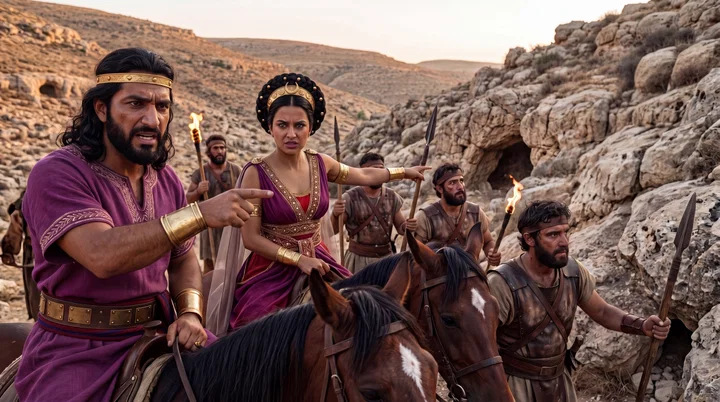
Then Jezebel sent a messenger unto Elijah, saying, So let the gods do to me, and more also, if I make not thy life as the life of one of them by to morrow about this time.
Translations
Then Jezebel sent a messenger to Elijah, saying, So let the gods do to me, and more also, if I make not your life as the life of one of them by to morrow about this time.
King James Version, KJV Cambridge Paragraph Bible
Then Jezebel sent a messenger unto Elijah, saying, So let the gods do to me, and more also, if I make not thy life as the life of one of them by to morrow about this time.
Then Jezebel sent a messenger to Elijah, saying, So let the gods do to me, and more also, if I make not thy life as the life of one of them by to-morrow about this time.
Then Jezebel sent a messenger unto Elijah, saying, So let the gods do to me, and more also, if I make not thy life as the life of one of them by tomorrow about this time.
Then Jezebel sent a messenger unto Elijah, saying, So let the gods do to me, and more also, if I make not thy life as the life of one of them by to-morrow about this time.
and Jezebel sendeth a messenger unto Elijah, saying, 'Thus doth the gods, and thus do they add, surely about this time to-morrow, I make thy life as the life of one of them.'
And Jezebel sent a messenger to Elijah saying, So do the gods [ to me], and more also, if I make not thy life as the life of one of them by to-morrow about this time!
Then sent Jezebel a messenger unto Elijah, saying,—So, let the gods do, and, so, let them add, if, by this time to-morrow, I make not thy life as the life of one of them.
So Jezebel sent a messenger to Elijah, saying, “ May the gods deal with me, and ever so severely, if by this time tomorrow I do not make your life like the lives of those you killed!”
So Jezebel sent a messenger to Elijah, saying, “ May the gods deal with me, and ever so severely, if by this time tomorrow I have not made your life like the lives of those you killed!”
Then Jezebel sent a messenger to Elijah, saying, “ So let the gods do to me, and more also, if I don’t make your life as the life of one of them by tomorrow about this time!”
Then Jezebel sent a servant to Elijah, saying, May the gods' punishment be on me if I do not make your life like the life of one of them by tomorrow about this time.
Then Iezebel sent a messenger vnto Eliiah, saying, The gods doe so to me and more also, if I make not thy life like one of their liues by to morowe this time.
Douay-Rheims (Challoner revision)
And Jezabel sent a messenger to Elias, saying: Such and such things may the gods do to me, and add still more, if by this hour tomorrow I make not thy life as the life of one of them.
Pictures
Cross-references 20 of 29
- 1 Kings 18:40
And Elijah said unto them, Take the prophets of Baal; let not one of them escape. And they took them: and Elijah brought them down to the brook Kishon, and slew them there.
The Baal prophets’ fate is the one Jezebel threatened for Elijah.
- Revelation 2:20
Notwithstanding I have a few things against thee, because thou sufferest that woman Jezebel, which calleth herself a prophetess, to teach and to seduce my servants to commit fornication, and to eat things sacrificed unto idols.
The Thyatira figure echoes Ahab’s wife Jezebel and her corrupting influence.
- 1 Kings 18:38-39
Then the fire of the LORD fell, and consumed the burnt sacrifice, and the wood, and the stones, and the dust, and licked up the water that was in the trench.
The fire from heaven and the people’s response showed that Jehovah was God before Jezebel’s threat.
- 1 Kings 21:25
But there was none like unto Ahab, which did sell himself to work wickedness in the sight of the LORD, whom Jezebel his wife stirred up.
Jezebel stirred Ahab to wickedness and idolatry.
- 1 Kings 18:4
For it was so, when Jezebel cut off the prophets of the LORD, that Obadiah took an hundred prophets, and hid them by fifty in a cave, and fed them with bread and water.)
Jezebel had ordered the Lord’s prophets killed.
- 2 Kings 2:11
And it came to pass, as they still went on, and talked, that, behold, there appeared a chariot of fire, and horses of fire, and parted them both asunder; and Elijah went up by a whirlwind into heaven.
Elijah is taken to heaven rather than dying in the wilderness.
- 1 Kings 18:17-18
And it came to pass, when Ahab saw Elijah, that Ahab said unto him, Art thou he that troubleth Israel?
Elijah identifies Israel’s apostasy as the cause of its trouble, provoking hostility.
- 1 Kings 18:46
And the hand of the LORD was on Elijah; and he girded up his loins, and ran before Ahab to the entrance of Jezreel.
Elijah ran before Ahab to Jezreel immediately before Jezebel threatened him.
- 1 Kings 18:19
Now therefore send, and gather to me all Israel unto mount Carmel, and the prophets of Baal four hundred and fifty, and the prophets of the groves four hundred, which eat at Jezebel’s table.
Jezebel supported Baal’s prophets and religious system in Israel.
- James 5:17
Elias was a man subject to like passions as we are, and he prayed earnestly that it might not rain: and it rained not on the earth by the space of three years and six months.
Elijah’s fearful flight shows his human weakness despite his powerful prayers.
- 1 Kings 17:3-6
Get thee hence, and turn thee eastward, and hide thyself by the brook Cherith, that is before Jordan.
prior shelter and feeding Elijah forgot when threatened
- 1 Kings 18:13
Was it not told my lord what I did when Jezebel slew the prophets of the LORD, how I hid an hundred men of the LORD’s prophets by fifty in a cave, and fed them with bread and water?
Obadiah recounts hiding the Lord’s prophets from Jezebel’s killings.
- 1 Kings 19:18
Yet I have left me seven thousand in Israel, all the knees which have not bowed unto Baal, and every mouth which hath not kissed him.
God preserved seven thousand who had not bowed to Baal despite the persecution.
- 1 Kings 17:5-9
So he went and did according unto the word of the LORD: for he went and dwelt by the brook Cherith, that is before Jordan.
Elijah’s earlier flight from danger parallels his flight from Jezebel’s threat.
- 2 Kings 9:30-37
And when Jehu was come to Jezreel, Jezebel heard of it; and she painted her face, and tired her head, and looked out at a window.
Jezebel’s death fulfills the judgment following her threat to Elijah.
- 1 Kings 16:31
And it came to pass, as if it had been a light thing for him to walk in the sins of Jeroboam the son of Nebat, that he took to wife Jezebel the daughter of Ethbaal king of the Zidonians, and went and served Baal, and worshipped him.
Jezebel is identified as Ahab’s wife and a worshipper of Baal.
- Romans 11:4
But what saith the answer of God unto him? I have reserved to myself seven thousand men, who have not bowed the knee to the image of Baal.
God preserved seven thousand who remained faithful in Elijah’s time.
- 1 Kings 17:1
And Elijah the Tishbite, who was of the inhabitants of Gilead, said unto Ahab, As the LORD God of Israel liveth, before whom I stand, there shall not be dew nor rain these years, but according to my word.
judgment Ahab failed to heed
- 1 Kings 19:10
And he said, I have been very jealous for the LORD God of hosts: for the children of Israel have forsaken thy covenant, thrown down thine altars, and slain thy prophets with the sword; and I, even I only, am left; and they seek my life, to take it away.
Elijah describes his distress and sense of failure.
- 1 Kings 19:11-12
And he said, Go forth, and stand upon the mount before the LORD. And, behold, the LORD passed by, and a great and strong wind rent the mountains, and brake in pieces the rocks before the LORD; but the LORD was not in the wind: and after the wind an earthquake; but the LORD was not in the earthquake:
Continues Elijah’s flight to Horeb.
Commentary
Each commentary is drawn from primary sources: the writings of Ellen G. White and Adventist pioneers and periodicals. Each commentary is separate. Its own words are not a quotation; follow the references to read the source passages.
Ellen G. White
23 sources
After the triumph on Carmel where the people confessed God and He answered by fire and rain, Ahab reported all to Jezebel and she in hardened idolatry sent a messenger to Elijah vowing in the name of her gods to take his life by the same hour the next day in revenge for the slain prophets of Baal.Ms 6, 1889, par. 53–54Ms 29, 1911, par. 41PK 155.1–156.2Ms 19, 1906, par. 17–19 The threat reached him at night as he lay weary and asleep outside Jezreel, and though God had mightily protected him before, his faith failed and he fled for his life toward Beersheba and the wilderness in bitter disappointment.Ms 6, 1889, par. 53–54Lt 62, 1900, par. 3–6Ms 29, 1911, par. 41RH Oct 16, 1913RH Oct 7, 1873 He should have remained at his post and answered the threat by trusting the God who sent him, and had he done so God would have shielded him, judged Jezebel, and used him for a still greater reformation.RH Oct 16, 1913RH Oct 7, 1873PK 160.1–161.1 His fall shows that even the courageous after great success grow fearful and despondent when weary and lose sight of God, and that Satan seizes such moments of weakness to shake confidence and break the hold on God.RH Oct 16, 1913DA 120.2 Yet his failure did not mean God had forgotten him, and his story teaches the despondent to stay in duty, trust God as their defense, and take fresh courage knowing mercy can lift the fallen to conquer again.ST Nov 17, 190913MR 362.14SP 445.2–446.1ST May 31, 1910GC 626.2–627.1
Context and Threat
The threat belongs to the next movement after Carmel, when the slaying of the prophets of Baal had opened the way for a mighty spiritual reformation among the ten tribes of the northern kingdom.PK 155.1–156.2 It followed the terrible day when Elijah had stood undaunted before Ahab and faced the whole nation with four hundred and fifty prophets of Baal at their head, when the false prophets had been slain and the people had confessed their sins and declared their allegiance to God as the living God.PK 155.1–156.2DA 120.2 On that day Elijah had prayed in strong faith and humility for the withdrawal of the curse and for abundant rain to refresh the land.PK 155.1–156.2
The word to kill him came after Ahab told Jezebel what had taken place on Carmel and what Elijah had done in slaying the prophets.Ms 29, 1911, par. 41Ms 19, 1906, par. 17–193T 288.3RH Oct 16, 1913RH Oct 7, 1873 Jezebel, devoted to the service of Baal and jealous for her god's glory, was roused to fury by the report, hardened in sin and idolatry, impenitent, infuriated and defiant.Ms 29, 1911, par. 413T 288.3RH Oct 16, 1913RH Oct 7, 1873 She refused to recognize God's overruling providence in proving Jehovah true and Elijah His messenger, despite the display proving Jehovah the Creator of heaven and earth is God.RH Oct 16, 1913RH Oct 7, 1873 The evidence of God's power had not overcome her hold on Ahab, for her influence over him was stronger than the influence of God's Spirit.Ms 19, 1906, par. 17–19
By messenger she swore by her gods, in the name of her pagan gods, invoking them as witnesses to her oath.Ms 19, 1906, par. 17–193T 288.3RH Oct 16, 1913PK 159.1–3RH Oct 7, 1873 She vowed that by about the same time the next day she would make his life as the life of one of the slain prophets of Baal, as he had done to the priests of Baal.Ms 29, 1911, par. 41Ms 19, 1906, par. 17–193T 288.3RH Oct 16, 1913PK 159.1–3 It was revenge for their death, to do to him in the presence of Israel what he had done to them, boldly and determinedly declaring that he should not live and should die.Ms 6, 1889, par. 53–543T 288.3RH Oct 16, 1913PK 159.1–3RH Oct 7, 1873
The word was delivered at night by a messenger who aroused the weary prophet while he was asleep in his mantle on the bare earth outside Jezreel, amid pouring rain and darkness.RH Oct 16, 1913RH Oct 7, 1873 The message came while he slept and shook his confidence after victory over the prophets of Baal.Lt 62, 1900, par. 3–6 That night setting explains his weariness when aroused from sleep in rain and darkness.Lt 62, 1900, par. 3–6RH Oct 16, 1913RH Oct 7, 1873
Her rage blinded her to God's power and to the fact that He permitted her only to bring about her own ruin.Ms 6, 1889, par. 53–54 Her fury after triumph in restoring true worship could not see that her plotting was allowed only to work her ruin.Ms 6, 1889, par. 53–54RH Oct 16, 1913
The oath shows the power and influence of one unconsecrated woman devoted to an evil work.Ms 29, 1911, par. 41Ms 29, 1911, par. 37 Jezebel had more power over Ahab than God had and led him and with him the people into idolatry.Ms 29, 1911, par. 37 When God sent drought upon the land in judgment the people did not discern its object and humble their hearts before Him.Ms 29, 1911, par. 37 Jezebel said the prophets of Jehovah had brought the calamity upon them, that all Israel was suffering because of their reproofs, and that there would be no rest or prosperity until these prophets were put to death.Ms 29, 1911, par. 37 Thus anger was aroused against the men God had sent to entreat the people to repent, many holy men died for their testimony while they looked upon Elijah as a messenger of evil and would not heed his warnings, and Elijah was preserved by a miracle of divine power to proclaim before king and queen the warnings and threatenings of God.Ms 29, 1911, par. 37
Flight and Its Lessons
Jezebel's oath to kill Elijah by the next day in revenge for the slain prophets of Baal shocked him and brought bitter disappointment immediately after his triumph in restoring true worship.Ms 6, 1889, par. 53–54Lt 62, 1900, par. 3–6Ms 29, 1911, par. 41RH Oct 16, 1913PK 173.1 Though God had just revealed His power through him in answering by fire and in sending rain, and though he had many evidences of God's loving care after undaunted courage before Ahab and triumph over king and priests and people, his faith and courage forsook him at this threat.Lt 62, 1900, par. 3–6RH Oct 16, 1913RH Oct 7, 1873 Being weary, weak, exhausted and vulnerable, a man of like passions subject to temptation, he lost sight of God's protecting power and care, forgot that three years before God had directed his course to refuge from Jezebel's hatred and Ahab's search, became bewildered, lost courage, and fled for his life without being sent.Lt 62, 1900, par. 3–6ED 151.1–2RH Oct 16, 1913PK 173.1RH Oct 7, 1873 The word had been delivered at night by a messenger who aroused him while asleep in his mantle on the bare earth outside Jezreel amid pouring rain and darkness, and he fled to Beersheba and into the wilderness where, crushed and discouraged, he asked to die.RH Oct 16, 1913PK 173.1
He should not have fled from his post of duty but should have met the threat with appeal for protection to the One who had commissioned him, telling the messenger that the God he trusted would protect him from the queen's hatred, and making God his refuge and strength while standing steadfast for truth.RH Oct 16, 1913RH Oct 7, 1873PK 160.1–161.1 Had he remained steadfast at his post and made God his refuge, the Lord would have shielded him from harm, sent judgment on Jezebel, given another signal victory, and by the impression made on king and people wrought a great reformation.RH Oct 16, 1913PK 160.1–161.1 The threat thus turned him away from the greater victories and work opened to him after the triumph on Mount Carmel, and exposed the weakness of his present position compared with the place of trust and strength God wanted him to occupy.PK 160.1–161.1PK 167.2
Even one courageous and successful in special work, exalted and strengthened by marked tokens of God's power on Carmel, will lose courage and fail when faith is tested unless he looks constantly to God and trusts implicitly in Omnipotence.RH Oct 16, 1913 High faith and glorious success are often followed by tremendous reaction, fear, depression, and disappointment over failed hope of speedy reform while evil prevails through plotting, with loss of hold on God.RH Oct 16, 1913DA 120.2 Satan took advantage of human weakness in the time of greatest weakness, when strength failed and will power weakened and faith ceased to repose in God, to overcome one who had stood long and valiantly for the right, who had stood undaunted before Ahab and faced the whole nation with four hundred and fifty prophets of Baal at their head after the false prophets had been slain and the people had declared allegiance to God.RH Oct 16, 1913DA 120.2 His policy is to assail servants of God then to shake confidence in God, tempt to distrust Him and question His love, discourage the soul and break hold upon infinite power, and he still attacks weak points of character whenever one is encompassed with clouds, perplexed by circumstances, or afflicted by poverty or distress.DA 120.2Ms 15, 1908, par. 6 So Moses wearied by forty years of wandering failed just upon the borders of the promised land, and Christ was assailed by fiercest temptations in hunger.DA 120.2
By that one failure of faith in weakness and weariness after bearing a heavy burden for Israel through three and a half years of famine, faithfully warning against national idolatry and watching for repentance, standing alone for God on Carmel where through faith idolatry was cast down and blessed rain testified to showers of blessing, he turned aside and fled before the threat and alone in the desert prayed that he might die.ST Nov 17, 1909 By that failure he cut short his life-work, and the work he had begun he was not to complete, for God bade him anoint another to be prophet in his stead.ED 151.1–2ST Nov 17, 1909 His despair came when his life-work seemed threatened with defeat, yet in that extreme weakness he learned to trust God under forbidding circumstances.PK 173.1 God had marked his heart-service, so he was not to perish in discouragement and solitude in the wilderness nor descend to the tomb, but to ascend with God's angels to the presence of His glory.ST Nov 17, 1909
The enemy's oath to make him like the slain prophets of Baal and to take his life by the next day put his life in danger, but it did not mean God had forgotten him, for he remained under God's care.4SP 445.2–446.1GC 626.2–627.1GC88 626.1–3 The threat stands as an example of the danger faced by God's faithful people, whom God does not forget.GC 626.2–627.1GC88 626.1–3
The history of his response to this threat offers help to God's people when they face difficulties.13MR 362.1Ms 6, 1889, par. 57 His sinking under this fearful trial, in which his strong spirit sank under temptation though favored of God and entrusted with great responsibility, is faithfully laid bare with the faults and follies of believers to teach that sinful natures through God's grace can gain fresh vigor to rise above the evil nature, take heart again, conquer and renew the conflict, so desponding hearts seeing where he struggled and fell are encouraged to press on and surmount obstacles instead of despairing at a standard more than human.13MR 362.1ST May 31, 1910 It warns that yielding to human weakness and error brings loss, that sin brings only shame and loss, and that unbelief means failure, but that God's mercy reaches the deepest depths and faith lifts the repenting soul to share the adoption of the sons of God.ST Nov 17, 1909 It teaches them to trust the Lord rather than human wisdom, to remain in the way of duty, not to let fear discourage them, and to wait patiently and prayerfully with confidence in Him as their defense.Ms 6, 1889, par. 57
Sources
Pioneers and periodicals
63 sources
The verse records Jezebel's oath by her gods to kill Elijah as he had killed the prophets of Baal by about the same time the next day, in retaliation after Ahab told her what had happened on Carmel with the vindication of Jehovah and the slaying of Baal's prophets.ST Aug 20, 1885ST Aug 17, 1904ST Jul 7, 1898ST Jul 7, 1898ST Aug 17, 1904
Seized with fear by the night message, though he had fearlessly faced king and priests, Elijah arose and fled for his life toward Beersheba and Horeb, forgetting God's protecting care when he should have stood at his post appealing to God for shield and victory.RH Oct 16, 1913RH Oct 7, 1873ST Aug 20, 1885ST Jul 7, 1898
His faltering came in weariness and reaction after the great victory, when elation left him off guard and Jezebel's unchanged, infuriated resistance at the moment of highest hope for reform completely unmanned and disappointed him.RH Oct 16, 1913RH Oct 7, 1873ST Sep 7, 1904ST Aug 11, 1909ST May 20, 1913
The death threat is a pattern for a future decree of death against those who remain faithful to the seventh-day Sabbath and refuse Sunday-enforcing laws, when they will be condemned as threats to public order and God's commandment-keeping people will flee to a wilderness refuge.RH Dec 14, 1905RH Mar 31, 1868RH Dec 3, 1901RH Feb 21, 1865
The historical Jezebel who threatened Elijah's life and led Ahab into idolatry is the figure behind the corrupting Jezebel of Thyatira and a fitting figure for the Papal church's corruption and persecution of Christ's church during the 1260 years.RH Jun 17, 1862RH Aug 7, 1860RH Oct 16, 1856ST Dec 10, 1902
It teaches that Satan strikes in the unguarded moment after victory to bring terror and distrust, so failure comes from looking at danger instead of God, while eternal vigilance, constant trust in Omnipotence, and God's angelic sustaining keep His remnant faithful.RH Aug 7, 1916ST Apr 24, 1893RH Jan 22, 1914
Wording and Historical Setting
Jezebel answered Ahab's report of what Elijah had done with an oath by her gods that she would make his life like the life of one of the slain prophets of Baal by about the same time the next day.ST Aug 17, 1904ST Jul 7, 1898RH Aug 7, 1860ST Dec 12, 1916ST Apr 17, 1901 The oath was the strongest expression her vindictive spirit could conceive, declaring her determination to have him killed and taking upon herself the office of judge and executioner.ST Aug 17, 1904ST Aug 17, 1904ST Apr 17, 1901 It was vented in anger after Ahab told her of Carmel and revealed a desperate determination that ignored the king's prerogative.ST Aug 17, 1904
She sent the threat by a messenger to Elijah as he lay wearily in unrefreshing slumber outside Jezreel by the city gate.RH Oct 16, 1913ST May 13, 1908 The word was delivered at night and aroused the weary prophet sleeping in his mantle on the bare earth amid pouring rain and darkness.RH Oct 16, 1913RH Oct 7, 1873 It came after he had girded up his loins and run before Ahab's chariot from Carmel to the entrance of Jezreel, twenty-five miles in all and at least sixteen miles down the long slope.ST May 13, 1908
The threat came in retaliation after Ahab reported to Jezebel what Elijah had done on Carmel, the slaying of Baal's prophets, the vindication of Jehovah, and the coming of abundant rain in answer to his prayer.ST Aug 20, 1885ST Aug 17, 1904ST Jul 7, 1898ST Jul 7, 1898ST May 13, 1908 It followed the day when the people had acknowledged Jehovah as God and when the false prophets Elijah had nourished had been discomfited and slain.ST Apr 17, 1907 Her power over Ahab and her hostility to God's prophet continued despite that public victory for the worship of Jehovah.ST Apr 17, 1907
The verse belongs to Elijah's stand on Mount Carmel, where he seemed to have no human support.ST Jul 1, 1880 It belongs to 1 Kings 12 to 22, which records the history of the two separate kingdoms of Judah and Israel for about eighty years, from the revolt of the ten tribes to the death of Jehoshaphat.RH May 25, 1916 That history comprises the reigns of several kings of both Judah and Israel, and the verse is part of the extraordinary ministry of the prophet Elijah.RH May 25, 1916
It stands in the reign of Ahab, seventh king of Israel and second ruler of the third dynasty, contemporary of Jehoshaphat of Judah and Elijah the Tishbite.RH Nov 7, 1912 He reigned twenty-two years early in the ninth century before Christ, when Judah and Israel reached the height of power and prosperity.RH Nov 7, 1912 As a civil ruler he was successful, clever as a statesman, skilled as a general, and patriotic toward his people and country, but as a moral coward he failed where he should have been strongest, wickedly selling himself to the worship of many heathen deities and then enforcing their worship upon his monotheistic and semitheocratic people.RH Nov 7, 1912
Ahab was capricious and weak, with no force even in his own choices, always ruled by whatever influence affected him at the moment.ST Aug 20, 1885 After the contest at Mount Carmel was decided for the Lord, instead of firmly taking a stand on the side of the Lord, he simply went and told Jezebel all that had happened and let her exert herself anew in behalf of Baal by moving against Elijah's life.ST Aug 17, 1904ST Aug 20, 1885RH Mar 23, 1869 Jezebel was prompt to decide for crime while Ahab wavered between good and evil, and Ahab under her influence was moved to destroy the prophet whose voice condemned apostasy.RH Mar 23, 1869ST Apr 30, 1912
The Hebrew word nephesh, translated life, is used for the life Jezebel vowed to take by the next day as one of the prophets Elijah had killed.ST Jun 6, 1878 After the threat Elijah fled toward the southern border of Judah to Beersheba and into the wilderness to Horeb, the mount of God.RH Oct 16, 1913ST Dec 2, 1889ST Sep 10, 1902 That flight from Jezebel's wrath and hate, when weary and disheartened he hastened to the mount of communion to meet his Maker and gain strength, took place about ten years before his ascension.ST Dec 2, 1889ST Sep 10, 1902ST
Elijah's Fear and Flight
Though fearless before king and priests and people and the most dreaded dangers, Elijah was seized with fear at Jezebel's oath-backed threat and arose and fled for his life, forgetting how God had directed his course to refuge from her hatred and Ahab's search three years before and losing sight of God's protecting care.RH Oct 16, 1913ST Aug 20, 1885ST Jul 7, 1898 The cruel queen answered Ahab's report of Carmel by sending a messenger with a vow by her gods to make his life like the life of the slain false prophets she had nourished, by about the same time the next day.ST Aug 20, 1885ST Jul 7, 1898RH Sep 25, 1913 The word came at night while he lay wearily in unrefreshing slumber in his mantle on the bare earth by the city gate outside Jezreel, amid pouring rain and darkness, after he had run twenty-five miles ahead of Ahab's chariot from Carmel and at least sixteen miles down the long slope, discouraged at Israel's spiritual apathy despite the discomfiture and slaying of the false prophets and the coming of abundant rain in answer to his prayer.RH Oct 16, 1913RH Oct 7, 1873ST May 13, 1908RH Jul 6, 1869 Wearied, worn, discouraged, unprepared and confused, he was taken by surprise and terrified by the message, looking at the danger instead of keeping his eyes on God, because he had been faithful to the Lord and defended His commandments.ST Aug 20, 1885ST Jul 7, 1898 The same chapter that explains his flight also shows God providing him food through an angel before his long journey.RH Sep 25, 1913
He was morally weak just after the great victory on Carmel, for men are weakest morally just after a great victory, when elation as the strain of the contest relaxes puts one off guard and Satan takes advantage of such a time.ST Sep 7, 1904 Even so great, devoted and earnest a prophet, who under God slew the prophets of Baal and prayed for rain that the Lord sent, faltered in a way unlike his usual manner, overcome by weariness into discouragement.ST Sep 7, 1904ST May 13, 1908ST May 20, 1913 He thought the victory was complete and had not anticipated that the enemy's wrath would be aroused to a pitch of desperation in the threat to take his life by the next day.ST Sep 7, 1904 In his distress he cried to the Lord and was heard, for God sent His angel to nourish and encourage His weary and discouraged servant, and yet God finally translated him.ST Sep 7, 1904ST May 20, 1913
He had hoped that after the fire, the ending of the three-and-a-half-year drought by great rain, and the rejoicing of king and people in which he and his God were honored, Ahab's court would reform, and he ran before Ahab to Jezreel and waited while Ahab related what he had witnessed.RH Oct 16, 1913ST Aug 11, 1909RH Jul 6, 1869RH Mar 23, 1869 Ahab wavered between good and evil, but Jezebel was prompt to decide for crime, and hardened, impenitent and infuriated she refused to recognize God's overruling providence in proving Jehovah true and His messenger true, refusing the evidence of the day's display that Jehovah the Creator is God.RH Oct 16, 1913RH Oct 7, 1873RH Mar 23, 1869 Boldly, determinedly and defiantly in her idolatry she swore by the gods whose prophets he had slain to do to him in the presence of Israel as he had done to the priests of Baal, taking his life by the next day, and her power over Ahab continued while her spirit remained unchanged.RH Oct 16, 1913RH Oct 7, 1873ST Aug 11, 1909RH Mar 23, 1869 Coming at the very moment of highest hope, that cruel oath completely unmanned him and made his experience an example of the bitter disappointment God's servants may face, the only exhibition of human weakness in his record.RH Jul 6, 1869RH Mar 23, 1869 For the moment he forgot his strength in God and remembered only his own weakness, though Jezebel was really powerless to harm him, and the humiliation was perhaps necessary after his mighty triumph to give him time to reflect on his own weakness and abase himself before God.RH Mar 23, 1869
He should not have fled from his post of duty but should have met the threat with an appeal for protection to the One who commissioned him, telling the messenger that the God he trusted would protect him from the queen's hatred, making God his refuge and strength and standing steadfast for truth.RH Oct 16, 1913RH Oct 7, 1873 Then the Lord would have shielded him from harm, sent judgment on Jezebel, given another signal victory, and by the impression made on king and people wrought a great reformation.RH Oct 16, 1913 Even one courageous and successful in special work, exalted and strengthened by marked tokens of God's power on Carmel, will lose courage and fail when faith is tested unless he looks constantly to God and trusts implicitly in Omnipotence.RH Oct 16, 1913 High faith and glorious success are often followed by tremendous reaction, fear, depression, disappointment over failed hope of speedy reform, and loss of hold on God while evil prevails through plotting.RH Oct 16, 1913
By that one failure of faith in weakness and weariness, after bearing a heavy burden for Israel, faithfully warning against national idolatry, watching through three and a half years of famine for repentance, and standing alone for God on Carmel where through faith idolatry was cast down and blessed rain testified to showers of blessing, he let go of faith and fled and alone in the desert prayed that he might die.ST Nov 17, 1909 By that failure he cut short his life-work, and the work he had begun he was not to complete, for God bade him anoint another to be prophet in his stead.ST Nov 17, 1909 His sinking, in which his strong spirit sank under temptation and his faith and courage forsook him in bewilderment, shows that though eminent for faith he became as weak as other men.RH Oct 16, 1913ST May 31, 1910ST Mar 10, 1887 It proves that even the best believers have imperfect faith mixed with unbelief, and that faith differs in strength at different times in the same person, for he was a man of like passions as others and subject to temptation, overcome as others who strive and waver and fall into error are overcome.RH Oct 7, 1873ST May 31, 1910ST Mar 10, 1887
His faults and follies with those of other believers are faithfully laid bare to teach that sinful natures can through God's grace gain fresh vigor to rise above the evil nature, take heart again, conquer and renew the conflict, so that desponding hearts seeing where he struggled and fell are encouraged to press on and surmount obstacles instead of despairing at a standard more than human.ST May 31, 1910 Yet God had marked his heart-service, heard his cry in distress, and did not forsake him.ST Nov 17, 1909ST Sep 7, 1904ST May 13, 1908 He was not to perish in discouragement and solitude in the wilderness, and not for him the descent to the tomb, but the ascent with God's angels to the presence of His glory in a chariot of fire, after cruelty for telling the truth had continued the danger he faced.ST Nov 17, 1909RH Jan 10, 1865 God sent His angel to nourish and encourage him, taught him a wonderful lesson at Horeb, brought him back to do God's work and join Elisha to himself, and finally translated him with angels to God's presence.ST Nov 17, 1909ST Sep 7, 1904ST May 13, 1908
In contrast, those who held the other reading teach that the verse portrays him as standing fast in spite of the threat to take his life and as steadfast and not controlled by her threats or by Ahab.ST Jul 22, 1886RH Jul 10, 1860 On that reading it proves that adverse circumstances never force a person to sin and that a man can always live a Christian life or die a Christian's death.ST Jul 22, 1886 The threat that gives an example of the danger Daniel did not flee is set against cowardice and flight, presenting steady, childlike faith in God as the spirit of a godly person.RH Dec 29, 1859
Pattern for Last Days
Jezebel's oath giving Elijah until about the same time the next day to live is the pattern for a future decree against those who refuse to obey laws enforcing Sunday observance and remain faithful to the seventh-day Sabbath.RH Dec 14, 1905 In that coming time they will be condemned as threats to public order and made liable to death.RH Dec 14, 1905
His persecution and flight into the wilderness after the threat to kill him is the type of the persecution and wilderness refuge of God's commandment-keeping people in the last days.RH Mar 31, 1868 The true church flees from the apostate church's persecution and remains obscure in the wilderness, just as Elijah fled from Jezebel after she threatened to kill him.RH Mar 31, 1868RH Feb 21, 1865
The threat belongs to an experience covering a generation that will be duplicated in earth's last generation.RH May 11, 1916 There the apostate Jezebel, who led Israel in apostasy and opposition to God's work of reform as Ahab's wife and Elijah's bitter enemy determined that he should die, again seeks to destroy God's messengers.RH May 11, 1916 She is herself destroyed for the attempt, and God's people are translated to heaven just as Elijah was translated without seeing death after his victory over Jezebel and Baal.RH May 11, 1916
Ahab under Jezebel's influence was moved to destroy Elijah, whose prophetic voice condemned apostasy, and this parallels the latter-day apostate confederacy's attempt to destroy God's people.ST Apr 30, 1912 The whole account is a parallel to the coming persecution of those who remain faithful to God's commandments.RH Dec 3, 1901 In it the people's troubles result from forsaking God, while they wrongly treat His messenger as the cause, opposing the messenger even to threatening his life.RH Dec 3, 1901
Jezebel as Papal Type
The threat to make Elijah's life like one of the slain prophets of Baal by about the same time the next day, sworn by her gods, belongs to the history of a woman who killed the prophets of the Lord, led her husband into idolatry, nourished Baal's prophets, and persecuted the faithful.RH Jun 17, 1862RH Aug 7, 1860RH Oct 16, 1856RH Feb 12, 1857 That history makes her the figure behind the corrupting, persecuting Jezebel named in the message to Thyatira.RH Jun 17, 1862RH Aug 7, 1860RH Oct 16, 1856RH Feb 12, 1857ST Jan 15, 1880 She is therefore a fitting figure for the abominations, corruptions, and persecution of Christ's church by the Papal church, including the 1260 years of Papal supremacy, just as the church in Thyatira allowed papal teachers to preach and teach among its people.RH Jun 17, 1862RH Oct 16, 1856RH Feb 12, 1857ST Jan 15, 1880
The typical Jezebel was the sun-worshiping wife of Ahab king of Israel and daughter of Ethbaal king of the Sidonians.ST Dec 10, 1902 She stands as representative, teacher, and prophetess of the world in its most abominable religious phase, while Ahab stands as representative of the people of God espoused to Him, so that their union was fornication.ST Dec 10, 1902 In this she is a fitting type of heathen philosophy introduced into the Christian church, developing into the great apostasy of the Dark Ages and resulting in the Papacy.ST Dec 10, 1902 That Papacy is the union of Church and State, the spiritual fornication set forth under Babylon, and her hunting and threatening to slay God's children of old who were not seduced by her witchcrafts foreshadows the hunting and slaying by the antitypical Jezebel and her paramours of those not seduced by the apostasy.ST Dec 10, 1902
Paganism as the first division of spiritual Babylon bears the persecuting mark of Babylon, and Elijah met it in loyalty to God and His law.ST When accused of troubling Israel he denied the charge and charged its followers with following Baal sun-worship instead of the law and worship of God, with its rival priests, temples, forms of worship, and Sunday worship-day in place of the Sabbath of Jehovah.ST Jezebel's death threat for that loyalty forced him to flee for his life for three and a half years.ST Her power over Ahab and her hostility to God's prophet continued despite the public victory for the worship of Jehovah after the defeat of Baal's prophets, driving Elijah to flee.ST Apr 17, 1907RH Mar 10, 1868 She sought his life because he slew the prophets of Baal, while Ahab opposed him because he reproved sin, showing true religion opposed by false religion.ST Apr 17, 1907RH Mar 10, 1868
Lessons for Faithful Living
The widespread Baal worship in Israel's apostasy did not mean God's true people had been destroyed, for seven thousand in Israel had not bowed to Baal.RH Feb 21, 1865 God brought restoration out of that great apostasy by finding a faithful remnant who responded to the call of His prophet, showing the pattern of the church backsliding and then a remnant coming out of apostasy.RH Feb 21, 1865 The death threat came after Elijah had faithfully delivered God's message, reproved apostasy, and called the people back to God's commandments.RH Dec 6, 1864ST Dec 12, 1916RH Dec 6, 1864 Jezebel, representing the authorities opposed to him, swore by her gods through a messenger to make his life like the life of one of the slain prophets by the next day, and sought to kill him for his loyalty.RH Dec 6, 1864ST Dec 12, 1916RH Dec 6, 1864ST Sep 12, 1916 The Lord delivered him from that attempt, making the threat an example of the persecution faced by those who proclaim the commandments and remain faithful to the God of Israel.RH Dec 6, 1864ST Dec 12, 1916RH Dec 6, 1864ST Sep 12, 1916
Speaking unpopular truth and proclaiming plain truth brings fierce, vengeful hatred and danger, forcing flight for life.RH Sep 9, 1862RH Sep 5, 1865RH Mar 22, 1860 After opposing the idolatry promoted by Ahab's court, Elijah faced a threat of death by the next day that explains his sense of its danger.RH Sep 9, 1862RH Sep 5, 1865 Ahab-like opposition seeks a prophet's life because he speaks God's message, and when Ahab and Jezebel turned against Elijah after he delivered God's message it shows that rejecting God's message leads people to oppose its messengers.RH Mar 22, 1860ST Sep 1, 1898 Prophets who confronted rulers were not protected by law and needed great moral courage, since Elijah's life was in danger from the threat to kill him.RH Jul 20, 1911
Satan quickly recovers from defeat and steps in at the unguarded moment when the armor is laid off after victory.ST Apr 24, 1893RH Jan 22, 1914 The threat reached Elijah immediately after the signal victory on Carmel where fire came from heaven, the false prophets were slain, and the people declared allegiance to God, though he had defied wicked Ahab to his face and faced the whole nation with four hundred and fifty prophets of Baal at their head.ST Apr 24, 1893 Seized with terror and dismay he fled to the desert to save his life, manifesting the weakness of human nature when strength fails, will power weakens, and faith ceases to repose in God.ST Apr 24, 1893 Satan still works in the same way, taking advantage of human weakness in the time of greatest weakness, bringing terror, confusion, clouds, perplexity, poverty and distress to shake confidence in God, tempt to distrust His love and question it, discourage the soul and break hold upon God.ST Apr 24, 1893 Eternal vigilance is therefore the price of freedom from his power and constant trust in God the only source of strength and steadfastness, since after a time of blessing there is danger of spiritual reaction and loss of courage.ST Apr 24, 1893RH Jan 22, 1914 His failure came when, terrified by the vow to kill him by the next day, he looked at the danger instead of keeping his eyes on God, for high faith and success are often followed by reaction, fear, depression and disappointment, and only looking constantly to God and trusting implicitly in Omnipotence sustains courage in special work.
Angels are messengers of deliverance sent to stand by God's people, meeting physical need and bringing strength and comfort in trial.RH Aug 7, 1916RH Mar 30, 1916 The threat left Elijah discouraged, hungry and alone under a bush in the desert, where an angel found him and delivered him by first baking a cake to feed the hungry man and then speaking the word to his discouraged heart.RH Aug 7, 1916RH Mar 30, 1916 Fleeing from Jezebel's wrath and lying under a juniper tree in the wilderness ready to perish, he was sustained there when God sent an angel to feed him.ST Oct 22, 1902 After eating only two meals he was enabled to go in the strength of that food forty days, proving the Lord is not limited in resources nor in ways and means for sustaining His people.ST Oct 22, 1902 Giving such extraordinary signs to support the weakness of servants is grouped with instances involving Moses, Gideon, and John the Baptist.ST Aug 7, 1901
His path after God demonstrated the truth before rebellious Israel in the test between the true and the false prophets sets forth God's preparatory work for a people to be translated without seeing death in the spirit and power of Elijah. The wicked pressed the righteous on every side thirsting for his blood, and Elijah fled weary and hungry seeing no way of escape until he prayed that he might die. Those passing through the same experience are called to mark what they have passed through and must yet pass through, including progressive simplification of diet and humble trust and obedience. A faithful preacher who will not decorate himself with luxury and will not flatter effeminacy and sensuality nor offer gold and silver to the powerful is brought down by persecuting power into banishment like Elijah flying for his life from the persecution Jezebel raised against him.RH Jan 10, 1871 Mountains were places of communion with God where a person meets his Maker and gains strength for work, so the weary and disheartened fugitive hastened from Jezebel's hate to the mount of God.ST Sep 10, 1902 His sentence of death and flight from the threat remains an example of God's kindness amid calamity.ST Sep 10, 1902ST Jan 31, 1906
Sources