1 Peter 3:18
For Christ also hath once suffered for sins, the just for the unjust, that he might bring us to God, being put to death in the flesh, but quickened by the Spirit:
Translations
For Christ also has once suffered for sins, the just for the unjust, that he might bring us to God, being put to death in the flesh, but quickened by the Spirit:
King James Version, KJV Cambridge Paragraph Bible
For Christ also hath once suffered for sins, the just for the unjust, that he might bring us to God, being put to death in the flesh, but quickened by the Spirit:
For Christ also hath once suffered for sins, the just for the unjust, that he might bring us to God, being put to death in the flesh, but made alive by the Spirit:
Because Christ also suffered for sins once, the righteous for the unrighteous, that he might bring us to God; being put to death in the flesh, but quickened in the spirit;
Because Christ also suffered for sins once, the righteous for the unrighteous, that he might bring us to God; being put to death in the flesh, but made alive in the spirit;
because also Christ once for sin did suffer — righteous for unrighteous — that he might lead us to God, having been put to death indeed, in the flesh, and having been made alive in the spirit,
for Christ indeed has once suffered for sins, [ the] just for [ the] unjust, that he might bring us to God; being put to death in flesh, but made alive in [ the] Spirit,
Because, Christ also, once for all, concerning sins, died,—Just in behalf of unjust,—in order that he might introduce us unto God; being put to death, indeed, in flesh, but made alive in spirit,—
Berean Standard Bible, Majority Standard Bible
For Christ also suffered for sins once for all, the righteous for the unrighteous, to bring you to God. He was put to death in the body but made alive in the Spirit,
Because Christ also suffered for sins once, the righteous for the unrighteous, that he might bring you to God, being put to death in the flesh, but made alive in the Spirit,
Because Christ once went through pain for sins, the upright one taking the place of sinners, so that through him we might come back to God; being put to death in the flesh, but given life in the Spirit;
For Christ also hath once suffered for sinnes, the iust for the vniust, that he might bring vs to God, and was put to death concerning the flesh, but was quickened by the spirit.
Douay-Rheims (Challoner revision)
Because Christ also died once for our sins, the just for the unjust: that he might offer us to God, being put to death indeed in the flesh, but enlivened in the spirit,
Pictures
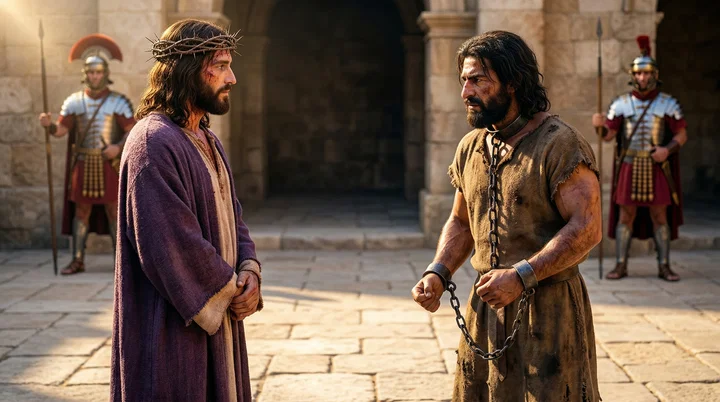
Cross-references 20 of 154
- Romans 5:8
But God commendeth his love toward us, in that, while we were yet sinners, Christ died for us.
Christ died for sinners as an act of God’s love.
- Isaiah 53:5-6
But he was wounded for our transgressions, he was bruised for our iniquities: the chastisement of our peace was upon him; and with his stripes we are healed.
The innocent servant suffers for others’ sins, which the Lord lays on him.
- 2 Corinthians 5:21
For he hath made him to be sin for us, who knew no sin; that we might be made the righteousness of God in him.
Christ bears sin in sinners’ place so they may receive God’s righteousness.
- 1 Peter 2:24
Who his own self bare our sins in his own body on the tree, that we, being dead to sins, should live unto righteousness: by whose stripes ye were healed.
Christ bears others’ sins in his body so they may live righteously.
- Galatians 3:13
Christ hath redeemed us from the curse of the law, being made a curse for us: for it is written, Cursed is every one that hangeth on a tree:
Christ bears the law’s curse in sinners’ place to redeem them.
- Hebrews 9:28
So Christ was once offered to bear the sins of many; and unto them that look for him shall he appear the second time without sin unto salvation.
Christ is offered once to bear sins.
- 1 Corinthians 15:3
For I delivered unto you first of all that which I also received, how that Christ died for our sins according to the scriptures;
Both teach that Christ died for our sins.
- John 3:16
For God so loved the world, that he gave his only begotten Son, that whosoever believeth in him should not perish, but have everlasting life.
God’s love is shown in giving Christ to save sinners from perishing.
- Romans 3:25-26
Whom God hath set forth to be a propitiation through faith in his blood, to declare his righteousness for the remission of sins that are past, through the forbearance of God;
Christ’s sacrifice addresses sin while upholding God’s justice.
- Romans 8:11
But if the Spirit of him that raised up Jesus from the dead dwell in you, he that raised up Christ from the dead shall also quicken your mortal bodies by his Spirit that dwelleth in you.
The Spirit who raised Christ will also give life to believers’ mortal bodies.
- John 1:29
The next day John seeth Jesus coming unto him, and saith, Behold the Lamb of God, which taketh away the sin of the world.
Christ is the Lamb of God who takes away the world’s sin.
- Hebrews 2:14
Forasmuch then as the children are partakers of flesh and blood, he also himself likewise took part of the same; that through death he might destroy him that had the power of death, that is, the devil;
Christ shared flesh and blood and through death defeated the devil.
- Philippians 2:8
And being found in fashion as a man, he humbled himself, and became obedient unto death, even the death of the cross.
Christ humbled himself and obeyed unto death on the cross.
- Isaiah 53:10
Yet it pleased the LORD to bruise him; he hath put him to grief: when thou shalt make his soul an offering for sin, he shall see his seed, he shall prolong his days, and the pleasure of the LORD shall prosper in his hand.
Christ’s soul is made an offering for sin.
- Romans 6:23
For the wages of sin is death; but the gift of God is eternal life through Jesus Christ our Lord.
Sin’s wages are death, the penalty Christ bore for sinners.
- Hebrews 7:25
Wherefore he is able also to save them to the uttermost that come unto God by him, seeing he ever liveth to make intercession for them.
Christ lives continually, intercedes for us, and saves those who come to God through him.
- Isaiah 53:5
But he was wounded for our transgressions, he was bruised for our iniquities: the chastisement of our peace was upon him; and with his stripes we are healed.
Christ suffers for others’ transgressions, bringing peace and healing.
- Isaiah 53:12
Therefore will I divide him a portion with the great, and he shall divide the spoil with the strong; because he hath poured out his soul unto death: and he was numbered with the transgressors; and he bare the sin of many, and made intercession for the transgressors.
Christ bears the sins of many and pours out his soul unto death.
- Acts 2:24
Whom God hath raised up, having loosed the pains of death: because it was not possible that he should be holden of it.
God raised Christ because death could not hold him.
- Hebrews 2:9
But we see Jesus, who was made a little lower than the angels for the suffering of death, crowned with glory and honour; that he by the grace of God should taste death for every man.
Both teach Christ suffered death in the flesh for others.
Commentary
Each commentary is drawn from primary sources: the writings of Ellen G. White and Adventist pioneers and periodicals. Each commentary is separate. Its own words are not a quotation; follow the references to read the source passages.
Ellen G. White
72 sources
The innocent and holy Son of God suffered once for sins to bring guilty sinners to God, a single sacrifice that need not be repeated, truly dying in human flesh and rising to life again.Lt 124, 1906, par. 15ST Dec 5, 1892ST Nov 17, 1881ST Mar 13, 1893ST Sep 11, 1884 Standing in the sinner's place as Substitute and Sin Bearer, He bore the guilt, condemnation and penalty of the broken law and gave His blood as the ransom to redeem sinners from perishing and break the power of Satan.Lt 63, 1905, par. 9–10CET 106.3–107.2RH Jan 7, 1902GC 212.1–213.1Lt 6, 1880, par. 64–68 His death vindicated the honor and justice of God's law rather than abolishing it, for the law condemns but cannot pardon, and only so holy a sacrifice could satisfy justice and bring in everlasting righteousness.ST Nov 17, 18814T 251.2ST Oct 25, 1910EW 179.2–3Ms 6, 1894, par. 9–13 Sinners cannot atone for themselves, but by repentance and faith looking to Jesus on the cross their guilt is put away, and they are pardoned, justified, clothed in His righteousness and made children and heirs of God.ST Dec 5, 1892ST Jun 27, 1911ST Mar 13, 1893ST Sep 11, 1884ST Dec 8, 1898 His patient suffering for well-doing patterns the believer's life, calling followers to endure wrong without fear, deny self, show meekness and love at home and abroad, and labor to save the perishing.Lt 124, 1906, par. 15ST Aug 22, 1878ST Mar 17, 1887Lt 81, 1894, par. 121MR 253.4
Words and Historical Setting
Christ suffered once for sins, a single atoning sacrifice that need not be repeated.Lt 124, 1906, par. 15ST Dec 5, 1892ST Jun 27, 1911ST Jul 22, 19131MR 260.1 That once-for-all death ended the need for Israel's sacrificial ceremonies, because type met antitype when the Son of God was sacrificed on the cross of Calvary.Lt 102, 1901, par. 17 Through that death eternal life is given.Lt 102, 1901, par. 17
The Just denotes Christ as innocent, holy, sinless, righteous, virtuous, and without blemish, whose innocence was beyond challenge.ST Nov 17, 1881ST Mar 13, 1893Ms 17, 1896, par. 26GC 212.1–213.1Ms 84a, 1897, par. 4 The unjust are guilty, rebellious sinners who were enemies of God and deserving of perishing.ST Dec 5, 1892ST Nov 17, 1881ST Mar 13, 1893ST Sep 11, 1884GC 212.1–213.1 The just One died for unjust and guilty people, the sinless One suffering in the place of the guilty.ST Nov 17, 1881GC 212.1–213.1Ms 84a, 1897, par. 4
That He might bring us to God means reconciliation and access to God.Lt 124, 1906, par. 15Lt 63, 1905, par. 9–10ST Sep 11, 1884GC88 212.1–213.1 By giving sinners His righteousness He joins them to God, brings them into sacred unity with Christ so that they are one with Him and completely identified with Him, gives peace with God and joy in God through the atonement, and makes them children of God, members of the royal family and of His body, heirs of God and joint-heirs with Christ to an immortal inheritance and partakers of the divine nature and of His glory hereafter.Lt 63, 1905, par. 9–10ST Sep 11, 1884GC88 212.1–213.1 Those brought to God are freed and blessed while Christ bears their condemnation and curse, receive life from the dead instead of shame, and are called to live purely, chastely, and holily.GC88 212.1–213.1
Being put to death in the flesh means Christ truly suffered and died, and being quickened by the Spirit means He was made alive by the Spirit and rose to life.Lt 124, 1906, par. 15Lt 63, 1905, par. 9–10ST Sep 11, 1884ST Aug 5, 18751MR 260.1 He broke the fetters of the tomb and rose from the dead, proclaiming before the heavenly universe, the fallen angels, and the human race that He is the resurrection and the life.Lt 102, 1901, par. 17 His death followed by resurrection shows His followers the way from death to life.ST Sep 11, 1884ST Aug 5, 1875 He now serves as their great High Priest and advocate, pleading their cause, forgiving their sins, and presenting their progress with grace.ST Sep 11, 1884
The setting of the verse includes Christ in Noah's day speaking through a human messenger and preaching to people in bondage to sin.1MR 260.1Lt 106, 1909, par. 7–9 The chapter holds a message of great importance for ministers of the gospel and for ministers' wives.Lt 164, 1910, par. 4 It calls them to search deep and make clean work for eternity, to let the convicting, converting power of the gospel search their own hearts and their families so that no irreligious element remains in their homes, with special zeal to labor for unsanctified, unconverted companions.Lt 164, 1910, par. 4
Nature of Christ's Suffering
The sufferer is the eternal Son of God, equal with God, whose throne is from everlasting, who laid aside divinity and clothed himself with humanity.ST Mar 17, 1887Lt 6, 1880, par. 64–68Ms 47, 1901, par. 6–8 He turned from his royal throne and high command and left the realms of glory for this dark and lonely world, coming as a babe in Bethlehem to be an offering for sin.ST Mar 17, 188716MR 31.1Ms 24, 1889, par. 54Ms 47, 1901, par. 6–8 He became poor that through his poverty sinners might be made rich, humbling himself as a man of sorrows and acquainted with grief to share in all human temptation.ST Mar 17, 1887Ms 24, 1889, par. 50–52Ms 47, 1901, par. 6–8 He came with the hoarded love of eternity, the whole ocean of divine love flowing from its center, with every power in the heavenly universe working to carry forward redemption.Ms 47, 1901, par. 6–8
His suffering included rejection and being despised, cruel mocking and jest and merriment, reviling and hatred, insult, shame and reproach.ST Mar 17, 1887Ms 24, 1889, par. 50–5216MR 31.1 He bore scourging and wore the plaited crown of thorns, and endured a shameful death on the cross of Calvary.STBk 105.2EW 40.3Ms 24, 1889, par. 50–5216MR 31.1 In the garden he bore the burden of the sins of the whole world while sweating great drops of blood.STBk 105.2EW 40.316MR 31.1
Beyond physical anguish he carried the weight of the sins of the whole world as substitute, bearing the punishment due to the guilty though himself guiltless.ST Dec 5, 1892STA 104.4–106.1Lt 6, 1880, par. 64–68 That burden was far greater than his physical anguish on the cross, for in Gethsemane he suffered agony and on Calvary horror in thick darkness beneath the wrath of an offended God against sin.Lt 6, 1880, par. 64–68Lt 21, 1895, par. 2–3 In Gethsemane he faced the temptation to let guilty humanity bear the consequences of its own guilt while he remained innocent, and God dealt with him as Judge toward the sin bearer rather than as Father.ST Jun 3, 1897Lt 21, 1895, par. 2–3
He suffered voluntarily, innocently and patiently without guilt, from his youth to the close of his life enduring wrongfully yet patiently.Lt 81, 1894, par. 1Lt 102, 1905, par. 18Ms 14, 1893, par. 9–10 When reviled he threatened not, when falsely accused he opened not his mouth, bearing all without a murmur.ST Mar 17, 1887Lt 81, 1894, par. 1 Though with one word he could have summoned legions of angels to his aid, he submitted to the Father's will alone, chose to drink the cup, faced the ordeal alone and was victorious, and while dying prayed for his murderers, Father forgive them for they know not what they do.ST Mar 17, 1887Ms 14, 1893, par. 9–10 His death was an infinite, immeasurable sacrifice unlike all other deaths, a precious gift greater than any other gift ever bestowed, paying a ransom fallen humanity could not obtain or provide.ST Mar 17, 1887Lt 189, 1909, par. 9–11Ms 41, 1898, par. 4–6 It was the immeasurable cost of Adam's sin, displaying God's love and goodness in their fullest light before the heavenly universe and the fallen and unfallen worlds, and laying every soul under the most solemn obligation of gratitude, full and complete.Ms 24, 1889, par. 54Ms 160, 1898, par. 15–16Ms 41, 1898, par. 4–6
Substitution and Reconciliation
The Just stood in the place of the unjust as Substitute and Surety and Sin-bearer, interposing Himself to bear what sinners deserved.RH Jan 7, 1902GC 212.1–213.1Lt 6, 1880, par. 64–68ST Dec 8, 1898 He took human guilt and defiled garments upon Himself, taking human nature and sharing human temptation, and bore the bolts of the Father's wrath, the curse, condemnation and penalty of the broken law, with none of the vials of wrath reserved.RH Jan 7, 1902GC 212.1–213.1Lt 6, 1880, par. 64–68ST Dec 8, 1898 God dealt with Him as Judge toward the Sin-bearer, while the guilty who are deserving of punishment go free through faith in His merits, freed and blessed in the exchange by which Christ bears their condemnation and curse.GC 212.1–213.1Lt 6, 1880, par. 64–68Lt 81, 1894, par. 1 His burden of the sins of the whole world was far greater than His physical anguish on the cross, for in Gethsemane He suffered agony and on Calvary horror in thick darkness beneath the wrath of an offended God, where He faced the temptation to let guilty humanity bear its own consequences while He remained innocent.Lt 6, 1880, par. 64–68ST Jun 3, 1897 That suffering demonstrates God's hatred of sin and thorough justice, proving God will punish unrepented and unforsaken sin to its fullest extent, so that only those healed of transgression by faith in His agony and blood and made pure even as He is pure will escape receiving the punishment He suffered.Lt 6, 1880, par. 64–68Lt 81, 1894, par. 1
By enduring the cross and giving Himself as an offering for sin He made salvation and justification available to all who believe, for salvation is God's gift received by faith and given by grace.RH Jan 7, 1902GC 212.1–213.1 By His precious blood given on the cross He redeems sinners to God, leaving the realms of glory and coming to the world to bear the burden of the sins of the whole world, paying the ransom they could not provide.CET 106.3–107.2ST2 46.2STM2 30.2 The Father accepts His death to save a guilty rebellious race, saving fallen people who were enemies of God from perishing, death and misery and bringing them to God to make them partakers of His future glory.CET 106.3–107.2ST2 46.2ST Aug 22, 1878ST Sep 11, 18844T 251.2 His sacrifice preserved the honor of God's law, since sin is transgression of that law, and His death followed by resurrection shows His followers the way from death to life.ST Sep 11, 18844T 251.2 He now serves as their great High Priest and advocate, pleading their cause, forgiving their sins and presenting their progress with grace, and by giving them His righteousness He joins them to God, presenting them to the Father as innocent by imputing His own righteousness to them.ST Sep 11, 1884Lt 81, 1894, par. 1
His suffering breaks the power of Satan and pays the price at infinite cost to redeem the human family from the power of the destroyer and restore them to God's image.Lt 63, 1905, par. 9–109T 283.3STB 516.2–3 His life was given as the ransom that delivers people from eternal death, and His death ended the warfare and sealed the doom of the devil, who has the power of death.9T 283.3STB 516.2–3Ms 1, 1902, par. 11–13 Those who accept this salvation humble themselves before God as His children, as little children.9T 283.3STB 516.2–3
Those brought to God are not only forgiven upon repentance and confession of iniquity but become children of God, members of the royal family, heirs of God and joint-heirs with Christ to an immortal inheritance.Lt 63, 1905, par. 9–109T 283.3 By beholding Christ sinners are changed into His image and brought into sacred unity with Him, made one with Him, completely identified with Him and sharers in all that He is, with peace with God, joy in God through the atonement, and joy in tribulation as partakers of His sufferings in this life and of His glory hereafter.Lt 63, 1905, par. 9–10GC88 212.1–213.1 The sinless One condemned in place of the guilty, bearing the curse so they may go free, brings life to the dead and glory to those who had only shame, and those who belong to Christ are members of His body and share in the divine nature.GC88 212.1–213.1Ms 25, 1887, par. 5–7 The Just in all His virtue and righteousness gave Himself and suffered the death penalty in behalf of the unjust, and through that death eternal life is given, for He left heaven, took human nature and died on the cross to give people moral power to overcome temptation and become partakers of His divine nature, making obedience to God's law possible through His righteousness imputed to them.Lt 102, 1901, par. 17Ms 25, 1887, par. 5–7 He broke the fetters of the tomb and rose from the dead, proclaiming before the heavenly universe, the fallen angels and the human race that He is the resurrection and the life.Lt 63, 1905, par. 9–10Lt 102, 1901, par. 17 This privilege calls them to live purely, chastely and holily, for salvation belongs to God while obedience is the believer's duty.GC88 212.1–213.1Ms 25, 1887, par. 5–7
Law Prophecy and Types
Christ's death preserved and vindicated the honor, justice and holiness of God's law, dying as the just and innocent for the unjust and guilty so that sinners need not perish but might be brought to God.ST Nov 17, 18814T 251.2ST Oct 25, 1910ST Feb 25, 1897 Sin is transgression of that holy law, and the gospel gives no more latitude to sin than the law does.4T 251.2ST Feb 25, 1897ST Jul 18, 1878 The law condemns transgression but cannot pardon or cleanse it; Christ pays the penalty for sin, and sinners are justified through repentance and faith in his merits, not by the law.ST Jul 18, 1878EW 179.2–3 His life and death teach strictest obedience, and his sacrifice vindicates and exalts the law for the faithful of every age.ST Nov 17, 1881ST Feb 25, 1897ST Jul 18, 1878
His death did not destroy or abolish the law but magnified and honored it, upholding its authority and calling for obedience to its precepts.EW 179.2–3Ms 6, 1894, par. 9–13Lt 160, 1903, par. 13–14 If the law could have been abolished or changed, humanity's fallen condition could have been remedied and people saved without his death.EW 179.2–3Ms 6, 1894, par. 9–13 If the law were abolished sin would be immortalized, there would be no transgression, and there would be no need of the gospel and no need of a Saviour.EW 179.2–3Ms 6, 1894, par. 9–13 Being brought to God through Christ therefore involves being brought back to loyalty to His law, accepting the duty to obey it and being renewed in mind, while Christ who paid its penalty pleads for those who receive Him as Saviour.Ms 6, 1894, par. 9–13Lt 160, 1903, par. 13–14
His life and death call sinners to repentance from sin back to obedience to God's commandments, making obedience possible through his imputed righteousness.ST Feb 25, 1897ST Jul 18, 1878Ms 25, 1887, par. 5–7Lt 93, 1893, par. 10–14 He left heaven, took human nature, and died on the cross to give moral power to overcome temptation and to make men partakers of his divine nature.Ms 25, 1887, par. 5–7Lt 93, 1893, par. 10–14Lt 6, 1903, par. 25–26 Through his death as Substitute and Surety he paid the penalty for transgression, pardoned and accepted believers, justified them and clothed them in his righteousness so that through faith they may keep God's commandments and live.ST Jul 18, 1878Lt 93, 1893, par. 10–14Lt 6, 1903, par. 25–26 His suffering was necessary to satisfy God's justice and the holiness of His law, and no sacrifice less holy than the Only Begotten Son could cleanse those who accept Him as their Atonement and become obedient to heaven's law.Lt 93, 1893, par. 10–14Lt 6, 1903, par. 25–26
He is God's remedy for sin, the guiltless bearer of the sins of the guilty to whom the ritual system pointed forward as its antitype.AA 451.4Ms 24, 1889, par. 54Lt 102, 1901, par. 17 The prophets testified of him, and he fulfilled what he had instructed prophets and seers to predict, fulfilling the counsels of heaven and verifying his own word.AA 451.4Ms 24, 1889, par. 54 The sacrificial ceremonies of Israel need no longer be observed because type met antitype when the Son of God was sacrificed on the cross once for all, the Just in all virtue and righteousness suffering the death penalty in behalf of the unjust that eternal life might be given.AA 451.4Ms 24, 1889, par. 54Lt 102, 1901, par. 17 As the world's Redeemer come as a babe in Bethlehem to be an offering for sin, he pledged himself to accomplish the full salvation of every son and daughter of Adam with a sacrifice ample and wholly consistent with the justice and honor of God's holy law, laying every soul under solemn obligation of gratitude so that whoever refuses the heavenly gift has only himself to blame.Ms 24, 1889, par. 54Lt 102, 1901, par. 17
He came to reinstate fallen man, to vindicate the holiness of the divine law and the glory of God by keeping all of God's commandments.Ms 24, 1889, par. 50–52Lt 93, 1893, par. 10–14Lt 6, 1903, par. 25–26 He came to make an end of transgression and to bring in everlasting righteousness and life for fallen man through his own merits, that lifted-up people might not perish but have everlasting life.Ms 24, 1889, par. 50–52Lt 93, 1893, par. 10–14 Only his merits bring everlasting righteousness, clothing the obedient in his righteousness and restoring them to God's favor.Ms 24, 1889, par. 50–52Lt 93, 1893, par. 10–14Lt 6, 1903, par. 25–26
Faith and Spirit's Work
Sinners cannot make atonement for themselves, for the just One suffered once for the sins of the unjust to bring them to God, and that sacrifice is the atonement they receive by faith.ST Dec 5, 1892ST Jun 27, 1911ST Jul 22, 1913 Entry into the kingdom does not come by accumulated deeds of legal obedience but by faith in the blood and righteousness of the One who died for sinners, which breaks self-reliance, kindles love, and bears fruit in grateful, generous devotion.Lt 205, 1901, par. 19 Those who are condemned by the broken law cannot save themselves and have nothing with which to repay the debt, yet a blood-bought pardon is freely offered to every soul through the One who came in human form and gave Himself for human sin.COL 244.3–245.1 The law condemns transgression but cannot pardon or cleanse it, so sinners are justified through repentance and faith in His merits rather than by the law, while His death vindicates and exalts the law and its saving benefit reaches the faithful of every age.ST Jul 18, 1878
The atonement is accepted by faith as sinners look to Jesus on the cross, and His suffering and death placed redemption within reach while His humiliation was for humanity's exaltation to eternal honors and immortal joys.ST Jun 27, 1911ST Jul 22, 1913 Though guiltless He bore the punishment due to the guilty as their substitute, carrying the weight of the world's sins and suffering deeply because of human transgression.ST Dec 5, 1892 By beholding Him sinners are changed into His image, and when they repent and confess iniquity they are not only forgiven but become children of God, members of the royal family, heirs of God and joint-heirs with Christ to an immortal inheritance.Lt 63, 1905, par. 9–10 Through repentance and faith sinners are rid of sin and look to the Lord their righteousness, receiving the righteousness of Christ when they come to God in faith.ST Mar 13, 1893
His suffering made atonement for the guilt of the whole world, expiating sin, putting it away, and casting it into the depths of the sea.ST Mar 13, 1893 Through faith in His merits the guilty go free, and He presents them to the Father as innocent by imputing His own righteousness to them.Lt 81, 1894, par. 1GC88 212.1–213.1 As substitute and surety He bore the curse and condemnation deserved by others, taking their defiled garments so they could be clothed in His righteousness.ST Dec 8, 1898 Having suffered and died for unjust people while they were enemies of God to bring them to God, and having risen to show the way from death to life, He now serves as great High Priest and advocate, pleading their cause, forgiving sins, presenting their progress with grace, and by giving His righteousness joining them to God.ST Sep 11, 1884 Salvation and the righteousness that justifies unto eternal life come from God by grace through faith, bringing life to the dead and glory to those who had only shame, so that those who belong to Christ as members of His body and partakers of the divine nature are called to live purely, chastely, and holily.GC88 212.1–213.1
What the Redeemer accomplished is made effective in each person by the constant, active work of the Holy Spirit given as a regenerating agent to regenerate them.GW 286.14MR 331.45MR 113.1 The Spirit must continually work to regenerate people and make real in their lives what Christ accomplished as Redeemer so that humanity might not perish.6MR 335.1–336.1Ms 1, 1892, par. 4–7 That same Spirit works to elevate and ennoble the unjust and sinful, stamping the divine image upon them and developing an ever-advancing spiritual life and likeness to Christ's character.Lt 4, 1885, par. 23
His sacrifice reveals His love and draws people to Him, for being lifted up upon the cross He draws all unto Him.Ms 24, 1889, par. 50–52 His loving concern extends to every person, including those guilty, helpless, and in danger of destruction through Satan's snares, for He cares for them as a shepherd cares for his sheep.MH 162.1 God gave His Son to save humanity from death, displaying His love through the suffering of the Just for the unjust.Ms 160a, 1898, par. 16–17 The righteousness of Christ nourished by God's grace in the human heart is not created by human effort, yet through it a harvest of souls is brought to God.Ms 116, 1898, par. 20–21
Example for Daily Living
The just suffered once for the unjust to bring sinners to God, and that pattern grounds the call to suffer for well-doing rather than for evil-doing.Lt 124, 1906, par. 15 As the blameless One bore guilt patiently from youth to death without asserting His rights, so believers are to bear injustice and humiliation from brethren without retaliation, watching unto prayer.Lt 81, 1894, par. 1 Suffering for truth's sake is therefore no evidence of guilt, for even the Prince of Peace, though not guilty, endured the greatest possible humiliation as substitute punished in the sinner's place.Lt 102, 1905, par. 18 Endured without fear, such suffering sanctifies God in the heart, keeps a good conscience, and makes believers ready to give a reason for their hope.Lt 124, 1906, par. 15
His sacrifice does not remove the need for self-denial and sacrifice, for His life remains the example and His followers must walk in His footsteps.ST Aug 22, 1878 Beholding the Son of God in agony on Calvary, who laid aside divinity, left royal throne and high command, was rejected and became poor that sinners might be made rich, teaches meekness and lowliness of mind.ST Mar 17, 1887 Though He could summon legions of angels He endured jest, reviling and hatred without murmur, threatened not when reviled, opened not His mouth when falsely accused, and prayed for His murderers, Father forgive them for they know not what they do.ST Mar 17, 1887 That uncomplaining victim, whose throne is from everlasting and whose kingdom shall have no end, gives reason to love Him and make Him first and last and best, to kneel in humble penitence at the foot of the cross, subdue pride and vanity, deny self, hide self in Jesus, and by looking constantly to Him whom sins have pierced gain strength to be like Him.ST Mar 17, 1887 His death belongs to the work of redeeming love by which God seeks to save the perishing, and human workers are entrusted to cooperate in that work.FE 219.1
By beholding Him sinners are changed into His image, and upon repentance and confession of iniquity they are not only forgiven but made children of God, members of the royal family, heirs of God and joint-heirs with Christ to an immortal inheritance.Lt 63, 1905, par. 9–10 His suffering breaks the power of Satan and brings man into sacred unity with Christ, complete identification with Him and sharing in all that He is, with peace with God, joy in God through the atonement, and joy in tribulation as partakers of His sufferings now and His glory hereafter.Lt 63, 1905, par. 9–10 The sinless condemned in place of the guilty bears the curse that they may go free and brings life to the dead and glory to those who had only shame, with salvation and justifying righteousness coming by grace through faith.GC88 212.1–213.1 Those who belong to Christ are members of His body and sharers in the divine nature, which calls them to live purely, chastely and holily, for salvation belongs to God while obedience is the believer's duty.GC88 212.1–213.1 His death purchases healing for defects and maladies of the soul, supplying lack, molding and fashioning character, righting wrongs and repressing evils, so that even without deep conviction looking to Him on the cross breaks down every barrier.Lt 15a, 1890, par. 9–11 He undertakes to save all who trust Him, casts out none who come, seeks and saves the lost, restores to divine favor through goodness and mercy, receives even the prodigal with outstretched arms, and gives assurance of acceptance, peace and love that the sin-darkened soul can see when taught in simplest form.Lt 15a, 1890, par. 9–11 He died the just for the unjust that He might lead, work through and sanctify His people, and love for Him who first loved and gave Himself makes them eager and earnest to overcome everything that destroys unity.Lt 12, 1890, par. 72–75 That profession must be examined by life, for those who claim Him must show His character in tenderness, courtesy and love, including in home life.Lt 109, 1893, par. 8–9
The life and sacrifice of the Innocent for the guilty should forever silence every murmur and complaint.21MR 253.4 Measured against His sinless suffering for the unjust, personal pain and hardship are seen as small.4T 346.2 Suffering for Christ is to be counted a privilege, and in that suffering believers glory in the cross of Christ.21MR 253.4 Christ is honored by those who eagerly take hold of salvation and count it a privilege to suffer for Him.21MR 253.4
The truth that the Just died for the unjust to bring us to God is to be remembered every moment by parents in dealing with children, shaping wisdom, patience, kindness and love when restraint and punishment of evil are required.Ms 79, 1901, par. 13 The chapter holds a message of great importance calling to deep heart-searching and clean work for eternity, letting the convicting, converting power of the gospel search hearts and families so that no irreligious element remains in homes, with special zeal to labor for unsanctified, unconverted companions.Lt 164, 1910, par. 4 His loving concern in giving His life to bring people back to God extends to every guilty, helpless person in danger of destruction through Satan's snares, as a shepherd cares for sheep.MH 162.1 Through the Just dying for the unjust a harvest of souls is brought to God, with the righteousness of Christ nourished by God's grace in the heart and not created by human effort.Ms 116, 1898, par. 20–21
Sources
Pioneers and periodicals
108 sources
Christ suffered once unto death on the cross, the sinless One in place of guilty sinners, to bring them back to God into favor, peace and eternal life.ST Nov 20, 1884RH Nov 7, 1854ST Jul 1, 1886ST May 7, 1894RH Apr 12, 1860 He truly died in mortal human flesh taken for this purpose and was made alive again by the Holy Spirit in resurrection, the firstfruits and pattern of the raising of his followers to immortal life.RH Nov 6, 1860RH Mar 13, 1856RH Feb 5, 1901RH Nov 10, 1859RH Jan 22, 1857 His death satisfies justice and honors God's enduring moral law while revealing God's love, putting away sin and bringing forgiveness, healing and reconciliation to all who receive it by repentance and faith.ST Jun 27, 1911ST Nov 17, 1881ST Mar 13, 1893ST Jan 14, 1889RH Sep 6, 1870 By that same Spirit he preached not to conscious dead but through Noah to living men bound in sin's prison while God's longsuffering waited, calling them to repentance before the Flood, which figures baptism into his death and resurrection; those who held the other taught that his own spirit remained conscious and preached in the spirit world while his body lay in the tomb.RH Nov 6, 1860ST Jul 28, 1881RH Nov 26, 1872RH Feb 25, 1873 His patient suffering for doing right is therefore the example and power for believers to endure unjust suffering, die to sin and rise to obedient new life, and proclaim deliverance before probation closes.ST Nov 20, 1884ST Feb 17, 1881STRH Feb 9, 1869
Words and Their Sense
Christ suffered once for sins in one final suffering unto death on the cross, not merely in pain of body and not in repeated or continued suffering.ST Nov 20, 1884ST May 2, 1916RH Sep 6, 1870 His death was real death, in which the sinless divine Son gave his whole life in place of sinners, since no human life or obedience could atone for sin, and it was necessary for the gospel and for salvation; it does not mean that only his human body died while he himself remained alive.ST Nov 20, 1884ST Nov 20, 1884 His suffering and death in the flesh answer the claim that he never suffered, and his death was a sacrifice for sin that puts sin away and sanctifies, linking directly to remission rather than being limited to the resurrection of the race.ST May 2, 1916RH Sep 6, 1870 His death for sinners stands central to the plan of redemption, for he gave his life and endured the suffering of the cross. The righteous One suffered the dreadful death of the cross in the sinner's place out of real personal love for each sinner, giving himself for you that you might be forgiven and fitted for heaven and brought to God, so that a lost soul finds no lasting peace and joy until coming as a lost soul to feel need of Jesus and believe in him, confessing sins to receive forgiveness and reading the story of his crucifixion and death with prayer until the heart melts in love to him.
The just for the unjust means the sinless Christ suffered in place of guilty sinners, with for meaning instead of and not merely because of.RH Nov 7, 1854RH Nov 7, 1854 The unjust stood condemned to death, and Christ though just suffered that death in their stead by being put to death in the flesh.RH Nov 7, 1854 He bore the penalty of sins and not his own because there was no sin in him, with the strokes of justice falling on him and averted from sinners, bringing by that atonement reconciliation with God, healing and restorative grace, and all the blessings of redemption.ST Jul 1, 1886 Though innocent he suffered and died in the place of the guilty, taking the curse they deserved so they could be brought to God, and his death is both punishment for sin and, toward God, a sacrifice that atones for sin.ST May 17, 1883RH Nov 7, 1854 Though just he suffered once for the unjust and was put to death to bring them to God, and the injustice of his death was confirmed when Pilate declared he found no fault in him.ST Jun 15, 1904 His death was substitutionary like the sin offerings that died for the sins of others, so that to remove substitution would remove the reason for those offerings and their atoning purpose.ST Nov 29, 1883
That he might bring us to God means reconciling sinners to God and restoring them to favor, communion, peace, and eternal life, with salvation coming through him alone and no one coming to the Father another way.ST May 7, 1894RH Apr 12, 1860RH Jul 22, 1873 His work of taking away sin and giving repentance makes this return to God possible, and makes possible the New Covenant aim of agreement between God and humanity.ST May 7, 1894RH Apr 12, 1860 This is more than gaining correct beliefs or a favorable position, for through Christ people are brought to God now in heart, conscience, and understanding so they can enjoy him.RH Dec 26, 1865 To be brought to God means to be prepared to meet God in judgment and in peace and in glory and to dwell with him as eternal Father forever, which preparedness is salvation from sin and preparedness for immortality and glory and endless life in a sinless deathless world, received by believing and confessing and repenting of sin so that his blood cleanses from all sin.ST Dec 19, 1916 His path through suffering has the wonderful end of drawing the one brought out of isolation and self-centered life into communion with the Father and the Son, sharing what Christ won and dwelling with him.ST Jan 3, 1905
Being put to death in the flesh but quickened by the Spirit means Christ died in human life and was made alive again by the divine Spirit, who is the Holy Spirit and the power that gives life.STST Aug 7, 1893RH Dec 17, 1861 His suffering took place in his death on the cross, and his death and resurrection are the saving facts received by faith and the basis of justification.STST Aug 7, 1893 He died in his human body and was restored to life by the Spirit of God.RH Dec 17, 1861 His being made alive by the Spirit is connected with the Spirit's power to raise believers' mortal bodies, for resurrection is a birth into spiritual life needed for immortality and life in the world to come.RH Mar 13, 1856 The Spirit is the agency of Christ's resurrection and will likewise make his people alive in the resurrection, and he who was made alive in the Spirit is the he by which through the Spirit Christ preached.RH Jan 22, 1857 Having ascended to heaven he is seated at God's right hand, saving his people and bringing them home, and by that same Spirit he preached to people living in Noah's time who were prisoners in bondage to sin, with Noah as preacher of righteousness while God patiently waited as the ark was built, which ark was a figure of baptism as not merely washing of the body but the answer of a good conscience and new life through Jesus' resurrection.ST
His suffering included not only death but a life of sorrow and grief, the humiliation of taking the likeness of sinful flesh, and the ingratitude of his covenant people, borne so that sinners under the death penalty for breaking God's law could have eternal life.ST May 17, 1899 His death was the supreme act of love and mercy following his humble life as a poor houseless servant who endured sorrow, mockery, and rejection.RH Nov 14, 1854 He bore the guilt of fallen humanity though he knew no sin, and in Gethsemane felt the weight of sin and God's wrath against transgression and feared sin would shut him out forever from his Father's love, and his suffering for sinners gives hope that through faith in his shed blood they can conquer besetting sin and after suffering reign with him.ST Apr 11, 1900 His suffering is connected with leaving heaven's glory and taking human nature, and included the hardships and humiliation of his earthly life and death, though once dead he now reigns on high.ST Apr 1, 1880RH Aug 29, 1865 The Son of God in agony on Calvary died the just for the unjust, having laid aside divinity and clothed himself with humanity, turned from royal throne and high command, rejected and despised and become poor that through his poverty sinners might be made rich.ST Mar 17, 1887 Though with one word he could summon legions of angels he endured jest and merriment, reviling and hatred, giving himself a sacrifice for sin, paying an infinite price for every sinner and bearing the penalty of man's sins without a murmur, threatening not when reviled, opening not his mouth when falsely accused, and while dying praying for his murderers, Father forgive them for they know not what they do.ST Mar 17, 1887 This uncomplaining victim is the Son of God whose throne is from everlasting and whose kingdom shall have no end, and beholding him teaches meekness and lowliness of mind, gives reason to love the Saviour and make him first and last and best, to take place in humble penitence at the foot of the cross, to subdue pride and vanity, deny self, hide self in Jesus, and by looking constantly to him whom sins have pierced acquire strength to be like him.ST Mar 17, 1887
Death and Resurrection
Christ truly died for sins, soul and body, as the sinless divine Son giving his own life in place of sinners, since no human life or obedience could atone for sin.ST Nov 20, 1884RH Nov 17, 1859RH Dec 23, 1862 The one manifested in flesh was himself put to death, not merely his human body while he himself remained alive untouched as a separate person.ST Nov 20, 1884RH Nov 10, 1859 His suffering for sin was death itself, real death that could be sorrowful unto death, and not eternal torment in hell or the mere gnawing of a guilty conscience.RH Apr 7, 1868RH Nov 17, 1859 His real death is necessary for the gospel and essential to the hope of salvation, saving true believers from death through the merits of his blood and the power of his resurrection.ST Nov 20, 1884RH Apr 7, 1868 No essential part of man is exempt from death, and therefore man will be raised soul and body.RH Dec 23, 1862
Being quickened means being made alive again in resurrection by the Spirit through miracle and divine power, not merely continuing alive or rising by a natural process.RH Mar 13, 1856RH Jan 22, 1857ST Apr 26, 1883 The Spirit is the agency of his resurrection and will likewise make his people alive, raising mortal bodies to immortality and life in the world to come as a birth into spiritual life.RH Mar 13, 1856RH Jan 22, 1857 His death and restoration to life is the essential saving fact received by faith, upon which Christianity alone among religions is predicated, advertised beforehand as despised and rejected, bearing the sins of the world, numbered with transgressors, and pouring out his soul unto death, then remaining dead a set time and arising a triumphant conqueror.RH Oct 7, 1862 In his resurrection he became the firstfruits and sample of those who sleep, the pattern by which followers will be raised to immortal life with bodies like his.RH Dec 23, 1862
The preexistent Son who came down from heaven took mortal flesh with its sinful susceptibilities under the law of sin and death, yet without ever sinning, so that death could have power over him only as he stood in the sinner's place bearing the sins of the world for Adam's redemption.RH Feb 5, 1901ST Jun 7, 1883RH Sep 25, 1860 How the preexistent Son could die is left as mystery, but his taking such flesh enabled him to feel the tempter's power, to be tempted in all points, and to sympathize and succor as a merciful High Priest.ST Jun 7, 1883RH Sep 25, 1860 In crucifixion he was put to death in the flesh and died to sin once, putting to death that dying fleshly nature, and his death released him from weakness.RH Feb 5, 1901RH Nov 8, 1864RH Sep 25, 1860 Raised by the Spirit and power and glory of the Father, he entered new triumphant life to live unto God forever without sin, placed infinitely above temptation and the dominion of sin and death, which could not hold him because he was righteous, incorrupt, and now a life-giving spirit.RH Feb 5, 1901RH Nov 8, 1864RH Sep 25, 1860RH Sep 4, 1855
Those who held the minority position taught that his spirit remained conscious and active while his body lay in the tomb, so that death did not end his consciousness.RH Nov 26, 1872 In that state he went in person to the prison-house of the spirit world and preached to departed spirits held there, revealing himself to them as well as to the living.RH Nov 26, 1872RH Feb 25, 1873RH Nov 26, 1872 His body was removed from the sepulcher, but his resurrection is described by them as rising out from among the multitude of departed spirits, the first to do so, not the first person ever restored to earthly life.RH Feb 25, 1873RH Nov 26, 1872 At the trumpet, on this same understanding, the good come forth from among the dead to life and the evil to condemnation, following his pattern of rising out from the spirit world.RH Feb 25, 1873
Substitutionary Atonement Taught
Christ the innocent Just One suffered once for the sins of the unjust to bring them to God, bearing in their place the punishment, penalty, curse, wrath and death due to the guilty as their substitute and carrying the weight of the world's sins.ST Dec 5, 1892STST Jun 27, 1911ST Feb 14, 1906ST Dec 19, 1916 His suffering and death are the atoning sacrifice and basis of the gospel for sin, which sinners could not make for themselves but receive by faith, placing redemption within reach.ST Dec 5, 1892ST Jun 27, 1911ST That sacrifice satisfies the claims of justice and the broken law while demonstrating both the justice of those claims and God's love for sinners.ST Feb 14, 1906ST Jan 14, 1889RH Apr 16, 1861 His strokes turned aside from sinners bring reconciliation, healing, forgiveness and all the blessings of redemption, and his humiliation was for humanity's exaltation to eternal honors, immortal joys and the gift of eternal life, as the Shepherd freely gave his life for the sheep.ST Jun 27, 1911ST Nov 4, 1897ST Feb 14, 1906
His death honored, magnified, confirmed and vindicated God's enduring moral law and did not relax, abolish, destroy or nail it to the cross to free sinners.ST Nov 17, 1881ST Feb 25, 1897RH Feb 3, 1852RH Jun 9, 1863ST May 20, 1908 His sinless obedience met its demand for perfect obedience down to the smallest detail, and then he bore its curse to redeem men from the curse of the broken law, so that the honor of the law might be preserved and yet man not utterly perish.ST Feb 25, 1897RHRH Jun 9, 1863 Pardon releases believers from condemnation without making the law void, for the gospel gives no more latitude to sin than the law but calls men to repentance from sin as transgression of the law back to obedience, teaching strict obedience.ST Nov 17, 1881ST Feb 25, 1897 A sinful person's sacrifice would avail little, but because he was without sin his sacrifice was effective for a sinful world.RH
His once-for-all death is the all-sufficient sacrifice that expiates guilt, puts sin away, casts it into the depths of the sea, sanctifies believers and links directly to remission rather than to resurrection only.ST Mar 13, 1893RH Sep 6, 1870ST Feb 17, 1909 By agreement from the foundation of the world he came in the flesh, fulfilled the law and suffered as the just for the unjust, thereby redeeming from death and the curse, taking away the carnal mind and bringing the rebel back to subjection to the law.RH Jul 5, 1870 No one shares in this redemption except on condition of repentance, faith, conversion, confession, outward steps showing faith in his death and resurrection, and solemn promise by God's grace to refrain from future transgression and obey.ST Jan 14, 1889RH Jul 5, 1870RH Apr 16, 1861 Then sin and condemnation depart, guilt is canceled, the righteousness of Christ is transferred, imputed and imparted as the Lord our righteousness, and the believer is accepted and placed as free from condemnation as though sin had never entered, which is already so much of paradise restored and the earnest of future blessedness.ST Mar 13, 1893RH Apr 16, 1861 The atoning death is a fact to be received on God's testimony rather than through philosophical explanation, for God declares that the atonement satisfies him and trusting this testimony is faith; if the gospel pardon is rejected the law takes its course, since sin is transgression of the law and the wages of sin is death.RH Jul 5, 1870ST Feb 17, 1909
His death reconciles enemies to God and his risen life saves and keeps the reconciled in that relationship, bringing those far away near to God and giving them a way to triumph over death as Captain of salvation.ST Sep 15, 1898ST Mar 13, 1893ST Sep 7, 1904 That bringing to God means preparing sinners to meet God in judgment and in peace and in glory and to dwell with him forever, which preparedness is salvation from sin received by believing, confessing and repenting so that his blood cleanses from all sin.ST Dec 19, 1916 He now lives after resurrection to show his followers the way from death to life, serving at God's right hand as Prince, great High Priest, Advocate and Intercessor, pleading their cause, giving forgiveness and grace, forgiving sins and presenting their progress and joining them to God by giving them his righteousness.ST Sep 11, 1884RH Jun 28, 1906ST Sep 7, 1904
Spirits in Prison Explained
The Spirit who made Christ alive after He was put to death in the flesh is the same Spirit by whom He went and preached to the spirits in prison, so that His preaching through Noah was Christ's own preaching actuated by the Spirit of God.RH Nov 6, 1860ST Jul 28, 1881RH Sep 25, 1913 That preaching was done to living, disobedient people in Noah's day while the long-suffering of God waited during the 120 years while the ark was being prepared, with Noah as a preacher of righteousness aided by fellow workers.RH Nov 6, 1860ST Jul 28, 1881RH Nov 26, 1901 It did not take place in person after His death while His body lay in the grave, nor after those hearers had died, but while repentance and salvation were still possible and hope remained open.ST Jul 28, 1881RH Nov 26, 1901RH Sep 22, 1859RH Sep 1, 1863 His work of proclaiming deliverance from sin was the same before and after His earthly life, carried out through the Spirit and His servants in every age from Eden onward, because He is the same yesterday, today, and forever.RH Nov 6, 1860RH Sep 25, 1913ST Mar 12, 1912ST Jan 28, 1913
The spirits are living men and souls in bodies, not disembodied conscious dead hearing preaching in the grave.RH Sep 22, 1859RH Sep 1, 1863ST Mar 12, 1912ST Sep 20, 1910 To be in prison is to be shut up in the prison-house of sin and in bondage to sin and Satan, in darkness, error, and condemnation, needing the opening of the prison to the bound and deliverance of captives.STRH Sep 22, 1859ST Mar 12, 1912ST Sep 20, 1910 It is also detention under divine judgment, with God warning of the coming flood and limiting time to 120 years allotted for repentance before doom, though salvation remained open until the flood came.ST Jul 28, 1881RH Nov 26, 1901RH Sep 1, 1863ST Apr 11, 1900 Those who rejected the warning were destroyed by the Flood and are now held in prison in the grave, which does not show that the dead are conscious or can hear preaching.RH Nov 6, 1860ST Jul 28, 1881RH Nov 26, 1901RH Sep 22, 1859RH Sep 1, 1863
Noah warned of coming judgment and called for repentance, righteousness by faith, and escape to God's appointed salvation, but the disobedient rejected the warning and only eight souls were saved in the ark.RH Nov 6, 1860STST Jul 28, 1881ST Jan 28, 1913RH Sep 1, 1874 The Flood separating the saved from the perishing figures baptism, which is burial beneath the water and resurrection to new life through Christ's resurrection, separation from the old life of sin and union with Christ, and passage from a world of sin and death to a world of righteousness and life.RH Nov 6, 1860STST Apr 11, 1900ST Jan 28, 1913RH Sep 1, 1874 Baptism is not merely washing the body but the answer of a good conscience toward God, made possible by Christ's blood and new life through His resurrection, with Christ ascended to God's right hand saving His people and bringing them home.RH Nov 6, 1860STST Apr 11, 1900RH Sep 1, 1874 Christ's own death, burial, and resurrection made the way for the resurrection of the just, with the Flood as a baptism of the physical earth pointing forward to His burial and resurrection as the means of the earth's final restoration to Eden, and believers' baptism as a figure pointing back to His burial and resurrection as the second Adam who will restore man to his first estate in the new earth.RH Nov 6, 1860STRH Sep 1, 1874
Errors the Verse Denies
The verse says nothing about the condition between death and resurrection and does not teach that after crucifixion Christ went in person to Hades to preach to conscious dead, nor to limbo or purgatory.ST Mar 6, 1907ST Nov 20, 1884ST Nov 20, 1884ST May 27, 1875ST Feb 11, 1889 Many have wrongly read the following words about preaching to the spirits in prison that way, taking the introduction about being put to death in the flesh but made alive by the Spirit as raising whether that preaching was done by Christ between his death and his resurrection.ST Mar 6, 1907ST Feb 11, 1889RH Jun 18, 1872 That reading seems to conflict with the sleep of the dead, and the question whether the preaching occurred while his body lay in the grave is raised but not resolved on that reading.ST Feb 11, 1889RH Jun 18, 1872 The preaching was not done by Christ between his death and resurrection while his body was in the tomb.ST May 27, 1875ST Mar 13, 1901
It gives no ground for a second probation after death, for universal salvation, for purgatory with prayers for the dead, or for asking the dead for intercession as those equally on probation.ST Feb 11, 1889ST Jun 14, 1910ST Feb 11, 1889 It gives no support to Catholicism or Spiritualism on these points, for requiring another probation after death in order to be just would require still another for those who remain impenitent, until all are converted.ST Feb 11, 1889 The preaching came while hope and salvation were still open before the Flood, when the Spirit strove with Noah's contemporaries during God's 120 years of patience while the ark was being prepared.ST Mar 13, 1901ST Jun 14, 1910RH Feb 20, 1872 It was done in the days of Noah while those disobedient spirits were still living on the earth, and those spirits were living men shut up in the prison-house of sin, since men are also called souls.ST Mar 13, 1901ST Jun 14, 1910 Only eight souls were saved by water, and the dead now know nothing and are unconscious, without work, knowledge, wisdom, praise, hope, or thought, so they cannot hear or respond to preaching.ST Mar 13, 1901ST Feb 11, 1889
His work of proclaiming deliverance from sin was the same before and after his earthly life, carried out through the Spirit and his servants, so that God gave people of past ages a witness so they could be prepared for judgment.ST Jun 14, 1910 The passage identifies these people as those who are now dead, not people who heard the gospel after dying.ST May 27, 1875ST Jun 14, 1910 It provides no ground for saying that people before Abraham lacked a chance to repent or that Christ offered them probation after death.ST May 27, 1875
The verse gives the love of Christ its mightiest effectiveness and rescues the work of redemption from the appearance of having failed to achieve its end for the vast majority of those for whom Christ died, revealing a larger hope than was taught by Augustine or Calvin, a hope for those who die in their sins that does not make the work of Christ unnecessary.ST Feb 11, 1889 Those who held the opposite taught that it gives no such hope and does not show that final doom is out of proportion to guilt.ST Feb 11, 1889 They taught that the spirits in prison are the antediluvians who corrupted their way and obstinately resisted God for a hundred and twenty years, growing bolder in rebellion each year, and that their destruction in the flood was fully just.ST Feb 11, 1889 To say that some of them were fit subjects for the preaching of the gospel in the time of Christ, they taught, charges God with acting rashly and punishing people who did not deserve it, belittles sin, presumes to judge how much punishment is due for sin, and makes the severest punishment and everlasting destruction appear unjust.ST Feb 11, 1889
It does not support the natural immortality of man or consciousness in death, and does not teach consciousness after death.ST Feb 11, 1889RH Nov 24, 1910 God alone has immortality and man does not, so people must be brought to God through the imputed righteousness of Christ or they will at last be destroyed like the disobedient in the days of Noah while the ark was being prepared.RH Nov 24, 1910RH Nov 24, 1910 Spirit can mean person, not an immortal soul apart from the body, and the Bible also uses the word for living people.RH Sep 19, 1854RH Feb 20, 1872 Spirits in prison means the antediluvian people who disobeyed God, held under divine judgment while God patiently gave them 120 years to repent before their sentence was carried out, people who are dead in the prison house of death, not disembodied beings.RH Sep 19, 1854RH Feb 20, 1872 It does not teach that Christ's disembodied spirit went on a mission to the dead while his body was in the grave, and the preaching mentioned there did not take place in sheol, because the dead are described as silent and without knowledge or praise.RH Feb 20, 1872ST Aug 18, 1881RH Nov 24, 1910
Following Christ in Life
Christ the sinless righteous one suffered once for the sins of the unrighteous in order to bring them to God, dying in physical human life and made alive by the Spirit, and his patient endurance while doing right is both pattern and enabling ground for believers to endure when they suffer unjustly.ST Nov 20, 1884ST Feb 17, 1881ST Mar 12, 1912RH May 23, 1907RH Jun 23, 1874 It is better to suffer for doing right than for doing wrong, so followers are called not to shrink back but to bear hardship in the cause of truth, to deny self, to follow his meekness, and to be willing to suffer with him and patiently share in his sufferings.ST Nov 20, 1884ST Feb 17, 1881ST Mar 12, 1912RH Aug 25, 1868RH Jun 23, 1874 Faithful endurance of trial for what is right serves a purpose beyond the sufferer, since steadfastness under unjust suffering may lead others to Christ and to the truth.ST Mar 12, 1912RH Aug 25, 1868RH May 23, 1907
His death was the effectual sacrifice for sin in which he took the law's curse upon himself, and his blood as the sin offering is sufficient because of his sinlessness and perfect obedience to pardon past transgressions.RH Feb 9, 1869RH Oct 7, 1851ST Jul 14, 1881 Pardon releases the believer from the law's sentence of condemnation and death and brings him under grace, yet the law itself remains in force, so a later transgression again brings condemnation and need of pardon, and his death does not mean he performed every moral duty in the believer's place.RH Feb 9, 1869RH Oct 7, 1851ST Jul 14, 1881 The benefits are shared by freely accepting his gift, believing he can pardon and restore, and receiving the Spirit's inward work, for the Holy Spirit constantly regenerates and transforms, removes the carnal mind, and gives strength to obey God's commandments and not continue in sin.ST Apr 17, 1893RH Feb 9, 1869RH Mar 5, 1908ST Jul 14, 1881ST Jul 28, 1914 In this way baptism by immersion memorializes his death, burial, and resurrection by expressing dying to sin and rising to new obedient life by the Spirit, and his rescue saves from sin's power and guilt as well as its penalty, though God does not surrender his own righteousness to save those who reject that rescue.ST Apr 17, 1893RH Feb 9, 1869RH Mar 5, 1908ST Jul 28, 1914
By that same Spirit that made him alive he went and preached to the spirits in prison, which is his work of opening the prison-house of sin to deliver captives bound in sin, darkness, error, and condemnation, a work he does not do only while on earth but at all times.ST Mar 12, 1912STST Sep 20, 1905 During the 120 years while the ark was being prepared the Holy Spirit proclaimed through Noah a definite warning of the coming flood and destruction to the disobedient generation then living and condemned to death.STST Sep 20, 1905RH Oct 18, 1853 Noah's message was the gospel, calling people to believe and be saved, to repent and turn to God, to put away sin, and to receive righteousness by faith, with Noah himself made righteous by faith and the refuge of the ark presenting salvation through faith in Christ.ST Sep 20, 1905ST Nov 15, 1910 As Noah gave that definite message of coming judgment and salvation before probation closed, so believers now proclaim a definite message calling people out of sin's prison to freedom and righteousness.STST Sep 20, 1905ST Nov 15, 1910
His suffering and blood bring those who were far away near to God, delivering from guilt, bondage, and self-centered isolation into forgiveness, peace, and communion with Father and Son, with power to dissolve the mountain of a sinner's guilt.ST Sep 15, 1898RH Feb 9, 1869RH Jul 17, 1866 Water in connection with this passage is an emblem of purification and life in its cleansing and reviving uses.ST Mar 27, 1901 The same passage guides daily domestic duties, as when wives deal with unconverted husbands over food to be prepared or practices accommodated that they would not choose, since no one can obey in another's place, obedience is of the heart, and a spirit of self-sacrifice and loyalty to God is accepted even when circumstances require outward actions otherwise regarded as wrong.RH Jan 16, 1900
Sources