1 Samuel 15:32
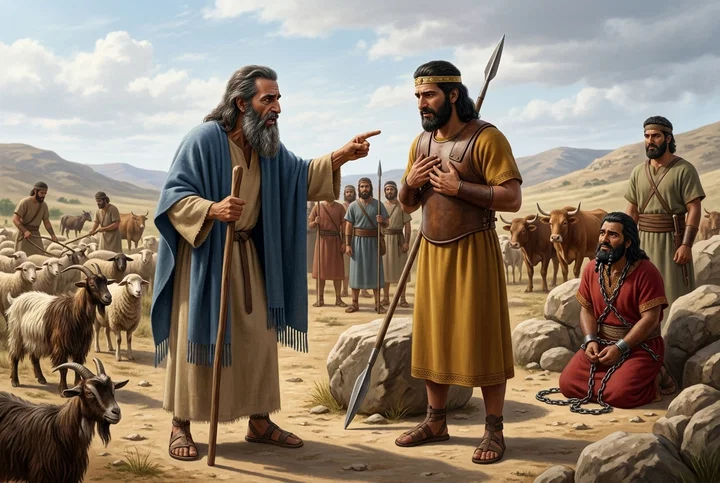
Then said Samuel, Bring ye hither to me Agag the king of the Amalekites. And Agag came unto him delicately. And Agag said, Surely the bitterness of death is past.
Translations
Then said Samuel, Bring you here to me Agag the king of the Amalekites. And Agag came to him delicately. And Agag said, Surely the bitterness of death is past.
King James Version, Revised Version
Then said Samuel, Bring ye hither to me Agag the king of the Amalekites. And Agag came unto him delicately. And Agag said, Surely the bitterness of death is past.
Then said Samuel, Bring you hither to me Agag the king of the Amalekites. And Agag came unto him delicately. And Agag said, Surely the bitterness of death is past.
Then said Samuel, Bring ye hither to me Agag the king of the Amalekites. And Agag came to him delicately. And Agag said, Surely the bitterness of death is past.
Then said Samuel, Bring ye hither to me Agag the king of the Amalekites. And Agag came unto him cheerfully. And Agag said, Surely the bitterness of death is past.
and Samuel saith, 'Bring ye nigh unto me Agag king of Amalek,' and Agag cometh unto him daintily, and Agag saith, 'Surely the bitterness of death hath turned aside.'
And Samuel said, Bring ye near to me Agag the king of Amalek. And Agag came to him gaily. And Agag said, Surely the bitterness of death is past.
Then said Samuel—Bring ye near unto me—Agag, king of Amalek, And Agag came unto him, in fetters. Then said Agag, Surely, terrible, is the bitterness of death!
Berean Standard Bible, Majority Standard Bible
Then Samuel said, “ Bring me Agag king of the Amalekites.”Agag came to him cheerfully, for he thought, “Surely the bitterness of death is past.”
Then Samuel said, “ Bring Agag the king of the Amalekites here to me!”Agag came to him cheerfully. Agag said, “Surely the bitterness of death is past.”
Then Samuel said, Make Agag, the king of the Amalekites, come here to me. And Agag came to him shaking with fear. And Agag said, Truly the pain of death is past.
Then saide Samuel, Bring yee hither to me Agag ye King of the Amalekites: and Agag came vnto him pleasantly, and Agag saide, Truely the bitternesse of death is passed.
Douay-Rheims (Challoner revision)
And Samuel said: Bring hitherto me Agag the king of Amalec. And Agag was presented to him very fat, and trembling. And Agag said: Doth bitter death separate in this manner?
Pictures
Cross-references
- 1 Samuel 15:3
Now go and smite Amalek, and utterly destroy all that they have, and spare them not; but slay both man and woman, infant and suckling, ox and sheep, camel and ass.
God commands Saul to destroy Amalek, but Saul spares Agag.
- 1 Samuel 15:9
But Saul and the people spared Agag, and the best of the sheep, and of the oxen, and of the fatlings, and the lambs, and all that was good, and would not utterly destroy them: but every thing that was vile and refuse, that they destroyed utterly.
Saul spared Agag, the Amalekite king, instead of carrying out the command.
- Deuteronomy 25:17-19
Remember what Amalek did unto thee by the way, when ye were come forth out of Egypt;
Israel is commanded to blot out Amalek’s remembrance.
- Esther 3:1
After these things did king Ahasuerus promote Haman the son of Hammedatha the Agagite, and advanced him, and set his seat above all the princes that were with him.
Haman is identified as a descendant of Agag.
- Exodus 17:14
And the LORD said unto Moses, Write this for a memorial in a book, and rehearse it in the ears of Joshua: for I will utterly put out the remembrance of Amalek from under heaven.
The LORD declares the eventual destruction of Amalek after its attack on Israel.
- 1 Samuel 15:28
And Samuel said unto him, The LORD hath rent the kingdom of Israel from thee this day, and hath given it to a neighbour of thine, that is better than thou.
Samuel declares that the kingdom is taken from Saul and given to another.
- 1 Samuel 15:22-23
And Samuel said, Hath the LORD as great delight in burnt offerings and sacrifices, as in obeying the voice of the LORD? Behold, to obey is better than sacrifice, and to hearken than the fat of rams.
Saul’s disobedience is shown as rejecting God’s word and authority.
- Esther 3:10
And the king took his ring from his hand, and gave it unto Haman the son of Hammedatha the Agagite, the Jews’ enemy.
Haman is called an Agagite, linking him to Agag.
- Numbers 24:20
And when he looked on Amalek, he took up his parable, and said, Amalek was the first of the nations; but his latter end shall be that he perish for ever.
Balaam foretells Amalek’s destruction, fulfilled in Agag’s defeat.
- 1 Chronicles 4:43
And they smote the rest of the Amalekites that were escaped, and dwelt there unto this day.
Describes the final destruction of Amalek’s remnant.
- Joshua 17:12-13
Yet the children of Manasseh could not drive out the inhabitants of those cities; but the Canaanites would dwell in that land.
Sparing the Canaanites parallels sparing Agag and explains later failure.
- Exodus 17:15
And Moses built an altar, and called the name of it Jehovah-nissi:
Moses names the Lord his banner after Israel’s victory over Amalek.
Commentary
Each commentary is drawn from primary sources: the writings of Ellen G. White and Adventist pioneers and periodicals. Each commentary is separate. Its own words are not a quotation; follow the references to read the source passages.
Ellen G. White
3 sources
This verse stands within the account of Saul's command to destroy Amalek.PP 627.3 The Amalekites had assaulted Israel in the wilderness and had continued in hostility toward God.PP 627.3 The judgment pronounced against them had been delayed for four hundred years, and was now to be executed.PP 627.3
Agag himself had been especially guilty and merciless, hating Israel, seeking its destruction, and strongly promoting idolatry.PP 632.3 When brought to Samuel he came forward with false confidence that the danger of death was past.PP 632.3 Samuel's putting of Agag to death in the next verse publicly vindicated the honor of God and rebuked Saul's course.PP 632.3 In this same chapter Saul denied wrongdoing until the facts left him no room for denial, yet he refused to confess his sin and regarded himself as mistreated, a pattern repeated when confronted wrongdoers deny charges and make no confession.Lt 28a, 1893, par. 1–3
Sources
Pioneers and periodicals
28 sources
Saul directly disobeyed God's command to utterly destroy the Amalekites who were wholly given over to evil, by sparing Agag their king alive with the best of the flocks.RH Oct 8, 1861RH Dec 9, 1915ST Sep 20, 1883RH Oct 25, 1864 Agag came to Samuel at Gilgal in soft, timid, humbled manner, flattering himself that the danger of death was past.ST Aug 31, 1882RH Oct 8, 1861ST Oct 11, 1883RH Jul 28, 1868 Samuel finished the work Saul failed to do by hewing Agag in pieces before the Lord, vindicating God's honor and executing just judgment on the chief upholder of Amalekite cruelty.ST Aug 31, 1882ST Aug 31, 1882RH Oct 19, 1916STST Apr 23, 1902 God's commands must be followed literally as given, for to obey is better than sacrifice (1 Samuel 15:22), and partial obedience from self-will, pride, or excuse brings rejection as it brought Saul's loss of the kingdom to David.RH Oct 8, 1861ST Jun 25, 1885ST Dec 30, 1903ST Jul 29, 1889 Besetting sins and cherished idols must likewise be slain utterly without compromise or delay, for spared Agags become betraying evidence in the crisis, and Saul's sparing left Agag's line alive to bring sore trial upon the Jews in the days of Esther and Mordecai through Haman the Agagite.RH Oct 8, 1861RH Oct 19, 1916ST Apr 23, 1902RH Jun 24, 1915RH Feb 17, 1859
Context and Wording
The verse stands in the record of Saul's direct disobedience to the divine command to execute just wrath upon the Amalekites by smiting them and utterly destroying them and all they possessed and sparing nothing.RH Dec 9, 1915ST Sep 20, 1883RH Oct 19, 1916RH Oct 25, 1864 The Amalekites were wholly given over to evil and a curse to all the nations with whom they came in contact, and that judgment upon them belongs with the judgments upon peoples of that character, for to preserve them alive would bring further corruption.ST Saul violated that commission by preserving Agag the king of the Amalekites alive after capturing him, together with the best of the sheep and oxen.RH Oct 8, 1861RH Dec 9, 1915RH Oct 19, 1916RH Oct 25, 1864RH Mar 10, 1874 His sparing was presumption from lack of humility and reverence for God's word, an act of pride and self-will in which he treated his royal dignity as greater than the authority of Samuel and the prophets.RH Mar 10, 1874ST Feb 19, 1885
He excused his disobedience by saying he feared the people, shifting responsibility instead of owning his wrong, and by pleading intent to sacrifice the spared cattle as if to do better even than the Lord required.RH Oct 25, 1864ST Feb 10, 1904 He also desired to keep Agag as a prize to enhance his triumphal return, and told himself he would kill him later, which was disobedience disguised as delay and good judgment under cover of false judgment about Agag and what was thought best and good.ST Oct 11, 1883 Agag came to Samuel delicately, in the soft, timid manner used in the East when going into the presence of a superior, with sandals off and tread unheard, as a dutiful son to a father or a devotee to a sacred person, and as a proud man humbled.ST Oct 11, 1883RH Jul 28, 1868 The Hebrew word rendered delicately here is different from the Hebrew word rendered softly in the account of Ahab going softly.RH Jul 28, 1868
He came in pride of royalty, flattering himself that he could overawe God's servant.ST Aug 31, 1882 His words, Surely the bitterness of death is past, meant that he believed the danger of death had passed.ST Aug 31, 1882RH Oct 8, 1861 They also show the truth that the mouth can speak cheering words of happiness while bitterness fills the heart.ST Jan 9, 1879
Samuel had Agag brought to him at Gilgal and finished the work Saul failed to do, bringing the captured king and hewing him in pieces with his sword before the Lord.RH Oct 19, 1916ST Apr 23, 1902ST Dec 30, 1880 The act publicly vindicated God's honor and rebuked Saul's sparing of him.ST Aug 31, 1882 It was carried out in faithfulness to God rather than yielding to feeling, despite the personal anguish and tenderness felt in executing God's judgment.ST Aug 31, 1882
Obedience and Judgment
The chapter teaches that divine commands must be followed exactly as given, in their plain letter and not according to one's own idea of their spirit.ST Jun 25, 1885ST Dec 30, 1903ST Jul 29, 1889 Saul was ordered to utterly destroy the Amalekites and all that they had, yet he preserved what had been ordered destroyed and sought to excuse it as an offering, but no alternative course can honor God more than obedience to His command.ST Jun 25, 1885ST Dec 30, 1903ST Jul 29, 1889 For the Lord has greater delight in obeying His voice than in burnt offerings and sacrifices, since to obey is better than sacrifice and to hearken than the fat of rams.ST Jun 25, 1885ST Dec 30, 1903 Even what seems a small thing done for a religious reason is disobedience when contrary to His command, and refusing to amend when shown wrong puts one on the downward path to destruction.ST Dec 30, 1903ST Jul 29, 1889
God is as particular about obedience to His written word now as then, requiring perfect obedience without adding thereto or taking therefrom, wholeheartedly and even in matters that seem small.ST Aug 31, 1882RH Oct 25, 1864 It is not safe to go beyond or fall short of perfect obedience to His revealed will, to trample His holy law underfoot now that light is shining and the last call of mercy is sounding while His people prepare to meet the King in His beauty.RH Oct 25, 1864 Obeying only when it serves one's interests, or stubbornly following one's own will, makes even impressive service unacceptable to God.ST Aug 31, 1882 This disobedience belongs to a striking lesson and warning for all of God's children.
Saul's course was presumption caused by lack of humility and reverence for God's word, deliberate and part of a longer pattern of selfishness, obstinacy, rashness, and weakness.RH Mar 10, 1874ST Dec 11, 1884ST Apr 11, 1911 He treated his royal dignity as greater than prophetic authority, presumed God should accept the terms he chose, grieved away the Spirit of God, and made his career ruinous rather than honorable.ST Feb 19, 1885ST Dec 11, 1884 He shifted responsibility instead of owning his wrong, excusing his violation by saying he feared the people, showing humanity's natural self-righteousness and tendency to justify wrongdoing.ST Feb 19, 1885ST Feb 10, 1904 That express disobedience in executing just wrath upon the Amalekites, who were a curse to all nations with whom they came in contact, brought the Lord's rejection of Saul and his family as king, the loss of the kingdom, and the anointing of David the son of Jesse.RH Oct 8, 1861ST Dec 11, 1884ST Mar 31, 1909ST Jul 2, 1885 His rejection followed his own rejection of the Lord and marked his downward course from rashness and weakness at the beginning of his reign, while Samuel showed a good spirit in grieving over the downfall of the once humble young man he had anointed, whom the Lord had blessed and honored, rather than rejoicing as a mere politician set upon the ruins of his own rejected administration when the people who had rejected God's government through him demanded a king.ST Dec 11, 1884ST Apr 11, 1911ST Mar 31, 1909
The judgment on Agag was just, and human claims of mercy cannot make God's command cruel or unjust.ST Aug 31, 1882ST Aug 31, 1882ST The peoples judged were wholly given over to evil, so that preserving them alive would bring further corruption.ST Agag above all the Amalekites was responsible as upholder of their debasing heathenism and instigator of their revolting cruelties, bearing special responsibility for their crimes, so it was just that the heaviest penalty fall on him, while Saul spared the person under God's curse and destroyed lesser offenders.ST Aug 31, 1882ST Aug 31, 1882 Samuel carried out that judgment despite personal anguish and tenderness, remaining faithful to God rather than yielding to feeling, publicly vindicating God's honor and rebuking Saul's sparing of him.ST Aug 31, 1882ST Aug 31, 1882 The same principle proves that obedience to the Sabbath command consists in actual observance of its letter, the seventh day set apart and hallowed to commemorate creation.RH Oct 25, 1864ST Dec 30, 1903ST Jul 29, 1889 As sparing the best of the sheep and oxen to sacrifice brought displeasure and rejection, so changing the Sabbath is not a small matter.RH Oct 25, 1864ST Dec 30, 1903ST Jul 29, 1889
Later History and Application
Agag left descendants, and Haman called the Agagite in Esther was his direct descendant.ST Sep 20, 1899ST Apr 23, 1902 He was probably Agag's ancestor, with about five and a half centuries separating them though the number of generations is unknown.ST Sep 20, 1899ST Apr 23, 1902ST Jan 20, 1898 The Amalekites were bitter enemies of the Lord.ST Sep 20, 1899 Saul's sparing of Agag left an Amalekite remnant after the prediction that Amalek would be blotted out.RH Sep 15, 1874 Amalekites continued to survive and fight Israel for generations before they were finally destroyed.RH Sep 15, 1874
That unfaithfulness left Agag's line alive, and Haman was a descendant of Agag.ST Apr 23, 1902RH Jun 24, 1915 A sore trial later came upon the Jews in the days of Xerxes, Esther, and Mordecai, when the whole nation was placed under death sentence for loyalty to God.ST Apr 23, 1902RH Jun 24, 1915 That trial would not have come if Saul had obeyed, so unfaithfulness may bring sore trials upon others in a later time.RH Jun 24, 1915 Mordecai the Jew was a Benjamite, of the very tribe of Saul who had destroyed the nation of the Amalekites, so Haman had opportunity to visit vengeance on Saul's people for what Saul's people had done to his nation.ST Apr 23, 1902
Samuel's act in finishing the work Saul failed to do is no compromise with sin, the same as Elijah slaying the false prophets at the brook Kishon, and that unsparing dealing is the secret of power.RH Oct 19, 1916 It is the example for complete removal of what stands in the way of consecration to God.RH Oct 19, 1916RH Feb 17, 1859 Cherished idols must be put away without delay, before disobedience brings the loss of the kingdom.RH Oct 8, 1861RH Oct 19, 1916 Besetting sins of fleshly lusts that would dwell with the soul redeemed by Jesus Christ must be slain utterly, having no part or lot there, and no provision made for the flesh to fulfil its lusts.RH Oct 19, 1916RH Feb 17, 1859 Spared Agags become betraying evidence in a crisis, like bleating sheep and lowing oxen when silence is needed, to chagrin and undoing.RH Oct 19, 1916
As Samuel hewed Agag in pieces with his sword, tradition with all its alluring errors must bow before the word of inspiration and be hewn in pieces in the same way.ST Dec 30, 1880 Feeling, the voice of the people, and early education must not rule faith and practice.ST Dec 30, 1880 The bitterness of death can fill the heart while the mouth speaks cheering words of happiness, showing an inward condition of miserable unhappiness in those who live for their own happiness without regard for others.ST Jan 9, 1879 It applies to thousands who shout Happy New Year at the opening of 1879 without being able to take in its true meaning, whose outward greeting covers wretchedness and whose course of drunkenness leads to wretchedness and woe.ST Jan 9, 1879
Sources