2 Kings 2:12
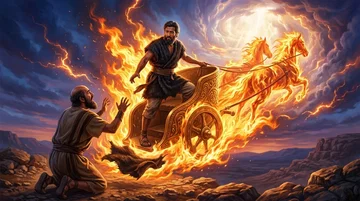
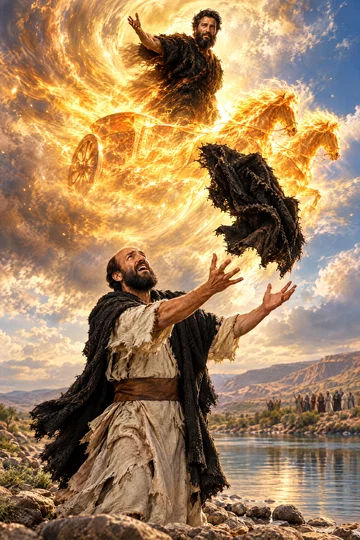
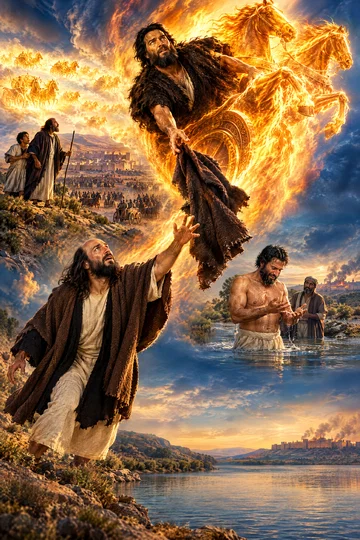
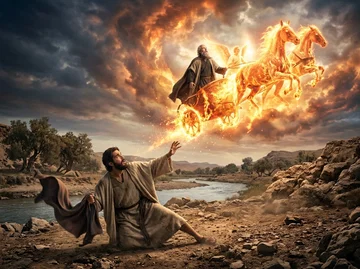
And Elisha saw it, and he cried, My father, my father, the chariot of Israel, and the horsemen thereof. And he saw him no more: and he took hold of his own clothes, and rent them in two pieces.
Translations
American King James Version, King James Version, KJV Cambridge Paragraph Bible, Webster Bible
And Elisha saw it, and he cried, My father, my father, the chariot of Israel, and the horsemen thereof. And he saw him no more: and he took hold of his own clothes, and rent them in two pieces.
Revised Version, American Standard Version
And Elisha saw it, and he cried, My father, my father, the chariots of Israel and the horsemen thereof! And he saw him no more: and he took hold of his own clothes, and rent them in two pieces.
And Elisha is seeing, and he is crying, 'My father, my father, the chariot of Israel, and its horsemen;' and he hath not seen him again; and he taketh hold on his garments, and rendeth them into two pieces.
And Elisha saw [ it], and he cried, My father, my father! the chariot of Israel and the horsemen thereof! And he saw him no more. Then he took hold of his own garments and rent them in two pieces.
And, as soon as Elisha saw it, he, began crying out—My father! my father! The chariots of Israel, and the horsemen thereof! But, when he could see him no longer, he took hold of his clothes, and rent them in two pieces.
Berean Standard Bible, Majority Standard Bible
As Elisha watched, he cried out, “ My father, my father, the chariots and horsemen of Israel!” And he saw Elijah no more. So taking hold of his own clothes, he tore them in two.
Elisha saw it, and he cried, “ My father, my father, the chariots of Israel and its horsemen!”He saw him no more. Then he took hold of his own clothes and tore them in two pieces.
And when Elisha saw it he gave a cry, My father, my father, the carriages of Israel and its horsemen! And he saw him no longer; and he was full of grief.
And Elisha saw it, and he cryed, My father, my father, the charet of Israel, and the horsemen thereof: and he sawe him no more: and he tooke his owne clothes, and rent them in two pieces.
Douay-Rheims (Challoner revision)
And Eliseus saw him, and cried: My father, my father, the chariot of Israel, and the driver thereof. And he saw him no more: and he took hold of his own garments, and rent them in two pieces.
Pictures

Cross-references
- Psalms 68:17
The chariots of God are twenty thousand, even thousands of angels: the Lord is among them, as in Sinai, in the holy place.
God’s chariots are described as thousands of angels, recalling Elijah’s heavenly departure.
- 2 Kings 6:17
And Elisha prayed, and said, LORD, I pray thee, open his eyes, that he may see. And the LORD opened the eyes of the young man; and he saw: and, behold, the mountain was full of horses and chariots of fire round about Elisha.
Elisha is surrounded by heavenly chariots, recalling the chariots at Elijah’s departure.
- Matthew 17:3
And, behold, there appeared unto them Moses and Elias talking with him.
Elijah appears with Jesus at the transfiguration after being taken up bodily.
- 2 Kings 2:17
And when they urged him till he was ashamed, he said, Send. They sent therefore fifty men; and they sought three days, but found him not.
The search for Elijah found no trace of him after his departure.
- 1 Kings 19:19-21
So he departed thence, and found Elisha the son of Shaphat, who was plowing with twelve yoke of oxen before him, and he with the twelfth: and Elijah passed by him, and cast his mantle upon him.
Elisha leaves his work to follow and serve Elijah.
- 2 Kings 13:14-17
Now Elisha was fallen sick of his sickness whereof he died. And Joash the king of Israel came down unto him, and wept over his face, and said, O my father, my father, the chariot of Israel, and the horsemen thereof.
Joash repeats Elisha’s words and receives a promise of deliverance.
- 2 Kings 2:2
And Elijah said unto Elisha, Tarry here, I pray thee; for the LORD hath sent me to Beth-el. And Elisha said unto him, As the LORD liveth, and as thy soul liveth, I will not leave thee. So they went down to Beth-el.
Elisha refuses to leave Elijah as he approaches his departure.
- 1 Kings 19:16
And Jehu the son of Nimshi shalt thou anoint to be king over Israel: and Elisha the son of Shaphat of Abel-meholah shalt thou anoint to be prophet in thy room.
Elijah is directed to appoint Elisha as prophet in his place.
- Hebrews 11:5
By faith Enoch was translated that he should not see death; and was not found, because God had translated him: for before his translation he had this testimony, that he pleased God.
Enoch, like Elijah, was taken without experiencing death.
- 2 Kings 2:6
And Elijah said unto him, Tarry, I pray thee, here; for the LORD hath sent me to Jordan. And he said, As the LORD liveth, and as thy soul liveth, I will not leave thee. And they two went on.
Elisha remains with Elijah on his final journey.
- 2 Kings 2:4
And Elijah said unto him, Elisha, tarry here, I pray thee; for the LORD hath sent me to Jericho. And he said, As the LORD liveth, and as thy soul liveth, I will not leave thee. So they came to Jericho.
Elisha again insists on following Elijah.
- Luke 9:30-31
And, behold, there talked with him two men, which were Moses and Elias:
Elijah appears in glory as a representative.
- James 5:17-18
Elias was a man subject to like passions as we are, and he prayed earnestly that it might not rain: and it rained not on the earth by the space of three years and six months.
Both present Elijah as an example of faith.
- 1 Kings 18:20-40
So Ahab sent unto all the children of Israel, and gathered the prophets together unto mount Carmel.
Elijah’s victory at Carmel displayed God’s power, yet the king later doubted it.
- Malachi 4:5
Behold, I will send you Elijah the prophet before the coming of the great and dreadful day of the LORD:
Both present Elijah as a type of the righteous at the end.
- Genesis 5:24
And Enoch walked with God: and he was not; for God took him.
Enoch is named alongside Elijah as one taken without death.
Commentary
Each commentary is drawn from primary sources: the writings of Ellen G. White and Adventist pioneers and periodicals. Each commentary is separate. Its own words are not a quotation; follow the references to read the source passages.
Ellen G. White
17 sources
Elisha watched Elijah carried alive to heaven and then lost sight of him forever on earth.ED 60.1–2Ms 114, 1901, par. 5–7Lt 12, 1897, par. 24–28 His cry claimed Elijah as his spiritual father and confessed him to have been Israel's true protection, strength and defense.ED 60.1–2Ms 114, 1901, par. 5–7Lt 12, 1897, par. 24–28 Tearing his own clothes in two showed his grief and mourning over that loss.ED 60.1–2Ms 114, 1901, par. 5–7Lt 12, 1897, par. 24–28 Taking up the fallen mantle marked his succession as prophet with the double portion of spirit he had sought for the work ahead now granted to him.ED 60.1–2Lt 12, 1897, par. 24–28PK 228.2Lt 93, 1902, par. 8–10Ms 191, 1907, par. 17–20 Elijah's translation foreshadows those saints who will be taken to heaven without dying, as shown when Elijah represented them at the transfiguration, while Elisha's following ministry joined Elijah's power to the gentleness, mercy and tender compassion of Christ.Lt 12, 1897, par. 34–36SG1 43.2Lt 93, 1902, par. 8–10Lt 93, 1902, par. 1–7
Elijah Taken, Elisha Succeeds
Elisha stood as eyewitness when Elijah was translated to heaven without dying, watching him taken away until he could see him no more.ED 60.1–2Ms 114, 1901, par. 5–7Lt 12, 1897, par. 24–28Lt 12, 1897, par. 34–36SG1 43.2 The departure was a taking into heaven, not a death, and the moment when sight failed marked the end of Elijah's visible presence with him.ED 60.1–2Ms 114, 1901, par. 5–7Lt 12, 1897, par. 24–28Lt 12, 1897, par. 34–36SG1 43.2 As he watched, Elisha cried out, My father, my father, the chariot of Israel, and the horsemen thereof.ED 60.1–2Ms 114, 1901, par. 5–7Lt 12, 1897, par. 24–28Lt 12, 1897, par. 34–36PK 228.2 By calling him father he acknowledged a close filial bond, and by naming him chariot and horsemen he confessed Elijah's importance to Israel as its protection and strength, its defender in whom the nation's true defense lay.ED 60.1–2Ms 114, 1901, par. 5–7Lt 12, 1897, par. 24–28Lt 12, 1897, par. 34–36PK 228.2
When Elijah was no longer visible, Elisha took hold of his own clothes and rent them in two pieces.ED 60.1–2Ms 114, 1901, par. 5–7Lt 12, 1897, par. 24–28Lt 12, 1897, par. 34–36PK 228.2 The rending was an act of grief and mourning for the loss of the one he had called his father.ED 60.1–2Ms 114, 1901, par. 5–7Lt 12, 1897, par. 24–28Lt 12, 1897, par. 34–36PK 228.2 He then took up Elijah's fallen mantle and entered upon succession as prophet in his place.ED 60.1–2Lt 12, 1897, par. 24–28PK 228.2EW 209.2Ms 191, 1907, par. 17–20 In taking the mantle he continued Elijah's work, and those who saw recognized that Elijah's spirit rested upon Elisha, with Elisha's subsequent ministry, including the healing of the waters, following directly upon this ascension.ED 60.1–2Lt 12, 1897, par. 24–28PK 228.2EW 209.2PK 230.2–3
Before the parting Elisha had sought a double portion of the spirit given to Elijah, because he knew he needed it for the work ahead.Lt 93, 1902, par. 8–10Ms 191, 1907, par. 17–20GW 116.2–3 The fall of the mantle to him confirmed that the request had been granted and that he had received that double portion for his prophetic charge.Lt 93, 1902, par. 8–10Ms 191, 1907, par. 17–20GW 116.2–3
Prophetic Type and Ministry
Elijah's departure into heaven was witnessed by Elisha, who cried out to him as his father and as the chariot and horsemen of Israel, then tore his own clothes in grief when he could see him no more, and that translation is a type of the saints who will be taken to heaven without experiencing death.Lt 12, 1897, par. 34–36 Translated to heaven without dying, Elijah appeared at the transfiguration as the representative of those who will be changed to immortality and translated to heaven at Christ's second coming.SG1 43.2
Elisha received Elijah's mantle and a double portion of his spirit when he took up Elijah's work, and his ministry joined Elijah's spiritual power with the gentleness, mercy, and tender compassion of Christ's Spirit.Lt 93, 1902, par. 8–10 His example applies to the need for kindness, for his lamb-like gentleness is to exceed Elijah's severity.Lt 93, 1902, par. 1–7
Training and Warning Example
2 Kings 2:12 belongs to the final journey of Elijah with Elisha when Elijah was translated, and Elisha had left his home and work to serve Elijah, willingly carrying out humble duties and relying on God through trials.Lt 64, 1897, par. 9–13 That faithful service was part of the experience that prepared him for greater responsibility.Lt 64, 1897, par. 9–13
Elijah's educating of Elisha by giving him example and opportunity to learn illustrates the close training and mentorship that ministers should give to younger workers.YGBCOEP 49.1RH Nov 19, 1903Ms 82, 1899, par. 6–7 Experienced workers are to train younger workers and show them how to teach the truth, preparing them to carry on the work.RH Nov 19, 1903Ms 82, 1899, par. 6–7 The departure of Elijah and succession of Elisha thus shows the transition from an experienced worker to the one who follows him.Ms 82, 1899, par. 6–7
The account to which the verse belongs, in which after Elijah was taken up his mantle fell to Elisha, carries a warning in its later episode of young people mocking Elijah's ascent, that scoffing at God's work brings punishment.SG1 154.1 In the following verses the youths' mockery of Elisha's baldness, after Elijah's translation and Elisha's taking up of his prophetic work, was an insult to God's servant that brought immediate punishment.EW 209.2
Sources
Pioneers and periodicals
51 sources
Elisha watched his master carried alive and bodily to heaven in a whirlwind without dying, his mortal frame changed to immortal, and in grief at parting he ripped his own garments in two and saw him no more.ST Aug 27, 1885ST Apr 28, 1909ST Oct 12, 1876ST Aug 20, 1902ST Nov 1, 1905 In calling him father he honored him as instructor and leader of the prophetic family, claiming the firstborn son's double portion he had been promised if he saw the taking away.ST Sep 8, 1909ST Jul 21, 1898ST Jul 21, 1898 The chariots and riders are the angelic host, God's organized army for the defense of the faithful, and the cry also hails Elijah himself as Israel's mighty defender and counselor.ST May 27, 1913ST Jan 31, 1911ST Sep 21, 1904GSAM 48.2RH Feb 2, 1911 Because Elisha kept close, followed faithfully, and stood pure and surrendered amid the devouring glory, his seeing proved the blessing was his, and he took up the fallen outer garment to test the promise at the Jordan.ST Jul 21, 1898RH Nov 9, 1916RH May 27, 1909RH Nov 9, 1916ST Aug 27, 1885 Taken without tasting death, Elijah stands as the pattern of the living who will be changed and caught up at the Lord's coming, in contrast to Moses who represents those raised from the dead, both seen with the glorified Jesus at the transfiguration.ST Dec 8, 1914ST Jun 9, 1898ST Feb 13, 1896RH Jul 9, 1867ST Aug 27, 1885
Event and Wording
Elisha watched his master carried away in a whirlwind by chariot and horses of fire, lifted his voice in grief with the cry of father and of chariot and horsemen of Israel, tore his own garments in two in mourning at the parting, and looked upon him no more.ST Aug 27, 1885ST Apr 28, 1909ST Aug 20, 1902ST Sep 21, 1904RH Dec 14, 1905 The parting was sorrow over loss of a master, and the rending of clothing was the outward sign of inward feeling at that loss.ST Apr 28, 1909ST Aug 20, 1902ST May 13, 1908ST Sep 21, 1904ST Jul 21, 1898 The departure closed Elijah's earthly ministry and opened Elisha's prophetic mission as one through whom God would work miracles and reprove and instruct Israel, with a dry path made through the Jordan giving divine assurance to God's servants and opening the way for that mission.ST Aug 27, 1885ST Aug 20, 1902ST May 13, 1908 The ascent was bodily without undergoing death, borne upward by angels, the mortal body changed into an immortal spiritual body.ST Aug 27, 1885ST Oct 12, 1876RH Dec 14, 1905
The cry of father names Elijah a father in the faith, an instructor and leader of the family of prophets, and claims for Elisha the standing of a firstborn son to receive a double portion.ST Sep 8, 1909ST Jul 21, 1898ST Jul 21, 1898 Seeing the taking fulfilled the promised condition of seeing, proved the double portion was his, and led him at once to take up the fallen mantle, return to the Jordan, and test the promise, which the Lord honored.ST Sep 8, 1909ST Jul 21, 1898ST Jul 21, 1898 Such fatherhood does not make a man the source of salvation and does not stand against the command that God alone be acknowledged as the spiritual Father who brings to salvation, since the words are those of a mortal man.ST Sep 8, 1909
The same words may also be heard as spoken to God in heaven, declaring knowledge of Him as a loving Father and not only a severe judge of human action.ST Sep 8, 1909ST Jul 6, 1915ST Jul 6, 1915 Ancient Israel generally used father almost only for earthly ancestry and pedigree and feared God's voice at Sinai, but Elijah had gained a wider view of God's relation to humanity under Heaven's direct training, learning divine promptness when his petition was quickly answered in vindication of Jehovah's authority before the worshipers of Baal, and divine gentleness when reproof after failure at Horeb was gently given.ST Jul 6, 1915 That knowledge of everlasting loving affection enabled a cry of childlike attachment, trust, and confidence in going to the Father, a departure answering to Christ's return to the Father from whom He had come and to whom He looked forward to returning.ST Jul 6, 1915ST Jul 6, 1915
The taking hold of the garments rests on the Hebrew verb chah-zaq, in the same hiphil future form as in Isaiah 56:2, meaning to bind fast, gird tight, hold fast, cleave to, adhere firmly, make firm and strong, strengthen, be strong upon anyone, and show oneself strong and courageous, with strength, power, and force prominent in the verb and its eight derivatives.RH Aug 17, 1876 That firm, forceful, inflexible seizing illustrates the laying hold of the Sabbath by which God's people receive the promised blessing.RH Aug 17, 1876 The fallen mantle was a literal outer garment and not flesh or body, and Elisha took up that same mantle, went back to the bank of the Jordan, and smote the waters with it just as Elijah had done, where the waters parted for him as they had parted before.ST Oct 12, 1876
After the taking, fifty doubting men searched three days and did not find him, for translation left no body to be buried.ST Aug 28, 1901ST Apr 15, 1903 This stands unlike those who died and were buried, and unlike Cudworth whose body was found and buried, showing that translation is not ordinary death followed by burial and that those translated do not undergo resurrection.ST Aug 28, 1901ST Apr 15, 1903 Elisha afterward reported what had happened and told the people not to search for Elijah, an episode that raises whether prophetic authority justifies forbidding inquiry.RH Aug 17, 1911
Succession and Double Portion
2 Kings 2:12 stands at the close of Elijah's earthly ministry and reforming mission and the opening of Elisha's prophetic mission.ST Aug 27, 1885ST Aug 20, 1902ST May 13, 1908 Elisha enters that mission as the appointed, ordained, recognized successor, who had begun by following and ministering to Elijah as servant-successor.ST Aug 27, 1885ST Aug 20, 1902RH Dec 23, 1915ST Aug 4, 1898 Through him as counselor of Israel God worked miracles and reproved and instructed Israel, and through him the all-powerful God of Israel could be sought.ST May 13, 1908RH Feb 2, 1911ST Aug 4, 1898 The son of Ahab who was king knew this succession had taken place and knew of Elijah's victory over the prophets of Baal.ST Aug 4, 1898
Elisha's watching Elijah taken from him fulfilled the promised condition, if thou see me taken from thee.ST Jul 21, 1898ST Jul 21, 1898RH Nov 9, 1916RH Nov 16, 1916 His call of father showed he regarded Elijah as his father in the faith, with the standing of a firstborn son to receive a double portion, and because the gift had been promised on that seeing, his seeing proved the double portion was his.ST Jul 21, 1898ST Jul 21, 1898 His cry in grief and honor therefore claimed the promised blessing before Elijah passed out of hearing.RH Nov 9, 1916RH May 27, 1909RH Nov 16, 1916 He then tore his own clothes in mourning, took up Elijah's fallen mantle, and returned to the Jordan to test the promise, where the Lord honored the word spoken through His prophet.ST Jul 21, 1898ST Jul 21, 1898RH Nov 16, 1916RH May 11, 1905 He had stayed very close to Elijah so that he saw him ascend, and by that seeing received the double portion of his spirit as a legacy, and his life afterward testified to the mighty work of the Holy Spirit.ST Sep 21, 1904RH May 11, 1905
Seeing meant being able to stand amid God's devouring fire and behold the heavenly transaction when chariots of fire and horses of fire swept Elijah into heaven.RH May 27, 1909 That required being pure and clean and holy in God's sight, with a heart perfect toward God, in earnest, having surrendered every sin and refusing anything displeasing to God.RH May 27, 1909 His passions were controlled, his character refined, and his spiritual life healthy, and seeing the vision showed that he could enter the spiritual realm without danger.RH Nov 9, 1916 Because he saw, God looking down baptized him with a double portion of the Spirit for service, though he felt no different than before.RH May 27, 1909 By God's grace people must reach such spiritual fitness before they can possess or use comparable powers.RH Nov 9, 1916
His determination to remain with Elijah brought him the strengthening experience of seeing the boundary between this world and the other world opened, and taught him that heavenly forces were ready to protect God's servant.ST Aug 27, 1885 His faithful following, ministering, close association, and learning from the man of God prepared him for a higher position. That devoted pupilage stands as evidence of the spiritual development produced by the schools of the prophets.ST Jun 7, 1899 It carries the lesson that experienced workers should train younger workers and show them how to teach the truth.RH Nov 19, 1903
Elijah being replaced by Elisha by advance revelation, with Elisha ordained to the prophetic work before Elijah was translated, is an exception to the general rule.RH Aug 19, 1915 There is no set rule of prophetic succession.RH Aug 19, 1915 The prophetic gift never descends from father to son and is never conferred by the voice of the people, but God finds and chooses His instruments where He will, whether royal or priestly or humble.RH Aug 19, 1915
The same words Elisha used were repeated nearly sixty years later by King Joash at Elisha's death.RH Nov 16, 1916 The king thereby sought through Elisha's intercession the blessing Elisha had received from Elijah.RH Nov 16, 1916 The words also expressed the king's recognition of Elisha's service to Israel in its conflicts with its enemies.
Bodily Translation to Heaven
Elisha watched Elijah taken away by fiery chariot and horses, crying out in grief and calling him the chariot of Israel and the horsemen thereof, and then saw him no more.ST Aug 27, 1885ST Nov 1, 1905ST Feb 7, 1900 Elijah was taken up alive, bodily, in a whirlwind to heaven without experiencing death or dying, carried by angels in a chariot of fire.ST Aug 27, 1885ST Nov 1, 1905ST Feb 7, 1900ST Nov 23, 1915 His mortal body was changed into an immortal, spiritual body, and he was conveyed toward the gates of the golden city to rest.ST Aug 27, 1885 Because he was taken to heaven bodily, his appearance afterward on the mount of transfiguration was bodily and not as a disembodied spirit.ST Oct 12, 1876ST Dec 8, 1914
The mantle that fell from Elijah was a literal outer garment, not his flesh or body.ST Oct 12, 1876 Elisha took up that same fallen mantle, returned to the bank of the Jordan, and smote the waters with it just as Elijah had done before him.ST Oct 12, 1876 Without seeing death, Elijah represents those who will be alive when Jesus comes and will be changed to immortality without tasting death, in contrast to Moses who represents those who will be raised from the dead, and both stood with Jesus glorified at the transfiguration as a miniature representation of His coming and kingdom with power and glory.ST Dec 8, 1914
The taking marks the end of Elijah's earthly ministry and the beginning of Elisha's prophetic mission, as Elisha tore his own clothes in two pieces in grief at parting.ST Aug 27, 1885ST Aug 20, 1902ST Dec 7, 1904 God's power divided the Jordan and piled up its waters so Elijah and Elisha could cross on a dry path unhindered, giving divine assurance to God's servants and opening the way for Elisha's mission.ST Aug 20, 1902 This crossing was a further instance of the same power that controls the waters. Elijah's mantle was Elisha's parchment, and the dividing of the waters for Elisha verifies his commission.ST Dec 7, 1904
The miracles of Elijah and Elisha in this account are true events rather than pious legends or myths.ST Jan 24, 1906
Prophetic Types of Return
Elijah was taken from Elisha without seeing death, and in this he represents those who will be alive when Jesus comes and will be changed to immortality without tasting death.ST Dec 8, 1914ST Jun 9, 1898ST Feb 13, 1896 Moses stands in contrast to him as the representative of those who will be raised from the dead.ST Dec 8, 1914ST Feb 13, 1896 Both appeared beside Jesus glorified on the mount of transfiguration, Elijah picturing the translated living and Moses picturing the resurrected dead.ST Dec 8, 1914ST Feb 13, 1896 That appearing together was a miniature representation of His coming and kingdom with power and glory.ST Dec 8, 1914ST Feb 13, 1896
His translation to heaven in a heavenly chariot is the pattern for faithful people who are alive when the Lord comes, that they will be caught up to be with Christ without dying.RH Jul 9, 1867ST Aug 27, 1885 His departure confirmed the promise after he completed his reforming mission, and so after completing its work of proclaiming the final warning the last-day remnant will be gathered and translated.RH Jul 9, 1867 God will send His angels to gather the living faithful together with the resurrected redeemed.RH Jul 9, 1867ST Aug 27, 1885
His going to the Father expresses love and childlike trust and confidence that he is going to the Father, and it is a type of Christ's return to the Father from whom He had come and to whom He looked forward to returning.ST Jul 6, 1915 The inheritance passed from Elijah to Elisha is likewise the mantle of Protestantism and a double spirit of the Reformers falling to those who carry forward the work of warning and standing for God's truth.RH Dec 28, 1911
Heavenly Host and Defense
The chariots seen at Elijah's ascent were not a single vehicle but plural chariots, the Lord's army and the chariots of the true Israel with their occupants, invisible to the natural eye.ST May 27, 1913ST Jan 31, 1911ST Sep 21, 1904 They were a company of angels, identified as cherubim of angels, appearing in the form of a chariot and horses to carry him to heaven in a whirlwind, after which his mantle rested on Elisha.ST May 27, 1913ST Jan 31, 1911ST Sep 21, 1904 In this form they are an organized body of God's heavenly agencies, a great host appointed for the defense and protection of the faithful.ST Jan 31, 1911ST Sep 21, 1904ST Nov 23, 1915 Angels are therefore able to appear in forms other than the living creatures described in Revelation.ST Nov 23, 1915
Elisha recognized this heavenly host as Israel's chariots and horsemen when he saw the heavenly horses and chariots take Elijah away.STST Aug 27, 1885 The sight opened to him the boundary between this world and the other world because he determined to remain with Elijah, and it taught him that these heavenly forces stood ready to protect God's servant.STST Aug 27, 1885 That awareness of their presence encouraged him in later times of apparent danger.ST The same language of the chariot of Israel and its horsemen appearing as Elijah is taken from earth is applied to the faithful being borne away from earth and redeemed from among humanity.RH May 29, 1856
The cry also names Elijah himself as a powerful defender of Israel, mourned by Elisha as mentor at his departure without experiencing death and seeing him no more.GSAM 48.2RH Feb 2, 1911ST Apr 22, 1880 His departure marked the transfer of his work to Elisha, who had been prepared to serve as counselor of Israel.RH Feb 2, 1911 The words are misapplied when used as if a church losing an important member by death had lost its defense, for the church does not depend on any person.ST Apr 22, 1880
Faith Courage and Warning
Elisha witnessed Elijah's translation to heaven, recognizing the fiery chariots and horsemen as he cried out while seeing him depart.ST Sep 17, 1896RH May 11, 1905 He was bold and ventured much when he asked for more of God's Spirit than Elijah had, and his request was granted.ST Sep 17, 1896 He stands among those who through God did deeds of valor because they asked great things and ventured much, to whom God multiplied grace and granted wonderful victories.ST Sep 17, 1896 This proves that we have what we by faith venture for.ST Sep 17, 1896 Having met the condition for the promised blessing by seeing Elijah taken, his life afterward testified to the mighty work of the Holy Spirit.RH May 11, 1905
The taking hold of his clothes uses the Hebrew verb chah-zaq, in the same hiphil future form as in Isaiah 56:2.RH Aug 17, 1876 The verb means to bind fast, to gird tight, to hold fast to anything, to cleave to, to adhere firmly, to make firm and strong, to strengthen, to be strong upon anyone, and to show oneself strong and courageous, with strength, power and force prominent in the verb and its eight derivatives.RH Aug 17, 1876 Elisha's taking hold illustrates the firm, forceful, inflexible seizing with which God's people lay hold of the Sabbath and receive the promised blessing.RH Aug 17, 1876
Elisha stood to Elijah in the office of servant-successor and succeeded to the double portion of his master's spirit.RH Dec 23, 1915 Gehazi afterward stood to Elisha in that same office as Elisha had stood to Elijah, yet his successorship was opposite in outcome.RH Dec 23, 1915 Where Elisha received the Spirit, Gehazi sought Naaman's lucre and gained it with leprosy attached.RH Dec 23, 1915 The verse belongs to the account of Elisha witnessing Elijah's departure and mourning his loss, and the judgment later in the chapter warns that children not taught respect and obedience at home may show contempt for God's servants and face its consequences.RH Apr 11, 1912
Sources