2 Samuel 12:5
And David’s anger was greatly kindled against the man; and he said to Nathan, As the LORD liveth, the man that hath done this thing shall surely die:
Translations
And David’s anger was greatly kindled against the man; and he said to Nathan, As the LORD lives, the man that has done this thing shall surely die:
And David’s anger was greatly kindled against the man; and he said to Nathan, As the LORD liveth, the man that hath done this thing shall surely die:
And David’s anger was greatly kindled against the man; and he said to Nathan, As the Lord liveth, the man that hath done this thing shall surely die:
And David's anger was greatly kindled against the man; and he said to Nathan, As the LORD liveth, the man that hath done this thing shall surely die:
And David’s anger was greatly kindled against the man; and he said to Nathan, As the LORD liveth, the man that hath done this is worthy to die:
And David’s anger was greatly kindled against the man; and he said to Nathan, As Jehovah liveth, the man that hath done this is worthy to die:
And the anger of David burneth against the man exceedingly, and he saith unto Nathan, 'Jehovah liveth, surely a son of death [is] the man who is doing this,
Then David's anger was greatly kindled against the man; and he said to Nathan, As Jehovah liveth, the man that hath done this thing is worthy of death;
Then was kindled the anger of David against the man, fiercely,—and he said unto Nathan, By the life of Yahweh, doomed to death, is the man that hath done this;
Berean Standard Bible, Majority Standard Bible
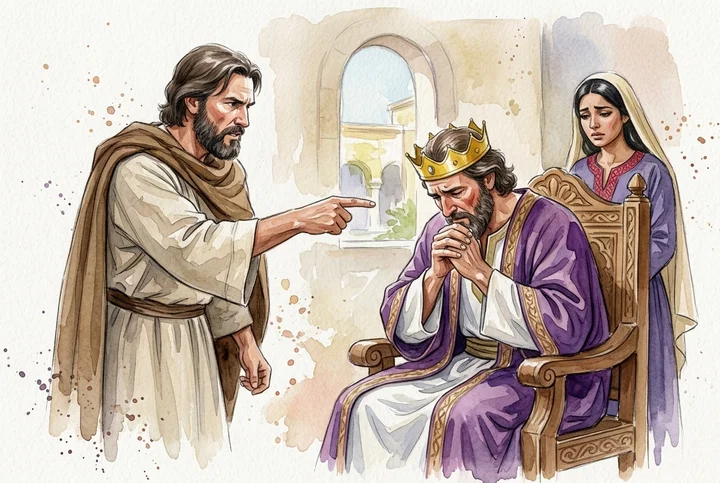
David burned with anger against the man and said to Nathan: “ As surely as the LORD lives, the man who did this deserves to die!
David’s anger burned hot against the man, and he said to Nathan, “ As the LORD lives, the man who has done this deserves to die!
And David was full of wrath against that man; and he said to Nathan, By the living Lord, death is the right punishment for the man who has done this:
Then Dauid was exceeding wroth with the man, and sayde to Nathan, As the Lord liueth, the man that hath done this thing, shall surely dye,
Douay-Rheims (Challoner revision)
And David’s anger being exceedingly kindled against that man, he said to Nathan: As the Lord liveth, the man that hath done this is a child of death.
Pictures
Cross-references
- 2 Samuel 12:13
And David said unto Nathan, I have sinned against the LORD. And Nathan said unto David, The LORD also hath put away thy sin; thou shalt not die.
David confesses his sin, and the Lord forgives him.
- 2 Samuel 11
And it came to pass, after the year was expired, at the time when kings go forth to battle, that David sent Joab, and his servants with him, and all Israel; and they destroyed the children of Ammon, and besieged Rabbah. But David tarried still at Jerusalem.
David’s adultery and plot to kill Uriah are the sin Nathan condemns.
- Psalms 51
Have mercy upon me, O God, according to thy lovingkindness: according unto the multitude of thy tender mercies blot out my transgressions.
David confesses his sin and pleads for cleansing after Nathan’s rebuke.
- 2 Samuel 12:14
Howbeit, because by this deed thou hast given great occasion to the enemies of the LORD to blaspheme, the child also that is born unto thee shall surely die.
David’s sin gives the LORD’s enemies occasion to blaspheme, and his child is sentenced to die.
- 1 Samuel 14:39
For, as the LORD liveth, which saveth Israel, though it be in Jonathan my son, he shall surely die. But there was not a man among all the people that answered him.
Cited among examples of the phrase referring to literal death.
- 2 Samuel 12:11-12
Thus saith the LORD, Behold, I will raise up evil against thee out of thine own house, and I will take thy wives before thine eyes, and give them unto thy neighbour, and he shall lie with thy wives in the sight of this sun.
Nathan foretells consequences for David’s sin.
- Genesis 20:7
Now therefore restore the man his wife; for he is a prophet, and he shall pray for thee, and thou shalt live: and if thou restore her not, know thou that thou shalt surely die, thou, and all that are thine.
Cited as another use of “surely die” for literal death.
- Jeremiah 26:8
Now it came to pass, when Jeremiah had made an end of speaking all that the LORD had commanded him to speak unto all the people, that the priests and the prophets and all the people took him, saying, Thou shalt surely die.
Cited among examples of the phrase referring to literal death.
- 1 Samuel 20:31
For as long as the son of Jesse liveth upon the ground, thou shalt not be established, nor thy kingdom. Wherefore now send and fetch him unto me, for he shall surely die.
Cited among examples of the phrase referring to literal death.
- 1 Kings 15:5
Because David did that which was right in the eyes of the LORD, and turned not aside from any thing that he commanded him all the days of his life, save only in the matter of Uriah the Hittite.
Identifies the matter of Uriah as David’s exception to his otherwise faithful conduct.
- Numbers 26:65
For the LORD had said of them, They shall surely die in the wilderness. And there was not left a man of them, save Caleb the son of Jephunneh, and Joshua the son of Nun.
Cited among examples of the phrase referring to literal death.
- 2 Kings 1:4
Now therefore thus saith the LORD, Thou shalt not come down from that bed on which thou art gone up, but shalt surely die. And Elijah departed.
Cited among examples of the phrase referring to literal death.
- Matthew 7:2
For with what judgment ye judge, ye shall be judged: and with what measure ye mete, it shall be measured to you again.
same measure returns on wrongdoer
Commentary
Each commentary is drawn from primary sources: the writings of Ellen G. White and Adventist pioneers and periodicals. Each commentary is separate. Its own words are not a quotation; follow the references to read the source passages.
Ellen G. White
19 sources
David's outburst belongs to the reckoning after he took Bath-sheba for his own pleasure and caused Uriah the Hittite to be killed in battle.PP 719.2–31SP 378.1–379.1SG4 86.2–87.1 God sent Nathan to reprove the ruling king with a message of terrible severity, and with heaven-born wisdom Nathan hid the charge in a parable of wrong and oppression to engage the king's sympathies and lead him to judge his own conduct before the guilt was brought directly home.Lt 19a, 1875, par. 18–24PP 720.5–721.2ST Aug 12, 1875Lt 48, 1887, par. 23–24 As the divinely appointed guardian of his people's rights David's anger was greatly kindled and he angrily condemned the rich man on oath to death, blinded by sin so that he judged another without recognizing himself and in doing so pronounced sentence of death upon himself.Lt 19a, 1875, par. 18–24Ms 76, 1900, par. 18PP 720.5–721.2 When the application awakened him he faced his defects and confessed his transgression of God's law with remorse instead of excusing himself, and God forgave him and spared his life but did not excuse his crimes, with punishment following because he had given the Lord's enemies occasion to blaspheme.Lt 19a, 1875, par. 18–241SP 378.1–379.1SG4 86.2–87.1 Such taking of another's spouse is not at all excusable but sin and only sin, with greater guilt when high position and great talents are involved, and it is met only by open penitence that trusts in God's mercy and the efficacy of Christ's blood for pardon, published for the instruction of after generations.Lt 19a, 1875, par. 18–24ST Aug 12, 1875EDFCP 16.14MR 185.1–186.2Lt 74, 1886, par. 6
Setting and Self-Condemnation
The verse belongs to the reckoning after grievous sin involving Bath-sheba and causing Uriah the Hittite to be killed in battle, David having stolen Uriah's wife from her husband thinking only of his own pleasure.PP 719.2–31SP 378.1–379.1SG4 86.2–87.1Lt 74, 1886, par. 6 After ordering Uriah's death, Joab sent a carefully worded account of the fighting that would not implicate himself or the king, expecting the king's wrath to arise over lives wasted in the attack and directing the messenger to turn it aside with the news that Uriah was dead also.PP 719.4–720.1 David answered without displeasure that the sword devours one as well as another and told Joab to make the battle stronger and overthrow the city.PP 719.4–720.1
David's kingly power was given by God to be exercised only in harmony with the divine law, but in commanding what was contrary to God's law he departed from God and for the time became Satan's agent while still holding the position and authority God had given him.PP 719.2–3 Joab sinned in obeying the king's command rather than obeying God, since when a ruler commands what is contrary to God's law it becomes sin to obey.PP 719.2–3 God sent Nathan as messenger, watchman and herald to reprove and convict David for transgressing God's law, with a message of reproof terrible in its severity such as could cost a reprover his life before a sovereign, though David was a ruling king.Lt 19a, 1875, par. 18–24PP 720.5–721.2Lt 48, 1887, par. 23–24 Nathan's words were not his own but given him by God even though contrary to his nature, laying before David all the favors God had bestowed on him and rebuking him with abused and misapplied mercies.Lt 48, 1887, par. 23–24
With heaven-born wisdom Nathan concealed the accusation in a figure, parable and illustration of wrong and oppression demanding redress, engaging the king's sympathies and arousing his conscience to lead him to judge and condemn his own conduct before the guilt was brought directly home to him as the man.Lt 19a, 1875, par. 18–24PP 720.5–721.2ST Aug 12, 18754MR 185.1–186.2DA 566.4–5 He did not use sensational songs or humorous anecdotes, and Christ likewise later used a parable to make Simon recognize his own guilt.Lt 19a, 1875, par. 18–24DA 566.4–5 As the divinely appointed guardian of his people's rights, David's anger was greatly kindled and he angrily condemned the rich man in the story on oath and sentenced him to death, unaware that the course described represented his own conduct toward Uriah and exposed his own sin.Ms 76, 1900, par. 18PP 720.5–721.21SP 378.1–379.1ST Aug 12, 1875EDFCP 16.1 Sin had so blinded him to his own character and hardened his heart that he judged another without recognizing himself, while ready to see and condemn another's faults, and in doing so he pronounced sentence of death upon himself.Lt 19a, 1875, par. 18–24Ms 76, 1900, par. 18PP 720.5–721.21SP 378.1–379.1ST Aug 12, 1875
David had flashes of guiltiness with God's reproof on his conscience and did not have the heart to stand out against God's message, but he felt no compunction that worked heart repentance until the reproof came directly home to him.Lt 48, 1887, par. 23–24
Repentance, Pardon, and Warning
When the parable's application brought his guilt home and awakened him, David recognized his departure from God, faced his defects, and confessed with remorse for transgressing God's law instead of excusing himself.Lt 19a, 1875, par. 18–241SP 378.1–379.1SG4 86.2–87.14MR 185.1–186.2 That self-condemnation is true heart work in contrast to excited, emotional religion.Lt 19a, 1875, par. 18–24 He repented before God whose law he had transgressed and relied for pardon on the efficacy of Christ's blood, and through Christ found pardon.Lt 19a, 1875, par. 18–24ST Aug 12, 18754MR 185.1–186.2
God forgave David and spared his life but did not excuse his crimes, and punishment followed in part because he had given the Lord's enemies occasion to blaspheme.1SP 378.1–379.1SG4 86.2–87.1 His case shows that God's favor does not justify transgression and that past righteousness cannot save a person who turns from it and does evil.1SP 378.1–379.1 David was firm when he kept God's Word before him, but forsaking its teachings stained his reputation and brought retribution.1SP 378.1–379.121MR 169.1
David bore the plain rebuke and humbly acknowledged all with which he was charged instead of taking the faithful reprover's life as an unconverted man or the rulers of surrounding nations would have done, which is evidence that he still feared and trembled at the word of the Lord.1SP 380.2–381.2SG4 88.2–89.1 Nathan's faithful and truthful portrayal made him aware of his sins and helped him put them away, and he learned from God's dealings, accepted the prophet's counsel meekly, humbled himself before God, did not turn against the prophet or resist God's will, with God's rebuke meant to lead him to repentance and not despair.5T 683.1EDFCP 16.14T 14.3–15.1 His strength lay in sincere penitence, trust in God's mercy, and accepting God's decision as just and merciful.EDFCP 16.1
He repented openly in dust and ashes and entreated forgiveness without concealment before great men and servants, composed and published a penitential psalm confessing his transgression and trusting in loving-kindness and tender mercies to blot out his sin, wash him and deliver him from blood guiltiness so that after generations might be instructed by his sad history.1SP 380.2–381.2 He repented bitterly and continued to feel his transgression as a burden, with his confession and cries showing the gravity of the offense he had judged.21MR 379.5–6 Such conduct as taking another's spouse for pleasure is not at all excusable but sin and only sin, with greater guilt when position in close connection with God's cause and greater talents and entrusted capital of intellect and acquired ability are involved.Lt 74, 1886, par. 6
Playing the lover and taking liberties registers both persons in the books of heaven as adulterers, where not only covetous thoughts but words and deeds are revealed, while those on Satan's ground give him cause to exult over their defiled condition.Lt 74, 1886, par. 6 It requires sorrow joined with action, not cloaking the thing and saying nothing, lest the offense rest upon the church and Satan keep control to cause deepest affliction and misery.Lt 74, 1886, par. 6
Sources
Pioneers and periodicals
43 sources
Nathan confronted David for his adultery in taking Bathsheba and his murderous plot against Uriah, an outbreaking wickedness that gave occasion to the enemies of the LORD to blaspheme.ST Apr 29, 1913ST Apr 29, 1908RH Oct 12, 1869 Hearing Nathan's story of a rich man taking and killing a poor man's lamb, David in kindled anger swore by the LORD that the man deserved death and must restore fourfold because he had no pity, not yet recognizing that he was condemning himself.ST Nov 5, 1885RH Sep 7, 1869ST Nov 11, 1880ST Aug 19, 1880 Nathan used the figure to draw David's own judgment upon his conduct, so that he unwittingly pronounced sentence upon himself before hearing, Thou art the man.ST Aug 12, 1875RH Jul 27, 1869ST Oct 11, 1899 Though his guilt could justly have brought death, upon his sorrowful confession and heartfelt repentance the Lord forgave him so his own death sentence was not carried out at once.RH Jul 27, 1869RH Sep 14, 1869ST Mar 11, 1889RH Jul 27, 1869RH Jul 27, 1869 What he sowed he still reaped through the rest of his life, principally in his own family, with the fourfold restoration met in the untimely deaths of Bathsheba's child, Amnon, Absalom, and Adonijah.RH Apr 26, 1870ST Mar 31, 1881RH Jul 27, 1869RH Mar 19, 1861
Story Setting and Wording
2 Samuel 12:5 belongs to Nathan's reproof of David for his sin against God in the matter of Uriah, his adultery in obtaining Bathsheba and his murderous plot to kill Uriah.ST Apr 29, 1913ST Apr 29, 1908RH Feb 6, 1879RH Nov 15, 1870 It was outbreaking wickedness by which he gave great occasion to the enemies of the LORD to blaspheme, and the sacred record does not cover up or excuse the great transgression but places Nathan's terrible denunciation on record.RH Oct 12, 1869 The same account shows David's humility of heart when God reproved him, his deep conviction, sorrow, sincere repentance and humble repentance with the Lord's forgiveness.ST Apr 29, 1913ST Apr 29, 1908RH Nov 15, 1870 His repentance was bitter and lasting and his punishment terrible, and he did not afterward repeat this sin against the marriage law.RH Feb 6, 1879
David reacts in kindled anger to Nathan's figurative account of a rich man taking and killing a poor man's lamb, and declares with an oath by the life of the LORD that the man who did this thing deserves death.ST Nov 5, 1885ST Nov 11, 1880ST Aug 19, 1880ST Aug 19, 1880ST May 6, 1897 His anger and judgment come before he realizes that the story concerns his own guilt and exposes his own flagrant, open wickedness against Uriah and Uriah's wife, directly contrary to God's command.ST Nov 11, 1880ST Aug 19, 1880ST May 6, 1897ST Apr 17, 1907 The episode illustrates how a recognized holy man could confront a king with unwelcome truth and have his warning heard, while David's submission to God when confronted showed loyalty.ST Nov 5, 1885ST Apr 17, 1907 Nathan's indirect story holds David's attention and leads him to judge the wrongdoing for himself before Nathan brings the accusation home with "Thou art the man!".ST Aug 19, 1880ST Aug 19, 1880
He adds that the man must repay the lamb fourfold because he showed no pity. The fourfold repayment is linked to David losing four sons by untimely deaths — Bathsheba's child, Amnon, Absalom, and Adonijah — presented as the just penalty for his sin. It stands as a warning against committing sin because circumstances make it seem excusable. The phrase "shall surely die" means literal death, not spiritual death.RH Aug 29, 1854
David pronounces this severe judgment before recognizing that the reproof concerns his own crime, unaware that in condemning the wrongdoer he condemns himself.RH Sep 7, 1869RH Mar 19, 1861ST Aug 26, 1875ST Jun 9, 1881RH Apr 1, 1873 His adultery and murder are thus condemned without excuse, and he is approved only for doing justly, loving mercy, and walking humbly with God, not for his sin.RH Mar 19, 1861 The rebuke, though severe, was wisely directed to bring him to genuine repentance and save him from ruin, leading him to recognize his sin, confess it to the Lord, condemn himself, and appeal to God for mercy and cleansing.RH Sep 7, 1869RH Mar 19, 1861ST Aug 26, 1875 His response shows that reproof can be received as an excellent oil, and Nathan's approach parallels Jesus' use of the debtors' parable to bring Simon to face his own attitude.RH Sep 7, 1869ST Jun 9, 1881 It warns against judging others while committing the same wrong, for God's judgment brought severe consequences: the child died, and David suffered domestic sorrow, political trouble, and loss of peace.RH Mar 19, 1861RH Apr 1, 1873
Self Judgment and Retribution
Nathan set forth the sin in a figurative account in order to turn David's own judgment back upon himself, so that David condemned his own conduct and unwittingly pronounced sentence upon himself before he was told, Thou art the man.ST Aug 12, 1875RH Jul 27, 1869ST Oct 11, 1899ST Mar 11, 1889RH Apr 3, 1879 Kindled with anger at the rich man who wronged his neighbor by taking and killing the poor man's lamb, David gave severe judgment that the man should surely die.RH Jul 27, 1869ST Oct 11, 1899ST Mar 11, 1889RH Apr 3, 1879RH Jul 27, 1869 That sentence declares the abhorrence of his own course which God would bring home to him, for his adultery and murder stand condemned without excuse.ST Nov 11, 1880RH Mar 19, 1861
His guilt could justly have brought death upon himself, yet when he acknowledged it he was not put to death at once.RH Jul 27, 1869RH Jul 27, 1869 The added word that the lamb must be restored fourfold because there was no pity is fulfilled in the just penalty of losing four sons by untimely deaths, Bathsheba's child, Amnon, Absalom, and Adonijah. What he sowed he reaped through all the rest of his life, principally in his own family, in the sad history of Amnon and Tamar and in the rebellion, unnatural crimes, and death of Absalom, with Adonijah's rebellion and death belonging to the same retribution, showing that the very kind of evil done to others returns upon the wrongdoer and sin pays in its own kind.RH Apr 26, 1870ST Mar 31, 1881
The judgments upon him therefore included the death of the child, domestic sorrow, political trouble, and loss of peace, with trouble and anguish to be expected for the rest of his life.RH Jul 27, 1869RH Mar 19, 1861RH Jul 27, 1869 Though forgiven as to the immediate death sentence, he still bore these lifelong consequences.RH Jul 27, 1869ST Mar 11, 1889RH Jul 27, 1869 The miseries that afterward came upon him are traced largely to his having many wives.ST Apr 14, 1909
Repentance and Forgiveness Granted
Nathan's pointed, wise and severe rebuke was meant not only to rebuke David for his terrible crime but to save him from ruin.RH Jul 27, 1869RH Dec 22, 1868ST Aug 26, 1875 That rebuke made David see his own dreadful guilt, condemn his own conduct, acknowledge it, humble himself before God, renounce his wrongdoing and return to righteousness in heartfelt, genuine repentance with humility of heart.RH Jul 27, 1869RH Dec 22, 1868ST Aug 26, 1875RH Mar 27, 1913 His deep conviction, sorrow and sincere repentance after his grievous sin involving Uriah in adultery and murder was commendable.ST Feb 20, 1879RH Nov 15, 1870
His repentance is expressed in conversion, in prayer for mercy, for transgressions to be blotted out, to be washed thoroughly from iniquity and cleansed from sin, for God to hide His face from his sins, to create in him a clean heart and renew a right spirit within him, to not cast him away from His presence nor take His Holy Spirit from him, and to restore the joy of salvation and uphold him.ST Jul 29, 1889 He confessed his sin to God and published it to the world.ST Sep 10, 1896 Psalm 32:1-11 has reference to that sin and forgiveness in 2 Samuel 11 and 12, including Nathan's warning and the death of Bathsheba's child, and David notwithstanding his punishment praised God for the forgiveness he received while praying for a clean heart and a renewed right spirit.ST Sep 10, 1896 The setting of his sin, reproof and conviction provides the setting for his confession and prayer in Psalm 51.ST Jul 17, 1884
When Nathan confronted him with his guilt, David could remember the Day of Atonement and its symbols of pardon and removal of sin, which gave him hope to seek God's mercy rather than sink into despair.RH Jan 15, 1861 Having passed sentence on the man in Nathan's illustration whose course represented his own sin, and having been exposed as the man, he then repented and found pardon through Christ.ST Aug 12, 1875 As soon as sin is hated and loathed, Christ sends the Comforter within, giving comfort even in the sorrow and disgrace brought by sin as in Uriah's case.ST Apr 10, 1893
When David believed Nathan's prophetic word, confessed his sin with sorrow and humbly repented, the Lord forgave him so that his own death sentence would not be carried out against him, and he afterward prospered.RH Sep 14, 1869ST Mar 11, 1889 That assurance that he would not die meant only that he would not die for that sin, with no reference to total exemption from dying once as all men die or from the second death.ST Mar 11, 1889 His repentance for his crime in obtaining Bathsheba was bitter and lasting and his punishment terrible, and he did not afterward repeat this sin against the marriage law.RH Feb 6, 1879
Prophetic Rebuke and Record
Nathan's plain rebuke of David marks him as a true prophet.ST Jul 3, 1884 The episode shows how a recognized holy man could confront a king with unwelcome truth and still be heard.ST Nov 5, 1885 It likewise stands as an example of the courage of those who boldly reprove powerful leaders.RH Apr 23, 1872
Nathan did not begin with direct accusation but with an indirect story that held David's attention.ST Aug 19, 1880 By that means he brought David's own judgment to bear on the wrongdoing, so that David condemned the rich man and declared him worthy of death before realizing the story concerned his own guilt.ST Oct 11, 1899ST Aug 19, 1880 The same method is paralleled in Jesus' use of parables to bring hearers to face their own actions, as in the debtors' parable by which Simon was led to judge his own attitude.ST Oct 11, 1899ST Jun 9, 1881
Through accepting Nathan's reproof, which exposed his own sin, David became a more spiritual channel for God's word to the people.RH Sep 13, 1906 The sacred record itself faithfully exposes that outbreaking wickedness in the case of Uriah, by which occasion was given to the enemies of the LORD to blaspheme, rather than covering it up or excusing the great transgression.RH Oct 12, 1869ST It places Nathan's terrible denunciation on record, and David's whole subsequent history shows how completely that denunciation was accomplished, while David himself placed on record for all future time a most humble confession.RH Oct 12, 1869 Although a king and an instrument of God, he is shown as a sinful and selfish man, accountable to the same judgment as others, with rank giving no exemption from standing before God's judgment seat and being judged as a man.ST Mar 11, 1913 His adultery and murder are condemned without excuse, and he is approved only for doing justly, loving mercy, and walking humbly with God, not for his sin.RH Mar 19, 1861
Warning and Moral Application
The condemnation of the rich man with death and fourfold repayment for the lamb stands as a warning against committing sin because circumstances make it seem excusable, the fourfold loss being met in the untimely deaths of four sons — Bathsheba's child, Amnon, Absalom, and Adonijah — as the just penalty for the sin. The rebuke that drew out that condemnation before the guilt was exposed as his own led to recognition and confession of sin, showing that reproof can be received as an excellent oil.RH Sep 7, 1869 That same submission when confronted with flagrant, open wickedness against Uriah, directly contrary to God's command, showed loyalty to God.ST Apr 17, 1907
The hasty anger and sentence pronounced without self-knowledge illustrate how rash precipitation blinds a person to the truth about himself and leads to unjust judgment.RH Apr 9, 1872 Condemning the wrongdoer while guilty of the same deed warns against judging others while committing the same wrong.RH Apr 1, 1873 The self-condemnation joined to an appeal to God for mercy and cleansing, approving not the adultery and murder but only doing justly, loving mercy, and walking humbly with God, shows genuine repentance even while the child died and domestic sorrow, political trouble, and loss of peace followed.RH Mar 19, 1861 These events belong to the account of the great sin and forgiveness in 2 Samuel 11-12, including the warning of Nathan and the death of Bathsheba's child, with Psalm 32:1-11 referring to that sin and forgiveness, confession to God and publication to the world, praise for pardon under punishment, and prayer for a clean heart and renewed right spirit.ST Sep 10, 1896 That repentance stands in the context of the events recorded in 2 Samuel 11-12.ST Aug 19, 1886
Sources