2 Samuel 5:7
Nevertheless David took the strong hold of Zion: the same is the city of David.
Translations
American King James Version, King James Version, KJV Cambridge Paragraph Bible
Nevertheless David took the strong hold of Zion: the same is the city of David.
Nevertheless, David took the strong hold of Zion: the same is the city of David.
Nevertheless David took the strong hold of Zion; the same is the city of David.
Nevertheless David took the stronghold of Zion; the same is the city of David.
And David captureth the fortress of Zion, it [is] the city of David.
But David took the stronghold of Zion, which is the city of David.
So then David captured the citadel of Zion,—the same, is the city of David.
Berean Standard Bible, Majority Standard Bible
Nevertheless, David captured the fortress of Zion ( that is, the City of David).
Nevertheless David took the stronghold of Zion. This is David’s city.
But David took the strong place of Zion, which is the town of David.
But Dauid tooke the fort of Zion: this is the citie of Dauid.
Douay-Rheims (Challoner revision)
But David took the castle of Sion, the same is the city of David.
Pictures
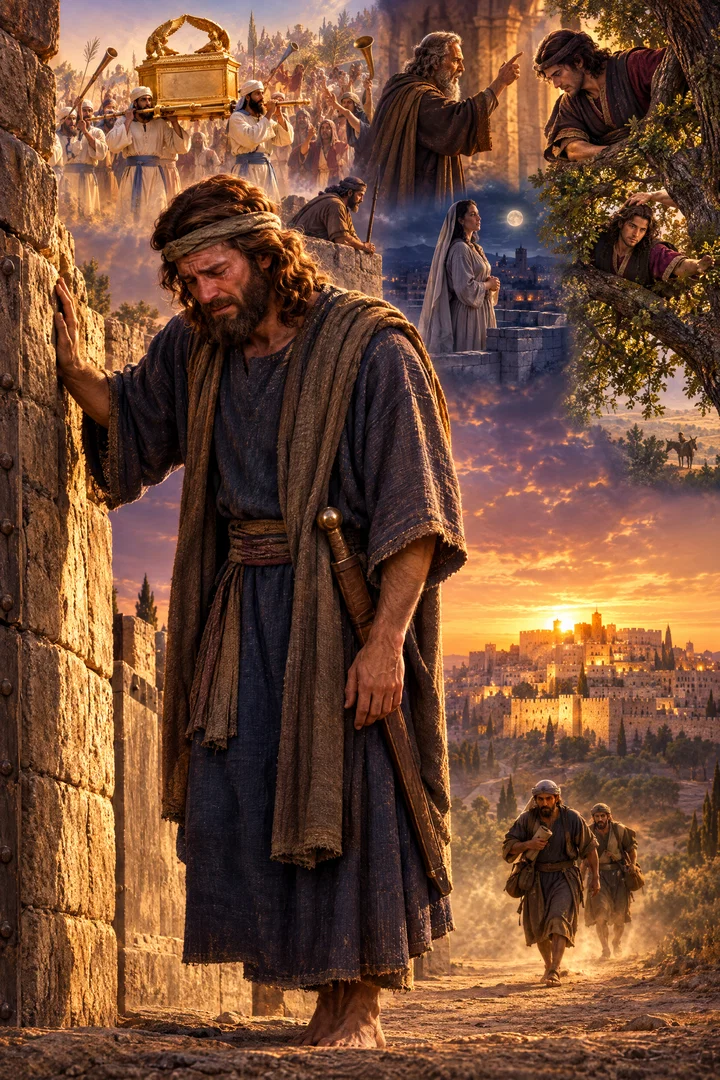
Cross-references
- 1 Chronicles 11:5
And the inhabitants of Jebus said to David, Thou shalt not come hither. Nevertheless David took the castle of Zion, which is the city of David.
David takes Zion, the Jebusite stronghold, and it becomes the city of David.
- Psalms 78:68
But chose the tribe of Judah, the mount Zion which he loved.
Judah’s territory included Mount Zion, which David took.
- Ezra 1:3
Who is there among you of all his people? his God be with him, and let him go up to Jerusalem, which is in Judah, and build the house of the LORD God of Israel, (he is the God,) which is in Jerusalem.
Identifies Jerusalem as the city associated with Zion.
- Psalms 69:35
For God will save Zion, and will build the cities of Judah: that they may dwell there, and have it in possession.
Zion is identified with the cities of Judah.
- Judges 1:8
Now the children of Judah had fought against Jerusalem, and had taken it, and smitten it with the edge of the sword, and set the city on fire.
Judah takes Jerusalem, while David later captures its stronghold.
- Judges 1:21
And the children of Benjamin did not drive out the Jebusites that inhabited Jerusalem; but the Jebusites dwell with the children of Benjamin in Jerusalem unto this day.
The Jebusites remained in Jerusalem until David captured its stronghold.
- Joshua 15:63
As for the Jebusites the inhabitants of Jerusalem, the children of Judah could not drive them out: but the Jebusites dwell with the children of Judah at Jerusalem unto this day.
Both texts describe the Jebusites’ presence in Jerusalem.
- Luke 1:32-33
He shall be great, and shall be called the Son of the Highest: and the Lord God shall give unto him the throne of his father David:
Jesus receives David’s throne and reigns over an everlasting kingdom.
- 2 Samuel 6:1-2
Again, David gathered together all the chosen men of Israel, thirty thousand.
ark brought to capital David took
- 2 Samuel 5:1
Then came all the tribes of Israel to David unto Hebron, and spake, saying, Behold, we are thy bone and thy flesh.
Israelites gather at Hebron as bone and flesh
- 2 Samuel 5:12
And David perceived that the LORD had established him king over Israel, and that he had exalted his kingdom for his people Israel’s sake.
Lord established David king over Israel
- Revelation 21:2
And I John saw the holy city, new Jerusalem, coming down from God out of heaven, prepared as a bride adorned for her husband.
The heavenly city is identified as Zion’s prototype.
Commentary
Each commentary is drawn from primary sources: the writings of Ellen G. White and Adventist pioneers and periodicals. Each commentary is separate. Its own words are not a quotation; follow the references to read the source passages.
Ellen G. White
1 source
The stronghold called Zion was the fortified city of Jebus, then still held by the Jebusites.PP 703.2 That fortress stood on the mountains of Zion and Moriah.PP 703.2 The Hebrews captured it under the command of Joab.PP 703.2 After its capture Jebus was made the national capital of Israel.PP 703.2 Its name was then changed from Jebus to Jerusalem.PP 703.2
Sources
Pioneers and periodicals
17 sources
David took the strongly fortified Jebusite stronghold of Zion, formerly called Jebus, and it was then named the city of David for his work in rebuilding and fortifying it as his own.ST Sep 10, 1896STRH Jul 21, 1868ST Sep 30, 1889 After Israel gathered to him at Hebron and anointed him king over all Israel, he moved the capital from Hebron to Jerusalem and set his throne there as the political and religious capital of the nation.ST Sep 10, 1896STST Apr 29, 1913ST Apr 22, 1903RH Mar 30, 1916 His success came because the Lord God of hosts was with him to establish him king and make him great, so that under his rule on Mount Zion Israel's dominion expanded and its enemies were subdued.ST Sep 10, 1896STST Apr 29, 1913ST Jun 19, 1884 That Zion was David's city built at Jerusalem in Judah, and its earthly city is a prototype of the New Jerusalem, the city of the Great King on Mount Zion above.RH Dec 1, 1863RH Feb 18, 1858ST May 27, 1880ST Aug 27, 1896 The capture, accomplished despite long-standing difficulties, shows that apparent obstacles do not prevent God's word from being accomplished when men exercise and cultivate faith in Him.RH Aug 28, 1856RH Feb 17, 1916
Capturing Zion's Stronghold
Nevertheless David took the stronghold of Zion from the Jebusites, taking Jerusalem, formerly called Jebus, by capturing its strongly fortified citadel whose walls made it seem almost impregnable.ST Sep 10, 1896RH Jul 21, 1868ST Sep 30, 1889 At that time Jerusalem covered only a small part of its later site, in the southwest.RH Jul 21, 1868 The capture came after the Israelites had gathered to David at Hebron as his bone and flesh and made him king over all Israel when he was thirty years old, marking his final anointing as king over all Israel.ST Sep 10, 1896ST Apr 22, 1903RH Mar 30, 1916
David entered the city by strategem, with Joab's help overcoming the Jebusites who had foolishly trusted either in their gods or in the strength of the city's position.ST Sep 10, 1896ST Sep 30, 1889 Joab won the promised command of David's army by entering the city, probably at night by climbing the steep crags at its northeast corner.RH Jul 21, 1868 The stronghold of Zion so taken was called the city of David, a name tied to his work in rebuilding, extending, and fortifying the city and making it his own.ST Sep 10, 1896STRH Jul 21, 1868ST Sep 30, 1889RH Jul 21, 1868
The capture moved the capital from Hebron to Jerusalem, set David's throne in Jerusalem, and established Jerusalem as the capital settlement of the Jewish nation and the political and religious capital of the kingdom.STST Apr 29, 1913ST Sep 30, 1889RH Jul 21, 1868ST Apr 22, 1903 The capture was part of the establishment and building up of his reign and kingdom, in which he knew the Lord had established him king over Israel and was with him to make him great, so that under his rule in Jerusalem and on Mount Zion Israel's dominion expanded greatly and its enemies were subdued.ST Sep 10, 1896STST Apr 29, 1913ST Apr 22, 1903ST Jun 19, 1884 David's success came because the Lord God of hosts was with him, whose presence and help made him a powerful ally in the victory.ST Jun 19, 1884
The victory over the Jebusites stands with the victory over the Philistines as one of two great victories gained by David's army before he gathered the chosen men of Israel to bring the ark of God to that capital.ST Jun 26, 1884 After David's capture and fortification, Solomon later enlarged the city and built the temple there, and worship that had been held at local shrines was thereafter centered at the temple.RH Jul 21, 1868RH Mar 30, 1916
Zion in Judah
Mount Zion was the city of David, a part of Jerusalem located in Judah as one of its cities.RH Dec 1, 1863RH Feb 18, 1858ST May 27, 1880RH Jan 6, 1853 Zion was not the tribe of Judah itself but a city within its territory.RH Feb 18, 1858ST May 27, 1880RH Jan 6, 1853 This makes clear that the expression tribe of Judah, Mount Zion in Psalm 78:68 does not identify Judah itself as Zion, but names the tribe in which God located His habitation and the mount He loved.RH Jan 6, 1853 This geographic fact gives the reason why Judah is figuratively called God's sanctuary.RH Dec 1, 1863 Yet the sanctuary was located in Judah without making the land or the tribe itself the sanctuary.ST May 27, 1880 Mount Zion as the place where David's city, Jerusalem, was built makes Zion's earthly city a prototype of the New Jerusalem, the city of the Great King, on Mount Zion above.ST Aug 27, 1896
Divine Help and Faith
The taking of Zion was one of God's supernatural directions and assistances to David among His manifestations to him, accomplished despite difficulties after Israel had lived in the land for many years without taking the Jebusite stronghold.RH Aug 28, 1856RH Feb 17, 1916 Its lesson is that apparent obstacles do not prevent God's word from being accomplished.RH Feb 17, 1916
Such supernatural directions and assistances are not communicated now because they are not asked for, and they are not asked for because they are not expected, and they are not expected because men have not faith.RH Aug 28, 1856 That lack of faith comes from being under a refined spirit of atheism and having no spiritual intercourse with the Maker, from not believing that God sees all things and is everywhere, from not supposing that He concerns Himself with the affairs of His creatures, from not acknowledging Him in all ways, but from putting human wisdom, prudence, and strength in the place of God Almighty.RH Aug 28, 1856 Having faith in God means exercising it and cultivating it, and by it mountains may be removed.RH Aug 28, 1856
Sources