Acts 17:2
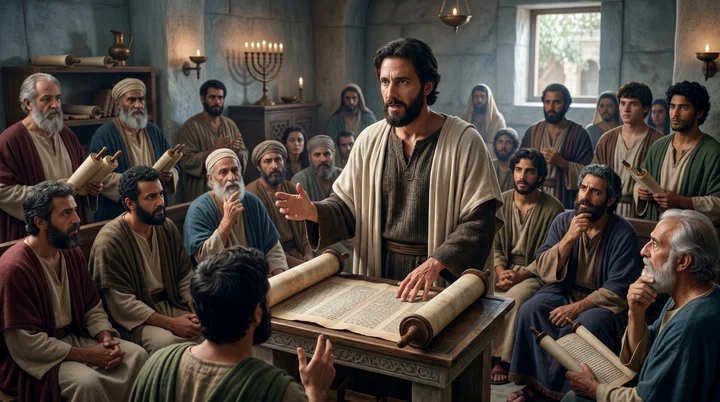
And Paul, as his manner was, went in unto them, and three sabbath days reasoned with them out of the scriptures,
Translations
And Paul, as his manner was, went in to them, and three sabbath days reasoned with them out of the scriptures,
And Paul, as his manner was, went in unto them, and three sabbath days reasoned with them out of the scriptures,
and Paul, as his manner was, went in unto them, and three sabbath days reasoned with them out of the scriptures,
And Paul, as his manner was, went in to them, and on three sabbaths reasoned with them out of the scriptures,
Revised Version, American Standard Version
and Paul, as his custom was, went in unto them, and for three sabbath days reasoned with them from the scriptures,
and according to the custom of Paul, he went in unto them, and for three sabbaths he was reasoning with them from the Writings,
And according to Paul's custom he went in among them, and on three sabbaths reasoned with them from the scriptures,
and, according to Paul’s custom, he went in unto them, and, for three sabbaths, reasoned with them from the Scriptures,—
Berean Standard Bible, Majority Standard Bible
As was his custom, Paul went into the synagogue, and on three Sabbaths he reasoned with them from the Scriptures,
Paul, as was his custom, went in to them; and for three Sabbath days reasoned with them from the Scriptures,
And Paul, as he generally did, went in to them, and on three Sabbath days had discussions with them from the holy Writings,
And Paul, as his maner was, went in vnto them, and three Sabbath daies disputed with them by the Scriptures,
Douay-Rheims (Challoner revision)
And Paul, according to his custom, went in unto them; and for three sabbath days he reasoned with them out of the scriptures:
Pictures
Cross-references 20 of 33
- Acts 18:4
And he reasoned in the synagogue every sabbath, and persuaded the Jews and the Greeks.
Paul regularly reasoned and persuaded in the synagogue every Sabbath.
- Acts 13:14
But when they departed from Perga, they came to Antioch in Pisidia, and went into the synagogue on the sabbath day, and sat down.
another instance of Paul keeping Sabbath
- Acts 13:44
And the next sabbath day came almost the whole city together to hear the word of God.
Nearly the whole city gathers on the Sabbath to hear Paul preach.
- Luke 4:16
And he came to Nazareth, where he had been brought up: and, as his custom was, he went into the synagogue on the sabbath day, and stood up for to read.
Jesus’ customary Sabbath synagogue practice is the example Paul followed.
- Exodus 20:10
But the seventh day is the sabbath of the LORD thy God: in it thou shalt not do any work, thou, nor thy son, nor thy daughter, thy manservant, nor thy maidservant, nor thy cattle, nor thy stranger that is within thy gates:
The commandment identifies the seventh day as the Sabbath Paul observed.
- Acts 16:13
And on the sabbath we went out of the city by a river side, where prayer was wont to be made; and we sat down, and spake unto the women which resorted thither.
Paul meets and teaches people on the Sabbath.
- Acts 17:11
These were more noble than those in Thessalonica, in that they received the word with all readiness of mind, and searched the scriptures daily, whether those things were so.
Both describe reasoning from Scripture and examining it to test the teaching.
- Acts 13:42
And when the Jews were gone out of the synagogue, the Gentiles besought that these words might be preached to them the next sabbath.
Paul preaches on the Sabbath, and the Gentiles ask to hear him again.
- Luke 24:27
And beginning at Moses and all the prophets, he expounded unto them in all the scriptures the things concerning himself.
Both describe expounding from Scripture the things concerning Christ.
- Genesis 2:2-3
And on the seventh day God ended his work which he had made; and he rested on the seventh day from all his work which he had made.
God rested on the seventh day and blessed and sanctified it as the Sabbath.
- Acts 15:21
For Moses of old time hath in every city them that preach him, being read in the synagogues every sabbath day.
Both describe Scripture being read in synagogues on the Sabbath.
- John 5:39
Search the scriptures; for in them ye think ye have eternal life: and they are they which testify of me.
Both describe searching the Scriptures as a basis for teaching.
- 2 Timothy 3:15-16
And that from a child thou hast known the holy scriptures, which are able to make thee wise unto salvation through faith which is in Christ Jesus.
Scripture gives instruction leading to salvation and guides teaching.
- Acts 28:23
And when they had appointed him a day, there came many to him into his lodging; to whom he expounded and testified the kingdom of God, persuading them concerning Jesus, both out of the law of Moses, and out of the prophets, from morning till evening.
Paul persuades listeners about Jesus from Moses and the prophets.
- Acts 18:19
And he came to Ephesus, and left them there: but he himself entered into the synagogue, and reasoned with the Jews.
Paul reasons with people in the synagogue.
- Matthew 12:8
For the Son of man is Lord even of the sabbath day.
Christ’s Sabbath practice supports Paul’s example of teaching on the Sabbath.
- Luke 23:56
And they returned, and prepared spices and ointments; and rested the sabbath day according to the commandment.
Luke also calls the day the Sabbath.
- Acts 13:27
For they that dwell at Jerusalem, and their rulers, because they knew him not, nor yet the voices of the prophets which are read every sabbath day, they have fulfilled them in condemning him.
Paul reasons from the Scriptures read every Sabbath to proclaim Jesus and his salvation.
- 2 Timothy 4:2
Preach the word; be instant in season, out of season; reprove, rebuke, exhort with all longsuffering and doctrine.
both enjoin preaching founded on Scripture
- Acts 17:10
And the brethren immediately sent away Paul and Silas by night unto Berea: who coming thither went into the synagogue of the Jews.
repeats the same custom at Berea
Commentary
Each commentary is drawn from primary sources: the writings of Ellen G. White and Adventist pioneers and periodicals. Each commentary is separate. Its own words are not a quotation; follow the references to read the source passages.
Ellen G. White
17 sources
Paul's regular practice was to go into the synagogue on the Sabbath and reason with the people from the Scriptures, which he and Silas did on three successive Sabbaths on their first visit to Thessalonica after leaving Philippi.AA 221.1SLP 81.3AA 229.1SLP 83.1–23SP 387.3 He opened the prophecies and proved that the Messiah must come in humility to suffer, die, rise again and ascend, and that Jesus of Nazareth is that Christ, the Son of God.Ms 142, 1897, par. 3–8AA 221.2SLP 83.1–28RED 45.1–46.13SP 321.2 He showed that Christ is the key that unlocks the Old Testament and gives meaning to its whole sacrificial system, speaking through patriarchs and prophets from Adam onward and fulfilling every specification of his birth, life, death, resurrection, ministry and coming glory.AA 229.1SLP 83.1–28RED 45.1–46.1 He worked with tact to avoid needless prejudice, reasoning with the Jews step by step from Moses and the prophets about the Messiah's mission and the honor due to God's law before presenting Jesus as the crucified Messiah, while with the Gentiles he exalted Christ first and then showed the claims of the law.Lt 12, 1887, par. 8–917MR 67.2–3Lt 48, 1886, par. 2–3 Reasoning from the Bible is a masterly entrusted talent to be cultivated for heaven, so testing truths like the Sabbath should be kept back until minds have been carried along day after day through prophecy and the practical teachings of Christ and have learned confidence in those who understand the Scriptures.17MR 67.2–33MR 353.2–3Lt 48, 1886, par. 2–3
Paul's Custom in Thessalonica
It was Paul's regular practice to go into the synagogue on the Sabbath and reason with the people from the Scriptures, and at Thessalonica he did this for three successive Sabbath days.AA 221.1AA 229.1SLP 83.1–28RED 45.1–46.1
Paul and Silas together made the first visit of the gospel messengers to Thessalonica after leaving Philippi.SLP 81.33SP 387.3AA 255.1 There they were privileged to address a large gathering in the synagogue with good effect.SLP 81.33SP 387.3
Their appearance bore visible evidence of the shameful mistreatment they had just endured, which called for explanation.SLP 81.33SP 387.3 They explained what they had suffered without exalting themselves, but magnifying God's grace in their deliverance.SLP 81.33SP 387.3 They felt they had no time to dwell on their own afflictions because they were burdened with the message of Christ and deeply in earnest in His work.3SP 387.3
Those who heard accepted the truth and became believers.Ms 142, 1897, par. 3–8AA 255.1 Some of the Jews believed with Paul and Silas, together with a great multitude of devout Greeks and not a few of the chief women.Ms 142, 1897, par. 3–8
He thus combined home and foreign missions by preaching to the Jews in their own place of worship just as he also preached to the Gentiles at their temples in the presence of their gods.Ms 87, 1907, par. 4
Christ Proved from Prophecy
Paul opened the Scriptures and proved that Christ had to suffer and rise from the dead, and that this Jesus is the Christ.Ms 142, 1897, par. 3–8AA 221.2 The Jesus of Nazareth whom he preached is the Messiah, whose birth, suffering, death, resurrection, and ascension had been foretold.Ms 142, 1897, par. 3–8AA 221.2 Divine light enabled him to use his knowledge of Scripture to present the prophecies about Jesus clearly and forcefully.EW 167.2SG1 91.2 He traced them to the time of Christ's first advent and showed that Scripture had been fulfilled in His sufferings, death, and resurrection.EW 167.2SG1 91.2
He made the prophecies relating to the Messiah clear and showed their agreement with the life and teachings of Christ.SLP 83.1–28RED 45.1–46.1 Proving from Moses and the prophets, he gave inspired proof of His mission, suffering, death, resurrection, and ascension.8RED 45.1–46.1 The Jewish expectation was contrary to prophecy, which foretold a Saviour coming in humility and poverty to be rejected, despised, and slain.SLP 83.1–28RED 45.1–46.1 He explained Christ's life, death, resurrection, ministry, and future glory.AA 229.18RED 45.1–46.1 Christ is presented as the Lamb slain from the foundation of the world, whose voice spoke through the prophets and patriarchs from Adam onward.AA 229.18RED 45.1–46.1
Christ is the key unlocking the Old Testament and giving access to its rich truths.AA 229.18RED 45.1–46.1 Without Him the passover cannot be explained, and the brazen serpent lifted in the wilderness as a symbol of Christ lifted on the cross is meaningless.8RED 45.1–46.1 All Jewish religious services and ceremonies are valueless if the Saviour revealed and represented in them is rejected.8RED 45.1–46.1 He also taught that Christ would return in power and glory, establish His kingdom on earth, subdue every authority, and rule over all nations.SLP 83.1–2 He reasoned to prove that Jesus, though crucified, is the Son of God, supporting the claim with evidence from prophecy with the same boldness and purpose as Stephen.3SP 321.2
He proclaimed a Messiah who did not come to destroy the old dispensation but to develop the Jewish economy in accordance with the truth.Lt 12, 1887, par. 8–9Ms 87, 1907, par. 4 He gave due honor to the ceremonial law, showing that Christ instituted the whole Jewish economy in sacrificial service.Lt 12, 1887, par. 8–9 The light reflected from the cross gives significance and glory to it.Lt 12, 1887, par. 8–9 He was no novice but met every class of people from men of renown to heathen idolaters, setting before them evidences of Christianity not of human invention.Ms 142, 1897, par. 3–8 For his religion came from God and is of heavenly origin bearing divinity's stamp so that no power on earth could quench the light from heaven.Ms 142, 1897, par. 3–8
Wisdom in Presenting Truth
His manner was to shape his message to his hearers with tact so as not to stir prejudice and close hearts, thus varying his labor to suit circumstances.Lt 12, 1887, par. 8–9 With the Jews he did not begin by telling them they must believe in Jesus of Nazareth but reasoned from the Old Testament prophecies testifying of Christ, of his mission and work.Lt 12, 1887, par. 8–9 He dwelt upon the prophecies and brought them down step by step, showing the importance of honoring the law of God, and only after some time opened the subject of Christ as the true Messiah and his first advent with every specification fulfilled in the crucified Jesus.Lt 12, 1887, par. 8–917MR 67.2–3Lt 48, 1886, par. 2–3 With the Gentiles he worked in reverse by exalting Christ first and then showing the binding claims of the law.Lt 12, 1887, par. 8–9
Ministers should use great wisdom in presenting truth that opposes opinions and practices by keeping truths that involve less of a cross before minds day after day and even for weeks.17MR 67.2–3Lt 48, 1886, par. 2–3 They are to carry them along through the important events in the prophecies with clear, forcible arguments and to dwell upon practical subjects in the teachings of Christ to gain their confidence as men who understand the Scriptures.17MR 67.2–3Lt 48, 1886, par. 2–3 Only then are they to introduce the Sabbath and immortality questions.17MR 67.2–3Lt 48, 1886, par. 2–3 Bringing the most objectionable features of faith too early and going too rapidly through subjects closes ears that careful step-by-step work would keep open.17MR 67.2–3Lt 48, 1886, par. 2–3 After such patient labor he was successful to a large degree, though many would not be convinced by any method.Lt 12, 1887, par. 8–9
His arguing from the Bible proves that reasoning is necessary.3MR 353.2–3 Reasoning is one of the great masterly talents entrusted to the human agent and a great advantage at every step from earth to heaven.3MR 353.2–3 When trained and cultivated as a precious entrusted gift it will be taken to heaven with all its improvements and sanctified abilities to be perfected more and more in the heavenly school above.3MR 353.2–3 This matches the practice of Jesus who also argued from the Bible with his hearers.3MR 353.2–3
Sources
Pioneers and periodicals
137 sources
Paul at Thessalonica went into the synagogue of the Jews and for three successive Sabbaths reasoned with them out of the Scriptures.ST Jan 7, 1903ST Nov 8, 1905ST Aug 14, 1893RH Oct 14, 1873 His doing so as his manner was shows a settled, habitual custom of Sabbath preaching and reasoning, not a single or occasional meeting.ST Jul 1, 1897ST Mar 18, 1903ST Feb 1, 1883ST Mar 18, 1886RH Jan 30, 1866 He opened the Old Testament Scriptures then available and proved that the Christ had to suffer and rise from the dead, proclaiming that Jesus is the Christ, the crucified and risen Savior.ST Jul 1, 1897ST Dec 19, 1878ST Aug 8, 1916RH Apr 10, 1900ST Oct 17, 1895 In this he kept the seventh-day Sabbath, Saturday, in worship, preaching and teaching to both Jews and Gentiles, following Jesus' own Sabbath custom.ST Sep 20, 1883RH Jan 24, 1871ST Mar 18, 1889ST Oct 7, 1897RH Oct 23, 1856 The day is still called the Sabbath decades after the resurrection, with no sacredness attached to the first day, so the verse gives no support to Sunday sacredness or to a change from the seventh day to the first.RH Apr 14, 1853RH Jun 13, 1854RH Oct 21, 1851RH Jan 7, 1858RH Aug 1, 1912 Those who held otherwise taught that he chose the synagogue only because people gathered there and to win Jews, not because he regarded the day as holy.RH Jun 7, 1864ST Mar 5, 1894RH Mar 25, 1873RH Jun 24, 1862RH Mar 22, 1864
Wording and Historical Setting
Paul went to Thessalonica after passing through Amphipolis and Apollonia, where there was a synagogue of the Jews.ST Jan 7, 1903RH Oct 5, 1916ST Nov 14, 1895 Thessalonica was the metropolis of Macedonia, the Macedonian city at the head of the Thermaic Gulf, rebuilt by Cassander in 315 B.C. and renamed after his wife the sister of Alexander the Great.ST Oct 24, 1911 From 146 B.C. it was the seat of the Roman government in Macedonia, in Paul's day a free city governed by seven politarchs, and after Corinth the second commercial city of the European Greeks.ST Oct 24, 1911 The Jews were numerous there, had a synagogue there, were full of zeal for the maintenance of their own worship, and were the persecutors of the disciples at Thessalonica.ST Mar 1, 1883
The verse belongs to the record in Acts 17 of Paul's places of labor and what he did in each place, where the interest was better in some places than in others.ST Jun 9, 1898ST Mar 18, 1903 It records part of his experience and early labors at Thessalonica on his second missionary tour after leaving Philippi, showing the progress of the gospel, the extent of territory reached, the churches founded, and the obstacles overcome.ST Jul 7, 1909ST Mar 18, 1903RH Oct 5, 1916 There God worked wonderfully and the word of God triumphed in spite of persecution and opposition, and after cruel beating and imprisonment their labor in Philippi and there was crowned with success.ST Jul 7, 1909RH Aug 11, 1863RH Nov 23, 1905 Paul was driven from Thessalonica before he had finished his work there, though even during a short time in the city he helped establish a church and found the church there, and being unable to return he wrote 1 Thessalonians to that church giving truth on the conduct of Christians toward one another and the personal appearing of the Lord Jesus Christ.ST Jul 22, 1897RH Nov 23, 1905
The three Sabbath days were three successive Sabbaths, or three weeks, on which he reasoned from the Scriptures with the people in Thessalonica.ST Nov 8, 1905RH Oct 14, 1873ST Feb 5, 1880 The word is rendered from the plural Greek sabbata, properly translated Sabbaths rather than as a singular Sabbath or a week, and in the Revised Version pattern this verse is the exception to rendering it as the singular Sabbath or Sabbath day.RH Jan 2, 1900RH Jan 5, 1864 These were Sabbaths, not Sundays, and his Sabbath meetings included preaching to Jews and Greeks of which some listeners believed.ST Aug 14, 1893RH Oct 14, 1873 This is evidence that the apostles met and preached on the Sabbath and observed the Sabbath, not Sunday, because they regarded the Sabbath as still in force and kept it holy, and that Christ and the apostles gave no command to abolish the Sabbath or replace it with the first day.RH Oct 14, 1873ST Feb 5, 1880
The phrase as his manner was means as his custom was, a settled, habitual custom of going into the synagogue on the Sabbath and reasoning out of the Scriptures there, explicitly marked by Luke as customary.ST Feb 1, 1883ST Mar 18, 1886RH Jan 30, 1866 It identifies an established custom, not a practice inferred from a single occurrence or a single or occasional meeting, but a settled habit of Sabbath preaching for religious service.ST Feb 1, 1883RH May 12, 1874 This customary Sabbath preaching stands against the first-day meeting at Troas, which is given no such words of custom, manner, or every Sabbath and every first day, and Luke mentions the first day of the week only once with not even a distant hint that meeting on it was customary.ST Jul 13, 1882RH Dec 12, 1871 That contrast proves Sabbath worship was the established practice and Paul's regular practice rather than first-day observance, while no customary weekly first-day assembly existed and no stated custom of weekly first-day meetings existed during the period covered by Acts.RH May 12, 1874ST Jul 13, 1882RH Dec 12, 1871
Luke still calls that seventh day the Sabbath long after the resurrection, the day the Jews met in the synagogue on which it was Paul's custom to preach, in contrast to preaching on Sunday.RH Jun 12, 1860RH Jun 23, 1853 In A.D. 45, about twenty years after Christ's resurrection and death, more than twenty years after the crucifixion, about twenty-two years after, more than twenty years after, about thirty years after, and decades after Christ's death, including A.D. 54 when Greek converts observed it, Luke calls the seventh day the Sabbath or rest day.RH Jun 12, 1860ST Jan 4, 1877RH Oct 21, 1851ST Jul 5, 1910RH Jun 23, 1853 The days Luke calls Sabbaths were the seventh day of the week, so the seventh day remained the Sabbath then and the name remained applicable after the ceremonial institutions were nailed to the cross and had ended.RH Jun 13, 1854RH Oct 21, 1851RH Jun 23, 1853 His practice supports that the Sabbath observed by Christ was also observed by Paul, and the verse does not support a change to the first day.ST Jul 5, 1910RH Jun 23, 1853
Scriptural Preaching Method
Paul's manner was to reason out of the Scriptures, grounding his argument in what Scripture actually says rather than reasoning about it from prior ideas or unsupported inferences.ST Jul 1, 1897RH Nov 27, 1866 His reasoning was not human speculation or empty argument, nor did it yield to claims of science opposed to Scripture, but treated what Scripture said as final authority regardless of who presented it.ST Oct 4, 1883ST Oct 11, 1883RH Nov 27, 1866 For three Sabbath days at Thessalonica he made this his regular practice, taking the Scriptures as authoritative and useful for teaching and making them his textbook for preaching Christ.ST Oct 11, 1883RH May 26, 1859 Used in that way, the Scriptures advanced the gospel and the cause of Christ and his salvation.ST Jul 1, 1897
The Scriptures he used were the Old Testament then available, including Moses and the prophets.ST May 21, 1885RH Apr 10, 1900ST Oct 17, 1895ST May 21, 1885 From them he proved that Jesus is the Christ, explaining that Christ had to suffer and rise from the dead, and he also taught about the falling away and the man of sin described in 2 Thessalonians.RH Apr 10, 1900ST Oct 17, 1895ST May 21, 1885 They support the authority and relevance of the Old Testament for Christian teaching, as the Scripture available to the apostles.ST Oct 17, 1895ST May 21, 1885RH Nov 8, 1853 They are the basis for faith whose truth should guide practice, and through the Spirit they can reach the conscience and lead hearers to attend to what is taught as the Lord opens their hearts.ST May 21, 1885RH Oct 28, 1852 His preaching from them included Christ's suffering and resurrection and also Christ's second coming.ST Oct 11, 1883RH Apr 10, 1900
He spoke calmly and rationally, not rashly or impulsively, presenting truth for examination rather than setting reason and judgment aside.RH Aug 9, 1864 Scripture appeals to these faculties so people can be persuaded to choose the truth, diligently searching the Scriptures, comparing what was heard with divine truth, and acting on sanctified judgment under the Holy Spirit.RH Aug 9, 1864 The apostles depended upon and taught the word and did not carry on their work without the aid of the Scriptures, for the word of God carries its own evidence and works in those who receive it as God's word.ST Apr 16, 1896ST Sep 26, 1895 Reasoning or disputing in defense of truth was part of his manner of preaching and is a legitimate way to present Christian truth, including reasoning about sin and redemption in harmony with revelation and sound reason.ST Oct 3, 1895RH Dec 6, 1853 Preached in that way the gospel came not in word only but in power and in the Holy Ghost and in much assurance.
His usual pattern was public preaching no more often than once a week, and his spending three Sabbath days preaching the Word provides the pattern followed by workers preaching for three Sabbath days.RH May 2, 1912RH Jul 9, 1857 Human reason and devotional feeling alone cannot by themselves direct worship.RH Dec 10, 1861 The Athenians worshiped many gods and even raised an altar to an unknown god, showing their need for a revelation from God.RH Dec 10, 1861
Gospel Message Proclaimed
Paul opened the Scriptures and laid out from them that the Christ must suffer and rise from the dead, and that the Jesus he preached is the Christ, the promised Messiah, the crucified and risen Savior.ST Jul 1, 1897ST Dec 19, 1878ST Aug 8, 1916RH Jun 7, 1864ST Jan 21, 1886 At Thessalonica this reasoning from the Scriptures was his work for three Sabbaths, using what was then available, Moses and the prophets, to show that the Messiah had to suffer and rise and that Jesus is that Messiah.ST Dec 19, 1878ST Aug 8, 1916RH Jun 7, 1864ST Jan 21, 1886ST Jul 13, 1882 The opening and alleging belonged to his regular synagogue practice of reasoning with hearers out of the Scriptures, not merely about them.ST Jul 1, 1897ST Aug 8, 1916RH Jun 7, 1864ST Jul 13, 1882 That exposition gave no instruction to observe either the day of Christ's death or the day of His resurrection.ST Jul 13, 1882
His scriptural preaching also set forth Christ's second coming, including the personal appearing of the Lord Jesus Christ and the conduct of Christians toward one another as later written to the Thessalonians.ST Oct 11, 1883ST Jul 22, 1897 It drew on the types and shadows to demonstrate that they prefigured Christ who had already come, and by that scriptural ground gained the people's favor.ST Nov 24, 1887 It included prophetic warnings about the Roman Empire, its fall, the rise of ten kingdoms, the emergence of the man of sin who would overthrow three kingdoms, and Christ's second coming and the end of the world.RH Nov 20, 1900 The Scriptures for this were the Old Testament then in hand, from which came the teaching later written in 2 Thessalonians about the falling away and the man of sin, with the passages in Daniel 7 and 8 concerning Rome identified as the source for what is said of the man of sin, the son of perdition, the mystery of iniquity, and that Wicked.RH Apr 10, 1900RH Nov 20, 1900RH Apr 10, 1900
Preached in that way the gospel came not in word only but in power and in the Holy Ghost and in much assurance. Reasoning from the Scriptures as his textbook, calmly and rationally and not rashly, called for diligently searching the Scriptures and comparing what was heard with divine truth under the Holy Spirit. That plain Scripture reasoning was his only weapon and his whole ministry, held with boundless confidence in its power and giving no place to amusement, entertainment, or pleasing the ungodly.ST Apr 9, 1894 Its power crossed from Asia into Greece and gathered trophies in Thessalonica, turning idolaters into saints and even martyrs and reforming their habits and character.RH Oct 16, 1860 Its effect was described as turning the world upside down, when some Jews believed and joined Paul and Silas with a great multitude of devout Greeks and chief women not a few, receiving the word in affliction with joy of the Holy Ghost and turning from idols to serve the living and true God, while the unbelieving moved with envy gathered lewd fellows of the baser sort, set the city in uproar, assaulted the house of Jason, and cried that those turners of the world were come, so that pressing home new, timely truths and special rebukes for sin always brings the charge of troubling the people.RH Jun 16, 1874ST Apr 9, 1894
Paul Kept the Sabbath
Paul's regular custom was to go into the synagogue at Thessalonica and reason with those present out of the Scriptures for three Sabbath days, making Sabbath meeting, worship, preaching and teaching his established practice.ST Jul 1, 1897ST Mar 18, 1903RH Mar 4, 1862ST Oct 8, 1912ST Feb 15, 1910 This was his settled habit of Sabbath reasoning from Scripture, explicitly noted as his manner, not a single or occasional meeting.ST Mar 18, 1903ST Oct 8, 1912ST Mar 18, 1889 The three days were three successive Sabbaths spent in scriptural reasoning on the day Jews met for worship, still called the Sabbath after the resurrection.ST Jul 1, 1897ST Feb 15, 1910ST Jan 4, 1877
The Sabbath he kept was the seventh day, Saturday, the same day kept by the Jews who met in synagogues for worship, not the first day of the week.ST Mar 18, 1889ST Oct 7, 1897RH Oct 23, 1856ST Jan 4, 1877ST Dec 18, 1907 It is always spoken of as the Sabbath in the New Testament writings, showing the recognition given to this day in the Christian era, and Paul attached no sacredness to the first day and assumed no authority to change the commandment.RH Aug 1, 1912 In this he followed Jesus' Sabbath custom, keeping the seventh-day Sabbath to the end as his Master did, with all the enthusiasm of his surrendered life and never neglecting it during arduous labors and long journeyings.ST Sep 20, 1883RH Jan 24, 1871ST Aug 19, 1886RH Jan 1851ST Jan 3, 1905 His manner of preaching on the Sabbath matched Christ's custom, proving Jesus did not abrogate, change or do away with the day, and making Paul an example of a Christian Sabbath-keeping preacher.RH Jan 24, 1871ST Jan 3, 1905ST Mar 30, 1888
He preached on the Sabbath to both Jews and Gentiles, including devout Greeks, Jewish converts and God-fearing Gentiles, at Thessalonica, Corinth and by a riverside where there was no synagogue.STST Jan 3, 1905RH May 10, 1860RH Jun 7, 1864 Gentiles or Greeks kept the Sabbath along with the Jews and heard him on the same day, and he continued holding meetings on the seventh-day Sabbath after declaring he would turn to the Gentiles.ST Oct 7, 1897RH Jun 7, 1864ST Jul 18, 1878 His Sabbath ministry led some Jews and many devout Greeks, including prominent and chief women, to believe and join Paul and Silas, and helped form the church at Thessalonica.RH Mar 4, 1862ST May 10, 1905ST Jul 8, 1880ST Oct 20, 1914 That church therefore began among Sabbath-keepers, including Gentiles who feared God and kept His commandments, and continued as a Sabbath-keeping church whose members followed Paul and the Lord and became examples to others.ST Jul 8, 1880ST Oct 20, 1914RH May 5, 1874
Only one sermon by Paul on the first day is recorded, and on that same first day he traveled twenty miles and walked a long distance, while the three Sabbaths here are part of eighty-four Sabbaths recorded in Acts on which he kept the Sabbath and preached.ST Sep 20, 1883RH Sep 25, 1856ST Apr 12, 1883ST Feb 25, 1913 This includes every Sabbath for a year and six months at Corinth to Jews and Greeks, or seventy-eight Sabbaths, with no regular Sunday worship or replacement reported.RH Sep 25, 1856RH Feb 3, 1852ST Feb 25, 1913 He used the Sabbath for divine worship, religious instruction, spiritual help and persuasion from Scripture, delighting in God's law including the fourth commandment, working at his trade on the other six days.ST Dec 16, 1889ST Jan 5, 1915RH Dec 12, 1854ST Dec 2, 1886RH Jan 10, 1871 His travel and effort to assemble shows the Sabbath forbids only secular labor and is to be used to best glorify God, and because the fourth commandment remained in force he preached and worshiped then not merely to accommodate Jews but because he delighted to keep it holy.RH Apr 9, 1872ST Dec 2, 1886RH Jan 10, 1871
Those who held otherwise taught that he chose the synagogue because people gathered there, not because he regarded the day as holy, and that the meeting was not a Christian worship assembly but missionary labor to gather an ecclesia, so preaching then does not prove he kept it holy.RH Jun 7, 1864RH Mar 25, 1873RH Mar 22, 1864 Related positions taught that his Sabbath preaching is explained as becoming as a Jew to win Jews, as using the ancient Sabbath opportunity to preach to Jews, and as apostolic observance before the crucifixion.ST Mar 5, 1894RH Jun 24, 1862RH May 8, 1856 Against the usual explanation of preaching on the Sabbath merely to reach gathered Jews, the counter-teaching holds that it fails where he preached only to Gentiles in a Gentile's house. Another argument identified the Sabbath in a disputed account as Thursday and challenged the claim that Paul preached for many Sabbaths before Pentecost as chronologically impossible.RH Mar 23, 1869
Sabbath Identity and Continuity
Luke, writing decades after the death of Christ and after the ceremonial institutions had ended, still calls the seventh day the Sabbath without qualification.RH Apr 14, 1853RH Jun 13, 1854RH Oct 21, 1851 About twenty-two years after the resurrection, about thirty years after Christ's death, and long afterward in the book of Acts, the day Paul reasoned on for three Sabbath days is still named the Sabbath, which does not mean the first day of the week.RH Apr 14, 1853RH Jun 13, 1854ST Jun 4, 1874ST Sep 25, 1893 The New Testament gives no indication of another Sabbath and never applies the title Sabbath to the first day, but identifies the Sabbath day as the seventh day and not the first day of the week.RH Apr 14, 1853RH Jan 13, 1852ST Sep 25, 1893 Reasoning from the Scriptures in the synagogue on the Sabbath was Paul's established practice, seen also beyond Corinth where he continued a year and a half.RH Jan 13, 1852ST Jun 4, 1874
His example proves the seventh-day Sabbath continued after the cross and resurrection as the same weekly institution, still recognized, observed and binding in the gospel age and primitive church.RH Jan 24, 1871RH Feb 28, 1871RH Aug 18, 1868RH Nov 28, 1871 It was not abolished, done away, violated, or replaced, and no change of day is indicated; Paul and the apostles continued to keep it years after the crucifixion, following Jesus' Sabbath custom to the end.RH Jan 24, 1871RH Feb 28, 1871RH Aug 18, 1868RH Nov 28, 1871RH Jun 24, 1852 The Sabbath existed after Pentecost in the New Testament era, and keeping it was Paul's regular practice for three Sabbath days at Thessalonica.RH Feb 28, 1871RH Apr 16, 1861RH Jun 24, 1852 His synagogue meetings were not merely accommodation to the Jews, and his observance shows the apostles did not violate the fourth commandment or prefer Sunday to the Sabbath.RH Nov 28, 1871RH Jun 24, 1852
The seventh day is the day of the Lord Jesus Christ, the true Lord's day and Christian Sabbath.RH Jun 10, 1873RH Sep 7, 1916 It is the memorial of creation blessed and sanctified by God, commanded in God's moral law and the fourth commandment, made holy by God alone, and to be kept in the new earth, leaving no room for Sunday keeping which rests on tradition without divine authority and was never commanded to be kept holy.RH Jun 10, 1873RH Sep 7, 1916RH Dec 11, 1913 The fourth commandment is recognized in the New Testament as plainly as the other nine, so all ten commandments remain binding, with the seventh day distinctly called the Sabbath fifty-nine times in the New Testament, more than any other commandment is referred to.RH Jun 10, 1873RH Apr 18, 1871 The primitive church continued that Sabbath-keeping example in faithful imitation of Christ and of the Father instead of regarding or keeping the first day, which is never called the Lord's day or Sabbath in Scripture.RH Jun 10, 1873RH Sep 7, 1916RH Dec 11, 1913
Paul declared the whole counsel of God, kept back nothing profitable, and was free from the blood of all men, yet gave no teaching that the Sabbath was done away or changed.ST Feb 7, 1911RH Jan 7, 1858RH Aug 1, 1912ST Aug 4, 1898 Meeting on the Sabbath was his custom as it was Christ's custom, for divine worship on the seventh day on which the Jews met in synagogues, always spoken of as the Sabbath by Christian writers in the Christian era writing under the direction and inspiration of the Holy Spirit.ST Feb 7, 1911RH Jan 7, 1858RH Aug 1, 1912ST Aug 4, 1898 Neither in his epistles nor in the historical record of his labors is found one word regarding a change in the institution of the Lord's Sabbath, proving he attached no sacredness to the first day of the week.ST Feb 7, 1911RH Aug 1, 1912ST Aug 4, 1898 The apostles had no authority and assumed no authority to change the Sabbath commandment, but like their Lord regarded the holy character of the one universal Sabbath set apart at the beginning of time for the benefit of mankind, so a change would have been made known if it were truth while his teaching challenged Jewish hypocrisy and declared God's counsel.ST Feb 7, 1911RH Jan 7, 1858RH Aug 1, 1912ST Aug 4, 1898
Paul was never accused of breaking the Sabbath, and his record of meeting and reasoning from Scripture on the Sabbath associates the apostles with Sabbath meetings.ST Apr 22, 1897ST Jul 16, 1902ST Sep 26, 1906 His preaching of Jesus enraged the Jews and made them desperate for a plausible accusation, yet they said nothing about changing the Sabbath.ST Jul 16, 1902ST Sep 26, 1906 When pressed for a charge they had to resort to accusing the apostles of acting contrary to the decrees of Caesar by saying there is another king, one Jesus, and their silence proves no change had been made or taught.ST Jul 16, 1902 He was also never accused of establishing another Sabbath and never acknowledged another day as the Sabbath.ST Apr 22, 1897ST Jul 16, 1902ST Sep 26, 1906
No Sunday Change Shown
The three days were Sabbaths, distinct from the first day of the week, for the verse identifies the preaching day as the Sabbath, not Sunday.ST Jul 1, 1897RH Jun 12, 1860RH Feb 3, 1916RH Apr 14, 1853ST Apr 19, 1883 Paul's regular practice was to teach in the synagogue on the Sabbath, on the day the Jews met for worship, still called the Sabbath or rest-day in A.D. 45, twenty-two years after the resurrection.ST Jul 1, 1897RH Jun 12, 1860RH Feb 3, 1916ST Apr 19, 1883ST Jun 4, 1874 That continued use of Sabbath after the resurrection shows the seventh day was still called the Sabbath in Acts, and its use of Sabbath does not mean the first day of the week.ST Jul 1, 1897RH Apr 14, 1853ST Jun 4, 1874 At Thessalonica he went in as was his manner or custom and reasoned from the Scriptures over three Sabbath days, which were the seventh day and not the first day, proving that according to Paul the seventh day is the Sabbath-day.RH Jun 12, 1860RH Feb 3, 1916ST Apr 19, 1883ST Jun 4, 1874 The verse is therefore set in contrast with preaching on Sunday, as evidence that the Sabbath day had not changed to the first day of the week after Christ's resurrection.ST Jul 1, 1897RH Jun 12, 1860
Luke's explicit words of manner, custom, and every Sabbath for Sabbath preaching stand against his silence about any custom for the first-day meeting at Troas.ST Apr 1, 1875ST Jul 13, 1882RH Dec 12, 1871RH Dec 12, 1871RH Mar 31, 1874 The word manner marks Sabbath preaching at Thessalonica as regular custom and established practice, while the Troas meeting is given no such words of custom, manner, or every first day.ST Jul 13, 1882RH Dec 12, 1871RH Dec 12, 1871 That contrast proves Sabbath worship was the established practice while first-day worship was not, and that no stated custom of weekly first-day meetings existed during the period covered by Acts to be noted.ST Jul 13, 1882RH Dec 12, 1871RH Dec 12, 1871 Luke's repeated records of seventh-day Sabbath custom — the Jews' every-Sabbath custom, the Gentiles' Sabbath meeting, and Paul's every-Sabbath work — stand beside only one mention of the first day of the week with not even a distant hint that meeting on it was customary.ST Jul 13, 1882RH Dec 12, 1871 A regular first-day custom as a model for the church would have been stated even more clearly than Paul's every-Sabbath practice, as explicitly as his statements about Sabbath custom in the cases of Christ and of the believers at Philippi and Corinth.ST Jul 13, 1882RH Dec 12, 1871 The mention of three Sabbath days records repeated Sabbath teaching, not a customary first-day meeting, and this regular Sabbath preaching to both Jews and Gentiles disproves the claim that his one-time breaking of bread on the first day at Troas made Sunday the Christian Sabbath.ST Apr 1, 1875RH Mar 11, 1875RH Mar 31, 1874
The verse therefore gives no support to Sunday sacredness, first-day rest, or commemoration of the resurrection, and it refutes the claim that he preached on Sundays or taught a change from the seventh day to the first.RH Jan 7, 1858RH Aug 1, 1912RH May 20, 1909RH Jan 21, 1858 His manner or custom was to go in and reason out of the Scriptures on three Sabbath days, following Christ in keeping the Sabbath rather than the first day, the same course as Christ, which proves Sunday-keeping has no apostolic example.RH Jan 7, 1858RH Aug 1, 1912RH Jan 21, 1858 The Sabbath there is the seventh day of the week, the day on which the Jews met in their synagogues for worship, always spoken of as the Sabbath in the New Testament writings under the direction and inspiration of the Holy Spirit.RH Aug 1, 1912RH Apr 10, 1916 Years after the resurrection he kept the seventh-day Sabbath as a day of worship and religious assembly and used it in his work among Jews and Gentiles, demonstrating continued regard for the Sabbath commanded in Scripture, not observance of the first day as a Sabbath.RH May 20, 1909RH Apr 10, 1916 He declared the whole counsel of God, kept back nothing profitable, and told the Ephesian elders he was free from the blood of all men, yet neither in his epistles nor in the historical record of his labors is found one word that the Sabbath was done away or changed; a change would have been made known if it were truth.RH Jan 7, 1858RH Aug 1, 1912 That silence proves he attached no sacredness to the first day of the week and assumed no authority to change the Sabbath commandment, but regarded the holy character of the one universal Sabbath set apart at the beginning of time for the benefit of the human race, showing the Sabbath was not changed by the new dispensation and the apostles had no right to do otherwise because their Master kept the Sabbath holy.RH Aug 1, 1912RH Jan 21, 1858
Results and Present Application
At Thessalonica Paul's three Sabbaths of reasoning from the Scriptures bore fruit in belief, for some Jews consorted with Paul and Silas, together with a great multitude of devout Greeks and of the chief women not a few.RH Mar 4, 1862ST May 10, 1905ST Jul 8, 1880ST Oct 20, 1914 Those converts received the word in much affliction with joy of the Holy Ghost and turned from idols to serve the living and true God. His Sabbath ministry there thus gathered both Jews and Greeks into belief and helped form the church at Thessalonica, which began among Sabbath-keepers including God-fearing Gentiles and continued as a Sabbath-keeping church whose members followed Paul and the Lord and became examples to others.ST May 10, 1905ST Jul 8, 1880ST Oct 20, 1914RH Oct 14, 1873 The word of God triumphed there in spite of persecution, for God worked wonderfully even in a short stay that established a church.ST Jul 7, 1909RH Nov 23, 1905
The unbelieving Jews were moved with envy and hatred over that success, because his opening of the Scriptures that Christ must suffer and rise won some Jews, a great multitude of devout Greeks, and chief women.RH Dec 24, 1867RH Jun 16, 1874 They took to themselves certain lewd fellows of the baser sort, gathered a company, set all the city in an uproar, assaulted the house of Jason, sought to bring Paul and Silas out to the people, and dragged Jason and the brethren to the rulers.RH Dec 24, 1867RH Jun 16, 1874 There they cried that those who had turned the world upside down had come there also, and in that way the city, houses, and families were broken up into two ways.RH Jun 16, 1874 Pressing home new truths, timely truths, and special rebukes for sin therefore brings the charge of troubling the people, and envy over preaching Jesus led to persecution.RH Jun 16, 1874ST Mar 20, 1884
His settled habit of going into the congregation on the Sabbath and reasoning out of the Scriptures proves Sabbath observance was his custom rather than a single occurrence, in keeping with Jesus' custom and with delighting in the law of God.ST Sep 20, 1883ST Jan 3, 1905 Together with the rest of Acts this establishes that the Sabbath of the Fourth Commandment is still binding and was observed by Christ, the apostles, and the early Christian church in full harmony with Matthew, Mark, Luke, and John, so sincere followers should imitate that example and keep the holy rest day according to the commandment.ST Jan 3, 1905ST Dec 10, 1902 The weight of apostolic example is on the side of the Sabbath rather than the first day, since only one sermon by Paul on the first day is recorded and on that same first day he traveled twenty miles.ST Sep 20, 1883 Light answered from God in prayer about that Sabbath manner must be obeyed to remain His servant, for Paul shaped faith and practice in harmony with God's law because he knew the law is spiritual and believed all things written in the law, and his reasoning from the Scriptures shows how Scripture serves as the weapon in the work of reformation.ST Dec 10, 1902ST Jan 14, 1913ST Jan 24, 1884
His scriptural teaching drew on the types and shadows to demonstrate that they prefigured Christ who had already come, and by that means he gained the people's favor.ST Nov 24, 1887 Workers are therefore taught to meet people from a standpoint that can win their confidence and then lift them up.ST Nov 24, 1887 His manner among the heathen was to go first to the pious Hebrews living among the Gentiles, making them the first objects of attention and the nucleus of the churches established among the heathen, following the principle of watching the indications of providence and working where He is manifestly working, where rightly directed efforts produce a hundredfold greater results than the same means can accomplish where the way has not been opened.RH Nov 5, 1901 Gospel messengers must remain free to proclaim their message even where other churches claim priority or exclusive rights to a field, as he entered synagogues and reasoned on the Sabbath. Meeting with a few to reason out of the Scriptures with many listening in interest is the way the warning message spreads beyond one's own house while getting ready for the appearing of the Lord Jesus under the latter rain, and such reasoning from Scripture is missionary work, including reasoning in first-day meetings about the Sabbath until souls are convinced; his teaching and example in meeting with the people on the Sabbath day grounds Sabbathkeeping, so that if Sabbathkeepers are wrong the blame falls on him.RH Feb 25, 1904RH Apr 7, 1859ST Oct 2, 1901
Sources