Luke 23:56
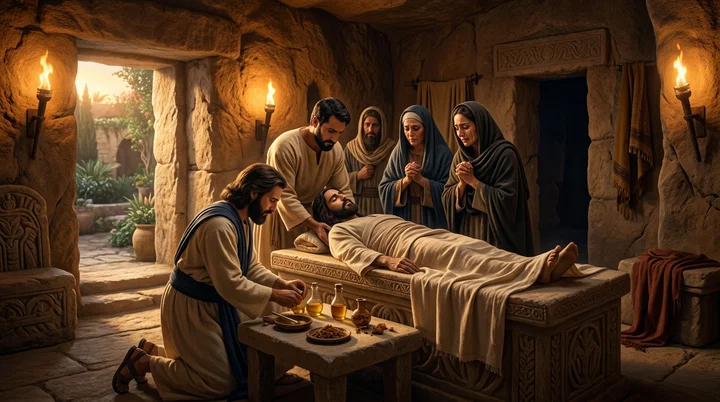
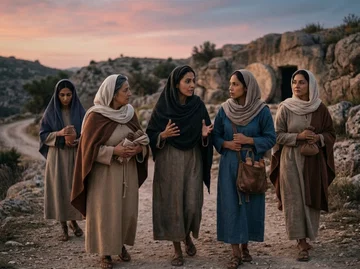
And they returned, and prepared spices and ointments; and rested the sabbath day according to the commandment.
Translations
American King James Version, King James Version, KJV Cambridge Paragraph Bible
And they returned, and prepared spices and ointments; and rested the sabbath day according to the commandment.
And they returned, and prepared spices and ointments; and rested on the sabbath, according to the commandment.
Revised Version, American Standard Version
And they returned, and prepared spices and ointments. And on the sabbath they rested according to the commandment.
and having turned back, they made ready spices and ointments, and on the sabbath, indeed, they rested, according to the command.
And having returned they prepared aromatic spices and ointments, and remained quiet on the sabbath, according to the commandment.
And, returning, they made ready spices and perfumes. And, on the Sabbath, indeed, they were quiet, according to the commandment;
Berean Standard Bible, Majority Standard Bible
Then they returned to prepare spices and perfumes. And they rested on the Sabbath, according to the commandment.
They returned and prepared spices and ointments. On the Sabbath they rested according to the commandment.
And they went back and got ready spices and perfumes; and on the Sabbath they took their rest, in agreement with the law.
And they returned and prepared odours, and ointments, and rested the Sabbath day according to the commandement.
Douay-Rheims (Challoner revision)
And returning, they prepared spices and ointments; and on the sabbath day they rested, according to the commandment.
Pictures
Cross-references 20 of 85
- Exodus 20:10
But the seventh day is the sabbath of the LORD thy God: in it thou shalt not do any work, thou, nor thy son, nor thy daughter, thy manservant, nor thy maidservant, nor thy cattle, nor thy stranger that is within thy gates:
The women rested on the Sabbath according to the commandment.
- Luke 24:1
Now upon the first day of the week, very early in the morning, they came unto the sepulchre, bringing the spices which they had prepared, and certain others with them.
Places the first day after the Sabbath on which the women rested.
- Mark 16:1-2
And when the sabbath was past, Mary Magdalene, and Mary the mother of James, and Salome, had bought sweet spices, that they might come and anoint him.
The women rested on the Sabbath, then brought spices to the tomb after it had passed.
- Genesis 2:2-3
And on the seventh day God ended his work which he had made; and he rested on the seventh day from all his work which he had made.
God rested on the seventh day and blessed and sanctified it.
- Matthew 28:1
In the end of the sabbath, as it began to dawn toward the first day of the week, came Mary Magdalene and the other Mary to see the sepulchre.
Places the first day of the week after the Sabbath.
- Luke 4:16
And he came to Nazareth, where he had been brought up: and, as his custom was, he went into the synagogue on the sabbath day, and stood up for to read.
Jesus’ Sabbath custom corresponds with the women resting on the Sabbath.
- Exodus 16:22-23
And it came to pass, that on the sixth day they gathered twice as much bread, two omers for one man: and all the rulers of the congregation came and told Moses.
The manna instruction identifies the seventh day as the Sabbath and prepares food beforehand.
- John 20:1
The first day of the week cometh Mary Magdalene early, when it was yet dark, unto the sepulchre, and seeth the stone taken away from the sepulchre.
Mary comes to the tomb early on the first day, after the Sabbath.
- Isaiah 58:13
If thou turn away thy foot from the sabbath, from doing thy pleasure on my holy day; and call the sabbath a delight, the holy of the LORD, honourable; and shalt honour him, not doing thine own ways, nor finding thine own pleasure, nor speaking thine own words:
Calls the Sabbath the Lord’s holy day and describes honoring it.
- Mark 15:42
And now when the even was come, because it was the preparation, that is, the day before the sabbath,
Identifies the crucifixion day as the day before the Sabbath.
- Matthew 5:17-19
Think not that I am come to destroy the law, or the prophets: I am not come to destroy, but to fulfil.
Jesus upheld the law and its commandments, including the Sabbath commandment.
- John 19:31
The Jews therefore, because it was the preparation, that the bodies should not remain upon the cross on the sabbath day, ( for that sabbath day was an high day,) besought Pilate that their legs might be broken, and that they might be taken away.
Identifies the Sabbath after Jesus’ death as a high day.
- Isaiah 66:23
And it shall come to pass, that from one new moon to another, and from one sabbath to another, shall all flesh come to worship before me, saith the LORD.
Both affirm Sabbath observance beyond the cross, with worship from Sabbath to Sabbath.
- Colossians 2:16-17
Let no man therefore judge you in meat, or in drink, or in respect of an holyday, or of the new moon, or of the sabbath days:
Distinguishes the Sabbath commandment from ceremonial sabbaths described as shadows.
- Hebrews 4:4
For he spake in a certain place of the seventh day on this wise, And God did rest the seventh day from all his works.
Both identify the seventh day as the day God rested.
- Exodus 31:12-18
And the LORD spake unto Moses, saying,
The Sabbath is described as a perpetual covenant.
- Ezekiel 20:12
Moreover also I gave them my sabbaths, to be a sign between me and them, that they might know that I am the LORD that sanctify them.
Both identify the Sabbath as a sign and commandment.
- Mark 16:9
Now when Jesus was risen early the first day of the week, he appeared first to Mary Magdalene, out of whom he had cast seven devils.
Places Christ’s resurrection on the first day after the Sabbath rest.
- Mark 2:28
Therefore the Son of man is Lord also of the sabbath.
Jesus and his followers kept the Sabbath over which he is Lord.
- John 15:10
If ye keep my commandments, ye shall abide in my love; even as I have kept my Father’s commandments, and abide in his love.
Jesus says he kept his Father’s commandments.
Commentary part 1 of 2
Each commentary is drawn from primary sources: the writings of Ellen G. White and Adventist pioneers and periodicals. Each commentary is separate. Its own words are not a quotation; follow the references to read the source passages.
Ellen G. White
16 sources
The women who loved Jesus watched where he was laid, and because the Sabbath was pressing close they left his burial unfinished, prepared spices and ointments beforehand, then set that loving work aside to rest. COS 175.1–3Ms 111, 1897, par. 63–6412MR 420.23SP 176.15RED 95.2 While he lay in the tomb through the Sabbath hours, his disciples waited behind closed doors in lonely grief, and the women waited until the first day of the week to return, with no thought that he would rise. COS 175.1–3Ms 111, 1897, par. 63–64ST Aug 22, 1878DA 788.1SG1 65.2 In resting on the Sabbath according to the commandment after his death, they kept the seventh day, Saturday, in obedience and showed that the commandment was still binding and not abolished. ST Nov 12, 1894Ms 91, 1894, par. 3–5Lt 163, 1904, par. 4–7 Not even their care for Jesus led them to work on that day, and Christ himself resting in the tomb on the Sabbath while rising on the first day did not make that day the Sabbath or change the commandment. COS 175.1–3SG1 65.2ST Dec 14, 1882
Burial Setting and Actions
The women who had come with Jesus from Galilee followed to the burial place on the preparation day as the Sabbath drew on, and saw the tomb and how His body was laid.Ms 111, 1897, par. 63–64 They came near and watched as His body was placed in the tomb, then lingered there in grief, and their staying shows their devotion and care in witnessing where He was laid.3SP 176.15RED 95.2 The burial was hurried because the Sabbath was near, so the work of preparing His body could not be completed before it began.3SP 186.3–187.1 Before the Sabbath the women prepared spices and ointments to anoint and embalm His body for burial, then set them aside and paused that caring work until after the Sabbath.COS 175.1–312MR 420.2ST Aug 22, 1878ST Dec 14, 18823SP 198.2
They kept the Sabbath and waited for its hours to pass, then went to the tomb early on the first day of the week with the spices to anoint Him and to continue preparing and embalming His body for burial.COS 175.1–3ST Aug 22, 1878ST Dec 14, 1882DA 788.13SP 198.2 During that same Sabbath the disciples spent the time lonely and sick at heart behind closed and fastened doors while grieving His death.Ms 111, 1897, par. 63–64 At that time He lay in the tomb and rested there through the Sabbath before His resurrection.SG1 65.2EW 149.2–3 When they prepared to return to the tomb, the women did not expect Him to rise from the dead.DA 788.1
Sabbath Kept After Death
After his death his followers rested on the Sabbath day according to the commandment, in obedience to it.ST Nov 12, 1894Ms 91, 1894, par. 3–5Lt 163, 1904, par. 4–73SP 186.3–187.1SG1 65.2 The women rested on the seventh day after preparing spices and ointments for his burial, and the seventh day is Saturday, not Sunday.Lt 163, 1904, par. 4–73SP 186.3–187.1 The burial was hurried because the Sabbath was near, so the work of preparing his body could not be completed before it began.3SP 186.3–187.1 While grieving his death the disciples rested on the Sabbath according to the commandment.SG1 65.2
They had prepared spices and ointments to embalm his body, but because he was buried on Friday they set them aside and waited until the Sabbath had passed.COS 175.1–3 Even this work of care for Jesus did not lead them to work on the Sabbath.COS 175.1–3 Their keeping of it shows that the Sabbath commandment remained binding after his death and was honored by his disciples, rather than being treated as changed or abolished.ST Nov 12, 1894Ms 91, 1894, par. 3–5
Christ himself rested in the tomb through that Sabbath before his resurrection.SG1 65.2ST Dec 14, 1882 His rising on the first day did not make that day a Sabbath nor change the Sabbath commandment.ST Dec 14, 1882
Sources
Pioneers and periodicals
321 sources
After seeing where Jesus was laid, the women returned and prepared spices and ointments, then rested on the Sabbath according to the commandment and delayed coming to anoint him until very early on the first day.ST May 10, 1905RH Apr 7, 1851ST Apr 21, 1914 The Sabbath they kept is the seventh day of the week, Saturday, the day before the first day of the week, Sunday, proved by its position between the preparation day of the crucifixion and the first day of the resurrection.ST Apr 21, 1914ST Jul 20, 1882ST Feb 16, 1882 According to the commandment means in obedience to the fourth commandment of the Decalogue, which specifies the seventh day as the Sabbath of the Lord to be kept holy by doing no work.ST Apr 21, 1914ST Oct 3, 1900RH Dec 24, 1861 Their rest proves the Sabbath and the fourth commandment remained in force, binding, and observed by Christians after the cross and after Jesus' death, and were not abolished, expired, or transferred to the first day.ST May 10, 1905RH Apr 7, 1851ST Jul 20, 1882 The first day after the Sabbath was still an ordinary working day with no sacred title, when buying, bringing spices and burial work was permitted, and there is no instruction from Christ changing the Sabbath to that day.ST Jul 4, 1905ST Nov 8, 1905STST Sep 20, 1899ST Oct 21, 1886 Having completed redemption near the close of the sixth day, Jesus was laid to rest before the Sabbath and rested in the tomb throughout that Sabbath just as God rested at creation, making the seventh day the memorial of both works.STST Dec 7, 1915
Narrative Setting and Order
After seeing where he was laid, the women who had come from Galilee returned and prepared spices and ointments, then rested on the Sabbath according to the commandment, delaying the anointing until very early on the first day when they came to the tomb.ST May 10, 1905RH Apr 7, 1851ST Apr 21, 1914ST Jul 20, 1882 With time before sunset they could prepare spices and ointments but could not complete the anointing without trespassing on the sacred hours of the Sabbath which drew on, so rather than violate the holy law they waited until very early in the morning of the first day to perform the manual labor involved.ST Apr 21, 1914RH Jul 15, 1915ST Oct 7, 1930ST Aug 17, 1904RH Apr 7, 1851 Since the following day was the first day of the week, the Sabbath they kept was the seventh day of the week, hallowed in Eden in memory of creation, as the manna account confirms.ST Feb 16, 1882ST Mar 11, 1886
Jesus was crucified and buried on the sixth day, Friday, the preparation day as the Sabbath drew near at sunset, and the women did not return to the tomb until after the Sabbath at dawn on the first day.ST Mar 11, 1886RH Jul 15, 1915ST Oct 7, 1930ST Aug 17, 1904RH Apr 7, 1851 He died at about three in the afternoon, leaving time before the Sabbath for burial and preparation, and the disciples then stopped work as the Sabbath approached and did the postponed work on the first day.RH Jul 15, 1915RH Apr 12, 1860RH Apr 7, 1851 The preparation day here was the day before the weekly Sabbath, not merely the Passover preparation day.ST Oct 7, 1930RH Apr 12, 1860
The spices and ointments were prepared on Friday before the Sabbath, and when the Sabbath was past more spices were bought, with no contradiction between the accounts.ST Nov 11, 1930RH Feb 5, 1914RH Apr 12, 1860 Their preparation lay between the high ceremonial Sabbath and the weekly Sabbath, identifying the kept Sabbath as the weekly seventh-day Sabbath distinct from the Passover high day.RH Apr 12, 1860RH Apr 12, 1860RH Mar 1, 1906RH Apr 12, 1860 The small difference in detail proves the truthfulness and honest purpose of the writers, who kept the main facts in view and let insignificant details drop from sight.ST Nov 11, 1930 Although the first day of Passover on Nisan 15 was a holy convocation with no servile work, preparing necessary food was permitted, so that festival rest day could also be the preparation day before the weekly Sabbath.RH Feb 5, 1914RH Mar 1, 1906
That Passover was eaten Thursday evening on Nisan 14, the first festival day Nisan 15 fell on Friday, and the fifty days to Pentecost were counted from the sixteenth day of the month.ST Mar 11, 1886RH Feb 12, 1914 The Sabbath kept was Nisan 16 when the wave sheaf was offered, making it a high day, and in that year the wave-sheaf day fell on the weekly Sabbath.RH Feb 12, 1914ST Mar 11, 1886 The fifty days counted from Nisan 16 in that year brought Pentecost to the seventh day, with that sixteenth-day Sabbath as the first of the fifty days and supplying the starting point for counting the seven Sabbaths.ST Mar 11, 1886ST Mar 11, 1886RH Apr 15, 1873 It may also have coincided with the Passover Sabbath on Nisan 15, but the distinction between the Lord's weekly Sabbath and the Passover holy days is needed to understand the chronology.ST Oct 7, 1930
The sequence places the Sabbath between death on Friday and the empty tomb on the first day, with burial on the preparation day the day before the Sabbath and resurrection on the first day the third day after crucifixion.ST Feb 8, 1883RH Feb 12, 1914 Part of Friday, all of the Sabbath, and part of Sunday are counted as three days, so resurrection on the third day does not require three full days in the tomb.ST Jul 25, 1911RH Feb 12, 1914ST Apr 21, 1914 The three days and three nights mean in a general way parts or the whole of three days, not seventy-two hours, with Jesus crucified later on Friday after arrest on Thursday night, resting in the tomb on the Sabbath, and rising in the middle of the third day which was the first day.ST Jul 25, 1911ST Apr 21, 1914 All of the sixth day, all of that Sabbath, and part of the first day he was in the power of earth's rulers, held by earthly powers centered at Rome from arrest to Sunday morning beginning with the power of darkness, not in the grave alone.ST Jul 25, 1911ST Jun 14, 1899ST Apr 21, 1914 Together with his prediction that he would rise on the third day, the timing places the resurrection no earlier than the first day of the week.ST Feb 8, 1883
The disciples kept the whole Sabbath from its beginning at sunset and did not visit the tomb before it ended, ruling out a Sabbath resurrection.RH Aug 12, 1875RH Feb 7, 1871ST Feb 3, 1881RH Feb 13, 1866ST Aug 12, 1880 They scrupulously abstained from work at its beginning after preparing spices and ointments, and did not clip off its end by making a journey to the sepulcher, since such a journey would interrupt the rest observed from the Sabbath's beginning.RH Aug 12, 1875RH Feb 7, 1871ST Aug 12, 1880 The Sabbath began at sundown on Friday and ended with Saturday, and they expected to return on Sunday morning to complete the burial preparations.RH Jan 2, 1900ST Aug 12, 1880 The first visit learning of the resurrection was very early on the first day after the Sabbath at dawn, for if they had already visited near the close of the Sabbath and learned of the resurrection they would not have come the next morning to embalm him.RH Jan 2, 1900ST Feb 3, 1881RH Feb 13, 1866
None of the disciples expected the resurrection; when he was crucified all their hopes perished and they were left wretched and forlorn, believing the one on whom all hopes had centered would molder in the tomb.ST Jan 1, 1894RH Oct 21, 1862ST Jun 9, 1898 Had they understood and believed what they had been taught about death and resurrection their conduct would have been very different, but in unbelief the women prepared spices and ointments to fitly prepare his body for resting in the grave.ST Jan 1, 1894ST Jun 9, 1898 Their keeping of the Sabbath before seeking to anoint him shows they sought only a dead Christ with no expectation of miracle, because not one remembered his often repeated promise that on the third day he would rise again, and with the disciples' return to occupations their preparations show they did not expect him to rise.RH Oct 21, 1862ST Jun 9, 1898
On that same Sabbath the chief priests and Pharisees in the spirit of the devil came to Pilate to ask for a guard and to secure and seal the tomb.RH Aug 12, 1875 The verse concerns the same Jesus the Jews crucified, whose body Joseph begged and laid in the tomb, where the grave could not hold him because he was the Son of God, before he rose and went to heaven in a cloud.RH Dec 5, 1865 That tomb was new and unused, a rock tomb a short distance away.RH Dec 5, 1865
Identity of Sabbath Day
The Sabbath in the verse is the seventh day of the week, Saturday, the day before the first day of the week, Sunday, proved by its position between the preparation day of the crucifixion and the first day of the resurrection.ST Jul 20, 1882ST Feb 16, 1882RH Jul 25, 1912ST May 24, 1883ST Jul 11, 1916 Christ was crucified on Friday afternoon and his followers had time before sunset to prepare spices and ointments but not time to complete the anointing without trespassing on the sacred hours of the Sabbath which drew on, so they rested and then waited until very early in the morning of the first day to come to the sepulcher to perform the manual labor involved.ST Apr 21, 1914RH Jul 25, 1912ST May 24, 1883 The sequence places this Sabbath after the preparation day and before the first day of the week, identifying it as the seventh day of the New Testament week, the day identified in the commandment as hallowed by God in Eden in memory of creation.ST Feb 16, 1882ST May 24, 1883ST Jul 11, 1916 The manna account confirms that this seventh day was known as the Sabbath when the law was given.ST Feb 16, 1882
The commanded Sabbath is a definite particular seventh and last day of the seven-day weekly cycle, commonly called Saturday, not merely any one day in seven and not an indefinite seventh part of time.ST Dec 3, 1894ST Mar 4, 1886ST Feb 10, 1898 It is not a seventh day of the month or year, and not a day made seventh by counting from Monday.ST Feb 10, 1898RH Oct 13, 1874ST Feb 12, 1880 The proof is that Luke calls the following day the first day of the week, and since there are only seven days in a week the day before the first day must be the seventh day.ST Feb 10, 1898RH Oct 13, 1874ST Feb 12, 1880 That seventh day is the same day on which God rested at creation and which Exodus 20:8-11 commands to keep holy, so the blessed seventh day is not a long indefinite period but the weekly seventh day on which people are to rest as God rested.ST Dec 3, 1894ST Mar 4, 1886ST Sep 20, 1883 Obedience to that command — not merely following the disciples' example — is the reason to keep it.ST Dec 3, 1894
The Sabbath kept is the weekly Sabbath required by the commandment, not merely a ceremonial or Passover Sabbath.RH Feb 7, 1871RH Aug 12, 1875ST Feb 3, 1881 It came immediately after the preparation day on which the crucifixion took place, and the women kept it by resting in obedience to the commandment.RH Feb 7, 1871RH Aug 12, 1875ST Feb 3, 1881 The weekly Sabbath survived the passing away of the typical system at the cross and is distinct from the typical or shadowy sabbaths that were abolished there.RH Apr 12, 1860ST Jan 22, 1885 The preparation of spices lay between the high ceremonial Sabbath and the weekly Sabbath, distinguishing the Sabbath kept by the commandment from the high ceremonial Sabbath and identifying the commandment Sabbath as the weekly seventh-day Sabbath.RH Apr 12, 1860ST Jan 22, 1885
Friday, Saturday, and Sunday stand in unbroken order as preparation, Sabbath, and first day, with the Sabbath ending before the first day begins.ST Apr 15, 1886RH Apr 8, 1873RH Jun 12, 1855ST Dec 4, 1893ST Sep 26, 1911 The Sabbath immediately preceded the first day of the week, and Jesus' followers rested on it in obedience to the commandment, confirming the Sabbath's identity and the continued order of the week.ST Apr 15, 1886ST Aug 30, 1905ST Dec 4, 1893 The women prepared spices and ointments on the evening of Christ's burial, then rested on the Sabbath day in obedience to the commandment, and then came to the sepulchre bringing the spices very early in the morning upon the first day of the week, so the Sabbath kept according to the commandment is distinct from and ends before the first day dawns.RH Apr 8, 1873RH Jun 12, 1855ST Dec 4, 1893 The Sabbath was the day immediately after the preparation day, Friday, and immediately before the first day of the week, Sunday, and their resuming ordinary work of preparing, buying, bringing spices and visiting the tomb on that first day proves the days are distinct.ST Apr 15, 1886ST Aug 30, 1905ST Sep 26, 1911
On a round world, anyone who can identify Sunday can identify the Sabbath as the day immediately before it.RH Aug 19, 1915ST Dec 18, 1907ST Jan 6, 1909 The next verse places the return to the tomb on the first day of the week, so the Sabbath was the day immediately before it.RH Aug 19, 1915ST Dec 18, 1907ST Jun 14, 1899 In Spanish, Sábado means both Saturday and Sabbath, making the verse identify the commanded Sabbath with Saturday rather than Sunday.RH May 16, 1907 The day Luke calls the Sabbath must be the Sabbath day and the day he calls the first day of the week must be the first day of the week, even though he wrote thirty or more years after the resurrection, guarding the Sabbath question in connection with the resurrection so there can be no question about it.ST Jun 28, 1905ST Jan 6, 1909 It is the day the Jews kept then and still keep now, the day just before Sunday, proving Saturday is the seventh day and Sunday is the first day, kept from Friday sunset to Saturday sunset, with the Bible first day beginning at sunset after that Sabbath while the Roman Sunday did not begin until midnight after that day.ST Jun 14, 1899ST Jun 28, 1905ST Jan 6, 1909
There is no other Bible Sabbath according to the commandment; it is the one Sabbath recognized from Genesis to Revelation.ST Sep 29, 1914ST Oct 2, 1893 God set apart only one day as the Sabbath, the seventh day, the day just before the first day of the week, and the first day did not come till the Sabbath was past.ST Sep 29, 1914ST Dec 4, 1884ST Oct 2, 1893 The Sabbath kept according to the commandment at the time Christ lay in the tomb is the day between the preparation day of the crucifixion and the first day of the week of the resurrection, which is Saturday, proving the weekly cycle was not lost.ST Sep 29, 1914ST Dec 4, 1884 It is the only weekly holy day known in Scripture, the seventh-day Sabbath commanded in the fourth commandment and part of God's commandments, the day God recognizes as his day, proving that Saturday is the Lord's day.ST Dec 4, 1884ST Oct 5, 1882ST May 11, 1904ST Oct 2, 1893
Meaning of According Commandment
According to the commandment means in obedience to the fourth commandment of the Decalogue, which specifies that the seventh day of each recurring week is the Sabbath of Jehovah, the Sabbath of the Lord to be remembered and kept holy by doing no work because God made heaven and earth in six days and rested, blessed and hallowed the seventh.ST Apr 21, 1914ST Oct 3, 1900RH Dec 24, 1861RH May 5, 1874 Christ was crucified on Friday afternoon and His followers followed His body to the tomb with time before sunset to prepare spices and ointments but not time to complete the anointing without trespassing on the sacred hours of the Sabbath which drew on.ST Apr 21, 1914ST Sep 16, 1880ST Apr 11, 1900 Rather than violate God's holy law they rested the Sabbath day according to the commandment, for even an act like anointing the body of the Lord of glory did not justify Sabbath work, and their consciences made tender in the school of Christ would not permit that last act of love on His holy day.ST Apr 21, 1914ST Sep 10, 1885 With consciences void of offense toward God they waited until very early in the morning of the first day of the week to come to the sepulcher to perform the manual labor involved in anointing the body of Jesus.ST Apr 21, 1914ST Sep 16, 1880RH May 5, 1874 The day they kept was the last or seventh day of the week, because the following day when they returned to the sepulchre was the first day of the week, which proves the seventh day of the commandment is the seventh day of the New Testament week, the seventh day hallowed in Eden as a memorial of the Creator's rest and still the Sabbath after the cross rather than Sunday.RH Dec 24, 1861ST Sep 16, 1880ST Apr 11, 1900RH May 5, 1874
Luke writing twenty-eight to nearly thirty years and even decades after the resurrection under the Holy Spirit still recognizes the commandment as existing and binding, still calls the day the Sabbath and the obligation the commandment without correction or hint of change.ST Sep 20, 1899RH Feb 27, 1872RH Jun 5, 1860RH Mar 1, 1864 The record written twenty-eight years after the resurrection still gives no hint of any change from seventh day to first day, but saves the work of preparing and bringing spices for the first day as an ordinary working day with no sacred title.ST Sep 20, 1899RH Feb 27, 1872 The reference to the commandment as the rule by which the Sabbath rest was kept shows it was regarded as existing and in force when Luke wrote, presenting Sabbath observance according to the commandment as a fact important to the Christian church after Christ's death and burial before the resurrection.RH Jun 5, 1860RH Mar 1, 1864 They had not learned that the Sabbath commandment was supposedly abolished at the cross with the ceremonial laws, and Luke's later account does not identify their observance as a mistake, which would make no sense if it had been abolished or expired.RH Mar 25, 1862
The verse presents God's commanded Sabbath as the reason to keep it, not merely the disciples' example or human tradition.ST Oct 3, 1900ST Dec 3, 1894 The Sabbath was the seventh day of the week, the day between Jesus' crucifixion on the preparation day and the women's visit to the tomb on the first day of the week, not an indefinite seventh part of time.ST Dec 3, 1894 Their observance followed the commandment's stated day and its prohibition of work, and they worshiped in spirit and in truth.ST Dec 3, 1894ST Sep 10, 1885 Although traditional Sabbath rules and God's Sabbath fell on the same day, keeping the day according to the commandment required holiness and a spiritual obedience that the Pharisees' added restrictions did not provide.ST Oct 3, 1900
Their rest was obedience to the then-in-force fourth commandment given at Sinai, the Edenic Sabbath for the race before sin and types, of the immutable moral Decalogue, not a shadowy ceremonial sabbath nailed to the cross nor mere deference to custom, fear, or Pharisaic tradition.ST Sep 29, 1909RH Mar 19, 1857RH Mar 31, 1863RH May 12, 1859 It was the same seventh day blessed and sanctified in Eden before sin came and before typical services for sin existed, the same day kept by Jesus Christ, not a temporary ceremonial sabbath that met its antitype and passed away at Calvary.ST Sep 29, 1909RH Mar 19, 1857RH Mar 31, 1863 Calling it the Sabbath would make no sense if it had been abolished, for the Sabbath still existed as a day of rest and the ten commandments as the outward expression of God's character could not be changed.RH May 12, 1859 Their observance is presented as obedience to a commandment requiring Sabbath rest that was in force at that time, showing the Sabbath commandment of the moral law remained after the typical sabbaths were nailed to the cross.RH Mar 31, 1863RH May 12, 1859 There is no Scriptural authority for observing the first day of the week as the Sabbath, and what the disciples did then they did ever afterward as the continuing apostolic pattern, with the Bible Sabbath remaining binding.ST Sep 29, 1909
Sabbath Binding After Cross
The women who had come from Galilee prepared spices and ointments after the crucifixion and then rested on the Sabbath in keeping with the commandment, and their observance presents the seventh-day Sabbath as the day faithful followers continued to keep after his death.ST May 10, 1905ST Jul 20, 1882RH Jul 25, 1912RH Jan 1851 After Jesus was crucified and laid in the tomb they delayed the anointing until the Sabbath had passed, which identifies the Sabbath as still binding after his death and distinguishes it from animal sacrifices and offerings that ended at the cross.RH Apr 7, 1851RH Jul 25, 1912RH Jan 1851 Luke places this rest before the first day of the week, showing that the Sabbath was observed after the cross and that Christ's death did not abolish it, for the Sabbath remains an Edenic institution under the new covenant.ST May 10, 1905ST Jul 20, 1882 It is the first evidence after the cross that the Sabbath and fourth commandment remained in force and binding and were observed by Christians after Jesus' death, not abolished, expired, repealed, or transferred to the first day, sanctioning observance long after the ascension.ST May 10, 1905RH Apr 7, 1851ST Jul 20, 1882RH Jul 25, 1912
The followers prepared spices and then rested on the seventh-day Sabbath in obedience to the commandment, and only afterward came to the tomb early on the first day of the week.RH Jan 17, 1856ST Aug 8, 1906RH Jan 19, 1860 This post-crucifixion setting means the Sabbath obligation remained binding after the cross, the seventh day was still called the Sabbath in the gospel dispensation, and the first day had no Sabbath character, institution, sanctity, command, or observance attached to it.RH Jan 17, 1856ST Aug 8, 1906RH Jan 19, 1860 Luke recorded this fact several years after the crucifixion and still calls their Sabbath rest obedience to the commandment, which proves the Sabbath law was not abolished at the crucifixion.RH Aug 13, 1857RH May 15, 1866RH Feb 7, 1916 Christ's apostles and followers kept the seventh-day Sabbath after his death through the crucifixion until after the resurrection, proving the Sabbath remained binding and continuing without break from creation and Sinai into the Christian age as a plant of God's own planting.RH May 15, 1866RH Feb 7, 1916ST Aug 8, 1906 The rest after the crucifixion therefore proves the Sabbath law remained binding in the gospel and Christian dispensation, not abolished, changed, blotted out, or nailed to the cross, still acknowledged as an existing institution that must still be kept now as the disciples kept it.RH Jan 17, 1856RH Aug 13, 1857RH May 15, 1866RH Feb 7, 1916RH Jan 19, 1860
The disciples rested on the seventh-day Sabbath while Christ lay in the grave, even after his shed blood had sealed the new covenant.ST Sep 23, 1913RH Jan 24, 1907ST Oct 15, 1902ST Jun 6, 1900 Their rest was according to the fourth commandment, proving the Sabbath remained binding after all types and shadows ceased at the cross.RH Jan 24, 1907ST Oct 15, 1902ST Sep 9, 1913 The sequence places the Sabbath between Jesus' death on Friday and the first day of the week, so Sunday cannot be the Sabbath of the new covenant because the covenant was sealed by Christ's blood before that first day.ST Sep 23, 1913ST Jun 6, 1900ST May 12, 1914 The Gospel writers after the crucifixion still spoke of the Sabbath familiarly as an existing institution, and Jesus' keeping of Saturday with the Sabbath commandment stands as an example relevant to believers, not one to be dismissed as belonging only to the old covenant.RH Jan 24, 1907ST Sep 9, 1913ST May 12, 1914 The Sabbath thus belongs under the new covenant and cannot be removed, and a first-day Sabbath could not be added afterward.ST Sep 23, 1913RH Jan 24, 1907ST Oct 15, 1902ST Jun 6, 1900ST May 12, 1914
The Sabbath of the fourth commandment was still observed after Christ's death when the women rested on it according to the commandment, showing the Sabbath was not abolished at the cross, unlike circumcision and the ceremonial law.RH Dec 16, 1858RH Jan 11, 1870RH Aug 5, 1852 After Jesus' death the women prepared spices and ointments, then rested on the Sabbath according to the commandment, which is evidence that the Sabbath commandment remained in force during the gospel era, not as a command reissued as a new law in the New Testament.RH Dec 16, 1858RH May 2, 1854RH Aug 5, 1852 After the ceremonial law was abolished at the cross the disciples still kept the seventh-day Sabbath according to the commandment, confirming that the Sabbath commandment remained in force.RH Jan 11, 1870RH Dec 1850RH Mar 25, 1862 Their example shows that keeping the Sabbath belongs to the patience of Jesus' followers even after the handwriting of ordinances was nailed to the cross, and because the Sabbath commandment had not been abolished it did not need to be re-enacted in the New Testament.RH May 2, 1854RH Dec 1850RH Mar 25, 1862 The Sabbath was therefore not abolished at the cross unlike those ordinances, and after they were abolished the disciples still kept the seventh day as part of the enduring moral law made for humanity, without needing a New Testament re-enactment.RH Dec 16, 1858RH May 2, 1854RH Jan 11, 1870RH Aug 5, 1852RH Dec 1850
After Jesus' death his followers rested on the seventh-day Sabbath in obedience to the commandment before the resurrection, with the Sabbath falling between death and resurrection morning.ST Sep 29, 1909 The women who had been with Jesus rested on the Sabbath after his crucifixion and resumed their work on the first day of the week, and after the Sabbath had passed they went to the tomb on the first day, showing they knew of no change to the Sabbath.RH Oct 31, 1854 At Christ's crucifixion the followers knew which day was the seventh day when after preparing spices and ointments they rested according to the commandment, fixing the identity of the seventh-day Sabbath at that time and proving the true reckoning of days has not been lost since then.RH Feb 26, 1867RH Oct 31, 1854RH Jul 21, 1853 What the disciples did then they did ever afterward as the continuing apostolic pattern, keeping the same seventh day blessed and sanctified in Eden before sin and before typical services existed, the Sabbath of the fourth commandment and of the immutable moral Decalogue, not a shadowy ceremonial sabbath that met its antitype at Calvary.ST Sep 29, 1909 Their practice is thus evidence they observed the Sabbath rather than the first day, and it confirms the Sabbath commandment remained in force after Christ's death and resurrection and was not replaced by Sunday observance.RH Feb 26, 1867ST Sep 29, 1909
Those who held otherwise taught that this keeping was the last time the disciples kept the Jewish Sabbath.RH Jan 23, 1855 In that teaching, up to the resurrection the seventh-day Sabbath is consistently referred to and kept, but after the resurrection it is changed to the first day of the week, since Christ as Lord also of the Sabbath had the right to change it, leaving the gospel dispensation with six days of holy labor and one day of holy rest on the first day.RH Mar 22, 1864RH Jan 16, 1866 On that view their observance occurred before the resurrection and therefore does not prove that the Sabbath remains binding afterward, and the question of continuing obligation must be judged in light of later apostolic teaching, just as Paul's actions concerning purification and circumcision do not by themselves make those practices binding.RH Jan 23, 1855RH Feb 21, 1854RH Mar 22, 1864 Those who held otherwise also taught that the apostles were not fully taught the truth before Pentecost and therefore could not keep the new Sabbath until the Holy Spirit instructed them.RH Dec 16, 1858 In that further teaching, Christ's followers could not keep the day he lay in the tomb as a festival and therefore rejoiced on the day he rose, prompting a change from the Sabbath to Sunday without ecclesiastical law, divine authority, or prophetic command.RH Dec 16, 1858ST Aug 8, 1900
Sabbath Distinct From Shadows
The rest on the Sabbath according to the commandment after Jesus' death distinguishes the Sabbath from animal sacrifices and offerings, which ended at the cross.RH Apr 7, 1851RH Sep 2, 1851 It sets obedience to the enduring commandment apart from the law of Moses written in a book, which could be blotted out and nailed to the cross.RH May 3, 1860ST Oct 24, 1878RH Oct 7, 1851 The rest kept was rest from labor, not the offering of sacrifices, for the Sabbath commandment required rest, and its observance before and after the sacrificial practices shows those practices were not part of the commandment.RH Apr 7, 1851RH Sep 2, 1851 The keeping after the temple veil was torn shows the Sabbath had not been abolished with the ceremonial shadows, and it was kept according to the commandment, not through ignorance, superstition, or fear.RH Sep 2, 1851ST Oct 24, 1878 The seventh-day Sabbath so kept belongs to God's enduring moral law, not to the ceremonial law that was removed at the cross, after the law of types and shadows was nailed to the cross, distinct from the ceremonial feast-day sabbaths.ST Oct 24, 1878RH Oct 7, 1851
The weekly Sabbath is distinct from the ceremonial sabbaths associated with Israel's feasts, which were abolished at the cross.ST Sep 22, 1909RH May 3, 1860RH Jan 14, 1862 The annual typical sabbaths were nailed to the cross as part of the handwriting of ordinances which were a shadow of redemption, but the weekly Sabbath was not part of that handwriting because it was instituted before sin entered the world and before any shadow of redemption existed, and because it was written by the finger of God in the bosom of the moral law.RH May 3, 1860RH Jan 14, 1862 The keeping of the Sabbath on the day following the crucifixion expressly recognizes the continued authority of the Sabbath commandment of the moral law.ST Sep 22, 1909RH Jan 14, 1862 That Sabbath of the fourth commandment continues under the new covenant after the crucifixion, kept by the followers of Jesus as the same seventh day He and they had kept before His death and now received as a covenant blessing through His death.ST Sep 22, 1909RH May 3, 1860 It is the seventh day of creation sanctified for mankind in Eden, kept from the beginning by patriarch, priest, prophet, and king and honored by Jesus in both life and death, even by His resting in the grave on the Sabbath, which was not abolished at the cross.ST Sep 22, 1909RH May 3, 1860
It is the seventh day of the week, because the next day was the first day of the week, so the commandment means the seventh day of the week.ST Sep 22, 1909ST Oct 24, 1878 The keeping of that first Sabbath after the death of Christ requires the keeping of every succeeding Sabbath, proving the cross does not abrogate, change, limit, or modify the command to remember the Sabbath day to keep it holy.ST Sep 22, 1909 Resting according to the commandment is an act of obedience and the fruit of faith and love, not an unnecessary work or a substitute for love.RH Apr 28, 1853RH May 26, 1853RH Jun 10, 1852 The Sabbath so kept is a day of rest set apart for holy use under a perpetual covenant, not a yoke of bondage.RH Apr 28, 1853RH May 26, 1853 Its observance on the far side of the cross is distinguished from circumcision, which is described as a yoke of bondage, and the seventh day at the time of the cross was not treated as a day abolished there or as a yoke of bondage.ST Feb 8, 1883
The day that seems inconvenient is so because of custom, not because keeping the seventh day is inherently harder.ST Feb 8, 1883 Their observance shows the Sabbath commandment was still binding at that time, so it had not been abolished before the crucifixion, and Christ did not break an existing Sabbath law but His crucifixion attested the law's majesty.RH Jun 10, 1852ST Feb 8, 1883
Sources