Translations
American King James Version, King James Version, KJV Cambridge Paragraph Bible
For the Son of man is Lord even of the sabbath day.
Webster Bible, Douay-Rheims (Challoner revision)
For the Son of man is Lord even of the sabbath.
Revised Version, American Standard Version
For the Son of man is lord of the sabbath.
for the son of man is lord even of the sabbath.'
For the Son of man is Lord of the sabbath.
For, the Son of Man, is, Lord of the Sabbath.
Berean Standard Bible, Majority Standard Bible, World English Bible
For the Son of Man is Lord of the Sabbath.”
For the Son of man is lord of the Sabbath.
For the sonne of man is Lord, euen of the Sabbath.
Pictures
Cross-references 20 of 73
- Exodus 20:10
But the seventh day is the sabbath of the LORD thy God: in it thou shalt not do any work, thou, nor thy son, nor thy daughter, thy manservant, nor thy maidservant, nor thy cattle, nor thy stranger that is within thy gates:
Names the seventh day as the Sabbath of the Lord.
- Mark 2:27-28
And he said unto them, The sabbath was made for man, and not man for the sabbath:
Jesus says the Sabbath was made for humanity and that he is its Lord.
- Genesis 2:2-3
And on the seventh day God ended his work which he had made; and he rested on the seventh day from all his work which he had made.
God rested on, blessed, and sanctified the seventh day at creation.
- Isaiah 58:13
If thou turn away thy foot from the sabbath, from doing thy pleasure on my holy day; and call the sabbath a delight, the holy of the LORD, honourable; and shalt honour him, not doing thine own ways, nor finding thine own pleasure, nor speaking thine own words:
Calls the Sabbath the Lord’s holy day and describes honoring it.
- Luke 6:5
And he said unto them, That the Son of man is Lord also of the sabbath.
Jesus declares the Son of man Lord of the Sabbath.
- Mark 2:28
Therefore the Son of man is Lord also of the sabbath.
Both texts identify the Son of man as Lord of the Sabbath.
- Luke 4:16
And he came to Nazareth, where he had been brought up: and, as his custom was, he went into the synagogue on the sabbath day, and stood up for to read.
Jesus customarily attended the synagogue on the Sabbath.
- Matthew 5:17
Think not that I am come to destroy the law, or the prophets: I am not come to destroy, but to fulfil.
Jesus says he came to fulfill the law, not abolish it, alongside his lordship of the Sabbath.
- Matthew 12:12
How much then is a man better than a sheep? Wherefore it is lawful to do well on the sabbath days.
Jesus declares that doing good on the Sabbath is lawful.
- 1 Samuel 21:1-6
Then came David to Nob to Ahimelech the priest: and Ahimelech was afraid at the meeting of David, and said unto him, Why art thou alone, and no man with thee?
David’s urgent hunger and eating the consecrated bread supports Jesus’ defense of the disciples.
- John 5:8-18
Jesus saith unto him, Rise, take up thy bed, and walk.
The passage cites opposition to Christ’s Sabbath healing.
- Numbers 28:9-10
And on the sabbath day two lambs of the first year without spot, and two tenth deals of flour for a meat offering, mingled with oil, and the drink offering thereof:
Priests’ required Sabbath sacrifices show that service to God on the Sabbath is blameless.
- Luke 23:56
And they returned, and prepared spices and ointments; and rested the sabbath day according to the commandment.
The women rested on the Sabbath according to the commandment after Jesus’ burial.
- Luke 13:10-17
And he was teaching in one of the synagogues on the sabbath.
Jesus challenged objections to healing on the Sabbath.
- Exodus 16:23
And he said unto them, This is that which the LORD hath said, To morrow is the rest of the holy sabbath unto the LORD: bake that which ye will bake to day, and seethe that ye will seethe; and that which remaineth over lay up for you to be kept until the morning.
Moses identifies the coming day as the holy Sabbath and instructs Israel to prepare manna beforehand.
- Numbers 15:32-36
And while the children of Israel were in the wilderness, they found a man that gathered sticks upon the sabbath day.
The stick-gatherer’s deliberate Sabbath violation contrasts with Christ’s lawful act.
- Mark 3:1-5
And he entered again into the synagogue; and there was a man there which had a withered hand.
Jesus heals on the Sabbath and teaches that doing good is lawful.
- Colossians 2:16
Let no man therefore judge you in meat, or in drink, or in respect of an holyday, or of the new moon, or of the sabbath days:
Both address the Sabbath and whether its observance is binding.
- Hosea 6:6
For I desired mercy, and not sacrifice; and the knowledge of God more than burnt offerings.
Mercy rather than sacrifice explains why the disciples were guiltless.
- Ezekiel 20:12
Moreover also I gave them my sabbaths, to be a sign between me and them, that they might know that I am the LORD that sanctify them.
The Sabbath is given as a sign of the Lord’s sanctifying work.
Commentary
Each commentary is drawn from primary sources: the writings of Ellen G. White and Adventist pioneers and periodicals. Each commentary is separate. Its own words are not a quotation; follow the references to read the source passages.
Ellen G. White
24 sources
The one who calls himself Son of man is God in the flesh, and he is Lord of the Sabbath because he made the worlds, made the Sabbath, gave the institution, and proclaimed the law at Sinai.ST Sep 14, 1882PK 183.1STMW6 43.2Ms 43b, 1891, par. 9 When his hungry disciples plucked standing wheat, rubbed out the kernels, and ate, he defended them as guiltless and declared that one greater than the temple was present, for their act was in harmony with the Sabbath and with the law permitting the hungry to eat grain in a neighbor's field.Ms 31a, 1898, par. 1–3ST Sep 16, 1913HSFM 165.2PP 531.1–2Ms 43b, 1891, par. 9 His healings and other works of relieving suffering on the Sabbath did not break God's law but were in harmony with the law he had given and with the Father's unceasing providence.Ms 43b, 1891, par. 10ST Oct 1, 1896RH May 28, 1901 In his earthly ministry he upheld the Sabbath's binding claims and kept it according to God's law, setting aside arbitrary human requirements that had distorted its observance and restoring it to its original basis.Ms 12, 1893, par. 13–15PK 183.1 The Sabbath he is Lord of was instituted at creation for all mankind, it remains the commanded seventh day and was not changed by his resurrection or by human custom to Sunday, and his lordship does not abolish the law.Ms 91, 1894, par. 9Ms 12, 1893, par. 13–15ST Sep 14, 1882ST Nov 12, 1894Ms 55, 1895, par. 17–21
Christ's Lordship and Authority
The title Son of man declares that the one who speaks is God in the flesh, with the fullness of the Godhead dwelling in him and exercising the prerogatives of God.Ms 43b, 1891, par. 9 He is Lord of the Sabbath because he made the worlds and made the Sabbath, gave the institution himself, and proclaimed the law at Sinai.ST Sep 14, 1882PK 183.1STMW6 43.2Lt 78, 1896, par. 42–4318MR 155.1–3 The charge brought against him was therefore aimed at the Maker himself, the Lord of the day he had made.STMW6 43.2Lt 78, 1896, par. 42–4318MR 155.1–3Ms 43b, 1891, par. 1
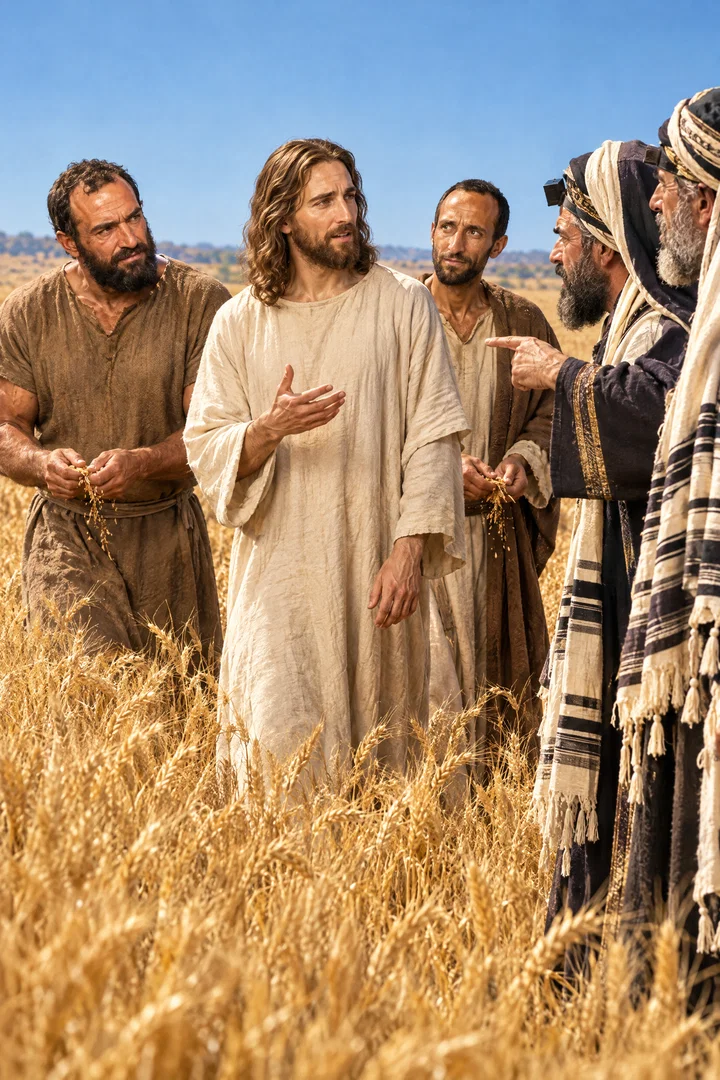
When the disciples were accused of breaking the Sabbath for plucking standing wheat, rubbing out the kernels, and eating to satisfy hunger when hungry, he defended them as guiltless.Ms 31a, 1898, par. 1–3ST Sep 16, 1913Ms 43b, 1891, par. 9 He declared that one greater than the temple was present, and that he as Son of man is Lord even of the Sabbath day, with authority over it.Ms 31a, 1898, par. 1–3ST Sep 16, 1913Ms 43b, 1891, par. 9 Their action was in harmony with the Sabbath and in accordance with the law of God that permits a hungry person to enter a neighbor's field, orchard, or vineyard and eat grain or fruit to satisfy hunger.ST Sep 16, 1913HSFM 165.2PP 531.1–2
His healings and other works of relieving suffering on the Sabbath did not break God's law but were in harmony with the law he had given.Ms 43b, 1891, par. 10ST Oct 1, 1896RH May 28, 1901 They were in harmony also with the Father's unceasing work of providence, showing his unity with God in will, power, and might and demonstrating that the law can be kept.Ms 43b, 1891, par. 10RH May 28, 1901 During his earthly ministry he upheld the Sabbath's binding claims and kept it according to God's law, not according to arbitrary human requirements that had distorted its observance and misrepresented God's character.Ms 12, 1893, par. 13–15PK 183.1 Thereby he restored it to its original basis and exposed human additions and changes to God's commandment.Ms 12, 1893, par. 13–15PK 183.1
No earthly tribunal had authority to try him for his life on a charge of Sabbath-breaking.ST Feb 15, 18772SP 169.1–23RED 32.1–2 The rulers had no right to question, catechize, interfere with, or condemn him or his work, and their claims to that authority rested only on pride and arrogance.ST Feb 15, 18772SP 169.1–23RED 32.1–2 His words as Lord are unanswerable, and he refused to plead guilty to any wrong.ST Feb 15, 18773RED 32.1–2 The accusation that he broke the Sabbath was therefore a blind and mistaken condemnation of the very Maker and Lord of the Sabbath, made even though he gave unmistakable evidence that God sent him, showing how blindly his accusers had lost sight of the Sabbath's Lord.STMW6 43.2Lt 78, 1896, par. 42–4318MR 155.1–3Ms 43b, 1891, par. 1
Sabbath Identity and Observance
The Sabbath belongs to Christ as its Lord, and it is not merely a Jewish institution.Ms 91, 1894, par. 9ST Sep 14, 1882 It was instituted at creation for all mankind before the Jewish people existed.Ms 91, 1894, par. 9 It is as old as the human race and will last as long as humanity does.Ms 91, 1894, par. 9
It is the commanded seventh-day Sabbath, not a day that can be replaced by Sunday or treated as interchangeable with another day.Ms 12, 1893, par. 13–15ST Sep 14, 1882ST Nov 12, 1894Ms 91, 1894, par. 11 The seventh day is sacred to him as a day for the worship of angels and people.ST Sep 14, 1882 His resurrection did not change it, and human custom did not change it.ST Nov 12, 1894 There is no valid distinction between a Jewish seventh-day Sabbath and a Christian first-day Sabbath, and his rising on the first day does not authorize replacing the seventh day with the first.ST Sep 14, 1882Ms 91, 1894, par. 11 His authority over the Sabbath exposes human additions and changes to God's commandment and restores it to its original basis.Ms 12, 1893, par. 13–15
His lordship over the Sabbath does not abolish the law.Ms 55, 1895, par. 17–21 Opposition to God's holy law cannot represent his spirit.Ms 55, 1895, par. 17–21 The law will not pass away, and keeping his commandments is consistent with abiding in his love.Ms 55, 1895, par. 17–21
The Sabbath remains God's memorial and holy day of the Lord.ST Sep 14, 1882Ms 91, 1894, par. 11HTL6 58.3–59.1 It is a day for worship, teaching, and delight rather than drudgery.Ms 3, 1879, par. 4–5 He taught his disciples outdoors by the lakeside on the Sabbath, showing that Sabbath teaching need not take place only within enclosed walls.Ms 3, 1879, par. 4–5 Worshippers honor it and God's house by respect shown in clean, neat, fitting clothing.HTL6 58.3–59.1
Sabbath observance must honor Christ.ST Nov 12, 1894Ms 91, 1894, par. 11 Zeal for the Sabbath that rejects him is a false zeal.ST Nov 12, 1894Ms 91, 1894, par. 11
Sources
Pioneers and periodicals
189 sources
The Son of man, Jesus Christ, is Lord of the Sabbath day.RH Aug 15, 1854ST Mar 19, 1894ST Jul 8, 1880 To be Lord is to be its Maker and ruler with final authority, to cherish, protect and uphold it in its sacred character, not to abolish or destroy it.ST Jul 8, 1880RH May 5, 1874RH Jun 10, 1852RH Jun 16, 1874 The Sabbath he owns is the seventh day of the Decalogue, made for humanity from Adam onward for rest, worship and delight, and it remains binding in the gospel age.RH Sep 2, 1851ST Jan 31, 1911ST Jan 27, 1914RH Oct 3, 1865 As Lord he determines what is proper on it and declares his followers guiltless, so that meeting hunger and doing good, mercy and necessity are lawful and in harmony with the law, while human traditions that made it a burden are set aside.RH Aug 15, 1854ST Jul 8, 1897RH Feb 4, 1862RH May 5, 1874ST Feb 17, 1898 His lordship gives no warrant for changing the Sabbath to the first day, and those who held for such a change to a resurrection memorial stand beside the weight of teaching that he magnified and restored the day to its original purpose.RH Aug 15, 1854ST Jul 8, 1880RH Apr 2, 1857ST Nov 18, 1903
Words and Immediate Setting
The saying closes the answer to the charge that the hungry disciples did what was not lawful when they plucked ears of grain and ate them while going through the grainfields on the Sabbath.RH Aug 15, 1854RH Feb 4, 1862RH Feb 3, 1852 They are defended as guiltless by the case of David who when hungry entered the house of God and ate the showbread belonging only to the priests, by the law that the priests work in the temple on the Sabbath and are blameless, by the presence of One greater than the temple, and by the principle of mercy and not sacrifice.RH Feb 4, 1862ST Feb 17, 1898RH Apr 21, 1868 The defense allows time for ordinary meals to satisfy hunger while maintaining the Sabbath as a day to be sanctified, and does not repeal or change the command or make every amount of labor permissible.RH Aug 15, 1854RH Feb 3, 1852RH Jan 8, 1857 It rests on authority to explain the requirements of the Sabbath and to determine how it should be observed, so that mercy and necessity are consistent with its divine design and with the circumstances of the act.RH Feb 3, 1852RH Jan 8, 1857RH Apr 21, 1868
The incident took place in Galilee shortly after the second Passover, on a Sabbath when the hungry disciples plucked ripening barley ears and rubbed them in their hands while walking a short Sabbath distance near a town.ST Apr 14, 1881RH Sep 1, 1859ST Nov 25, 1880 No food could be taken till after the synagogue services, though law and custom allowed plucking ears or grapes to supply hunger.ST Apr 14, 1881ST Mar 21, 1878 The watching rabbis charged sanctioning of Sabbath-breaking because plucking was reaping, rubbing was threshing or grinding, and rubbing was preparing food after Friday sunset.ST Apr 14, 1881ST Mar 21, 1878ST Sep 8, 1881 They held such guilt worthy of stoning and contrary to fidelity to the holy day even unto death, treating rubbing grain as threshing and even killing a flea as hunting.ST Apr 14, 1881ST Mar 21, 1878ST Apr 9, 1894
The grainfield defense stands in immediate connection with the healing of the man with the withered hand, Jesus going from the grainfield directly to the synagogue where He performed the miracle.ST Feb 17, 1898ST Nov 11, 1897ST Nov 26, 1894 Together they teach that it is lawful to do good on the Sabbath days and that the Sabbath was made for man.ST Nov 11, 1897RH Sep 19, 1854ST Nov 14, 1900 The healing rests on the ground that a man is of more value than a sheep that would be lifted from a pit, and the same lordship that declares the disciples guiltless condemns condemning the guiltless for lack of mercy over sacrifice.ST Feb 17, 1898 Necessary work for the gospel and the worship of God is therefore lawful, as the priests' Sabbath labor in the temple was blameless because it served work pointing to Christ.
The Greek word sabbaton in the saying means Sabbath, and the same word can also mean a period of seven days or a week.RH Nov 8, 1853RH Jun 24, 1915RH Apr 24, 1879 It is used for the seventh day in wording that employs both singular and plural forms, and can also refer to other sabbaths or sacred rest days including annual ceremonial sabbaths connected with food and drink that pointed forward to Christ.RH Nov 8, 1853RH Apr 24, 1879 The word even shows it is no small honor to be Lord of the Sabbath, standing with all the high honors of Messiahship rather than disparaging the Sabbath or diminishing the Redeemer.RH Feb 4, 1862RH Apr 21, 1863RH Jan 1, 1867 Lord means a ruler with authority and jurisdiction over the matter, whose decision is final and without appeal and who is protector and not destroyer of the Sabbath, in a higher sense than a human being can be its lord.RH Jan 19, 1860RH Apr 21, 1868RH Feb 4, 1862RH May 6, 1873
The Sabbath in dispute is the seventh day, not Sunday or the first day of the week.ST Apr 11, 1900RH May 17, 1906 The Pharisees' accusation of breaking the Sabbath and the disciples' gathering and eating grain confirm the day was the seventh day, the day before the Roman Sunday, not Sunday.ST Apr 15, 1886ST Jul 23, 1912 The answer therefore concerns the seventh-day Sabbath named in the fourth commandment as the Sabbath of the Lord, and does not teach how to observe Sunday or any other day nor authorize treating the first day as the Sabbath or as a day of worship.RH May 17, 1906 Paul's time at Troas on the first day cannot be obedience to words that were written later, and to call the grainfield meal a Sunday dinner perverts the truth.ST Jul 23, 1912 The setting belongs with the series of Gospel miracles showing the power of Jesus at Capernaum on the Sea of Galilee, where thirty-six miracles are described with sixty-seven reports besides many noticed but not recorded in detail, and with the scene of walking through grainfields where ears were plucked and eaten.ST Jan 16, 1896RH Sep 1, 1859ST Nov 25, 1880
Meaning of Lordship
The Son of man, Jesus Christ, is Lord of the Sabbath day, and the declaration closes his defense of hungry disciples who plucked and ate ripening barley ears while walking a short Sabbath distance near a town before synagogue services.RH Aug 15, 1854ST Apr 14, 1881RH Feb 4, 1862 That defense held them guiltless by David's eating of the showbread reserved for priests when in urgent need, by the blameless Sabbath work of priests in the temple, by the presence of one greater than the temple, and by the principle of mercy over sacrifice.RH Aug 15, 1854ST Jul 8, 1897RH Feb 4, 1862 The same Sabbath was observed by both him and the Pharisees, but their observance differed in spirit, for they made it an occasion for fault-finding, accusation and tyranny, while his teaching that the Sabbath was made for humanity shows it was not meant to burden people or rule over them.ST Mar 19, 1894ST Jul 8, 1897ST Apr 14, 1881 His lordship does not teach a change to the Sabbath and allows time for ordinary meals while maintaining the day to be sanctified.RH Aug 15, 1854ST Jul 8, 1897ST Apr 14, 1881
Lordship means to cherish, protect, defend and uphold the Sabbath in its real object and sacred character, not to abrogate, abolish, put away, destroy, choose another, or relax its obligation.RH Jun 10, 1852RH Jul 9, 1914RH May 16, 1854 As a husband is lord of his wife to cherish and protect her, so Christ is Lord of the Sabbath, and as he is Lord of his people not to abolish or destroy them but to lay down his life for them and come again to take them to himself, so he is Lord of the lively oracles, not of dead types and shadows.RH Jun 10, 1852RH Jun 16, 1874 His lordship is proved by pointing the Sabbath back to its original institution at creation, just as he pointed marriage back to creation, which shuts the mouths both of those who load the Sabbath with superstitious austerities and of those who teach it is against us and contrary to us and taken out of the way.RH Jun 10, 1852 The acts he declared guiltless were in accordance with the weightier matter of mercy and therefore no violation of the law, and give no warrant for open willful violation of the fourth commandment, whose keeping with the other commandments remains the condition of entering eternal life.RH Jun 10, 1852RH May 16, 1854 Being placed in his charge means he preserves and rules over it, and his mission was to uphold the law, for his fulfillment of the law means keeping it, just as fulfilling all righteousness at his baptism did not abolish righteousness.RH Jul 9, 1914RH May 16, 1854RH Mar 16, 1869
He is Lord because he is its Maker and Author, active with the Father in creation, who rested at its close and blessed and sanctified the seventh day.ST Jul 8, 1880RH May 5, 1874ST Jan 31, 1911 The worlds were made by him, including the order of evening and morning, the succession of seven days, and the special appointment of the seventh day in remembrance of the Father's creative work, and his blessing was joined with the Father's blessing when the Sabbath was established.RH Jul 15, 1915ST Feb 18, 1886 Because he took part with the Father in creation he was also involved in ordaining the Sabbath, so his claim to be its Lord is fitting, and during his earthly ministry he kept the Sabbath as man's example in Sabbath observance.ST Jul 8, 1880RH May 5, 1874RH Jul 15, 1915 His example and teaching restore it to its proper purpose as a day for worship, devotion, and doing good through acts of mercy and charity, serving the happiness and well-being of people and animals.ST Jan 31, 1911RH Feb 7, 1916
As Lord he has authority to reveal the true meaning of the Sabbath and its observance, to determine what is proper on it, to declare his followers guiltless, and to judge whether its requirements have been violated.ST Jul 8, 1897RH May 5, 1874ST Feb 17, 1898 Lord means a ruler, one who has authority and jurisdiction over a matter, and his claim is a broad and positive proposition of right and authority from which there is no appeal, so all questions he has decided are to be regarded as final.ST Nov 18, 1889RH Sep 3, 1908RH Apr 21, 1868 That lordship excuses satisfying hunger on the Sabbath, as when the disciples plucked corn, just as David and those with him ate the showbread reserved for priests alone and as the priests do work in the temple on the Sabbath and remain guiltless.ST Jul 8, 1897ST Feb 17, 1898ST Nov 18, 1889 It condemns the Pharisees for condemning the guiltless because they did not know mercy over sacrifice, makes lawful to do good on the Sabbath as shown when he healed the withered hand on the ground that a man is of more value than a sheep lifted from a pit, and establishes that God's Sabbath requirements are consistent with mercy, including works of necessity and mercy and work done for God.ST Jul 8, 1897ST Feb 17, 1898ST Nov 18, 1889
His lordship over the Sabbath is an honor to both him and the Sabbath, not a reason to abolish it, and the word even shows it is no small honor to hold such a title.ST Jul 8, 1880RH May 5, 1874RH Feb 4, 1862 The title means he is the protector and not the destroyer of the Sabbath and therefore the rightful one to decide the proper nature of Sabbath observance, and it stands with all the high honors of his Messiahship because God's only Son claims it.ST Jul 8, 1880RH Feb 4, 1862RH Nov 15, 1906 Calling him a Sabbath-breaker therefore dishonors him, while remembering the Sabbath day to keep it holy honors Christ as its Lord, who is Creator and Redeemer.RH Jun 11, 1861RH May 30, 1912RH Nov 15, 1906 The Sabbath has divine sanction and will not be overthrown, for as long as Christ has a militant church on earth there will be friends of Christ who advocate and promote its obligation in greater purity and from conscientious motives, and every effort for its overthrow will fail and bring disgrace on its abettors.RH Jun 11, 1861RH May 30, 1912
Being Lord does not give a right to do as he pleases with the Sabbath and abolish it, just as a husband being lord of his wife does not give him the right to abolish her but lays on him the obligation to cherish and protect her, and just as Abraham being lord of Sarah did not mean he could abolish or destroy Sarah.ST Feb 18, 1886RH Mar 16, 1869 He has authority over the Sabbath and could have repealed its law or abolished it partially or wholly if he had chosen, but he did not choose to do so, and instead upheld its sanctity, allowing works of necessity and mercy rather than treating the day as null.RH Mar 10, 1859ST Oct 18, 1899RH May 31, 1864 The declaration asserts lordship but does not show that he set the Sabbath aside, changed its day to the first day, altered its meaning, or instituted a new Sabbath, and it contains as much claim to abolish the Sabbath as to change it, so lordship alone proves neither abolition nor change.ST Feb 18, 1886ST Oct 18, 1899RH May 31, 1864 To assume a change was done because power to do it was asserted is illegitimate and willful, as false as assuming the dead are raised or death destroyed because power over them is asserted, and no new duty to keep the first day can be drawn from it, for nothing is duty unless commanded by God.ST Feb 18, 1886RH May 31, 1864
He still possesses dominion over the Sabbath now as the unchanging Saviour who kept the seventh day, and because he kept the seventh day his followers should keep the seventh-day Sabbath.ST Nov 14, 1900ST Feb 18, 1886RH May 26, 1853 He rightly claimed that lordship in the days of his flesh, he still possesses it now, and nothing in the whole New Testament shows he has relinquished his dominion over the Sabbath, for he claims the Sabbath as his own as its master and proprietor.ST Nov 14, 1900ST Feb 18, 1886RH Jan 10, 1865 He is also Lord of those who trust in him, guides those honoring God and defending his law and his Sabbath, freeing both from all error and uniting them in that work, and his keeping of the Sabbath correctly in Jerusalem provides an example of Sabbath observance at its proper local time.RH Jan 10, 1865RH May 26, 1853RH Jul 6, 1869
Those who held the Sabbath to be a positive institution rather than an eternal moral principle taught that he, as Son of man and representative of humanity, has authority over the Sabbath because it was made for human benefit, and may use or set aside its requirements when the higher moral duty of mercy calls for it, as in feeding the hungry or healing the sick.RH Nov 12, 1872ST Jan 28, 1875 In that teaching his authority is above the Sabbath and human traditions, and his spirit brings a new life that cannot be contained by old, restrictive customs.RH Nov 12, 1872ST Jan 28, 1875 As Lord no earthly tribunal has authority to try him for his life on a charge of breaking the Sabbath law, and the Pharisees have no right to question him, interfere with his business, or condemn him.ST Feb 15, 1877 Their claims to that authority rest only on pride and arrogance, not on anything given them by the Jewish system, and his words as Lord are unanswerable, so he refuses to plead guilty to any wrong or submit to being catechized by them.ST Feb 15, 1877
Sabbath Day Identified
The Sabbath of which the Son of man is Lord is the seventh day commanded in the Decalogue, the Sabbath of the fourth commandment, the Sabbath of the Lord, which Jesus owns and possesses as his own day.ST Jan 27, 1914RH Dec 9, 1852ST Jun 18, 1894ST Sep 18, 1893 The accusation against the disciples was for breaking that seventh day, so his answer concerns that day and not the first day of the week. As one with the Father he claims the seventh-day Sabbath just as the Father does, so it belongs to Christ as well as to God and is his holy day.RH Feb 13, 1872ST Jun 18, 1894ST Sep 18, 1893 That authority confirms the seventh-day Sabbath as the Lord's Sabbath among God's commandments to be obeyed, whose observance did not end with the Jewish dispensation.RH Dec 9, 1852RH Apr 26, 1864
It was made for humanity, first for Adam before the fall and therefore for all people in every time and country, not for Jews alone.RH Sep 2, 1851RH Apr 5, 1860RH Nov 14, 1871RH Jun 5, 1860 As Son of man, second Adam and heir of all things and giver of good and mercy, he has rightful authority over it.RH Sep 2, 1851 His lordship confirms its sacredness and the binding character of the law that instituted it, distinguishing proper use from superstitious abuse rather than observance from disregard.RH Apr 5, 1860 It permits meeting human needs and acts of mercy, including caring for the sick and preaching or hearing the gospel even when travel or bodily effort is needed, but does not authorize conduct contrary to the law.RH Apr 5, 1860 As Lord he freed it with the other commandments from abuses heaped on it by tradition and restored its proper relation to people, which gives no hint of changing the seventh day to the first.RH Nov 14, 1871RH Jun 5, 1860
The true seventh day had not been lost by the First Advent, for he knew which day it was and kept the day observed as the Sabbath without correcting its reckoning.RH May 2, 1854RH Oct 11, 1864 His authority sets right any loss of time during the Levitical period, and the Sabbath he recognized was the original seventh day in its continuing weekly order.ST Mar 25, 1889 His plucking of grain on the day the Jews regarded as the Sabbath proves it was the seventh day and not Sunday the first day. Its identity is certain by reckoning back to his time through the unbroken Sabbath-keeping of the Jews in every quarter of the globe and through its observance by faithful groups through the Dark Ages, so claimed inability to tell which day is the seventh does not release from obedience.ST Feb 17, 1898 As Maker and Author he designated how it should be observed and best interprets it by precept and example, and he kept the seventh day he had given and set apart, leaving his custom for followers to copy.ST Feb 17, 1898 Because God is unchangeable his law is changeless, so the account enforces keeping the seventh day the commandment names and gives no excuse for lax observance or for transferring it to another day the law never mentioned.
It is a blessing made for human good, happiness, rest, refreshment, worship and delight, a memorial of creation and of redemption.ST Jan 31, 1911RH Feb 7, 1916ST Mar 16, 1904ST Jan 21, 1903 It is not a burden, yoke of bondage, or day of misery, fasting and mourning, nor a day for personal profit.ST Jan 31, 1911RH Jan 28, 1862 Because he was with God when it was made and is its Maker and Author, his authority reveals what true keeping means and restores it to its proper purpose.ST Jan 31, 1911RH Feb 7, 1916ST Jan 21, 1903 It is sacred but to be kept in a special way, allowing doing good without lessening its holiness, serving the happiness and well-being of people and animals through worship, devotion, mercy and charity.RH Feb 7, 1916ST Mar 16, 1904ST Jun 11, 1894 He justified the disciples in plucking and eating grain and showed by healing that doing good is lawful, and meeting genuine human needs such as keeping warm does not break it. He kept it as his memorial and laid its observance on his disciples, even telling them about thirty-six years before the destruction of Jerusalem to pray that flight would not be on the Sabbath.ST Mar 16, 1904
It is part of the enduring Ten-Commandment moral law and the Lord's weekly Sabbath, not a ceremonial shadow, type or yearly sabbath that ceased at the cross.RH Oct 3, 1865RH Jan 31, 1856RH Mar 19, 1857ST Jul 12, 1899 Breaking the fourth commandment is sin, and his teaching about what is lawful supports the institution continuing in full force under the Christian dispensation though its ceremonial part was abolished.RH Oct 3, 1865RH Jan 31, 1856 The sabbaths that ceased were the ceremonial sabbaths which were a shadow of good things to come, not the Sabbath of the fourth commandment which was never a shadow but is a memorial of the Creator. It remains a sign forever between God and Israel, where Israel means not literal Jews only but all of faith in Christ with no difference between Jew and Gentile, all believers being children of Abraham and heirs according to the promise. Classing it with other ceremonies does not prove it a ceremonial Jewish positive institution but proves the opposite, and observing the seventh day is therefore not a return to a law done away.RH Aug 13, 1857ST Jul 12, 1899
It remains sacred, binding and in force in the gospel age, and a law does not cease to bind simply because those subject to it prefer to set it aside, still less God's laws at human convenience.ST Jan 25, 1910RH Apr 18, 1871ST Mar 4, 1886 His authority does not make the Sabbath law void, for doing good is lawful and he kept the law he came to fulfil, and his teaching and example support keeping it.ST Jan 25, 1910 His teaching about what is lawful helps establish the duty to keep it and condemns Sabbath-breaking under the gospel.RH Apr 18, 1871 That lordship is reason to keep the seventh day which God calls the Sabbath rather than changing it to the first day. The title underscores his authority over the seventh-day Sabbath and the importance of honoring it by refraining from work and teaching others to do the same.RH Nov 15, 1853
The Sabbath is the Lord's day, so the Lord's day in Revelation 1:10 means the seventh-day Sabbath blessed and set apart at creation and placed in God's law, not the first day of the week which the Bible never calls the Lord's day.ST Jun 29, 1876ST Apr 19, 1883ST Nov 22, 1910ST Oct 1, 1894RH May 8, 1900 By declaring himself Lord of the Sabbath day he claims a day as his own, which must be the day of which he is Lord, the seventh day.ST Jun 29, 1876 The seventh day belongs to him as well as to the Father, and as Creator who made the world and rested on the seventh day he thereby made it the Sabbath.RH Feb 13, 1872RH May 8, 1900 In the dispute he defended eating when hungry against human regulations and taught that doing good is lawful, and the Sabbath remains a holy day to be observed.ST Apr 19, 1883
Lawful Conduct Approved
The hungry disciples were guiltless when they plucked and ate grain to satisfy hunger on the Sabbath, and meeting need for food on the Sabbath does not violate God's law.RH Aug 15, 1854RH Feb 4, 1862RH Jan 8, 1857RH May 19, 1851RH Nov 2, 1911 Their act did not repeal or change the Sabbath command, but was defended by David's urgent eating of the showbread reserved for priests alone, by the blameless Sabbath work of priests in the temple, by the presence of one greater than the temple, and by God's desire for mercy over sacrifice.RH Aug 15, 1854RH Feb 4, 1862RH Jan 8, 1857 What was done in his presence and under his sanction was lawful, and his authority to acquit them supports a merciful reading of the Sabbath as made to serve human need rather than to burden with narrow rules.ST May 20, 1875RH Jan 8, 1857RH May 19, 1851 His defense does not abolish divine law, for the Sabbath law still identifies the seventh day and he kept his Father's commandments sinlessly.RH May 19, 1851RH Nov 2, 1911
Lawful means according to law and in perfect harmony with law, so what he declares lawful on the Sabbath is fully in accord with God's law.RH Mar 1, 1864ST May 20, 1875ST May 17, 1910RH May 13, 1875RH Nov 25, 1852 The issue is truth against tradition, not spirit against letter, for he and his disciples broke Jewish tradition while never breaking God's Sabbath law, upholding it while rejecting traditional punctilios that demand outward observance regardless of character and omit judgment, mercy, and faith.RH Mar 1, 1864ST May 17, 1910 His interpretation is therefore correct and the charge of Sabbath-breaking false, because his accusers condemned the guiltless.ST Apr 10, 1893RH May 13, 1875 As with David eating when hungry and the priests laboring in offerings, healing the sick, relieving beasts in distress, eating when hungry, the healed man carrying his bed for God's glory, priestly offerings, and circumcision on the eighth day when it falls on the Sabbath are lawful well-doing agreeable to the Sabbath law, not the prohibited work of six-days-for-livelihood rest, while prohibitions on bearing burdens concern merchandise such as sheaves, wine, grapes, and figs.RH Nov 25, 1852RH May 2, 1854
It is lawful to do good on the Sabbath, on the ground that a person is of more value than a sheep lifted from a pit, as shown when he healed the withered hand.ST Feb 17, 1898RH Aug 27, 1914 This includes healing and ministering to the sick, giving attention to animals in distress, lifting a sheep fallen into a pit, loosing and watering an ox, loosing the woman bound in infirmity eighteen years, building a fire to keep a freezing sufferer from freezing to death, and cooking for a starved hungry person.ST Apr 10, 1893RH Aug 27, 1914RH Jan 21, 1915 Such observance follows the true spirit of the commandment with thoughtful love, liberty, and beneficence, rejecting the severe conception that treats the day as a ban on every kind of work or a yoke of bondage, and allowing acts of real necessity and mercy for comfort.RH Jan 21, 1915ST Jul 21, 1898 Meeting genuine human needs such as keeping warm does not break the Sabbath, which is a day of rest, blessing, and enjoyment of God's works made for people rather than against them.ST Jul 1, 1908
Works of necessity, mercy, and piety, work commanded for God's service, and necessary work for the gospel and worship are lawful, while the forbidden work is one's own work for personal profit, pleasure, or business gain.ST Jul 1, 1908ST Nov 18, 1889STRH Jun 18, 1861ST Sep 10, 1902 Necessity and mercy are the only exceptions to doing no work, and temporal work should be minimized for God's sake with all actions glorifying God, ordinary household work kept light and provision made for necessities and doing good for the Lord's sake.STRH Jun 18, 1861ST Sep 10, 1902 That allowance is wrongly abused by many to defend breaking the Sabbath.RH Jun 18, 1861 Kindling a fire for needed warmth, eating when hungry while traveling to the synagogue for holy convocation to hear the law read, priestly offerings, circumcision on the eighth day, healing, and the healed man's carrying his bed or mat of blanket or rug for God's glory are lawful well-doing and not prohibited toil or merchandise burdens, while avoidable cooking, boiling, frying, baking, farm chores, washing dishes, and sweeping that could have been prepared on the sixth day remain contrary to the commandment and the preparation-day requirement.RH Aug 27, 1857RH Jul 29, 1862RH Nov 25, 1852RH May 2, 1854ST Dec 4, 1884 The command about kindling fires was a wilderness test, not part of the Sabbath law itself, so fire and other work are permissible when circumstances require them, but only necessary work should be done with food prepared beforehand where possible, and the man stoned for working acted defiantly and presumptuously.ST Dec 30, 1913 The priestly work of offerings did not relax the claims of the law or make the Sabbath less sacred, but left it standing in fullest unrelaxed force on its immutable base in the fourth commandment to cease from six-day toil and engage in God's service.RH Aug 27, 1857RH Nov 25, 1852
His example explains the law and provides the divine commentary on how the Sabbath should be kept, for he spent the day in God's service, worshiped regularly in the synagogue, taught, healed the afflicted as mercy and love, created the Sabbath and kept it as man's example without abating one jot or tittle, and restored it to original simplicity.ST Aug 6, 1912RH Jul 15, 1915STST Oct 8, 1894 His disciples also honored the commandment by resting on the Sabbath while he lay in the tomb, postponing even loving acts of reverence that were not necessary.ST Jul 8, 1880 He rebuked slavish Sabbath-keeping and freed the day from useless human traditions, Pharisaic austerities, fault-finding, accusation, and tyranny that perverted it into a yoke of bondage and made it a burden, while upholding its holiness and requiring it to be kept in a special way.ST Mar 19, 1894ST Jul 8, 1897ST Mar 30, 1888RH May 5, 1874 The Sabbath was made for humanity and not to burden people or rule over them, so to have refrained from relieving the sick would indeed have made it a yoke and not something made for man's good, and accusations against him arose from hostility more than genuine zeal for the sacred day.ST Mar 19, 1894RH May 5, 1874RH Nov 4, 1858
Sabbath Unabolished Unchanged
His lordship does not abolish, repeal, relax or change the Sabbath, but magnifies and honors the law, restores the day to its original simplicity and purpose, and upholds its sacred character.RH Aug 15, 1854ST Jul 8, 1880ST Jul 8, 1897RH Sep 2, 1851RH Jun 10, 1852 The defense of the hungry disciples by David's urgent need, by the necessary Sabbath work of priests, and by mercy over sacrifice allows time for ordinary meals while maintaining the day to be sanctified, and what was declared guiltless was in accordance with mercy and therefore no violation of law.RH Aug 15, 1854RH Mar 1, 1864RH Jun 10, 1852 Lawful means according to law, and the fourth commandment was the law upheld, so acts of mercy and doing good were lawful under it and give no warrant for open willful violation whose keeping with the other commandments remains the condition of entering eternal life.RH Mar 1, 1864RH Jun 10, 1852 As husband is lord of his wife to cherish, protect and defend her, and as Christ is Lord of his people not to abolish them but to lay down his life for them, so he is Lord of the Sabbath to cherish, protect, defend and uphold its real object and sacred character, and Lord of the living oracles not of dead types and shadows.RH Sep 2, 1851RH Jun 10, 1852 His lordship is an honor to both him and the Sabbath and carries authority to determine what is proper on it and to reveal its true meaning, proved by pointing the Sabbath back to its original institution at creation in which he took part with the Father, just as marriage was pointed back to creation.ST Jul 8, 1880ST Jul 8, 1897RH Sep 2, 1851RH Jun 10, 1852 He honored it by setting aside burdensome human traditions, doing works of mercy, teaching prayer that flight would not be on the Sabbath, and regularly attending synagogue, and his disciples honored the commandment by resting while he lay in the tomb and postponing acts of love not necessary.ST Jul 8, 1880 The title confirms the Sabbath remains living and in force, for he is Lord of something existing, not of an abolished type or shadow made for Adam before the fall and therefore for all people for good and mercy, over which he as second Adam and heir of all things has rightful authority.RH Sep 2, 1851
The verse gives no command, instruction or proof for changing the Sabbath from the seventh day to the first, and the Gospels and apostles teach no such change, so a change without scriptural evidence is an innovation.ST Sep 21, 1882ST Aug 24, 1882RH Jun 19, 1860RH Aug 1, 1854 His authority over the Sabbath by which it was instituted supports its continuing observance, and his lifelong keeping of it gives the example to follow, not a transfer of sacredness to another day.ST Nov 18, 1903ST Sep 21, 1882RH Aug 1, 1854 The verse establishes lordship but does not itself say he changed the day or give instructions for such a change, and it supplies no proof when divine authority for a change is in question.ST Aug 24, 1882RH Jun 19, 1860
The controversy concerns the manner of keeping the Sabbath, not its sacredness or perpetuity, for he asserted right to determine how it should be observed, and after the examples of David eating the showbread and of priests who profane the Sabbath in the temple and are blameless, he laid down his lordship as the ground of his decision.RH Apr 21, 1868RH Jan 21, 1858ST Oct 17, 1900 Lord means a ruler with authority and jurisdiction from which there is no appeal, and all questions he decided are final.RH Apr 21, 1868 During his life he observed the Sabbath and corrected false ideas about it but gave no indication it was to be abolished, and the dispute with the Jews concerned their traditions about how it should be observed, not which day it was.ST Feb 15, 1883ST Oct 17, 1900 His lordship is authority within the Sabbath commandment, proved by keeping the Father's commandments, since to break or change the law would be sin and he came to fulfill not abolish it; had he changed the day that change would have been his justification before the Pharisees and evidence to condemn him before the high priest, yet no such charge was brought.RH Jan 21, 1858 If he had abolished the Sabbath and instituted Sunday, the disciples' later disregard of the old Sabbath would have provoked the same leaders who watched the grain-eating and healings to watch, accuse and prosecute them, and the lack of such recorded conflicts shows they continued to observe it.ST Oct 19, 1882ST Sep 19, 1911
The fact that the record does not say he or his disciples refrained from every activity on the seventh day no more proves he relaxed the fourth commandment than the record of Judas's theft proves he relaxed the eighth, for his actions in keeping with mercy did not violate the law.RH Feb 3, 1852 Being placed in his charge means he preserves and rules over it, not that he abolishes or destroys it.RH Jul 9, 1914
Those who held otherwise taught that his lordship extends to changing the Jewish Sabbath to the Christian Lord's day by special providence acknowledged throughout the Christian world, for he is also its truth and fulfillment.RH Apr 2, 1857RH Jan 31, 1856 Some taught he allowed the change after his resurrection, not abolishing but modifying it as a memorial of resurrection and finished redeeming work, though no command or recorded instruction for this change is given.ST Aug 22, 1916 Some taught that in honor of his resurrection he changed the Sabbath from the seventh to the first day, which Christians then observed as their Sabbath.RH Jan 31, 1856 Some taught he changed it to the first day by directing disciples to observe resurrection day as the Christian Sabbath.RH Jan 11, 1906 Some connected his authority with the claim that the first day is the Lord's day, presenting Paul's meeting at Troas on the first day as consistent with it.
Others who held otherwise taught that with the change of priesthood came a change of law, so the disciples' plucking grain signified abolition of the Jewish priesthood and transfer of its role to them, and the Jewish Sabbath was abolished.RH Sep 30, 1858 Some taught he commanded labor on the Sabbath, proving labor is not forbidden.RH Apr 19, 1870 Some invoked the title as power to change, abolish or confirm the Sabbath, while disputing that resurrection changed the seventh to Sunday.RH Feb 26, 1857 Some taught people are lords over the Sabbath and may change its day when they see cause, treating the ancient Sabbath as abolished and Sunday as a human church ordinance changeable by church or magistrates or by human authority as a church festival.RH Mar 7, 1854ST Oct 19, 1882 Some invoked the title as basis for the claim that Christ gave the Catholic Church authority to teach and to change Saturday to Sunday.ST Oct 29, 1894
These changes are denied because power to change is not proof of change, and the Gospels contain no command from him to do so.RH Aug 1, 1854ST Feb 18, 1886 The declaration asserts lordship but does not show he set the Sabbath aside, changed its day, altered its meaning, or instituted a new one, containing as much claim to abolish as to change, so lordship alone proves neither.ST Feb 18, 1886ST Aug 15, 1878RH Nov 29, 1853 To assume a change because power was asserted is illegitimate, as false as assuming the dead are raised because power over death is asserted, and no new duty to keep the first day can be drawn from it, for nothing is duty unless commanded by God.ST Feb 18, 1886 The seventh day remains the Sabbath unless Scripture shows its blessing and holiness removed, and the title alone does not make it cease to be holy or prove the first day replaced the seventh.ST Aug 15, 1878RH Nov 29, 1853 The Sabbath proves to be the Lord's day, so the Lord's day of Revelation 1:10 is the seventh-day Sabbath, since nowhere is the first day called the Lord's day, while the seventh is the Sabbath of the Lord and His holy day, though some taught the Sabbath already had a distinctive name and the Lord's day was a different later name for the first day.ST Jan 3, 1878RH Apr 29, 1873
Prophecy History and Warning
His bidding to pray that flight from Jerusalem should not fall on the Sabbath, given about thirty-six years before the destruction of Jerusalem in A.D. 70, displays sacred regard for the day.ST Mar 16, 1904RH Sep 25, 1856RH May 5, 1874 That charge laid Sabbath observance upon the disciples and preserved its sacredness in the church for the first Christian generation.ST Jul 8, 1880ST Mar 16, 1904RH May 5, 1874 His vindication of the hungry disciples eating ears of corn and of healing the man with the withered hand was no careless violation but mercy exactly fitted to the design of the institution, correcting rigorous traditions that had made it a yoke of bondage.ST Jul 8, 1880RH May 5, 1874 As Lord He set aside burdensome human traditions, did works of mercy, worshiped regularly in the synagogue, and His followers rested according to the commandment while He lay in the tomb, postponing even loving acts that were not necessary.ST Jul 8, 1880RH May 5, 1874
His work of Sabbath reform calling a remnant out of the Jewish church in its last apostasy when it rejected and crucified Him stands as the counterpart to the last apostasy in the Christian era.ST Jan 30, 1896 In that latter time He is persecuted again in His followers while a remnant is called out to keep by faith in Jesus all the commandments of God and the Creator's Sabbath.ST Jan 30, 1896 Rejecting God's idea of the Sabbath is rejecting Jesus Himself, since He is Lord of the Sabbath day.ST Nov 21, 1900ST Nov 21, 1900ST Nov 21, 1900 Ignoring the Sabbath therefore dishonors and discredits Him, and Sunday-keeping cannot fulfill the fourth commandment which requires the seventh day.RH Feb 28, 1871RH May 15, 1855
The leaders' rejection led them to persecute Him and seek His death in hope of saving the nation from destruction by Rome, yet His rejection and death were followed by the Romans taking away place and nation and bringing ruin upon city and nation.ST Nov 21, 1900ST Nov 21, 1900 Replacing God's Sabbath with a humanly appointed day and enforcing it by law brings the same ruin to church and state, as befell both the Jewish nation and the Roman Empire after doing so.ST Nov 21, 1900 The United States is said to have likewise rejected God's Sabbath and accepted a human substitute, established through governmental recognition by its 1893 legislation.ST Nov 21, 1900ST Nov 21, 1900
Early witness uses the title Lord of the Sabbath to deny that He abolished it, for the Sabbath is His own institution and not a merely Jewish custom.ST Nov 18, 1880ST Nov 18, 1880 His labor to restore the day, keeping its law, allowing relief to the hungry, healing the withered hand, and adding sanctity to what the Father had consecrated, proves He did not intend to abolish it by His death.ST Nov 18, 1880ST Feb 16, 1882ST Sep 17, 1896 The women honored Him by stopping even loving work for Him and resting according to the commandment, so His death did not lessen the Sabbath's sacredness.ST Jul 8, 1880ST Feb 16, 1882 Its identity is certain by unbroken Jewish keeping in every quarter and by faithful groups preserving the seventh day through the Dark Ages.ST Feb 17, 1898
Though maligned and opposed, the Sabbath linked with its Lord endures and will shine more brightly in eternity because of the hostility it has withstood.ST Nov 21, 1900 When He reigns as King with the redeemed hosts, that same day He sanctified at creation and kept faithfully on earth will be observed from one end of the land to the other, for He will not cease keeping His Father's commandments to adopt a popular Sunday sabbath.ST Aug 26, 1897 The spiritual rest He gives is a pledge of the glorious inheritance where there is no sin and the Sabbath is kept forever, a perpetual memorial instituted before sin and before the Jewish nation whose claims rest on all people.ST Jun 23, 1898ST Jul 2, 1896 In the coming famine among the plagues upon the ungodly, God will feed His sheltered commandment-keeping people with bread and water as He fed Israel with manna, but on the seventh day He will rain nothing down because He is Lord of the Sabbath.ST They will look for nothing in the field and go out to gather nothing because the law of God is in their hearts, and their Sabbath keeping is the reason they enjoy His protection, their separation from the suffering world being mercy and not hardship.ST
Practical Application Required
Keeping the seventh day honors its Lord as Creator and Redeemer, while ignoring or setting it aside dishonors and discredits him.RH Feb 28, 1871RH May 15, 1855ST Jul 2, 1894RH Jan 14, 1909 The Sabbath belongs to him and stands under his authority rather than at human disposal, to be used for physical and mental rest and spiritual growth in ways he approves.RH Jul 22, 1902ST Jul 2, 1894 Keeping it does not place a day above Christ but accepts Christ and all he came to establish, holding God's commandments and the faith of Jesus.RH Apr 5, 1860 Neglect of God's Sabbath dishonors the Lord of the Sabbath, for the Sabbath is God's holy and honorable institution and not a dishonorable old Jewish Sabbath, and Sunday keeping cannot fulfill the fourth commandment which requires the seventh day.RH May 15, 1855ST Jul 2, 1894 Rejecting the Sabbath while honoring Sunday as divinely appointed rejects the Lord of the Sabbath, and faithfulness to the Sabbath stands joined to favor from its Lord.ST Jul 2, 1894RH Jan 14, 1909
True keeping requires spending the day in his company, for without being with him the Sabbath is not kept, and fellowship with Christ himself is its substance rather than mere outward form.RH Jul 9, 1901RH Apr 24, 1856 Proper observance requires experiential knowledge of him together with obedience to God's command to keep the Sabbath.RH Oct 26, 1911 The day is for worshiping Christ, and observing it is not Judaism.RH Oct 24, 1854 Its return after six days of labor is a time for its keepers to kneel in thanks and praise to him, and its hours are holy.RH Mar 30, 1876 Pleasing him on that sacred day means using its hours in reading the Bible and truth-filled religious papers, eating plain simple food, and refusing to let unavoidable worldly card-playing, laughter and annoyance disturb the spirit even while traveling.ST May 17, 1877 It is a time when the Lord meets his people with power and glory and brings refreshing from his presence.RH Apr 24, 1856
The Sabbath rests on biblical and religious authority under his authority, not on civil enforcement or business interests.ST Apr 4, 1906RH Aug 9, 1906ST Nov 21, 1911 As Lord of the Sabbath he did not compel anyone to conform to any religious observance and gave his followers no instruction to compel anyone to do so, so laws compelling religious observance such as Sunday laws are contrary to the principles of justice, and compulsion in religion is the way of heathenism.RH Aug 2, 1906RH Aug 9, 1906 His lordship is opposed to treating another day as a national institution and enforcing religious observance through persecution, principles he would repudiate.RH Aug 2, 1906 Sabbath observance is a religious matter under his authority that human governments should not enforce, and the gospel does not need the protection of civil power.ST Apr 4, 1906 The Sabbath belongs to the Lord and should be observed freely because people love him, not imposed by law, since compulsory religion cannot produce genuine religious devotion.RH Aug 9, 1906 Its observance is defined by God's law rather than by a state's decision, the Bible is its authority, and human law cannot set aside God's law.ST Nov 21, 1911 A holy day cannot be made genuinely sacred by human law, for people may be forced to stop work or attend church, yet worship and love of the day must be voluntary and come from God, and compulsion cannot produce true observance but carries people farther from Christianity.ST May 28, 1912
Its sacred character calls for avoiding unnecessary travel, personal business or pleasure journeys, and social gatherings that do not serve spiritual good, with travel for necessary religious services distinguished from travel for personal purposes and arrangements made before the Sabbath when possible.RH Apr 8, 1915 Ordinary household work should be kept as light as possible, while how much work is necessary must be settled by each person's conscience before God, and the Sabbath does not forbid necessary work or works of mercy. Using an animal to attend church or Sabbath school is not transgression when the animal is properly cared for and the journey serves God's glory rather than personal profit, and the Sabbath is to be kept holy with joy rather than turned into self-indulgent pleasure or made a burden by human restrictions, following God's Word and Christ's example.ST Sep 7, 1904 Planning during the week and leaving work undone when it presses into the Sabbath show faith that the Lord controls results, the sacred time is to be kept wholly and not shortened by taking a few minutes for unfinished work, and observance is worth keeping even when it costs business or social advantages.RH Aug 20, 1901 Acts of mercy and necessity were always allowable, yet work such as boiling, frying, baking, farm chores, washing dishes and sweeping, when not really necessary and possible beforehand with proper pains, remains contrary to the fourth commandment and the former requirement to boil and bake all food on the preparation day.RH Jul 29, 1862
His conduct gives no excuse for lax observance, idle recreation, treating every day as a Sabbath, calling the grainfield meal a Sunday dinner, or abusing necessity and mercy to defend willful violation.RH Jun 18, 1861ST Jul 23, 1912ST Jul 12, 1905 The Sabbath law remains binding and forbids all labor not required by necessity or mercy, with necessity and mercy as the only exceptions to doing no work, and many wrongly abuse that allowance to defend breaking the Sabbath.RH Jun 18, 1861 The plucking of grain proves the day was the seventh day and not Sunday the first day, he faithfully kept the fourth commandment, and no word or act in the account excuses lax observance or transferring the commandment to another day. Because God is unchangeable his law is changeless, the fourth commandment names only the seventh day, and to use its claims for a day the law never mentioned is misleading. To call the disciples' meal a Sunday dinner perverts truth to hold souls to the counterfeit man-made sabbath of the first day and keep them from the blessings of the genuine seventh-day Sabbath, for no agreement of world and churches makes the first day sacred and no council has authority to act for God to remove his blessing and sanctification from the seventh day or transfer them to the first, and the whole duty of man remains to fear God and keep his commandments.ST Jul 23, 1912 His authority does not support making every day a Sabbath or choosing another day in its place, for the Sabbath was established by the Creator as a memorial of creation, blessed and set apart for worship, and its purpose is ignored when people replace it with a day of their own choice or treat all days as Sabbaths, while the Creator rested and was refreshed and the Sabbath remains a time for rest and refreshment.ST Jul 12, 1905 His keeping included worship, reading and teaching Scripture, and deeds of mercy, rejecting Pharisaic additions that were not part of God's law, with the day set apart for God's service and not merely for rest from work or idle recreation. Those who held otherwise invoked his lordship to argue that its rigor was removed and lawful recreation allowed, in opposition to strict observance as a Jewish yoke on Christians.RH May 20, 1862
Faithful Sabbath keeping according to God's word was denounced as Sabbath breaking in his conflict with the Pharisees, and the same faithful keeping will be denounced again in these days.ST Mar 12, 1894 The Pharisees condemned his followers only for not observing the Sabbath according to their own strait-jacketed ideas, and that same wrong is done when quiet Sunday work that is no nuisance is prosecuted simply because observers do not keep Sunday according to their prosecutors' ideas, in the face of God's positive command.ST Nov 21, 1895
The Sabbath is a positive precept that cannot be known without revelation, so Gentiles without revelation could not be charged with breaking it before conversion, while he vindicated it from Pharisaic austerities by explaining what is lawful upon it.RH Mar 14, 1854 The command is universal and requires not only people but what they possess and control to rest, work may be done for a need that cannot be postponed such as relieving pain or sickness or burying the dead, and lending an implement for ordinary Sabbath work makes the lender a participant in breaking the command.RH Sep 4, 1860 The day is not to be treated as ordinary for work or routine visiting, and cutting wood upon it is desecration, with his comment guiding its keeping.RH Nov 8, 1853
Honoring him from beneath false refuges requires turning to him with all the heart and following him in all things by enlisting in his service and seeking meekness and righteousness, so as to be hidden in the day of the Lord's anger, in contrast to accepting enticement to shelter beneath lies, leaving only two classes when destruction comes from the Almighty.ST Apr 3, 1893 The sixth day chosen by Muslims and the first day associated with Romanists are pictured as the two thieves between whom the Jews and Romans crucified the Lord of the Sabbath.RH Dec 1850
Sources