Luke 4:16
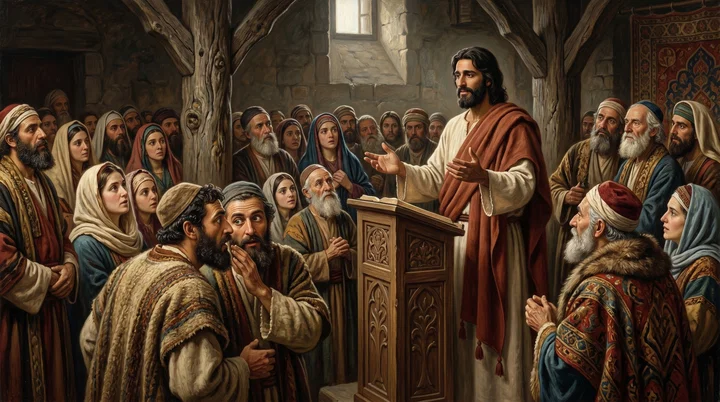
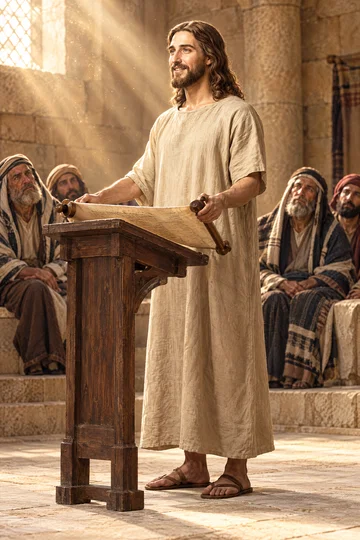
And he came to Nazareth, where he had been brought up: and, as his custom was, he went into the synagogue on the sabbath day, and stood up for to read.
Translations
American King James Version, King James Version, KJV Cambridge Paragraph Bible
And he came to Nazareth, where he had been brought up: and, as his custom was, he went into the synagogue on the sabbath day, and stood up for to read.
And he came to Nazareth, where he had been brought up: and, as his custom was, he went into the synagogue on the sabbath, and stood up to read.
Revised Version, American Standard Version
And he came to Nazareth, where he had been brought up: and he entered, as his custom was, into the synagogue on the sabbath day, and stood up to read.
And he came to Nazareth, where he hath been brought up, and he went in, according to his custom, on the sabbath-day, to the synagogue, and stood up to read;
And he came to Nazareth, where he was brought up; and he entered, according to his custom, into the synagogue on the sabbath day, and stood up to read.
And he came into Nazareth, where he had been brought up, and entered, according to his custom, on the sabbath day, into the synagogue,—and stood up to read.
Berean Standard Bible, Majority Standard Bible
Then Jesus came to Nazareth, where He had been brought up. As was His custom, He entered the synagogue on the Sabbath. And when He stood up to read,
He came to Nazareth, where he had been brought up. He entered, as was his custom, into the synagogue on the Sabbath day, and stood up to read.
And he came to Nazareth, where he had been as a child, and he went, as his way was, into the Synagogue on the Sabbath, and got up to give a reading.
And hee came to Nazareth where hee had bene brought vp, and (as his custome was) went into the Synagogue on the Sabbath day, and stoode vp to reade.
Douay-Rheims (Challoner revision)
And he came to Nazareth, where he was brought up: and he went into the synagogue, according to his custom, on the sabbath day; and he rose up to read.
Pictures
Cross-references 20 of 56
- Exodus 20:8-11
Remember the sabbath day, to keep it holy.
The fourth commandment identifies the seventh day as the Sabbath Jesus observed.
- Genesis 2:2-3
And on the seventh day God ended his work which he had made; and he rested on the seventh day from all his work which he had made.
God rested on and sanctified the seventh day, establishing the Sabbath at creation.
- Isaiah 61:1-2
The Spirit of the Lord GOD is upon me; because the LORD hath anointed me to preach good tidings unto the meek; he hath sent me to bind up the brokenhearted, to proclaim liberty to the captives, and the opening of the prison to them that are bound;
Jesus reads this prophecy in Nazareth and declares its mission fulfilled in himself.
- Acts 17:2
And Paul, as his manner was, went in unto them, and three sabbath days reasoned with them out of the scriptures,
Paul’s regular Sabbath synagogue practice echoes Jesus’ custom of attending synagogue on the Sabbath.
- Mark 2:28
Therefore the Son of man is Lord also of the sabbath.
Jesus is Lord of the Sabbath, which he regularly observed.
- Acts 13:14
But when they departed from Perga, they came to Antioch in Pisidia, and went into the synagogue on the sabbath day, and sat down.
Paul and his companions went to the synagogue on the Sabbath, continuing the practice of Sabbath worship.
- Luke 4:31
And came down to Capernaum, a city of Galilee, and taught them on the sabbath days.
Jesus taught in Capernaum on the Sabbath.
- Luke 23:56
And they returned, and prepared spices and ointments; and rested the sabbath day according to the commandment.
The disciples rested on the Sabbath according to the commandment, following Christ’s example.
- Matthew 12:8
For the Son of man is Lord even of the sabbath day.
both show Christ's Sabbath words and example as authoritative
- Mark 1:21
And they went into Capernaum; and straightway on the sabbath day he entered into the synagogue, and taught.
Jesus teaches in the synagogue on the Sabbath.
- Mark 6:2
And when the sabbath day was come, he began to teach in the synagogue: and many hearing him were astonished, saying, From whence hath this man these things? and what wisdom is this which is given unto him, that even such mighty works are wrought by his hands?
Also describes Jesus teaching in the synagogue on the Sabbath.
- Isaiah 58:13
If thou turn away thy foot from the sabbath, from doing thy pleasure on my holy day; and call the sabbath a delight, the holy of the LORD, honourable; and shalt honour him, not doing thine own ways, nor finding thine own pleasure, nor speaking thine own words:
Calls the Sabbath God’s holy and honorable day, a delight rather than a burden.
- Acts 18:4
And he reasoned in the synagogue every sabbath, and persuaded the Jews and the Greeks.
Paul preached in the synagogue on the Sabbath, following Jesus’ practice.
- Luke 13:10
And he was teaching in one of the synagogues on the sabbath.
Jesus taught in a synagogue on the Sabbath.
- Luke 4:28-30
And all they in the synagogue, when they heard these things, were filled with wrath,
The Nazareth crowd rejects Jesus and tries to cast him from a cliff, but he escapes.
- Acts 15:21
For Moses of old time hath in every city them that preach him, being read in the synagogues every sabbath day.
Both describe Scripture being read in synagogues on the Sabbath.
- Ezekiel 20:12
Moreover also I gave them my sabbaths, to be a sign between me and them, that they might know that I am the LORD that sanctify them.
The Sabbath is a sign that God sanctifies his people.
- Matthew 12:12
How much then is a man better than a sheep? Wherefore it is lawful to do well on the sabbath days.
Jesus taught that doing good on the Sabbath is lawful.
- Mark 2:27
And he said unto them, The sabbath was made for man, and not man for the sabbath:
The Sabbath Jesus kept was made for humanity’s good.
- Luke 4:21
And he began to say unto them, This day is this scripture fulfilled in your ears.
Jesus declares the Scripture he read fulfilled that day.
Commentary part 1 of 2
Each commentary is drawn from primary sources: the writings of Ellen G. White and Adventist pioneers and periodicals. Each commentary is separate. Its own words are not a quotation; follow the references to read the source passages.
Ellen G. White
46 sources
Jesus came back to Nazareth where he had been brought up and spent his youth, early in his ministry after the temptation in the wilderness, while interest was high because the people had heard of him.1RED 53.2–57.1LC1 53.2–54.1RH Jul 2, 1908 As his custom was he went into the synagogue on the Sabbath day and took part in its service, and when the book of Isaiah was delivered to him he stood up to read before watchful familiar faces.1RED 53.2–57.1LC1 53.2–54.1RH Jul 2, 1908ST Jun 23, 1909 The prophecy he read was understood to speak of the Messiah and his work, and by reading it he announced himself as the Anointed One and declared the Scripture fulfilled that day in their hearing.1RED 53.2–57.1LC1 53.2–54.1Ms 3, 1897, par. 28 His announced mission was to preach good news to the poor, heal the brokenhearted, proclaim deliverance to captives, give sight to the blind, set the bruised free and preach the acceptable year of the Lord, a work of restoring and uplifting humanity as a humble servant rather than a temporal ruler.ST Jun 23, 1909Ms 31a, 1898, par. 28–29Ms 65b, 1898, par. 1–2Ms 19, 1899, par. 18–19 At first his gracious words moved the people, but they stumbled over his familiar family as Joseph's son, demanded signs like those at Capernaum, and in wrath thrust him out to cast him from the hill, yet he passed through their midst to seek hearts that would receive.Lt 51a, 1895, par. 5–8Ms 7, 1884, par. 1–212MR 182.2–183.2ST Dec 16, 1897
Nazareth Visit and Custom
Jesus came to Nazareth, the town where he had been brought up and had grown up and spent his youth and early manhood.RH Jul 2, 1908Ms 3, 1897, par. 28Ms 31a, 1898, par. 28–293RED 14.2–15.1 He had worshiped in its synagogue during childhood and youth.ST Jun 23, 1909DA 236.3–4 His coming there was at the beginning of his public ministry and among his own people.1RED 53.2–57.1LC1 53.2–54.1RH Jul 2, 1908
After the temptation in the wilderness he had been teaching in the synagogues in Galilee, and then he returned to Nazareth.1RED 53.2–57.1LC1 53.2–54.1Ms 19, 1899, par. 18–19 He had been absent since his ministry began, but reports of what had happened to him had reached Nazareth.3RED 14.2–15.1ST Feb 1, 1877 Interest and expectation were therefore at the highest pitch, and familiar faces were present, including his mother and his brothers and sisters.1RED 53.2–57.1LC1 53.2–54.1
As his custom was, he went into the synagogue on the Sabbath day and took part in its regular service among the worshipers.1RED 53.2–57.1LC1 53.2–54.1Ms 3, 1897, par. 28Ms 31a, 1898, par. 28–29Ms 125, 1897, par. 1–2 That regular attendance was also the pattern seen in his disciples.ST Jun 23, 1909Ms 19, 1899, par. 18–19 The Sabbath service there became the setting in which he announced his mission and work for the world.Ms 3, 1897, par. 28Ms 125, 1897, par. 1–2
The service included reading from the prophets and urging the people to hope for the Coming One, with exhortation concerning the coming Messiah.1RED 53.2–57.1ST Jun 23, 1909 Any Israelite could take part in the reading, and when asked Jesus stood up to read.1RED 53.2–57.1LC1 53.2–54.1DA 236.3–4 The book of the prophet Isaiah was delivered to him.ST Jun 23, 1909Lt 51a, 1895, par. 5–8Lt 114, 1895, par. 7–10 Those who knew him as an unpretending mechanic watched with curiosity, and all eyes were turned upon him.1RED 53.2–57.1ST Jun 23, 1909DA 236.3–4
Reading and Declared Mission
The reading handed to Him from Isaiah concerned the Messiah and was understood to refer to the Messiah and His work, and by reading it He announced Himself as the Anointed One, announced His mission, His life-work, and His work for the world, and declared the Scripture fulfilled that day in their hearing.1RED 53.2–57.1LC1 53.2–54.1Ms 3, 1897, par. 28Ms 125, 1897, par. 1–2Ms 133, 1902, par. 1–10 He had begun His public ministry among His own people, and following His custom He went into the synagogue on the Sabbath to take part in its regular service, where reading from the prophets urged hope for the Coming One.1RED 53.2–57.1LC1 53.2–54.1ST Jun 23, 1909 He stood up to read and the book of Isaiah was delivered to Him, that He might explain the prophecy about Himself.1RED 53.2–57.1ST Jun 23, 1909Ms 133, 1902, par. 1–10 That Sabbath service thus became the occasion to declare His work of preaching the gospel to the poor, healing the brokenhearted and delivering captives, which remains the work of His followers in reaching the common people.Ms 3, 1897, par. 28Ms 125, 1897, par. 1–2
The mission announced is that the Spirit anointed Him to preach the gospel and good news to the poor and meek, heal the brokenhearted, preach deliverance to the captives, give sight to the blind, set at liberty the bruised, proclaim liberty and opening of prison to the bound, comfort all that mourn, and preach the acceptable year of the Lord.ST Jun 23, 1909Ms 31a, 1898, par. 28–29Ms 105, 1898, par. 15–17Lt 51a, 1895, par. 5–8Ms 19, 1899, par. 18–19 He explained the reading as describing His own work to free and relieve the oppressed, captives, and afflicted, heal the broken-hearted, restore sight to the blind, and reveal the light of truth.ST Jun 23, 1909 This act announced His life work in perfect harmony with the lesson He gave His disciples, revealing a life of seeking first the kingdom of God and His righteousness, fulfilling the law in continual obedience to God's commands in oneness with the Father, tender toward humanity.Ms 19, 1899, par. 18–19 All who fully follow Him understand this and share the honor of being co-laborers with Him to do the very same work He did in restoring the moral image of God in man, using the knowledge, capabilities and powers God has given them for others instead of hoarding them.Ms 105, 1898, par. 15–17
His work is to give encouragement, comfort, and help where most needed, to bring the gospel to people in need, to rescue those bowed down by Satan's yoke of bondage, break the spell of infatuation by bringing eternity into view, and to restore and uplift humanity and bring peace and happiness.Ms 31a, 1898, par. 28–29Ms 65b, 1898, par. 1–2Ms 19, 1899, par. 18–19Lt 81, 1896, par. 2–3Ms 136, 1899, par. 17–18 He repeated the mission He had given to Isaiah, and His entire life in carrying it out was self-denial and self-sacrifice, giving Himself as the propitiation for a lost world.Ms 28, 1897, par. 43–45 He came as a humble servant and not a temporal ruler, fulfilling what Israel left undone.STBk 159.1 His work stands in direct contrast to the Pharisees and Sadducees and the learned and rich who despised and neglected the poor as though riches and learning made them of more value, and in direct contrast to Satan, whose work is to condemn and destroy, to take away liberty, and to destroy life.Ms 31a, 1898, par. 28–29Ms 65b, 1898, par. 1–2Ms 136, 1899, par. 17–18 It is both a source of consolation and a work of restoration and reproof, announcing good news to the poor and rebuking the importance attached to color and caste, for the same price was paid for the salvation of people of every color, so those who slight people because of their color misrepresent Him and reveal selfishness, tradition, and prejudice rather than sanctification through the truth, and to slight a person He has purchased is to slight Him.Lt 81, 1896, par. 2–3STBk 159.1
The prophecy He read was fulfilled as He healed the sick, restored those afflicted by demons, leprosy, and paralysis, opened deaf ears, gave speech to the dumb, restored sight to the blind, raised the dead, fed the hungry, comforted the sorrowful, walked on the waves, stilled the storm by a word, cast out devils, held thousands by words of wisdom, and preached the gospel to the poor.RH Jul 2, 19082SP 370.3DA 541.2–39MR 129.5–131.1 These miracles showed His true character, though some rejected the evidence.RH Jul 2, 1908 His work of restoring the body prepared the way for restoring the soul, for He saves the body as well as the soul.Ms 55, 1901, par. 18–209MR 129.5–131.1 He came to represent the Father and revealed divine power by giving life to the dead and by restoring the sick and suffering to soundness and health, standing in the world as the tree of life and revealing the light of truth.ST Jun 23, 1909Ms 136, 1899, par. 17–18 His announcement at Nazareth that He was the Anointed One later came clearly to the rulers' minds as they considered His works and the Scriptures about Him.DA 539.2
Rejection at Nazareth
At first his gracious words convinced the people, drew a hearty response, and made them witness and wonder under the influence of the Spirit of God.Lt 51a, 1895, par. 5–8Ms 7, 1884, par. 1–212MR 182.2–183.2Lt 33a, 1888, par. 3–4Lt 33, 1888, par. 19–24 The assembly responded to what proceeded from his lips, touched by the Spirit revealed in his speaking.12MR 182.2–183.2Lt 49, 1899, par. 6–10Lt 33a, 1888, par. 3–4Lt 33, 1888, par. 19–24 When he then spoke words that cut across their ideas and exposed their true condition, the impression gave way to doubt and open unbelief.Ms 7, 1884, par. 1–2Lt 49, 1899, par. 6–10Lt 33a, 1888, par. 3–4Lt 33, 1888, par. 19–24
They stumbled over him as Joseph's son and let his familiar family background turn them against him, questioning who he was.Lt 51a, 1895, par. 5–8Ms 7, 1884, par. 1–2Ms 4, 1890, par. 13–16 It is the natural reluctance to acknowledge wonderful development in one who has lived unostentatiously in their midst and been known intimately from childhood, while becoming excited over the pretensions of a stranger and an adventurer.3RED 14.2–15.1ST Feb 3, 1881 Though he had not received instruction from the religious teachers, he showed perfect knowledge of the Jewish system as given in the Scriptures, yet they could not endure the plain truth that exposed Israel's unfaithfulness and their inability to be trusted.Ms 7, 1884, par. 1–2ST Dec 16, 1897Lt 33, 1888, par. 19–24 Doubt admitted grew until it drove the Spirit from their hearts and left them open to Satan's suggestions and possession, and those ready to accept him turned against him.Ms 7, 1884, par. 1–2Lt 49, 1899, par. 6–10Lt 33a, 1888, par. 3–4 Their pride, prejudice, blindness, and malice kept them from accepting the evidence, and his meekness and plain speech stirred their malice even after time to reflect and witnessing his miracles of healing the sick, restoring sight to the blind, hearing to the deaf and speech to the dumb, feeding the hungry, comforting the sorrowful, walking on the waves, stilling the storm by a word, casting out devils, raising the dead, and holding thousands by words of wisdom.2SP 370.31RED 57.2
They demanded the works heard done in Capernaum and heard that no prophet is accepted in his own country.Lt 51a, 1895, par. 5–83RED 14.2–15.1 The proof was that in the three years and six months of famine in Elijah's days Elijah was sent to none of the widows in Israel but to the widow of Sarepta in Sidon, and in Elisha's time none of the lepers in Israel was cleansed but Naaman the Syrian.Lt 51a, 1895, par. 5–8AA 416.2–417.1SLP 229.1–230.2 This warned that pride and unbelief could lead God to turn from his chosen people and reveal himself to people in heathen lands who lived up to the light they received, who were more righteous than backsliding Israelites who sacrificed principle for convenience and worldly honor.AA 416.2–417.1SLP 229.1–230.2 It showed why he confined his work to a small circumference among the Jews rather than devoting his time to the Gentile world, since the Gentiles were not prepared and labor for them would have closed the door to the Jews.ST Dec 16, 1897Ms 50, 1897, par. 1 The people rejected this reproof in pride and unbelief, repeating the spirit their forefathers had shown toward Elijah, and the discourse stirred strong Jewish prejudice because he taught that Gentiles were no less favored by heaven.SLP 229.1–230.2ST Dec 16, 1897RH Sep 25, 1900
They were filled with wrath, tore him from his elevated position as speaker, thrust him out of the city, and drove him from the synagogue.Lt 51a, 1895, par. 5–8ST Dec 16, 1897Lt 49, 1899, par. 6–10 The enraged mob pushed him hither and thither while quarreling how to stop his voice entirely, and led him to the brow of the hill on which their city was built to cast him down headlong and throw him from a precipice.Lt 51a, 1895, par. 5–8ST Dec 16, 1897Ms 4, 1890, par. 13–16Lt 49, 1899, par. 6–10Ms 50, 1897, par. 1 They would have killed him if they could, and became so hostile that those who thought they loved him dragged him out to destroy him.ST Dec 16, 1897Lt 33a, 1888, par. 3–4RH Sep 25, 1900 But divine power, divine agencies, and angels guarded and protected him, and he passed through their midst, disappeared from them to a place they did not know, and went his way.Lt 51a, 1895, par. 5–812MR 182.2–183.2ST Dec 16, 1897Lt 49, 1899, par. 6–10Lt 33, 1888, par. 19–24 He made no stay there but went to seek more fruitful fields and ears and hearts that would listen and receive.Lt 51a, 1895, par. 5–83RED 14.2–15.1
The episode shows that people must choose either for or against Jesus, who still comes through his Word and servants and may be rejected because his truth is plain.Ms 7, 1884, par. 1–2 Rejecting a message God sends is rejecting Christ, and resistance to the light makes it a stumbling block rather than a blessing.Lt 51a, 1895, par. 5–8Ms 15, 1888, par. 38–40 Rejecting the light leaves people spiritually blinded, smitten with blindness, with closed eyes against seeing and ears against hearing and darkened understanding against conviction, under evil control and unable to be reached in heart.Lt 51a, 1895, par. 5–82SP 370.3Ms 15, 1888, par. 38–40 It is dangerous to call the work of the Spirit of God the work of Satan, to admit even the first doubt and unbelief, to value personal judgment above light through his messengers, or to resist truth even when given another opportunity, and teachers who neglect lessons of eternal consequence are left unfit to teach others.Lt 51a, 1895, par. 5–8Lt 33a, 1888, par. 3–4
Example for Followers
Coming to Nazareth where he had been brought up, going into the synagogue on the Sabbath day as his regular custom and standing up to read was an example of how every other person on earth should work and an example for his followers, introducing the announcement of his life-work.Lt 114, 1895, par. 7–1013MR 213.1–2RH Oct 2, 1900 His reading was part of his work of opening the Scriptures to people, which he pursued without letting anything hinder him.Lt 114, 1895, par. 7–1013MR 213.1–2 His example of going among the people in the synagogue teaches that those who would reach others with divine truth should meet them where they are rather than withdraw from society.ST Apr 8, 1886 His example of seeking opportunities for personal ministry was to be ready to draw people into studying the Scriptures and to work patiently with those who lacked a clear understanding of the truth.Ms 21, 1910, par. 7 His going to the synagogue on the Sabbath, as seen also in his disciples, supports families going to worship on the Sabbath even by a route through fields, along a lake, or through groves, and joining worship with attention to God's works in nature.ED 251.1–2
That Sabbath service at Nazareth was made the occasion to declare his work as the One anointed by the Spirit to preach the gospel to the poor, heal the brokenhearted, preach deliverance to the captives, give sight to the blind, set at liberty the bruised, and preach the acceptable year of the Lord, fulfilled that day in the hearing of those in the synagogue.Ms 31a, 1898, par. 28–29Ms 65b, 1898, par. 1–2Ms 105, 1898, par. 15–17 His work so announced is to bring the gospel to people in need and to give encouragement and comfort and help where it is most needed, in contrast to the Pharisees and Sadducees and the learned and rich who despised and neglected the poor as though riches and learning and wealth and knowledge made them of more value.Ms 31a, 1898, par. 28–29Ms 65b, 1898, par. 1–2 It remains the work of his followers in reaching the common people, and all who fully follow him understand this and share the honor of being co-laborers with him and laborers together with God to do the very same work he did.Ms 125, 1897, par. 1–2Ms 105, 1898, par. 15–17Ms 52, 1896, par. 71–73 That same work is to relieve suffering and oppression, to restore the sick and suffering to soundness, to restore the moral image of God in man, and to use the knowledge, capabilities, and powers God has given for others instead of hoarding them.Ms 105, 1898, par. 15–17 It reveals a life of seeking first the kingdom of God and his righteousness, fulfilling the law in continual obedience to God's commands in oneness with the Father, tender toward humanity, given as an example that his followers must follow in his strength to render the obedience God requires and stand perfect before his throne, in perfect harmony with the lesson he gave his disciples.Ms 19, 1899, par. 18–19
Because he so took Isaiah's prophecy in the Nazareth synagogue on the Sabbath as testimony to his own work to preach good tidings to the meek, bind up the brokenhearted, proclaim liberty to captives and opening of prison to the bound, proclaim the acceptable year of the Lord, and comfort all that mourn, the sick are encouraged to hope largely.Lt 106, 1898, par. 14–21 They are to come in faith, take the Lord at his word, place themselves in the hands of the great Physician believing he will restore health, and receive abundantly of his rich grace.Lt 106, 1898, par. 14–21 For Satan is the destroyer and the Lord is the Restorer who still battles disease as when he walked in humanity upon the earth.Lt 106, 1898, par. 14–21
Sources
Pioneers and periodicals
225 sources
As his custom was, he went into the synagogue on the Sabbath day and stood up to read, meaning this was his repeated habitual practice of resting from secular work and taking part in worship and teaching, not a single visit.RH May 5, 1874RH Feb 4, 1862ST Nov 14, 1900RH Mar 8, 1864
The Sabbath he kept by that lifelong custom from childhood through his public ministry is the seventh day of the week, now called Saturday, the day before the first day, kept from sunset to sunset.ST Nov 14, 1900RH Oct 7, 1915ST Nov 21, 1892ST Jul 13, 1904ST May 6, 1913
His observance is a deliberate example his followers must copy by keeping the same seventh day and gathering for worship, proving the Sabbath continues binding in the gospel age and was never changed to the first day.RH May 5, 1874RH Feb 4, 1862ST Nov 14, 1900RH Mar 8, 1864RH Nov 16, 1914
There he read from Isaiah that the Spirit of the Lord was upon him because he was anointed to preach the gospel to the poor, heal the brokenhearted, deliver captives and proclaim the acceptable year, and declared it fulfilled in their hearing as the Spirit-anointed Messiah.RH Jul 2, 1908ST Jun 23, 1909RH Oct 8, 1861RH Mar 1851ST Oct 22, 1874
He never kept Sunday nor taught its observance, and the apostles followed his same customary seventh-day pattern, so Sunday has no command or holy example.ST Jul 5, 1910ST Jun 28, 1883ST Jun 10, 1886ST Jan 3, 1905ST Jul 1, 1897
Words and Historical Setting
The wording marks the time with the preposition for on governing the word for day, and the word for Sabbath stands in the plural genitive form sabbata with singular meaning for the Sabbath day, the seventh day Saturday, after the usage of putting festival names in the plural.RH Jan 2, 1900RH Jan 29, 1867RH Jan 5, 1864RH Dec 15, 1863 That plural form for the Sabbath day is distinct from its use for week, as in Matthew and Mark likewise against John's use of the singular sabbaton for the day and the plural for the week, and Sabbath does not always mean the seventh day since the same word elsewhere means a period of seven days, a week, or all times of sacred rest.RH Jan 29, 1867RH Dec 15, 1863 The wording for custom marks repeated habitual practice, wont and manner rather than a single or isolated visit, identifying the day of that regular synagogue attendance and reading as the Sabbath.RH Jan 2, 1900RH Dec 12, 1871RH Mar 11, 1875 Standing up to read means to preach and teach.RH Jan 2, 1900
The setting is his return to Nazareth where he had been brought up, the scene of his childhood, youth and young manhood where he was best known, giving his personal acquaintances the same opportunity to hear him that had been afforded Judea.ST Jun 23, 1909ST Mar 22, 1899 Its hills and fields were the setting of his quiet, pure and beautiful years communing with nature, his own heart and the Father until ready for work, making Nazareth part of his name as Jesus of Nazareth.ST Feb 14, 1884 He went to the synagogue there on the Sabbath as his custom was and took part in its public service, standing up to read, which marked his introduction to his own people in his true character.ST Feb 17, 1881ST Feb 24, 1881 He had worshiped among his brethren in that synagogue during childhood and youth, and now after absence since his ministry began with what had happened to him heard abroad, interest and expectation were at highest pitch when he appeared again among familiar forms and faces known from infancy, including his mother and his brothers and sisters, with all eyes turned upon him as he entered and took his place among the worshipers.ST Jun 23, 1909 The remains of its synagogue are shown among Catholic and Greek sites in the town.ST May 19, 1898
He had lived in Nazareth from about three years old to thirty, attending well to secular labor and to church duties as a Jewish young man, so that he had taken a leading part in the services of the synagogue and was a man of good reputation. He worked six days a week as a carpenter and rested on the Sabbath, and on returning to Nazareth where he had been brought up still observed the Sabbath according to his former custom.ST Apr 19, 1883 From childhood he had been brought up by his mother to reverence the Sabbath and be present at services, recognizing its sacredness by resting from the labor of the six days and joining in worship.ST Jan 30, 1896 His standing up to read caused no surprise, for the people were glad to see him again as an entertaining reader and an instructive speaker, known as an unpretending mechanic.ST Feb 17, 1881 This proves he had learned to read, as Jewish children were required to be taught by their parents, even though he had not attended the schools of Jerusalem.ST Mar 3, 1890 He worked as the carpenter of Nazareth with the first day of the week as his regular labor day, resting on the seventh-day Sabbath he taught while doing ordinary work on the other days, so that resting the seventh and doing common labor such as hauling hay on Sunday follows his example.ST Jun 11, 1912ST Jul 4, 1899
This was at the start of his public ministry and first advent after his baptism and anointing by the Holy Spirit in the form of a dove when about thirty years of age, his long fast of forty days and temptations of the devil in the wilderness, and his return in the power of the Spirit into Galilee teaching in synagogues with fame spreading through the region while glorified of all.ST Jan 9, 1896GSAM 61.4–62.1ST Mar 6, 1907 It belongs to his early Galilean ministry after several months preaching in Judea, after his first Passover at Jerusalem and talk with the woman at the well, accompanied by five followers John, Andrew, Simon, Philip and Nathanael.ST Jan 9, 1896RH Nov 11, 1915 It fell about six months after temptation in the second year in A.D. 28 when between 31 and 32 years old, leading to preaching repentance and calling disciples by the Sea of Galilee.RH Nov 11, 1915 Beginning the Sabbath service in which he announced his mission and was rejected by his own townspeople, he read the prophecy that the Spirit of the Lord was upon him because he was anointed to preach the gospel to the poor, heal the brokenhearted, preach deliverance to captives and sight to the blind, and set at liberty the bruised, and declared it fulfilled in their hearing that day.ST Jan 9, 1896GSAM 61.4–62.1 His anointing at baptism in the fall of A.D. 27 marked the end of exactly 483 full years of Daniel's sixty-nine weeks from the commandment in B.C. 457, Messiah meaning the Anointed One, the anointing being at baptism not birth when he declared the time is fulfilled.GSAM 61.4–62.1ST Mar 6, 1907
There was then a Sabbath day when it was common to hold religious meetings in synagogues for worship and instruction from the Scriptures, and he made a stated practice of attending from early childhood every Sabbath not on one Sabbath only.RH Aug 15, 1854 Sabbath synagogue worship included reading the Scriptures of the Old Testament, singing praises, offering prayers, and usually giving a religious address by someone able to instruct and edify, with nearly five hundred synagogues in Jerusalem at his advent and synagogues open for public worship all through the Roman Empire wherever Jews had settled where the apostles first preached Christ crucified. At Nazareth he attended a crowded synagogue service where the law was read and the scroll of Isaiah was given to him to read.ST Aug 23, 1910 The verse speaks of an entire day of twenty-four hours, not only daylight hours.RH Dec 12, 1871 He kept the seventh-day Sabbath right and in the right time in Jerusalem as God would have it kept, as a twenty-four-hour day from 6 P.M. to 6 P.M., giving one right spot on the globe where the Sabbath is kept in right time and day, and his keeping it in Jerusalem a few minutes later than in Arabia, with Paul keeping the same Sabbath more than an hour later in Corinth and Philippi to the west, proves it is to be begun in each place when it comes by the same rule and can be strictly kept anywhere east or west on a round world.RH Apr 21, 1851
On that occasion he taught as a youthful teacher in a crowded synagogue with the proud Pharisee and learned doctors of the Jewish sanhedrim present, expounding the prophets and magnifying God's law as the coming Shiloh, the Son of God and Lord of the Sabbath, yet rejected by his own chosen people.RH Oct 23, 1866 The Old Testament was the basis of his teaching there, and he knew how to interpret it. Going into the synagogue every Sabbath was his custom.RH Oct 23, 1866
Lifelong Customary Observance
Going into the synagogue on the Sabbath day and standing up to read was his established custom, wont, manner and habit, not a single or unusual or isolated visit.RH May 5, 1874RH Feb 4, 1862ST Aug 19, 1886RH Jul 25, 1912 Luke's wording marks repeated habitual practice and illustrates how he identifies a practice as customary.RH Feb 4, 1862RH Jul 25, 1912 This proves he observed the Sabbath, and the verse is a New Testament text on the Sabbath showing him at Nazareth doing so.ST Nov 14, 1900RH Mar 8, 1864ST Aug 19, 1886 His regular Sabbath worship demonstrated his regard for the day and presents his attendance as worship and as a deliberate example.RH May 5, 1874RH Feb 4, 1862
The custom began with his upbringing in Nazareth from childhood and early life and continued weekly into his public ministry.RH May 5, 1874RH Feb 4, 1862ST Apr 6, 1915ST Jan 6, 1881 It continued throughout his whole earthly life of over thirty years, including the last three years of active ministry through the close of his work and before his crucifixion.ST Nov 14, 1900ST Apr 6, 1915ST Jan 6, 1881RH Jul 25, 1912 This proves strict and constant keeping, with every Sabbath finding him at worship.ST Nov 14, 1900RH Jul 25, 1912 He observed the Sabbath from childhood, and his practice continued the Sabbath established at creation and given in the law at Sinai.ST Apr 6, 1915ST Jan 6, 1881
On the Sabbath he rested from secular work and common labor including his carpenter trade and took part in synagogue worship and instruction instead of working, devoting at least part of the day to that purpose.RH May 5, 1874ST Nov 14, 1900RH Aug 15, 1854 He was not at secular work but resting and going to the house of worship to read.ST Nov 14, 1900RH Mar 8, 1864RH Oct 7, 1915 The seventh day is sacred rest while the other days are ordinary working days, with six days work as his example.ST Nov 14, 1900 He honored the Sabbath as his regular preaching day, entering the synagogue at Nazareth on the Sabbath by his custom to teach.RH Mar 8, 1864RH Aug 15, 1854
He went to honor the Sabbath, uphold the worship of God and set an example even though Nazareth had few true worshipers and he did not need to attend to learn or attract hearers.RH May 5, 1874RH Feb 4, 1862 His attendance despite possible discomfort or weariness reflects active obedience and humility.RH May 5, 1874 It was on purpose to show regard for the day and not from necessity for a crowd.RH May 5, 1874RH Feb 4, 1862
Identity of Sabbath Day
The Sabbath he kept by custom is the seventh day of the week, now called Saturday, the day before the first day of the week and immediately before it, kept from sunset Friday evening till sunset Saturday evening, not Sunday or the first day.ST Nov 14, 1900RH Oct 7, 1915ST Nov 21, 1892ST Dec 4, 1884RH Nov 16, 1914 Going into the synagogue on the Sabbath day was his way of life, and every Sabbath found him not at secular work but resting and going to the house of worship to read.ST Nov 14, 1900ST Nov 21, 1892ST Dec 4, 1884RH Nov 16, 1914ST Dec 23, 1897
It is the Sabbath of the Lord, of the fourth commandment and of the Ten Commandments, made for mankind at creation before any Jew existed, given at Sinai and kept by his people.ST Nov 14, 1900ST Nov 21, 1892ST Dec 4, 1884RH Nov 16, 1914ST Dec 23, 1897 It originated before sin by three distinct acts of the Creator through Christ, was embodied with nine other moral precepts in God's immutable holy law spoken with God's voice and engraved with God's finger on stone, was magnified, honored and established with all New Testament teaching and confirmed by his death, and was kept by all patriarchs, prophets and apostles.ST Nov 14, 1900ST Nov 21, 1892ST Dec 4, 1884RH Nov 16, 1914ST Dec 23, 1897 The reason to keep it is God's creating in six days, resting on the seventh, and blessing and hallowing it, and the word Sabbath means rest.ST Nov 21, 1892ST Dec 4, 1884RH Nov 16, 1914
He kept the same heaven-born seventh day esteemed and kept by the Jews and required by the fourth commandment and given to Israel, without departing from his nation's practice.ST Jul 13, 1904ST May 6, 1913RH Nov 5, 1872ST Jan 20, 1887 By keeping the day then known by the Jewish nation as the Sabbath he accepted and endorsed the Jews' reckoning as the proper seventh day of the Decalogue, and to call his attendance a visit on Sundays contradicts plain facts since it was not the first day pagans dedicated to the sun now called Sunday.ST Jul 13, 1904RH Nov 5, 1872ST Jan 20, 1887RH Nov 1850
He recognized and observed the day the Jews observed, proving the identity of God's sanctified rest day was known and kept in his time and has not been lost, with the first day coming next after the seventh the Jews have ever observed to this day.RH Jun 2, 1851ST Apr 19, 1883ST Sep 22, 1881ST Sep 22, 1909ST Jul 26, 1883 As infallible Teacher through whom the Father made all things and as Lord of the Sabbath he knew which day was the Sabbath, and because he knew truth and would have corrected error his observance without correction proves the reckoning had not been lost.RH Jun 2, 1851ST Apr 19, 1883ST Sep 22, 1881ST Sep 22, 1909ST Mar 10, 1881
His observance confirms the Sabbath in his time was the true seventh day in uninterrupted succession from creation, with no derangement or loss of time and in regular weekly succession.RH Oct 7, 1915ST May 1, 1884ST Aug 30, 1905ST Apr 4, 1906RH Nov 1850 Knowledge was preserved unbroken from God's rest, blessing, sanctifying and hallowing in the first week and from the manna given only on six working days and none on the seventh in the wilderness of Sin thirty-two days before Sinai, down to the first advent with no record ever lost, a fact even those saying it was abolished at the cross do not deny.ST Aug 30, 1905ST Apr 4, 1906RH Nov 1850 By observing it he confirmed the same seventh day marked by the threefold weekly miracle of manna for forty years through about fifteen hundred years from Exodus to his advent, unaffected by movable Passover and feast sabbaths, and with unbroken order since his time it proves the present seventh day before the first day kept by Jews worldwide preceding Sunday on all calendars is the same Sabbath made at creation, unaffected by calendar chronology.RH Oct 7, 1915ST May 1, 1884ST Aug 30, 1905ST Apr 4, 1906ST Nov 8, 1910 Despite the long-ago event when Joshua commanded the sun to stand still, when challenged over plucking grain and healing the withered hand his responses affirmed the true Sabbath and the Jews never accused him of a new Sabbath, and the Jews also worshiped on that day providing continuing witness with no loss in unbroken order from creation to the present.RH Oct 7, 1915ST Apr 4, 1906RH May 26, 1853
The verse is listed among New Testament references to the Lord's weekly Sabbath, distinguishing it from ceremonial sabbaths of festivals and land, and proves by his example that the seventh day enforced in the fourth commandment remains distinct from other days.RH Oct 21, 1873RH Mar 19, 1857RH Apr 14, 1853ST Jul 23, 1896ST Aug 26, 1897 It is the one universal Sabbath set apart at the beginning for mankind, the day God kept and specified as his sign, the Sabbath of the fourth commandment blessed and sanctified by God not merely Jewish tradition, the memorial and sign of his power as Creator and Redeemer bringing creative, redeeming and sanctifying power, the original Christian Sabbath and only Sabbath he kept so keeping it honors him.RH Oct 21, 1873RH Apr 14, 1853ST Jul 23, 1896ST Aug 26, 1897 The people of Raratonga had kept that day observed by Jesus while believing it was the first day and later recognized it as the Sabbath.
As Creator who made the Sabbath with the Father and as Lord of the Sabbath he honored the day as his own and followed God's example at creation in keeping the seventh day set apart by God, an example followed by the early church.ST Apr 6, 1915ST Jan 6, 1881ST Jun 28, 1883ST Apr 6, 1882RH Mar 7, 1854 Because Christ made it with the Father and gave the law concerning it, he knew which day was the Sabbath and continued the Sabbath established at creation, which is also a sign of a life sanctified by God's power.ST Apr 6, 1915ST Jan 6, 1881ST Jun 28, 1883
His observance of the seventh-day Sabbath supports its identification as the historic Sabbath, is the standard for deciding which day is the Bible Sabbath, and remains the pattern by which his observance can be known.RH Oct 17, 1912ST Sep 12, 1895AUST Jun 21, 1920ST Sep 15, 1909
The Sabbath he kept is the day God gave and calls his own, sanctified from the beginning and instituted in Eden, and the same seventh day kept from Eden and Sinai to Christ was kept by Christians in apostolic days and by Hebrew converts without dispute.ST May 28, 1894RH Oct 23, 1913ST Jul 8, 1897ST Aug 3, 1915ST Jun 11, 1912
Sources