Acts 2:46
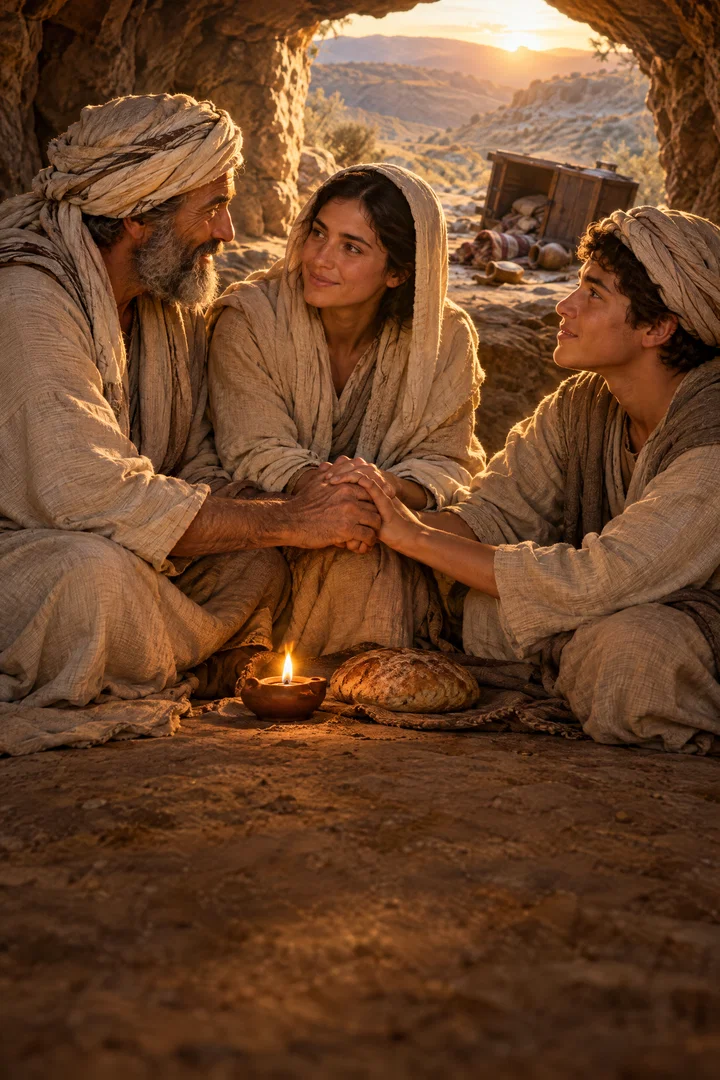
And they, continuing daily with one accord in the temple, and breaking bread from house to house, did eat their meat with gladness and singleness of heart,
Translations
American King James Version, King James Version, KJV Cambridge Paragraph Bible
And they, continuing daily with one accord in the temple, and breaking bread from house to house, did eat their meat with gladness and singleness of heart,
And they, continuing daily with one accord in the temple, and breaking bread from house to house, ate their food with gladness and singleness of heart,
And day by day, continuing stedfastly with one accord in the temple, and breaking bread at home, they did take their food with gladness and singleness of heart,
And day by day, continuing stedfastly with one accord in the temple, and breaking bread at home, they took their food with gladness and singleness of heart,
Daily also continuing with one accord in the temple, breaking also at every house bread, they were partaking of food in gladness and simplicity of heart,
And every day, being constantly in the temple with one accord, and breaking bread in [ the] house, they received their food with gladness and simplicity of heart,
And, daily giving attendance with one intent in the temple and, at home, breaking bread, they were partaking of food with exultation and singleness of heart;
Berean Standard Bible, Majority Standard Bible
With one accord they continued to meet daily in the temple courts and to break bread from house to house, sharing their meals with gladness and sincerity of heart,
Day by day, continuing steadfastly with one accord in the temple, and breaking bread at home, they took their food with gladness and singleness of heart,
And day by day, going in agreement together regularly to the Temple and, taking broken bread together in their houses, they took their food with joy and with true hearts,
And they continued dayly with one accord in the Temple, and breaking bread at home, did eate their meate together with gladnesse and singlenesse of heart,
Douay-Rheims (Challoner revision)
And continuing daily with one accord in the temple, and breaking bread from house to house, they took their meat with gladness and simplicity of heart;
Pictures
Cross-references 20 of 23
- Acts 20:7
And upon the first day of the week, when the disciples came together to break bread, Paul preached unto them, ready to depart on the morrow; and continued his speech until midnight.
Both describe disciples breaking bread, contrasting a first-day gathering with daily practice.
- Acts 2:1-4
And when the day of Pentecost was fully come, they were all with one accord in one place.
The believers gathered in one accord before the Spirit was poured out at Pentecost.
- Acts 2:42
And they continued stedfastly in the apostles’ doctrine and fellowship, and in breaking of bread, and in prayers.
Both describe believers continuing in fellowship and breaking bread.
- Acts 4:32
And the multitude of them that believed were of one heart and of one soul: neither said any of them that ought of the things which he possessed was his own; but they had all things common.
one heart and mind
- Luke 24:35
And they told what things were done in the way, and how he was known of them in breaking of bread.
The disciples recognize Jesus in the breaking of bread.
- 1 Corinthians 11:23-26
For I have received of the Lord that which also I delivered unto you, That the Lord Jesus the same night in which he was betrayed took bread:
The ordinance of breaking bread commemorates Christ’s death.
- Acts 1:14
These all continued with one accord in prayer and supplication, with the women, and Mary the mother of Jesus, and with his brethren.
Both describe the disciples continuing together in Jerusalem before Pentecost.
- Acts 2:38-41
Then Peter said unto them, Repent, and be baptized every one of you in the name of Jesus Christ for the remission of sins, and ye shall receive the gift of the Holy Ghost.
Peter’s call to repent and be baptized precedes the believers’ shared life.
- Luke 24:30
And it came to pass, as he sat at meat with them, he took bread, and blessed it, and brake, and gave to them.
Breaking bread accompanies eating at a meal.
- Acts 5:42
And daily in the temple, and in every house, they ceased not to teach and preach Jesus Christ.
Both describe the disciples’ daily practice.
- Matthew 26:26-30
And as they were eating, Jesus took bread, and blessed it, and brake it, and gave it to the disciples, and said, Take, eat; this is my body.
Jesus institutes the breaking of bread at the Last Supper.
- Luke 22:19
And he took bread, and gave thanks, and brake it, and gave unto them, saying, This is my body which is given for you: this do in remembrance of me.
Christ gave the bread as a remembrance of him.
- Acts 20:11
When he therefore was come up again, and had broken bread, and eaten, and talked a long while, even till break of day, so he departed.
Breaking bread is followed by eating, supporting the ordinary-meal sense.
- Acts 4:35
And laid them down at the apostles’ feet: and distribution was made unto every man according as he had need.
Both describe the early church sharing in fellowship and meeting members’ needs.
- Acts 2:2-4
And suddenly there came a sound from heaven as of a rushing mighty wind, and it filled all the house where they were sitting.
Spirit outpouring that created the united church life
- Joel 2:28-32
And it shall come to pass afterward, that I will pour out my spirit upon all flesh; and your sons and your daughters shall prophesy, your old men shall dream dreams, your young men shall see visions:
Pentecost began its fulfillment.
- Acts 3:1
Now Peter and John went up together into the temple at the hour of prayer, being the ninth hour.
Peter and John go to the temple for prayer on one of these days.
- Matthew 15:36
And he took the seven loaves and the fishes, and gave thanks, and brake them, and gave to his disciples, and the disciples to the multitude.
Jesus breaks bread when feeding the crowd.
- Acts 27:35
And when he had thus spoken, he took bread, and gave thanks to God in presence of them all: and when he had broken it, he began to eat.
Both describe breaking bread and eating.
- Mark 6:41
And when he had taken the five loaves and the two fishes, he looked up to heaven, and blessed, and brake the loaves, and gave them to his disciples to set before them; and the two fishes divided he among them all.
Jesus breaks bread when feeding the crowd.
Commentary
Each commentary is drawn from primary sources: the writings of Ellen G. White and Adventist pioneers and periodicals. Each commentary is separate. Its own words are not a quotation; follow the references to read the source passages.
Ellen G. White
36 sources
After the outpouring of the Spirit at Pentecost the three thousand added by repentance and faith met every day united in worship in the temple and shared meals from home to home with gladness and sincere oneness of heart in praise to God.RH Apr 30, 1908Lt 115, 1903, par. 10–12Ms 130, 1906, par. 31–33Lt 10, 1903, par. 10–12Lt 133, 1903, par. 10 They were of one mind and heart and purpose, having put away differences and striving for supremacy, with Christ filling their thoughts and the advance of His kingdom as their aim.9T 196.5Lt 174a, 1902, par. 21–22STB 197.5 They continued steadfastly in the apostles' doctrine and fellowship and prayers, holding all things in common to supply every need, while wonders and signs were done and the Lord added daily those being saved.RH Apr 30, 1908 Their tender self-denying love and Christlike character gave a small poor community powerful public witness to the risen Saviour, bringing favor with the people while troubling evildoers and stirring hatred and persecution from the wicked.Ms 12, 1902, par. 24–27AA 45.2ST Jan 18, 18835T 239.3 The fruits that followed the Spirit's descent are the pattern for God's people today, who must study this history and pass through a similar experience of unity, daily conversion, and missionary zeal.Lt 170, 1907, par. 95T 580.2Lt 9a, 1893, par. 21–22
Setting After Pentecost
The verse belongs to the full Pentecost account in Acts 2:1-47, which records the disciples receiving the Holy Spirit and proclaiming the risen Savior to the assembled multitudes.Ms 74, 1911, par. 1Ms 49, 1908, par. 1–4 It describes the Christian church in its infancy after Christ had ascended to heaven and after the wonderful outpouring of the Holy Spirit, formed when people repented and received the Spirit after the apostles testified to Jesus' resurrection.Lt 115, 1903, par. 10–12Ms 45, 1895, par. 28–30 The apostles' work thus gathered converted people into the church, and many of those added after His resurrection had experiences and convictions that began with Jesus' trial.SG1 56.2Lt 45, 1900, par. 24–25
Before the Spirit came the disciples obeyed Christ and returned to Jerusalem, where they spent ten days praying for the fulfillment of God's promise, searching their hearts deeply, putting away all differences that had existed among them, and drawing close together in Christian fellowship.Lt 115, 1903, par. 10–12 They also remembered with sadness how they had grieved Christ by slowness of comprehension.Lt 115, 1903, par. 10–12 Then, filled with the Spirit, with about three thousand souls added the same day through Peter's preaching, the believers lived in daily unity in the temple and in house-to-house fellowship, eating together with gladness and singleness of heart, praising God and having favor with all the people while the Lord added to the church daily those being saved.RH Apr 30, 1908Lt 115, 1903, par. 10–12 Their daily united life is proof that Christ had been received and inaugurated in heaven and had sent the Holy Spirit.RH Apr 30, 1908
That gathering and breaking of bread from house to house took place every day, so their sharing of bread was not limited to the first day of the week.Lt 123, 1894, par. 10–11
United Daily Fellowship
Continuing daily with one accord in the temple and breaking bread from house to house means worshiping together every day in the temple and sharing meals in homes with gladness and singleness of heart.Ms 130, 1906, par. 31–33Lt 10, 1903, par. 10–12Lt 133, 1903, par. 10Ms 45, 1895, par. 28–30 This daily fellowship was joyful and sincere, marked by praise to God as the kind of life that comes from people filled with the Holy Spirit.Ms 130, 1906, par. 31–33Lt 10, 1903, par. 10–12ST Jan 7, 1913 After the apostles testified to the risen Jesus and people repented and received the Holy Spirit, this glad, sincere, united community praised God and was well regarded by the people.Ms 45, 1895, par. 28–30 After the Spirit fell the believers shared one mind and heart, living in harmony in one place as at Pentecost.9T 196.5Lt 174a, 1902, par. 21–22STB 197.5 They were no longer independent or divided, having put aside differences and all desire for supremacy, with Christ filling their thoughts and the advancement of His kingdom as their aim.AA 45.2HSP 14.12AA 37.1 Their shared life reflected the unity shown at Pentecost, and their unity and Christlike character showed they had been with Jesus.9T 196.5AA 45.2
They continued steadfastly in the apostles' doctrine and fellowship and prayers, holding all things common and supplying every need.RH Apr 30, 1908 Many wonders and signs were done by the apostles, while the believers praised God and had favor with all the people and the Lord added daily those being saved.RH Apr 30, 1908 Their close communion was tender, thoughtful, self-denying, and willing to make any sacrifice for the truth, showing generous care for one another.Ms 12, 1902, par. 24–27AA 547.3–48T 241.1–2 In both words and deeds they revealed the love Christ had commanded, and by holy words and actions they strove to awaken that love in other hearts.Ms 12, 1902, par. 24–27AA 547.3–4 Their unity and care for one another expressed that commanded love and helped kindle it in others.AA 547.3–48T 241.1–2
That loving fellowship and devotion accompanied the Spirit's work in the church, and the Spirit worked mightily through believers united in purpose.9T 196.5ST Jan 7, 1913 With one desire for the salvation of souls they went forth to proclaim a risen Saviour.Ms 12, 1902, par. 24–27 Their common life expressed gladness, brotherly love, and a wholehearted desire to reflect Christ and enlarge His kingdom.AA 45.2Ms 44, 1898, par. 13–14 This love is to be cherished by believers in willing obedience to the new commandment to love one another, united so closely to Christ that His requirements can be fulfilled and the power of a Saviour who justifies by His righteousness magnified.Ms 12, 1902, par. 24–27
Witness and Present Pattern
The daily meeting in the temple and sharing of meals in homes with gladness and sincere unity belonged to a church marked by generous care for one another, powerful witness to the resurrection of Jesus, and the grace of God.ST Jan 18, 18835T 239.3 After the outpouring of the Holy Spirit the believers lived in loving unity, praised God, and found favor with the people, so that the Lord added daily those being saved.ST Jan 18, 18835T 239.3 Their joyful fellowship and godly lives gave a small, poor and unhonored community a powerful public witness, yet their character and teaching troubled evildoers and brought hatred and persecution from the wicked.ST Jan 18, 18835T 239.3
Believers joined in purpose, with their energies under the control of the Spirit, possess a strength they cannot attain separately, and God can work through them to convert sinners.RH Jun 30, 19037T 236.3 When believers unite their hearts with Christ and bring their lives into harmony with His work, the same Spirit that was poured out at Pentecost will empower their efforts to win souls, as sinners were then converted and many added to the church.RH Jun 30, 1903 The fruits that followed the descent of the Spirit stand as the pattern for the missionary spirit to be expected when the Spirit moves among God's people.Lt 9a, 1893, par. 21–22
Gathering together in unity with gladness and rejoicing comes as the result of presenting truth in the simplicity of true godliness.Lt 80, 1911, par. 10–11 That presentation is accompanied by healing of the sick, the spirit of intercession, urgent appeals, subdued and broken hearts, confession of sin, genuine conversions, and doors thrown open on every side for proclamation of truth.Lt 80, 1911, par. 10–11 Such a work is the same in character as that done in 1843 and 1844.Lt 80, 1911, par. 10–11 The united, continuing worship and fellowship of Acts 2 is the pattern for representing the gospel effectively in an important center of influence.RH Jul 28, 1903Lt 133, 1903, par. 10 It supports establishing a visible, organized witness that makes the nation's capital a center of public witness to the gospel.RH Jul 28, 1903Lt 133, 1903, par. 10
The united worship and fellowship are the model for church gatherings to speak of Christ, praise God, and share testimony in a spirit of love.Ms 155, 1904, par. 71–72RH May 25, 1905Ms 115, 1908, par. 29–31 Speech in such gatherings is to be free of grumbling, faultfinding, fretting and unkindness, since speech given by God is a gift for glorifying Him, and when so used His salvation is revealed.Ms 155, 1904, par. 71–72 This includes gathering early every morning to seek the Lord with singing and prayer and short Bible study, with earnest prayers offered and testimonies borne, eating with gladness and singleness of heart.RH May 25, 1905 Among such a united company the sweet Spirit of God comes in and makes the workers willing and ready to do all that it is possible for them to do, and this fellowship includes drawing people together and praying with them.RH May 25, 1905Ms 115, 1908, par. 29–31
The second chapter of Acts is to be read and received and presented to others, and to be studied for guidance in carrying God's work forward.Lt 32a, 1910, par. 7RH Oct 21, 1909 The whole book of Acts is a lesson calling for deeper piety and the sincere meekness of the Great Teacher, for humbled hearts and for daily conversion.Lt 32a, 1910, par. 7 The work is to advance in unity, with laborers who accept personal responsibility, seek God's direction, and counsel and pray together rather than submit to arbitrary human rule.RH Oct 21, 1909 God's people today are to study this history of the early church during and immediately after Pentecost because they must pass through similar experiences.Lt 170, 1907, par. 9 The presence of primitive Christianity in believers' hearts brings new life and power.5T 580.2
Sources
Pioneers and periodicals
136 sources
The verse pictures the believers after Pentecost continuing every day together in unity in the temple and sharing ordinary meals from house to house with glad and sincere hearts.ST Mar 11, 1897ST Jan 15, 1902ST Dec 9, 1913RH Dec 11, 1860RH Sep 2, 1851 Their breaking of bread was common eating at a shared table, while it is also the Lord's Supper partaken daily and not confined to evening or to any fixed day.ST Dec 9, 1913RH Dec 11, 1860RH Sep 2, 1851 That oneness of heart was the fruit of the outpoured Holy Spirit, with differences put away and goods held in common to supply every need.RH Apr 30, 1908RH Apr 28, 1859RH Feb 10, 1916ST Jul 22, 1913 Because the meeting and eating were daily, they prove no one day holy and give no warrant for Sunday sacredness or for a change of the seventh-day Sabbath.ST Jun 13, 1906ST Aug 27, 1885ST Jul 8, 1930 Their glad fellowship and simple worship won favor and added believers daily, leaving a pattern of united prayer, praise and practical service for God's work now.ST Jan 7, 1913ST Sep 23, 1908RH Jan 20, 1910ST Jan 16, 1896
Words and Daily Setting
The verse belongs to the account of those who joined the faith after Peter's address, when three thousand were converted in one day and sold personal property for the good of the cause, and it describes them continuing daily with one accord in the temple and sharing food from house to house with gladness and singleness of heart.ST Mar 11, 1897ST Jan 15, 1902 It shows the work carried on day by day with unity and zeal.ST Jan 15, 1902
"From house to house" means at home, in that nearby groups often ate together at their lodgings after public worship, yet though they shared their possessions each ate at his own table.ST Apr 19, 1883 Their bread was the thin dry Jewish bread that was broken by hand rather than cut with a knife.ST Apr 19, 1883 "Breaking bread" here is taking ordinary common meals together, sharing a common table and sharing possessions and eating with gladness and sincerity.ST Dec 9, 1913RH Dec 11, 1860RH Sep 2, 1851RH Jul 21, 1868ST May 25, 1915 The phrase can refer either to common meals or to the Lord's Supper, and here it may mean a common meal rather than the ordinance, connected with gathering to eat on the evening after the Sabbath.ST Oct 22, 1912ST Apr 13, 1904
The breaking of bread and the eating of a common meal are distinct, and the practice at Jerusalem was the same kind of practice as at Troas.RH Mar 20, 1856 Worship and breaking of bread are expressly marked as a daily custom, after the habit of noting when an act was customary, and this explicit daily marking contrasts with the absence of any weekly, wonted or customary marking for the single first-day meeting at Troas, showing that meeting was occasional rather than stated.RH Dec 12, 1871 Because they ate together daily, they did so on the first day and on the seventh day as well, both in the temple and from house to house.RH Nov 2, 1911ST Sep 4, 1901
Unity and Shared Life
The verse is the most striking example of Christian fellowship, with the disciples continuing daily with one accord in the temple and breaking bread from house to house as those with one accord in one place, all of one heart and one mind.RH Apr 28, 1859 Those converted continued steadfastly in the apostles' doctrine and fellowship and prayers, holding all things common, selling goods and parting them to all as every man had need and supplying every need, with many wonders and signs done by the apostles.RH Apr 30, 1908RH Apr 28, 1859 Such unity was inspired by one Spirit, the Holy Ghost sent down from heaven.RH Apr 28, 1859
It was the genuine out-bursting of the pure heart and could only exist where holiness swayed all hearts.RH Apr 28, 1859 It was fed and kept alive by constant intercourse with God in Christ through the Holy Spirit, while all forced fellowship is vain and insipid.RH Apr 28, 1859 The believers had put away their differences, and this oneness accompanied the outpouring of the Holy Spirit and renewed spiritual power.RH Feb 10, 1916
Their unity is the model for God's people, who must be brought into one heart and soul before uniting in prayer for the latter rain. Sharing bread accompanies the removal of past differences in firm brotherly union.RH Feb 4, 1904 The primitive church when first raised up existed in a beginning state of purity in which all lived together as brethren, called each other brethren and mutually loved each other.RH Sep 4, 1856
This brotherly love and charity belonged to the first state of the church, before charity diminished and at length vanished and evils with falses succeeded, bringing schisms and heresies.RH Sep 4, 1856 That undivided oneness on the day of Pentecost, with all followers together as just one undivided church, is the original and right condition, so every later cleavage into denominations is the fruit of sin or blunder.RH Oct 2, 1913 The apostolic church began among the common, despised people as plain humble followers, the original standard of simplicity and humility later left for pride, aristocracy, extravagance and display.ST Jul 18, 1911
The early disciples lived as one family with singleness of heart, strengthening one another in doing good and glorifying God.RH Dec 19, 1854 Their shared life is Christian communalism: believers met together daily and shared meals with gladness and sincere unity.ST May 18, 1904 They held what they had subject to the needs of God's cause and people, and their generosity was associated with gaining God's favor.ST May 18, 1904ST Apr 19, 1883
This primitive condition later ceased because of selfishness, and its complete benefits belong to the new earth where righteousness dwells.ST May 18, 1904 The first Christian centuries are described as marvels of communal life, model societies in unity sharing goods, the most perfect reproduction of Eden possible to fallen nature, a work claimed to be renewed in Paraguay.ST Nov 6, 1893 Yet that idealized Edenic state, when tested by five years of war that opened the interior, proved a nation debased below slavery, without law, rights, tribunals, government, morality, family, instruction, industry or commerce, poor to penury and savage to ferocity.ST Nov 6, 1893
After the Spirit was poured out the believers lived in loving unity, worshiping daily with one accord in the temple and sharing meals in homes with gladness and wholeheartedness.ST Jan 7, 1913RH Apr 1, 1909RH Jan 20, 1910ST Jan 16, 1896ST Mar 10, 1909 They praised God and had favor with all the people while the Lord added daily such as should be saved.ST Jan 7, 1913ST Jan 18, 1883ST Jan 16, 1896ST Mar 10, 1909 Their common life expressed their oneness as a church across different peoples, rooted in the Holy Spirit and love of God, and their unity and shared faith stand in contrast to religious confusion and discord which weaken power to lead to salvation.ST Mar 10, 1909RH May 2, 1907
Their joyful fellowship and godly lives gave their small, poor, unhonored community a powerful witness to God's love and truth that helped the gospel spread, though it also brought hatred and persecution from the wicked.ST Jan 18, 1883 Their worship and communal life were simple, without elaborate ceremonies or spectacle, in homes as well as the temple.ST Dec 24, 1896ST Apr 26, 1883 They found cheerfulness, strength and pleasure in unity of heart, a lively picture of heaven.RH Mar 25, 1873
This same unity and simplicity of Christian faith, day by day staying together with one accord and taking food with gladness and singleness of heart, and its results can be seen now.ST Dec 24, 1896 The Jerusalem believers after Pentecost met daily in unity in the temple and shared meals with glad, wholehearted fellowship, and assembled daily for worship and fellowship.RH Jun 11, 1857RH May 21, 1872 A later congregation is described in similar terms as united in faith, willing to sacrifice and tenderly loving one another.RH May 21, 1872
Pentecost and Spirit Outpouring
The daily life described is proof that Christ had been received and inaugurated in heaven and had sent the Holy Spirit, after about three thousand souls were added through Peter's preaching to the Jews at Pentecost when many believed.RH Apr 30, 1908ST Jul 22, 1913 It belongs to the church's first special manifestation in power on that day and to the beginning fulfillment of the promised power of the Holy Spirit.ST Apr 29, 1875ST Jan 20, 1898 It belongs to the answer to Jesus' prayer for the Comforter, who came on Pentecost within ten days of the ascension.ST Dec 2, 1889 This is the beginning of Christ's priesthood in the heavenly sanctuary, ministering in its first or holy place, through whose priestly work the disciples were enlightened to understand the crucified and risen Jesus as high priest and received blessing.ST Dec 2, 1889
Their rejoicing exemplifies the joy of the first fruits of the Spirit and of the former rain that began the gospel work.RH Sep 2, 1851 Pentecost is the early rain of this dispensation, falling in copious showers that caused thousands in a single day to open their hearts to receive life-giving rain from heaven.ST Dec 3, 1902 In it the gifts of the Spirit were set in the church and began to produce the fruit of the Spirit on every side.ST Dec 3, 1902 It foreshadows a still more abundant latter rain, when the showers will be as it were doubled, to be experienced by God's people just before Christ's second coming, with signs preceding the great day of the Lord.ST Dec 3, 1902ST Apr 26, 1905 The outpouring was only a remarkable beginning of the fulfillment of Joel 2:28-32, not its complete fulfillment, for the facts stated in Acts 2 do not sustain a complete fulfillment on that day, and to place the entire fulfillment there would put the last days wholly 1800 years in the past.RH Mar 13, 1879
The feast of weeks, or Pentecost, was fulfilled on its appointed day through the outpouring of the Holy Spirit, and the chapter is identified with that fulfillment.RH Oct 30, 1855RH Dec 15, 1868RH May 27, 1915 This exemplifies that the great event represented by a type begins on the day of the type though its effects continue afterward, and the Spirit then poured out still abides with the church.RH Oct 30, 1855RH Dec 15, 1868 The gospel's first-fruits after the resurrection connect with the first-fruit offerings Israel brought at harvest and at Pentecost, which typified them.ST Mar 4, 1889 The first Christians are the prepared first-fruits offered to Christ on the Pentecost day, fulfilling the type of the two wave-loaves.RH Jul 8, 1873ST Mar 4, 1889
In the year of Christ's crucifixion and resurrection Pentecost fell on the seventh-day Sabbath.RH Mar 1, 1906 Those who held the other reckoning taught that Pentecost fell on the first day of the week as a most memorable day carrying sacredness across the ages, when the promised baptism of the Holy Spirit was shed forth as first-fruits of the Spirit beginning the new dispensation with the law and word going forth from Jerusalem.RH Jul 8, 1873 On that day about three thousand souls were added in one day as first-fruits in contrast to three thousand perishing at the giving of the old law, while the assembled Jews and proselytes kept the seventh-day Sabbath.RH Jul 8, 1873RH Oct 21, 1873 At Pentecost no new law was given, so its events do not mark the enactment of a replacement law.ST Sep 9, 1913
The gift of tongues in the surrounding account helped proclaim the gospel to people of different nations, bringing conviction and conversion.RH Aug 11, 1904 The apostles' Pentecost displayed power from on high that astonished Jerusalem, which the church today should likewise have so that its actions cannot be explained by the world.ST Jan 15, 1902 It illustrates baptism of the Holy Spirit as complete yielding to the Spirit and coming absolutely under the Spirit's control.ST Feb 19, 1902 The chapter's fruitage shows that a large number could be brought to faith without great numbers or prolonged effort, as fruit borne through the Spirit.RH May 10, 1906 Its spiritual results in many saved were works greater than Jesus' physical healings because they brought spiritual salvation through the Holy Ghost, and the public account appeals to facts known to the public in support of the witnesses' testimony about events connected with Jesus.RH Dec 11, 1860RH Sep 25, 1900
The disciples' waiting for the Father's promise shows that God's people may likewise wait for the promised outpouring of the Spirit.RH Oct 28, 1858 The believers' ordinary shared life, continuing together in the temple and sharing meals from house to house, is pictured as a fruit of God's power.RH Sep 23, 1902 This witness was not limited to the leaders but included the ordinary members of the church.RH Sep 23, 1902
Breaking Bread and Ordinance
If the breaking of bread here means the same as in verse 42, it is the Lord's supper or eucharist. Since they also ate ordinary meals daily, they partook of the eucharist in the daytime as well as in connection with those meals, showing it was not restricted to the evening. The early Christians had no fixed day for partaking of the eucharist but were governed by surroundings, preferences or interests as local control, so time and place could be varied at will. Place was of no importance since the habit was house to house, and the day was not necessarily holy, for if it were every day would be holy since each of the seven was in turn employed.
No particular day or fixed weekly schedule is designated for the Lord's Supper.RH Jul 4, 1865ST Mar 21, 1911 Where breaking bread means the Supper it proves it was once celebrated daily, so Scripture gives no regular set time and believers may observe it at whatever season they wish, its frequency left to the faith, discretion and devotion of God's people.RH Jul 4, 1865ST Mar 21, 1911ST Apr 23, 1896 The Jerusalem church broke bread daily, a practice not limited to a weekly gathering or a particular day or fixed occasion, connected with the breaking of bread instituted at the Last Supper.STRH Feb 3, 1852 The daily practice at the outset did not last long, lessening within months or years to once a week, once a month or once in several months.
For a time and for a brief period the Supper was observed daily, and it may have been observed every day at first.RH Oct 18, 1906ST Nov 21, 1906ST Nov 10, 1898 If the daily breaking is the Lord's Supper, it shows communion had no fixed day and could be observed on the Sabbath as well as the first day.ST Oct 22, 1912 There it means celebrating the eucharist with preaching, public worship and other offices, done daily and on Saturday just as on Sunday.RH Jul 11, 1854 The verse does not prove the meal was the Supper or a weekly ordinance or Sunday observance.ST May 11, 1915ST Sep 4, 1901
It is instead evidence that, if they were celebrating the Supper, they could do so daily.ST Sep 4, 1901 An instance of an action is not enough to prove a recurring custom of breaking bread on the first day, so breaking bread daily does not by itself establish that they met on Sunday or celebrated the Lord's Supper on a particular day.ST May 11, 1915RH Sep 24, 1861 The disciples' sharing meals from house to house after the Sabbath, coming together to break bread or eat supper, explains Paul's first-day meeting meal as ordinary eating.ST Sep 9, 1880 In the surrounding account their baptism followed reception of the word and preceded continued life in the apostles' teaching and fellowship.ST Oct 11, 1883
As part of the baptism account the verse shows the fellowship and conduct of those who had first repented and obeyed.ST Oct 11, 1883RH Apr 2, 1857 The celebration of the Supper was not confined to the first day; its timing was left open and could be daily.ST Jul 23, 1894
Sabbath and Sunday Question
The daily breaking of bread from house to house does not by itself show that a particular day was the Sabbath, make a day holy, or establish Sunday or the first day as sacred, and a meeting for breaking bread on one day does not make that day the Sabbath.ST Jun 13, 1906ST Aug 27, 1885ST Jul 8, 1930RH Jan 26, 1864 The breaking took place on different days and every day, not only on a particular day to honor it, so the act was not unique to the first day and communal meals or communion on a particular day do not make it holy.ST Aug 27, 1885ST Jul 8, 1930RH Jan 26, 1864 The apostolic church broke bread every day, so breaking bread on the first day was not limited to that day, and celebrating the Supper on a Sunday does not by itself show Sunday was regarded as sacred.ST Jul 8, 1930ST Sep 20, 1899RH Mar 11, 1862 Since Christ designated no day for the ordinance and it was observed on different days rather than on only one appointed day, a single first-day celebration cannot establish that the Sabbath was changed.ST Sep 20, 1899RH Mar 11, 1862
Their daily fellowship and eating in the temple and from house to house with gladness and sincere hearts do not mean they kept every day as the Sabbath of the fourth commandment, and this daily practice cannot make every day a Sabbath.RH Feb 5, 1857ST Aug 13, 1874 Treating apostolic example as equal to a command would make every day a Sabbath and proves too much, for if holding meetings and breaking bread made a Sabbath, every day would be a Sabbath.ST Aug 21, 1893ST Feb 27, 1893RH Mar 31, 1874ST Mar 22, 1883 Worship and religious service happened every day and not on the first day alone, with souls added daily, so every day would have the fullest warrant as a Sabbath on that principle, while a single sermon by Paul on the first day at Troas gives no warrant for Sunday sacredness.ST Aug 21, 1893RH Mar 31, 1874ST Mar 22, 1883 Breaking bread does not make a day holy or make it a Sabbath day, and holding a meeting of disciples cannot establish a holy day because only the Lord can sanctify a day.ST Feb 27, 1893 Disciples held meetings on any and all days, and there is no command for when the Lord's supper shall be celebrated or when religious meetings shall be held.ST Feb 27, 1893
Their gathering on a particular first day was nothing unusual and is not evidence they observed every first day as a holy day, replaced the seventh-day Sabbath, abrogated Saturday, forbade work on Saturday, or gave Scriptural authority for Sunday rest.RH Jul 11, 1854RH Feb 24, 1859RH Aug 22, 1854 The breaking of bread there means celebrating the eucharist with preaching, public worship and the other offices, done daily and also on Saturday just as on Sunday, so breaking bread at Troas does not prove worship belonged to Sunday alone or was not done on Saturday also.RH Jul 11, 1854RH Feb 24, 1859RH Aug 22, 1854 It cannot release from the obligation to keep holy the seventh day on which God rested from all His work.RH Jul 11, 1854 The believers met daily, so gatherings were not confined to the first day, and meeting and breaking bread was their daily custom and not something done on the first day only.ST Sep 25, 1893RH Mar 11, 1862 Since they broke bread daily rather than on only one appointed day, breaking bread on the first day does not make the first day the Sabbath, any more than every day should be kept as the Sabbath because they broke bread every day.RH Mar 11, 1862
The disciples broke bread and preached daily and met together united in the temple and shared meals in homes, and these ordinary activities and daily bread-breaking mean an account of bread broken on a particular day does not establish that day as a Sabbath.ST Jun 5, 1901RH Aug 18, 1868ST Jan 13, 1881RH Sep 25, 1856RH Dec 31, 1857 Breaking bread on the first day gives no more proof that the first day is the Sabbath than it gives for any other day, and the fact that bread was broken on a particular day does not make that day a Sabbath since they did this every day and called the first day by that name while observing another day as the Sabbath.ST Jun 5, 1901RH Aug 18, 1868RH Sep 25, 1856RH Dec 31, 1857 They sometimes broke bread every day, not only on the first day of the week.ST Jun 5, 1901RH Aug 18, 1868ST Jan 13, 1881 The believers continued daily in unity at the temple and shared meals with gladness and sincere hearts, and because the activity took place daily beginning at Pentecost, the verse does not establish Sunday as uniquely observed or hallowed or as their regular day of worship.ST Jan 29, 1885 The apostles continued daily with one accord in the temple, so religious service happened every day not on the first day alone, and this daily practice means breaking was not confined to the first day and did not make it a Sabbath.ST Mar 22, 1883ST Jul 30, 1902
The daily breaking in homes is used to question whether breaking bread at a meeting establishes a change of the Sabbath, and the continued daily temple gathering does not establish Sunday or show it replaced the seventh day, for the apostles kept no Sunday.ST Mar 1, 1899 By contrast, those who held it teach that the apostles met for worship and breaking bread on the first day of the week and that their practice made it the Christian Sabbath.RH Dec 6, 1853
Pattern and Present Application
The record stands as a practical pattern of apostolic work, showing how the Lord's teachings were applied in the early church with divine approval, and the lesson drawn is that people are saved to serve, while the united continuing worship and fellowship is the pattern for representing the gospel effectively in an important center by establishing a visible organized witness in the nation's capital.RH Jul 28, 1903ST Sep 23, 1908
The chapter is to be studied for carrying God's work forward in unity, with laborers accepting personal responsibility, seeking God's direction, and counseling and praying together rather than submitting to arbitrary human rule.RH Oct 21, 1909
Their shared worship and fellowship describe the spiritual condition on which the church's growth depended, with the Lord adding those being saved, and after Pentecost their daily unity in the temple and eating together at home with gladness and sincere hearts accompanied the Spirit-empowered spread of the gospel with new believers added day by day.RH Jan 18, 1912RH Nov 29, 1906
Their conduct and practical good works won the admiration of those around them and made the gospel visible, helping bring conversions, and this pattern of worship followed by practical Christian living remains effective and needs no novel device to attract people.ST Mar 30, 1882ST Mar 30, 1882
Their regular fellowship and personal contact helped win people to Christ, with the Lord adding daily those being saved, and their close fellowship models the shared purpose and encouragement that strengthen a Christian gathering.RH Nov 17, 1904ST Dec 15, 1881
The coming of the Spirit at Pentecost was a great revival issuing in great missionary endeavor at home and abroad, proving that fresh experience overflows into missionary action because divine life instinctively communicates blessing, and when believers unite hearts with Christ and harmonize lives with His work the same Spirit empowers efforts to win souls, showing what Spirit-filled people can do and giving power to represent Christ and serve.RH Jun 30, 1903RH Jan 29, 1914ST Aug 17, 1904
The disciples' work after Pentecost, animated by the Holy Spirit, inspires earnest work today with the same zeal needed, and the Pentecostal era partly fulfilled prophecy of expansion to be surpassed by more remarkable worldwide growth in the final work.RH Nov 14, 1912RH Dec 2, 1915
Their being together in Jerusalem served as an object lesson of faith, but staying there would have hindered missionary work, for their happy prosperous life with all things in common and favor with the people made them unwilling to leave Jerusalem though commissioned to go to all the world, so persecution arose against the settled church and in providence scattered them to go everywhere preaching the Word.ST Jan 15, 1902ST May 8, 1901
The primitive Pentecost contrasts with a modern gathering marked by popular jollity and shared benevolence, for their active faith lived for the Lord, praised God and pointed others to Jesus rather than being absorbed by personal cares and pleasures, and it belongs to a continuing unfolding in which truth shone more fully though the whole truth was not yet revealed.RH Mar 15, 1864ST Oct 5, 1904ST Aug 4, 1909
The verse shows the right attitude toward food, for eating with gladness and singleness of heart means carrying spirituality to the table and keeping it in view through the meal, and the manner and spirit of eating matters more than mere selection, since mere vegetarianism is small and a man can feed grossly without meat, while this glad spiritual eating brings lightness of spirits, keenness of intellect and bodily vigor that make the thoroughly efficient man.ST Jun 27, 1911
It is applied to eating and drinking temperately with gratitude to the Lord, for eating good food can be done with gladness and singleness, and a Christian whose appetite is sanctified eats with gratitude, rises refreshed and finds satisfaction for body and soul, so good living nourishes the soul not merely the body.ST Mar 9, 1882RH Apr 29, 1902
The Pentecost revival was accompanied by simplicity in food and drink as believers shared what they had and ate with gladness and singleness, and Christians are to do their work with gladness and singleness, serving sincerely rather than seeking praise, and should act wholeheartedly.ST Oct 31, 1911ST Apr 5, 1905RH Nov 7, 1871
Believers continue daily with one accord by gathering early every morning to seek the Lord with singing, prayer, short Bible study, earnest prayers and testimonies, eating with gladness and singleness, and the sweet Spirit comes among such a united company making workers willing and ready to do all possible.RH May 25, 1905
Their pattern of worship and shared meals was often accompanied by the ordinances, including baptism, humility and the Lord's supper, and is echoed in a communion gathering with breaking of bread and washing the saints' feet, described as solemn and blessed by the Lord's presence, while united prayer after Pentecost is exemplified with results through prayer and united activity.RH Mar 6, 1913ST Oct 17, 1895RH Dec 8, 1904RH Dec 23, 1851
The verse is recalled with the spirit of intercession and praise of Pentecost as a pattern for visiting families and opening God's word to them, and the apostolic example of earnestness and sacrifice is the standard of commitment still required.RH Jul 24, 1913ST Apr 19, 1883
The generous united spirit of the Pentecost church is presented as an example by which needed funds for God's work could quickly be raised, and the account exemplifies how the greatest local work can be accomplished by a company with only a limited place to meet, describing a community converted, gathered for worship and enthusiastic in working together for others, transformed by gospel, prayer and shared worship with daily praise, welcome to converts and practical help settling them.ST May 9, 1906RH Jul 20, 1911ST Jan 20, 1904
Sources