Acts 4:35
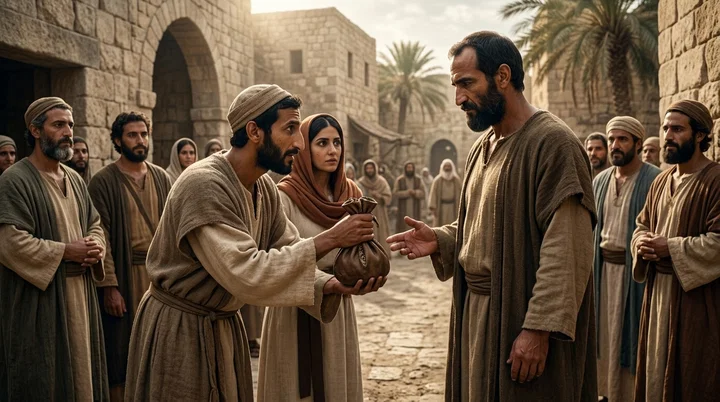
And laid them down at the apostles’ feet: and distribution was made unto every man according as he had need.
Translations
And laid them down at the apostles’ feet: and distribution was made to every man according as he had need.
And laid them down at the apostles’ feet: and distribution was made unto every man according as he had need.
and laid them down at the apostles’ feet: and distribution was made unto every man according as he had need.
And laid them down at the apostles' feet: and distribution was made to every man according as he had need.
Revised Version, American Standard Version
and laid them at the apostles’ feet: and distribution was made unto each, according as any one had need.
and were laying them at the feet of the apostles, and distribution was being made to each according as any one had need.
and laid it at the feet of the apostles; and distribution was made to each according as any one might have need.
And laying them at the feet of the Apostles, while on the other hand they were distributing unto each one, in so far as any one had, need.
Berean Standard Bible, Majority Standard Bible
and lay them at the apostles’ feet for distribution to anyone as he had need.
and laid them at the apostles’ feet; and distribution was made to each, according as anyone had need.
And put it at the feet of the Apostles for distribution to everyone as he had need.
And layde it downe at the Apostles feete, and it was distributed vnto euery man, according as he had neede.
Douay-Rheims (Challoner revision)
And laid it down before the feet of the apostles. And distribution was made to every one, according as he had need.
Pictures
Cross-references
- Acts 2:44-45
And all that believed were together, and had all things common;
Believers shared possessions and distributed resources according to need.
- Acts 5:1-4
But a certain man named Ananias, with Sapphira his wife, sold a possession,
Ananias and Sapphira deceptively withheld part of their proceeds while presenting it as the whole gift.
- Acts 11:29-30
Then the disciples, every man according to his ability, determined to send relief unto the brethren which dwelt in Judæa:
Disciples sent relief to Judean believers according to their ability.
- Luke 12:33
Sell that ye have, and give alms; provide yourselves bags which wax not old, a treasure in the heavens that faileth not, where no thief approacheth, neither moth corrupteth.
Selling possessions and giving to the needy is lived out in distribution.
- 2 Corinthians 8:14
But by an equality, that now at this time your abundance may be a supply for their want, that their abundance also may be a supply for your want: that there may be equality:
Abundance is shared to supply another’s need and bring equality.
- Acts 6:1-3
And in those days, when the number of the disciples was multiplied, there arose a murmuring of the Grecians against the Hebrews, because their widows were neglected in the daily ministration.
The growing distribution of shared resources led to appointing men to oversee care for the needy.
- Romans 15:26
For it hath pleased them of Macedonia and Achaia to make a certain contribution for the poor saints which are at Jerusalem.
Macedonia and Achaia contributed for poor believers in Jerusalem.
- 1 Corinthians 16:2
Upon the first day of the week let every one of you lay by him in store, as God hath prospered him, that there be no gatherings when I come.
Both describe believers giving according to their means to meet others’ needs.
- 2 Corinthians 8:2
How that in a great trial of affliction the abundance of their joy and their deep poverty abounded unto the riches of their liberality.
poor gave much from little
- Acts 5:1-2
But a certain man named Ananias, with Sapphira his wife, sold a possession,
Ananias and Sapphira withheld part of the sale price while presenting their gift as complete.
- 2 Corinthians 9:5-7
Therefore I thought it necessary to exhort the brethren, that they would go before unto you, and make up beforehand your bounty, whereof ye had notice before, that the same might be ready, as a matter of bounty, and not as of covetousness.
Paul teaches generous, willing giving for the relief work.
- Galatians 2:10
Only they would that we should remember the poor; the same which I also was forward to do.
Paul’s commitment to remember the poor is reflected in the distribution according to need.
- Exodus 16:18
And when they did mete it with an omer, he that gathered much had nothing over, and he that gathered little had no lack; they gathered every man according to his eating.
Those who gathered much had nothing over, and those who gathered little had no lack.
- 1 John 3:17
But whoso hath this world’s good, and seeth his brother have need, and shutteth up his bowels of compassion from him, how dwelleth the love of God in him?
Cited in connection with sharing goods with a needy brother.
- 2 Corinthians 9:12
For the administration of this service not only supplieth the want of the saints, but is abundant also by many thanksgivings unto God;
Giving meets believers’ needs and leads to thanksgiving to God.
- Matthew 19:21
Jesus said unto him, If thou wilt be perfect, go and sell that thou hast, and give to the poor, and thou shalt have treasure in heaven: and come and follow me.
Jesus’ call to give up possessions is reflected in the church’s sharing.
- 1 Peter 4:10
As every man hath received the gift, even so minister the same one to another, as good stewards of the manifold grace of God.
Both describe using what one has to minister to others.
Commentary
Each commentary is drawn from primary sources: the writings of Ellen G. White and Adventist pioneers and periodicals. Each commentary is separate. Its own words are not a quotation; follow the references to read the source passages.
Ellen G. White
19 sources
Believers who sold houses and lands brought the money and laid it at the apostles' feet to be distributed to every person according as he had need.RH Feb 2, 191113MR 188.3–189.1Ms 91, 1899, par. 34–36 This met an emergency at Jerusalem where many new converts were cut off from family and friends, driven from homes and livelihoods, and needed food and shelter so that none lacked.RH Feb 2, 1911SLP 14.2AA 70.1–71.1 No one was forced to surrender possessions, but they gave voluntarily and cheerfully with self-denial, even accepting privation and cheaper shelter to help banished brethren.13MR 188.3–189.1Ms 91, 1899, par. 34–367RED 19.3–20.1 Their liberality was the effect of the outpouring of the Holy Spirit, which made them of one heart and soul and their love for brethren and the cause greater than love for money and possessions.RH Feb 2, 1911AA 70.1–71.17RED 19.3–20.1 It does not teach a general surrender of all property into a common stock where no one has claims above another, but that property is held as the Lord's goods in trust to be used as far as the needs of His cause and the worthy poor require, a lesson in active benevolence for Christians to the end of time.Lt 39, 1874, par. 11–122MR 41.45T 733.311MR 368.2
Apostolic Sharing in Need
Those who sold houses and lands brought the proceeds and laid them at the apostles' feet, entrusting the money to the apostles for the work of God.RH Feb 2, 191113MR 188.3–189.1Ms 91, 1899, par. 34–36SLP 14.2AA 70.1–71.1 The apostles held the means under their care and direction and distributed to every person according as he had need.RH Feb 2, 1911Ms 91, 1899, par. 34–36SLP 14.2AA 70.1–71.1 Believers thus placed their resources at the apostles' disposal so that each received what was required.5T 156.3–157.1
The sharing met an emergency at Jerusalem, where a large company of converts had gathered and needed homes and food.7RED 19.3–20.1AC1 19.3–20.2 They had been cut off from family and friends, thrown out of business, driven from homes and livelihoods, and exiled for following Christ.RH Feb 2, 1911SLP 14.2AA 70.1–71.17RED 19.3–20.1AC1 19.3–20.2 This provision supplied urgent needs for food, shelter and homes, so that none among them lacked or was left in want.RH Feb 2, 1911AA 70.1–71.17RED 19.3–20.1AC1 19.3–20.2
The giving was voluntary, with no one forced to surrender possessions.13MR 188.3–189.1Ms 91, 1899, par. 34–36 Those who had money and possessions cheerfully sacrificed them, with self-denial and privation, because they valued fellow believers and the gospel mission more than possessions.RH Feb 2, 19117RED 19.3–20.1 Those permitted to keep homes gladly received banished brethren, while others sold property, accepted cheaper shelter, and freely lent means to help others hear the gospel.RH Feb 2, 1911 Though poor, they gave all and remained ready to serve and suffer for the truth wherever directed.5T 156.3–157.1
The common resources could become a temptation to selfishness, covetousness and dishonesty.Ms 91, 1899, par. 34–36 Ananias and Sapphira tried to appear to give everything while secretly keeping part, placing only part of their proceeds at the apostles' feet while falsely pretending to have given all.13MR 188.3–189.1Ms 91, 1899, par. 34–36Lt 232, 1899, par. 26–28 That pretense was fraud and dishonesty known to God.Ms 91, 1899, par. 34–36 Withholding means until the needy have suffered and the opportunity to advance God's work has passed is too late, and such delayed offering is rejected.SG2 246.1–2
Spirit's Motive and Pattern
The generous sharing that put resources at the apostles' feet for distribution according to need was the effect of the outpouring of the Holy Spirit.RH Feb 2, 1911AA 70.1–71.17RED 19.3–20.1AC1 19.3–20.23SP 283.1–284.1 That outpouring made believers of one heart and soul with one common interest in the success of their mission.7RED 19.3–20.1AC1 19.3–20.23SP 283.1–284.1 It is the antidote for selfish love of the world, and when the love of Christ takes full possession of the heart believers become self-sacrificing and benevolent to save others.AC1 19.3–20.2 Their love for their brethren and for the cause became greater than their love for money and possessions.RH Feb 2, 1911AA 70.1–71.17RED 19.3–20.1AC1 19.3–20.23SP 283.1–284.1 By acting out their faith they proved that they counted souls of far greater value than any earthly inheritance or heritage, following Him who for their sakes became poor that through His poverty they might be made rich, and this spirit gives power to influence hearers.7RED 19.3–20.1AC1 19.3–20.2
The laying of means at the apostles' feet does not teach a general relinquishing of all property into a common stock or community fund where no one has claims above another.Lt 39, 1874, par. 11–12 Rather each believer felt he had no claim upon his property that could make the claims of Christ secondary.Lt 39, 1874, par. 15 They let Christ fully into their houses, lands and possessions as far as the needs of His cause required and the needs of the worthy poor.Lt 39, 1874, par. 11–12Lt 39, 1874, par. 15 They treated none of their possessions as their own but used all their earthly goods to support poor believers.2MR 41.411MR 368.2 Property is lent to them in trust, it is not their own but the Lord's goods, and it is not to be wasted.2MR 41.411MR 368.2
That unselfish giving remains a lesson for all Christians to the end of time, expressing love for sinners in active benevolence to extend the truth to others and in gifts to needy saints, with ideas about giving greatly enlarged.Lt 39, 1874, par. 11–12RH Nov 26, 1857 The same Holy Spirit will have the same influence on hearts today, leading believers to use the Lord's goods to advance His work, to publish the glad tidings of the gospel, and to relieve the needy and help the helpless, for whom Christ showed the greatest pity and most tender compassion.2MR 41.411MR 368.2 Faithful giving helps supply missionary needs, sustains God's suffering poor and the cause of truth, and its example can lead others to give and support further conversions.Lt 39, 1874, par. 11–125T 733.3RH Nov 26, 1857 When God's principle of benevolence is accepted wholeheartedly and obeyed, the apostolic experience is brought again.Lt 39, 1874, par. 11–12 The same principle must actuate those who believe they are living under the sound of the last message of mercy, holding means lent them of God to be handled under Christ's claim, moved by seeing the cause extending far beyond expectation and in ardent expectation that the work will be carried forward with unabated zeal.Lt 39, 1874, par. 11–12Lt 39, 1874, par. 15
In the early work of the cause, when only a few had accepted the truth, they sold houses and lands, accepted cheaper shelter, and freely lent their means to spread the truth and support the work.SG2 248.2 They endured privation for others' benefit, and their sacrifice was counted as treasure stored in heaven and will receive a great reward if they endure to the end.SG2 248.2 The same pattern was echoed when the contributions of Gentile churches for the poor were laid at James's feet for distribution according to need.SLP 208.2–209.1 Those gifts gave tangible evidence of their love and sympathy for the Jerusalem church and their desire for harmony with Jewish believers, and they showed that Paul kept his promise to remember the poor.SLP 208.2–209.1
Sources
Pioneers and periodicals
110 sources
Believers who sold houses, lands and other possessions brought the proceeds and laid them at the apostles' feet into a common fund, from which orderly distribution was made so that each received according as he had need and none lacked.RH Feb 20, 1855RH Nov 20, 1856ST Sep 22, 1914RH Oct 8, 1861RH Apr 15, 1909 It was the practical expression of being of one heart and one soul under the Holy Spirit, in complete consecration of themselves and all they owned to God and to one another in love.RH Oct 8, 1861ST Apr 27, 1904RH Jan 13, 1874RH Sep 30, 1902 The sharing was voluntary and Spirit-led, not a compulsory political or social system nor a standing requirement to hold all in common, but a free response to extraordinary emergency with givers remaining stewards who relieved necessity according to need.RH Jul 29, 1862RH Jul 10, 1855ST Mar 16, 1904ST Apr 19, 1883ST Dec 14, 1904 Distribution was made through careful, systematic stewardship under the apostles and then deacons, meeting genuine need rather than supporting idleness, and sustaining both the poor and the work of preaching and sending missionaries.RH Dec 11, 1856ST Apr 19, 1883RH Dec 1, 1904RH Aug 20, 1908 To pledge all while secretly keeping part back, as Ananias and Sapphira did, is to withhold the heart and tempt the Spirit, and the same devotion will be repeated when God's people repent and receive the latter rain, selling possessions and giving lives and means without delay to finish the urgent worldwide work.RH Mar 13, 1900RH Dec 21, 1869RH Sep 30, 1902RH Jul 16, 1908ST Jul 7, 1914
Words and Historical Setting
Those who owned houses, lands or other possessions sold them and brought the money and laid it at the apostles' feet, and the apostles administered it by distributing to each person according as he had need.RH Feb 20, 1855RH Nov 20, 1856RH Oct 8, 1861RH Mar 5, 1901ST May 6, 1897 The money was placed under the apostles' charge so that no one among them lacked, with food and shelter supplied and equal privileges and comforts shared as the practical expression of unity and of equality of property within the brotherhood, not merely equality of rights.RH Feb 2, 1911RH Oct 8, 1861RH Mar 5, 1901RH Jul 10, 1855ST May 6, 1897 The giving was willing and sacrificial and flowed from the Holy Spirit's work, valuing fellow believers and the gospel mission above possessions and using resources to help others hear the gospel, as the Spirit of Christ in action in self-denial and generous care rather than growth of personal or national wealth.RH Feb 2, 1911ST May 6, 1897 That care was joined to giving in proportion to what God has provided and to faithful tithes and offerings, and it was meant to meet genuine need and not to support idleness, but was joined with work and responsible provision.RH Feb 20, 1855RH Nov 20, 1856ST May 6, 1897 To lay gifts at the feet follows the Eastern custom of placing an offering at the recipient's feet rather than in the hand, signifying humility as though the gift were unworthy of attention.ST Jan 21, 1897 It also teaches placing oneself at Christ's feet for him to do as he sees fit, with the assurance that his people are engraved on the palms of his hands.ST Jan 21, 1897
The sharing belongs to the time after Pentecost, when the disciples obeyed Christ's command to remain at Jerusalem, spent the ten days before Pentecost in prayer, put away all differences and selfishness, and became of one accord.RH Feb 10, 1916 Then they were filled with the Holy Spirit in fullness and power, the multitude became of one heart and one soul, thousands were converted in a day under preaching and the sick were healed.RH Feb 10, 1916 Power first enjoyed and then lost through unbelief, dissension, strife and selfishness was restored in even greater measure after they were united in humility and love.RH Feb 10, 1916 Needful preparation had been made by cleansing from the sin of covetousness, and after the outpouring of the Spirit for service men and women went out, sold possessions and goods, and laid the prices at the apostles' feet for distribution to every person according to need.RH Mar 25, 1915 The same kind of results will follow seed-sowing by placing the book in every home, with reapers speedily following the sowing in a great movement taking in every Seventh-day Adventist.
The provision met an emergency, supporting converts who had been driven from homes and livelihoods for following Christ and cast out and cut off from means of support, so that none lacked.RH Feb 2, 1911ST Jul 7, 1914 It answered the practical need of those who had stayed in Jerusalem and exhausted their provisions, expressing the principle that one member of Christ's body should not go without while others had plenty.RH Jul 10, 1855 Many were away from their homes with all men against them, so community of goods was demanded by emergency circumstances, a voluntary sharing with those in want and not a just and permanent rule of equal division. The circumstances leading to holding property in common were temporary, but brotherly love continued.RH Jul 10, 1855 The arrangement shortly after the organization of the church at Jerusalem drew into a common fund the proceeds of property of considerable value sold by those who had money, as Joses did by selling his property and bringing the money to the apostles, and as Ananias and Sapphira under the Spirit's influence had pledged the proceeds of certain property to do.ST Jul 7, 1914 The sharing was voluntary and generous, expressing unity, self-sacrifice, and regard for spiritual worth above possessions. The man who toils hard for years with self-denial and economy is entitled to reap and enjoy the fruit of his labors, and if good will delight to share his store, but the prospect of future community gives no excuse for sitting in idleness waiting for it, and Christians coming to similar times of displacement and opposition should and will do likewise.
About ten thousand believers were gathered at Jerusalem, meeting an emergency need for means by bringing money and placing it under the charge of the apostles.RH Apr 15, 1909 The apostles were charged with general oversight and guidance of the work, and their office was general for the whole church, not local.RH Apr 15, 1909 Laying means at their feet established a common treasury administered by them, from which orderly and systematic distribution could be made through regular channels to look after the needs of the thousands.RH Apr 15, 1909 The Spirit-filled church thus does its work in the most systematic manner and recognizes divine authority in the gifts and offices placed in the church for administration of its affairs.RH Apr 15, 1909 The chapter illustrates the limit of human authority, that human rule must not take the place of conscience or God.ST Apr 23, 1912 It shows what Spirit-filled people can do, that they can suffer as well as speak and be patient and earnest, bold and kind, while God remains willing to work and the name of Jesus remains potent.
The later neglect of widows in the daily ministration supports the existence of this common fund, to which many contributed by selling possessions.ST Apr 5, 1883 Their willingness to do so points to a strong motive, conviction of Christianity's truth arising from the evidence of miracles.ST Apr 5, 1883 Laying goods at the apostles' feet meant yielding stewardships by relinquishing temporal possessions to God, deeding property and land without reserve to God's human vicegerents with the understanding that the conveyance is virtually made to God himself, because God claims his own property.RH Aug 4, 1853
Orderly Apostolic Administration
The money from sold possessions was placed under the charge and care of the apostles, establishing a common treasury or common fund from which they oversaw distribution to each person according to need.RH Apr 15, 1909RH Aug 17, 1916RH Jul 22, 1909RH Jul 16, 1908ST Jul 7, 1914 About ten thousand believers were gathered at Jerusalem after Pentecost, and meeting the emergency need for means required orderly and systematic distribution through regular channels to look after the needs of the thousands.RH Apr 15, 1909RH Aug 17, 1916ST Jul 7, 1914 The apostles were charged with the general oversight and guidance of the work, and their office was general for the whole church rather than merely local, so laying means at their feet recognized divine authority in the gifts and offices placed in the church for administration of its affairs.RH Apr 15, 1909RH Aug 17, 1916 Those who had possessions they could spare sold them to help advance the gospel work rather than directing the money themselves to a particular family or worker, including those of considerable value who had been cast out of homes and cut off from support for their faith, as Joses did and as Ananias and Sapphira had pledged to do.RH Jul 22, 1909ST Jul 7, 1914ST Jul 29, 1913 Giving to this fund was voluntary and not demanded, for Barnabas freely gave all he had while Ananias and Sapphira tried to gain honor and support by pretending to give everything while secretly keeping some back.ST Jul 29, 1913
The distribution was orderly and systematic, providing a model of careful stewardship in the prevailing practice soon after Pentecost.RH Apr 15, 1909RH Aug 17, 1916 The money was placed at the church leaders' disposal so it could be distributed without confusion, with goods distributed according to each person's need and not equally to everyone, as an expression of thorough conversion, true benevolence and the Holy Spirit's work in leading property to be regarded as belonging to God and used beyond personal needs to relieve needy believers.ST Apr 19, 1883RH Aug 20, 1908 The fund so raised by toil and sacrifice from faith in God's work was sacred, to be distributed according to need with integrity, justice and careful stewardship for the salvation of souls, not used lavishly and carelessly nor thrown to unconsecrated ministers who love ease.RH May 6, 1873 Both giving and ministering require a continuing spirit of sacrifice, and when confidence in faithful handling is lost liberality dries up, prosperity fails and God's Spirit departs, with responsibility resting on those who caused the loss of confidence.RH May 6, 1873
The apostles did not use the shared resources to enrich themselves but arranged for distribution to each person according to need.RH Feb 4, 1862 Later selected men took special responsibility for managing the offerings and distributing them, leading to the office of deacon, and the deacons' care for the poor and distribution of necessities followed this example to ensure that no one lacked the necessities of life.RH Feb 4, 1862RH Aug 20, 1908 When believers were united, filled with the Holy Spirit, and powerfully witnessing, resources came in abundantly so the practical need was to distribute them rather than to raise them.ST Aug 12, 1897 The distribution work, like preaching, required people filled with the Holy Spirit.ST Aug 12, 1897
Possessions were to be brought voluntarily and laid at the apostles' feet rather than forcibly taken for common distribution.RH Oct 8, 1857 Support for the poor and free distribution of literature comes from donations by people who choose cheerfully to contribute.RH Oct 8, 1857
Voluntary Not Compulsory Sharing
The sharing at the apostles' feet was voluntary and Spirit-led, arising among people filled with the Holy Spirit after Pentecost, and it does not establish a compulsory political, legal or social system.ST Mar 16, 1904ST Dec 14, 1904ST Feb 5, 1902ST Jul 29, 1913 Each giver acted as God's steward in self-denial and devotion to his work, freely placing proceeds at the apostles' feet for distribution according to need, while each person remained free to keep property instead.ST Dec 14, 1904ST Feb 5, 1902ST Jan 29, 1902ST Jul 29, 1913 This Spirit-born sharing cannot be imposed by law or politics and cannot be reproduced by human plans in hearts unchanged by grace, because selfishness would undermine it.ST Mar 16, 1904ST Dec 4, 1901
It was a special response to extraordinary emergencies and to the circumstances at Jerusalem, not a standing requirement to hold all goods in common.RH Jul 29, 1862ST Jan 15, 1902RH Jul 10, 1855ST Feb 4, 1886 Believers who had stayed in Jerusalem had exhausted their provisions, many were away from home with all men against them, and one member of Christ's body was not to go without while others had plenty.RH Jul 29, 1862RH Jul 10, 1855 Under ordinary circumstances Christians gave part of what they had as a lesson in abundant giving, and insisting on remaining together at Jerusalem could hinder missionary work, foster dependence, and discourage self-support.RH Jul 29, 1862ST Jan 15, 1902ST Feb 4, 1886 The community of goods demanded by such displacement and opposition will be repeated by Christians who come to similar times, yet the prospect of future community gives no excuse for idleness, and the hard-working man who practices self-denial and economy is entitled to reap and enjoy the fruit of his labors.ST May 18, 1882
Givers remained owners and stewards who used property beyond personal needs to relieve needy believers, and the aim was thoughtful relief of necessity according to household needs and means.ST Apr 19, 1883ST Apr 19, 1883ST Dec 14, 1904ST Jan 29, 1902 Distribution was made according to each person's need rather than by indiscriminate surrender of everything or by a just and permanent rule of equal division.ST Apr 19, 1883ST Apr 19, 1883ST Jan 29, 1902 Possessions were treated as belonging to God and as available for the needs of his people and cause rather than as wealth to keep solely for self, entrusted to the leaders' disposal for orderly distribution without confusion.ST Apr 19, 1883ST Apr 19, 1883ST Apr 19, 1883 Accumulated property received by donation and earned through labor could be held as common stock without requiring members to give up personal property.ST Apr 19, 1883RH Feb 12, 1857
The example pushes New Testament liberality far above Old Testament tenths, with a whole church selling property and giving without limit.ST Jan 28, 1875ST Jan 28, 1889RH Aug 19, 1873 Gifts were brought to the apostles and distributed according to need as self-denial for the advancement of Christ's cause, enjoining giving according to income as prospered and pointing toward much larger liberality than was required in the old Jewish church.ST Jan 28, 1875RH Aug 19, 1873 That continuing generosity after Pentecost went beyond the tenth so that the law of tithe was obscured but not abolished.ST Jan 28, 1875ST Jan 28, 1889 It was never enforced on others as a command, yet it was never reproved, proving that the gospel dispensation brings a notable rise in benevolence where a less generous, less self-denying religion is inadmissible.ST Jan 28, 1875ST Jan 28, 1889
This condition is the work of Christianity alone when selfish men are changed by grace and by the Spirit of God.ST Sep 22, 1914STST Dec 4, 1901 Each looked to the interests of others rather than his own, so possessions were pooled and shared to meet need, giving equal privileges and comforts for all with none lacking.ST Sep 22, 1914ST It proves that society becomes right only when man himself is made good, never by reconstructing society through socialism or human plans.ST Sep 22, 1914ST Dec 4, 1901
Unity Under Holy Spirit
The laying of the proceeds at the apostles' feet for distribution to every man according as he had need was the practical working out of being of one heart and one soul.RH Oct 8, 1861RH Jan 13, 1874RH Sep 4, 1856 Believers lived as brothers in mutual love, unity, interest and sympathy, treating what they owned as belonging to one another rather than as strictly private property.RH Oct 8, 1861RH Sep 4, 1856RH Nov 20, 1860 This was equality of property within the Christian brotherhood, not merely equality of rights, expressed in liberal sustaining of the work by means and in a united system bringing all the influence of the church to bear together against the powers of darkness.RH Oct 8, 1861RH Jan 13, 1874 The sharing was voluntary and generous, placing goods at the apostles' disposal for general distribution, and it supported converts driven from homes and livelihoods so that none lacked, showing regard for people's spiritual worth above possessions.RH Nov 20, 1860
Grace showed itself in material sharing, with each looking to the interests of others rather than his own.ST Sep 22, 1914ST Apr 27, 1904ST Thorough conversion led disciples to regard property as belonging to God, to be used beyond personal needs to relieve needy believers, as the work of the Holy Spirit and of true benevolence.ST Sep 22, 1914ST Apr 19, 1883ST Distribution was made according to each person's need, not equally to everyone, with money placed at the church leaders' disposal so it could be distributed without confusion.ST Apr 19, 1883 So pooled under the apostles and shared to meet need, possessions gave equal privileges and comforts for all with none lacking, a social condition produced by Christianity alone when selfish men are changed by grace, proving society becomes right only when man himself is made good.ST Sep 22, 1914ST
The giving expressed complete consecration of themselves and all they owned to the work of spreading the gospel.RH Sep 30, 1902ST Jul 1, 1886 They surrendered what represented former self-serving efforts, not merely money while withholding the heart, with nothing held back in honest, whole-hearted surrender never to be reconsidered or regretted.RH Sep 30, 1902ST Jul 22, 1886RH Feb 6, 1855 From the hour of conversion the first Christians made little account of property, counting all things lost for Christ, and when the cause required they readily laid all at the feet of the missionaries.RH Feb 6, 1855 If a man of wealth was converted his sympathy for the despoiled and suffering brotherhood and his solicitude for the conversion of the perishing poured forth his funds as water so that he seldom retained his riches long, and generally they were poor, a rich Christian being hardly known, yet from their little they gave much, liberal to a degree unsurpassed.RH Feb 6, 1855 The same spirit calls for giving up whatever remains, including valued ornaments, rather than treating the surrender of a few habits as enough, offering both property and self to God's cause in generous, sacrificial willing service.RH Mar 25, 1915ST Jul 22, 1886ST Jul 1, 1886
The act expressed God's ownership of all things and Christian stewardship, with faith and love bringing a believer's whole life and possessions into God's service.RH Feb 2, 1911RH Jul 29, 1862ST Aug 31, 1888ST Apr 19, 1883 Believers voluntarily sold houses, lands or other possessions and placed the proceeds at the apostles' disposal, recognizing that possessions belonged to Christ and should be used to help others and advance the gospel.RH Feb 2, 1911RH Jul 29, 1862ST Aug 31, 1888 The money was distributed so that no one lacked, each receiving according to need, meeting the food and shelter needs of converts driven from homes and livelihoods.RH Feb 2, 1911ST Aug 31, 1888 Their possessions were treated as available for the needs of God's people and cause rather than as wealth to keep solely for themselves, showing that caring for the poor was a shared Christian duty among those united in interest and sympathy who valued fellow believers and the mission more than possessions.RH Feb 2, 1911RH Jul 29, 1862ST Apr 19, 1883
That surrender and oneness, joined with thankfulness for being counted worthy to suffer for Christ and the gospel, prepared the way for the apostles to witness with great power and for God's grace to rest on them.RH Jan 13, 1874 It was the secret of the power and success of the apostolic age, for in response God shook the place where they were assembled and gave great power to witness, sending them forth as missionaries with courage and zeal to warn the world.RH Jan 13, 1874 The same order belongs to the present tarrying time: after prayer and filling with the Holy Ghost believers become of one heart and one soul, count nothing their own, sell lands and houses and bring the proceeds to be distributed so that no one lacks, and when God's people repent and become of the same mind as Christ they will sell what they have and give it for the cause, and a mighty work will be done in a short time.RH Mar 13, 1900 Their community also had great grace, favor among the people, and daily additions to the church, and these favorable conditions could make them content to remain in Jerusalem despite the commission to go throughout the world, until later scattering through persecution set them preaching elsewhere.RH Jan 13, 1874ST May 8, 1901
Provision According to Need
Distribution was made to every person according to need so that no one lacked, supplying food, shelter and equal privileges and comforts for all from resources pooled under apostolic oversight.ST Sep 22, 1914ST May 18, 1904ST Aug 31, 1888ST Aug 5, 1897RH Mar 5, 1901 Possessions were treated as belonging to one another rather than strictly private because believers regarded themselves as brethren, despised earthly things in light of eternal life, faced death with courage, and would let no member suffer want while others had plenty.ST Sep 22, 1914ST Aug 31, 1888RH Jul 10, 1855 That same care continued afterward in relieving, comforting and encouraging brethren thrown into prison for the faith, sparing nothing and sending large sums for their relief even while proud unbelievers without faith ridiculed such generosity.RH Jul 10, 1855
Help was meant to meet genuine need and never to support idleness, since active industry is the Christian's blessing and idleness his curse.RH Feb 20, 1855RH Nov 20, 1856RH Feb 20, 1855RH Nov 24, 1904 Aid that frees a person's own means for tobacco or that encourages careless dependence does not meet the standard, because paying for one necessity while the recipient spends on the injurious habit still supports the habit rather than relieving need.RH Feb 20, 1855RH Nov 20, 1856RH Dec 11, 1856 Sharing was voluntary relief for those in want, not a just and permanent rule of equal division, and the man who toils for years with self-denial and economy is entitled to reap and enjoy the fruit of his labors and, if good, will delight to share his store, while prospect of future community gives no excuse for sitting idle waiting for it.RH Feb 20, 1855 The emergency demand arose because many were away from home with all men against them, and Christians coming to similar times of displacement and opposition should and will do likewise, giving help to the suffering without carelessly encouraging idleness, and those who gave nearly all they had to advance the cause were watched over by God and did not come to want.RH Nov 24, 1904
The verse establishes the duty of those blessed with means to care for poorer and less fortunate people in the church, and that the gospel must again be preached to the poor.RH May 13, 1915 The Jerusalem church used its means in God's work at the very beginning and was thereby reduced to poverty, which explains why the poor saints at Jerusalem later needed relief from disciples in other places and why help was afterward collected to keep them from suffering.RH Nov 29, 1864RH Jun 9, 1859RH Feb 3, 1859RH Nov 23, 1869RH Jul 29, 1909 Offerings later brought from the Gentile churches to Jerusalem likewise showed love and sympathy for Jewish believers and desire for unity, freely given even by churches in deep poverty in remembrance of the poor.ST Jan 15, 1885 The provision arose from personal sacrifice and shared care, with houses and lands sold and proceeds freely contributed to provide shelter, relieve need, and advance the cause, so that no one lacked what was needed.RH Nov 26, 1857RH Jul 10, 1855ST Feb 5, 1902
Support for Gospel Mission
The proceeds laid at the apostles' feet were placed under their care to be distributed to each according to need, and that distribution sustained the sacred work side by side with preaching.RH Dec 1, 1904RH Jun 23, 1904RH Sep 16, 1915 The means freed preachers from embarrassment and maintained them, sent them without delay into the harvest field, sustained missionaries carrying the message to other lands, and spread publications.RH Feb 20, 1855RH Sep 16, 1915RH Nov 20, 1856 Order was observed in handling the means, with sharing only in cases of real need and never to support idleness, since active industry is the Christian's blessing and idleness his curse.RH Feb 20, 1855RH Nov 20, 1856 Some went to proclaim the gospel while others supplied means for those who went, and the same pattern belongs to the closing work, when those unable to go give their possessions to support those who devote their lives to it.RH Dec 1, 1904
After giving themselves to the Lord the believers gave more than a tithe, even all they had, and their giving went beyond paying tithes in willingness to sacrifice for the cause.ST Jan 28, 1889RH Apr 1, 1915 That strong continuing generosity after Pentecost obscured the law of the tenth but did not abolish it.ST Jan 28, 1889 Such giving did not pay for salvation, which is freely given, but expressed the obligation that follows from freely receiving it.ST Jan 17, 1884 Faith in Jesus at the Father's right hand moved willing giving that needed little urging, and shaped the practical use of money for the gospel work.RH Nov 17, 1904 Christian liberality of this kind accompanies spiritual and temporal prosperity, and unselfish use of wealth becomes a source of blessing in contrast with covetousness.ST Feb 14, 1884ST Aug 19, 1875
The same pattern governs mission giving, in which believers give willingly and generously and funds are sent to each field as it has need.RH Aug 20, 1914 The Pentecostal church took care to provide properly for needy people of every class, and that example authorizes meeting such needs through organized giving when believers cannot help personally.RH Mar 9, 1911 The liberality once shown in raising money for foreign missions and for Oakwood Training-School recalls this generous giving to meet important needs.RH Aug 3, 1911 Selling farms and houses and laying the money at the apostles' feet means giving proceeds of sold property of any kind, such as horses, cattle or other holdings, to meet a pressing need of the cause, seeking help to sell it if it cannot be sold alone.RH Aug 7, 1900 Applied to schools and colleges in debt it calls for big giving to match big building, repeating the old-time spirit of 1844 sacrifice, and it is reflected when camp-meetings share resources generously through gifts of money and pledges of houses, lots and farms.RH Aug 7, 1900RH Sep 24, 1914
Warnings and Last-Day Application
Pretending to give everything while secretly keeping part back repeats the sin of Ananias and Sapphira, who under the Spirit's influence had pledged the proceeds of a sale to the common fund created for believers cast out of homes and cut off from support, then tried to gain honor and support falsely.RH Sep 30, 1902ST Jul 7, 1914ST Jul 29, 1913 Their act was an attempt to tempt the Spirit of the Lord, since withholding part of the gift meant withholding the heart.RH Sep 30, 1902ST Jul 29, 1913 Partial consecration is no consecration, for complete consecration surrenders what represented former self-serving efforts and not money alone, and those who give all receive all.RH Dec 21, 1869RH Sep 30, 1902 The early giving was a willing sacrifice for God's work and others that gave the movement strength, so that even hypocrites felt pressure to imitate it, as Joses did truly by selling property and bringing the money while Barnabas freely gave all he had.RH Dec 21, 1869ST Jul 7, 1914ST Jul 29, 1913
Means laid at the feet of God's servants for distribution according to need will at last be brought by wealthy believers only as the work is closing, after being withheld when it could have advanced the cause and relieved the needy.RH Mar 13, 1900RH Nov 30, 1911RH Nov 30, 1911 That late offering will be refused and not accepted, because the opportunity to use it for good has passed and it is no longer needed.RH Mar 13, 1900RH Nov 30, 1911RH Nov 30, 1911
The apostolic church believed Christ's warnings about riches and made themselves poor to do good to others, readily laying all at the feet of the missionaries when the cause required in honest surrender never reconsidered.ST Aug 5, 1886RH Mar 17, 1874RH Feb 6, 1855 If a man of wealth was converted his sympathy for the despoiled and suffering brotherhood and his care for the perishing poured out his funds like water so that he seldom kept riches long, and generally believers were poor so that a rich Christian was hardly known, yet from their little they gave much with unsurpassed liberality.RH Feb 6, 1855RH Nov 4, 1873 They sold farms and everything to forward God's work, laid the price for distribution to every man according as he had need, and sacrificed life itself amid stripes, imprisonment, stoning and crucifixion, trusting God for life's blessings and transferring treasure to the other world by charity before probation closes and earthly property is destroyed with those whose treasure remains here.ST Apr 30, 1894RH Nov 4, 1873 This stands as the accepted standard of earnestness that those with greater light and shorter time should equal, rebuking coldness, apathy, sleep and measuring by fallen churches, and as unselfish unity and equality with no reigning as kings on one side and despising as offscouring on the other.ST Apr 30, 1894RH Nov 4, 1873
That apostolic pattern is reflected in the Tae-pings' common fund and common table.RH Dec 29, 1904 A later communal group likewise held accumulated property received by donation and earned by members' labor as common stock for distribution to each according to need, but without requiring members to give up personal property.RH Feb 12, 1857
Great grace, favor among the people and daily additions could make believers content to remain in Jerusalem despite the commission to go throughout the world, until scattering through persecution set them preaching elsewhere.ST May 8, 1901
The verse sets the standard of true discipleship as self-denial and cross-bearing, living as pilgrim, sojourner and stranger, renouncing love of the world, comfort, ease and respectability.ST Jun 4, 1874 By that standard the apostasy of present churches is judged, for absence of such sharing with absence of the Spirit's gifts, of joyfully taking the spoiling of goods, and of persecution and hatred for Christ's sake proves gifts and graces largely gone, with professors as world-lovers and world-conformers shrinking from reproach while crying that they are rich and increased in goods and need nothing.ST Jun 4, 1874 It stands as the first love of unselfish unity from which envious, covetous and lustful professors seeking their own departed, even giving life itself before later disparity between rich and poor appeared.ST Jun 4, 1874ST Apr 30, 1894
The same devotion will be repeated when God's people repent, are baptized for remission of sins, receive the Holy Spirit and become of Christ's mind in the tarrying time and latter rain.RH Mar 13, 1900RH Mar 13, 1900 They will count nothing their own, sell farms, lands, houses and possessions, bring the proceeds so none lack and each receives according to need, give themselves and their children, and enter service such as canvassing.RH Mar 13, 1900RH Oct 17, 1907RH Mar 13, 1900 Doing this proves the Lord can trust them with power from on high, and a mighty work will be done in a short time.RH Mar 13, 1900RH Mar 13, 1900 Believers in the closing days are expected to show that devotion with even greater reason because less time remains, valuing Christ and souls above money, and present liberality for missions already treads in the borderland of those apostolic days as the beginning of the close of the latter rain, with Pentecostal days not far distant, since the spirit of giving is the true thermometer of the church's condition.RH Nov 11, 1915RH Nov 22, 1906
Since the final message to a perishing world is even more urgent than the apostolic message, consecration of lives and means now should be as great, laying property without delay on the altar for God to use as He requires and giving lives to finish the worldwide work in this generation.RH Dec 23, 1902 Possessions sold under the Spirit's influence were placed in a common treasury and distributed according to need, and Spirit-guided believers now will give up some possessions rather than keep accumulating property to help carry the gospel throughout the world.RH Jul 16, 1908RH Dec 23, 1902 The Pentecost church's generosity could raise a great sum in a single day, with contributions placed with the apostles to support the community and carry the gospel, illustrating sacrifice in which resources were surrendered for God's work and others' good.RH Nov 26, 1903ST Feb 24, 1887
The prayer of faith opens the soul to accept light and to give heart and material means to God for Christ's cause, laying down goods for distribution to every man according as he had need.RH Dec 3, 1903 That early condition of sharing according to need, lost through selfishness, is expected to be enjoyed fully in the new earth, presenting Jesus' ideal of communal ownership, though putting the ideal into practice need not happen all at once.ST May 18, 1904ST Jul 20, 1904
The verse calls for generous, sacrificial sharing without seeking a return, with proceeds brought to meet each person's needs and the necessities of the gospel cause.RH Jun 11, 1914RH Jun 11, 1914 It presents supporting the gospel through gifts rather than dependence on loans or debt, with believers selling possessions when needs arose and placing money under care for distribution.RH Feb 13, 1913RH Jun 11, 1914 Giving possessions follows naturally from giving oneself to God, in contrast with a lost spirit of sacrifice that spends on war and costly buildings instead of sending missionaries, and with holding goods to heap treasure for the last days.RH Sep 3, 1914ST Apr 2, 1902
Renewed generosity in increased tithes and offerings and in response to specific needs reflects the same Spirit-guided spirit of placing possessions under care to support the work and distribute to each according to need.RH Jul 24, 1913 Giving means to support mission work is a practical way to minister to others, coming from hearts moved by God's Spirit with self-denial to proclaim the truth.RH Jul 18, 1912 The church rejoiced both in thousands added and in that liberality, and the same rejoicing belongs now when growing faith and liberality follow the advancing work in all lands as tokens that God is finishing the work and cutting it short in righteousness.RH Jul 24, 1913RH May 15, 1913
Sources