Luke 22:19
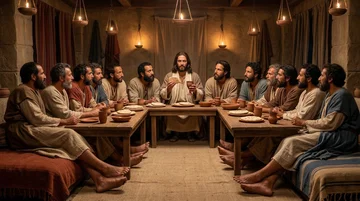
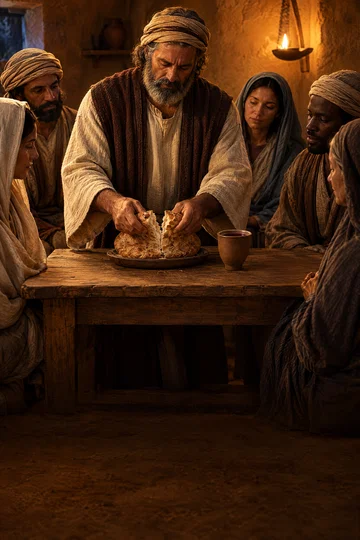
And he took bread, and gave thanks, and brake it, and gave unto them, saying, This is my body which is given for you: this do in remembrance of me.
Translations
American King James Version, Webster Bible
And he took bread, and gave thanks, and broke it, and gave to them, saying, This is my body which is given for you: this do in remembrance of me.
King James Version, KJV Cambridge Paragraph Bible
And he took bread, and gave thanks, and brake it, and gave unto them, saying, This is my body which is given for you: this do in remembrance of me.
Revised Version, American Standard Version
And he took bread, and when he had given thanks, he brake it, and gave to them, saying, This is my body which is given for you: this do in remembrance of me.
And having taken bread, having given thanks, he brake and gave to them, saying, 'This is my body, that for you is being given, this do ye — to remembrance of me.'
And having taken a loaf, when he had given thanks, he broke [ it], and gave [ it] to them, saying, This is my body which is given for you: this do in remembrance of me.
And, taking a loaf, he gave thanks, and brake, and gave unto them, saying—This is my body [[which in your behalf is being given: this, be ye doing, in remembrance, of me.
Berean Standard Bible, Majority Standard Bible
And He took the bread, gave thanks and broke it, and gave it to them, saying, “ This is My body, given for you; do this in remembrance of Me.”
He took bread, and when he had given thanks, he broke and gave it to them, saying, “ This is my body which is given for you. Do this in memory of me.”
And he took bread and, having given praise, he gave it to them when it had been broken, saying, This is my body, which is given for you: do this in memory of me.
And he tooke bread, and when he had giuen thankes, he brake it, and gaue to them, saying, This is my body, which is giuen for you: doe this in the remembrance of me.
Douay-Rheims (Challoner revision)
And taking bread, he gave thanks, and brake; and gave to them, saying: This is my body, which is given for you. Do this for a commemoration of me.
Pictures
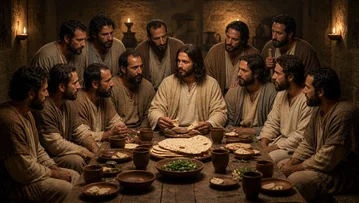
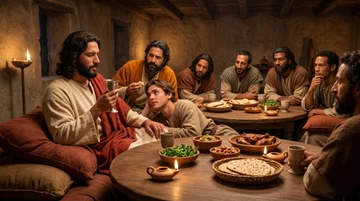
Cross-references 20 of 49
- 1 Corinthians 11:23-26
For I have received of the Lord that which also I delivered unto you, That the Lord Jesus the same night in which he was betrayed took bread:
Restates the memorial service and its purpose.
- Matthew 26:26-28
And as they were eating, Jesus took bread, and blessed it, and brake it, and gave it to the disciples, and said, Take, eat; this is my body.
Jesus gives the bread and cup as memorials of his body and blood.
- Mark 14:22-24
And as they did eat, Jesus took bread, and blessed, and brake it, and gave to them, and said, Take, eat: this is my body.
Mark recounts Jesus instituting the bread and cup at the supper.
- Acts 20:7
And upon the first day of the week, when the disciples came together to break bread, Paul preached unto them, ready to depart on the morrow; and continued his speech until midnight.
The disciples gather on the first day to break bread, compared with the Supper Christ instituted.
- Exodus 12:13
And the blood shall be to you for a token upon the houses where ye are: and when I see the blood, I will pass over you, and the plague shall not be upon you to destroy you, when I smite the land of Egypt.
The Passover lamb’s blood marked Israel’s homes for deliverance from judgment, prefiguring Christ’s atonement.
- 1 Corinthians 5:7
Purge out therefore the old leaven, that ye may be a new lump, as ye are unleavened. For even Christ our passover is sacrificed for us:
Christ is identified as the Passover sacrificed for believers.
- 1 Corinthians 11:24
And when he had given thanks, he brake it, and said, Take, eat: this is my body, which is broken for you: this do in remembrance of me.
Repeats Jesus’ words about the bread and remembering him.
- 1 Corinthians 11:28-29
But let a man examine himself, and so let him eat of that bread, and drink of that cup.
Calls each person to examine himself and discern Christ’s body before partaking.
- John 13:1-17
Now before the feast of the passover, when Jesus knew that his hour was come that he should depart out of this world unto the Father, having loved his own which were in the world, he loved them unto the end.
Jesus washed the disciples’ feet at the same supper before sharing the bread.
- 1 Corinthians 10:16
The cup of blessing which we bless, is it not the communion of the blood of Christ? The bread which we break, is it not the communion of the body of Christ?
The bread and cup signify participation in Christ’s body and blood.
- Acts 2:46
And they, continuing daily with one accord in the temple, and breaking bread from house to house, did eat their meat with gladness and singleness of heart,
The Jerusalem believers are described as breaking bread daily.
- Exodus 12:14
And this day shall be unto you for a memorial; and ye shall keep it a feast to the LORD throughout your generations; ye shall keep it a feast by an ordinance for ever.
The Passover memorial is paralleled by Christ’s Supper, which remembers his death.
- Exodus 12:15
Seven days shall ye eat unleavened bread; even the first day ye shall put away leaven out of your houses: for whosoever eateth leavened bread from the first day until the seventh day, that soul shall be cut off from Israel.
The feast required leaven to be removed from Jewish homes.
- 1 Corinthians 11:23
For I have received of the Lord that which also I delivered unto you, That the Lord Jesus the same night in which he was betrayed took bread:
Both recount Jesus instituting the supper on the night he was betrayed.
- 1 Corinthians 11:20-22
When ye come together therefore into one place, this is not to eat the Lord’s supper.
Condemns treating the Lord’s Supper as an ordinary meal and feast.
- Matthew 26:29
But I say unto you, I will not drink henceforth of this fruit of the vine, until that day when I drink it new with you in my Father’s kingdom.
The cup’s fruit of the vine points to the supper’s symbolic elements and future drinking in the Father’s kingdom.
- 1 Corinthians 11:25
After the same manner also he took the cup, when he had supped, saying, This cup is the new testament in my blood: this do ye, as oft as ye drink it, in remembrance of me.
The cup is received in remembrance of Jesus.
- Matthew 26:27
And he took the cup, and gave thanks, and gave it to them, saying, Drink ye all of it;
Christ gives the cup to his disciples at the same observance.
- Matthew 26:28
For this is my blood of the new testament, which is shed for many for the remission of sins.
The cup follows the bread, and represents Jesus’ blood poured out for remission of sins.
- Hebrews 10:10
By the which will we are sanctified through the offering of the body of Jesus Christ once for all.
Christ’s body is offered once for all, bringing the sacrifices to an end.
Commentary
Each commentary is drawn from primary sources: the writings of Ellen G. White and Adventist pioneers and periodicals. Each commentary is separate. Its own words are not a quotation; follow the references to read the source passages.
Ellen G. White
36 sources
On the night before his suffering at the last Passover meal he gave thanks and broke bread and gave it to the disciples as his body given for them, and in that act instituted the Lord's Supper to be done in remembrance of him.5RED 4.2–5.13SP 83.2–84.1Ms 54, 1897, par. 1–2 The bread is a symbol of his body broken on the cross and given for the disciples and for the salvation of the world.1SP 202.2–203.2COS 109.4–7SG3 227.1 To eat it is to believe in that sacrifice, repent of sin, and receive him as personal Saviour in continual dependence on his blood for pardon and cleansing.1SP 202.2–203.2COS 109.4–7SG3 227.1 The new ordinance replaced the Passover and ended the old sacrificial system, standing as a lasting memorial through all time of his betrayal and crucifixion and of redemption from the bondage of sin.1SP 202.2–203.2Ms 35, 1897, par. 1–2Ms 35, 1897, par. 3–4DA 652.1–2SG3 227.2 Its simple bread and wine are not changed into his actual body and blood, and to turn the memorial into the sacrifice of the mass is a blasphemous perversion of its meaning.GC 59.24SP 63.1GC88 59.2
Setting and Institution
The words were spoken in the upper chamber on the night before suffering, at what was virtually the last Passover ever to be celebrated.3SP 83.2–84.1ST May 23, 1878 Only a few quiet hours lay between him and Gethsemane, and those hours were spent for the benefit of his disciples.3SP 83.2–84.1ST May 23, 1878 He was troubled in spirit and weighed down with grief, foreseeing his near suffering and grieved by the ingratitude and cruelty of those he came to save and by the terrible fate awaiting them.3SP 83.2–84.1ST May 23, 1878 The disciples sympathized with him without knowing the cause of his touching sadness.3SP 83.2–84.1ST May 23, 1878
At that Passover meal shortly before his suffering he gave thanks, broke bread, and gave it to the disciples as his body given for them, commanding it to be eaten and done in remembrance of him.5RED 4.2–5.13SP 83.2–84.1Ms 54, 1897, par. 1–2Ms 19, 1897, par. 30–33ST May 23, 1878 In this act he instituted the Lord's Supper at this last Passover, just before receiving his full baptism of suffering.5RED 4.2–5.13SP 83.2–84.1ST May 23, 1878 The bread is given as a memorial of himself and the words in remembrance of me make it a memorial of Christ.Ms 54, 1897, par. 1–2Ms 19, 1897, par. 30–33DA 652
The Supper was instituted to take the place of the Passover, which was to cease and meet its fulfillment when the Lamb of God was slain for the sins of the world.5RED 4.2–5.1Ms 35, 1897, par. 1–2Ms 35, 1897, par. 3–4DA 652.1–2 Standing between the old system of types and ceremonies and the new service, he replaced the national Jewish festival and marked the end of one religious economy.Ms 35, 1897, par. 1–2DA 652.1–2 As he shared the Passover with his disciples he presented himself as the sin-offering and brought the sacrificial system to its end.Ms 43, 1897, par. 24 It was established as a lasting memorial service for his death and great sacrifice, to be observed by his followers in every land and age and in every country, and to continue through all time.Ms 35, 1897, par. 1–2Ms 35, 1897, par. 3–4DA 652.1–2Ms 43, 1897, par. 24
The meal took place amid the disciples' dispute over who should be greatest, which stood in sharp contrast to the self-giving service the bread commemorates.Ms 19, 1897, par. 30–33 Judas the betrayer was present at the sacramental service and shared the bread with the other disciples, receiving the emblem of the broken body from Jesus himself and hearing the bidding to eat in remembrance of him.Ms 35, 1897, par. 3–4Ms 106, 1903, par. 27–28Ms 106, 1903, par. 53DA 653.4–5 Even sitting in the very presence of the Lamb of God he brooded upon dark purposes and cherished sullen, revengeful thoughts while secretly cherishing betrayal.Ms 106, 1903, par. 27–28Ms 106, 1903, par. 53DA 653.4–5 He then left to carry out his betrayal.Ms 35, 1897, par. 3–4
Meaning and Doctrine
The broken bread is a symbol or emblem of his body, broken on the cross and given for the disciples and for the salvation of the world.1SP 202.2–203.2COS 109.4–7SG3 227.1SG3 227.2Ms 14, 1850, par. 4–6
To eat it is to believe in that sacrifice, to repent of sin, and to accept Christ as personal Saviour, and it teaches continual dependence on his blood for salvation and for pardon and cleansing for all who come to him.1SP 202.2–203.2COS 109.4–7SG3 227.1SG3 227.2
It is a memorial to be observed often, to keep fresh in the memory of his followers his betrayal and crucifixion for sin.1SP 202.2–203.2SG3 227.2SCEV 18.2–19.1Ms 35, 1897, par. 8
It keeps before them the suffering and death of the crucified Saviour, who gave his life for the remission of the sins of those who believe and receive him.SG3 227.2SCEV 18.2–19.1Ms 35, 1897, par. 8
The Passover commemorated deliverance from slavery in Egypt and pointed forward to Christ, the spotless Lamb of God.SG3 225.11SP 201.1PP 539.3
When he was slain for the sins of the world and died on the cross, type met antitype, the Passover reached its fulfillment and its significance ceased.5RED 4.2–5.13SP 83.2–84.1ST May 23, 1878SG3 225.1PP 539.3
The new ordinance commemorates that redemption and that deliverance from the bondage of sin through his death.SG3 225.11SP 201.1PP 539.3
By connecting the Supper with the Passover in obedience to the Jewish law and its divinely appointed ordinances, he identified himself as the great antitype of the paschal lamb.5RED 48.1ST Jul 4, 1878
The deliverance of Israel typified the great salvation he brought, and the innocent lamb slain in Egypt, whose blood on the doorposts caused the destroying angel to pass over the homes of Israel, prefigured him as the sinless Lamb whose merits alone avert the judgment and condemnation of fallen man.5RED 48.1ST Jul 4, 1878
The Passover continued by those who rejected him was defiled, of no value, and a bitter mockery.5RED 48.1ST Jul 4, 1878
The Supper is a scriptural ordinance of remembrance using simple bread and wine, which are not transformed into his actual body and blood.GC 59.24SP 63.1GC88 59.2
To change that memorial into the sacrifice of the mass, in which priests claim by ceremony to create the Creator by converting the bread and wine into the actual body and blood, is senseless mummery, blasphemous presumption, and Heaven-insulting heresy opposed to the meaning of the ordinance, replacing it with an idolatrous sacrifice.GC 59.24SP 63.1GC88 59.2
Belief in that claim was required on pain of death, and those who refused were given to the flames.4SP 63.1
The bread is also a memorial of his humiliation and self-giving, and the communion service is fellowship with his body and blood.DA 650.2–3
Observance and Application
The ordinance is a duty given in the word to be practiced more frequently, and following the example given in it keeps his people humble, separate from the world, and from backsliding.SCEV 37.1–26MR 22.2 The Supper together with foot-washing is to be observed more often.SCEV 37.1–26MR 22.2 Foot-washing was appointed to come first as preparation for communion, and the supper together with the washing repeats his example.DA 650.2–3Ms 43, 1897, par. 24 That united service teaches humility and unselfish ministry and service, while pride, conflict, and rivalry prevent the heart from entering into fellowship with him.DA 650.2–3Ms 43, 1897, par. 24
Following his example of taking the disciples away alone, washing their feet, and then sharing the bread and cup, communion is to be observed with disciples alone and apart from unbelievers and the wicked, after foot-washing.Ms 14, 1850, par. 4–612MR 247.1–2 Shepherds must conduct these ordinances carefully and understandingly, for to hold washing of feet and communion among unbelievers brings reproach on the cause.Ms 14, 1850, par. 4–6 Those who appear with believers yet partake unworthily, like Judas, eat and drink to their own damnation, and God will make them manifest and purge them out.Ms 14, 1850, par. 4–6 The communion bread must be unleavened and the cup must be pure, unfermented grape juice, using only those elements.Ms 22, 1898, par. 36–40Ms 35, 1897, par. 21 Leavened or fermented bread is not a correct representation and spoils the symbol of his body broken for his people and given for the sins of the world.Ms 22, 1898, par. 36–40Ms 35, 1897, par. 21
Participation is not to be restricted, but each person is to take part publicly as a witness of accepting Christ as a personal Saviour who gave his life to rescue that person from death.Ms 35, 1897, par. 8 The Supper is a sacred ordinance established to call him to mind, not a mere form, and his appointed ordinances are to continue to the end of time.Ms 35, 1897, par. 14 When they are observed he meets his people and strengthens them by his personal presence and works on human hearts, even if the people administering are unsanctified.Ms 35, 1897, par. 14 His giving the sacrament to Judas though knowing from the beginning that Judas would betray him, and though Judas hardened his heart and braced himself in opposition to conviction, shows a long-suffering Saviour holding out every inducement to the sinner to receive him, repent, and be cleansed from defilement by granting the privilege of uniting with him in partaking.Ms 106, 1903, par. 54–55 It gives an example that when one is supposed to be in error and sin, believers are not to divorce from him or by careless separation leave him a prey to temptation or drive him onto Satan's battleground.Ms 106, 1903, par. 54–55
Sources
Pioneers and periodicals
144 sources
On the night he was betrayed, at the close of the last Passover supper in the upper room, he took bread, gave thanks to God, broke it and gave it to his disciples as his body given for them.ST May 23, 1878RH Feb 5, 1914ST May 13, 1889CO 57.3–4RH Jan 28, 1862 The bread is an emblem and figurative expression of his broken body, not his literal body, and the shared broken loaf expresses the unity of those who partake of the one body.ST Jun 14, 1910ST Mar 27, 1901RH Jun 19, 1866RH Dec 24, 1914RH Jul 11, 1912 His command to do this in remembrance of him lays a plain, binding, continuing duty on all believers to keep his death central by doing what he said because he said it.ST Mar 25, 1880ST May 27, 1880RH Nov 5, 1872 The Supper has taken the place of the Passover, memorializing his suffering, crucifixion, burial and resurrection and showing forth his death until he comes, as a commemoration and not a repetition or offering for sin whose emblems themselves have no power to cleanse.ST Oct 22, 1894RH Feb 19, 1901ST Mar 3, 1909ST Jun 20, 1911ST Sep 30, 1886 It is to be celebrated often with pure unleavened bread and unfermented wine, received worthily by discerning his body and by faith taking him into the heart for spiritual life and strength.ST Mar 25, 1880ST Apr 5, 1883ST Mar 6, 1879ST Nov 19, 1912ST Jul 13, 1915
Time Place and Order
The night of betrayal Jesus ate the Passover with his disciples and then instituted the Lord's Supper to commemorate his death, the meal falling on the night after the Passover lamb was slain.RH Feb 5, 1914RH Jan 28, 1862 It was the last Passover supper ever to be celebrated, kept in the large upper chamber where bread and the sop were ready on the table, in the few quiet hours between him and Gethsemane spent for the benefit of his disciples.ST May 23, 1878ST He was troubled in spirit and spoke in touching sadness because he foresaw his near suffering and was grieved by the ingratitude and cruelty of those he came to save and the terrible fate awaiting them.ST May 23, 1878 At this meal type met antitype in the slaying of the Lamb of God for the sins of the world, and Christ, soon to receive his full baptism of suffering, gave the broken bread as his body given for them and commanded it to be done in remembrance of him.ST May 23, 1878 In that upper-room meal he instituted the feast that would forever consecrate his memory and left his disciples a legacy of love, doing this just before telling them not to let their hearts be troubled about his going away.RH Sep 4, 1855RH Oct 30, 1860
Luke inserts the account of the institution parenthetically while narrating the Passover, turning to the Lord's Supper in verses 19-20 and then resuming the Passover narrative in verse 21.ST Nov 22, 1883 The bread of the Supper was instituted at the close of the Passover meal, the bread representing his body given for his disciples to eat in remembrance of him, and together with the cup in verse 20 forming an ordinance centered on his body and blood given for them.ST Jun 21, 1905ST Nov 19, 1912 Jesus took the unleavened bread at the close of the meal, gave thanks, broke it, and gave it to the disciples as an emblem of his broken body.ST Oct 5, 1882 The institution comes as the next event of importance after the triumphal entry into Jerusalem, recorded also in Matthew 26, Mark 14, and John 13.ST The Passover was both commemorative, pointing back to deliverance from Egypt and the angel of death, and typical, pointing forward to the greater deliverance by Christ in freeing his people from sin and eternal death, and just at its close when type met antitype the Lord's Supper was instituted as its successor.ST Mar 3, 1909
The Supper was instituted on Thursday evening, the night of his betrayal and the night before the crucifixion.ST Jan 13, 1881ST Jan 25, 1910ST May 11, 1915 By one reckoning it was probably on Wednesday evening and certainly no later than Thursday evening, giving no command specifying when the Supper must be observed so that Christ's example does not establish a required day or time.RH Nov 14, 1865 The fact that the Supper was instituted or celebrated on a particular day does not make that day a Sabbath, and breaking bread on Thursday night when he instituted the Eucharist did not make Thursday a Sabbath or a divinely appointed holy day.ST Jul 12, 1905ST Aug 30, 1905 His death the following day completed the greatest act in the plan of salvation, but these events did not make that sixth day sacred.ST May 11, 1915
The washing of the disciples' feet came first and then the breaking of the bread, with the blessing of the cup following immediately after the breaking of the bread with no other events put between them.ST Feb 4, 1903 The feet washing came between verses 18 and 19, the supper in John 13 being the Passover supper which preceded the institution of the Lord's supper.ST Apr 29, 1897 After Jesus had washed the disciples' feet and sat down again at supper he instituted the Lord's Supper in verses 19-20, on the same evening as the foot-washing, in the same room, with the same disciples, and by the same Lord.ST Jul 30, 1885RH Jun 27, 1878 The Lord's Supper came after the Passover meal and after the disciples' dispute over who would be greatest and Jesus' act of washing their feet, whether during or near the beginning of the meal.ST Jul 12, 1905 Its instruction to remember Christ supports the continuing observance of the Supper by Christians generally, just as Christ's command to wash one another's feet applies beyond the apostles.ST Oct 31, 1878
Judas remained with Jesus and the disciples through the Passover meal, the dispute over greatness, the foot washing, and the Lord's Supper itself.ST Jul 12, 1905 Jesus shared the meal with Judas despite knowing his deceit and unfaithfulness, and even Judas, who had already agreed to betray Jesus, received the emblems from Jesus.RH Jan 8, 1914RH Dec 28, 1911 He was present at the sacramental service and received the emblems of Christ's broken body and spilled blood, hearing Jesus command the disciples to remember him through the service even as he secretly cherished plans to betray him.RH Nov 20, 1913RH Dec 28, 1911 Their distribution was not left to the disciples to decide who was worthy, for disciples with faults were not excluded, and the service was an invitation to receive him, repent, and be cleansed from sin, though open sin excludes the guilty and each person is to examine himself.RH Dec 28, 1911RH Dec 28, 1911 Those who held the other reckoning taught that the whole matter turns on the relative time when the memorial was instituted and when the Passover was eaten, to be settled by the united testimony of Matthew, Mark, Luke, and John, and that the memorial was instituted some time after Judas received the portion from the hand of Christ and went out immediately into the night to betray Jesus and did not remain.RH Jul 29, 1873STRH May 27, 1873 On that reckoning Judas had received the sop and gone out immediately some time before, so the memorial was instituted after he left and he had no part in it, the supper being given to Christ's disciples alone and, after he left, to the eleven remaining disciples who sang together a sad, solemn hymn, the last song they would sing with him in his sorrow.RH Jul 29, 1873STRH May 27, 1873
Words and Emblems
He took bread, gave thanks to God, broke it and gave it to them, and his blessing gives the bread its sacred significance.ST May 13, 1889CO 57.3–4RH Jan 28, 1862 The act was thanksgiving to God rather than putting a blessing on the bread itself, for the word rendered blessed means to make requital, to thank and give thanks, and is an entirely different word from that used when the loaves that fed the multitude were blessed.RH Dec 24, 1867 Believers therefore ask for Christ's blessing on the bread, on themselves for consecration to his service, and on all they do for God's honor and glory, trusting God hears and answers such prayers, and his example is the model for the elder or, when present, a minister presiding and praying for the bread before it is broken.ST May 13, 1889CO 57.3–4 The supper and the words about the bread and cup took place on the same night he was betrayed, and the agreement of the Gospel accounts with Paul's account presents these events as factual testimony.RH Jan 28, 1862
The bread was broken and shared, with broken pieces given to those eating, answering to the truth that his body was broken for his followers.ST Jan 1, 1885RH Dec 31, 1914 The bread represents his body given for them, and the bread and cup together commemorate his death and show it forth until he comes.ST Jan 1, 1885 A service that uses a whole unbroken wafer does not fulfill those words and is not a continuation of the Supper he instituted, for the bread given was not whole but broken.RH Dec 31, 1914 The memorial was instituted after the Passover meal and is distinct from an ordinary meal, consisting in partaking of the bread and wine.ST Jan 1, 1885
The words given for you present Christ as a whole offering given for each believer.ST Jul 14, 1898ST Jul 14, 1898 His body is not described as broken or divided in that saying, but as given for the disciples.ST Jul 14, 1898ST Jul 14, 1898 Each believer receives a whole Saviour, and the whole offering of Christ was necessary for the salvation of one sinner just as for the whole world.ST Jul 14, 1898
The bread is an emblem and figurative expression for his broken body and shed blood, not his literal body.RH Jun 19, 1866RH Dec 24, 1914RH Jul 11, 1912ST Dec 12, 1911ST Mar 27, 1893 He gave it while present in his own body, so his words do not mean the bread became his literal body or that he broke and distributed his body.RH Dec 24, 1914 The bread's being broken and given for others represents his body being given for the benefit of the human race, and together with the wine it signifies his broken body and shed blood.RH Jun 19, 1866RH Dec 24, 1914 The metaphor applies at a particular point and should not be pressed to mean more than that, for to feed on Christ is to receive his word, spirit and life through the Holy Spirit abiding in the believer rather than to emphasize the flesh.RH Jul 11, 1912ST Mar 27, 1893 The Supper is thus an occasional emblem of the continual feast of feeding on Christ's word and drinking in his Spirit.ST Dec 12, 1911
The bread is called his body in one sense, which does not prevent the church also being called the body of Christ in another sense. The Supper is a literal ordinance in which the bread is a literal emblem memorializing his literal death.ST Jan 3, 1884 It uses material bread as a sign of his body given for his followers and is kept in remembrance of him, so the rite is not purely spiritual or inward.ST Jul 17, 1879
The bread represents his body given for the disciples and is shared in remembrance of him, and the breaking and sharing belong to the Supper which proclaims the Lord's death until he comes.ST Jun 14, 1910ST Mar 27, 1901ST May 12, 1898 Jesus gave the bread to his disciples at the Passover meal as a representation of his body given for them and directed them to do this in remembrance of him.ST May 12, 1898 The shared loaf expresses unity, and when a large congregation needs several loaves each still represents the same body and the bread is divided among the participants.ST Jun 14, 1910
The meal was prepared with bread and unfermented wine, the pure juice freshly pressed without fermentation.ST Mar 25, 1880ST Jul 13, 1915 Because the supper was kept in connection with the Passover, when all ferment and leaven had to be searched out and destroyed from houses and only unfermented bread could be used, the drink likewise could not be fermented.ST Jul 13, 1915ST Feb 7, 1878 Only the pure juice of the grape could fitly represent the blood of Christ shed for mankind, for fermentation is always a symbol of corruption, decay and rottenness, and Christ did not provide or encourage the drunkard's drink at the communion table.ST Jul 13, 1915ST Feb 7, 1878 The institution therefore authorizes only unfermented wine for its cup, the drink called the fruit of the vine meaning wine freshly pressed from grapes without fermentation that would not make men drunken, and the use of fermented wine has no foundation in Scripture.ST Jul 13, 1915ST Feb 23, 1915 Unfermented wine can be used in celebrating the communion, and the Supper is to be celebrated often so followers remember his betrayal and crucifixion and their dependence on him for salvation.ST Mar 25, 1880RH Sep 3, 1908 This requires churches to practice practical temperance, to lead in advocating prohibition, and to seek no legal exception permitting intoxicating liquor for sacramental purposes.ST Feb 23, 1915
The emblems are unleavened bread and unfermented wine to represent the body and blood of Jesus, answering to the meat-offering of fine flour mixed with olive oil and the drink-offering of wine connected with the Passover supper.ST Mar 3, 1909 The Supper was instituted just at the close of the Passover supper as the Passover ordinance came to an end when type met antitype, and as often as the bread is eaten and the cup is drunk the Lord's death is shown till he come.ST Mar 3, 1909 Bread and wine are administered to church members with solemnity in this sacred ordinance, displayed on the communion table and partaken of by faith, and condemning alcoholic wine as a beverage requires not administering alcoholic wine in that ordinance.ST Jan 26, 1882ST Apr 11, 1878
The unleavened bread used at the first Supper reflected the fact that it took place during the Feast of Unleavened Bread, when leaven had been removed from Jewish homes and other bread was not available.RH Apr 16, 1867 Leaven itself, or its absence, was not needed to represent Christ's body, for the broken bread serves as an emblem in believers' communion with him and one another by representing his broken body.RH Apr 16, 1867 The verse does not require a particular kind of loaf: the bread used may be raised or unleavened, and the choice of a white loaf is a matter of established custom rather than a requirement of the emblem.RH Apr 16, 1867
Memorial of Christ Death
The broken bread is a memorial of his body given for his own, of his personal bearing of the punishment their sins deserved to bring forgiveness and salvation.ST Oct 22, 1894ST Nov 22, 1883ST Nov 18, 1880RH Jul 4, 1865 It represents Christ the spotless Passover Lamb, an emblem of his broken body and shed blood to be received with reverence and a thankful heart.ST Oct 22, 1894RH Feb 16, 1864ST May 13, 1889 Together with the cup it recalls his death, burial and resurrection until he comes.ST Nov 18, 1880 It is received worthily when his body is discerned and he is taken by faith into the heart, for as food nourishes the body so Christ gives spiritual life.ST Oct 22, 1894 Partaking is solemn remembrance of his love and sacrifice that brings awareness of sin while directing hope to the time when his people free from sin shall drink with him in the Father's kingdom.RH Feb 16, 1864
The Supper commemorates his betrayal and crucifixion, his suffering and cruel death for human sin.ST Mar 25, 1880RH May 2, 1865RH Aug 23, 1864RH Dec 13, 1870 The broken bread keeps his followers mindful of continual dependence on his blood for salvation.ST Mar 25, 1880 It was appointed so that his people in every age would remember his death as central to redemption and to the blessings and power of Christian teaching.ST May 9, 1906 That memorial of his death is joined with his resurrection, that he died and rose again.ST May 9, 1906 Its emblems call the church to remember him and meditate on his sacrifice, and the ordinance is to be carefully and regularly observed.RH Dec 13, 1870
The words this do in remembrance of me make observance a plain, binding, continuing duty.ST May 27, 1880RH Nov 5, 1872ST Jul 12, 1883 It was his own chosen way to be remembered, given the same night he was betrayed as his dying injunction and last request only hours before suffering and dying for sinners that they might never die. Remembrance is therefore not left to each person's own way and not only mental or heartfelt recollection, but requires doing what he said because he said it, commemorating his death as he signified with visible memorials. He first performed the act himself in laying its foundation and then gave a direct command to repeat it, giving future ages a broad and deep foundation so common minds need not draw subtle distinctions unaided.RH Nov 5, 1872 It is a plainly enjoined outward observance that cannot be rejected in favor of inward spirituality nor replaced by another memorial of man's devising.ST May 27, 1880ST Nov 2, 1882 The command is as plain and binding as the command to remember the Sabbath, so that neglecting the Lord's table violates his instruction.ST Jul 12, 1883 Obedience is enough because he inclines to this mode and can connect a blessing with it even apart from natural adaptation, and the command is an easy yoke and light burden. To refuse is unkind to such a friend and benefactor who did not only do good but suffered and died with love stronger than death, and the words broken for you should break the heart of everyone who refuses.
The command applies to all who believe in him, since his body was given for them all. Feeling unworthy is no reason to refrain, for awareness of unworthiness is part of the qualification. Fear of sinning or distrust of self is no excuse, because believers can trust Christ for strength as well as pardon, and putting off this remembrance until later is also no excuse.
The Supper is to be celebrated often as a glad remembrance spanning from his first advent until his return, proclaiming his death and his coming and continuing until he comes again.ST Jun 20, 1911ST Nov 19, 1912RH Sep 16, 1909 He has not tasted the fruit of the vine since that night, but will drink it anew with his immortal saints in the kingdom of God at the marriage supper and serve them in person.ST Apr 5, 1883ST Mar 6, 1879 Doing it in symbols holds hope of having part in its reality at the great marriage of the Lamb by remaining steadfast unto the end, and is done with meditation, prayers, songs, sincere humiliation of heart and tender brotherly love following the ordinance of humility.RH Dec 26, 1912 It is a precious communion season of fellowship with the Father and the Son through the Holy Spirit, of love for fellow believers redeemed by Christ and desire for the conversion of sinners, pointing forward to drinking the new wine in paradise.RH Jan 3, 1856
It is a commemoration of his sacrifice for the sins of the world, not a repetition of that sacrifice or a separate offering for sin.RH Jan 21, 1915RH Dec 24, 1914 The bread is not a material object to rely on as a source of salvation, for the ceremony points beyond itself to Christ and what he suffered to bring people to God.ST Jun 20, 1911 The emblems themselves have no power to cleanse from sin nor merit to earn pardon, justification and salvation.ST Aug 13, 1896 Done properly it helps sinners humbly repent transgressions of the moral law and exercise faith in the Saviour for remission, justification, strength to keep God's law and salvation, declaring themselves unworthy and in perishing need of pardon, divine aid and final salvation.ST Aug 13, 1896 Instituted in place of the Jewish ceremonies after he fulfilled what they foreshadowed, taking the bread and wine in remembrance shows faith in his atoning sacrifice. The ordinance celebrates that death rather than repeating it and is to be observed until he comes; it does not mean that he comes anew whenever the bread and wine are consecrated.RH Dec 24, 1914
Feeding on him means receiving the truth of God's Word through faith, allowing it to shape character and produce a victorious life, and the Supper is a glad remembrance of his suffering while looking forward to his coming.ST Jun 20, 1911 To feed on Christ is to receive his word, spirit and life through the Holy Spirit abiding in the believer, rather than to emphasize the flesh, for this is my body is a figurative expression and the communion is real through the Spirit.RH Jul 11, 1912 The Lord's Supper is an occasional emblem of that continual feast of feeding on his word and drinking in his Spirit.ST Dec 12, 1911 The broken communion bread is thus connected with the bread of life shared with Christ, and with his body and blood, his Word and Spirit.ST Feb 27, 1907ST Mar 29, 1899
The bread is received worthily when his body is discerned and he is taken by faith into the heart, for as food nourishes the body so Christ gives spiritual life.ST Oct 22, 1894 In sharing the bread and wine in remembrance those who belong to him receive the precious privilege of openly remembering him, and he reveals himself to them in a special way, surrounding them with his love.ST Dec 30, 1889 At the sacred table as a symbolic feast pointing to his flesh and blood and supplying the believer's need, believers renew their vows to belong to Christ and rely on his strength to keep them, looking to him as the crucified King and all-sufficient friend.RH Nov 3, 1863
The Supper is a divinely appointed memorial of his incarnation and self-sacrifice through which redemption is made possible.ST Apr 20, 1915 The bread and wine are sacred emblems that recall his death on Calvary and sustain the hope of life through him, kept in remembrance until he comes again.RH Dec 28, 1911
Passover Covenant and Fulfillment
The Supper has taken the place of the Passover feast, instituted at the close of that last Passover supper when type met antitype in the slaying of the Lamb of God for the sins of the world.ST May 23, 1878RH Feb 19, 1901ST Mar 3, 1909ST Oct 7, 1930 The Passover lamb and its blood, sprinkled on the doorposts so the destroying angel passed over the homes of Israel, prefigured the sinless Lamb of God, and only his merits can avert judgment and condemnation for fallen humanity.ST Jul 4, 1878ST Sep 30, 1886ST Oct 26, 1882 That Passover ceremony continued by those who rejected him was defiled and of no value, a bitter mockery, while the new service was to be observed by his followers in every land and through all ages.ST Jul 4, 1878ST Oct 7, 1930 Keeping it acceptably requires living in obedience to God and being at peace with fellow believers, together with the ordinance of humility, rather than keeping Passover whose time has ended or Easter which is a heathen festival.ST Mar 3, 1909
The Passover was both commemorative, pointing back to deliverance from Egypt and the angel of death, and typical, pointing forward to the greater deliverance by Christ in freeing his people from sin and eternal death.ST Mar 3, 1909 He spoke the words in the upper chamber at the last Passover supper ever celebrated, in the few quiet hours between him and Gethsemane spent for the benefit of his disciples, troubled in spirit and in touching sadness because he foresaw his near suffering and was grieved by ingratitude and cruelty and the terrible fate awaiting those he came to save.ST May 23, 1878 He was soon to receive his full baptism of suffering and to give himself as a sin offering, and in giving the broken bread as his body given for them with the command to do it in remembrance of him he instituted the Lord's Supper as a memorial of his crucifixion and of his coming, so that as often as the bread is eaten and the cup drunk his death is shown till he come.ST May 23, 1878ST Mar 3, 1909ST Oct 7, 1930 The emblems are unleavened bread and unfermented wine to represent his body and blood, answering to the meat-offering of fine flour mixed with olive oil and the drink-offering of wine connected with the Passover supper.ST Mar 3, 1909
As Moses instituted the Passover, Christ instituted the Supper as its counterpart, showing him to be the prophet like Moses who holds the same offices of lawgiver, prophet, worker of miracles and king in superior degree.RH Feb 19, 1861 The bread given as a sign of his body given for the disciples and eaten in remembrance of him, with the cup as the new covenant in his blood, showed that those who partook belonged to the new covenant and shared in the communion of his body, the apostles being present as representatives of the believers of the house of Israel.ST Apr 15, 1880ST Apr 5, 1883ST Mar 6, 1879 His blood ratified the everlasting covenant, and its shedding on the cross sealed that covenant and made it sure forever, called new because its confirming blood was shed after the blood of the old covenant.ST Jan 16, 1893 He had not tasted the fruit of the vine again since that night, but will drink it anew with his immortal saints in the kingdom of God, serving them in person at the marriage supper when he returns for his people and brings them to the Father at the covenant's consummation.ST Apr 5, 1883ST Mar 6, 1879
Observed before his death it expressed faith that he would die for them, and after his death the same ordinance is observed in memory of the Saviour who has already died.ST Dec 11, 1879 It was established as a memorial of his death and its attendant miracles when thousands of living witnesses could attest the miracles, performed by hundreds of thousands according to scriptural command to perpetuate proof of them, and kept up ever since in all parts of the world alongside the Passover kept by the Jews in remembrance of Moses' miracles in Egypt.RH Feb 12, 1861 The remembrance language belonging to the bread of the Lord's Supper was transferred to blessed Easter eggs in the prayer taught by Pope Paul V asking God to make eggs wholesome sustenance eaten in remembrance of Christ, leaving the pagan egg symbol in place under pretext of commemorating the resurrection.RH Apr 8, 1909
Ordinance Authority and Practice
The Supper is a solemn gospel ordinance for the gospel age, plainly instituted and plainly commanded in express terms, plainly revealed in what it consists and delivered to the church to be celebrated as delivered.CO 42.7–43.1RH Jan 8, 1867ST Dec 30, 1889ST Mar 6, 1884ST May 13, 1903 It was established the same night in which he was betrayed, with bread and cup to be observed not as a feast to satisfy hunger but as a solemn rite reflecting upon and commemorating his sufferings and death and holding him in lasting remembrance.RH Jan 8, 1867ST Dec 30, 1889ST Mar 6, 1884 It is explicitly defined and enforced, an example of an ordinance clearly taught in Scripture in contrast to practices for which no such instruction or example is given, and it was sealed into the covenant by his death so that Christian practices must have been taught before he died.ST May 13, 1903ST Jul 17, 1901 He first did the act himself in laying its foundation and then gave a direct command to repeat it in remembrance of him, making his design known so that common minds need not draw subtle distinctions unaided and giving future ages a broad and deep foundation.RH Nov 5, 1872ST Mar 9, 1882 That command promotes unity rather than disunity, for he prayed his followers might be one even as he and the Father are one and would not teach them anything tending to disunity, so to call the ordinance divisive impeaches his wisdom.ST Aug 10, 1882 A transaction recorded without such inaugurating action and explicit command carries no peculiar consecration of the mere time on which it occurred.RH Nov 5, 1872
It is a permanent rite like foot washing, created the same evening in the same room with the same disciples by the same Lord and clothed with similar imperative language.ST May 13, 1875ST Oct 17, 1900RH Jun 27, 1878 The command to keep it as his memorial was given at the same time as foot washing, in the same solemn way, without previous notice, with the deepest and most heart-searching object brought to bear on human feeling, inseparably connecting the two as binding.ST May 13, 1875RH Jun 27, 1878 Its accepted observance therefore argues that foot washing is likewise binding, and the Supper belongs together with the ordinance of humility instead of the Passover whose time has ended or Easter which is a heathen festival.ST Mar 3, 1909ST Oct 17, 1900RH Jun 27, 1878 Its authority rests on the plain teaching of Scripture, not on whether the practice has been common in church history.RH Nov 29, 1906 The bread and cup are memorials commanded to be observed, and refusing to believe in these memorials is failure to believe in Christ.ST Jul 24, 1884
The bread and cup are to be administered to members with solemnity, presided over as he presided when he gave thanks over the bread, broke it, and gave it to be passed among them.RH Jan 8, 1867ST Jan 26, 1882CO 57.3–4 His example is the model for order, with the elder or, when present, a minister presiding and offering the prayer for the bread before it is broken.CO 57.3–4 Keeping it acceptably requires living in obedience to God and being at peace with fellow believers, with careful preparation and personal self-examination.ST Mar 3, 1909RH Mar 7, 1912 Partaking has no merit to earn pardon, justification, and salvation, but done properly it helps sinners humbly repent transgressions of the moral law and exercise faith for remission, justification, strength to keep God's law, and salvation, declaring themselves unworthy and in perishing need of pardon, divine aid, and final salvation.ST Aug 13, 1896 It is done in remembrance with meditation, prayers, songs, sincere humiliation of heart, and tender brotherly love following the ordinance of humility, holding hope of part in its reality at the marriage of the Lamb by remaining steadfast unto the end.RH Dec 26, 1912 The responsibility for partaking worthily rests with each communicant, not left to officers to exclude at discretion, though open sin calling for public rebuke is treated differently.RH Mar 7, 1912
The command lays a duty rather than a right, equally binding with all his commands and equally binding upon all, upon every sinner as much as upon any Christian, as much as the command to repent, and attending to obeying it solves at once the controversy over close and open communion.ST Jun 24, 1875 It carries a natural order in which he intends all communicants first to have repented and first to have been baptized.ST Jun 24, 1875 A person's thought that he has been baptized does not fulfill the purpose unless the thought corresponds with the fact, though the mistaken thought may make it his individual duty to partake even while unbaptized, while one who believes that thought false has no duty to encourage the mistake by word or deed but has a duty to disturb the false persuasion in every suitable way of moral influence.ST Jun 24, 1875 Obeying the command honors the Lord, and neglecting this divinely appointed commemorative ordinance is not a help to faithfulness but can accompany separation from the Lord and is not promised exemption from shame.ST May 21, 1885ST May 21, 1885 Church membership carries responsibility to be present, no church can prosper spiritually while neglecting the ordinances, and a member who stays away without cause when they are celebrated subjects himself to discipline.ST Jan 12, 1882
The ordinance may be celebrated even in a believer's home when feebleness and brief expected life prevent meeting with the church, with proper preparations made beforehand and with invited believers present to join in it, even at ten o'clock on Sabbath morning before the regular service.ST May 9, 1878 Isolated believers seldom able to attend such occasions may so observe the remembrance in which the bread represents his body given for his followers.RH Dec 23, 1915 Keeping those ordinances is obedience, accompanied by the Lord drawing near to those who take part, and celebrating them is a spiritually strengthening and renewing experience that encourages going forward.ST Nov 12, 1885RH Dec 11, 1866 The reference to the ordinance concerns the handling and distribution of its elements during celebration, with bread given as his body for the disciples, so that dispensing with bread and wine while retaining other memorial services departs from the communion memorial.ST Apr 2, 1885RH Sep 17, 1872 With baptism and the ordinance of humility it belongs to the gospel order expressing faith in Christ in the present dispensation and will cease when his priestly work closes, unlike the moral law which remains forever. It grew out of his farewell meeting with his disciples rather than being introduced through a separate formal proclamation.ST Jul 21, 1898
Day Frequency and Sabbath
The command to eat the bread in remembrance lays down the ordinance itself but gives no command specifying day, time, place or frequency, and the time and place are not specified.RH Nov 14, 1865ST Feb 1, 1883RH May 20, 1873 It does not restrict the observance to evening, does not require weekly observance or observance every first day, and does not reveal how often it must be kept, so frequency is no part of its law and creates no obligation.RH Nov 14, 1865ST Feb 1, 1883RH May 20, 1873 As often as the bread is eaten and the cup drunk his death is shown till he come, and the appointment and the later observance at Troas happened on different evenings with no word linking the Supper to either, so fixing stated periods rests only on human testimony with no authority.RH Jan 8, 1861RH May 20, 1873 The Supper commemorates his death, not his resurrection, and its observance on different days does not establish the first day as holy.ST Aug 27, 1885RH Aug 18, 1868ST Oct 14, 1889ST May 27, 1875 Together with baptism it shows forth his death with clear symbols until he appears, and this memorial together with baptism is sufficient so no weekly day is needed or fitted to remember the resurrection.RH Nov 15, 1853RH May 5, 1851 It is distinct from the Sabbath, which commemorates creation, and it is the prescribed memorial of his death rather than a command to keep a particular calendar day.RH Aug 18, 1868ST Oct 14, 1889
It was appointed to keep the fact of his death in memory, and it is a solemn fitting memorial instituted by Christ that with the cup recalls his death, burial and resurrection.ST Nov 18, 1880ST Nov 25, 1880 It is described as a divinely erected monument to keep the world in memory of his sufferings and death and resurrection, yet it commemorates his death only and therefore does only half that work of remembrance.ST Dec 2, 1880 It gives an ordinance for remembering what happened, not a religious celebration of the time when his arrest, trial, crucifixion or resurrection occurred.ST Nov 25, 1880 Breaking bread on Thursday night when the Supper was instituted did not make Thursday a Sabbath or a divinely appointed holy day, nor did his death the next day in completing the greatest act of salvation make the sixth day sacred.ST Jul 12, 1905ST Jan 25, 1910ST May 11, 1915ST Aug 30, 1905 The fact that the Supper was instituted or celebrated on a particular day does not make that day a Sabbath.ST Jul 12, 1905ST Jan 25, 1910ST Aug 30, 1905
Breaking bread in remembrance on Thursday evening does not belong to the first day of the week and gives Sunday no sacredness, command or required observance.ST Jan 13, 1881RH Jan 8, 1861ST Jul 21, 1898 It says nothing about changing the Sabbath to the first day, has no connection to the observance of any day, and does not mean to remember Christ on that day.RH Jan 8, 1861ST Jul 21, 1898ST Jul 21, 1909 If attached to a day at all it would point to fifth-day or sixth-day, not to first-day, since the command was given Thursday evening.RH Jan 8, 1861 Its observance on the first day does not establish that day as the Christian Sabbath, for Jesus designated no particular day for remembering his death on the cross.ST May 27, 1875 The church has the right to celebrate it at another time, including Saturday, and celebrating it on Sunday is as acceptable as any other day, with no scriptural precedent requiring Sunday communion.ST May 27, 1875
Making Sunday communion a church duty on a scriptural basis is wrong, for there is no commandment requiring Sunday observance, unlike the express institution of bread and wine which Sunday lacks in name, dedication and observance.ST May 27, 1875RH Jul 29, 1873 The evening following the Sabbath is deemed most fitting after enjoying the Sabbath's blessings, noting that the disciples at Troas broke bread then.RH May 5, 1851 If communion had to be confined to one day, the sixth day would be the fitting day, because the crucifixion it commemorates occurred then. The celebration is kept as an important part of worship when organized churches meet on the first day, and it is observed on Thursday evening in Passion Week at about the time of its first observance.ST Jul 23, 1894ST Apr 24, 1893
Partakers and Christian Life
The Supper was given alone to his own chosen disciples on a special occasion in a private room apart from the crowd, designed for his true followers, the true children of God, and not for worldlings nor for those who have abused their profession and are living in sin and disgracing his name.RH May 27, 1873 It was not a promiscuous public meal like the feeding of the five thousand with five loaves and two fishes.RH May 27, 1873 Its distribution was not left to the disciples to decide who was worthy, for even Judas who had already agreed to betray him received the emblems from Jesus while cherishing his evil purpose.RH Dec 28, 1911RH Dec 28, 1911 Disciples with faults were not excluded, since the service is an invitation to receive him, repent, and be cleansed from sin, and the responsibility for partaking worthily rests with each communicant who must examine himself; open sin that calls for public rebuke is treated differently, but people are not to forbid others from taking part merely because they judge them unworthy.RH Mar 7, 1912RH Dec 28, 1911RH Dec 28, 1911
Coming together around the Lord's table and partaking of the bread as an emblem of his body broken for believers, with the cup reminding them of his sufferings and humiliation and his blood spilled for their sake, is a pledge of mutual confidence and sympathy among believers. Sharing this ordinance in his memory draws Christians together in spiritual sympathy and nearness to one another and to God, restrains passion, and calls forth pure love and humble, trusting prayer. Partaking is a precious communion season of fellowship with the Father and the Son through the Holy Spirit, with love for fellow believers redeemed by Christ and desire for the conversion of sinners.RH Jan 3, 1856 It is a solemn remembrance of his love and sacrifice that brings awareness of sin while directing hope toward drinking the new wine with him in the Father's kingdom and in paradise, free from sin, where there are no more perils and no more parting.RH Feb 16, 1864RH Jan 3, 1856
Remembering him at the table must continue in daily life by living according to his law of purity and working for dying souls as he labored for humanity.RH Jul 4, 1865 It means showing patience in trial and forgiveness under provocation as he returned good for evil, giving his cause its full share of resources, and caring for the poor, enslaved, and injured.RH Jul 4, 1865 His willingness to share the meal with Judas despite knowing his deceit and unfaithfulness shows that Christians should follow his example rather than shun someone they regard as sinful.RH Jan 8, 1914
Against Roman Teaching
The bread remains an emblem of his body and is not changed in substance into his body.RH Dec 24, 1914ST Sep 20, 1910 The Supper celebrates his death until he comes and does not bring him anew at each consecration.RH Dec 24, 1914 The broken bread represents his broken body given for his people, and the Supper is a public memorial of his offering rather than a type like the Passover.RH Dec 24, 1914ST Sep 20, 1910 It also represents the life communion that should unite believers through Christ, remembering his sacrifice and pointing forward to his meeting with his disciples in God's kingdom.ST Sep 20, 1910
About the tenth century the Roman Church taught that the sacramental bread and wine became the real body and blood of divinity.ST Jan 27, 1914 That teaching of transubstantiation is set forth as a counterpart to the supposed transformation of matter into living, thinking beings without a Creator.ST Jan 27, 1914 It is connected with this verse and the Eucharist in the claim that a priest's words of consecration change the bread and wine into Christ's body and blood while their outward appearance remains but their inward substance is changed.ST Jan 27, 1914ST Mar 4, 1897
The verse is cited as Christ declaring the bread to be truly his body, a declaration used to support the claim that consecration changes the bread's substance into Christ's body.RH Dec 24, 1914 It supplies the words hoc est enim corpus meum which the Roman priest speaks over the wafer in the mass. The mass uses those words to mean that the priest creates God, so that every separate wafer and every separate particle of each wafer becomes God and a proper object of worship, the creature creating his Creator. This wafer-worship was not derived from Christ but from heathen religion, having the same character as the consecration of images in India where a priest recites texts inviting the deity to inhabit mud images. There the priest touches eyes, nose, ears, mouth, hands and feet to make the mud divine into a living god to be approached and served only by priests and adored with gifts, with legends of blindness and death punishing want of faith in the miracle.
Sources