Daniel 3:23
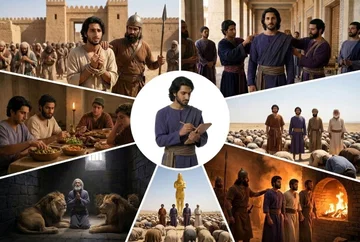
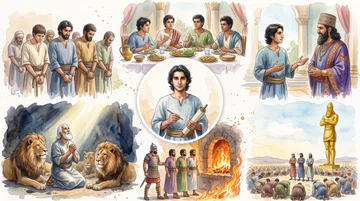
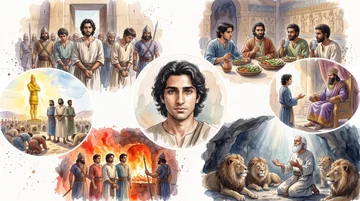
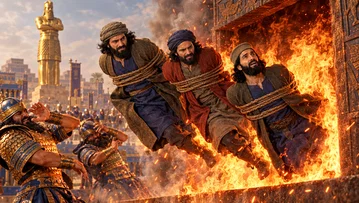
And these three men, Shadrach, Meshach, and Abed-nego, fell down bound into the midst of the burning fiery furnace.
Translations
And these three men, Shadrach, Meshach, and Abednego, fell down bound into the middle of the burning fiery furnace.
King James Version, KJV Cambridge Paragraph Bible, Webster Bible, Revised Version, American Standard Version, Darby Translation
And these three men, Shadrach, Meshach, and Abed-nego, fell down bound into the midst of the burning fiery furnace.
And these three men, Shadrach, Meshach, and Abed-Nego, have fallen down in the midst of the burning fiery furnace — bound.
and, these three men, Shadrach, Meshach, and Abed-nego, fell down into the midst of the burning furnace of fire, fast bound.
Berean Standard Bible, Majority Standard Bible
And these three men, Shadrach, Meshach, and Abednego, firmly bound, fell into the blazing fiery furnace.
These three men, Shadrach, Meshach, and Abednego, fell down bound into the middle of the burning fiery furnace.
And these three men, Shadrach, Meshach, and Abed-nego, with the cords about them, went down into the burning and flaming fire.
And these three men Shadrach, Meshach and Abednego fell downe bound into the middes of the hote fierie fornace.
Douay-Rheims (Challoner revision)
But these three men, that is, Sidrach, Misach, and Abdenago, fell down bound in the midst of the furnace of burning fire.
Pictures
Cross-references 20 of 25
- Daniel 3:16-18
Shadrach, Meshach, and Abed-nego, answered and said to the king, O Nebuchadnezzar, we are not careful to answer thee in this matter.
The three men refuse to worship the image and entrust themselves to God.
- Daniel 3:1-6
Nebuchadnezzar the king made an image of gold, whose height was threescore cubits, and the breadth thereof six cubits: he set it up in the plain of Dura, in the province of Babylon.
The king commanded worship of the golden image under threat of the furnace.
- Daniel 3:28-29
Then Nebuchadnezzar spake, and said, Blessed be the God of Shadrach, Meshach, and Abed-nego, who hath sent his angel, and delivered his servants that trusted in him, and have changed the king’s word, and yielded their bodies, that they might not serve nor worship any god, except their own God.
Nebuchadnezzar praises God for delivering the men who trusted him and refused idolatrous worship.
- Daniel 3:27
And the princes, governors, and captains, and the king’s counsellors, being gathered together, saw these men, upon whose bodies the fire had no power, nor was an hair of their head singed, neither were their coats changed, nor the smell of fire had passed on them.
The men emerge unharmed, without even the smell of fire.
- Daniel 3:19
Then was Nebuchadnezzar full of fury, and the form of his visage was changed against Shadrach, Meshach, and Abed-nego: therefore he spake, and commanded that they should heat the furnace one seven times more than it was wont to be heated.
The furnace is heated seven times hotter before the three men are cast into it.
- Hebrews 11:34
Quenched the violence of fire, escaped the edge of the sword, out of weakness were made strong, waxed valiant in fight, turned to flight the armies of the aliens.
Their faith is linked to quenching the violence of fire.
- Isaiah 33:14-15
The sinners in Zion are afraid; fearfulness hath surprised the hypocrites. Who among us shall dwell with the devouring fire? who among us shall dwell with everlasting burnings?
The righteous alone can dwell safely amid the devouring fire.
- Exodus 20:4-5
Thou shalt not make unto thee any graven image, or any likeness of any thing that is in heaven above, or that is in the earth beneath, or that is in the water under the earth:
They refused to bow to the image, keeping God’s command against idolatry.
- Daniel 3:29
Therefore I make a decree, That every people, nation, and language, which speak any thing amiss against the God of Shadrach, Meshach, and Abed-nego, shall be cut in pieces, and their houses shall be made a dunghill: because there is no other God that can deliver after this sort.
The king proclaims that no other God can deliver as God delivered the three men.
- Isaiah 43:2
When thou passest through the waters, I will be with thee; and through the rivers, they shall not overflow thee: when thou walkest through the fire, thou shalt not be burned; neither shall the flame kindle upon thee.
God promises his presence and protection through fire.
- Daniel 3:5-6
That at what time ye hear the sound of the cornet, flute, harp, sackbut, psaltery, dulcimer, and all kinds of musick, ye fall down and worship the golden image that Nebuchadnezzar the king hath set up:
The decree commands image worship and threatens the furnace for disobedience.
- Acts 5:29
Then Peter and the other apostles answered and said, We ought to obey God rather than men.
Both affirm obeying God rather than human rulers.
- Daniel 1:8-20
But Daniel purposed in his heart that he would not defile himself with the portion of the king’s meat, nor with the wine which he drank: therefore he requested of the prince of the eunuchs that he might not defile himself.
Daniel and his companions first stand firm on principle before their later service.
- Psalms 34:7
The angel of the LORD encampeth round about them that fear him, and delivereth them.
The Lord’s angel surrounds and delivers those who fear him.
- 1 Peter 1:7
That the trial of your faith, being much more precious than of gold that perisheth, though it be tried with fire, might be found unto praise and honour and glory at the appearing of Jesus Christ:
Fiery trials test the genuineness of faith.
- Daniel 6:16
Then the king commanded, and they brought Daniel, and cast him into the den of lions. Now the king spake and said unto Daniel, Thy God whom thou servest continually, he will deliver thee.
Both face death for refusing state worship and are cast into danger.
- Jeremiah 27:6
And now have I given all these lands into the hand of Nebuchadnezzar the king of Babylon, my servant; and the beasts of the field have I given him also to serve him.
Nebuchadnezzar’s rule is granted by God, but does not command worship.
- Daniel 3:6
And whoso falleth not down and worshippeth shall the same hour be cast into the midst of a burning fiery furnace.
Threatens the furnace punishment carried out in Daniel 3:23.
- Daniel 3:30
Then the king promoted Shadrach, Meshach, and Abed-nego, in the province of Babylon.
faithful captives promoted in Babylon
- Daniel 3:8-12
Wherefore at that time certain Chaldeans came near, and accused the Jews.
The men are accused for refusing the king’s worship.
Commentary
Each commentary is drawn from primary sources: the writings of Ellen G. White and Adventist pioneers and periodicals. Each commentary is separate. Its own words are not a quotation; follow the references to read the source passages.
Ellen G. White
54 sources
These three men fell down bound into the midst of the burning fiery furnace, heated seven times hotter than usual, whose flames killed the men who cast them in.PK 503Lt 126, 1910, par. 2–8STBk 121.2BS 33.1–2LSEGW 329.2 They were cast in for refusing to bow to the king's golden image set up in the plain of Dura to magnify Babylon and Nebuchadnezzar himself.ST Sep 2, 18973MR 95.45T 453.1–4Lt 109a, 1898, par. 5–8 They were not forsaken in the fire, for Christ Himself walked with them as the form of the Fourth, so they walked unharmed amid the flames and came forth without even the smell of fire upon them.PK 503STBk 121.2STA 121.2ST2 13.1 Their preservation turned the king's wrath to praise and thanksgiving and spread the knowledge of the true God throughout Babylon before its princes and leading men.DA 28.35T 453.1–4Ms 168, 1898, par. 1–3Lt 109a, 1898, par. 5–8Ms 47a, 1898, par. 2–5 Their experience is the pattern for the last days, when a universal decree will again demand false worship of a Sunday idol in place of God's holy Sabbath, calling God's people to purpose now to be true to principle come what may.STBk 121.2STA 121.2PK 512.112MR 218.2–220.1Lt 90, 1897, par. 13–18
Furnace Setting and Details
These three men, Shadrach, Meshach, and Abed-nego, fell down bound into the midst of the burning fiery furnace.PK 503Lt 126, 1910, par. 2–8LSEGW 329.2RH Nov 11, 1915Ms 15, 1896, par. 4–6 They were thrown in still bound after refusing to abandon allegiance to God, and though helpless in themselves before overwhelming worldly power they trusted God's word and stood against it.LSEGW 329.2RH Nov 11, 1915Ms 40, 1890, par. 92–94 The fire had already killed the men who carried them there, yet the verses that follow show God delivered them and they came out unharmed.Lt 126, 1910, par. 2–8 They walked unharmed amid the flames accompanied by the Fourth, and came forth without even the smell of fire upon their garments.PK 503LSEGW 329.2Ms 40, 1890, par. 92–94
They were bound in their garments and cast in because they refused to worship the king's image rather than violate conscience and loyalty to the God of heaven.ST Sep 2, 18973MR 95.4Ms 15, 1896, par. 4–6 That idolatrous golden image had been set up in the plain of Dura and represented the kingdom of Babylon and especially the king of Babylon himself and the glory of himself and his kingdom.Lt 109a, 1898, par. 5–8Ms 47a, 1898, par. 2–5 The costly golden image Nebuchadnezzar set up there was to magnify Babylon and himself as an object of worship.13MR 60.1–61.2 The setting for their fall into the fire was the advisers' scheme of ensnaring the Hebrew captives by a royal decree that every knee should bow.12MR 218.2–220.1
The furnace had been heated seven times hotter than it was wont to be heated, seven times more than usual.STBk 121.2BS 33.1–2STA 121.2ST2 13.1Ms 61, 1890, par. 41 The flames were so furious that the men who cast the Hebrew exiles in and who carried them there were burned to death, with the fire bursting out upon those who put them in because such haste was made.Lt 126, 1910, par. 2–8BS 33.1–2Ms 163, 1898, par. 5–11 This took place in the same year Daniel and his companions entered the service of the king of Babylon.BS 29.1 It severely tested the integrity of these youthful Hebrews and proved before an idolatrous nation the power and faithfulness of the God of Israel.BS 29.1
It came in Nebuchadnezzar's boundless wrath at being defied by representatives of a despised and captive race in the very height of his power and glory.BS 33.1–2 That defiance included refusing to disregard the Sabbath and to observe heathen festivals, for which Hebrew exiles suffered persecution and loss of life as idolaters were roused to crush out the truth.DA 28.3 The king's use of force was the last resort of false religion.ST Sep 2, 1897
Divine Presence and Deliverance
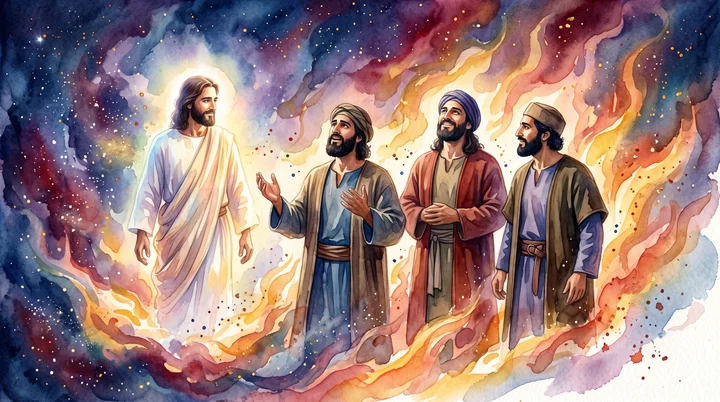
They were not forsaken of God in the fire, but Christ Himself was with His three faithful servants in the flames, seen as the form of the Fourth, like the Son of God and the Son of Man, walking with them.STBk 121.2STA 121.2ST2 13.1LSEGW 329.2Ms 61, 1890, par. 41 Cast bound into the midst of the fire for standing firm, they had His presence with them there and were brought out unharmed.STBk 121.2STA 121.2ST2 13.1Ms 61, 1890, par. 41Ms 40a, 1890, par. 101–102 That presence was no mere angelic attendance alongside them, but the Lord Himself walking with them in the flames.PK 503STBk 121.2STA 121.2ST2 13.1LSEGW 329.2
They walked unharmed amid the flames and could not be consumed because the Son of God was with them.PK 5033MR 95.4Ms 61, 1890, par. 41Lt 90, 1897, par. 21–25Ms 159, 1903, par. 15–19 When they came forth their garments bore no trace of the fire, without even the smell of fire upon them.STBk 121.2STA 121.2ST2 13.13MR 95.4Ms 61, 1890, par. 41 Their deliverance showed that God could preserve the faithful even in extreme danger and deadly danger.3MR 95.4Ms 2b, 1895, par. 25–26GC88 145.1–146.1Lt 32, 1899, par. 6–111T 373.2–375.1 By it He vindicated the loyalty of His servants, honored their faithfulness, and made known His power and supremacy as ruler over earthly kings.3MR 95.4Lt 90, 1897, par. 21–25Ms 2b, 1895, par. 25–26Lt 32, 1899, par. 6–11
Their faithfulness did not keep them from being thrown into the fire, for God's servants may suffer humiliation and abuse despite being innocent.PK 512.1Lt 90, 1897, par. 21–25 God does not promise His people exemption from trials, but promises strength proportioned to their days and grace sufficient in weakness. Their suffering for obeying God did not mean God had abandoned them, for God does not forget or forsake His people when they face persecution and mortal danger.21MR 220.1–24SP 445.2–446.1Lt 49, 1886, par. 7–8GC 626.2–627.1 He remains with His faithful children, and Christ stands by their side when they are called to go through the fiery furnace for His sake.21MR 220.1–24SP 445.2–446.1Lt 49, 1886, par. 7–8GC 626.2–627.1
They would have been consumed if they had deliberately walked into the fire themselves, for God sustains people when temptation comes if they do not deliberately enter into it.3T 47.2 The same protection that kept them unconsumed will preserve those united with the Lord from fire at His coming.Ms 159, 1903, par. 15–19
Faithful Obedience Under Threat
In Babylon they had purposed to be true to principle come what may, and when threatened with the flaming furnace heated seven times hotter than it was wont to be heated they would not turn aside from allegiance to the truth but stood firm in the time of trial and were cast bound into its midst.STBk 121.2STA 121.2ST2 13.1Ms 61, 1890, par. 41Ms 40a, 1890, par. 101–102 Their steadfastness is the pattern to follow now while the controversy between good and evil, between the two great powers, moves with continual and sharp contests toward its close.STBk 121.2STA 121.2ST2 13.1Ms 61, 1890, par. 41Ms 40a, 1890, par. 101–102 They were cast in because they refused to worship Nebuchadnezzar's costly golden image set up in the plain of Dura, which represented the kingdom of Babylon and especially the king himself magnified as an object of worship, and they would not bow the knee to that idolatrous image rather than violate conscience and loyalty to the God of heaven.3MR 95.45T 453.1–4Lt 109a, 1898, par. 5–813MR 60.1–61.2Lt 90, 1897, par. 21–25 Their minds were made up because they had been educated that the fear of the Lord is the beginning of wisdom, to worship and serve God only, so they did not fear to answer the king.Ms 163, 1898, par. 5–11
Their example shows that firm religious principle can withstand the fear of death, for the faithful would rather face pain and the face of death than be untrue to God or surrender principle.5T 42.2–43.2Ms 2b, 1895, par. 25–26 As the later fruit of their firm stand over the king's food, they would not sacrifice loyalty or compromise truth even in the least degree or in the slightest particular, holding it better to incur the displeasure of men than to surrender loyalty to God and fall into apostasy.Ms 2b, 1895, par. 25–26 In falling bound into the furnace they controlled circumstances instead of being servants of circumstances, and ruled animal passions instead of being enslaved by hereditary or cultivated habits and tendencies.20MR 113.3–114.1Lt 73, 1896, par. 39–42 Their self-denial and self-sacrifice learned of Christ is to pass like a plowshare through hereditary and cultivated habits and through all circumstances and surroundings, making appetites and passions servants to the God-fearing man rather than rulers over him.20MR 113.3–114.1Lt 73, 1896, par. 39–42
Those who read and believe and practice the sayings of Christ in Matthew 5 have the divine principles inwrought in the heart as if written with the finger of God, developing Christlikeness of character.Ms 201, 1898, par. 11 The fiery furnace cannot intimidate such to deny and betray the truth for any amount of favor or worldly honors or for exalted position, for man's reputation is to them as nothingness.Ms 201, 1898, par. 11 For them to live is to obey the word of Christ, and to die for the truth's sake is gain, enlisting to serve under the blood-stained banner of Prince Emmanuel.Ms 201, 1898, par. 11 Though apparently helpless and utterly helpless in themselves before Nebuchadnezzar on the throne, they stood by faith and trust in God's Word and withstood the power of the whole world and all human power and policy in support of evil.RH Dec 24, 1908ED 254.2–3RH Nov 11, 1915
Those who hold fast in such trial are the world's true nobility, its royal line, which the youth of today are called to join.ED 254.2–3 Their loyalty when human authority commands worship contrary to God shows the principle that God's people remain faithful when commanded to disobey God.5T 453.1–4Ms 15, 1896, par. 33–34
Witness to Babylon
The fall bound into the midst of the burning fiery furnace was for refusing to bow the knee to the idolatrous golden image set up in the plain of Dura, which represented Babylon and especially the glory of Nebuchadnezzar himself and was set up to magnify Babylon and the king as an object of worship.Lt 109a, 1898, par. 5–813MR 60.1–61.2Ms 47a, 1898, par. 2–5 Christ Himself walked in the furnace with His three faithful servants in their trial, and their preservation was a wonderful miracle that wrought upon Nebuchadnezzar's heart so that he believed in God and in His superior power over every other kingdom.Ms 168, 1898, par. 1–3Lt 109a, 1898, par. 5–8Ms 47a, 1898, par. 2–5 The miracle so moved upon him that he acknowledged God and His superior power, and his anger turned to praise and thanksgiving to Jehovah.Ms 47a, 1898, par. 2–5Lt 151, 1904, par. 6–8
God vindicated His servants and was honored by their faithfulness, and through their steadfastness the knowledge of the true God was spread abroad throughout the length and breadth of the empire of Babylon and brought before its princes and leading men.5T 453.1–4Ms 2b, 1895, par. 25–26 This accomplished the purpose for which He had permitted their captivity as captives in a heathen land, bringing His servants face to face with kings and rulers that they and their people might receive the light.DA 28.3Ms 2b, 1895, par. 25–26 Time after time the greatest monarchs were thus led to proclaim the supremacy of the God whom their Hebrew captives worshiped.DA 28.3
They were seen walking unharmed in the fire, accompanied by a fourth form like the Son of God and Son of Man, and were brought out with no smell of fire upon their garments, showing the king that the God they worshiped could preserve them.Ms 44, 1886, par. 8–10Ms 163, 1898, par. 5–11 The Lord Jesus thus manifested Himself to them as He promises to manifest Himself to those who have His commandments and keep them, and the king seeing the form of the Fourth was convinced that the God of the three Hebrews was the living God.Ms 44, 1886, par. 8–1013MR 60.1–61.2 The king recognized the fourth figure because Daniel and these men had talked to him of God and of Christ the representative of God.Ms 163, 1898, par. 5–11 Such haste had been made in binding them that the fire burst out and burned those who put them in, and after the king and his courtiers looked in he had the accusers cast into the furnace and called to those inside to come forth, and God was magnified.Ms 163, 1898, par. 5–11
The men who sought to destroy them and carried out the order were themselves destroyed by the fire.12MR 218.2–220.1Ms 163, 1898, par. 5–11Lt 90, 1897, par. 13–18 This proves that those who make cruel enactments seeking to destroy God's faithful people are destroyed by the recoil of their own actions.12MR 218.2–220.1 The interesting history in the third chapter of Daniel shows the Lord's wonderful deliverance of the three Hebrew worthies and teaches important principles regarding the working out of the Lord's purpose for the children of obedience and for the children of disobedience.Lt 118, 1910, par. 2
Prophecy of Last Days
The bound fall into the midst of the burning fiery furnace teaches that God's servants may suffer humiliation and abuse though innocent, and it points to a future persecution in which religious bigotry will turn against Sabbath keepers and a universal decree will declare them deserving of death.PK 512.1 The advisers' scheme of ensnaring the Hebrew captives by a royal decree that every knee should bow to Nebuchadnezzar's golden image because they would not worship it is a pattern for the last days.12MR 218.2–220.1Lt 90, 1897, par. 13–18 Then men will likewise strive by human laws to turn God's people from allegiance when civil laws demand worship contrary to God's commandments.12MR 218.2–220.1Lt 90, 1897, par. 13–18 That demand will be worship of a Sunday idol set up where God's holy Sabbath should be, including observance of a false sabbath in place of the Sabbath of the fourth commandment.12MR 218.2–220.1Lt 90, 1897, par. 13–18
Their refusal to bow illustrates faithfulness to God when human authority demands worship, and their example shows that a future period in the Southern States would bring decisions for or against the commandments of God.Lt 35, 1895, par. 1–3Lt 90, 1897, par. 13–18 Even then believers should not act presumptuously or close off their opportunities to work.Lt 35, 1895, par. 1–3
Shadrach, Meshach, and Abed-nego had purposed in Babylon to be true to principle come what may, and threatened with the flaming fiery furnace heated seven times hotter than it was wont to be heated, they did not turn aside from allegiance to the truth but stood firm in the time of trial and were cast bound into the midst of the fire.STBk 121.2STA 121.2ST2 13.1Ms 61, 1890, par. 41Ms 40a, 1890, par. 101–102 They were not forsaken of God there, for the form of the Fourth was seen walking with them in the flames, and they came forth without even the smell of fire upon their garments.STBk 121.2STA 121.2ST2 13.1Ms 61, 1890, par. 41Ms 40a, 1890, par. 101–102 Their firmness is the pattern to be purposed now while the controversy between good and evil, between the two great powers, moves toward its close amid continual and sharp contests that will last until it is soon ended.STBk 121.2STA 121.2ST2 13.1Ms 61, 1890, par. 41Ms 40a, 1890, par. 101–102 The call is for all to purpose now to be true to principle, let come what may, with the assurance that faithful servants cast in for truth have His presence with them in the flames and come forth unharmed.STBk 121.2STA 121.2ST2 13.1Ms 61, 1890, par. 41Ms 40a, 1890, par. 101–102
Courage for Coming Trials
The same God who kept the three worthies when they fell bound into the midst of the burning fiery furnace still lives and reigns to preserve His faithful servants and fearless advocates of truth when papal enemies are determined to stop their mouths and cry for their blood.GC 146.1SG4 275.3–276.3GW92 57.2–61.1 Luther trusted in that preserving God as he went to Worms in feeble health, knowing the dangers before him, seeking not his own ease but that the truth be not exposed to insult.SG4 275.3–276.3GW92 57.2–61.1 He was ready to seal his testimony with his blood if God so ordained, rather than flee or retract.GC 146.1SG4 275.3–276.3
Deliverance from violence ordered by earthly powers is in the Lord's hands, so one called by God to stand for the gospel before rulers should go even sick and under threat of violence, trusting God whether He saves by life or permits death.GC 146.14SP 120.1 Personal life is of little consequence beside preventing the gospel from being exposed to scorn, requiring readiness to shed blood rather than flee or retract.GC 146.1SG4 275.3–276.3 It is left to God whether life or death will most contribute to the salvation of others.GC 146.1SG4 275.3–276.3
God preserved the three Hebrews in the furnace just as He preserved John when cast into boiling oil.RH Sep 5, 1912AA 570.1–2 They were cast bound into the burning fiery furnace because they would not bow to Nebuchadnezzar's golden image, having been educated that the fear of the Lord is the beginning of wisdom to worship and serve God only, so their minds were made up and they did not fear to answer the king.Ms 163, 1898, par. 5–11 Such haste was made in binding them that the fire burst out and burned those who put them in, yet when the king and his courtiers looked there were four men walking, and the fourth was like unto the Son of Man, the Son of God, whom the king recognized because Daniel and these men had talked to him of God and of Christ the representative of God.Ms 163, 1898, par. 5–11 After this the king had the accusers cast into the furnace and called to those inside to come forth, and God was magnified.Ms 163, 1898, par. 5–11 Their stand is an example for facing trials when Satan exercises great power as a roaring lion.Ms 163, 1898, par. 5–11
The furnace is an example of a trial in which God does not abandon those who remain faithful, applied as encouragement to hold fast to the truth despite opposition, to serve God rather than people, and to trust that God's strength is sufficient.4MR 325.3 God does not promise His people exemption from trials, but promises strength proportioned to their days and grace sufficient in weakness, and that promise is kept by Christ standing by their side and being personally present with the faithful three when they are called to go through the fiery furnace for His sake. Those who love their Redeemer rejoice at sharing His humiliation and reproach, and love for Him makes suffering for His sake sweet.
Sources
Pioneers and periodicals
153 sources
The three bound men dropped alive into the very center of a real furnace heated seven times hotter than usual, whose flames killed the strong men who threw them in.ST Sep 2, 1897RH Apr 20, 1869ST Jan 29, 1908ST Jan 23, 1901RH May 1, 1900 They were there because they refused to worship Nebuchadnezzar's golden image, choosing to obey God's law against idolatry rather than obey the king even at the cost of death.ST Oct 11, 1905ST Jan 23, 1901ST Sep 10, 1885ST Jul 27, 1904RH Oct 21, 1862 Only their cords burned, and they walked free and unharmed with the Son of God beside them, proving God's direct power over the most destructive elements.ST Jan 29, 1908ST Oct 9, 1901ST Aug 13, 1874RH Oct 22, 1901RH Aug 20, 1908 When human law commands disobedience to God, believers must obey God rather than men and suffer the penalty without resistance, and such coercion of worship lies outside civil government's rightful authority.ST Nov 8, 1905ST Jan 23, 1912ST Apr 23, 1912ST Jul 11, 1911ST Sep 10, 1885 Their standing firm under a death decree for refusing the image pictures God's people at the end under the decree to worship the image of the beast, whom Christ will deliver after severe trial.RH Jul 14, 1904RH May 1, 1855ST Oct 5, 1882ST Dec 1, 1914RH Jan 1, 1901
Furnace Scene Details
The three men fell down bound into the midst of the burning fiery furnace, tied up in their coats, hosen, hats and other garments and thrown alive into the middle of the fire, landing there still bound.ST Sep 2, 1897RH Apr 20, 1869ST Jul 27, 1904 They were cast in fully clothed in wide trousers, fine linen shirts, precious garments and robes of state, falling helpless like logs of wood meant only for fuel into the very center where there was no escape.ST Dec 16, 1897RH Aug 20, 1908ST Strong men carried them to the mouth of the furnace at the command of the furious king, and the fire consumed only the cords binding them so they could walk unharmed in the flames.RH Apr 20, 1869ST Dec 16, 1897ST Their clothing showed their office when they came forth conspicuously to confess God openly and to show they were not ashamed to suffer for Him.RH Aug 20, 1908
The furnace had been heated seven times hotter than usual, and because the king's command was urgent its heat was intensified to extreme intensity.ST Jan 23, 1901ST Jul 27, 1904ST Jan 9, 1912ST Oct 18, 1899ST Apr 29, 1913 In ordinary course this meant the most sudden and therefore most painless death by fire, so that to all human expectation they would be instantly killed by the heat and quickly consumed.ST Dec 16, 1897RH Aug 20, 1908 Its excess only made their deliverance stronger evidence, for the furnace's power was under supernatural control.RH Apr 20, 1869RH Aug 20, 1908
The fire was real and deadly, proved before the assembled multitude because its flames killed the strong and mighty men who carried the three men to the mouth of the furnace to cast them in.ST Jan 29, 1908ST Oct 11, 1905ST Jan 9, 1912ST Oct 13, 1909RH Aug 20, 1908 The king's power reached only to putting them into the fire, while the men who threw them in died from the flames and the three friends entered it alive.ST Jan 29, 1908ST Jan 9, 1912RH Jul 14, 1904 They immediately rose and walked unharmed, with clothing untouched, and an angel protected and delivered them.ST Jan 29, 1908ST Jan 9, 1907RH Jul 14, 1904 They actually fell into the midst of the furnace, into its very center, not merely near it, leaving no possibility of escape.RH May 1, 1900RH Apr 20, 1869RH Jan 10, 1871 To change into to mean near makes the account absurd.RH Jan 10, 1871
They were Jews of the captivity set over the affairs of the province of Babylon, men of high standing whose refusal did not excuse obedience even though the command was not aimed specifically at them.RH Aug 20, 1908RH Oct 21, 1862ST They were Daniel's three devoted, faithful companions who proved steadfast with him from their schooling in Babylon, and their experience was written not for their own time merely but for all subsequent time. The casting bound into the furnace is true history, not myth, allegory or fancy, and belongs to the infallible Bible whose every word and promise stands firm.ST Dec 9, 1913ST Nov 7, 1895 It is part of the inspired record of Nebuchadnezzar's history and a true divine fact that is one with the New Testament, so that the fiery furnace must stand or fall with Paul's shipwreck and Peter's jail delivery.ST Jul 16, 1912ST Nov 25, 1889 They were kept unhurt in the midst of the burning fiery furnace by God's supernatural interposition, the same infinite power by which God originated life and created Adam, proving Bible miracles scientifically possible and justified by a purpose of sufficient magnitude, and their coming out unharmed demonstrates that a miracle can authenticate God's servants.ST Dec 9, 1913ST Nov 7, 1895
Refusal and Faithfulness
These three men fell bound into the midst of the burning fiery furnace because they refused to worship Nebuchadnezzar's golden image set up on the plain of Dura, refusing to let the king dictate their worship or to honor Babylon's gods.ST Oct 11, 1905ST Jan 9, 1912ST Oct 13, 1909RH Jul 14, 1904ST Jul 27, 1904 They entered it alive after the king ordered them thrown in, when the furnace was so hot that its flames killed the men who carried them there.ST Jan 9, 1912ST Jul 27, 1904 Their loyalty to God brought direct conflict with an apostate civil government and a test of devotion, of the same kind that applies to God's loyal people in the last days.RH Jul 14, 1904 The attempt to compel that worship was also an attempt to defy the prophecy that another kingdom would succeed Babylon.ST Jun 3, 1913 They chose obedience to God over disloyalty to His commandments, even when obedience brought them to the furnace, and God stood by them and brought them out unharmed, showing that He supports His faithful servants.ST Oct 11, 1905ST Oct 13, 1909ST Jul 27, 1904
Their refusal was obedience to God's law forbidding making graven images and bowing down and serving them, keeping the second commandment and honoring the true God rather than violating conscience.ST Jan 23, 1901RH Jul 13, 1916ST Dec 5, 1895 They were cast in heated seven times hotter than usual for refusing to obey the state law commanding all to fall down and worship the image in order to obey God's law, so their suffering was punishment for disobedience to the law of the state and obedience to the law of God, and God approved their violation of the state law by miraculous deliverance that left their bodies untouched by fire.ST Jan 23, 1901 The king's command violated God's law against idolatry even though it was not aimed specifically at them, and their high standing with the government did not excuse obedience to it.RH Oct 21, 1862 With their lives at stake they remained faithful rather than bowing to the idol, honoring God by keeping His commandment.RH Jul 13, 1916 That decree did interfere with worship of the true God though it did not forbid worship of any other god, for they could not worship idols and the true God at the same time and could not worship idols and keep the second commandment.ST Dec 5, 1895 This proves no one can serve two masters or bear the badge of two opposing powers at once, so no one can observe Sunday and keep the fourth commandment.ST Dec 5, 1895 Going bound into the furnace rather than transgressing God's law proves they belonged to the noble, consecrated company of Christian Sabbath keepers in every age from creation, together with Noah, Enoch, Abraham, Isaac, Jacob, Moses, Joshua, David, Samuel, the prophets, Elijah, Daniel, Jesus and the apostles, and to say the Seventh-day Sabbath is not for Christians casts reproach on them, for they were not of the spineless sort who set aside the Sabbath and teach that the law in which it stands has been abolished.RH May 11, 1916
They would not compromise even in appearance, courtesy, or expediency, nor honor a rival institution after acting according to conscience, nor bow while inwardly praying to God.ST Aug 29, 1895ST Aug 29, 1895ST May 20, 1889 They would not even appear to take part in worship contrary to conscience, which makes their case an example of religious persecution.ST Aug 29, 1895 They were required to honor the king's rival institution after they had already acted according to conscience, illustrating the demand to violate conscientious obedience to God by also showing respect for a competing religious observance.ST Aug 29, 1895 Bowing would have publicly acknowledged the image's claim to be an object of worship and compromised their integrity, even if they could have prayed to God while bowing, and their miraculous deliverance showed they were right to refuse that act of homage and to honor the true God.ST May 20, 1889 Their stand illustrates the test of being pressed to show outward respect to a false god, and God honors and preserves those who are loyal.ST Sep 6, 1899 They did not let convenience or circumstances lead them to bow, but were willing to face death rather than abandon what they knew to be right.ST Feb 3, 1881
Though of high standing with the government, they accepted the threatened death rather than disobey God, holding firm without knowing beforehand that they would be delivered.ST Sep 10, 1885RH Oct 21, 1862ST Feb 3, 1881ST Sep 9, 1886 Their faithfulness mattered more than the danger of punishment, and they accepted the consequences without knowing they would be delivered, enduring the threat of fire in obedience to God rather than to human rulers when their commands conflict.ST Sep 10, 1885 When obedience to civil law would require disobedience to God they must stand firm even when facing death, and God honored their faithfulness, whether by deliverance in this life or in the world to come.RH Oct 21, 1862RH Oct 21, 1862 Their ordeal was not a matter of convenience, and God approved their course by sending the fourth figure into the furnace to protect them.ST Sep 9, 1886
They told the king their God was able to deliver them from the burning fiery furnace and from his hand, but even if He did not they would not serve his gods nor worship the image.ST Jul 27, 1904 Because the king's command was urgent the furnace was heated seven times more than usual, and they were tied up in their coats, hosen, hats, and other garments and thrown into the middle of the fire, landing there still bound.ST Jul 27, 1904
Divine Presence and Deliverance
The fall bound into the midst of the furnace ended in rising and walking free and unharmed in the flames, for the fire consumed only the cords that bound them.RH Apr 20, 1869ST Jan 29, 1908ST Oct 9, 1901RH Aug 20, 1908ST Jan 9, 1907 Garments were not scorched, no hair was singed, clothing was untouched, and not even the smell of fire remained upon them.ST Aug 13, 1874ST Sep 26, 1911ST Jan 9, 1907 The king's power reached only to putting them into the fire, while the reality and deadliness of that fire was proved before the multitude because the mighty men who carried them to the mouth to cast them in were themselves killed.RH Apr 20, 1869ST Jan 29, 1908RH Aug 20, 1908ST Jan 9, 1907 They fell helpless like logs meant only for fuel into heat intensified seven times beyond usual, where in ordinary course death would have been most sudden, and that excess only made the deliverance stronger evidence.RH Aug 20, 1908ST Jan 9, 1907 Because the form of the Fourth was with them they were able to stay there unharmed, proving that holy characters in whom God's righteousness rests can dwell in devouring fire until sin is consumed.ST Sep 26, 1911RH Oct 22, 1914
With them was seen a fourth figure described as like a son of the gods and later called an angel, understood as the Angel of Jehovah, the Son of God, the angel of His presence made visible.ST Oct 9, 1901RH Oct 22, 1901RH Aug 20, 1908RH Sep 14, 1911RH Oct 22, 1914 Though they fell in bound with no human way out, they were afterward seen alive and walking with that fourth figure in the flames, so they were not alone and could be content and joyful.RH Oct 22, 1901ST Jan 31, 1906ST Mar 20, 1893 Christ entered the furnace with them and kept them from harm, showing He is with His people in suffering and that to persecute them is to persecute Him.ST Jan 31, 1906RH Dec 30, 1915 That inner presence taught Nebuchadnezzar that there can be a rule within a rule and a kingdom within a kingdom, the rule of conscience and the kingdom of God set up in the heart even while remaining subject to the state, a lesson also taught to Darius through the lions' den.RH Aug 20, 1908RH Sep 14, 1911 Their deliverance through that direct intervention came through faith, showing divine and human cooperation in salvation.RH Oct 22, 1901RH Aug 20, 1908
Their preservation was a distinct miracle and a distinct manifestation of divine power, restraining the usual course of natural law so that its ordinary effects did not determine their fate.RH Apr 20, 1869ST Mar 24, 1914RH Aug 20, 1908 It revealed God's direct power and rule over every element, even the most destructive element of fire, and over the furnace's power by supernatural control.RH Apr 20, 1869ST Oct 9, 1901RH Aug 27, 1908ST Nov 26, 1912 By delivering their bodies from the power of fire He proclaimed His ability to deliver souls from the power of sin and summoned Babylon to forsake other gods and serve Him, making the gospel of the kingdom and of deliverance known in fact and not in theory through men truly lost and then truly saved in actual experience.RH Aug 27, 1908ST Nov 26, 1912 That trust did not come from miraculous display but from knowing God through His Word and works as able to save souls from death, so they yielded their bodies in implicit trust even though it might mean destruction of the body.RH Aug 27, 1908 The exception thereby demonstrates both the regular operation of natural law and a power beyond the elements of nature able to deliver those who serve Him and to offer salvation and healing to the whole empire.ST Nov 26, 1912ST Mar 24, 1914
Their deliverance vindicated those who stood firm, made God known and glorified Him, and proclaimed the knowledge of the true God to the world.ST Jun 21, 1905RH Aug 27, 1908ST Jan 9, 1907 The great king was forced to acknowledge that their God is above all gods and above all other gods, that no other god can deliver in this way, and that a higher King than himself ruled, humbling the proud monarch to call them servants of the most high God.ST Jul 16, 1912RH Apr 25, 1912RH Oct 22, 1901RH Aug 27, 1908 The chapter thus stands as God's education of the Babylonian king and as a warning to statesmen about respecting the rights of others, followed by promotion in the province.ST Jan 29, 1908RH Aug 27, 1908 God does not always spare faithful people from death or suffering in this life, for some martyrs die, yet His care, presence, and promise remain with them even in death, marking their resting place with immortality and life awaiting them beyond death.ST Jan 9, 1912ST Jun 17, 1886 His first and supreme object is perfection of character, and when that is best reached through trials His care not only sanctions but even prepares the fiery furnace, so that casting care upon Him means feeling the everlasting arms, hearing words of comfort and promise, and knowing the power of Christ as the fruit of earthly trial.ST Jan 9, 1912ST Jun 17, 1886
Deliverance was nearest when the trial was hottest, with God coming down to protect them and cooling the fiery blast, teaching that His presence is enough in affliction and persecution.RH Jan 20, 1859RH Dec 30, 1915 They were preserved because of wholehearted faith and freedom from sin through Christ, with God's purifying presence dwelling in them so that the fire could not harm them.ST Oct 9, 1901
Civil Power and Conscience
Civil government is ordained of God as His servant to restrain evil and prevent incivility, but it leaves its legitimate sphere when it unites church and state, aids religion, directs and controls worship, and enforces religion by law.ST Apr 23, 1912ST Jul 11, 1911ST Dec 3, 1896ST Jul 1, 1903 It has no authority in the spiritual realm over conscience and the soul's accountability to God, and when it tries to rule conscience and take God's place it usurps what belongs to God alone.ST Apr 23, 1912ST Apr 14, 1898ST Mar 6, 1907 Nebuchadnezzar did this by commanding worship of his golden image and punishing with the burning fiery furnace those who would not worship as he decreed, and their refusal was right and not blameworthy because civil rulers have authority only in the sphere God assigned them, not over worship.ST Jul 11, 1911ST Apr 14, 1898ST Mar 6, 1907ST Dec 3, 1896 That principle of religious coercion always leads to persecution for conscience' sake, for which God humbled Nebuchadnezzar and proud Babylon with him.ST Jul 11, 1911ST Dec 3, 1896ST Jul 1, 1903
Shadrach, Meshach, and Abed-nego were condemned as criminals and treated as criminals under human law for refusing to bow, and were thrown bound into the furnace for that refusal.ST Jan 23, 1912ST Jun 11, 1912ST Jan 20, 1898ST Aug 6, 1896 Their disobedience to an evil human law was not sin, because it did not depart from God's principles of right but obeyed God rather than disobeying His law.ST Jan 23, 1912ST Jun 11, 1912ST Jan 20, 1898ST Jun 24, 1897 Obeying the king's command to worship the image would have been sin against God, and bowing would have been sin even though refusal was counted crime under the civil statute.ST Jan 23, 1912ST Jan 20, 1898ST Aug 6, 1896 Their punishment did not make their disobedience wrong, for the king's law required them to violate God's law, and the Lord vindicated them and confounded their rulers.ST Jun 24, 1897ST Feb 25, 1889
When human law requires disobedience to God, God's law must be honored and obedience to God takes precedence, for Christians are not required to obey civil authorities when their demands conflict with God's law and conscience.ST Sep 10, 1885ST Jul 24, 1884ST Oct 3, 1895 Civil rulers are to be obeyed only in civil matters, and believers must obey God rather than men, accepting the consequences without knowing beforehand they will be delivered.ST Sep 10, 1885RH Mar 1, 1860 They may refuse and meekly suffer the penalty rather than rebel violently, without violent resistance, leaving vindication to God who sustains them and who justified such disobedience by protecting the three men in the furnace.ST Sep 10, 1885ST Jul 24, 1884 Their faithfulness to God mattered more than danger of punishment, showing that God justified disobedience to civil authority when it demanded what was contrary to His law.ST Sep 10, 1885ST Oct 3, 1895
Their falling bound into the furnace was religious persecution from misuse of state authority, the execution of a legal creed produced by pride and exaltation of self and enforced by civil power.ST Nov 8, 1905ST Oct 1, 1896ST Dec 24, 1896 Ancient Babylon used the state to enforce false religion, ordering all who would not worship according to the demands of the Babylonian system to be cast into the fiery furnace, claiming universal spiritual jurisdiction and demanding submission under pains and penalties through compulsory worship of false gods.ST Nov 8, 1905ST Jul 13, 1915RH Apr 10, 1916 This was the pagan answer of compelling false worship, justified as a matter of state rather than religion alone because they defied the ruler's command, and it belongs to the continual controversy between Christ and Satan, between Christianity and the Babylonian system, over the commandments of God and the testimony of Jesus Christ to the close of time.ST Nov 8, 1905ST Oct 1, 1896ST Sep 8, 1914 Having disconnected from God to follow its own perverted way, Babylon was left without power and sought to supply it by enlisting the state, and the king's decree was reversed by the presence of Christ in the furnace with His faithful followers, leaving them unharmed though heated seven times hotter than usual, as a rebuke to the state for misusing its authority and a demonstration of the superior power by which Christ conducts His work, while the end of that proud persecuting city is destruction.ST Nov 8, 1905ST Dec 24, 1896
Their deliverance vindicated the rights of individual conscience and testified to Babylon and to all the world that civil power, even though ordained by God, has no authority in the spiritual realm.ST May 21, 1912RH Aug 20, 1908 Their choice to worship according to their faith brought them under the land's supreme law and into the fiery furnace, where God miraculously upheld them, showing the right of individual faith and choice against government coercion in worship and the duty to worship God despite a ruler's command to do otherwise.ST May 21, 1912RH Feb 20, 1900ST Aug 9, 1910 God is thus the Deliverer of faithful, righteous people who stand against the worship of world patriotism and the deification of human ambition, able to deliver those who remain faithful under religious coercion.ST Aug 9, 1910ST Dec 1, 1914ST Aug 9, 1910 The principle of religious liberty established by their experience remains in full force today even though millions of martyrs have died without miraculous deliverance, offering a lesson for every age, so the story of the burning fiery furnace ought to be told in all lands.ST Aug 9, 1910ST Aug 9, 1910RH Aug 20, 1908
A law called civil can still compel religious conformity, as Nebuchadnezzar's statute shows, for his command to bow to the great image was a civil statute in harmony with the majority and made for the good of the people and the maintenance and stability of Babylon.ST Sep 9, 1889ST May 12, 1890 It did not expressly forbid worshiping their God nor forbid the Hebrews to worship their own God, yet they could not obey it as a civil ordinance without compromising faith, so they would not bow even with death before them and God vindicated their course.ST Sep 9, 1889ST May 12, 1890ST Apr 24, 1893 Their being cast into the furnace for disobeying a governmental law framed as a command of God illustrates that laws compelling religious practice can punish people for obeying their duty to God even when government calls their obedience unlawful.ST Sep 9, 1889ST Feb 19, 1894ST Apr 24, 1893 The same principle applies to keeping the Sabbath when civil laws or customs favor Sunday, proving He will likewise deliver those who stay loyal now when civil law commands false worship instead of compromising by keeping both days, for danger, suffering, and human laws do not excuse disobedience to God.ST Feb 26, 1880ST Apr 24, 1893RH Oct 22, 1908
Rulers' authority does not make their religious demands right, and those who follow worldly powers opposing God share their fate.ST Nov 5, 1894ST Feb 25, 1889 Nebuchadnezzar did wrong in casting them in to exact submission to his law rather than to change their ideas, enforcing an unrighteous human law through religious persecution.RH Jun 10, 1909ST Jan 21, 1903 Those who enforce an unjust law, not the person punished for obeying God, are guilty, and men who execute such unrighteous laws will have to give an account to God for it.RH Jun 10, 1909ST Jan 21, 1903 The three Hebrews maintained individual integrity and disregarded the spirit and power of Nebuchadnezzar's one-man religious-political combine and despotism, and in the face of blazing sevenfold heat they were in the right and proved true heroes.ST Feb 25, 1889 God vindicated their course by preserving them unscathed in the midst of the fire, confounded their rulers, changed the king's word, and made the circumstance a lesson forever to all kings, all one-man powers, and all combines.ST Feb 25, 1889
Their case concerned persecution for refusing a direct religious demand to worship the image, with persecutors seeking to punish disobedience to false worship.RH Sep 23, 1862RH Sep 9, 1862 It is contrasted with a government's draft acting to defend the people, which does not involve the same persecuting character.RH Sep 23, 1862 It is not a parallel to being drafted into military service unless the war is directed against God's people, namely Seventh-day Adventists.RH Sep 23, 1862RH Sep 9, 1862
Prophecy and Last Days
The golden image was set up to declare Babylon the universal and everlasting kingdom, in direct defiance of the prophecy in Daniel 2 that another kingdom would succeed it.ST Jun 3, 1913ST Dec 3, 1912ST Feb 3, 1904 The casting of the three men bound into the furnace for refusing that image belongs to that challenge to God's prophetic word, and their preservation in the fire vindicated their loyalty and confirmed His truth about the succession of empires.ST Jun 3, 1913ST Dec 3, 1912ST Feb 3, 1904 The chapter thus contrasts human efforts to establish a kingdom in opposition to God with Daniel 2's prediction of the insecurity of earthly kingdoms, while teaching God's power to deliver His children.ST Jun 3, 1913ST Dec 3, 1912ST Oct 21, 1908
Their falling bound into the midst of the burning fiery furnace for refusing to worship Nebuchadnezzar's image shows the exact position God's people will occupy at the end when a decree commands all to worship the image of the beast on pain of death.RH Jul 14, 1904RH May 1, 1855ST Oct 5, 1882ST Nov 1, 1905 As the three reached that terrible extremity, so the church will face death for refusing false worship, enduring severe trial in a conflict with an apostate civil government that tests devotion.RH Jul 14, 1904RH May 1, 1855ST Oct 5, 1882 God saved the three by direct interposition, and He will likewise interpose to save His people, but not until the time of trouble such as never was has fully opened upon the world.RH Jul 14, 1904RH May 1, 1855ST Oct 5, 1882 That deliverance was put on record to give confidence in the God of heaven as able to deliver from the power of darkness and to translate into the kingdom of the Son of His love, a deliverance first revealed as salvation from sin, rewarded then by promotion in Babylon and hereafter by promotion in the kingdom of heaven.ST May 6, 1897RH Aug 27, 1908 The whole earth is about to become a burning fiery furnace stored up for fire against the day of judgment and destruction of ungodly men, and only the God of Shadrach, Meshach, and Abednego can deliver from that universal conflagration, so now is the time to learn faith and loyalty in continual service to pass safely through the final crisis when those who worship the image will perish in the fires of the last day.ST May 6, 1897RH Aug 27, 1908
Their ability to stay unharmed in the midst of the furnace because the form of the Fourth was with them proves that holy characters in whom God's righteousness rests can dwell in devouring fire until it has utterly consumed sin and all identified with sin.ST Sep 26, 1911ST Jun 27, 1911RH Oct 22, 1914 In the last great fiery test the whole earth will be converted into a lake of fire, and upon that sea the city of God with all His children will rest unharmed and undisturbed while the hosts gathered against it are utterly burned and destroyed forever.ST Sep 26, 1911RH Oct 22, 1914ST Mar 26, 1912 Those who through God's power have uprooted sin, made it an outcast, taken Christ for their all in all, and are covered with the robe of His righteousness will stand unscathed amid the burnings while the elements are on fire and the earth is a molten sea, with the Son of God with them, then pass into the restored Eden where sin and sorrow and death cannot enter, while sin and those in whom it has matured come to ashes because wickedness cannot stand the test of fire.ST Sep 26, 1911RH Oct 22, 1914ST Mar 26, 1912ST Aug 20, 1912 So the righteous will endure when God's presence sets the earth's foundations on fire, while those who do not know God perish forever, and lives joined to Christ will endure the fiery testing at His coming.ST Jun 27, 1911RH Aug 27, 1908ST Mar 26, 1912ST Aug 20, 1912
Compelled worship backed by civil punishment was the religion of ancient Babylon, which claimed universal spiritual jurisdiction and demanded submission under pains and penalties.ST Dec 24, 1896RH Apr 10, 1916ST Oct 15, 1894 The falling of the three bound into the furnace was the execution of that legal creed, produced by pride and exaltation of self, disconnected from God, seeking to supply power by enlisting the state, and its end is destruction.ST Dec 24, 1896RH Apr 10, 1916ST Jun 27, 1911 That same character is revived in modern Babylon, the Church of Rome, which claims universal spiritual jurisdiction and demands submission under pains and penalties, and in every religious system founded on Babylonian principles and in satanic systems of government under satanic control that attack God's people.ST Dec 24, 1896RH Apr 10, 1916ST Jun 27, 1911ST Paganism as the first division of Babylon proved itself by that kingly decree, standing with Elijah's flight, the lions' den, the gallows, the prison, the judgment hall, and the cross as the mark identifying the apostate system, with earthly powers acting as agents of Satan though God restrained them when it served His glory, and ancient Babylon's final attempt to destroy God's people is a prophecy of modern Babylon and its persecution of those who refuse its worship and laws.ST Oct 15, 1894STRH Oct 11, 1915
Their steadfast loyalty in that conflict with paganism foreshadows persecution by civil and religious powers over worship, including coercion to honor a false sabbath.ST May 6, 1897ST Feb 26, 1880ST Feb 19, 1894 Danger, suffering, and human laws framed as commands of God do not excuse disobedience, and God remarkably approved their refusal by delivering them, proving He will likewise deliver those who stay loyal now when civil law commands false worship instead of compromising by keeping both days.ST Feb 26, 1880ST Feb 19, 1894ST Apr 24, 1893 The decree did interfere with worship of the true God though it did not forbid worship of any other god, and they could not worship idols and the true God at the same time nor keep the second commandment while bowing, proving no one can serve two masters or bear the badge of two opposing powers at once, so no one can observe Sunday and keep the fourth commandment.ST Feb 19, 1894ST Apr 24, 1893ST Dec 5, 1895 Those who go bound into the furnace rather than transgress God's law belong to the noble consecrated company of Christian Sabbath keepers in every age from creation, with Noah, Enoch, Abraham, Isaac, Jacob, Moses, Joshua, David, Samuel, the prophets, Elijah, Daniel, Jesus and the apostles, men of faith in Christ and not of the spineless sort who set aside the Sabbath and teach that the law in which it stands is abolished.ST Feb 26, 1880ST Dec 5, 1895RH May 11, 1916
The chapter is God's chosen way to make the gospel of the kingdom and the gospel of deliverance known in Babylon through human instruments in fact and not in theory, by men truly lost and then truly saved in actual experience.RH Nov 11, 1902RH Aug 27, 1908RH May 29, 1900 Their falling bound into the furnace was the yielding of their bodies in implicit trust from knowing God through His Word and works as able to save souls from death, and by ruling over fire, the most destructive element, and delivering their bodies He proclaimed His ability to deliver Babylonian souls from sin and summoned them to forsake other gods, making known that the Most High rules human kingdoms.RH Nov 11, 1902RH Aug 27, 1908RH May 29, 1900 That manifestation of power less than fifty years before Belshazzar's feast was seen by great men later present at the feast, was public record they knew or could have known, and stood as a lesson they did not heed when they dishonored the God they had witnessed and joined Belshazzar's sacrilege to their ruin.RH May 29, 1900ST Oct 23, 1901ST Aug 13, 1896
Their rescue from the flames becomes a pattern for Christ appearing to deliver and translate faithful commandment-keepers facing a death decree.ST Dec 1, 1914RH Jan 1, 1901RH Jul 3, 1866 The living and true God who was able and willing to deliver His trusting children then remains the same now, and the little remnant preparing for translation will soon need that same firm and unwavering trust amid thickening disappointments and trials as they endure the final test by fire.ST Dec 1, 1914RH Jan 1, 1901RH Jul 3, 1866
Example for Believers
Their steadfast loyalty under threat of death is the pattern for standing true to principle whether death or deliverance awaits, fearing God rather than man and choosing right over popularity, numbers, convenience, or comfort.ST May 6, 1897RH Oct 25, 1864ST Sep 6, 1899RH Aug 27, 1908ST Feb 24, 1881 Falling bound into the fiery furnace after refusing to worship the image and refusing to disobey God's command against image worship, they held firm without knowing beforehand that they would be delivered, trusting God to take care of the consequences of obedience.ST May 6, 1897ST Sep 6, 1899RH Jan 10, 1871RH Aug 27, 1908ST Feb 24, 1881 That trust did not come from any miraculous display of the divine presence, but from knowing God through His Word and His works as one able to save their souls from death, so they remained loyal even though it might mean destruction of their bodies, yielding their bodies in implicit trust.RH Aug 27, 1908 Their deliverance gave confidence that God could deliver from death or sustain through it, for if deliverance does not come He is with His people in their suffering, and their faithfulness depended on God's power.ST May 6, 1897RH Oct 25, 1864ST Sep 6, 1899
Faithful prayer was their shield, quenching the flames and bringing deliverance, showing that prayer preserves God's people and moves nations.ST Nov 11, 1886ST Sep 9, 1880ST Jul 8, 1913ST Apr 29, 1913RH Sep 17, 1872 Cast in for refusing the golden image and falling bound into a furnace heated seven times hotter than usual, they were kept through deadly danger because God answered the prayer of faith and brought them safely through to display His power and glory.ST Nov 11, 1886ST Sep 9, 1880ST Jul 8, 1913ST Apr 29, 1913RH Sep 17, 1872
God was with them in suffering, so trials need not defeat His purpose but spread the gospel, sustain contentment in His will, and teach believers to remain until He calls them out.RH Jul 20, 1916ST Jan 31, 1906RH Dec 30, 1915ST Jul 14, 1887RH Jan 23, 1866 The furnace is a place of safety for the soul when God wills a person to be there, and faithfulness means not shrinking from danger or hiding devotion, but enduring severe suffering for Jesus with a cheerful heart because His love sustains.RH Jul 20, 1916RH Dec 30, 1915ST Jul 14, 1887RH Jan 23, 1866RH Jun 23, 1868 Christ entered the furnace with them and kept them from harm, cooling the fiery blast, so that persecuting them was also persecuting Christ.ST Jan 31, 1906RH Dec 30, 1915
Trial burned their bonds and released them from worldly ties to strengthen dependence on God.RH Jan 6, 1903RH May 12, 1910ST Mar 20, 1907RH Apr 24, 1900 Falling in bound, they were seen free and walking in the flames, for the same flame that killed the men who cast them in only consumed the cords that bound them and limited their usefulness, leaving them unharmed without even the smell of fire on their garments.RH Jan 6, 1903ST Mar 20, 1907 An offense or trial that injures and destroys one person proves a blessing and liberation to another according to attitude toward the offense and state of character, and God permits complication and fiery testing to refine faith, develop dependence, require renouncing sin with fasting and prayer for victory, and bring honor to His name and to His faithful followers for personal salvation and the salvation of many around.RH May 12, 1910ST Mar 20, 1907RH Apr 24, 1900
Falling bound into the midst of the burning fiery furnace gave them opportunity to honor God, and God gives a person willing and anxious to honor Him the opportunity to do so even if it takes a fiery furnace to provide it.RH Aug 17, 1916RH Sep 29, 1863RH Nov 4, 1862RH Aug 18, 1863ST Jan 3, 1905 Borne with faith and meekness where by all human calculation the wrath of man must have swallowed them up, their affliction became a means of leading others to glorify God and verified the promise that the wrath of man shall praise Him.RH Sep 29, 1863RH Aug 18, 1863ST Jan 3, 1905RH Jun 3, 1862 Human wrath was turned to praise while mighty kings and enemies who lifted hands against His children were left in shame and confusion, and the proud monarch was humbled to call them servants of the most high God and to decree against speaking amiss against their God, so praise rose even from the midst of severe suffering.RH Aug 17, 1916RH Sep 29, 1863RH Aug 18, 1863ST Jan 3, 1905RH Jun 3, 1862
Their deliverance shows God cares for and protects His true servants through fiery trials, delivering servants who serve Him continually and faithfully and those who trust Him, for He is still able and willing to deliver people from sin.RH Dec 12, 1907RH Aug 15, 1907RH Sep 2, 1862RH Feb 25, 1873RH Jan 12, 1869 Bound and thrown in under the king's decree for refusing the golden image into a furnace heated seven times hotter than usual, they were preserved by miraculous care as evidence of God's favor, showing He protects and saves His own even in deadly trials.RH Sep 2, 1862RH Feb 4, 1858RH Feb 25, 1873RH Jan 12, 1869 He may seem to forsake His people and leave them without light so they loosen their hold on sin and self, since knowing in advance that they are safe might not bring about that needed change.RH Feb 4, 1858
True principle is fireproof: it falls down bound into the midst of the burning fiery furnace and goes through the fire and comes out unsinged, while policy is burned in the effort to throw principle into the fire.ST Jun 17, 1903ST Jul 22, 1889ST Jul 8, 1886 Its flames were powerless against the faithful, giving Christians opportunity to triumph through faith and know the glory of standing with God amid scorn, insult, and pressure in the different forms persecution takes when God's servants resist the world's demands.ST Jul 22, 1889ST Jul 8, 1886 Preservation there demonstrates the Lord can preserve faithful servants through deadly persecution as He preserved John when cast into boiling oil and as Jonah in the great fish, so a believer threatened by a ruler to be thrown into a burning furnace can remember the three children and endure the same, speaking though furnace, den, and prison threaten and entering danger to rescue souls.ST May 19, 1914RH Sep 5, 1912RH Dec 22, 1863
Sources